• About
  • The Germans

A Work in Progress

A Work in Progress

Monthly Archives: March 2022

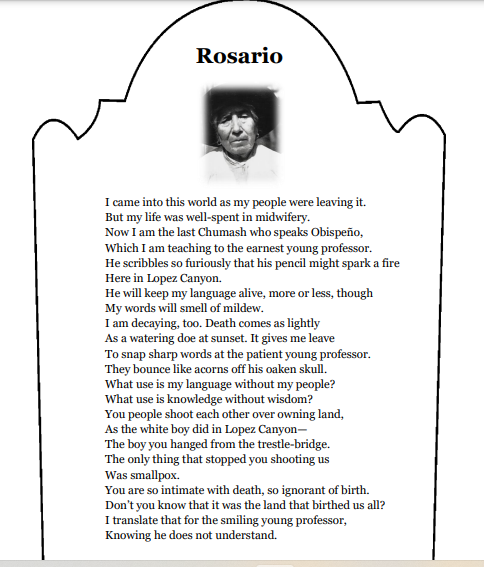
My Spoon River Poem

30 Wednesday Mar 2022

Posted by ag1970 in Arroyo Grande, Uncategorized

≈ Leave a comment

Based on the Edgar Lee Masters’ collection, this one’s about a woman a half-continent away from Illinois. Rosario Cooper was the last speaker of her dialect of Central California’s Chumash language. She was interviewed and some of her language taken down by anthropological linguist J.P. Harrington who, I guess—from reliable sources—was a jerk. But her language survives, if only in Cal’s Bancroft Library.

Rosario was a midwife and healer—her people’s knowledge of wild plant foods, herbs and curatives was vast and remains amazing to me, as was their understanding of the wild birds, the rainbow trout, the mule deer, jackrabbits, mountain lions, coyotes and, until the late 1870s, the grizzly bears that were part of their daily lives.

A land dispute near her, in Arroyo Grande’s Lopez Canyon, resulted in a double murder and then a double lynching of the suspects just below Arroyo Grande’s Crown Hill in 1886. A decade later, a second feud, also over land rights, led to the beating death of a man whose body was discovered by a prostitute out for her morning walk along Monterey Street in San Luis Obispo. The prime suspect was acquitted, but some justice was carried out ten years later, when he went to Folsom for horse theft.

All of this would have bewildered Rosario, who was the granddaughter of a “Mission Indian” born in the 1790s in a rancheria, or village, in the Upper Arroyo Grande Valley, near today’s Strother Park. Her grandfather may or may not have been a sailor; the marriage may or may not have been enforced by the Mission Fathers and the grandfather may or may not have been drowned at sea. So much was uncertain at the turn of that century.

The Chumash were acquainted with uncertainty: a terrible drought in what would become San Luis Obispo County forced them to become neophytes; it threatened to exterminate them before White men and their smallpox and cholera very nearly did.

Eighty years after the Mission’s founding, the City Fathers of San Luis Obispo hired a man and his wheelbarrow to cart the cholera victims up the hill that led to the Old Mission burying ground. His hard work is unrecognized, as are the human beings that were his freight. They are buried, in what must be compact stacks, like the soldiers’ bones in the Verdun ossuary, in a steeply-banked garden that faces the annex, the addition that gives the Old Mission a half-cruciform floor plan.

On the opposite side of the nave, in the Mission Gardens proper, the only legal hanging in San Luis Obispo County history was carried out in 1859. All the others, carried out by the 1858 Vigilance Committee, which has the dubious record of hanging two more men than San Francisco’s, happened facing the Mission, where a little bronze Chumash girl shares a fountain with a Grizzly. Given their propensity for carrying off rancheros’ bawling claves, the proximity of the little girl and the Grizzly might seem odd.

The statues might have made more sense to Rosario, who died in 1917 still understanding the fading natural world around her that was quickly being reduced to checkerboard ranches bounded by barbed wire. The events in Lopez Canyon, in her California, where men shot at each other over their barbed-wire fences—those White men events— would have bewildered her.

Justifiably so.

Note: The origin for this was a class I taught teens as part of the Central Coast Writers’ Conference. This was a model. The teens then chose a person from local history and wrote a “tombstone poem” for that person.
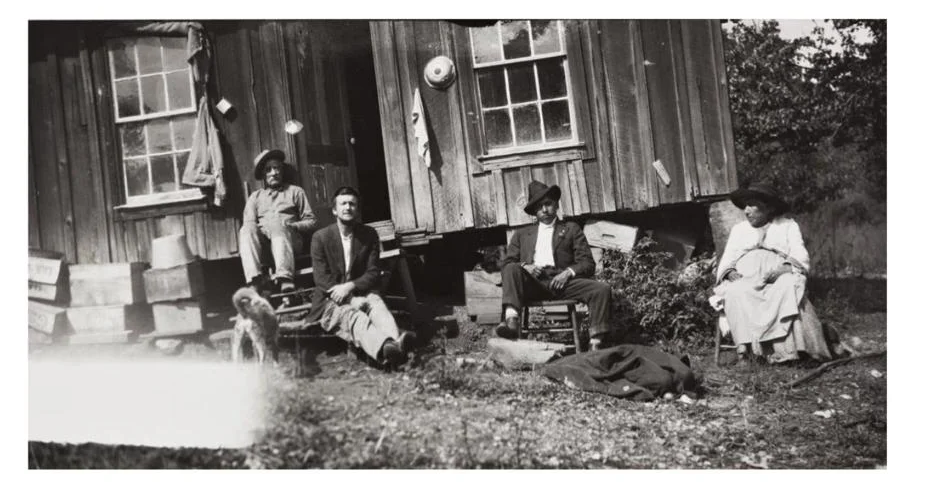
Lopez Canyon, 1916. L-R: Rosario’s husband, Mauro Soto, Anthropologist J.P. Harrington, Frank Olivas, Rosario’s son, and Rosario Cooper.

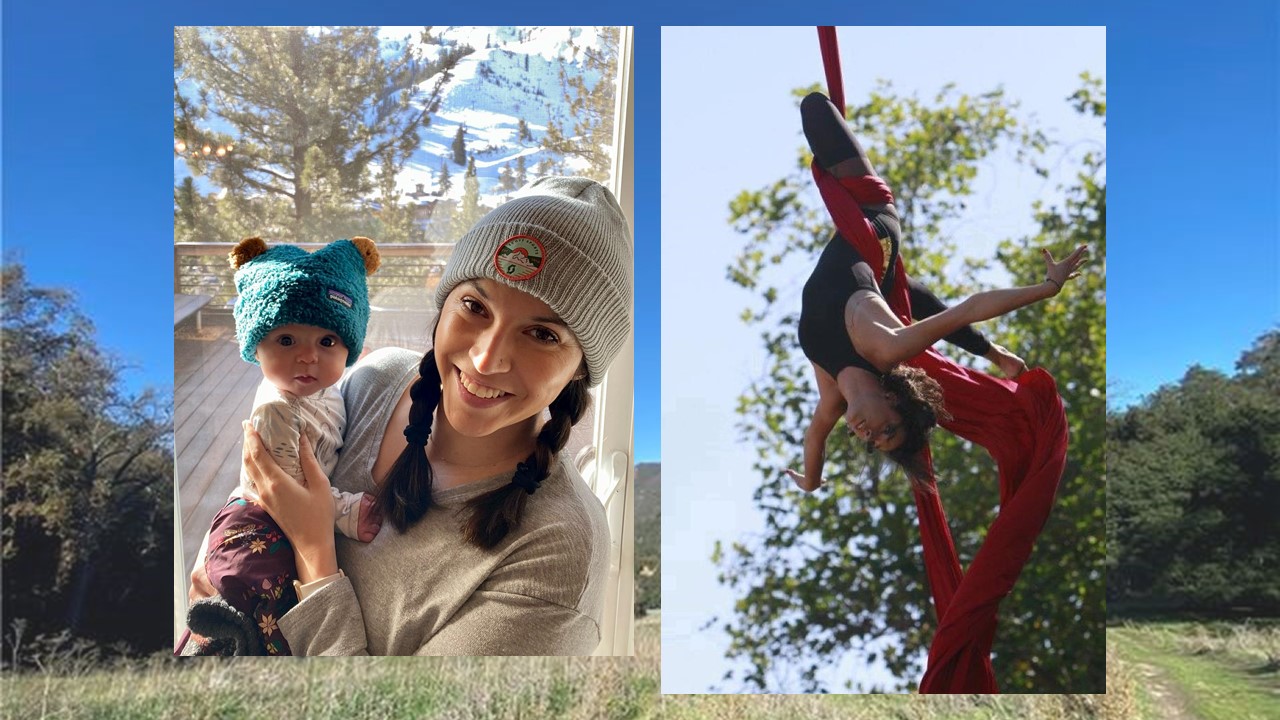
What amazed and pleased me to no end was realizing, years afterward, that I had taught two of Rosario’s great-great (great?) granddaughters in my history classes at Arroyo Grande High School.

McKenzie—with her little girl— and Hannah are beautiful, brilliant and generous young women. Beyond that, they are powerful in ways that I am sure are part of their DNA. I can’t help but think that Rosario would be even more proud of them than I am. I don’t doubt at all at the immensity of her love for them.

We are fixed on linear time: Rosario understood that time was cyclical, so she will watch over her babies, including McKenzie’s and including those not yet born. She will always be here for them. As we reckon time, Rosario Cooper died in 1917. I am convinced that the force of her life—one that gave life to newborn babies— endures.

The combat photographers

13 Sunday Mar 2022

Posted by ag1970 in Uncategorized, World War II

≈ Leave a comment

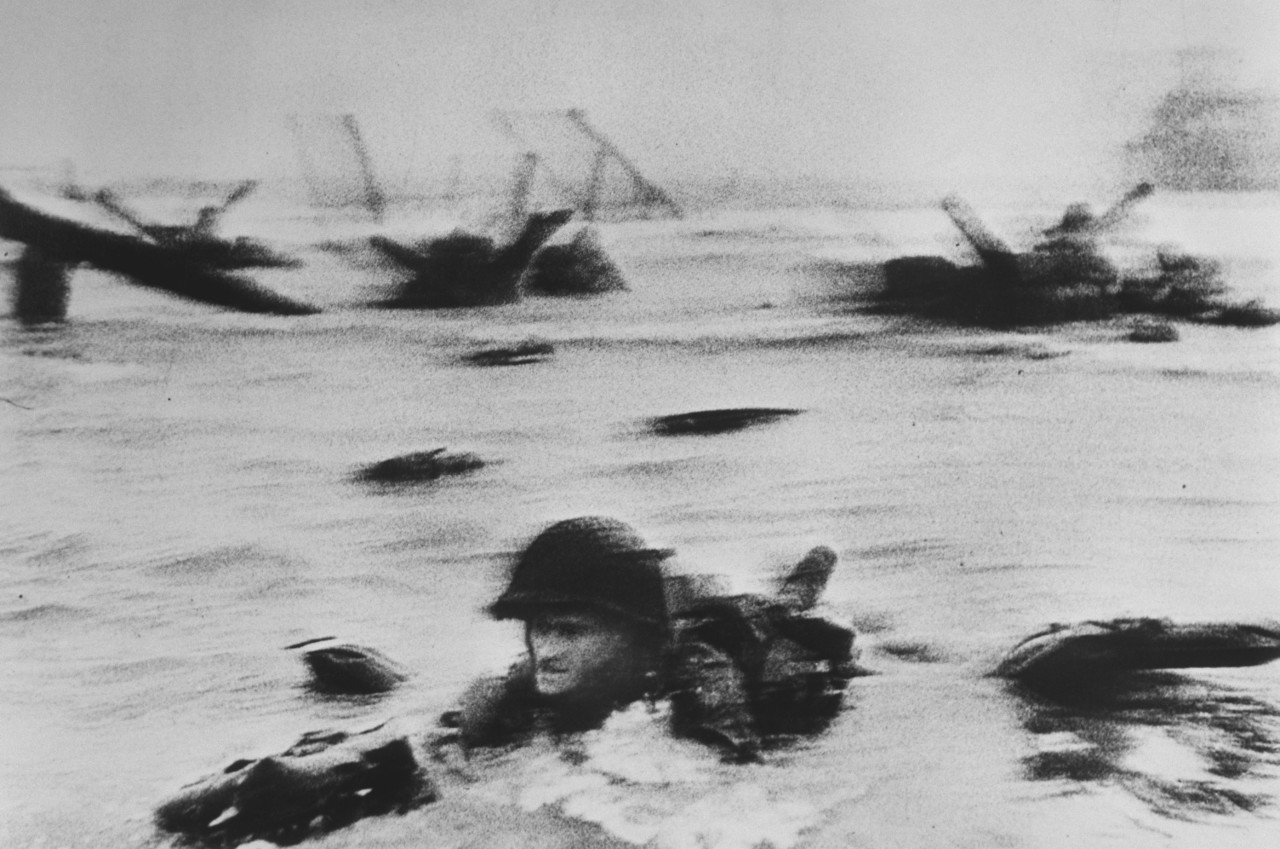
Photographer Robert Capa captured a GI amid beach obstacles struggling to reach Omaha Beach on D-Day. Even the shots that survived the Time-Life London processor, like this one, were compromised–this somehow made them even more powerful.

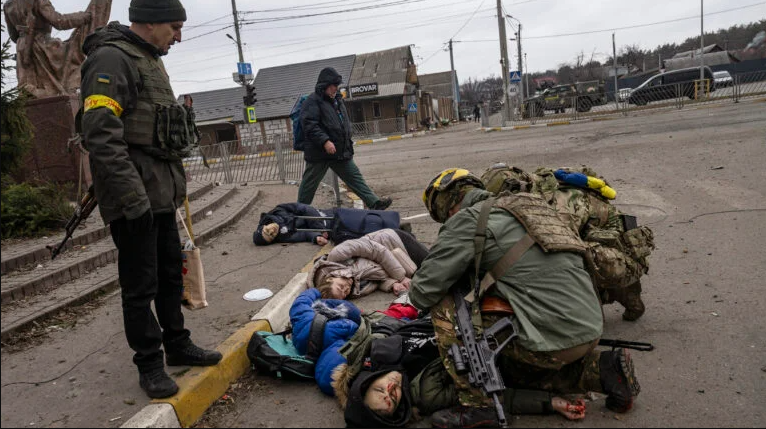
Irpin, Ukraine, Sunday, March 6, 2022

Some are condemning the work of New York Times photojournalist Lynsey Addario, who captured the indelible image of the Ukrainian family struck down by a mortar round in the city of Irpin.

I disagree vehemently. If you Google “Alexander Gardner Antietam,” you’ll find the most horrific photographs of the casualties of war ever published, the record of what remains the single deadliest day of combat in American history, in September 1862

Unlike Gardner’s images, Addario’s was relatively restrained–the family likely died from the concussion of the mortar round’s impact or the needle-like shrapnel that the detonation can generate. They almost appeared asleep, which, to me, made the image even more powerful and even more moving.

They were, in death, so oddly beautiful and so completely innocent. I couldn’t look away from the image until I finally had to. Maybe, in losing their lives, in the anger their innocence provokes in us, they will save the lives of many others.

There’s another side to this terrible event. A video captured this man, a volunteer, at the moment the mortar round detonated. He disappears, and then, in a dense layer of concrete dust, someone seems to drag his inert body away.

You can hear Addario and other journalists shouting “Shit! Shit! Shit!” when they see the family across the street.

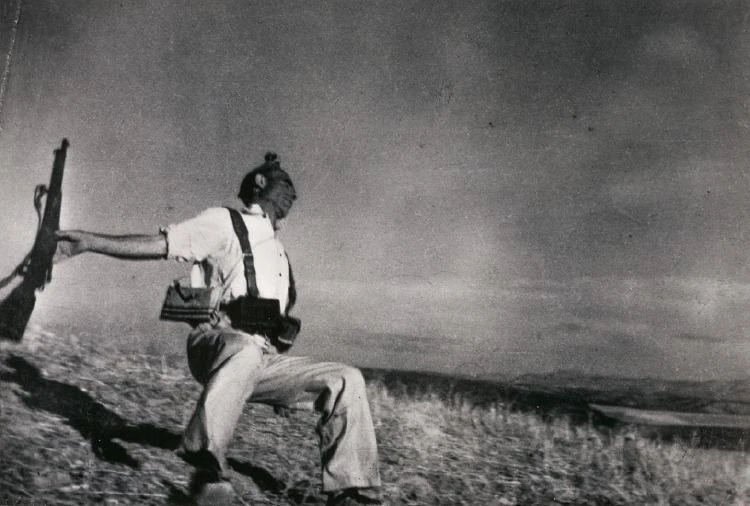
Robert Capa captured the moment of a Spanish Loyalist soldier’s death in Spain in 1936, during a war that seems to parallel Ukraine’s war today. Eight years later, after surviving the carnage in the assault on Omaha Beach, eight of the nine rolls of film that Capa had shot that morning were ruined in a London photo lab.

That’s not the whole story, and the whole story is about the value of human life. Addario found out that the man in the video, the Ukrainian volunteer who disappeared in the dust of the explosion, had in fact survived.

That was important to her. Another photojournalist captured Addario’s image moments before the fatal mortar round, when other rounds were landing all along the street where she was shooting.

The man in the video, in this image, had pushed Addario to the ground and he was covering her body with his.

He was willing to offer the American stranger his own life.

I’ve been agonizing, as all of us have, over Ukraine. When I found out that Addario’s protector had survived, I let out, involuntarily, something that approached a sob.

Ukraine is so instructive. In my memory I haven’t seen anything like this since Rwanda, when the depths of depravity–in today’s case, Putin’s–are offset, if only incrementally, by human beings with far less power but far more courage, far more generosity of spirit.

In the middle of reporting the genocide in Rwanda, with a parade of refugees walking painfully—toward safety, they hoped—behind him, the superb CBS News correspondent Barry Petersen, during what might well have been a live shot, suddenly realized the enormity of what he was covering. He began to cry.

It was one of the most powerful moments of reportage I’ve ever seen. Petersen reminded us that these faraway people—Black people—were our brothers and sisters, a concept that many Americans still have difficulty understanding. Petersen’s tears affirmed our shared humanity.

And so I found another brother in the man whose name I don’t know who more than likely saved Lynsey Addario’s life, This was so that she could take the photograph that has reminded us, too of our humanity, of the family that my heart will remember until the moment of its last beat.

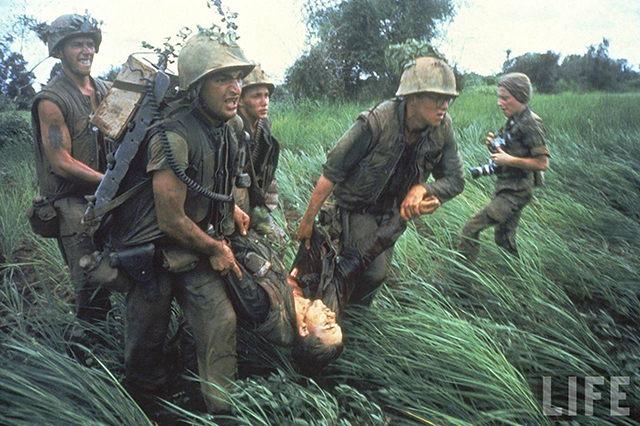
Marines carry a dead comrade to a helicopter, Vietnam, 1966. Photographer Larry Burrows would be killed in this war five years later.


The Medic

11 Friday Mar 2022

Posted by ag1970 in Arroyo Grande, Uncategorized, World War II

≈ 1 Comment

Pvt. Yoshihara’s grave, Guadalupe.

I’m speaking in Santa Maria next week about our county’s World War II commemoration—the eightieth anniversary of the war, and of Japanese internment—when I wondered if any Santa Maria Nisei (second generation Japanese-Americans) had been among the town’s 55 wartime casualties.

Because of his surname, Makoto Yoshihara was at the bottom of the list.

He was actually born in Morro Bay; his parents moved to Guadalupe where they ran a boarding housel and pool hall. Makoto played football for the Santa Maria Saints, joined or was drafted into the Army in October 1941. His parents, like our Arroyo Grande neighbors, went to the Rivers Camp in the Arizona desert. The photo below shows evacuation day in Guadalupe, and I knew that Guadalupe had a prominent Japanese-American presence, but the numbers surprised me: Two hundred people were taken from Arroyo Grande, 400 from Santa Maria, but 800 from little, beautiful Guadalupe.

April 30, 1942.

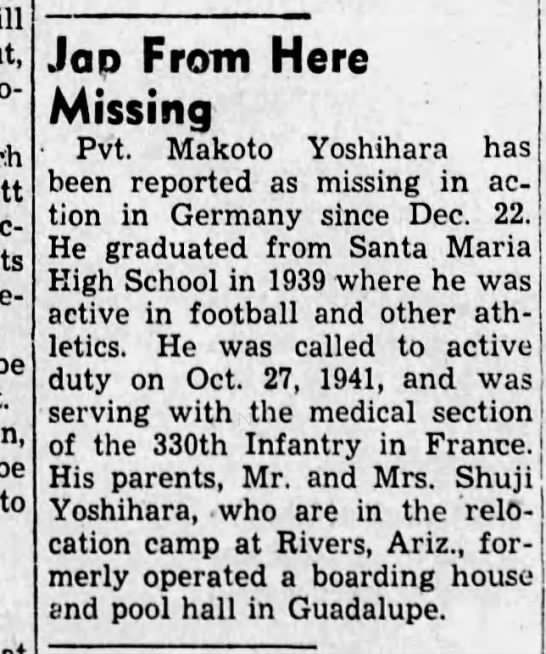
About two and a half years later, the insult heaped on our neighbors would be intensified by the headline that first reported Makoto’s fate. From the January 25, 1945, Santa Maria Times:

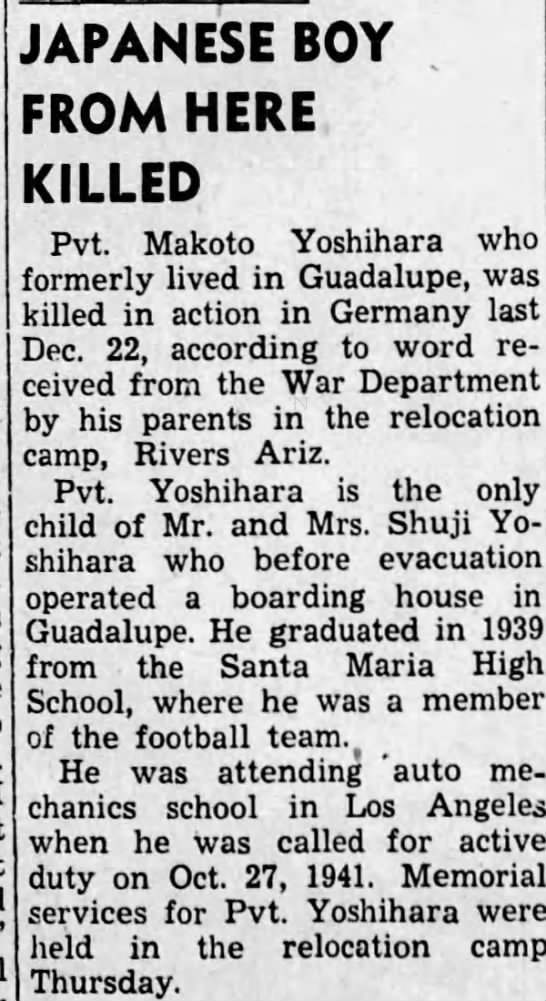
It is, of course, jarring to read. A month later, once Makoto’s death is confirmed, the newspaper softens its tone:

And you’re relieved at the slight change in tone until you read where his parents received that terrible telegram from the War Department. Everyone—everyone—behind barbed wire in the desert would’ve known almost instantly what had happened to Mr. and Mrs. Yoshihara’s son. The tarpaper barracks walls would’ve done nothing to soften the sound of a mother’s weeping for her only child.

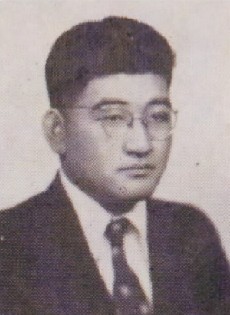
Makoto had wanted to be a mechanic. This must be his high school senior photo. He looks like a serious young man.


Which is why the Army—my father, a World War II veteran, would claim to be surprised by this—did something right. They made this serious young man a medic.

Another surprise came, at least for me, in the article with the insulting headline. Makoto was not a member of the famed 100th/442nd Regimental Combat Team, nor—since served in the European Theater—was he a Nisei intelligence officer, like so many local men were, the ones who underwent, at Camp Shelby, Mississippi, the same tough training that the 4-4-2 endured.

Makoto instead served in the 83rd Infantry Division, a unit that had a thoroughly White pedigree—the 83rd was traditionally an Ohio outfit, from the state that produced a batch of mediocre presidents, and here, probably the only Nisei among 10,000 White boys, was Makoto Yoshihara, the medic from Guadalupe, California. The Ohio boys probably had never seen the ocean. Makoto probably never got the chance to see fireflies, one of the natural wonders that make Midwestern summers, despite their oppressiveness, delightful.

He must’ve been lonely. And, if only at first, he must’ve endured racist attempts at humor.

The only other local Nisei G.I. I know of that served in a non-Nisei unit was Arroyo Grande’s Mits Fukuhara, who served in a tank battalion; Mits and his battalion missed the fighting because the war ended before they could join it.

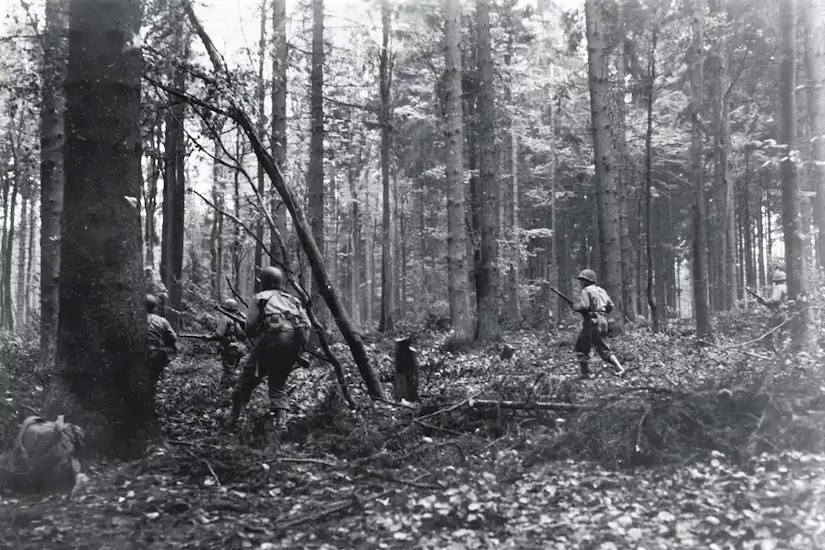
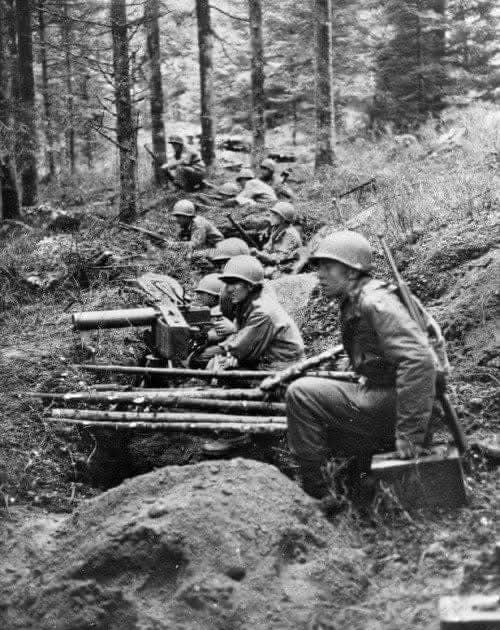
Makoto didn’t miss the fighting; in fact, he saw some of the worst combat of the Americans’ war. The 83rd and his regiment, the 330th Infantry, got into a slugging match with the Wehrmacht in the Huertgen Forest in September 1944—the photos below give an idea of the terrain there— in a horrific battle that would last for two months. The nearest approximate I can think of in the American experience would’ve been the Battle of the Wilderness in 1864, where dense forest broke Grant’s infantry companies down into little knots of men, separated by trees and dense foliage that made it impossible to see each other—or the enemy. Lee’s men appeared as shadows, mirages, and disappeared in the smoke, because the muzzle flashes from Enfields or Springfields set the Wilderness afire. The fires burned the wounded alive.


(In 1945, after Germany’s surrender, fires swept the Huertgen and detonated unexploded artillery shells. The war hadn’t ended at all for the scores of German civilians killed by buried ordnance that had been intended for soldiers.)

The battle for the Huertgen was a debacle. The Americans suffered nearly twice the casualties the German defenders did and they had to pull back and reorganize in December.

Somehow Makoto Yoshihara survived those two months in the forest.

And then, in December, the 83rd Division would face the Germans again in the massive offensive that we remember as the Battle of the Bulge, fought during one of the coldest winters in Europe in thirty years.

Makoto didn’t have to face that second, epic battle. Somewhere in the not-quite-lull in between, he died. The divisional after-action reports for the day he died, December 22, are bland; they suggested units relieving other units and the straightening of lines; battlefront housekeeping. But when you get down to the battalion level, the reports cite heavy German resistance, nighttime attacks, and cold. Always the cold.

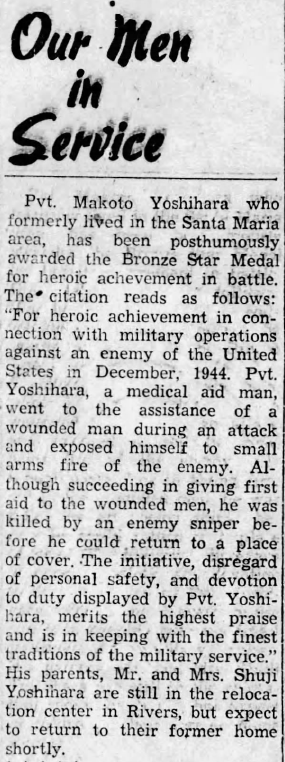
The way he died once again confirms the Army’s wisdom in assigning him to the 330th’s Medical Detachment. The Santa Maria Times kind of redeems itself, thanks to the Bronze Star citation’s wording, in this article from September 1945:

Makoto died saving a brother G.I.’s life because medics were favored targets for snipers; if you can kill a medic, the five or six wounded soldiers he might’ve saved will die, too.

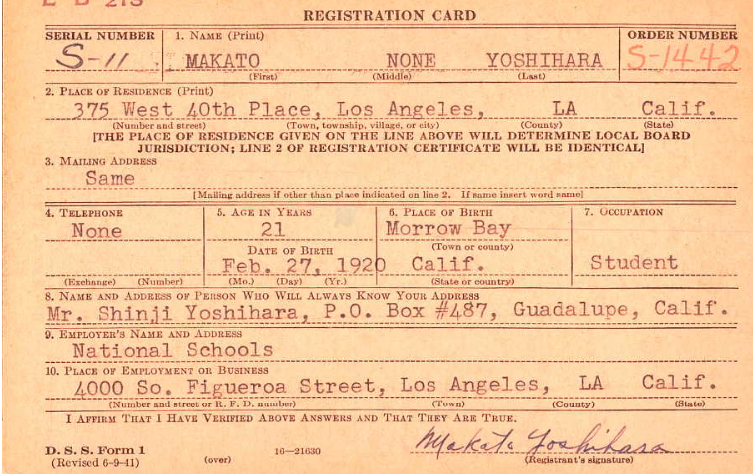
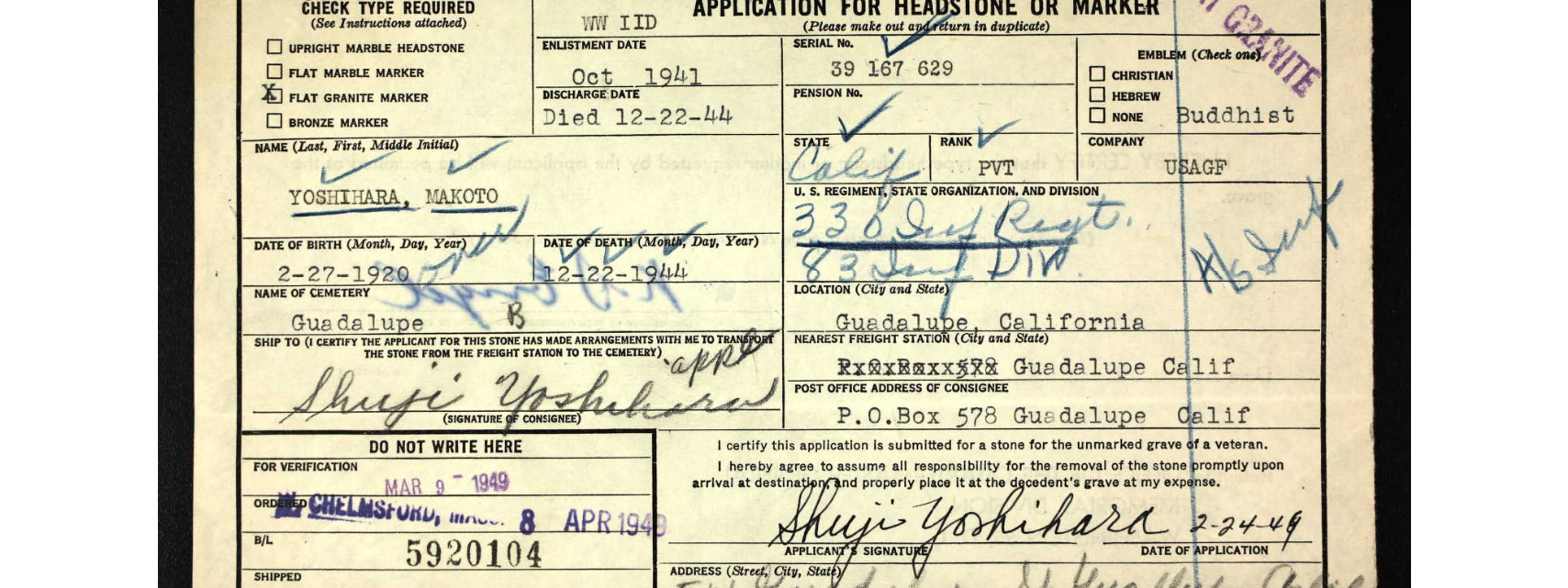
(Above): Tragic bookends: Makotto’s draft card, its spelling uncertain, and his family’s application for a military tombstone.


Makoto died 5,000 miles away from Guadalupe’s row crops, its Mexican restaurants, honky-tonks and the sand dunes and the vivid ribbon of ocean beyond.

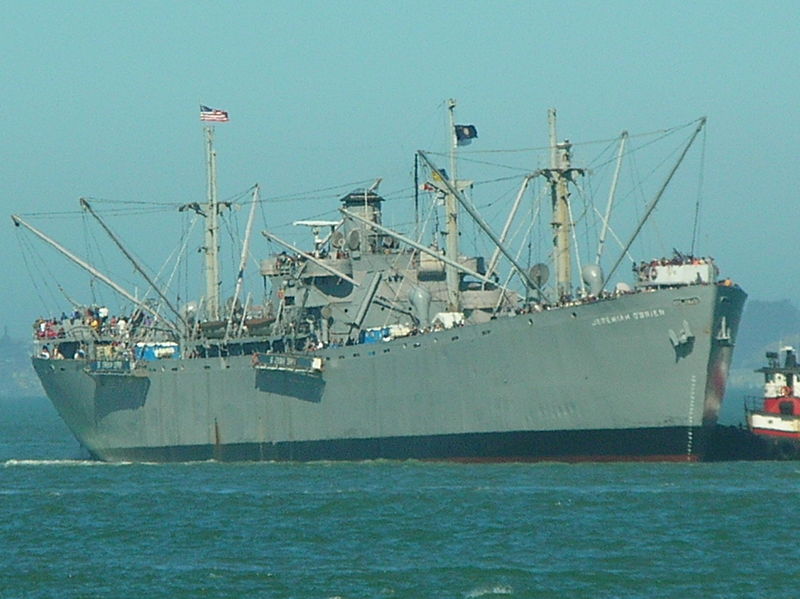
His body was returned to America in December 1948 aboard the prosaically-named Liberty Ship Barney Kirschbaum, one of the war’s industrial wonders; Kirschbaum’s duplicate, Jeremiah O’Brien, made the trip in reverse in 1994, sailing from her berth in San Francisco to England and then to the Normandy coast where she’d done duty in the invasion of the Continent in 1944; O’Brien is the last of the 6,000 ships that supported the D-Day landings.

Jeremiah O’Brien, one of three thousand Liberty Ships built during the war.


Accompanying Makoto’s coffin on Kirschbaum were the coffins of Orville Tucker of Arroyo Grande, killed on the second day of the Battle of the Bulge—five days before Makoto knelt over the wounded soldier— and Stanley Weber of Oceano, who died the next month in the counteroffensive that erased the Bulge and drove the Germans back.

The coffins, of course, would’ve been flag-draped. That’s an important detail, because belowdecks on Kirschbaum’s long voyage home, there were no “Japs;” no Ohioans, no Californians. These were our young men; even in death and even in the eighty years that separate our lives, they remind us that we, all of us, belong to each other.


Subscribe

  • Entries (RSS)
  • Comments (RSS)

Archives

  • January 2026
  • December 2025
  • November 2025
  • October 2025
  • September 2025
  • August 2025
  • July 2025
  • June 2025
  • May 2025
  • April 2025
  • March 2025
  • February 2025
  • January 2025
  • December 2024
  • November 2024
  • October 2024
  • September 2024
  • August 2024
  • July 2024
  • June 2024
  • May 2024
  • April 2024
  • March 2024
  • February 2024
  • January 2024
  • December 2023
  • November 2023
  • October 2023
  • September 2023
  • August 2023
  • July 2023
  • June 2023
  • May 2023
  • April 2023
  • March 2023
  • February 2023
  • January 2023
  • December 2022
  • November 2022
  • October 2022
  • September 2022
  • August 2022
  • May 2022
  • April 2022
  • March 2022
  • February 2022
  • January 2022
  • December 2021
  • November 2021
  • October 2021
  • September 2021
  • August 2021
  • July 2021
  • June 2021
  • April 2021
  • March 2021
  • February 2021
  • January 2021
  • December 2020
  • November 2020
  • August 2020
  • July 2020
  • June 2020
  • May 2020
  • April 2020
  • January 2020
  • December 2019
  • November 2019
  • October 2019
  • September 2019
  • August 2019
  • May 2019
  • April 2019
  • March 2019
  • February 2019
  • January 2019
  • December 2018
  • November 2018
  • October 2018
  • September 2018
  • July 2018
  • June 2018
  • May 2018
  • April 2018
  • March 2018
  • February 2018
  • January 2018
  • December 2017
  • November 2017
  • October 2017
  • April 2017
  • March 2017
  • December 2016
  • November 2016
  • October 2016
  • September 2016
  • August 2016
  • July 2016
  • June 2016
  • April 2016
  • March 2016
  • February 2016
  • January 2016
  • December 2015
  • November 2015
  • October 2015
  • September 2015
  • August 2015
  • July 2015
  • June 2015
  • May 2015
  • April 2015
  • March 2015
  • February 2015
  • January 2015
  • December 2014
  • November 2014
  • September 2014
  • August 2014
  • July 2014

Categories

  • American History
  • Arroyo Grande
  • California history
  • Family history
  • Film and Popular Culture
  • History
  • News
  • Personal memoirs
  • Teaching
  • The Great Depression
  • trump
  • Uncategorized
  • World War II
  • Writing

Meta

  • Create account
  • Log in

Blog at WordPress.com.

  • Subscribe Subscribed
    • A Work in Progress
    • Join 68 other subscribers
    • Already have a WordPress.com account? Log in now.
    • A Work in Progress
    • Subscribe Subscribed
    • Sign up
    • Log in
    • Report this content
    • View site in Reader
    • Manage subscriptions
    • Collapse this bar
 

Loading Comments...