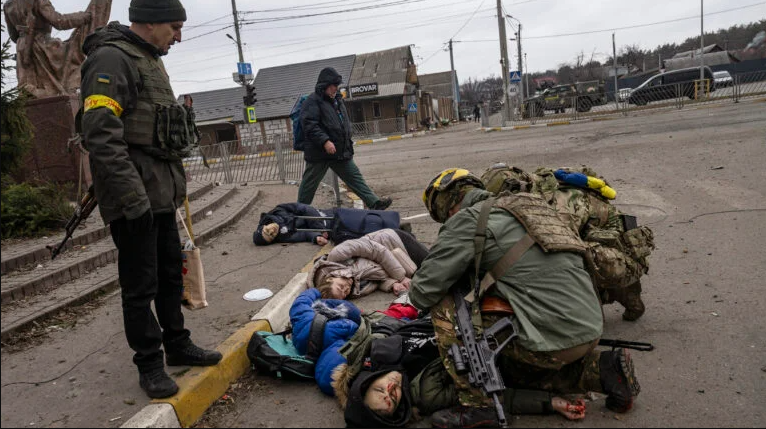
Some are condemning the work of New York Times photojournalist Lynsey Addario, who captured the indelible image of the Ukrainian family struck down by a mortar round in the city of Irpin.
I disagree vehemently. If you Google “Alexander Gardner Antietam,” you’ll find the most horrific photographs of the casualties of war ever published, the record of what remains the single deadliest day of combat in American history, in September 1862
Unlike Gardner’s images, Addario’s was relatively restrained–the family likely died from the concussion of the mortar round’s impact or the needle-like shrapnel that the detonation can generate. They almost appeared asleep, which, to me, made the image even more powerful and even more moving.
They were, in death, so oddly beautiful and so completely innocent. I couldn’t look away from the image until I finally had to. Maybe, in losing their lives, in the anger their innocence provokes in us, they will save the lives of many others.
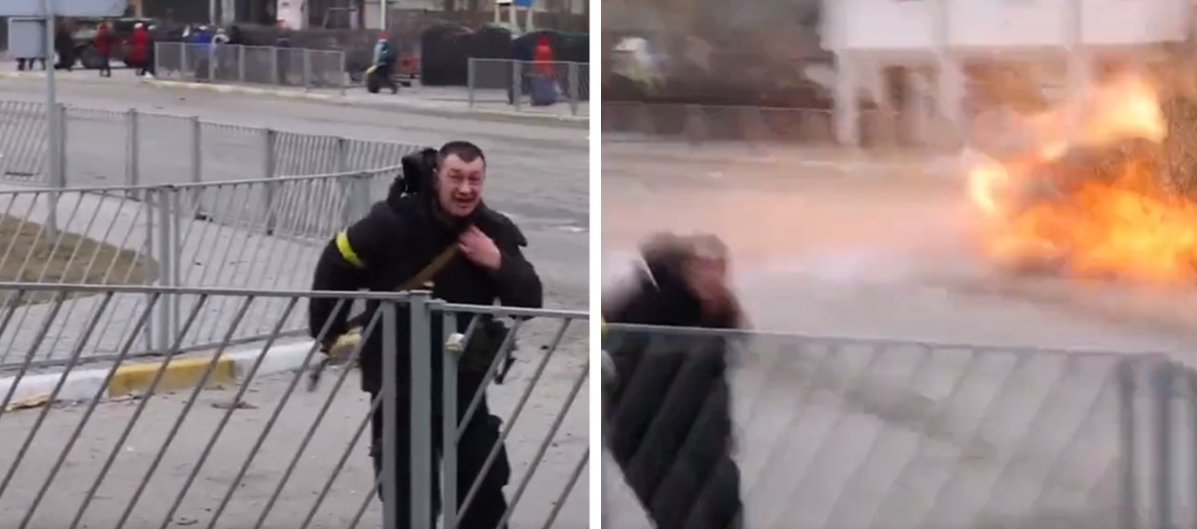
There’s another side to this terrible event. A video captured this man, a volunteer, at the moment the mortar round detonated. He disappears, and then, in a dense layer of concrete dust, someone seems to drag his inert body away.
You can hear Addario and other journalists shouting “Shit! Shit! Shit!” when they see the family across the street.
That’s not the whole story, and the whole story is about the value of human life. Addario found out that the man in the video, the Ukrainian volunteer who disappeared in the dust of the explosion, had in fact survived.
That was important to her. Another photojournalist captured Addario’s image moments before the fatal mortar round, when other rounds were landing all along the street where she was shooting.
The man in the video, in this image, had pushed Addario to the ground and he was covering her body with his.
He was willing to offer the American stranger his own life.
I’ve been agonizing, as all of us have, over Ukraine. When I found out that Addario’s protector had survived, I let out, involuntarily, something that approached a sob.
Ukraine is so instructive. In my memory I haven’t seen anything like this since Rwanda, when the depths of depravity–in today’s case, Putin’s–are offset, if only incrementally, by human beings with far less power but far more courage, far more generosity of spirit.
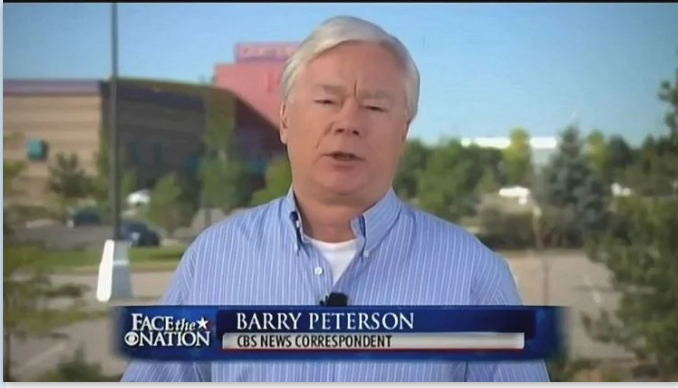
In the middle of reporting the genocide in Rwanda, with a parade of refugees walking painfully—toward safety, they hoped—behind him, the superb CBS News correspondent Barry Petersen, during what might well have been a live shot, suddenly realized the enormity of what he was covering. He began to cry.
It was one of the most powerful moments of reportage I’ve ever seen. Petersen reminded us that these faraway people—Black people—were our brothers and sisters, a concept that many Americans still have difficulty understanding. Petersen’s tears affirmed our shared humanity.
And so I found another brother in the man whose name I don’t know who more than likely saved Lynsey Addario’s life, This was so that she could take the photograph that has reminded us, too of our humanity, of the family that my heart will remember until the moment of its last beat.
 A Work in Progress