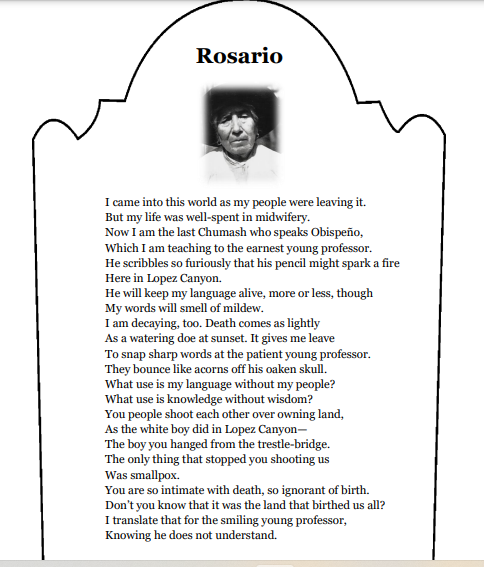
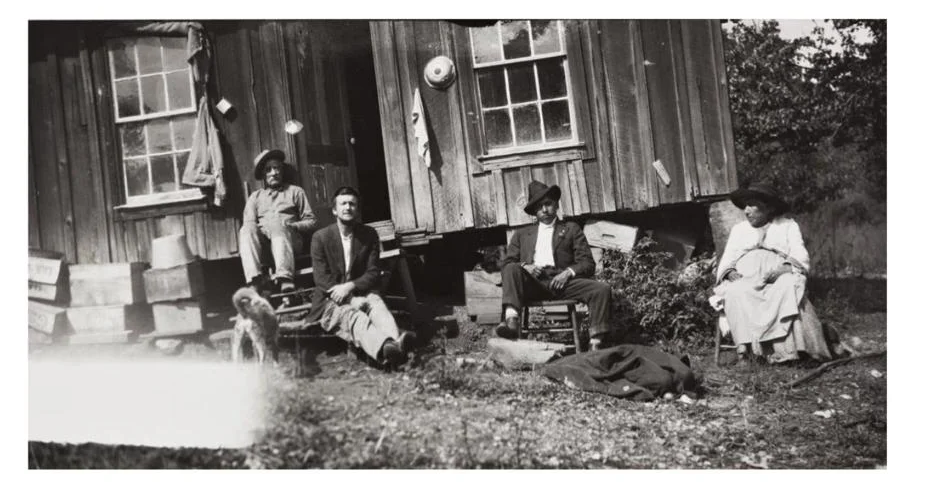
Based on the Edgar Lee Masters’ collection, this one’s about a woman a half-continent away from Illinois. Rosario Cooper was the last speaker of her dialect of Central California’s Chumash language. She was interviewed and some of her language taken down by anthropological linguist J.P. Harrington who, I guess—from reliable sources—was a jerk. But her language survives, if only in Cal’s Bancroft Library.
Rosario was a midwife and healer—her people’s knowledge of wild plant foods, herbs and curatives was vast and remains amazing to me, as was their understanding of the wild birds, the rainbow trout, the mule deer, jackrabbits, mountain lions, coyotes and, until the late 1870s, the grizzly bears that were part of their daily lives.
A land dispute near her, in Arroyo Grande’s Lopez Canyon, resulted in a double murder and then a double lynching of the suspects just below Arroyo Grande’s Crown Hill in 1886. A decade later, a second feud, also over land rights, led to the beating death of a man whose body was discovered by a prostitute out for her morning walk along Monterey Street in San Luis Obispo. The prime suspect was acquitted, but some justice was carried out ten years later, when he went to Folsom for horse theft.
All of this would have bewildered Rosario, who was the granddaughter of a “Mission Indian” born in the 1790s in a rancheria, or village, in the Upper Arroyo Grande Valley, near today’s Strother Park. Her grandfather may or may not have been a sailor; the marriage may or may not have been enforced by the Mission Fathers and the grandfather may or may not have been drowned at sea. So much was uncertain at the turn of that century.
The Chumash were acquainted with uncertainty: a terrible drought in what would become San Luis Obispo County forced them to become neophytes; it threatened to exterminate them before White men and their smallpox and cholera very nearly did.
Eighty years after the Mission’s founding, the City Fathers of San Luis Obispo hired a man and his wheelbarrow to cart the cholera victims up the hill that led to the Old Mission burying ground. His hard work is unrecognized, as are the human beings that were his freight. They are buried, in what must be compact stacks, like the soldiers’ bones in the Verdun ossuary, in a steeply-banked garden that faces the annex, the addition that gives the Old Mission a half-cruciform floor plan.
On the opposite side of the nave, in the Mission Gardens proper, the only legal hanging in San Luis Obispo County history was carried out in 1859. All the others, carried out by the 1858 Vigilance Committee, which has the dubious record of hanging two more men than San Francisco’s, happened facing the Mission, where a little bronze Chumash girl shares a fountain with a Grizzly. Given their propensity for carrying off rancheros’ bawling claves, the proximity of the little girl and the Grizzly might seem odd.
The statues might have made more sense to Rosario, who died in 1917 still understanding the fading natural world around her that was quickly being reduced to checkerboard ranches bounded by barbed wire. The events in Lopez Canyon, in her California, where men shot at each other over their barbed-wire fences—those White men events— would have bewildered her.
Justifiably so.
Note: The origin for this was a class I taught teens as part of the Central Coast Writers’ Conference. This was a model. The teens then chose a person from local history and wrote a “tombstone poem” for that person.
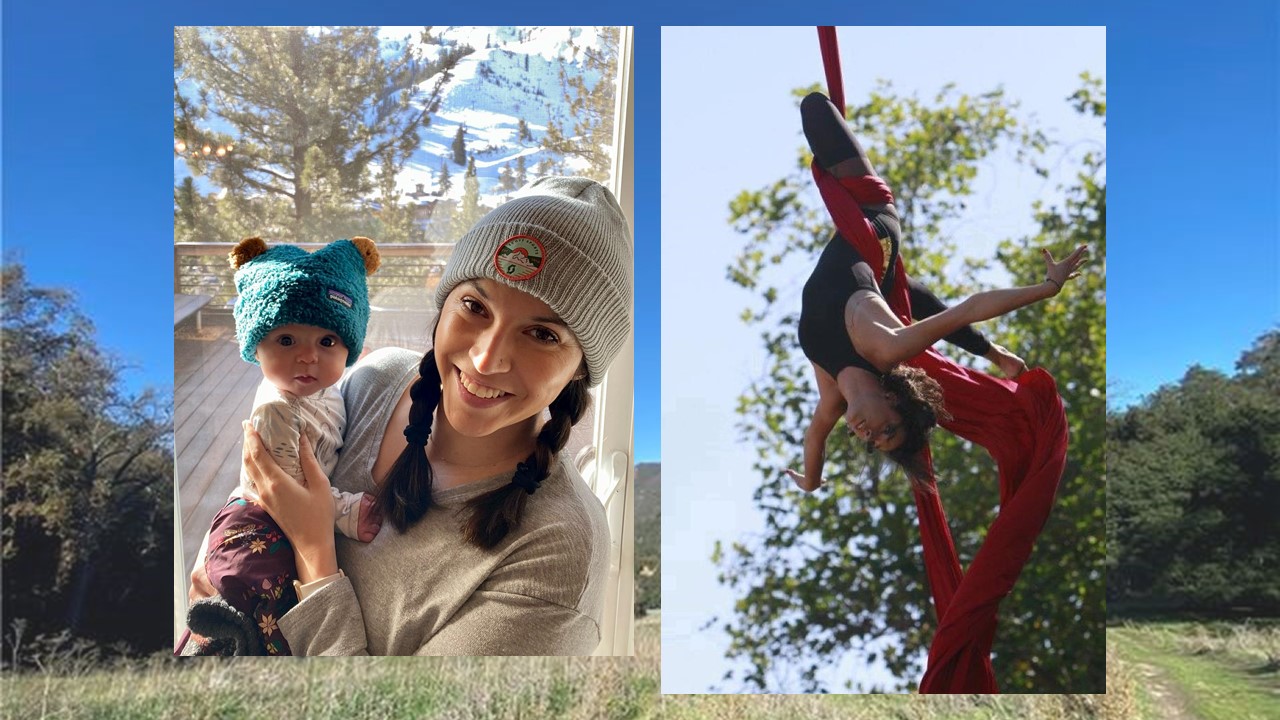
What amazed and pleased me to no end was realizing, years afterward, that I had taught two of Rosario’s great-great (great?) granddaughters in my history classes at Arroyo Grande High School.
McKenzie—with her little girl— and Hannah are beautiful, brilliant and generous young women. Beyond that, they are powerful in ways that I am sure are part of their DNA. I can’t help but think that Rosario would be even more proud of them than I am. I don’t doubt at all at the immensity of her love for them.
We are fixed on linear time: Rosario understood that time was cyclical, so she will watch over her babies, including McKenzie’s and including those not yet born. She will always be here for them. As we reckon time, Rosario Cooper died in 1917. I am convinced that the force of her life—one that gave life to newborn babies— endures.
 A Work in Progress