
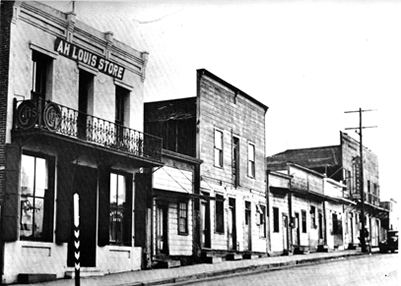
I heard the story first when I was in high school: How a mob of angry men rode down from Arroyo Grande, surrounded a Chinese crew laying track, and ordered them to leave. Years later, I found out it was true. A newspaper clipping from an 1886 San Francisco Examiner:
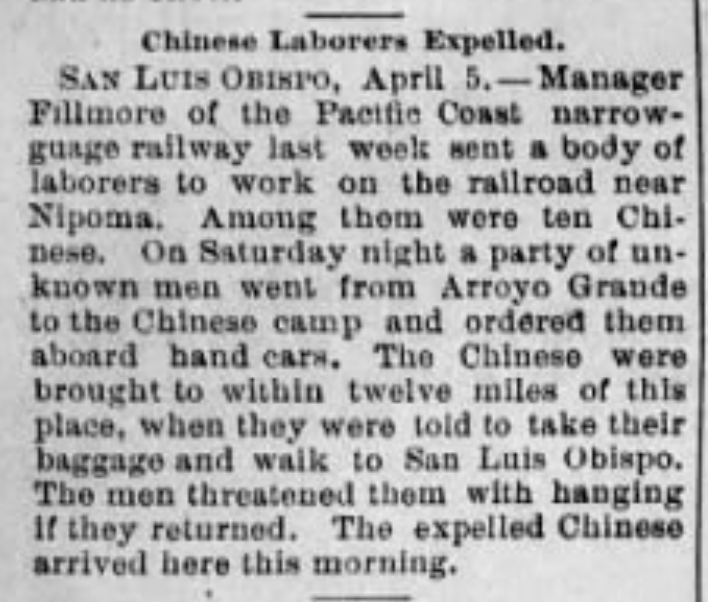
I knew that this story was a bookend because in February 1886, this article had appeared:
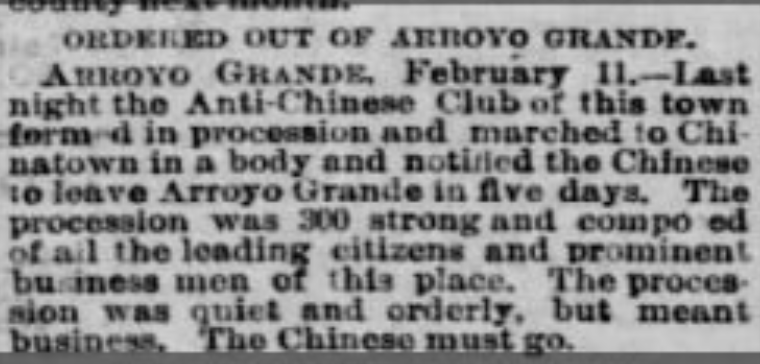
And when I say “bookends,” this is what I mean: In February, the “Anti-Chinese Club,” men disguised with handkerchiefs over their faces, ordered the Chinese to leave town; April 5 saw a similar group descend on the railroad workers.
On March 31, a similar group from Arroyo Grande did this:
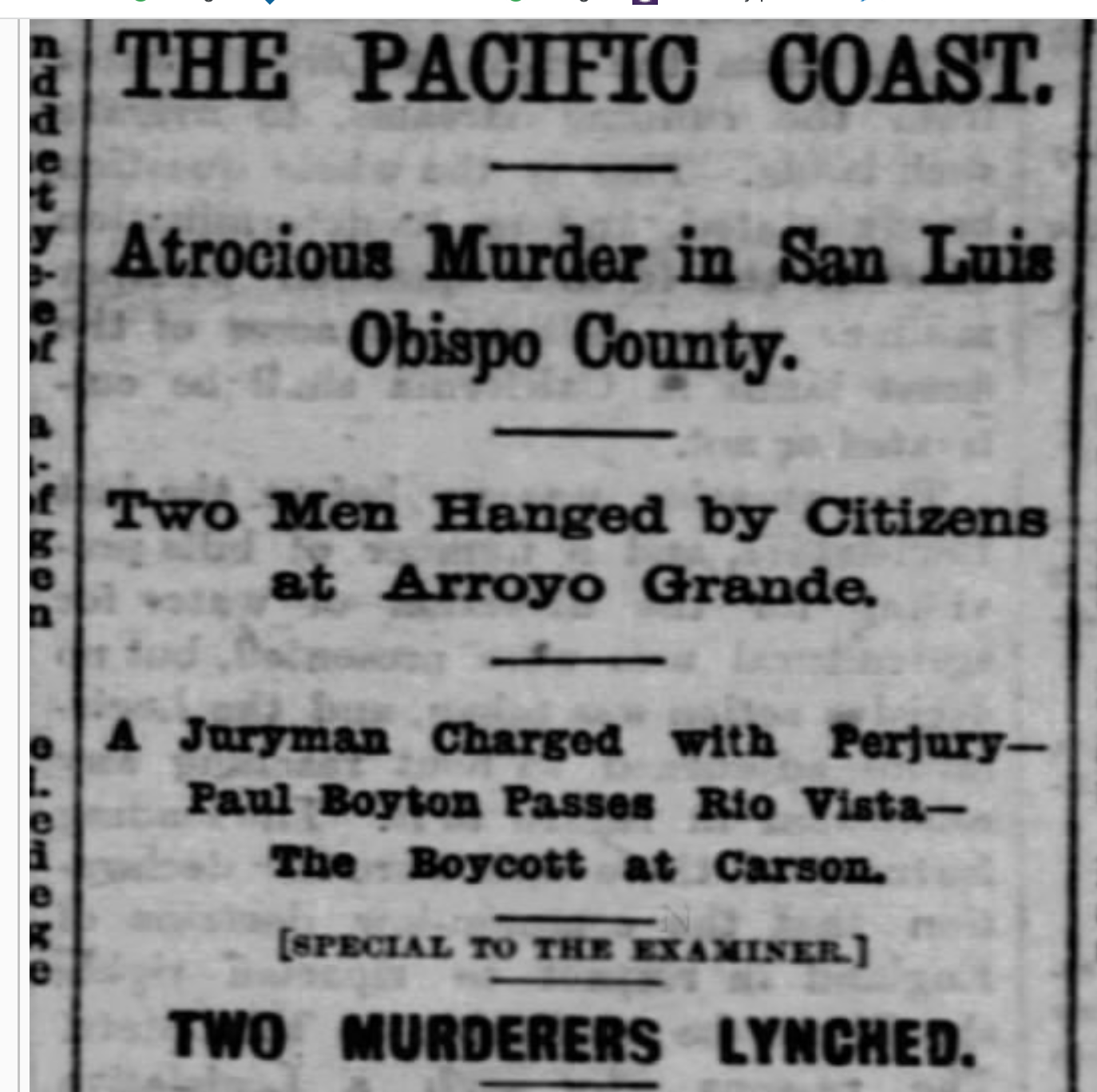
The 1886 lynchings were in part made possible by a citizenry, motivated by anti-Chinese rhetoric, that constituted a kind of instant lynch mob. That was bad luck for the Hemmis.
The mob executed two men. But they changed local history in a more profound way in the threats they visited on Chinese residents.
The newspaper article seems to confirm that Arroyo Grande once had a Chinatown, one that was evidently eliminated by “The Anti-Chinese Club” in February 1886. I grew up with friends whose ancestors were from Mexico, the Azores, the Philippines and Japan. Only a few claimed Chinese ancestry.
Yet there’s proof that, in 1886, this was Arroyo Grande’s second Chinatown. I turned to the Census, whose material can be poignant.
Here is what I found in the Arroyo Grande 1870 census:
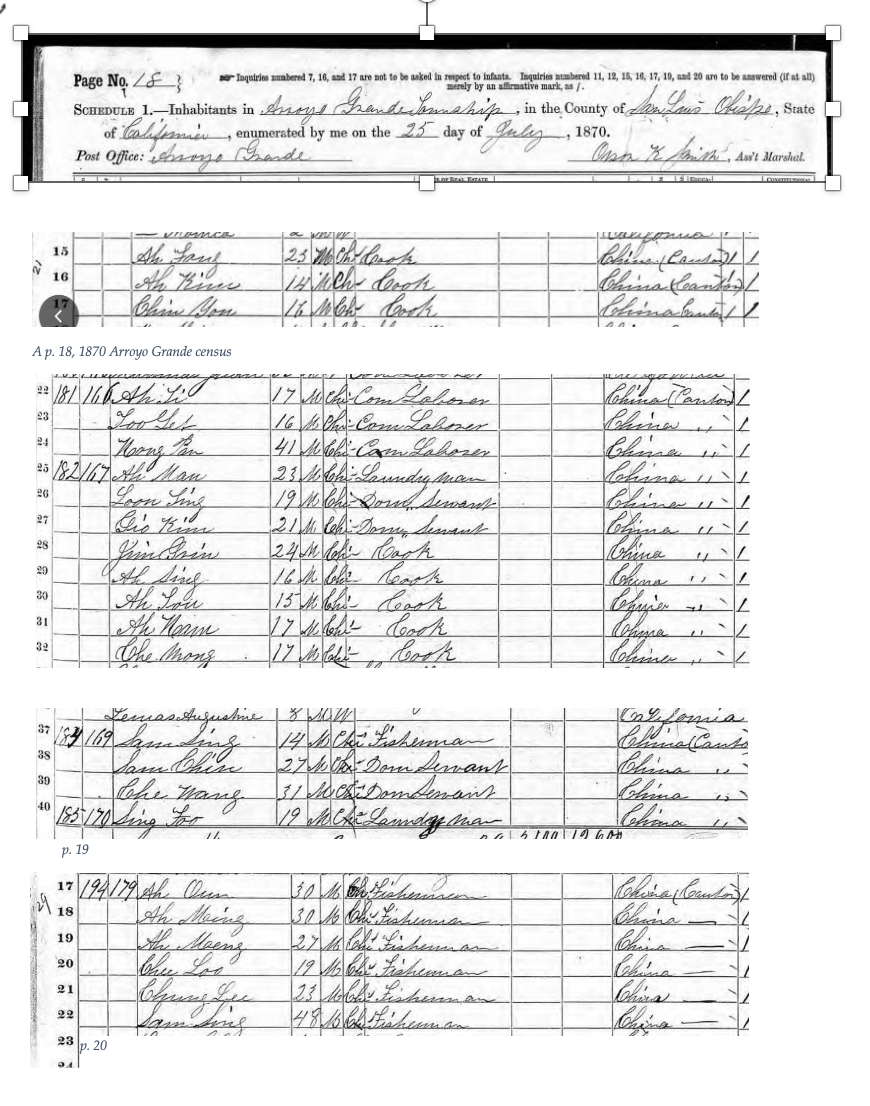
In a town of perhaps 300 citizens, there’s a marked Chinese presence. I counted twenty-five individuals. All of them were listed in the last three pages of the twenty-page town census, living in dwellings numbered 149, 167, 169 and 179.
So they must have lived close together. I can’t tell where, but perhaps close enough to constitute a “Chinatown.”* [See below]
I was surprised to see so many who were fishermen.
I was even more surprised by the 1880 census. San Luis Obispo County’s Chinese population increased from 59 in 1870 to 183 in 1880 (a cursory glance at San Luis Obispo’s 1880 census revealed a narrowing of occupations: Chinese residents were most frequently “laundrymen,” against whom the city would wage a war on many fronts: punitive taxes, a competitor called “The Caucasian Steam Laundry,” and, against Sam Yee’s laundry, dynamite).
But in 1880, Arroyo Grande’s Census recorded one Chinese resident: Tom Lee, 28, a laborer who lived in a boarding house surrounded by European-Americans.
This didn’t make sense. One Chinese resident? What happened to the Chinese in my home town between 1870 and 1880?
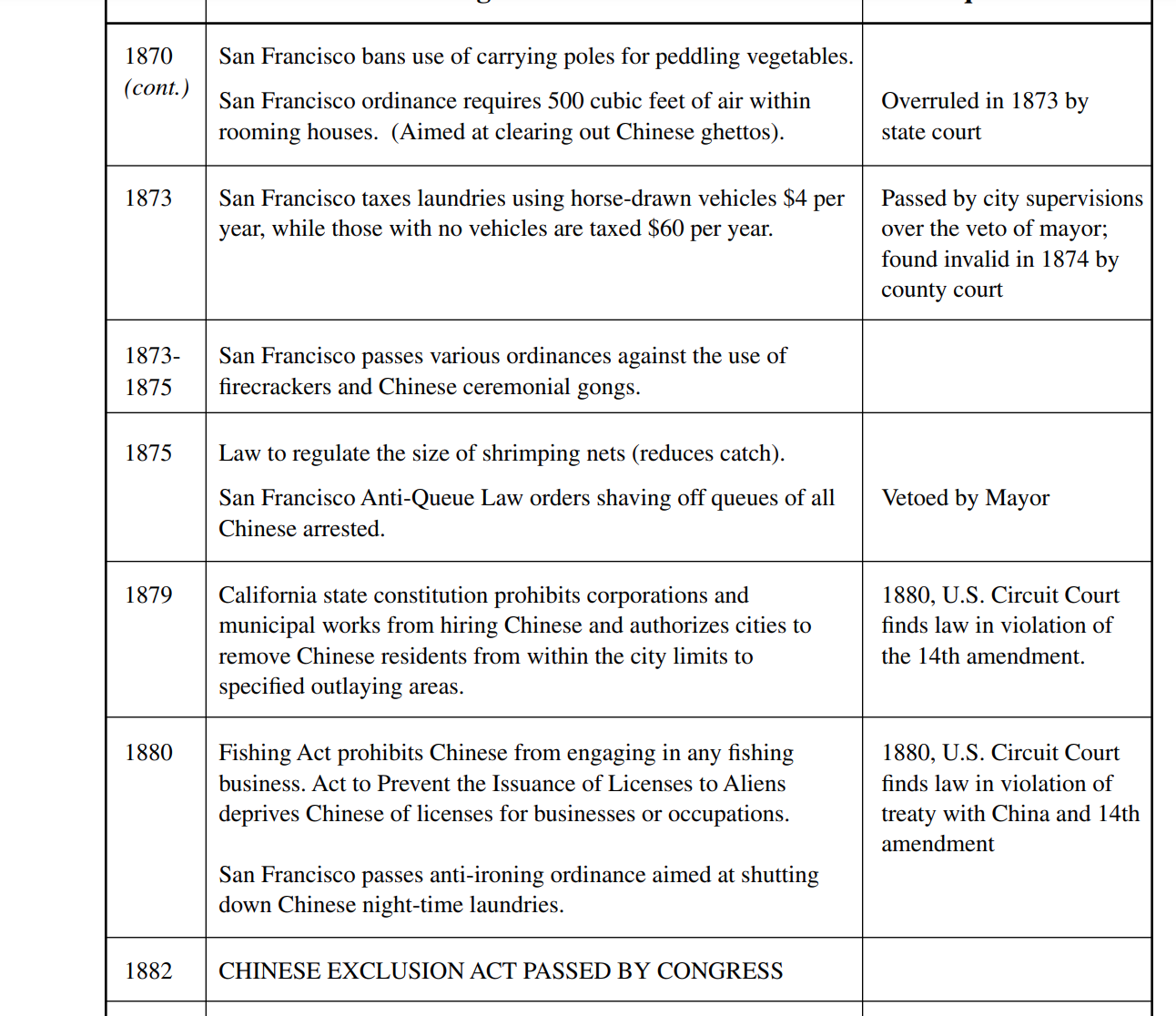
It was the California Constitution of 1879 that happened. It authorized cities, amid two decades of anti-Chinese fever-pitch prejudice (the violence, of course, went back to the 1850s and the gold fields), to remove their Chinese residents to somewhere beyond the city limits.
So if the 1870 Census indicated the possibility of an Arroyo Grande Chinatown, that would’ve been an impossibility by 1880.
The chart below summarizes some of the anti-Chinese actions of the time, and it even indicates that the fishermen listed in the 1870 census would have fallen on hard times in 1880.
But there was another problem.
If Arroyo Grande’s Chinatown was gone by 1880, how could an anti-Chinese League, the one whose official uniform included a handkerchief over one’s face, have driven residents out of a “Chinatown” in February 1886?
The answer, I think, came in a San Luis Tribune article from October 15, 1881
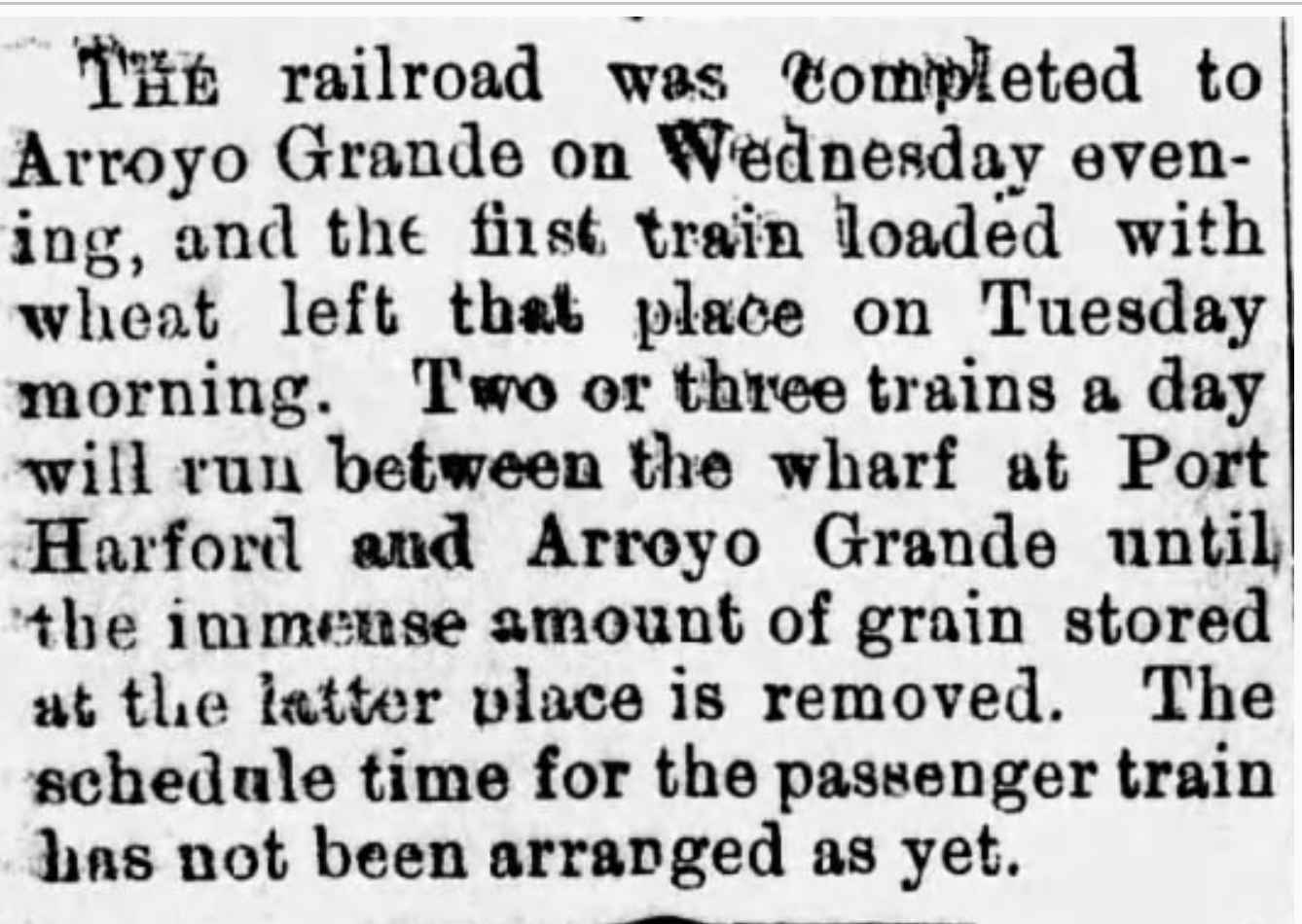
The arrival of the PCRR doubled the size of the town within two decades, provided untold opportunities for real estate agents and, in connecting the Valley with the larger world, made Arroyo Grande produce, most especially pumpkins, famed throughout the United States. I’ve read breathless stories about the fertility of the Valley in newspapers, from the 1890s, as far away as Kansas and South Carolina. (The lynching made it into a newspaper in Scotland.)
White workers were preferentially hired in constructing the PCRR from Port Harford to Arroyo Grande and in extending the route from Arroyo Grande to San Luis Obispo, but twenty-five Chinese workers, doubtlessly under the supervision of Ah Louis, one of the most prominent men in the county, were included in the project.
Those workers may be the source of a reborn Chinatown in Arroyo Grande, the one that sadly vanished again in the year of the masked men, 1886.
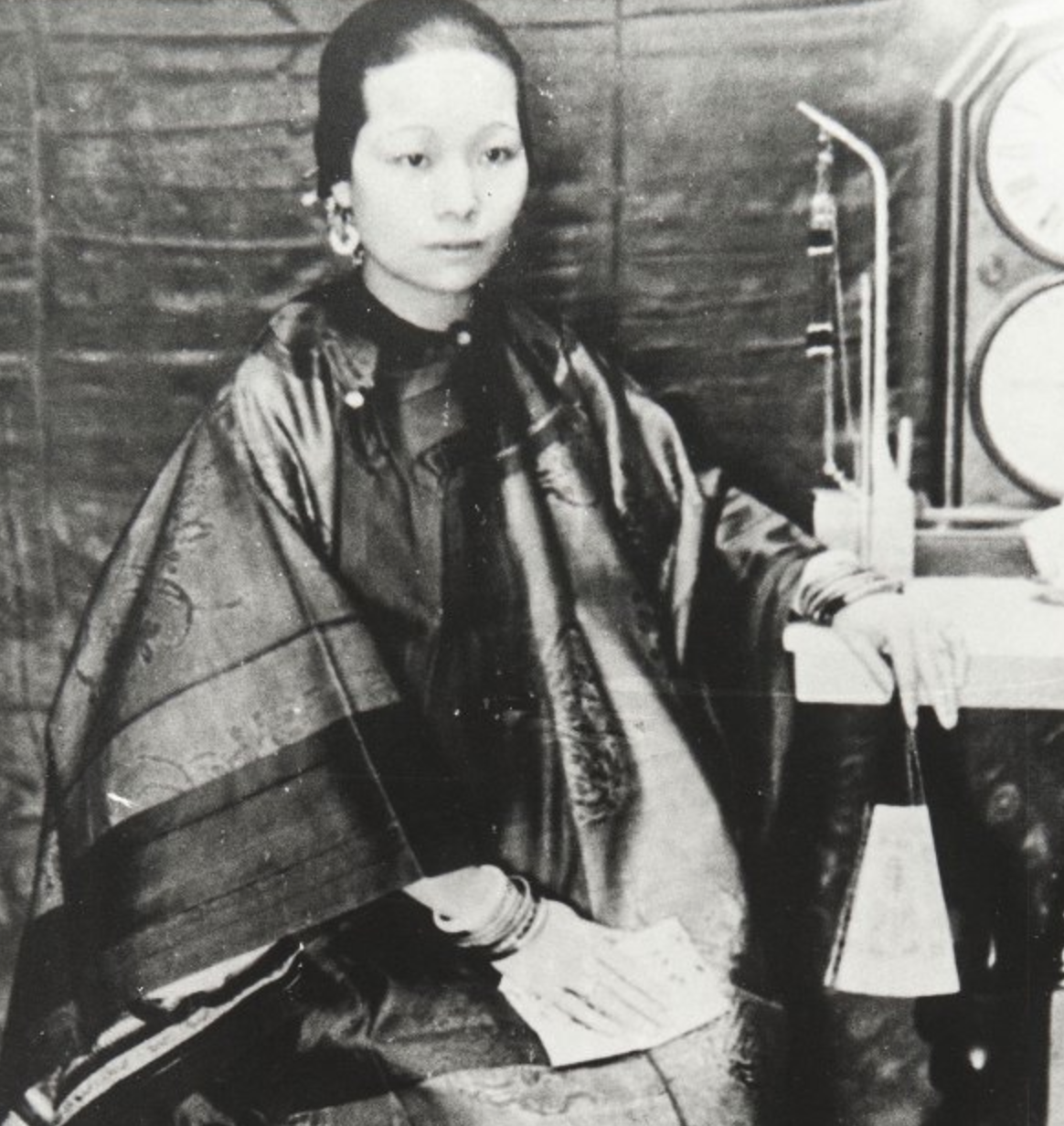
There would be further, ironic, sadness in Ah Louis’ life. In 1908, he would take the PCRR he’d helped to build from San Luis Obispo to Arroyo Grande to meet with a business partner, the famed flower seed cultivator Louis Routzahn. His wife, En Gon Ying (“Silver Dove”) bade him good bye that morning, returned to the family quarters above the Ah Louis Store on Palm Street, and went to sleep with her baby, Howard, in her arms.
She was asleep when her stepson, Willie Luis, shot her in the temple at point-blank range with the Colt revolver that was later recovered from the cistern behind the store.
Willie Luis would hang at San Quentin. In yet another irony, the murder of a wonderful mother of eight–whose children included a professional musician, an Army officer, a California State Spelling Bee Champion and a beloved merchant who loved to tell schoolchildren his family’s stories–outraged White residents throughout San Luis Obispo County.
Silver Dove wanted to be a mother, not a martyr, and her death did not mean that anti-Chinese bigotry in our area had ended. But, perhaps for the first time, the White community began to see the humanity in the neighbors they’d persecuted for decades and in the person of a cultured and beautiful woman who’d died so violently.
Addenda: July 5, 2025: As usual, it was fellow historian Shirley Gibson who helped to narrow down the possible location of our Chinatown. This article, from November 1930, quotes and unnamed old-timer who remembers fifty years before, and he gives a hint as to where Chinatown was. The friction, as was frequently the case in County and California history, was over laundries, though the majority of residents by then must’ve been construction workers on the PCRR. The speaker lacks even a hint of subtlety.

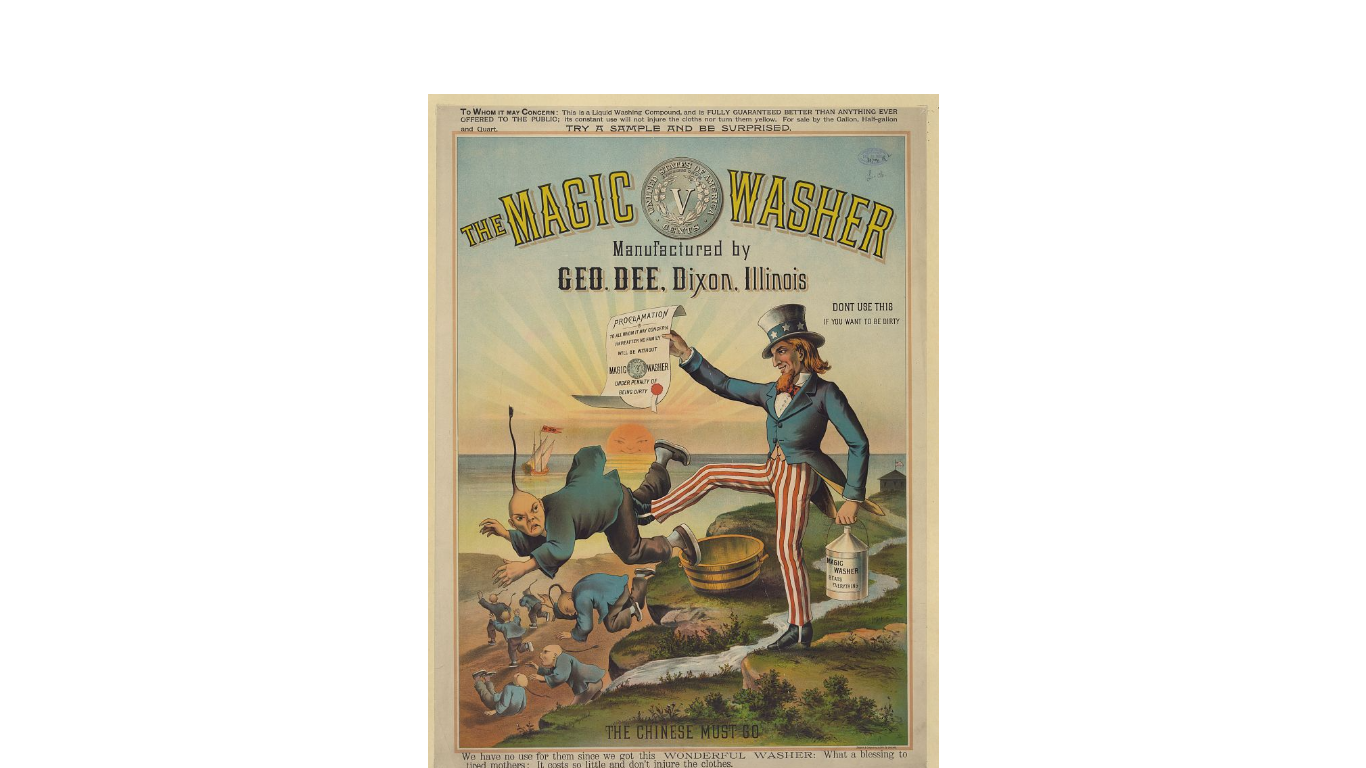
This advertisement from the times is incorporated into many high school history courses. I hope. Mr. Dee’s “Magic Washer” is so efficient that the Chinese can be deported with glee.
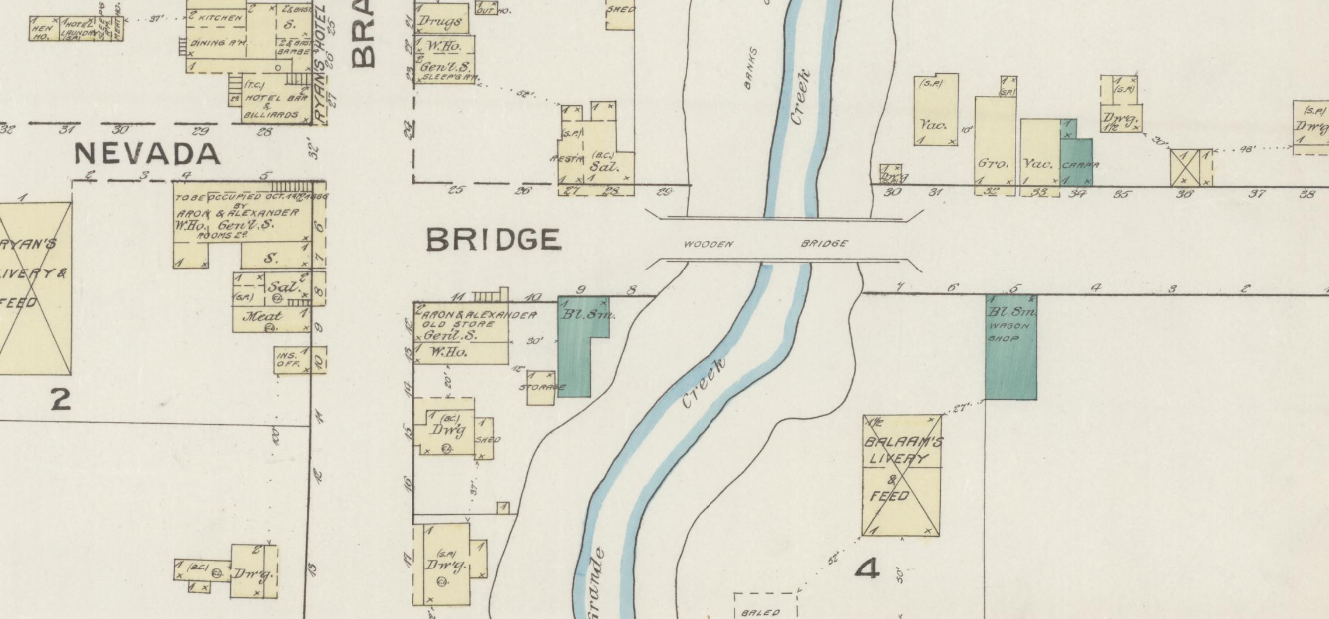
And here’s a Sanborn Fire Insurance map of Arroyo Grande from 1886—the year the Chinese were driven out and the year of the double lynching, just up the creek.
 A Work in Progress