Al Spierling, auto shop teacher. And war hero.
26 Monday Sep 2022
Posted in Arroyo Grande, Uncategorized

26 Monday Sep 2022
Posted in Arroyo Grande, Uncategorized
16 Friday Sep 2022
Posted in Uncategorized
I guess I owed it to my historian’s sense of duty, so I looked it up. If ever a Queen was a monument to imperialism, it was Victoria—steam-powered British ships obliterating Chinese war junks to smooth the way for the lucrative and British-sponsored opium trade, Sepoy mutineers, lashed to cannon muzzles and so executed; 15,000 Sudanese rebels, armed with swords and spears, mowed down by Maxim guns at Omdurman.
But Elizabeth doesn’t escape her great-great grandmother’s legacy, either. When Kenyan independence fighters—the Mau Mau—rose up in rebellion in the 1950s, the British army and air force intervened, ostensibly to protect White Kenyan settlers. The Mau Mau killed 32 of them. The British hanged over a thousand Black Kenyans and killed ten times that number in forgotten but merciless airstrikes and skirmishes.
And Elizabeth was Queen.
Still.
I owe it to myself, as well, to appreciate—especially in the wake of recent years—what we call “Norms:” ceremony, dignity, tradition, reverence.
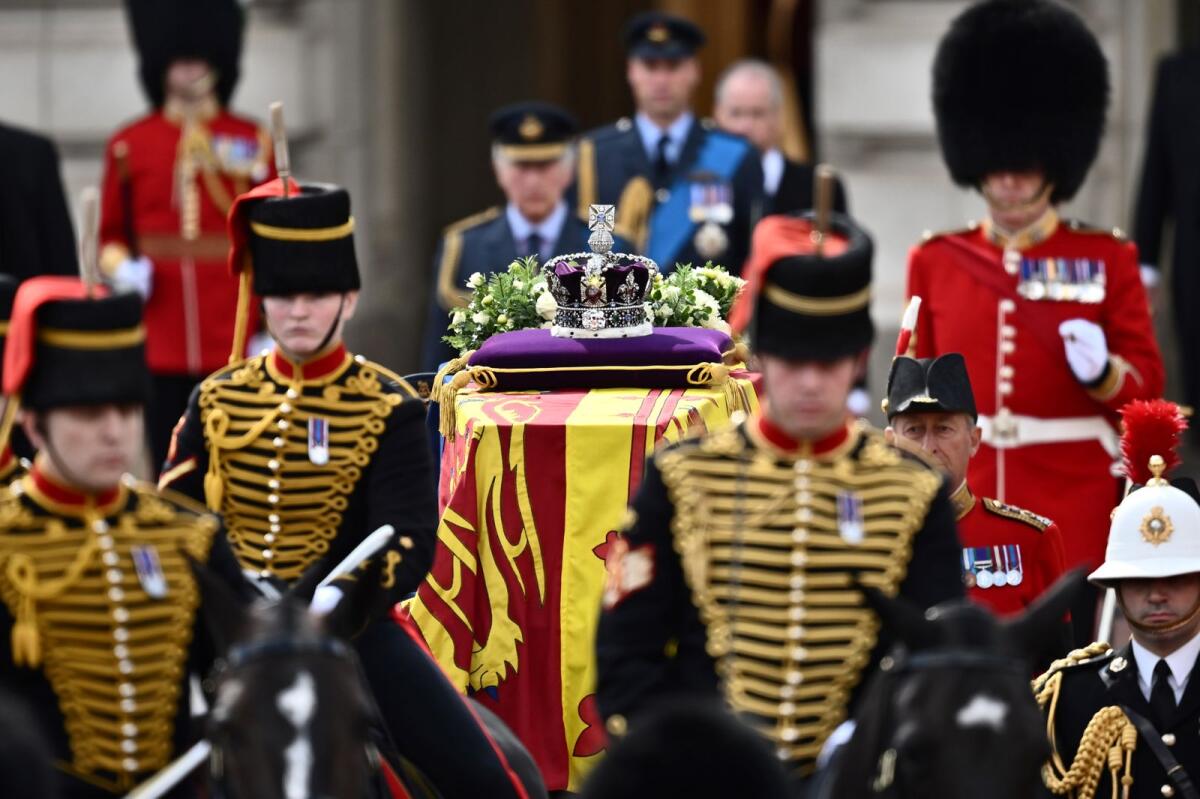
The uniforms of the Horse Artillery, in charge of transporting the Queen’s coffin, and the Grenadier Guards who flanked it on the journey to Westminster Hall this week are identical to the uniforms of the soldiers who accompanied Victoria’s coffin in 1901. The tradition of sailors moving the funeral caisson along in its journey begs with Victoria, as well.
But I was reminded, too, of a distinctive American funeral, and of me at eleven years old, watching television, transfixed, during the weekend that followed November 22, 1963. While the British have been planning for Elizabeth’s funeral—“Operation London Bridge”—for years, with the Queen’s help, Kennedy’s was quite different.
There were plans on the shelf, but the organizers for the president’s funeral essentially had three days to put it together.
In this, they were successful. It was both marvelous and painful. It was unforgettable.
I’ve written a lot about Black Jack, the riderless horse who followed the president’s caisson (the caisson that had carried FDR’s body; and the caskets of both presidents had been placed atop the catafalque built for Lincoln). The horse, a jet-black Morgan/Quarter horse cross, was ornery, nervous–unnerved by the collapse of a heavy metal gate inside a tunnel on the funeral’s route– and repeatedly attempted to bolt or to bite his nineteen-year-old handler, Pfc. Arthur Carlson. Black Jack once stomped on Carlson’s foot so hard that the upper sole of his Army-issue shoe was ripped. The young soldier thought his foot had been broken. Forbidden by protocol to speak to the horse to calm him, all Carlson could do was to hold on to the bridle with all his strength.
After the funeral, Black Jack caught his handlers by surprise. He’d become a celebrity and visitors came to see him at the Old Guard stables at Fort McLean, and the visitors who delighted the horse the most—he was incredibly gentle with them—were children.
I love horses, and I loved the big black horses in the Queen’s procession to Westminster Hall—one, a Royal Artillery horse who led the caisson, and in front of him, were two London police horses, at least sixteen hands and more likely seventeen, made bigger still by the smallness of the policewomen who handled them with such skill.
For JFK’s funeral, they were greys; the caisson’s six-horse team, one occasionally nuzzling the face of his harness-mate, and the enormous grey who led the caisson, pausing occasionally, seemingly to discipline the caisson team. He and his rider glided effortlessly and fluidly sideways, looking sharply at the caisson’s progress, every time the cortege turned a corner.
On arriving at Arlington, after an intemperate rendition of the indelibly Protestant “Onward Christian Soldiers” (indeed, most Americans in the South and Midwest had never before the televised funeral seen priests in full vestments, including Boston’s Cardinal Cushing), the procession returned to the cadence of muffled drums. After a moment, there were bagpipes—the Black Watch, no less, so now there were two sets of men in skirts—who had visited the White House and delighted the president, a student of Scottish history, including the struggle for independence.
“I am fond of lost causes,” the President noted ruefully that day, just before the Black Watch performed, just nine days before he was murdered in Dealey Plaza.
And the silent soldiers closest to the funeral bier weren’t Americans. They were Irish military cadets whom the president had met just five months before, on a return trip to Ireland, completing a journey that had begun when his ancestors, like mine, sailed from what was then Queenstown, today called Cobh, on Ireland’s east coast.
At least two of what were called Famine ships had foundered in the North Atlantic, lost with all aboard, just before our ancestors, the president’s and mine, left Ireland. The Irish cadets were there to remind us that we, all of us, are immigrants and so we come from people of courage. That might be the most marvelous American tradition of all.
In the long view, neither funeral–the president’s in 1963, the Queen’s in 2022–is necessarily about the empty person inside the coffin, for while Elizabeth had her Mau Maus, JFK inherited the rapist’s sense of entitlement that was his father’s work.
But the good news is that I think the funerals like these are more about us. We are deeply flawed but at the same time capable of great dignity, and capable of lending our dignity to human beings who are just as flawed as we are. In remembering them, in old traditions, we confront–without knowing it–our own importance, which lies in the value of our lives. And so, in the wake of slow marches, we move forward.
01 Thursday Sep 2022
Posted in History, Uncategorized
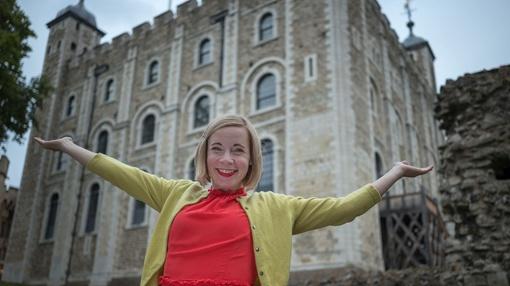
I’m kinda nuts about British historian Lucy Worsley; she is a hoot.
I first discovered her, while teaching European history, when she went to a modern grocery store to go shopping for Henry VIII.
The students were kinda nuts about her too: she’s a small person and the shopping cart was bulging at the seams, so she was huffing and puffing as she pushed it through the aisles. It was loaded mostly with meat (beef, pork, fowl, eels).
Turns out it’s no wonder Henry VIII weighed almost 400 pounds at the time of his death.
Sadly, on the tour to his final resting place at Windsor Castle, while Henry lay in repose in a church, his coffin exploded. Pent-up Royal Gas.
Gastly.
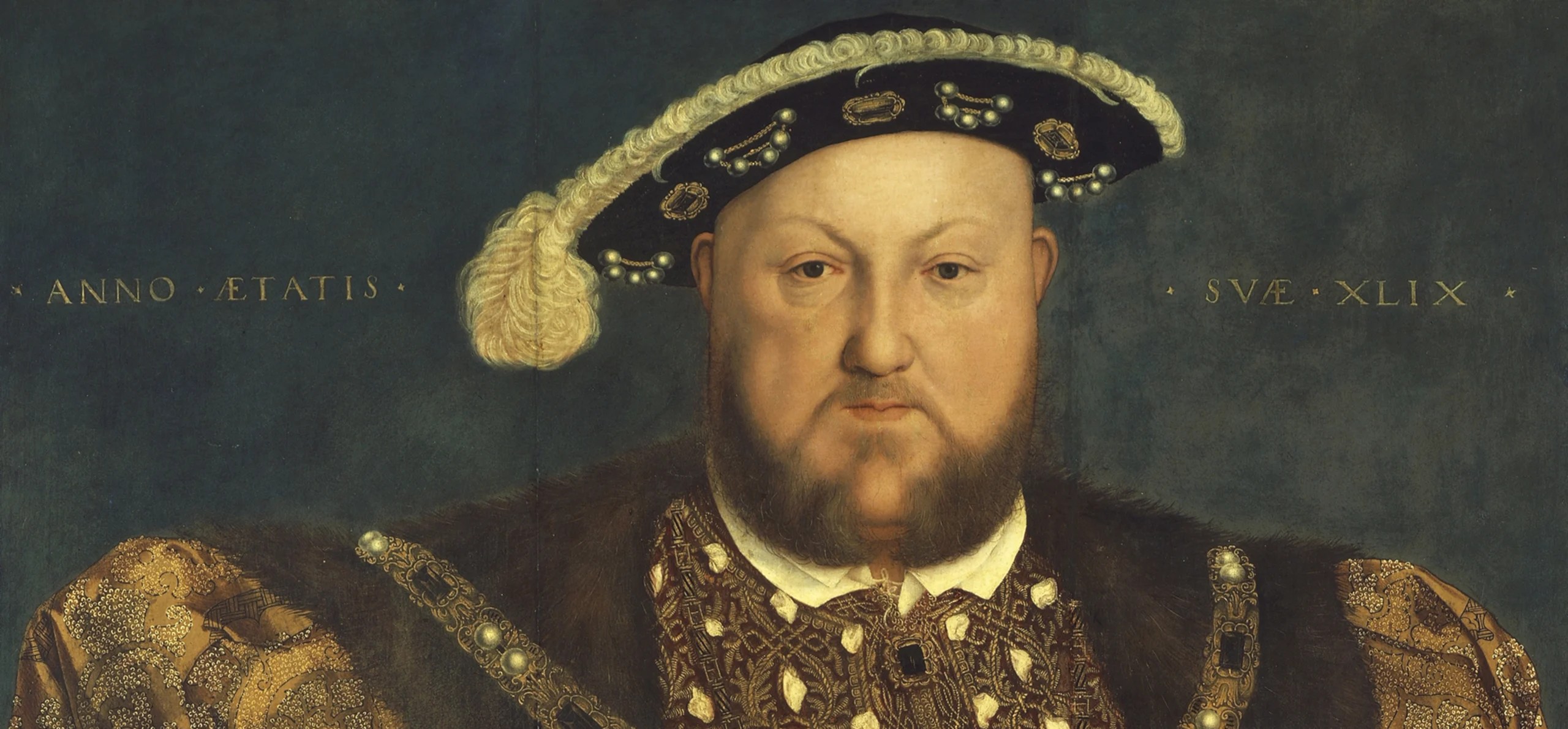
Anyway, if you get a chance, Worsley appears pretty regularly on PBS. She’s now the Chief Curator of Historic Royal Palaces.
Not a bad job, that.
She did a show that ran Sunday on three palaces:
1. The Tower of London. The oldest part, the White Tower, was intended to impress the local Saxons, whom the Normans considered imbeciles. To their horror, they’d built the privies in full view of London so that the beautiful stonework soon became, er, corrupted. Ah, who were the imbeciles NOW? So moved all the Royal Eliminatories to the back.
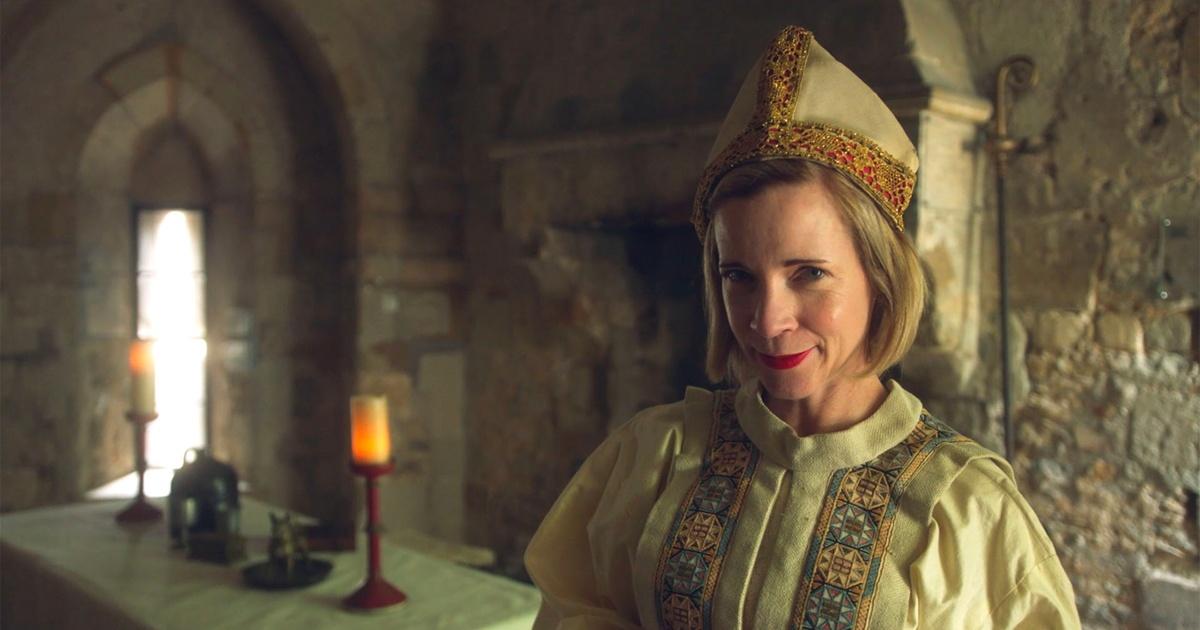
Worsley then played the first prisoner to escape from the tower–it became a prison, of course, as well as a palace– an obnoxious Norman bishop. She went clattering away down the cobblestones clutching her crozier. Oh, she also helped the Yeoman Warder, a Beefeater, feed the ravens, who are Mouseaters.
2. Hampton Court, once Cardinal Wolsey’s palace, was appropriated by Henry VIII once the Cardinal fell out of favor (couldn’t get the king his divorce.)
Wolsey took her show up to a nondescript room on an upper floor–desks and computers, used for training. But that was the bedroom of, in succession, Catherine of Aragon, Anne Boleyn and Henry’s favorite, Jane Seymour, who died in the room soon after giving birth to Edward, the king’s long-awaited and ultimately worthless royal heir.
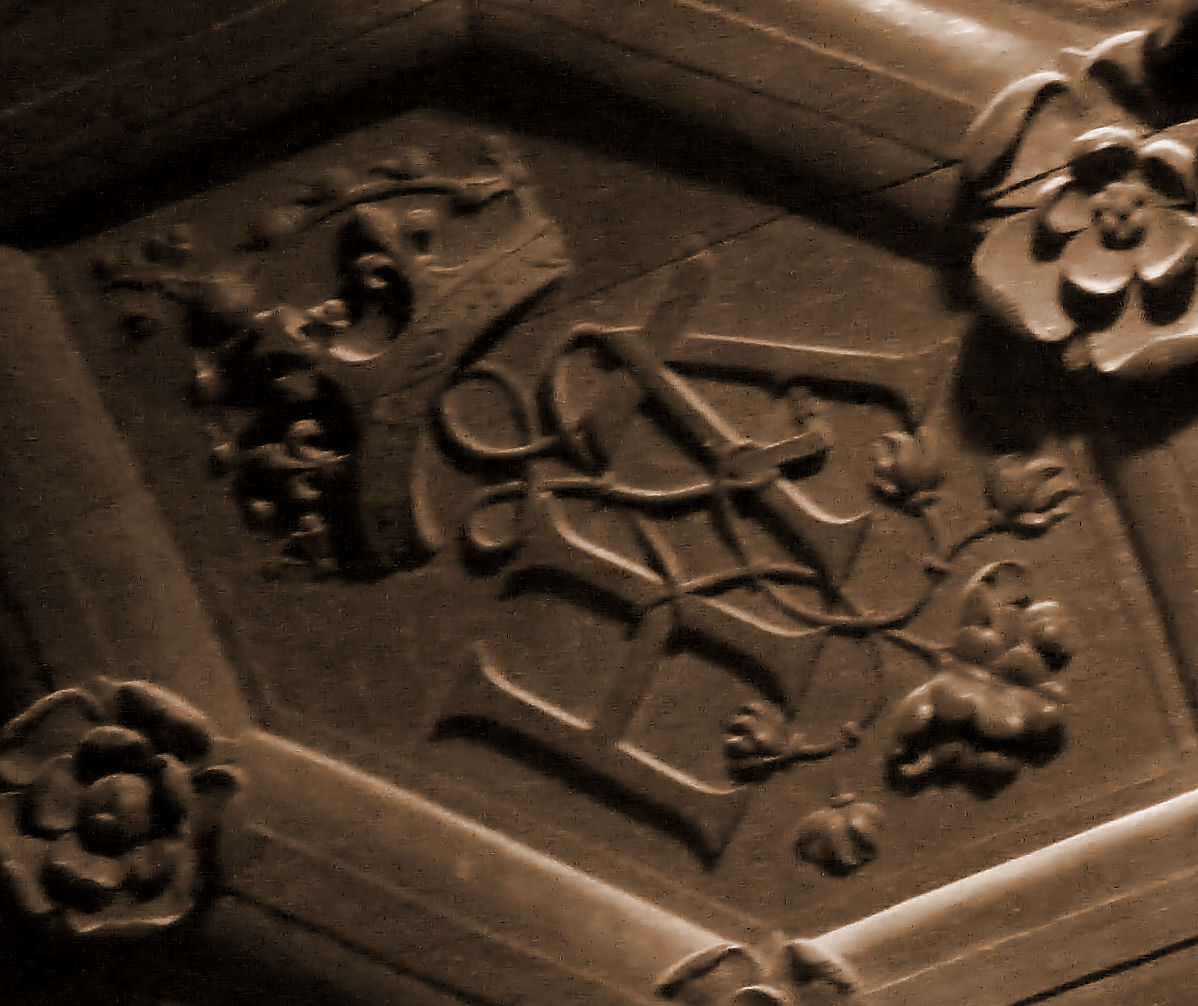
But Henry was once smitten (besmitten? besmot?) by Anne, so the royal dining hall was framed by gilt and woodwork with the interlocking initials “H” and “A.” But Henry married Jane only 11 days after Anne’s head and her body went in separate directions, so workmen were in a hurry. Worsley spotted a corner where they’d missed, in the woodwork, one set of interlocked initials.
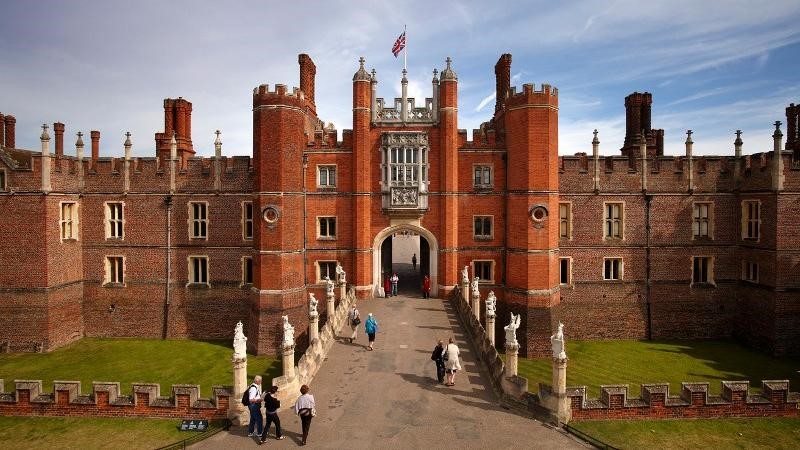
This palace was added onto, on the cheap, by the Stuarts, so it has a Tudor front, seen in the photograph, and a Palladian add-on (Queen Anne, played by the Oscar-winning Olivia Colman in “The Favourite,” would’ve lived here. With her rabbits.) It includes sharp spiky rails in some of the corners, to discourage the courtiers from relieving themselves thereupon.
Royal palaces–even Versailles–were notoriously smelly.
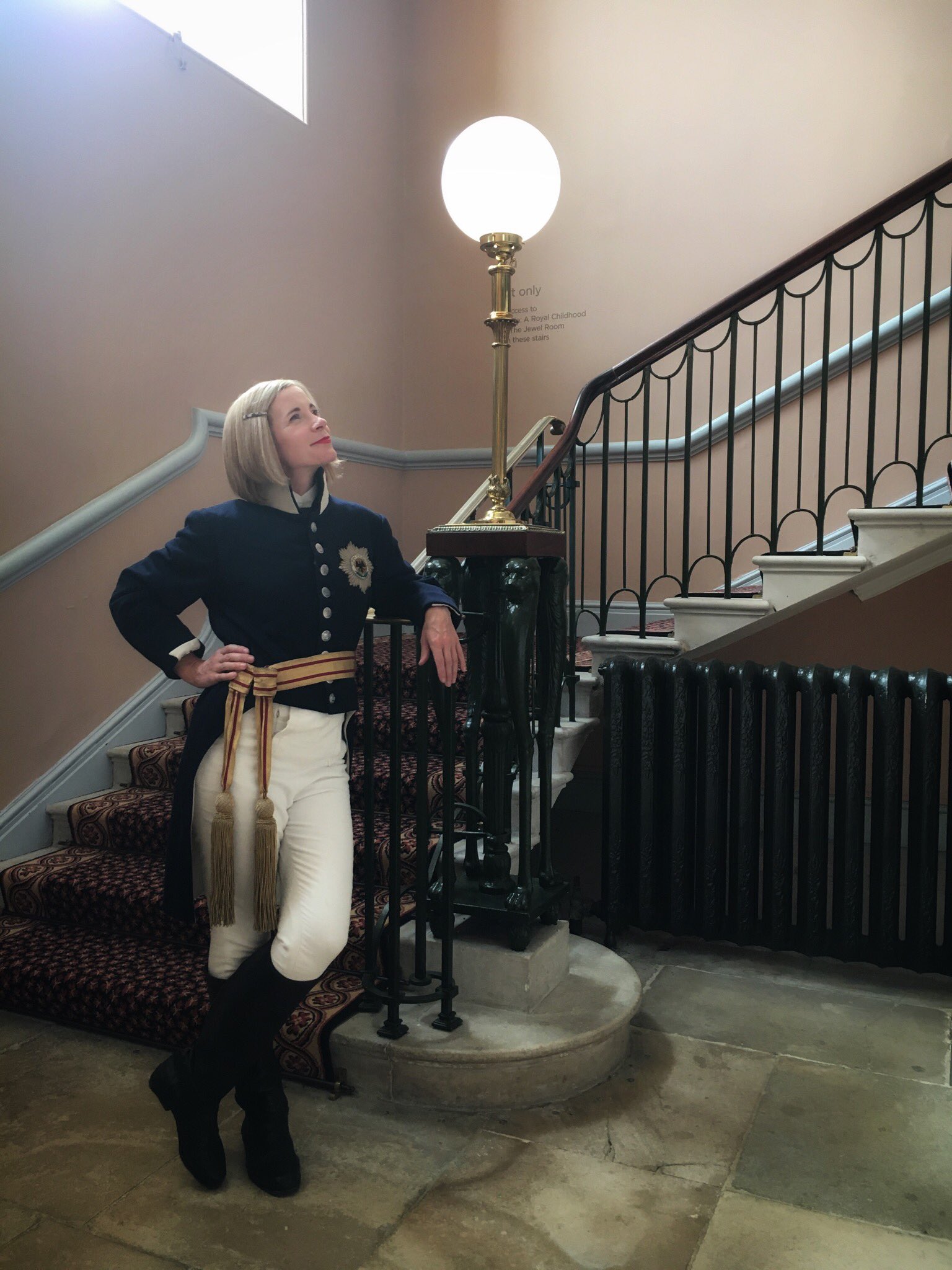
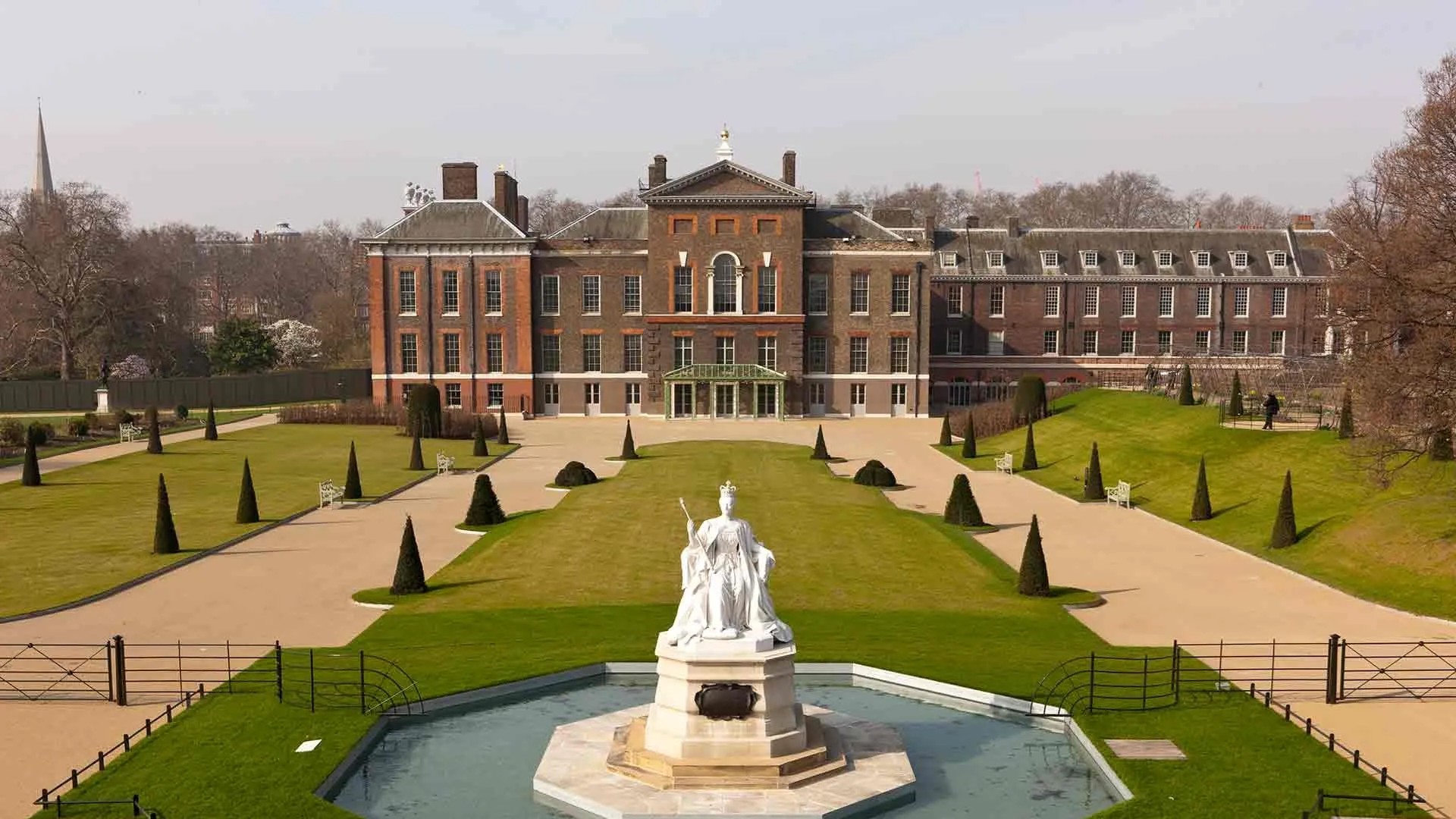
3. Kensington Palace was where Princess Victoria lived. Worsley–playing both roles, stood atop the staircase landing where Victoria first set eyes on Albert, at the bottom of the stairs. She was besmot and wrote at length in her diary about his eyes, his nose, his mouth and his limbs (“legs” was a dirty word in those days).
Albert thought she was okay.
That’s Worsley, as Albert, trying to look casual, at the bottom of the staircase.
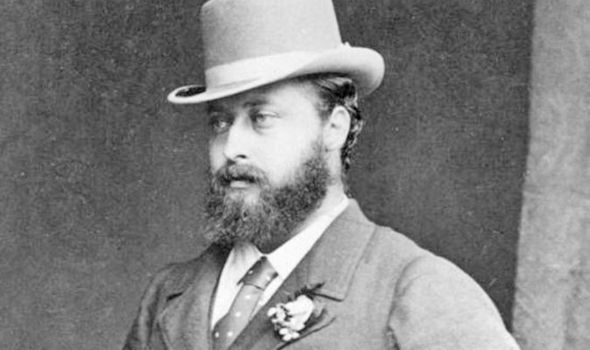
But once the two were married, they were a lusty pair. They must’ve worn out a host of royal bedsprings. Victoria adored Albert and adored sex. The end result–children–she was less than enthusiastic about. Especially her eldest son. Poor Bertie.
(Bertie, too, adored sex, especially with married women to whom he was not married. And he adored food. I guess he was a bit of a Henry VIII throwback. To this day, the custom of men leaving the bottom button on their sports coats or suit-coats unbuttoned was one that began with Bertie–Edward VII–who needed a little more room for the royal tummy.)
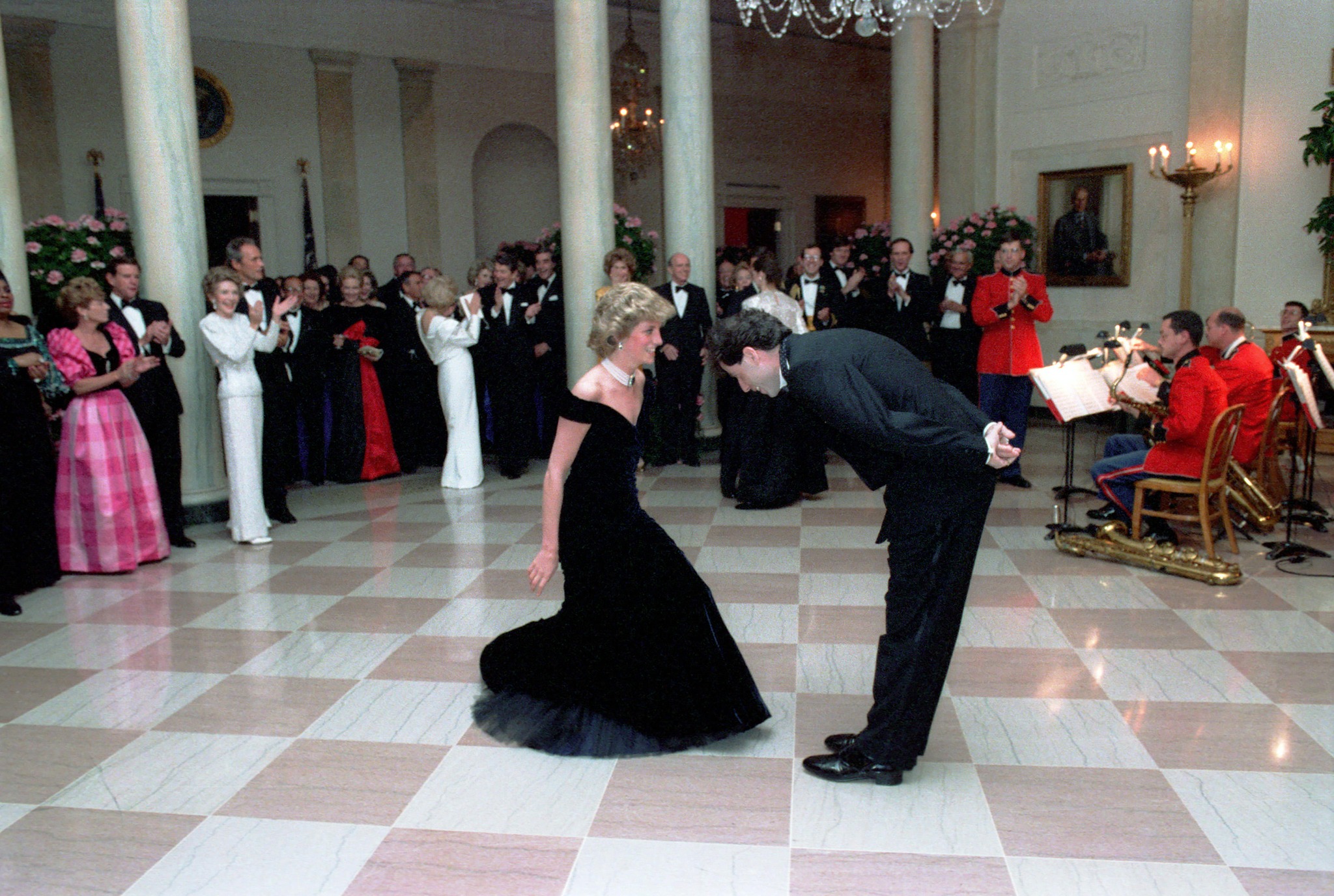
Kensington also features a big collection of court dress going back 300 years, and among them–what a prize!–is the dress Princess Diana wore when she danced with John Travolta at the White House. It’s a deep, deep blue and it’s stunning; all it lacks is, of course, Diana.
 A Work in Progress