






06 Thursday Oct 2022
Posted in Uncategorized
05 Wednesday Oct 2022
Posted in Uncategorized
An impassioned Facebook post I saw today demanded that local school board spend more on campus security and less on junk like CRT (Critical Race Theory) and Gender Studies. So, yes, it’s election time, and factuality is irritating and inconvenient at important times like this one.
But let me make a few points:
1. CRT is taught at places like Berkeley Law. It is not taught in Lucia Mar. When I taught U.S. History, I did teach my AGHS students about the 54th Massachusetts, about the Harlem Renaissance, about Rosa Parks and Mamie Till. I also showed them Bull Connor’s firehoses knocking down Black teenagers in Birmingham.
The damndest thing happened. Seeing those Black kids in Birmingham getting knocked down and helping each other up again made my White kids in Arroyo Grande and Grover Beach proud to be Americans. Prouder. So did the gravity of the Little Rock coed walking through a dense crowd of White abusers, their faces contorted, or the obvious enjoyment of White boys with butch haircuts and D.A.’s as they poured creamer and sugar and ketchup over the impassive Black boys who had merely come to the Woolworth’s counter for service.
The assessment at the end of the unit had them planning, writing and publishing, using computer software, a 1920s newspaper about what they’d learned. Invariably, every newspaper–every newspaper–had an article about Louis Armstrong. Watching him perform and listening to him talk about his life–the son of a New Orleans prostitute who’d learned to play a battered cornet in juvenile hall- had enchanted my students.
If that’s what the Facebook poster meant by Critical Race Theory, then I guess I’m for it.
2. I know of no such course called “Gender Studies” in Lucia Mar. I could be wrong. But if you removed the theme of “gender studies” from the AP European History course I taught at AGHS for nineteen years, then you’ve also removed about eight percent of the course content.
(My students would never learn, for example, that there were almost no illegitimate births in rural Tudor England. There were many, many marriages recorded in parish registers that were followed, with rapidity, by christenings. It wasn’t that young people were virtuous; it was that food was such a scarcity that community pressure forced the marriage so that responsibility would be taken for the extra mouth to feed.
(They would never about Victorian mourning customs, when middle-class widows wore black crape, highly flammable, for a year. They lived in homes lit by open gas jets.
(They’d never learn that the safety bicycle–coaster brakes–liberated Edwardian women from the whalebone corset; bicycles in turn threatened men so much that they threw rocks at parties of women cycling in the countryside. They’d never see the grainy, choppy moment of Edwardian film that shows the suffragist Emily Wilding Davison throwing herself under the King’s horse at the Derby.
(They’d never learn that the Russians whom the Nazi invaders feared the most were actually Ukrainian. They were snipers. They were women.)
But maybe studying the lives of women isn’t that important, after all.
3. As to campus security, maybe we do need a higher profile. But, God forbid, in the event of a shooting event on a local campus, you’re condemning those new district hires to death. Unless they, too, are armed with assault rifles, they don’t stand a chance against the shooter. At Uvalde, where police were armed with assault rifles, they didn’t take the chance to stop the shooter.
At any rate, I’m not sure I want my Alma Mater (AGHS ’70) to look like downtown Tijuana, where sixteen-year-olds in cheap security guard uniforms reflexively rub the trigger guards of their assault rifles. The place is crawling with them.
And there were 1,972 murders in Tijuana in 2021. So far this year, 1,500 have gone missing in Tijuana. Only some of them are Americans.
So, now that I think about it–maybe there’s another way to stop mass-casualty shooters, but we just haven’t hit on it yet– maybe I’ll move security guards a little lower down on my list of school priorities.
I keep coming back to what I taught, lessons that are embedded in some way in every discipline in every school curriculum in America.
School are places where we have the chance to teach values like these: We belong to each other, so we need to learn to cooperate with each other. Human life has value, so every human should be treated with dignity. Life has meaning, so there is reason for hope.
And, as infuriating as it can be, our system of democracy belongs to us; it, too, has value and dignity and meaning. And, God willing, it has hope.
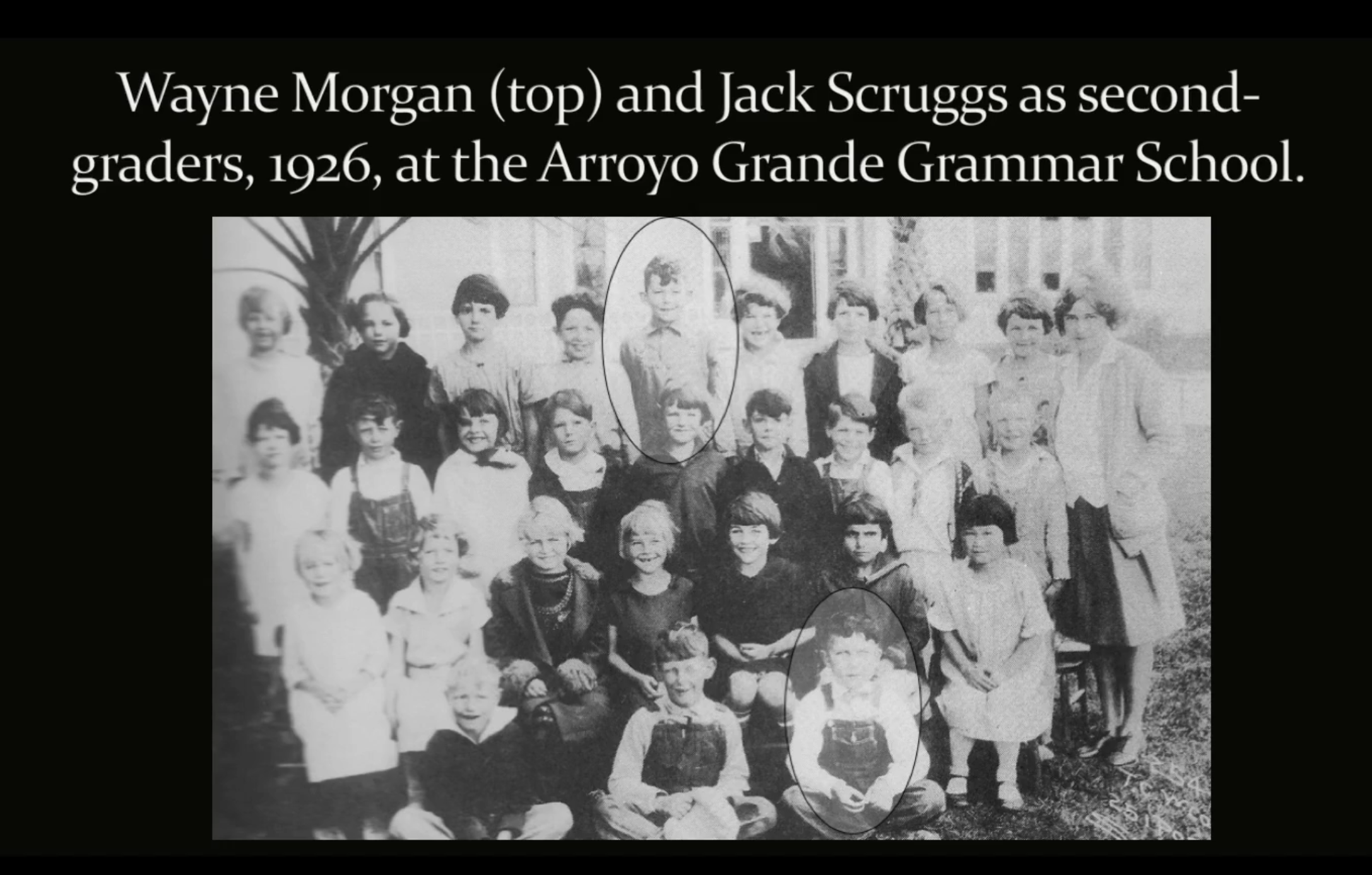
Schools are places to learn lessons like these. They are places, too, where boys and girls have the chance, in the confines of a little second-grade classroom, to build friendships that last for life. The two little boys below were second-grade friends at Arroyo Grande Grammar School in 1926.
Good friendships build good nations.
Fifteen years later, on battleship Arizona, both were killed in action. The last day of their friendship had meaning, because losing them drove an entire generation of schoolroom friends into the war that saved democracy.
I think we owe these two little boys something. The lessons of their lives, of duty and selflessness and sacrifice, need to be woven into the lives of our children– and of children yet born, to whom we owe just as much.
04 Tuesday Oct 2022
Posted in Uncategorized
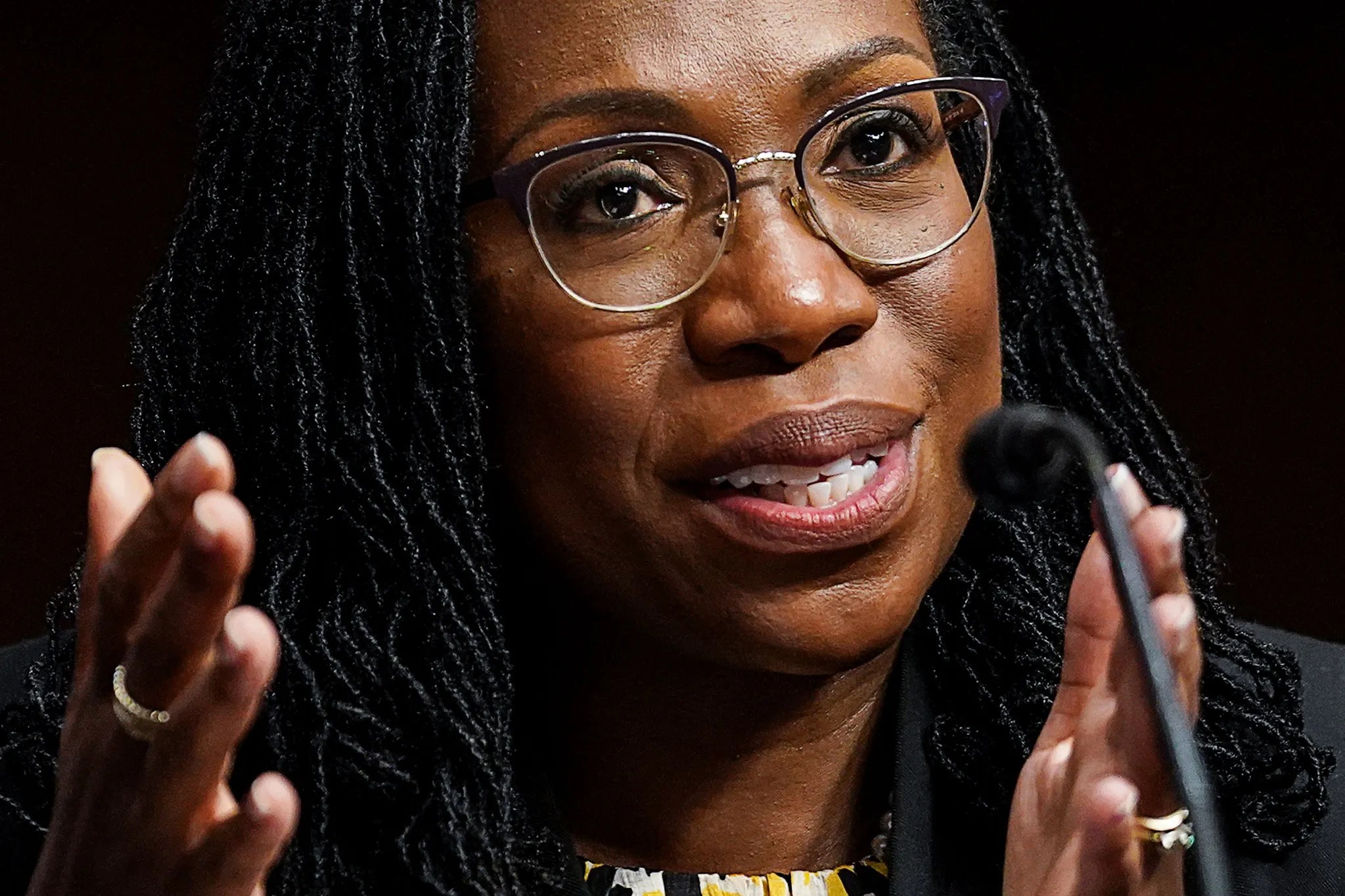
In only her second day of oral arguments, Supreme Court Justice Ketanji Brown Jackson is, to put it bluntly, dazzling.
The case in question is called Merrill v. Milligan. Bearing in mind that I am no Constitutional lawyer, this is what I understand.
The background: Alabama redrew its seven Congressional districts. Only one of the seven (as a percentage, 14% of the districts) has a Black majority. Twenty-seven percent of Alabama’s citizens are African American.
An appeals court that included two Trump appointees agreed that this deprived Black Alabamians of fair representation. The court threw out the new map, opining that an additional Black-majority Congressional district was appropriate.
Alabama appealed, arguing that 1) It cannot be proven that Alabama legislators were considering race in their redistricting and 2) the constitutionality of Section 2 of the Voting Rights Act, which prohibits any effort to discriminate against voters of color, is in question.
In fact, they argue, because it is explicitly considers race, Section 2 violates the equal protection clause of the 14th Amendment itself.
In fact, the traditional states’ rights argument has been this: The Constitution was and is meant to be color-blind, so any law that is specifically formulated on the basis of race is inherently unconstitutional.
Of course, this argument is a new one. It wouldn’t have been popular in Jim Crow Days.
So, in short, if Alabama wins its appeal, the Voting Rights Act is diluted even more than it has been..
Enter Justice Jackson. She’s addressing herself and her fellow justices, but formally her remarks are intended for Alabama’s Solicitor General. I’ll let her take over, in quotes taken from an article by journalist Travis Gettys:
“I don’t think that we can assume that just because race is taken into account that that necessarily creates an equal protection problem, Jackson began, “because I understood that we looked at the history and traditions of the Constitution and what the framers and the founders thought about, and when I drilled down to that level of analysis, it became clear to me that the framers themselves adopted the Equal Protection Clause, the 14th Amendment, the 15th Amendment, in a race-conscious way. That they were, in fact, trying to ensure that people who had been discriminated against, the freedmen, during the Reconstruction period, were actually brought equal to everyone else in society.
“Those post-Civil War amendments were explicitly drawn up and ratified to expand and protect the rights of the Black citizens who had been enslaved in Confederate states,” Jackson argued, and she backed her claims with statements made by the legislators who wrote and voted on those bills.
“I looked in the report that was submitted by the Joint Committee on Reconstruction, which drafted the 14th Amendment, and that report says that the entire point of the amendment was to secure rights of the freed former slaves,” Jackson argued. “The legislator who introduced that amendment said that, quote, ‘Unless the Constitution should restrain them, those states will all, I fear, keep up this discrimination and crush to death the hated freedmen.’
“That’s not a race-neutral or race-blind idea, in terms of the remedy, and even more than that, I don’t think that the historical record establishes that the founders believed that race neutrality or race blindness was required, right?” she continued. “They drafted the Civil Rights Act of 1866, which specifically stated that citizens would have the same civil rights as enjoyed by white citizens. That’s the point of that act, to make sure that the other citizens, the Black citizens, would have the same as the white citizens.
“They recognized that there was unequal treatment,” Jackson added. “People based on their race were being treated unequally and, importantly, when there was a concern that the Civil Rights Act wouldn’t have a constitutional foundation, that’s when the 14th Amendment came into play. It was drafted to give a constitutional foundation for a piece of legislation that was designed to make people who had less opportunity and less rights equal to white citizens.
“So with that as the framing and the background, I’m trying to understand your position that Section 2, which by its plain text is doing that same thing, is saying you need to identify people in this community who have less opportunity and less ability to participate and ensure that that’s remedied, right? It’s a race-conscious effort, as you have indicated. I’m trying to understand why that violates the Fourteenth Amendment, given the history and –and background of the Fourteenth Amendment?“
* * *
You are next on the tee, Mr. Alabama Solicitor General, sir.
04 Tuesday Oct 2022
Posted in Uncategorized

A caveat:
I am just old enough and just prudish enough to have been repelled by Miley Cyrus’s more outlandish pranks–maybe stuff like that is now in the rearview mirror of her life.
But I am just smart enough, if a little slow, to realize that she has one of the greatest voices of her generation. Her range is incredible (contrast “Zombie” with “Jolene,” both below.)
Beyond that, there’s an intelligence and sense of empathy there. Cyrus understands what she’s singing, whether the deep grief of “Zombie” or, listen as her accent changes, faintly Appalachian, and the timber of her voice rises, sweeter and higher inside her body, in “Jolene.”
I am an older man but it still took me a moment to get past the shortness of her skirt in “Roadhouse Blues”–it was a short moment, too–to understand that she understands the Blues, including Jim Morrison’s song.
She understood, too, how to dial herself down just enough to provide the background, in David Bowie’s “Heroes,” for a moving public service ad aired during the 2021 Super Bowl.
Four memorable and arresting performances
She is phenomenal.
02 Sunday Oct 2022
Posted in Uncategorized
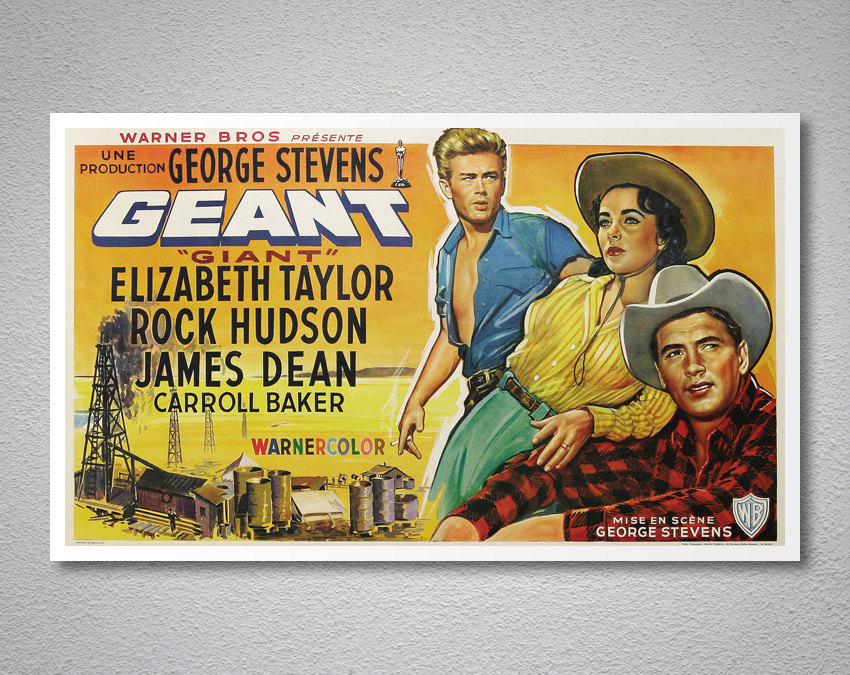
On this day in history, in 1985, Rock Hudson died.
Ironically, I think my favorite Rock Hudson scene comes near the end of the George Stevens classic “Giant.” Hudson, as an impossibly wealthy Texas rancher, gets the living crap beat out of himself in a roadside cafe.
His character, Bick Benedict, is pigheaded, arrogant, dismissive of women and bigoted.
But in this scene–one of his grandchildren is Mexican American-he comes to the defense of a family when the cafe’s cook, Sarge, starts to throw them out. They’re Mexican.
The result is one of the most epic fight scenes, brilliantly accompanied by “The Yellow Rose of Texas,” in Hollywood history, and one that changes your opinion of Bick Benedict.
A young Mexican American poet, Tino Villanueva, wrote about that scene. Here’s an excerpt:
…how quickly [Sarge] plopped the
Hat heavily askew once more on the old
Man’s head, seized two fistsful of shirt and
Coat and lifted his slight body like nothing,
A no-thing, who could have been any of us,
Weightless nobodies bronzed by real-time far
Off somewhere, not here, but in another
Country, yet here, where Rock Hudson’s face
Deepens; where in one motion, swift as a
Miracle, he catches Sarge off guard, grabs
His arm somehow, tumbles him back against
The counter and draws fire from Sarge to
Begin the fight up and down the wide screen
Of memory, ablaze in Warner-color light.
 A Work in Progress