
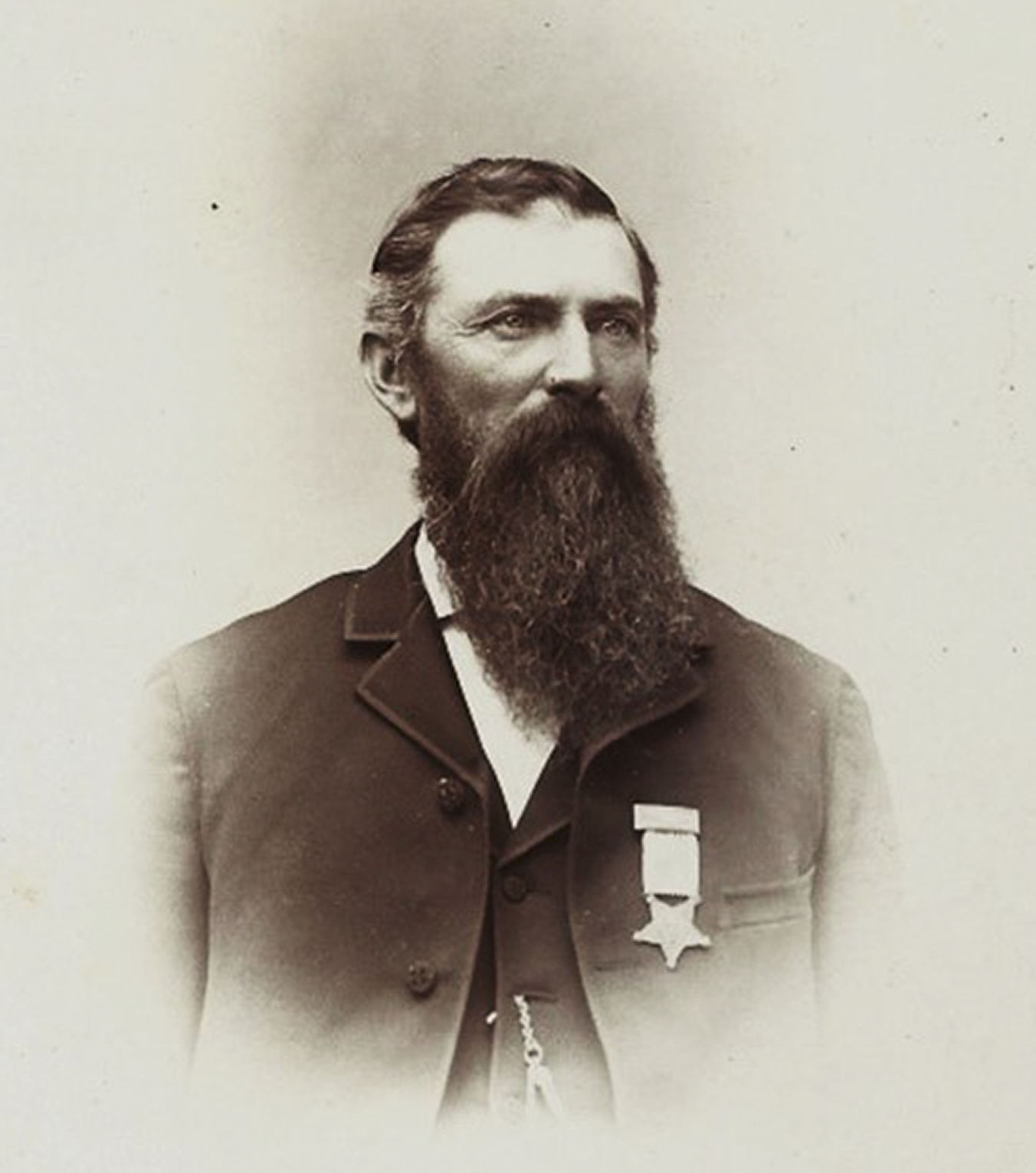
Nearly sixty Civil War veterans are buried in the Arroyo Grande District Cemetery. This excerpt from the book Patriot Graves describes the forces that drove them here.
…A soldier who had endured the third day of Gettysburg and emerged unhurt, and who had then seen his own boys in their counterattack destroy Pickett’s Charge…had already passed the zenith of his life. Nothing like this would ever happen to him again, and what had happened to them brought them, ironically, great joy.

So, for a generation enmeshed in the ethical web spun tightly by mid-Victorian Protestantism—these were Christian soldiers who fought in armies, on both sides, marked by intense waves of wartime revivalism within their camps—the excitement of battle generated a profound moral contradiction. In This Republic of Suffering, a superb account of coming to terms with the scale of death the Civil War generated, Harvard president and historian Drew Gilpin Faust describes the experience of a stunned Confederate who, during a firefight, came to the aid of a shrieking comrade, only to find out that he was “executing a species of war dance,” exulting over the body of the Union soldier he’d just killed. In another battle in 1862, Union soldiers on the firing line called their shots, as if combat were billiards: “Watch me drop that fellow,” one said to his comrades; battle was, indeed, like a game.[1]
The killing didn’t end when the war did. Violent crime rose at three times the rate of population growth in the decades following the war, and perhaps as many as two-thirds of the nation’s convicted felons were veterans.[2] Soldiers understood, on some level, that combat had changed them irrevocably and some worried about it. Society, one Vermont soldier wrote his sister, “will not own the rude soldier when he comes back, but turn a cold shoulder to him, because he has become hardened by scenes of bloodshed and carnage.”[3] He was, in many respects, right: some of the soldiers who came home to Vermont, New Jersey or Iowa brought with them a measure of fear—they had become, in the Civil War novelist Michael Shaara’s term, “Killer Angels.”
Many Union soldiers had demonized themselves and by extension all of their comrades by celebrating their mustering out with epic alcohol binges and episodic violence throughout the demobilization summer of 1865.[4] A Chicago civilian’s insulting comment about William Sherman set off a saloon brawl that cascaded into a riot that police were helpless to put down. Only the fortuitous appearance of the legendarily hard-drinking Gen. Joseph Hooker, who had the credibility to intervene with combat veterans, brought the violence to an end.
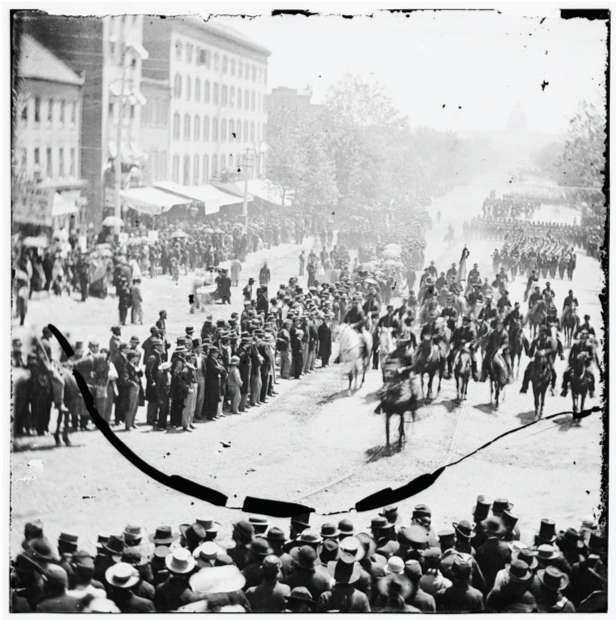
But for even the most sober of veterans that was precisely the problem with homecoming: it brought them little peace. Professor Jordan describes a sense of what, at its mildest, could be called disorientation. Home wasn’t home anymore. Even little farm towns had changed so much in four years that, for some veterans, they didn’t feel like home at all. Soldiers from the hard-fighting regiments of the Old Northwest, states like Iowa and Minnesota, couldn’t reconcile themselves to the cold winters they’d forgotten while fighting in Mississippi or Georgia. There was a more sinister change to which they couldn’t adjust: Union veterans resembled the little boys who’d survived the 1918 influenza epidemic and were finally let out to play, only to find there was no playmate on their city block left alive. The survivors of “Pals” Battalions who’d joined the Great War’s British Army together went home to neighborhoods empty of the young men with whom they’d grown up. Their pals were gone, swallowed up by the Western Front.
Gone too, in 1865, were whole towns of young men in New York or Vermont or Indiana, dead and buried on Southern farmland that had been poisoned by violence, land still studded with spent bullets. Other young men had vanished without a trace in dark, dense woodlots or fetid swamps. Soldiers came home, then, ostensibly alive and whole and strong but with unseen dead spaces inside where their comrades had once lived. Missing them, or the trauma of seeing them killed, figured in the chronic depression with which so many veterans struggled. Now that the war was done, they still were caught in its aftermath like swimmers in an undertow, struggling to break surface, to find light and cool air, to breathe again.
They recognized, too, that what they had fought for—for the rededication of the democracy Lincoln had described at Gettysburg in November 1863—was fast slipping away. Union veterans remained intensely suspicious of and hostile toward the defeated South; Lincoln’s assassination had been one impetus for their rancor but their anger only intensified when they read the newspaper accounts of the postwar emergence of the old Slave Codes, now called Black Codes. They read, too, of the defiance and the terrorism of the Ku Klux Klan, co-founded by a cavalryman, Nathan Bedford Forrest, who had bedeviled some of them in the Deep South. When Reconstruction ended in 1877, Jim Crow laws revived white supremacy in a way that rivaled the days of slavery. The Union veterans’ hostility was exacerbated because the other side refused to admit—significantly, on a moral level—that they’d lost the war. Typical, in 1894, were the dedicatory remarks that accompanied the unveiling of a Confederate memorial in Richmond, when newspapers noted that the clouds parted and the sun emerged when the speaker, the Rev. R.C. Cave, began an oration that included passages like this:
But brute force cannot settle questions of right and wrong. Thinking men do not judge the merits of a cause by the measure of its success; and I believe
The world shall yet decide
In truth’s clear, far-off light,
that the South was in the right; that her cause was just; that the men who took up arms in her defence were patriots who had even better reason for what they did than had the men who fought at Concord, Lexington, and Bunker Hill; and that her coercion, whatever good may have resulted or may hereafter result from it, was an outrage on liberty.[5]
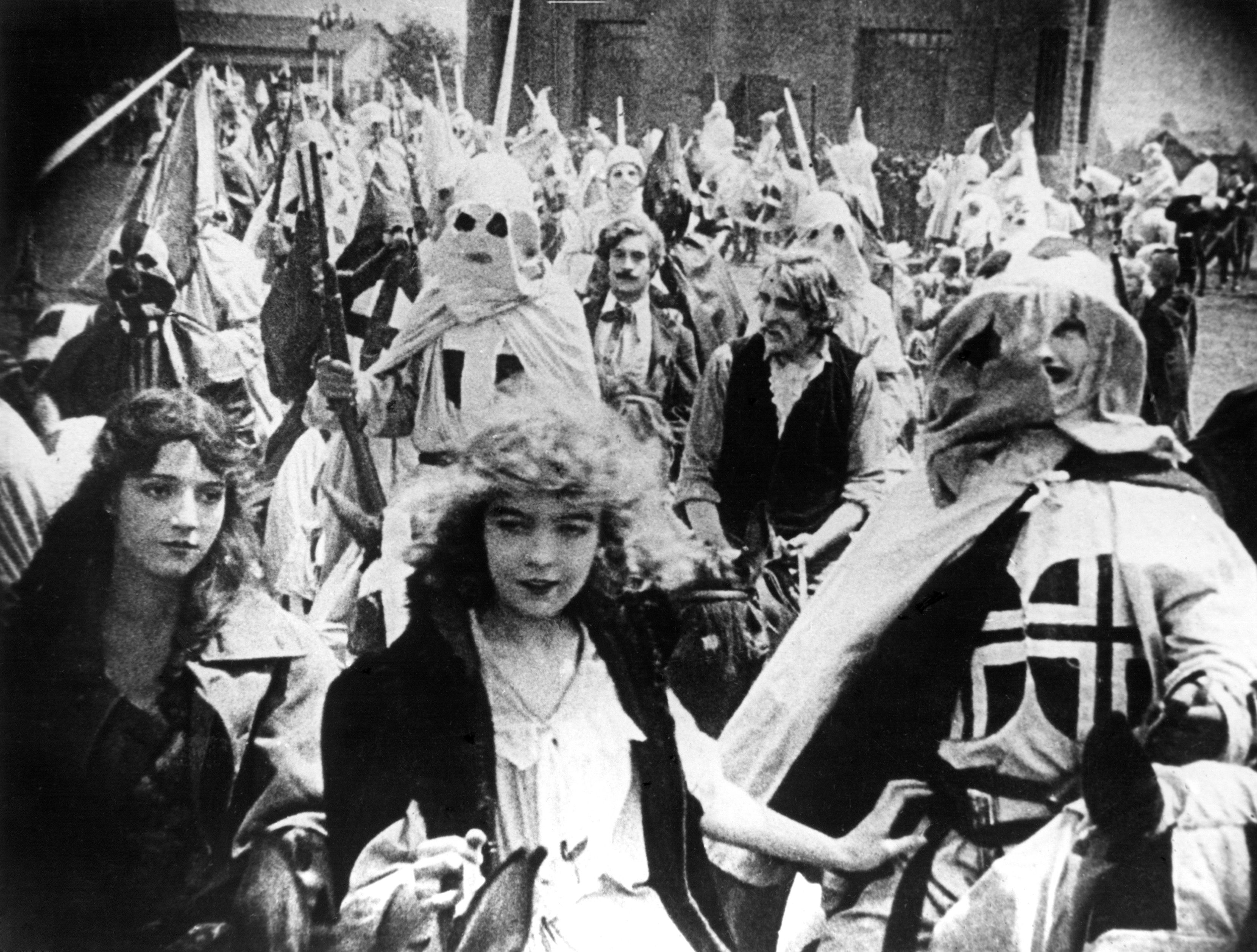
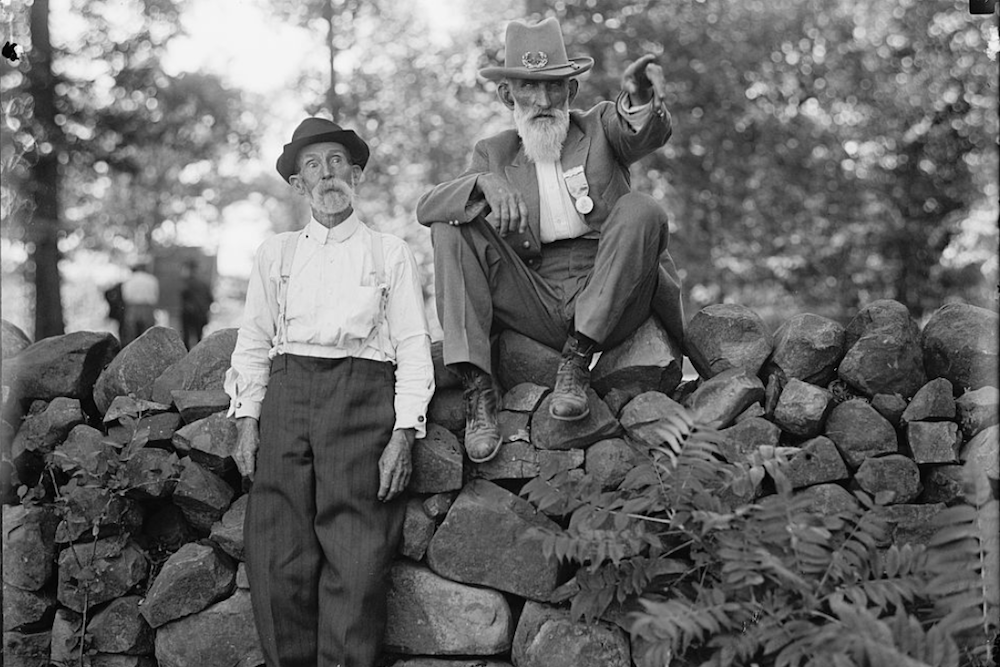
Similar remarks by Southern speakers invited to a Gettysburg reunion in 1913, Professor Jordan notes, rankled the same Union veterans who had protested another unveiling, in 1909, in the Capitol’s Statuary Hall: a sculpture of Robert E. Lee. No matter how chivalrous Lee had been (He never, for example, uttered the word “Yankees,” using instead, in his verbal orders to his subordinates, the term “those people.”), he was a killer, and he had harvested thousands of solders’ lives. The survivors of what they saw as Lee’s war would protest again at the rapturous reception, one that included the Southern-bred President Woodrow Wilson, awarded the 1915 D.W. Griffith film Birth of a Nation, which depicts Klansmen, too, as chivalric heroes who reassert Southern white supremacy over rapacious carpetbaggers and predatory African Americans. “It is like writing history with lightning,” the president said, “and my only regret is that it is all so terribly true.”[6] The most enduring image of the 1913 Gettysburg reunion is that of Confederate survivors of Pickett’s Charge reaching across the stone wall–fifty years before, it had been their objective–to shake the hands of Pennsylvania veterans. What goes unmentioned is the fistfight at the same event that sent seven aged Yankees and Confederates to the hospital.[7]
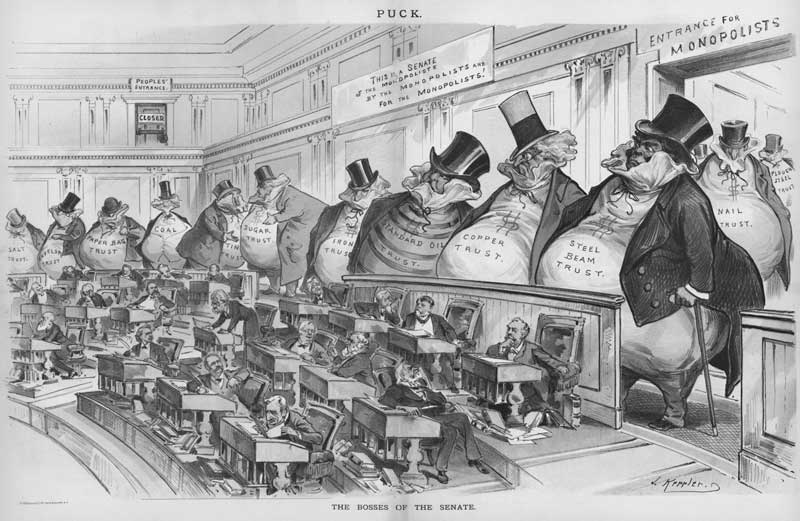
Even as Southern whites reasserted their social and political primacy, American democracy in the North was no tribute to the sacrifice of Civil War veterans, either. The Radical Republican Congress and Andrew Johnson finished what should have been Lincoln’s second term in what resembled the political equivalent of a Western range war. Johnson escaped conviction on impeachment charges by one Senate vote. Grant’s relentlessness and drive had served him well in the struggle against Lee, but another aspect of his personal character—an almost childlike credulity—ate his presidency alive in a series of scandals perpetrated by subordinates who betrayed Grant as surely as Warren G. Harding would be betrayed by his “Ohio Gang” in the 1920s.
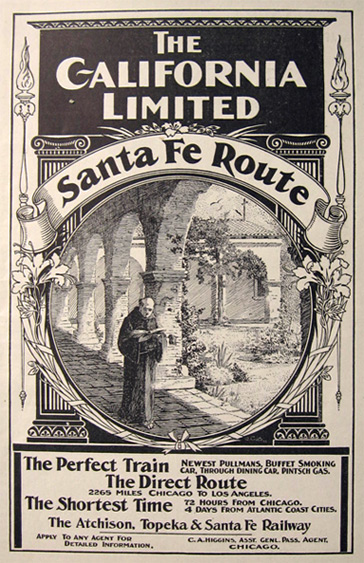
The corruption penetrated to state houses, where the lobbyist for the Santa Fe Railroad kept a slush fund in his office safe for the frequent lubrication of Kansas legislators about to vote on regulatory bills; the monopoly that railroads enjoyed in their American fiefdoms and the freight rates they demanded were so egregious that it cost a farmer more to ship a bushel of wheat from Topeka to Chicago, by rail, than it did to ship that bushel from Chicago to Liverpool, mostly by water. Machine politics dominated cities from New York to San Francisco, where Irish-American voters really did vote early and often, and deceased. In New York, the most famous political machine was Tammany Hall, and it was Tammany Hall’s Boss Tweed who disbursed the equivalent of $4 million to a Tammany-contracted plasterer for two days’ work on City Hall.
In both their disillusionment and in their restlessness, the Civil War generation seems to resemble the generation that came of age during the First World War. After that war, they would become expatriates–Ernest Hemingway, F. Scott Fitzgerald, John Dos Passos among them—young men, many of them veterans, and young women, who no longer recognized or understood the America they’d known as children. They were among the members of Gertrude Stein’s “Lost Generation.”
…[Like}the young people of the 1920s, Civil War veterans were members of a generation on the move. In postwar America, veterans, according to a 2010 study by Seoul University economist Chulhee Lee, were 54% more likely to move to a different state and 36% more likely to move to a different region than non-veterans.[8] Lee posits several reasons for this phenomenon: a central one is the idea that veterans had been exposed to the concept of a wider nation, one beyond their rural farms or row tenements, by campaigns in the South. Westerners, too, fought along the Atlantic seaboard, and some Easterners saw combat or garrison duty during the 1860s Indian Wars on the frontier.
Lee’s point is a key one: Americans had been so isolated and disparate before the war that an outbreak of measles that would make a New York regiment sick would kill soldiers in the Iowa regiment bivouacked alongside, soldiers that, before the war, were so geographically isolated that they lacked the immunity to that particular strain of measles–measles, in fact, killed 11,000 soldiers during the war.[9] The war had begun to break that isolation down, and the troop movements necessary to fighting it had opened young soldiers’ minds to the vastness of their nation and to the possibility of starting over somewhere else.
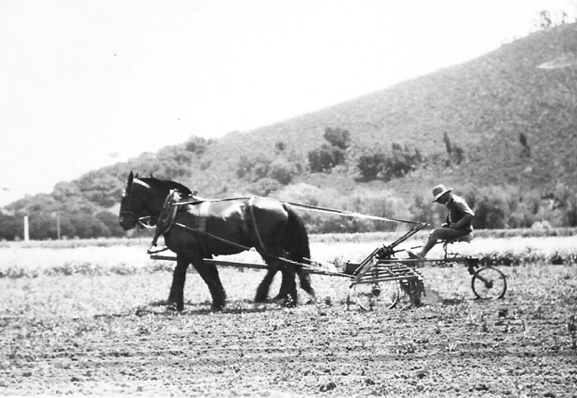
This pattern of increased mobility was a key factor in the lives of Arroyo Grande’s Union veterans. Over fifty would settle the Arroyo Grande Valley and nearby Nipomo. Enough census data exists to follow twenty-three of them, in the course of their lives. After the war, seven of them moved once from the state they’d served as soldiers; seven moved twice. Nine moved three times or more before they came to the Arroyo Grande area. So the men who came here had come as far as they could—like Jody’s grandfather in the Steinbeck novella The Red Pony, they had to stop because they’d arrived at the Pacific: their days of “Westering” were over.
[1] Drew Gilpin Faust, This Republic of Suffering: Death and the American Civil War. Vintage Books: New York, 2008, pp. 37-38.
[2] Michael C.C. Adams, Living Hell: The Dark Side of the Civil War, Johns Hopkins University Press, Baltimore: 2014, p. 198.
[3] Edward Alexander, “Life of the Civil War Soldier in Battle: And Then We Kill,” Hallowed Ground Magazine, Winter 2013, http://www.civilwar.org/hallowed-ground-magazine/winter-2013/life-of-the-civil-war-soldier-battle.html?referrer=https://www.google.com/
[4] Jordan, pp. 46-47.
[5] R.C. Cave, “Dedicatory Remarks, Soldiers’ and Sailors’ Monument, May 30, 1894,” Southern Historical Society Papers, Volume 22. Reverend J. William Jones, Ed. http://www.perseus.tufts.edu/hopper/text?doc=Perseus%3Atext%3A2001.05.0280%3Achapter%3D1.27%3Asection%3Dc.1.27.198
[6] “D.W. Griffith’s Birth of a Nation,” The Rise and Fall of Jim Crow, PBS., http://www.pbs.org/wnet/jimcrow/stories_events_birth.html
[7] Jordan, p. 197.
[8] Chulhee Lee, “Military Service and Economic Mobility: Evidence from the American Civil War,” February 2010. http://www.sciencedirect.com/science/article/pii/S0014498312000046
[9] “Civil War Diseases,” http://www.civilwaracademy.com/civil-war-diseases.html
 A Work in Progress