• About
  • The Germans

A Work in Progress

A Work in Progress

Monthly Archives: December 2022

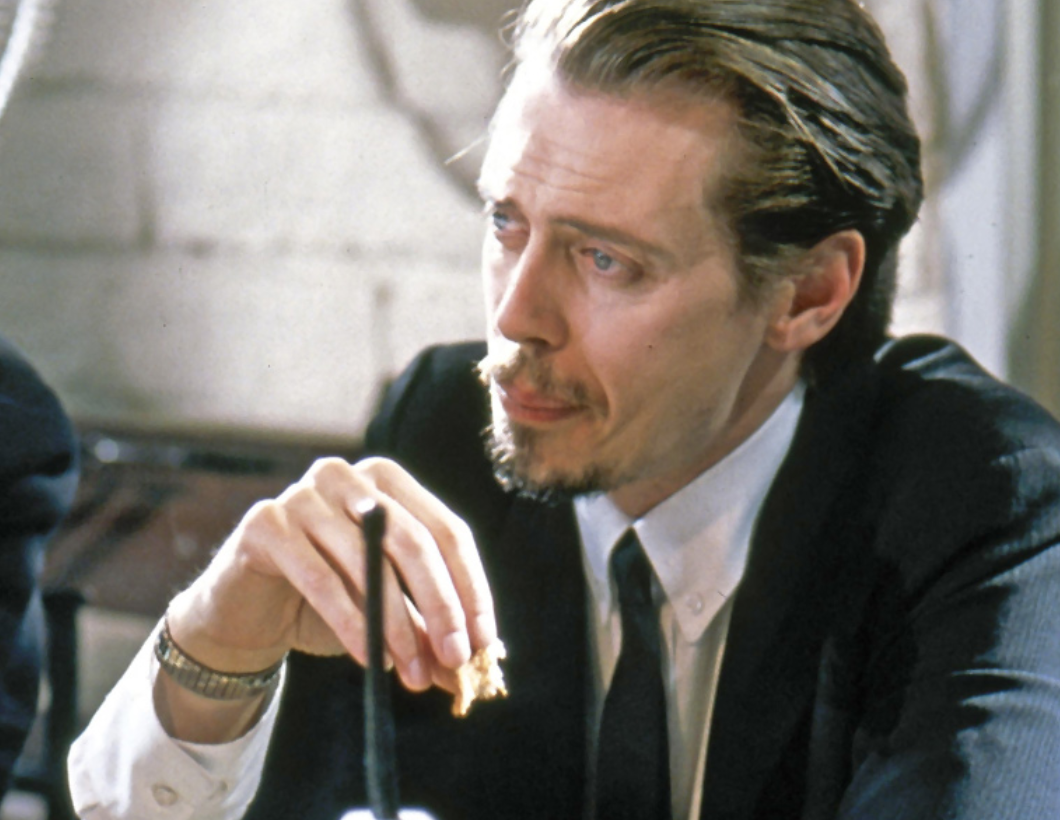
Steve Buscemi and other Christmas gifts

23 Friday Dec 2022

Posted by ag1970 in Film and Popular Culture, Uncategorized

≈ Leave a comment

Yes, I went on another movie-watching binge. Big Fish was first. Ewan MacGregor has to have the most earnest smile in film history. Helena Bonham Carter, one of my favorite actresses (and the granddaughter of Winston Churchill’s one-time flame, Violet, and, later, his trusted political advisor) appeared as a blonde and carried it off, Southern accent included. Alas, she lost MacGregor to Alison Lohman/Jessica Lange, as MacGregor’s wife in younger and older versions. I guess that’s understandable.

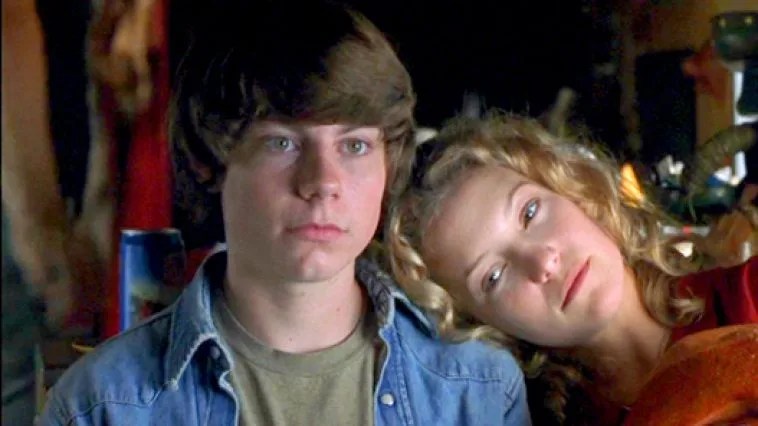
Then Elizabeth and I watched—believe it or not, for the first time— Almost Famous. We were enchanted. I guess that’s the right word. Kate Hudson’s eyes are amazing; they are small and slightly hooded, but the directness of their look is fierce. Her eyes, in that look, are brilliant green torpedoes. I’ve seen that look once before, in the eyes of a girl I dated more than fifty years ago. She had a pet raccoon who detested everyone except for her. She had long blonde hair, Rapunzelian, when girls ironed their hair to straighten it, and rode her Quarter horse in the Upper Valley bareback and barefoot. I was a bedazzled oaf, one on the small side. Maybe a bedazzled Hobbit.

The impossibly handsome Billy Crudup was in Almost Famous and in Big Fish, too. I had a hard time at the end of Big Fish, when Crudup’s estranged son reconciles with his father—Ewan MacGregor is by now Albert Finney—and, in the son’s mind, he carries his dying father, who is insufferably delighted to see all his old friends and lovers, down to the river to die. When Crudup lets his father slip beneath the surface, he suddenly becomes the legendary, immense catfish he’d always said he was.

When you’re seventy, a moment like that is vivid and real. My time, in a relative and so indeterminate sense, is running short.

So, thank goodness for youth and for Almost Famous, which included Jason Miller (My Name is Earl). And Jimmy Fallon. And Ryan Reynolds. And Anna Paquin. And Jann Wenner. And Zooey Deschanel (I still miss New Girl. I wrote an essay about that show, which New Times, perhaps when the staff was gloriously drunk, actually published.) And Rainn Wilson. And Philip Seymour Hoffman.

I missed somebody, I’m sure. Had he been alive, Abraham Lincoln might’ve been in it. (In the credits: “Tall and Immensely Strong Roadie/Philosopher.”)

I admit that the very idea of a fifteen-year-old getting the go-ahead from Ben Fong-Torres for a 5,000 word Rolling Stone piece made me insanely jealous. And then, when the fifteen-year-old, Cameron Crowe, grew up, he got to write and direct the film about Cameron Crowe. Then it became a Broadway musical.

Something not that deep inside me hopes that a seagull poops on Cameron Crowe’s head tomorrow.

I did get a letter into Rolling Stone once, about Michael Douglas and the film China Syndrome. I think it was maybe 125 words. After reading an excellent piece about Bonnie Raitt, my letter to her was unanswered. Alas.

If a Hunter Thompson piece was in Rolling Stone, there went, except for the record and film reviews and the advertising space, the whole issue. We had  jalapeño poppers wrapped in bacon as part of dinner tonight. If a Hunter Thompson piece was in Rolling Stone, I pretty much devoured it the way I do  jalapeño poppers wrapped in bacon.

The same went for other “New Journalists” like Gay Talese or Tom Wolfe or Joan Didion or Jimmy Breslin. Or even (The Executioner’s Song), Norman Mailer. Or, before they’d invented the term “New Journalism,” Truman Capote–In Cold Blood was, to me, a supreme accomplishment, given, and perhaps because of, the density of Capote’s emotional freight, as heavy as Marley’s chains. My tastes now run to popular historians who also happen to be women: Laura Hillenbrand, Elizabeth Letts, Lynne Olson.
Then it was Bridget Jones’s Diary, because I could even watch Colin Firth do something as mundane as prepare a meal, which he did. It reminded me of another favorite actor, Michael Caine, breaking an egg with one hand in The Ipcress File, a marvelous 1965 spy film. (Alas, it turns out that the real cook was Len Deighton, the novelist who wrote the book on which the film was based. He had to break the egg for Caine on camera, so it’s Len Deighton’s hand you see in the film.)
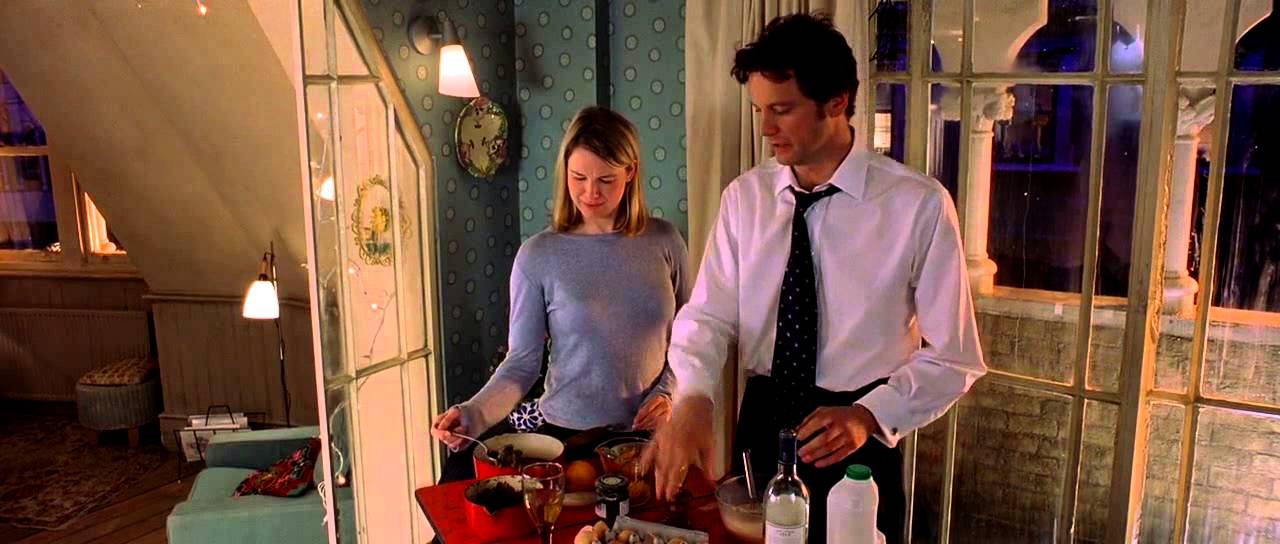
And I enjoy the fight between Firth and Hugh Grant. And I like Bridget’s dad, too.

A sniper (and former lover) shot Colin Firth dead with a rifle bullet placed squarely in his forehead in a later spy film, Tinker Tailor Soldier Spy. There were a tragic few seconds, thanks to masterful direction, from the rifle shot being fired, with a silencer’s cough, the entrance wound appearing, a small and precisely round red dot, to Firth, his eyes widening slightly, realizing something was wrong in the last moment of realization granted him, to his collapse.

Even though Firth was a thorough bastard in the film, I was bummed for a day or two after. That film was based on the John LeCarre novels, and my friend John Porter and I are LeCarre devotees. They are so thickly plotted that I understand about 58% of them, but the protagonist, the British espionage bureaucrat, George Smiley, (below, played by Gary Oldman, with Benedict Cumberbatch as his neophyte) is brilliant and reserved. What he reserves is his venom, injected without passion, for those who deserve it. Like several modern American Congressmen. Or Colin Firth.
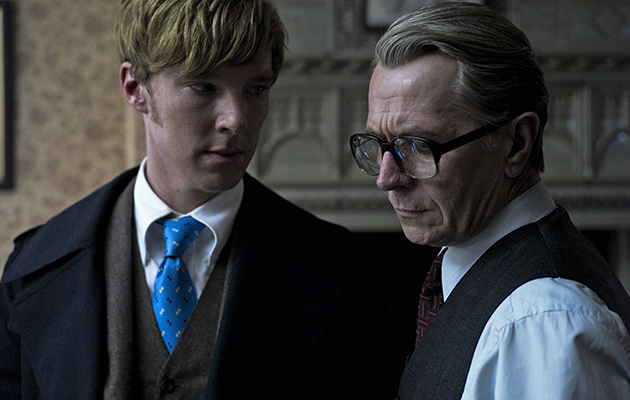
(Incidentally, Firth was Darcy in BOTH Pride and Prejudice and Bridget Jones. So there.)

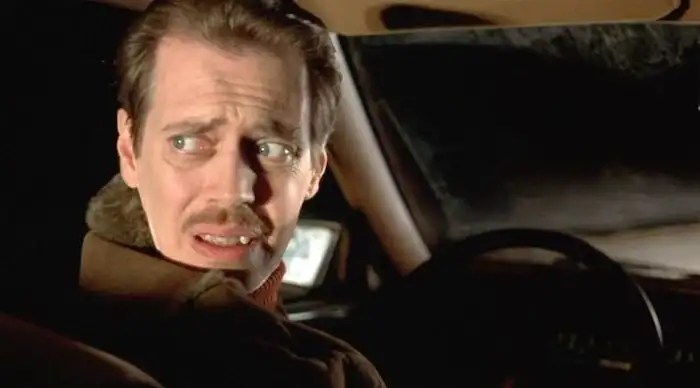
I am posting about none of them especially. What amazed me about Big Fish is that I’d forgotten that Steve Buscemi appears in it, when he recruits MacGregor as an unwilling accomplice in a bank robbery.
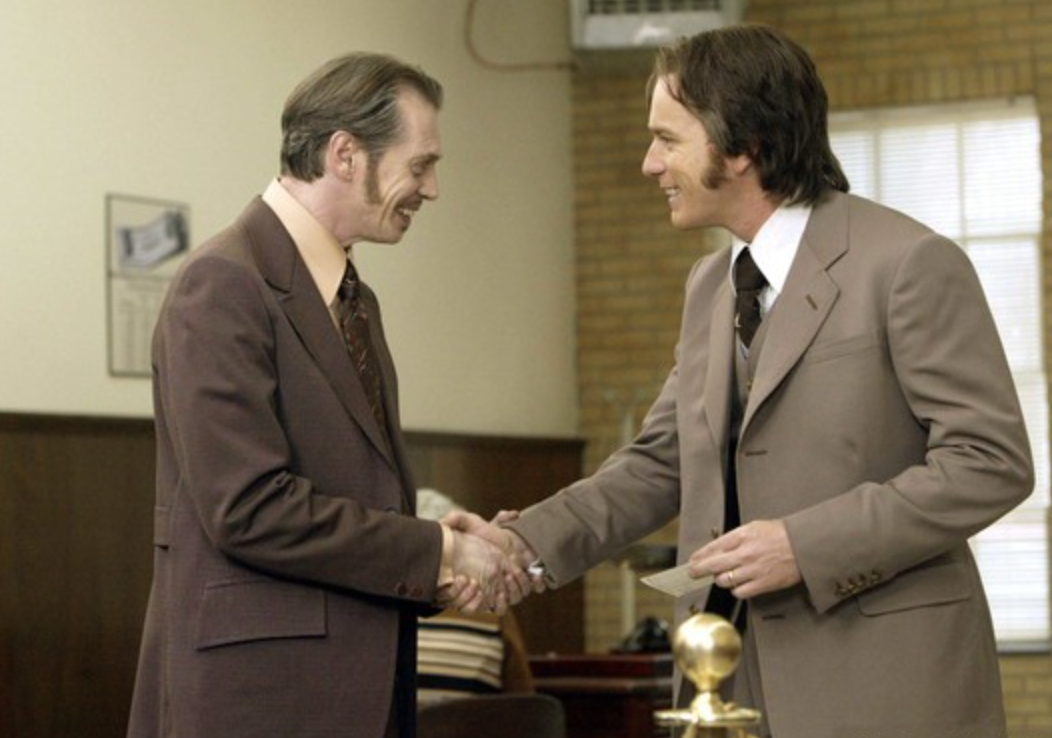
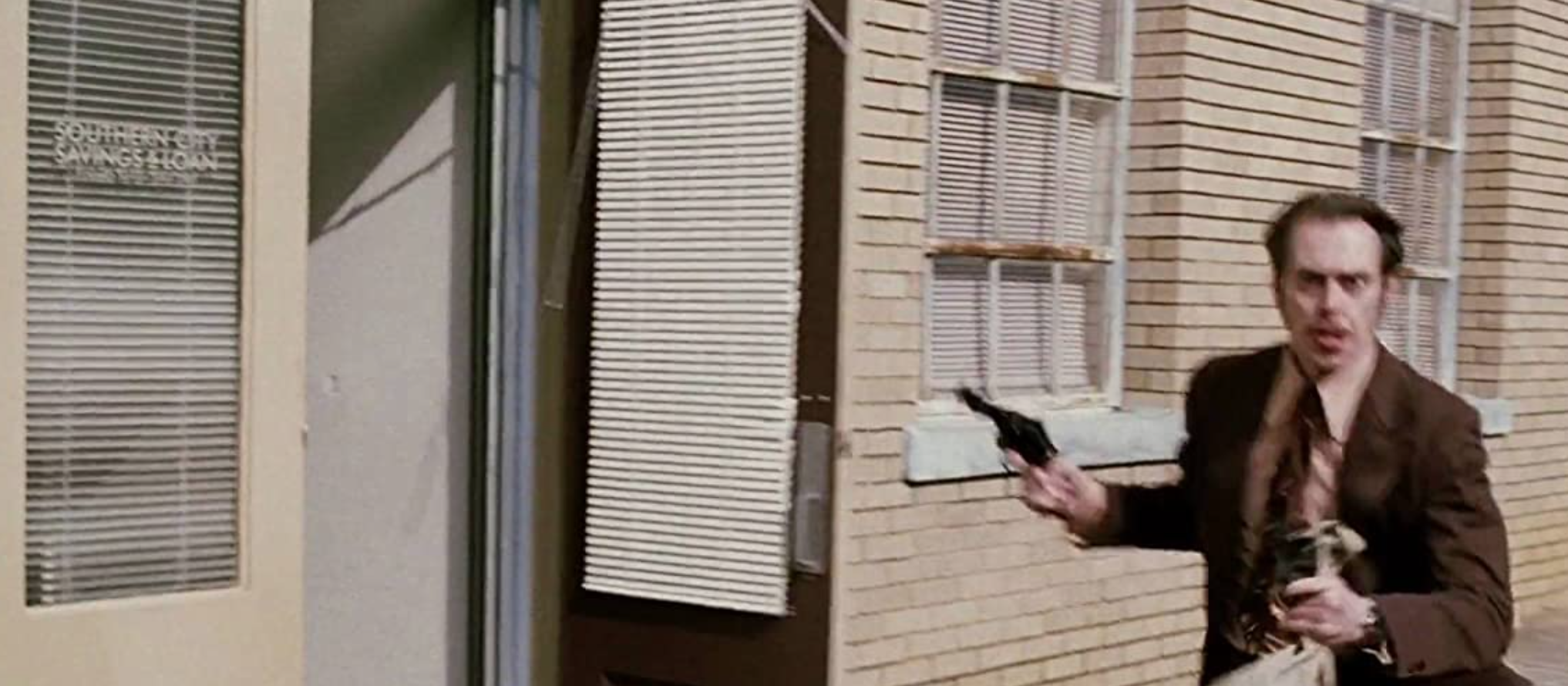
I would just like to state, for the record, how much I admire Steve Buscemi. I think almost any film he’s in exceeds its expectations.

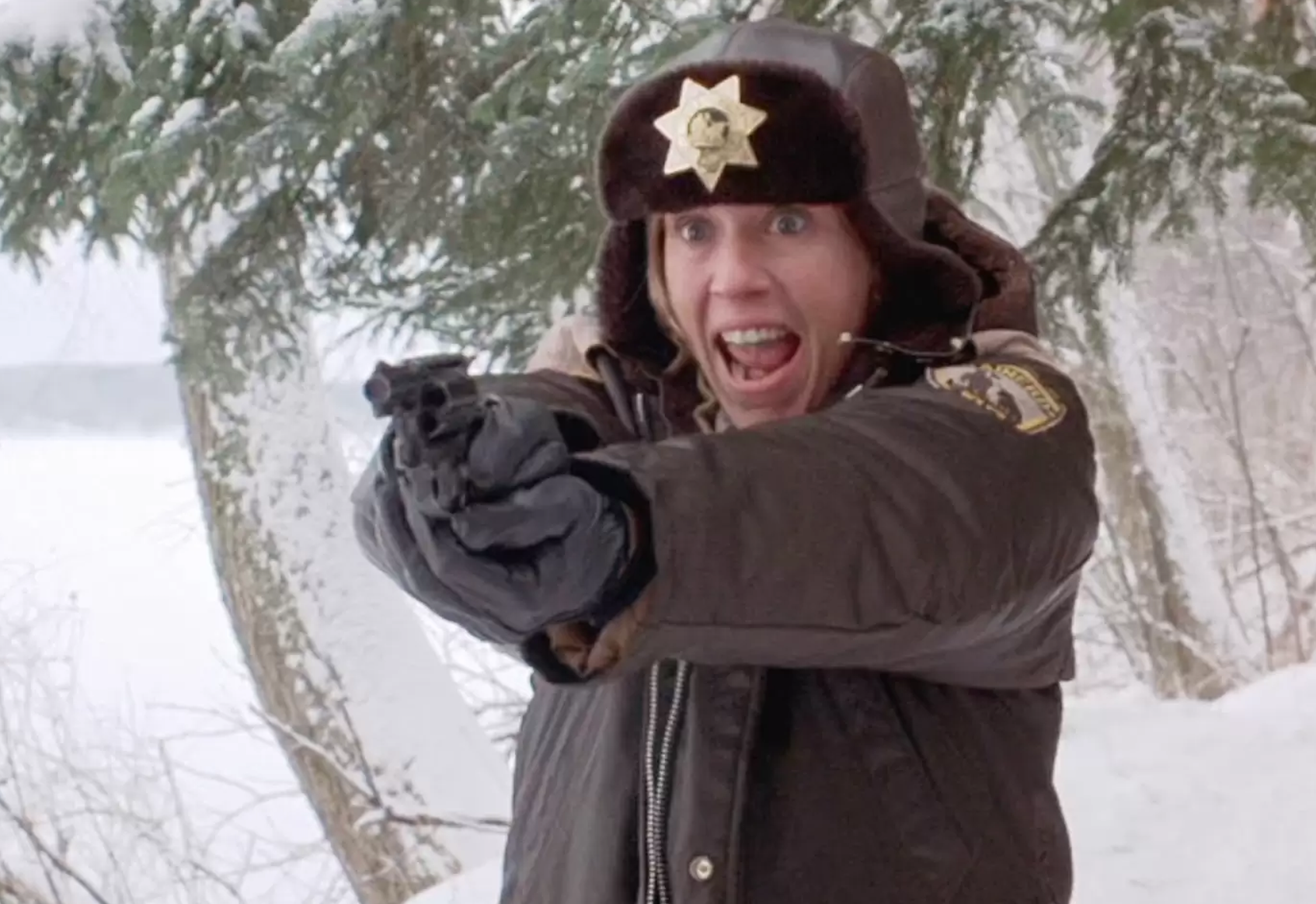
Frances McDormand co-stars with Crudup in Almost Famous and with Buscemi in Fargo, one of my all-time favorite films. And her Marge Gunderson is one of my all-time favorite characters. Don’t EVEN get me started on her.
Anyway, I hope you get some time to watch movies over Christmas. The turkey’s starting to defrost, we’ve got wassail and egg nog, our little tree with white lights, four dogs (Cousin Rocky is visiting) and we have Rick, Sally and Rebecca over for Friday and Saturday. We might even watch a movie together. (Or a football game.)

Shoot howdy, I just might invite Steve Buscemi over, too. I have a hunch he’d like my mashed potatoes. Oh, and I’d be careful, given the opening scene in Reservoir Dogs, to turn down any tips.

I bet he’d like those jalapeño poppers, too.
December 1944: The Ardennes, Belgium

21 Wednesday Dec 2022

Posted by ag1970 in Uncategorized, World War II

≈ Leave a comment


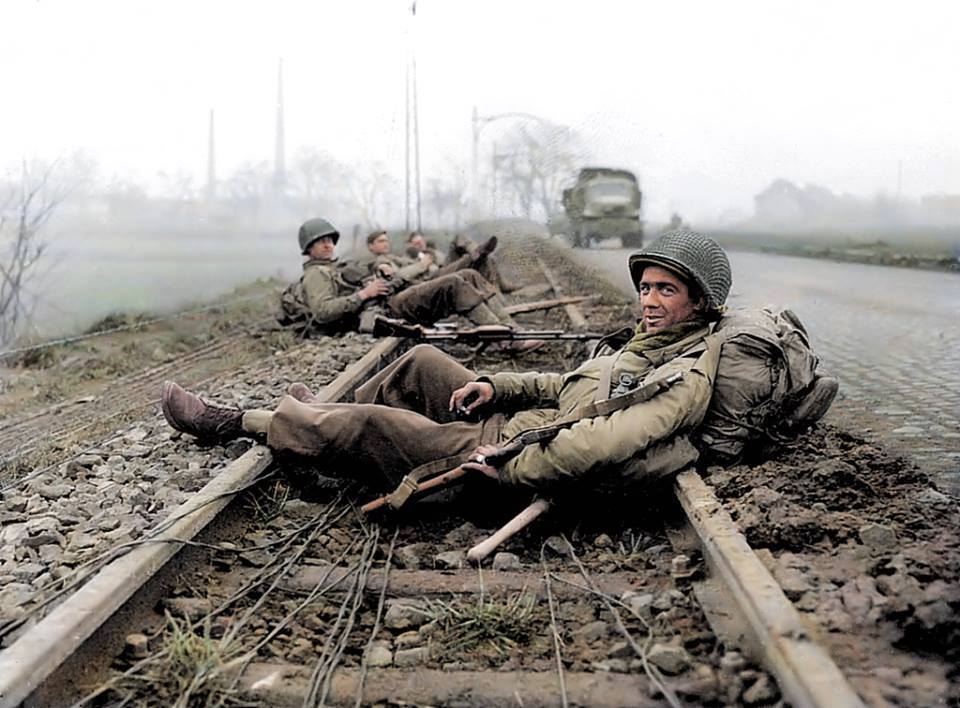
This photo was taken on December 21, 1944.

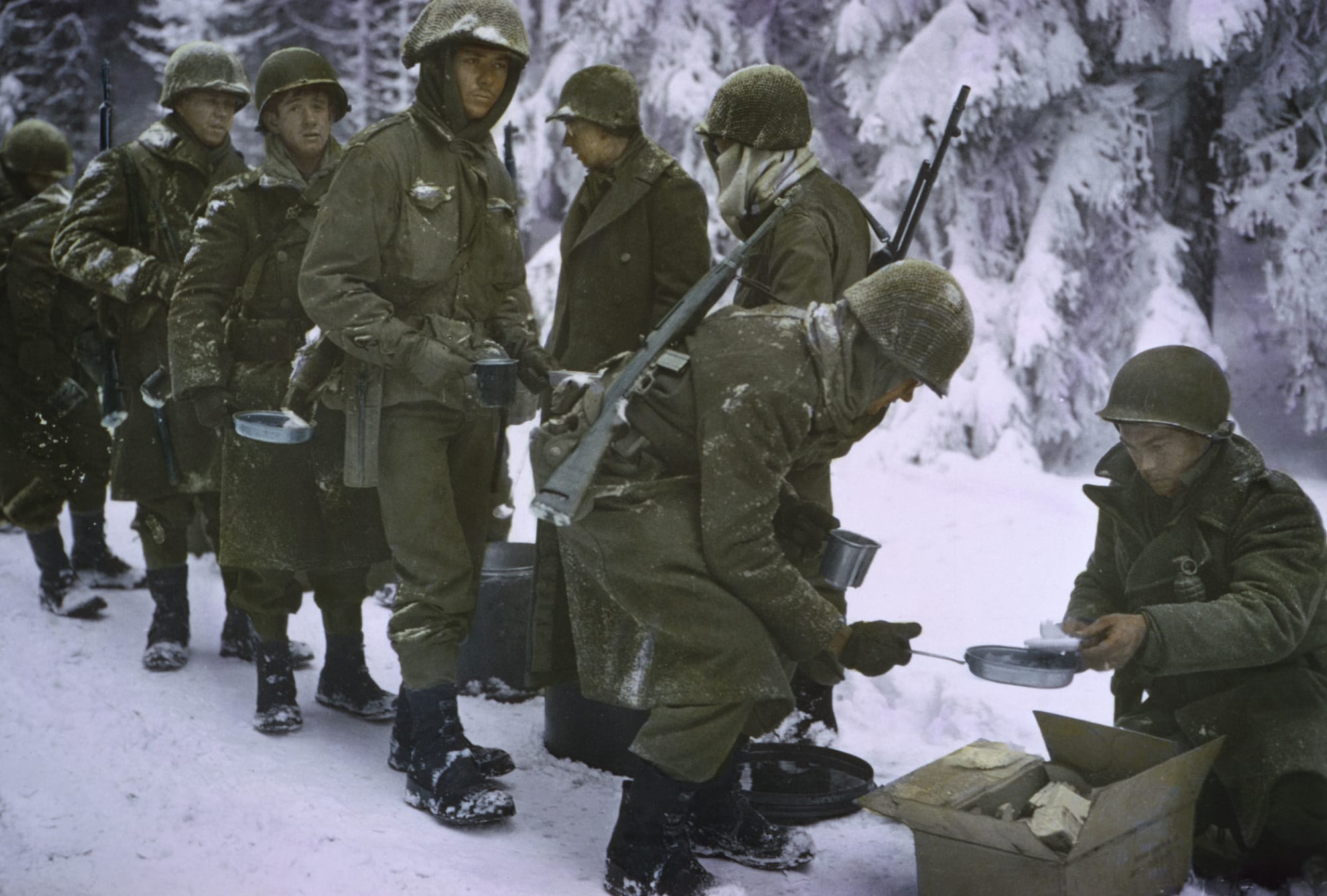
These GI’s are members of the 104th Infantry Division, the “Timberwolves.” The division had done part of its training at Camp San Luis Obispo. Now, six months after they’d arrived in Europe, these GI’s take a smoke break during the Battle of the Bulge, the horrific weeks-long battle fought in the Ardennes. The photo was taken just inside Germany, but the Bulge crossed several borders. The heaviest fighting for men like these would last into late January and it would come in the mountains and dense forest that mark the Ardennes.

It was the coldest winter in Europe in thirty years.

I’ve never seen a starker contrast in borders than the one between Holland and Belgium. Holland is flat enough to roll a tennis ball for miles, and the roads help. They’re smooth and noiseless. In the pastures that flank Dutch roads, the happiest cows I’ve ever seen would placidly watch the tennis ball roll by.

Then you see the Belgian border. The Ardennes, mountains and forests, rise so suddenly that I was reminded of that terrific animation of Paris rising in the film Inception.

And so the Ardennes is where Americans like these GIs in the 104th were essentially inhaled by the urgency of the the Battle of the Bulge, which had caught the Allied high command, suddenly desperate for riflemen, flat-footed.

Because they were mostly replacements, rookies, the high command hadn’t listened before the battle opened to the reports of tank engines and trembling trees shedding snow beyond the American lines. Sherman hadn’t listened to the reports of movement in the trees near Shiloh Church, either.

Then the Panzers came, followed by the infantry who were, along with Caesar’s Third Gallica and Thomas Jackson’s Confederate “foot cavalry,” possibly the finest soldiers in history.

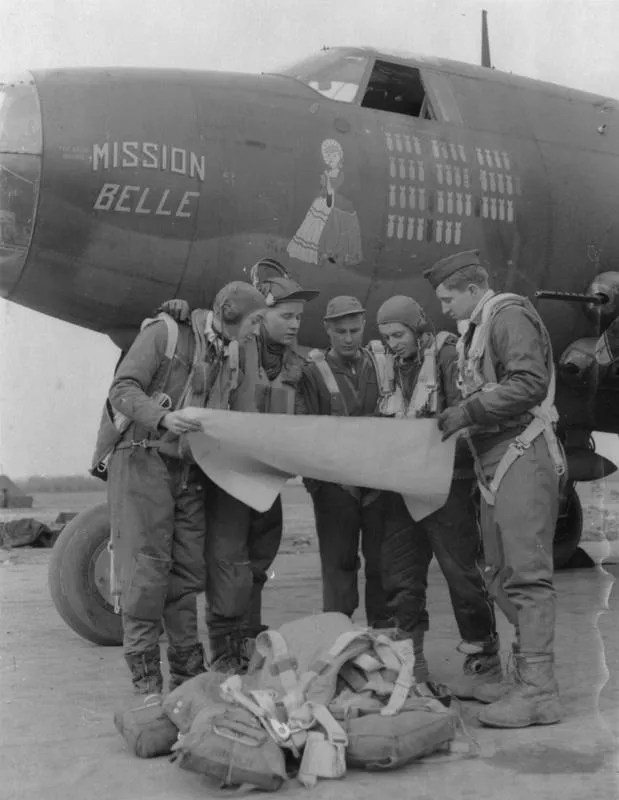
Art Youman of Arroyo Grande, of Easy Company, was there, too, in Bastogne. So was James Pearson of Templeton, lost with his B-26 crew—their plane, “Mission Belle,” is seen here with an earlier crew (they look young, don’t they?)—shot down over a Belgian town, Houffalize, the day after Christmas. So was Manuel Gularte of Arroyo Grande, a crewman on a 155-mm “Long Tom” cannon whose work had helped to delay the German advance on a Belgian town, St. Vith.

Once again, I am stunned by a “cow county” so small—33,000 people in the 1940 census—soon to be outnumbered by 96,000 servicemen from Camp Roberts in the north to Camp Cooke, near Lompoc–that contributed so significantly to World War II.

I heard a war story I did not want to hear a few days ago. It was a guy about my age, maybe with the tread worn down a bit more than mine, but his Dad was a member of an Army cavalry scout unit during the Battle of the Bulge.

They were among the units that found the bodies of more than eighty GIs who’d been machine-gunned—murdered—by a Waffen-SS unit in Malmedy, Belgium on December 17. They had surrendered and were unarmed.

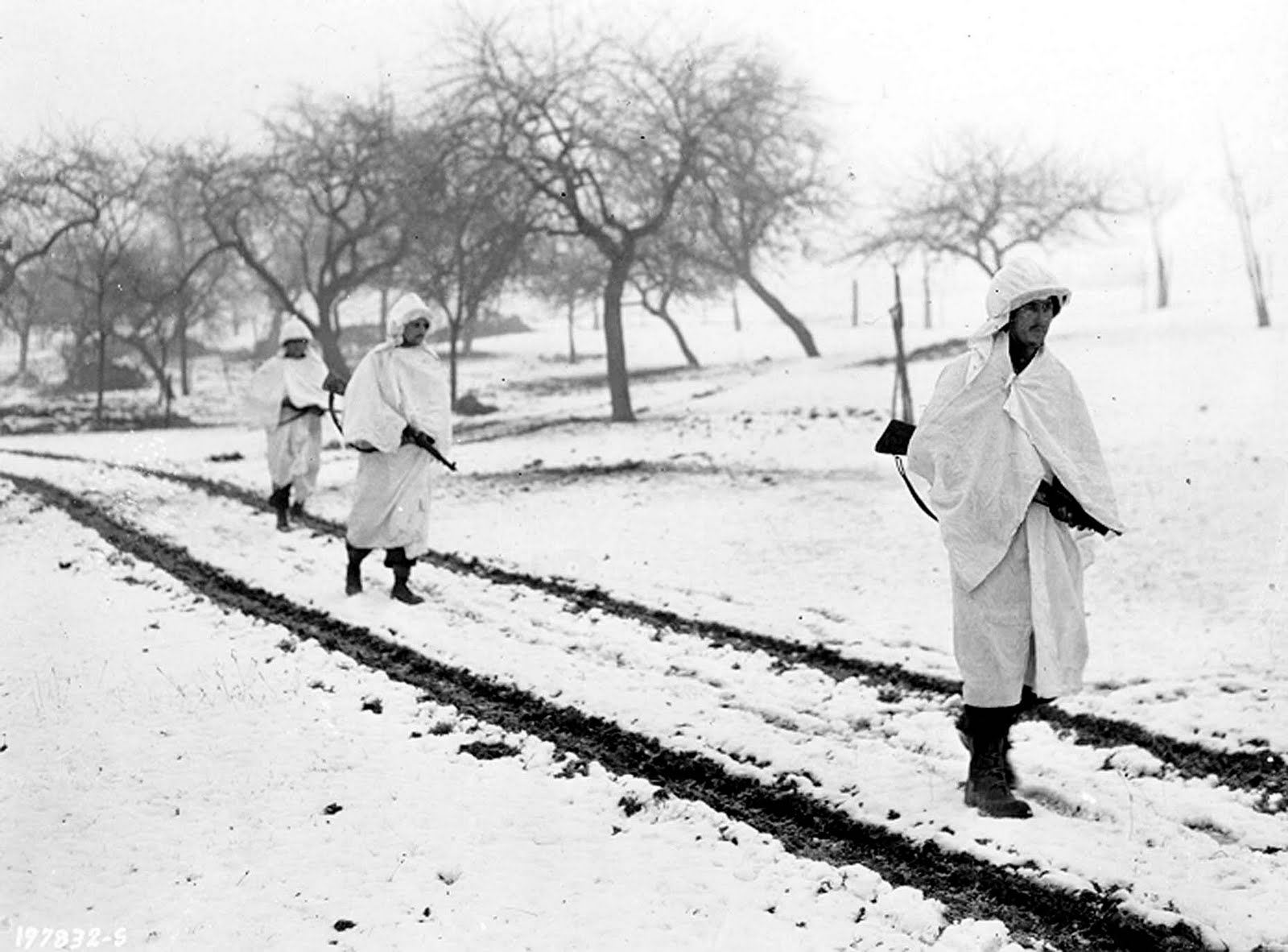
Three Americans on patrol, Luxembourg, during The Bulge.


His father’s unit stopped taking prisoners after that, the man told me. And so the Germans they murdered for the next six months became some of the fifty million casualties this war produced, in a war that demonstrated that humans were as efficient at killing as the Spanish Flu, with its fifty million victims, had been in 1918.

It was a horrific war in which Americans were not blameless. In writing Central Coast Aviators in World War II, I noted that airmen could never completely rid themselves of the memory of burning human flesh that came to them in updrafts over cities like Dresden or Tokyo. The Army executed 102 GIs for crimes against civilians during World War II, so we were capable of much more personal brutality, too.

But it’s a telling statistic that, in nation fighting to preserve democracy and destroy the racism fundamental to National Socialism and to Japanese chauvinism, that 83% of the soldiers executed for rape were Black Americans. The irony would’ve have escaped us then and would probably escape 30% of voting Americans today.

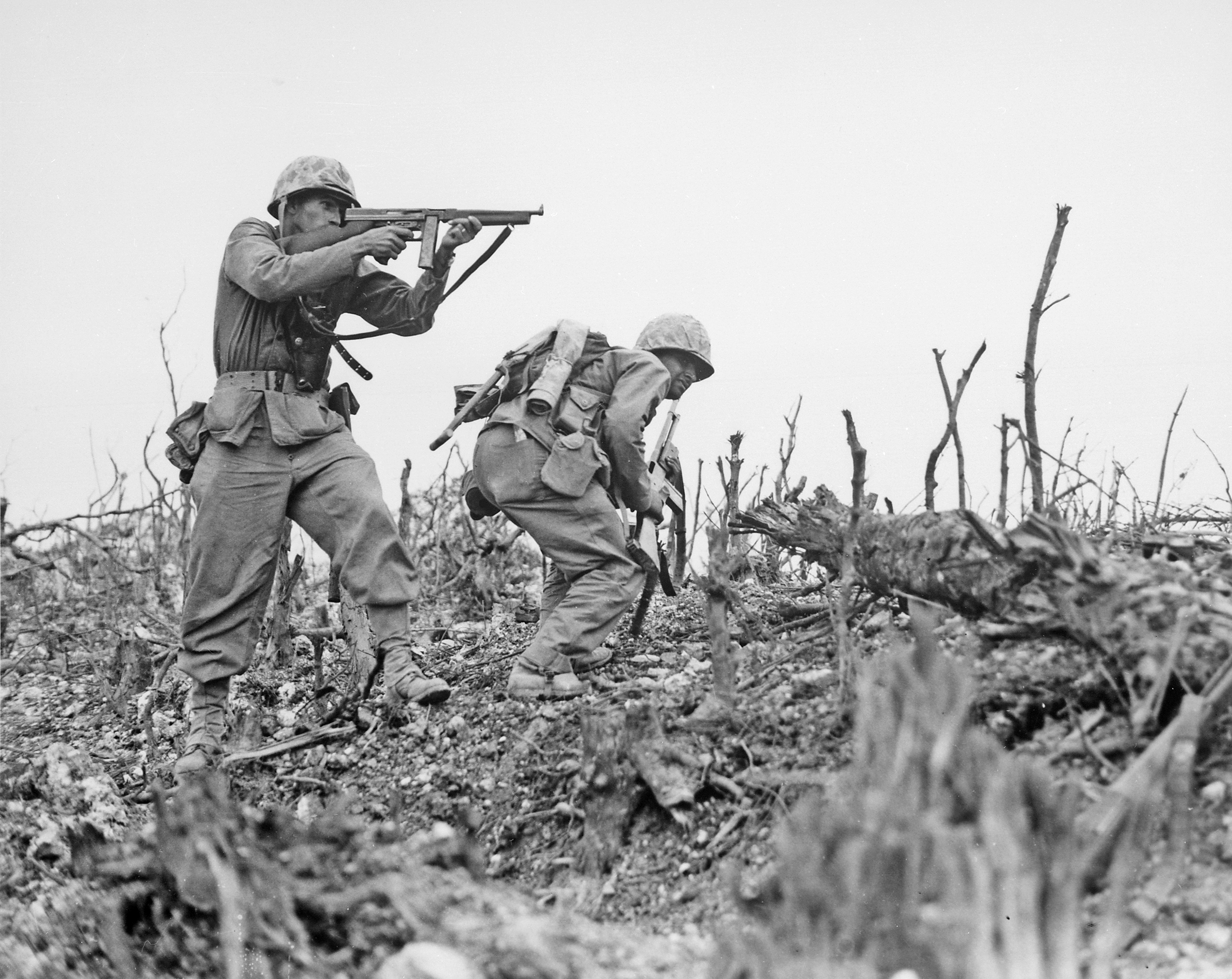
A Marine, a member of the First Marine Division, fires a burst from his Thompson submachine gun on Okinawa. John Loomis of Arroyo Grande was at Okinawa as a member of the First.


And, as to the debasement that war can confer, even on Americans: in Eugene Sledge’s masterful With the Old Breed at Peleliu and Okinawa, he remembered a fellow Marine absently tossing pieces of coral, like basketball free throws, into the skull of a dead Japanese soldier; the top of the man’s skull had been neatly sheared off by machine-gun bullet or a shell fragment. Even Sledge, who was not a blameless man—war debases all in mostly equal measures—was sickened.

Fifty thousand Americans grew sickened by the war and deserted. For a time, a gang of them took control of Paris and tried to run the place the way Capone had run Chicago.

The miracle, one author has noted, is that only fifty thousand GIs deserted.The vast majority didn’t. Here, they were farm boys and Poly students (usually one and the same) and store clerks, farm laborers and high-school football heroes, even the guys with Coke-bottle glasses whom nobody took seriously–not until they proved to be someone different altogether in places like the Ardennes.

They constantly amaze me. I keep returning to them because the debasement of recent history compels me to. I have learned that the cruelty of war, a cruelty some of them practiced, is always overwhelmed by other, more important, American traits: generosity, humanity and courage. We must not forget that.

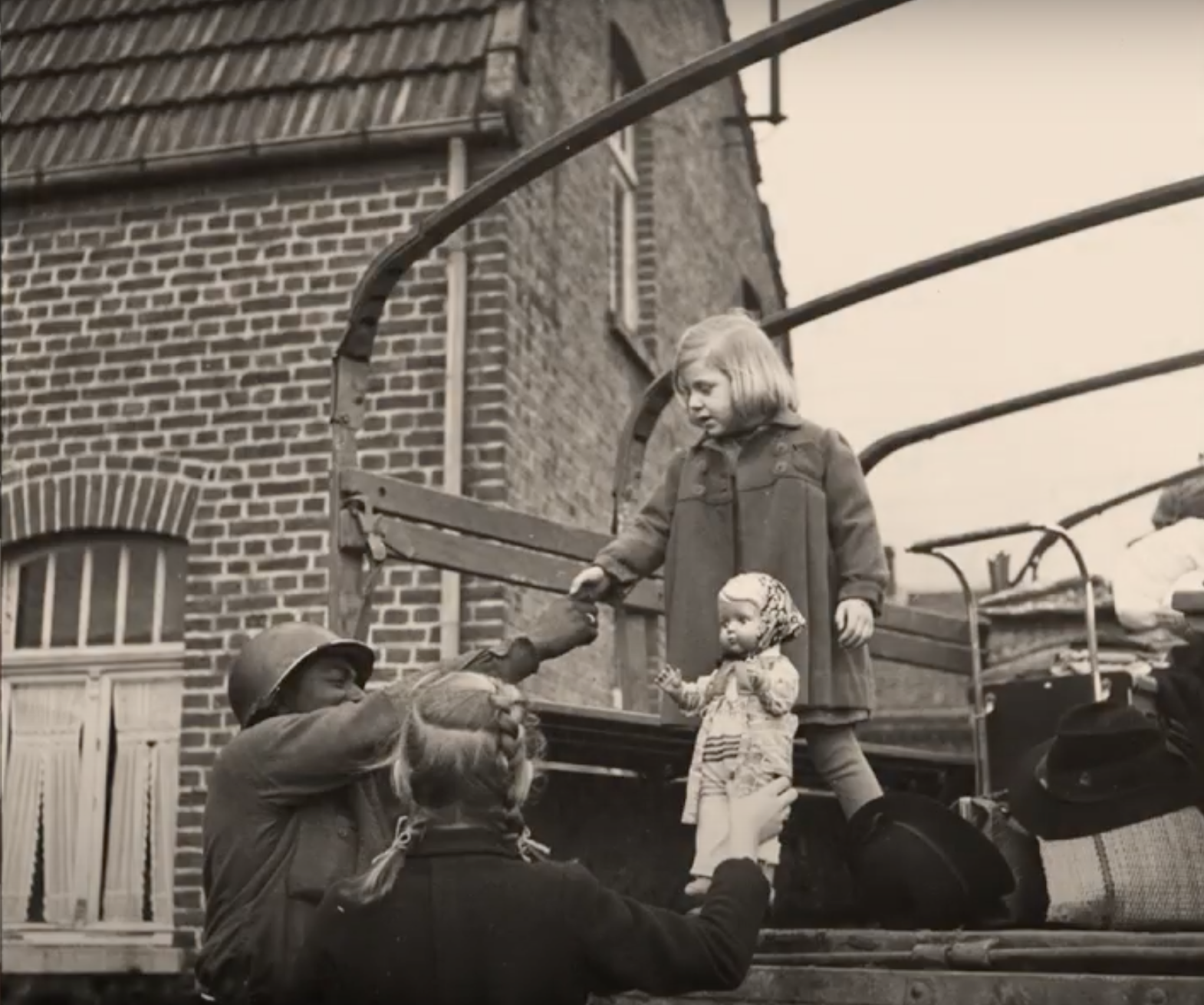
An Army Quartermaster truck driver makes a friend, 1944.
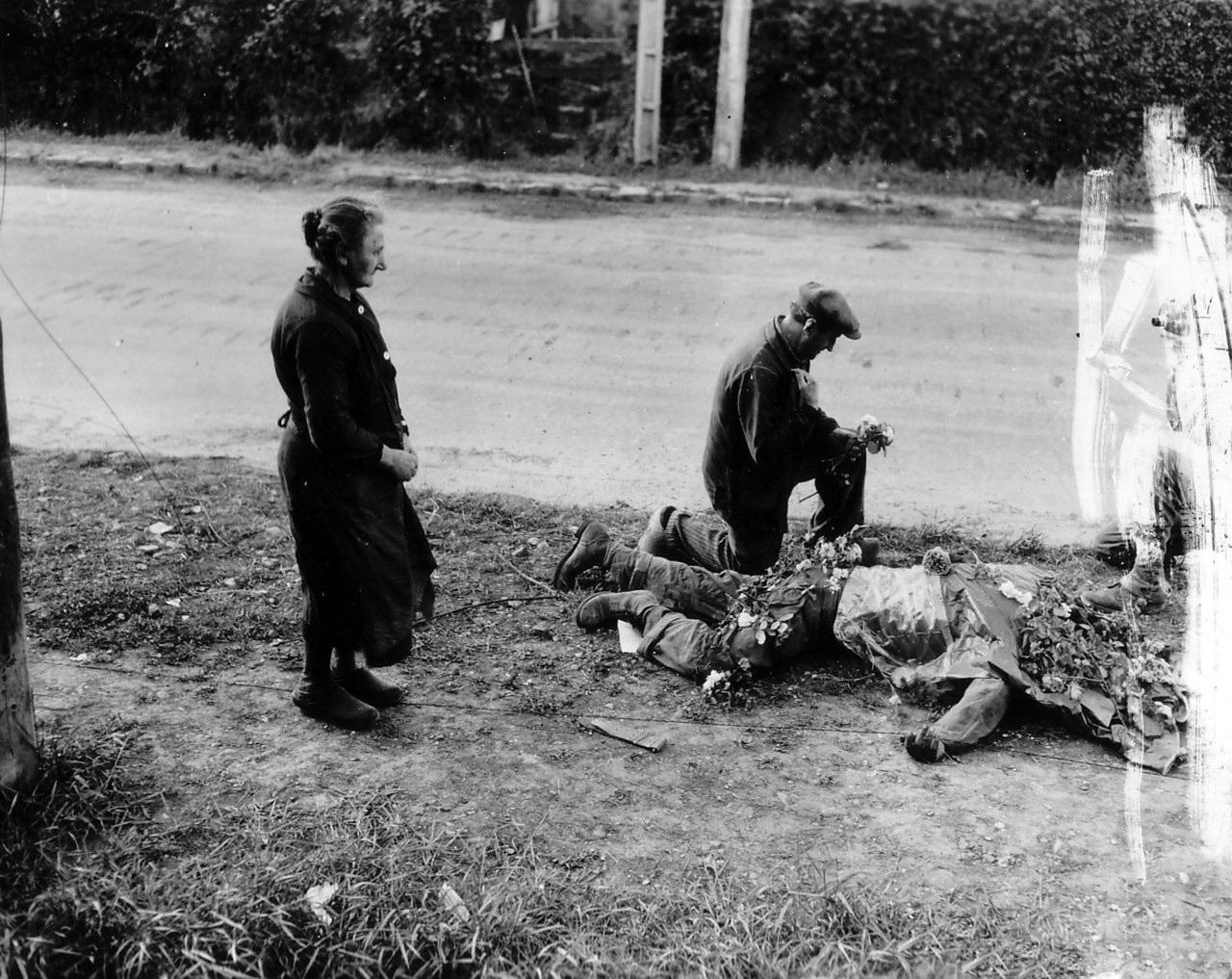
An elderly French couple honors an American paratrooper, killed in Carentan, Normandy, on D-Day.
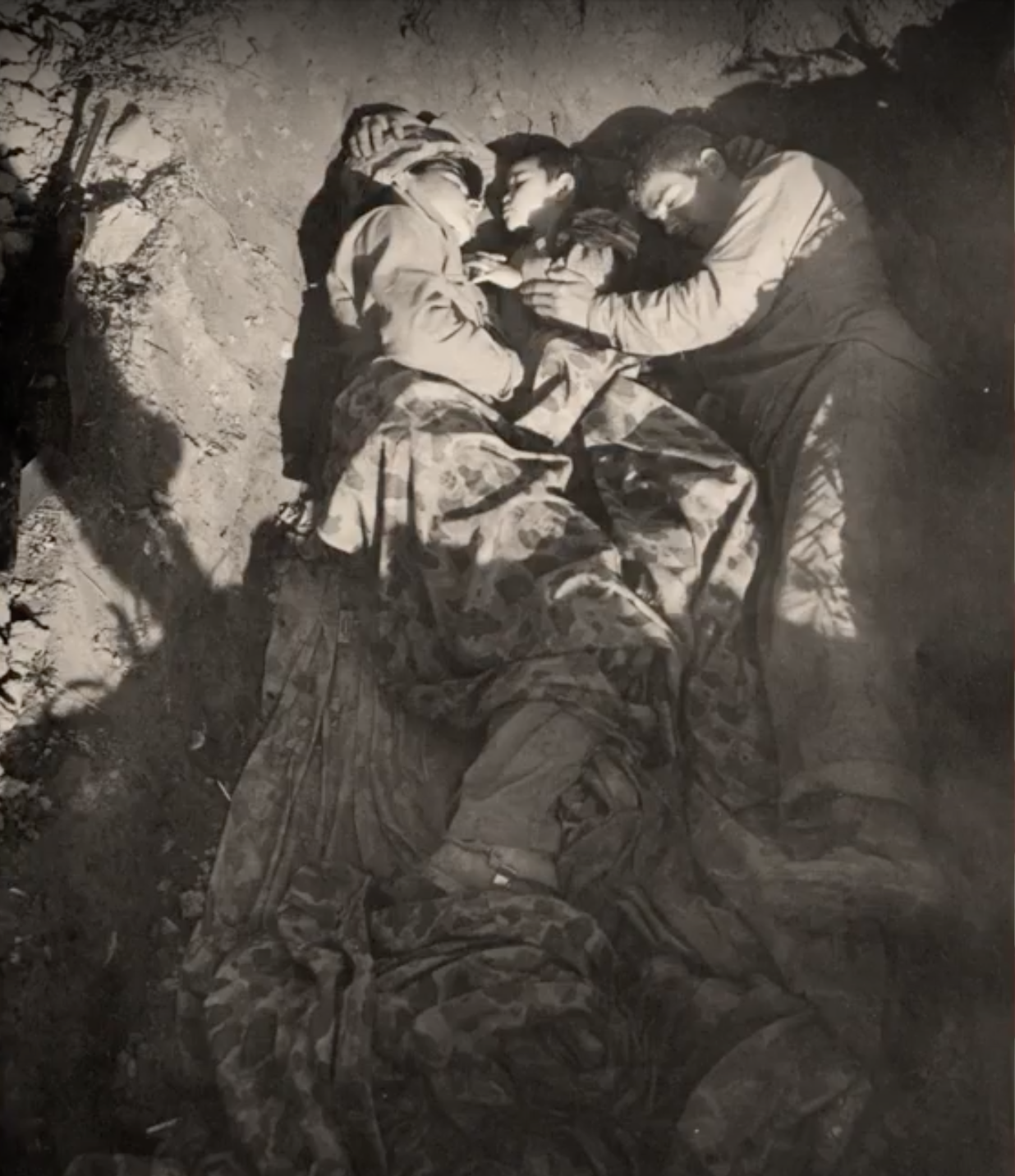
These Marines “adopted” this little boy, orphaned by the terrible fighting on Okinawa.

Los desaparcedos

19 Monday Dec 2022

Posted by ag1970 in Uncategorized

≈ Leave a comment

Please allow me a history teacher moment. It’s John Donne’s fault: “Any man’s death diminishes me.” This is about two women.

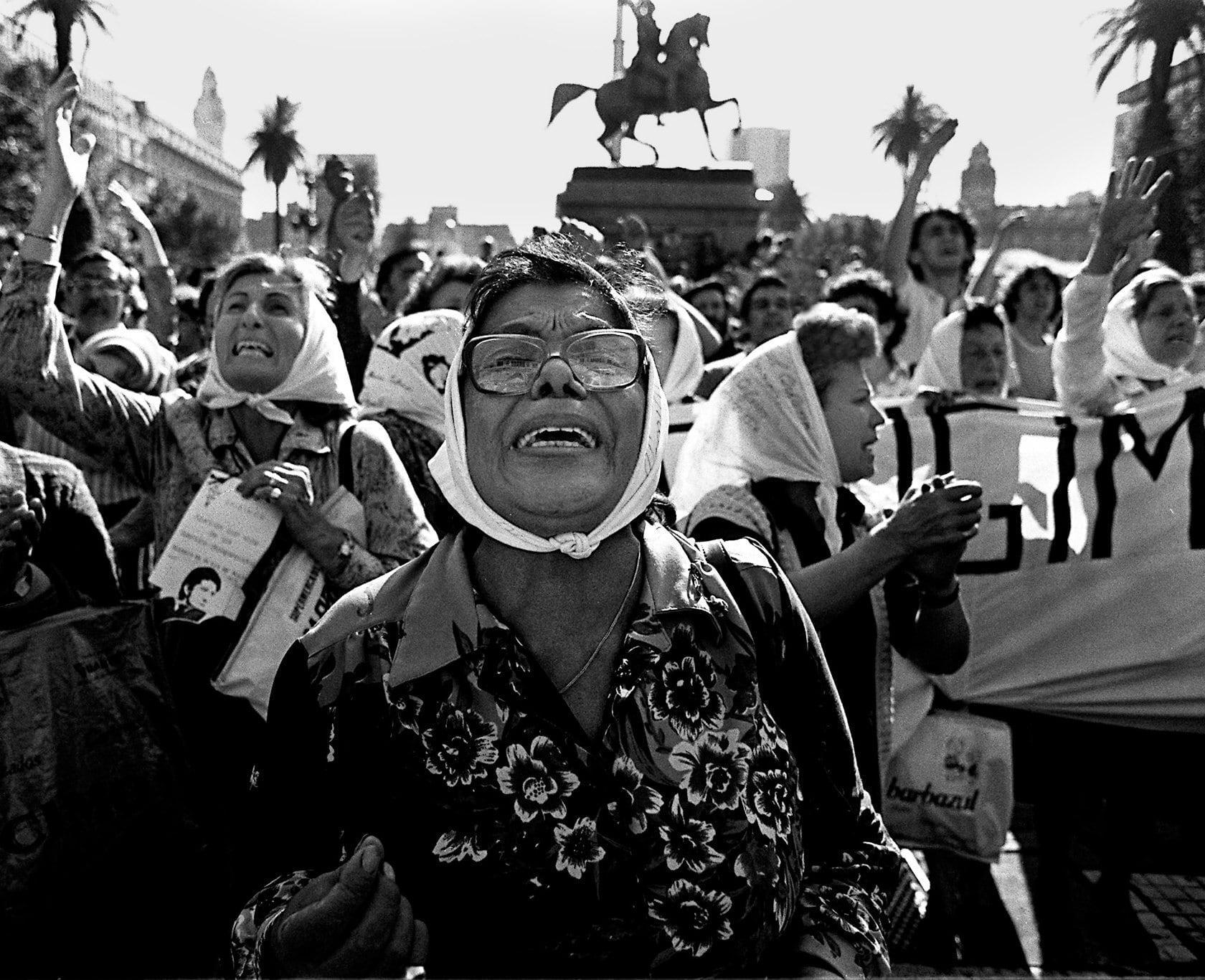
This is Clara Jurado, Mothers of the Disappeared (Desaparecidos), during a protest in Buenos Aires in 1983.

While I am happy for the Argentine football team, victors in Sunday’s World Cup, what is happening in Iran today happened in Argentina in 1976. When a military dictatorship came to power, a wave of arrests and extrajudicial killings followed.

30,000 Argentines, overwhelmingly young people, were “disappeared.” Pregnant detainees were executed soon after they had given birth.

I hope that the World Cup victory somehow brings healing—and much joy— to Argentina this year.

But last year, the Argentine government issued thousands of DNA kits to help identify the human remains still being unearthed. Because the two nations are so close, some of the DNA samples match living Italians.

There are still mass graves from the 1936-39 Spanish Civil War that remain undisturbed; previous generations knew where they were but did not talk about them. Young Spaniards talk about them but they have now passed into myth.

The writer Adam Hochschild wrote of the Russian River Ob changing course in 1976, exposing sandbanks packed densely with human bodies. Permafrost had preserved some so completely that relatives could recognize the man or woman who had gone missing in the 1930s. What the Ob revealed lay below what was the headquarters of Stalin’s secret police, the NKVD, in a town called Kolpashevo.

And now people are being “disappeared” in Iran.

This week actress Taraneh Alidoosti was arrested. She committed two crimes: protesting the brutal repression of protestors and posting this photograph. Her hair is uncovered.

Subscribe

  • Entries (RSS)
  • Comments (RSS)

Archives

  • January 2026
  • December 2025
  • November 2025
  • October 2025
  • September 2025
  • August 2025
  • July 2025
  • June 2025
  • May 2025
  • April 2025
  • March 2025
  • February 2025
  • January 2025
  • December 2024
  • November 2024
  • October 2024
  • September 2024
  • August 2024
  • July 2024
  • June 2024
  • May 2024
  • April 2024
  • March 2024
  • February 2024
  • January 2024
  • December 2023
  • November 2023
  • October 2023
  • September 2023
  • August 2023
  • July 2023
  • June 2023
  • May 2023
  • April 2023
  • March 2023
  • February 2023
  • January 2023
  • December 2022
  • November 2022
  • October 2022
  • September 2022
  • August 2022
  • May 2022
  • April 2022
  • March 2022
  • February 2022
  • January 2022
  • December 2021
  • November 2021
  • October 2021
  • September 2021
  • August 2021
  • July 2021
  • June 2021
  • April 2021
  • March 2021
  • February 2021
  • January 2021
  • December 2020
  • November 2020
  • August 2020
  • July 2020
  • June 2020
  • May 2020
  • April 2020
  • January 2020
  • December 2019
  • November 2019
  • October 2019
  • September 2019
  • August 2019
  • May 2019
  • April 2019
  • March 2019
  • February 2019
  • January 2019
  • December 2018
  • November 2018
  • October 2018
  • September 2018
  • July 2018
  • June 2018
  • May 2018
  • April 2018
  • March 2018
  • February 2018
  • January 2018
  • December 2017
  • November 2017
  • October 2017
  • April 2017
  • March 2017
  • December 2016
  • November 2016
  • October 2016
  • September 2016
  • August 2016
  • July 2016
  • June 2016
  • April 2016
  • March 2016
  • February 2016
  • January 2016
  • December 2015
  • November 2015
  • October 2015
  • September 2015
  • August 2015
  • July 2015
  • June 2015
  • May 2015
  • April 2015
  • March 2015
  • February 2015
  • January 2015
  • December 2014
  • November 2014
  • September 2014
  • August 2014
  • July 2014

Categories

  • American History
  • Arroyo Grande
  • California history
  • Family history
  • Film and Popular Culture
  • History
  • News
  • Personal memoirs
  • Teaching
  • The Great Depression
  • trump
  • Uncategorized
  • World War II
  • Writing

Meta

  • Create account
  • Log in

Blog at WordPress.com.

  • Subscribe Subscribed
    • A Work in Progress
    • Join 68 other subscribers
    • Already have a WordPress.com account? Log in now.
    • A Work in Progress
    • Subscribe Subscribed
    • Sign up
    • Log in
    • Report this content
    • View site in Reader
    • Manage subscriptions
    • Collapse this bar
 

Loading Comments...