
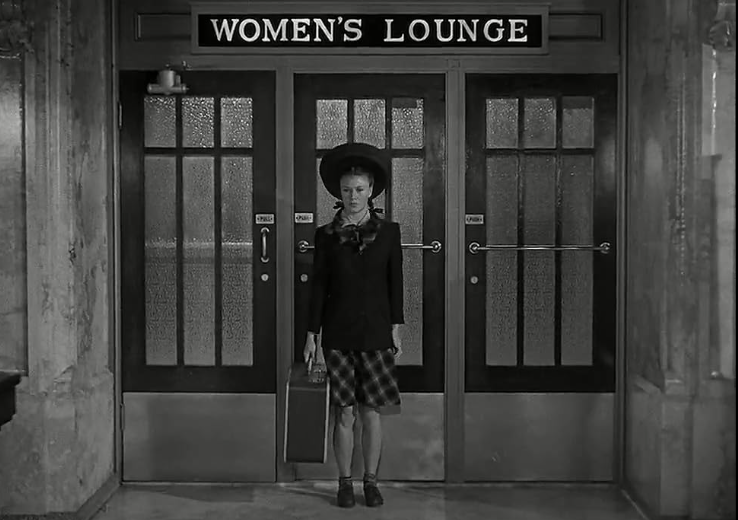
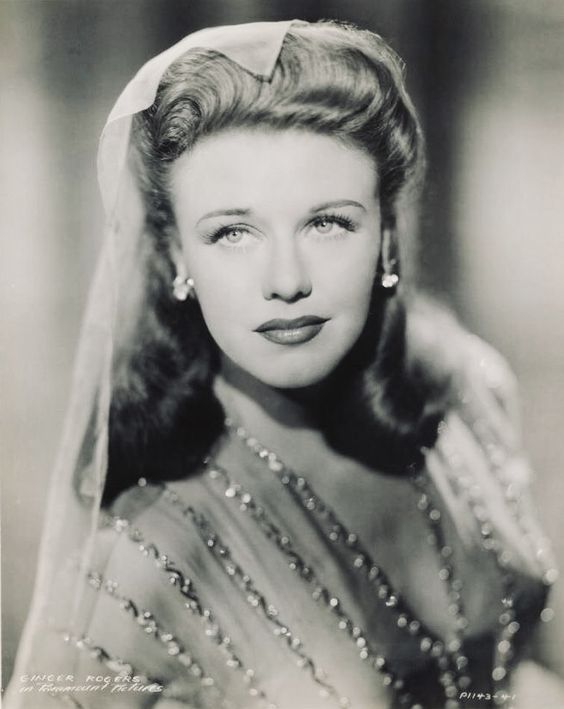
I have always admired Ginger Rogers, a gifted dancer who once pointed out that she did everything Fred Astaire did in their films together, but backwards and in heels.
But, I have to admit it: Last night, I kind of fell in love with her.
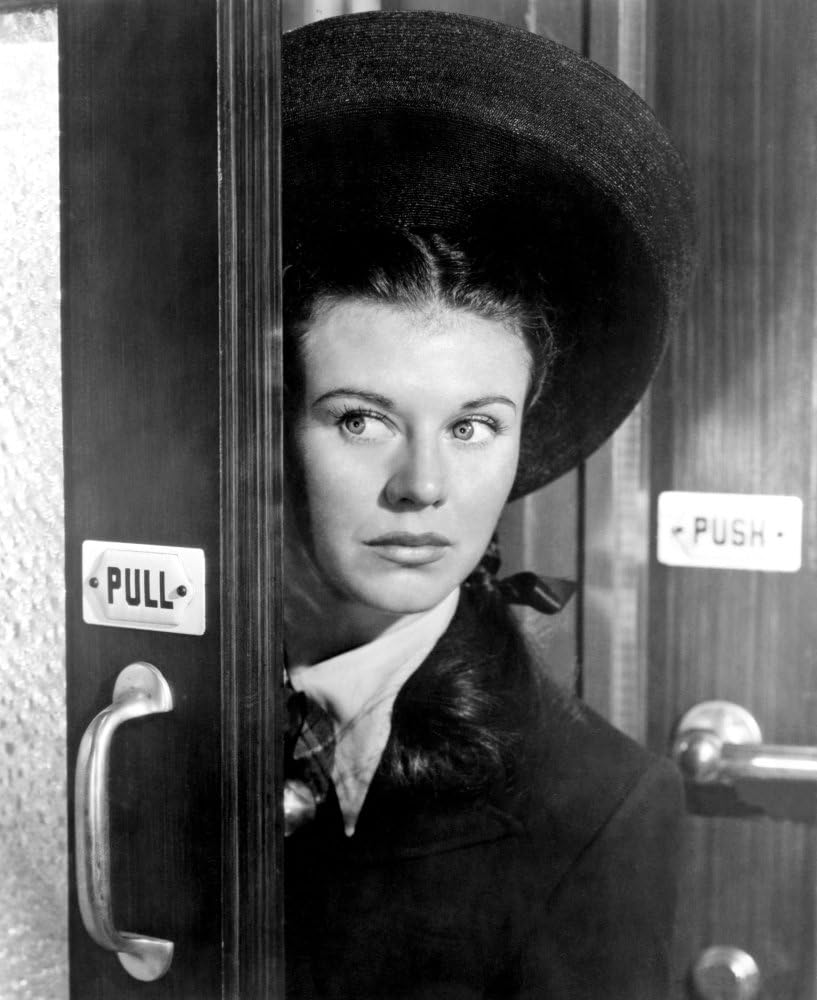
The film was 1942’s The Major and the Minor, the screenplay co-written by Billy Wilder. It sounds faintly perverse, but New York girl Rogers has had it with the big city and wants to take a train home to Iowa.
She can’t afford the fare ($32.50), so she poses as a twelve-year-old for the half-fare.
She’s Swedish, she explains to dubious conductors: We have big bones.
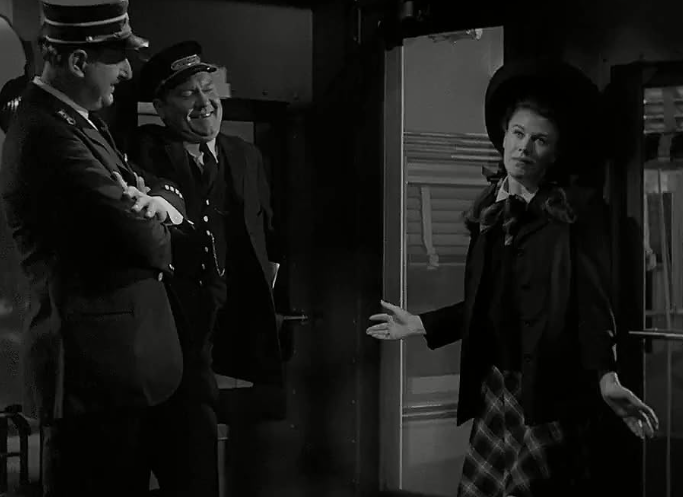
When the conductors catch her smoking at the end of her day-car, she swallows the lit cigarette. That scene is a gift.
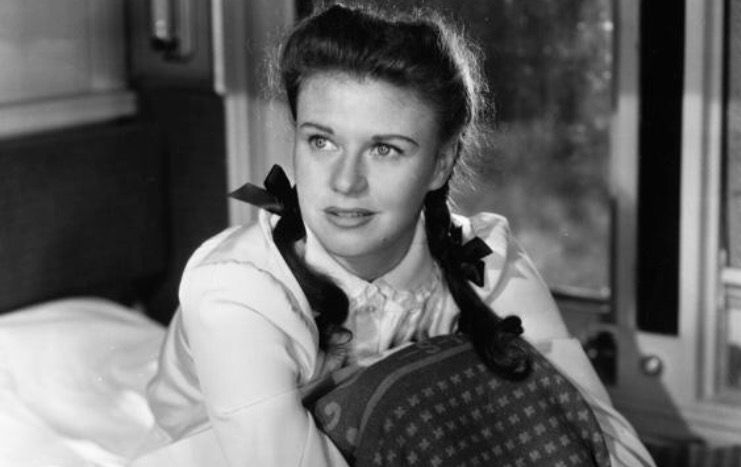
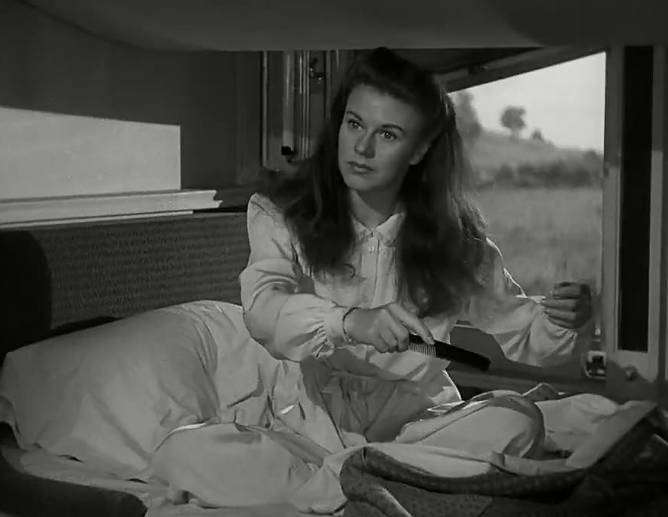
The train is stranded by floods, and Rogers is taken under the wing of a kindly Army Major, Ray Milland. Milland’s character, engaged, does not immediately all in love with Rogers (he’s honorable; she’s twelve), but when she loosens her hair the next morning, I did.
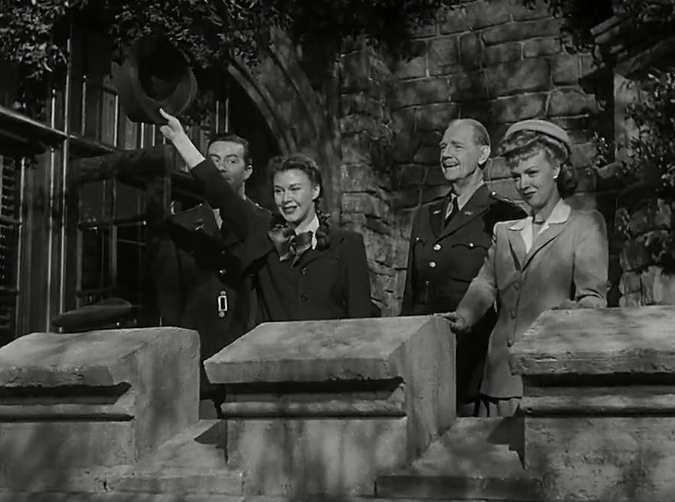
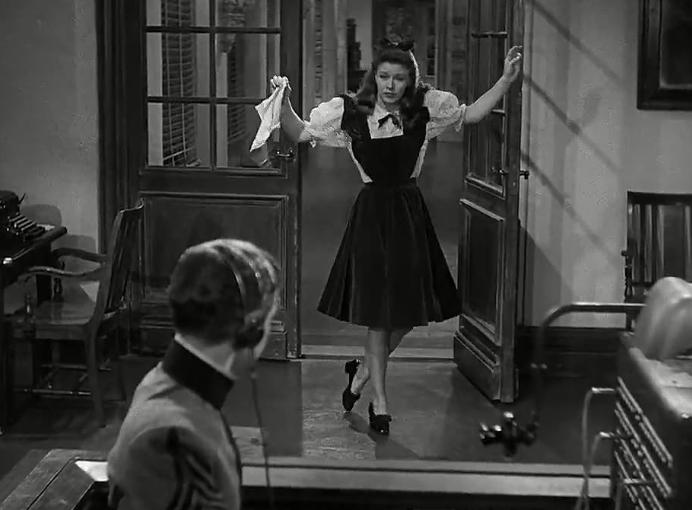
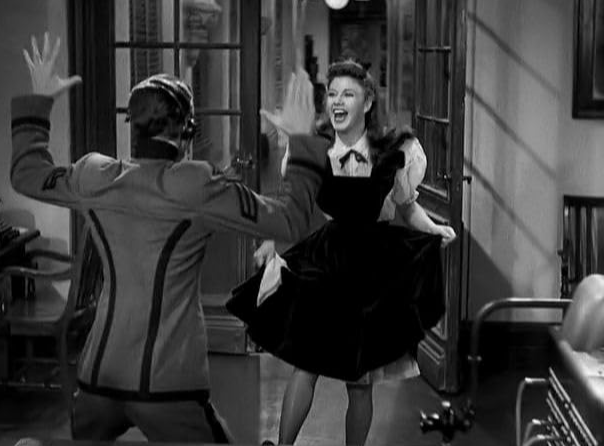
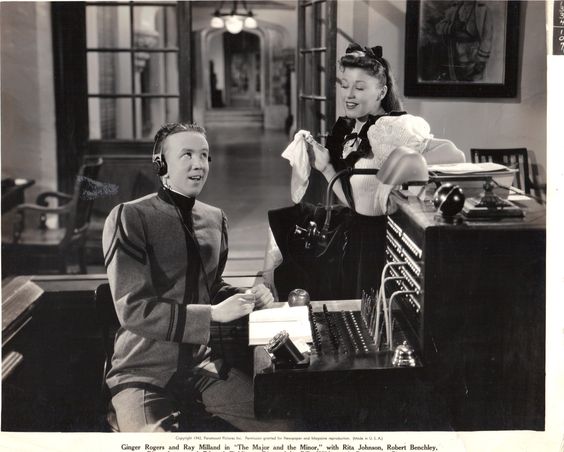
Of course, Rogers falls in love with Milland. All four companies of cadets at the military school where Milland teaches fall in love with Rogers. Here she is waving to the lads on parade below.
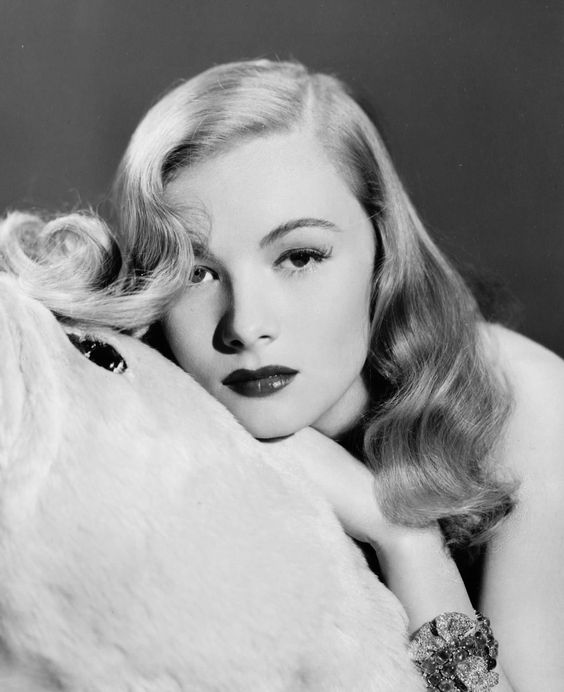
One of my favorite scenes is the school dance where Rogers is the only young woman without a Veronica Lake hairdo. (Kim Basinger, in another beloved film, L.A. Confidential, is a call girl whose plastic surgeries and haircut have made her a Veronica Lake lookalike.)
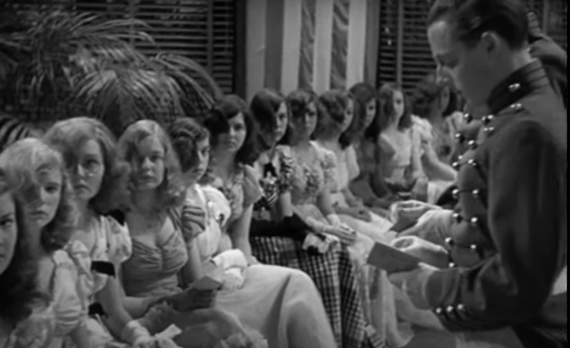

The photos below show the dance, as well— including cadets eager to sign Rogers’ dance card, and her character, Su-su’s, chance to dance with the gallant Milland.
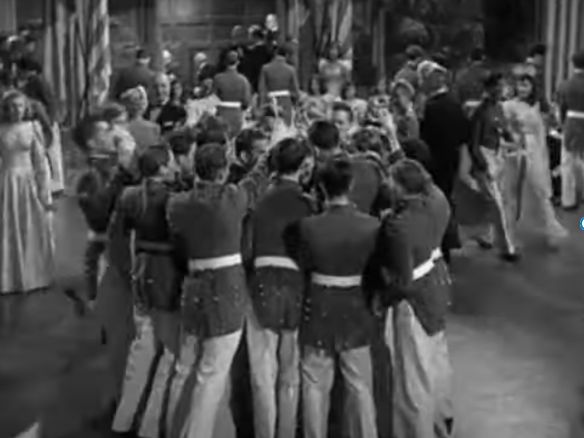
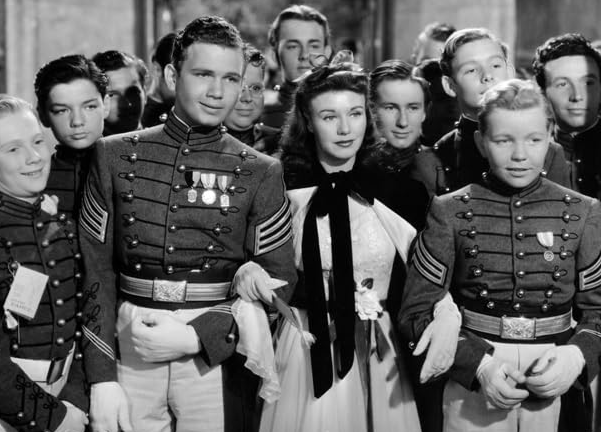
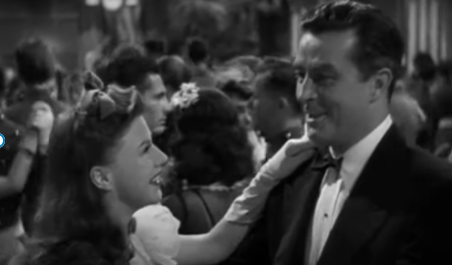
In the “reveal” scene, I had to catch my breath because Rogers is so beautiful.
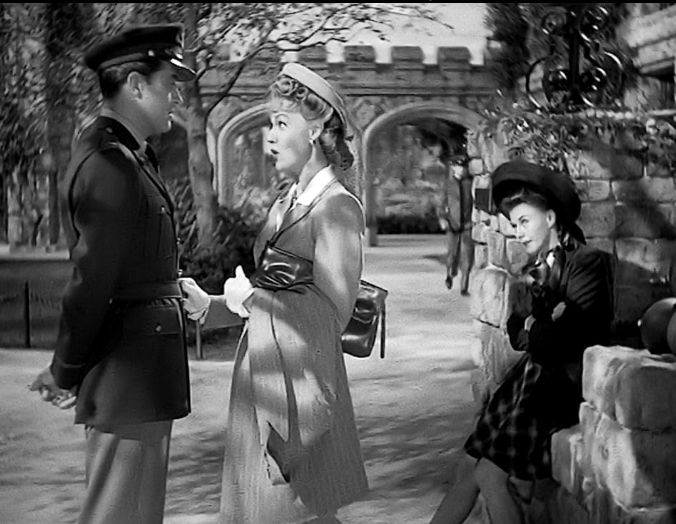
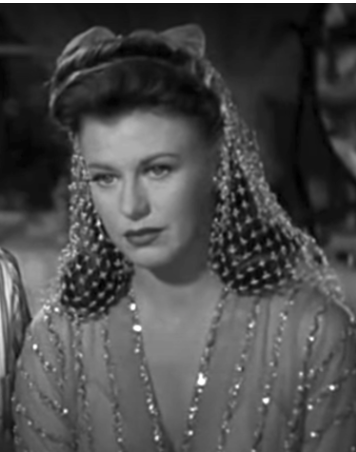
I love women’s fashions in that marvelous wartime interregnum between Flappers and cloche hats (okay, I like those, too) and the First Ladyship of Mamie Eisenhower. That bejeweled hairnet, for example, is stunning.
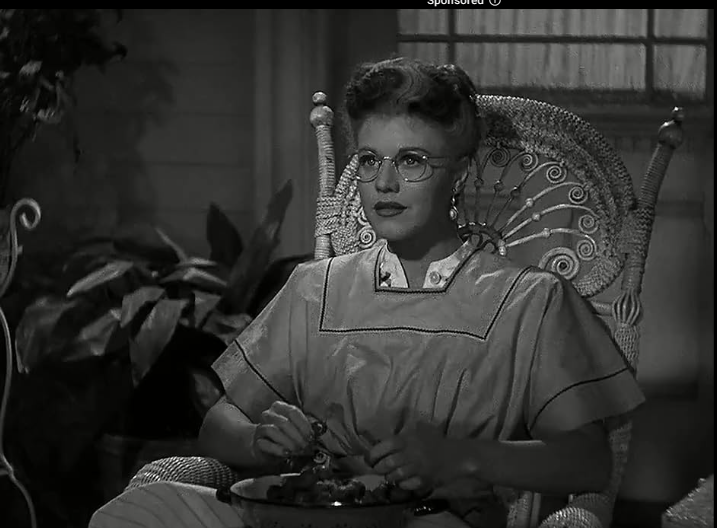
In the course of the film, she played a twelve-year-old, a twentysomething in love, and her own mother.
It was a marvelous performance.
The film itself, made on the eve of Pearl Harbor, had at its end Milland’s westbound train headed for San Diego and then active duty deployment.
That might’ve meant New Guinea or the Philippines or even the Aleutians. Neither Milland nor Ginger Rogers knew, of course.
That made this film, a late-era screwball comedy, even more poignant. I don’t know that any film–Bergman in Casablanca? Bacall in To Have and Have Not? Grace Kelly in Rear Window?–could show me a woman quite so beautiful as Ginger Rogers was in this film.
None of the other actresses I cited also had the gift of being so funny.
 A Work in Progress