
I had the most extraordinary experience yesterday, a beer-and-brats meeting with retired Arroyo Grande High School, California, teachers at Kulturhaus Brewing Company in Pismo Beach, a marvelous little restaurant owned by the daughter of one of those teachers. AGHS is both my Alma Mater and the place where I taught history for nineteen years.
I am not sure how to make the equivalence, but John F. Kennedy, probably courtesy of his speechwriter, Ted Sorensen, once made this remark at a White House dinner that honored several Nobel Prize awardees. I will paraphrase:
Never has there been, in this room, such a brilliant gathering. With the possible exception of when Thomas Jefferson dined here alone.
That was what my gathering yesterday was like. I was so incredibly honored to be in the presence of so many people who were—let’s face it, my heroes—math and English and Industrial Arts and history teachers.
I was stunned but not necessarily surprised when two of them said that they had subbed at our high school and would never do so again.
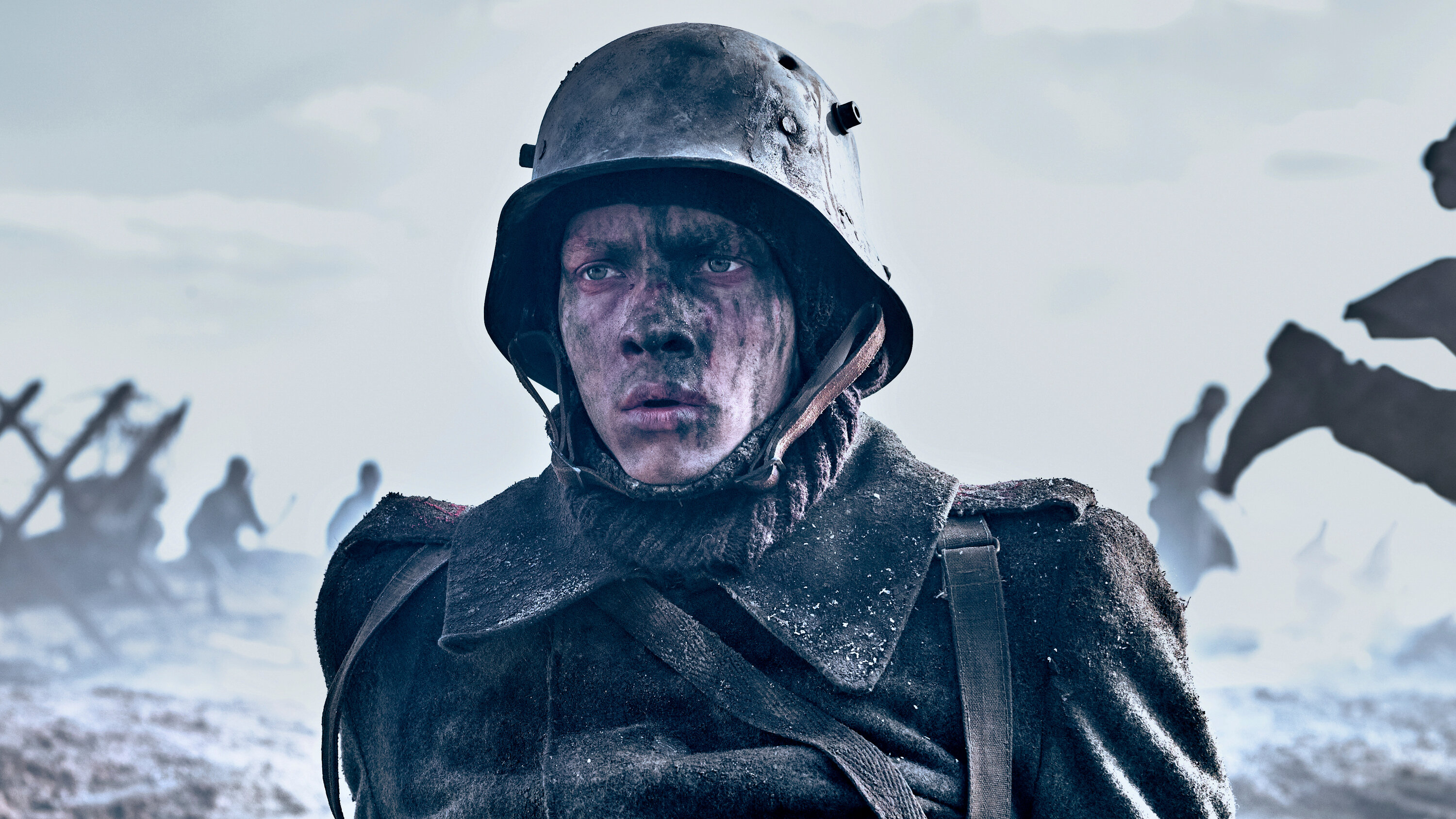
Of course, they reminded me immediately of one of the most formative novels of my sophomore year when I was a student at AGHS, All Quiet on the Western Front. The guilty party in that novel, sadly, is a teacher. His jingoism seduced the protagonist, Paul, into joining the army where, on the Western Front, everything he believes in is gradually destroyed by shellfire and poison gas. Finally, his idealism vanishes alongside the French poilu he watches die, slowly, in a shell-hole where dead rats the size of dogs remain afloat in the crater created by heavy artillery.
Teachers are suckers, like Paul. By that—I have to be careful here—I don’t mean that they are stupid. Paul wasn’t. They are instead idealistic and generous and self-denying. They work impossibly long hours that no one ever sees. Good teachers are good soldiers.
And, of course, All Quiet, the book about good soldiers, was banned by the Nazis once they’d come to power.
So are these books commonly taught in American classrooms today. The Florida widow of another soldier, killed in another war in 1944—she is now 100 years old—made this quilt to protest the censorship that now weighs heavily on American schools. Her husband died, she said, to preserve the freedom of thought that these books represent:
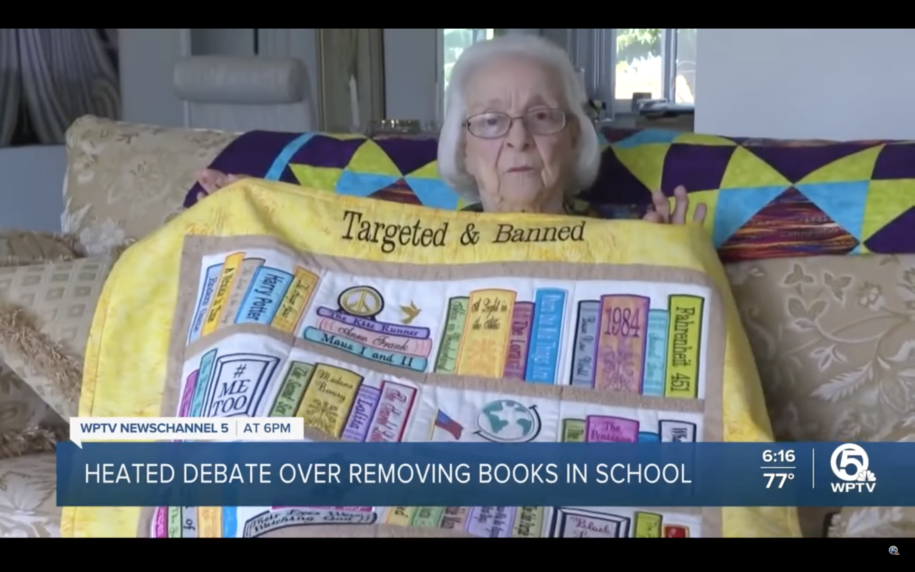
Ironically, one of the titles, Ray Bradbury’s Farenheit 451, is about burning books. Fire brigades are devoted, in Bradbury’s novel, to setting them afire, as good citizens once did, on Chester Avenue in Bakersfield, California, to a pyre made up of Steinbeck’s Grapes of Wrath, which they felt insulted their town for its treatment of migrant farmworkers.
A sign today that the walls that are closing in on teachers—particularly on history teachers—is the controversy over “Critical Race Theory,” which is taught in law schools or graduate schools. It is not taught in any K-12 school in any district in any part of the United States.
But the deliberately misinformed insist that it is. I once wrote this about perhaps the most threatening part of history, Black history, a discipline that may vanish, as Paul’s idealism did, in the rapidly contracting MAGA universe.
The passage refers to the student assessment, which required them to produce a computer-generated newspaper about what they’d learned about America in the 1920s.
When White 17-year-olds from Arroyo Grande, California, learned about the life of Louis Armstrong, a Black prostitute’s son from New Orleans, Louisiana, nearly every single newspaper at unit’s end had an article about Louis Armstrong.
They caught what a masterful trumpet player Bix Beiderbecke, the son of German immigrants—“Bix” is short for “Bismarck,” the Iron Chancellor— to Davenport, Iowa, caught one night when a Mississippi riverboat approached out of the fog on the great river’s surface. There was a jazz band aboard, and Beiderbecke heard the sweet—and saucy—notes of Armstrong’s cornet floating above the steamer’s superstructure. He was enchanted.
This is what I taught and what my teenagers learned.
When students learn that the hymn “Steal Away to Jesus” was the signal for carrying out a group escape from a slave plantation, when they learn about Crazy Horse’s generosity, after a big hunt, to Lakota widows and orphans; when they learn that one of the greatest frontier lawmen was a Mexican-American named Elfego Baca, or, in San Luis Obispo County, a sheriff named Francisco Castro; when they learn about the 54th Massachusetts driving up the beach toward Fort Wagner or the 442nd Regimental Combat Team advancing fearlessly under shellfire through the Vosges Forest in France; when they learn about Rosa Parks quietly refusing to give up her seat, they don’t feel ashamed to be Americans.
They are instead immensely proud.
They don’t feel ashamed because all of the people who perpetrated all of the cruelty that marks much of our history pass their knowing only briefly; these people are dead. But Louis Armstrong is alive to our children. He touches them.
There is nothing to be afraid of in teaching all of our past to all of our kids. It’s actually very hard to indoctrinate schoolchildren. What comes easy to children is recognizing needless cruelty—would you have us teach them to admire cruelty?– and, even more, kindred hearts. If we teach them to listen, then quiet ourselves, they’ll hear the cornet notes, sweet and saucy, clear and sharp, high and weightless above the river’s current.

It’s not safe to teach Louis Armstrong anymore.
And the classroom—once my sanctuary, the place where, in the course of my life, I was my truest self—is no longer safe, either.
What my retired friends were suggesting was something I’ve heard over and over from classroom teachers today. Whether it was the interruption of Covid, which retarded the socialization of young people for two years and when teaching was done remotely—both young people and teachers hated it—or the example of a president who mocked disabled people, there has been, I believe, a collapse in civility that is the societal equivalent of the climate crisis. Our future is in peril.

Both crises are being ignored.
Meanwhile, what teachers bring to the classroom are their open hearts, hearts that are open to America’s future.
But in many classrooms in America, every day in every way—whether it be by parents who challenge the teacher’s scholarship or by students who surreptitiously message their friends on iPhones hidden just beneath their desks, or by both teachers and students who come into the classroom with an immense and unassailable sense of entitlement—teachers are struggling with broken hearts.
I am a believer in Catholic education as well as public education, yet the many friends of mine who teach in four local parochial schools have seen the same decline in civility.
And so enrollment in teacher education programs has declined by a third in the last decade.
No wonder. If I could replace a broken windshield and get the thanks due me from a customer, I would fix windshields until I died.
Broken hearts are far more problematic than broken windshields.
And, to be honest, I didn’t teach history, not exactly. What I taught came from my heart: My classroom was a safe place where students could find acceptance. That allowed me to lead them toward a place where they could respect each other and, more, to travel to places they would never have the chance to visit and to meet people they’d never have the chance to meet. The people who’d inhabited those places were dead, you see. My job was to bring them to life again so that the young people I loved so much could meet them, wonder at them, honor them, remember them.
My classroom was a place where we could celebrate being human together. This was, for lack of a better word, my faith, which came from my mother.
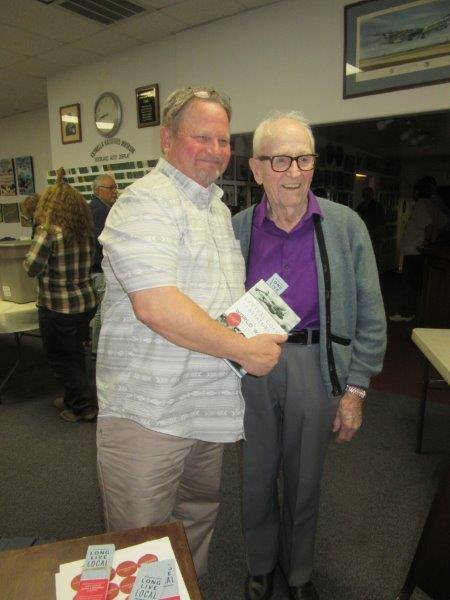
Just one example of my faith is this man, whom I will remember all my life. Al Findley Jr. was shot down as a B-24 radioman—shot down twice—in World War II, yet he became a lifer in the postwar Air Force, a Command Master Sergeant. After his career he became, with his wife, an antique collector with a shop in England and then another in Los Osos, California and when he died at 94, it broke my heart. I only knew the man briefly—he used to drive his retirement home G.I. buddies to breakfast every Sunday just up the coast to Morro Bay—but he became part of a book I wrote and, in the process, became as well one of the dearest friends of my life.
Al had let me touch the past, you see, and there are powerful and terrified men and women who want to draw a curtain across our past so that we can never see it honestly again.
 A Work in Progress