
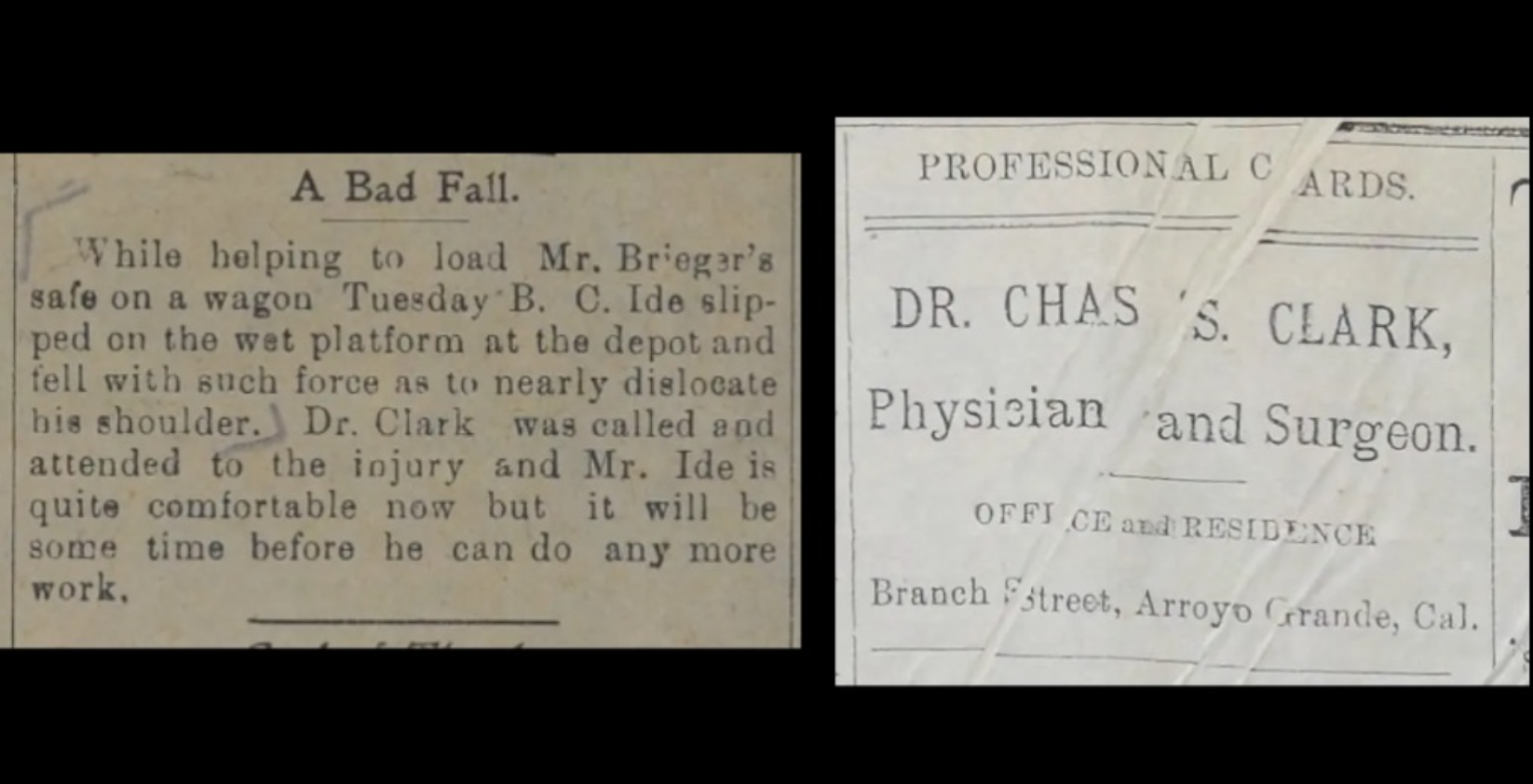
Union veteran Bela Clinton Ide of Arroyo Grande, San Luis Obispo County, California, had a bad day in September 1896, according to this clipping.
He’d had worse.
On July 1, 1863, Ide’s 24th Michigan, part of the Iron Brigade, lost two-thirds of its complement in a horrific firefight with the 26th North Carolina, which lost 81% of its soldiers.
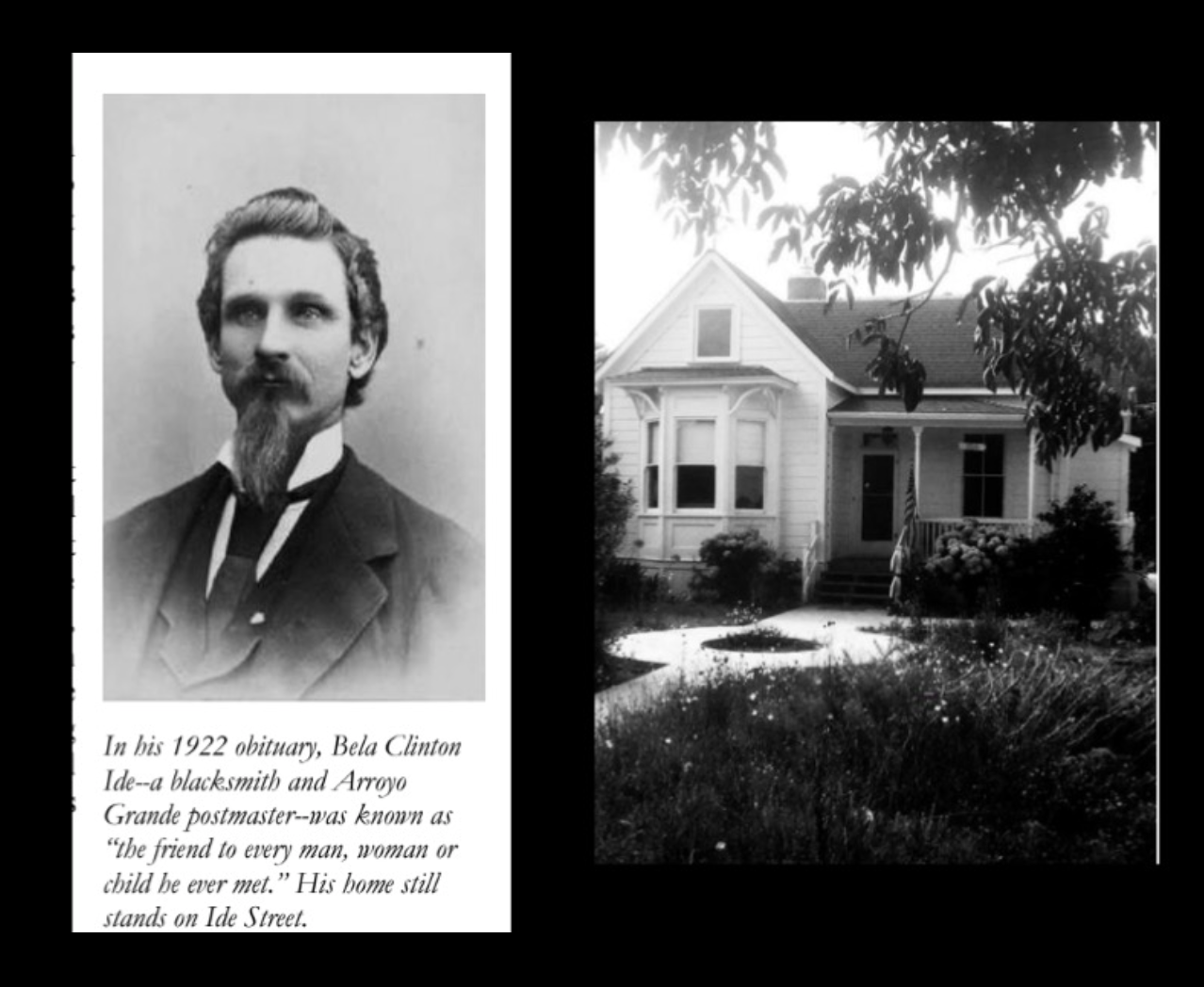
After an experience like that, I would’ve been a grump the rest of my life. Note the caption under Ide’s photograph
Dr. Clark, meanwhile, served in the 1st New Jersey Cavalry during the Appomattox Campaign. He was all of seventeen and a native of Randolph.
Lee’s men had just arrived at Farmville on Aprl 7, 1865 and were beginning to fry up bacon and gobble cornbread when Custer’s cavalry, including Clark’s regiment, showed up.

There would be rations, after all, at Appomattox Court House.
Custer got there first.
Clark became Arroyo Grande’s “baby doctor,” and the newspapers are vivid with the details of his treatments: fingers getting caught in a printing press–the patient was his son, Ed, new to his job at the local newspaper– a horse fracturing a little boy’s leg with an instinctive kick, another little boy building a home-made steam engine that exploded and injured his hand; most tragic, when her mother’s attention was momentarily diverted, a little girl, wearing her flannel nightgown, who fell into the fireplace.
Childhood was dangerous. Arroyo Grande needed a Dr. Charles S. Clark.
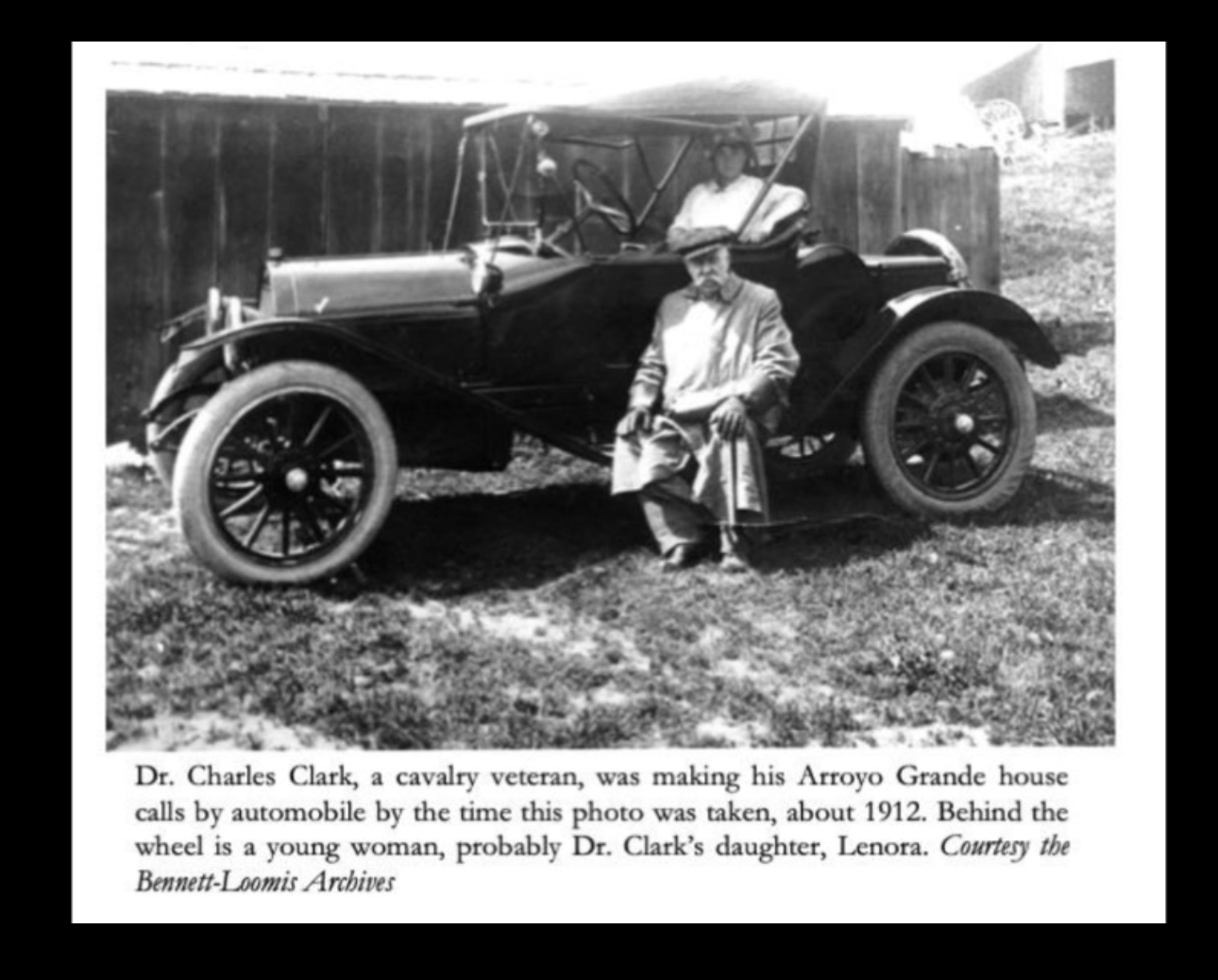
His home and offices, near what is today a deli on Branch Street—Arroyo Grande’s main street— are no longer with us.
The house that Bela Clinton Ide built, most likely in 1878, still is. In the superheated real estate market that marks California, it recently sold for $1.25 million.
 A Work in Progress