
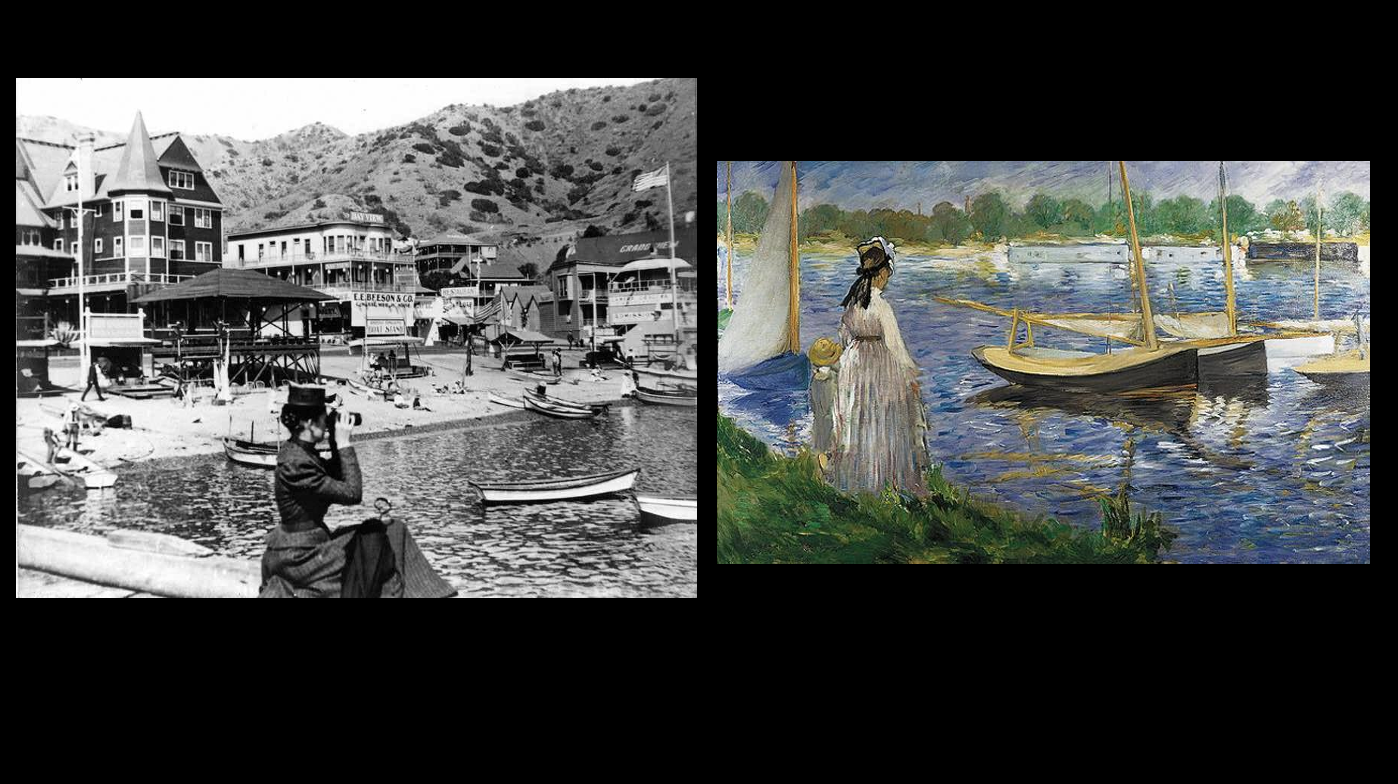
Jack Feldman this morning posted this 1902 photo, taken at Catalina Island, on the California History Facebook page.
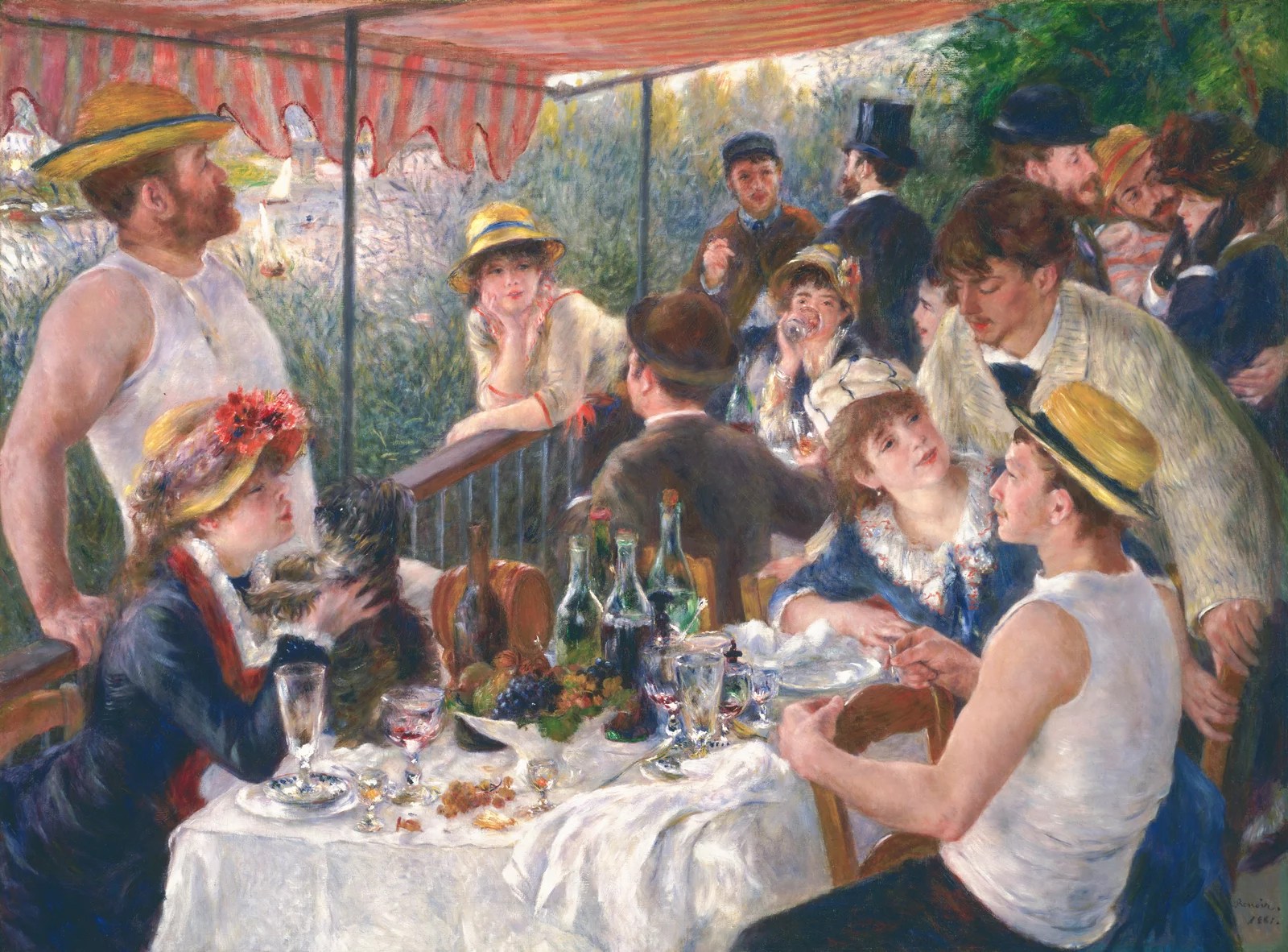
The woman and the boats reminded me of Monet and the Impressionists who painted the Seine near Argenteuil, outside Paris.
Monet was there, as were Eduoard Manet and Gustave Caillebotte and Pierre-Auguste Renoir, whose Luncheon of the Boating Party became Impressionism’s masterpiece (It was, all at once, riverscape, group portrait and on the table, still life). The people are artists, actresses, wealthy patrons, a hotel owner’s son.
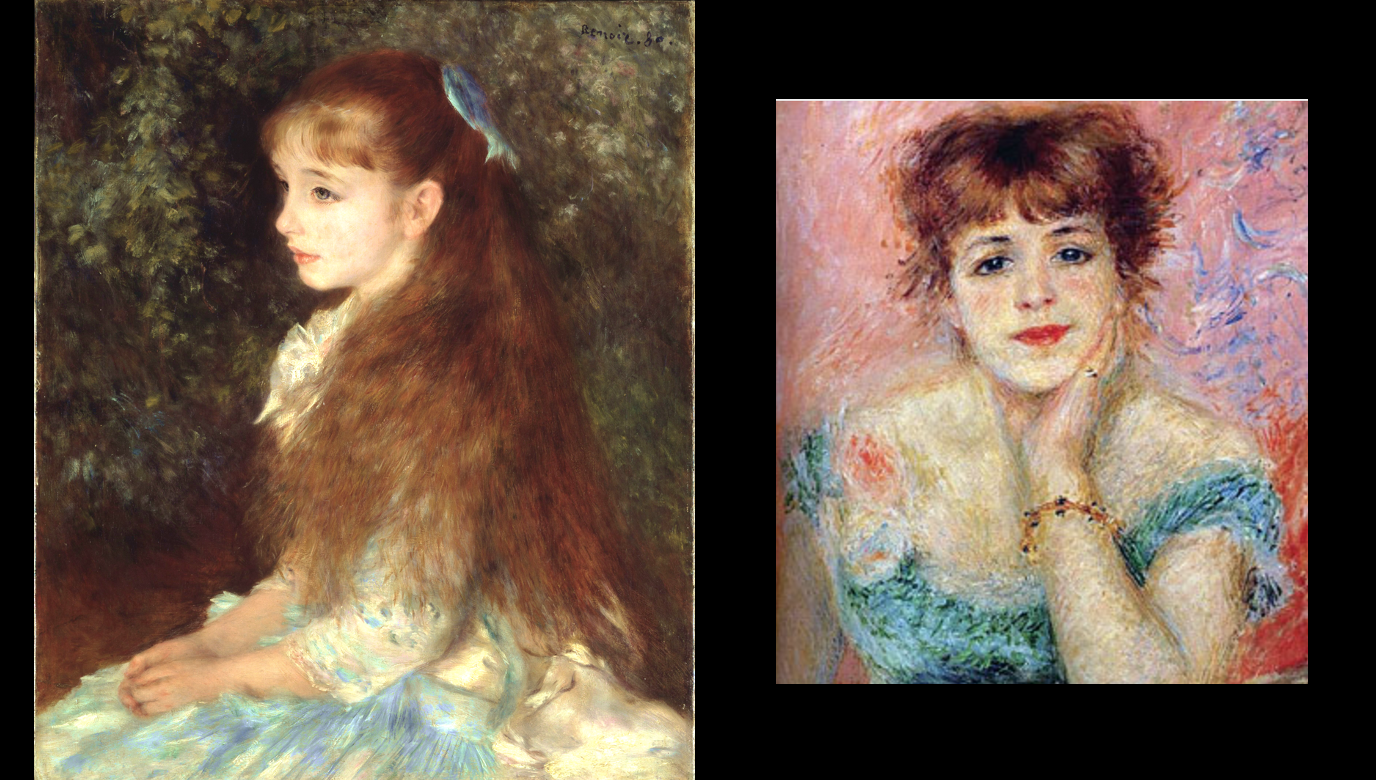
I love Renoir’s female subjects, and Renoir loved redheads. But two of my favorite subjects had lives marked by tragedy. Eight-year-old Irene Cahen d’Anvers, on the left, was from a prominent Parisian Jewish family. The Holocaust destroyed nearly all of them, except for Irene. When she died, men were walking in space.
When one of my closest friends, Joe, a redhead, died unexpectedly, I turned to Irene’s image, wrote about redheads and about how much Joe had meant to me. It was a seeming contradiction, that piece of writing: a happy mourning.
The portrait of actress Jeanne Samary, on the right, is so stunningly fresh that she seems ready to resume her conversation with you. You have obviously just said something charming to her.
Jeanne died of typhoid at 33.
But it was a Monet that gave me an even more powerful sense of time-travel, of being in another century where I didn’t belong.
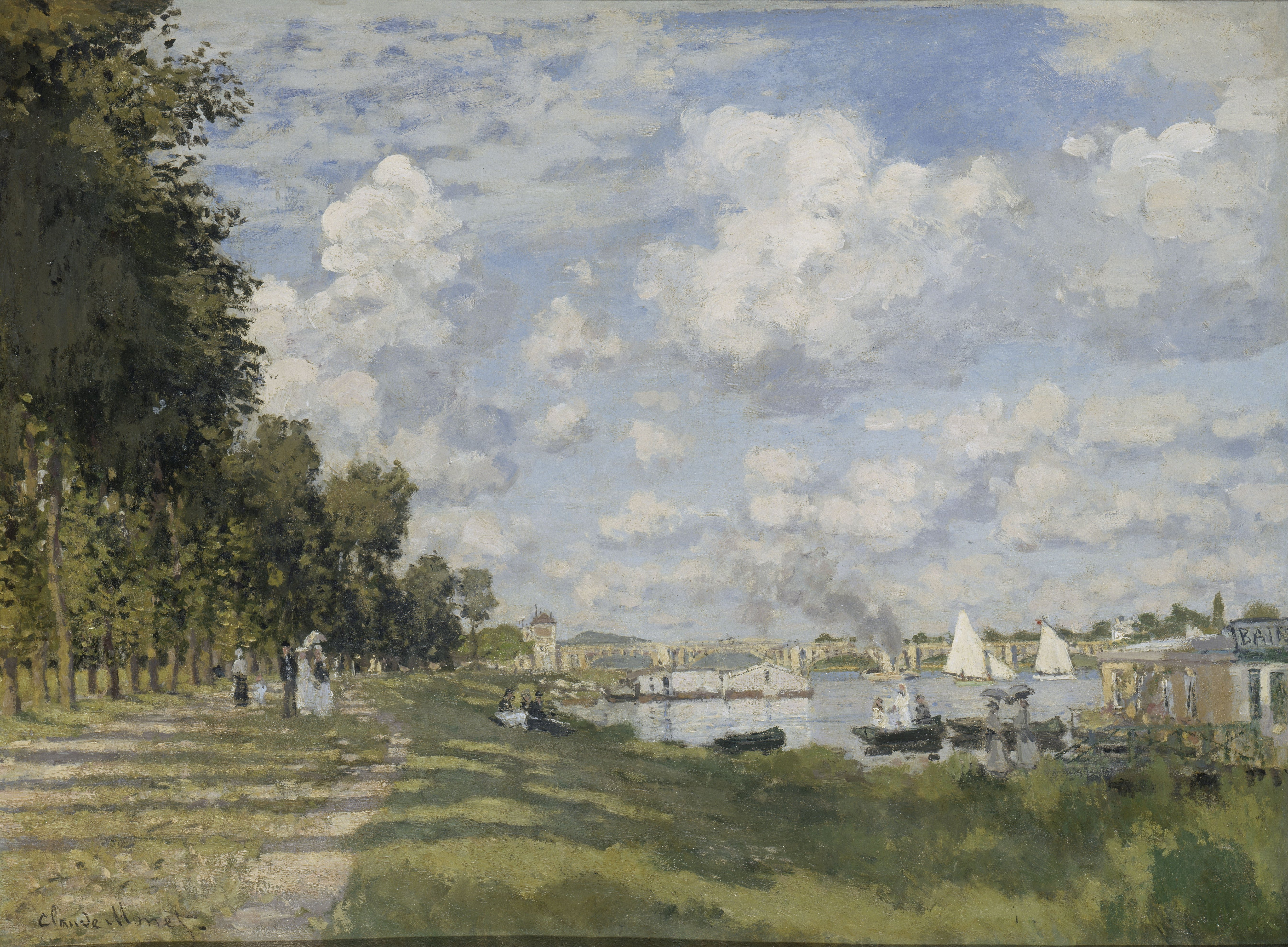
It was the riverscape below, The Seine at Argenteuil, that gave me a jolt. It’s a massive canvas and when it was on display many years ago in San Francisco’s Palace of the Legion of Honor, I stopped in front of it.
I had the eeriest feeling. I’d had one like it when I was seventeen and reading the closing pages of For Whom the Bell Tolls while sprawled atop my parents’ bed at the house on Huasna Road near Arroyo Grande. When Robert Jordan breaks his leg, mine began to hurt.
Now, in San Francisco, Monet gave me a similar moment.
It was almost as if I could walk into the painting using the path on the left and so be in that place on that day in the summer of 1875. I knew it was summer because I could almost see the waves of heat shimmering above the path ahead and it was cooler in the shade where the people have gathered.
(Now that I am in my seventies, I’ve added Jeanne walking beside me, twirling her parasol as we talk.)
I stood there in what the poet Whitman called “perfect silence,” not breathing very much for several moments, warmed by the summer day that Monet had captured eighty years before I was born.
 A Work in Progress