
Since the weeds in the back are getting really tall, I watched the 1944 film Passage to Marseille, or at least the last half, the other day.
The concept is a grand one—making a movie with the cast of Casablanca (1942).
And they include:
Peter Lorre as Marius
Sidney Greenstreet as Major Duval
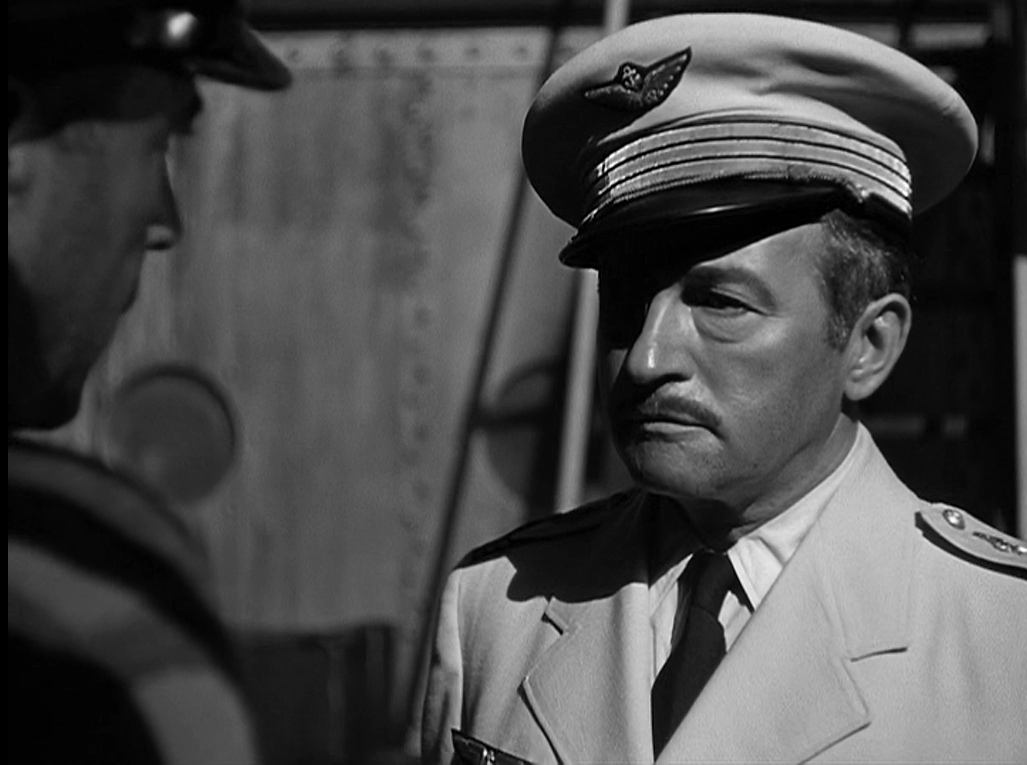
Claude Rains as Captain Freycinet
Humphrey Bogart as Jean Matrac
The premise is that a steamship picks up five men on a life raft in Mid-Atlantic. They are escapees from Devil’s Island who evidently want to repay the French government—for sending them to a place overrun with poisonous millipedes and tarantulas the size of catcher mitts and, just offshore, ravenous sharks who’ve acquired a French palate— by fighting for the Free French.
Bogart’s Jean Matrac has evidently left his French accent behind back at the prison compound. Maybe a tarantula ate it.
It gets more complicated. On the steamship, we find Greenstreet–Rick’s rival nightclub owner in Casablanca—who turns out to be a hidden Nazi, and Greenstreet, “The Fat Man” in The Maltese Falcon, is not easy to hide. His diction, as usual, is impeccable. Not French, mind you, but impeccable.
Lorre plays a kind of craven fellow, as he did in both Maltese Falcon and Casablanca, who turns out in this film to be heroic.
Bogart, one of my favorite actors, sneers a lot, even more than he did in The Petrified Forest. I’m not sure, but I think that his character, Matrac, was sent to Devil’s Island because his haircut was an affront to the French nation.
Claude Rains is Claude Rains. He was allegedly a pain to work with, but his character, M. Le Capitaine (Renault’s rank in Casablanca), is from the Prefecture of Suavité et Drolleries. The man is incessantly classy.
Corinne Mura, from Casablanca, is also in Passage to Marseille. She plays a guitar-strumming nightclub singer in both films. She is brief.
Jay Silverheels is in this movie. Although he wasn’t in Casablanca, he played Tonto in The Lone Ranger, evidently forbidden by his dialogue coach to use many parts of speech, including articles and prepositions, or to conjugate verbs.
The ship, meanwhile, is a wreck. It looks like one of those Canadian ice-fishing huts perched atop a box of Rice Krispies. I chose that metaphor because one of the Krispies—I can’t remember now if it’s Snap, Crackle or Pop—looks vaguely French.
And Marseille is evidently located on the far side of a big tub of water on the Warner Brothers back lot. An ocean it’s not. The camera fortunately just misses the fingertips of the technicians who are pushing the little boat around.
Anyway, a German bomber attacks the ship—for the sake of argument, let’s call it the Madeline, because I love those children’s books–strafing it with machine gun fire.
During the strafings, the special-effects technicians are worked to the point of exhaustion in making reasonable-looking waves in the Warner Brothers water tank. I bet their fingertips got all pruny.
(I hope they drained the tank between movies. If not, Burbank would’ve been plagued by mosquitoes the size of German bombers.)
Meanwhile, other techs “flew” the airplane, the little wire almost invisible, probably getting dizzy and falling down because the plane circles for many strafing runs.
Yes, I know I’m spoiled. I’ve grown accustomed to computer-generated special effects like those in The Lord of the Rings, where vast hordes of Orcs appear for the archer Legolas to shoot down so rapidly.
Lorre’s Marius dies shooting a clunky machine gun, a British Bren, at the airplane. Lorre was a marvelous actor—he might just be a match for Orlando Bloom—who was a sensation as a child-killer in Fritz Lang’s 1931 film, M.
Lorre fled the Nazis to come to Hollywood, as did several members of the Casablanca cast, including Conrad Veidt, another Fritz Lang veteran, who played Major Strasser. His life ended when a heart attack struck him down at the Riviera Country Club. Veidt loved golf. He died on the eighth, a difficult hole, uphill, masked by trees and guarded by sand traps. It’s a widow-maker.
Back on the Madeline:
Bogart was firing another Bren at the German bomber. After replacing the ammunition drum and banging it with his hand, a trick he learned from his then-wife, whom he fondly nicknamed “Sluggy,” he got the thing to work and brought down the airplane.
Once Madeline reaches France, many of the characters enlist in a Free French B-17 bomber unit. Jean Matrac becomes a gunner and he expires as his stricken airplane flies over the home of his wife and little boy.
That left Claude Rains intact. During Matrac’s military funeral, Rains reads the man’s last letter home. Matrac was terse in the rest of the film, but he had lot to say in that letter. “The Marseillaise” plays in the background. Three or four verses.
The Warner Brothers technicians, worn out, were all taking naps by then.
So was I.
The weeds remain.
 A Work in Progress