Dreyfus’s stone cottage, Devil’s Island in what was in his time French Guiana.
Today in history, April 13, 1895: French Army Capt. Alfred Dreyfus, a convicted spy, entered the notorious penal colony on Devil’s Island.
The powerful men who sent Dreyfus there knew he was innocent, but lies are more powerful than men.
What made it convenient for them was the fact that Dreyfus was a Jew.
The daughter of a former student of mine was recently admitted to Cal on the basis of her letter, her grades and her character.
The SAT was not required. This was the test that, in the 1920s, was devised by the deans of the Ivy League to keep Jewish high-school graduates out of their schools. Harvard became alarmed when they realized that 22% of the student body was Jewish.
Jews, most of them recent immigrants, had not scored well on World War I Army aptitude tests. So the deans devised the SAT, based on those tests.
In neither instance did the powerful win. Dreyfus would be admitted to the Legion of Honor for his service in World War I; his son, Pierre, earned France’s highest military honor, the Croix de Guerre.
And the Ivy League men were no match for Stanley Kaplan.
I hope that we Americans are a match for the same kind of polarization that so divided France in 1895. This was the way I introduced the lesson on Dreyfus to my history students.
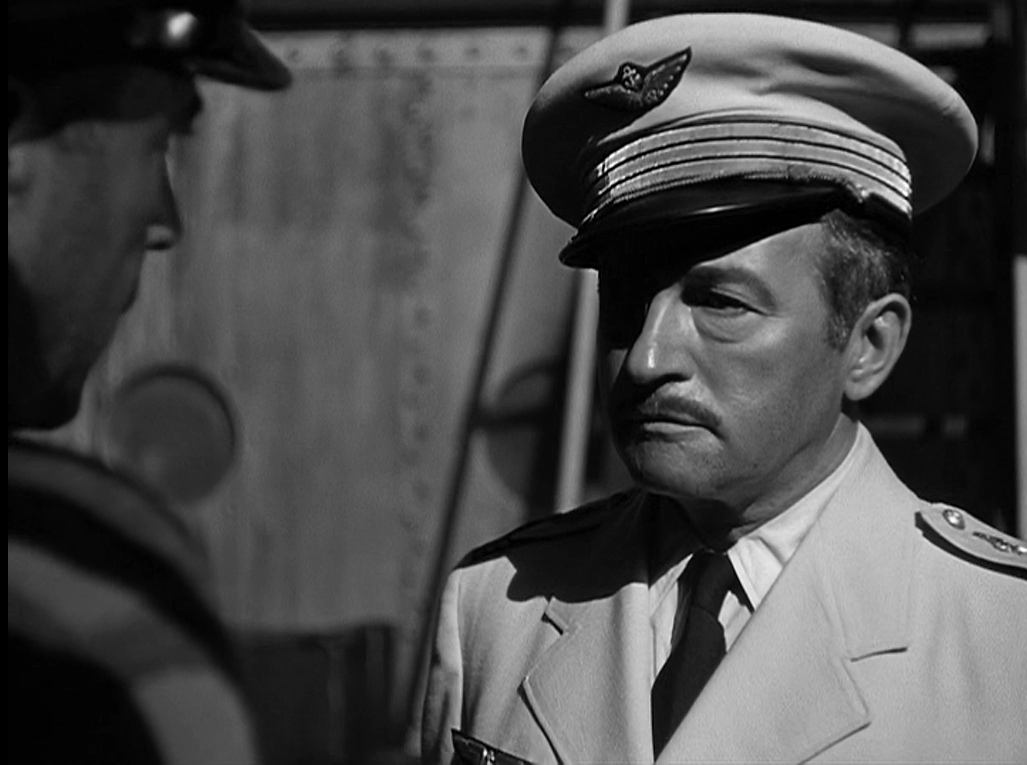
Bogart and Claude Rains in Passage to Marseilles. (The Bogie Film Blog.)
Since the weeds in the back are getting really tall, I watched the 1944 film Passage to Marseille, or at least the last half, the other day.
The concept is a grand one—making a movie with the cast of Casablanca (1942).
And they include:
Peter Lorre as Marius
Sidney Greenstreet as Major Duval
Claude Rains as Captain Freycinet
Humphrey Bogart as Jean Matrac
The premise is that a steamship picks up five men on a life raft in Mid-Atlantic. They are escapees from Devil’s Island who evidently want to repay the French government—for sending them to a place overrun with poisonous millipedes and tarantulas the size of catcher mitts and, just offshore, ravenous sharks who’ve acquired a French palate— by fighting for the Free French.
Bogart’s Jean Matrac has evidently left his French accent behind back at the prison compound. Maybe a tarantula ate it.
It gets more complicated. On the steamship, we find Greenstreet–Rick’s rival nightclub owner in Casablanca—who turns out to be a hidden Nazi, and Greenstreet, “The Fat Man” in The Maltese Falcon, is not easy to hide. His diction, as usual, is impeccable. Not French, mind you, but impeccable.
Lorre plays a kind of craven fellow, as he did in both Maltese Falcon and Casablanca, who turns out in this film to be heroic.
Bogart, one of my favorite actors, sneers a lot, even more than he did in The Petrified Forest. I’m not sure, but I think that his character, Matrac, was sent to Devil’s Island because his haircut was an affront to the French nation.
Claude Rains is Claude Rains. He was allegedly a pain to work with, but his character, M. Le Capitaine (Renault’s rank in Casablanca), is from the Prefecture of Suavité et Drolleries. The man is incessantly classy.
Corinne Mura, from Casablanca, is also in Passage to Marseille. She plays a guitar-strumming nightclub singer in both films. She is brief.
Jay Silverheels is in this movie. Although he wasn’t in Casablanca, he played Tonto in The Lone Ranger, evidently forbidden by his dialogue coach to use many parts of speech, including articles and prepositions, or to conjugate verbs.
The ship, meanwhile, is a wreck. It looks like one of those Canadian ice-fishing huts perched atop a box of Rice Krispies. I chose that metaphor because one of the Krispies—I can’t remember now if it’s Snap, Crackle or Pop—looks vaguely French.
And Marseille is evidently located on the far side of a big tub of water on the Warner Brothers back lot. An ocean it’s not. The camera fortunately just misses the fingertips of the technicians who are pushing the little boat around.
Anyway, a German bomber attacks the ship—for the sake of argument, let’s call it the Madeline, because I love those children’s books–strafing it with machine gun fire.
During the strafings, the special-effects technicians are worked to the point of exhaustion in making reasonable-looking waves in the Warner Brothers water tank. I bet their fingertips got all pruny.
(I hope they drained the tank between movies. If not, Burbank would’ve been plagued by mosquitoes the size of German bombers.)
Meanwhile, other techs “flew” the airplane, the little wire almost invisible, probably getting dizzy and falling down because the plane circles for many strafing runs.
Yes, I know I’m spoiled. I’ve grown accustomed to computer-generated special effects like those in The Lord of the Rings, where vast hordes of Orcs appear for the archer Legolas to shoot down so rapidly.
Lorre’s Marius dies shooting a clunky machine gun, a British Bren, at the airplane. Lorre was a marvelous actor—he might just be a match for Orlando Bloom—who was a sensation as a child-killer in Fritz Lang’s 1931 film, M.
Lorre fled the Nazis to come to Hollywood, as did several members of the Casablanca cast, including Conrad Veidt, another Fritz Lang veteran, who played Major Strasser. His life ended when a heart attack struck him down at the Riviera Country Club. Veidt loved golf. He died on the eighth, a difficult hole, uphill, masked by trees and guarded by sand traps. It’s a widow-maker.
Back on the Madeline:
Bogart was firing another Bren at the German bomber. After replacing the ammunition drum and banging it with his hand, a trick he learned from his then-wife, whom he fondly nicknamed “Sluggy,” he got the thing to work and brought down the airplane.
Once Madeline reaches France, many of the characters enlist in a Free French B-17 bomber unit. Jean Matrac becomes a gunner and he expires as his stricken airplane flies over the home of his wife and little boy.
That left Claude Rains intact. During Matrac’s military funeral, Rains reads the man’s last letter home. Matrac was terse in the rest of the film, but he had lot to say in that letter. “The Marseillaise” plays in the background. Three or four verses.
The Warner Brothers technicians, worn out, were all taking naps by then.
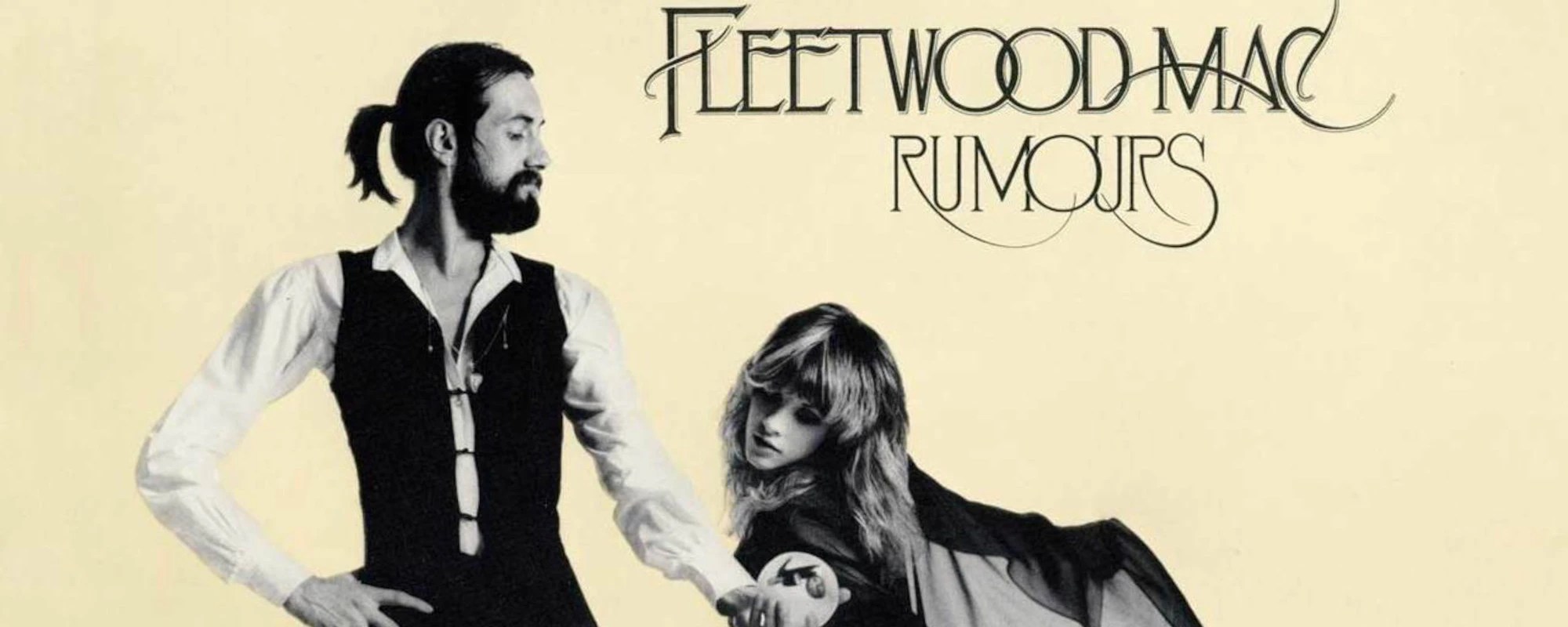
There is a marvelous moment in The Big Lebowski when The Dude just can’t take it anymore. When the cabdriver puts on The Eagles, Jeff Bridges is in obvious pain. “Not THE EAGLES, man!” The irate cabbie throws him out. In the early 1980s, when I was working at Laguna Liquors in San Luis Obispo, now a sports-bar/burger place, I met an old and dear Arroyo Grande High School friend, a bassist in a not-very-successful rock band, who assured me that they didn’t play Fleetwood Mac crap.
I didn’t tell him that I loved Mac. And I wouldn’t have been ejected from the cab, because I love the Eagles, too.
When I was an impoverished student at the University of Missouri, what sustained me were eggs, Velveeta and Wonder Bread, because they were cheap, and me chasing the radio dial until I could find “Rhiannon” once again. The song’s first national splash on the television show Midnight Special—“This is a song about a Welsh witch,” Nicks deadpanned—was so epic that my reading material of choice back then, Rolling Stone (along with, of course, National Lampoon) many years later published a very funny but spot-on essay on the band’s appearance, called, modestly:
17 Reasons This ‘Rhiannon’ Clip Is the Coolest Thing in the Universe
By Bob Sheffield
Sheffield even commented on Stevie Nicks’s hair. I found this line stunning: Stevie’s hair. Oh, the hair. Beyond feathered. The feathers have feathers.
That’s good writing.
Here’s the clip, from 1976, introduced by, of al people, Helen Reddy:
Of course, I fell immediately in love with Nicks, whom my mother-in-law, a devoted Reagan Republican, somehow met backstage because both women had connections to La Cañada Flintridge, a town that overlooks Pasadena’s Jet Propulsion Laboratory. My mother-in-law, whom I adored, was horrified. She seemed to think that Stevie was something that JPL had brought home from Deep Space.
I would find out only many years later that both my mother-in-law and my wife, Elizabeth, have Welsh roots. No wonder I loved “Rhiannon.”
And even thought it was “Rhiannon,” and Velveeta, that allowed me to survive an impoverished summer until my work-study job came through, that’s not my favorite Fleetwood Mac song.
Nope.
I have settled, after thoughtful consideration, on “The Chain” as my favorite, and for several reasons: it’s fraught with anger and recrimination, because the band members were uncoupling and so angry and recriminating during the production of Rumors. It’s raw stuff. I don’t know but there was blood on the recording studio floor. The Lindsey and Stevie who’ d been eyeing each other suggestively during the Midnight Special segment were not in love anymore. They were instead, metaphorically, at least, lacing each others’ Constant Comment Tea with rat poison.
That’s what makes the song so real. They were in a place where, tragically, nearly all of has been, the kind of place that, forty years later, might make you pull your car over on the 405, reach into the trunk for the tire iron, and begin hitting yourself repeatedly upside the head.
Why did I do that?
Why did I say that?
Why was I such an asshole?
Once the bleeding from the tire iron slows, though, you realize that the other element that makes this a great song is in the way it’s performed.
There’s the languid introduction, the rapidity and intensity of as its tempo once it passes the introduction—it’s the kind of musical acceleration that marks The 1812 Overture— the plaintive high notes, Fleetwood’s maniacal drumming and, for me, the best part: John McVie’s bass solo, maybe the best since Jack Bruce’s work with Cream, and the way it yields to Buckingham’s final solo. Yes, Buckingham is a ham, and his solos sometimes last longer than The 1812 Overture, but this one is sharp and wounding, which is exactly the way an angry song should end.
But you don’t have to accept my opinion on “The Chain.” It suddenly occurred to me that I’m not alone in my opinion about this song, because so many excellent musicians have covered it.
So I put together this video as my little tribute to Mac and the song. The original band appears at beginning and end, but in between are Florence and the Machine, then two country-inflected performances by The Highwomen, from Howard Stern’s show, and then by Keith Urban and Little Big Town with, of course, Nicole Kidman looking on fondly. Then, to avoid getting lost in Kidman’s charms, I ended the video with the McVie-to-Buckingham handoff.
I haven’t put “The Chain” up there yet with “Gimme Some Lovin’,” “A Whiter Shade of Pale,” “Gimme Shelter,” or Rubber Soul, but it’s kind of sliding unobtrusively, without being obnoxious about it, into my mind’s list of favorite songs.
I just have one more and extremely important point to make: Christine McVie, I miss you.
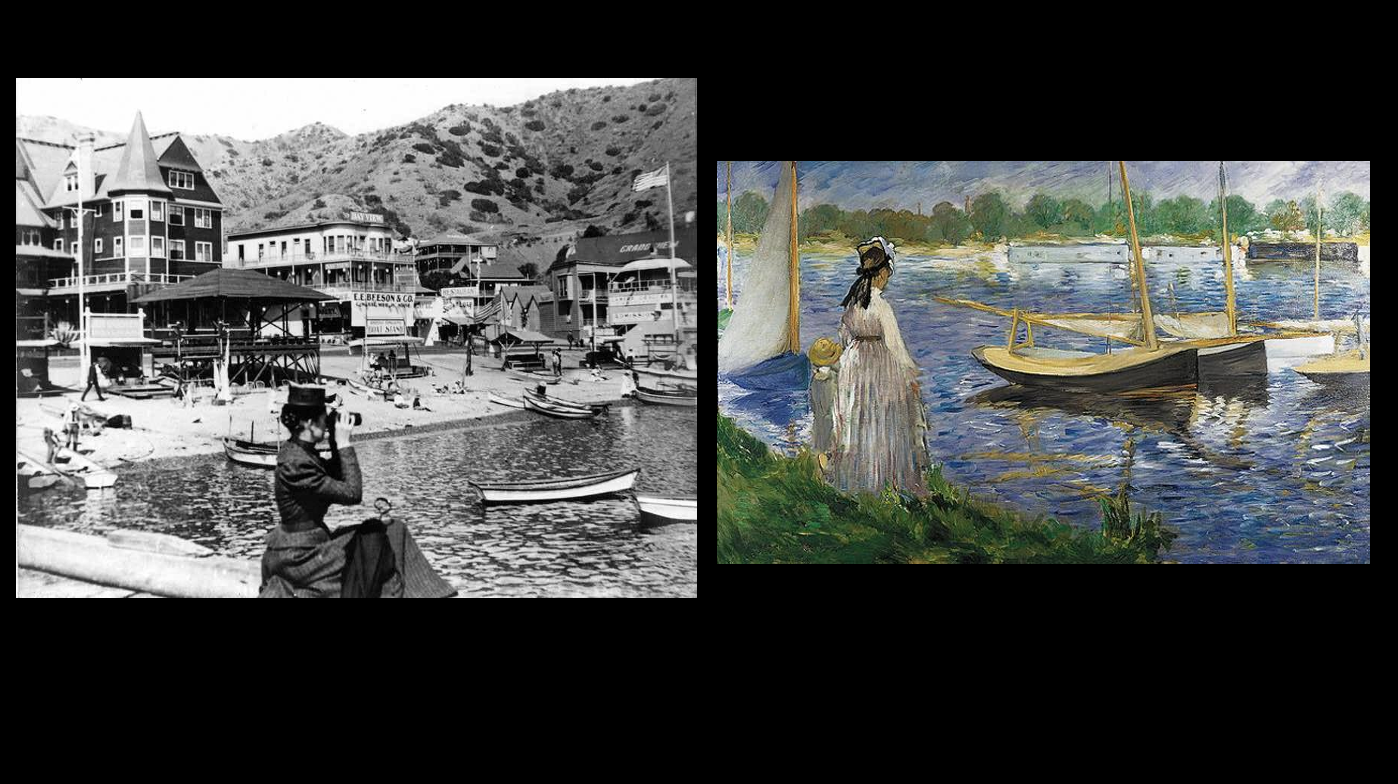
Jack Feldman this morning posted this 1902 photo, taken at Catalina Island, on the California History Facebook page.
The woman and the boats reminded me of Monet and the Impressionists who painted the Seine near Argenteuil, outside Paris.
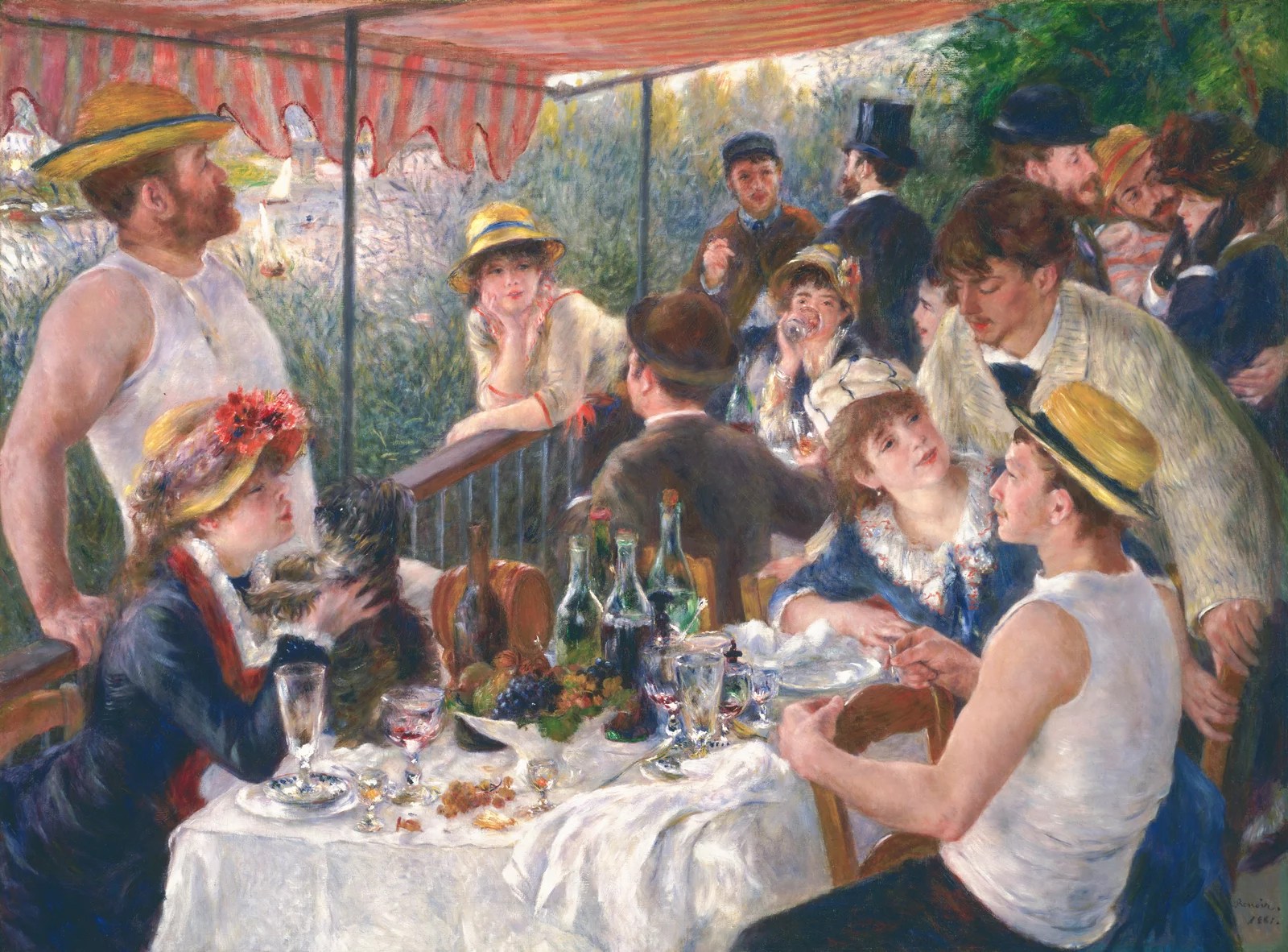
Monet was there, as were Eduoard Manet and Gustave Caillebotte and Pierre-Auguste Renoir, whose Luncheon of the Boating Party became Impressionism’s masterpiece (It was, all at once, riverscape, group portrait and on the table, still life). The people are artists, actresses, wealthy patrons, a hotel owner’s son.
I love Renoir’s female subjects, and Renoir loved redheads. But two of my favorite subjects had lives marked by tragedy. Eight-year-old Irene Cahen d’Anvers, on the left, was from a prominent Parisian Jewish family. The Holocaust destroyed nearly all of them, except for Irene. When she died, men were walking in space.
When one of my closest friends, Joe, a redhead, died unexpectedly, I turned to Irene’s image, wrote about redheads and about how much Joe had meant to me. It was a seeming contradiction, that piece of writing: a happy mourning.
The portrait of actress Jeanne Samary, on the right, is so stunningly fresh that she seems ready to resume her conversation with you. You have obviously just said something charming to her.
Jeanne died of typhoid at 33.
But it was a Monet that gave me an even more powerful sense of time-travel, of being in another century where I didn’t belong.
It was the riverscape below, The Seine at Argenteuil, that gave me a jolt. It’s a massive canvas and when it was on display many years ago in San Francisco’s Palace of the Legion of Honor, I stopped in front of it.
I had the eeriest feeling. I’d had one like it when I was seventeen and reading the closing pages of For Whom the Bell Tolls while sprawled atop my parents’ bed at the house on Huasna Road near Arroyo Grande. When Robert Jordan breaks his leg, mine began to hurt.
Now, in San Francisco, Monet gave me a similar moment.
It was almost as if I could walk into the painting using the path on the left and so be in that place on that day in the summer of 1875. I knew it was summer because I could almost see the waves of heat shimmering above the path ahead and it was cooler in the shade where the people have gathered.
(Now that I am in my seventies, I’ve added Jeanne walking beside me, twirling her parasol as we talk.)
I stood there in what the poet Whitman called “perfect silence,” not breathing very much for several moments, warmed by the summer day that Monet had captured eighty years before I was born.
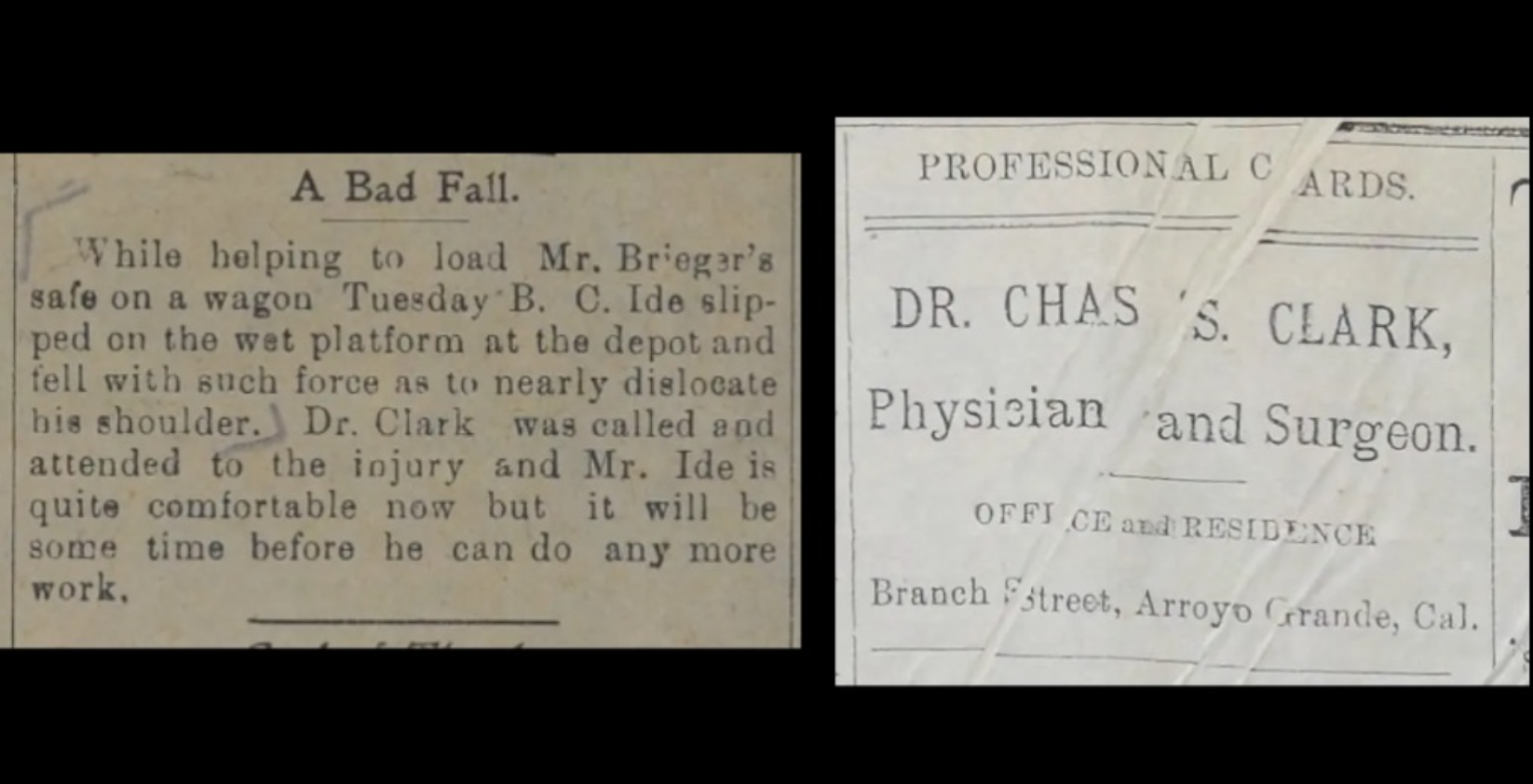
Union veteran Bela Clinton Ide of Arroyo Grande, San Luis Obispo County, California, had a bad day in September 1896, according to this clipping.
He’d had worse.
On July 1, 1863, Ide’s 24th Michigan, part of the Iron Brigade, lost two-thirds of its complement in a horrific firefight with the 26th North Carolina, which lost 81% of its soldiers.
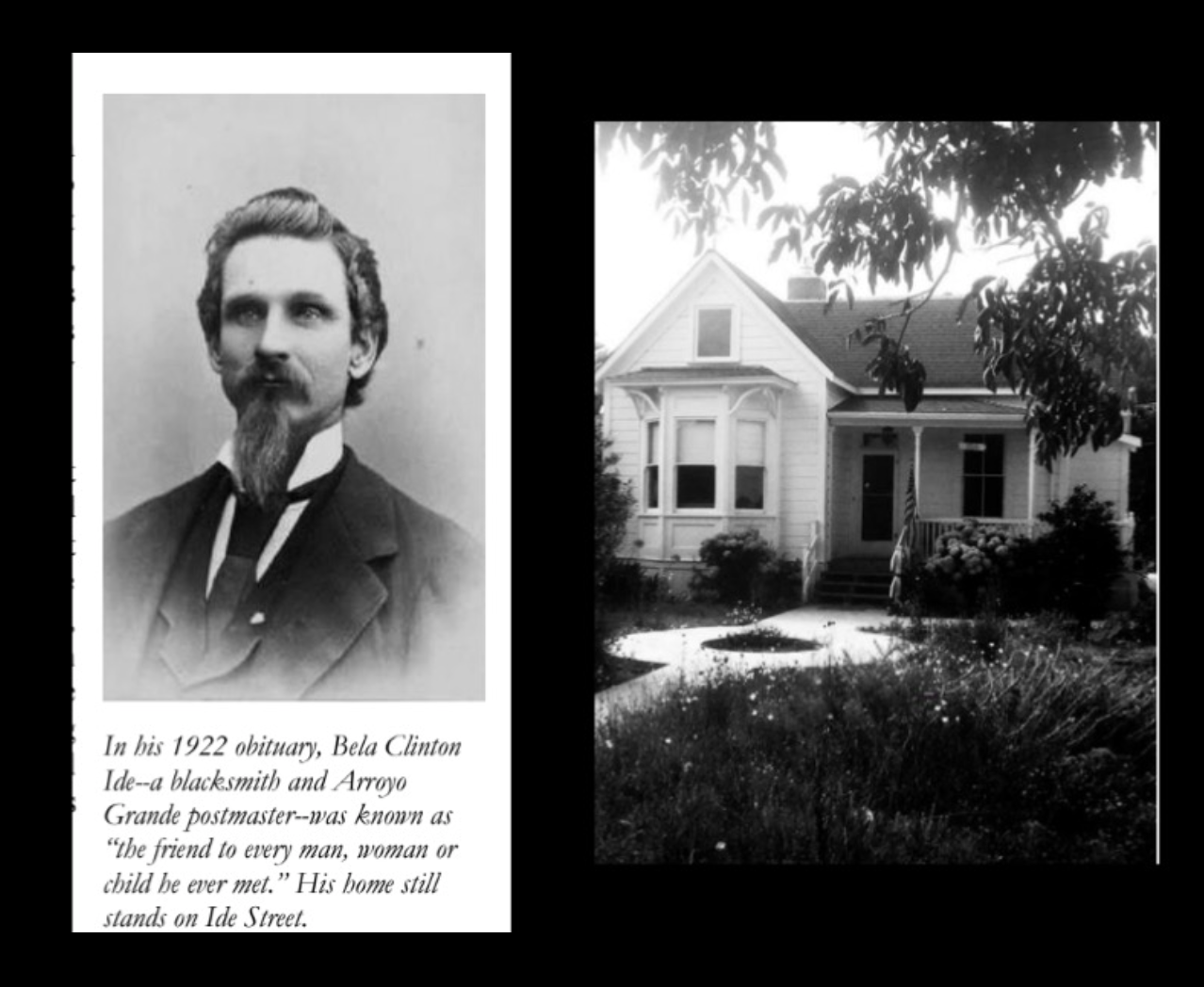
After an experience like that, I would’ve been a grump the rest of my life. Note the caption under Ide’s photograph
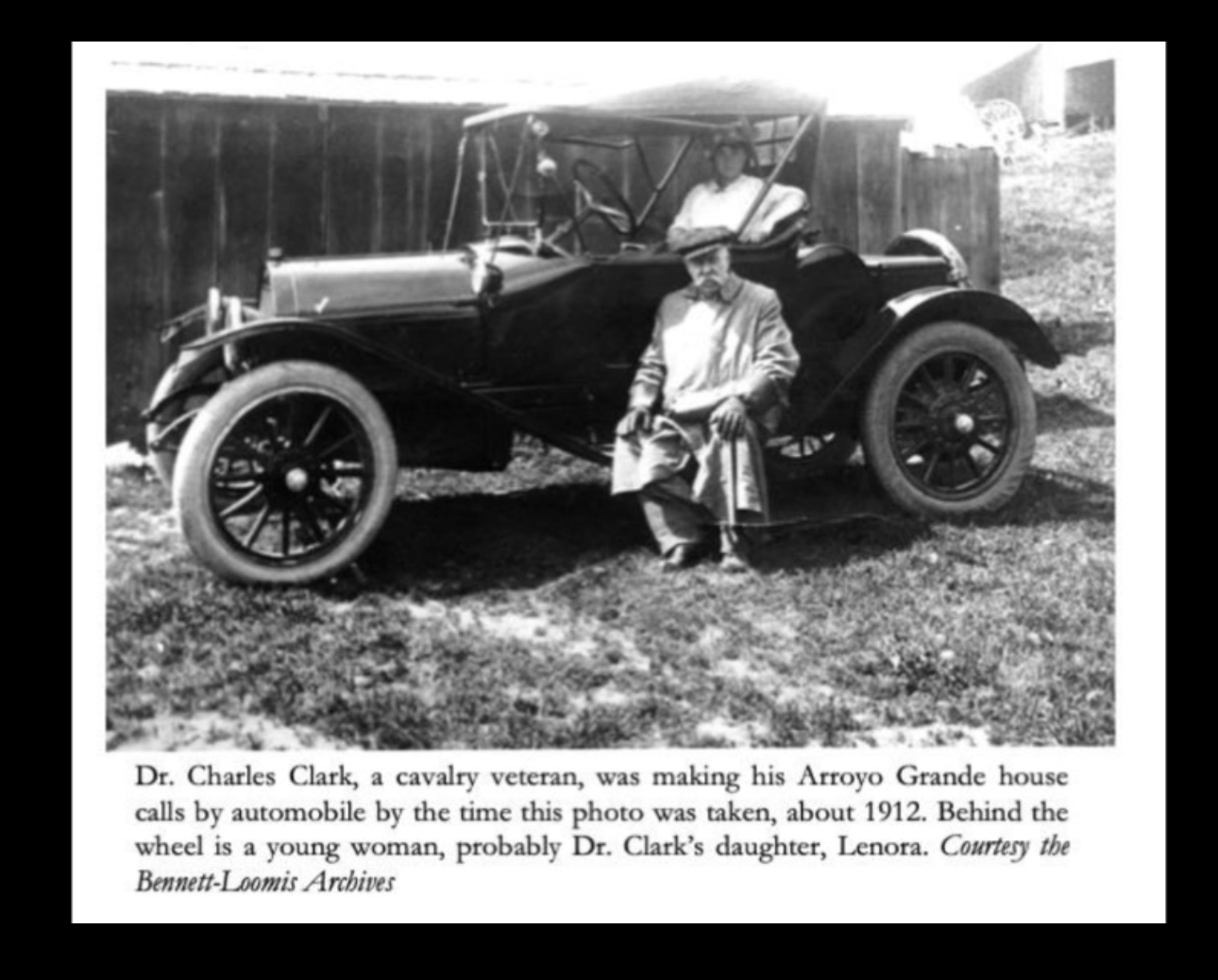
Dr. Clark, meanwhile, served in the 1st New Jersey Cavalry during the Appomattox Campaign. He was all of seventeen and a native of Randolph.
Lee’s men had just arrived at Farmville on Aprl 7, 1865 and were beginning to fry up bacon and gobble cornbread when Custer’s cavalry, including Clark’s regiment, showed up.
Battlefield artist Afred Waud depicts Confederates surrendering to advancing Union cavalry, April 1865
There would be rations, after all, at Appomattox Court House.
Custer got there first.
Clark became Arroyo Grande’s “baby doctor,” and the newspapers are vivid with the details of his treatments: fingers getting caught in a printing press–the patient was his son, Ed, new to his job at the local newspaper– a horse fracturing a little boy’s leg with an instinctive kick, another little boy building a home-made steam engine that exploded and injured his hand; most tragic, when her mother’s attention was momentarily diverted, a little girl, wearing her flannel nightgown, who fell into the fireplace.
Childhood was dangerous. Arroyo Grande needed a Dr. Charles S. Clark.
His home and offices, near what is today a deli on Branch Street—Arroyo Grande’s main street— are no longer with us.
The house that Bela Clinton Ide built, most likely in 1878, still is. In the superheated real estate market that marks California, it recently sold for $1.25 million.
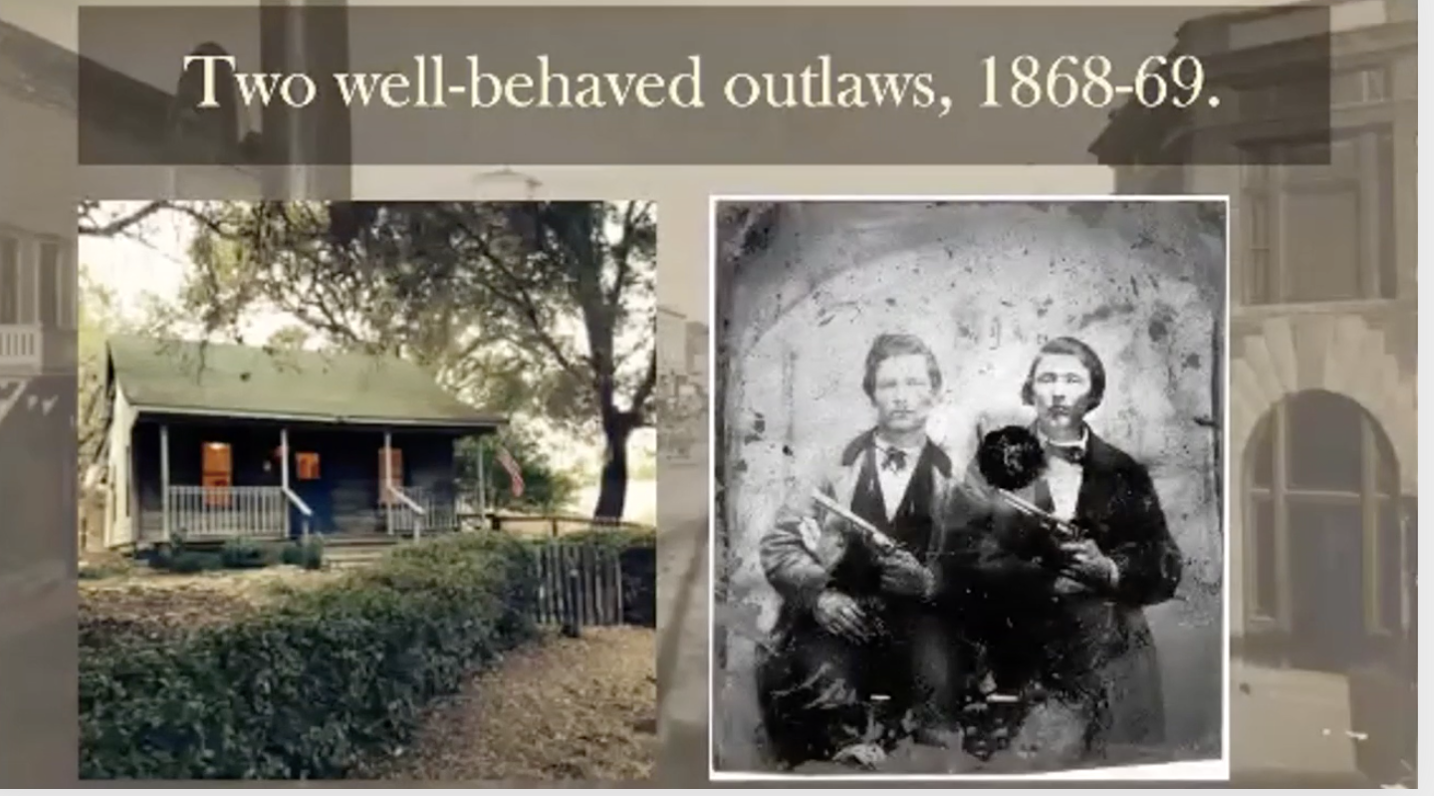
Frank and Jesse and the cabin where they allegedly lived near Paso Robles.
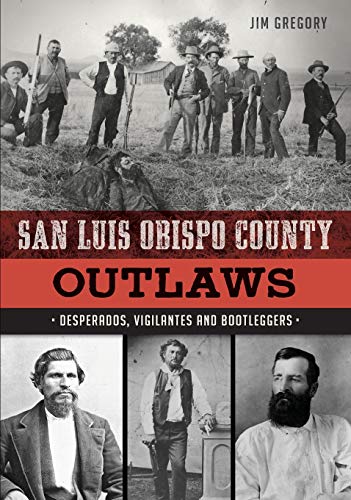
Not that San Luis Obispo County needs outside consultants, thank you very much, when it comes to crime. The first recorded mass murder in California history, in December 1848, happened in the North County, at Mission San Miguel.
It was the mountain man James Beckwourth who found the bodies of ten victims—the Reed family and their servants— in the mission carpenter shop. He’d also found, on previous occasions, the bodies of mountain men Hugh Glass (The Revenant), killed by the Arikara, and Jedediah Smith, killed by the Comanche. I have a theory that it’s not going to be a good day if you see Jim Beckwourth riding up your driveway.
Later, the good citizens of my South County hometown, Arroyo Grande, lynched a father and his fifteen-year-old son, suspected killers, from a railroad trestle during the night of March 31, 1886, and in 1904, an inebriated cowboy shot Constable Henry Lewellyn dead in the doorway of the Capitol Saloon on Branch Street.
In between, a resident from Lopez Canyon, east of Arroyo Grande, was found in a vacant lot by a prostitute from a San Luis Obispo bordello, extravagantly named The Palace, sleeping off a drunk. He wasn’t going to be sober again, because he was dead. A suspect was arrested—victim and suspect had been heard arguing loudly by more prostitutes (San Luis Obispo was a busy place in the 1890s)—outside a bar on Monterey Street, dubiously named The Olive Branch.
The suspect was eventually acquitted, in 1894, for lack of evidence. So was the cowboy who shot Constable Lewellyn; the jury bought the defense lawyer’s claim that it was self-defense.
And in between 1848 and 1904, there were enough robberies, murders, arson fires, vigilante visits and citizen posses firing their revolvers enthusiastically into the air to fill a dozen Louis L’Amour novels.
But we had visiting celebrities, too. When things got too hot in Missouri, the James Brothers, Confederate irregulars under the notorious William Quantrill during the Civil War, lived on their Uncle Drury’s ranch for awhile—Drury James was the co-founder of the Paso Robles Inn, still around today—and played at being cowboys. They weren’t. But Uncle Drury’s vaqueros learned to overlook Frank and Jesse’s cow-punching deficiencies because Jesse passed the time by idly picking off rattlesnakes and jackrabbits with his Colt revolver.
They returned to Missouri to pass into legend, etc.
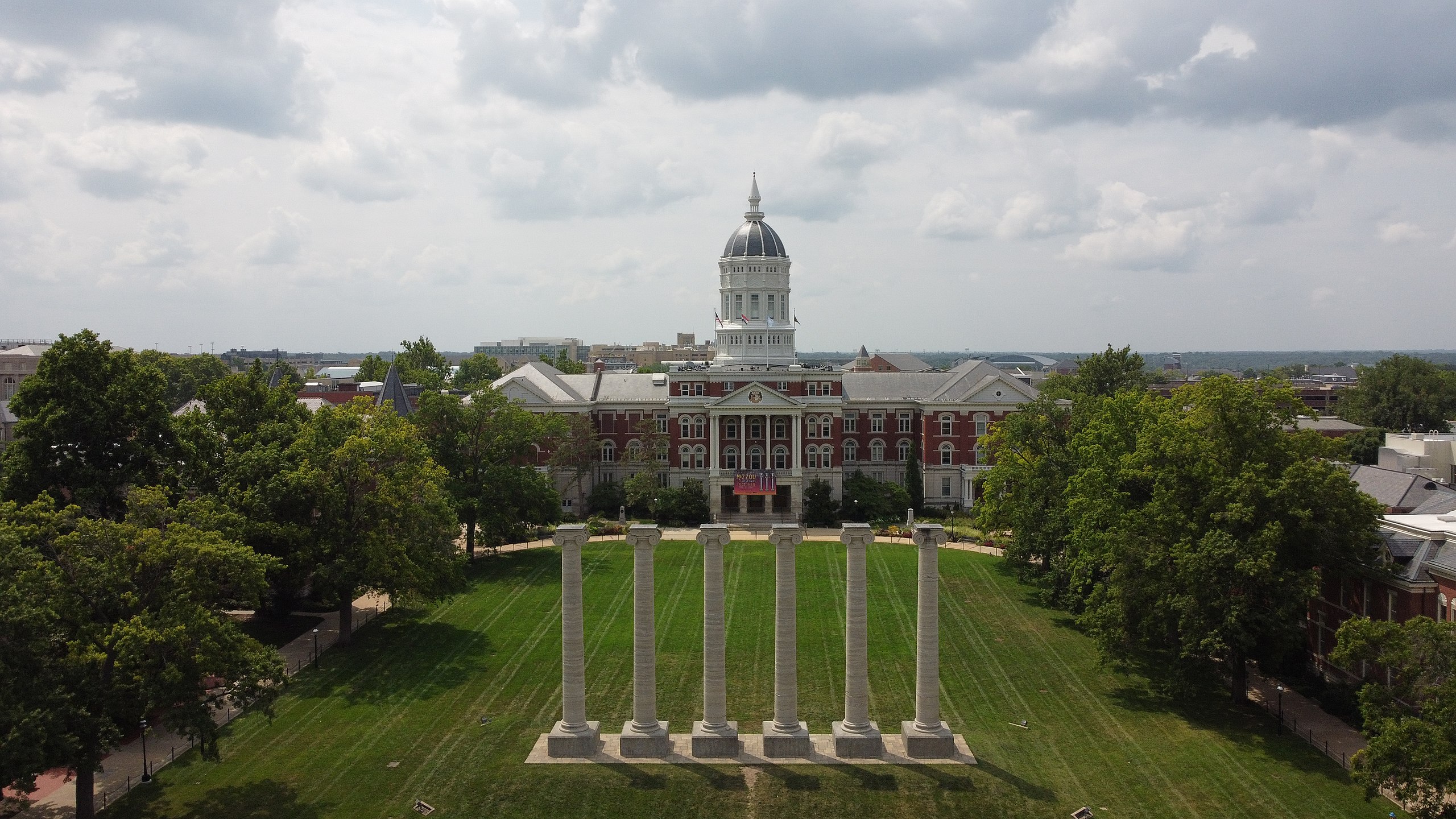
And darn if I didn’t run into them there. Last May, my wife Elizabeth and I went to Missouri to see our much-beloved niece, Becky, graduate from the school that’s also my Alma Mater, Mizzou, where I’d studied at the Journalism School before the History Department began to captivate me and I changed majors.
Francis Quadrangle, University of Missouri.
Elizabeth and I decided to drive to the western part of the state, to Lexington, Missouri, where my Confederate great-great grandfather, whose promotion to brigadier general evidently got lost in the mail—that’s States’ Rights for you—fought in 1861. The opposing forces left behind that souvenir in the column of the County Courthouse. I am named for that great-great grandfather, James H. McBride, who appears, from his portrait on the left, to have died from Terminal Constipation. My middle name, Douglass, comes from his son, a Confederate staff officer, who had an unfortunate encounter with a Yankee artillery shell in 1862 Arkansas.
So, as Kurt Vonnegut noted, it goes.
Not-quite Brigadier Grandfather James is less important than where we had lunch in Lexington, at that tall and narrow mid-Victorian restaurant, The Heist II. It was there where we discovered, along with a stunning Reuben Sandwich and a stellar BLT, the delight of fried pickles. They were incredible. My father was raised on the Ozark Plateau, and I once wrote an essay entitled “My Father and Fried Food,” and after The Heist, I understand him on a whole new level.
Anyway, it got its name from when it was a bank and was robbed by Frank and Jesse. Nellie-bar-the-door, that gave me, in between bites of fried pickles, to regale the waitress and most everyone within a four-table radius of Frank and Jesses James stories from San Luis Obispo County, California.
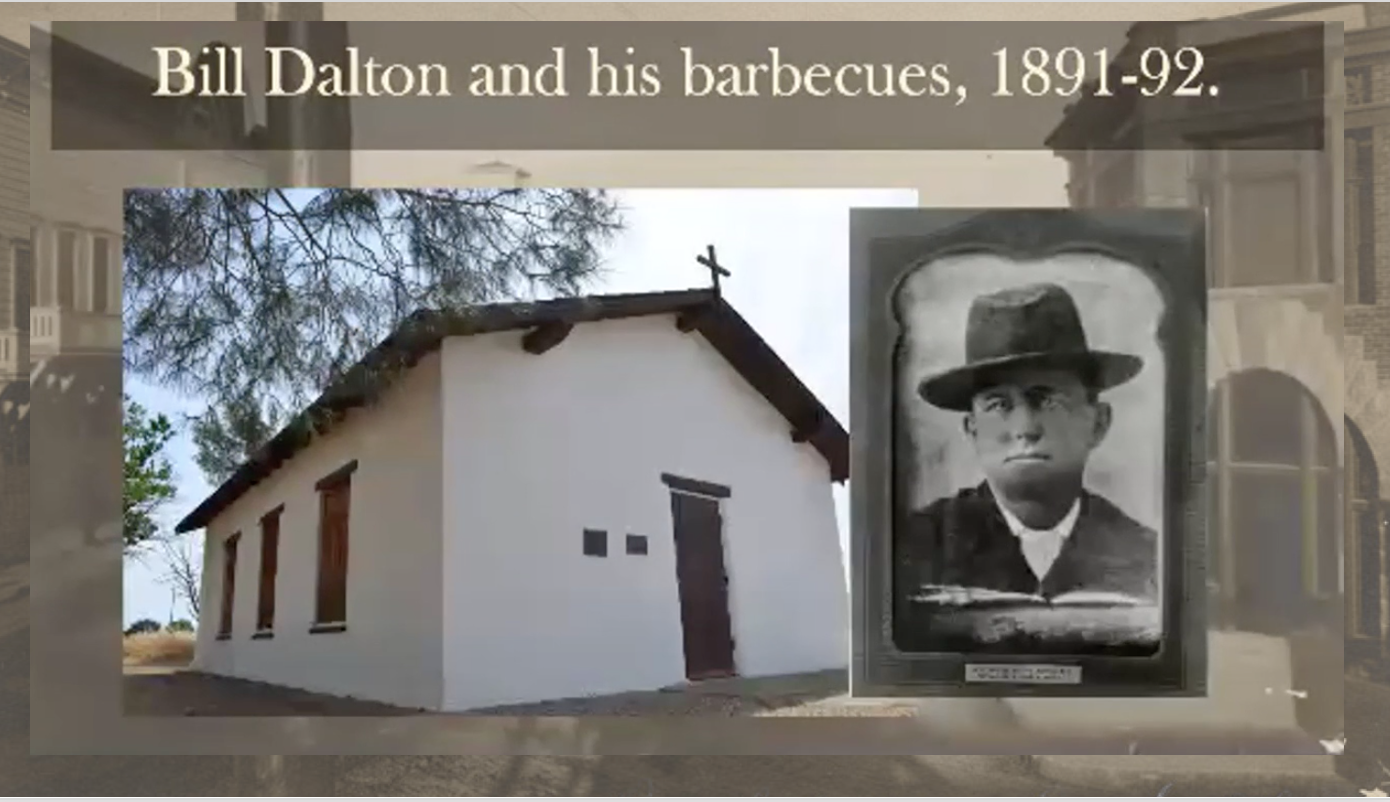
The Estrella Adobe Church and Bill Dalton, San Miguel, California.
The James Gang was known also as the James-Younger Gang, thanks to Frank and Jesse’s cousins, and it was a Younger who became the mother to a brace of outlaws from a later generation, the Daltons. Bill was not an outlaw. He was a well-respected cattleman in San Miguel—some accounts that I’ve never verified claimed that he was a State Assemblyman—and one summer his brothers came to visit California.
(Which, of course, reminds me: the other reason for the James Brothers’ visit was their search for the grave of their Baptist preacher father, come to California to evangelize the gold fields, which needed it badly. They never found their father. Similarly, the ship Arkansas, loaded from ballast to main deck with Methodist missionaries, came to Methodize the gold fields at about the same time as Rev. James. It ran aground on Alcatraz and was towed across the Bay and beached, where it became a brothel.)
What Bill’s brothers, excitable boys, liked to do—within earshot of the adobe church congregation—was to barbecue, drink whiskey and target practice with their Colt revolvers. I don’t advise against doing things like this, but maybe not all at the same time.
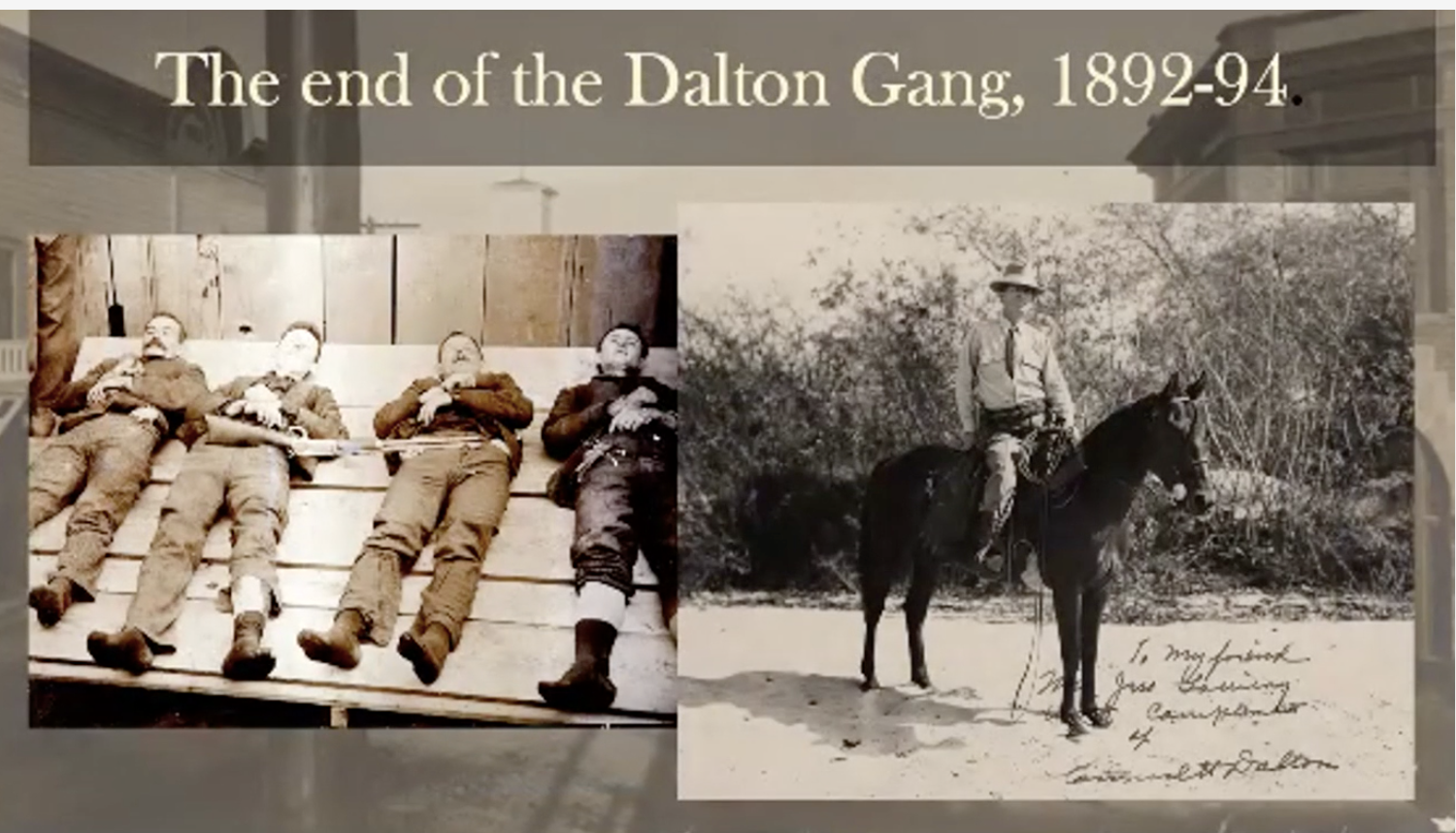
Bye and bye, Bill’s brothers returned to the Midwest, where they conceived of the idea of robbing two banks simultaneously in Coffeyville, Kansas. They had not thought this through completely, I think. Their timing was thrown off when the good citizens of Coffeyville realized what going on, denuded the hardware store of firearms, and air-conditioned the Dalton Gang, including brothers Grat and Bob.
They also air-conditioned brother Emmett, shot twenty-three times. He survived to become a script consultant for Hollywood westerns and autographed this photo for San Luis Obispo County Sheriff Jess Lowery.
Lowery’s career highlight was pulling over a truck near Pismo Beach, prying apart the two-by-fours atop its bed, and finding, just beneath, 72 five-gallon jerricans of bootleg Canadian whiskey headed for Los Angeles and gangster Tony Cornero, famed later for the gambling ships he operated just beyond the three-mile limit. Cornero also opened one of the first casinos in Las Vegas, which burned, due to either faulty wiring or Lucky Luciano. His life ended due to either a heart attack or Lucky Luciano.
So it goes some more.
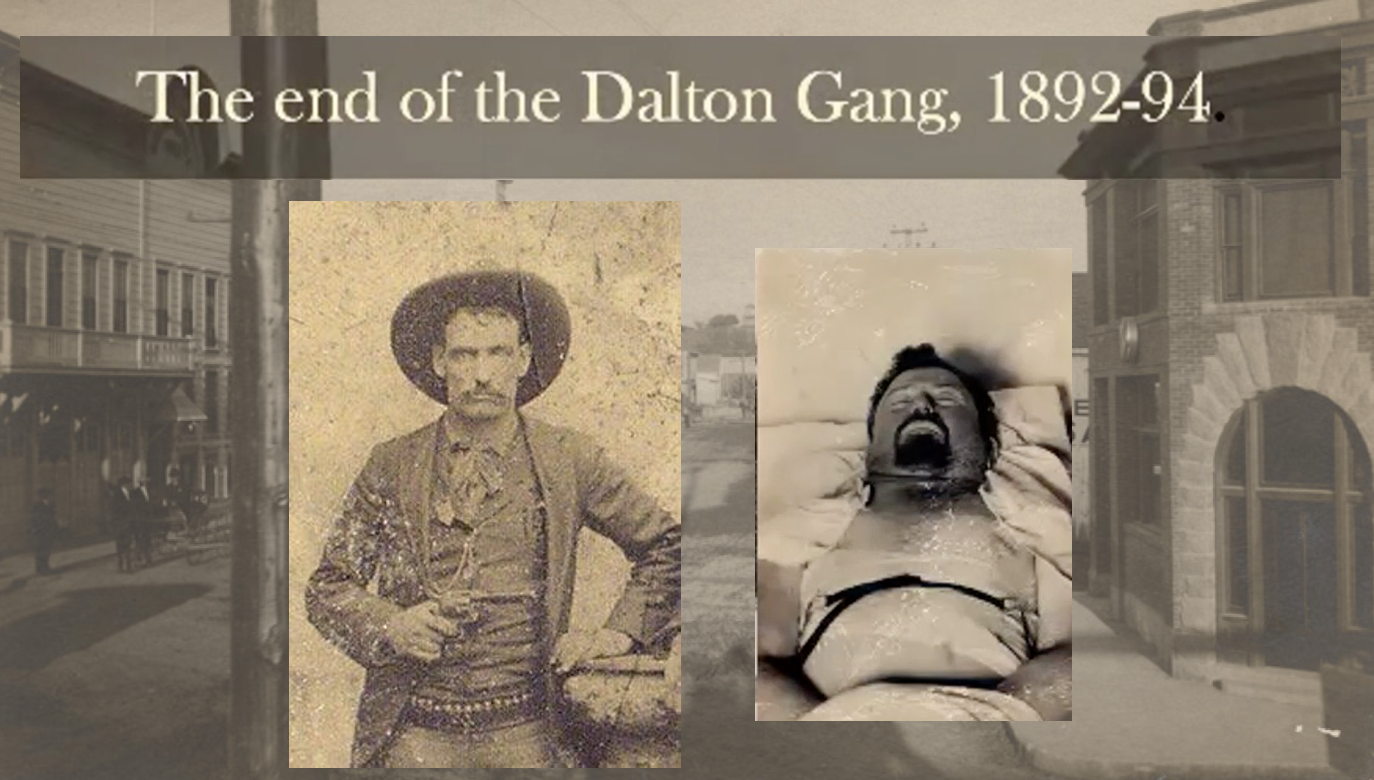
Dead Daltons and the not-quite-dead-yet Emmett.
Bill Dalton’s life ended with a day that started out to be pretty optimistic. For reasons I still don’t understand, he decided to follow, after Coffeyville, the Outlaw Trail. His career was brief. A posse, led by Marshal Selton T. Lindsey, took off after Bill in Indian Territory—Oklahoma—and were hot on the trail until they encountered a wagonload of contraband whiskey intended for the Indian Nations.
The posse confiscated the evidence and drank it.
The next morning, only Marshal Selton T. Lindsey and one deputy were sober enough to continue the pursuit of Bill Dalton. While crouching behind the weeds atop a rise, they found him.
Bill evidently loved children. He was playing in the front yard of a friend’s house with his friend’s children when one daughter, leading a milk-cow in from pasture and back to the barn, passed Marshal Lindsey and his deputy, who were not doing a very good job of being surreptitious. When she reached Bill, she whispered to him urgently.
He ran for it. Urgently.
Lindsey and his deputy lit out after Bill, paused to get their aim, and began to air-condition him with their Winchester rifles. He fell, dead.
Not quite. When the lawmen crept up to Bill, he was still alive. He smiled at them.
Then he was dead.
Marshal Selton T. Lindsey and the deceased Bill Dalton.
The Daltons weren’t quite done with San Luis Obispo County. In 1972, soon after the release of their concept album about the gang, Desperado, The Eagles played a concert at Cuesta Community College. A fairly prominent Canadian, Neil Young, opened for them. Tickets were $5. I did not buy one: I didn’t know much about The Eagles, and $5, in 1972, $36 today, was for a starving college student like me—-who subsisted largely on 19-cent tacos and burritos at the San Luis Obispo Taco Bell where Creedence Clearwater Revival once dined—Highway Robbery.
I made a corn chowder yesterday. I pronounce it “chowda,” of course.
When I got up early to put it together, I thought “Why not garnish it with green onions from our yard?”
I was so proud of myself that I had to tell Elizabeth.
“I did a taste test and it’s yummy. And I garnished it with green onions from our front yard. We are living thanks to the sweat of our farmers’ brows!”
Pause.
“The onions are in the back yard, Jim.”
“Nope. I found a bunch out front next to the St. Francis statue.”
Pause.
“Jim, I think those might be daffodils.”
I did a taste test. Hmmm. Yuk. Whatever my garnish was, it wasn’t onions.
So, deciding against opening a restaurant called “The Daffodil Café,” I began carefully scraping off the garnish. It was replaced with green onions from the back yard.
My sense of Vegetable Recognition (I’m okay on cabbage and Brussels sprouts, but only because Mr. Ikeda and Mr. Shannon grew those next our our house on Huasna Road) is no better than my sense of direction. I have always maintained that I would’ve led Lewis and Clark to Paraguay.
I corrected my error. I replanted everything and apologized to both the daffodils and the onions.
It was, I will admit, pretty yummy, complemented by a killer sourdough bread baked by Jim Egan, our neighbor.
This is not my taco salad. I just like to pretend it is.
STEP 1.
1 lb. ground beef. I will only buy a certain grade and quality of ground beef: The label must read “on sale.”
Sweet onions and bell pepper, grated in your $39.99 food processor that you love so much because it goes “WHIRRRRRRR!”
Brown above in a little olive oil and crushed garlic. Brown, brown, brown. Smells great.
Meanwhile, get out the food processor again. Grate a hunk o’ Mexican cheese—Queso Fresco. “WHIRRRRRRRR!” Damn, this is fun. Try not to eat all the grated Questo Fresco.
STEP 2.
Meanwhile, get out the special knife, the one Jim Bowie invented. (Okay, I made that up). But we got a set of knives from Elizabeth’s brother, Dana, for Christmas, and you could cut through an aircraft carrier deck with this particular knife. It’s a humdinger.
Now it’s time to chop chop chop! Red onion, carrots, red and yellow baby peppers, celery. While you’re chopping the celery, hum the tune from the Monkees’ song “Valleri,” because it sounds like “celery.”
Celler-y! I love my cell-ell-el-elery!
When I schmeer it with peanut butter it’s so good Wouldn’t leave it outta taco salad even if I could They call it cell-ell-el-elery!I love my cell-ell-el-elery!
STEP 3.
While the burger mix is cooling, provided it hasn’t blown up inside the fridge, it’s time to chop chop chop some more. Romaine lettuce. I do not use “iceberg” out of respect for the victims of Titanic.
Throw in some shredded red cabbage. Cherry tomatoes, because, let’s face it, they’re cute. They remind me of the Minions from Despicable Me.
Add a can of red kidney beans. I despise gall bladder beans.
Line up your bejarred ingredients: Salsa (chunky, if possible. I like Trader Joe’s Cowboy Caviar), pepperoncinis (Banana peppers. Whatever. My teaching friends Trevor Coville and Ryan Huss kept a jar always in the AGHS faculty room refrigerator, which also just might have contained a lunch that journalism teacher Carol Hirons brought to school in 1969. We all three believed that no sandwich was complete without banana peppers.)
Olives. I prefer Greek olives. After all, it was the Mexican-Irish actor Anthony Quinn was was Zorba.
STEP 4.
Arrange all the ingredients in a pleasantly symmetric manner in a large bowl. (“Pleasantly symmetric” can be suggested by either the black-and-gold crowd gathered for a Pittsburgh Steelers home game or by the cemetery in Stratford-Upon-Avon, England, where Shakespeare is not buried. He’s in the church, doubtless waiting for a decent taco salad.)
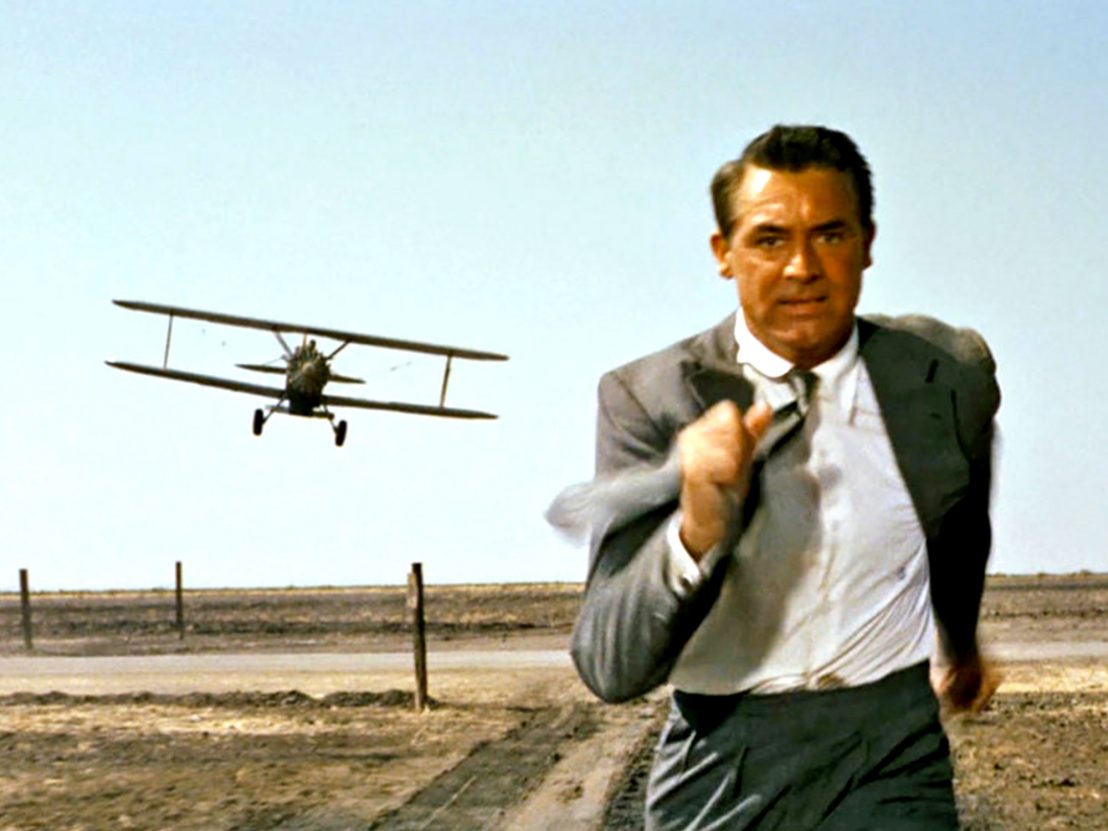
In the center of your vegetable conglomeration, after a short speech of welcome, place atop them the hamburger meat, ringed by queso, bombarded by banana peppers and Greek olives. I like to pretend I’m a crop-dusting biplane during this step.
FINAL STEPS.
Almost finally, glorp an ice-cream scoop of either sour cream or Greek yogurt into the middle. Drizzle, in a pleasant manner, a line of salsa along the length of the salad. Or the breadth. It’s really up to you.
Finally, it’s time for the chips. I only use an authentic Mexican tortilla chip; I think you can find them at local Mexican groceries. I believe they’re called “Doritos.”
Line the perimeter of the salad with “Doritos” as if they were English tombstones. Scatter the surface with some more. Eat the rest of the bag before your sons can find it.
Ta-daaa! Taco Salad!
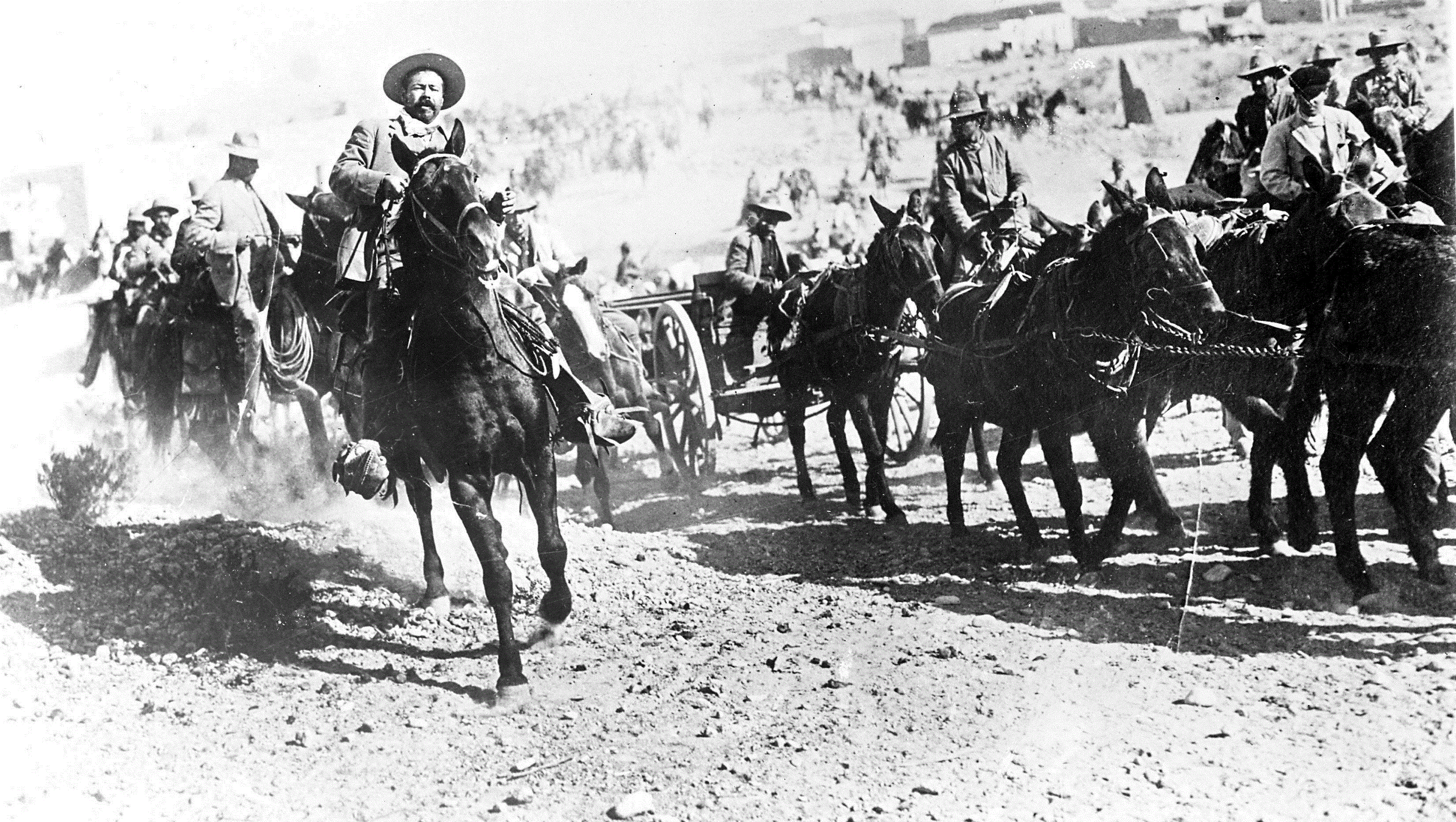
Pancho Villa and his dorados—his light cavalry. It’s a True Historical Fact that it was Doritos that gave those mules the strength to pull Villa’s artillery into battle.
And here it is! The completed Taco Salad. There’s lettuce and the other vegetables down there. Somewhere. We’re sending in a team to locate them.
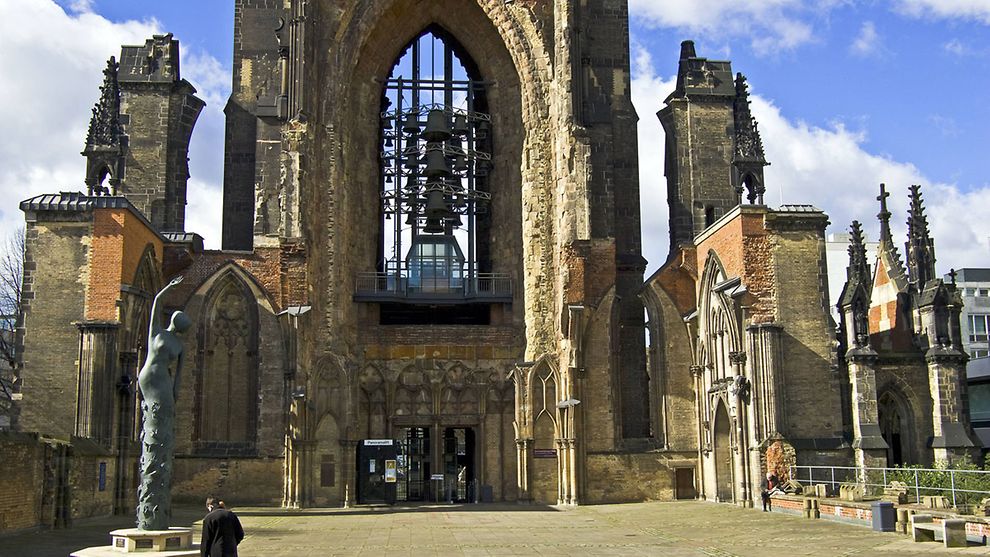
King Charles III visited Hamburg yesterday to pay tribute to the estimated 30,000 German civilians killed in the Allied firebombing of the great port city in 1943, in an operation code-named “Gomorrah.”
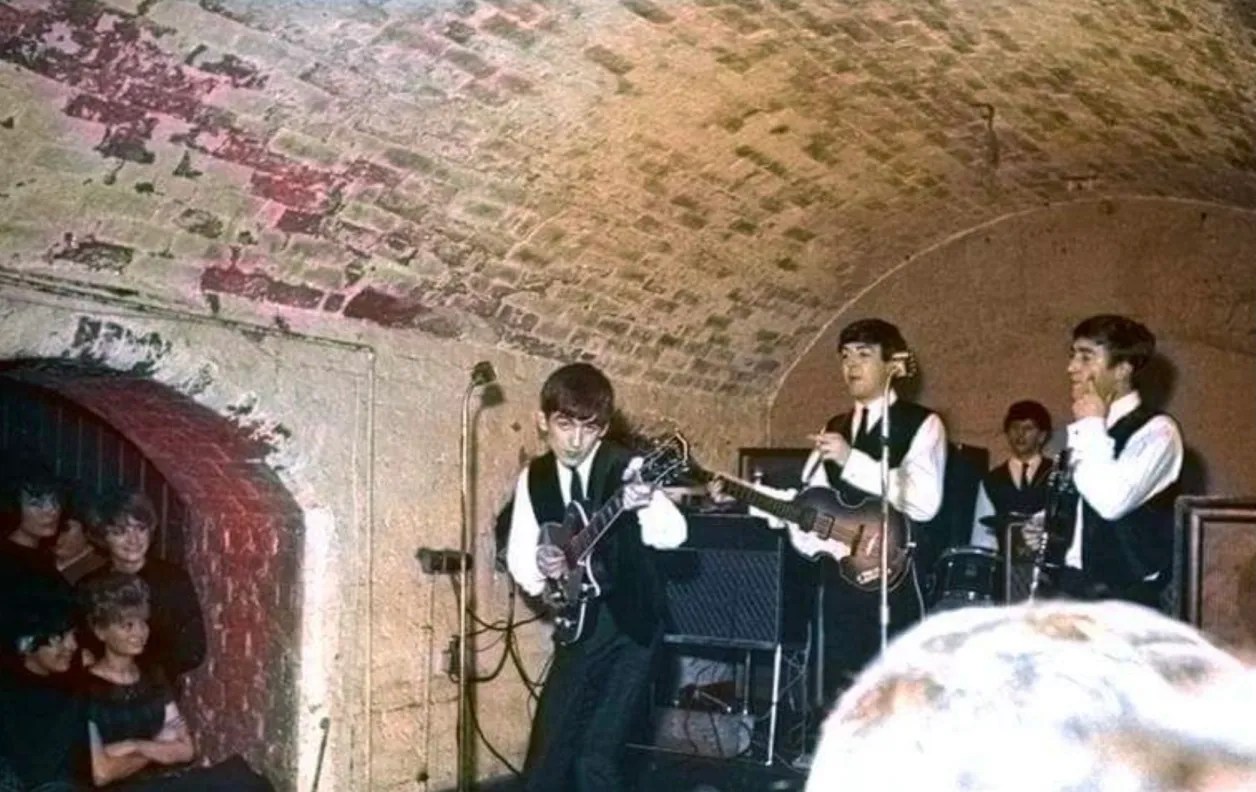
Twenty years later, ironically, the last stop for The Beatles before they hit the big time was a tiny nightclub in Hamburg called The Cellar.
It’s been replicated, exactly, in Liverpool, where the MonaLisa Twins, two young women who expertly and faithfully perform Beatles songs, perform today.
The Beatles at the Cavern, 1963. Ringo Starr has replaced Pete Best at the drums.
I wrote a book about the air war, a testament in its bulk to the immense courage of the American heavy bomber crews–in B-17s and B-24s–who contributed to the destruction of Europe.
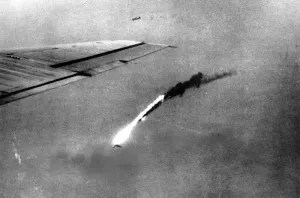
I have never liked the Superheavy, the B-29 Superfortress, which not only destroyed Japan but, in its development, killed dozens of aircrews, including waist gunners. When the cabin was pressurized, the gunner’s Plexiglas bubble, in early models, separated from the fuselage and so carried the gunner with it. The Army Air Forces’ solution was a leather harness. The plane was also noted also for the ease with which is caught fire.
I hate that airplane.
A doomed B-29 over Tokyo.
And while I will forever love the aircrews of the heavies, and I will never forget, either, what they were doing to the people below. Henry Hall of Cayucos was twenty when he saw a B-17 from his squadron, badly shot up, begin to lazily tumble toward the ground. Along the way, it clipped the wings of two more American bombers. They went in, too.
The passage below is from my book about airmen like Hall.
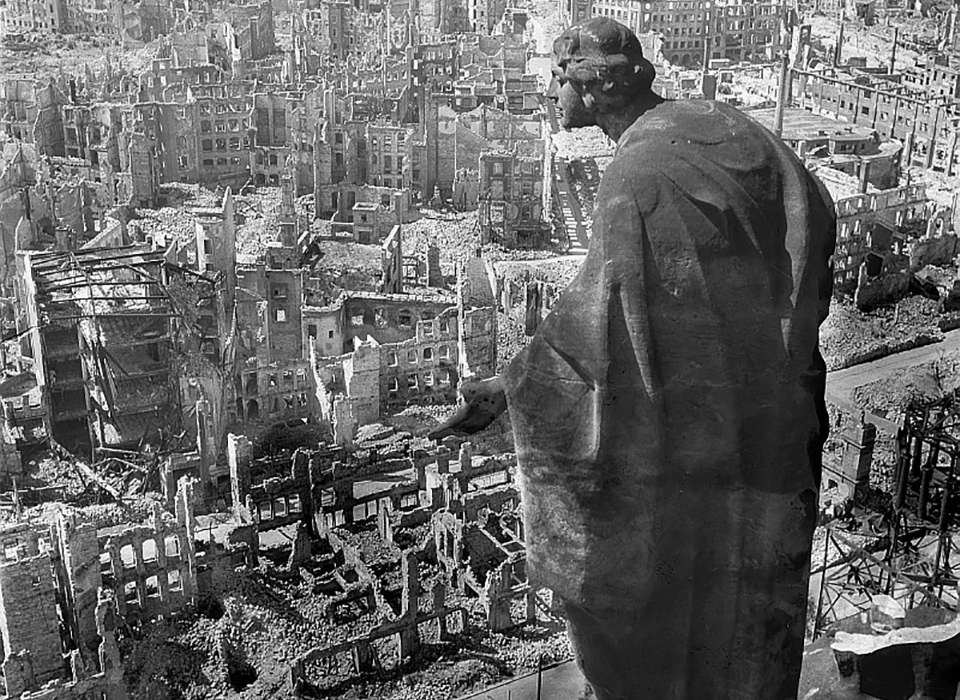
Sheila Varian’s prize cow horse, Ronteza, was an Arab and her sire was an award-winning Polish stallion, Witez II. Stablehands were desperately trying to evacuate Arab stallions from the east–horses were being eaten there by the Red Army–when they reached Dresden, the ancient city that was firebombed in February 1945. (POW Kurt Vonnegut escaped incineration in Slaughterhouse-Five).
One of the Arabs’ handlers watched in horror as the tail of Ronteza’s uncle, Stained Glass, burst into flames.
Stained Glass survived. Twenty Arabians perished. So did at least 25,000 human beings.
Dresden in ruins, 1945.
Sometimes the aircrews could smell, from 25,000 feet, wafted up to them by vast columns of black smoke, what they’d done to the children below. Even into old age, many of them would awake, in a terrified moment of cold sweat, when, in their dreams, they were smelling their combat missions again.
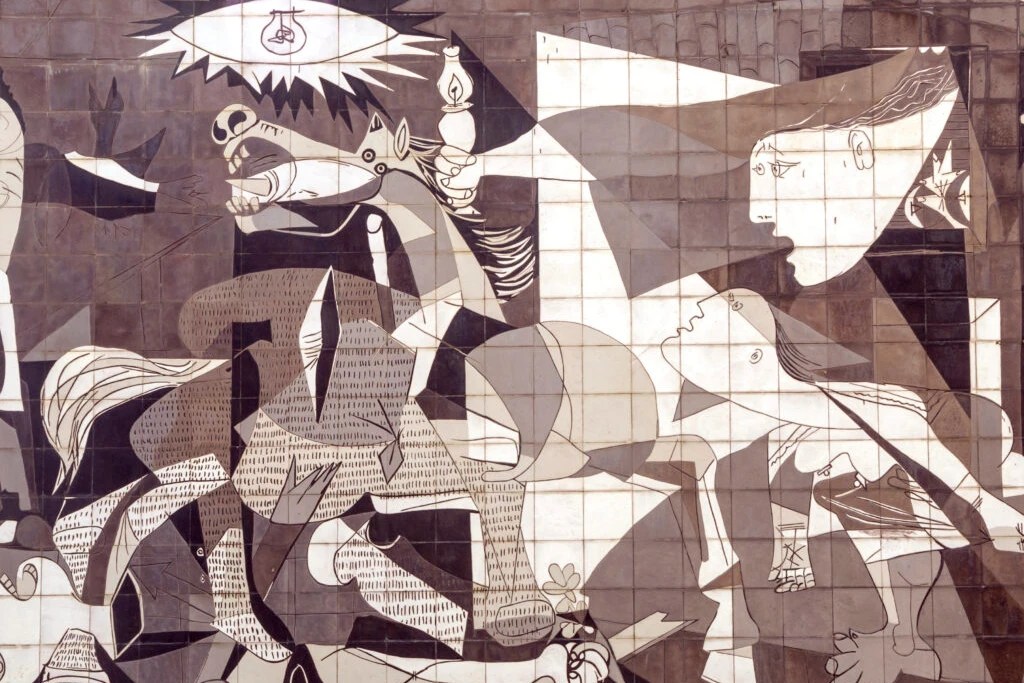
When we were still capable of outrage, Pablo Picasso’s “Guernica” was a passionate protest against Hitler’s bombing of a Basque town during the Spanish Civil War, in 1937. That painting has been replicated, exactly, in the United Nations building in New York City. It’s a reminder, albeit with the Russian Federation remaining in the Security Council, of what the UN is intended to prevent.
Guernica
And I fervently hope that I never lose my capacity for outrage. That is one quality that made be a history teacher. And that, after all, was just a cover story. My real intent was to teach my faith, by which I mean, the value of each and every single human life.
We are precious in God’s eyes. My students needed to know that. The gift of history is in reminding young people of the richness of their heritage. The stories that history teachers tell remind young people that their lives, too, enrich us beyond measure.
Without being either a proselytizer– and while being a terribly negligent churchgoer–I knew that God’s eyes were always on me when I was in the classroom. I was constantly aware of that.
She had entrusted Her children to me, you see.
Liza, a four-year-old Ukrainian child with Down Syndrome—the light of her parents’ lives—was riding in this stroller when a Russian missile struck nearby. Liza was killed.











 A Work in Progress