
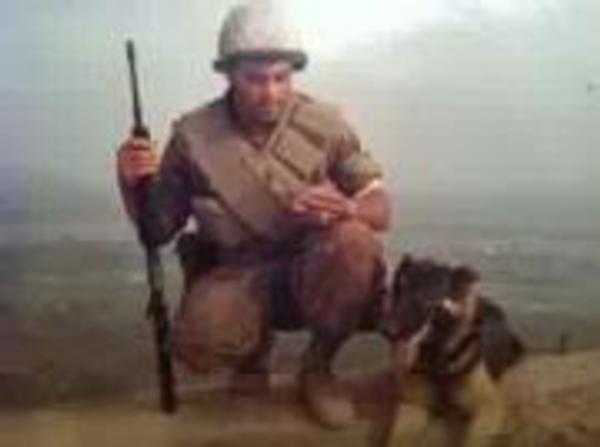
For a proposed Memorial Day Speech at the Arroyo Grande Cemetery, May 29, 2023.
In 1963, my older brother went out for the wrestling team at what was then Arroyo Grande Union High School. That’s when he met arguably the toughest kid on the team—maybe the toughest athlete in the high school’s Class of 1966.
His name was Pete.
My brother was the son of an accountant; our Dad was the comptroller for Madonna Construction. Pete was a farmer’s son.
Dad’s ancestors migrated from England to Virginia in the 17th century; Pete’s father was an immigrant from the Philippines.
My brother was a hard worker, maybe happiest behind the wheel of our Ford garden tractor. Pete was a hard worker because he had to be.
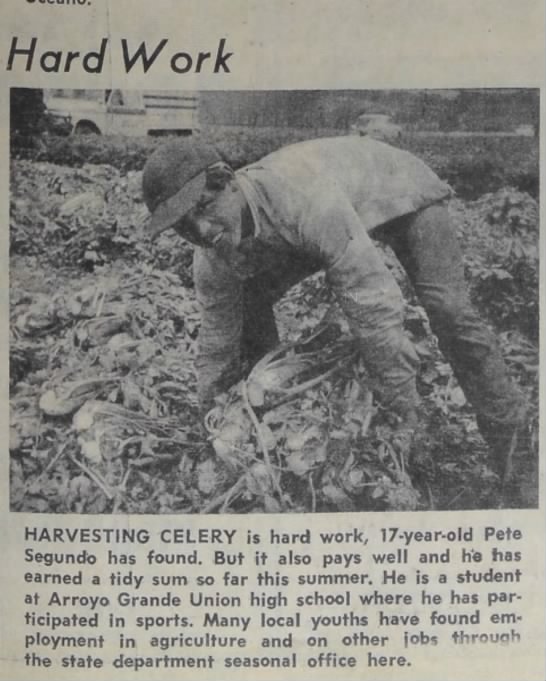
Pete was a natural athlete. Neither my brother nor I are natural athletes. But here’s what my brother said about his wrestling teammate:
“He was nice to me, and he didn’t have to be.”
Please keep those words in mind for a few minutes.
“He was nice to me, and he didn’t have to be.”
Bear with me. I have to recite a few statistics.
The Vietnam War claimed eleven young South County men. Nine of them are near us today. One is buried in Santa Maria. One remains missing in action.
Thirty-four San Luis Obispo County men died in the Vietnam War.
Most of them were soldiers. Eight were Marines.
The ratio of Californians killed in Vietnam was twenty-eight deaths for every 100,000 residents. For San Luis Obispo County, it was thirty-two deaths for every 100,000 residents.
The average age of a Vietnam serviceman was twenty-two. At the times of their deaths, most County servicemen were twenty-one.
The most common cause of combat deaths was from grenades, which claimed eight of our young men. Whether hand-thrown or fired as RPG’s, this meant that fighting was at close quarters.
Mortar or artillery fire took six more.
The greatest number of county casualties—eleven—came in 1968, the year of the Tet Offensive. Nine more died the following year.
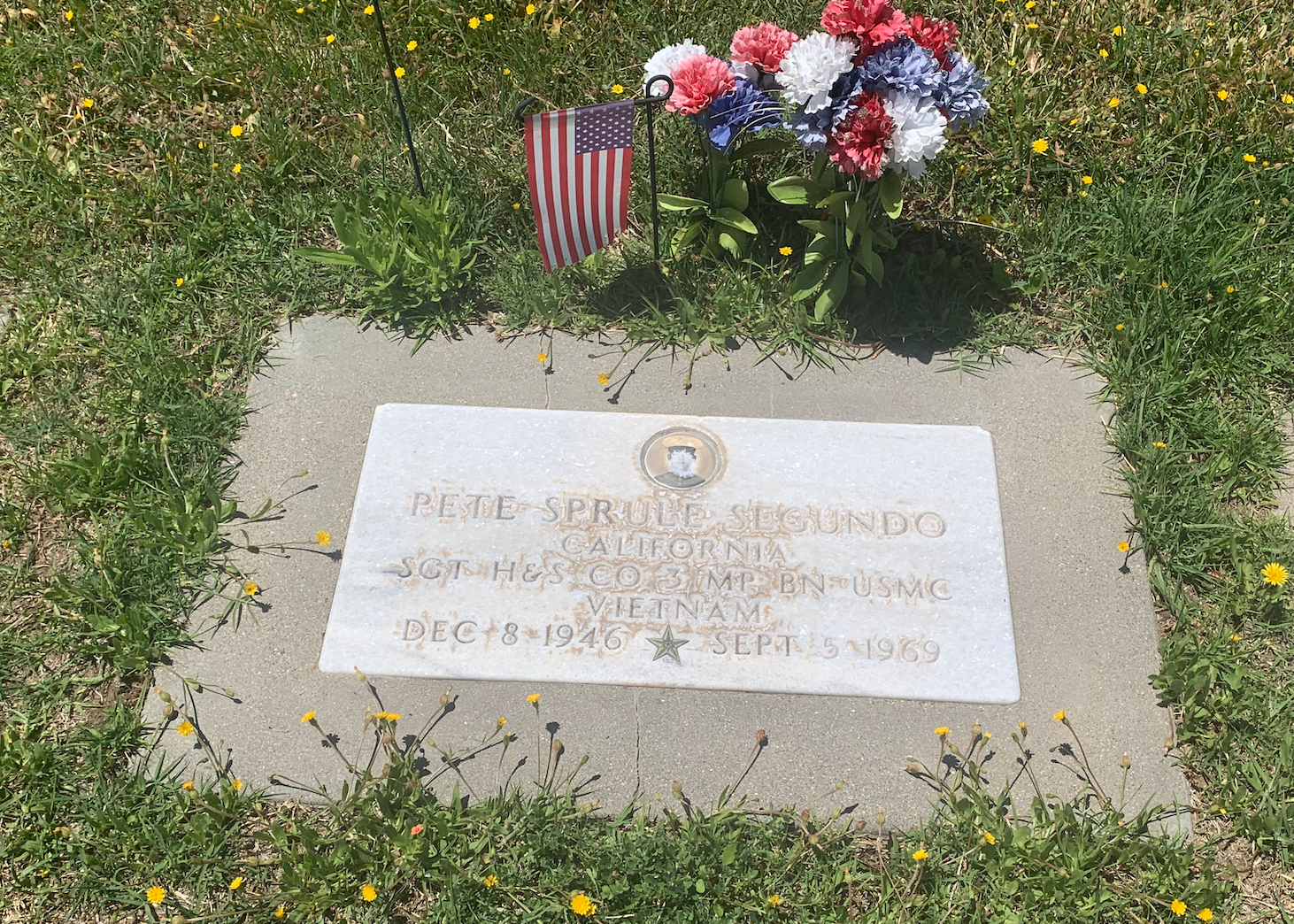
One of those killed in 1969 was Marine Sgt. Pete Segundo. His grave in this cemetery is directly above my parents’ graves. When I come to visit my Mom and Dad, I visit the young Marine I never met.
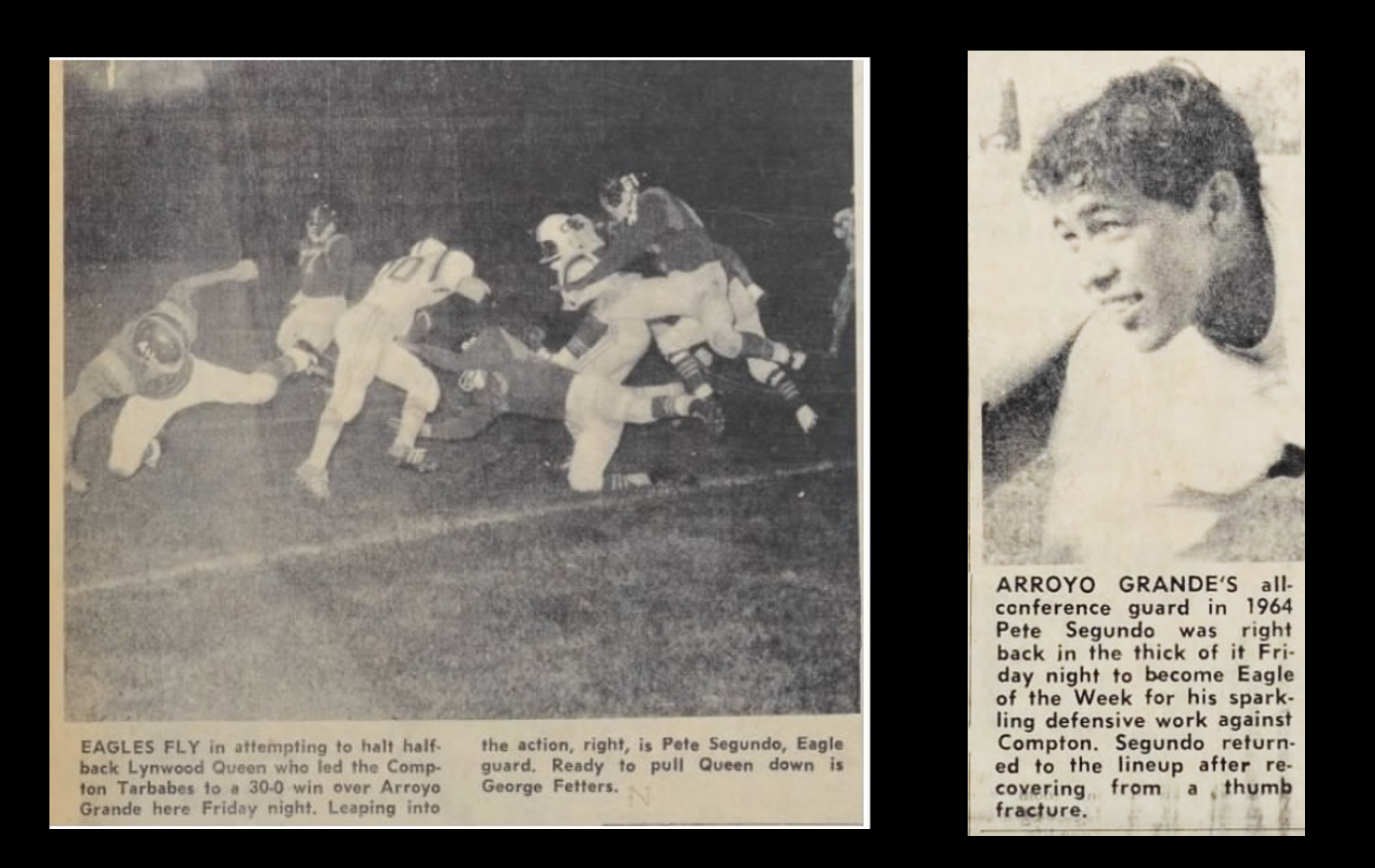
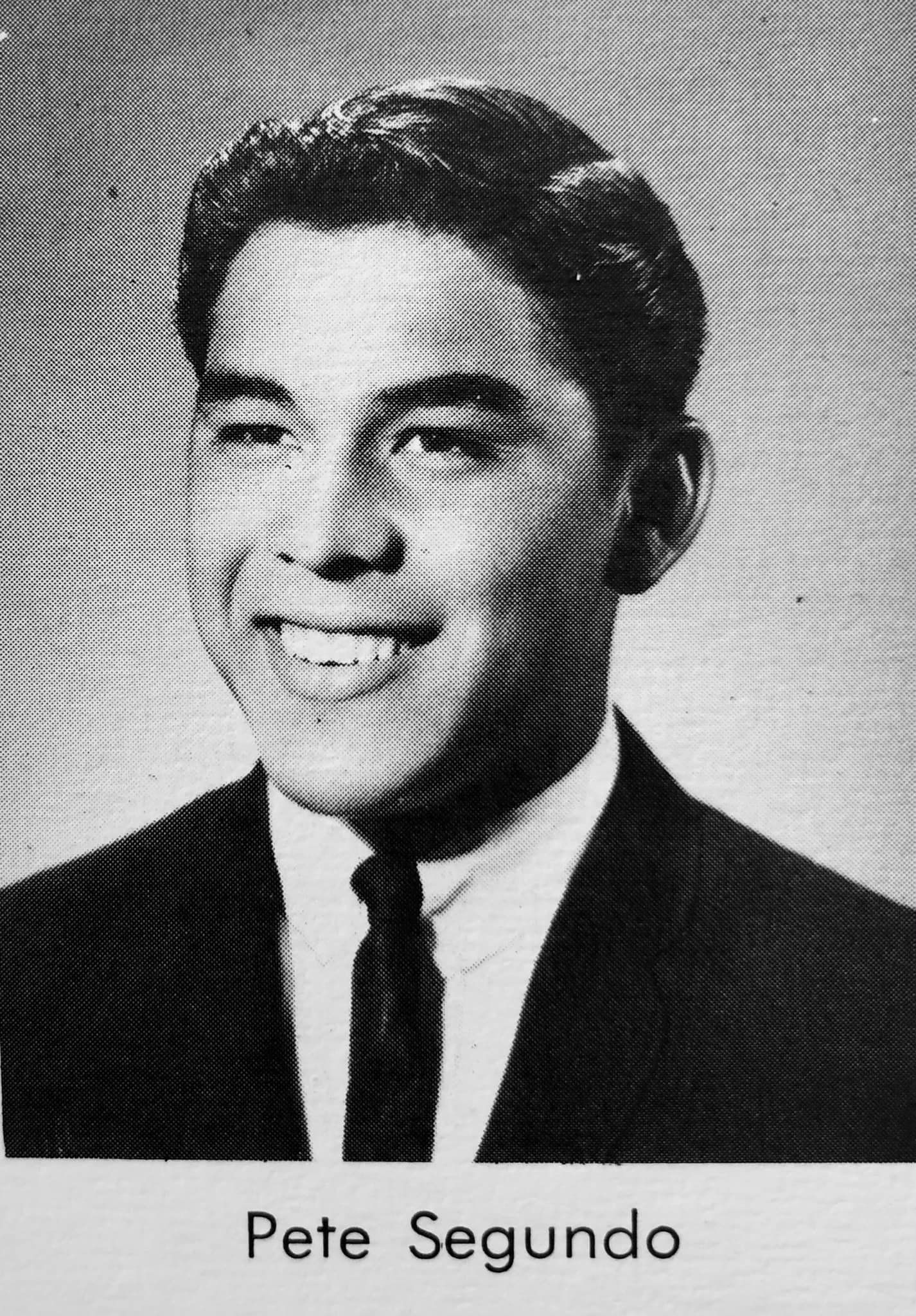
I’ve seen one yearbook photo that was typical of him: amid all the football guys trying to look tough, there’s their all-county guard with a big smile on his face.
In fact, there’s a big smile on his face in every one of his yearbook photos.
To know Pete, his classmates have told me, was to love him.
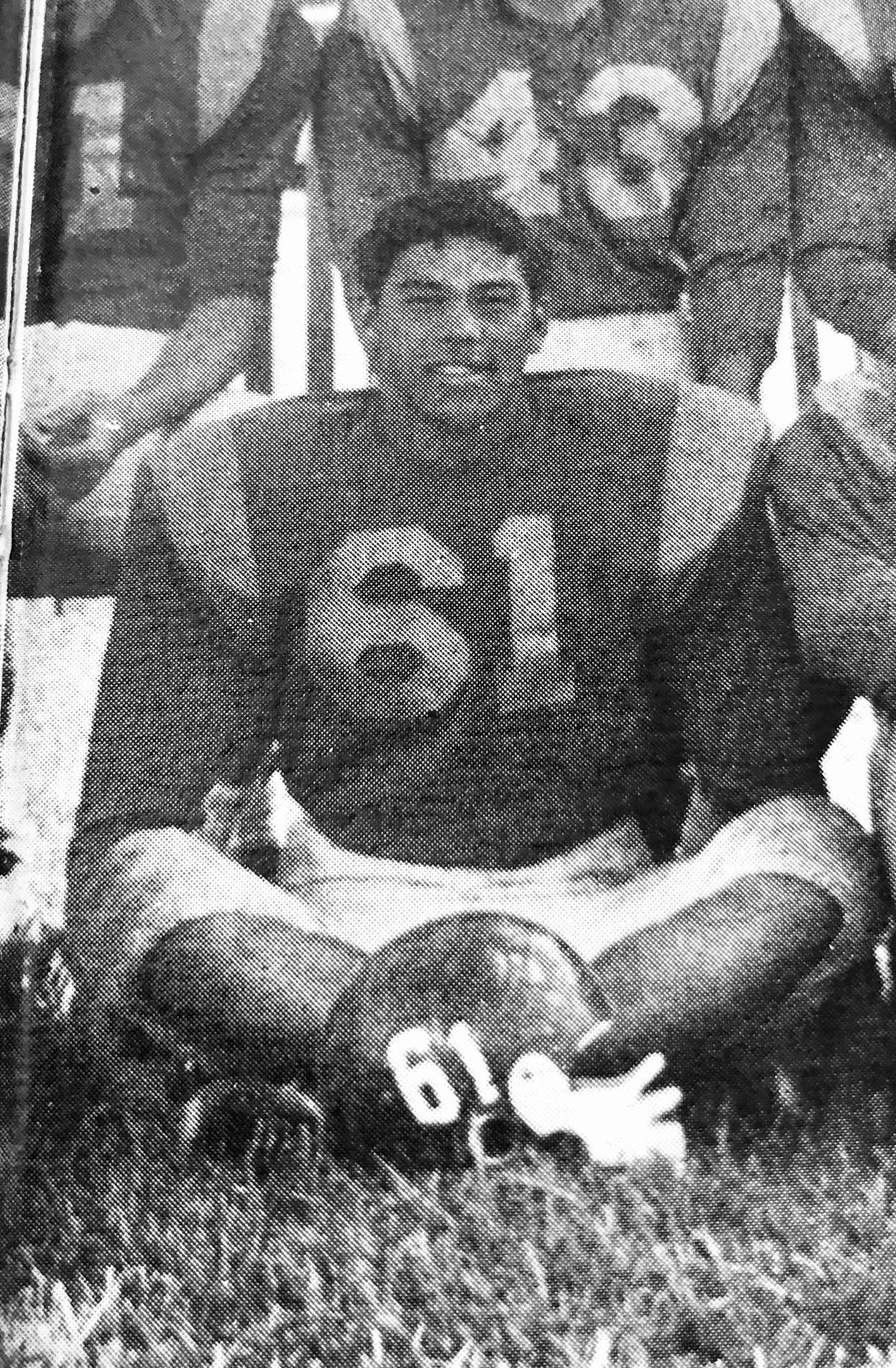
He was a standout athlete, especially in wrestling and football.
Otis Smith, a Civil War Medal of Honor winner, is buried here, too. His grandson, Johnnie, was awarded a Silver Star as a member of a World War II tank destroyer battalion.
In 1934, Johnnie was a Leiter Award winner, presented to the high school’s outstanding football player.
The Leiter Award went to Pete Segundo, too. Twice.
And while his classmates enjoyed a root-beer float and a burger at the Chu Chu Drive-In on Grand Avenue, Pete was in the fields chopping celery to help support his family.
A lifetime of hard work did nothing to diminish Pete’s smile. What ended it was an incident of friendly fire; Pete, a Marine dog handler, was shot while on patrol.
Sgt. Segundo, like most county Vietnam casualties, was twenty-one when he was killed.
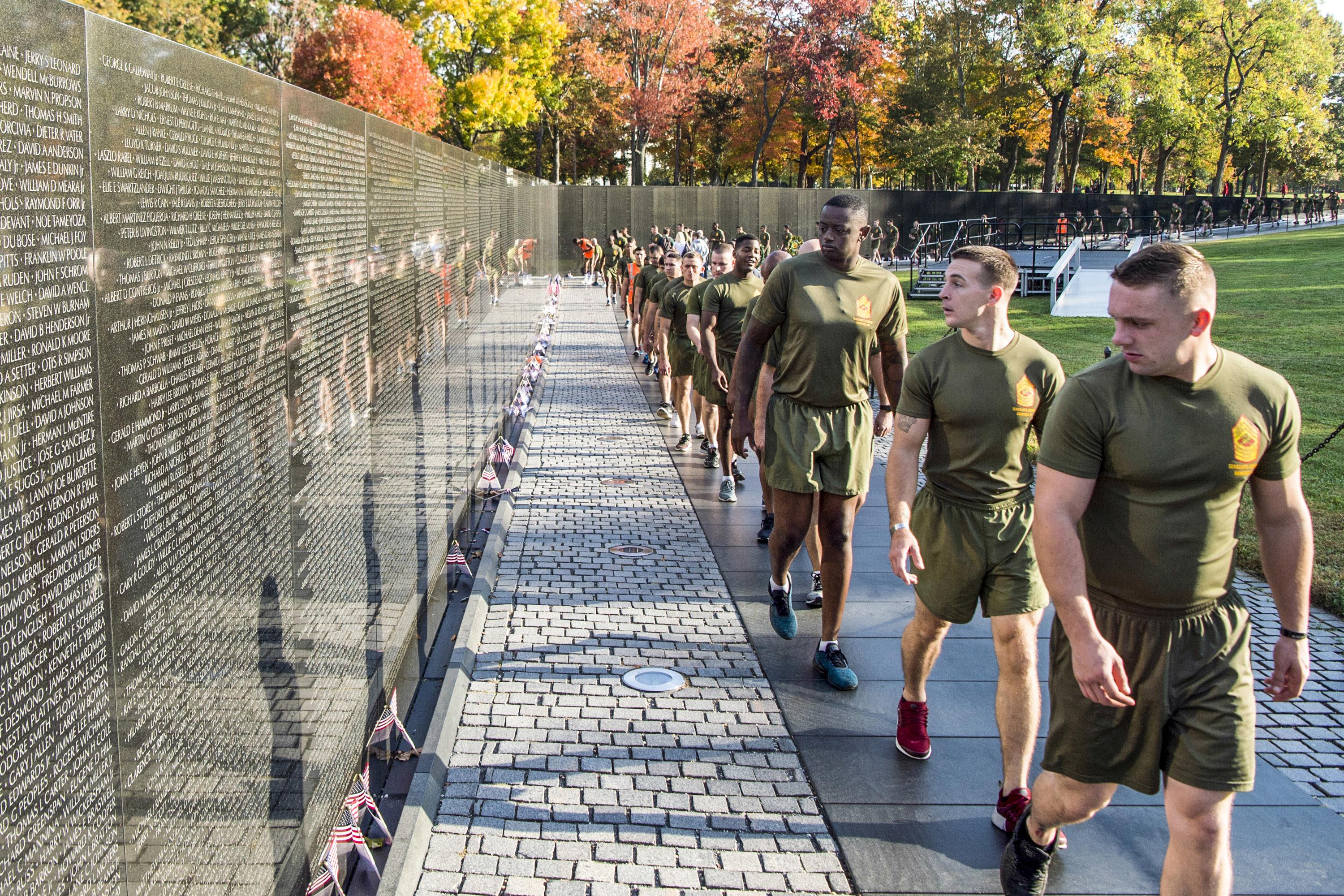
He’s a powerful example of how that war—how any war—cheats all of us. This war stole that young man from us. That young man gave his life for us.
But that was typical of his generosity of spirit.
“He was nice to me, but he didn’t have to be.”
My brother found this out the day he met his wrestling teammate, Pete Segundo.
 A Work in Progress