
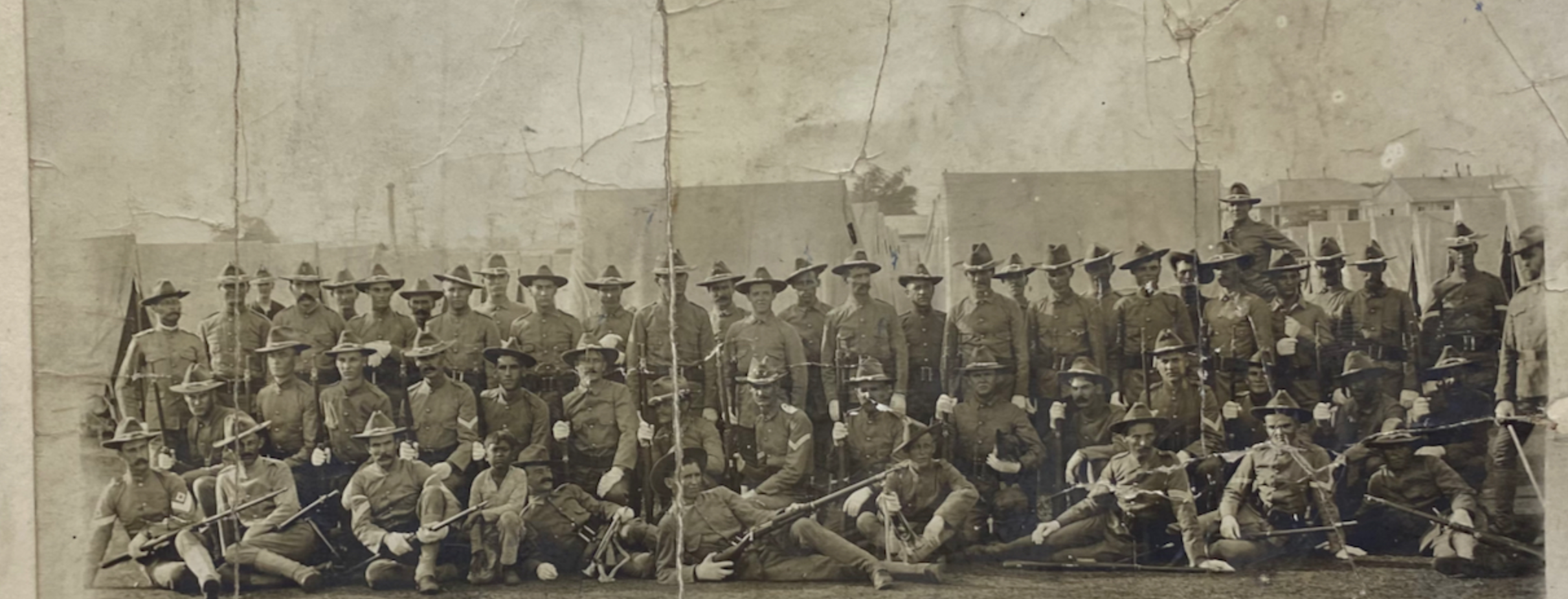
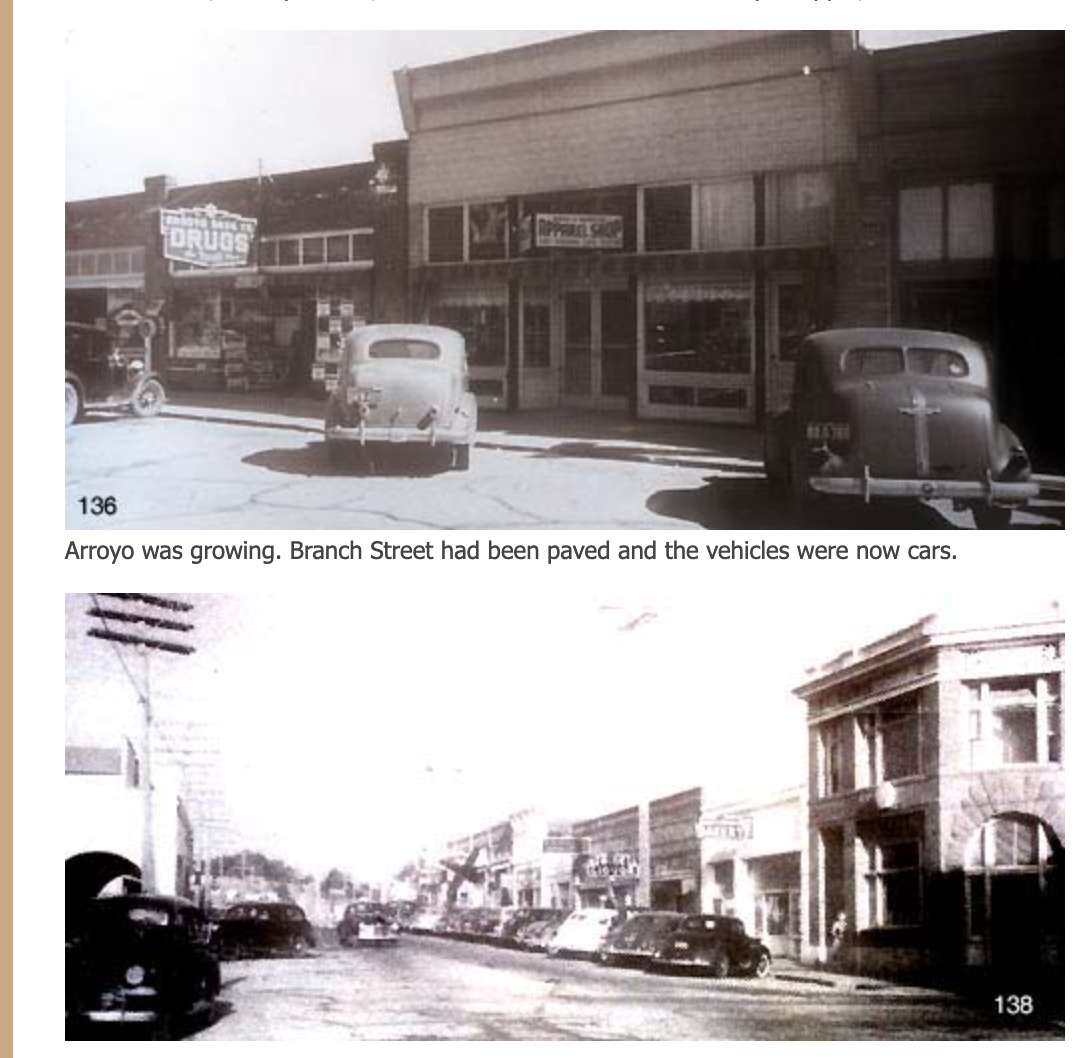
Charles Branch served Arroyo Grande as a constable, town marshal, traffic policeman and finally chief of police in the 1930s. While he was not related to the Branches who founded the town, he seems to have been almost as prominent.
When the City laid him off in the depths of the Depression, carloads of teenaged boys drove around town to honk their horns in protest. That’s high praise. The PTA honored him, too, for his vigilance for ticketing speeders who exceeded what was then a 15-mph speed limit in school zones. Since the State Highway—101, today’s Traffic Way—ran directly through town and past the grammar school, Charlie lighting up careless drivers (an old clipping notes that one such driver was Rose Bowl-bound) from his motorcycle may have saved many young lives.
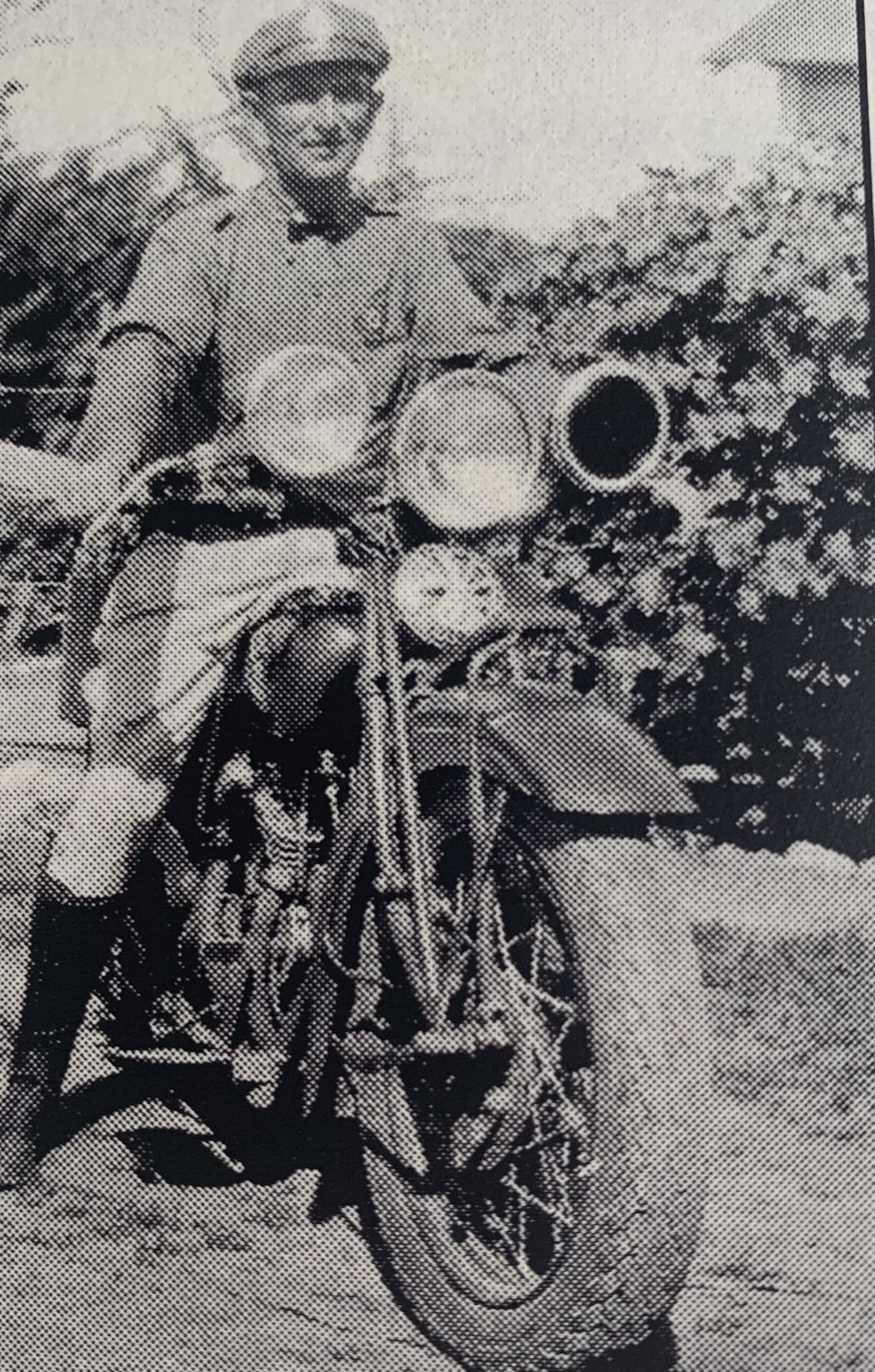
In 1931, he was the first AGPD officer to be issued a tear-gas gun. The Arroyo Grande Herald-Recorder notes that Branch needed it to quell disturbances at local dance halls. That may well be a coded reference. The dance halls, including the IDES (“Portuguese”) Hall, were frequented by Filipino farmworkers. They patronized taxi dancers—“henna-haired girls,” one article called them—who were Caucasian and this seemed to be a state of affairs that agricultural towns in California could not tolerate. The dances were frequently raided by local police.
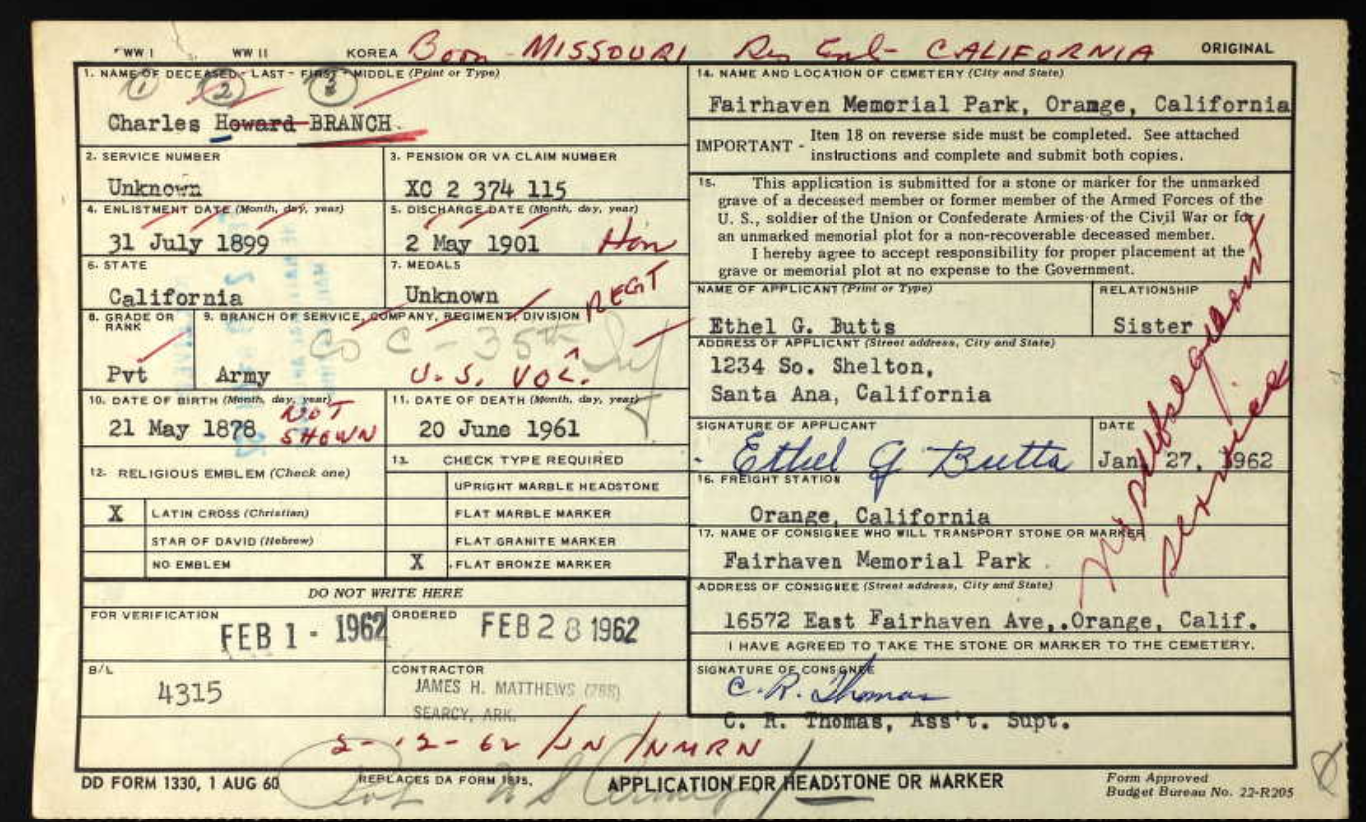
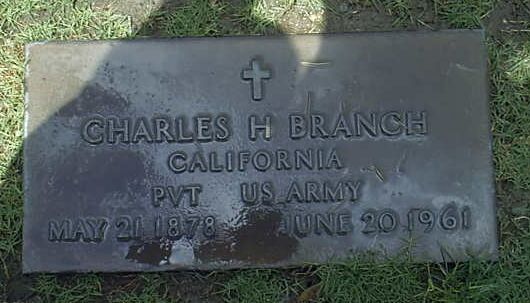
But the tear-gas gun also represented a kind of deja vu in Charles Branch’s life. He was a staunch member of and officer in the local Spanish-American War veterans’ organization, but that’s a slight fib. It’s more likely that most of these veterans fought instead in the Philippine Insurrection (1899-1902), one of America’s most controversial wars. His sister’s application for a military tombstone—Branch died in 1961 and is buried in Santa Ana, in Orange County—gives the game away.
The 35th Volunteers, indeed, fought in the Philippine Insurrection. This was a merciless colonial war brought on by the Filipinos themselves, led by a man, dynamic and charismatic, named Emilio Aguinaldo.
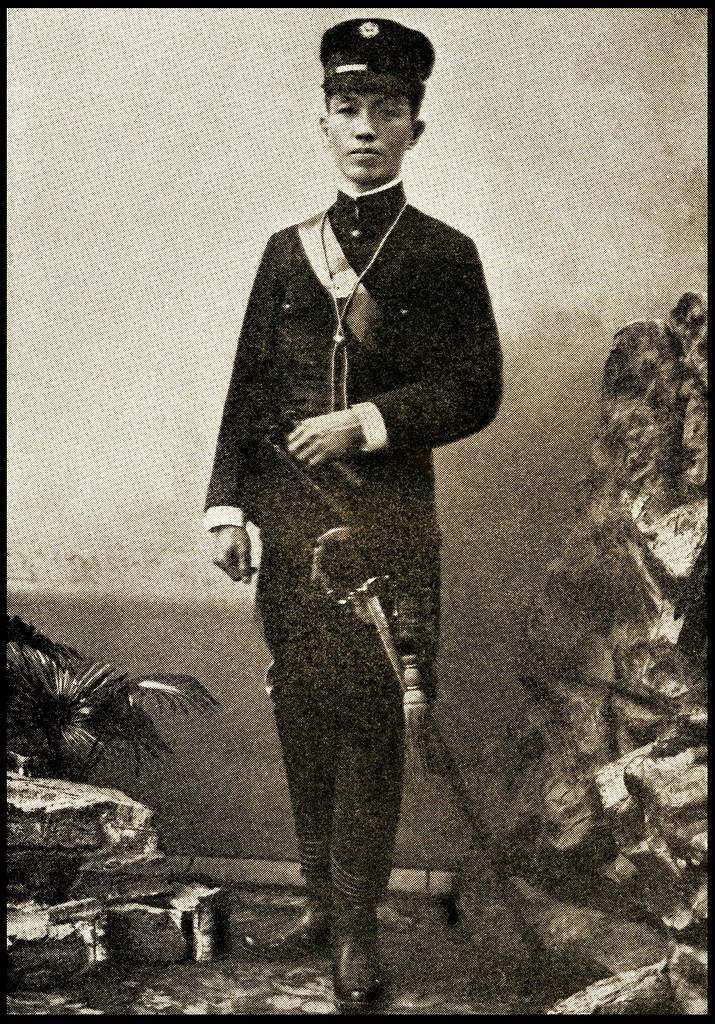
The Filipinos started the war by helping the United States defeat Spain in the Spanish-American War and then assuming that America, given our War of Independence and our democratic traditions, would grant the Islands independence so that they could begin democratic traditions of their own.
Nope. The Islands became America’s “Jewel in the Crown”—a reference to British India— the centerpiece of our own colonial empire and the beginning of a slippery slope that would lead to another terrible war with another colonial power, one that would claim two Arroyo Grande sailors killed on battleship Arizona on December 1941.
“It is our duty,” President McKinley intoned in 1899, to explain why we weren’t leaving, to “uplift and Christianize” the Filipinos (80% of them were Roman Catholic, but that’s another story. That didn’t count as ‘Christianity’ in McKinley’s thoroughly Protestant America. When Al Smith ran against Herbert Hoover in 1928, some Hoover campaign buttons read simply A Christian in the White House.)
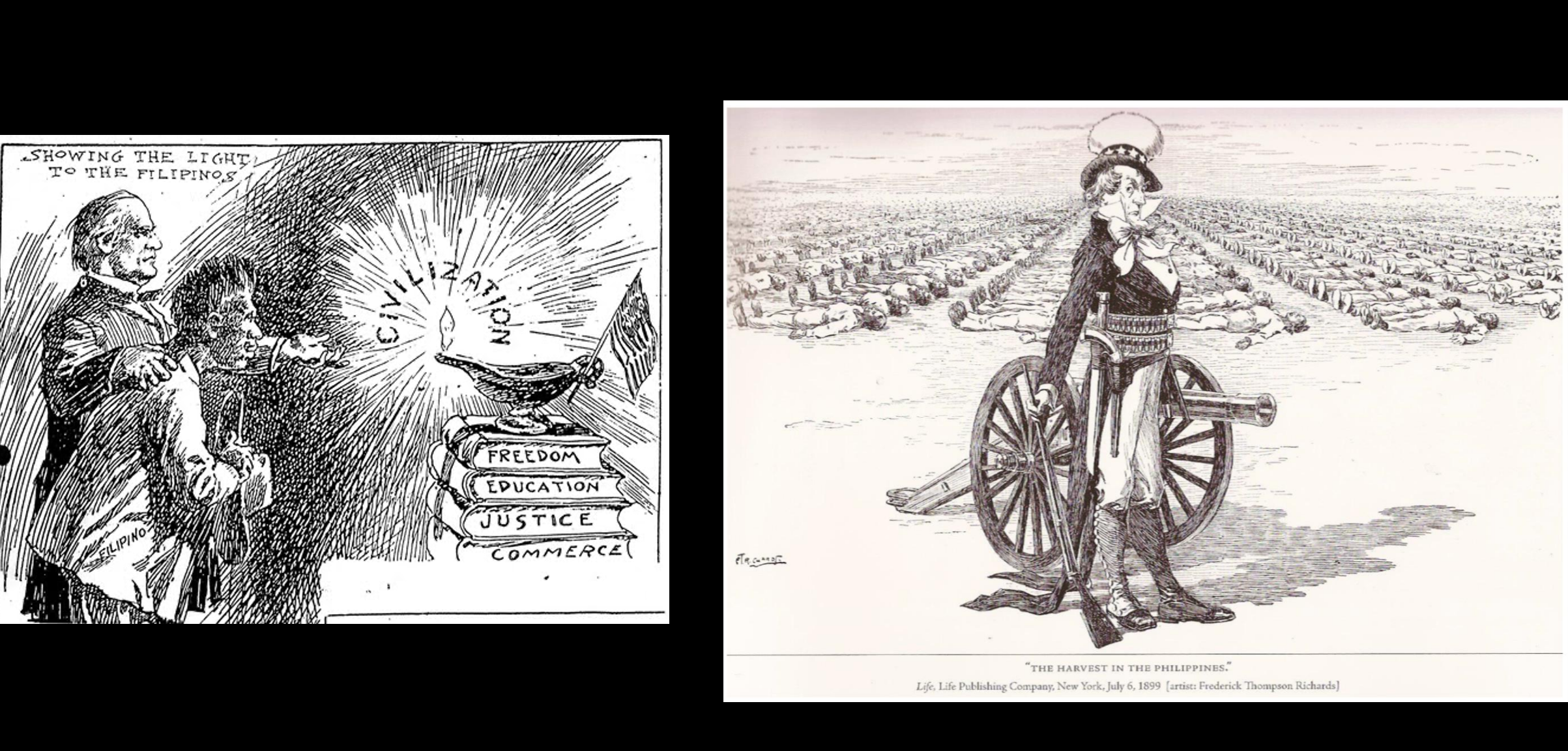
The war that followed claimed tens of thousands of Filipino insurgents. Collateral damage (starvation and disease) accounted for somewhat between a quarter-million and a million civilians.
This was the war in which one general, later court-martialed, ordered his men to kill every male Filipino over the age of ten, in which “waterboarding” was invented, in which the Americans adopted a practice that had been invented by the Spanish in Cuba and the British in South Africa: the concentration camp.

One of the most decorated regiments—multiple Medals of Honor—was the Twentieth Kansas Volunteer Infantry, a unit that included a private who wrote his friends back home that “this shooting niggers beats shooting rabbits all to hell.”
The war divided America as deeply as the Dreyfus Affair was dividing France—or as deeply as the United States is divided today. The two sides were exemplified by two powerful men: the imperialist Sen. Henry Cabot Lodge and the writer Mark Twain, whose essay “To the Brother Sitting in Darkness” was a searing indictment of American policy.
Aguinaldo surrendered. We won.
Thirty years later, you can find some shockingly racist language in the editorial columns of the Arroyo Grande Herald-Recorder, most of it directed against “Mexicans” (many of whom were American citizens) or “Filipinos” (who occupied a nebulous status somewhere between being citizens and resident aliens.)
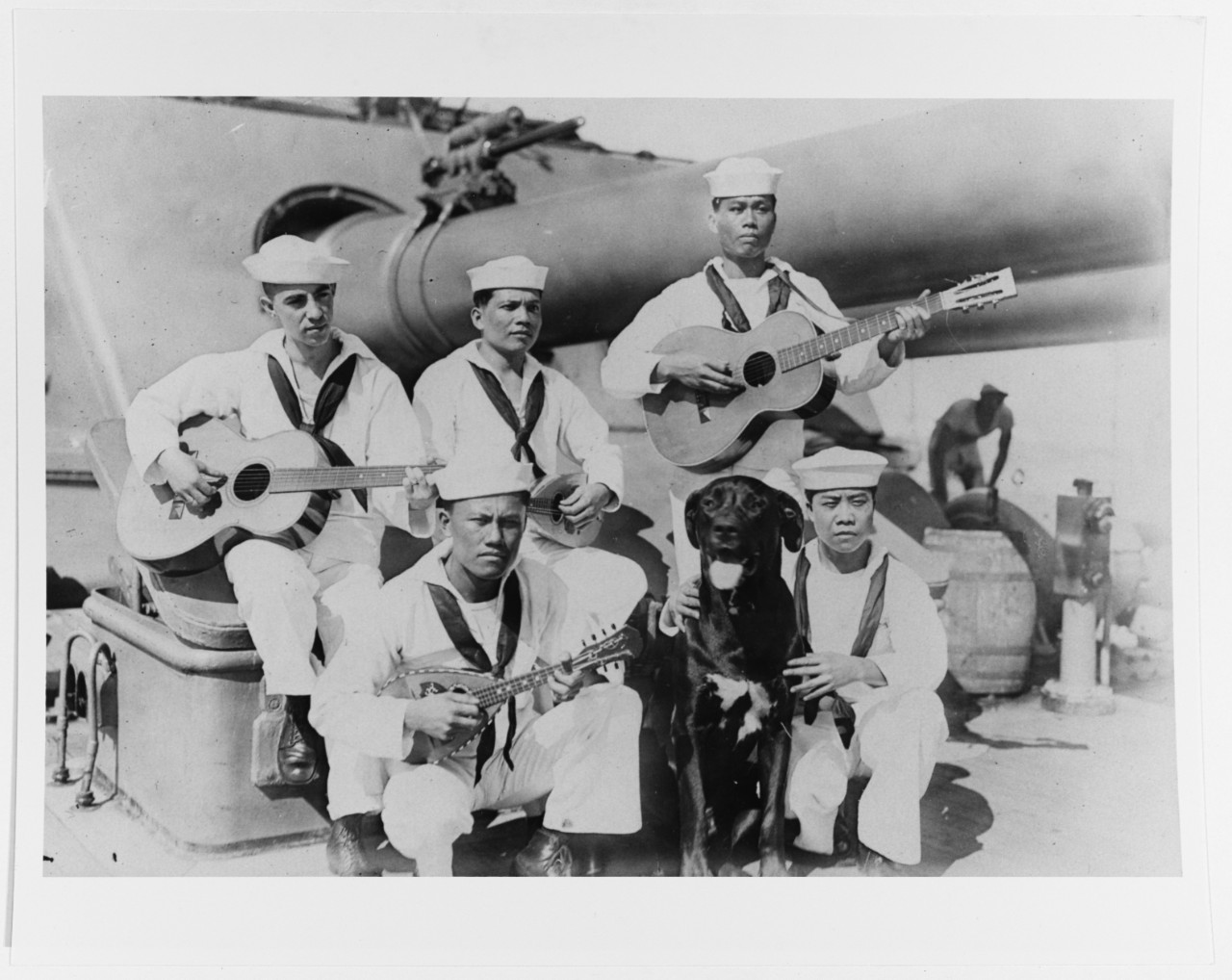
Filipinas were not allowed to immigrate. That factor created huge economic opportunities for the henna-haired girls, the taxi dancers.
Meanwhile, Filipino immigrants responded to the abuse heaped on them throughout the 1920s and 1930s by joining the fight against Japan in the months after Pearl Harbor. They formed two infantry regiments, the first at Camp San Luis Obispo. Their regular army trainers, from the 77th Infantry Division, were stunned by how quickly these men took to soldiering and how self-disciplined and motivated they were. These gifts became evident in combat in the Southwest Pacific and in the liberation of the Philippines. They fought with immense bravery.

“Immense Bravery” is not a term I’d apply to Charles Branch’s 35th Volunteer Infantry Regiment. They were a hard-luck unit. “Volunteer” regiments occupied a separate status from the regular Army; enlistment terms were limited, discipline was easier, and the food, allegedly, was better. Despite those inducements, the 35th, made up of large numbers of Californians, had trouble finding recruits in 1899, when the Insurrection began. They would have to borrow some Easterners, including (horrors!) New Yorkers, to fill out their ranks.
But they had a Californian, Charles Branch, as one of those rankers. He avoided dying on the troopship that left San Francisco for Manila. Ptomaine poisoning swept the 35th—turn-of-the-century soldiers were issued tinned meat that was Civil War surplus—and at least one soldier, from San Francisco, died en route to the Philippines.
That’s where malaria began claiming them, including a popular captain from Los Angeles.
They fought for two years, pursuing and not finding insurgent leaders and engaging in at least one pitched battle, on Mindanao, in June 1900. They were routed, losing twenty men killed or wounded; the Filipino attackers lost four.
Coming home to California must have been an immense relief. Over 4,000 American soldiers and Marines did not come home alive.
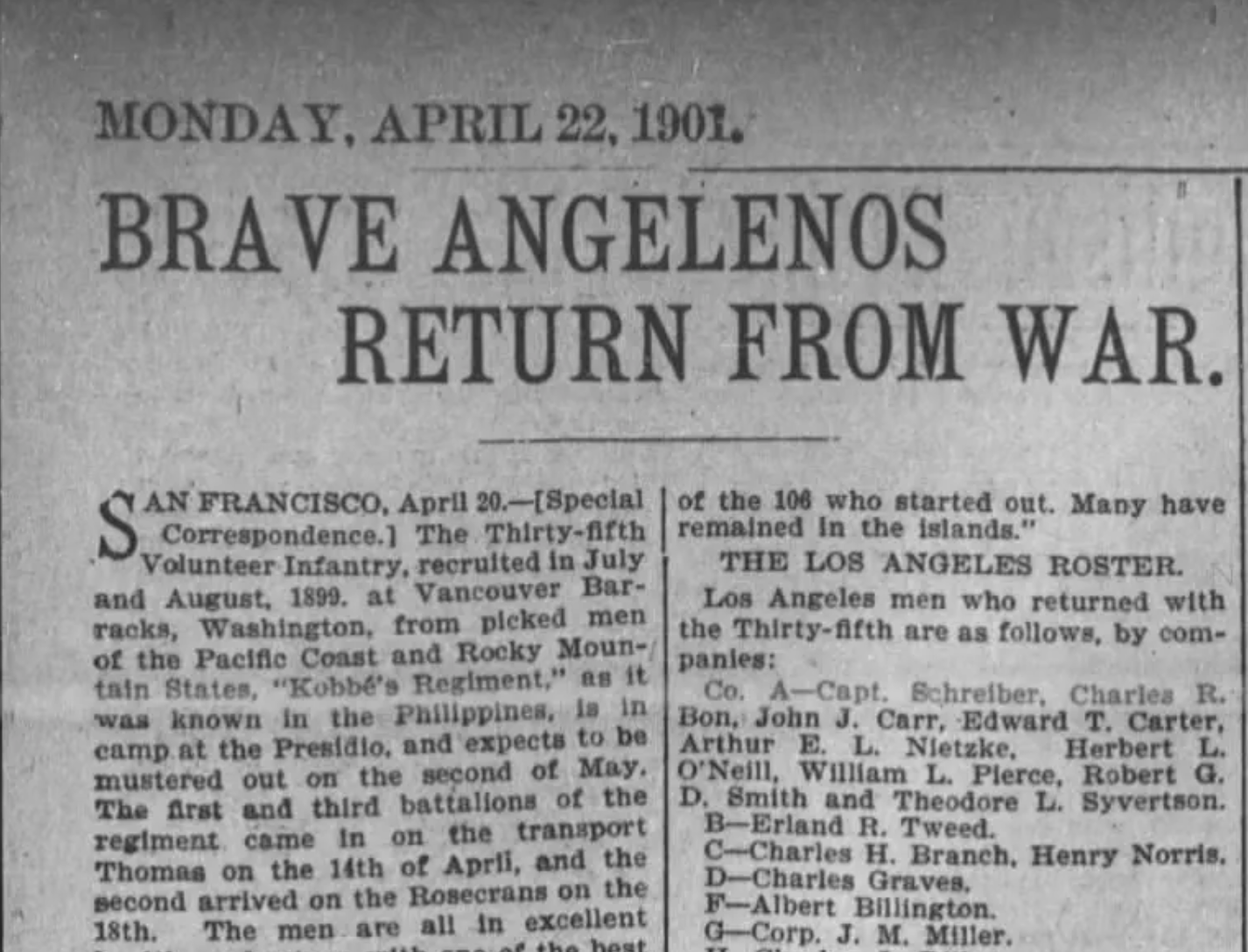
Arroyo Grande was still ten years away from incorporation in 1901, when newly-discharged veteran Charles Branch was twenty-three. He would eventually become a constable but he also had a mechanical bent, working for the Barcellos-Morgan Ford agency on Branch Street—today an ice cream shop— and eventually opening his own radiator shop. He also formed an all-girls drill team, sponsored by a fraternal organization, the Knights of Pythias, that performed regularly in town celebrations and parades in the 1930s.
Then something happened. Around 1939, Branch disappears from the old Herald-Recorder’s news columns except for occasional visits. His residence is listed as “Sawtelle,” which is ominous. That was the veterans home, near the UCLA campus, that was notorious for mistreating its Civil War veterans during the 1920s (“patients” were referred to as “inmates.”) It looks like a pleasant place. I don’t think it was, certainly not for Civil War veterans and perhaps not for the cohort to which Branch belonged, a generation after the Civil War.
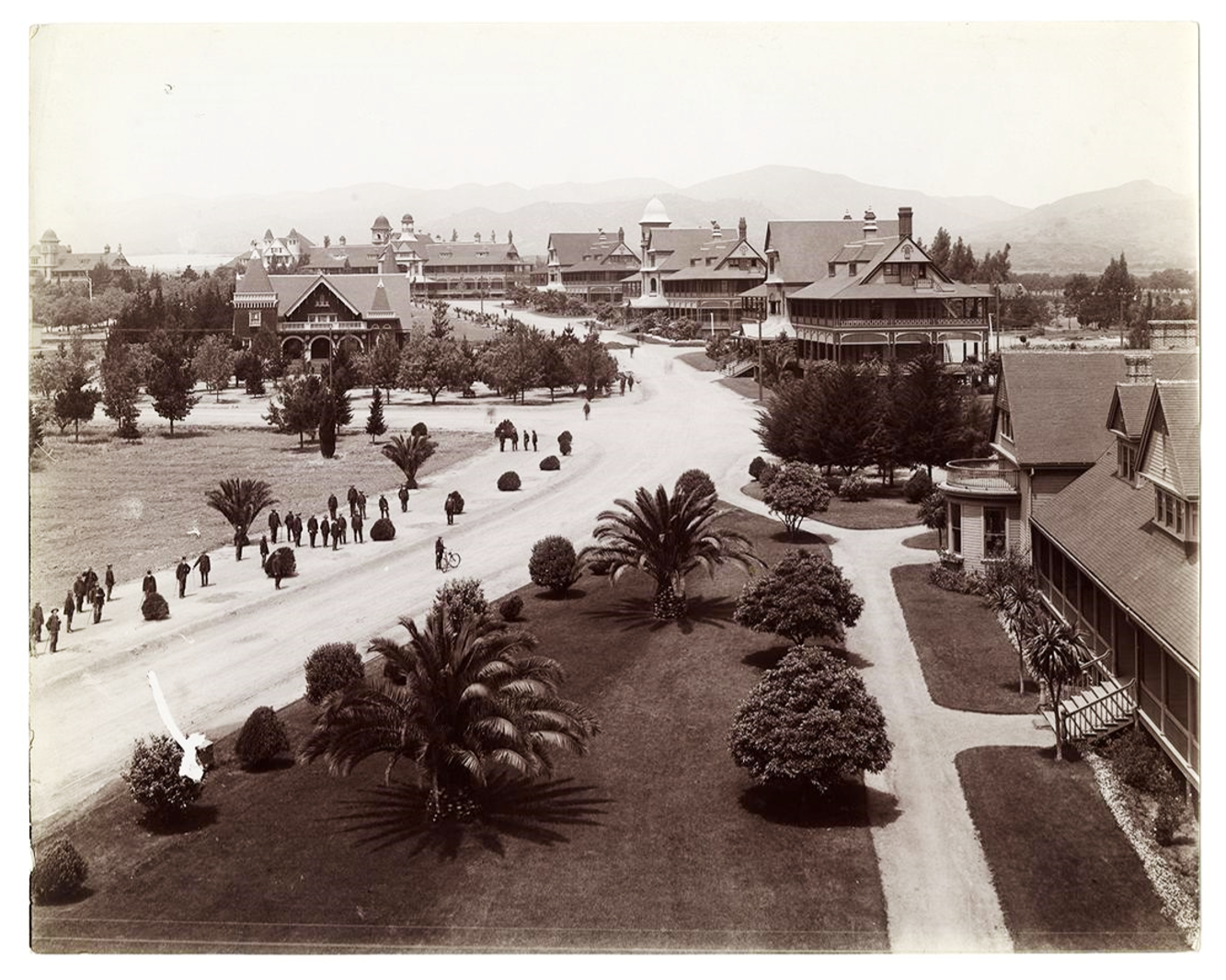
The veterans who lived at Sawtelle—maybe Branch was assigned to the Malibu facility, which had to be a little more pleasant—were chronic sufferers. Many of the Civil War veterans were incapacitated by the crippling depression that is one manifestation of PTSD. Others were alcoholics. Still others died, years later, from diseases contracted during the war: Arroyo Grande Grammar School janitor Richard Merrill, for example, a veteran of the Antietam and Chancellorsville campaigns, was finally killed in 1909 by the dysentery that had first assaulted him in 1863.
The malaria that killed the 35th Volunteers’ captain can stalk a survivor over the course of his entire life. We have no way of knowing, but perhaps Pvt. Branch’s war finally caught up to him.
A man who was admired by both the PTA and rascally teenaged boys had to be exceptional. I can’t help but hope, though, that Charlie Branch never had to use that tear-gas gun.
 A Work in Progress