
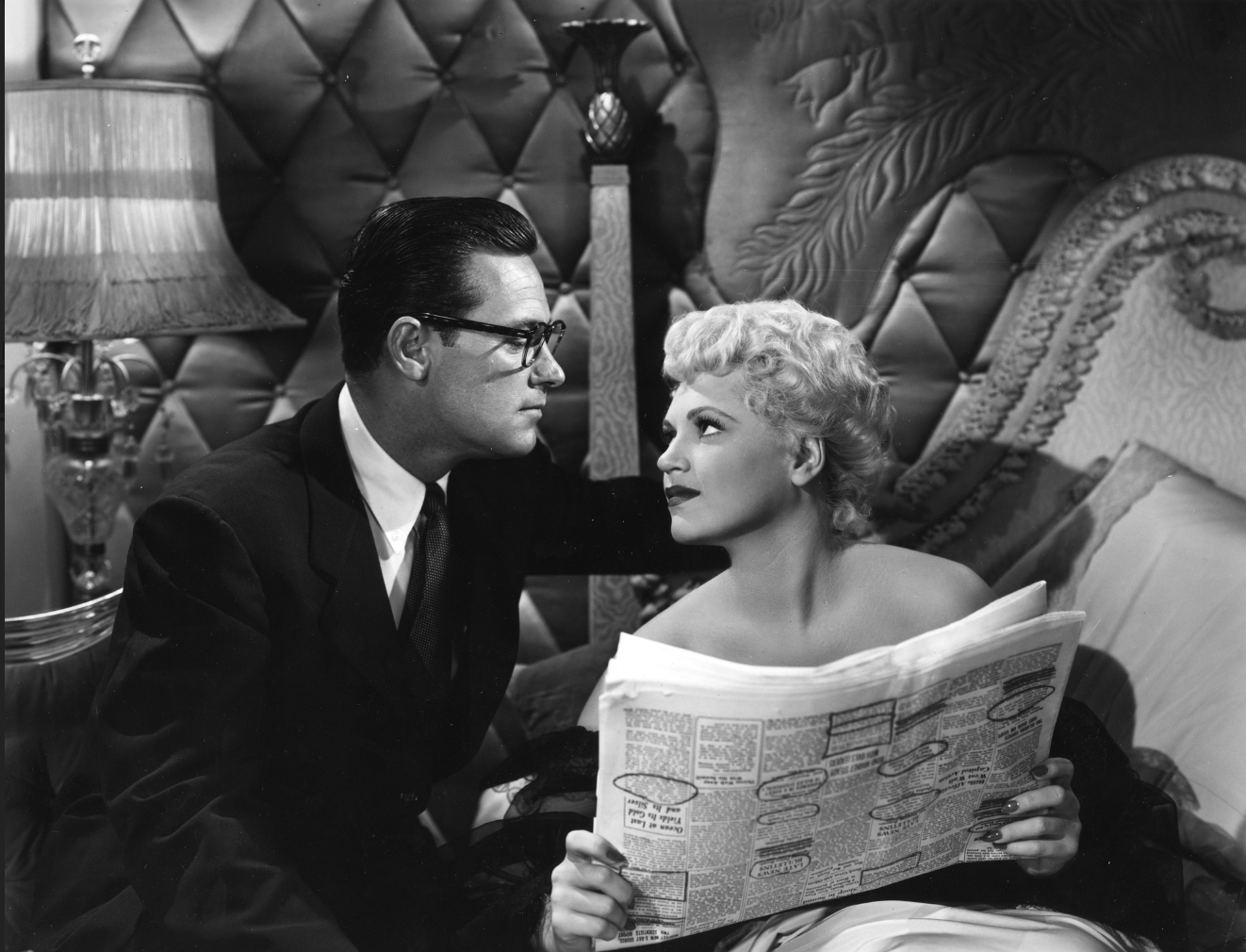
Elizabeth was supposed to leave earlier than she did to write her finals for St. Joe, but Born Yesterday (1950) was on Turner Classic Movies this morning and I turned to it and that messed up her schedule.
The reason it messed up her schedule was the lead actress, Judy Holliday.
You have to give Holliday a chance. I couldn’t stand her when I was younger; her voice–she plays a retired chorus girl–is like fingernails on a chalkboard.
She is also spectacularly dumb. Until the screenwriter, the legendary Garson Kanin, who wrote the original play, starts to drop little breadcrumbs. She is Broderick Crawford’s “kept woman,” and when the two play gin rummy, she cleans him out three times in a row with the first hand she’s dealt.
“GIN!”
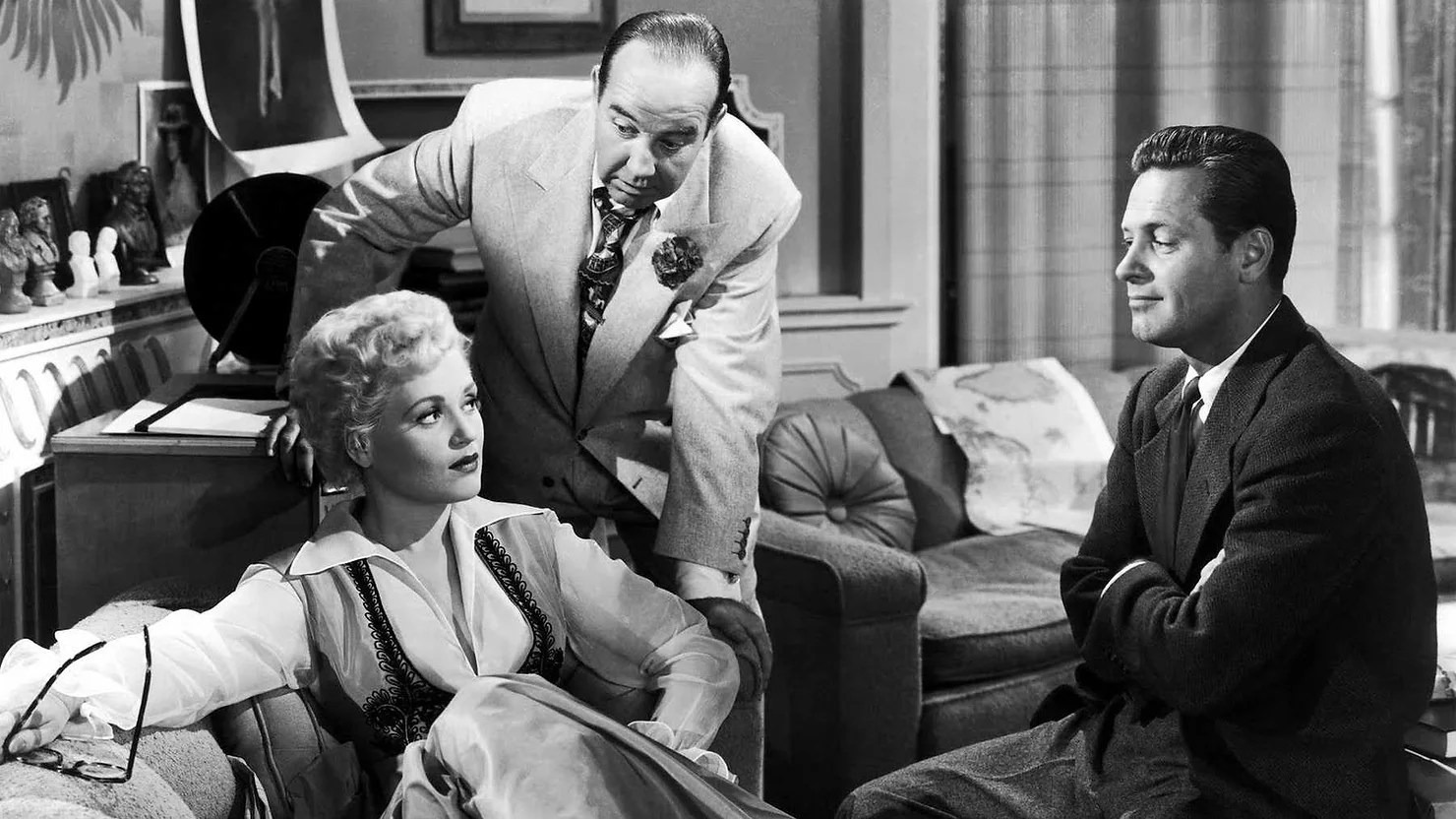
Judy Holliday, Broderick Crawford, William Holden
Crawford hires William Holden to give Holliday’s character a smattering of education so that she can more or less hold her own in Washington D.C. while Crawford tries to bribe his way into a government contract.
Well, wouldn’t you know? Holliday, it turns out, with Holden as her teacher, loves to learn. Her eagerness to better herself reminded me of one the most powerful experiences I had in over thirty years of teaching, when I taught an adult woman to read. She was miraculous. The experience made me realize that learning to read is miraculous, too. (I realized, in my first day of school at the two-room 1888 Branch Elementary in the Upper Arroyo Grande Valley, that Mom had already taught me how to read, because I could decode the names of my classmates as Mrs. Brown wrote them on the blackboard. My Mom was kind of miraculous, too.)
And Holliday’s character, Billie, is as excited as I was that day in 1958 when Holden teaches her about American history and government in their tours of D.C. monuments.
The film takes a moment to admit that Washington has crooked legislators and that our democracy isn’t perfect. Our democracy, you might have noticed, has been under attack lately, and Holden’s character—this is 1950, mind you—delivers a brief but stunning monologue about fascism, which, you might have noticed, has been fashionable lately. It’s a startling moment in a film that’s older than I am. The Washington D.C. scenes are, in their way, as affirming of our democratic traditions as those in Mr. Smith Goes to Washington.
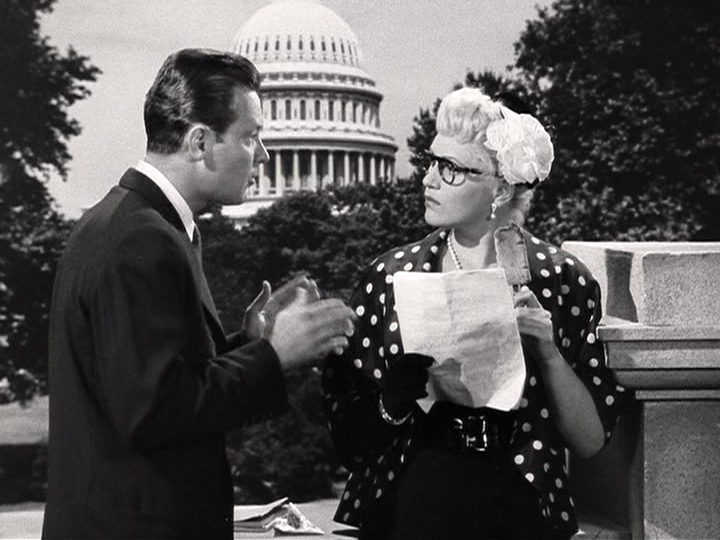
There’s not enough time in the screenplay to smooth out all her rough edges, but, of course, by the end, Holden has fallen in love with her and she’s gained enough self-respect to love him right back.
Holden is one of my favorite actors–he’s my Linked In avatar (my brother chose Clark Gable)–and he’s generous enough in this film to play his character quietly. He’s letting Holliday steal the show.
Which she deserved. She won the Academy Award that year–beating out, among others, Bette Davis and, good Lord, Gloria Swanson in Sunset Boulevard. Holden was Swanson’s co-star in that film, too—her kept man— and I now realize he did the same thing that he did with Holliday: he let the actress do the heavy lifting because Swanson, once a silent star, deserved it. (The final scene on the staircase—as Holden’s character floats face-down in the swimming pool just outside—“I’m ready for my closeup, Mr. DeMille,” is, I think, one of the most indelible moments in American film. And it still scares the hell out of me, and I’m seventy-one now.)

Holden was a problematic man; stalked throughout his life by the alcoholism that would finally kill him, in a fall. I also wished he’d married Audrey Hepburn, a Hollywood love story that rivals Fairbanks and Pickford or Bogart and Bacall. He didn’t, alas.
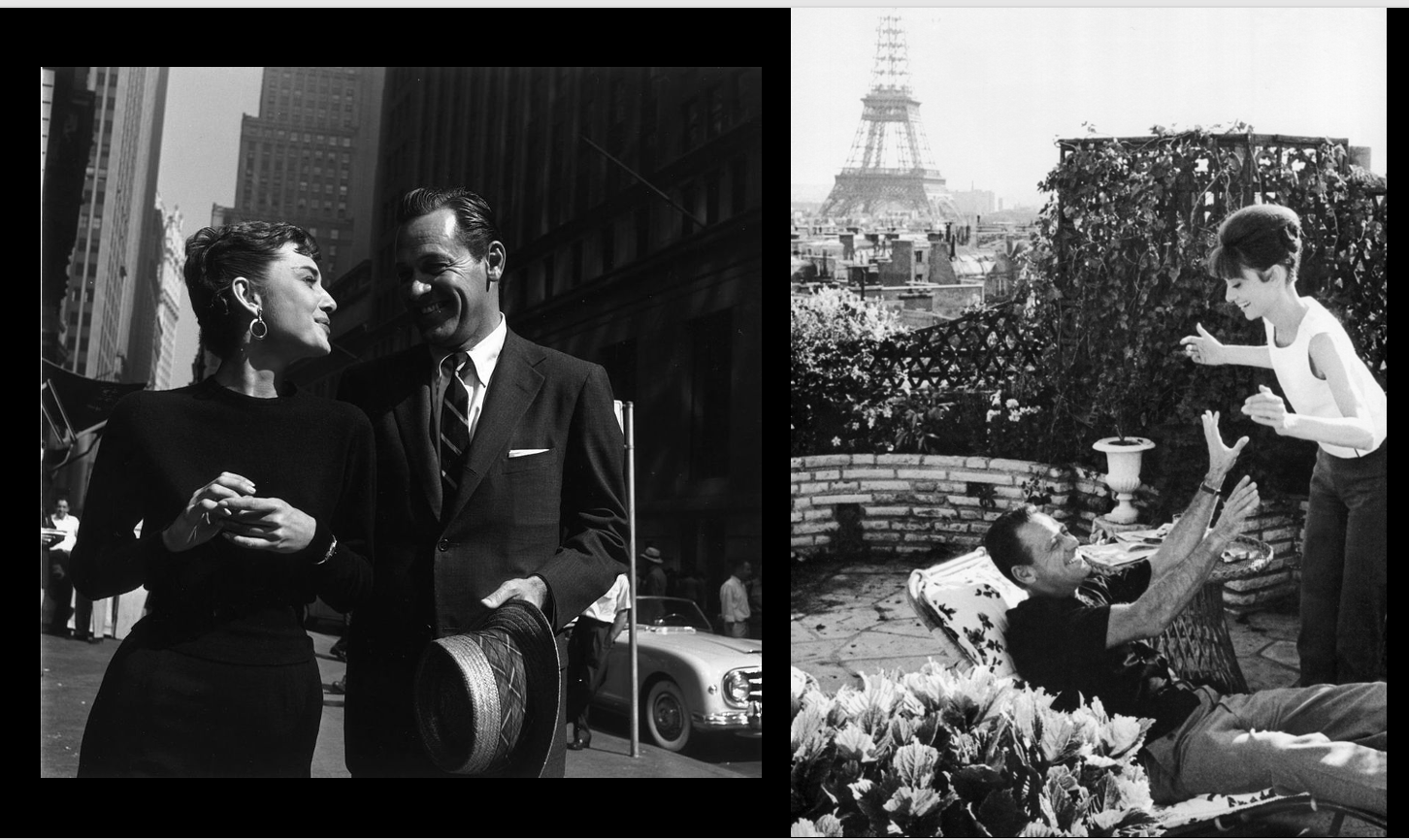
Holden and Hepburn on Wall Street for Sabrina (1954) and ten years later for Paris When It Sizzles.
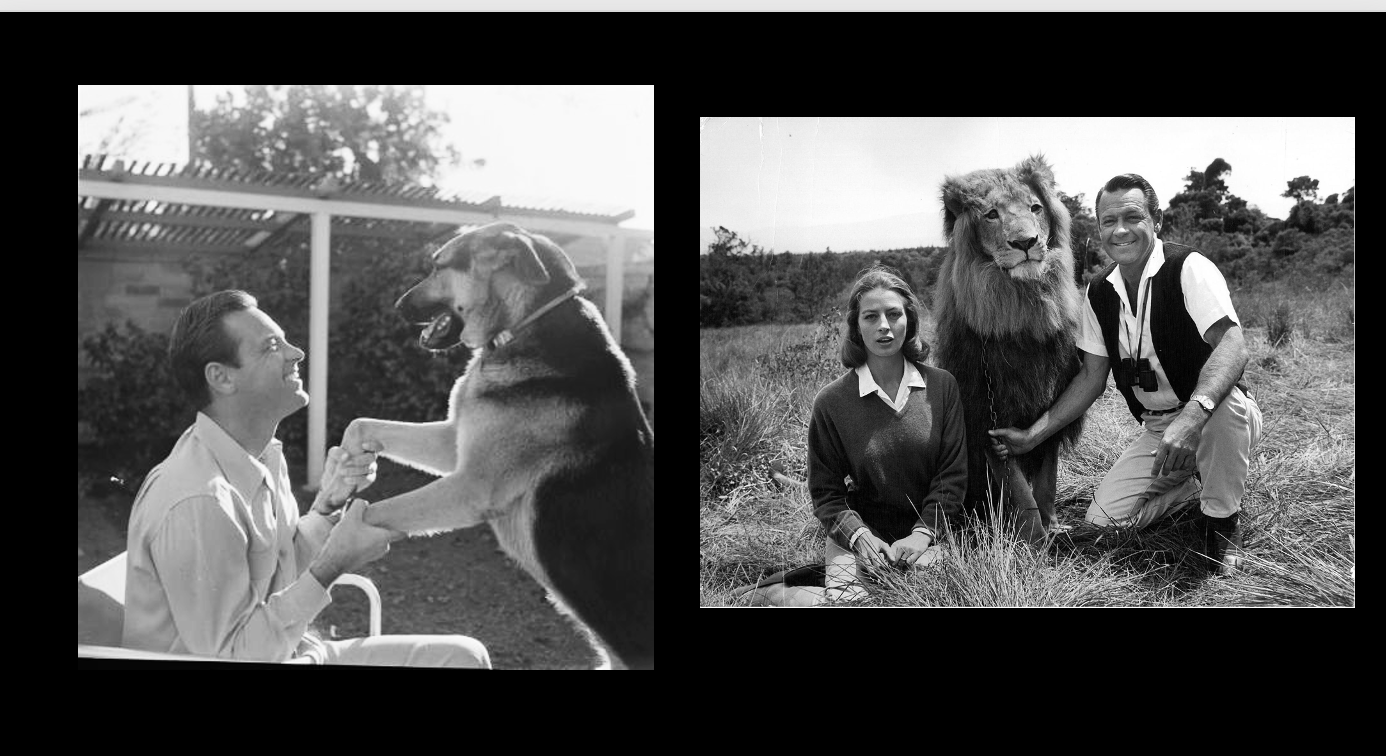
He loved animals–was a wildlife preservationist–which goes a long way in our house.
His characters are as problematic as Holden was. The one thread that marks them all, in films like Sunset Boulevard, Stalag 17, Bridge Over the River Kwai or Network, is integrity, the kind that often leads to a moment of self-disgust, when Holden’s character realizes that he was meant to be a better man than he is. But there’s a lie in that common thread, because communicating integrity was not a stretch for Bill Holden, not even when his characters were, in the same order as the films I cited, two cynics, a coward and an alcoholic television news executive who kept telling the same stories from his glory days as a reporter on live television in the 1950s.
(The film, now nearly fifty years old, was as prescient as was Holden’s outraged comment on fascism in Born Yesterday; screenwriter Paddy Chayefsky envisioned a time when television news would leave its Walter Cronkites behind for its Tucker Carlsons.)
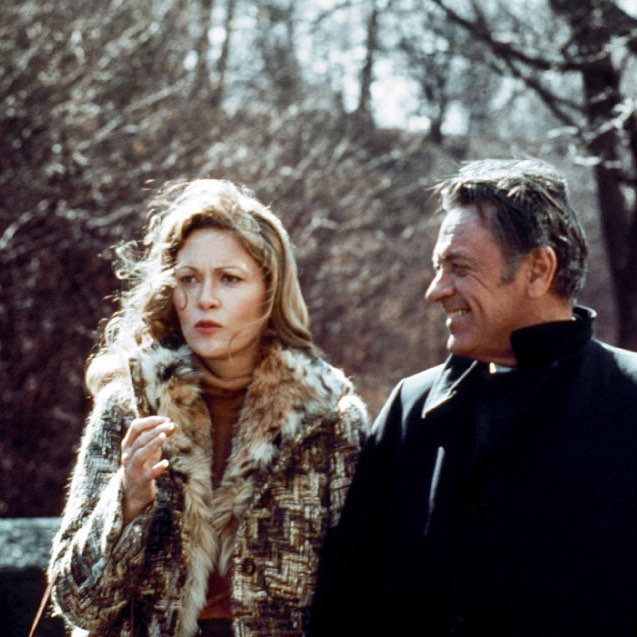
Faye Dunaway and Holden in Network.
Maybe Holden never had a moment of insight that would’ve taught him that he was a better man than the counterfeit his self-destructiveness and his self-doubt had made him. But what remains, for me, is what I love in his acting: his integrity and generosity. Despite his flaws, and maybe because of them, that’s why I love the man, too.
 A Work in Progress