
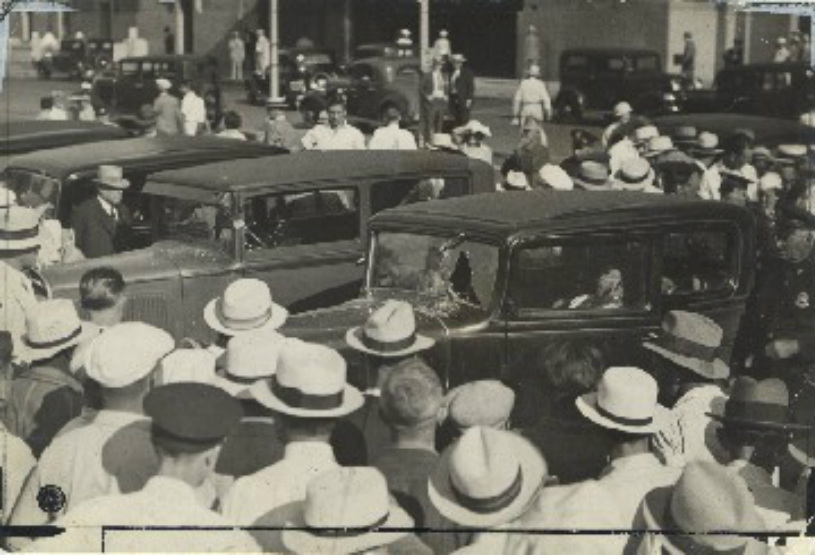
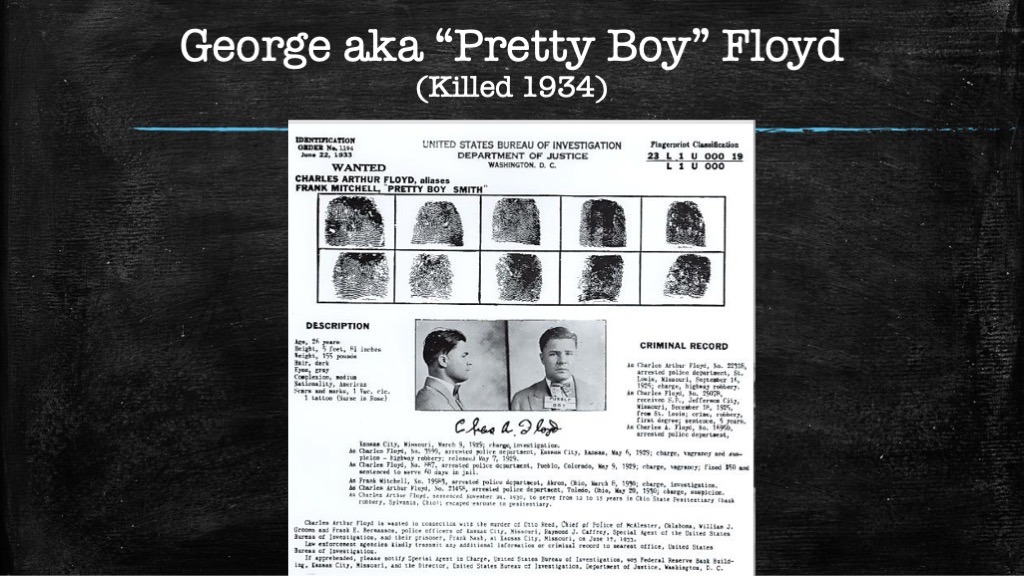
Tomorrow is the 90th Anniversary of the Kansas City Massacre. Police were escorting an associate of Pretty Boy Floyd’s to Leavenworth when they were jumped by gangsters with Thompson submachine guns.
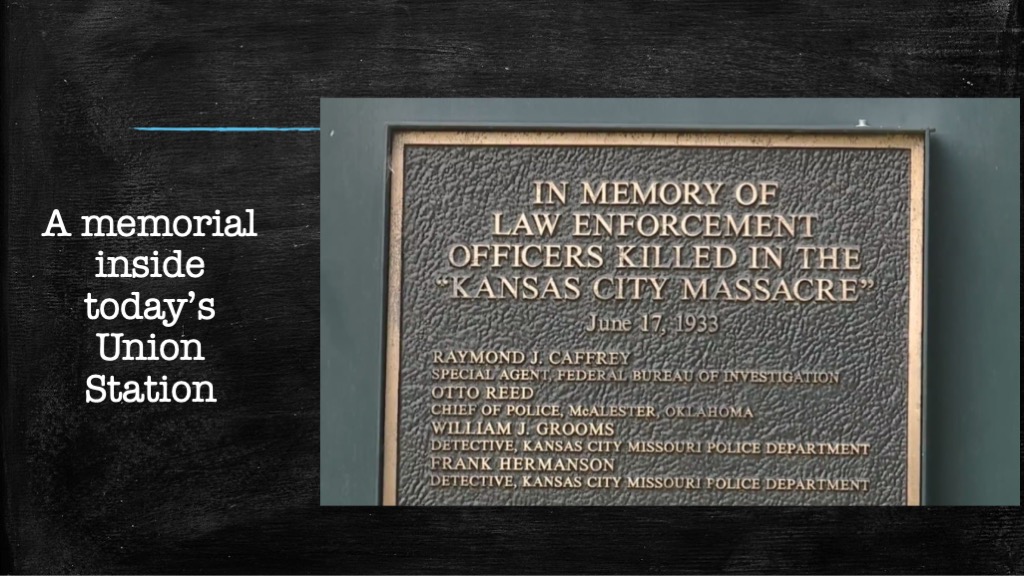
Two police officers, a police chief and an FBI agent were killed. The attempt to free the prisoner, Frank Nash, failed, because the gunmen killed him,t oo.
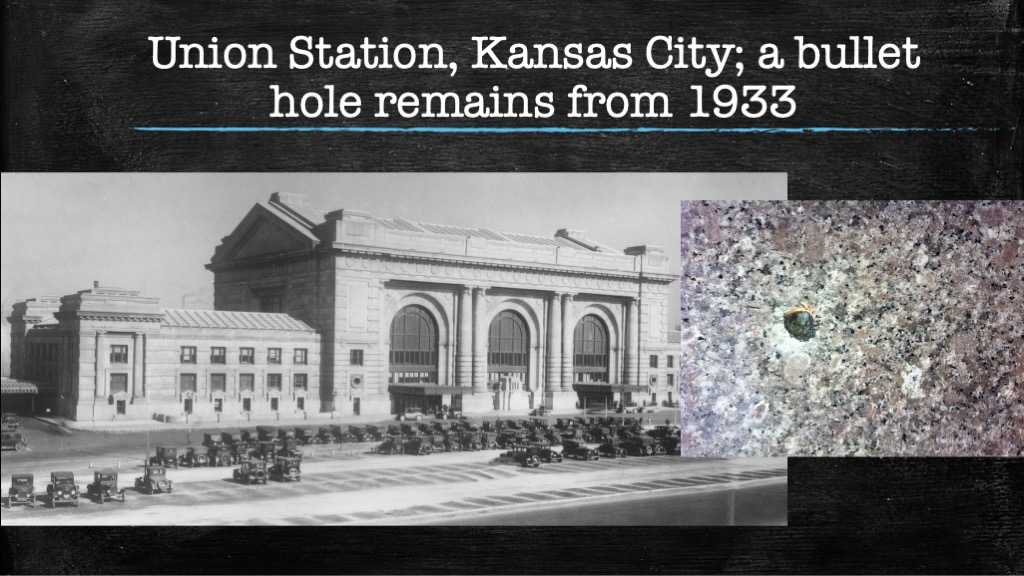
There are still bullet holes from 1933 in the walls of Union Station.
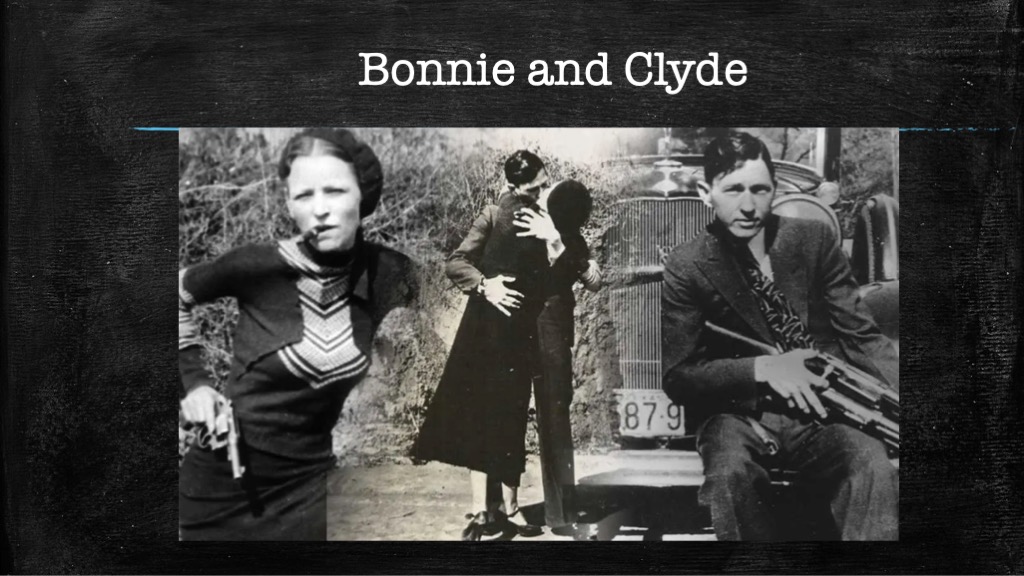
That was a hard year for Missouri. A highway patrolman and the Boone County Sheriff were assassinated, a police chief was kidnaped, an eighteen-year-old Black man was lynched in St. Joseph, and Bonnie and Clyde took up housekeeping in Platte City, about 30 minutes north of Kansas City.
Kansas City is a beautiful town–unexpectedly hilly–but it was wide-open in the 1920s and 1930s, both in good ways (Louis Armstrong played in speakeasies there) and in bad–violence and political corruption.
That’s where my Grandmother Gregory comes in. She was a powerful woman, the Democratic Chair of Texas County, Missouri, and one of the first women delegates to an national political convention, in 1924, for the Democrats in sweltering heat inside Madison Square Garden. It took them 109 ballots to nominate a nonentity, John W. Davis, trounced by Calvin Coolidge that November.
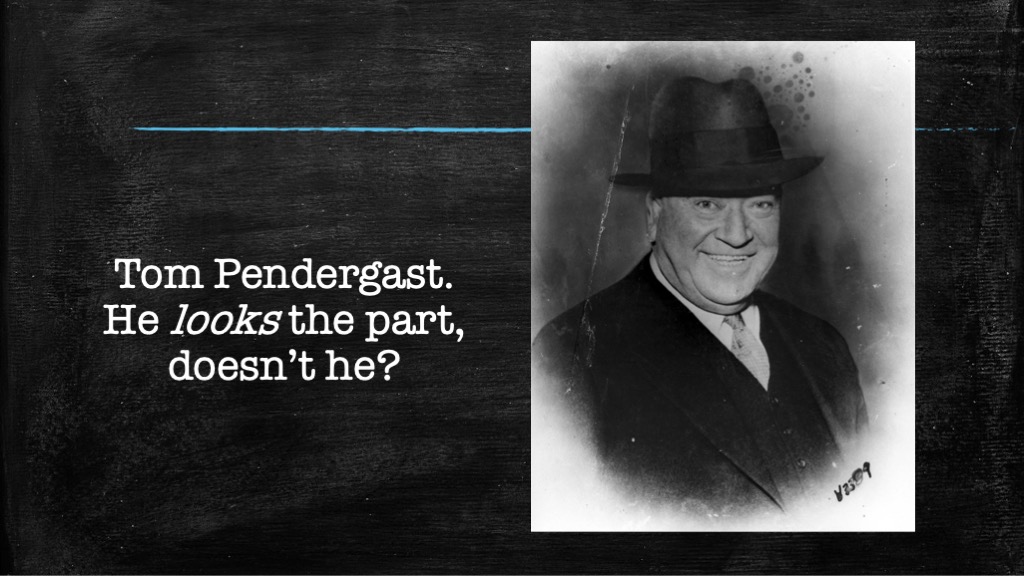
In the 1930s, the political “boss” of Kansas City was a Democrat, Tom Pendergast, whose machine was legendary and who influence extended far beyond the city limits. Nine years ago, I wrote down what my father told me about those times:
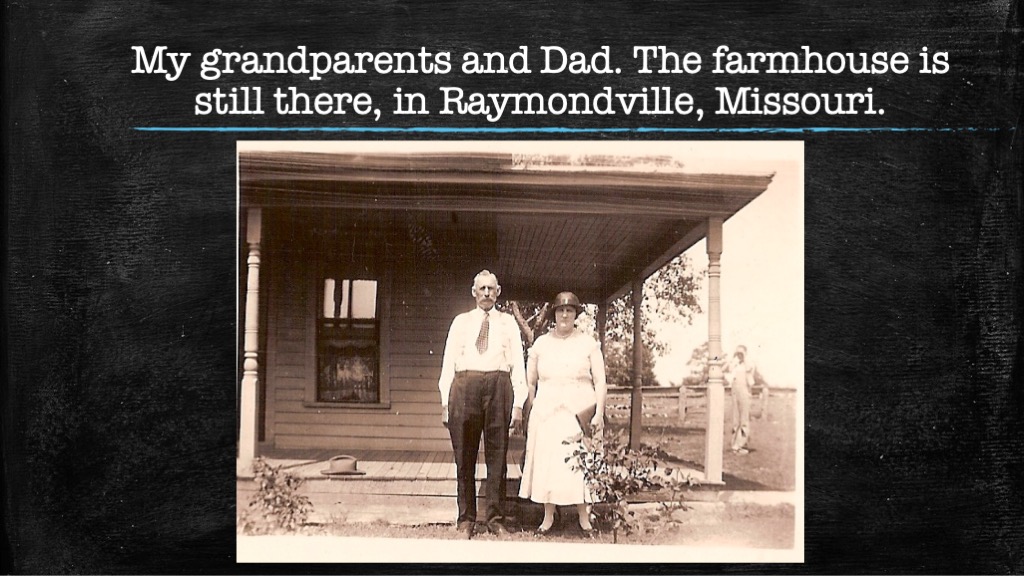
In Depression-era Missouri, before every election, my Dad remembered, a new car would pull up outside my Grandfather’s farmhouse and two men in three-piece suits (usually reserved for funerals, and even then for the Deceased) would deposit a bank-bag full of cash on Dora Gregory’s kitchen table. For them, it was but one more stop on a kind of purgatory circuit. That part of the state was thinly populated, so you had have a real passion for soybeans to make the drive enjoyable.
They were bagmen for the Kansas City Pendergast Machine, one of those old-timey operations that brought dead voters back to life, among other shenanigans.
Tom Pendergast had Texas County in the bag, because, come Election Day, my pre-teen Dad handed out fives to waiting voters, murmuring, “The Democratic Party thanks you,” over and over, like a priest at Eucharist, so the Democrats never lost Texas County. The bank bag on Grandma’s kitchen table assured that.
To be fair to the Machine, it distributed food, not just bribes, and people in the hills were hungry in the depths of the Depression. A young Dad also helped distribute food to the needy. Grapefruit stymied them. “We boiled it, Bob,” they told him apologetically, “an’ then we fried it, but it still tasted putrid.” (Dad, a supply officer in 1944 London, also gifted an English family he knew with a bag of oranges. They virtually adopted him: the British had not seen oranges since the fall of France in 1940. Citrus fruit seems to follow the course of my father’s life.)
Boss Pendergast also made the career of Harry Truman possible, which, in turn made me possible: Truman favored my grandfather’s blackberry wine on campaign swings downstate–he’d stop for a sip or seven– and that little talent of Grandpa Gregory’s paid off in World War II: Truman got Dad appointed to Officers’ Candidate School as a Quartermaster, and so he served much of the war defending London’s pubs from the Nazi Hordes, which saved me the inconvenience of having him get killed before I had the chance to be born.
And thank goodness, too, Dad survived the war to tell me the stories that would make me decide to become a history teacher.
 A Work in Progress