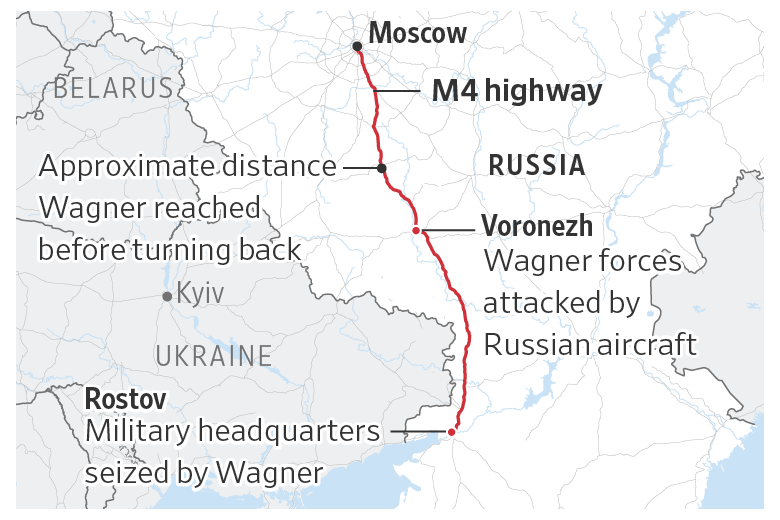
So Prigohzin, the hot-dog vendor turned mercenary chief turned his Wagner Group column around on the M4 highway to Moscow, belying a few unguarded moments of hope this morning that pointed to the end of Putin’s dictatorship.
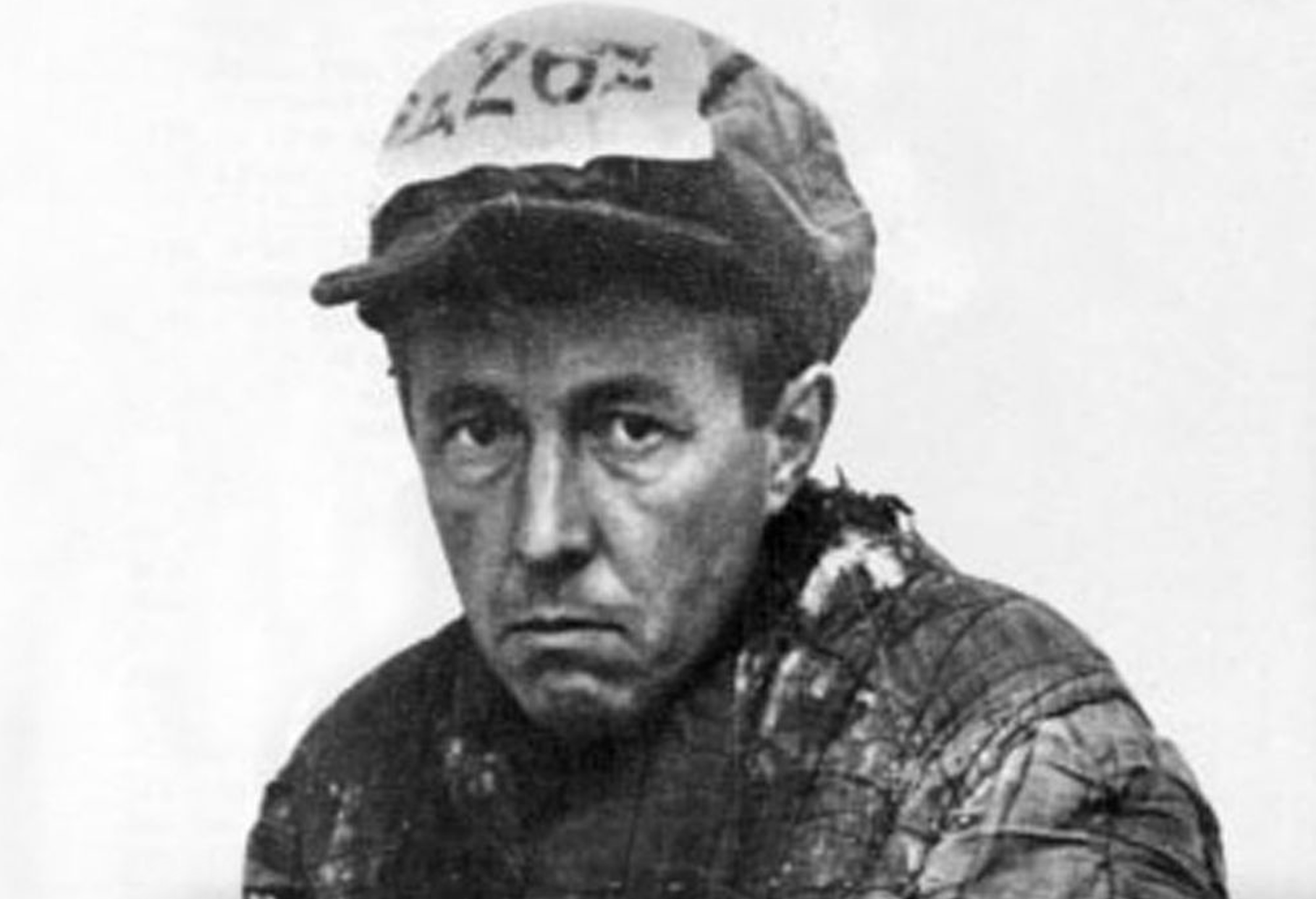
That means the kids who posed happily this morning on television in Rostov-on-Don with Wagner Group tanks will wind up looking like the Soviet novelist Alexander Sohlzenitsyn, seen here as a zek–a political prisoner–in Stalin’s Gulag.

If we are lucky, Prigohzin will wind up the way the Romanov family did in Yekaterinburg in 1918, where the Bolsheviks held them captive in an immense home, the Ipatiev House.
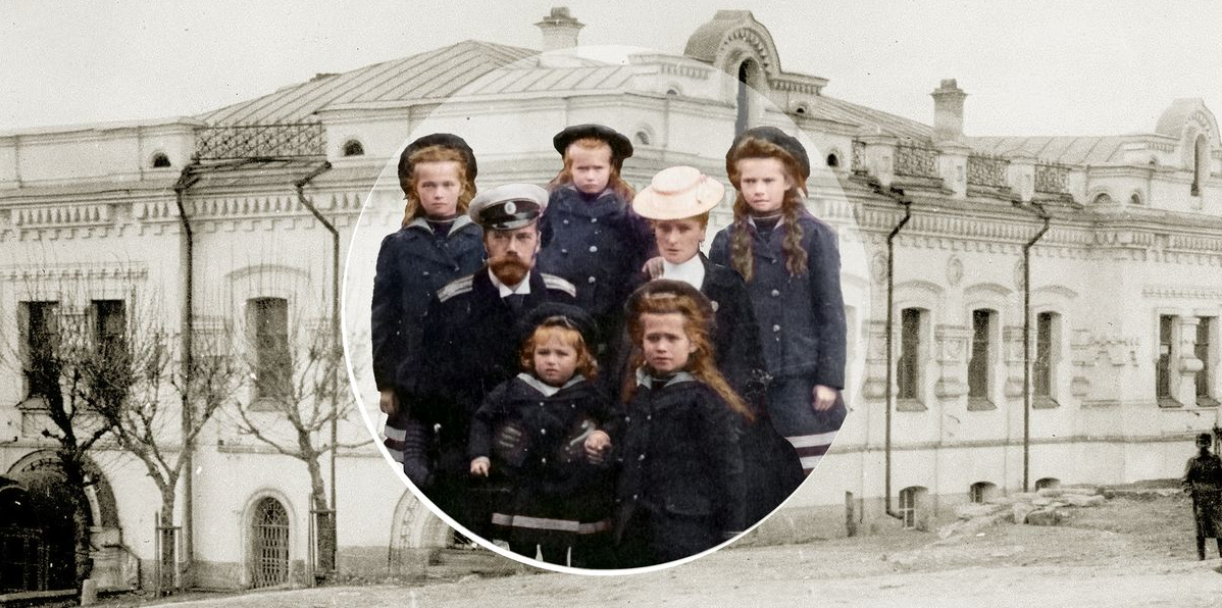
This is the wall of the room in that home’s basement where the Bolshevik secret police, the Cheka, used pistols to murder all of them.

In the decades after 1918, so many devout Russians visited the home to pray that the local communist party chief ordered it torn down in 1977. His name was Boris Yeltsin. All Saints’ Church stands on that site today, memorializing a beautiful but profoundly clueless family.
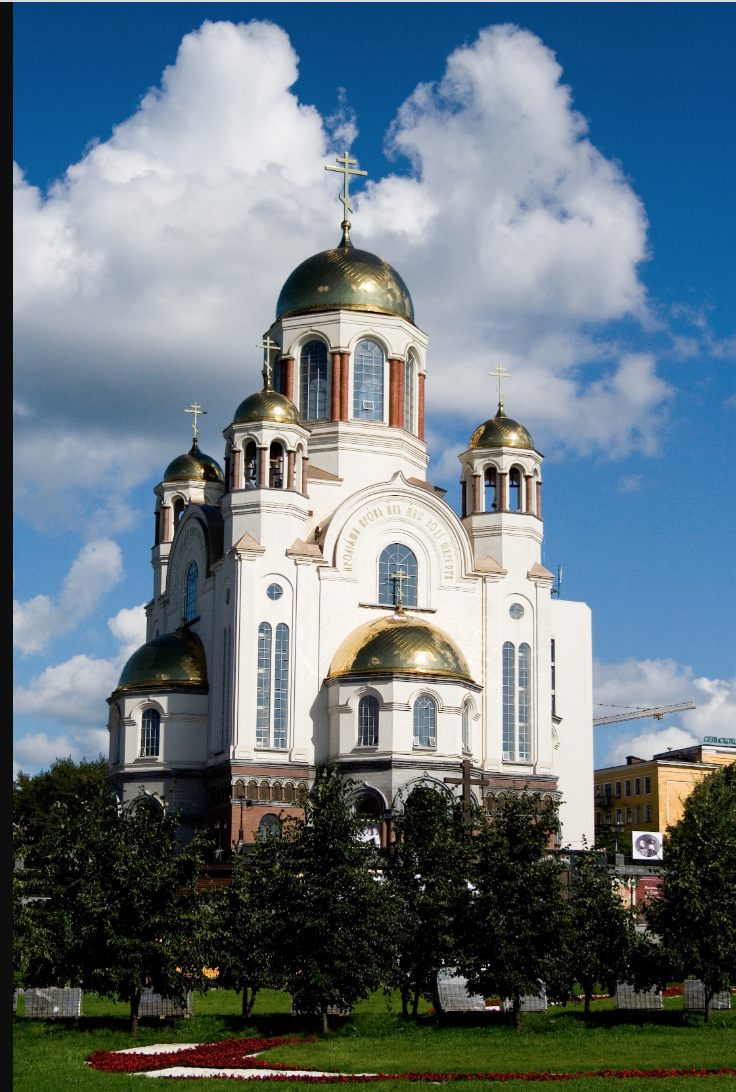
Prigohzin, a war criminal, deserves pistols but no churches. CNN ran thankfully blurred footage of his mercenaries interrogating a prisoner by smashing his hands and feet with a sledgehammer. The man did not survive Prigozhin’s boys, most of them recruited from Russian prisons.
But I was rooting for him for just a few hours on Saturday, if only in the hope that the hole his Wagner Group had left behind in Ukraine would be filled by Ukrainian soldiers.
I was reminded, too, of Operation Market Garden—in someways similar t0 but in more important ways vastly different from Saturday’s event—in the fall of 1944, where Field Marshal Montgomery came up with what sounded like a brilliant idea: Drop paratroopers into Holland and drive into Holland with British armor along the excellent Dutch roads and then force a Rhine crossing into Germany.
It was a disaster. Market Garden included two South County 101st Airborne soldiers; one, Arroyo Grande’s Art Youman, was promoted to sergeant by Easy Company’s Richard Winters for his conduct and the other, a young lieutenant, Oceano’s William Francis Everding, was killed as the Germans retook the town his regiment had liberated. After Market Garden’s failure, most of Holland, except for the south, was reclaimed by the German Army, the Wehrmacht. But the difference between 1944 and 2023 lies in the character of the would-be liberators. I offer these photos as proof.
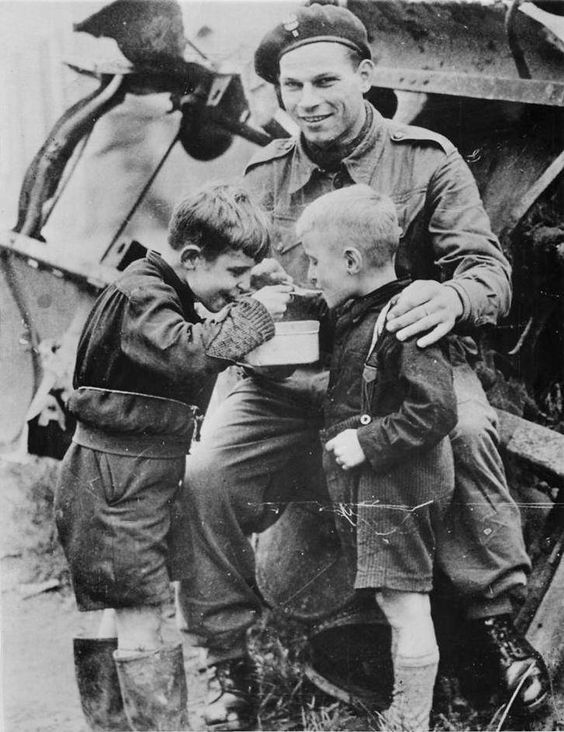
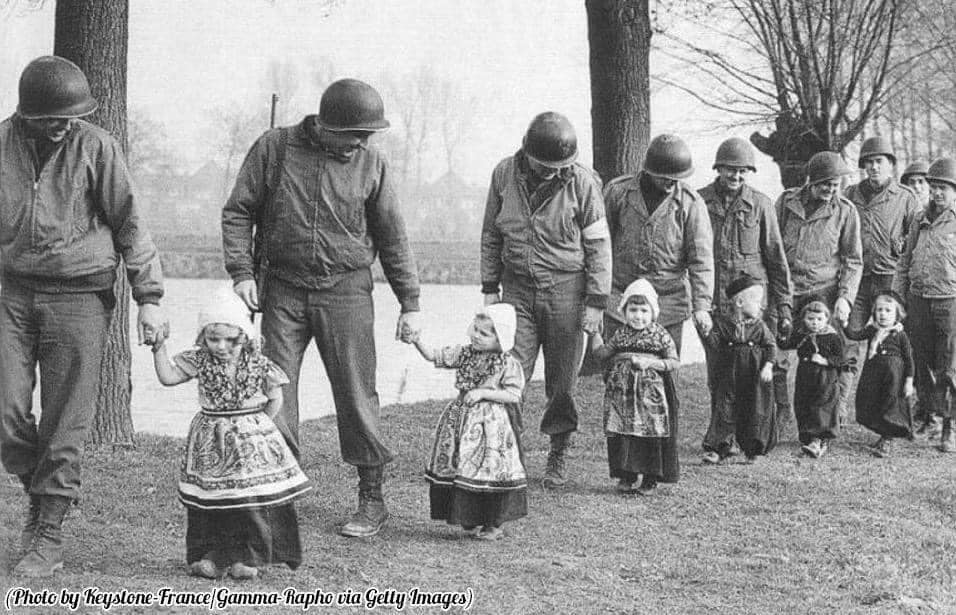
But the Dutch thought all of their progressive, prosperous and historically brilliant nation had been liberated. For a few days, they were jubilant, just like the kids taking selfies Saturday with the Wagner Group tanks. Hitler had been defeated, or so it seemed and, for a few hours, it must’ve looked like Putin was about the be defeated, too.
And so now Vladi Putin, two inches shorter than Hitler but in every other respect his doppelganger–down to kidnaping children to raise them Russians, just as Hitler did Eastern European children to raise them as Aryans–might have just enough breathing space to reconsolidate his power and turn his attention again to the important business of destroying Ukrainian churches.
But there’s one hopeful sign, macabre as it is.
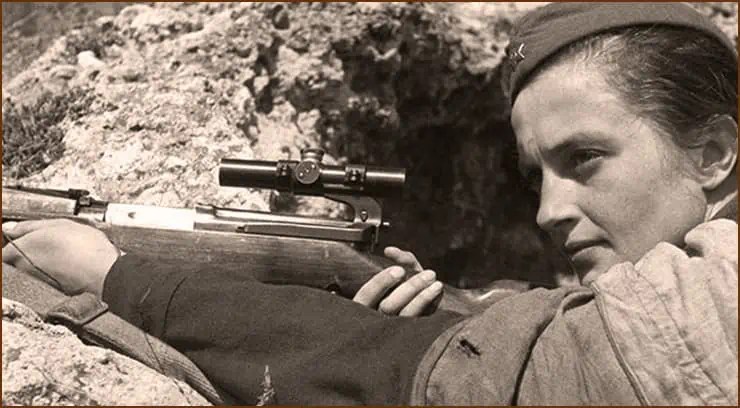
The most famous sniper of World War II was named Lyudmila Pavlichenko, a Red Army soldier credited with killing 300 German soldiers who were part of Hitler’s invasion of the Soviet Union.
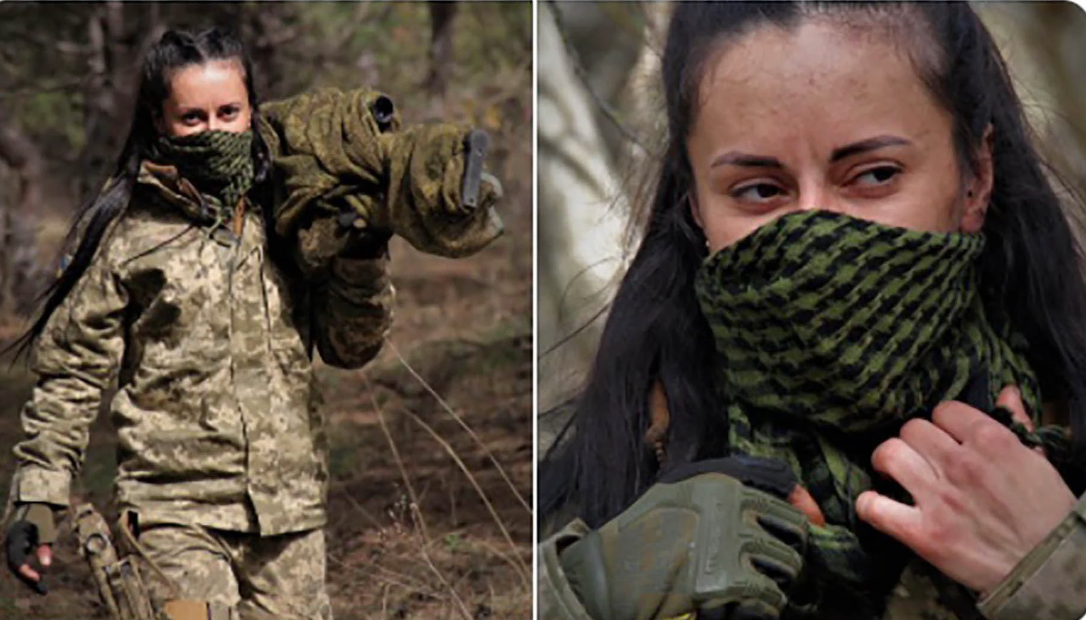
She has a modern-day counterpart, a Marine, who goes by the pseudonym “Charcoal.” She has another nickname that once belonged to Pavlichenko:
“Lady Death.” Like her predecessor, Charcoal is Ukrainian.
 A Work in Progress