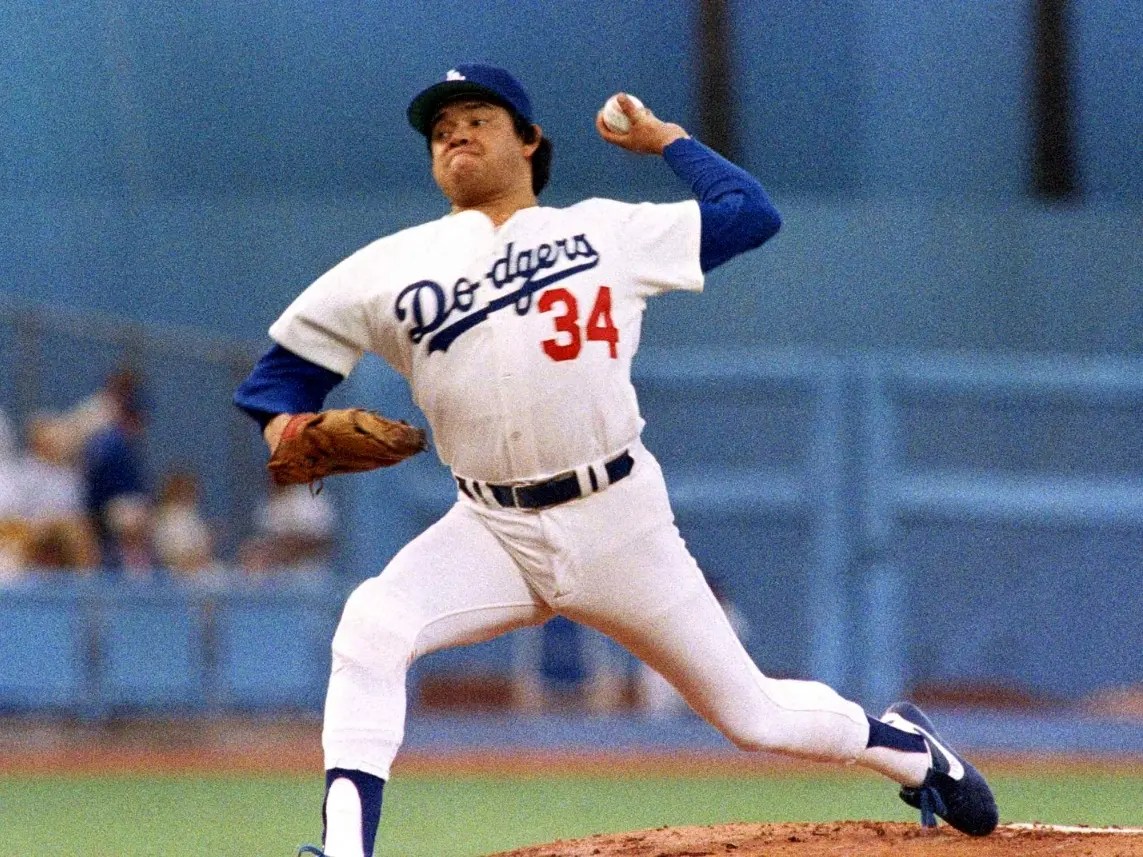
With that win, [May 14, 1981] the left-hander improved to 8-0 with a minuscule 0.50 ERA, 68 strikeouts over 72 innings while holding opponents to a .172/.225/.212 batting line. Four days later, Valenzuela fell short of throwing a complete game for the first time and suffered a loss.
–Writer Matthew Moreno on Fernando Valenzuela’s first full season.
He started on opening day when Jerry Reuss had injured himself. Valenzuela had appeared in ten games in 1980 and he’d been sharp, but he was still an unknown quantity. So instead of the tall blonde German-American (“Reuss” is derived from the German “Russian.” That’s uncomfortable), Dodger Stadium got a starter who was not tall, not blonde, not German (or Russian). He was from Sonora. the same state as Mexican President (1920-24) Alvaro Obregón, the “Happy Man with One Arm,” his right, lost in battle in 1915.

Luckily, Valenzuela was a lefty.
I could not watch him by myself. I needed to share him. I began to watch his games over at Ricky and Jane Monroe’s house, both because they were such good company and because Ricky, a born color man, has a knack for wit, sometimes caustic, at the exact moment it’s needed—not before, not after.
Valenzuela’s specialty was a screwball, a pitch that will eventually make some pitchers’ elbows explode spontaneously while they’re reaching across the dinner table for some mashed potatoes.
We soon learned, too, that another Valenzuela specialty was hitting. He won a Silver Slugger award in 1981 to put over his fireplace, probably resting on brackets just above his 1981 Cy Young and 1981 Rookie of the Year awards. Oh. And his Major League Player of the Year Award.
In 1981, after we’d seen a Fernando screwball strike out an Astro or a Giant or a Cub swinging, as if his bat was a feather boa, Ricky and I might look at each other without saying a word. And sometimes, once the Miller Beer commercial had begun, Ricky would shake his head in disbelief.
It was euphoric, watching that twenty-year-old pitch.
When Fernando Valenzuela came to the big leagues, Bob Lemon, then a Yankee scout, stared in disbelief. He leaned over and asked a Dodger scout, “How old is he?”
“Twenty,” was the reply.
Lemon thought about it a moment. “Twenty what?” he wanted to know.
–Los Angeles Times sports columnist Jim Murray
This is what is important, I think: Valenzuela may have been from Sonora, but Chavez Ravine was home.
This was the barrio, demolished to make way for Dodger Stadium, where the Zoot Suit riots began in 1943. My kids and I learned about them, every year, when I taught U.S. History. It was important to me to teach them the dark side of the war even as we learned about its heroes, from Torpedo Squadron 8 at Midway to the 442nd Regimental Combat Team in Italy to the third of the wartime industrial force that was made up of women.
The Zoot Suit riots, along with the others that broke out across America and overseas that summer of 1943, represented a moment when we’d forgotten who we were and what we were fighting against. Racism was the sickness that typified the Imperial Japanese Army’s officer corps and Hitler’s SS.
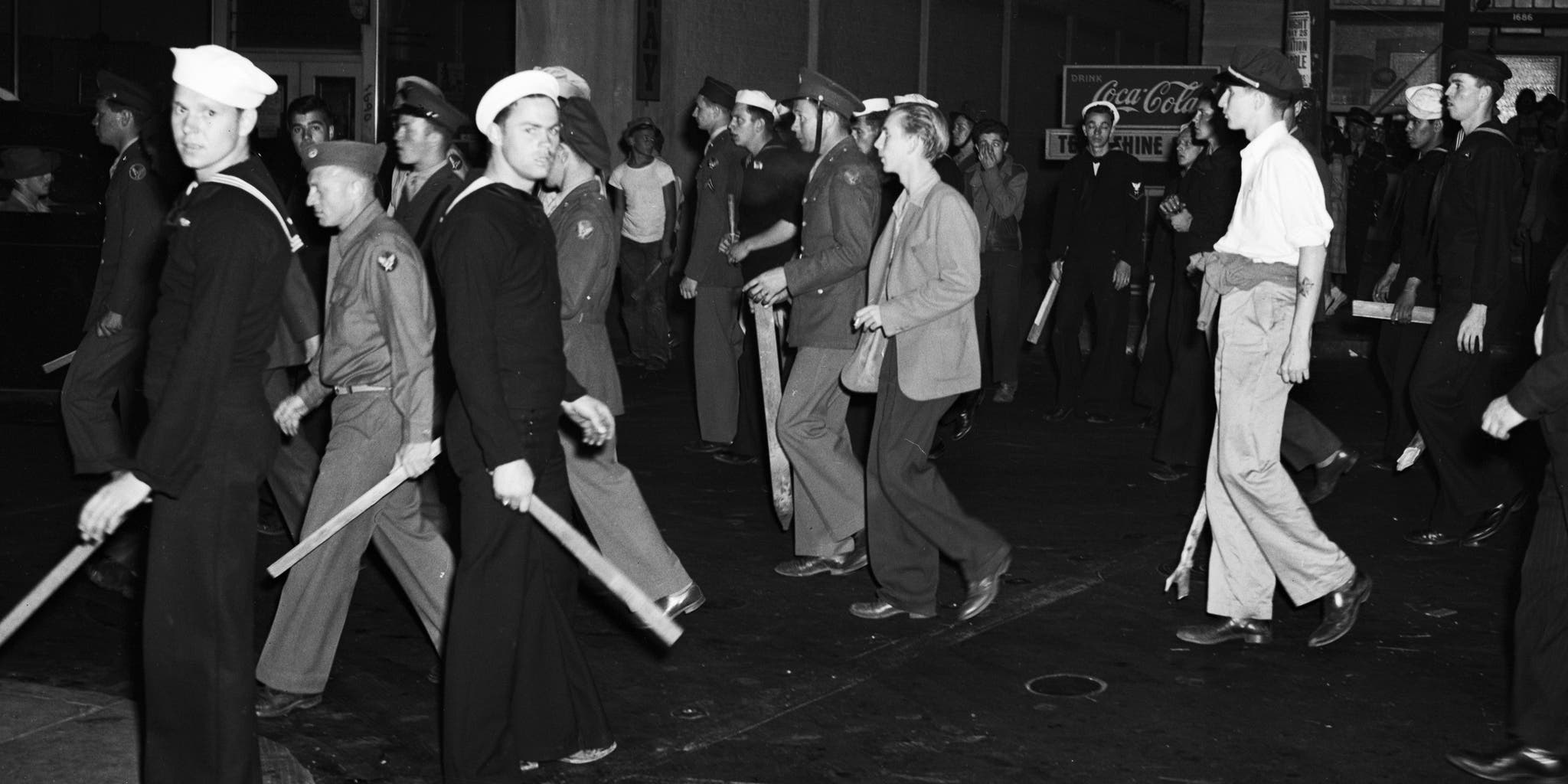
For several nights, then, in June 1943 gangs of roving sailors and soldiers beat the living hell out of East L.A. kids, pachucos, whose sole offense seemed to be the elegance of their clothes—the fashion, Zoot Suits, was popular with Black kids, too. The suits must’ve offended some servicemen in a time of wartime austerity, when suits, for civilians, lost their cuffs and wide lapels. Double-breasted suits were as rare as 1943 Ford coupes. and there was no such car. Ford was making B-24 bombers.
It’s possible, too, that the servicemen were a little envious of the Zoots’ mastery of the jitterbug, honed in hot L.A. jazz clubs. And they were, after all, brown people, those kids in those suits.
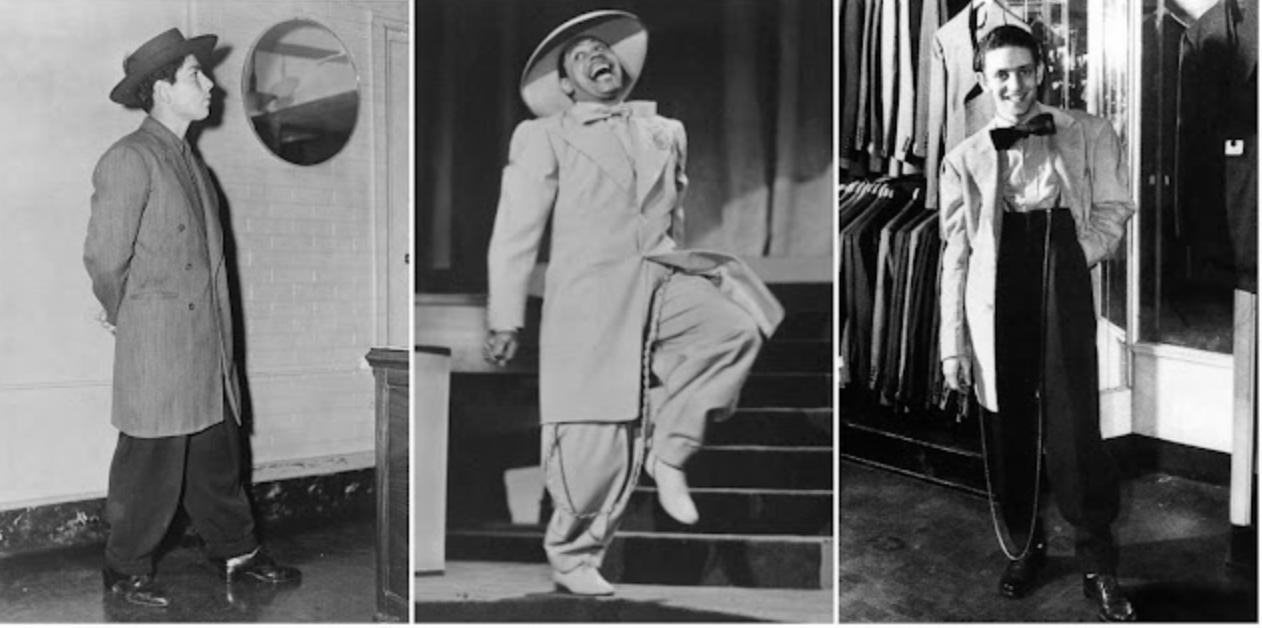
“Those” kids danced with lovely girls who rode the streetcars out of the oppressiveness of the Ravine, and of their rigidly traditional Mexican parents, to meet their dates downtown. They were Jitterbug Divines, those young couples on the dance floors inside noisy, smoky clubs.
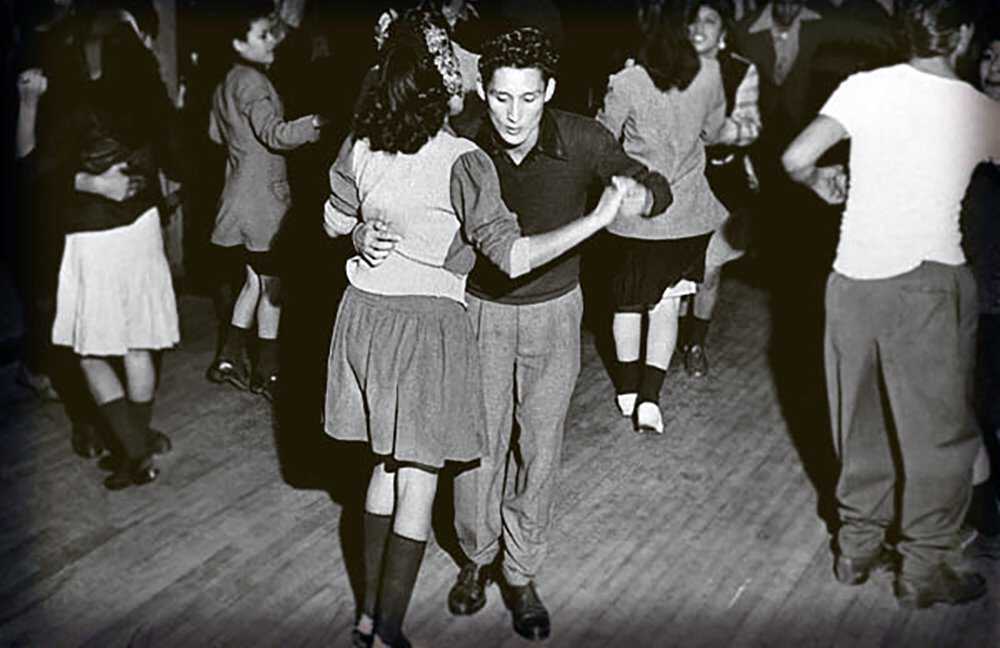
The dancing was interrupted in June 1943 because of a U.S. Navy auxiliary post on the fringes of the Ravine. That’s where the fighting began. Sailors wolf-whistling at chicanas and shoving teen boys off the sidewalk were among the foreshocks.
The riots soon took fire, spreading from Chavez Ravine to Boyle Heights and ending at what is today the 405. The LAPD watched passively as the G.I. gangs, sailors and soldiers from San Pedro and scatterings of Marines up from Pendleton, went after the Mexican-American kids with axe-handles.
The LAPD arrested the Mexican kids, but only after they’d had been bloodied and stripped naked by swarms of malevolent Nebraskans who were defending their country.
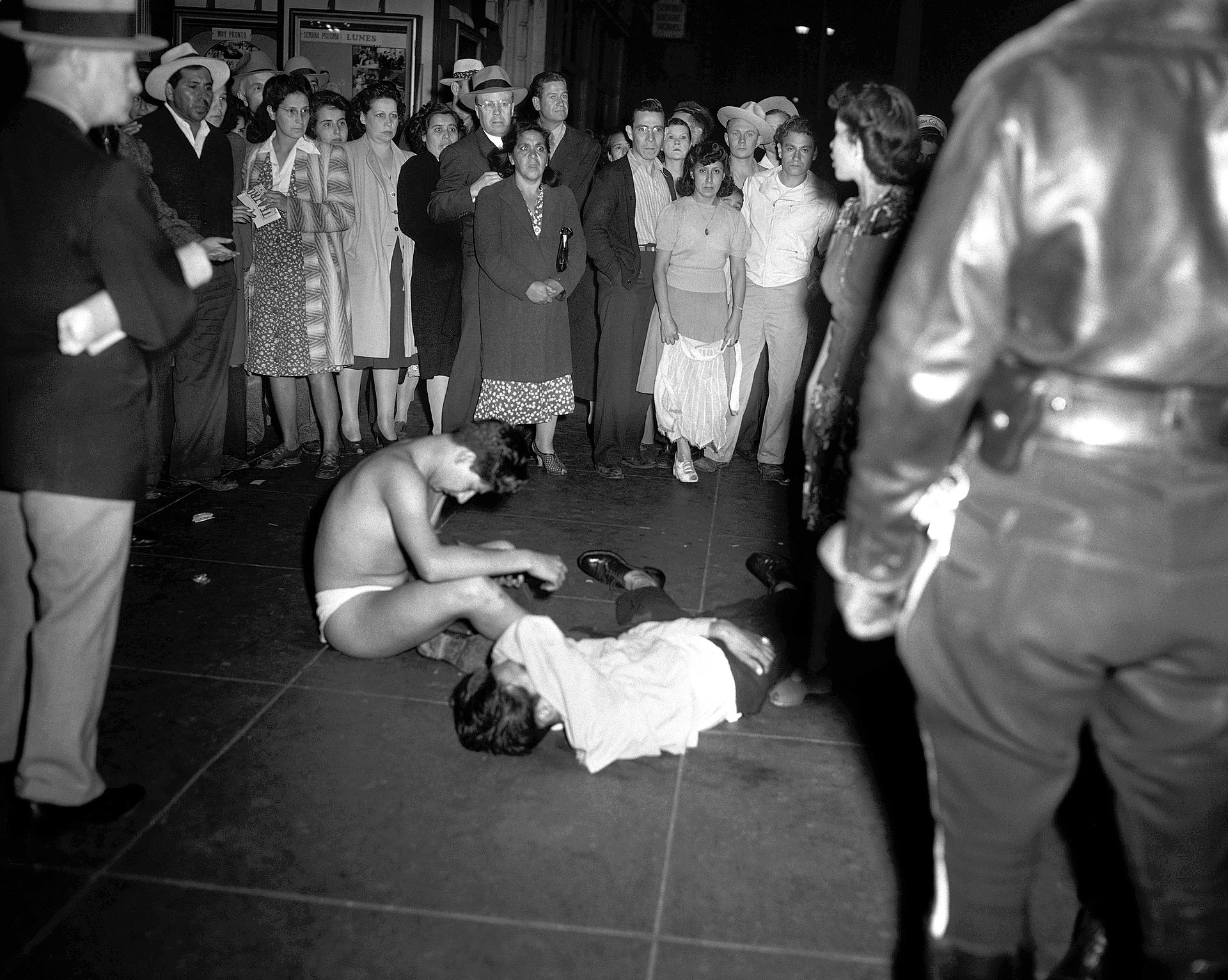
This is the history that colored the background of Opening Day 1981, when Valenzuela pitched a five-hit shutout over the Houston Astros, then in the National League.
Fernando humbled the Astros that day.
That year, what Fernando did was to restore Chavez Ravine to its people. Dodger Stadium, as trivial as it may sound, began to serve churros. Now you can get carne asada nachos in a Dodger helmet bowl. Tuesday night will be Mexican Heritage Night.
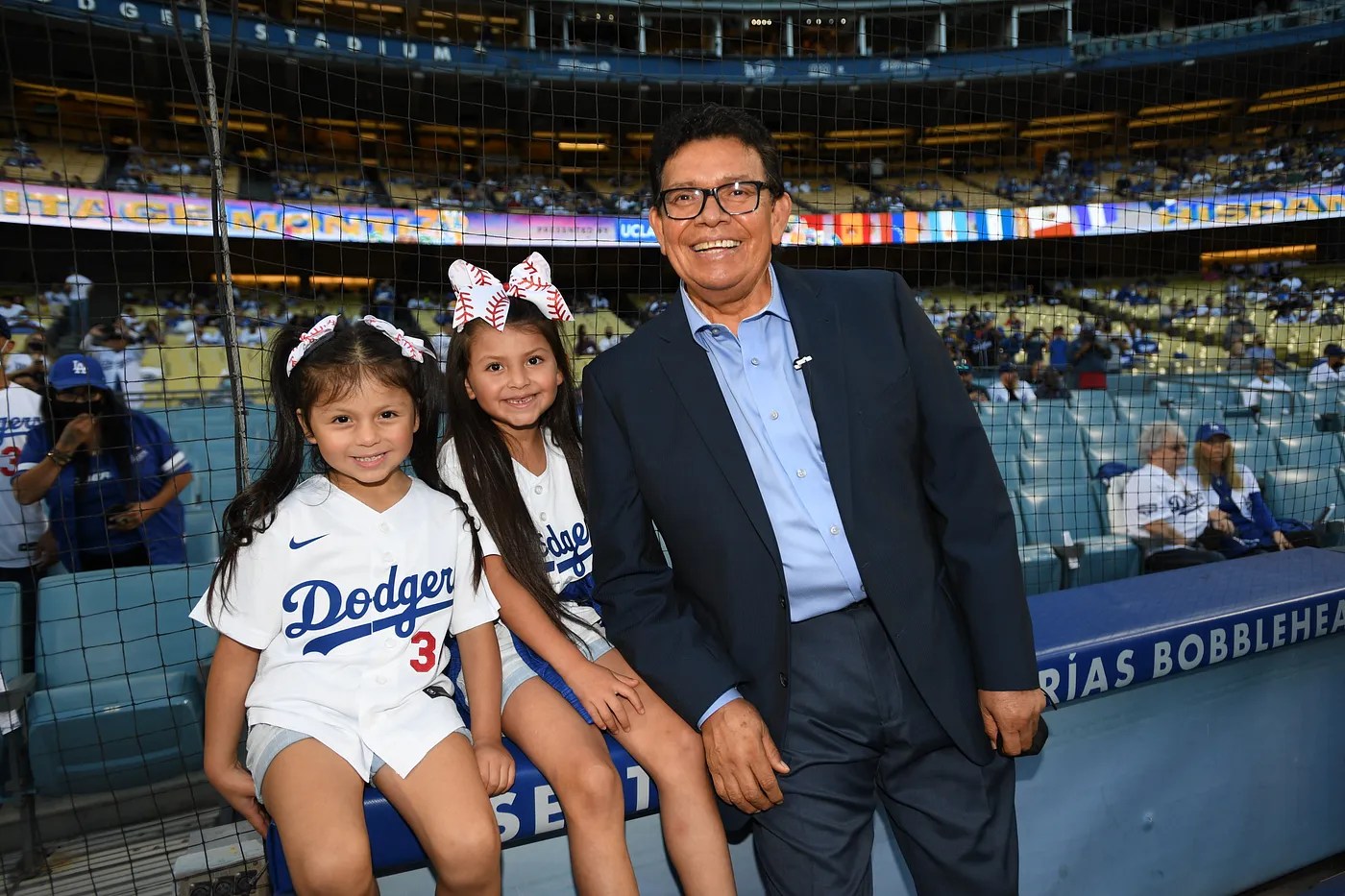
This is what I began to think about after his number was retired this week.
Fernando didn’t really “arrive” on that Opening Day 1981. Again, I think that he came home. So did all of those who shared his ancestry. They reclaimed the town once called El Pueblo de Nuestra Señora la Reina de los Ángeles de Porciúncula.
Perhaps that fall, on the Day of the Dead–el dia de los muertos–families spread blankets on the grass and unpacked hibachis and began to make carne asada or carnitas tacos. While the meat was grilling, they decorated the graves of the people they loved, whom they always will love, with white glass prayer candles that illuminate the image of Our Lady, and with flowers—a lot of flowers—with helium-filled balloons, with saints’ medals and with ofrendas, little clay pots filled with corn or chiles or sweets, and maybe a bottle of Mexican Coca-Cola—the real deal, like World War II Coca-Cola.
Then they sat down, those young people and their even younger children, and began to talk, across generations, to the tombstones, They told the jitterbuggers stories about Fernando Valenzuela.
After, it got graveyard quiet, but only because it was time to eat.
 A Work in Progress