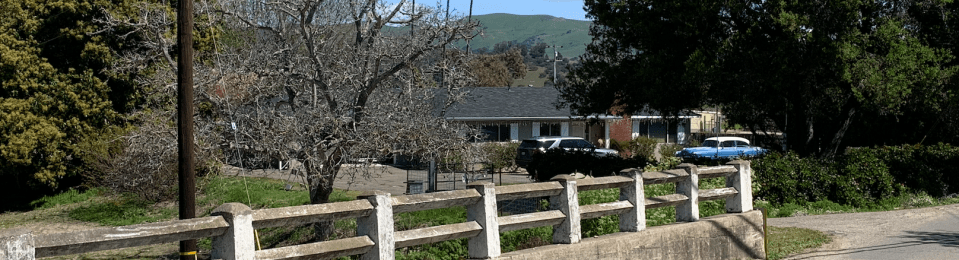
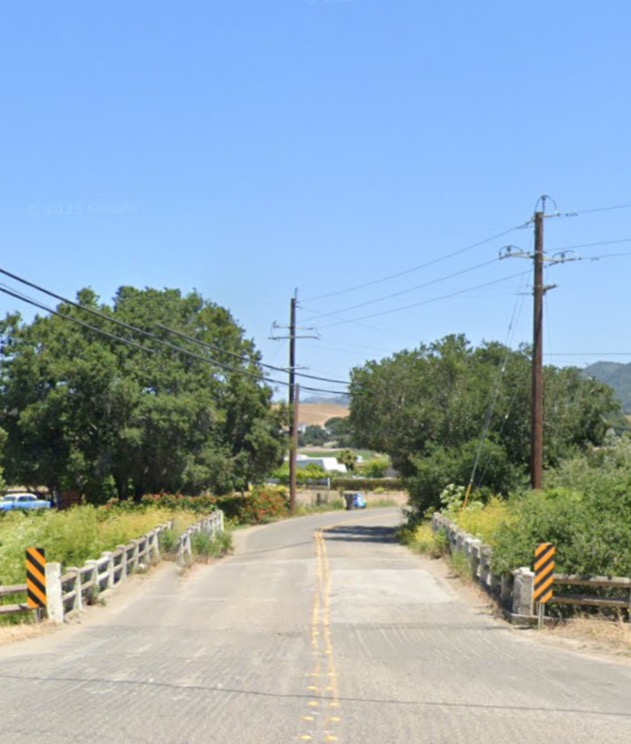
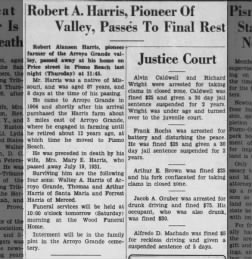
lt looks as if the County is finally going to replace the 100-year-old Harris Bridge, a focal point for my childhood. It’s about time, I guess.. But it’s also bittersweet. It was named for this man, who farmed nearby. From 1936:
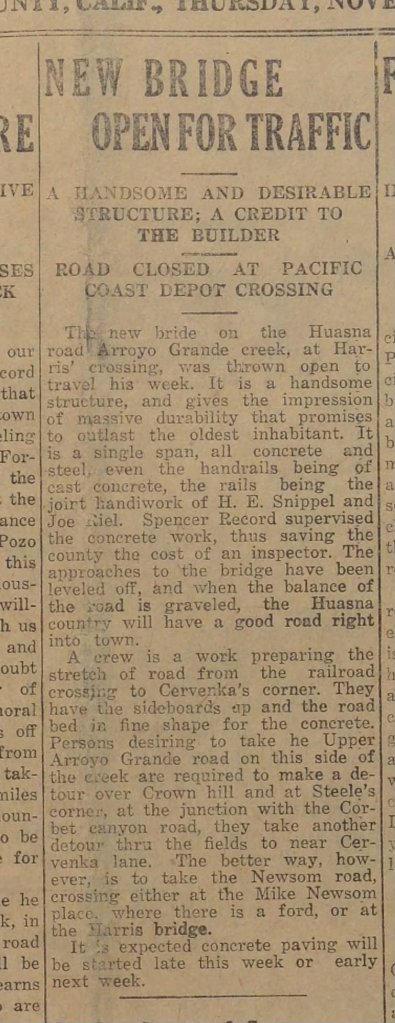
The bridge was completed in November 1923 with some fanfare:
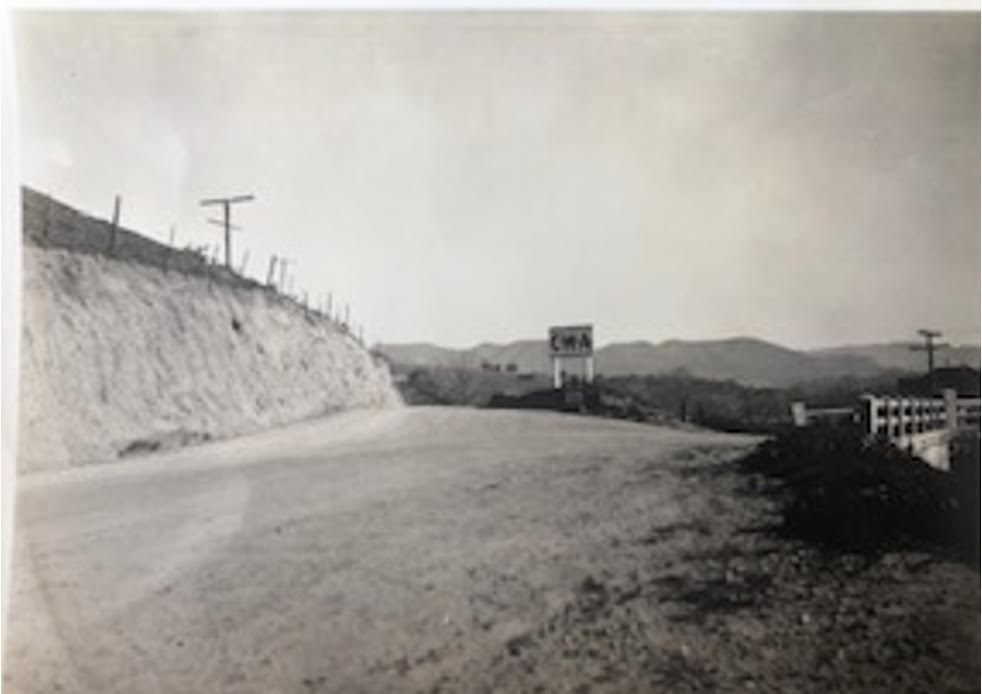
Here it is in 1934. The CWA, a precursor to the WPA, was oiling what was then called Musick Road to Lopez Canyon, a project administered by Supervisor Asa Porter.
Twenty-three years later, we moved into the house just past the bridge, on the left.
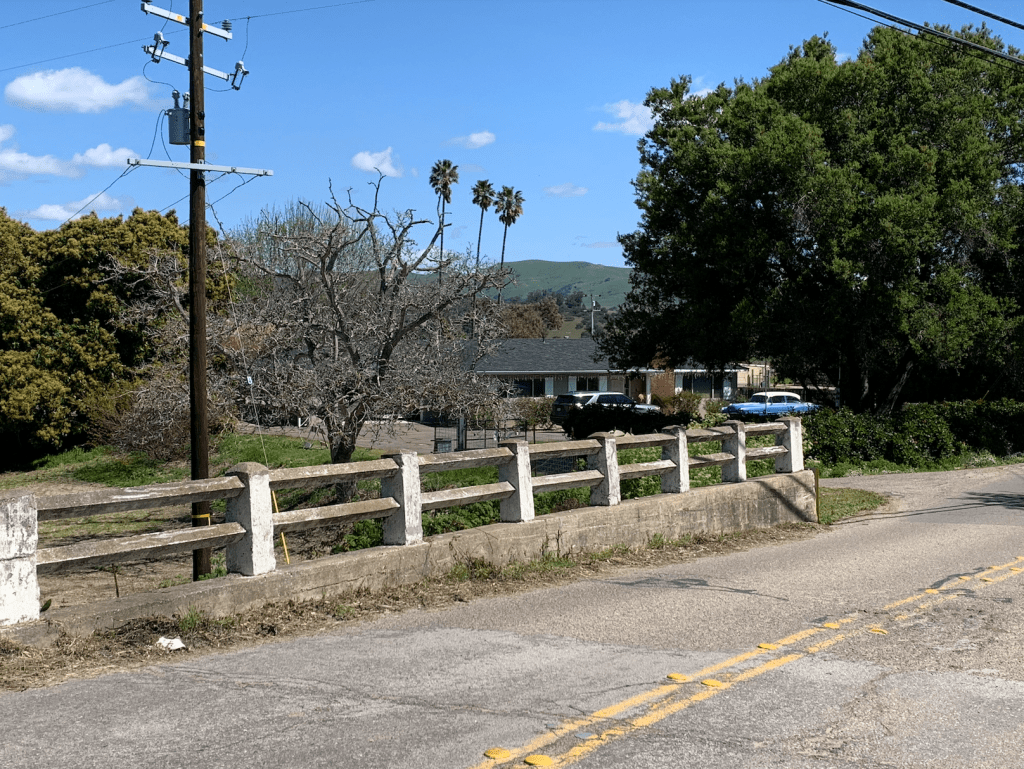
So it’s figured a lot in my writing. From World War II Arroyo Grande:
That month, in the Upper Arroyo Grande Valley of coastal California, this is what you would see, if not clearly, because the cold morning fog can be dense: labor contractors drop off pickup loads of field workers at the Harris Bridge, which spans the creek that gives the valley its name and that nourishes it.
The workers cross the bridge whistling, an incredibly beautiful, almost baroque whistling, Mexican folk tunes from the time of the Revolution, or love songs, as they walk down to the fields to their work with their lunches–wine-jugs filled with drinking water and perhaps chorizo-and-egg burritos, wrapped in wax paper, the fuel a man needs to do the kind of physical work that would make most men sit in the freshly turned field, gasping and woefully regarding their quickly-blistered hands, within fifteen minutes.
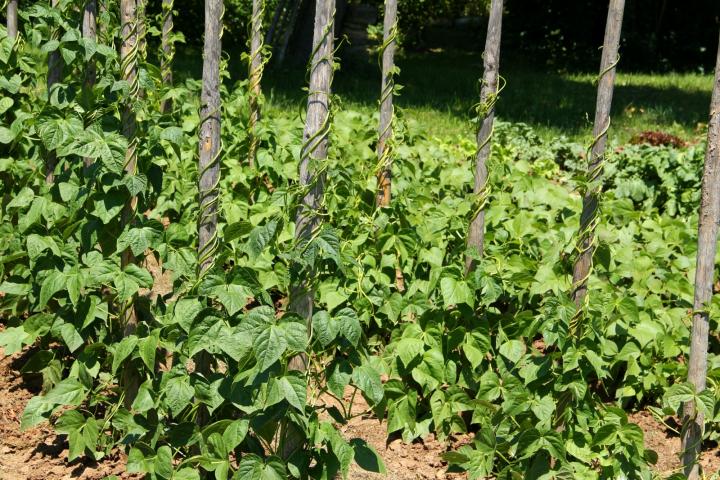
Their summer work might be in a new bean field and the whistling would stop because it is such a tax on men who work beans, whose breathing soon becomes laborious and therefore precious. To begin a newly planted field of beans, the field workers have to drive wooden stakes into precise parade-ground lines along the furrows, so that the bean vines can use the stakes to climb and twist—they will eventually yield bell-shaped flowers–toward the sun.
The sun invariably appears in late mornings when it burns the sea fog away and the colors of the valley, wheaten hills and verdant bottom land where the crop is in, are reborn, vivid and sharply focused.
To drive the wooden stakes, the field workers use a heavy metal tube, hollowed, with a handle attached that resembles that of an old-timed pump primer pioneer men and women once used to draw water out of the ground. So the whistling stops and is replaced by the rhythmic ring of the stake drivers as the workers pound hundreds of them into the field.
It is a musical sound, but, of course, what you cannot hear are the grunts of the men at each stroke of the stake driver and what you cannot feel is the enormous weight that exhausted arms and shoulders soon take on and what you cannot avoid, if you think about it sensibly, is admiration for the men who feed you. In turn, they are determined to feed families who live in camps or tarpaper shacks in the Valley, or, for some, part of the work force that will dominate agriculture here for the next twenty years, for families who are living in the tier of states of northern Mexico.
This is what the creek looked like this spring in this view from the bridge:
From a blog post inspired by that scene this spring:
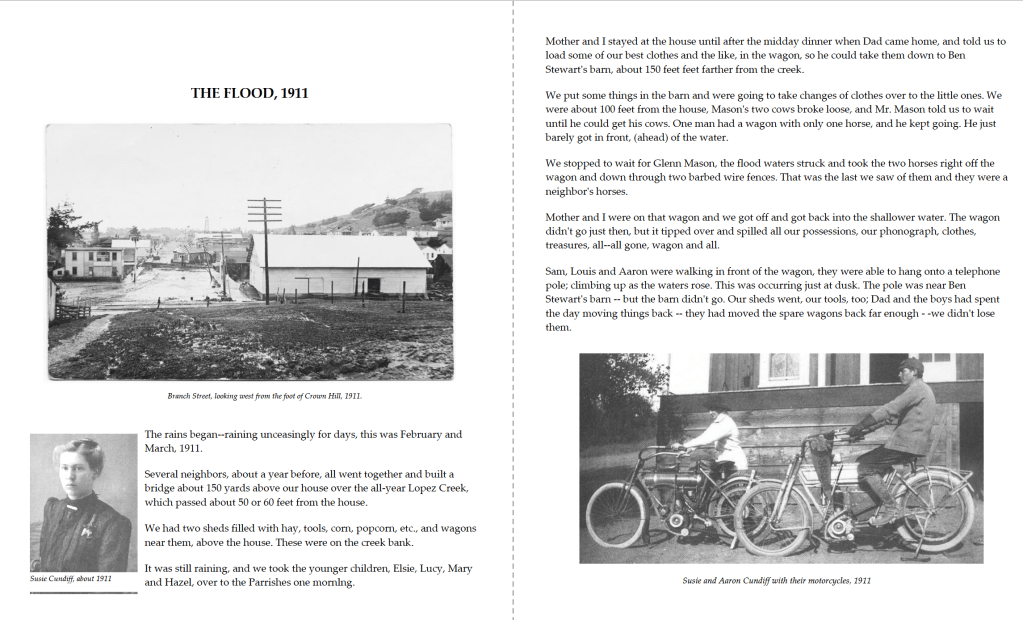
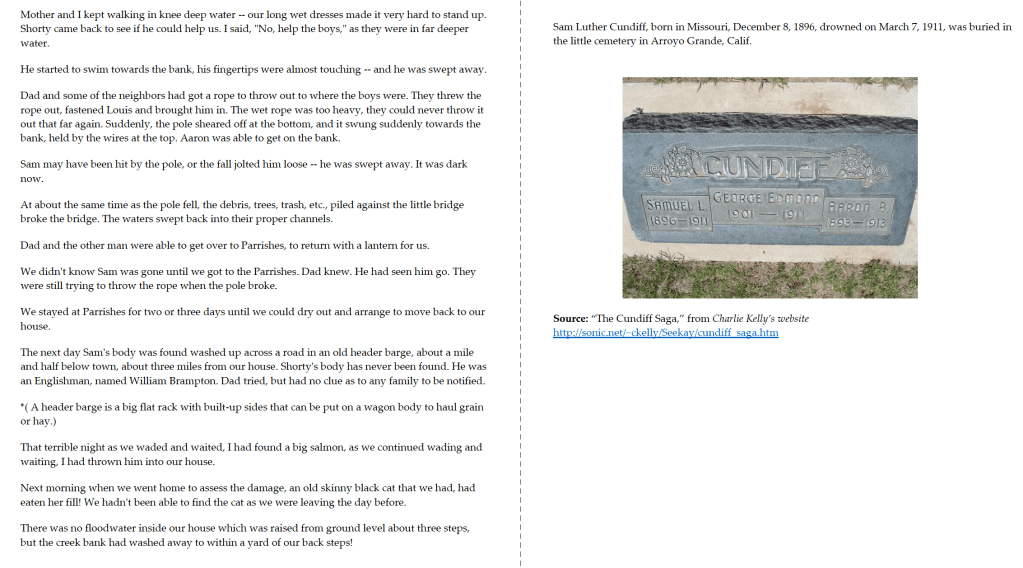
–The Harris Bridge. Before the bridge, this was near the spot where fourteen-year-old Sam Cundiff drowned in the flood of 1911.
Our house was (and is, much improved) just over the bridge, which was built, I think in 1927, [it was 1923] when Lopez Drive was called Musick Road. I was very happy to see that our walnut trees, just beyond that bank of Queen Anne Lace, are dead. I hated harvesting walnuts, stoop labor, and your hands and nails were black for weeks. Walnut trees used to cover the fields between the high school and Halcyon Road before an insidious pest, the husk fly larvae, began to kill them. I did not much mind. The only way I found walnuts tolerable was in my Mom’s chocolate-chip cookies.
In the winter of 1968-69—you can get a sense of it from the video above—the creek rose above that chasm and spilled into our walnut orchard. There were ponds and lakelets in the Upper Valley for months afterward.
I used to catch rainbow trout in the chasm below and, of course, I did NOT catch the big female steelhead who hit my line one afternoon. She was so fierce that I nearly had a twelve-year-old heart attack. It was glorious the way she broke the surface, with a terrific splash, and it was only seconds before she snapped my leader and went upstream for the business of motherhood...

Once my friends and I found the heads and innards of two spike bucks—yearlings, illegal to hunt in California—tossed over the side of the bridge by the hunters who’d butchered them and who wanted to get rid of the evidence. We pondered their remains, appalled, for a long time as the creek rushed past.
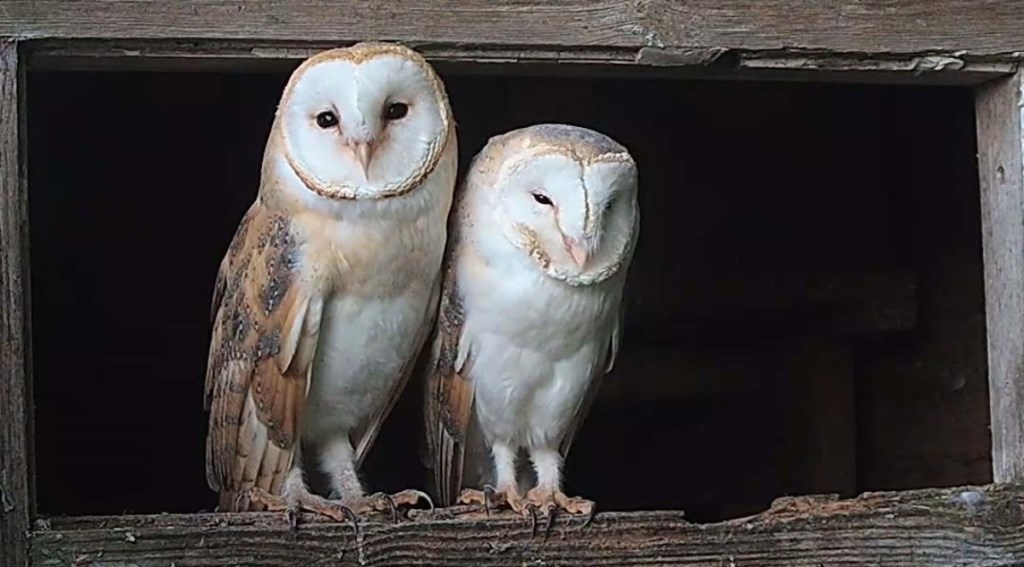
But once, on a ledge just below the bridge railing, I saw two barn owls asleep, one’s head sweetly on the other’s shoulder. I will never forget them.
I wrote about what happened to the Cundiff family at just about the site where the bridge would be built twelve years later. You can click on each image to enlarge it:
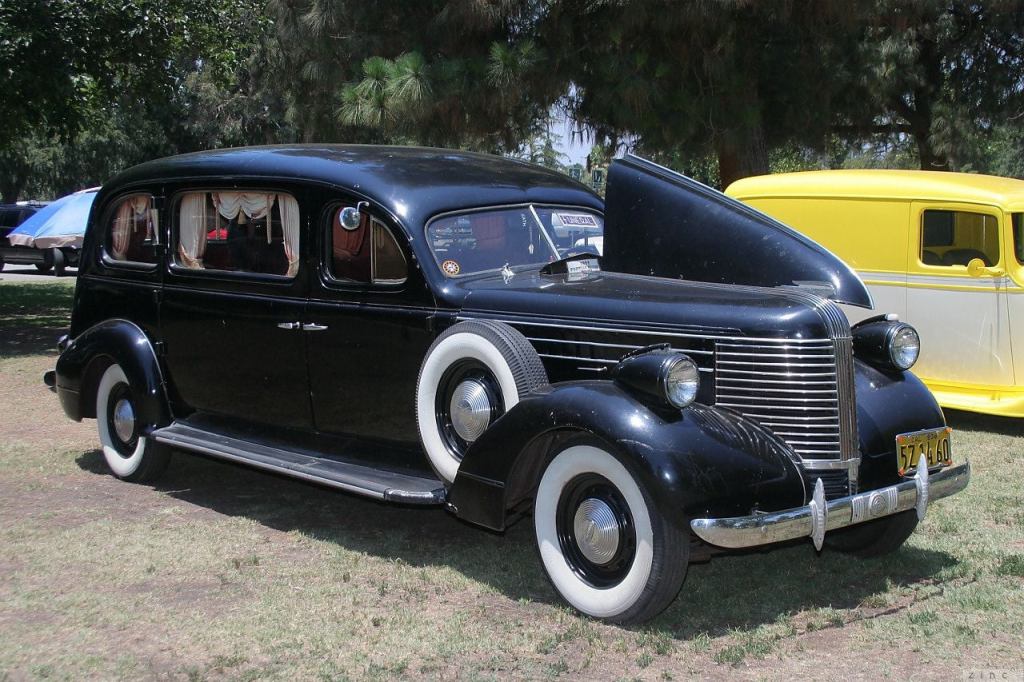
And since our house fronted Huasna Road, I got to know every car (a lot of celery trucks, too) as it approaced the bridge, including Michael Shannon’s hearse:
I grew up near the Harris Bridge, at the intersection of Huasna Road and what is now called Lopez Drive. So a favorite pastime was waving at neighbors as they approached the intersection.
–Mrs. Coehlo, a stunning woman (Wait, that’s not the right word. One of the most beautiful women I’ve ever known.), and so nice, drove a navy-over- powder-blue 1954 Cadillac.
–The Esteban family, including my friends Frieda and Paula, had a kinda funky light gray 1952 Plymouth.
–Glenn Cherry had a 1968 green Pontiac GTO. Forgive me, but in the argot of the times: Bitchen car. 400 cubic inches under the hood. (Glenn’s was green. Stone Saruwatari’s was a kind of midnight blue. Stone’s daughter, Gayle, was, I think, one of the prettiest girls at AGHS, so seeing Gayle behind the wheel caused teenaged males to tumble like felled redwoods when she drove past.)
–Sometimes a woodcutter would drive past in a ’58 Chevy pickup. We lost a Beagle named Snoopy once. Then we saw him, months later, his tongue wagging happily, atop a load of the woodcutter’s red oak.
–Cayce Shannon drove an orange VW bug.
–The Berguia family had a 1958 Chevy wagon–the only year they came out with the taillight design seen on Ron Howard’s Chevy in “American Graffiti.” There were a LOT of Berguias, which is a good thing, because they’re such a marvelous family, so the wagon was usually packed. I interviewed Jean Wilkinson Frederick, whose father owned the meat market on Branch Street, and she still has the ledgers. The first page I opened, there was Mr. Berguia’s tab. I know it doesn’t seem like a big deal, but I was thrilled. He paid on time, by the way.
–Occasionally a Sheriff’s deputy would drive by. The cars then were silver, and deputies wore straw cowboy hats. When I was five, my Mom asked one of them if he’d give me a ride. No problem. He punched the gas and let me hit the siren button. That was a great moment in my life.
–It’s kind of cheating, because he drove past the bridge, not over it, but Arroyo Grande High School principal Earl Denton drove a 1960 Ford Falcon, the brainchild of Robert McNamara, who also brought you the Vietnam War. Denton was so incredibly tall that you could almost see his kneecaps just under the Ford’s steering wheel.
–My speech team partner Jon Bolton drove a 1954-ish, tan-ish–there was a lot of “ish” about Jon’s car–Chevy station wagon. Once he stopped in front of our house with a leaky radiator. We chewed a lot of bubblegum together to plug the leaks.
–Mitzi Ikeda drove a 1964-ish Ford station wagon. Mitzi liked to drive fast, so you had to wave real quick.
–My speech team partner Joe Loomis drove an eminently practical 1964 blue Chevy Nova. When my Mom died, he showed up in our driveway in a blue Jeep. “Hop in!” he said. The Loomises took care of me for awhile.
–Manuel and Johnny Silva drove also eminently practical Ford F150s. When they weren’t driving by our house, they were stopped cab-to-cab in the middle of Huasna Road talking about garbanzo beans, I guess, even though they’d just had breakfast together at Sambo’s. A car would pull up behind them, and they’d pull to the side to let the car pass. That wasn’t enough. They’d wave cheerily at the driver. The Silvas kind of invented “Have a Nice Day!’ about forty years before some other guy took credit for it.
But by far my favorite car–the whole family’s, in fact– was Michael Shannon’s Pontiac hearse, I think a 1938 model. It was for his surfboards, of course.
The hard-packed dirt between the bridge-rail that fronted Huasna Road (now Lopez Drive, before that Musick Road) was our bus stop for Elsie Cecchetti’s little Branch school bus. Later, for high school and Bus #34, driven by Betty, it was the Four Corners, where we waited with a bunch of Polettis and Evensons, nice company indeeed. So I associate the bridge, the Branch School stop, with Elsie and with Mary Gularte, and with Richard Ayres’ corn, which we covered in wet gunny sacks and sold from a pickup bed on the same spot. We were sunburnt strawberry red by sundown.
Elsie Cecchetti was our bus driver. In the same way that Louis Tedone was SLO’s baby doctor. Elsie was everybody’s bus driver.
Yes, I go back to the days of Branch School’s yellow pickup with bench seats and the tarp overhead, when we bounced happily over creek crossings.
We waited for her at the Harris Bridge.
I think she had mechanical problems one morning–and it was a cold one–when Mary Gularte took me inside from the bus stop for some sopa. That was a good morning.
Both Mary and Elsie called me “Jimmy.”
We tormented Elsie with “99 Bottles of Beer on the Wall” and then, in 1964, with “She Loves You,” ” I Want to Hold Your Hand” and she always headed us off in “The Name Game” song, before we got to “Chuck.”
And I always looked over the edge of the bus window as she drove confidently up Corralitos Canyon. There were some good drops there, but Elsie knew what she was doing. At the Canyon’s end, past the Dentons, she made a three-point turn that the California Department of Motor Vehicles should have filmed for posterity

I remembered that ther’s a plaque on the bridge with the names of the Board of Supervisors that commemorates its completion one hundred years ago. I had sense enough to ask that it be donated to the South County Historical Society, so at least that small piece of a bridge that’s felt the weight of so much history—and so much weight!—will remain with us.

 A Work in Progress