
• About
  • The Germans

A Work in Progress

A Work in Progress

Monthly Archives: August 2023

Fernando

14 Monday Aug 2023

Posted by ag1970 in California history, Uncategorized

≈ Leave a comment


With that win, [May 14, 1981] the left-hander improved to 8-0 with a minuscule 0.50 ERA, 68 strikeouts over 72 innings while holding opponents to a .172/.225/.212 batting line. Four days later, Valenzuela fell short of throwing a complete game for the first time and suffered a loss.

–Writer Matthew Moreno on Fernando Valenzuela’s first full season.

He started on opening day when Jerry Reuss had injured himself. Valenzuela had appeared in ten games in 1980 and he’d been sharp, but he was still an unknown quantity. So instead of the tall blonde German-American (“Reuss” is derived from the German “Russian.” That’s uncomfortable), Dodger Stadium got a starter who was not tall, not blonde, not German (or Russian). He was from Sonora. the same state as Mexican President (1920-24) Alvaro Obregón, the “Happy Man with One Arm,” his right, lost in battle in 1915.

Obregón at his Presidential desk, 1920, when Mexico was emerging from the ten-year revolution that had claimed one million lives.


Luckily, Valenzuela was a lefty.

I could not watch him by myself. I needed to share him. I began to watch his games over at Ricky and Jane Monroe’s house, both because they were such good company and because Ricky, a born color man, has a knack for wit, sometimes caustic, at the exact moment it’s needed—not before, not after.

Valenzuela’s specialty was a screwball, a pitch that will eventually make some pitchers’ elbows explode spontaneously while they’re reaching across the dinner table for some mashed potatoes.

We soon learned, too, that another Valenzuela specialty was hitting. He won a Silver Slugger award in 1981 to put over his fireplace, probably resting on brackets just above his 1981 Cy Young and 1981 Rookie of the Year awards. Oh. And his Major League Player of the Year Award.

In 1981, after we’d seen a Fernando screwball strike out an Astro or a Giant or a Cub swinging, as if his bat was a feather boa, Ricky and I might look at each other without saying a word. And sometimes, once the Miller Beer commercial had begun, Ricky would shake his head in disbelief.

It was euphoric, watching that twenty-year-old pitch.

When Fernando Valenzuela came to the big leagues, Bob Lemon, then a Yankee scout, stared in disbelief. He leaned over and asked a Dodger scout, “How old is he?”

“Twenty,” was the reply.

Lemon thought about it a moment. “Twenty what?” he wanted to know.

–Los Angeles Times sports columnist Jim Murray

This is what is important, I think: Valenzuela may have been from Sonora, but Chavez Ravine was home.

This was the barrio, demolished to make way for Dodger Stadium, where the Zoot Suit riots began in 1943. My kids and I learned about them, every year, when I taught U.S. History. It was important to me to teach them the dark side of the war even as we learned about its heroes, from Torpedo Squadron 8 at Midway to the 442nd Regimental Combat Team in Italy to the third of the wartime industrial force that was made up of women.

The Zoot Suit riots, along with the others that broke out across America and overseas that summer of 1943, represented a moment when we’d forgotten who we were and what we were fighting against. Racism was the sickness that typified the Imperial Japanese Army’s officer corps and Hitler’s SS.
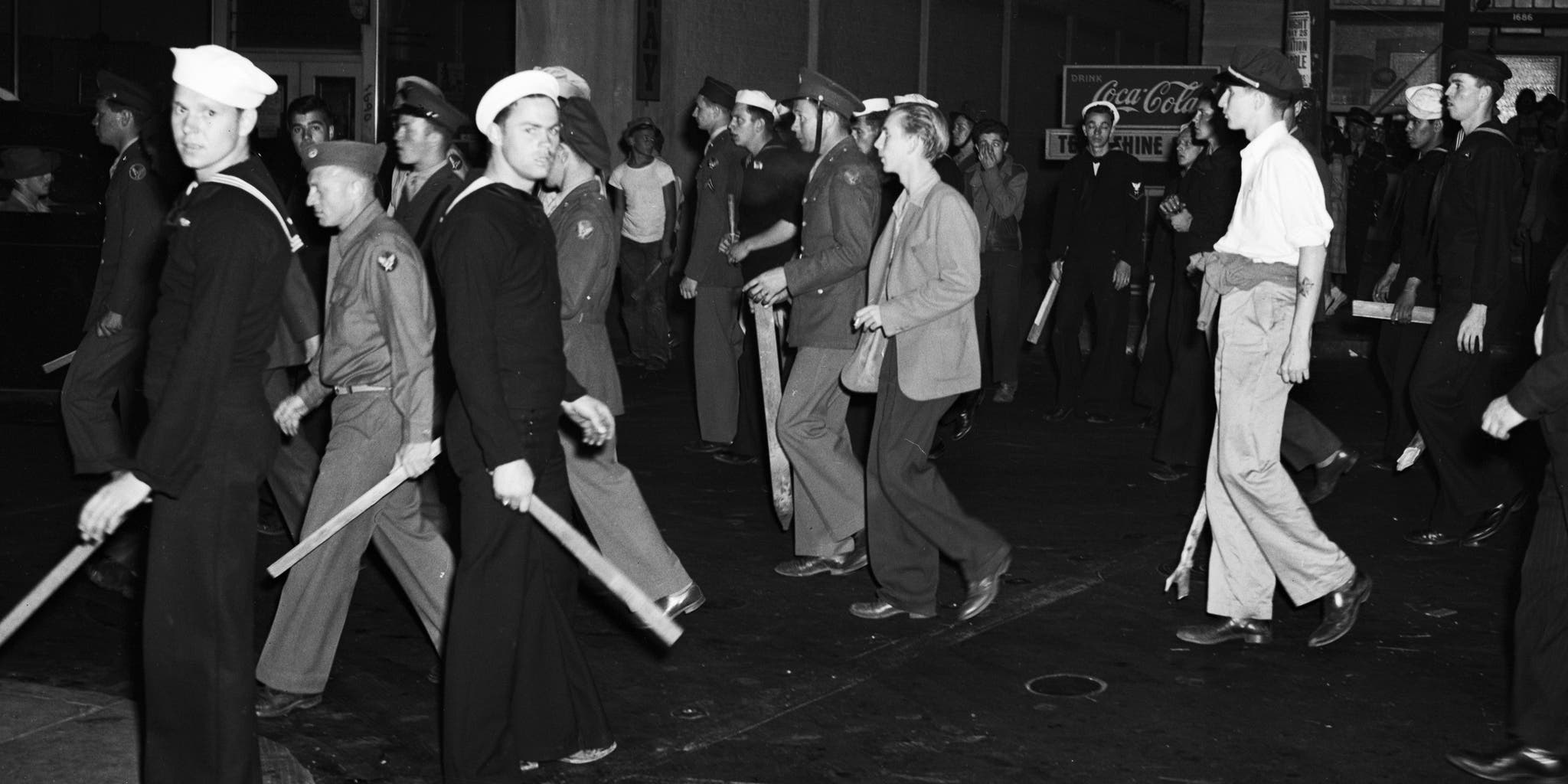


For several nights, then, in June 1943 gangs of roving sailors and soldiers beat the living hell out of East L.A. kids, pachucos, whose sole offense seemed to be the elegance of their clothes—the fashion, Zoot Suits, was popular with Black kids, too. The suits must’ve offended some servicemen in a time of wartime austerity, when suits, for civilians, lost their cuffs and wide lapels. Double-breasted suits were as rare as 1943 Ford coupes. and there was no such car. Ford was making B-24 bombers.

It’s possible, too, that the servicemen were a little envious of the Zoots’ mastery of the jitterbug, honed in hot L.A. jazz clubs. And they were, after all, brown people, those kids in those suits.
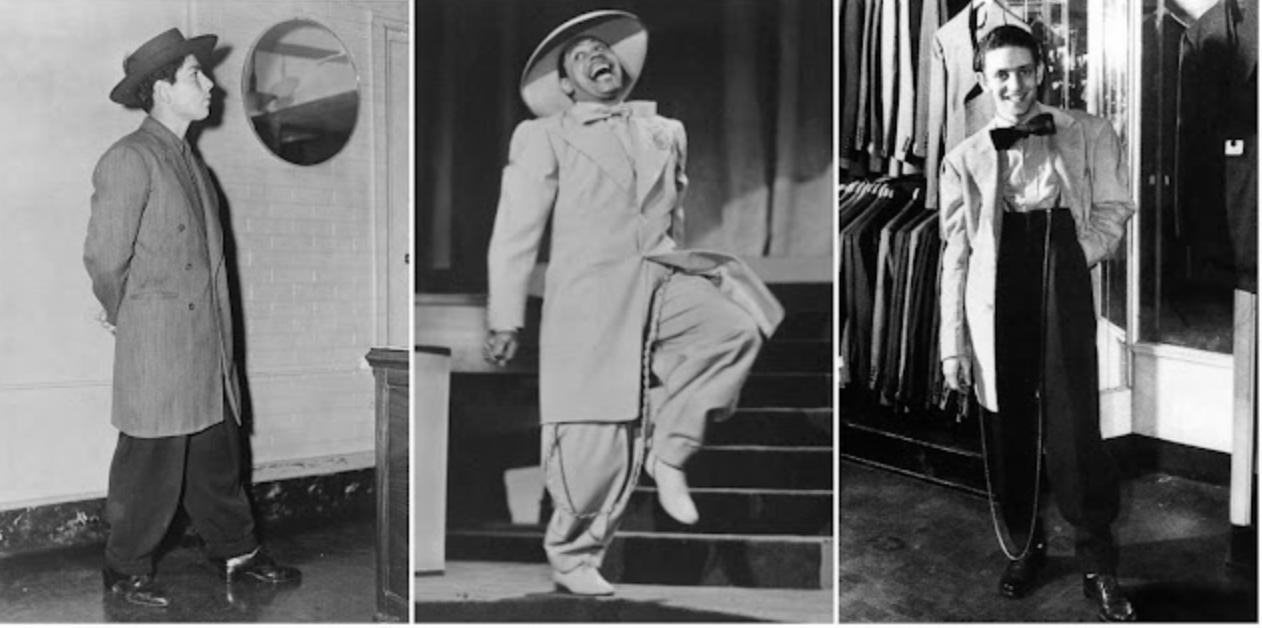
Cab Calloway (center) was perhaps the epitome of Zoot Suit style.


“Those” kids danced with lovely girls who rode the streetcars out of the oppressiveness of the Ravine, and of their rigidly traditional Mexican parents, to meet their dates downtown. They were Jitterbug Divines, those young couples on the dance floors inside noisy, smoky clubs.
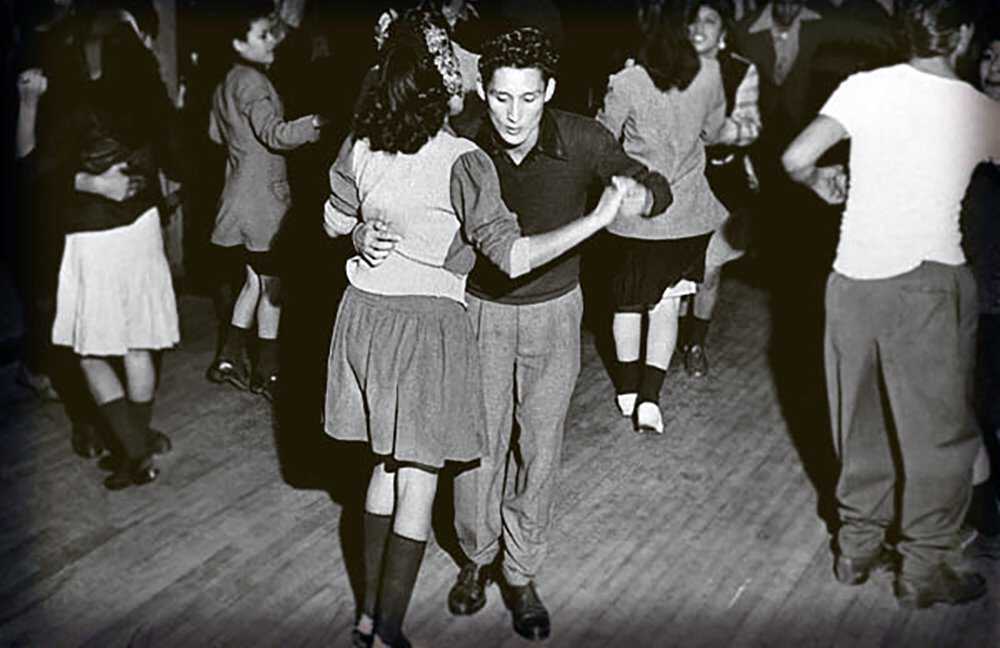


The dancing was interrupted in June 1943 because of a U.S. Navy auxiliary post on the fringes of the Ravine. That’s where the fighting began. Sailors wolf-whistling at chicanas and shoving teen boys off the sidewalk were among the foreshocks.

The riots soon took fire, spreading from Chavez Ravine to Boyle Heights and ending at what is today the 405. The LAPD watched passively as the G.I. gangs, sailors and soldiers from San Pedro and scatterings of Marines up from Pendleton, went after the Mexican-American kids with axe-handles.

The LAPD arrested the Mexican kids, but only after they’d had been bloodied and stripped naked by swarms of malevolent Nebraskans who were defending their country.
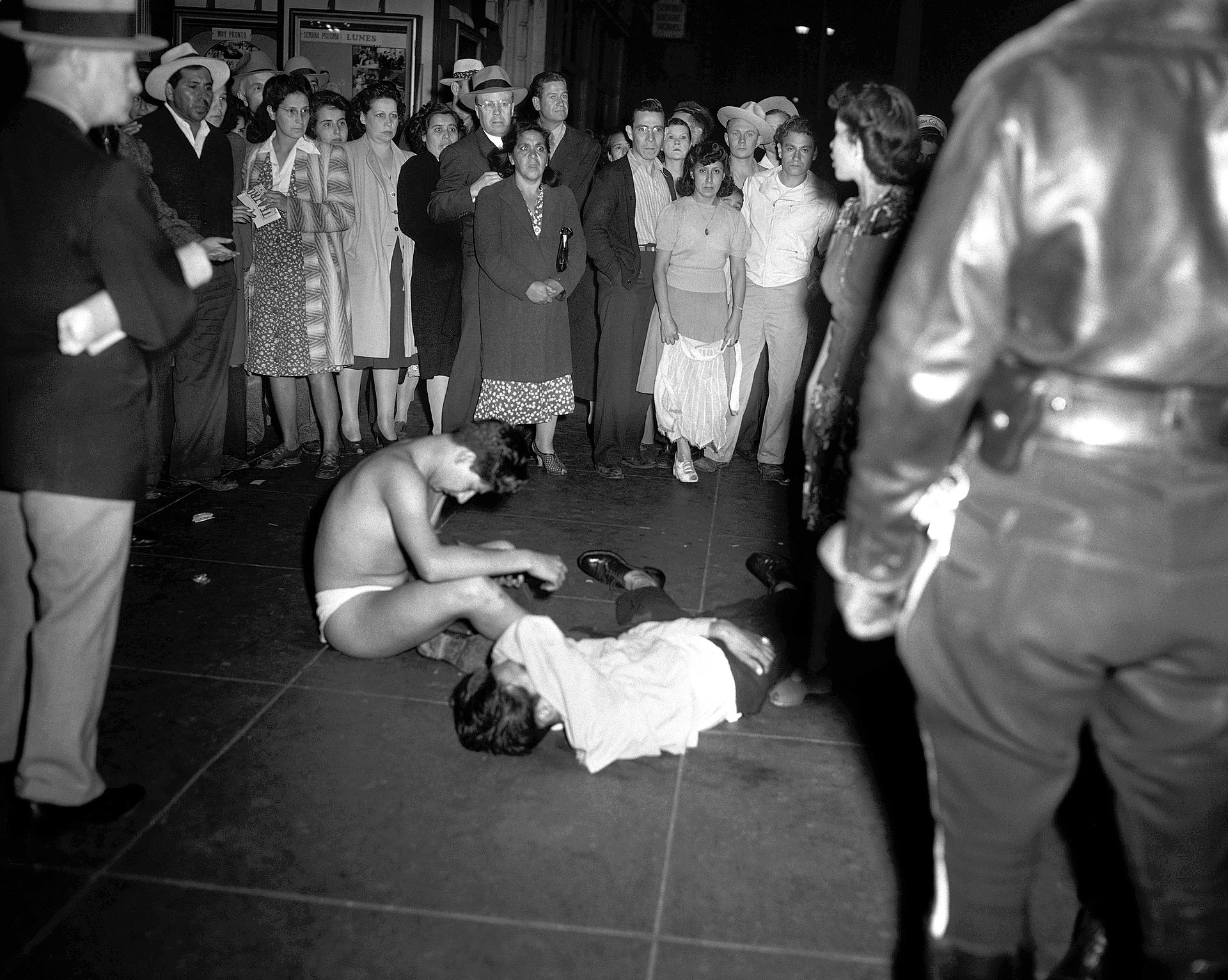


This is the history that colored the background of Opening Day 1981, when Valenzuela pitched a five-hit shutout over the Houston Astros, then in the National League.

Fernando humbled the Astros that day.

That year, what Fernando did was to restore Chavez Ravine to its people. Dodger Stadium, as trivial as it may sound, began to serve churros. Now you can get carne asada nachos in a Dodger helmet bowl. Tuesday night will be Mexican Heritage Night.


This is what I began to think about after his number was retired this week.

Fernando didn’t really “arrive” on that Opening Day 1981. Again, I think that he came home. So did all of those who shared his ancestry. They reclaimed the town once called El Pueblo de Nuestra Señora la Reina de los Ángeles de Porciúncula.

Perhaps that fall, on the Day of the Dead–el dia de los muertos–families spread blankets on the grass and unpacked hibachis and began to make carne asada or carnitas tacos. While the meat was grilling, they decorated the graves of the people they loved, whom they always will love, with white glass prayer candles that illuminate the image of Our Lady, and with flowers—a lot of flowers—with helium-filled balloons, with saints’ medals and with ofrendas, little clay pots filled with corn or chiles or sweets, and maybe a bottle of Mexican Coca-Cola—the real deal, like World War II Coca-Cola.

Then they sat down, those young people and their even younger children, and began to talk, across generations, to the tombstones, They told the jitterbuggers stories about Fernando Valenzuela.

After, it got graveyard quiet, but only because it was time to eat.

Los Lobos, Good Morning Aztlán.


Eight Days Sober

13 Sunday Aug 2023

Posted by ag1970 in Uncategorized

≈ 2 Comments

… I thought that love was in the drugs
But the more I took, the more it took away
And I could never get enough
I thought that love was on the stage
You give yourself to strangers
You don’t have to be afraid
Then it tries to find a home with people, or when I’m alone
Picking it apart and staring at your phone
… We all have a hunger

We all have a hunger

Alcoholism runs deep in my family and I own it, too. Genetics, though, are too convenient— and bringing out ancestral ghosts is too glib— to excuse me. Drinking was my choice, and I was smitten with it from the beginning. Once, I chose to be sober for six years. My relapse has lasted five. I have now been sober, as of Friday, for one week, and it is hard work, folks.

I have always been a hard worker and my life’s been punctuated by awards for writing and for teaching, ego boosts. I’ve had three babies named for me. Those are far more meaningful awards. And I have the devotion of thousands of students, some now in their fifties, who somehow still love me—I just don’t understand this— every bit as much as I have always loved them.

But my reality is that I’m an alcoholic, not a hero.

What I drank for was that fifteen minutes of bliss that hit somewhere between the third and fourth beers, now gone. So are the hangovers that always follow. Here is what’s different: today, for the first time, I am feeling electric sparks, fireflies, that last no longer than an eyelid’s blink. They tell me I am getting better.

Getting just to his very early and dangerous place has meant trembling hands; hypersensitivity, as if you can hear houseflies’ footsteps on the outside glass of the kitchen window; sudden unexpected bursts of anger; waking up at 2 a.m. fighting off the covers that are strangling you; aching lungs when you breathe and flushes of adrenaline that flood your chest because that’s what the cravings do. (There is, of course, a drug for that. It’s a trade-off: moderated cravings for constant low-grade nausea.)

And it’s still hard to look in the mirror when your face is bloated and your eyes, bleak, have big dark circles beneath them.

When I used the words “dangerous place,” I was reminded of the incredible opening scene to Kubrick’s The Shining, when the director’s camera leaves the mountain road, a recurring dream of mine. You are this close to the edge at this point in sobriety:

https://videopress.com/v/WqzthGmn?resizeToParent=true&cover=true&preloadContent=metadata&useAverageColor=true


There are other symptoms. It’s hard to do anything sequentially, even something you love, like preparing a meal, because you suddenly find yourself standing in the kitchen with a spatula in your hand, staring vacantly because you’ve forgotten what comes next.

That’s what recovery’s like.

My other addiction is to hard work. Every day in thirty-plus years of teaching I made massive “to-do” lists. Curiously, the accomplishment that was supposed to come when the list was finished never really happened. It still doesn’t happen, not even when you use a big broad-point black pen to cross off each item on the list.

With retirement and without the structure of high school teaching, of five or six classes a day, I still try to make lists, because being organized is far more difficult now. The lists are hopelessly long. It is so terribly hard for me to accept the fact that I cannot possibly do all of those things. In not doing them, I am terrified that I’m going to upset people, hurt their feelings, let them down.

I am going to have to say no, something that is unbearable to me.

I have other work to do now. That means two, three or five hours of group and individual therapy five days a week in what they call a “partial hospitalization.” At least I don’t have to wear one of those stupid tie-in-the-back hospital gowns, the kind where you can feel your bare rear end hanging out in the cold.

But there are, sigh, the AA meetings I’ll need to take up again. They’ve worked for millions of good people and so have been a blessing to all people. They did not work for me. The AA I’ve experienced is based on a cultish jargon that’s in turn based on an eighty-five-year-old book that is dreadfully written. I need to find a cult-free meeting that doesn’t make me feel like it’s going to end with a round of Jonestown Kool-Aid. Or cyanide-laced black coffee, coffee being the AA beverage of choice.

I guess that there are groups that are out there for me—or programs like Dharma, whose Buddhist underpinnings appeal to me instinctively. I need to find a group that fits.

This business of recovery also means, for the first time, confronting and treating a lifetime of profound ADHD. It means learning to talk back to the murmuring voices in the tape that runs in my mind. The insistent voices tell me I am a terrible human being, a fuckup. They’re murmuring liars, these voices. They are also as powerful as the flying monkeys that sweep Dorothy and Toto up. They are clinical depression’s harbingers and handmaidens.

The voices lied to this beautiful woman, my mother, who taught me how to read when I was four. She remains the most influential person in my life. She tolerated me—an ADHD child can be a monstrous pain in the ass— and, beyond that, she loved me. The voices finally killed her. She was forty-eight. I was seventeen.

Now that I am seventy-one, I still miss her.

Patricia Margaret Keefe Gregory at twenty-two, with my big sister Roberta


Am I oversharing?

Good.

I do love Florence Welch, and I just found this song among some others that are recommended for recovering addicts like me. Knowing that she knows what I know is a blessing.

And one reason I love her is her beautiful red hair—Mom’s was auburn and the dearest friend of my life, Joe Loomis, one of my heroes, flawed like me, was a red redhead. Florence, in appearance only, is also a living embodiment of the ethereal Elizabeth Siddall. Siddall was the muse, an artist in her own right, of the Victorian painters who called themselves the Pre-Raphaelite Brotherhood. Here she is, sketched by Dante Gabriel Rossetti.

I taught the Pre-Raphaelites to my AP European History students (I loved teaching art) and I fell in love with her, too.

And that’s Siddall as Ophelia, drowned, thanks to Hamlet, that cold-hearted bastard, in this painting. She posed in a bathtub, and lying for hours in cold water brought on the pneumonia that nearly killed her. It didn’t. Her addiction to laudanum did.

Sir John Everett Millais, Ophelia, 1851-2

So Siddall’s like the rest of us. We all have a hunger. The hard part, I guess, is accepting it, naming it. Then, when you see it in the other people sitting a circle with you, it means embracing their humanity. That’s me. She’s me. That kid’s me.

Most of all, that guy who can’t take his eyes off the floor in front of him because he’s in so much pain is just like me. When he finally begins to talk, you listen and you feel your shoulders sag–that’s where you store the tension that’s now leaving your body–or you feel your eyes well with tears. Sometimes, when he opens up, that guy makes you laugh. His humanity begins to heal you.

We all have a hunger. I am learning that we are miraculous, too.

That’s Entertainment…

09 Wednesday Aug 2023

Posted by ag1970 in Uncategorized

≈ Leave a comment

Okay, we watch America’s Got Talent so you don’t HAVE to. It can be one of the most painful television shows to watch, but three acts from last night’s auditions amazed us. And it was more like The World’s Got Talent, which is perfectly okay with Elizabeth and me.

Amazing act #1: Eduardo, the eleven-year-old Mariachi singer from Houston. Adorable, si, but the boy’s got some PIPES. Look at Simon’s face.

https://videopress.com/v/O1vd89mJ?resizeToParent=true&cover=true&preloadContent=metadata&useAverageColor=true

Amazing act #2: Titos Tsai, a Taiwanese “contact juggler.” This was elegant and beautiful and touching. So was Tsai’s obvious love for his fiancé, watching just offstage with Terry Crews.

https://videopress.com/v/njhnO3OE?resizeToParent=true&cover=true&preloadContent=metadata&useAverageColor=true

Finally, after a slightly painful introduction—an engaging young man, but communications, including body language, between Japanese and English are sometimes awkward—his dance troupe, Chibi United, took the stage. They were simply unbelievable. Golden Buzzer from the judges, endorsed by the long-married couple watching the television from their bed with their doggies.

https://videopress.com/v/Dtzf2PBH?resizeToParent=true&cover=true&preloadContent=metadata&useAverageColor=true

And, of course, there’s a greater meaning to a television show so seemingly lowbrow. We are living in dark and ugly times—make no mistake about that—and sometimes, they seem hopeless, as well, because human beings can be so brutal and so obtuse. But we can be beautiful and graceful and we can, across language barriers and from vast distances, reach far enough to touch each others’ hearts. There’s hope in moments like these three.

Two Christopher Nolan films

08 Tuesday Aug 2023

Posted by ag1970 in Film and Popular Culture, Uncategorized

≈ Leave a comment

I borrowed four spectacular scenes from two earlier films—the fantasy Inception remains one of the most amazing films I’ve ever seen, and the two air-attack scenes from Dunkirk are terrifying— but the ending of the war film is moving, too. The soldier, evacuated from the beach, is headed home on a train. Grateful Brits have reached through the train window to gift him and his mate with newspapers and then with beers ( Bass ales) and the soldiers read Churchill’s speech aloud from the papers. Here, Nolan is both spectacular and intimate.

He intercuts the train scene with the counterattack from Tom Hardy’s Spitfire. His character, Farrier, has stayed too long over the beach. His job is to protect the soldiers below him, and in doing his duty, he runs out of fuel. Farrier sets his Spit afire and awaits the Germans who will make him a prisoner of war, if he survives, for the next five years. Again, both spectacular and intimate.

David Lean, one of my favorite directors, could do that, could get you close to his characters. The developing relationship between Peter O’Toole and Omar Sharif in Lawrence of Arabia and is one example; William Holden’s coward who becomes a tragic hero in Bridge on the River Kwai is another. It’s one of Holden’s finest performances, and he’s one of my favorite actors.

But Nolan’s characters seem even more real to me than Lean’s.

Now, with Oppenheimer, we have two master history teachers in David Lean and Christopher Nolan.

I wish that Nolan somehow could’ve had a chance at directing Gettysburg, a dreadful film based on a marvelous Michael Shaara novel. But we have, thank the Lord, Glory.

And, thanks to Nolan, we can enjoy once again big movies with heart.

August 6: Reflections on the monument in Union Square

06 Sunday Aug 2023

Posted by ag1970 in American History, Uncategorized

≈ Leave a comment

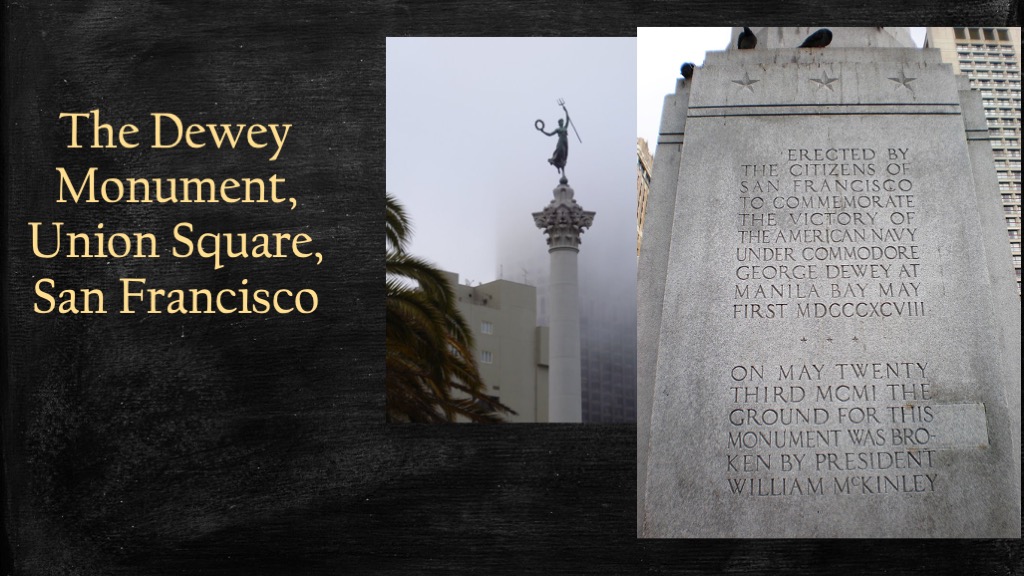
I did not expect to find a George Dewey monument in Union Square in San Francisco on our recent visit. But it was there. And it was big. The Goddess of Victory, atop her column, appeared to be hailing a cab across the street at the St. Francis Hotel.

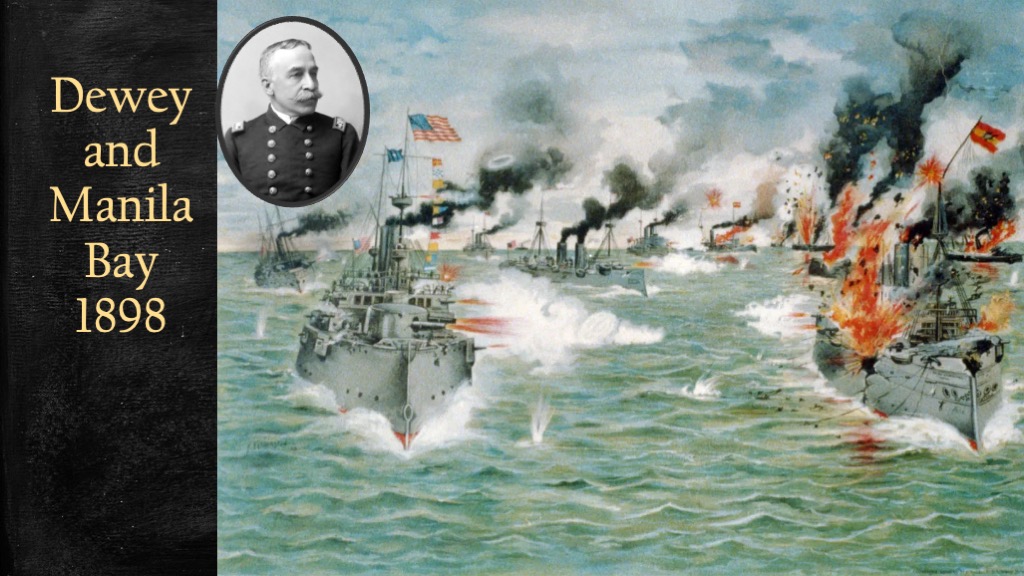
This is why it’s there: In 1898, in the Spanish-American War, Commodore George Dewey led an American fleet into Manila Bay and annihilated the Spanish Asiatic Fleet there. We lost one sailor, felled by sunstroke.

The vicious three-year war that followed, the Philippine Insurrection, tore Americans apart. It claimed 200,000 lives among the people who’d made the mistake of assuming that Dewey and the Americans were their liberators. They would have to liberate themselves, not from the Spanish, but from the Americans.

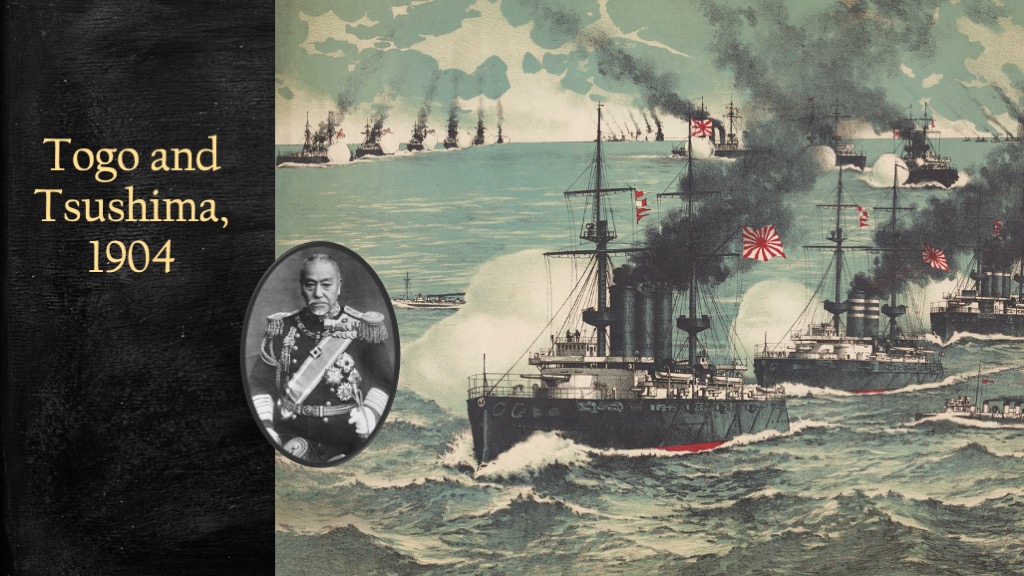
In 1904, Admiral Tōgō Heihachirō took on a Russian fleet in the Tsushima Straits. The Japanese sank 21 Russian ships, including seven battleships, and captured seven more. Togo lost three torpedo boats. Over 5,000 Russian sailors were killed; Togo lost 117.

Revolution tore Russia part the next year, 1905. It turned out to be the dress rehearsal for 1917. The little fellow today may be borrowing from the Totalitarian Guidebook to Europe between 1936 and 1939, but’s reaching farther back in history. He wants Tsar Nicholas’s empire back again, so he started with what he thought would be a cheap victory.

Pride is cheap when it comes from cheap victories. Battles like these, when confined safely to history texts, can seem comic, but more than a century ago, two new world powers, competing for power in the Western Pacific, would inevitably meet each other in unimaginable tragedy.

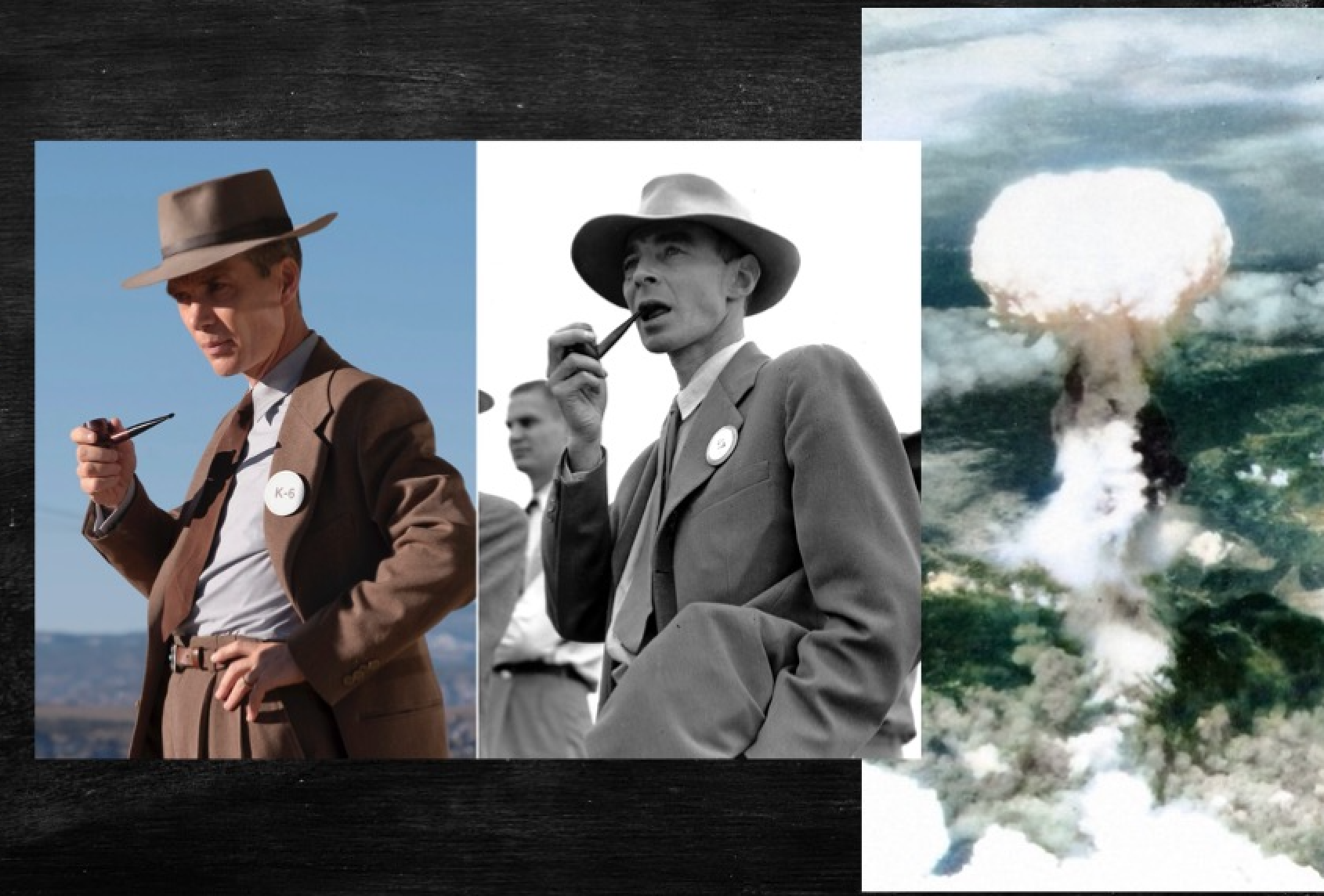
So, in a way, the roots for the war that ended in Hiroshima were planted with the Dewey Monument’s cornerstone in San Francisco. The keel for Sōryū, one of the fleet carriers that launched its planes at Pearl Harbor, was laid down in November 1934. In Hiroshima. I am not suggesting an equivalency here.

This is what I am suggesting:

The worth of nineteen-year-old battleship sailors from Oklahoma on December 7 or Hiroshima schoolchildren in their uniforms on August 6 is incalculable. They are precious beyond our understanding.

Thank you, Britney Spears, for explaining our cat.

04 Friday Aug 2023

Posted by ag1970 in Uncategorized

≈ Leave a comment

Let’s just get this out of the way. I love cats. Always have. We once had fourteen at our house on Huasna Road. I love dogs, too, and with passion, and I can understand them for the most part.

Not this cat. I do not understand this cat. I have never had a cat like this cat.

Hattie, our Humane Society adoptee, is beautiful. We adopted her precisely because she is black, and black cats do not get adopted. I have always had good luck with black cats, and Hattie’s the same. She is one of the most affectionate cats I’ve ever known in my seventy-one years on this here Planet Earth.

She is also a hunter-killer. At least twice a week, we find the remains of a deceased animal—be it bird, lizard, rat or mouse—in pieces on the bathroom floor. One of the rats was almost her size.

Ew.

We’ve gotten her bell collars, which she periodically loses, and then she goes on another Kitty Rampage.

This morning it was a mouse: fore, aft and some various anatomical curiosities in between greeted me when I got up. Hattie was sleeping next to me, a blissful look on her face.

I guess bringing home the kill means that I am in her Pride. I guess, too, that I am honored, but, frankly, as much as I love her, and as lovable and loving as she is, I wish she’d acquire a knack for bringing home In ‘n’ Out Cheeseburgers.

In the meantime, I thought that “Oops! I Did It Again” aptly describes Hattie’s personality.

Little rabbits, royal executions

01 Tuesday Aug 2023

Posted by ag1970 in History, Uncategorized

≈ Leave a comment

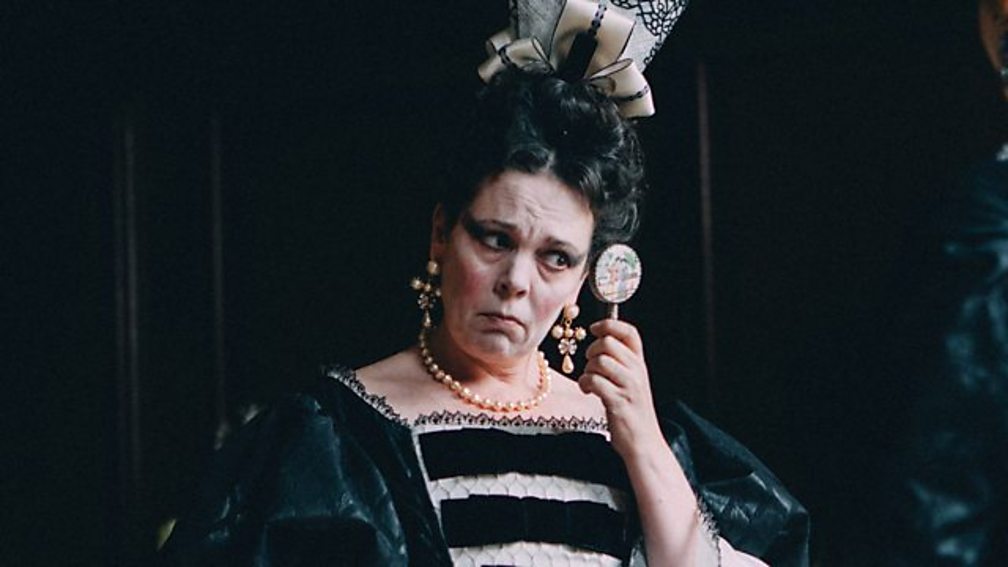
Olivia Colman

On August 1, 1714, the last Stuart monarch, Queen Anne, 49, died at Kensington Palace, today the home of Prince William, Princess Kate and their children. The eccentric, sickly and probably underrated Anne was brilliantly played by Olivia Colman in The Favourite.

Anne’s life was tragic, marked by widowhood, poor health and by the unimaginable physical and emotional pain that came with seventeen miscarriages and stillbirths. The Favourite suggests that Anne’s beloved little pet rabbits became her surrogate children.

And so the Stuart line ended with Anne, ended with her hopes for the children she’d wanted, the heirs that her duty required. England turned to Germany for the next dynasty, whose descendants make up the modern royal family.

Colman and Emma Stone in The Favourite, filmed at Hampton Court, the palace of Cardinal Wolsey, Henry VIII’s chancellor and, after his fall, the residence of Henry and Anne Boleyn. The later Queen Anne lived here, as well.

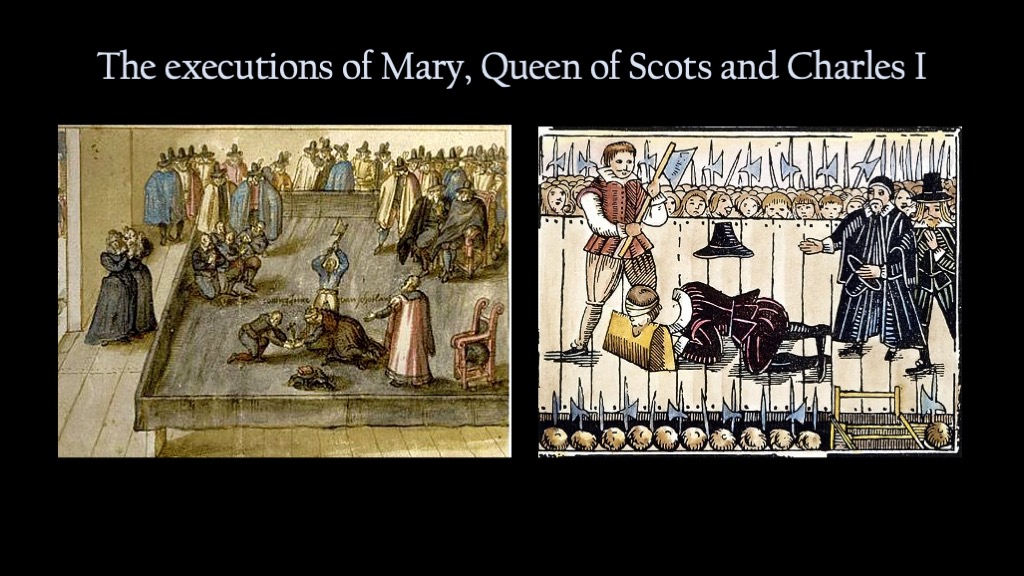
The Stuart line, of course, began inauspiciously, since these royals were descended from Mary Queen of Scots, ordered beheaded for high treason by her cousin, Elizabeth I, in 1587. Mary, the Great Catholic Hope, was dispatched while another Great Catholic Hope, the Armada, was being planned.

Mary in adolescence. Her eyelashes’ flutter, it was said, could reduce men to something resembling Silly Putty.

She went out with panache—blood-red petticoats beneath the shift she wore to the the block. Sadly, she drew a nervous executioner, and it took two tries to separate Mary’s head from the rest of her. Afterward, her disconsolate little Skye terrier crept out from beneath her petticoats.

No one told the hapless executioner that Mary was wearing a wig. He only discovered this when, in the ceremonial moment required of traitors’ executions, he held her head high aloft for the crowd to see.

So it goes.

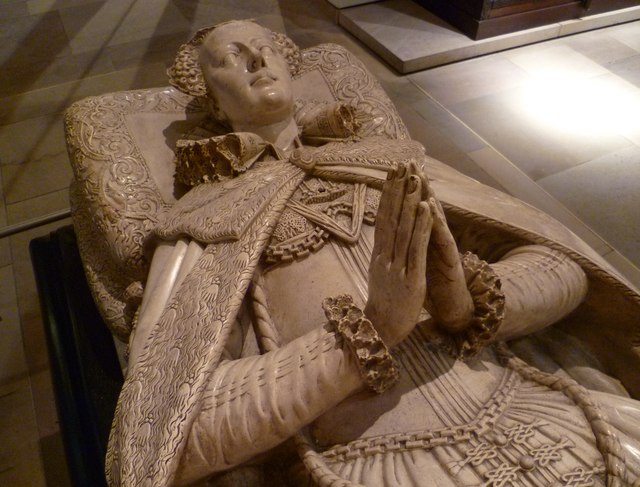
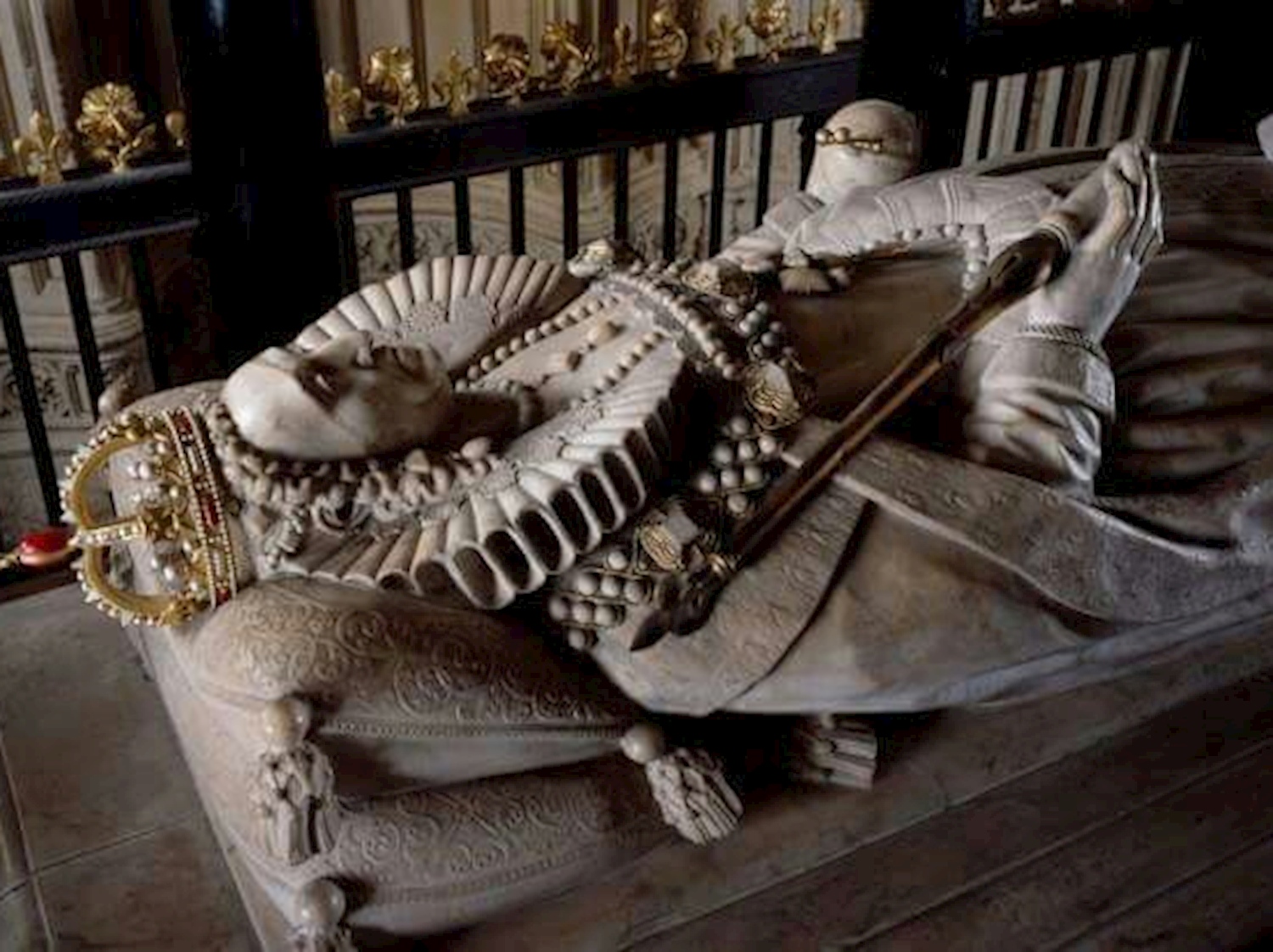
In a way, Mary got even. She lies in splendid isolation in Westminster Abbey, while her cousin, Elizabeth, is in a tomb version of bunk-beds with the half-sister who was her predecessor— and who feared and despised her—Queen Mary Tudor (“Bloody Mary”). Elizabeth is on top.

Ha.

Mary, top and Elizabeth, bottom, Westminster Abbey.

Mary’s grandson, Charles I, was likewise beheaded in 1649 at the outset of the Interregnum, when Cromwell’s Puritan dictatorship interrupted the royal parade.


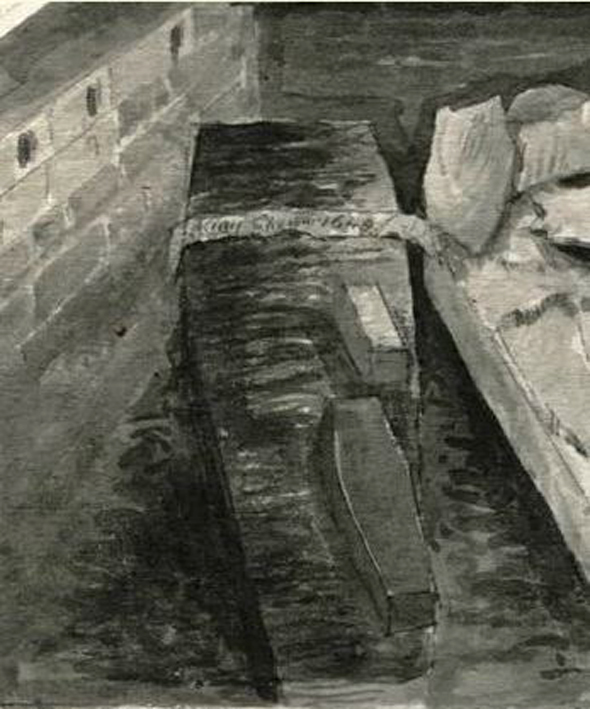
And in 1813, a funeral vault beneath the floor Windsor Castle—Philip and Elizabeth II are buried at Windsor, as well– was opened and they found Charles I’s coffin. The old boy’s head, it was reported, was in fine shape; nearby were the coffins of Jane Seymour, Henry VIII’s favorite wife, and Henry himself, who was all bones. His coffin had exploded from expanding gases, in my mind the result of the King’s gargantuan appetite. Some historians maintain he was close to 400 pounds when he expired.

So his lead coffin was large.


It was a small coffin atop that of King Charles that surprised the little crowd of morbid scholars murmuring beneath the floor. They found that it was one of Anne’s stillborn children, at rest with his great-great uncle.

Executions, lost babies, little rabbits. Monarchs are, of course, an anachronism, as Charles and Camilla so amply prove. But some of them, like Anne—who delivered a stunning inaugural speech to Parliament and whose armies vanquished those of Louis XIV—deserve a second look, and perhaps our sympathy, as well.

Anne, by Michael Dahl, 1705
Newer posts →

Subscribe

  • Entries (RSS)
  • Comments (RSS)

Archives

  • January 2026
  • December 2025
  • November 2025
  • October 2025
  • September 2025
  • August 2025
  • July 2025
  • June 2025
  • May 2025
  • April 2025
  • March 2025
  • February 2025
  • January 2025
  • December 2024
  • November 2024
  • October 2024
  • September 2024
  • August 2024
  • July 2024
  • June 2024
  • May 2024
  • April 2024
  • March 2024
  • February 2024
  • January 2024
  • December 2023
  • November 2023
  • October 2023
  • September 2023
  • August 2023
  • July 2023
  • June 2023
  • May 2023
  • April 2023
  • March 2023
  • February 2023
  • January 2023
  • December 2022
  • November 2022
  • October 2022
  • September 2022
  • August 2022
  • May 2022
  • April 2022
  • March 2022
  • February 2022
  • January 2022
  • December 2021
  • November 2021
  • October 2021
  • September 2021
  • August 2021
  • July 2021
  • June 2021
  • April 2021
  • March 2021
  • February 2021
  • January 2021
  • December 2020
  • November 2020
  • August 2020
  • July 2020
  • June 2020
  • May 2020
  • April 2020
  • January 2020
  • December 2019
  • November 2019
  • October 2019
  • September 2019
  • August 2019
  • May 2019
  • April 2019
  • March 2019
  • February 2019
  • January 2019
  • December 2018
  • November 2018
  • October 2018
  • September 2018
  • July 2018
  • June 2018
  • May 2018
  • April 2018
  • March 2018
  • February 2018
  • January 2018
  • December 2017
  • November 2017
  • October 2017
  • April 2017
  • March 2017
  • December 2016
  • November 2016
  • October 2016
  • September 2016
  • August 2016
  • July 2016
  • June 2016
  • April 2016
  • March 2016
  • February 2016
  • January 2016
  • December 2015
  • November 2015
  • October 2015
  • September 2015
  • August 2015
  • July 2015
  • June 2015
  • May 2015
  • April 2015
  • March 2015
  • February 2015
  • January 2015
  • December 2014
  • November 2014
  • September 2014
  • August 2014
  • July 2014

Categories

  • American History
  • Arroyo Grande
  • California history
  • Family history
  • Film and Popular Culture
  • History
  • News
  • Personal memoirs
  • Teaching
  • The Great Depression
  • trump
  • Uncategorized
  • World War II
  • Writing

Meta

  • Create account
  • Log in

Blog at WordPress.com.

  • Subscribe Subscribed
    • A Work in Progress
    • Join 68 other subscribers
    • Already have a WordPress.com account? Log in now.
    • A Work in Progress
    • Subscribe Subscribed
    • Sign up
    • Log in
    • Report this content
    • View site in Reader
    • Manage subscriptions
    • Collapse this bar
 

Loading Comments...