When my grandmother died in 1963, we buried her in Bakersfield and then were horrified when distant family members began to lay out blankets and carry immense amounts of food—sliced ham, fried chicken, salads and jello salads, biscuits and butter, sweet iced tea—to the graveside. We had not encountered this Midwestern/Southern tradition before.
It made complete sense to me a year ago when I was at the Arroyo Grande cemetery soon after All Saints’ Day and noticed that the Catholic section, particularly among Mexican-American graves, with brilliant flowers and helium balloons, looked like the assembly point for the Rose Parade’s floats. (The Protestant side was Calvinist and austere.) I was delighted. This is a tradition that celebrates the lives of those we will see again. We had our paper pates of fried chicken and macaroni salad because we had one more chance to eat in my grandmother’s presence. It was her celebration, after all.
I wrote a piece about Chavez Ravine and Fernando Valenzuela earlier this year. In this slightly different version, November 1, All Saints’ Day, El dÍa de los Muertos, plays a more central role.
This year, the spirits of the Dead
Are so recently dead
That they haven’t the chance
To return in the night--
They don’t know they’ve died--
So they live with us still.
[Lewiston, Maine.
“Meat Assaults” in Ukraine.
The Holit Kibbutz.
Al-Zarah, Gaza.]
The world is too much with us,
Televised with people
Alive every night,
They live in blue light.
They whisper to us urgently,
Where are we?What have you done?
I guess last night’s Game 1 of the World Series was a thriller. The Rangers won with an 11th inning walk-off hit of some sort. I don’t know what kind. Schindler’sList was on another channel. And a high-school football game on another. Jack Osbourne was investigating UFO’s in Utah on one more. There was always CNN.
Yes, I am having a snit. I don’t care who wins this year’s Series. I don’t have a dog in this fight. I hope both teams lose.
Here’s why: MLB’s best teams have already been eliminated. Here are the grim outcomes:
These teams were a combined 1-13 in the 2023 playoffs:
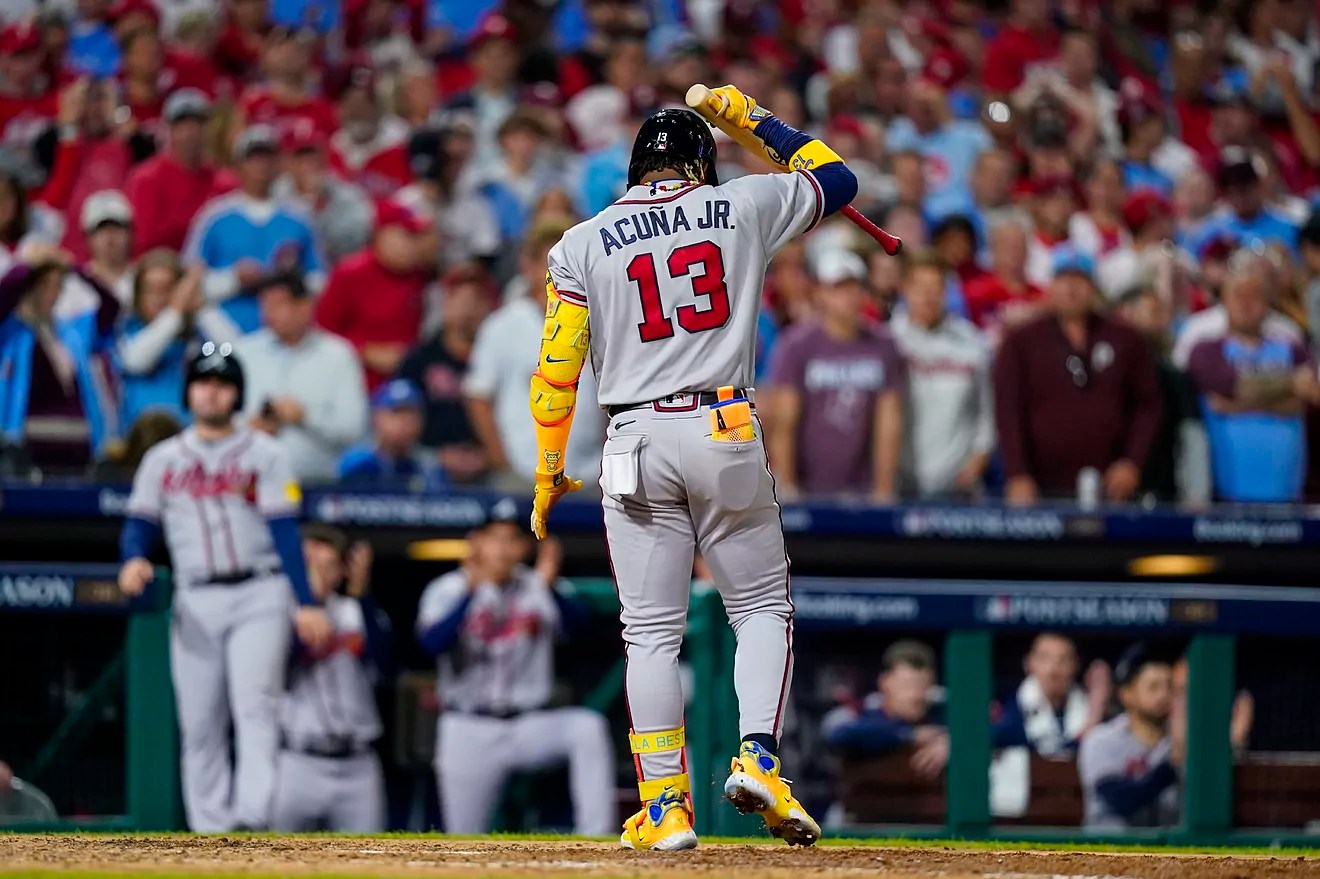
I don’t why this is so, other than star players played terribly. Clayton Kershaw was shelled more than Omaha Beach. Ronald Acuña Jr. wielded a bat that looked like an al dente spaghetti noodle. He was two for 14. The best teams weren’t the best teams at the exact time they needed to be. That’s baseball, I guess. I just hated the way the season turned out.
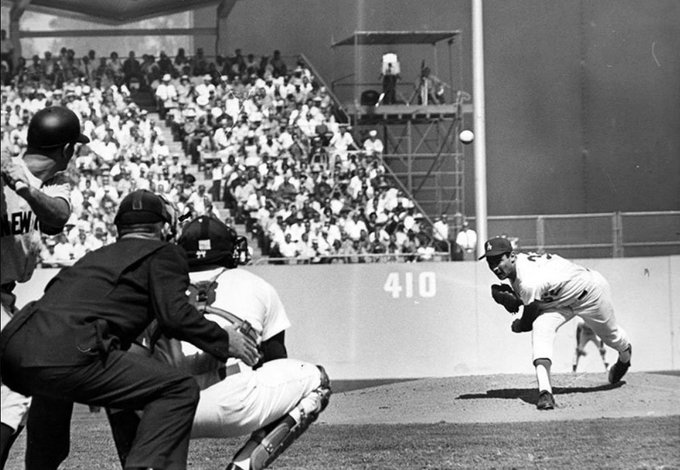
Just to make myself feel better, I will Wax Nostalgic in my Baseball Snittery. This is Sandy Koufax pitching in the 1963 World Series:
And this is Randle McMurphy calling the 1963 World Series:
And the 1963 World Series was a terrible World Series. The Dodgers, after years of Brooklyn humiliation, with the exception of 1955, swept the Yanks 4-0.
I don’t even need winners to be a baseball fan. The Series that made me a semi-Red Sox follower was lost by the Red Sox in 1975. The Cincinnati Reds won in seven games. But in what many called the greatest game Series history –Game 6–the Sox gave up six runs to lose a 3-0 advantage. Then they tied the game 6-6. In the bottom of the twelfth inning, Sox catcher Carlton Fisk came to bat. What followed passed into legend, etc.
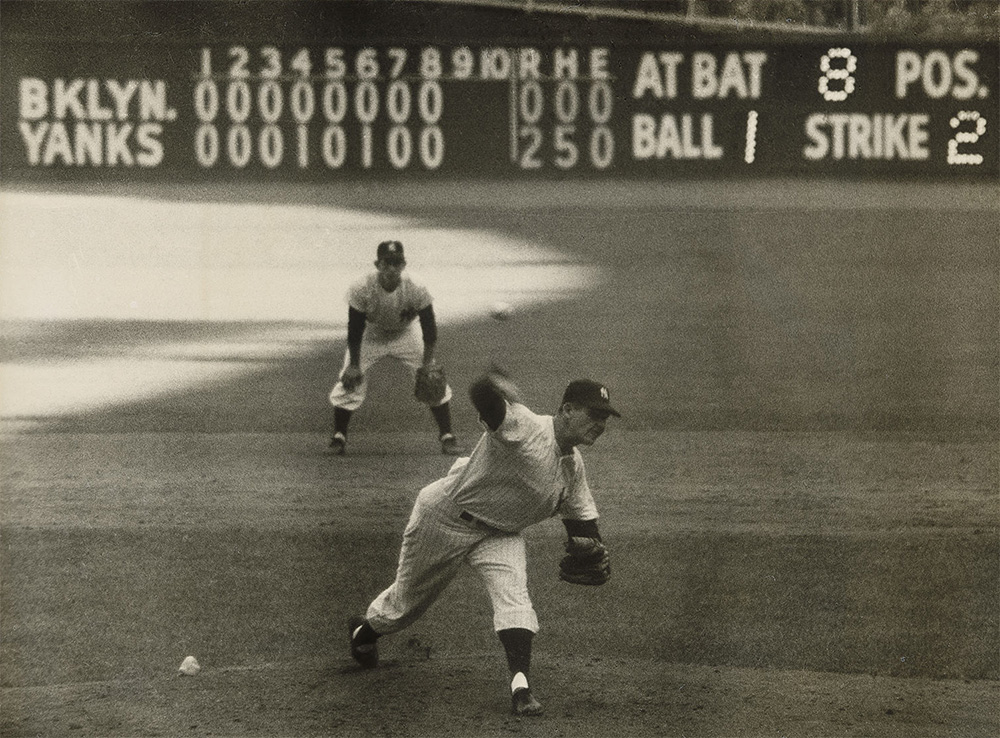
Cuckoo’s Nest demonstrates how vital baseball was to us when I was a kid. A little before, in 1956, Mr. Adams was the principal of Harloe Elementary—he pitched softball on the playground from his wheelchair—and he made sure that lessons were finished in time so that the staff and their students could watch the Series, when the Yanks got their revenge. Those kids saw Don Larsen pitch his perfect game.
Even though two teams I don’t like—one named for a venomous snake, the other for cops who wear Stetsons and big badges (who fought the Comanche, firing their Colts from the saddle at full gallop, but were inert at Uvalde Elementary), I might manage to watch one or two games, if only for what I owe baseball for all the pleasure it’s given me. And World Series coverage has improved so much from Mr. Adams’ time and my childhood, with their black and white static cameras. I have to admit that I love to see close Series games nowadays in the late innings, when the fans are as much fun as the players. The images of what’s on the field are juxtaposed by images of fans in their rally caps, or chewing on the bills of their rally caps, holding their hands over their eyes or even waving those stupid towels. All of them demonstrate the bond between fans and The Game.
But baseball apparently doesn’t have the hold it did on kids— or on Oregon mental patients. A CNN writer suggested why this is so:
This year, World Series viewership will likely not greatly exceed 10 million – or half of what it was 30 years ago. It certainly won’t come anywhere close to the approximately 30 million to 40 million that watched the Fall Classic during the late 1970s and into the 1980s.
Part of what plagues baseball is what plagues all of television: streaming and cable are dividing audiences. Those issues, however, don’t tell the full story.
Indeed, for adults aged 18-29, the rankings for most popular sports to watch in the Washington Post poll were as follows: football (20%), basketball (17%), competitive video gaming (14%), soccer (13%), baseball and auto racing (7%).
I completely understand Enten’s central point: viewership is fragmented. We constantly see advertisements for what look like riveting television miniseries from networks that might as well be on Mars. We subscribed to Netflix once but retreated once the charges for it and the other networks we’d accidentally added started to appear on our credit card. We are neither hip nor affluent.
But competitive video gaming is twice as popular as baseball? I don’t get that. I would rather watch mold grow on bread. No sport—whether it be Ty Cobb spiking a defensive player or Babe Ruth consuming his fourth in-game hot dog—can generate the kind of stories (Roger Angell, Roger Kahn, Doris Kearns Goodwin) the way that baseball can. But competitive video gaming probably oustrips reading, too
What’s far more serious to me is that we are so fragmented, and in so many ways, that baseball is no longer the communal experience it was, for example, at Harloe Elementary in 1956 or in 1963.
If you build it, they will come, the voice told Costner’s Ray Kinsella. If only that was true today.
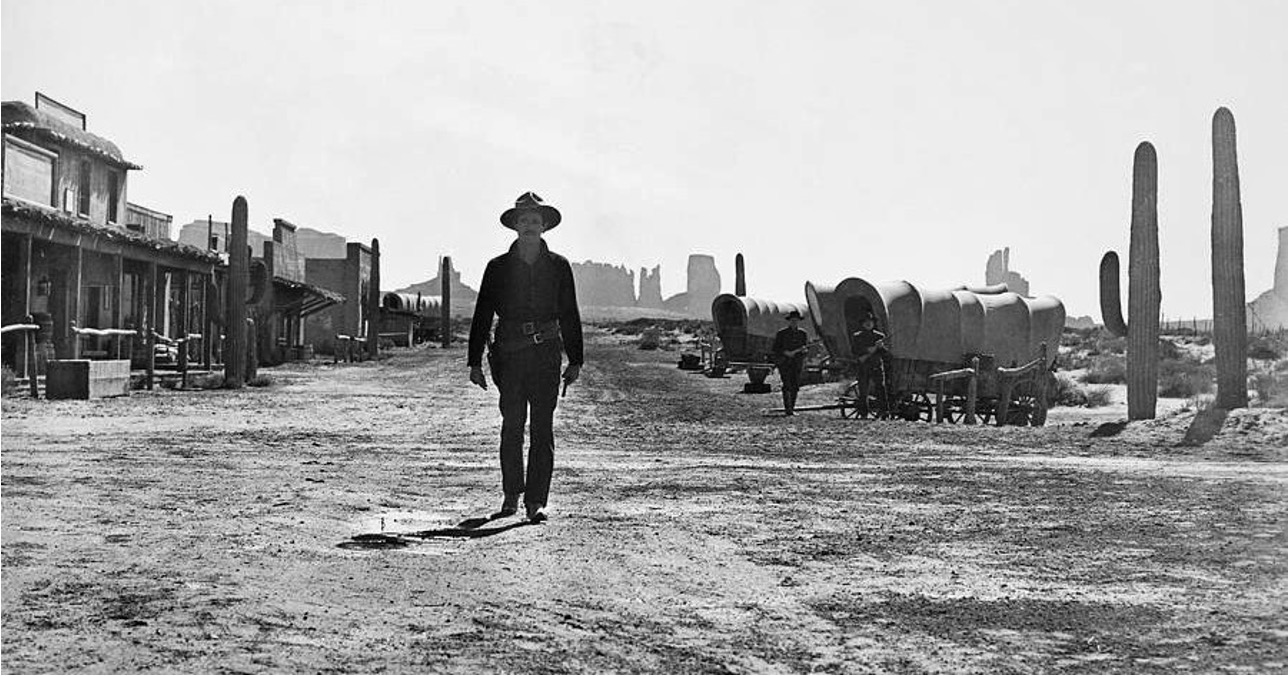
No films demonstrate the crabby director’s gift for visual myth-making better than Clementine (1946), shot in black and white, and The Searchers (1956), shot in Technicolor. They are perhaps his most beautiful films.
The singer-guitarist is 81, and many years ago, I had a fun time hearing him in concert at Poly. This hit is infectious, so I will post it twice. From 1975:
This version, by Miranda Lambert and friends, is delicious. I also love the Great Danes.
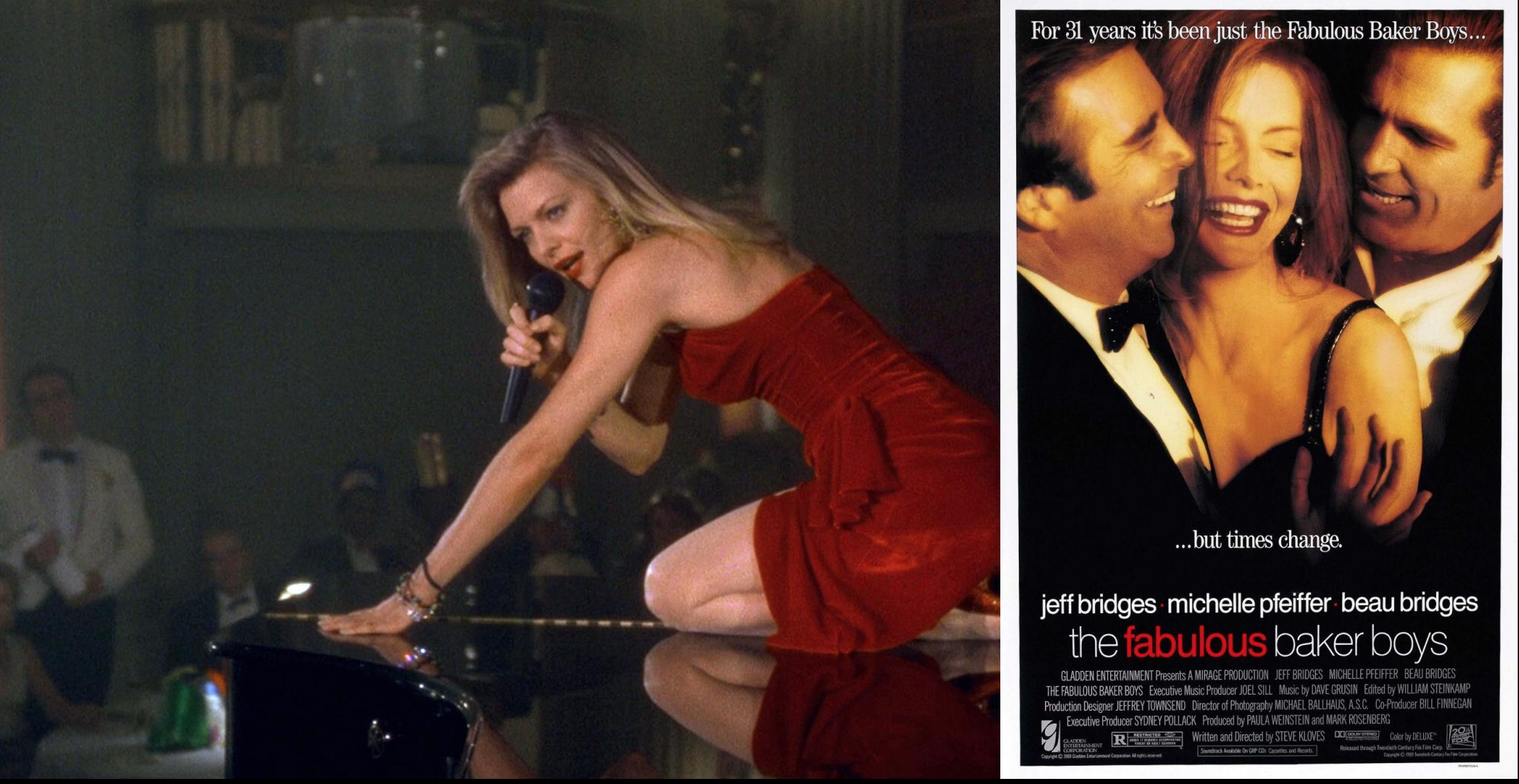
The Fabulous Baker Boys (1989) was on this morning, so I just had to stay in bed, “in recovery” from my Covid and flu shots, and so, being in bed, I just had to watch it.
Michelle Pfeiffer was 31 when she took on the role of the call girl-turned torch singer. The Bridges brothers, the Baker boys, a brother-brother act, are her accompanists. The elder Baker (Beau Bridges, the elder brother in real life) decides they need a female singer to rejuvenate their jaded performances, and her becoming part of their act makes things complicated.
A critic called the film “Romantic Noir” and that’s just about right. It’s an absorbing movie, not a happy one, because the romance doesn’t work itself out to our satisfaction. And the exterior scenes are filmed in a Seattle that looks as it if it could be the Great Depression: weedy vacant lots, boarded-up buildings, walkup apartments just beginning to go to seed, cheap hotels and cheap ballrooms with dirty back offices.
Pfeiffer, then thirty-one, was not sure she could bring this scene off because she didn’t consider herself “sexy.” A choreographer was assigned her and walked her through the song and the moves until, finally, the scene belongs to Pfeiffer.
At this point in the plot, that Pfeiffer has decided to declare her intentions to Jeff Bridges, a cynical man who, fortunately, loves his black Lab, Eddie, and the lonely little girl who comes through his apartment window to visit them.
Here’s the song’s opening, and I would submit that the head snap at the end, the direct gaze suggest that it’s all over for you, Mr. Jeff Bridges.
I think that if a movie scene is authentic, it reminds you of something else you’ve seen, even if it’s seemingly irrelevant. Pfeiffer’s head swivel reminded me of Diana Ross and the Supremes. Here they are on the Ed Sullivan Show, and watch for the hip move and then Ross’s head swivel. For us poor dumb men, the littlest things women do fascinate us, if “fascinate” is anywhere close to being the right word.
Speaking of “poor dumb men,” by the time Pfeiffer climbs down from the piano at the end of “Makin’ Whoopee,” you know that Jeff Bridges is doomed. That’s okay. He can take it. Or he thinks he can. The movie will decide how it wants to work this relationship out.
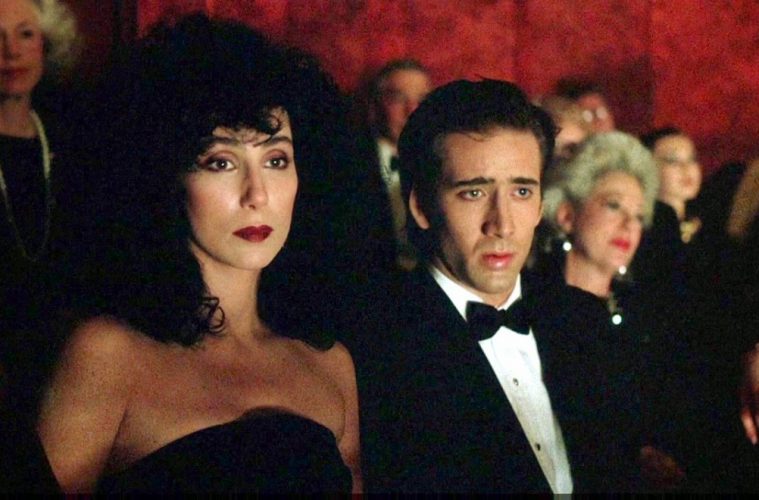
I was surprised that Moonstruck was on this morning. I was not surprised that, while I started watching halfway through—Rose is undergoing her transformation at the hair salon, and then she buys the shoes, “ruby slippers” and that drop-dead dress— I had to watch it to the end and then all the way through Deano’s voice and the credits.
What a marvelously written film. The words made the actors wonderful. So I had to look it up. It had some Nora Ephronesque elements, and, for romantic comedies, she was one of our greatest screenwriters— but she’s not Italian. Nope. But neither is the screenwriter for this Moonstruck. John Patrick Shanley is (obviously) Irish-American. But his early years equipped him to write the Academy Award-winning screenplay script for this film.
So I looked Shanley (above) up on Wikipedia. Here’s why he has the chops for this New York love story:
Shanley was born into an Irish-American family in The Bronx, New York City. His mother worked as a telephone operator, and his father was a meat-packer. The neighborhood Shanley grew up in was considered very rough.
Shanley’s academic career did not begin well, but ultimately he graduated from New York University with honors. In his program bio for the Broadway production of Doubt: A Parable, he mentions that he was “thrown out of St. Helena’s kindergarten, banned from St. Anthony’s hot lunch program and expelled from Cardinal Spellman High School.” He was heavily influenced by one of his first teachers, Sister Margaret McEntee, on whom he based the character of Sister James in his play, Doubt. While at Cardinal Spellman High School, he saw two school productions that influenced him: The Miracle Worker and Cyrano de Bergerac.
After his freshman year at New York University, Shanley was put on academic probation. He then enlisted in the United States Marine Corps, serving in a stateside post during the Vietnam War. Following his military service, he wrote a novel, then burned it, and returned to the university with the help of the G.I. Bill, and by supporting himself with a series of jobs: elevator operator, house painter, furniture mover, locksmith, bartender. He graduated from New York University as valedictorian in 1977,with a degree in Educational Theatre, and is a member of the Ensemble Studio Theatre.
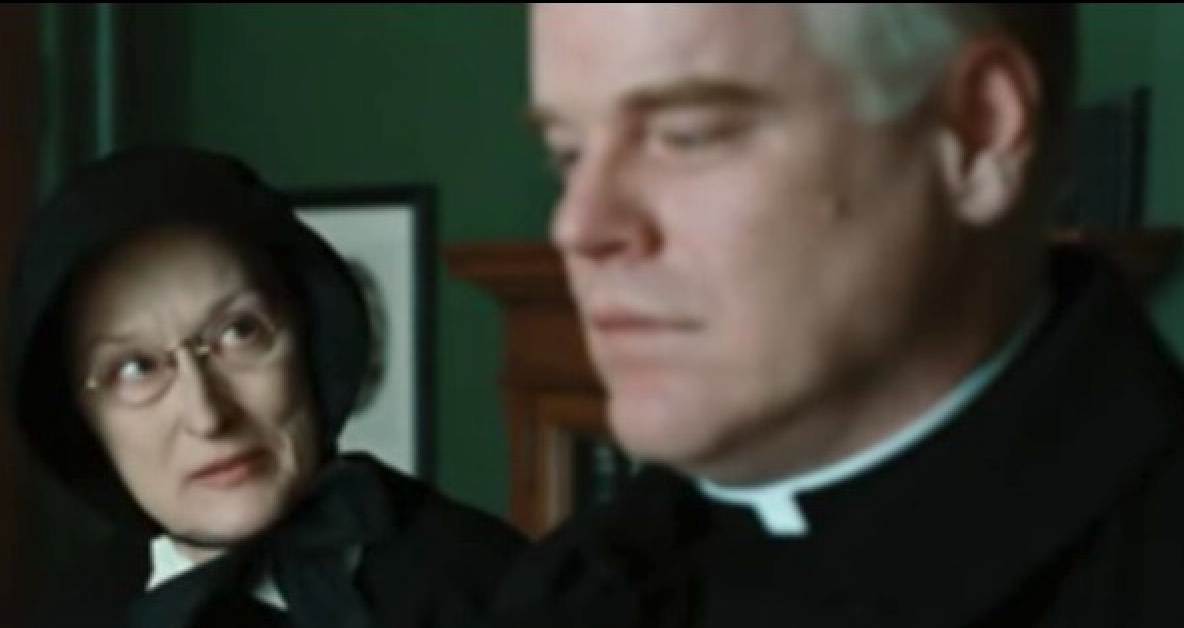
Meryl Streep and Philip Seymour Hoffman in Doubt, which won the Pulitzer Prize for Drama.
What makes this film such a treat for me are both the unexpected turns, like the “love him awful” exchange, and the revealed wisdom that mark Shanley’s dialogue.
Ronny Cammareri: You’re gonna marry my brother? Why you wanna sell your life short? Playing it safe is just about the most dangerous thing a woman like you could do. You waited for the right man the first time, why didn’t you wait for the right man again?
Loretta Castorini: He didn’t come!
Ronny Cammareri: I’m here!
Loretta Castorini: You’re late!
Loretta Castorini: Bless me, Father, for I have sinned. It has been two months since my last confession.
Priest: What sins have you to confess?
Loretta Castorini: Twice I took the name of the Lord in vain, once I slept with the brother of my fiancé, and once I bounced a check at the liquor store, but that was really an accident.
Priest: Then it’s not a sin. But… what was that second thing you said, Loretta?
Rose: Have I been a good wife?
Cosmo Castorini: Yeah.
Rose: I want you to stop seeing her.
[Cosmo rises, slams the table once, and sits down again]
Cosmo Castorini: Okay.
Rose: [pauses] And go to confession.
Rose: No, I think the house is empty. I can’t invite you in because I’m married. Because I know who I am.
Rose: Why do men chase women?
Johnny: Well, there’s a Bible story… God… God took a rib from Adam and made Eve. Now maybe men chase women to get the rib back. When God took the rib, he left a big hole there, where there used to be something. And the women have that. Now maybe, just maybe, a man isn’t complete as a man without a woman.
Rose: [frustrated] But why would a man need more than one woman?
Johnny: I don’t know. Maybe because he fears death.
[Rose looks up, eyes wide, suspicions confirmed]
Rose: That’s it! That’s the reason!
Johnny: I don’t know…
Rose: No! That’s it! Thank you! Thank you for answering my question!
Loretta Castorini: Where are you taking me?
Ronny Cammareri: To the bed.
Loretta Castorini: Oh, God. I don’t care. I don’t care. Take me to the bed.
And then there’s this moment, when, for once, the director tells you all you need to know without being pushy about it. It’s the morning after the opera, and it’s all over for Loretta. She’s in love.
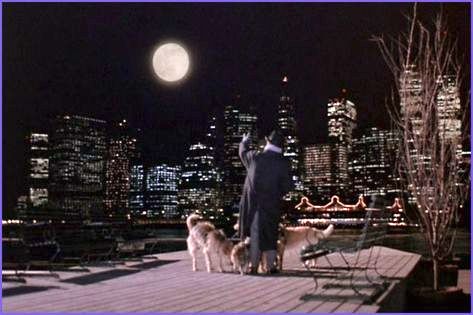
(I’d be remiss if I didn’t mention the heartache of seeing the World Trade Center towers that live on in the shots that establish this as a New York film. I feel the same pang of sadness for two more films I enjoy, Working Girl and Gangs of New York.)
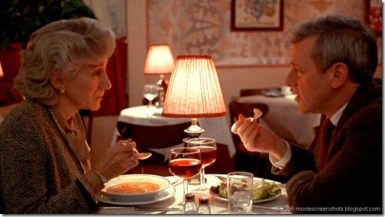
Olympia Dukakis, whom we lost two years ago, won the Academy Award for Best Supporting Actress, and she is somehow both regal and funny, even when the funny bits are a little rueful, as they are in her bittersweet scenes with the late John Mahoney, the university professor who chases his coeds—he reminds Rose that her own husband is being unfaithful—which leads to the eternal questions she asks: “Why do men chase women?”
I guess I’ll have to add this film to the list (Casablanca remains at the top, with John Ford’s The Searchers and the first two Godfathers close behind) of films I could watch a thousand times. I owe its screenwriter at least that many thanks.
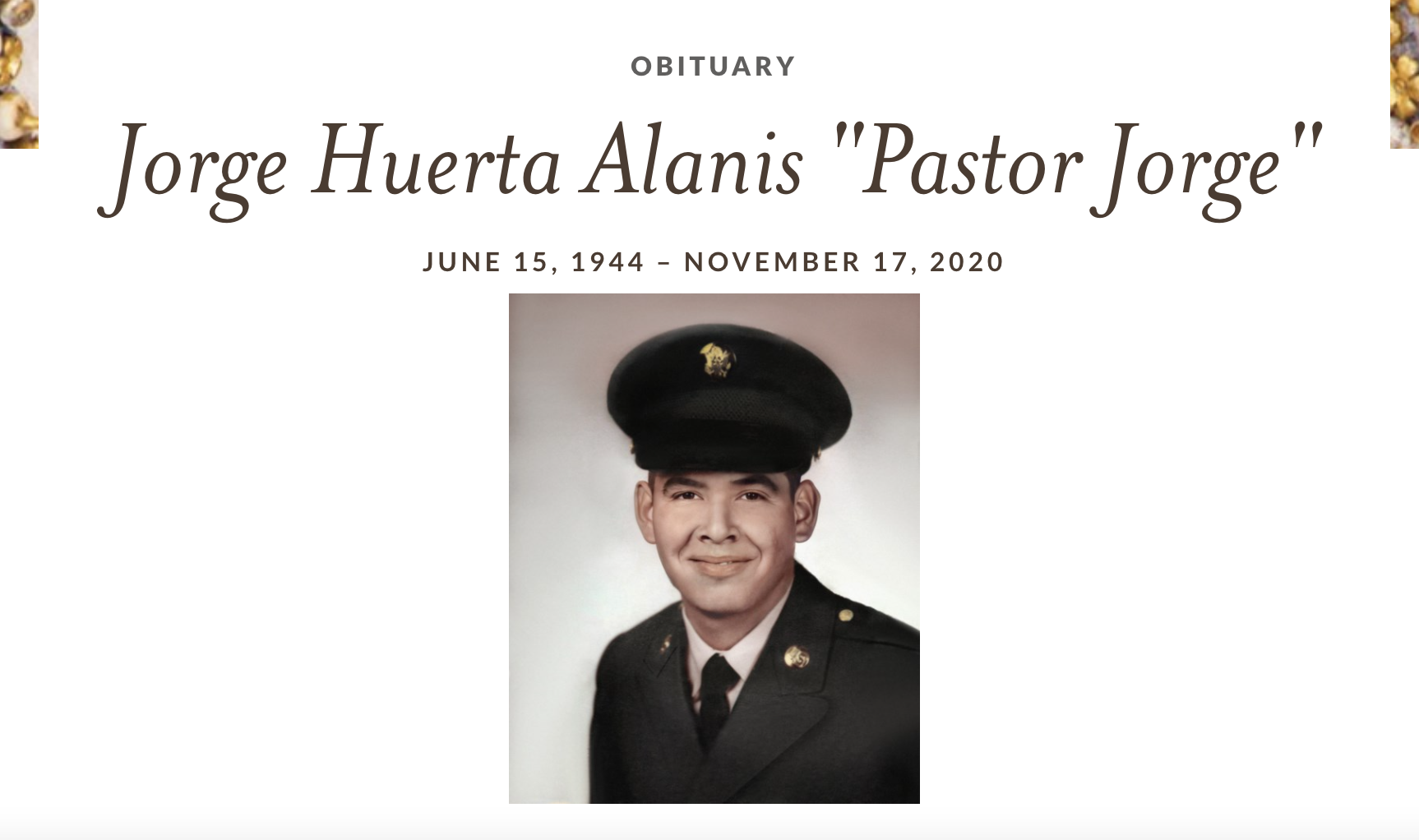
Fifty years ago, this man was one of my best friends. I was working at a Western Auto in Lamont, right out of high school, and moving from Arroyo Grande to Lamont made me unhappy. I missed my hometown. I missed my friends. I missed my girlfriend.
Jorge saved me. We worked together at the Western Auto my father managed. That store stocked everything from bicycle derailleurs to Curtis-Mathes console televisions big as Orson Welles’ coffin and just as heavy, and Jorge, my co-worker,made me laugh. He taught me more Spanish, teased me, threw his arms up in the air when I mangled the language. When something needed to be done–moving a refrigerator, for example, from the store to somebody’s home, he’d put his arm around my shoulder and tell me, “okay, here’s the plan.”
Jorge and I ate together. I discovered chorizo-and-egg burritos because of him, and they so impressed me that included them as a detail in a book I wrote about World War II.
He was a superb golfer. Like another Texan, Lee Trevino, he’d learned to hit low smoking fairway shots beneath the wind. When he messed up a shot, he laughed. When I messed up a shot–usually, a suicidal duck hook–he laughed. He had a beautiful swing, I remember.
I learned how to drive a three on the tree, the delivery truck, from him, how to get a furniture dolly through narrow doorways, but, given my ADHD, I never did learn how to tie a grape knot.
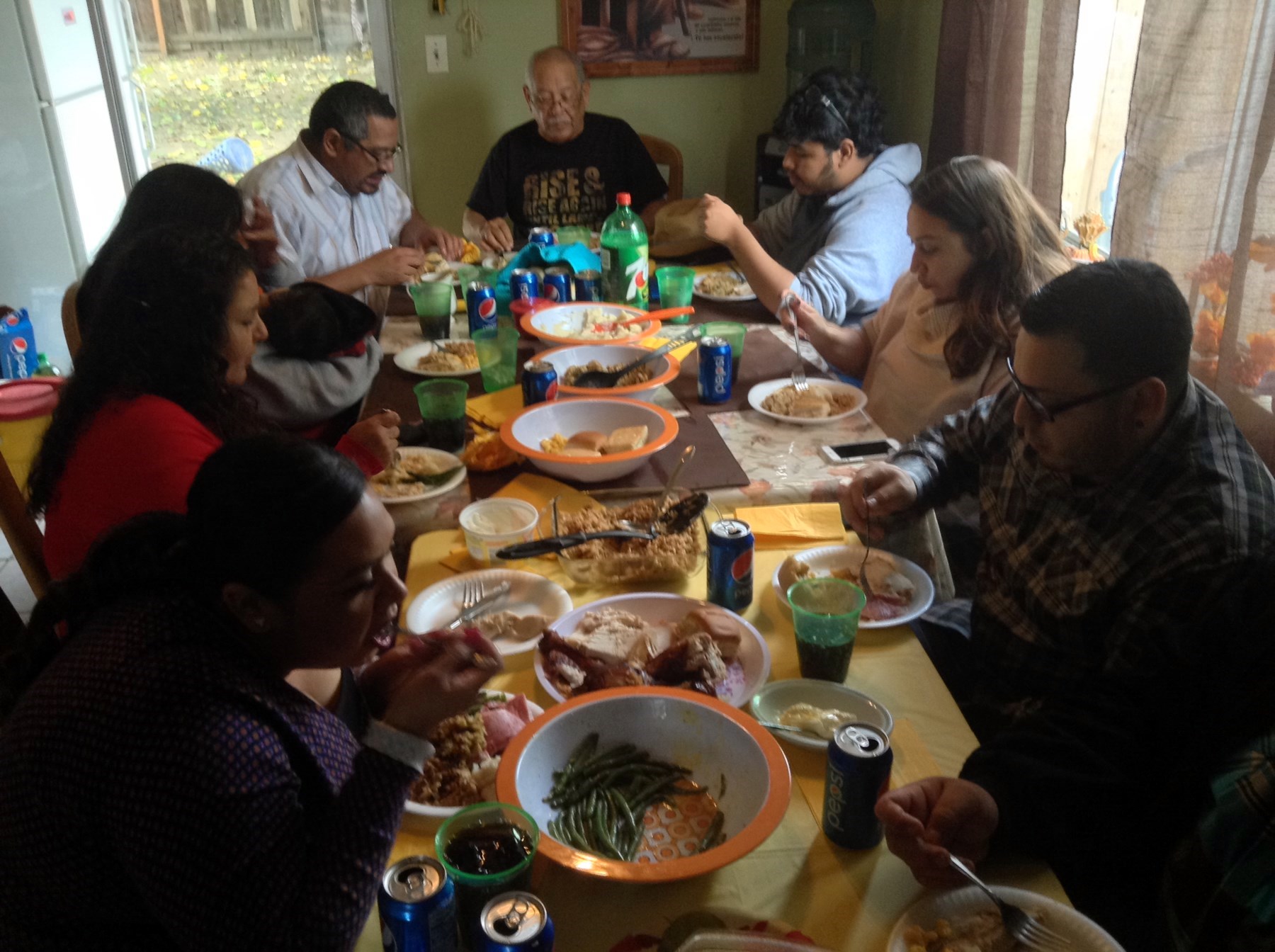
Going into a Mexican-American home in Bakersfield to make a delivery was, for me, like entering another world where I felt completely safe. The kids would be hopping up and down–a refrigerator!–and Grandfather would wave cheerily from his Western Auto recliner while the smells from the kitchen, thanks to Grandmother, were incomparable, chiles and onions and chicken or pork and fresh-baked tortillas. You could not leave without eating first.
There was always a dog, usually a shepherd mix, a statuette of Our Lady of Guadalupe, often with a votive candle, portraits of one or more Kennedys , and in heavy dark rose frames, sepia-toned portraits of los abuelos, the grandparents, on their wedding day. Grandfather was frequently in Army khakis, Grandmother’s face was framed in white lace. They looked serious.
Young men would be working on a car out front. Mom would be hanging laundry—it dries quickly in Bakersfield— on a line out back before she stopped to come in and greet us and her refrigerator (autumn gold or avocado or bronze; these were the seventies, after all).
Years after the seventies, I knew that Jorge had become a pastor but I did not know until tonight that he’d died.
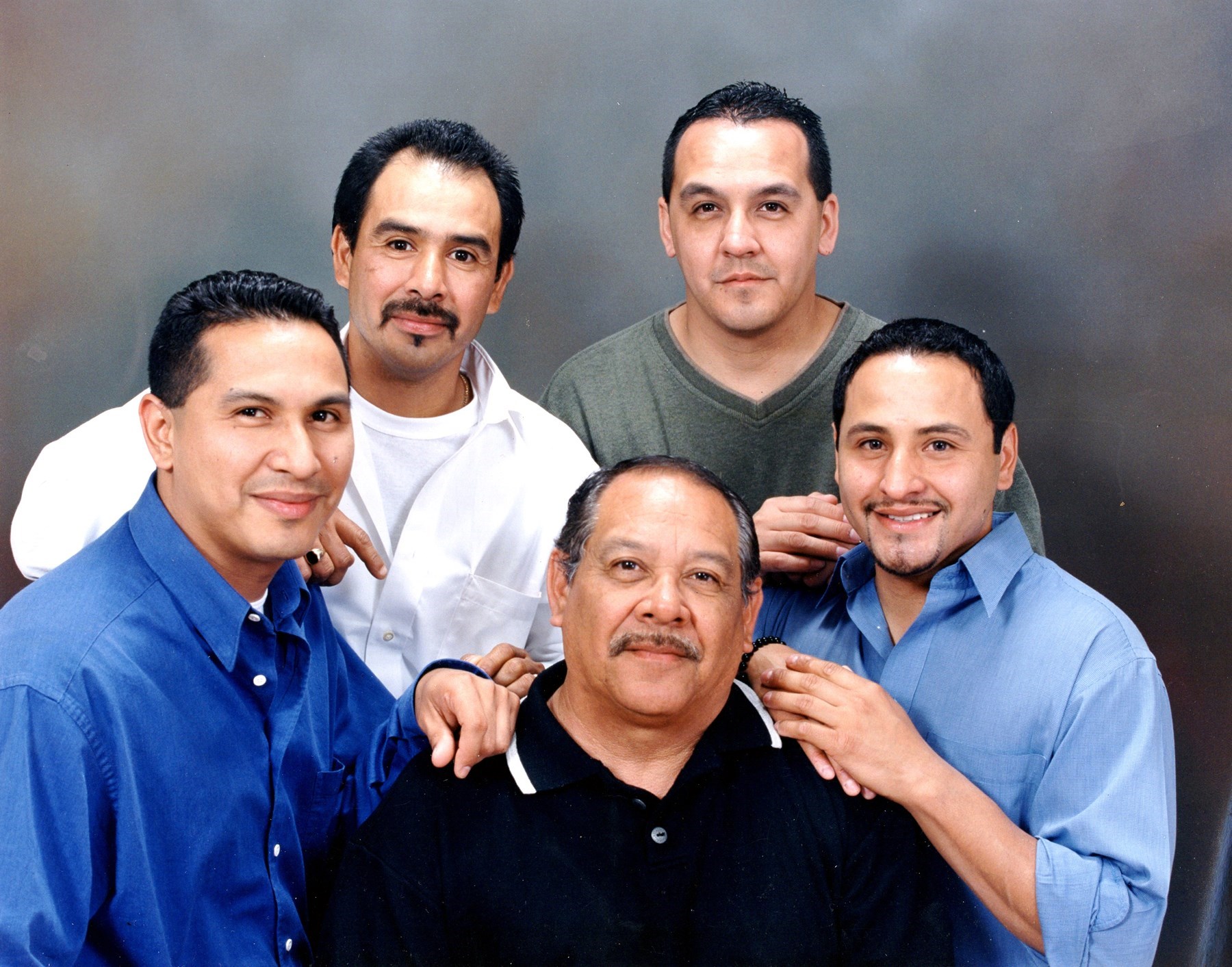
I wish you could have seen him in between that army portrait and the photos of him as an older man. He was handsome, with a small Cantinflas mustache that twitched when he was about to laugh. Or when he was about to make me laugh.
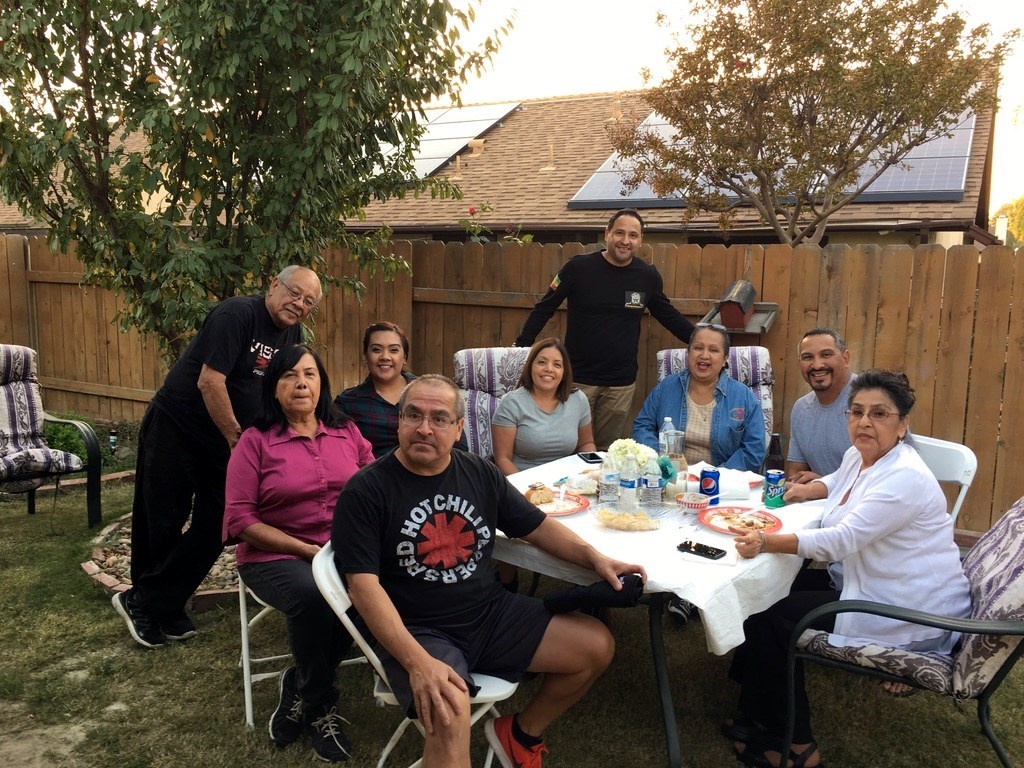
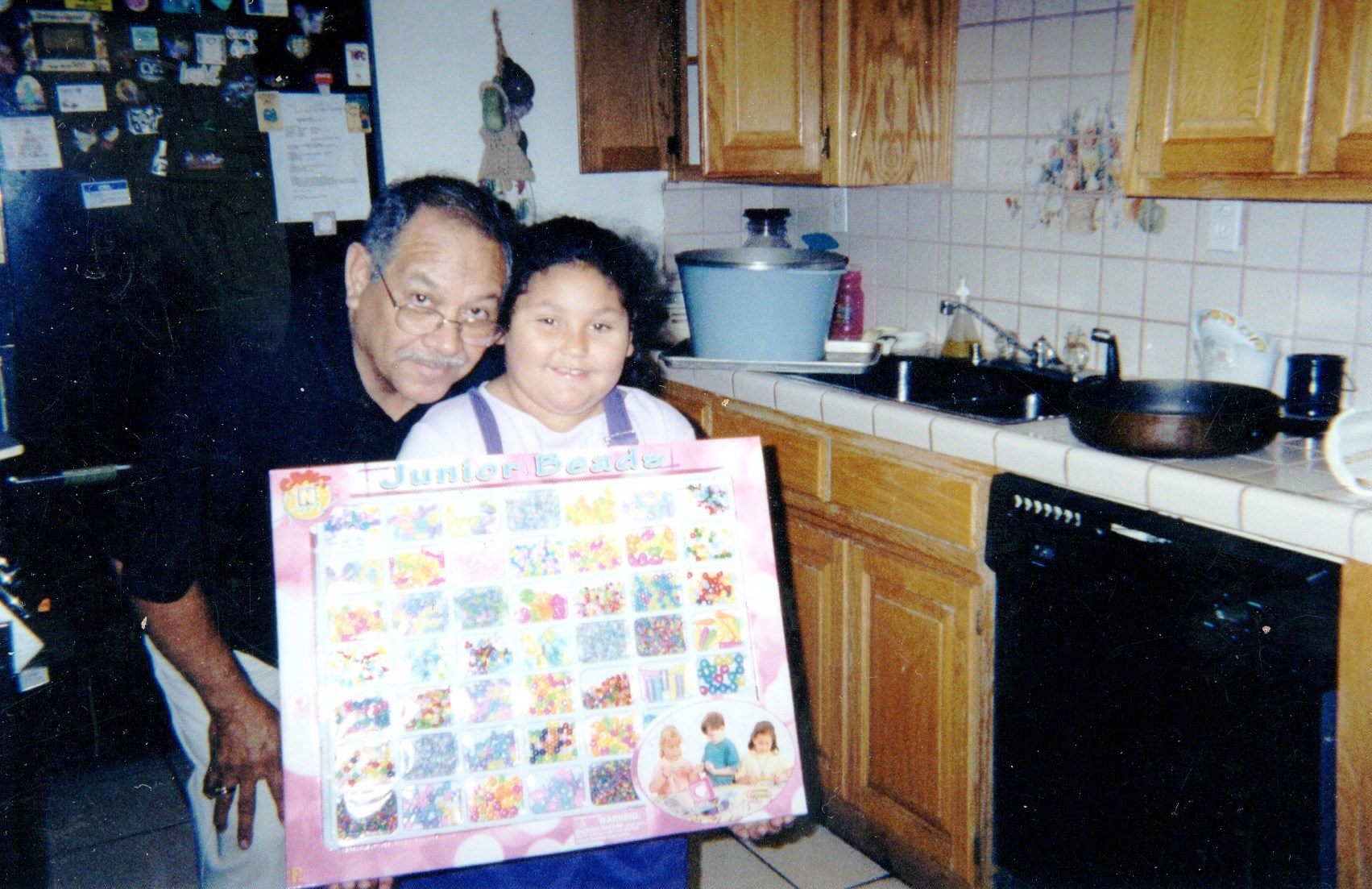
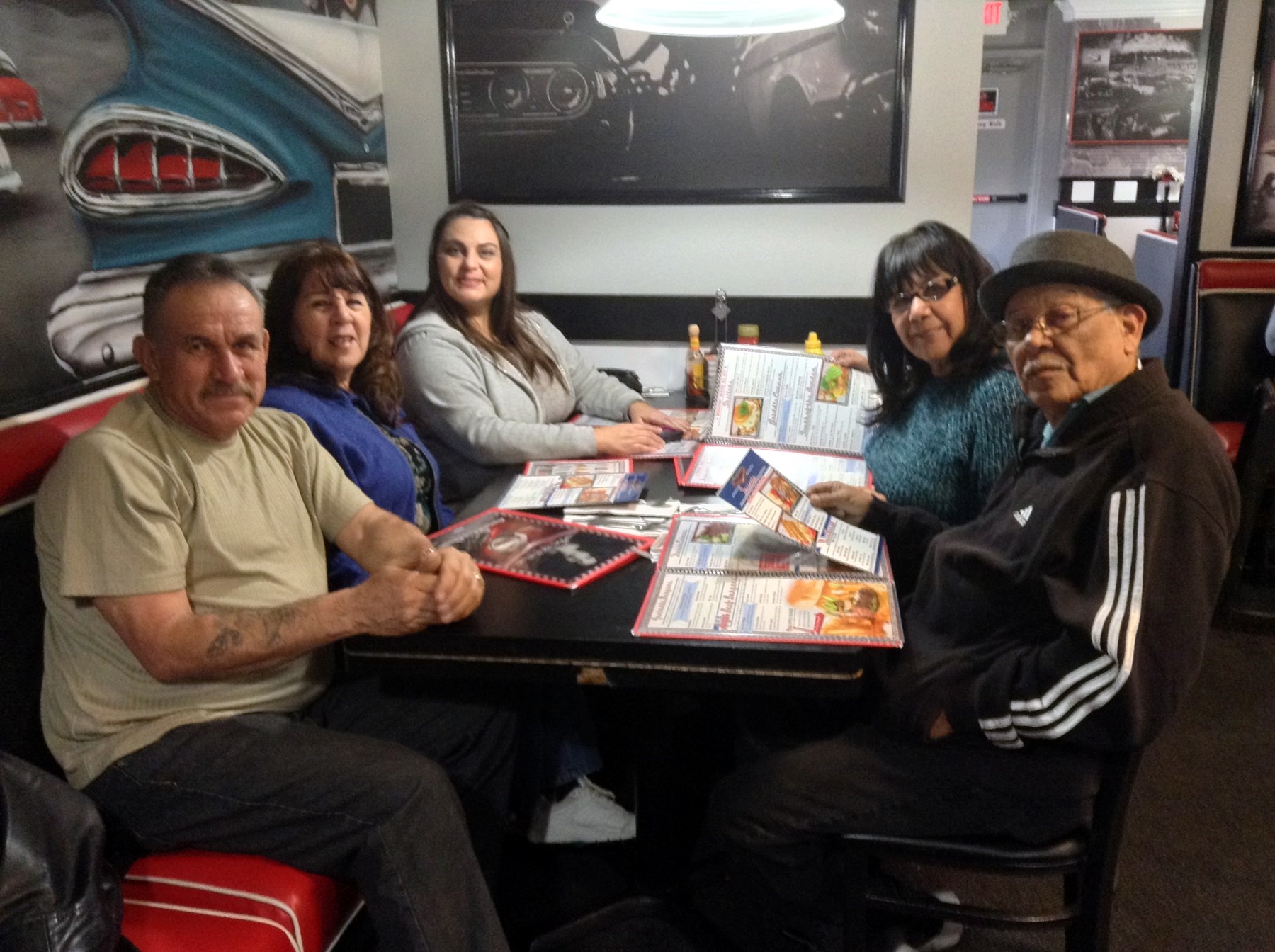
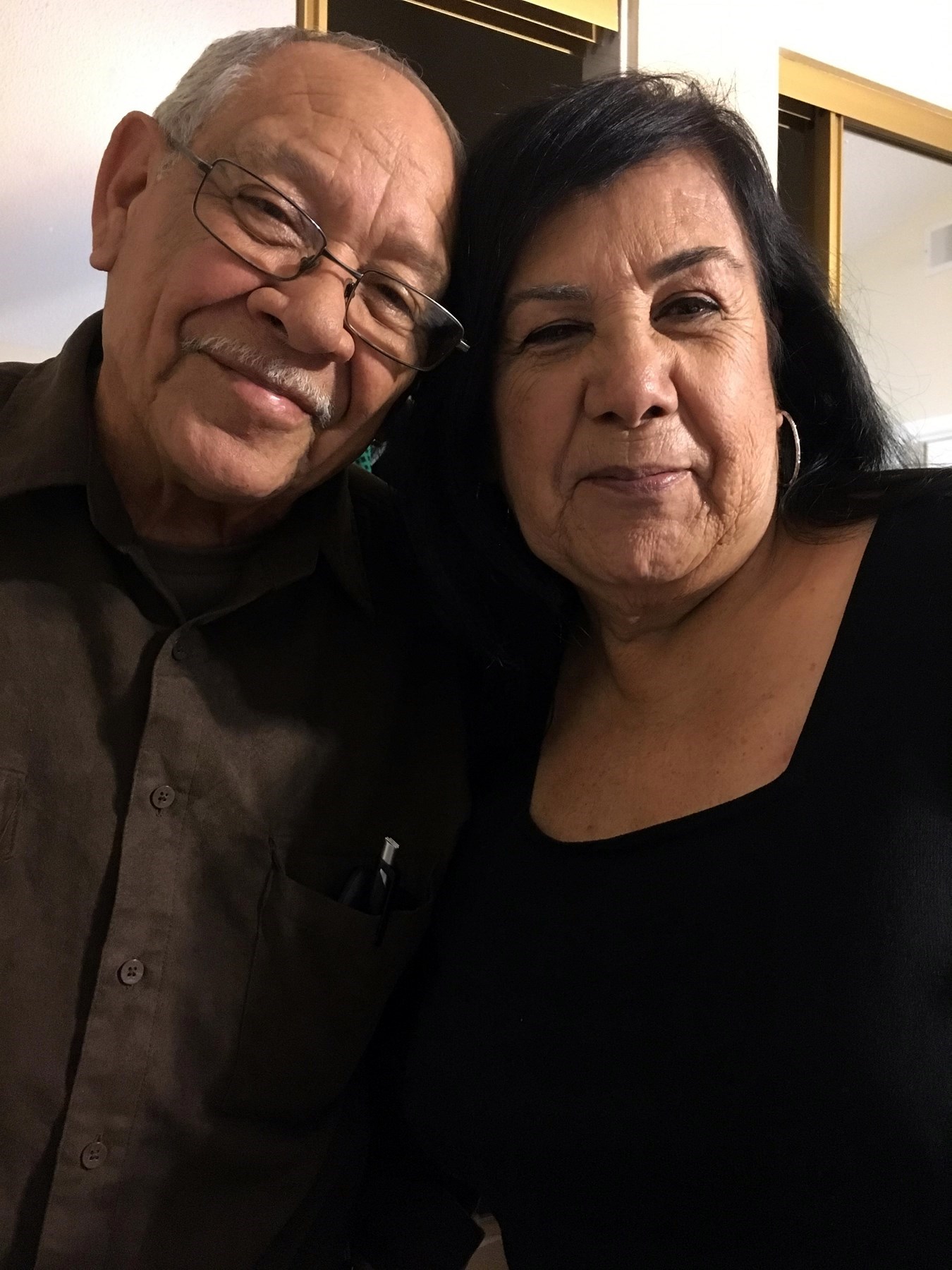
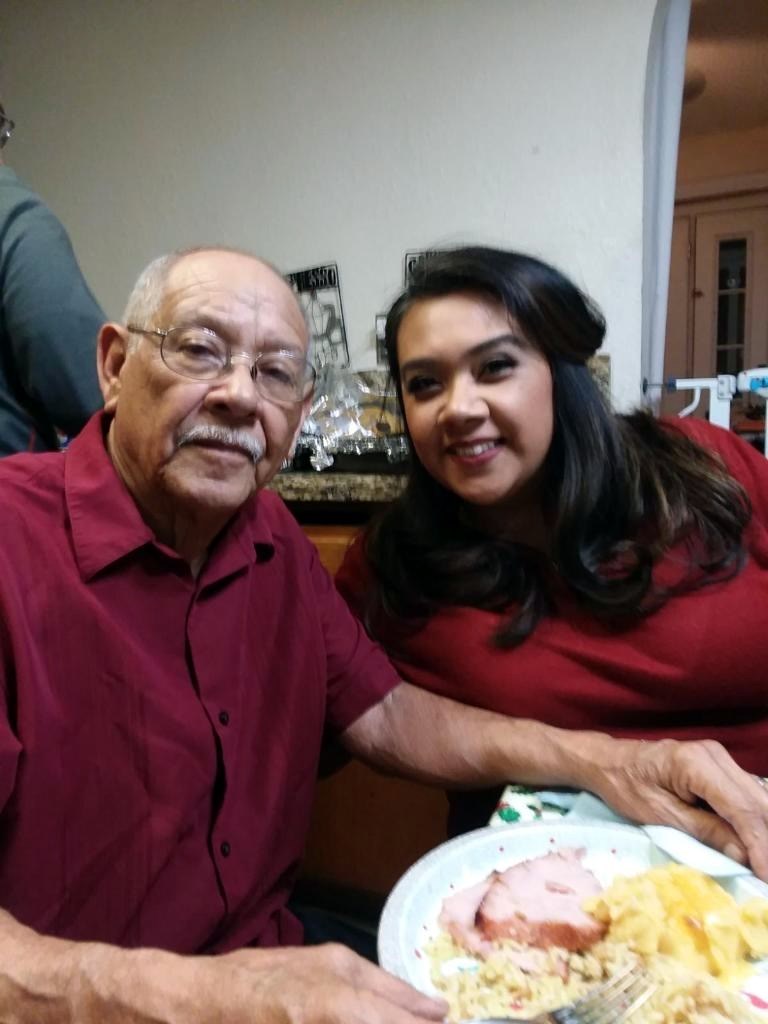
Jorge Huerta Alanis, you were one of the great men of my life. So many of the photos posted by your family show you at table, surrounded by your children and grandchildren and by the food I can almost smell.















 A Work in Progress