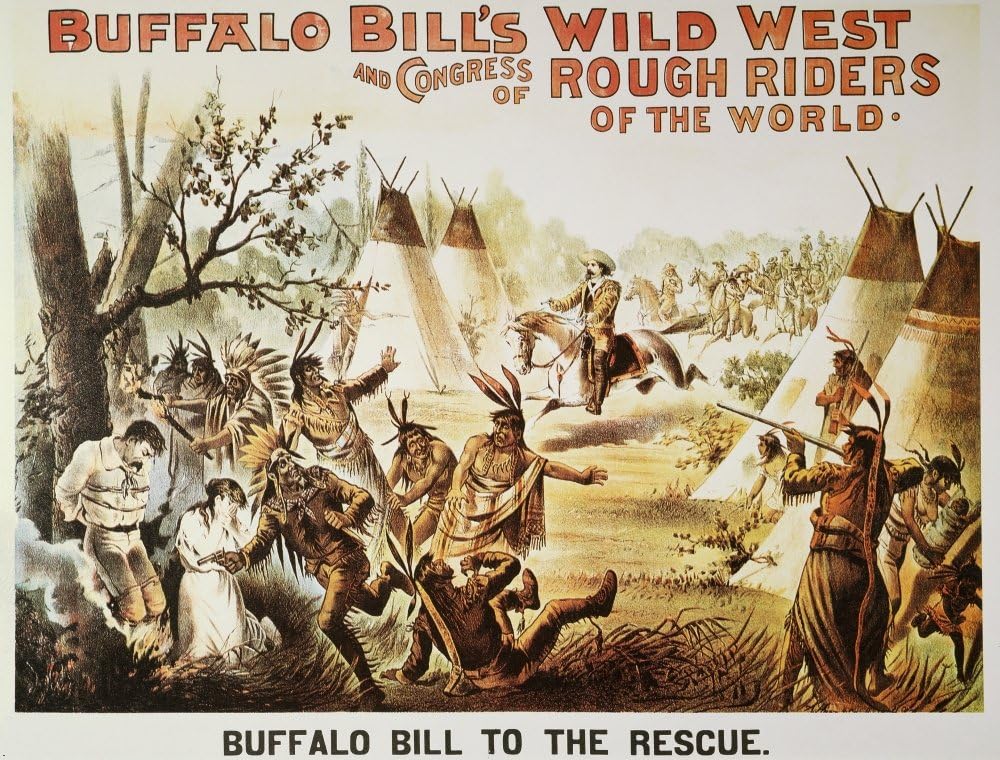
Long before there were the television Westerns I grew up with, and long before there was television, there was Buffalo Bill’s Wild West Show, which played all over the world, including for Queen Victoria and a panoply of royal princesses. What I did not know is that before impresario Bill Cody died in 1917, his Wild West show visited San Luis Obispo twice, once in 1908 and once more in 1914.
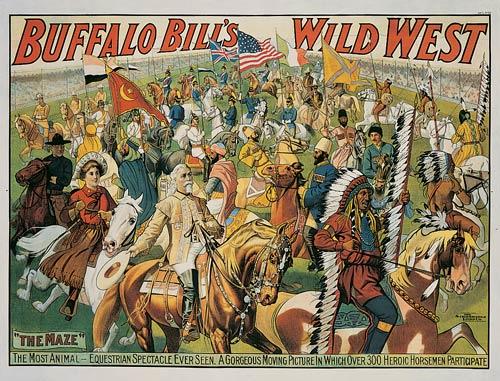
The advance the 1908 show got—notices in the Tribune for weeks beforehand–rivals the publicity for the first airplane flight over San Luis Obispo two years later. Here’s the poster locals would’ve seen in 1908:
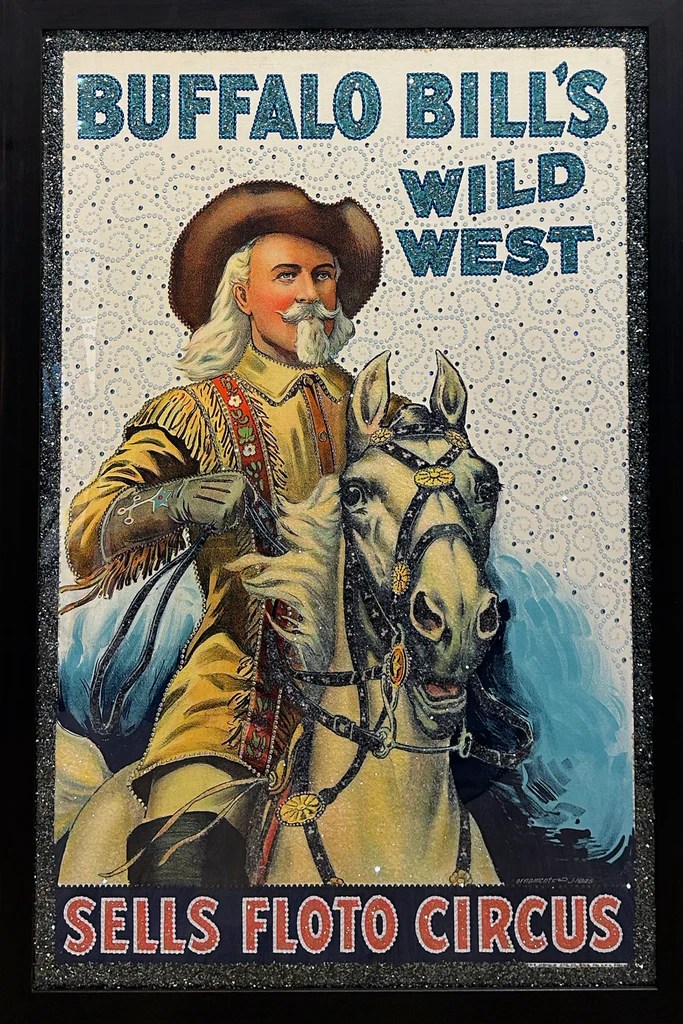
And here’s the 1914 version, when Cody’s show, maybe fading a little by then, was traveling alongside the Sells-Floto circus:
San Luis was tiny, so where are you going to put all those elephants and lions and Bill’s buffalo? For the 1918 show, he City and the showmen finally agreed on Mitchell Park, which remains a park today, near the corner of Osos and Pismo.

By 1908, a onetime main attraction was eighteen years dead. Sitting Bull, the Lakota Chief, appeared with the show in the 1880s, near the close of his life. He was shot dead by Indian police at the Standing Rock Agency on December 15, 1890 at the climax of the Ghost Dance movement .
(That was just two weeks before the Seventh Cavalry’s revenge at Wounded Knee. Nineteen troopers received the Medal of Honor for their hard day’s work in killing 300 Lakota. The troopers had to ride two miles to gun down two women running in the snow.)
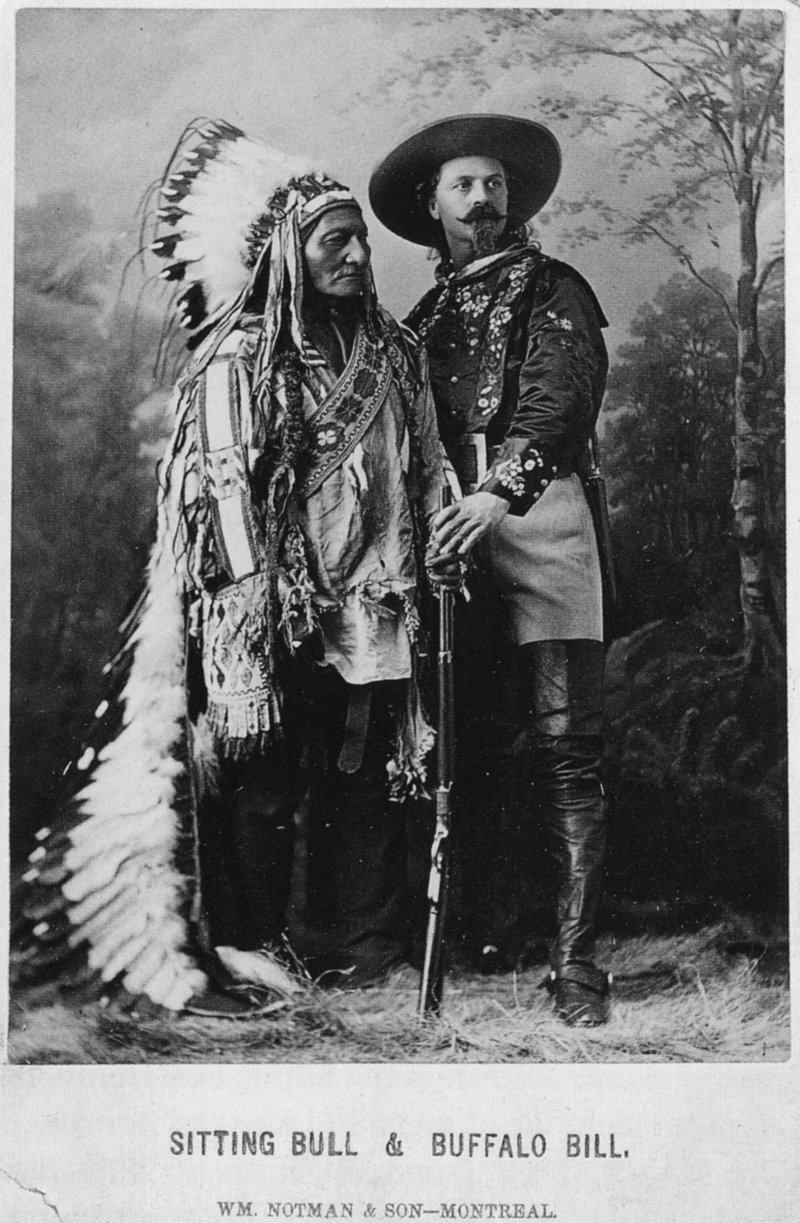
Back at Standing Rock on December 15, one of Sitting Bull’s horses had been a souvenir from the Wild West Show, trained to rear and prance at the sound of gunfire. The horse did just that when the shooting broke out.
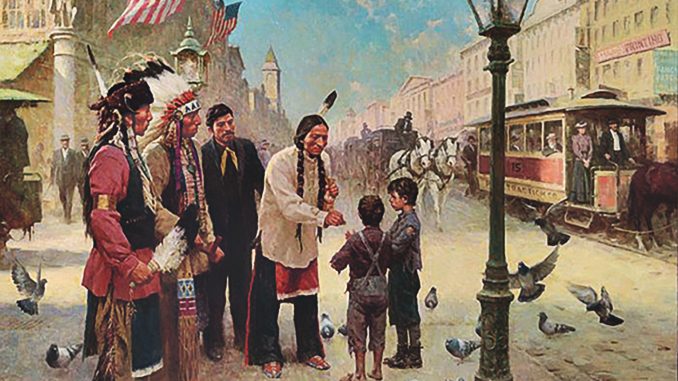
In 1884, one of the show’s stops was Philadelphia. In addition to his stipend for appearing with Cody, Sitting Bull sold autographs. Then, as was typical with him, he gave all the money away.
It was in Philadelphia where was appalled by the sight of ragged children in the street, so that was where his Philadelphia tip money went. Likewise, Sitting Bull’s contemporary, Crazy Horse—two Arroyo Grande settlers, soldiers in 1865, saw him perform a “dare ride” across their front—was the same. He was among the finest hunters in his band, and, on the return to camp, he made sure that widows and orphans were fed first.
The Lakota loved children. Another thing that shocked Sitting Bull in 1884 was that so many urban children worked, from shining shoes to factory machine-tending, which killed them sometimes. Children, he believed, should be free, and they should be free to play.
So the sight of ragged children, many of them immigrants, moved Sitting Bull. “The White Man knows how to make everything,” he remarked to his companions. “He does not know how to distribute it.”
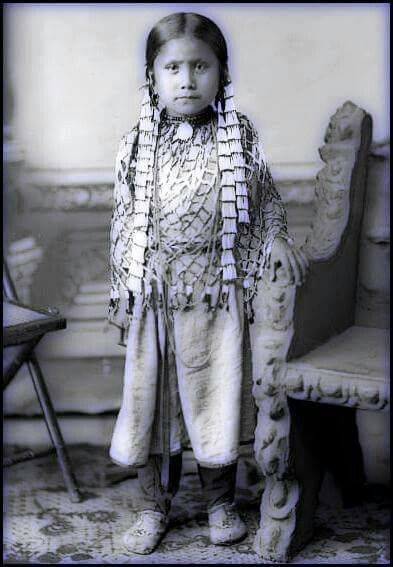
This is White Dove, one of his daughters:
Crazy Horse had a daughter, too. Her death had hurt him deeply. In the late spring of 1876, he visited his little girl on her funeral scaffold. He stayed for a few days, praying, fasting, talking to his daughter and listening for her answer. He got it. When he left, she had given him the calm he needed for the upcoming fight. All the Lakota knew it was coming. Sitting Bull had a vision of it happening. The fight was the one that would break out in the Valley of the Greasy Grass, what the waischus–White people—called “Little Bighorn.”
 A Work in Progress