
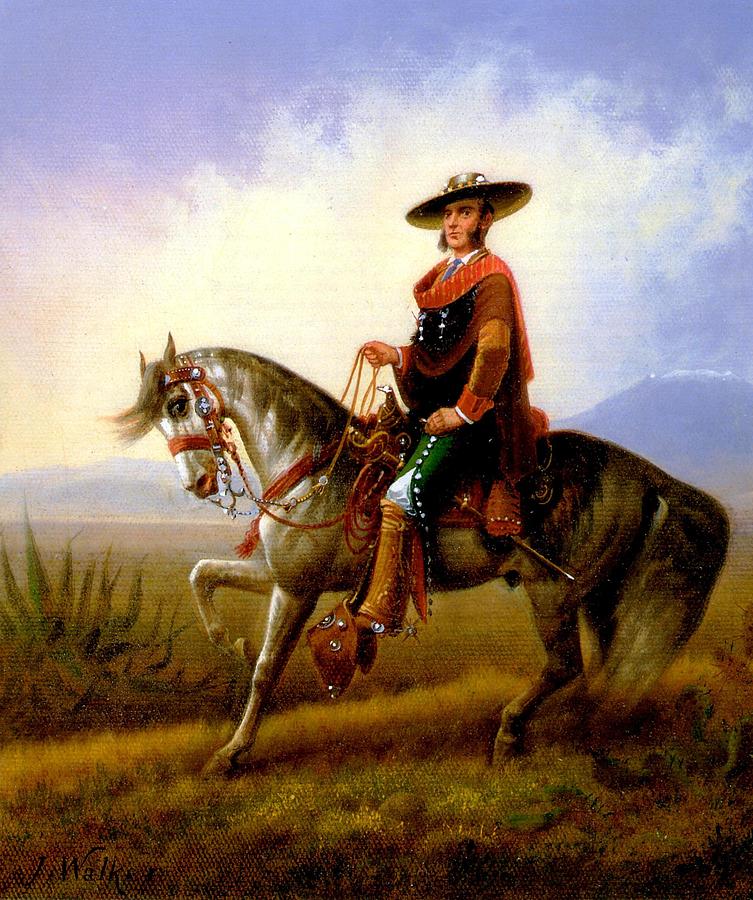
Since Arroyo Grande founder Francis Branch assumed Mexican citizenship to obtain the 1837 patent on his 17,000-acre Rancho Santa Manuela, his family’s Christmases would’ve had a distinctly Mexican flavor.
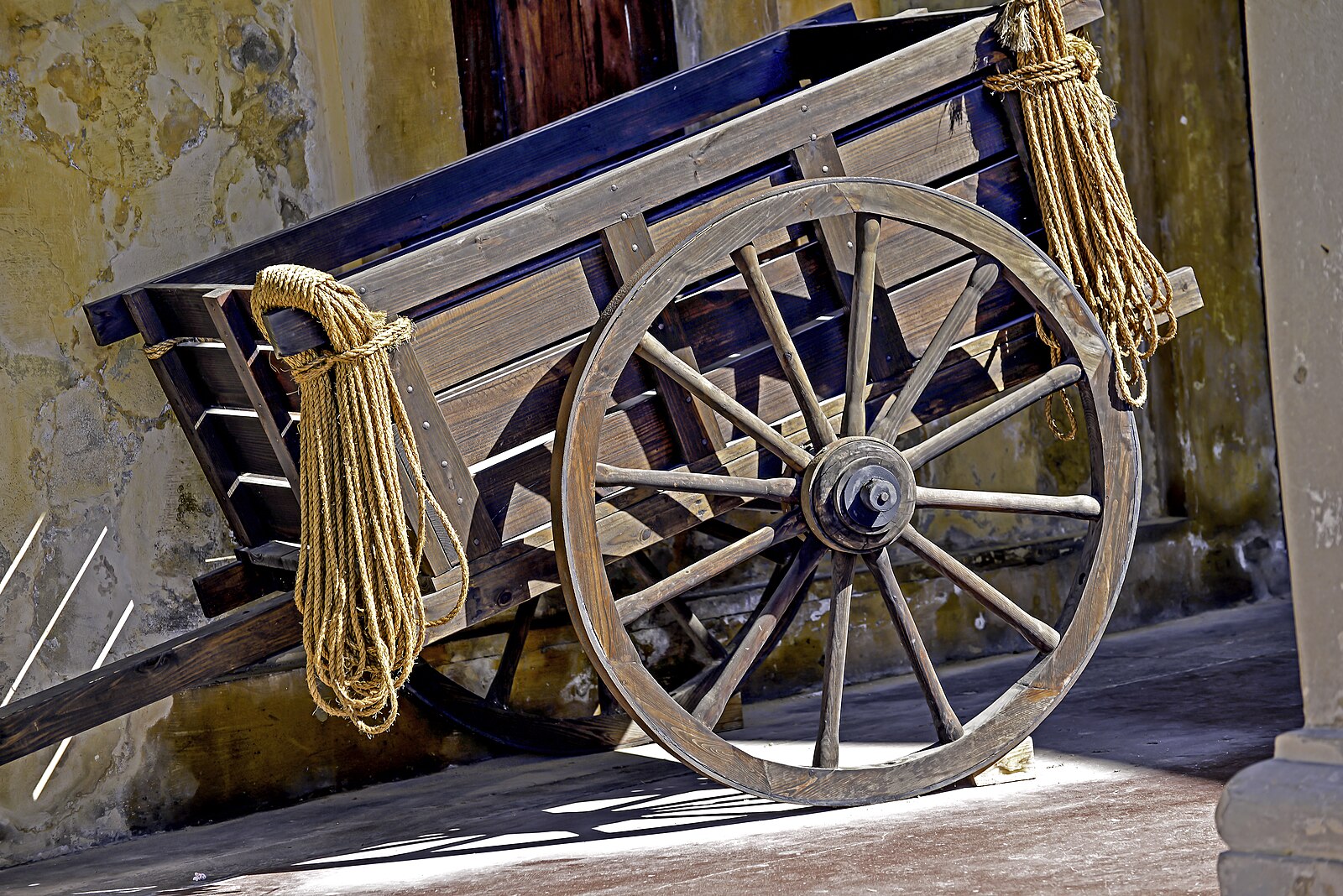
The dean of county historians, Dan Krieger, wrote a 2018 column with his wife Liz about Christmases in the rancho days. Rancheros, Krieger explained would’ve ridden into San Luis Obispo dressed in their finest, including their silver-inlaid saddles. Their families might’ve followed in the two-wheeled carretas, or carts, decorated for the occasion.
A carreta ride from Santa Manuela to the Old Mission couldn’t have been comfortable.
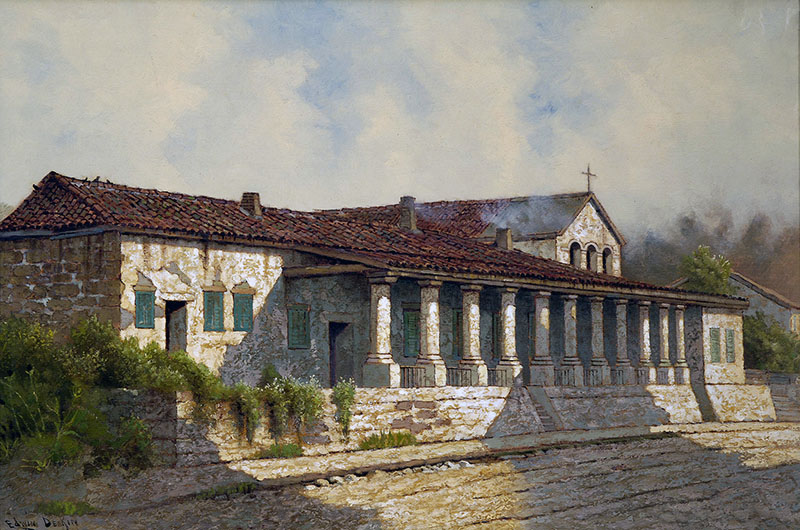
In town, Branch and his wife, Manuela, might’ve attended Christmas Eve mass. That would be followed by a Christmas play that focused on the shepherds’ discovery of the Christ child. And, for children, no holiday celebration would’ve been complete without the piñata, filled with the sweets that would spill out once the successful blow had been delivered.
It was Queen Victoria’s German husband, Albert, who introduced the Christmas tree to the English-speaking world, and by the 1890s, it was central to Arroyo Grande’s celebrations. An 1896 Arroyo Grande Herald notes the big tree sponsored by the Grand Army of the Republic—Civil War veterans—put up outside their hall on Bridge Street, roughly across the street from the IOOF Hall.
Later, community Christmas trees marked the holidays. The whole town gathered for its lighting in a custom that began in 1898 went into the 1940s. The Christmas trees were tied to the nation’s history: a 1937 Herald-Recorder article—this Christmas was observed during the Great Depression–notes with some alarm that the community Christmas expense fund, whose goal was $100, had not yet been met. Another issue Depression-era paper notes the generous contribution of a man who sent a check for $2.50 toward that year’s Christmas fund.
Sadly, a December 5, 1941 article anticipates the lighting of that year’s tree, an event that never would have happened because of the strict blackout regulations enforced immediately after Pearl Harbor. Arroyo Grande would later learn that two of its own, sailors on USS Arizona, had been killed on December 7.
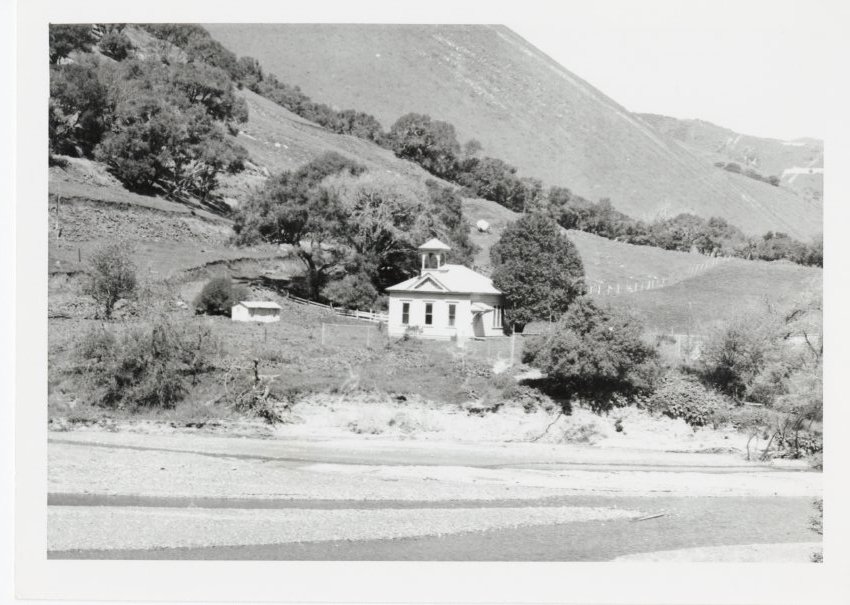
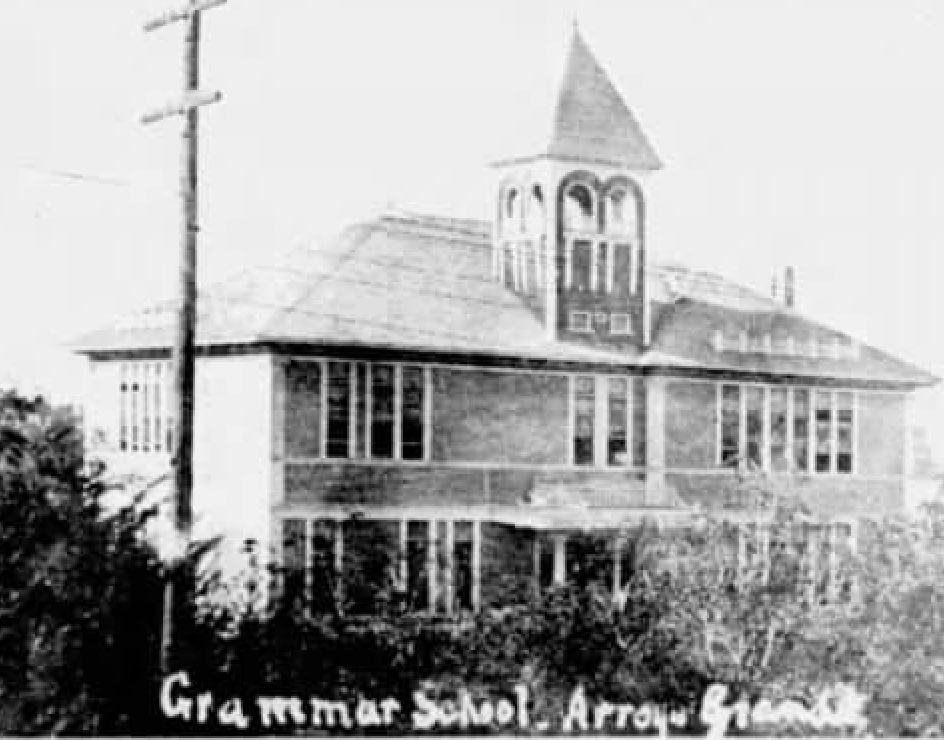
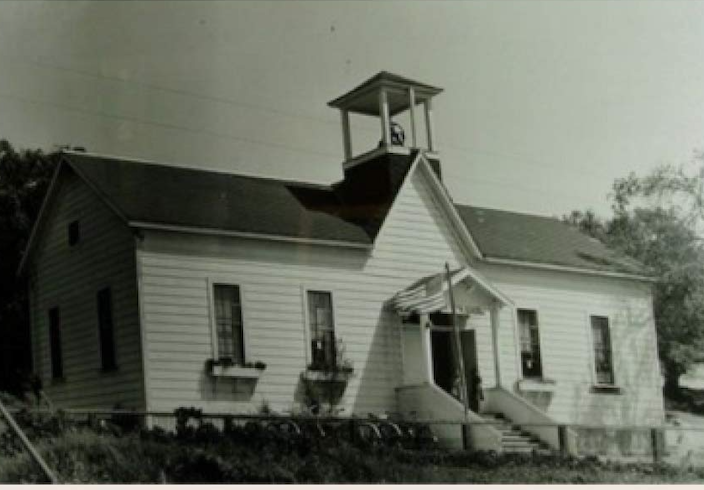
School pageants were another way to the bring smaller, rural communities that surrounded Arroyo Grande together; little country schools were central to farm life in Arroyo Grande; they served as voting precincts and as meeting places for organizations like the Farmers’ Alliance.
In town, an 1896 Arroyo Grande Grammar school program includes a play entitled “Brownies in Fairyland,” with an extensive cast that includes many pioneer surnames—Clevenger, Phoenix, Ballagh, Parsons, Musick, Whiteley and Silva are among them.
Even the tiny Santa Manuela School had a pageant in 1936, featuring familiar carols like “Hark! The Herald Angels Sing” and less familiar ones, like “Down the Chimney.” The teacher, Adelaide Rohde, would’ve spent countless hours rehearsing her students in addition to teaching her daily lessons, directed to multiple grade levels in a school that probably had no more than twenty or twenty-five students. But Santa Manuela was still prominent enough so that Santa himself made an appearance at the end of the program, handing out bags filled with popcorn and sweets, including to Miss Rohde and the eight audience members.
Since Branch School was twice the size of Santa Manuela—two rooms—it attracted an impressive audience of 125 in 1934. Both teachers—Mrs. Bair and Miss Whitlock—were also from prominent families—the Bairs ranched in the Huasna Valley and the Whitlocks owned the Commercial Company, a dry-goods store on Branch Street. The names here, too are familiar, many of them Azorean—Coehlo, Silva, Amaral, Reis—but George Cecchetti Sr., whose father came from Pisa, and four Agawas, two boys and two girls, whose parents came from Japan, also sing and act. The program features two harmonica solos, one by Billy Agawa and another by Francis Fink, who performed “Red River Valley.”
The Temple of the People’s Christmas observation seems to have been organized by Madame Borghild Janson, “the noted teacher of vocal culture.” A 1927 Herald-Recorder notes that the previous year’s program “overfilled” the Hiawatha Lodge, so 1927’s would feature two performances. Madame Janson staged a mystery play, a medieval tradition whose subject was biblical stories or the lives of the saints. In her choice of songs, she stuck to her theme. “Scandinavian Christmas songs from the 12th century” were part of the part of the program as well as more familiar Christmas carols.
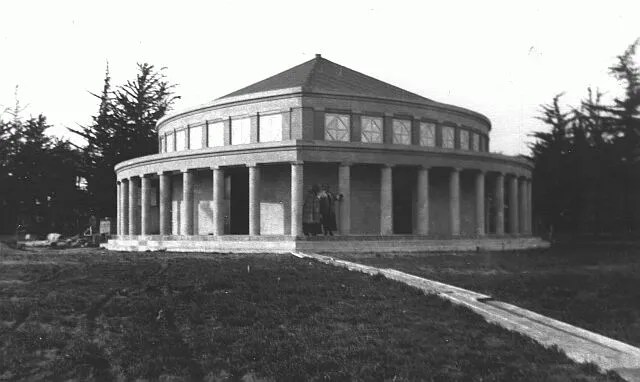
A common thread in all of the holiday observations is the bringing together of people; Christmas broke down the isolation typical of far-flung rural farms and ranches. Seeing distant friends and neighbors must have been as much a celebration as was Christmas.
Adapted from The Heritage Press, published quarterly by the South County Historical Society. (Membership is $25 annually for individuals and $40 for couples.)
 A Work in Progress