
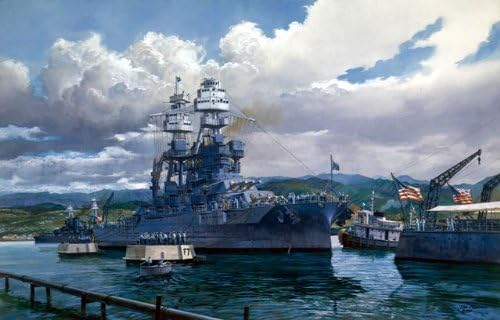
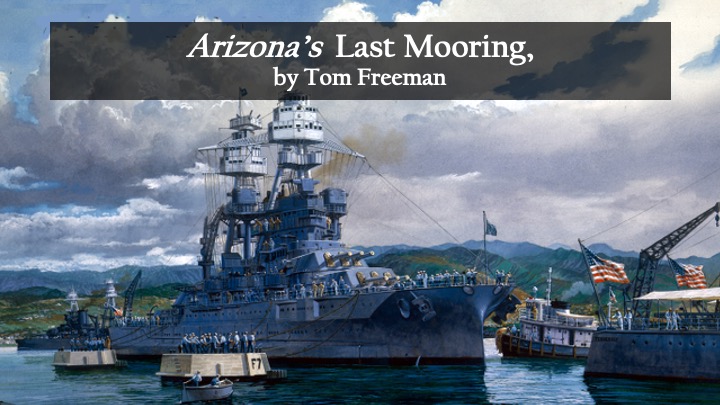
This painting haunts me. The artist is obviously gifted—capturing both water, as the Impressionists did this well, and the great steel machinery of a warship with equal skill means something. So does the occasion. It is 9:15 a.m. on December 5 and Arizona is being secured to her mooring quays near the end of battleship row. Two Arroyo Grande sailors and one from my family have a little under forty-eight hours to live.

I remember a Twilight Zone where the protagonist was somehow transported from modern times, meaning 1960, to a passenger compartment on Lusitania in 1915. Serling was fond of time-traveling. So am I, thought I haven’t actually practiced it much. Of course in the episode the man’s warnings were useless—he was thought to be a lunatic—because history moves with great weight and determination. He was crushed by it.
Likewise, I have a foolish urge to drive a jeep down to chew out the duty officer who’s shrugging off the radar blips on Opana Point or break up the golf foursome that includes Adm. Kimmel and Gen. Short and somehow order them to get their fannies, even if they are in plus-fours, to their headquarters, and NOW. And I want someone to take that damned war-warning telegram seriously.
I’ve had no luck so far in these endeavors.
There was a science fiction-ish novel, The Final Countdown, and there was a not-very-good the film based on it. In the film, Adm. Kirk Douglas’s aircraft carrier was beamed–is that the right word?–from the 1970s back to the predawn of December 7 and his radar picked up Kido Butai-–the 1st Air Fleet and its six carriers—and he had the chance to obliterate it with his jets, Phantoms and Crusaders and such. I don’t remember what Kirk did, but I think he decided that you don’t mess with the timeline. Kirk (See: Seven Days in May , 1964) usually gets it right. And one of the better Simpsons Hallowe’en episodes made that point, when Homer stomped on a prehistoric bug and messed up everything.
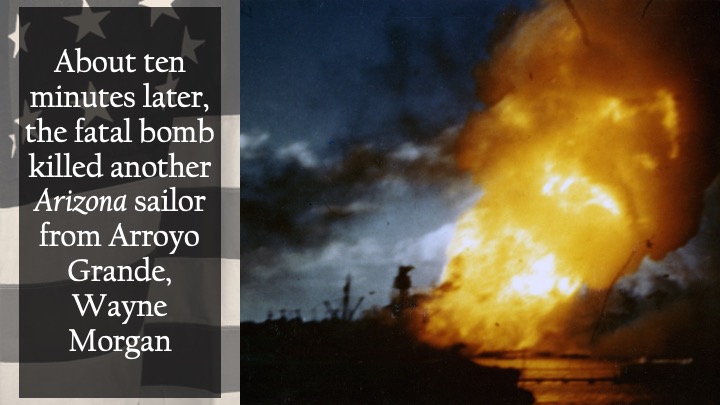
But today—and the day after tomorrow—aren’t funny. The attack on Pearl Harbor made us the world power that we are today. There are few turning points in history as clear as this one. It also claimed 1,177 Arizona sailors and Marines, most killed instantly, and it led to Executive Order 9066, to the shameful confinement of the families of some of my closest friends.
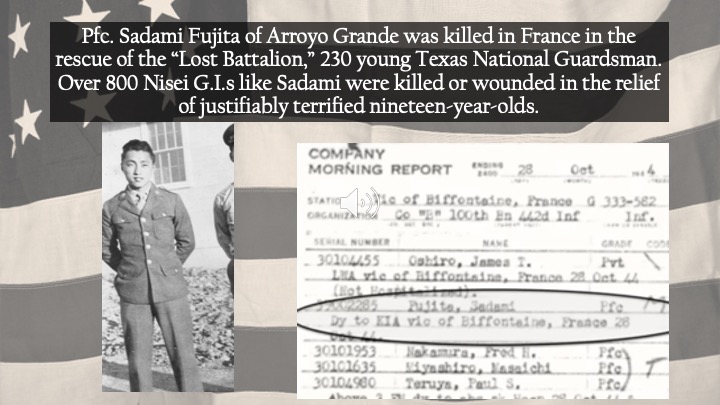
At Gila River, the desert winds carried the spores for Valley Fever that decimated the elderly Issei, the first generation immigrants who were not permitted to become citizens because they did not have the appopriate prerequisite, said the Supreme Court, which was Whiteness. They and their children turned the desert into truck gardens—cauliflower thrived at Gila River—and the young Nisei men joined the army to prove they were Americans. Many gave what Lincoln called, so movingly, “the last full measure of devotion.” 400,000 young Americans died with them, along with thousands more—many of them women—in wartime industrial accidents.
So this is Arizona in the last few moments of peace hours away from her last full measure of devotion. The America of Log Cabin syrup in little tin cans, of glass milk bottles delivered in Model A panel trucks, of Fred and Ginger and ruby slippers and Andy Hardy malt shops, is on the verge of vanishing. We’d built dams and bridges and dizzying skyscrapers in the Thirties, before Pearl Harbor, now we would build tanks and planes and, of course, warships.
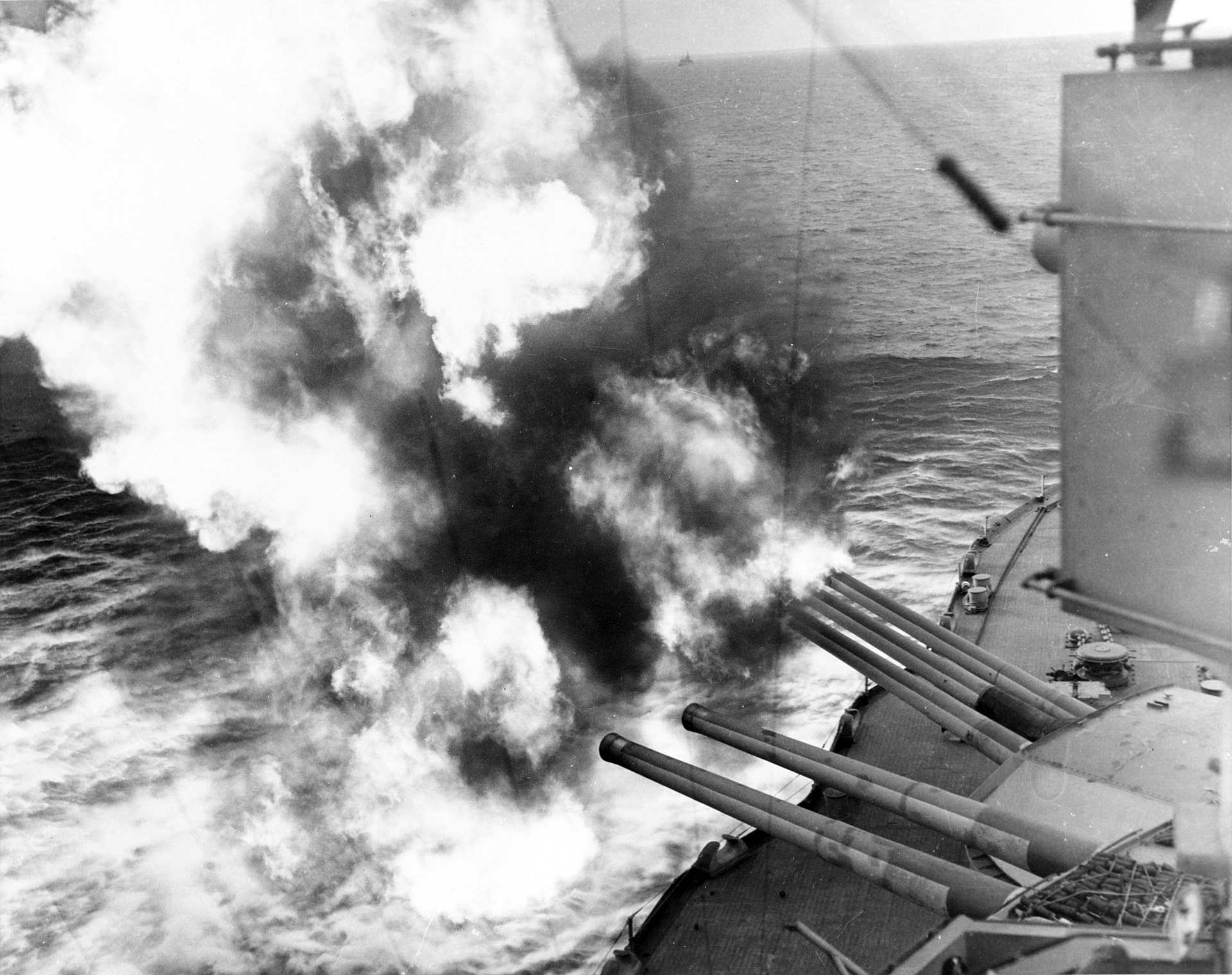
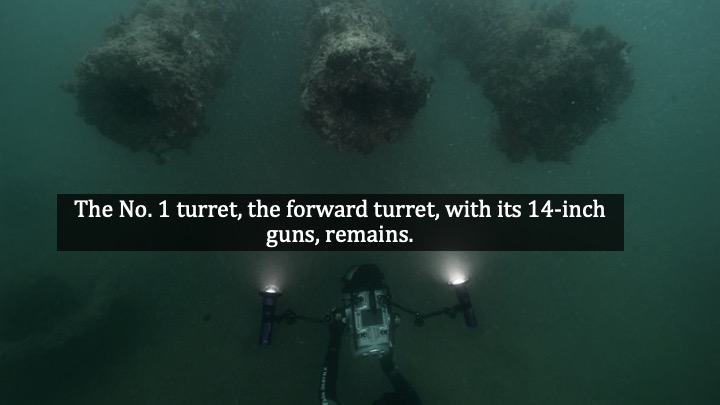
All but three of the battleships destroyed on December 7 were raised, repaired, refitted and modernized. Nevada, the only member of Battleship Row to make steam and get underway that terrible morning would, two and a half years later, cross the Channel to hurl the great weight over her fourteen-inch guns at the enemy behind Utah Beach. Nevada was afforded the great and perfect justice of firing the first salvo.
These were her guns at work that day, on another historic morning, during another historic turning point.
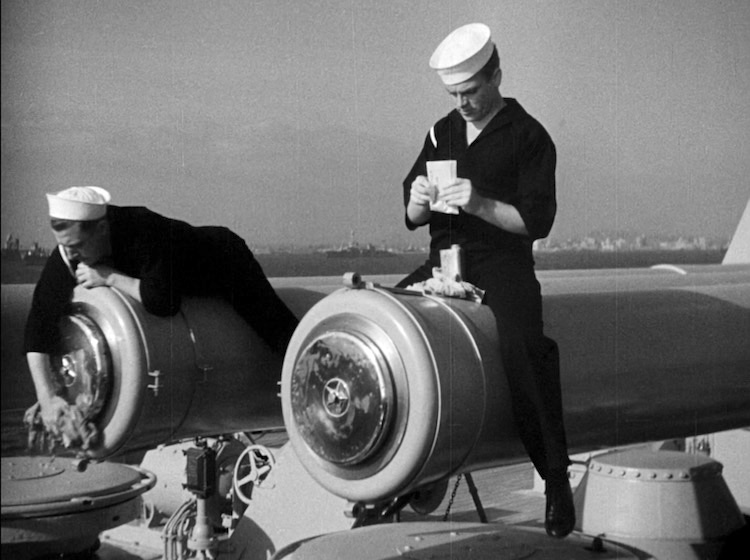

A dignitary sails the Caribbean with the great ship:
 A Work in Progress