While I’m not exactly Chef Jee-Mee, I do enjoy the eating part, too.
Music by Booker T. and the MGs–“Green Onions” (1962). Still a cool song.
“Green Onions” reminded me of other instrumentals that were popular when I was growing up. Oh, damn. Now I’m in trouble.
The Surfaris (I think we favored the Ventures’ version): “Wipeout,” (1963). Look! These guys can play electric guitars without having them plugged in!
Speaking of The Ventures, I am fond of The Surfajettes, a cover band. They got it goin’ on: Big hair, short skirts, go-go boots. The drummer is a hoot–full of pep!
This is always my low-water mark for rock and/or roll music: “Telstar,” by the Tornados (1962). This song celebrated as satellite that allowed you to make long-distance phone calls to France or Moldova, for example.
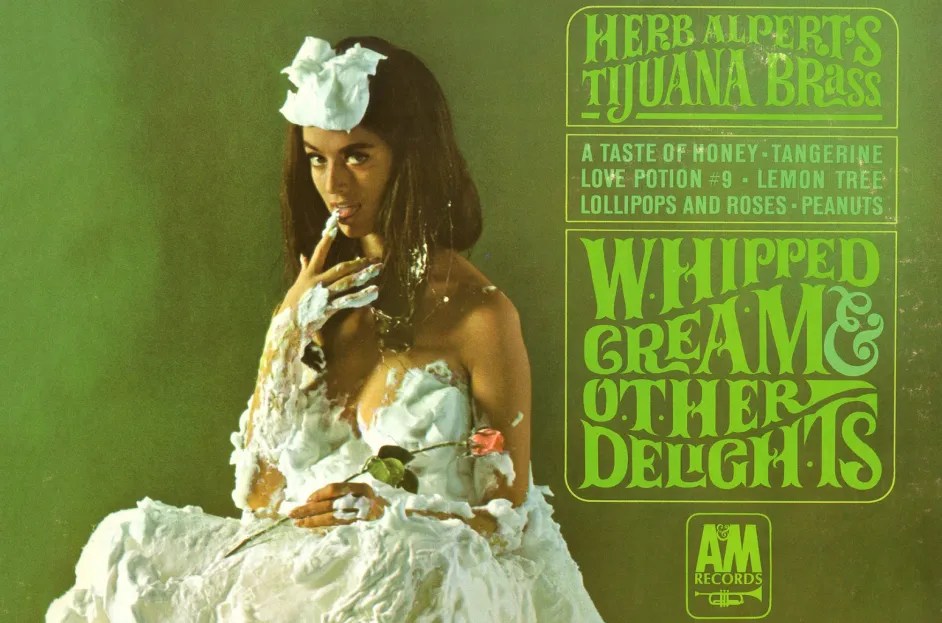
Three years later, things got jazzier. Herb Alpert and the Tijuana Brass, “A Taste of Honey.”
This was the album cover, which we had in our very own personal home on Huasna Road. I was thirteen. I played that album often. Okay, I might have stared at it a lot, too. Album cover experts (where can you find a job like that?) now consider this a classic. If they say so, it must be true.
1968 saw two big instrumental hits. Mason Williams’s “Classical Gas” is still on my MP3 playlist.
[Insert Pepe Lew Pew accent here.] This song is not on my playlist, but “Love is Blue” was very …oh, how do you Americans say…? Romantique, no?
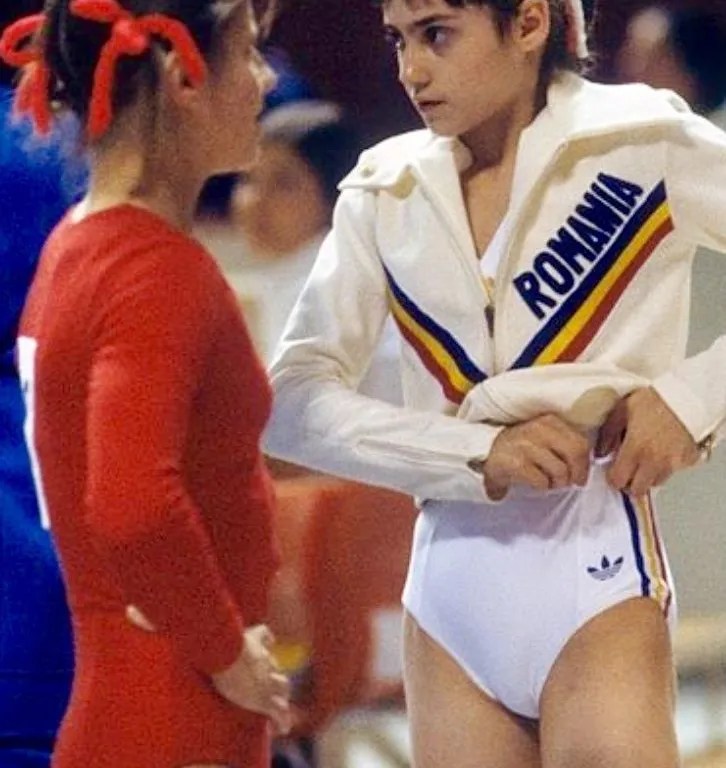
“Nadia’s Theme” (I looked it up!) started out as a theme for the soap The Young and the Restless, but in 1976, Romanian gymnast Nadia Comenici so enthralled Americans watching the Olympics—she was the first gymnast in Olympic history to score a perfect “10”— that a single version with her name in the title became a hit. Watch her stick the landing on the parallel bars. Coemnici, by the way, supplanted Soviet sensation Olga Korbut, the darling of the 1972 Olympics. And Nadia would be replaced in American’s minds by Mary Lou Retton. (And Simone Biles replaced everybody. Justifiably so.)
All glory is fleeting.
Korbut and Comaneci, 1976
And finally, in 1977, Chuck Mangione’s “Feels So Good” was a big instrumental hit. My attitude was “Meh.” But when Mangione became a recurring character in the series King of the Hill—he was living in a big-box store in Arlen, Texas, hiding inside a fort made of toilet paper—I became a fan.
Here, exterminator Dale Gribble discovers Mangione in his fort (sadly, Dale’s voice, Johnny Hardwick, passed away this year.)
And—sorry, Olga Korbut—but my favorite Soviet at the 1976 Olympics was weightlifting Gold Medalist Vasily Alekseyev, who set eighty world records in the heavyweight class. Once you recover from the initial horror of seeing Alekseyev, you’ve got to admit he is one strong dude, both physically and mentally. We need an instrumental song for Vasily, too, darn it.
“Change is inevitable” is true, of course. But sometimes those words can be cruel and thoughtless, I’ve found, when they’re used as a rejoinder to us history types whose mission is to remember the past. It’s not that we want the past back—you can have your Bubonic Plague, for example.
What we want instead is that the past, and its people, have the chance to live on in memory, even in the second-hand memories of young people like the ones I taught.
And sometimes the past doesn’t smell good (the Thames in mid-Victorian London), doesn’t look good (a Klan Parade down Pennsylvania Avenue in 1926) or doesn’t sound good (the premier of Stravinsky’s Firebird. Sorry. I probably would’ve booed, too, but I like Beach Boys harmonies and Strauss’s Emperor’s Waltz. I am admittedly bourgeois.)
But sometimes the past is a place of comfort in a time of intense discomfort. Oh, hypothetically, like today. Even if change is inevitable, brief backward visits are harmless. They can even be sources of strength. I’ve been thinking that way the last few days about another visit to the past, in writing about the film The King’s Speech.
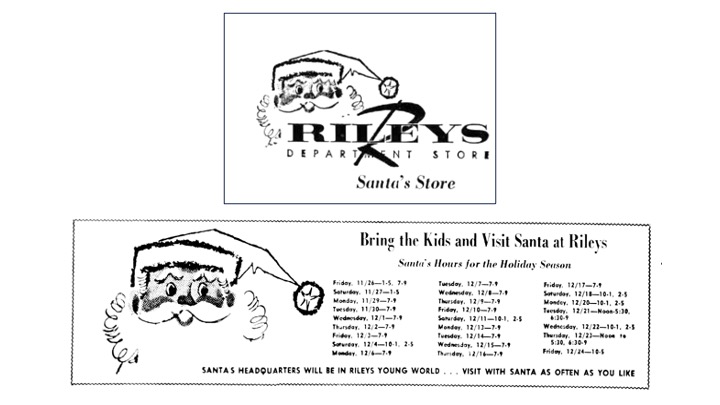
But since it’s Christmas, I’m not going to discuss George VI. Instead, I of course thought of the Santa at Riley’s Department Store at Marsh and Chorro in San Luis Obispo. Change there, in San Luis, is not only inevitable, it’s constant and fickle and remorseless. Now I get lost in what was once the big city of my childhood. What was a burger place ten years ago and a brew pub five years ago is now a Paraguayan Fusion restaurant today.
It’s bewildering. As much as I have always loved San Luis, I don’t go there very much anymore. (Note that I was restrained enough not to bring up the parking. Oh, damn! I just did.)
Since I was raised in the Upper Arroyo Grande Valley, San Luis was the Big City to me. Its bigness was superseded by by San Francisco’s. My Dad put us up in a high-rise hotel there when he was bidding a job for Madonna Construction, and a rare lightning storm was flitting about the skyscrapers. This is how I fell in love with the city I’ve loved ever since. But San Luis Obispo remains important to my life, and Riley’s is part of the reason why.
The ad above is from 1965, when I was a bit old for Santa, but I can remember visiting him once or twice in the years before, atop the mezzanine staircase inside the department store. He had a red crushed-velvet suit and his beard, fake or not, was immaculate. He was appropriately but not terrifyingly jolly. Even in 1965, when I was thirteen, I still liked seeing him up there in his chair with the line of kidlets waiting their turns.
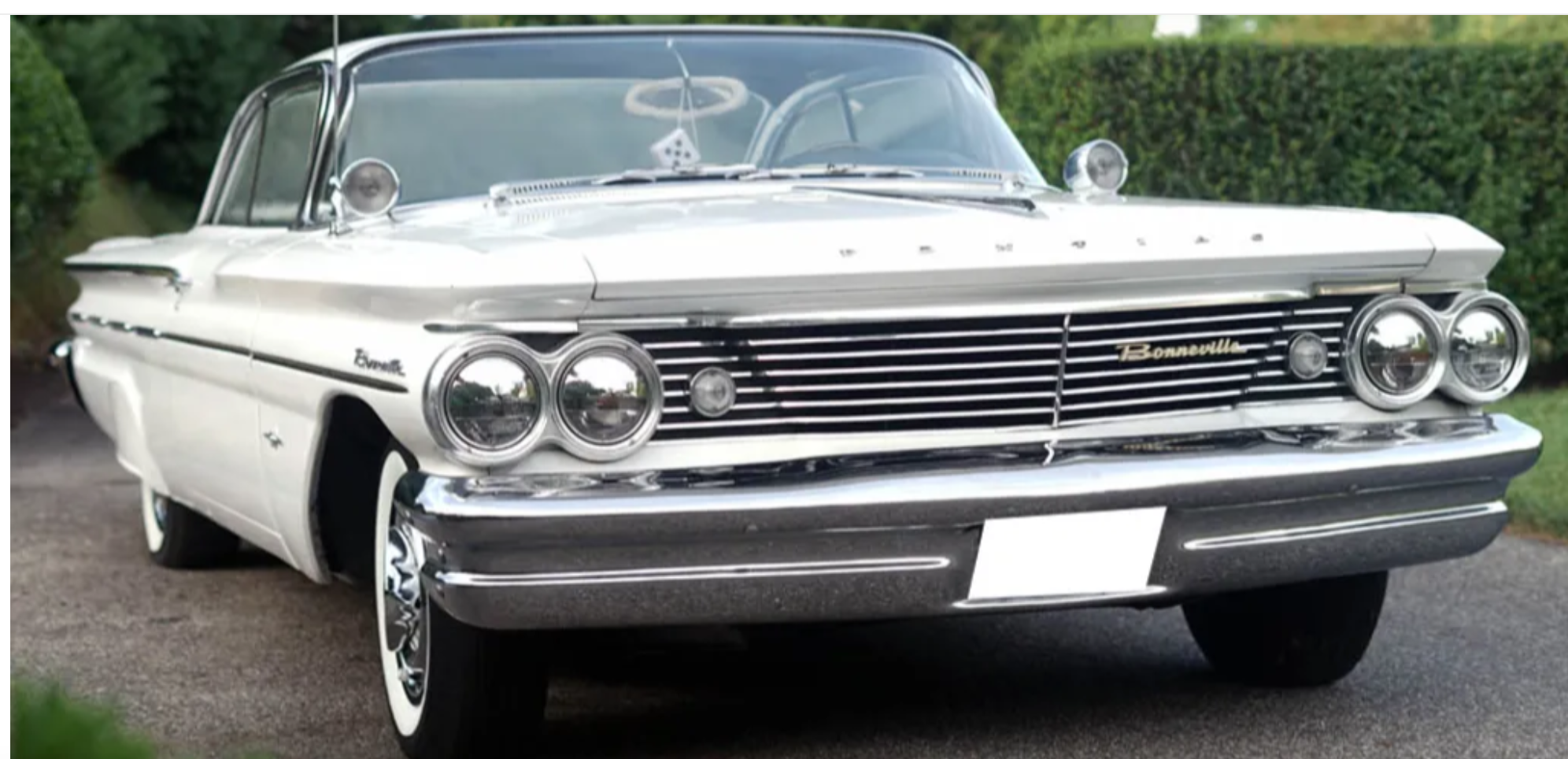
In 1965, we would’ve gone to San Luis in my schoolteacher sister’s Pontiac Catalina, roughly the size of a World War II escort carrier.
Many years later, the closest approximation of that Santa, in spirit, came at a local pet store (In Santa Maria. Sigh.) when our late and dearly beloved dogs, Wilson the Basset and Mollie the Irish Setter, got to visit this Santa. In reality, “Santa” was a former student of Elizabeth’s at St. Joseph High School, and this may be my favorite Santa photo of all time.
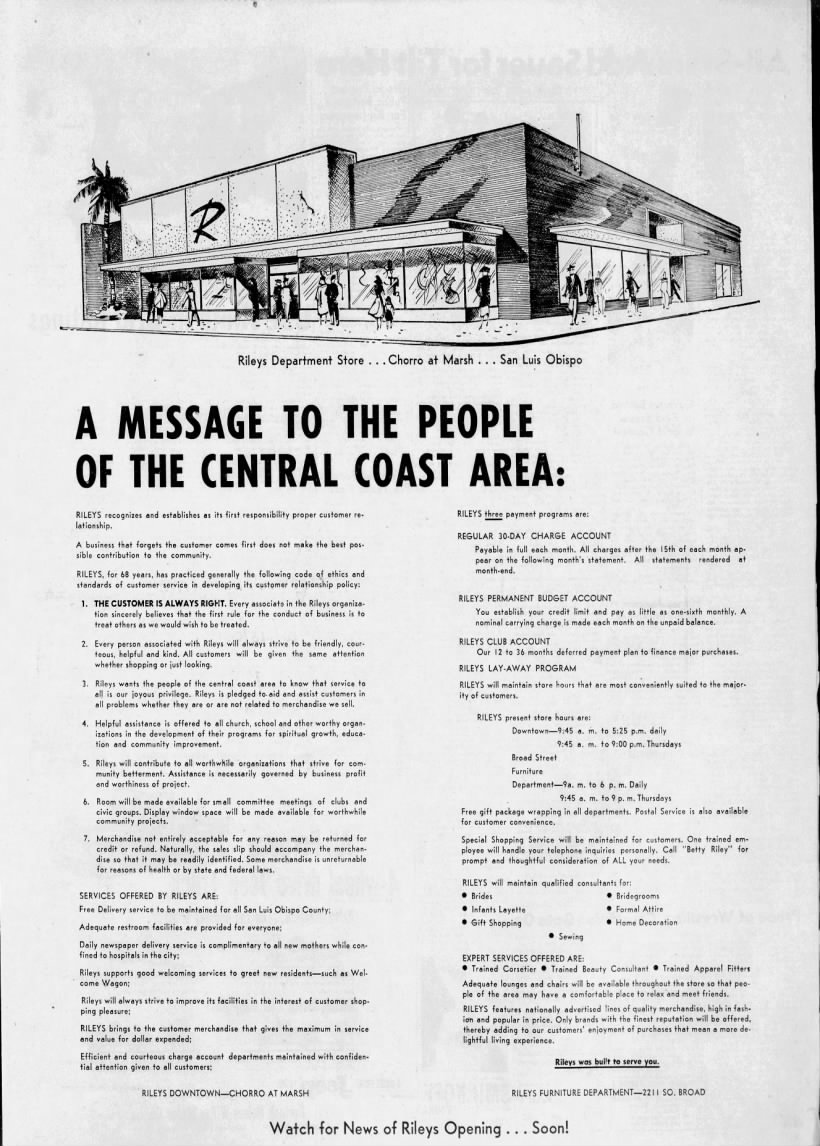
Riley’s Santa was enthroned in this building, shown off in this October 1955 full-page ad in the Telegram-Tribune, just completed by another San Luis institution, Maino Construction:
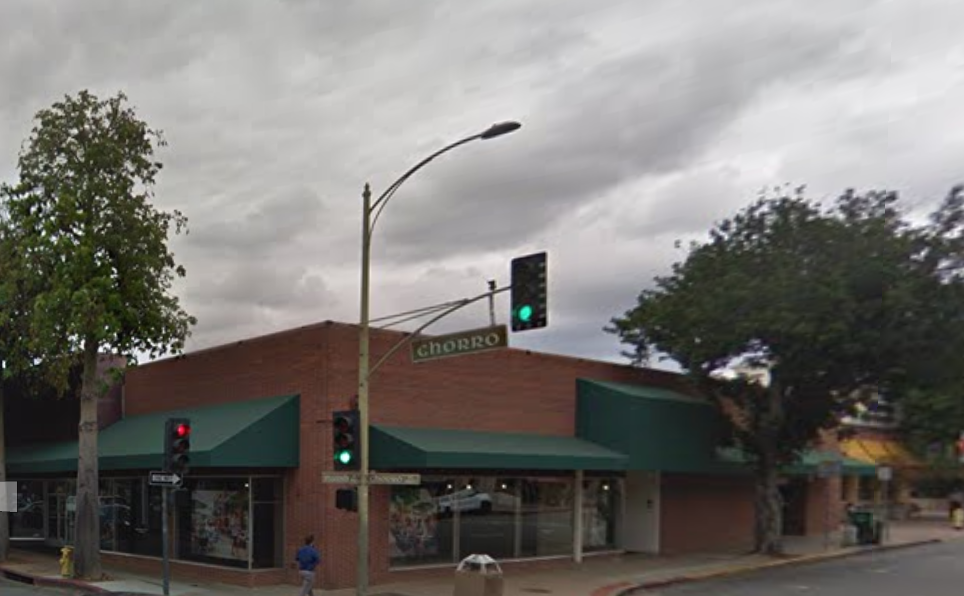
And if change is inevitable, it’s also depressing sometimes. Chorro at Marsh today is, and has been for years, empty, a discrete bit of urban blight on a street corner where, holding my Mom’s hand as a six-year-old in an earlier Christmas, my heart quickened when we crossed Marsh to go inside Riley’s.
A Google Earth image of the empty Riley’s building today.
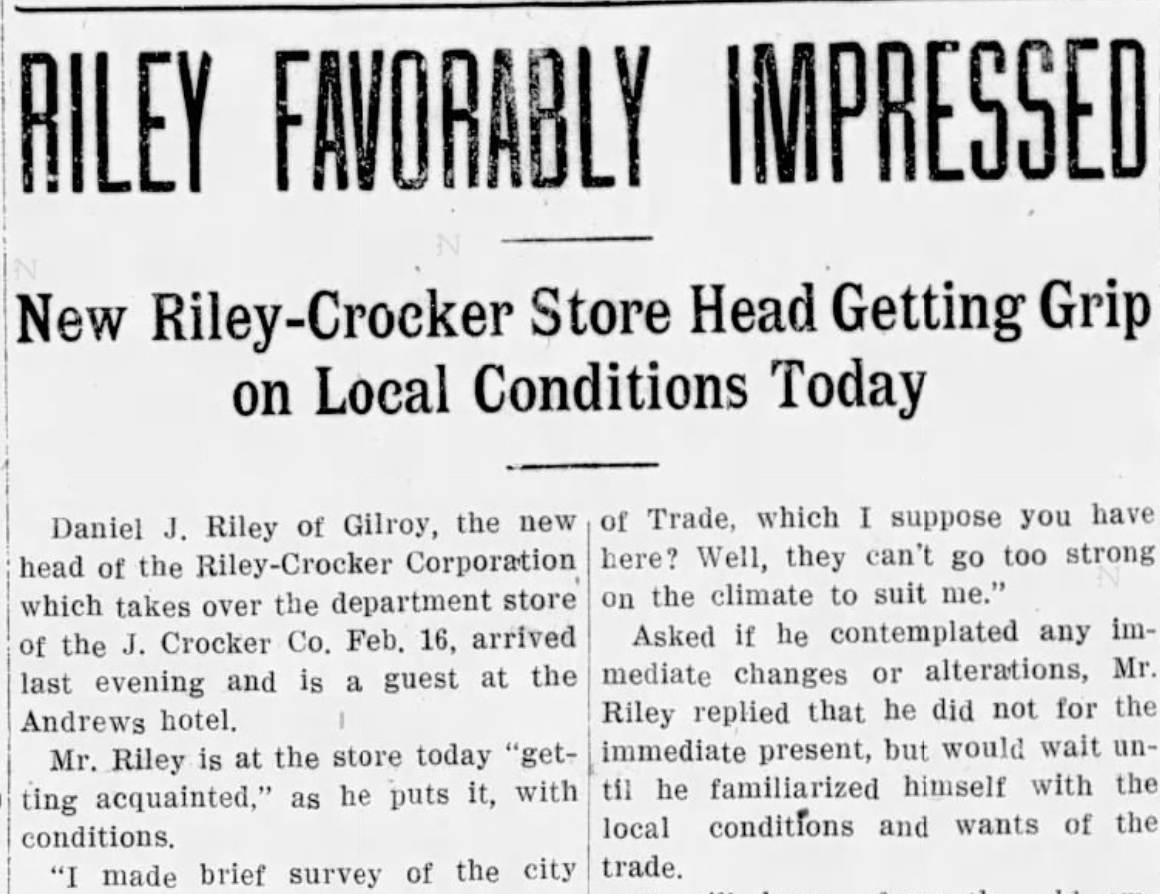
The ad’s a little misleading. This wasn’t the grand opening of Riley’s—just this incarnation of Riley’s. That department store, under one name or another, had been a San Luis Obispo fixture since the 1880s. It got its final name in 1914:
And change, in this case, a new store name, can be good. Note that Mr. Riley is staying at the newish Andrew Hotel, at the site of today’s city-county library. Nearby, in the 1890s, a bawdy house called The Palace fulfilled the carnal needs of the gandy dancers working the Southern Pacific as the track neared town. The Andrews represented the beneficial side of Progress, such a nice place that evangelist Aimee Semple McPherson once spent the night there with her lover, also her radio engineer, as the couple fled Los Angeles for what the papers called “a love nest” in Carmel.
Mercy!
I’ve written about the Perfume Ladies before, but Riley’s brought class to our area, too. Once we’d crossed Marsh and entered the store, the first sales area to the right was the perfume counter, my Mom’s favorite (Chong’s Candy was ours). The beautiful Perfume Ladies worked behind the counter there–classy, a a little reserved but also attentive to the point of devotion to my Mom. When she tried out a scent with a brief spray to her wrist, I asked for one, too. By the time she’d made her purchase from the Perfume Ladies, I must’ve smelled like the reception parlor for the girls who’d once worked The Palace.
Riley’s is also where Mom did a lot of her Christmas shopping, in those pre-Amazon days, when the only thing that “Bezos” suggested was a river in Texas with a similar name. Once she’d made her purchases, the sales clerk wrote them up, rolled the receipt into a canister that was inserted into a pneumatic tube (like the one at the Telegram-Tribune where I’d insert my story to go down to Composing) and shtoop! it would vanish. After a brief wait, shtoop! Mom’s carbon copy would return. It was pretty cool then, when i was five. Now that I am nearly seventy-two, it still is.
Riley’s closed in 1993, and this story by my friend Carol Roberts and this photo by my friend David Middlecamp are evocative of the response:
The story focuses on the employees—I’ve been lucky enough to work at places like this—who were also like a family. The grief didn’t end with them. San Luis Obispoans were heartbroken, too. There were weeks of Letters to the Editor mourning Riley’s. (More recently, I wrote in a similar way about the closing of the burger/beer/country-line dance/Minor Madness venue The Graduate, where my wedding’s best man, Rob, and my AGHS colleague and friend, Randy, were once bouncers.)
Change is inevitable. That’s why it hurts so damn much. And I guess it hurts in this case because I associate Riley’s with my mother, who remains the most influential person in my life. This photo, sadly creased for many years, shows twenty-two-year-old Mom with my big sister, Roberta, in 1942.
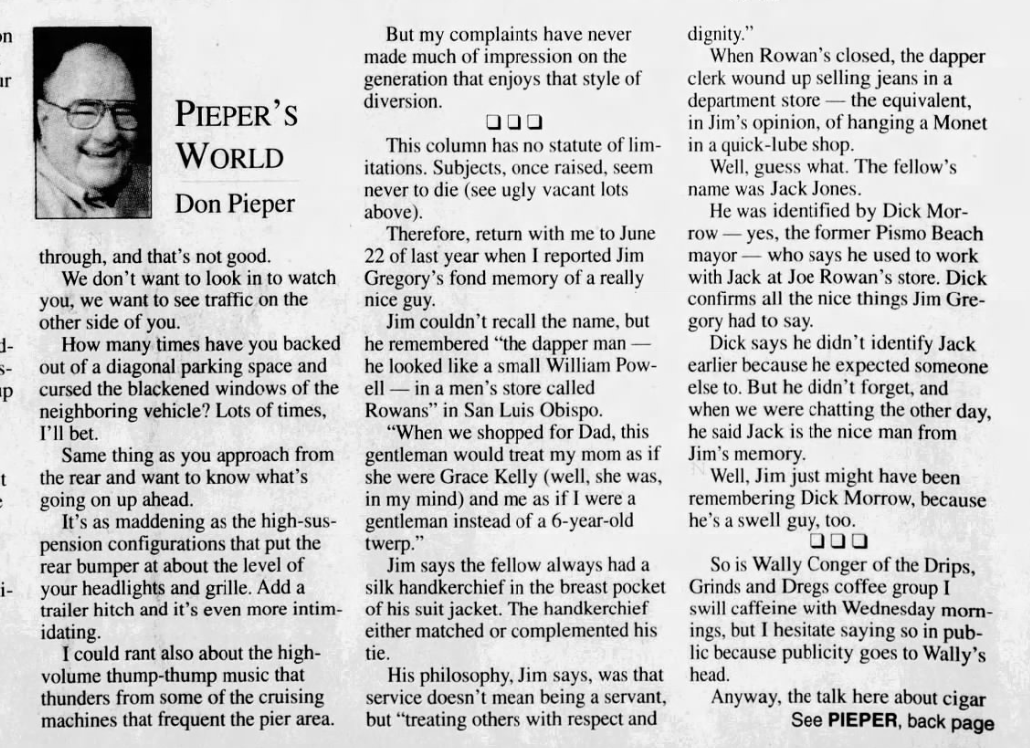
Mom died when I was seventeen, and I still miss her. But thinking about places like Riley’s brings her closer. San Luis Obispo when I was a little boy—the Sno-White Creamery and its milkshakes, the way pipe tobacco smelled in the smoke shop that was once the Cigar Factory, the way you raised the miniature Bear Flag at your table in Corcoran’s when you were ready to order lunch, the severe steel bun in Mrs. Avila’s hair (the lady underneath was not so severe) at the City-County library, today, the Repertory Theater–we are a bookish bunch, and visits to the library were always good for at least an hour and more often two— and, finally, the way my Mom was treated when she shopped for Dad at Rowan’s, a memory that was so powerful that the late (great) journalist Don Pieper was kind enough to quote me in his early 2000s column, which also cites another journalist, Wally Conger, my friend and colleague from the AGHS newspaper, The Altair:
I know that I am a land line in an age of cell towers. I don’t mind that much. But I still believe that the past deserves to be remembered, even in the face of constant change, with the same attributes Dick Morrow and the Perfume Ladies conferred on my Mom—with dignity and respect.
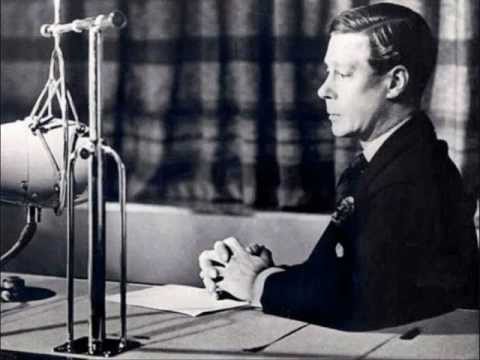
“I have found it impossible to carry the heavy burden of responsibility and to discharge my duties as King as I would wish to do without the help and support of the woman I love.”
Edward VIII, after eleven months as king, abdicates. He does so because he has fallen in love with Wallis Simpson, an American divorcee. The Church of England does not recognize divorce. The king is also the head of the church.
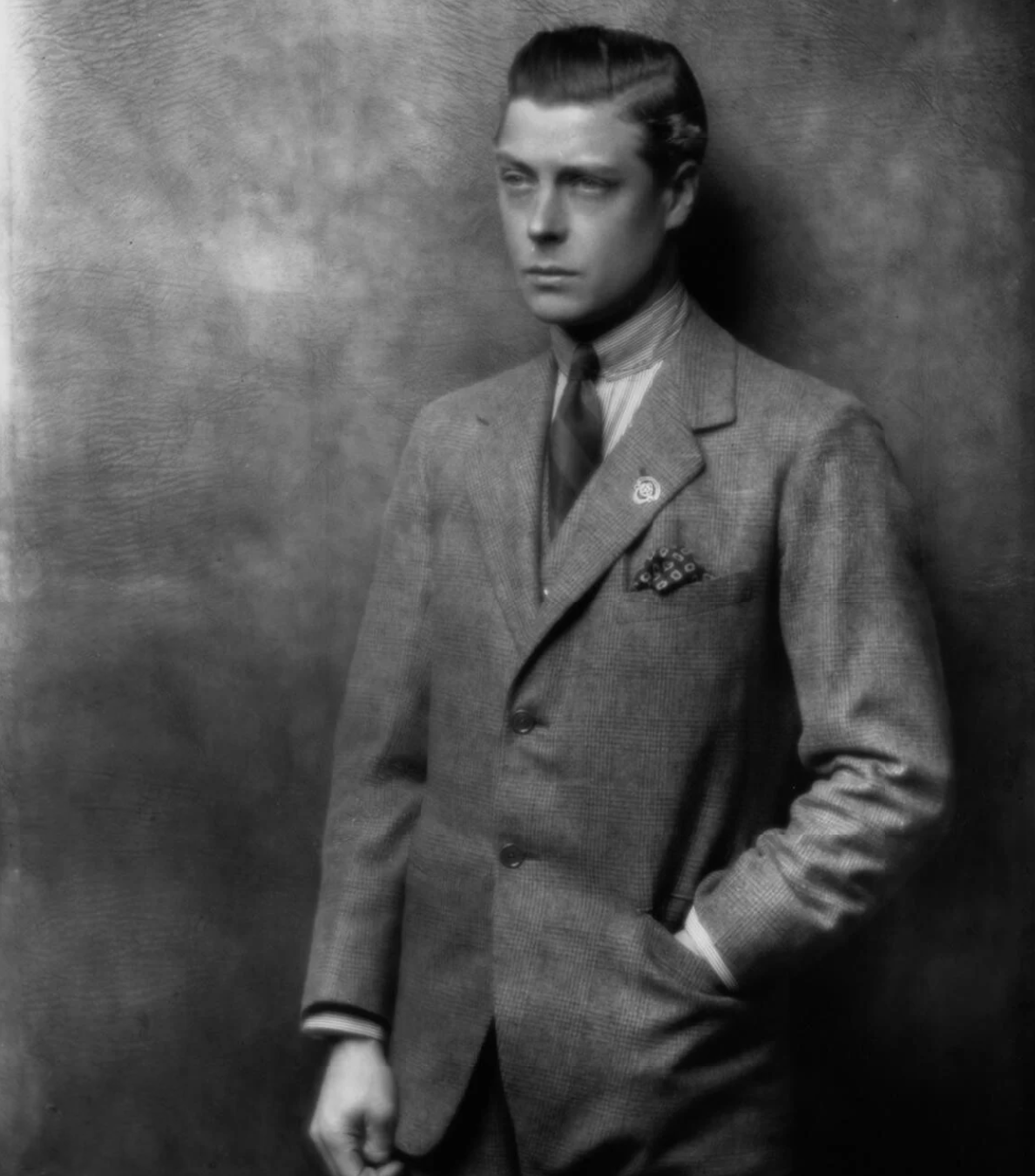
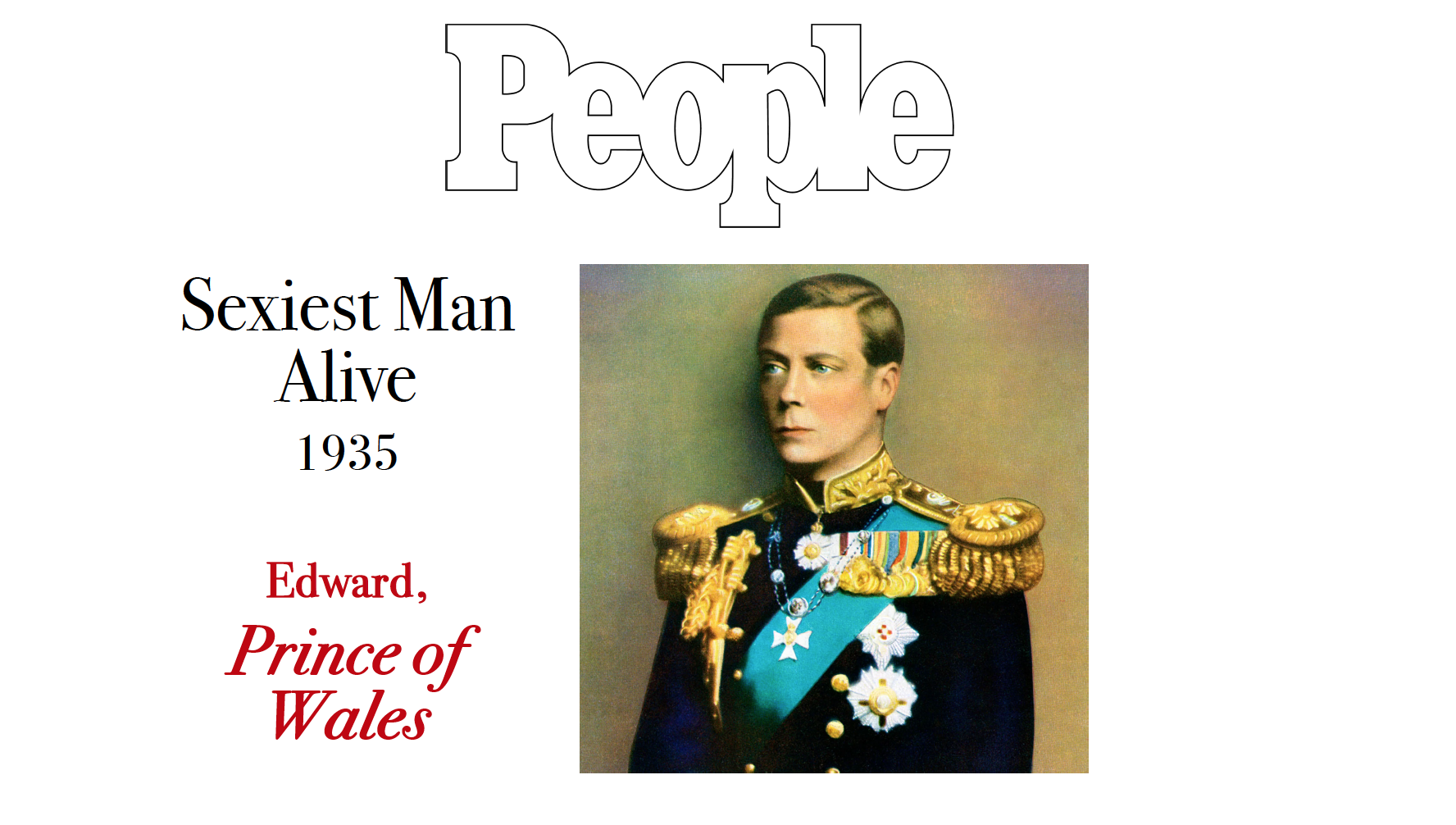
Edward as Prince of Wales. He was the world’s Most Eligible Bachelor in the 1920s and 1930s.
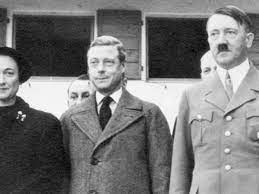
The story doesn’t have a happy ending. There’s a sadomasochistic twist to the marriage of Edward and Wallis, who chews him out within earshot of visitors, as if he were a little boy. She is a harpy and never forgives him for the couple’s exclusion from court and the perks of royalty. The two also develop a fondness for Adolf Hitler.
I apologize for cutting off Wallis’s image. However, that may be merciful. “David” certainly looks happy.
Maybe Kate in her wedding dress made up a little for Wallis. But just a little.
During the war, after they’d been given the honorary title Duke and Duchess of Windsor, they were installed as royal functionaries in the Bahamas, as far away from Germany as possible.
The happy ending isn’t Edward’s. It belongs instead to his little brother, George VI, who gets an entire film made about HIS speech, the one that earned Colin Firth an Oscar.
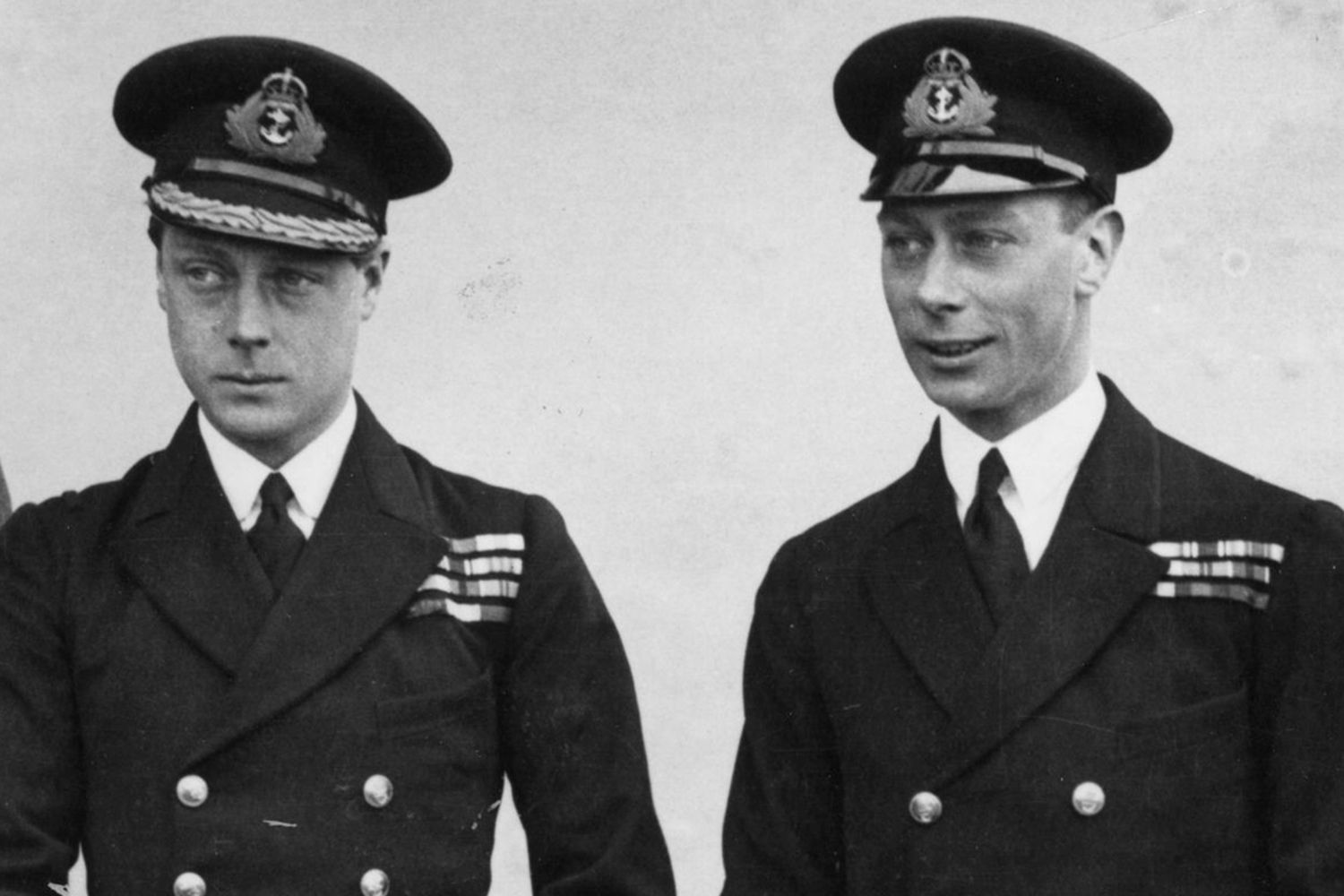
It’s a moving scene, but one that sticks with me, too, comes earlier in the film, when David (Edward’s family familiar) mocks Bertie’s (George’s family name) stutter. In an evocative piece of acting, you watch Firth’s character shrinks, deeply wounded, in the face of the abuse.
“David” and “Bertie,” the young princes, in naval uniform.
Royals, you may have noticed, are often shallow silly people. Edward was a bully, and he reminds me of Joe Kennedy, the eldest son, who blew himself in a B-24 bomber trying to outdo Jack’s PT 109 exploits.
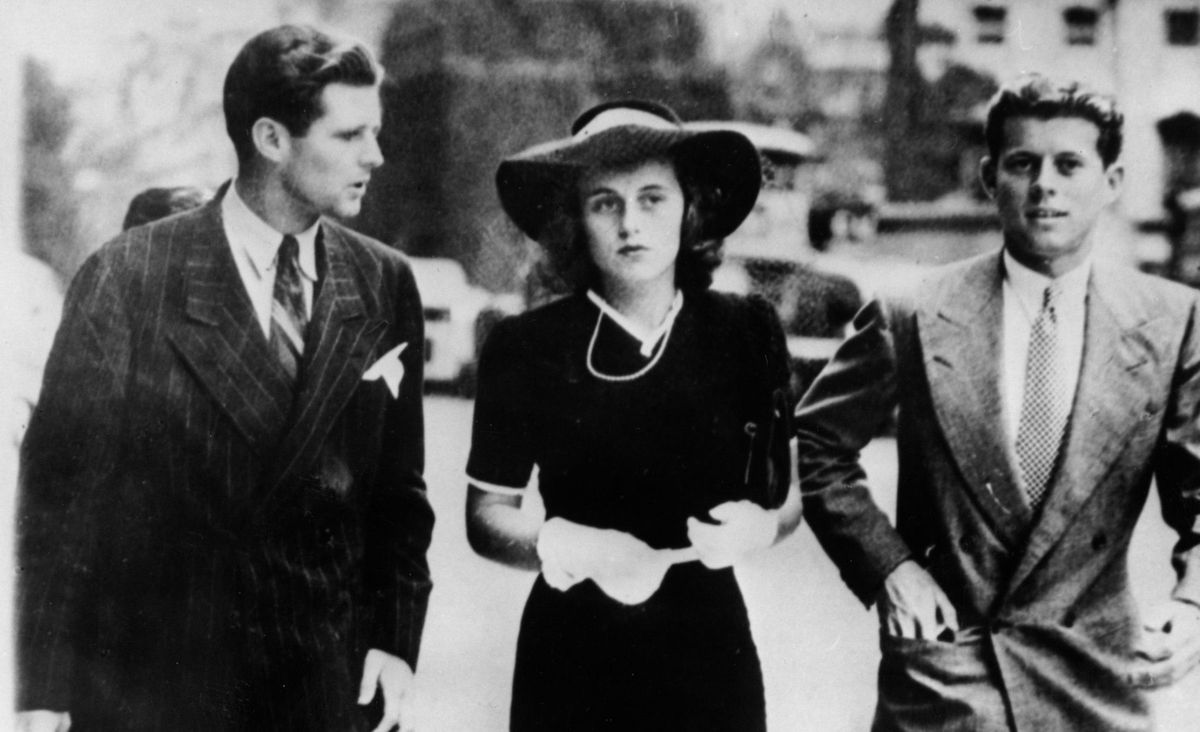
Joseph Kennedy Jr., Kathleen (“Kick”) and Jack, in London before World War II.
But George, who I am sure had plenty of faults of his own, had courage, I think, and character. I do know that he loved his little girls, Elizabeth and Margaret.
He certainly had no grounding in familial love, between his big brother and his parents. Queen Mary, once Mary of Teck, holds newborn royals looking as if she’s about to dine on them. Terrifying woman. George V was a cold man. And Kaiser Wilhelm, who alternated between brimming with undeserved self-confidence and hysteria, was his great uncle. What a family.
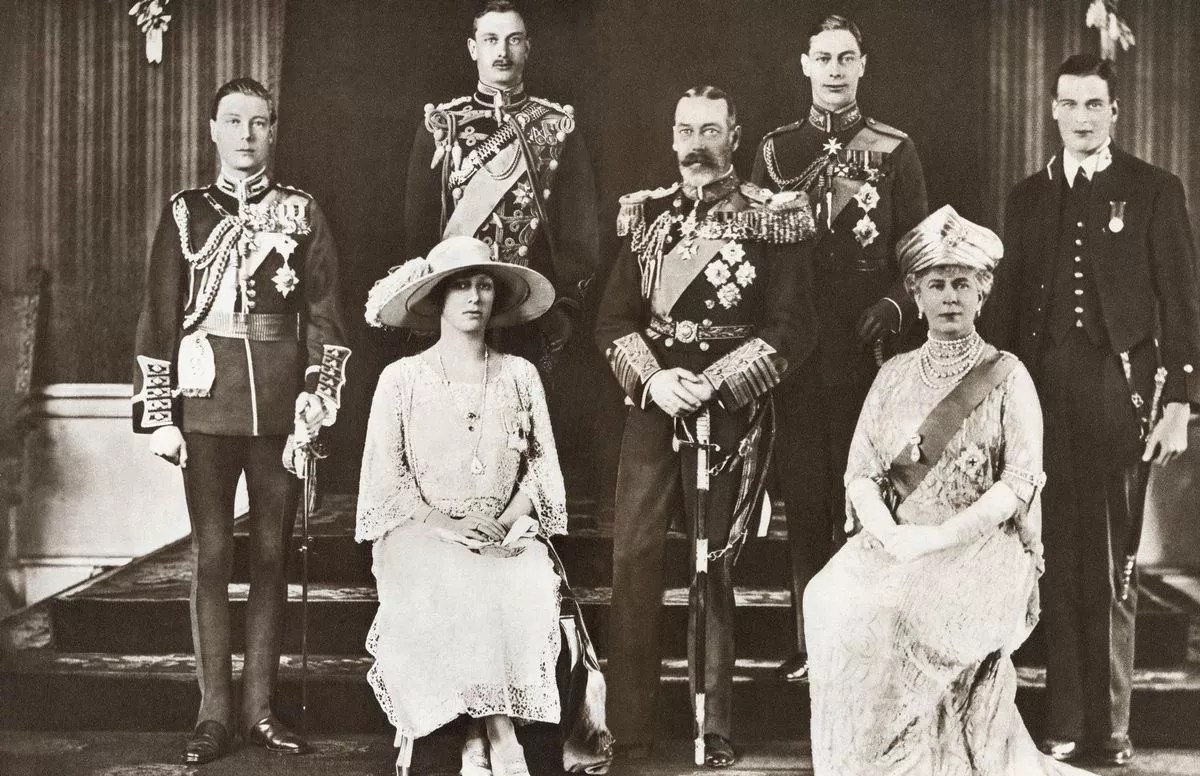
The principles, a jolly bunch. George V, center, who predicted that his son would muck it up, Queen Mary, lower right, David (Edward VIII) at left, Bertie (George VI) behind Papa.
And so Firth’s performance in this scene, along with Geoffery Rush’s performance as his speech therapist, are to me indelible.
Let the word go forth that I have been passed over again this year. Who’ve been my favorites? Well, George Clooney (a two-time “sexiest”), because he’s a fine actor with a marvelous self-deprecating sense of humor—the Hawaii movie, The Descendants, may be my favorite, tied with O Brother Where Art Thou? Three Kings is right up there, too, I think.
Idris Elba’s handsomeness and quiet intelligence, as a doctor who refuses to panic (much) after a plane crash in Alaska in The Mountain Between Us, with Kate Winslet, immediately appealed to me, and his commercials for Booking.com are charming.
But this year’s winner, Patrick Dempsey, is controversial. He’s too “old” (57), which is unfair to 71-year-old me, and he hasn’t done all that much lately, which is true.
I am a Patrick Dempsey fan only by extension. He was the romantic lead in Enchanted, about a Disney-type-all-sweetness princess transported to modern New York City, and it was Princess Amy Adams who caused Elizabeth and I to nearly fall out of our theater seats (remember those?) in a few seconds of shock before we started laughing uproariously. It was the cleaning scene, with the rats, pigeons and cucurachas:
And, truth be told, I never watched Grey’sAnatomy, which featured Hunky Dr. Patrick Dempsey, but the show’s star, Ellen Pompeo, moved me deeply in a film called Moonlight Mile.
In the early 1970s, Jake Gyllenaal’s fiance is murdered, shot to death, in her Massachusetts hometown. His character, emotionally shattered, moves in with her parents (Dustin Hoffman and Susan Sarandon. Some cast, huh?) and he gradually falls in love with Pompeo, whose relationship with the love of her life has ended. Pompeo works in a bar, and, despite Gyllenhaal’s stupid 1972 haircut, she falls in love with him. There’s nice chemistry between the two. In that film. Pompeo won me over as a kind of Sexiest Woman Alive, 2002 version. (Gyllenhaal, whose name is far too hard to spell, is also fine in Zodiac, about the San Francisco serial killer, as is Mark Ruffalo, who probably should be an S.M.A.,too)
Anyway, we were talking about Patrick Dempsey as the Sexiest Man Alive(!)—remember that? So now I’d like to devote some more thought to not talking about him. Today is the anniversary of the abdication of Edward VIII (“…the woman I love…”) and that set me to thinking. David (his family name), twit that he was, would’ve made a 1930s People cover, too. Who else might I have chosen?Well, here are twelve possibilities:
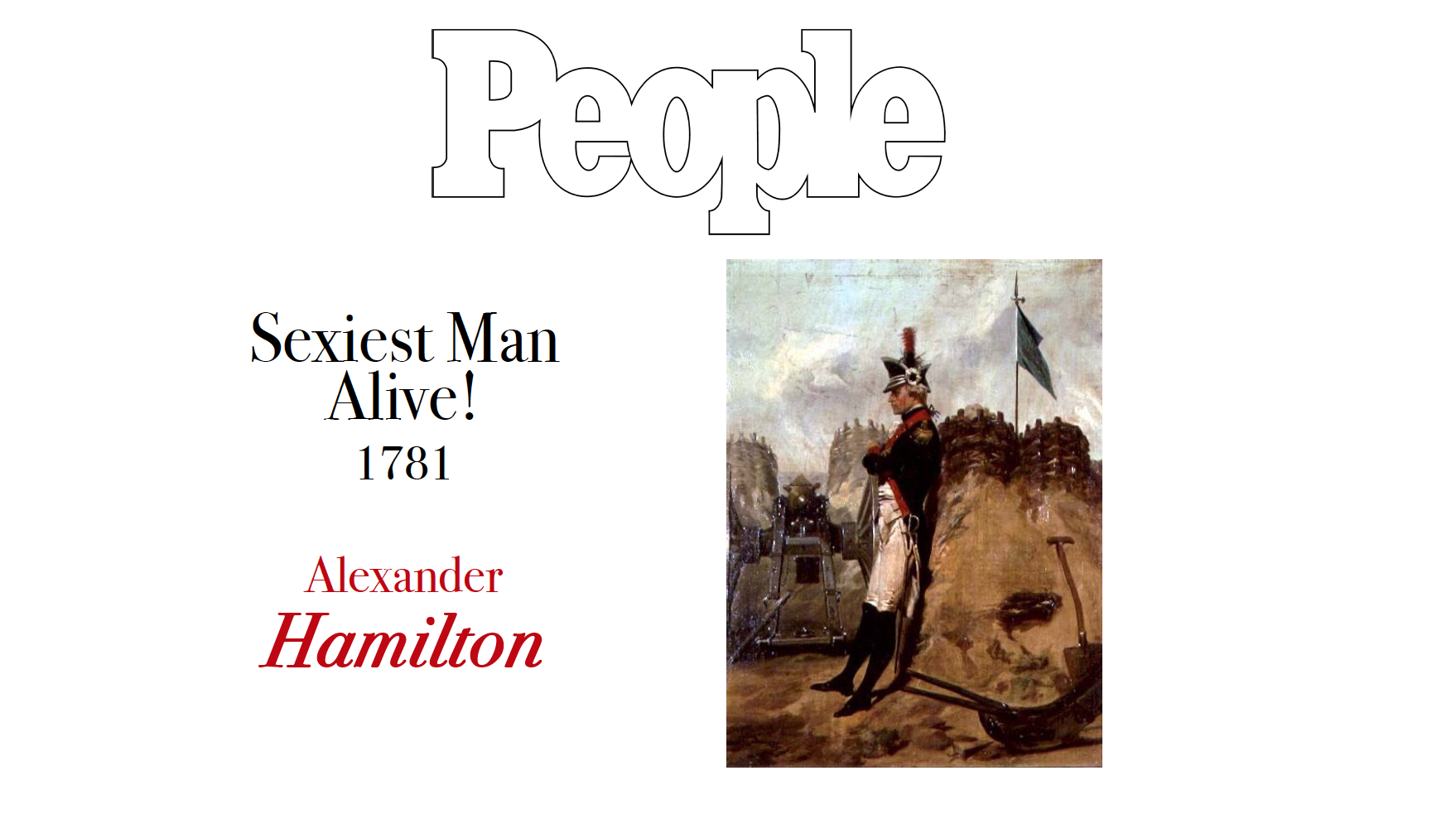
Born illegitimate in the West Indies, at 19, one of Washington’s most trusted advisors, architect of American capitalism, hotly pursued—you can almost hear their starched petticoats rustling–of the Schuyler sisters.
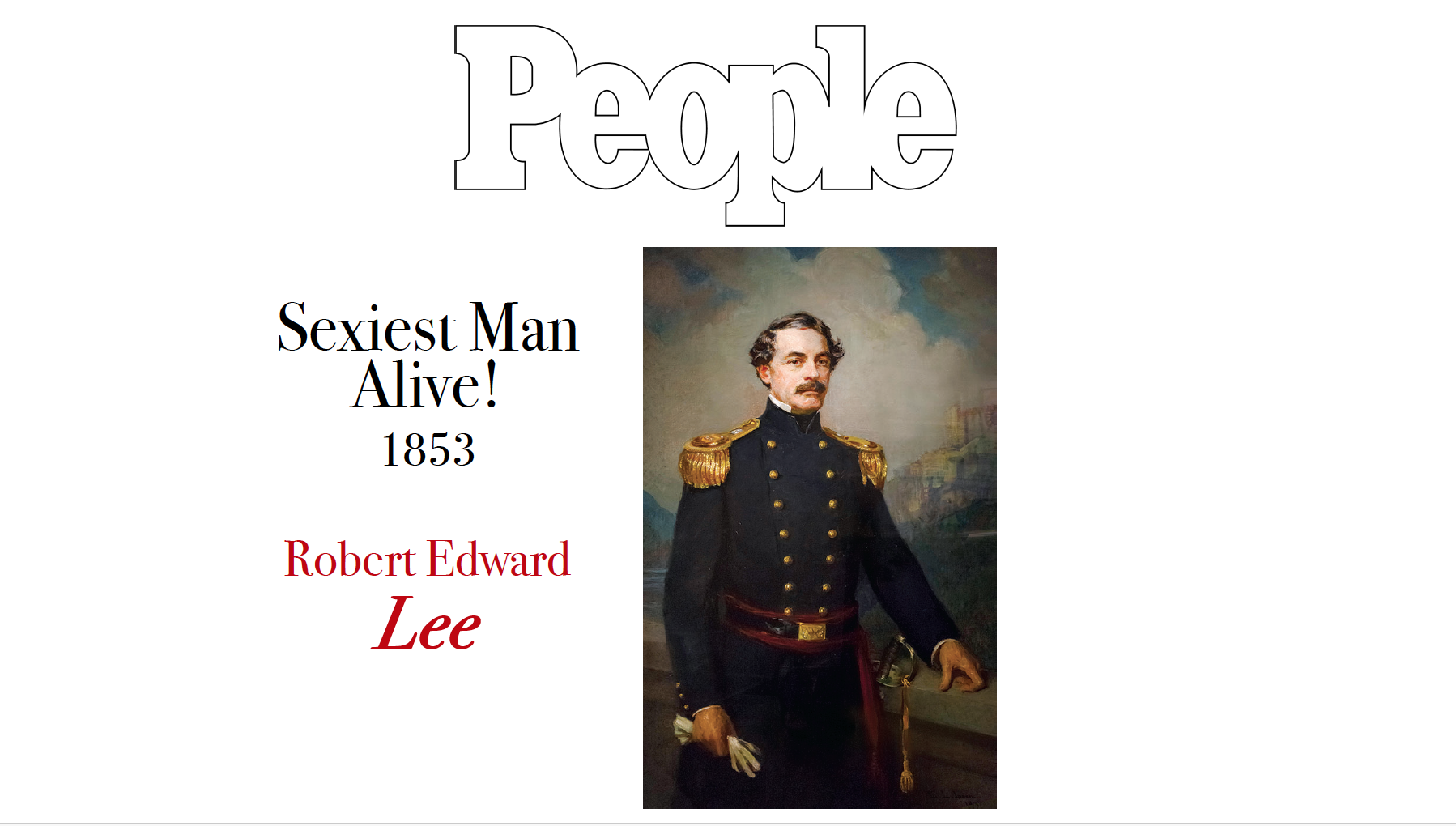
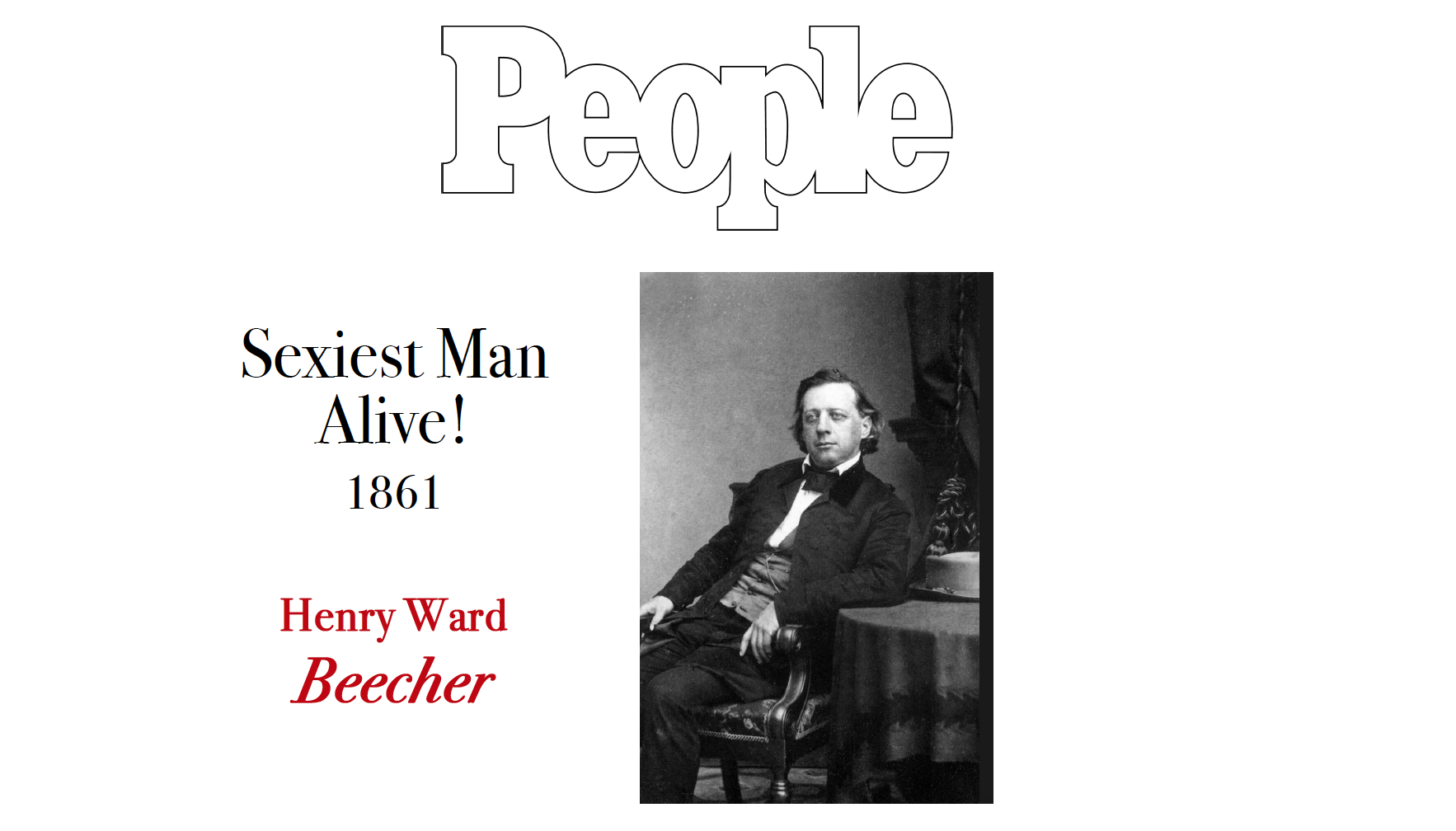
Widely regarded, in the years before the Great Unplesantness (1861-65) as the handsomest man in America. I parted ways with Lee after seeing the terrain he ordered his soldiers to take in Devil’s Den at Gettysburg. I stood on top and said aloud “Lee, you bastard.” I am fond of enunciating when I’m provoked.
No, he doesn’t look it, but neither did Henry Kissinger, also considered sexy to the women who knew him in the 1970s. That’s as far as I want to go with Kissinger. Beecher, from the brilliant family of preachers (and one sister, Harriet, wrote Uncle Tom’s Cabin; another, Catherine, invented the modern kitchen, based on ships’ galleys) was perhaps the brilliant-est. Anti-slavery, liberal in that he rejected fire and brimstone and charismatic and irresistible to his female congregants; a sex scandal destroyed his reputation.
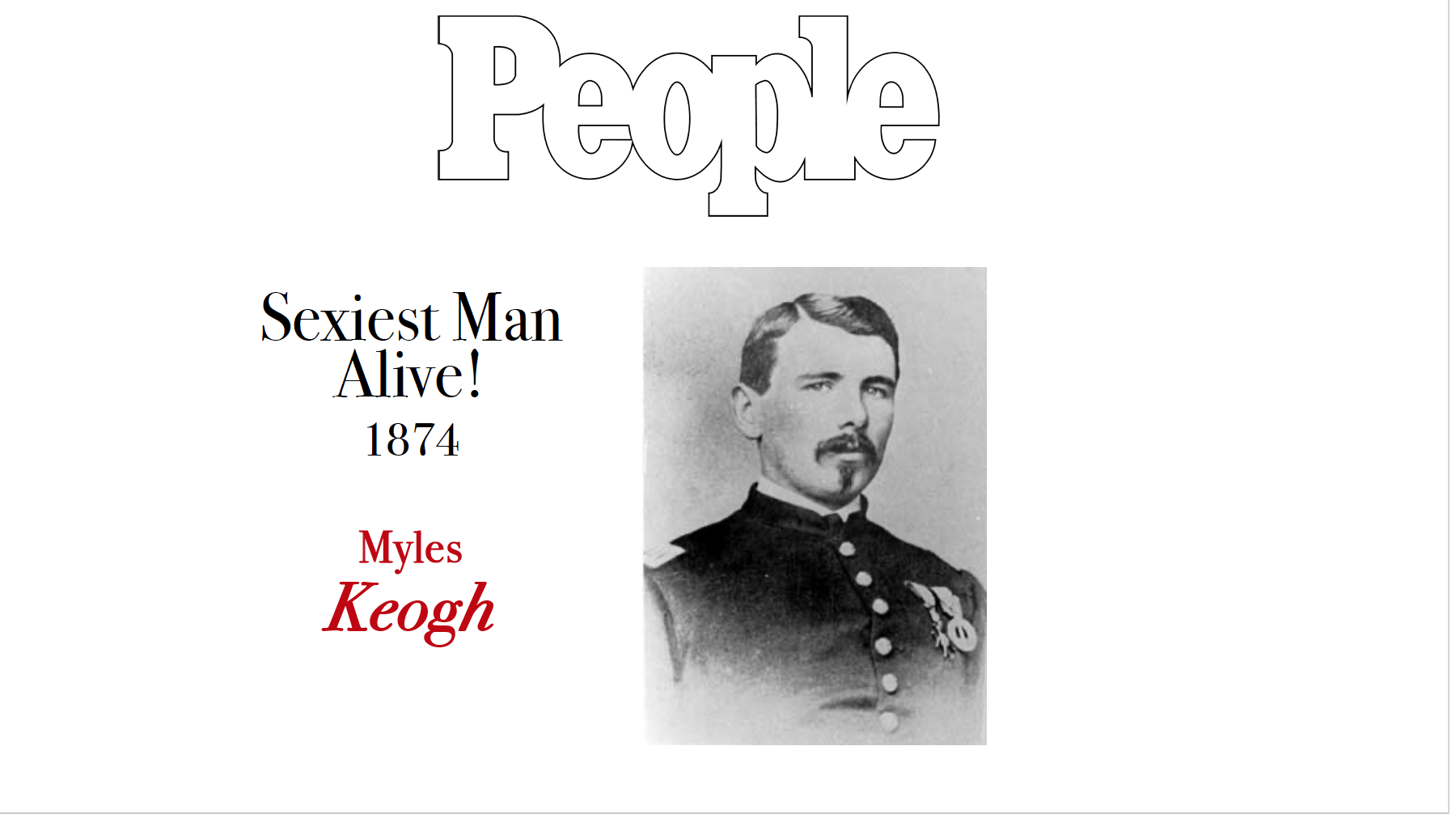
Civil War hero, cavalryman, the Irish-born Keogh was Lancelot to George Custer’s Arthur in the Seventh Cavalry. He retained the medieval conceit of loving married women from afar, though not always. Rubbed out at the Little Bighorn, 1876.
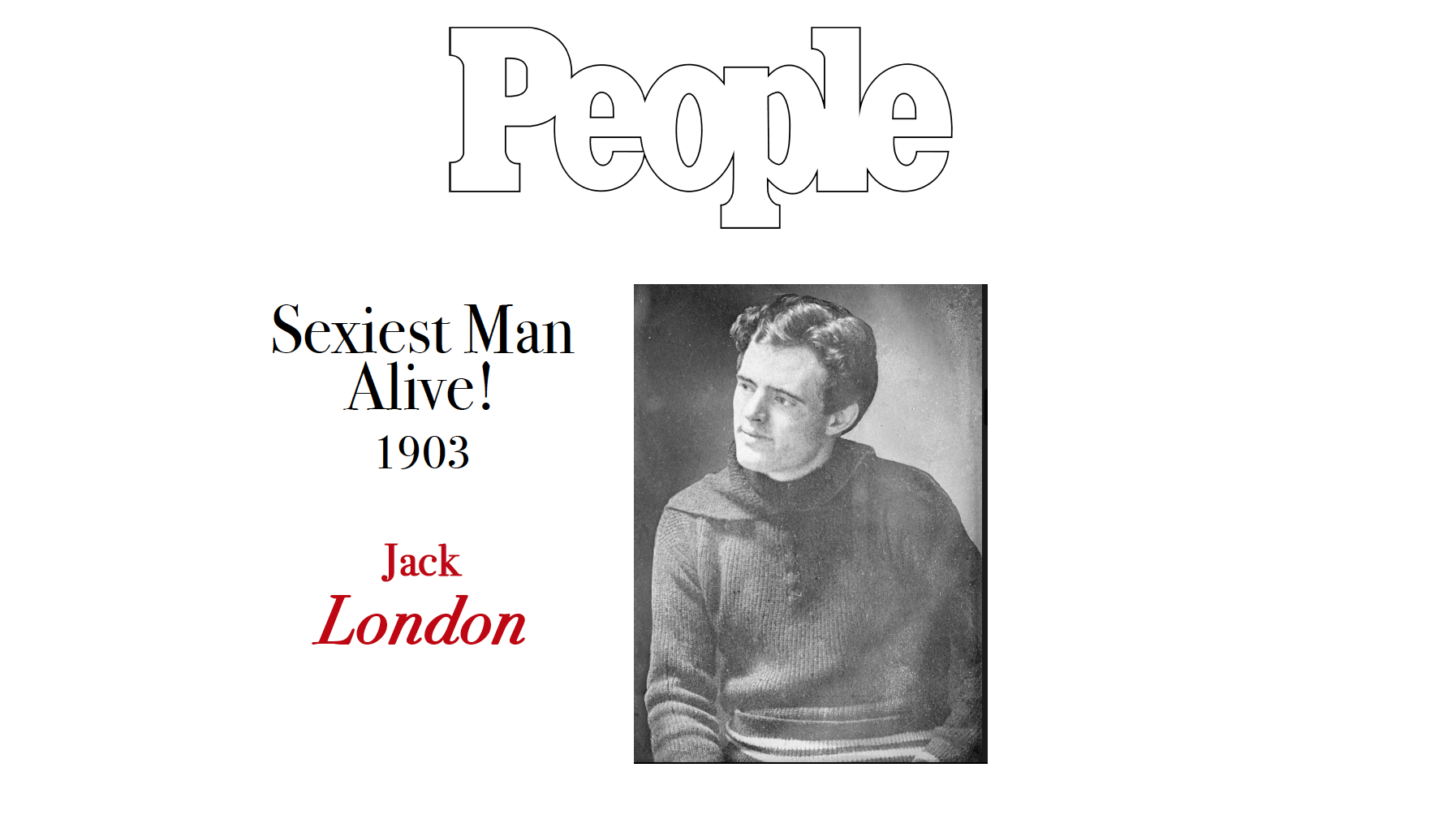
Oakland’s finest–writer, seaman, Alaska gold-rusher, and—wait for it—an oyster pirate, who raided oyster beds in the East Bay in a sloop he’d named Razzle Dazzle. Just how cool is that? Very, I think.
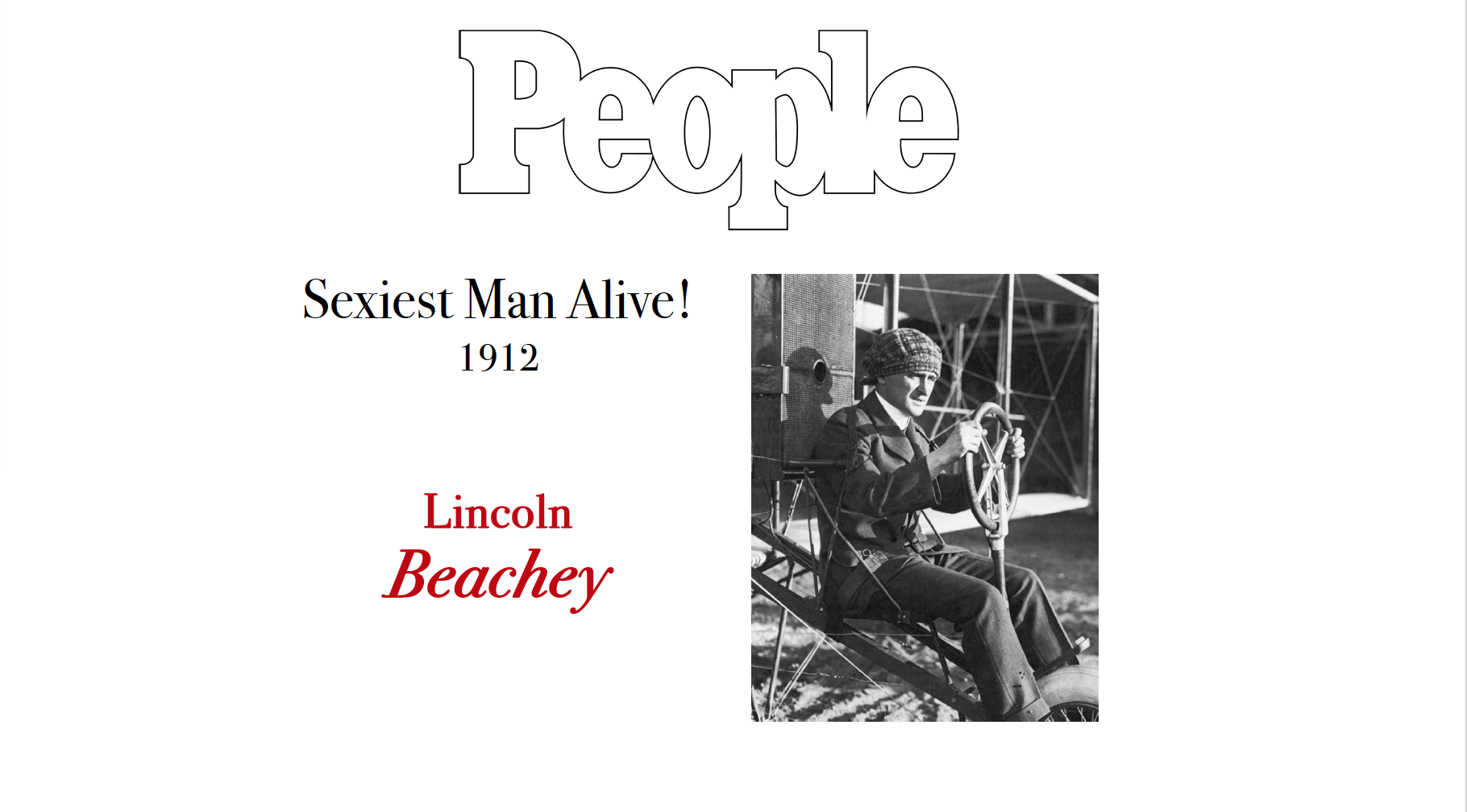
Lincoln and his big brother, Hillery—who made the first airplane flight in county history over San Luis Obispo in 1910—were San Francisco’s Wright Brothers (they even started out, like the Wrights, with a bicycle shop). Orville praised Lincoln as the finest pilot in the world, and it’s said the young man left a trail of engagement rings where he barnstormed. Killed in 1915 when the wings of his monoplane crumpled and plane and pilot plunged into San Francisco Bay.
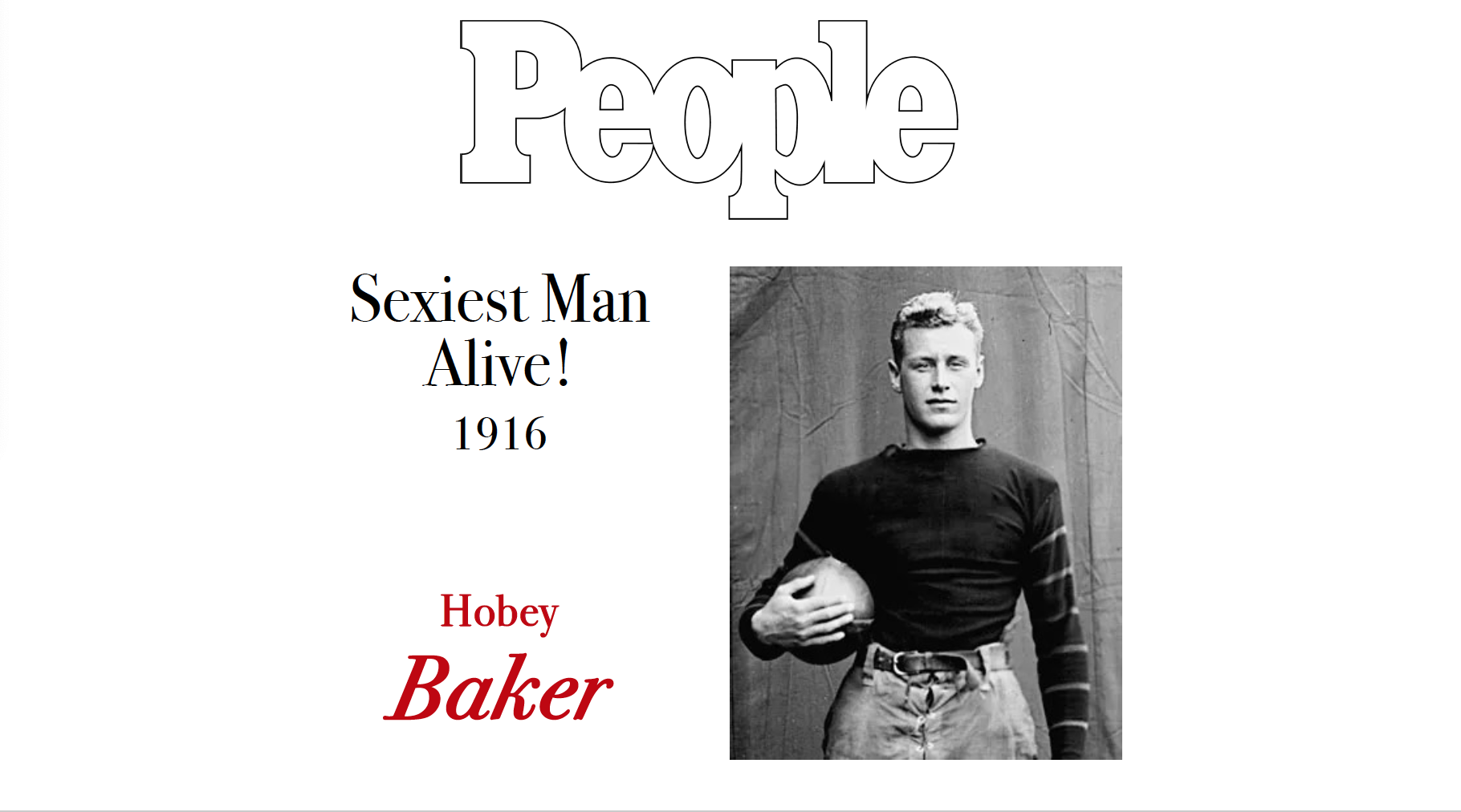
Legendary athlete, a three-sport star at Princeton (hockey, football, baseball, but a university rule forced him to give up baseball). Noted for his gallant sportsmanship. A member of the famed Lafayette Escadrille Squadron in World War I, Baker was killed in a fighter crash soon after the Armistice in 1918. He was twenty-six. The Hobey Baker Award recognizes, each year, the outstanding collegiate ice hockey player in America.
I was kissin’ Valentino by a clear blue Italian stream… The Bangles, “Manic Monday,” written by Prince.
His American wife, Wallis Simpson, turned out to be a Harpy. Their marriage relationship was a kind of Evil Stepmother-Simpering Stepson thing. Sick sick sick. Plus the pair evolved into continuing members of the Adolf Hitler Fan Club. (Lindbergh flirted with the Third Reich, too, coming close to treason until Pearl Harbor changed everything.)
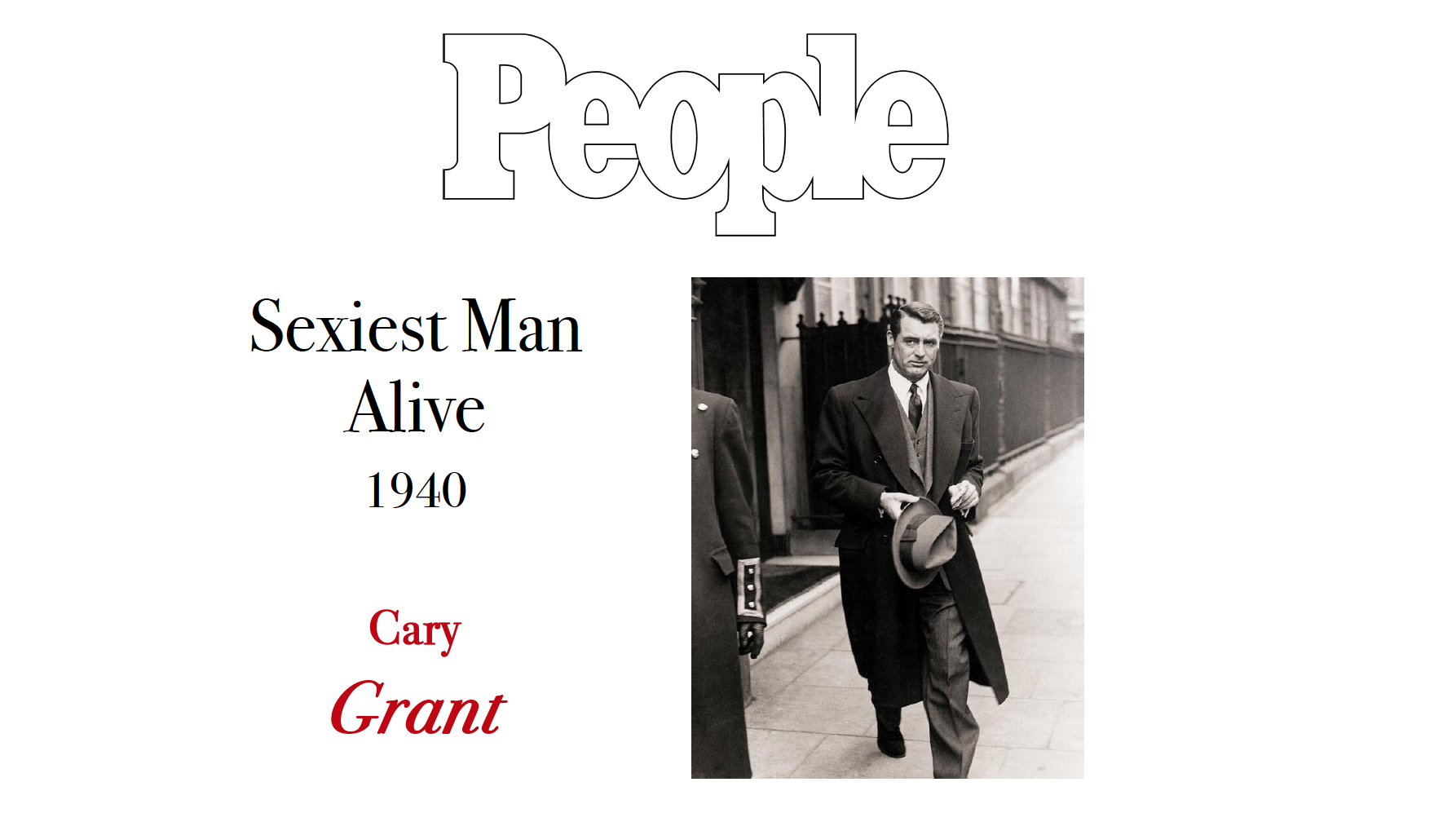
If Clooney won it twice, this man would have won five or six times.
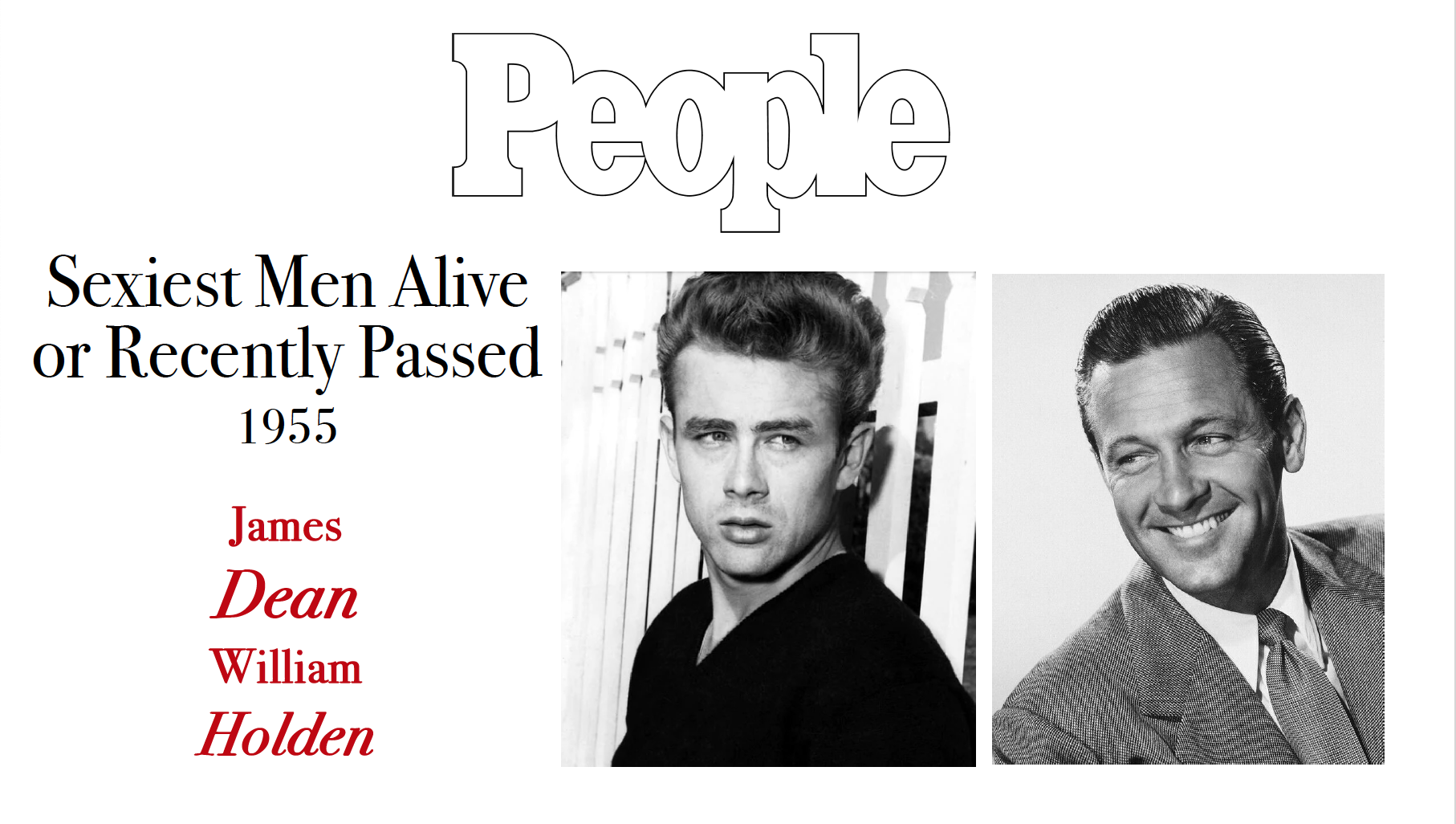
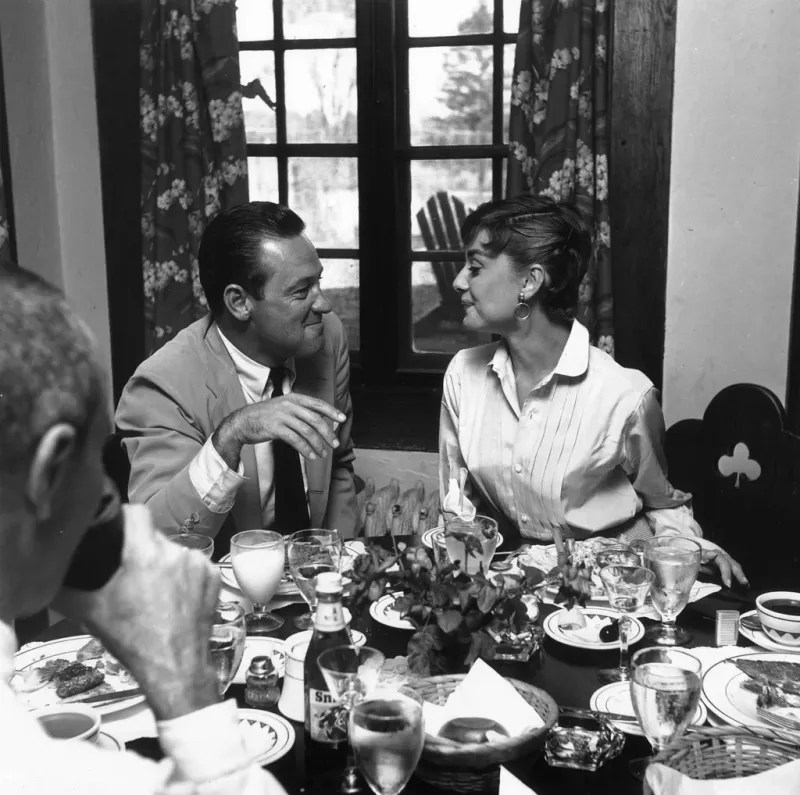
Dean’s three great films and his death came this year, in 1955. Holden is perhaps my favorite actor (Sunset Boulevard, Born Yesterday, Stalag 17, Bridge on the River Kwai, a very small film called Breezy, and Network are my favorites. He even did the cynic with hidden humanity role perfectly in a John Ford Civil War film, The Horse Soldiers, with John Wayne, who played John Wayne.My dear friend and former student Dee Ann needs to put in a vote for Picnic. Holden and Audrey Hepburn were deeply in love. It didn’t work out, and Dee Ann and I still regret that. They were a beautiful couple.
Holden and Hepburn lunch together while filming Sabrina. Sigh.
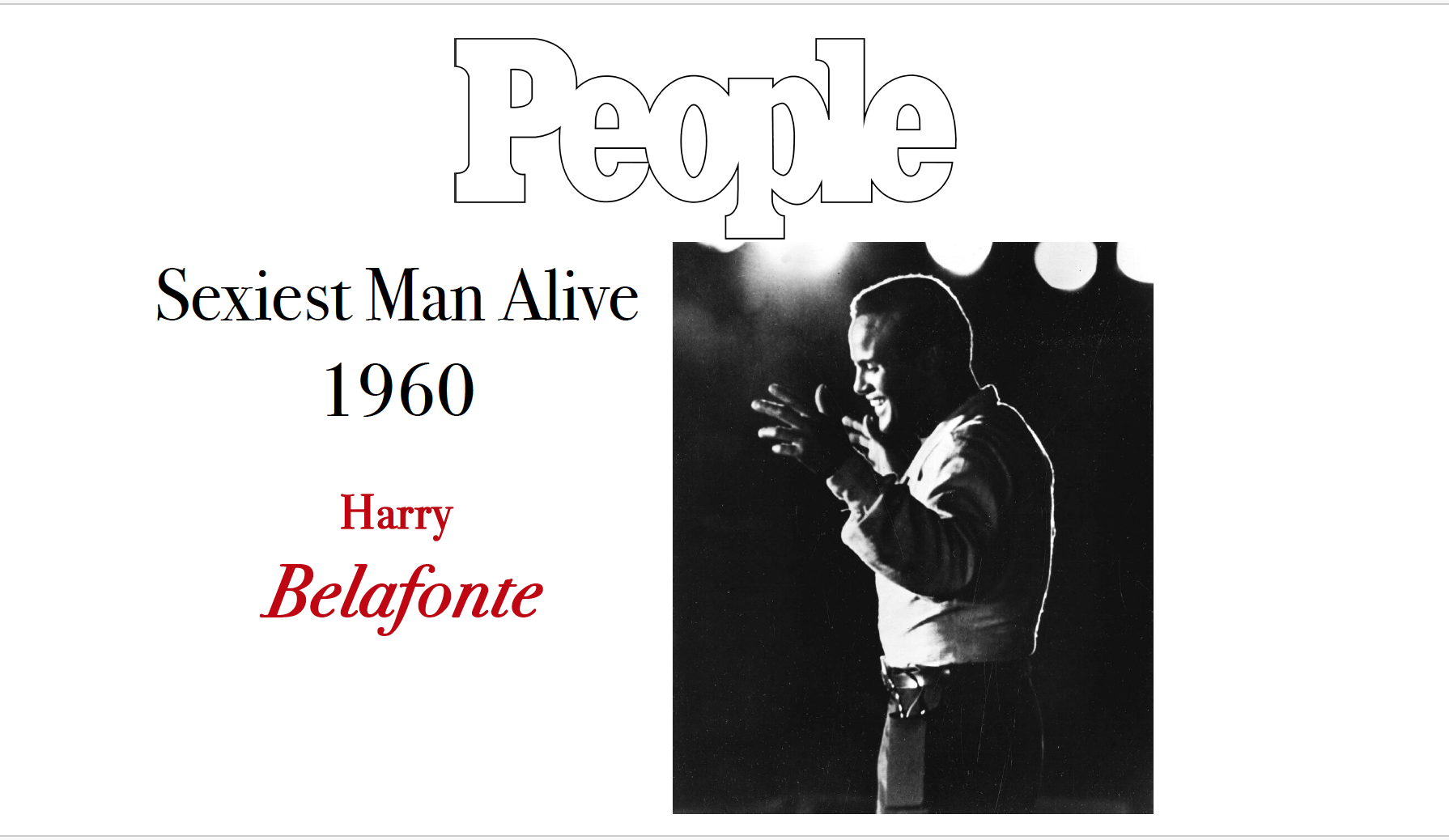
We had both of his Carnegie Hall live albums, and this multiculturarity, a word I just made up, and that beautiful voice made him one of the most important teachers of my childhood. Mom just thought he was gorgeous. Good call, Mom.
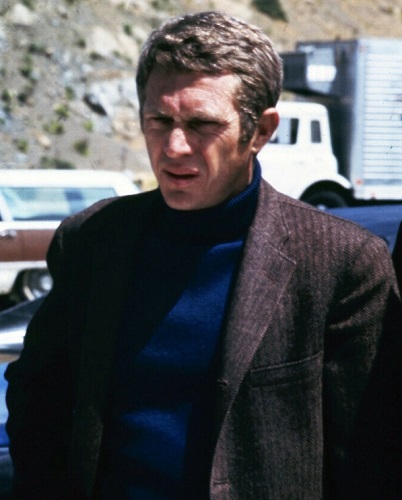
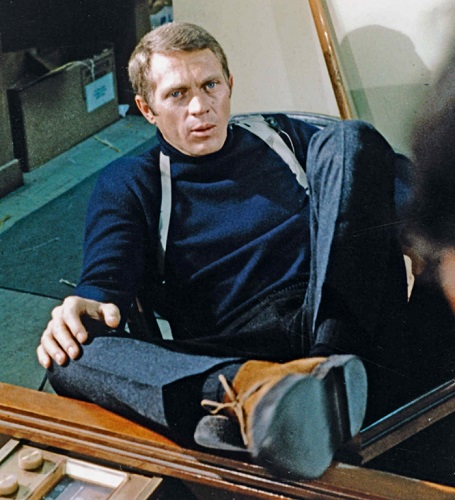
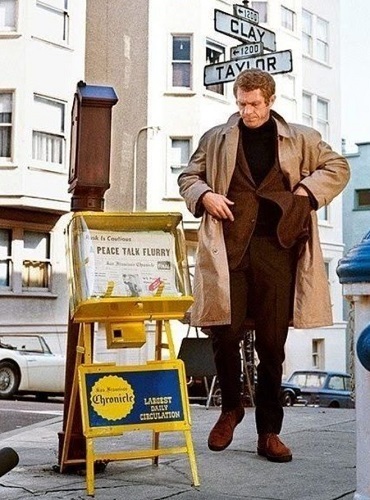
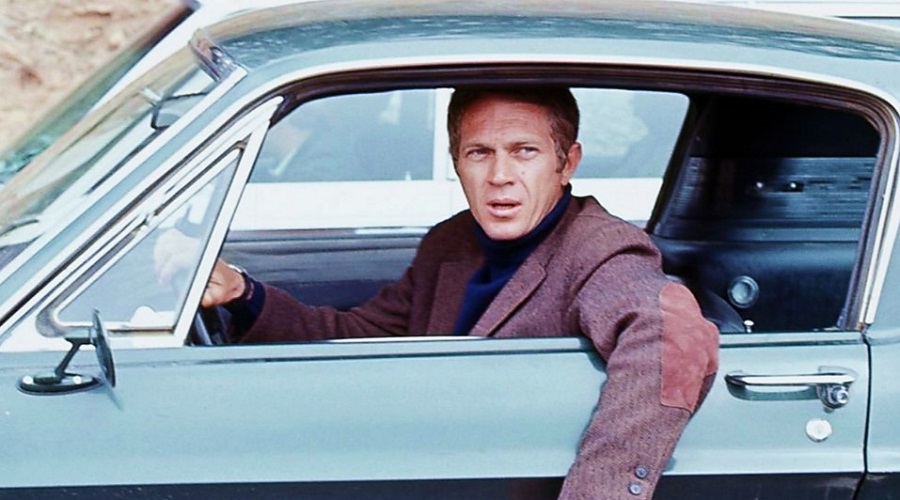
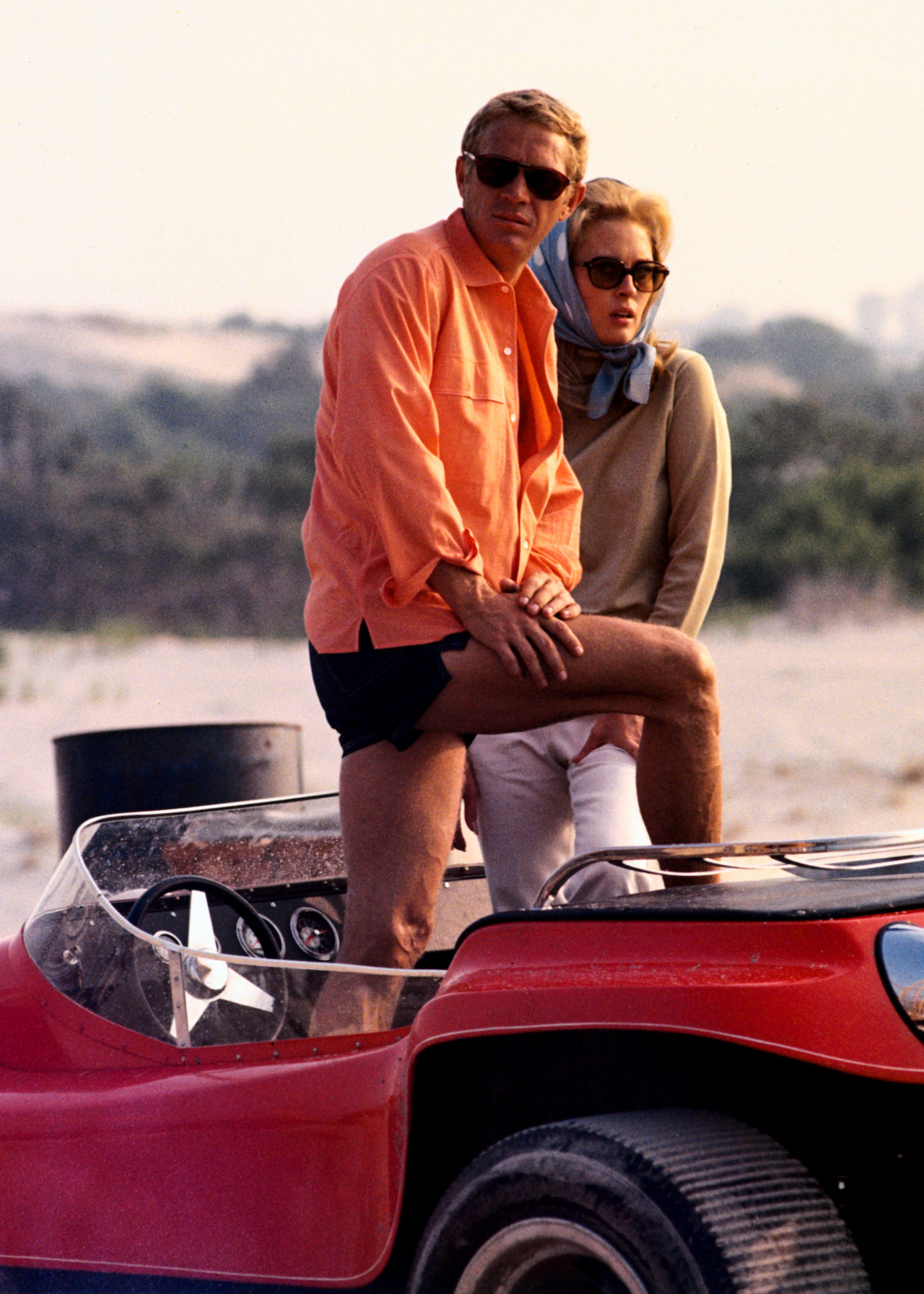
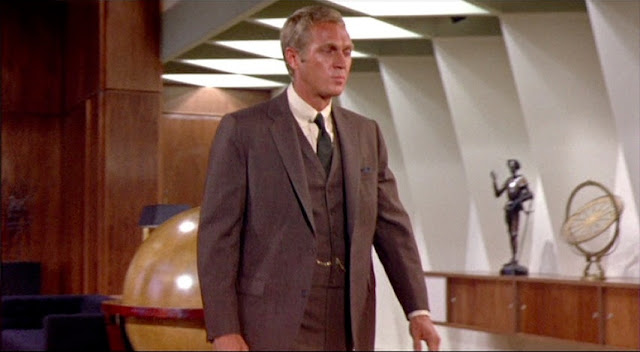
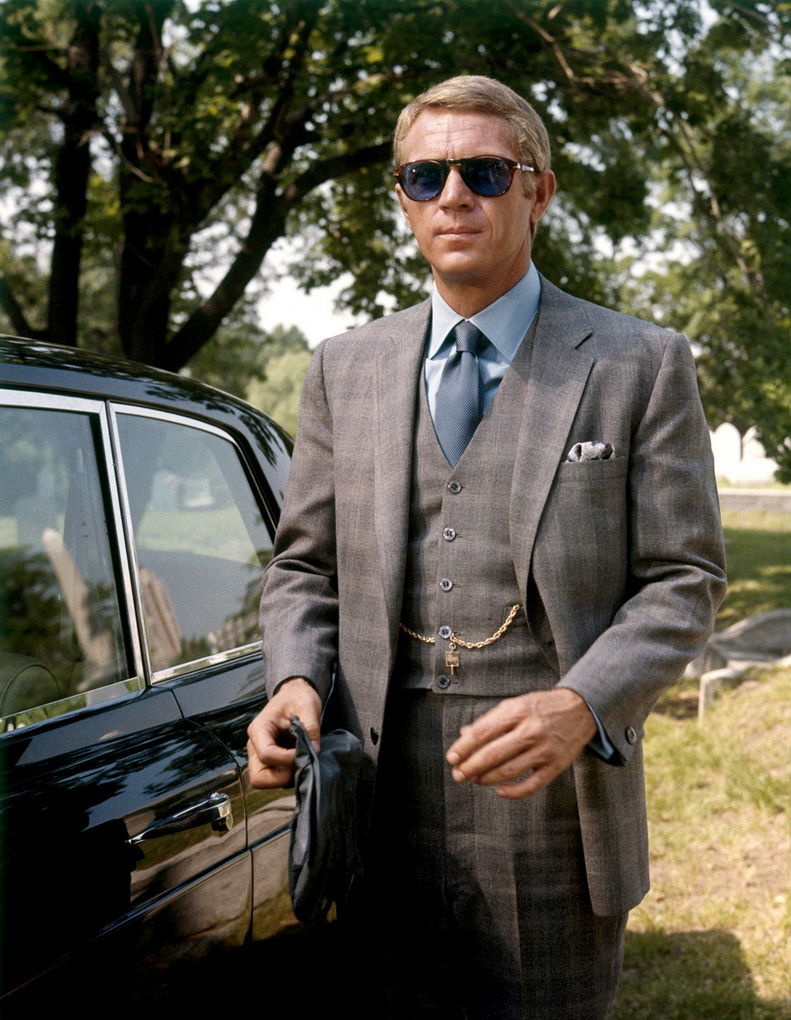
Finally, I would like to nominate Steve McQueen (Bullit, The Thomas Crown Affair) for a special Wardrobe of the Sexiest Man Alive (!) award.
I guess visiting my big sister stirred this up, but it occurred to me that when it comes to scary Great-aunts, us four Gregory kids may have cornered the market.
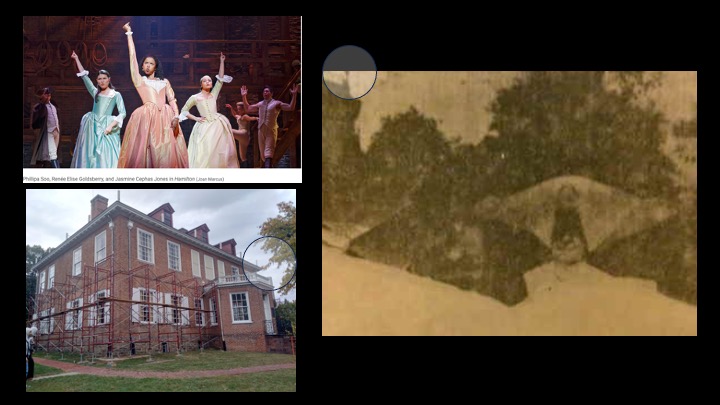
On Mom’s side, Margaret Fox, born 1840 County Wicklow, Ireland, became Sister Loreto, Daughters of Charity of St. Vincent de Paul. That’s her in front of her orphanage, once Philip Schuyler’s Albany home, and home, too, to those lovely Schuyler sisters from “Hamilton.”
I would not cross Sister Loreto, but, on the other hand, if her vocation called her to orphans, there’s an equal chance that she had a big, kind heart. She just looks scary in this, the only photo we have of her.
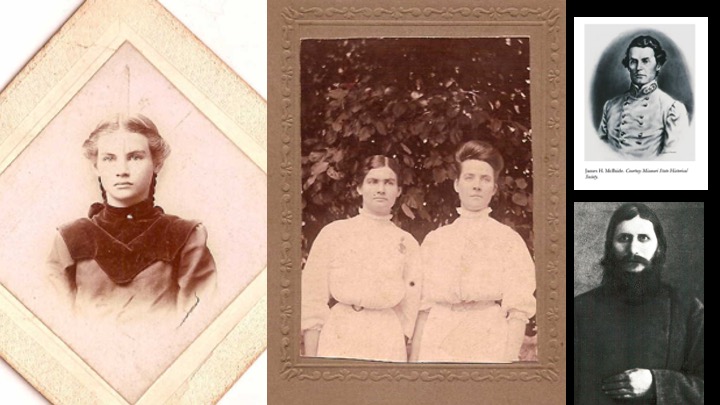
Speaking of scary, on Dad’s side, Jane Wilson, exquisite as a little girl of twelve or so, is seen to the left of my grandmother Dora in the next photo.
Something must have happened to Jane in puberty—was it a lightning strike?— and it’s not just the Frida Kahlo fused eyebrows: Suddenly, she’s the spitting image of her grandfather, Confederate Gen. James McBride.
And I, a Lincoln man, was named after the general.
There are other photos we have of Jane. See that look? It gets worse. She starts to look more and more like Rasputin. Without the beard.
Fluttering eyelashes, botched beheadings, purloined pearls, bodies tumbling down the stairs, Notre Dame, Holyrood, mermaids, dispatch riders galloping over the moors, intense sexual attraction, three powerful queens, being strangled in your nightie, a thing for men’s legs, a loyal dog, secret codes and spymasters, four centuries of sweet revenge. If you’ve been sold on the notion that history is boring, you have been misinformed. Or badly informed.
I’ve been obsessing over this particular anniversary this year. I think it’s in part because we lost Captain Steve, USN, my brother-in-law, an Annapolis grad. I miss that man.
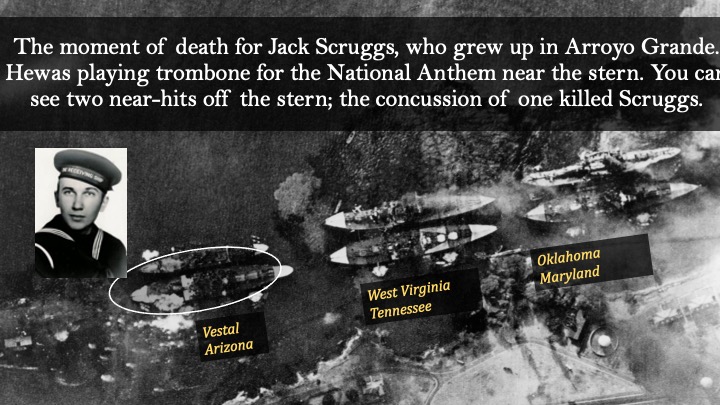
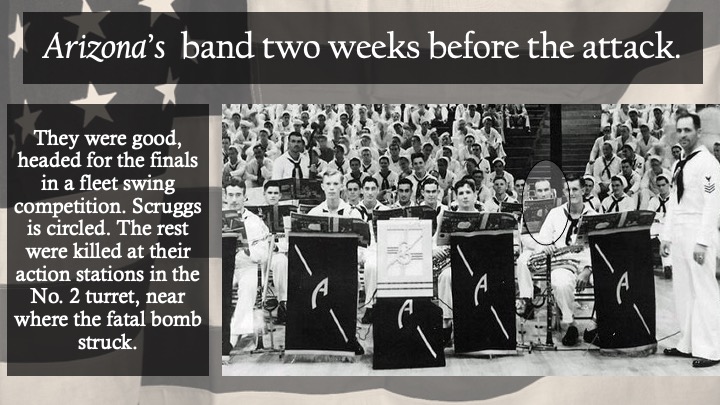
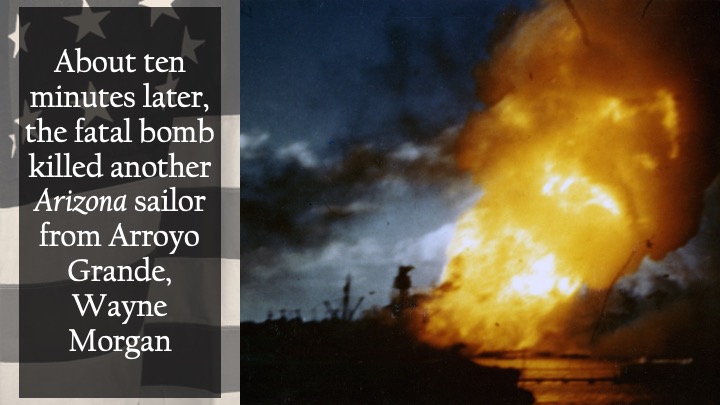
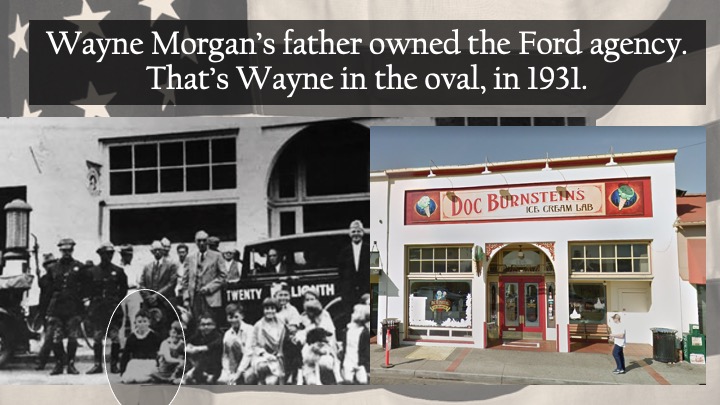
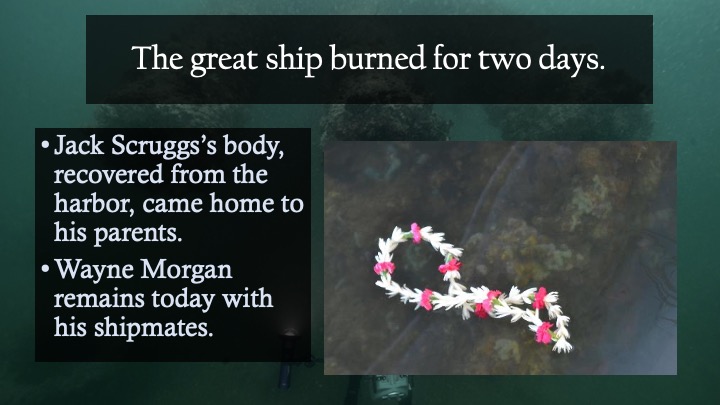
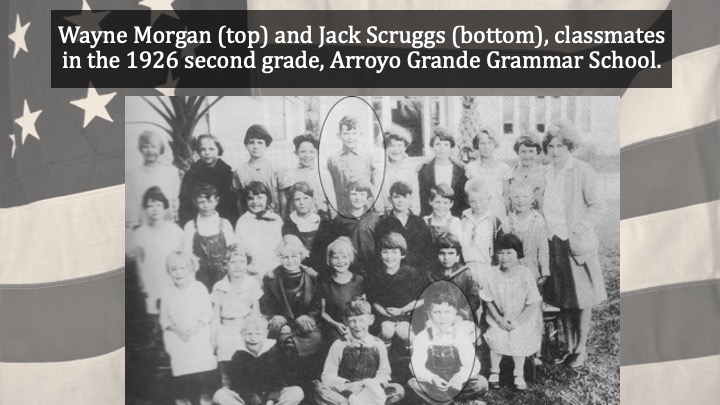
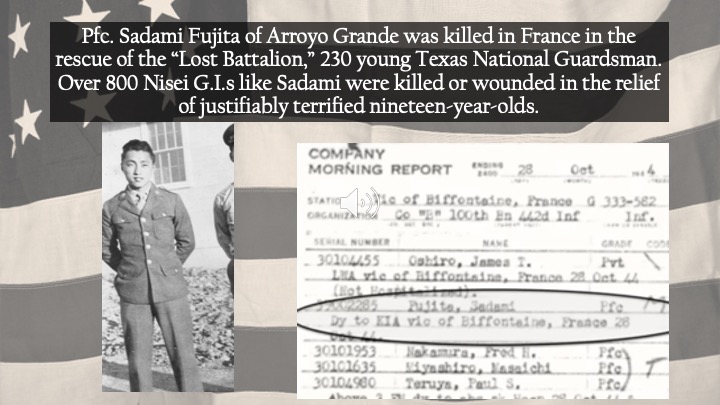
So this video is for Steve Bruce, and for Jack Scruggs and Wayne Morgan, Arroyo Grande boys, for two little Arroyo Grande girls, Jeanne and Yoshi.
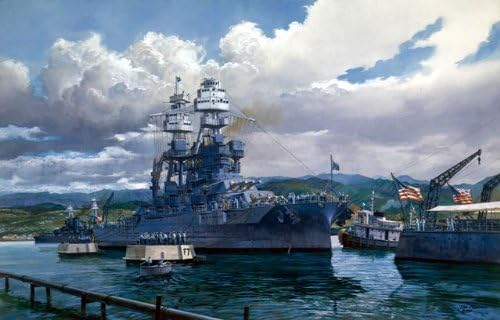
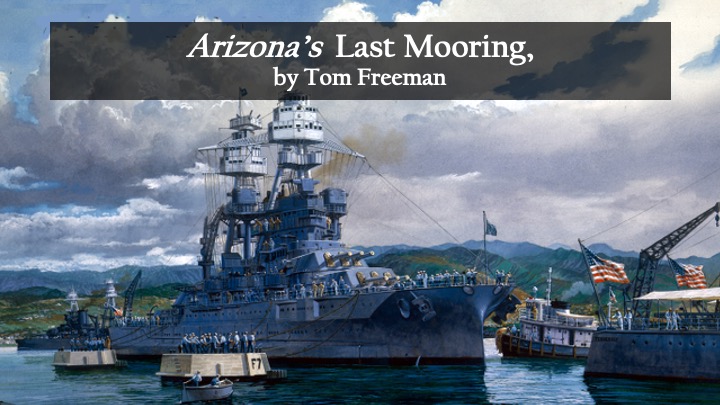
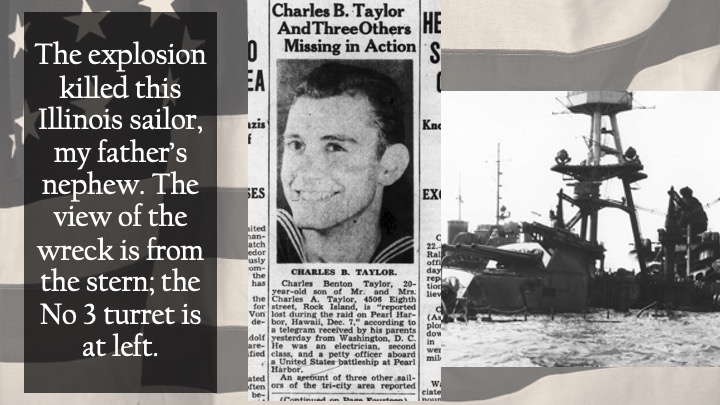
This painting haunts me. The artist is obviously gifted—capturing both water, as the Impressionists did this well, and the great steel machinery of a warship with equal skill means something. So does the occasion. It is 9:15 a.m. on December 5 and Arizona is being secured to her mooring quays near the end of battleship row. Two Arroyo Grande sailors and one from my family have a little under forty-eight hours to live.
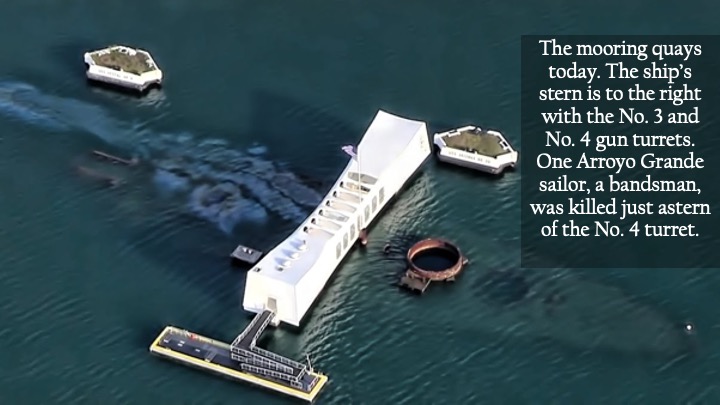
A year ago, in a moving ceremony, the Central Coast Veterans Museum unveiled this artifact from the battleship.
I remember a Twilight Zone where the protagonist was somehow transported from modern times, meaning 1960, to a passenger compartment on Lusitania in 1915. Serling was fond of time-traveling. So am I, thought I haven’t actually practiced it much. Of course in the episode the man’s warnings were useless—he was thought to be a lunatic—because history moves with great weight and determination. He was crushed by it.
Likewise, I have a foolish urge to drive a jeep down to chew out the duty officer who’s shrugging off the radar blips on Opana Point or break up the golf foursome that includes Adm. Kimmel and Gen. Short and somehow order them to get their fannies, even if they are in plus-fours, to their headquarters, and NOW. And I want someone to take that damned war-warning telegram seriously.
I’ve had no luck so far in these endeavors.
There was a science fiction-ish novel, The Final Countdown, and there was a not-very-good the film based on it. In the film, Adm. Kirk Douglas’s aircraft carrier was beamed–is that the right word?–from the 1970s back to the predawn of December 7 and his radar picked up Kido Butai-–the 1st Air Fleet and its six carriers—and he had the chance to obliterate it with his jets, Phantoms and Crusaders and such. I don’t remember what Kirk did, but I think he decided that you don’t mess with the timeline. Kirk (See: Seven Days in May , 1964) usually gets it right. And one of the better Simpsons Hallowe’en episodes made that point, when Homer stomped on a prehistoric bug and messed up everything.
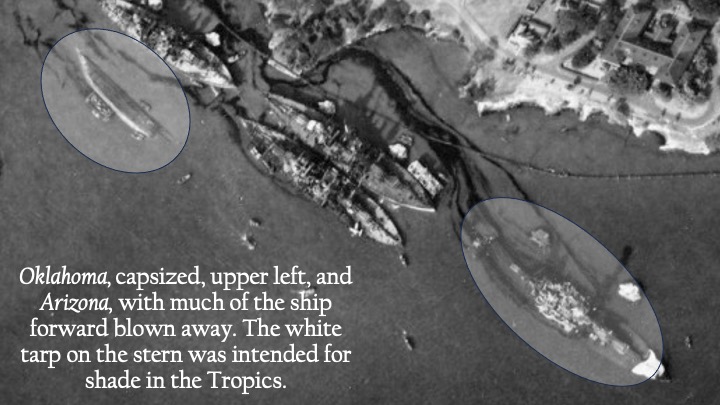
But today—and the day after tomorrow—aren’t funny. The attack on Pearl Harbor made us the world power that we are today. There are few turning points in history as clear as this one. It also claimed 1,177 Arizona sailors and Marines, most killed instantly, and it led to Executive Order 9066, to the shameful confinement of the families of some of my closest friends.
At Gila River, the desert winds carried the spores for Valley Fever that decimated the elderly Issei, the first generation immigrants who were not permitted to become citizens because they did not have the appopriate prerequisite, said the Supreme Court, which was Whiteness. They and their children turned the desert into truck gardens—cauliflower thrived at Gila River—and the young Nisei men joined the army to prove they were Americans. Many gave what Lincoln called, so movingly, “the last full measure of devotion.” 400,000 young Americans died with them, along with thousands more—many of them women—in wartime industrial accidents.
So this is Arizona in the last few moments of peace hours away from her last full measure of devotion. The America of Log Cabin syrup in little tin cans, of glass milk bottles delivered in Model A panel trucks, of Fred and Ginger and ruby slippers and Andy Hardy malt shops, is on the verge of vanishing. We’d built dams and bridges and dizzying skyscrapers in the Thirties, before Pearl Harbor, now we would build tanks and planes and, of course, warships.
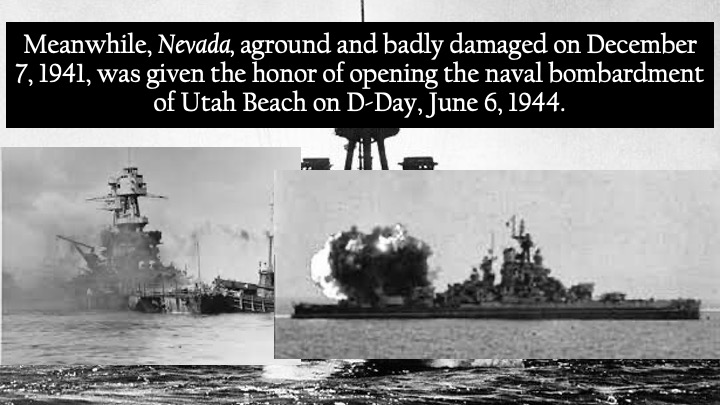
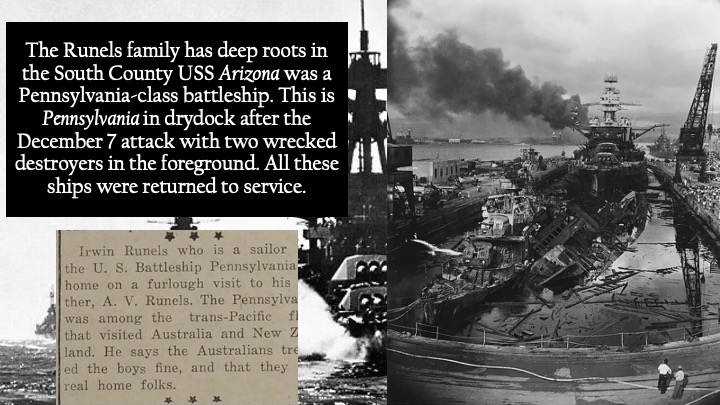
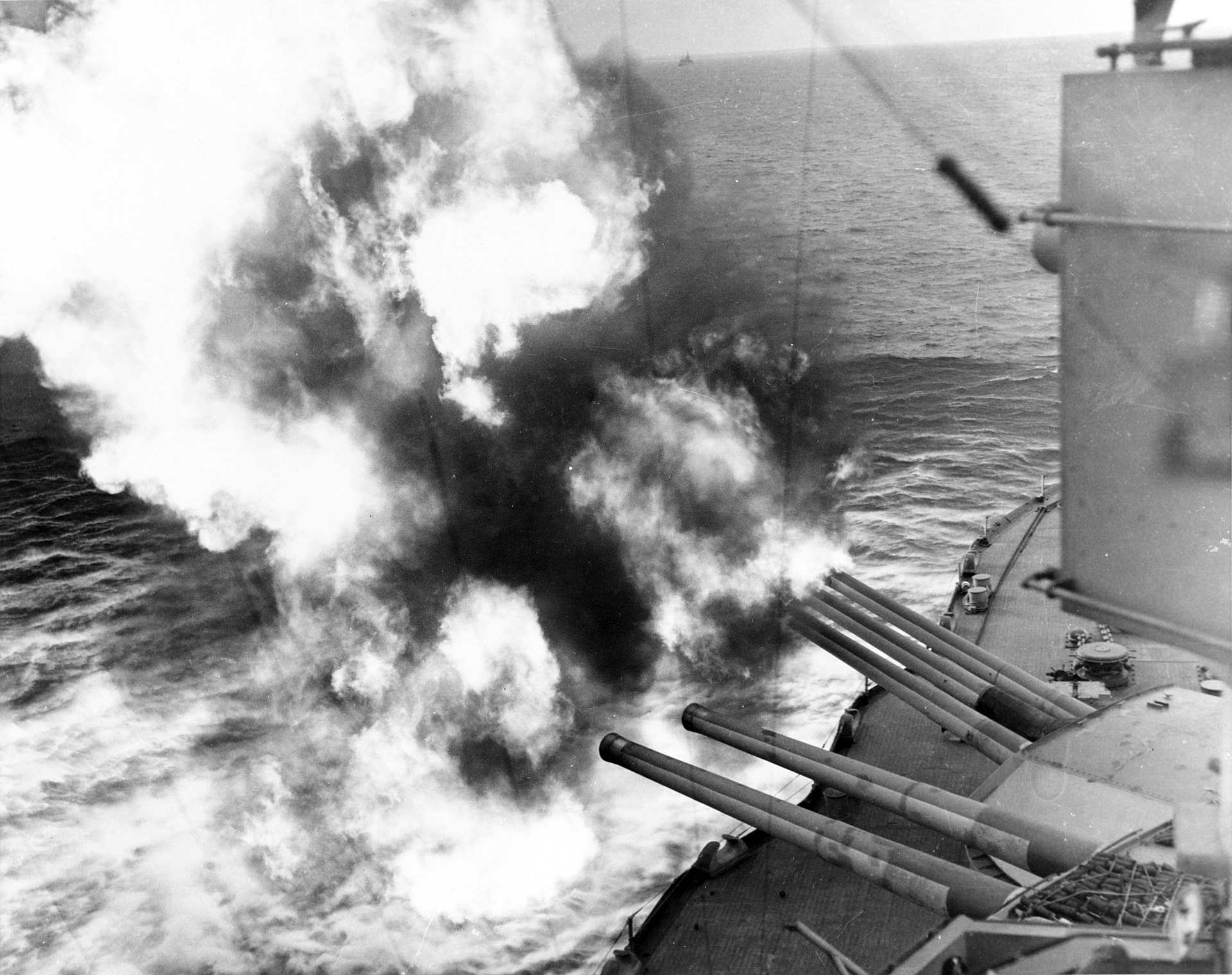
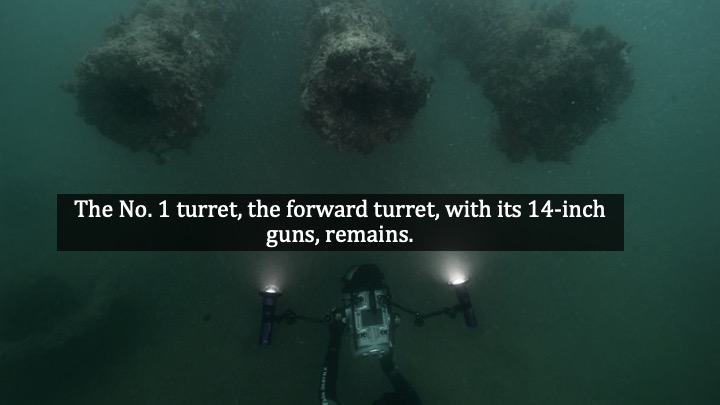
All but three of the battleships destroyed on December 7 were raised, repaired, refitted and modernized. Nevada, the only member of Battleship Row to make steam and get underway that terrible morning would, two and a half years later, cross the Channel to hurl the great weight over her fourteen-inch guns at the enemy behind Utah Beach. Nevada was afforded the great and perfect justice of firing the first salvo.
These were her guns at work that day, on another historic morning, during another historic turning point.
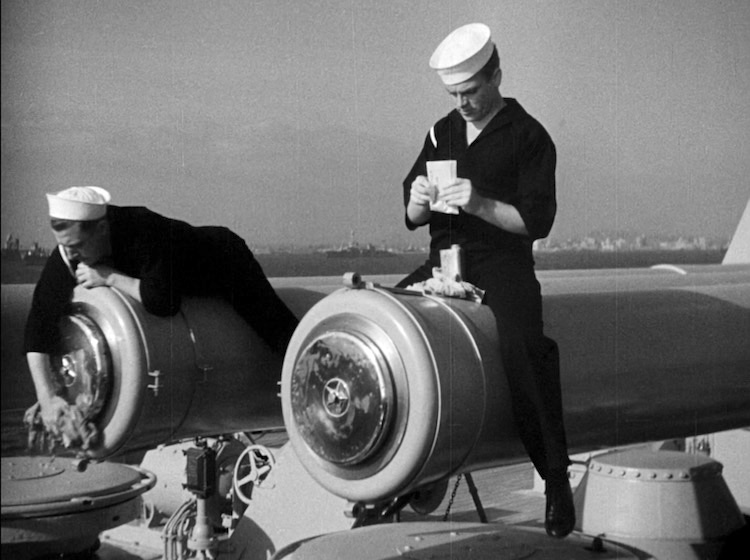
Forward 14/45 guns of USS Nevada (BB-36) fire on positions ashore, during the landings on Utah Beach, 6 June 1944. Official U.S. Navy Photograph, now in the collections of the National Archives.James Cagney in 1934’s Here Comes the Navy, filmed on Arizona. Arizona in line ahead in heavy seas.
A dignitary sails the Caribbean with the great ship:















 A Work in Progress