
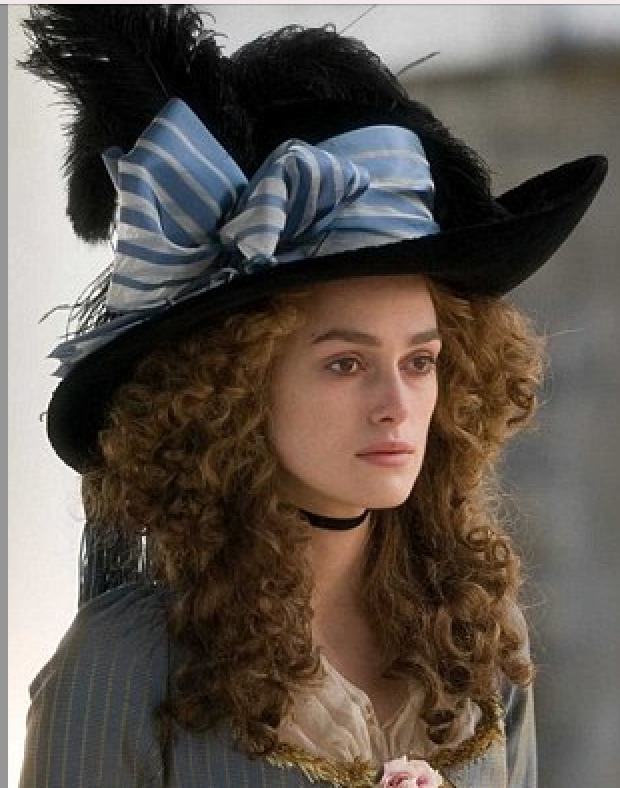
Leave it to me to wake up thinking about 18th-Century women’s wigs. A couple of weeks ago, Elizabeth and I watched again the film The Duchess, about Georgiana, the Duchess of Devonshire, the ancestral great-aunt of Princess Diana. Georgiana was played by Keira Knightley, she of the oddly beautiful underbite and delicate bone structure, and Knightley did her job well.
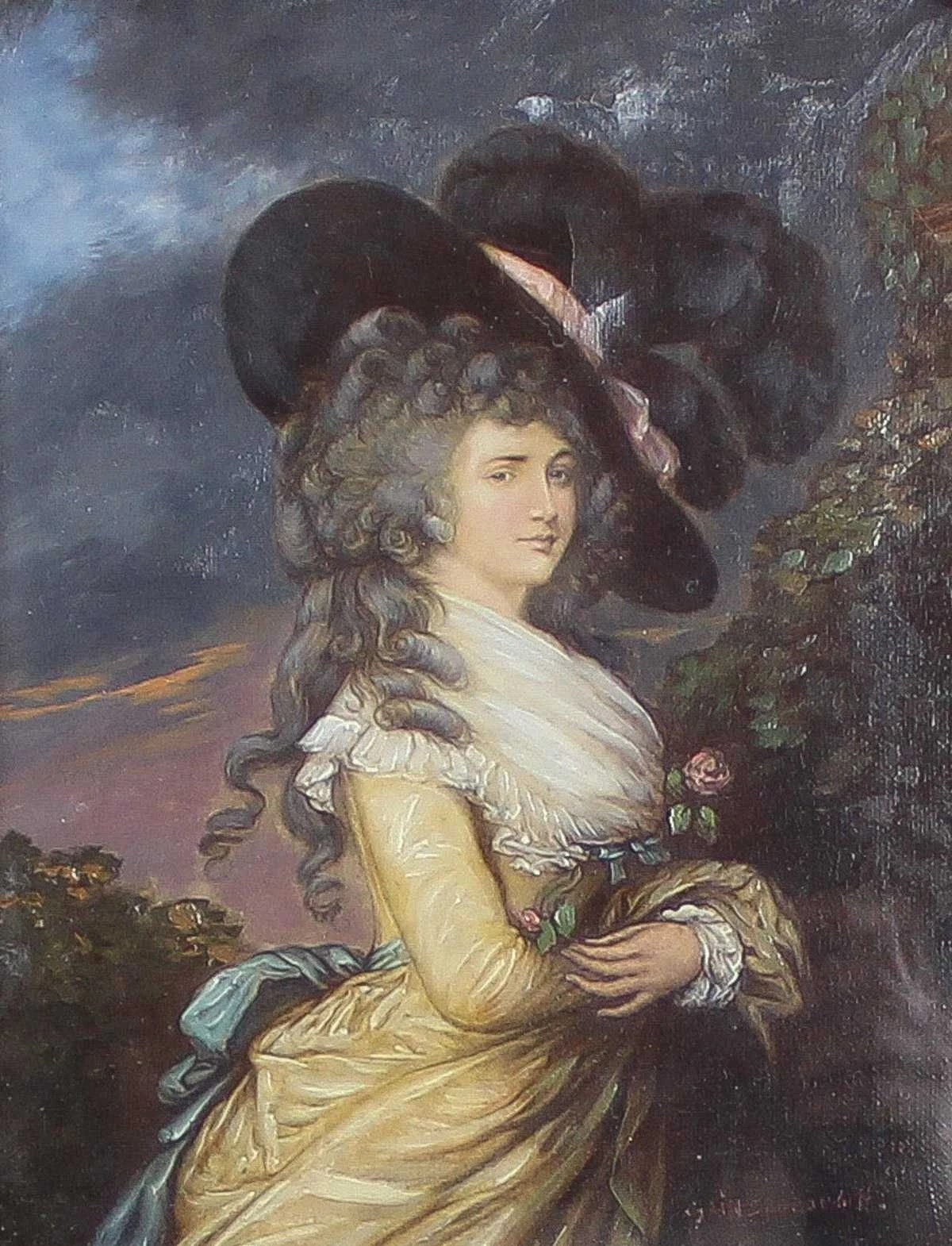
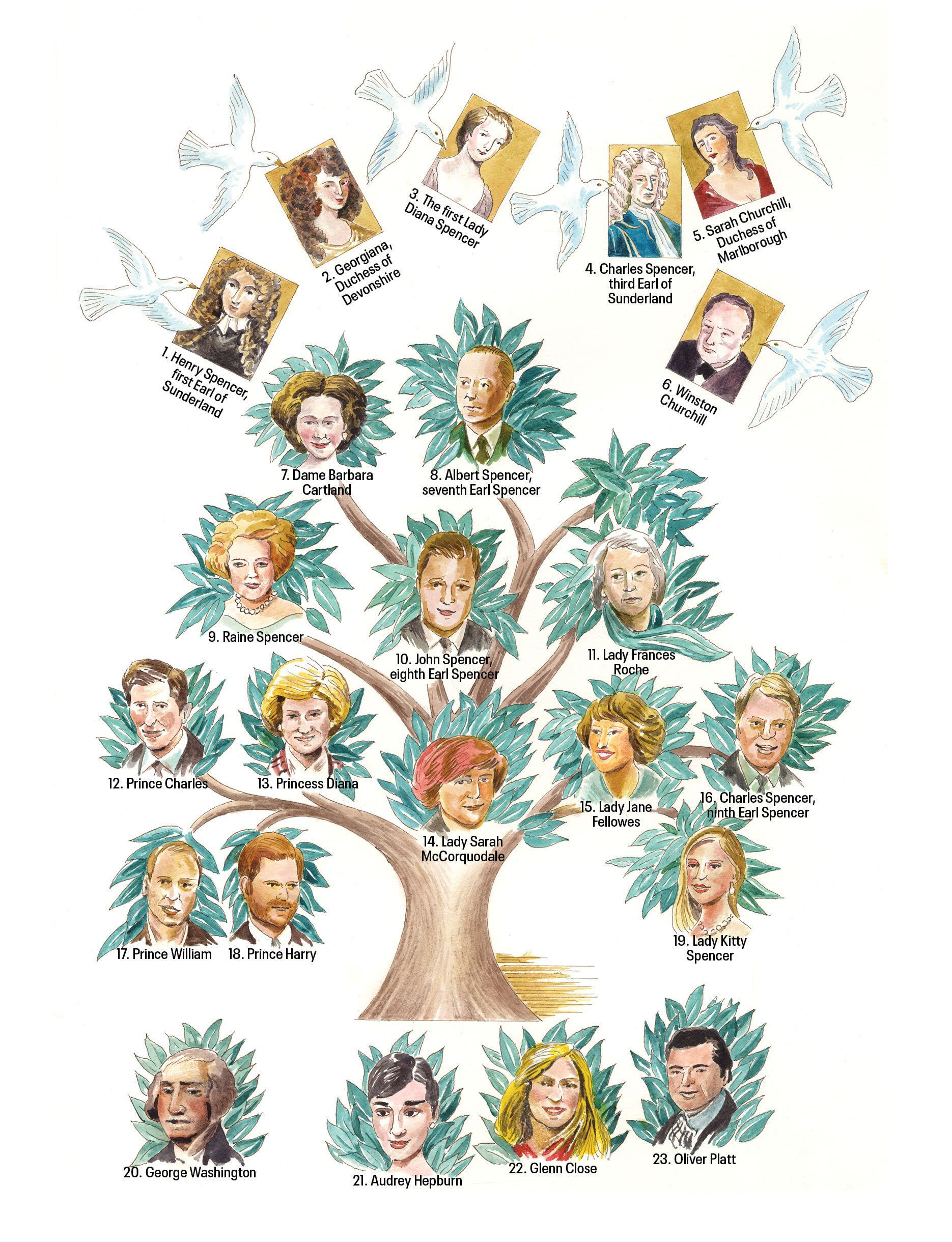
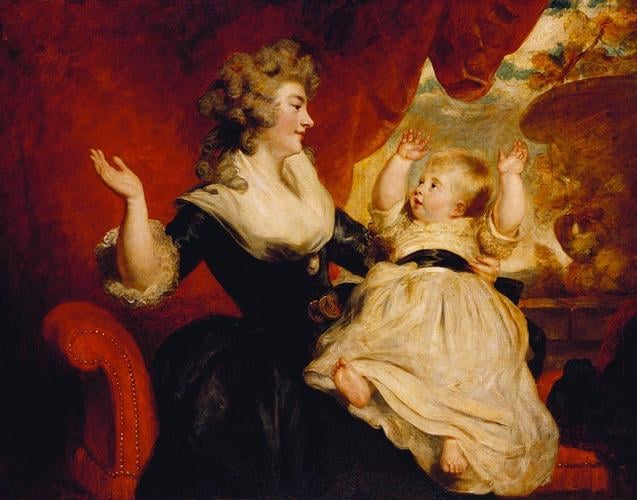
The real Georgiana—she’s portrayed by Gainsborough in the painting— had some impressive branches on her family tree, given that she was a Spencer:
He life was not so stellar. She married William Cavendish, the Duke, at 16 to bring wealth to her own family, and the marriage was not happy. Ralph Fiennes portrays Cavendish and I almost bought a bag of frozen cod the other day because it reminded me of Fiennes in the film. Not all of him was frozen: there was enough warmth in the hearth for him to invite his mistress, Elizabeth Foster, to live with him and Georgiana. (Eventually, the two women become friends and fellow-sufferers.)
Georgiana consoles herself in drinking, partying, running up immense gambling debts (although she gained entry into British politics by shrewdly choosing her gambling partners at cards) and cavorting with the handsome MP Charles Grey. In one film scene, daughter she bears by Grey is taken from her to be raised with “his people,” and the exchange of the baby is done between two carriages on a remote country road. It is gut-wrenching.
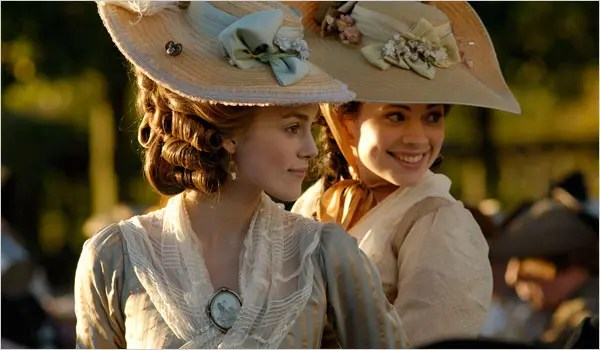
Despite all of this, Georgiana would be remembered as a loving friend and mother, good-humored and devoted to the poor, especially children. Good for her. She was also beautiful: here she is, in 1786, with one of her daughters, and, again, portrayed by the many-wigged Knightley.
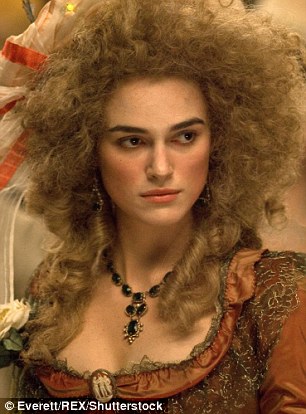


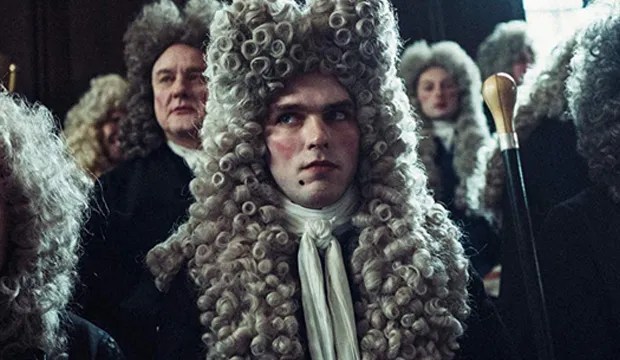
The Favourite, produced ten years after The Duchess but set in the century before Georgiana’s time, won the Academy Award for costume design, as did the earlier film. Well-deserved. But when it comes to wigs, it was the men who outdid the women in The Favourite. In that film, it’s Lord Harley’s wigs, not to mention his beauty mark, that steal the show (the young Nicholas Hoult is wonderful as the acidic and opportunistic Parliamentarian).

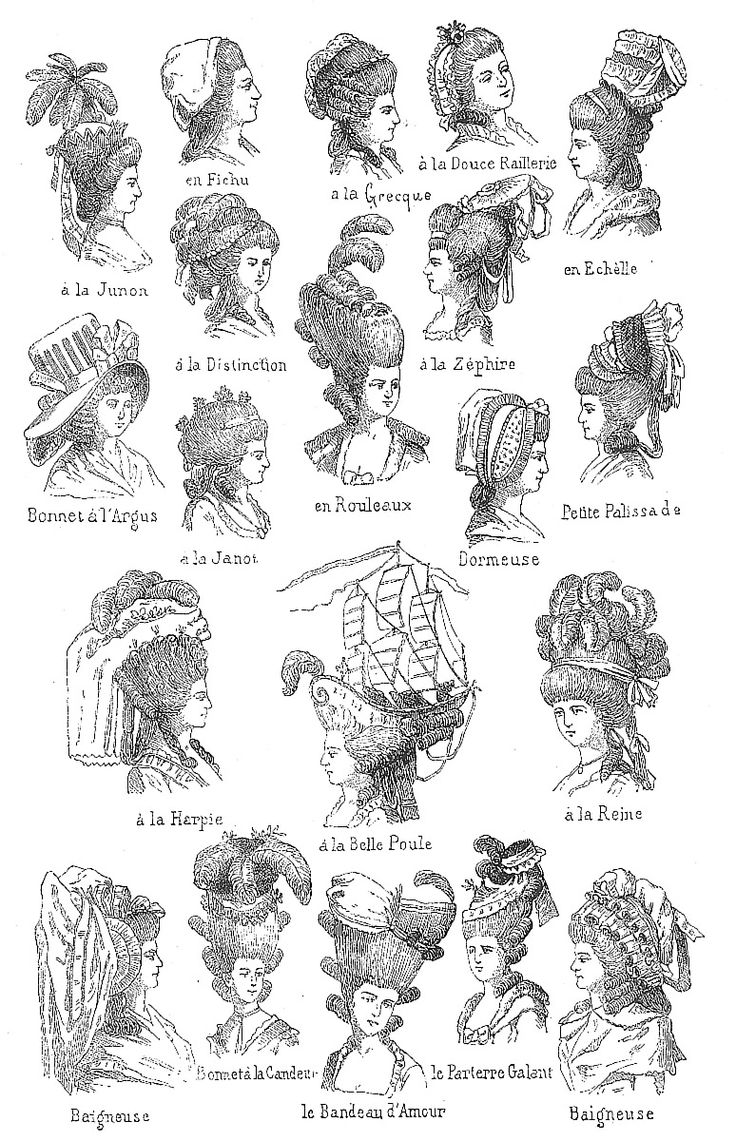
But in Georgiana’s time, even Lord Harley’s wigs would be surpassed, in this century by women’s wigs. I’ve always loved this Bow Wow Wow song anyway, and it’s appropriate to this scene from Marie Antoinette (2006).
And there were so many to choose from! I’m pretty fond of the ship model wig.
Finally, “freshening up” in Georgian England would’ve had a different meaning, because for men and women, that meant getting properly powdered before you showed your noble head to the public.
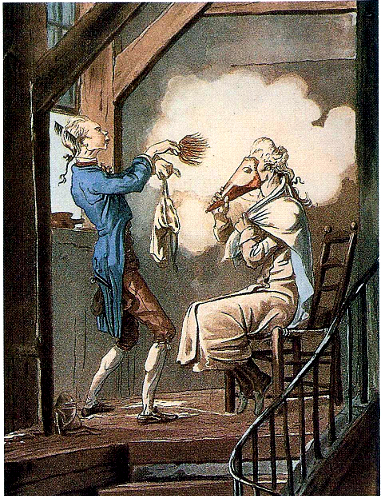
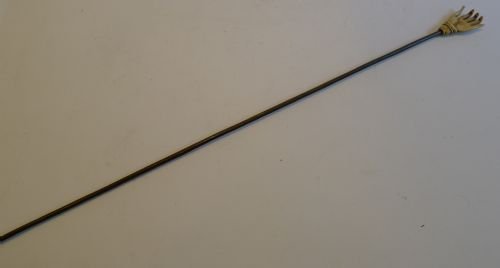
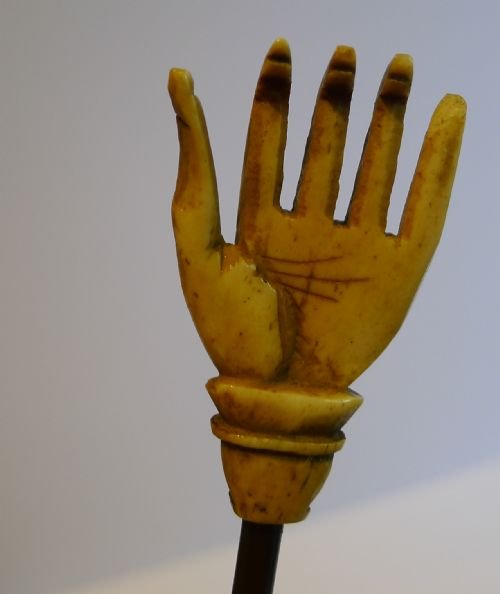
What the films don’t always show is the fashion accessory that went with 18th-century wiggery. Long-handled scratchers like this one, made of whalebone, were vital in this age of big hair, because underneath it all was a warm, dark home for lice.
 A Work in Progress