
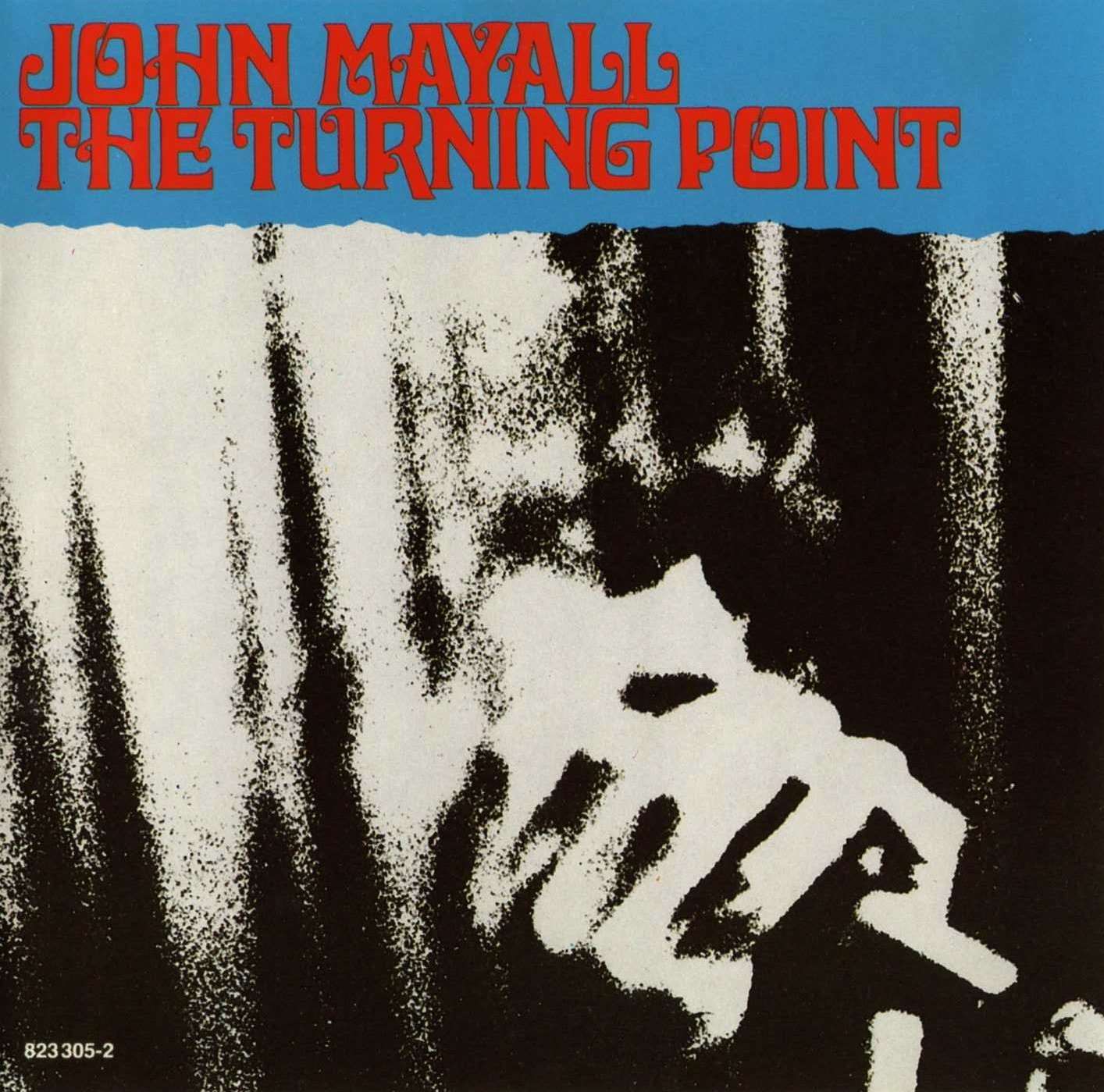
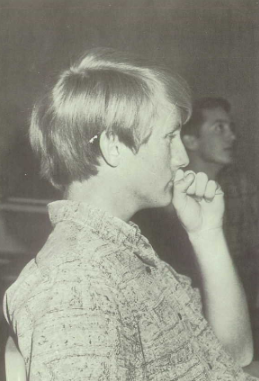
I first heard this song when I was eighteen, and my friend Paul Hibbard’s house in Arroyo Grande, not far from Sambo’s (later Francisco’s, now a derelict) where we drank endless cups of coffee and talked about Life and Stuff. I thought Paul immensely wise, older than his years, and a kind of hero. Him introducing me to this John Mayall album, and to this song, only confirmed my feelings about him. That’s Paul, in the photo from the 1969 AGHS yearbook.
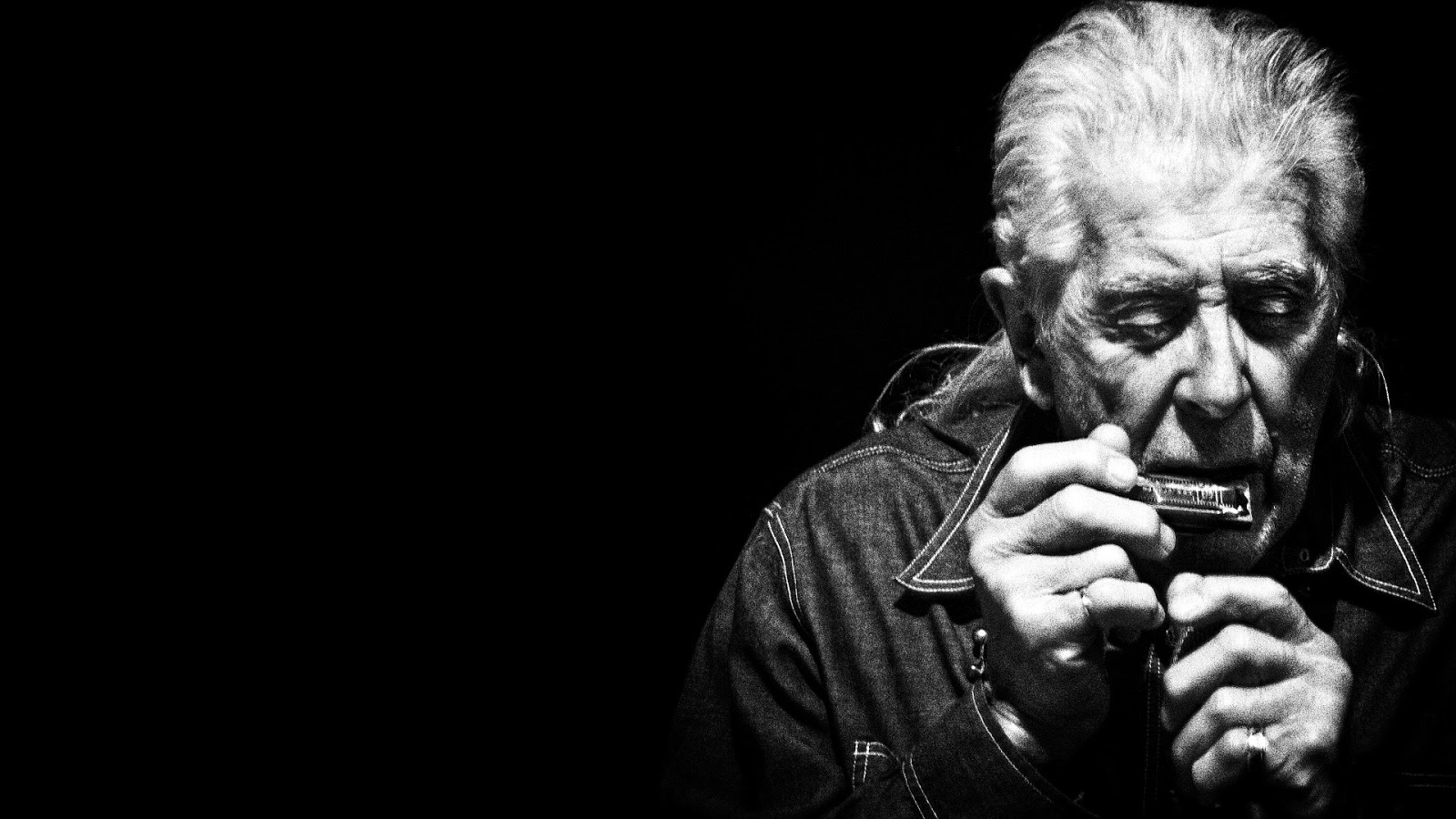
So did this man confirm my feelings about Mayall. This is one of those “First Time Hearing” YouTube videos, and they’re so often young Black People, but this man has a few miles on him and he may not have heard Mayall before, but he knows music.
The best part, I think, is watching this man’s face. Then it gets better, when he admits how jealous he is. Of Mayall’s audience fifty-five years ago.
So what? Here’s an excerpt from one of my favorite British newspapers, The Guardian:
Eric Clapton* fled the Yardbirds in the spring of 1965, dismayed by the prospect of their latest single, For Your Love, bringing commercial success and thereby compromising his musical integrity. The 20-year-old guitarist found comfort in the arms of John Mayall, who welcomed him into his band, the Bluesbreakers. Within weeks their relatively purist approach to the blues, while not producing hit singles, had put them among the hottest attractions on the UK’s club circuit.
In Mayall, the young blues-hungry audiences knew they were in the presence of a slightly older figure whose knowledge and understanding of the idiom gave him an immense authority. In Clapton they had an idol who was one of their own.
In those days, it was instructive to see Mayall and his musicians on two occasions either side of Clapton’s arrival: the first time on a club tour accompanying the veteran American guitarist T-Bone Walker, playing the role of devoted and self-effacing disciples; the second time, suddenly bathed in the glow of cult worship.
He had come from Manchester to London in 1963 with a record collection that included Muddy Waters, Elmore James, Robert Johnson, Sonny Boy Williamson and many other more obscure bluesmen and women. He and Alexis Korner, a man of similar vintage and tastes, encouraged their acolytes to share and absorb the music they loved, eventually adopting it – in an audacious but ultimately fruitful act of cultural appropriation – as their own language.
Out of Korner’s Blues Incorporated and Mayall’s Bluesbreakers flowed a stream of prodigies who were soon ready to head off in their own directions. When Clapton left Mayall after a year – and one hugely influential album, Blues Breakers – to form Cream, he was replaced by the 19-year-old Peter Green. When Green left a year later, taking the group’s drummer, Mick Fleetwood, and bassist, John McVie, with him to form the first version of Fleetwood Mac, his place was taken by the 17-year-old Mick Taylor. Two years later Taylor would accept an offer from the Rolling Stones.
While they were with Mayall, they became the young gods of the club scene: a new generation of note-bending guitar heroes, beautiful long-haired boys whose skills had been attained through long hours of bedroom practice and were now delivered to audiences mesmerised by their virtuosity…
So thank you, John Mayall, and thank you YouTuber Barri, who doesn’t yet know that he’s made a new friend. I never heard nothing like this, either.
P.S.: Two of the Mayall proteges cited in the Guardian article:
Clapton and Cream.
And the Peter Green iteration of Fleetwood Mac.
 A Work in Progress