
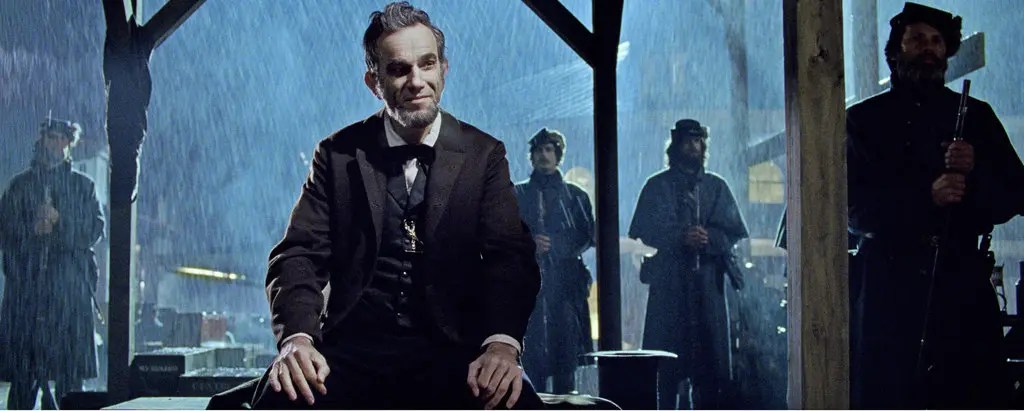
The son the Lincolns lost in the White House in 1862 was Willie, who died of typhoid fever. Of the four boys, he was the most like his father—sensitive and intelligent. They’d lost another son, Eddie, before Lincoln became president; the man for whom that son was named, family friend Edward Baker, was killed in action early in the war. Robert and his father did not get along; Tad, who suffered from a speech impediment and probably developmental disabilities, would die six years after his father was murdered.

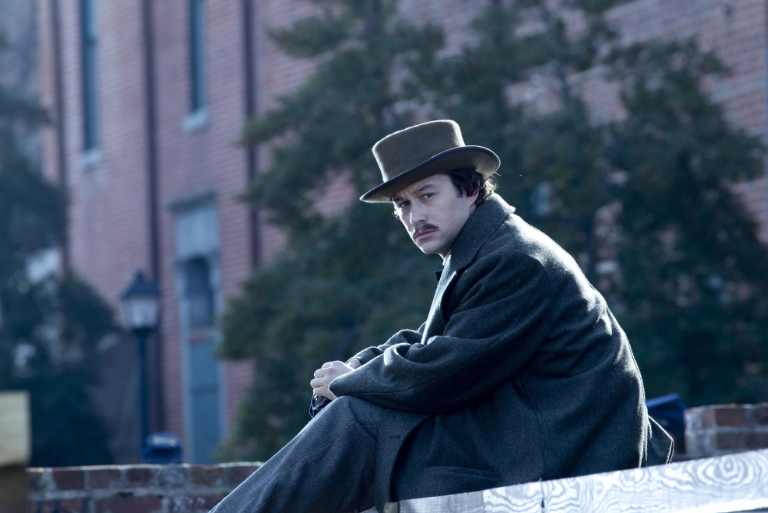
Lincoln and his own father, Thomas, did not get along, either. Lincoln would refuse to attend Thomas’s funeral in 1851; as the film suggests, Lincoln’s temperament resembled that of his mother, Nancy Hanks, who died when Lincoln was nine. His stepmother, Sarah, adored her stepson, and Lincoln returned Sarah’s love. She would never learn to read.
Robert Lincoln was Secretary of War and was nearby when President James Garfield was assassinated in 1881. He was President of the Pullman Car Company and was on his way to meet President McKinley—probably within earshot of the gunfire—when that President was assassinated in Buffalo in 1901.
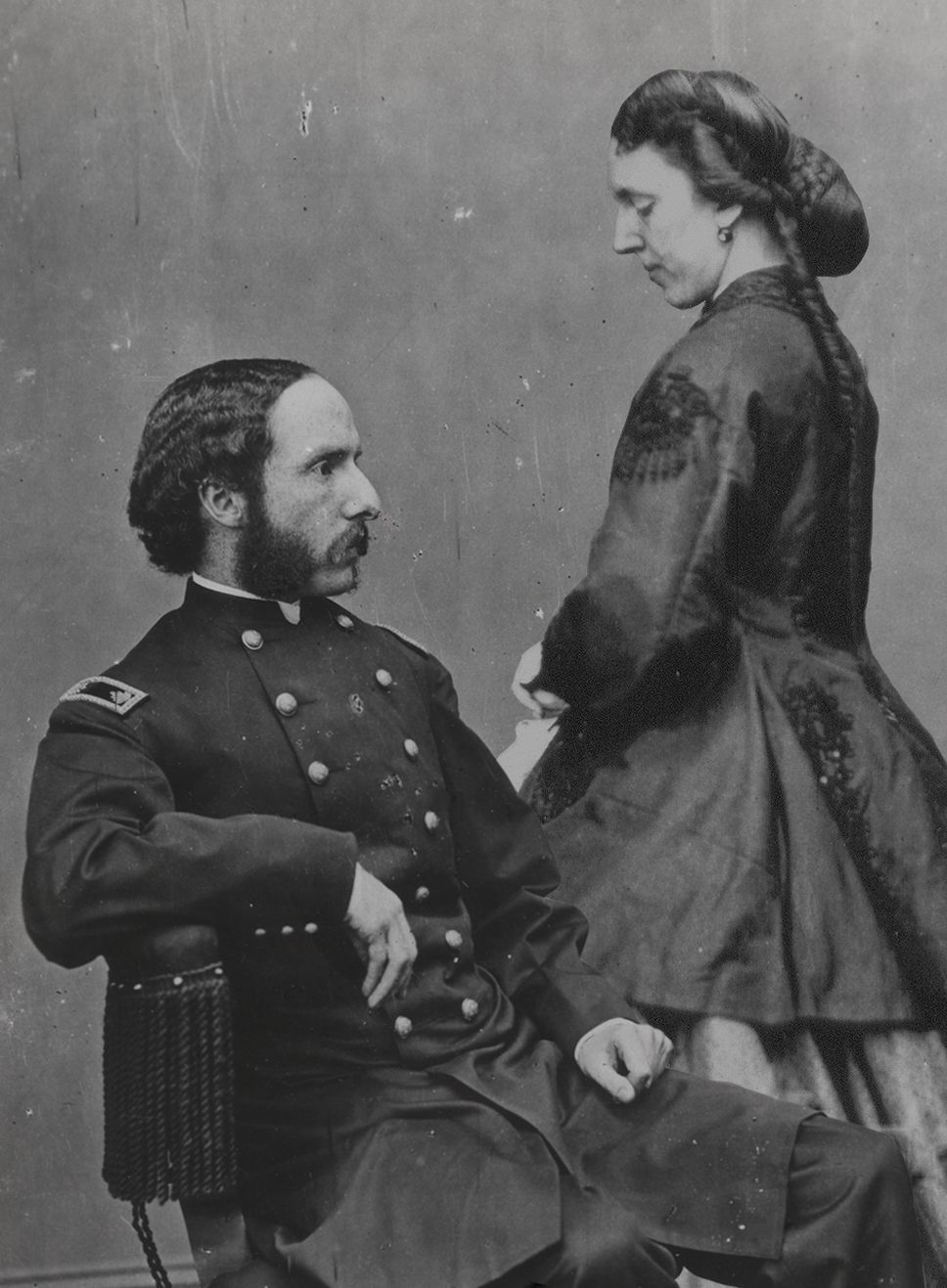
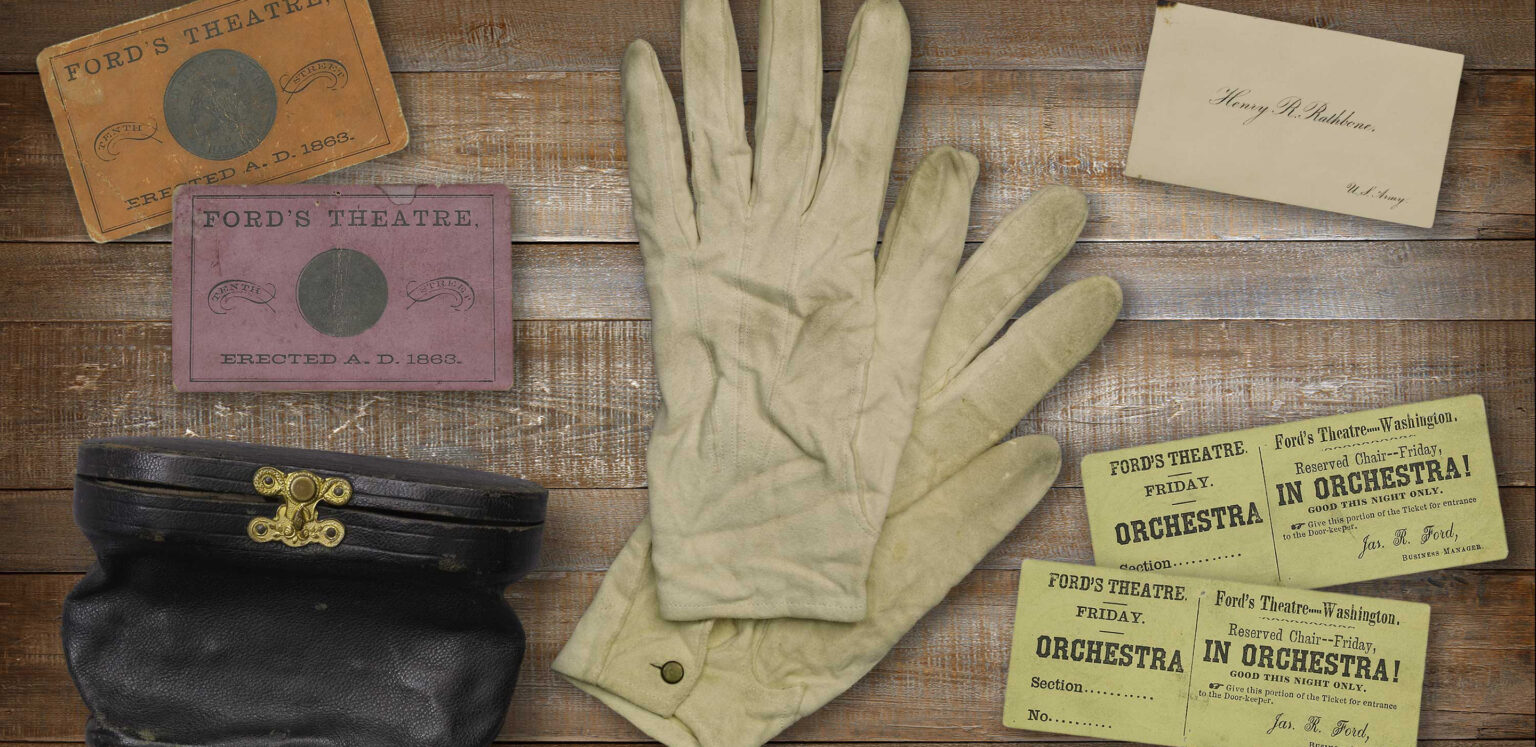
Lincoln alludes to picking up a Major Rathbone and his fiancé, Miss Clara Harris, for the showing of Our American Cousin at Ford’s Theater. Booth slashed Rathbone’s forearm with a dagger before leaping from the presidential box, then broke his leg when he landed on the stage. The Rathbones would marry but the assassination haunted them the rest of their lives: In 1883, while a U.S. consular official in Hanover, Rathbone would murder his wife, attempt suicide, and eventually die in a German insane asylum.
Robert Lincoln would commit his mother to an insane asylum in 1875. Released to the custody of her sister, she died in 1882.

Mary Lincoln may have suffered from bipolar disorder. Thaddeus Stevens, played by Tommy Lee Jones, was head of the House Ways and Means Committee and Mrs. Lincoln’s spending sprees, a behavior frequent to bipolar disorder, which she attempted to hide with the collusion of the White House gardener, were subjects of his investigations and a constant headache to the president. She was famous for her temper: the Lincolns’ Springfield neighbors once recalled him fleeing the house, laughing, but followed by a volley of potatoes hurled by Mary.
Lincolns’ two secretaries, John Nicolay and John Hay—Hay wakes up in one scene to find Lincoln sitting on their bed–referred to her as “The Hellcat.” (Lincoln was “The Tycoon,” after the Japanese head of state in Gilbert and Sullivan’s The Mikado.) Hay would eventually become the Secretary of State.
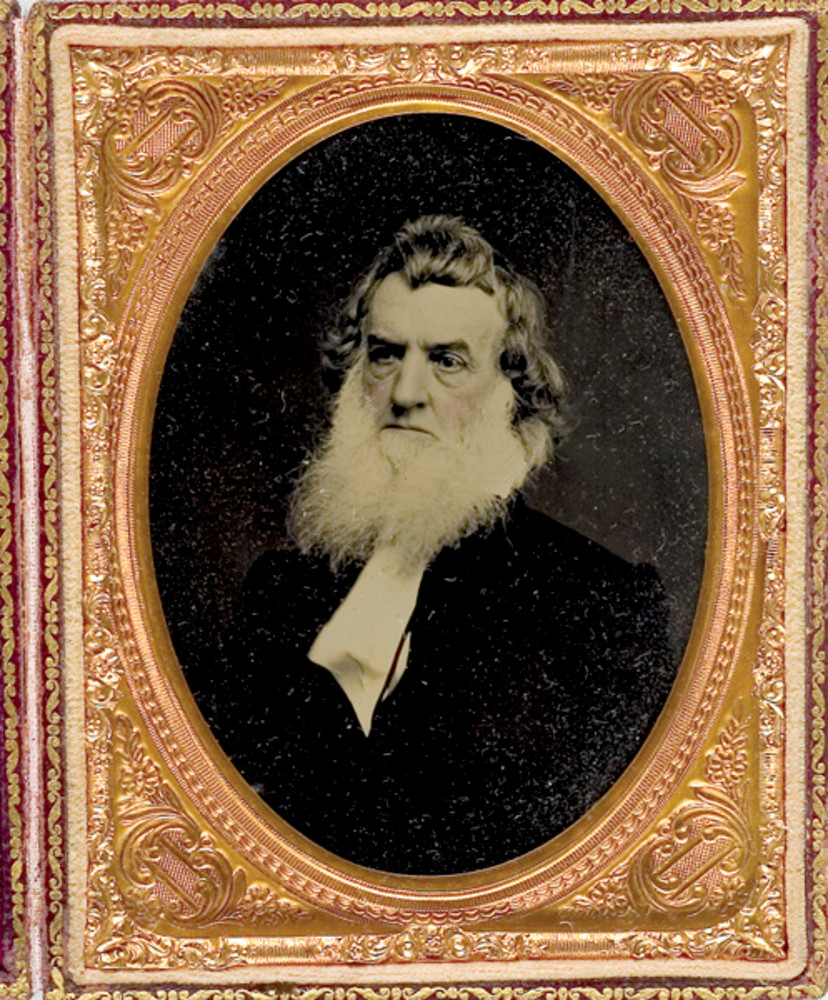
Stevens’s wig was the object of much ridicule in Washington circles, as was the wig of Lincoln’s Secretary of the Navy, Gideon Welles. Welles’s elegant white curls and silky beard—and his cabinet office—earned him the nickname “Old Neptune” from the president.
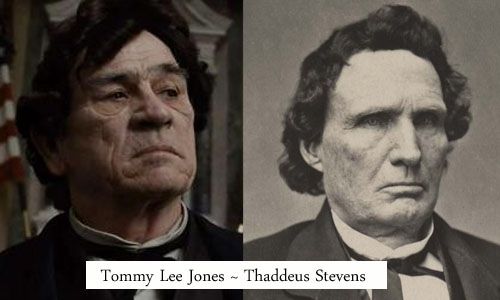
Stevens’s housekeeper and mistress—“My Love”—was Lydia Hamilton Smith, whom the congressman met while living in Gettysburg before the war. Their relationship would last for twenty years, until Stevens’s death three years after the passage of the Thirteenth Amendment. Mrs. Smith was born—and died—on Valentine’s Day.
Lincoln had litigated against the man who would become his Secretary of War, Edwin Stanton, before the war. Stanton had snubbed Lincoln then and later referred to him as “the original gorilla.” Stanton, like most of Lincoln’s adversaries, would discover that he had seriously underestimated the man; in his devotion to Lincoln, Stanton was relentless in hunting down the President’s assassins and in executing them, including Mary Surratt, who would hang after a conviction some said was circumstantial at best.
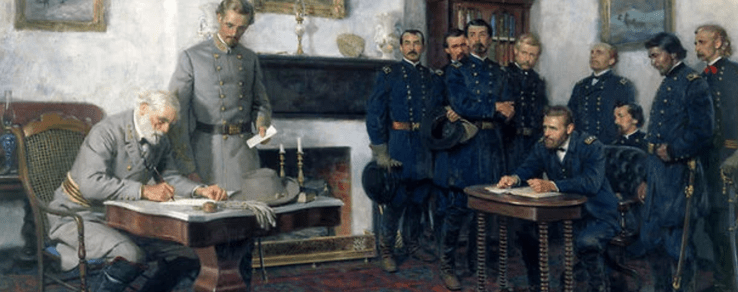
The Native American army officer seen at Grant’s side in several scenes was Brigadier General Ely Parker, a member of the Seneca Nation. It was Parker who drafted the surrender document at Appomattox; George Custer made off with the table on which it was signed, a gift for his wife, Libby.
On meeting Parker in the McLean home at Appomattox, Lee is said to have remarked: “I am glad that there is one real American here.”
“We are all real Americans, sir,” Parker replied.
Lincoln was far too tall for the bed at the boarding house across the street from Ford’s. The film depicts him with his knees bent; actually, the doctors laid him full-length but diagonally on his deathbed.
The president was immensely strong. On one visit to Grant’s Army of the Potomac, Lincoln showed an old trick: He could lift an axe gripped at the end of its handle and hold it at arm’s length, and the young soldiers who tried the same thing failed. After he was shot, the doctors who removed Lincoln’s clothing remarked at his musculature. Booth’s large-caliber bullet had traversed the president’s brain from back to front but Lincoln, shot at 10:15 p.m., would not die until 7:22 the next morning.
“Now,” a grief-stricken Secretary of War, Edwin Stanton, who had once called Lincoln an ape when the two were practicing law, “Now he belongs to the angels.”
It has come down to us differently: “Now he belongs to the ages.” Lincoln, I think, would have been more comfortable with that.
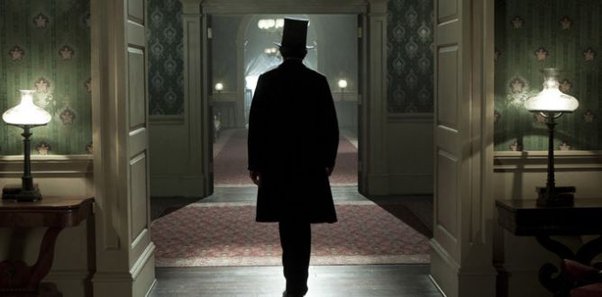
—Reactions to the Spielberg film, 2012
 A Work in Progress