
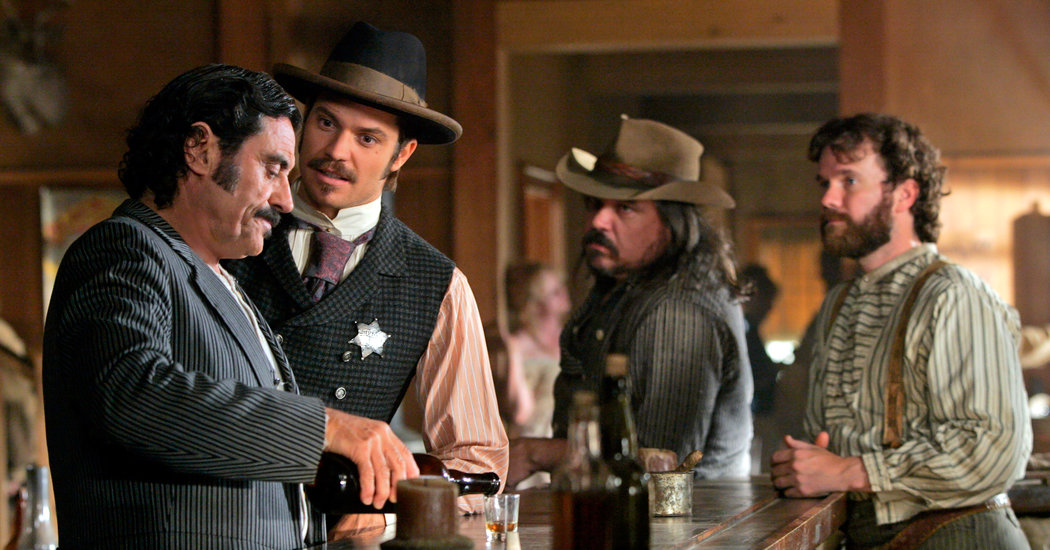
I am now on Day Five of said rotten cold, so thank goodness it coincided with HBO re-running its Western Deadwood, with its elegant Shakespearean dialogue punctuated by frequent “f___s.” and “c_______ers” It’s the only Western I’ve ever seen that demands a libretto, so you can have the time after to deconstruct the dialogue, rich with philosophy and with honeyed insults that are almost inscrutable.
My favorite character, of course, is Ian McShane’s deceptively admirable barkeep, Al Swearengen. Al, a pimp, hustler, thief, murderer and moderate drinker—he’ll limit himself to three shots at a time before he takes a pause–is magnificent. He is, as the mythologist/philosopher Joseph Campbell said of Han Solo, “a hero who doesn’t know he’s a hero.” Yes, he disguises it well, “Irascible” is Swearengen’s best mood. The rest of him would make Machiavelli blush.
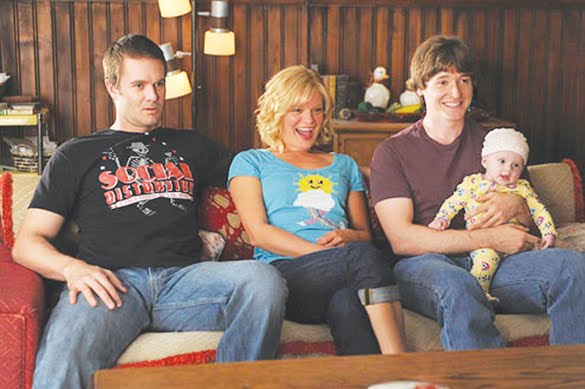
I was sick enough this time to notice that another actor, Garret Dillahunt, appears twice. Dillahunt was the hapless but adorable grandfather figure in a charming sitcom, Raising Hope, centered around the little girl that a working-class family is trying to raise up right. Dillahunt had all kinds of problems, including a certain intellectual density, but his failures (fruitless schemes, minor dishonesty, brain farts) were mitigated by his devotion to his family. He was wonderful.


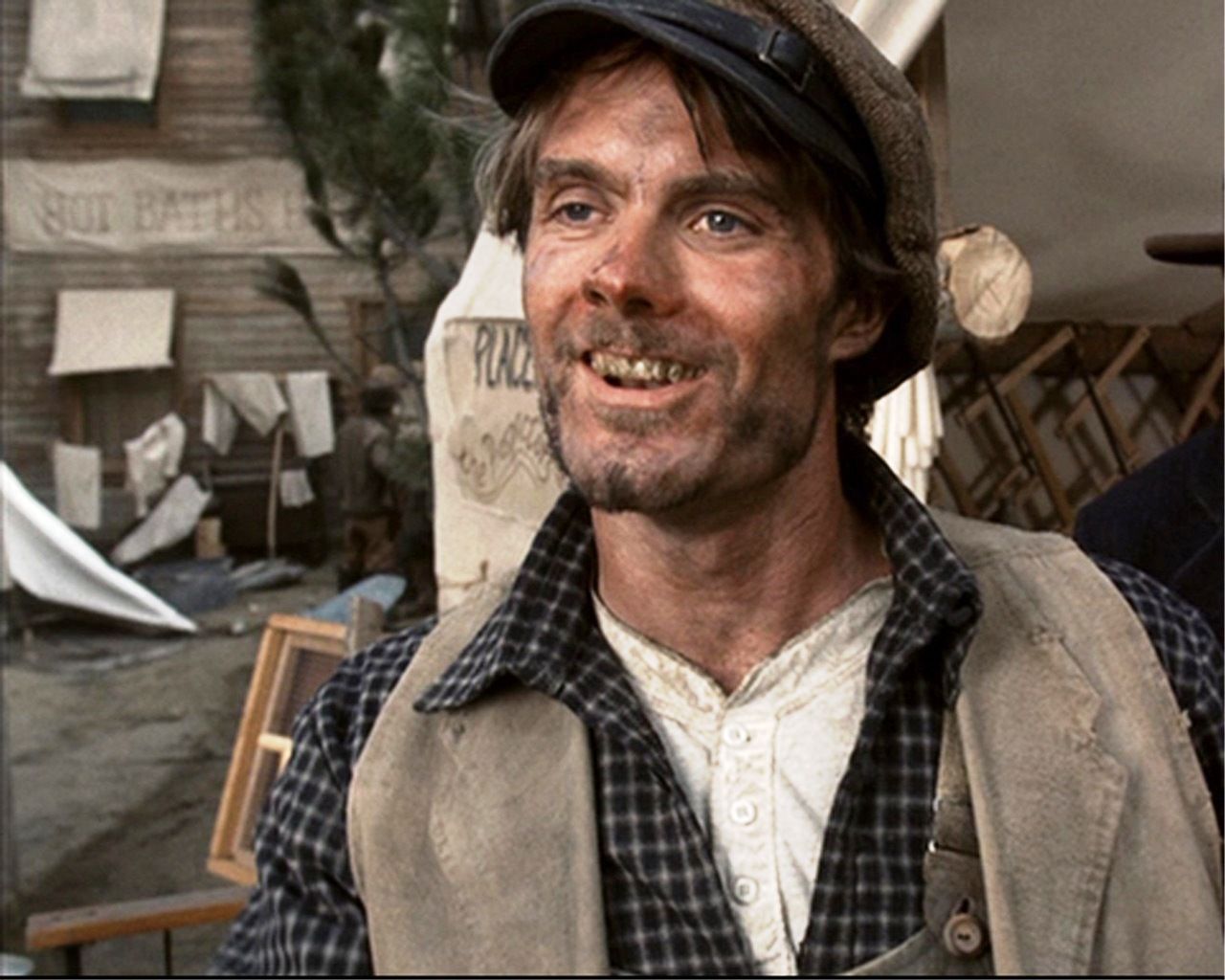
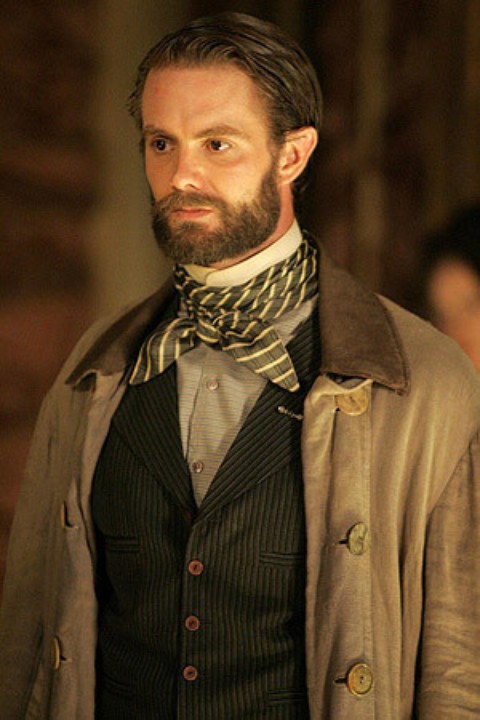
In both the Deadwood roles I’ve seen so far, Dillahunt was a miserable human being. Early in the miniseries, he was the drunk Jack McCall (at left) badly in need of dental work, who shot Keith Carradine’s Wild Bill. Midway through the series, he reappears as a smooth and silky agent (at right) for the ruthless silver baron George Hearst, and his job is swindling miners out of their claims. His avocation—he is a psychopath–is murder; his victims are the prostitutes he kills with a straight razor. He is as much a bastard in this show as he was a sweetheart in Raising Hope. That’s fine acting.
As to the primary cast, there really was a parallel to Timothy Olyphant’s sheriff, Seth Bullock. His name was Seth Bullock, and in his time (1849-1919) he really was a sheriff, a U.S. Marshal and he really did operate a hardware store in Deadwood. There was, of course, a real Calamity Jane, a real Swearengen (crueler, had to believe, than McShane’s character), a real Sol Star (born in Bavaria), and so on.
McShane is my favorite, but alongside him I admire the prostitute Trixie and Brad Dourif’s town doctor.
Another detail that struck me today was the peculiarity of Olyphant/Seth Bullock’s walk. As soon as he leaves the hardware store or his home, he claps his felt hat atop his head and he elevates to his full height. His walk, then, is fluid but stiffly upright. He walks narrowly, too, down the street, as if to avoid passing bullets.
I’ve seen this walk before. I think Olyphant is paying tribute to Henry Fonda. Fonda had abnormally long legs, championed by John Ford in My Darling Clementine, Ford’s wildly extravagant version of the Wyatt Earp story. I’ve written about those legs before, but let me show you, rather than tell you.
You can see, albeit briefly, the same kind of walk as Bullock and Wild Bill confront a man who’s murdered a family—the only survivor is the little girl he missed— outside Deadwood.
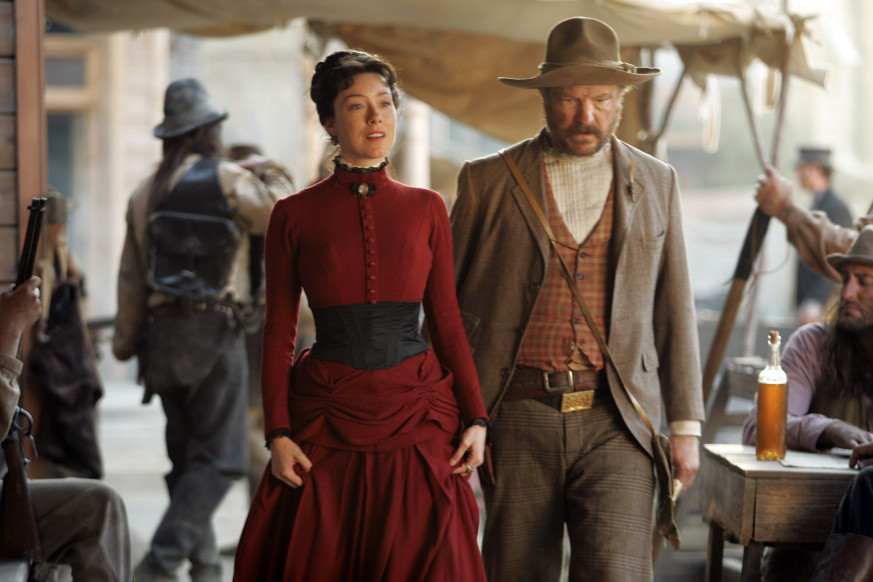
I even decided to take the “Which Deadwood character are you? I came up as Whitney Ellsworth, a prospector and gentleman who comes to the aid of Alma, Seth Bullock’s onetime lover. He proposes marriage to her to legitimize her pregnancy, but she demurs, goes back to the dope and Ellsworth, one of the few townies with the courage to stand up to George Hearst, is shot dead by Hearst’s gunmen, probably Pinkertons. Yup. It fits.
 A Work in Progress