
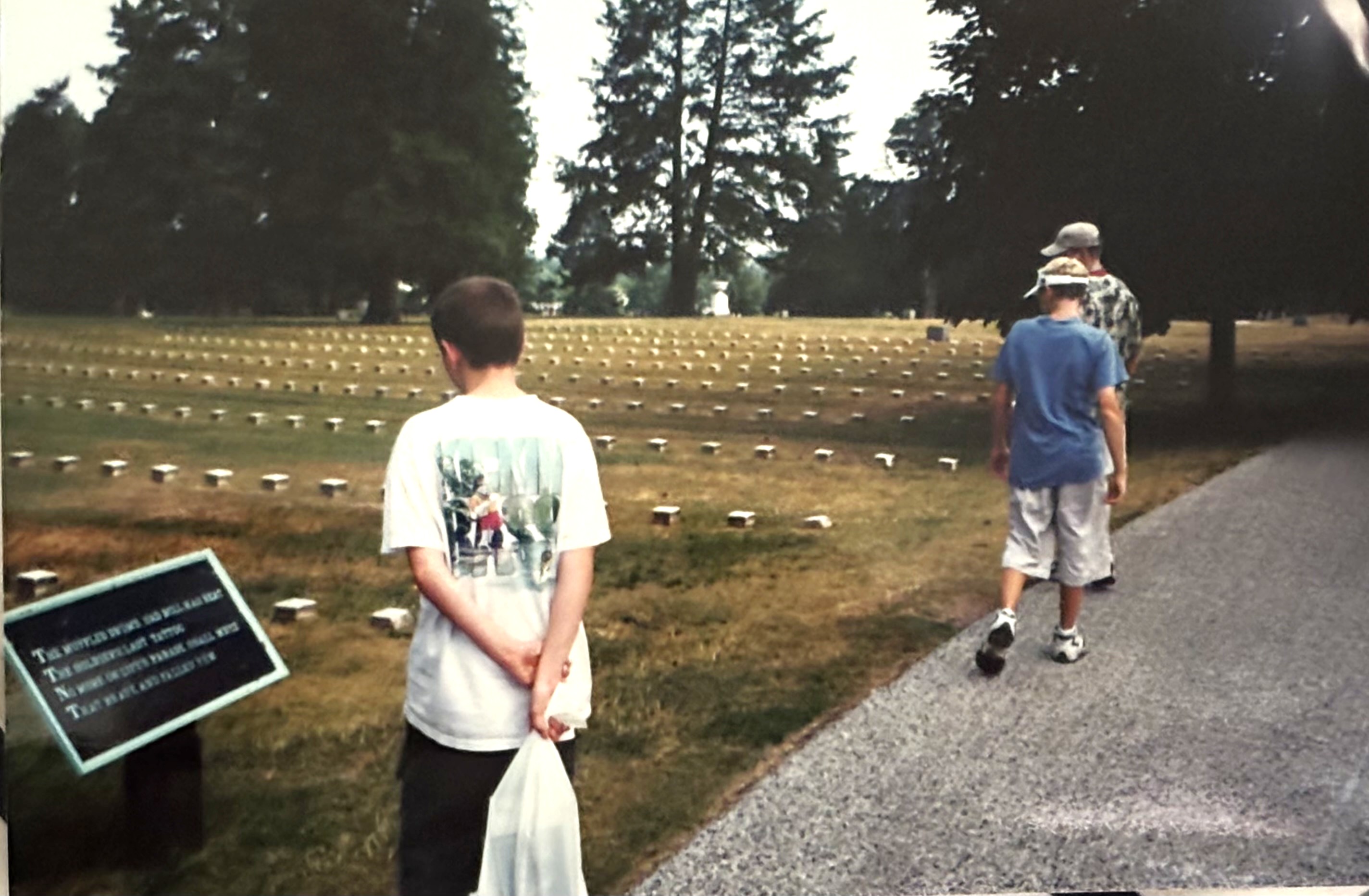
July 1-3, the days when Gettysburg was fought in 1863, never fail to move me. When Elizabeth and I took our sons to the battlefield in 2000, I’d read so much, from little boyhood, that we didn’t need a guide. With one exception—Culp’s Hill—I knew where we were and what had happened there: This was where Buford’s cavalry held the Confederates off until reinforcement could arrive. This was Little Round Top, where the 20th Maine turned back a flanking movement on July 2 and essentially saved the Union. That, in the distance, was the copse of trees that was the target point for what came to be called Pickett’s Charge. That was the door that failed to stop the bullet that killed Jenny Wade when she was in the kitchen baking biscuits for her sister.
Death in the American Civil War changed death itself.
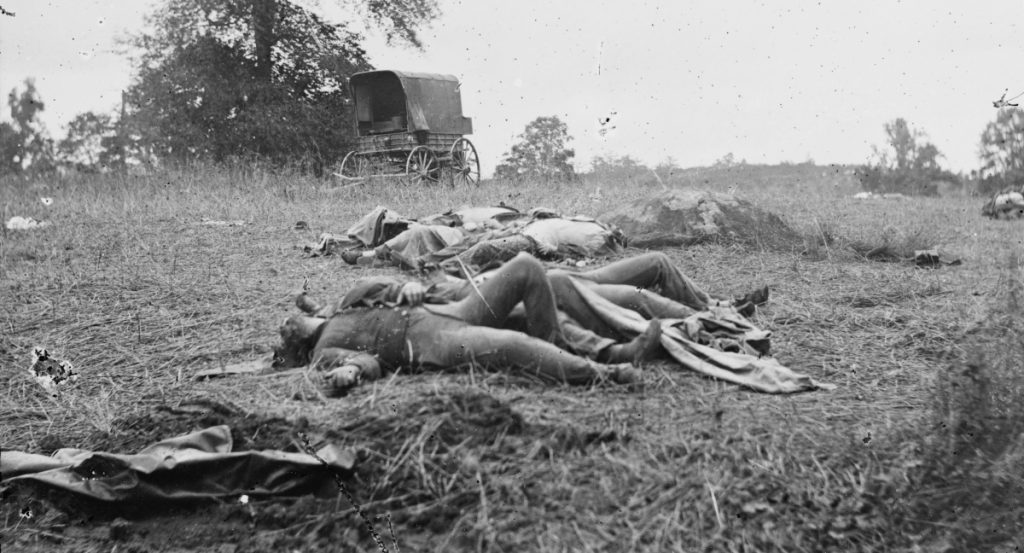
I say this because of the magnitude of deaths. The traditional figure was always 620,000, but Cliometricians, historian who specialize in statistical analysis, have now put that figure at 750,000. The modern equivalent would be eight million dead Americans.
Before the war, death had been familial and familiar. There is a marvelous scene in the film Places in the Heart, set in the 1930s South, that replicates the old way of dying. Sally Field plays a character whose husband, the county sheriff, is accidentally shot dead by a young Black man. Friends carry his body into the family home, where it’s laid gently down on the biggest surface—the dining room table, covered by a sheet—and friends and relatives gently wash the the body and dress it again in Sunday clothing.
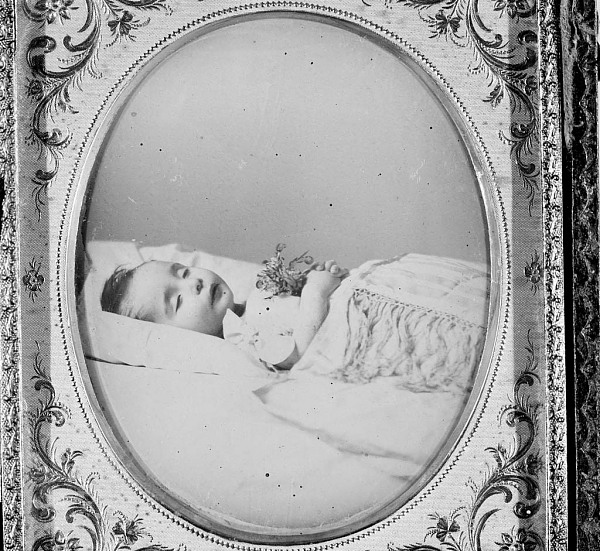
In antebellum America and in Western Europe, death had become so ritualized that a popular practice was “death daguerreotypes,” especially of children, like the one below. This was actually reflective of a newfound attachment to children, who had been treated brutally in early modern Western history. Farmers made the attachment between parent and child more intimate: more and better food meant that most children lived longer and that their parents were more likely to love them. The photographs show, indeed, that they didn’t want to let their children go.
The Civil War meant something new and terrible. The children—some soldiers as young as fifteen—couldn’t be photographed. They couldn’t be found. For the first time, development in weaponry, including high-explosive artillery shells, meant that soldiers simply disappeared. And armies on the move sometimes had no time to bury their dead. As Union soldiers advanced into the trees and scrub of The Wilderness in 1864, the skulls of their comrades, killed the year before at Chancellorsville, now uncovered, leered at them in macabre welcome.
So for soldiers like these, there was no funeral to be had, no body to wash, no chance to say goodbye.
It’s not a coincidence that the war generated the spiritualist movement, with grieving parents attempting to communicate with the Other Side, with their boys, at seances. Sadly, most of them were conducted by charlatans. Another example of this kind of callousness is this postwar photo of Mary Lincoln. The photographer has created a double exposure to convince the widow that her husband is still with her.

As much as the war itself fascinates me, its emotional impact in the years after was far-reaching and tragic. Many veterans became addicted to alcohol or morphine. Two-thirds of the inmates in American penitentiaries in 1880 were Civil War veterans. One source puts the suicide rate among active-duty soldiers at about 15 per 100,000. In the year after war, among veterans the figure doubled.
The war’s emotional impact on civilians was just as far-reaching. There would be, for so many families, no reunion, and the lost chance to say goodbye marked families for many years after. Sometimes this pain was so grievous that it was passed down to generations a century or more beyond Civil War battlefields.
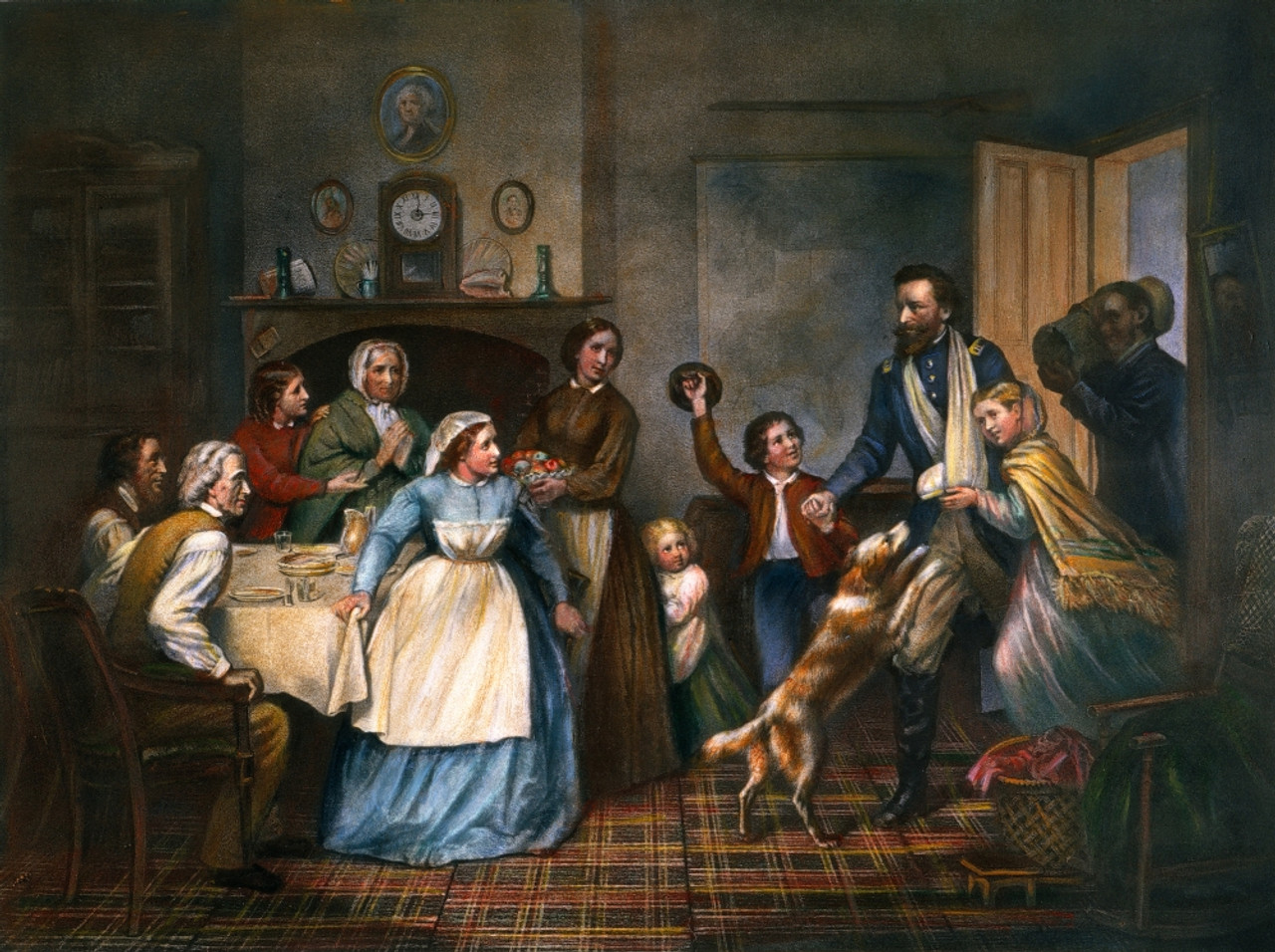
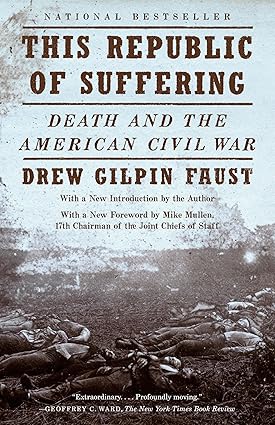
An extraordinary book about the war’s emotional impact is This Republic of Suffering, by Drew Gilpin Faust. Faust later became president of Harvard, and Jordan Hayashi, one of our AGHS grads, Harvard ’16, played a piano recital in Faust’s home during his student days there.


 A Work in Progress