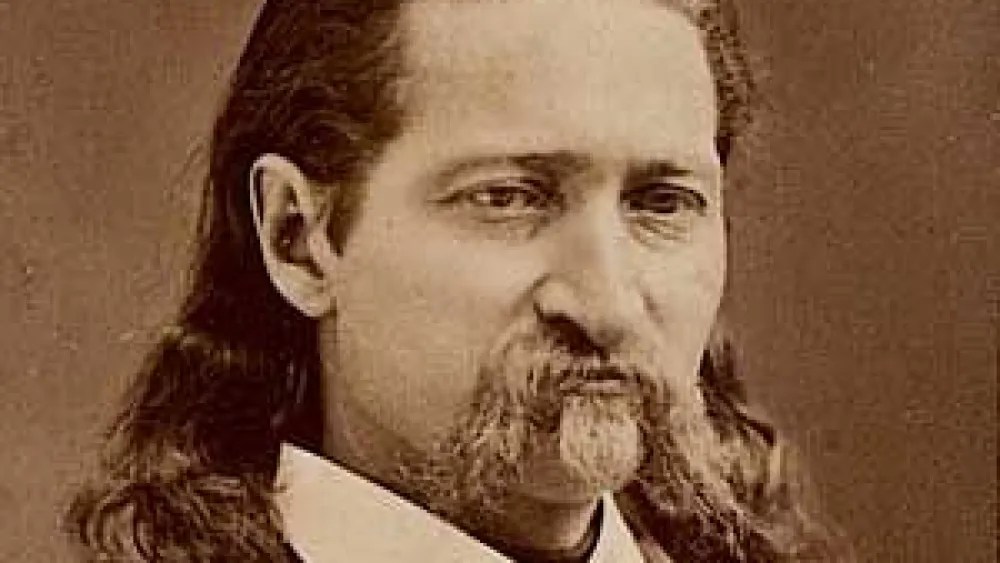
My first exposure to the man, when television screens were slightly bigger than postage stamps, was “The Adventures of Wild Bill Hickock.” Guy Madison played a squeaky-clean Pure American version of the gunfighter/lawman, with an equally squeaky-clean cowboy hat that never existed in 1876. Fortunately, his sidekick was the delightful Andy Devine, the stagecoach driver in John Ford’s 1939 Stagecoach, who rotundness, crowned by a an endearing squeaky voice, kept us from taking Wild Bill too seriously. Except for me, but I was only four.
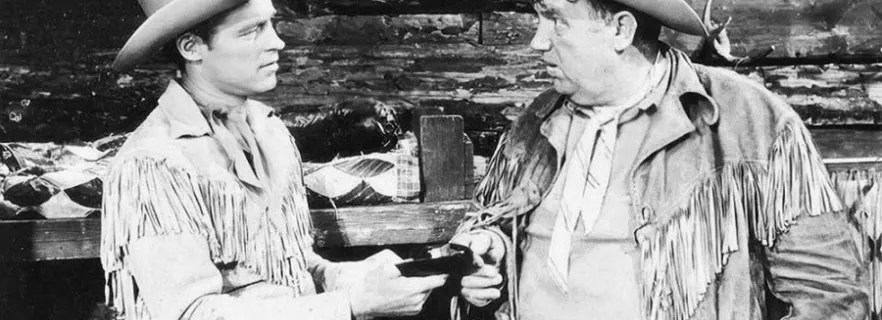
I would not return to Hickock, thanks to the interventions of other TV gunmen/heroes, like James Arness, Richard Boone and Steve McQueen, until I began teaching U.S. History and American Lit at Mission Prep. Every year, I showed the revisionist Western Little Big Man because of its sweep, which included, for once, telling the Native American side of the story. Dustin Hoffman, too, was extraordinary. Before he became an adult Human Being—a Cheyenne—he had a gunfighter period, and it included this encounter with Wild Bill, played by Jeff Corey, an actor instantly recognizable for his many appearances in The Twilight Zone. Corey is excellent here, but it’s Hoffman’s squeaky leather that steals the scene.
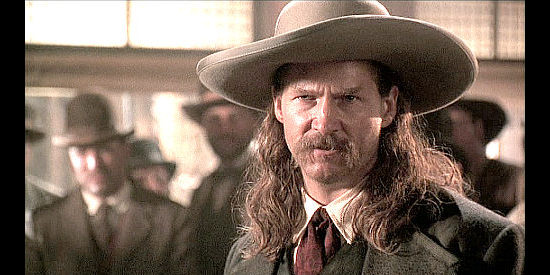
It would be a good long time before I found a Wild Bill I’d want to hang with, if only fitfully. Jeff Bridges Bill is losing his eyesight, frequents opium dens, is adored by Ellen Barkin’s Calamity Jane (she looks like Calamity Jane not at all. Deadwood’s Robin Weigert is far closer to the mark, and she cleans up real good. She is lovely.)
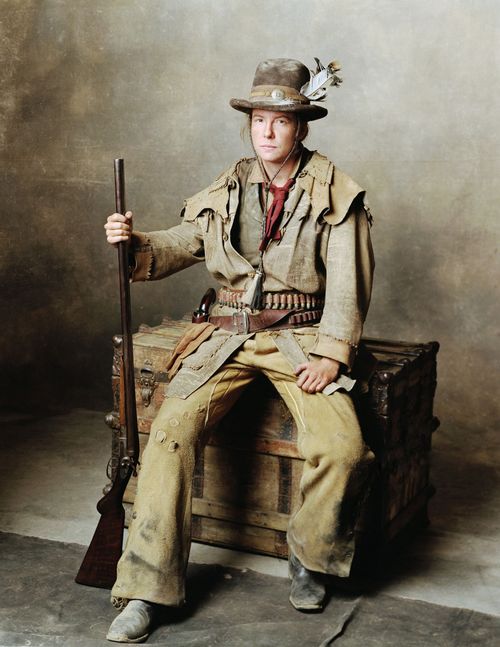

What made Bridges even more real to me was that hat. It was amazing, and it looked like one of the hats the Hickock actually wore.
Bill liked his hats, even this one, from his buffalo hunter days..
Jeff Bridges, without a doubt, is one of my favorite actors, and his Bill is sublime, down to the gravelly voice he’s evolved into Rooster Cogburn’s. But he’s not my favorite Wild Bill. That honor, of course, belongs to Keith Carradine, who blends his portrayal, of a wasted man who knows he’s doomed, with unfolded moments of honor, taking up a hammer, for example, to help newcomers to Deadwood set up a hardware store or refusing to throw down when goaded by men almost as crude as the current president.
There was a certain nobility in Carradine’s character. I knew this scene was coming in Deadwood, and, like Calamity Jane, it took me a long while to get over it.
 A Work in Progress