
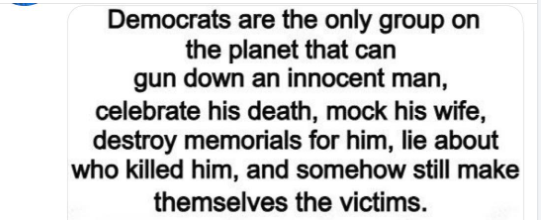
I saw this on Facebook today, posted by a former history student of mine, and I am heartbroken. “The Truth hurts,” this person said, in response to a comment that criticized the post. “The Truth,” of course, killed 720,000 of us between 1861 and 1865, the modern equivalent of seven million Americans.
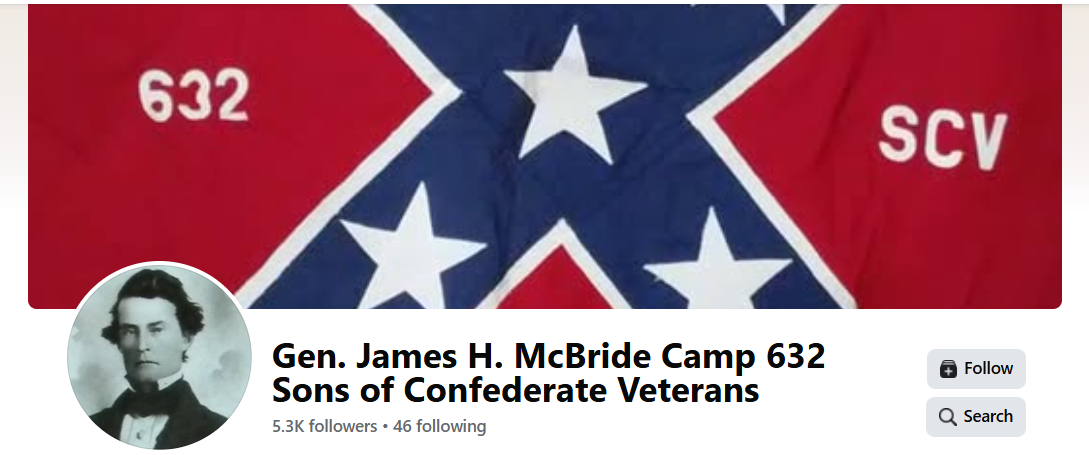
And this kind of hatred lands on my doorstep. I am a Democrat from a long line of Democrats, including my third great-grandfather, Godfrey Gregory, who claimed to own seventeen human beings, listed, without names, in the 1850 Kentucky Census.
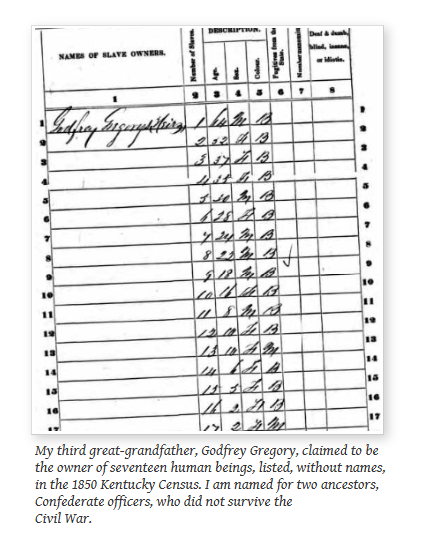
I am named for this Democrat, James McBride, my second great-grandfather, who so hated what was called “Black Republicanism” and that party’s candidate, Abraham Lincoln, that he took up arms against his country as a Confederate officer.
My Grandfather John was struck by a car in 1933 that crushed his legs, but he was such a powerful man that it took him weeks to die. Those legs had waltzed at barn dances on the Ozark Plateau where teenaged girls waited their turn to dance with Mr. Gregory. When his time came to die, they let the schools in Texas County, Missouri, out for the day so that children could go to Mr. Gregory’s funeral. He was that kind of man. He was a Democrat.
My Grandmother Gregory was a delegate to the 1924 Democratic Convention, held in sweltering heat in Madison Square Garden, which, after more than 100 ballots, nominated John. W. Davis (trounced by Cooldige). We still have the penciled thank-you note Davis wrote her.
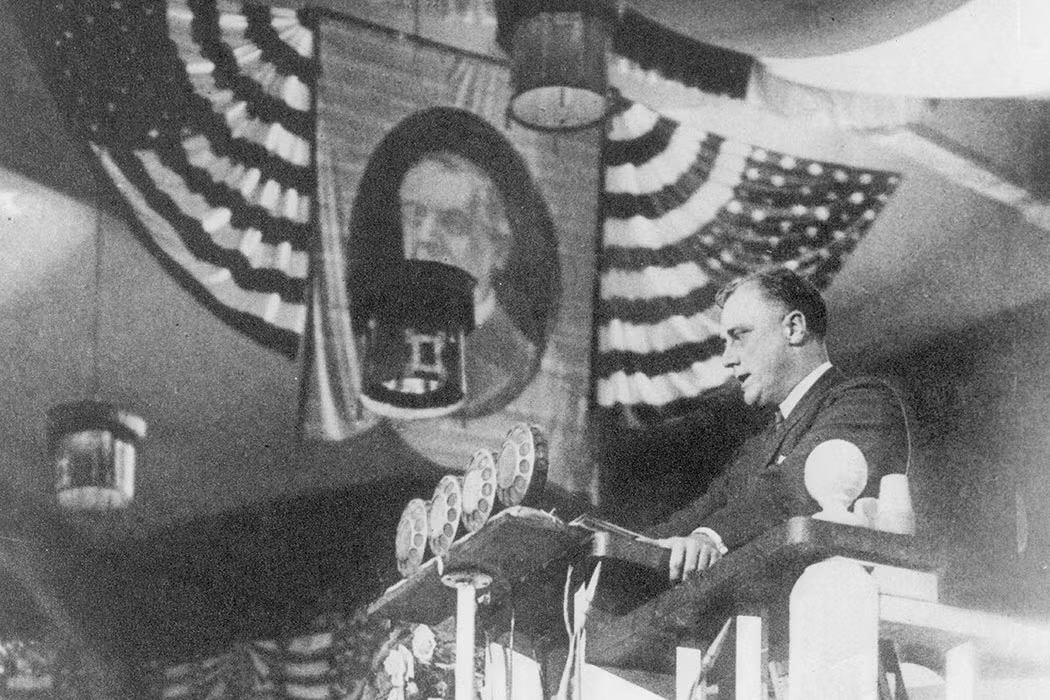
She at least had the chance to hear Franklin D. Roosevelt speak, in his return from paralysis, as he put Al Smith’s name into nomination.
As president, Roosevelt brought electricity to the Ozark Plateau, where women, as the writer Robert Caro noted about the Hill Country of Texas, acted the way washing machine machine agitators do, punching the clothes in zinc washtubs full of lye with broom handles, holding the wet clothes with the broom handle to rid them of excess water before transferring to a tub of bluing, then a tub of rinse. This work tore women’s abdominal muscles, induced miscarriages, and bent them like question marks. The New Deal’s electrification, and the advent of primitive “automatic” washers ended that.
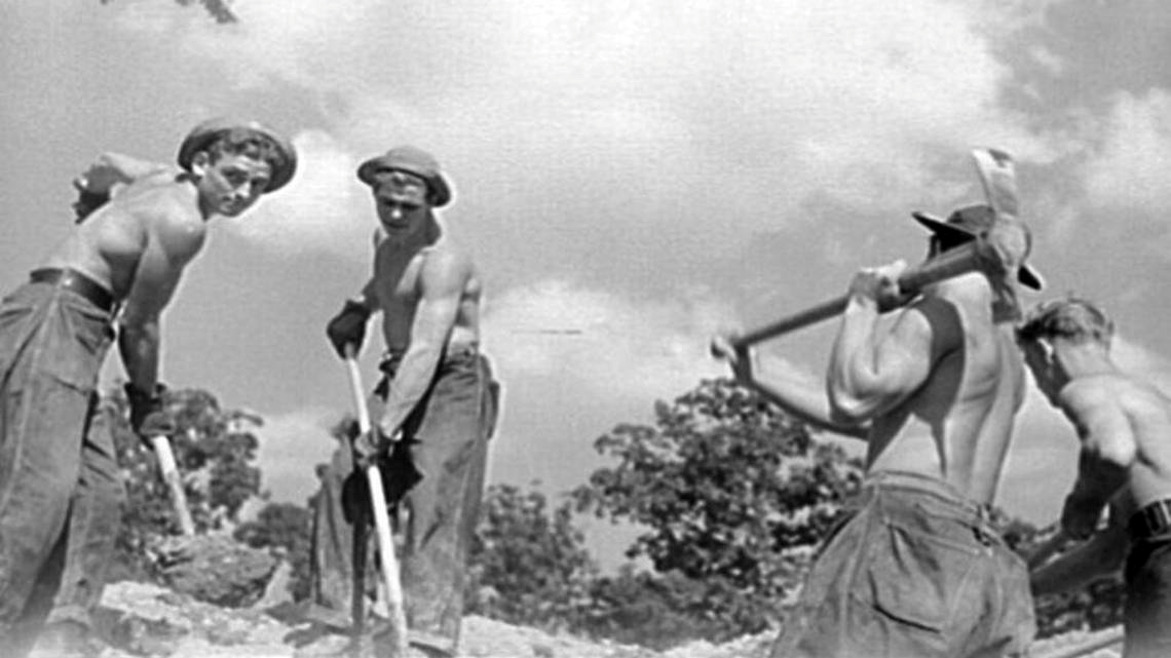
The Natonal Youth Authority employed my father in relief work, including distributing food to desperately poor and incredibly proud Hill People, who were so isolated that they did not understand grapefruit.
That Democrat left his mark on Arroyo Grande, as well, already scored by bankruptcies, foreclosures and a Biblical invasion of grasshoppers: The stone wall around the cemetery, the Paulding Gym, the sidewalks on Mason Street, the road to Lopez Canyon and the beautiful park that now lies beneath the lake, the Arroyo Grande High School math wing, the tennis courts below Paulding—all were New Deal Projects. So are check dams still remaining from the New Deal’s CCC. The head of the Soil Conservation Service said, in 1934, that the soil erosion that the CCC would combat was the worst he’d seen in the United States.
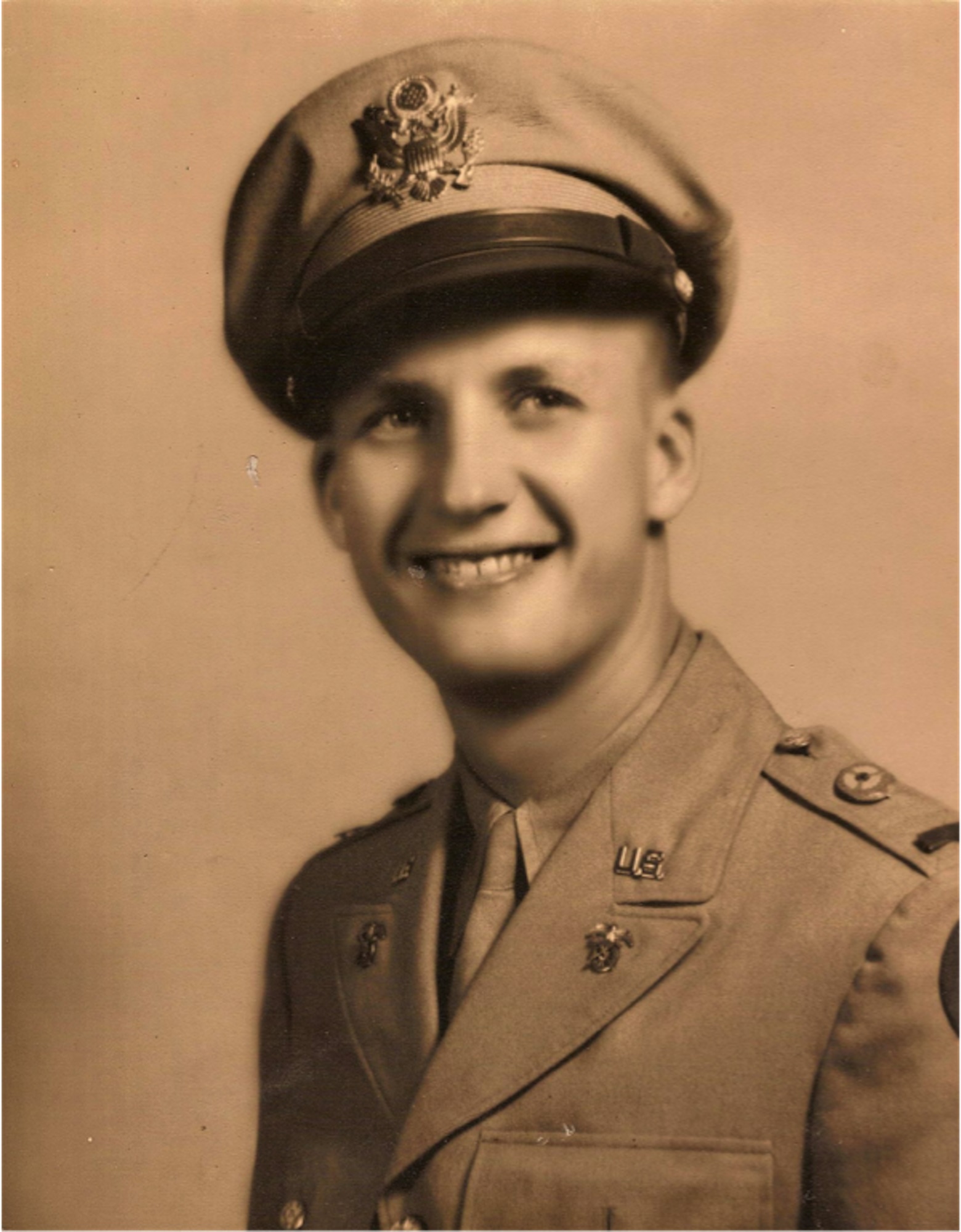
My father, an accountant, was promoted to corporal after discovering that the camp cook was embezzling mess funds. The commanding officer at his post—Garnder Field in Taft, where Chuck Yeager trained—recommended him for officers’ candidate school, which was endorsed by a Democrat, Harry Truman, who’d grew fond of my grandfather’s blackberry wine on his campaign swings downstate.
Dad, as an Army officer, was the last soldier to vote in the European Theater of Operations in 1944, according to Stars and Stripes. He voted for FDR.
(Below) My parents during World War II.
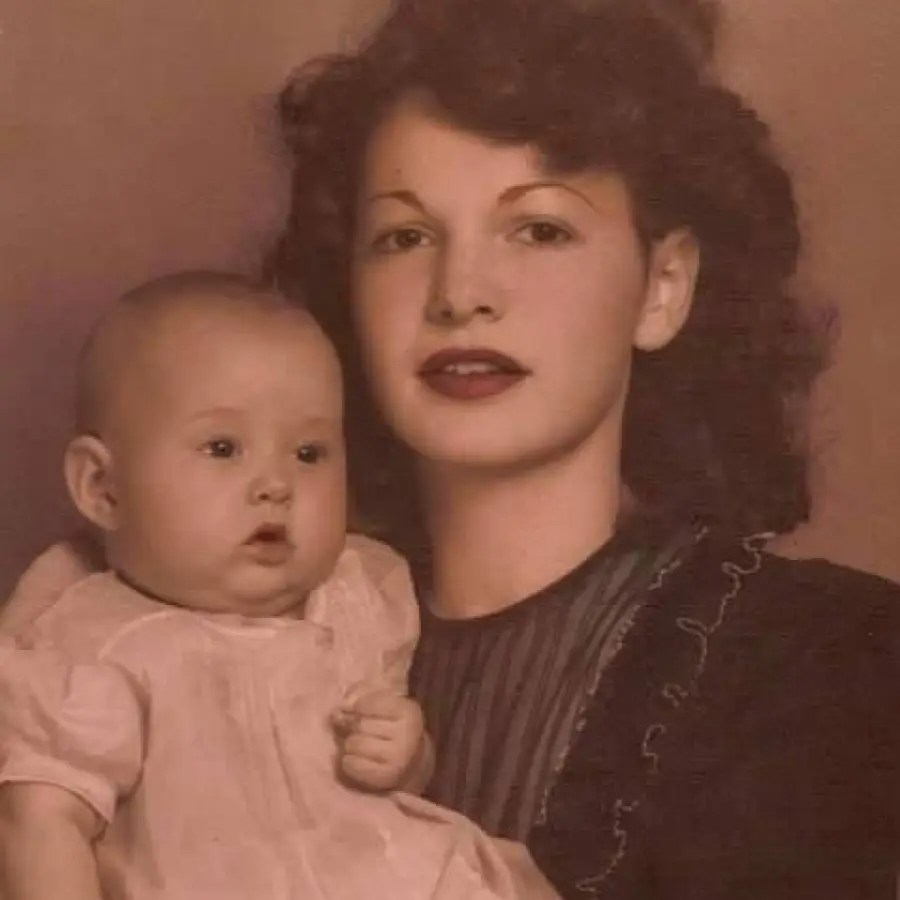
My mother was a Republican, an Eisenhower Republican, but since her ancestors came from Ireland, she voted for John F. Kennedy in 1960.
My first vote was for World War II veteran George McGovern, a Democrat, a B-24 pilot during World War II. He was trounced as badly as John W. Davis had been in 1924. His opponent endorsed a minimum national annual income, found the Occupational Safety and Health Administration and the Environmental Protection Agency and took daring executive action against inflation, including a wage and price freeze. Richard Nixon also made Elvis an honorary U.S. Marshal.
I was less an Elvis and more a Beatles fan, and the same year they released the White Album, another assassin shot another young leader dead, in Los Angeles, and that was Robert Kennedy, who was the Democrat I felt closest to. My parents were just waking up when I came in to break the news, and they were as stricken (I will never forget their faces) as they could have been if the bullet had somehow hit them, as well.
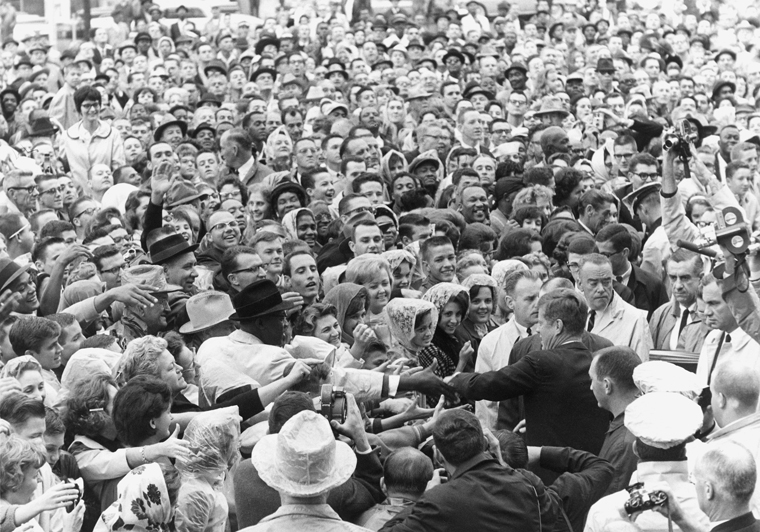
(Below) John Kennedy in Fort Worth, Texas, a few hours before his assassiantion; Robert Kennedy campaigning in Monterey, California, 1968.
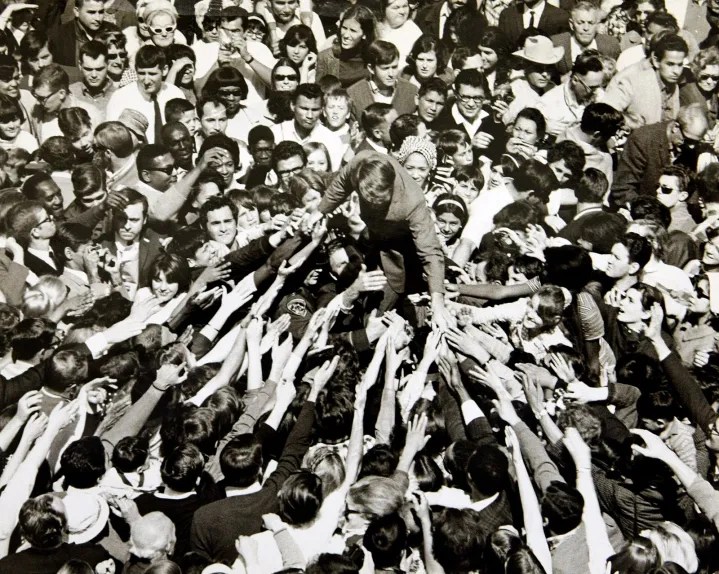
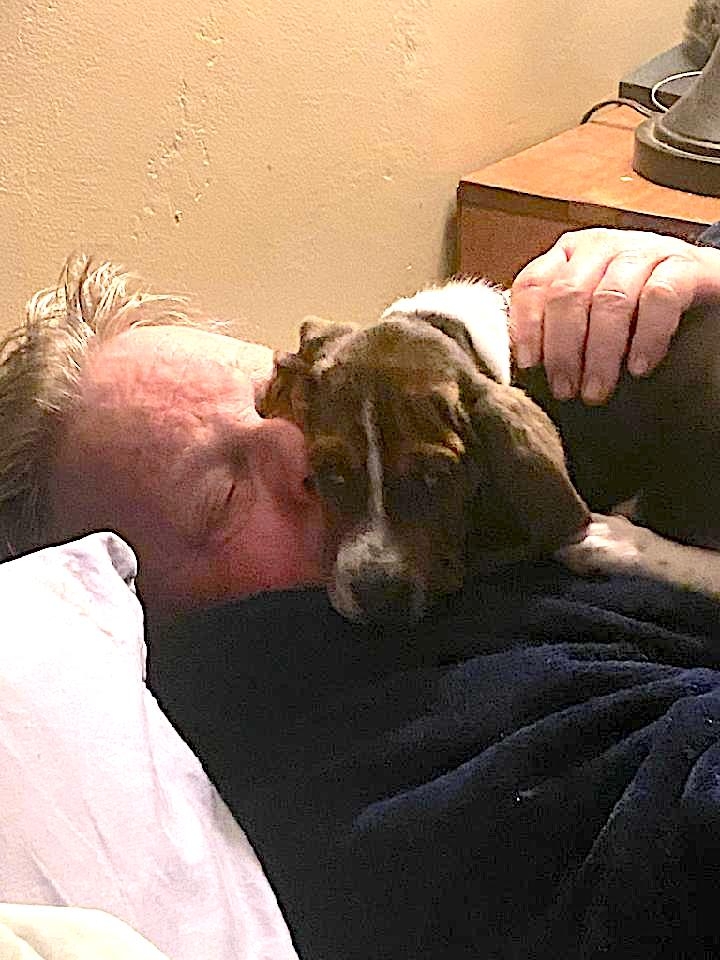
The kind of hatred this post suggests will lead to the same kind of violence that claimed Charlie Kirk and Bobby Kennedy. Since I am a Democrat, I presume, as the darkness of 1861 once again envelops us, that there’s a bullet meant for me, too. I am 73, and there’s not much left for me to do, so I guess I’m as ready as I ever will be to die. I have, at least, found my best friend.
And I’ve taught children and written books, both of which brought me incredible joy. I wrote a book about the Civil War and I took its title from Lincoln’s First Inaugural.
I am loath to close. We are not enemies, but friends. We must not be enemies. Though passion may have strained it must not break our bonds of affection. The mystic chords of memory, stretching from every battlefield and patriot grave to every living heart and hearthstone all over this broad land, will yet swell the chorus of the Union, when again touched, as surely they will be, by the better angels of our nature.
A few weeks later, the killing began with the bombardment of Fort Sumter. The honor of firing the first shot went to a True Believer, Edmund Ruffin, who, four years later, put the muzzle of his rifle inside his mouth and used a forked stick to pull the trigger.
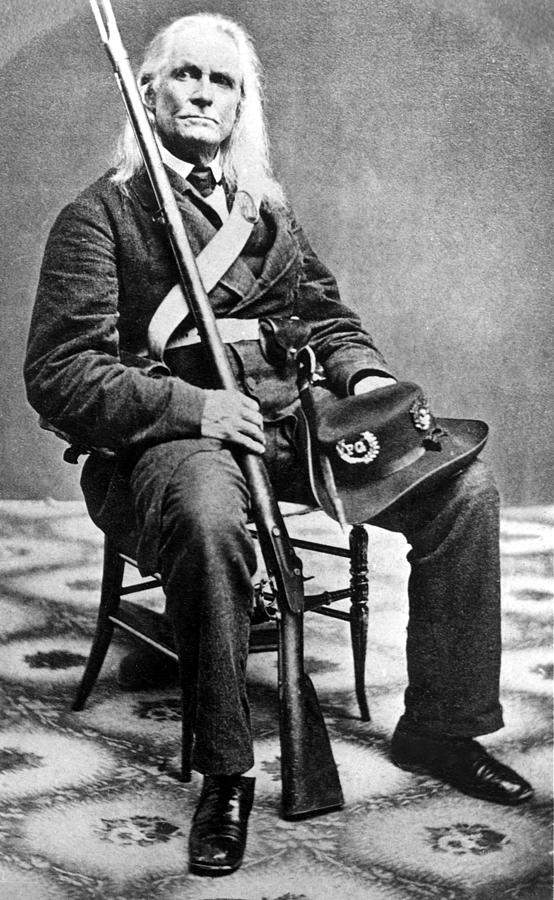
I guess I’m less afraid for myself than I am for the country I love so much, and I am afraid for my former student, as well. The hatred that consumes her, all of it the work of Democrats, can consume us all.
 A Work in Progress