
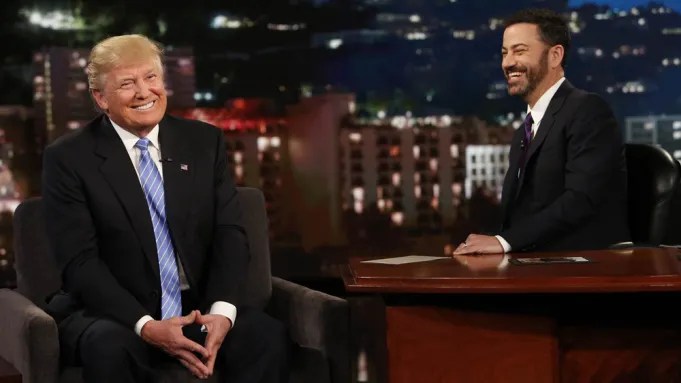
Given today’s headlines, I remembered again Doris Kearns Goodwin’s superb Pulitzer-Prize winning book, Team of Rivals. James Comey, Lincolneque in height, anyway, was indicted today on charges that, it’s reported, DOJ litigators have maintained, that will never stand in court. But that’s how the president deals with critics and enemies: He sues them to death.
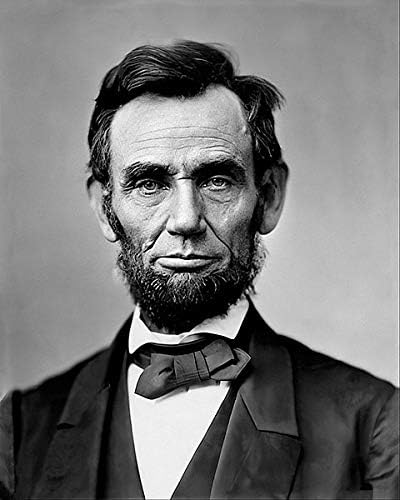
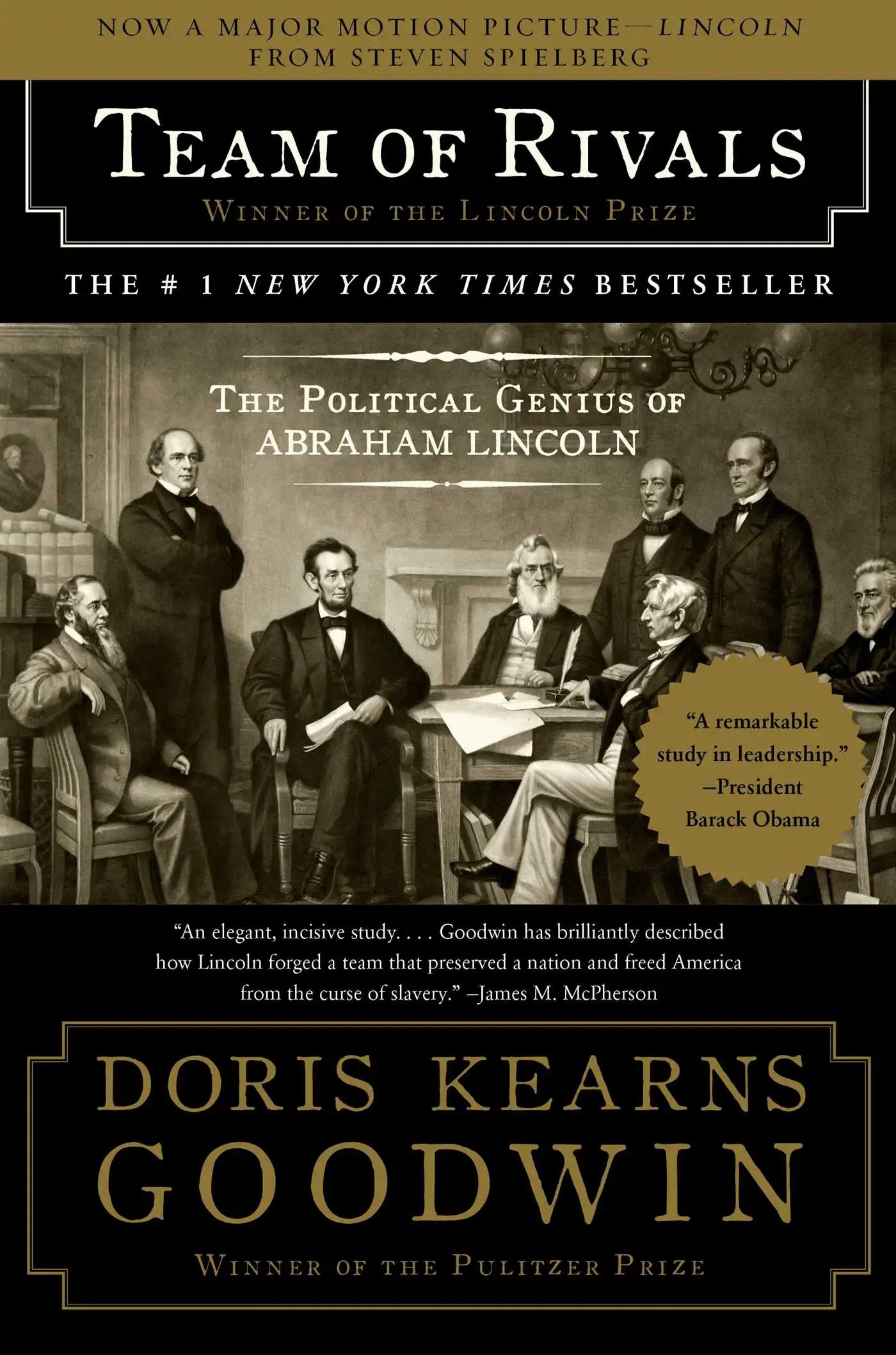
Lincoln’s approach, given Goodwin’s guidance, was far different. Here are just three examples.

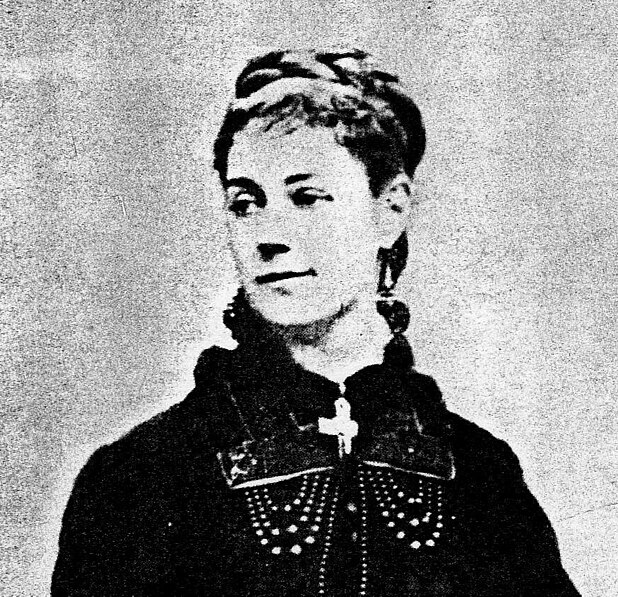
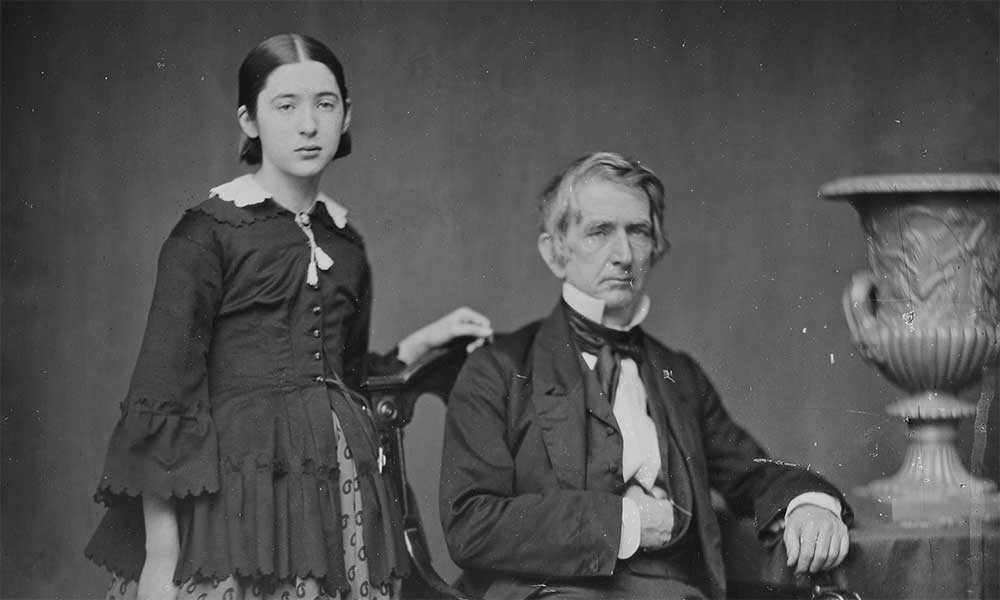
(Above) Salmon P. Chase and his daughter, Kate.
“[Salmon P.] Chase (as in Chase-Manhattan) is a good man, but his theology is unsound. He thinks there is a fourth person in the Trinity.” Sen. Ben Wade.
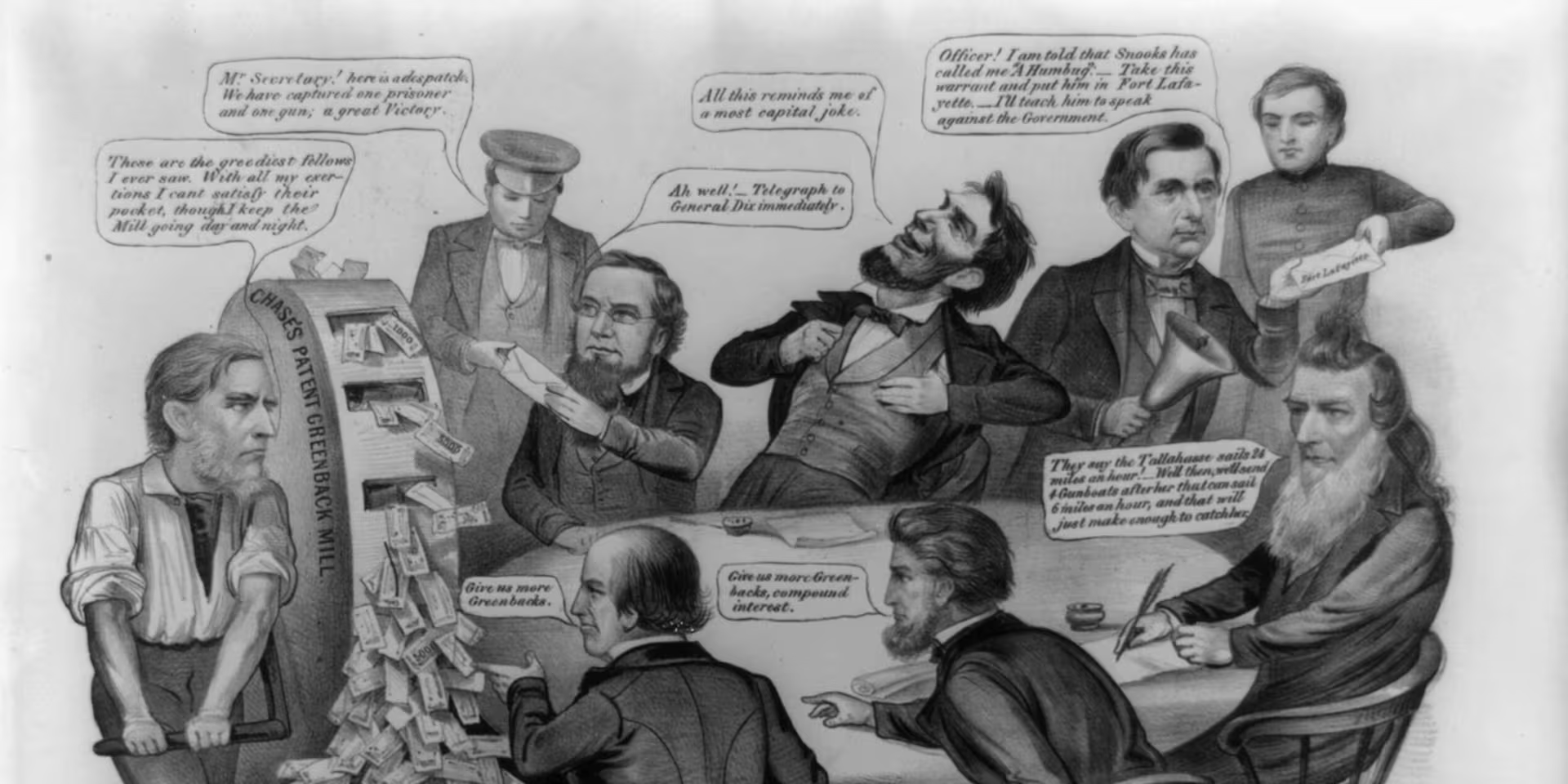
Chase, as Secretary of the Treasury, was one of the harshest critics and the most frequent resigner in Lincoln’s Cabinet. When Lincoln finally accepted one of them, in 1864—Chase was planning to challenge Lincoln for the Republican nomination that year—Chase was shocked.
(Chase’s daughter, Kate, one of the most beautiful young women in Washington, despised Mary Lincoln and worked tirelessly to support her father’s presidential ambition.)
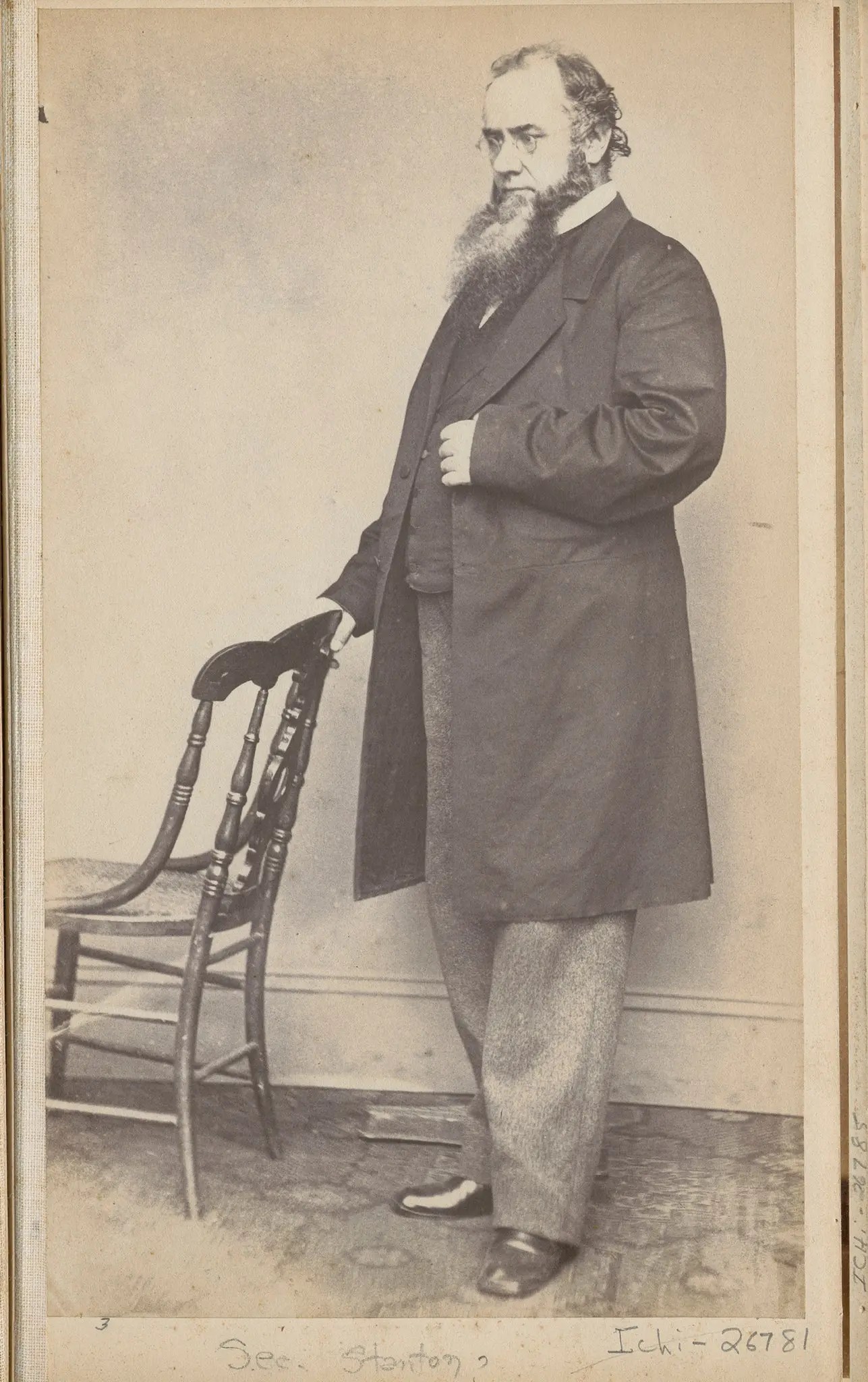
Edwin Stanton was a railroad lawyer who’d worked a case with Lincoln as a far junior litigator. From that acquaintance, Stanton labeled Lincoln “The Original Gorilla.”
Stanton became Lincoln’s Secretary of War, when that title was less ironic than it is today. A delegation to the White House reported that Stanton had called Lincoln a fool. Lincoln, with mock astonishment, inquired: “Did Stanton call me a fool?” – and, upon being reassured upon that point, remarked: “Well, I guess I had better go over and see Stanton about this. Stanton is usually right.”
When Lincoln died, Stanton, standing at the foot of the death bed, heartbroken, said “Now he belongs to the angels,” maybe more aptly interpreted as “Now he belong to the Ages.”
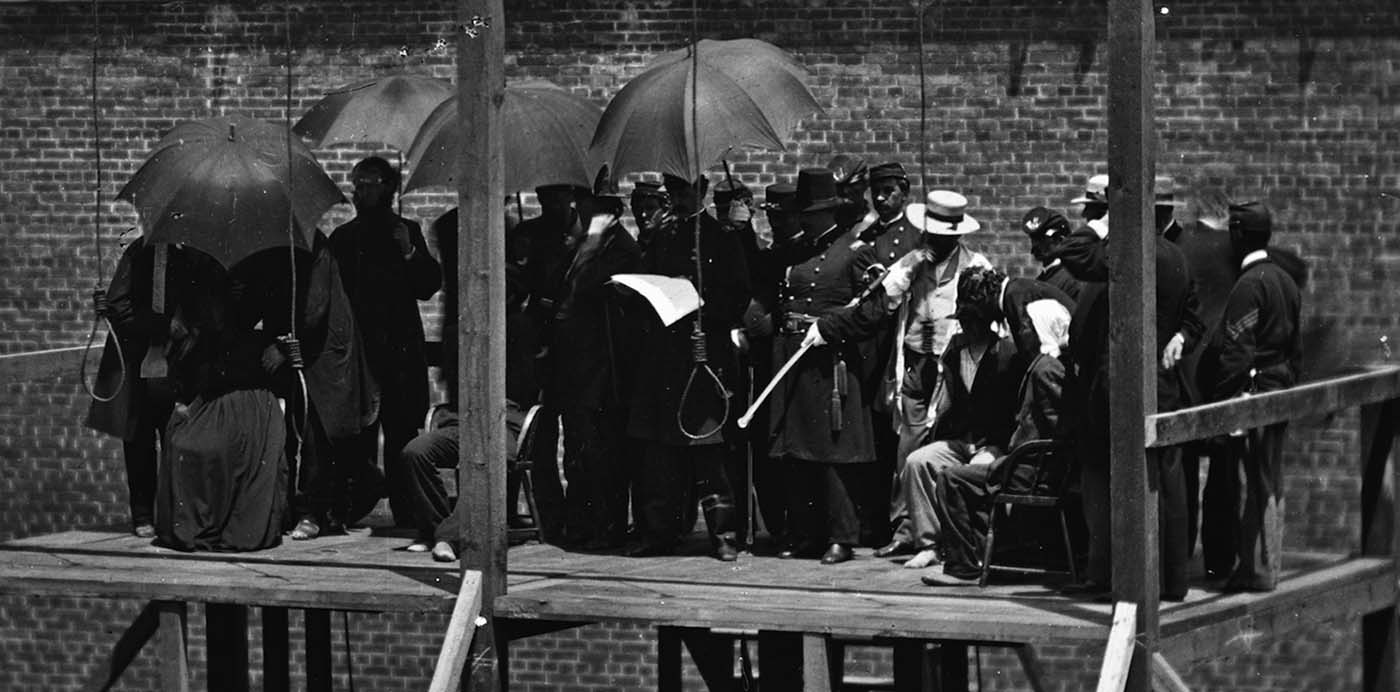
Stanton was merciless in pursuing and then trying four surviving plotters–Booth was mortally shot in a Virginia tobacco barn. They were hanged in sweltering heat in June 1865, including Mrs. Mary Surratt, at far left in the photograph.
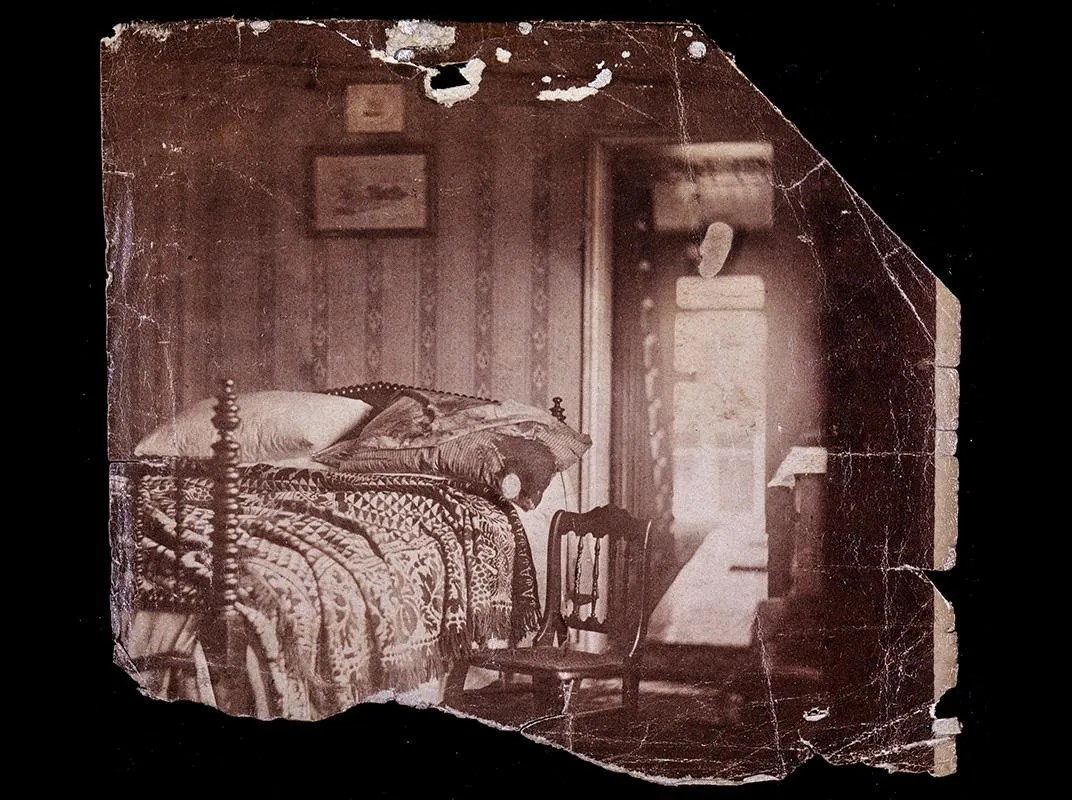
(Below: Lincoln died Saturday morning, April 15, in this rooming house bed across the street from Ford’s Theater. The president was so tall that he had to be positioned diagonally; when Army doctors stripped Lincoln of his clothing, onlooker were astonished at the president’s musculatrity. He was a powerful man–even though the war so worried him that sometimes all he ate was an apple he nibbled at throughout the day. Lincoln was able to hold an axe extended straight out at arm’s length, a feat admiring soldies witnessed. None of them could duplicate it.
William Seward was bitterly disappointed when Lincoln defeated him for the 1860 Republican nomination. One historian described him as A man of ripe political experience, he could show impressive astuteness, and had a fine capacity for persuasive public speech. Yet he revealed at times superficial thinking, erratic judgment, and a devious, impetuous temper, which were the more dangerous because he was cockily self-confident. He had immense vanity…
Lincoln made Seward his Secretary of State and, sensing his need for approval, invited him to the White House nearly every day for “consultations.” Like Stanton, Seward eventually became an admirer of the president’s.
Lincoln had a temper, and it was frequently aimed at a parade of incompetent Union generals. One of them George McClellan, despised Lincoln, once walking past the president, sitting in the McClellans’ parlor, and walking upstairs without uttering a word.
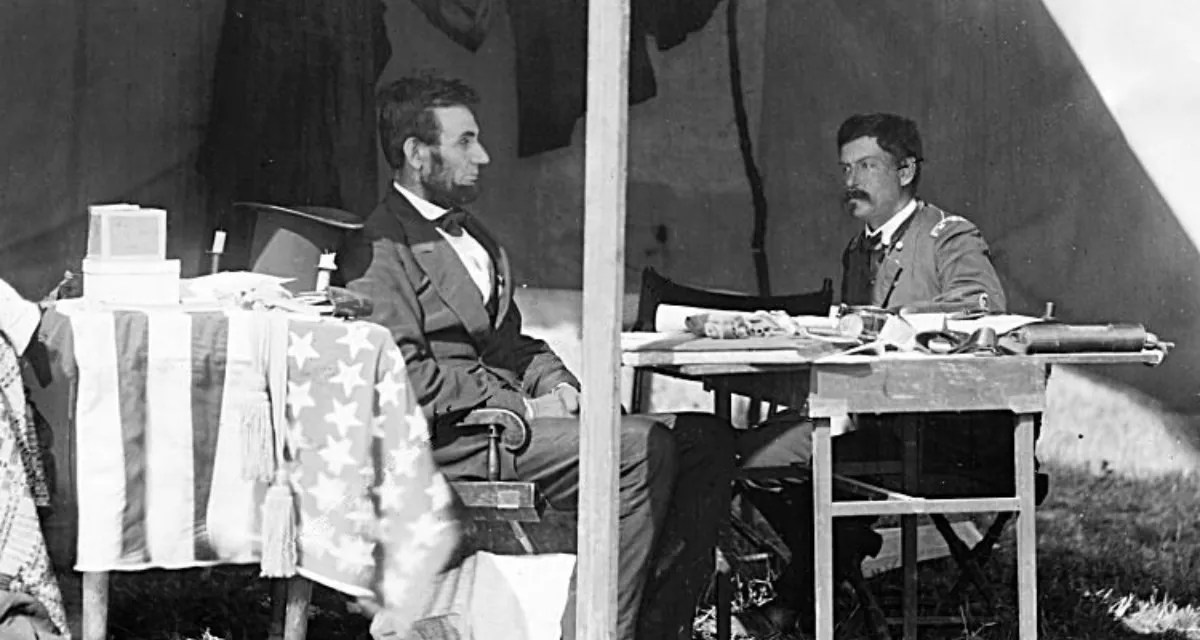
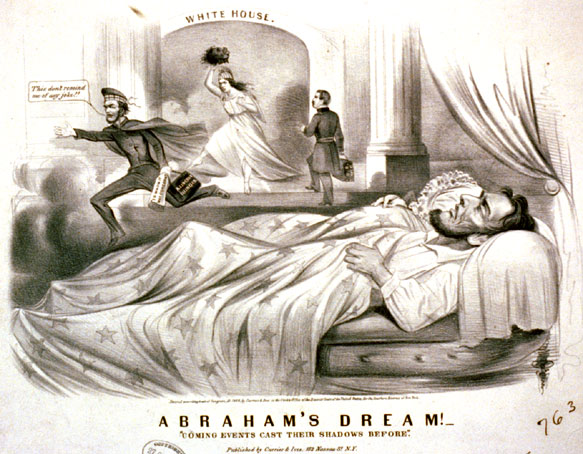
At the 1862 Battle of Antietam, Lincoln believed that McClellan has allowed Lee’s army to escape destruction. Not long after that battle, the two look tense in the general’s tent. In 1864, McClellan ran against Lincoln; this cartoon repeats the Scotch bonnet story. Lincoln’s nightmare depics the general ascending to the presidency.
Typically, Lincoln used humor to critcize those who either let him down or betrayed him.
–“If Gen. McClellan isn’t going to use my army, I’d like to borrow it,” the President allegedly said of the man who later became his rival.
–Gen. John Pope resolved to fight a war of movement. “From headquarters in the saddle,” his dispatches to the president allegedly concluded. “His headquarters are where his hindquarters are supposed to be,” the president observed.
–Lincoln’s first Secretary of War, Simon Cameron, was a Pennsylvania politician widely known for his corruption. Lincoln defended him, arguing that Cameron would never steal a hot stove. Then he made him the American ambassador to Russia.
Returning to the Comey story, this is what the current president had to say today.
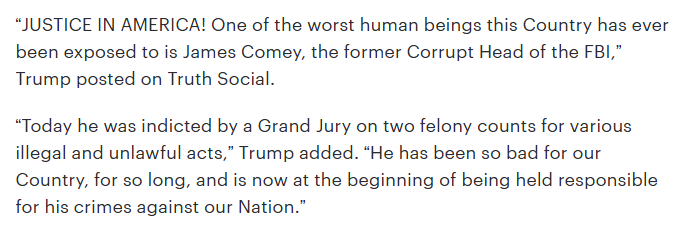
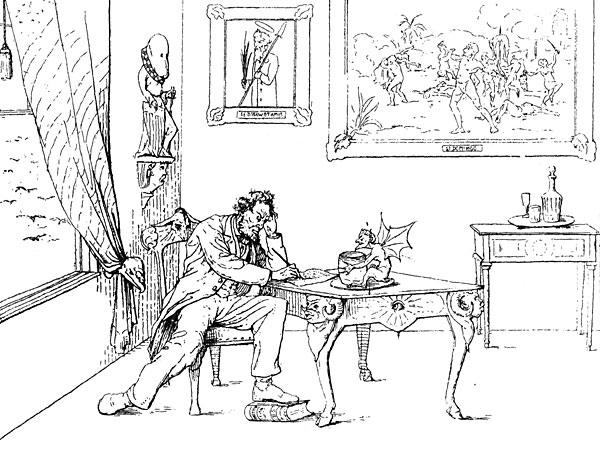
For a parade of deficient generals, Lincoln used the 1860s version of Truth Social. He’d write them vitriolic letters, seal them, and then lock them inside a White House desk drawer, never to see the light of day again.
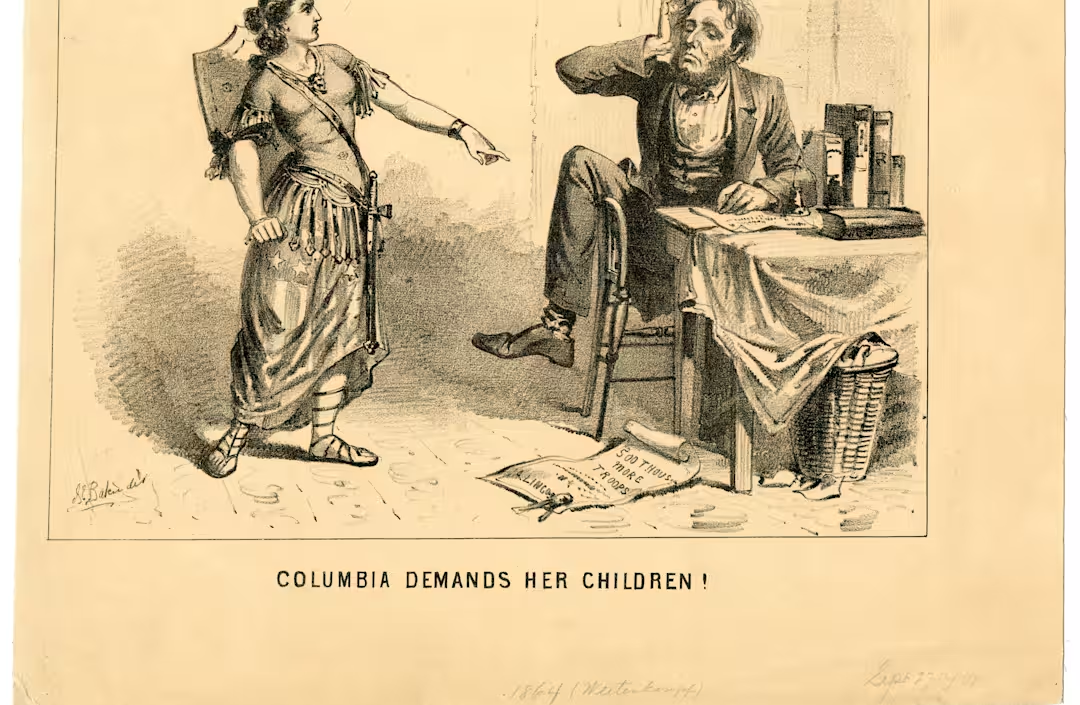
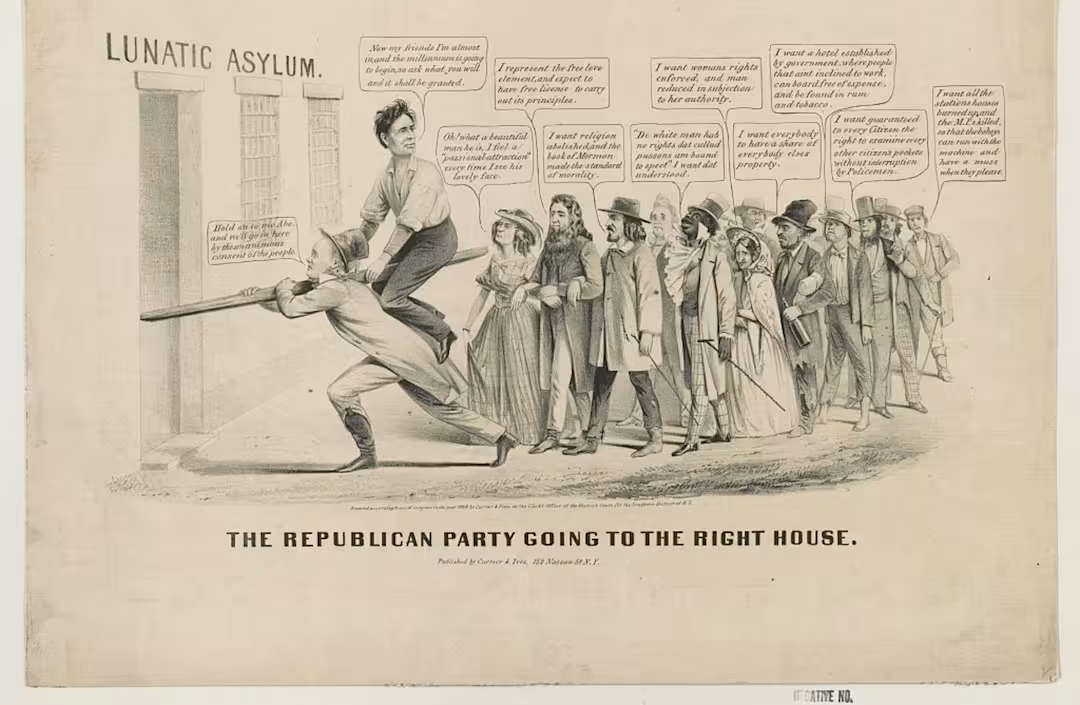
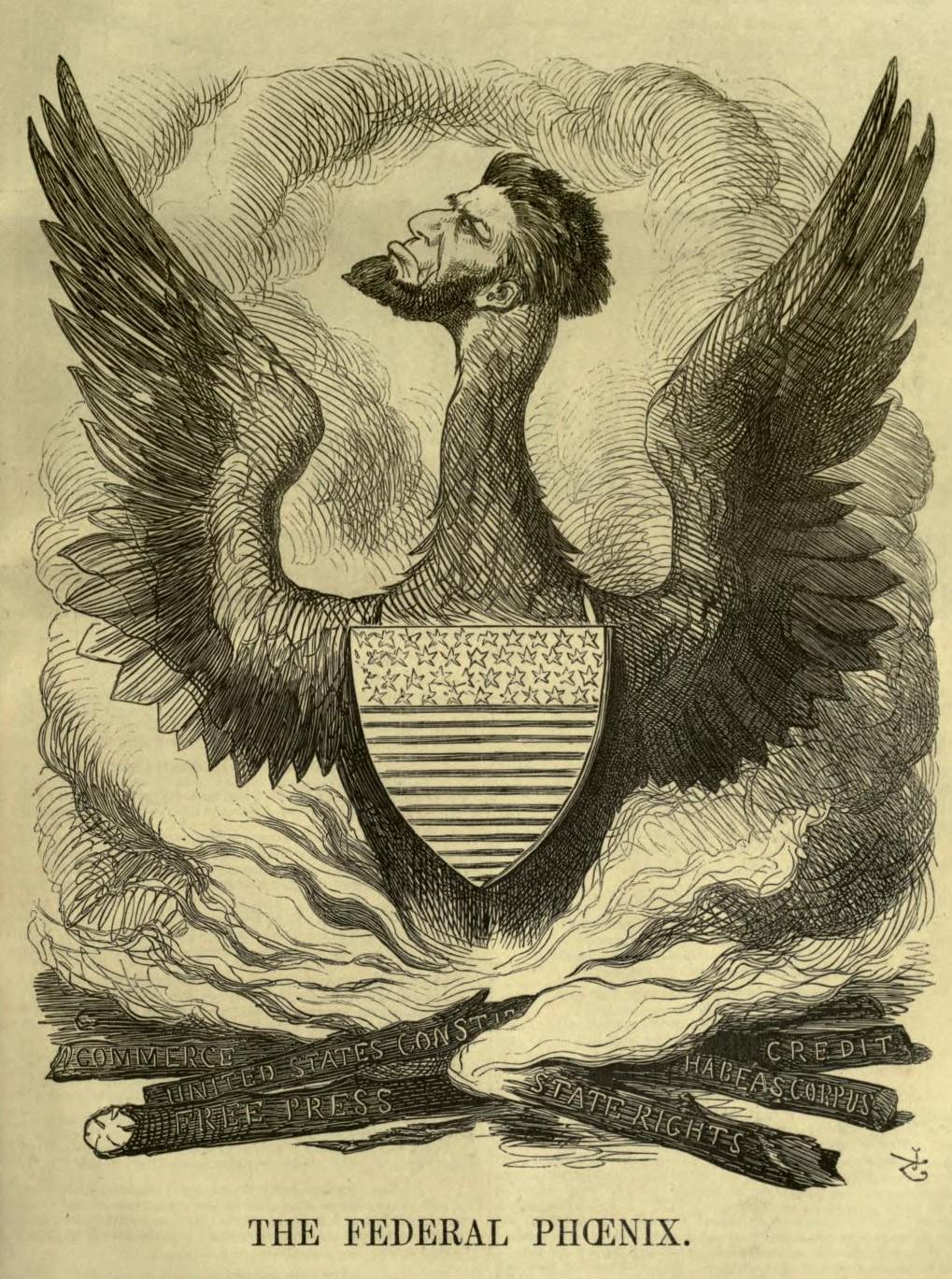
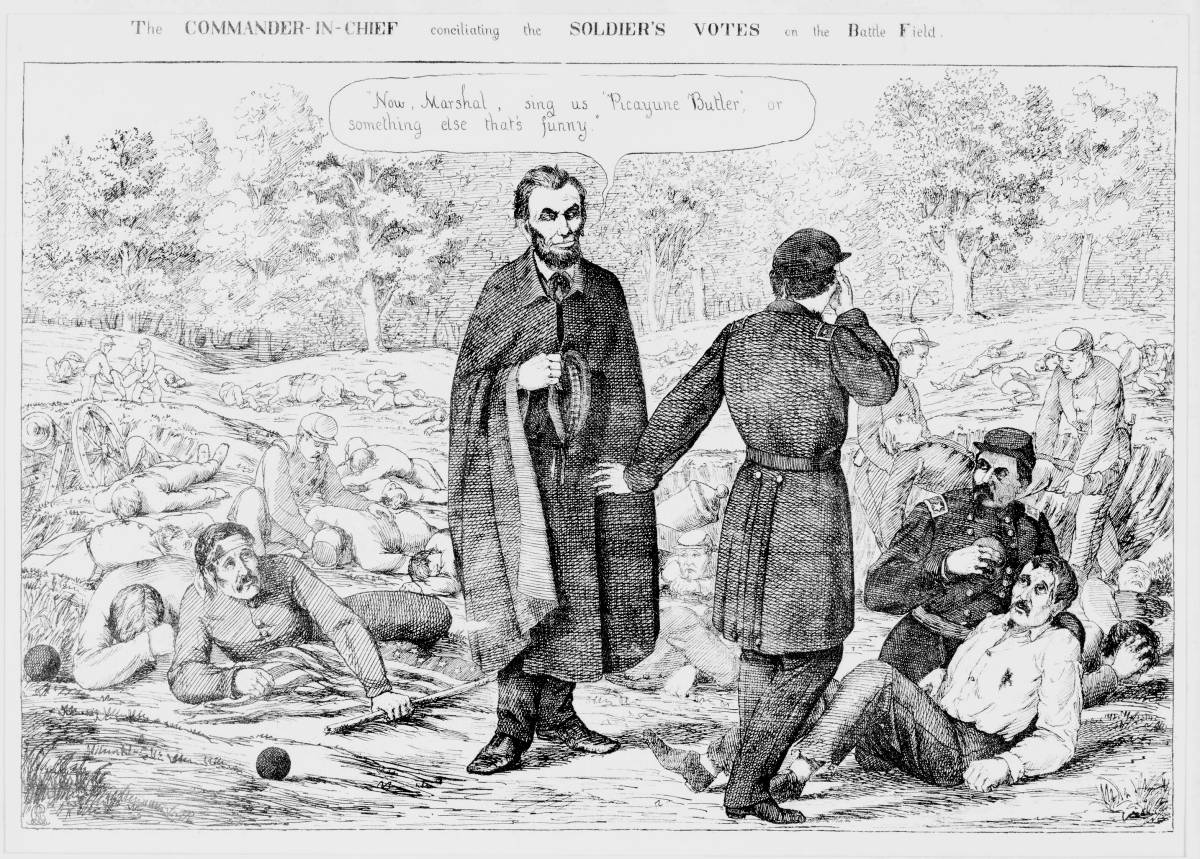
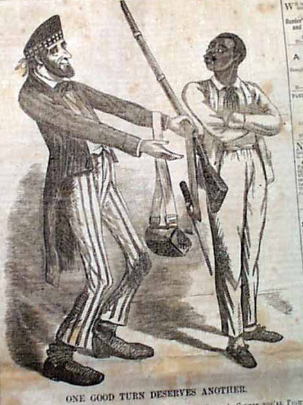
A gallery of anti-Lincoln cartoons.
“No politician has been treated worse or more unfairly than me.” President Trump.

 A Work in Progress