
I have an infallible wish to change the course of history. I want to tell Custer, not that he’d listen, “Don’t go down there.” I want to tell Captain Smith of Titanic: “Slow down, sir. Pack ice, bergs and growlers ahead.” I want to tell President Lincoln not to go to the theater. I want to tell Amelia Earhart to double-check her radio equipment.
All of it, for sure, for naught.
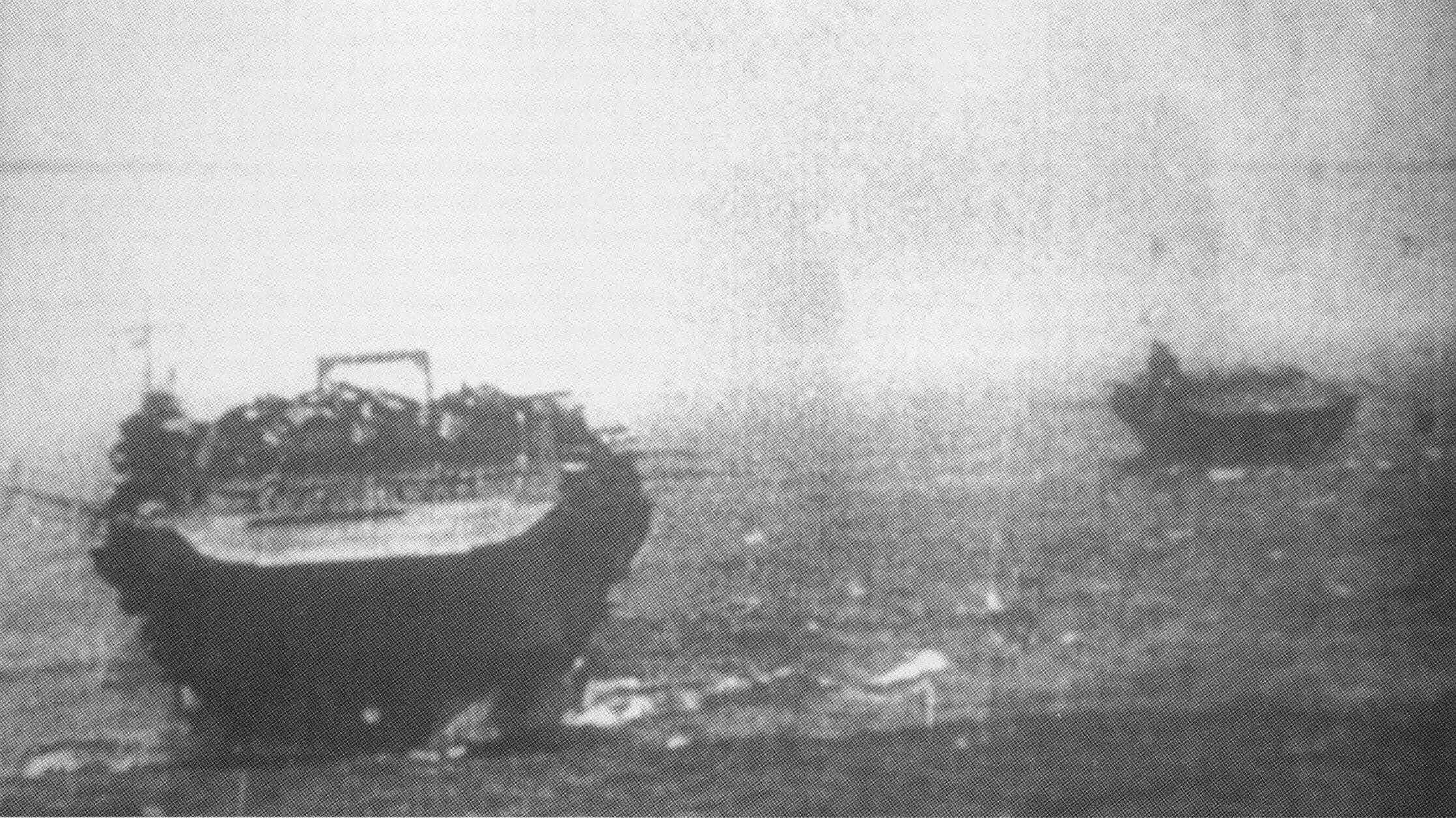
The biggest challenge would be to give Pearl Harbor some kind of advance notice of what was coming to them five days after today’s date. The Imperial task force–six fleet carriers and a cluster of support ships—had just received the message “Climb Mt. Niitaka,” the code ordering Adm. Nagumo’s fleet to complete its mission. Radio silence followed.
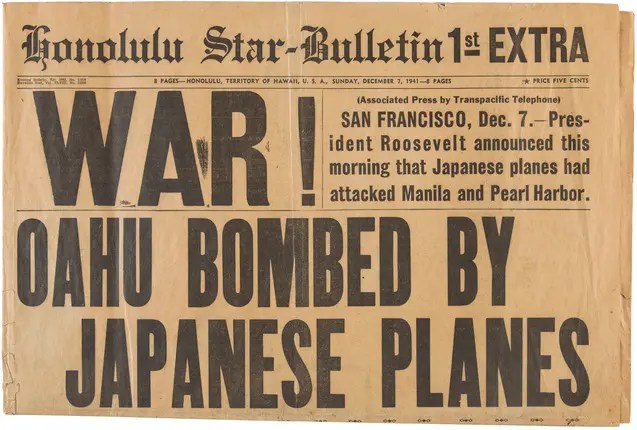
My warning, obviously, never worked but neither did warnings from Naval Intelligence that the Japanese fleet had suddenly disappeared. That morning, the destroyer Ward’s sinking of a midget sub at the Pearl Harbor entrance didn’t cause enough nerves to jangle. The radar report from Point Opana, about heavy incoming air traffic, was dismissed because a flight of B-17 bombers from the States was due in that morning. The telegram from Washington warning that war was imminent arrived long after the attack had.
And, having no means to travel back in time, I wasn’t there, hopping up and down on Waikiki to warn servicemen and tourists alike about what was coming. They would’ve put me in the looney bin, anyway.
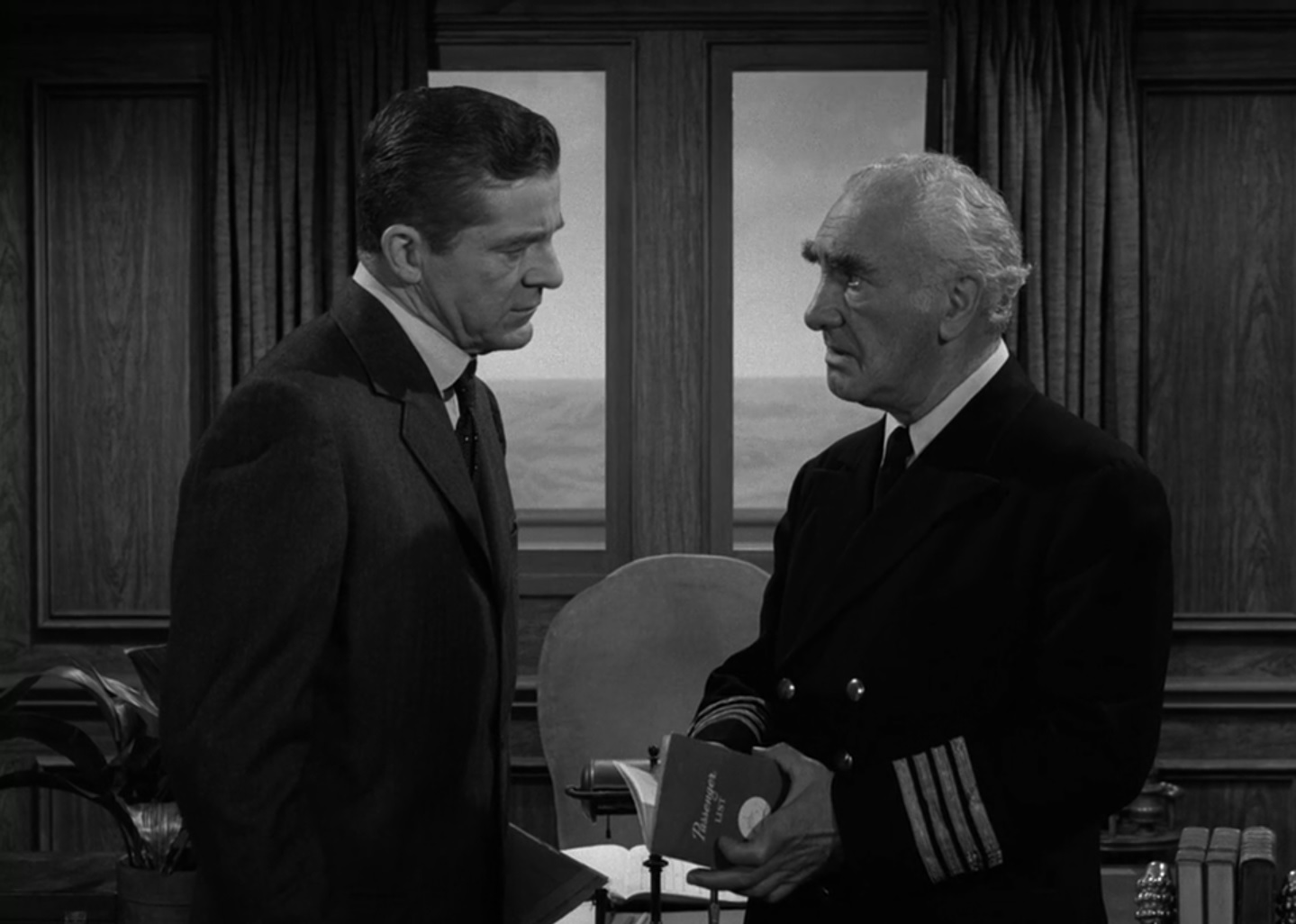
Rod Serling’s Twilight Zones loved to play with the time-travel warning from the future idea. In another vintage TV broadcast, the wonderful actor Dana Andrews (Best Years of Our Lives) tries the same trick, in an episode written by Serling. This Wikipedia summation is excellent:
Paul (Andrews) first travels to Hiroshima on August 6, 1945, and attempts to warn a Hiroshima police captain about the atomic bomb, but the captain dismisses him as insane. Paul then travels to a Berlin hotel room to assassinate Adolf Hitler in August 1939 (immediately before the outbreak of World War II the following month), but is interrupted when a housekeeper knocks on his door and later calls two SS guards to his room. On his third stop, Paul tries to change the course of the Lusitania on May 6, 1915, to avoid being torpedoed by a German U-boat, but the ship’s captain questions his credibility.
Paul accepts the hypothesis that the past cannot be changed. He then uses the time machine to go to the town of Homeville, Indiana in 1881, resolving not to make any changes, but just to live out his life free of the problems of the modern age. Upon his arrival, he realizes that President James A. Garfield will be shot the next day, but resists the temptation to intervene.
Even Kirk Douglas, for crying out loud, failed to change history, and his chance, sure enough, came at Pearl Harbor. In the slightly cheesy but somehow engrossing film The Final Countdown, his aircraft carrier—the VERY appropriately-named Nimitz, after the American commander in the Pacific in World War II-—is transported back in time, to Kido Butai’s time. All hell ensues.
From the lofty heights of 1980, it was comforting to imagine we had the airpower sufficient to prevent the tragedy at Pearl Harbor. We didn’t, of course, lacking the time-travel storm, and we didn’t have the right, either.
That’s a shame, for the impact of Pearl Harbor was devastating on my hometown, Arroyo Grande, California. Two sailors who grew up here were killed on battleship Arizona, as was a second cousin of mine. One of the Arizona sailors, Jack Scruggs, was about to play his trombone as the ship’s band assembled for the morning Colors Ceremony when concussions from falling bombs killed him, blowing his body into the harbor. His second-grade Arroyo Grande Grammar School classmate, Wayne Morgan, died moments later when the great ship blew up. I used many sources to put together the ship’s story.
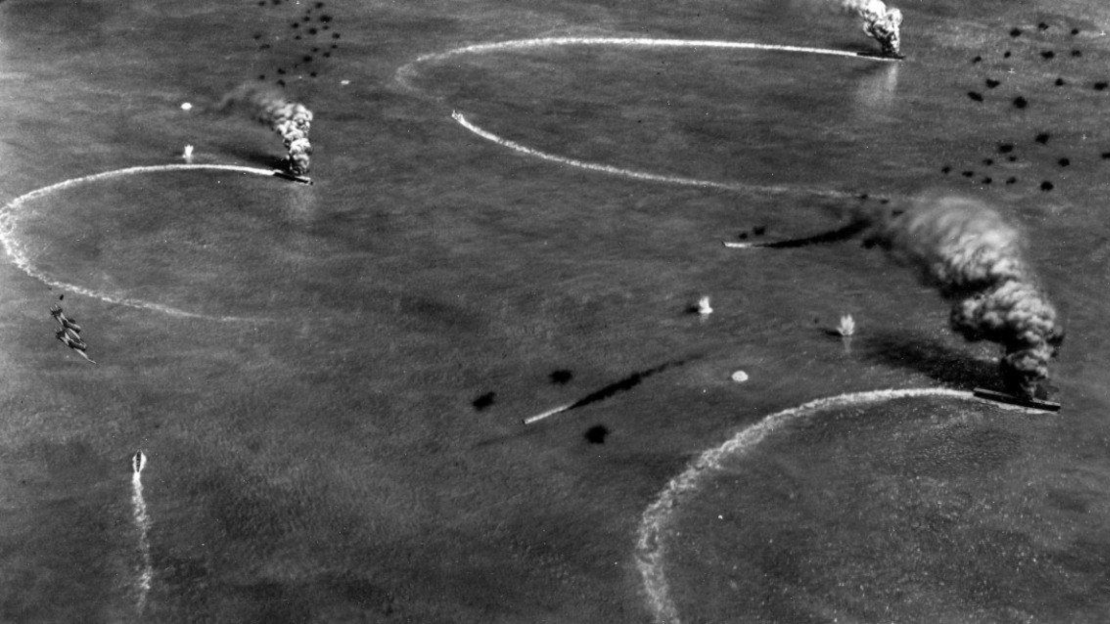
Since retribution seems to be a big theme in today’s America, Americans got theirs six months after Pearl Harbor. Four of Kido Butai’s carriers, Shokaku, Zuikaku, Shoyu and Hiryu, were sunk at Midway. 2200 sailors died with the four ships.
By then, my hometown’s Japanese American residents—-farmers, merchants, athletes, honor roll students— were at the assembly enter at the Tulare County Fairgrounds. In August, they would be moved to the Rivers Camp in Arizona, where the temperature hovered at 108 degrees for most of that month.
At war’s end, only about half came home. By then, two of them, soldiers, had died in combat. One was a 442nd Regimental Combat Team rifleman who died in the relief of the “Lost Battalion.” These were 240 terrified 19-year-old Texans surrounded by the Germans in France in October 1944. The 240 Texans were rescued, at the cost of at least 800 killed or wounded Nisei soldiers, including ours, who was trying to bring up more ammunition under withering German fire. The other G.I., an 83rd Infantry Division medic, was felled by a German sniper’s shot as he knelt over a wounded brother-soldier.
That’s too much history to change, and, in truth, given those two local sailors and those two local soldiers, we are honored—and, hopefully, humbled— by the gifts that were their lives.

 A Work in Progress