My great-grandfather Taylor Wilson, my grandfather John Smith Gregory, my father Robert Wilson Gregory
There are few things pleasanter to my ears than the combination of guitar, fiddle, mandolin and banjo. Throw in a standup bass and I am transported. I guess I love these instruments and bluegrass music because there’s a little of it in my DNA. There’s physical distance between the Appalachians and the Ozarks, but bluegrass puts them close together, on either side of a split-rail fence. I found two family groups–the Brandenbergers, whom I think are Mennonite (there are many in Missouri) and the Petersens, who do pop tunes as well as bluegrass. The lyrics will appear if you hit the “cc” button at the bottom of the frame. So pull up a chair…
“Maple on the Hill” sounds like one of those songs that might’ve come from the British Isles and then got transmuted in the hills of America:
Here, of course, coming from a devout family, is a little Gospel, a song that would’ve been sung in so many country churches.
The Petersen Family is sparkly clean and the girls are lovely and pristine. This disturbed me immensely until they started to sing. This is a another beautiful old Gospel hymn. I need to add one more instrument to the ones above: The slide guitar. The young man on the right is marvelous. The little girl on the mandolin finds her voice in the song’s final third, and she’s marvelous, too.
The same young man also has a sweet voice, and the mandolin player evokes Irish keening near this song’s end. It’s an example of them sampling pop music, in this case, the song’s from Coldplay.
Just one more. Winter’s Bone, about the meth epidemic that’s poisoned the Ozarks, would’ve been bleak without Jennifer Lawrence, indomitable and daring. And she’s like a teenaged earth mother to her little brother and sister. This was her breakout role as Ree, the daughter of a dealer who’s vanished. Marideth Sisco sings “Little Sparrow” (aka “Fair and Tender Ladies”) in this brief excerpt from the film:
And here’s Sisco with Blackberry Winter, performing the song in its entirety:
And here are the lyrics to the song, so evocative of the heartbreak common to Hill People—and to women everywhere.
Come all ye fair and tender ladies Take warning how you court your men They’re like a star on a summer morning They first appear and then they’re gone
They’ll tell to you some loving story And they’ll make you think that they love you well And away they’ll go and court some other And leave you there in grief to dwell
I wish I was on some tall mountain Where the ivy rocks were black as ink I’d write a letter to my false true lover Whose cheeks are like the morning pink
I wish I was a little sparrow And I had wings to fly so high I’d fly to the arms of my false true lover And when he’d ask, I would deny
Oh love is handsome, love is charming And love is pretty while it’s new But love grows cold as love grows older And fades away like morning dew
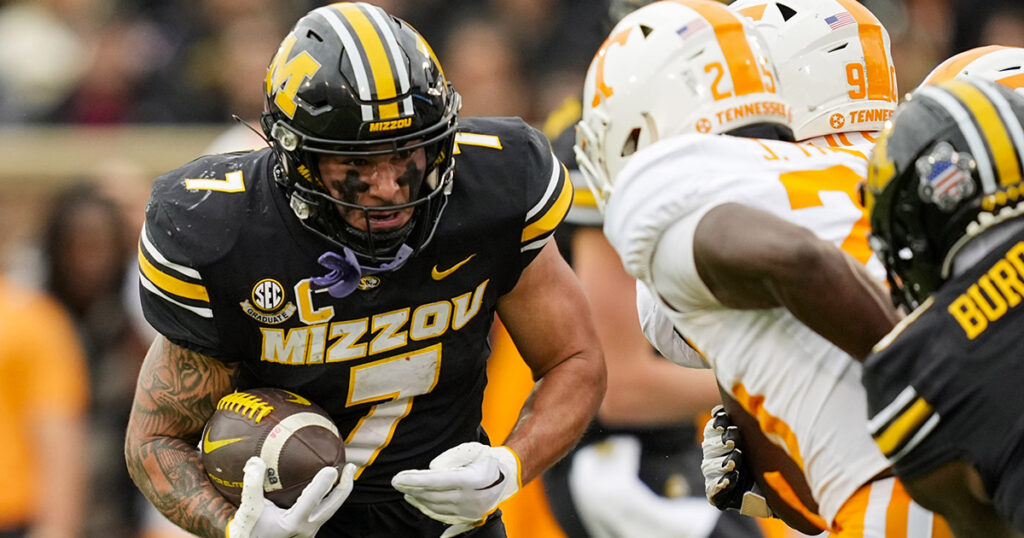
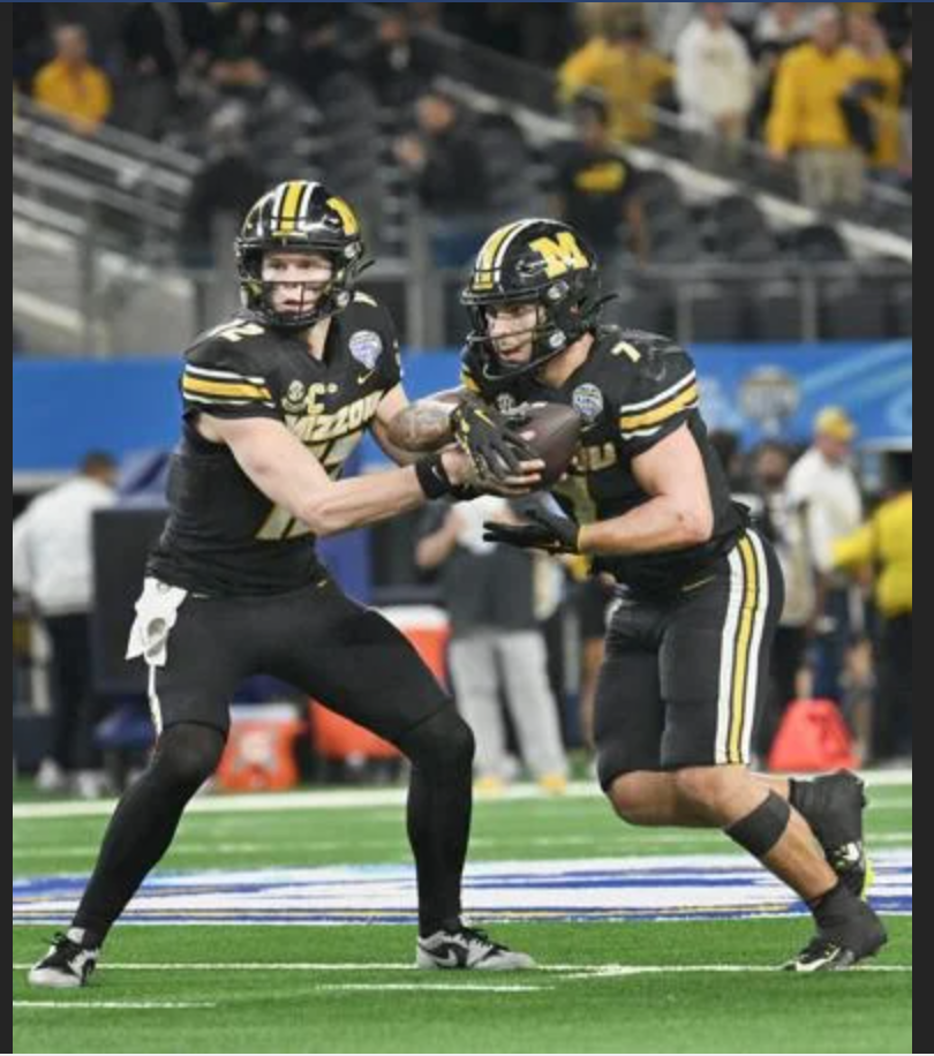
…Of course, the highlight for me was MIZZOU’S (my Alma Mater and niece Becky’s) victory over OHIO STATE in the COTTON BOWL, 14-3…Missouri RB Cody Schrader (photo above) may be the NCAA’s best Unknown Running Back, the elusive little rascule…He still carries tacklers with him for a few more yards after he’s hit…He doesn’t go down easily, which is how I feel about KALE…
…Is is just me, or does the ROSE BOWL not seem the same without a Pac-12 (or whatever the conference will be called) team playing?…
…Embarrassing Bowls: ORANGE BOWL, 63-3, GEORGIA; SUN BOWL, 40-8 NOTRE DAME…Out of common decency, I will omit the names of the losing teams…
…Wouldn’t Tony the Tiger be a better match for the SUGAR BOWL?…And why does Goodyear sponsor the COTTON BOWL?… Is there a Cotton Blimp?…
…Wanted both teams to lose: ROSE BOWL (It’s the head coaches, including John Harbaugh’s Evil Twin, Skippy)…
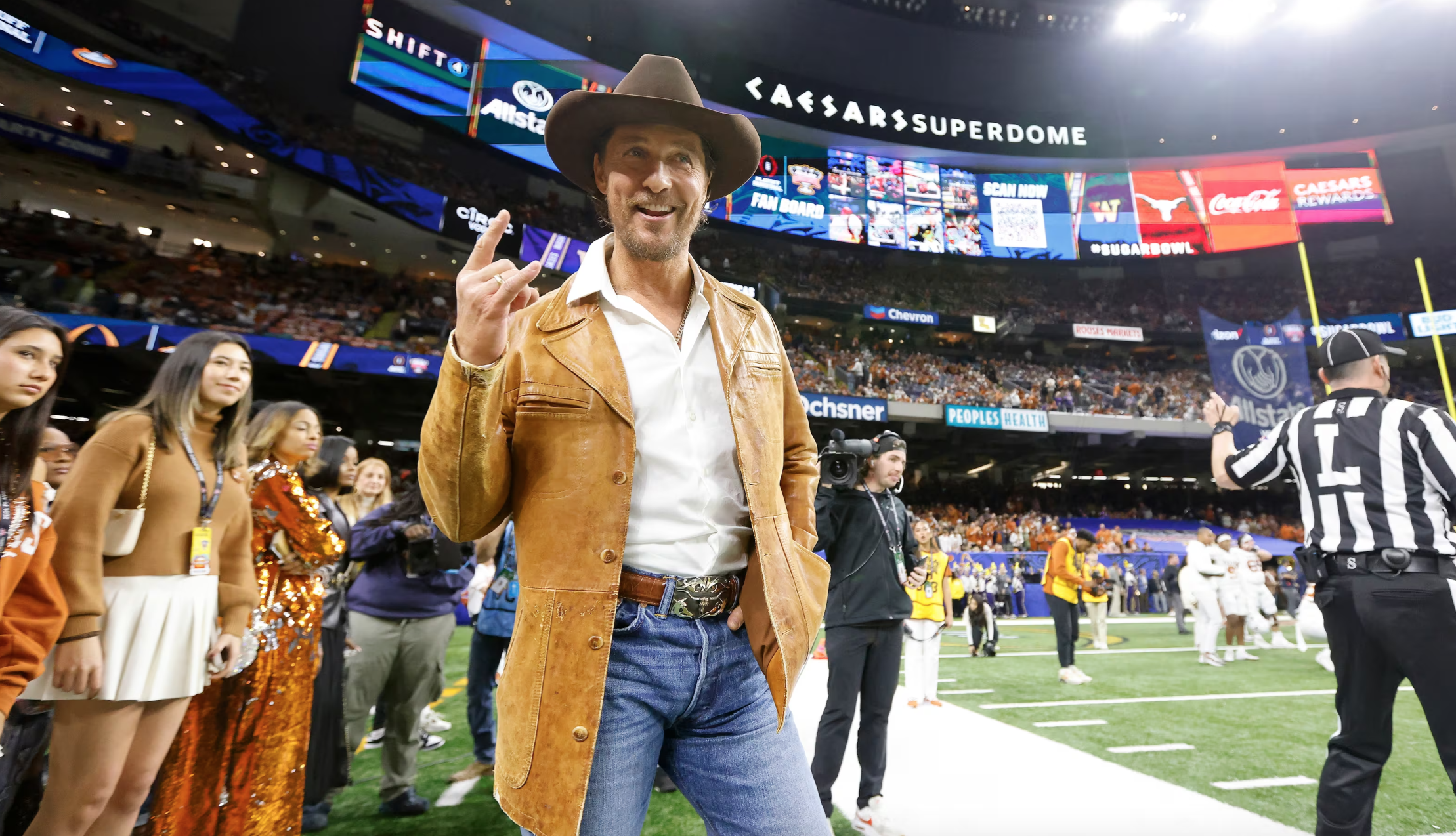
..Still mad at TEXAS from the 2005 ROSE BOWL (they defeated USC) and there was then-QB Vince Young during the SUGAR BOWL. His beard was gray…Also on the Texas sideline was actor Matthew McConaughey, who was NOT nude in the film “Failure to Launch;” that was formers STEELERS QB Terry Bradshaw instead…
…SNAIL DARTER AWARD for WASHINGTON QB Michael Penix for throwing it under around and through Texas’ secondary…He had over 400 passing yards, and the last QB to do that was LSU QB Joe Burrows, now playing (injured) for the BENGALS…I will tolerate no Penix puns in this space…
..While we’re on that topic, LIBERTY UNIVERSITY, aka Falwell U., lost in a most satisfying way to OREGON in the FIESTA BOWL…
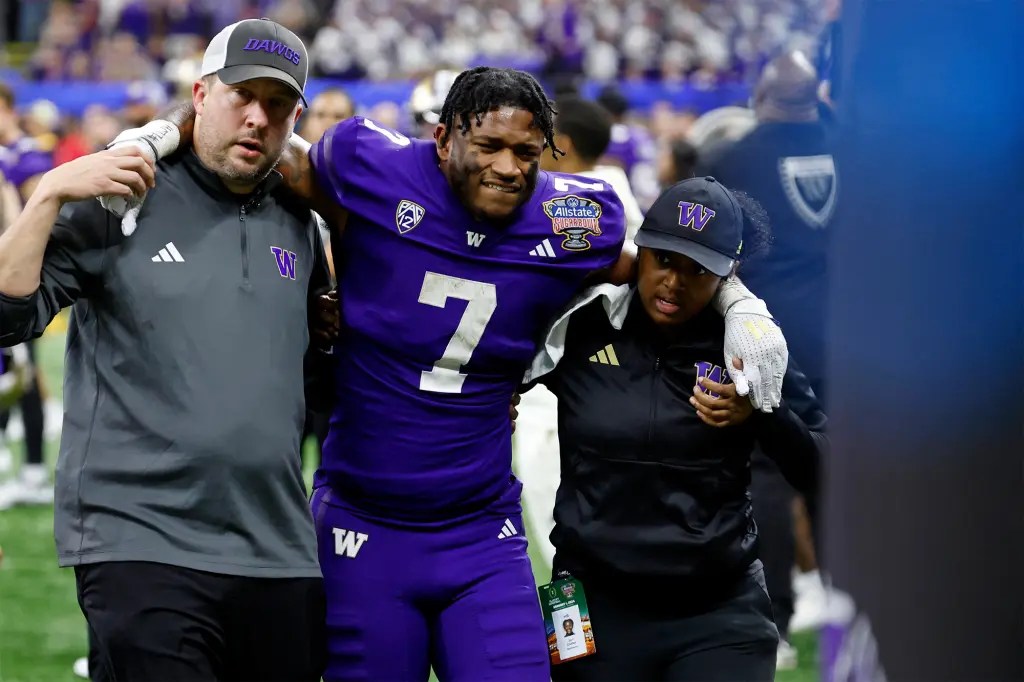
…Made you want to cry: The obvious pain on WASHINGTON RB Dillon Johnson’s face after his fourth-quarter injury in the SUGAR BOWL…This stopped the clock and gave Texas more time to lose…Still, it’s nice to see the LONGHORNS near the top again after years of aimless cattle drives…
…OLE MISS was clearly the better team (PENN STATE) in the PEACH BOWL…Was it time to ditch the REBELS team name?…YAYESS, says this namesake of two Confederates…Is it true that they are now the LANDSHARKS?…Affirmative…
…Cue the song “Thriller” for the ROSE, SUGAR, the stupidly- named RELIAQUEST and the GATOR bowls, all close games…
…By the way, in the BRAND-NEW WOK BOWL, I made a most satisfying stir-fry with Filipino noodles, shrimp and veggies…
…The National Championship? It’s big, punishing, physical MICHIGAN against quick-strike WASHINGTON…The WOLVERINES might just wear down the HUSKIES, especially their defensive line…But I’m still pulling for WASHINGTON, where my father-in-law Gail played…I’m hoping for a game that resembles YODA vs. PALPATINE…
It was like watching two superheavyweight Sumo wrestlers who’d been living on a diet of Kentucky Fried Chicken and could only vaguely paw at each other. It was like watching mold grow on bread. It was like watching the raptors chase the little kids in Jurassic Park (Missouri Quarterback Brady Cook was sacked six times) It was like watching the road gang clear weeds in Cool Hand Luke (thirteen penalties). It was the Futility Bowl, the Dreadful Bowl, the Boring Bowl, the Trench Warfare Bowl.
At the end of the third quarter, it was 3-0, Ohio State.
I had by then deserted the game. I missed the fourth quarter because I was watching our favorite ghost show, The Dead Files. And then I fell asleep. Luckily, Elizabeth woke me for the last three minutes of the game—Mizzou had done its damage by then, two touchdowns, but at least I got to see the game’s celebratory end. I slept the sleep of the Well-Satisfied If Slightly Guilty.
Here are the highlights, again, from the fourth quarter. Quarterback Brady Cook (#12) and the phenomenal but not-very-big running back Cody Schrader (*7) were the heroes, but it was the defense, which bent and bent and bent but did not break, who were probably just even more heroic.
Go, Tigers!
“Tipperary” makes up part of the Mizzou fight song.
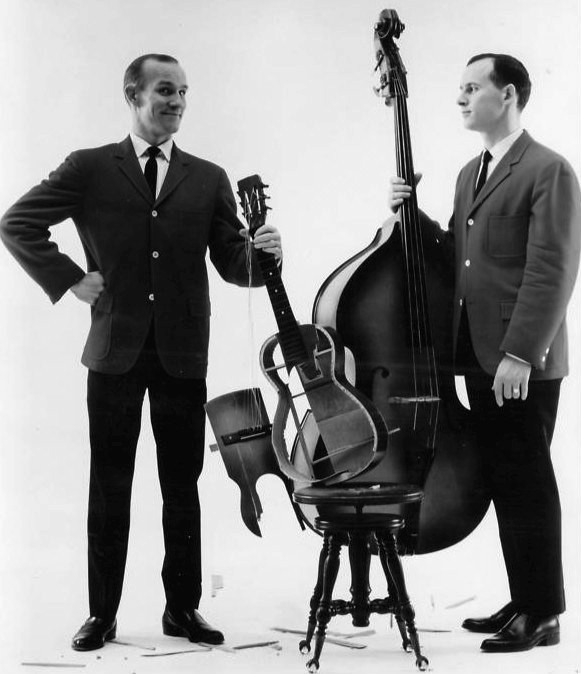
The loss of comedian/musician/yo-yo artist par excellence Tommy Smothers reminded that their act, which began at San Francisco’s Purple Onion in 1959, was part of a marvelous revival of folk music in the late 1950s into the mid-1960s.
By 1960 my big sister, Roberta, was at Cal Poly. There was a popular television show, Hootenanny (1963-1964) that showcased folk music, and Mom, Roberta and I loved it. I think several events converged to create the rediscovery of our music, including the idealism of young people (e.g. The Peace Corps) sparked by a youthful president, John Kennedy.
Some of those young people belonged to the so-called Silent Generation, kind of taken for granted, sandwiched as they were somewhere in between the World War II generation and the Boomers. Folk music, I think gave them a voice and a way to assert themselves.
The Civil Rights movement was a key factor, too, because so much music in the genre has it roots in the South and in the experience of Black Americans.
The gang that brought you films like Best in Show and This is Spinal Tap also did a wicked sendup of the times in A Mighty Wind, but I perceived, just beneath the wickedness, a hint of nostalgia. The creators of the film series and the actors therein—like Michael McKean, Christopher Guest, Harry Shearer, Catherine O’Hara and my favorite, Eugene Levy—were about the right age for Hootenanny. The film ends—a reunion concert featuring three folk groups—with its eponymous song and its tragically obscene and very funny final line:
But putting A Mighty Wind Aside, the Highwaymen’s version of this song remains lovely, I think. The man who first wrote down the lyrics heard South Carolina slaves singing it as they rowed .
Harry Belafonte was both key to the revival and its precursor. We had both of his Carnegie Hall concert albums, both double albums, and played them on the old Zenith cabinet record player so often that I swear you could almost see through them. A wonderful element in those Belafonte albums was their international flavor. The man sang songs from Jamaica, of course, but also from Venezuela, from Israel and, in this example, from Mexico. I love this—a different “Bamba” from Richie Valens’— because Belafonte, maybe the most gorgeous man Our Lord ever created, dances a little, too. (And his Spanish is flawless.)
Another border-transcending song: The lyrics for this 1961 hit by the Tokens—this later version includes The Mint Juleps, from London’s tough East End, and Ladysmith Black Mambazo, from South Africa—were from South Africa in the late 1930s, and they were in Swahili.
The New Christy Minstrels were on Hootenanny regularly and I particularly loved “Green, Green.” The lead singer with the gravelly voice, Barry McGuire, was the most popular Minstrel, but, sadly, he would go on to record “Eve of Destruction,” a review of current events as they were in 1965, and the song conclusion seemed to be that we were all going to die, and pretty darned soon. The Minstrels and the music of their contemporaries was damnably optimistic, which is what made A Mighty Wind so funny.
The absence of that optimism today—and of a healthy sense of national pride—isn’t so funny.
I think I love the images of the kids in the audience, singing along, almost as much as I love the performances. The same goes for this performance, about five years earlier, by Mahalia Jackson, at the Newport Jazz Festival. She is sublime.
Trios were popular, probably the Kingston trio most of all. “Tom Dooley,” about a man about to be hanged, has to be the most depressing song of the folk movement, so let me try M.T.A., which is funny and charming, instead:
The Limelighters (I love me some banjo, prominent in both these trios) perform a song that I’ll always associate with the CBS Baseball Game of the Week, brought to you by Falstaff Beer. When the game got slow or was approaching a blowout, announcer Dizzy Dean (his more restrained partner was Pee Wee Reese) would begin singing this song. Dean, by the way, horrified English teachers when he conjugated verbs, like this one: “HE SLUD INTO THIRD!” And Glenn Yarborough of the Limeliters, on the right, had a voice like syrup and would strike out to make a successful career on his own.
Peter, Paul and Mary were the giant trio of the folkies, and their cover of Bob Dylan’s “Blowin’ in the Wind” perhaps their most prominent hit. But I love the lyrics of this song, from 1966, near the folk revival’s end (Dylan and groups like The Byrds, Buffalo Springfield and The Seekers would keep the tradition prominent in the music they performed), The man who wrote these lyrics became popular just a little bit later, too. He was Gordon Lightfoot.
And, of course, PP and M reminded us of the debt American culture will aways owe to Woody Guthrie. The men’s voices are sweet, but Mary Travers’ voice soars, and you can see its impact in the faces of this audience, older now than they were in 1963, but in this moment young again.
The grandfather of the movement, along with Woody, was Pete Seeger, and much to my delight, Bruce Springsteen revived him, too, with a marvelous recording, “The Seeger Sessions.” This is from a performance in Dublin. Folk music, again, knows no boundaries.
The Smothers Brothers rarely got through a song without an interruption, with a befuddled Tommy getting corrected by the straight man, his brother Dickie. Their act carried over into their CBS television show, which featured guests like Buffalo Springfield and The Jefferson Airplane.
The show was too edgy and too clever for the censors and it was canceled. Vietnam, for example, came up far too often in the dialogues that interrupted their songs. The cancellation was typical of the times, with those in power trying to keep the lid shut on a pot of boiling water. But, of course, the Smothers remained popular anyway. Here they are, more than a few years later, with Tommy reviving another talent introduced during The Smothers Brothers Comedy Hour—his prowess with a yo-yo.
He and Dickie remind me of a time, I guess, when folk music evoked in us a love for our country. The Smothers Brothers loved our country so much that they weren’t afraid to call America out when they believed it to be in the wrong.
After a day spent making ten turkey sandwiches and a turkey soup big enough to fill Levi’s Stadium—which is more than the 49ers did on Christmas—I went to the TeeVee Machine.
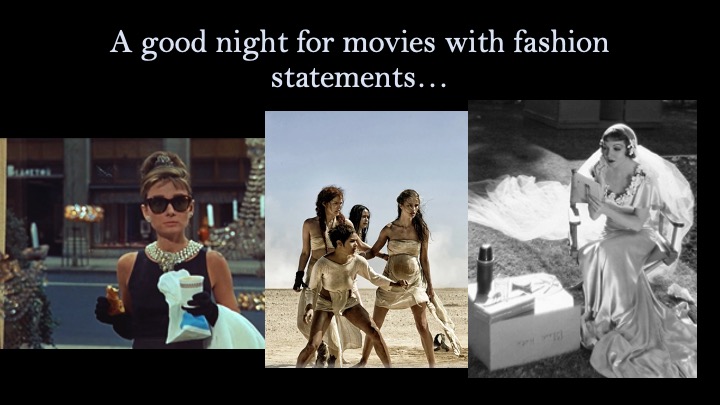
Luckily for me, I caught the last half of director Frank Capra’s of It Happened One Night, which was as charming as ever. And, since one of my 132 secret wishes would be a Hollywood fashion designer, Claude Colbert’s satin wedding dress, with the train that’s about a mile long floating behind her as she deserts her bleh! groom for yay! Clark Gable, is delightful. Then—thank you, Turner Classic Movies host Alicia Malone—the next film was Breakfast at Tiffany’s with the incredible opening: Audrey Hepburn in her Givenchy little black dress having a croissant and coffee outside Tiffany’s, the place that makes her feel safe.
And then, to borrow from Walt Whitman, I grew unaccountably sick and tired of the film, thanks to Mickey Rooney and the stupid party scene that’s meant to be clever. It isn’t anymore. It’s stupid. I’m not fond of either George Peppard or the ghastly woman, wearing ghastly hats, played by Patricia Neal. That narrows us down to Audrey Hepburn and Buddy Ebsen’s poignant cameo, both solids.
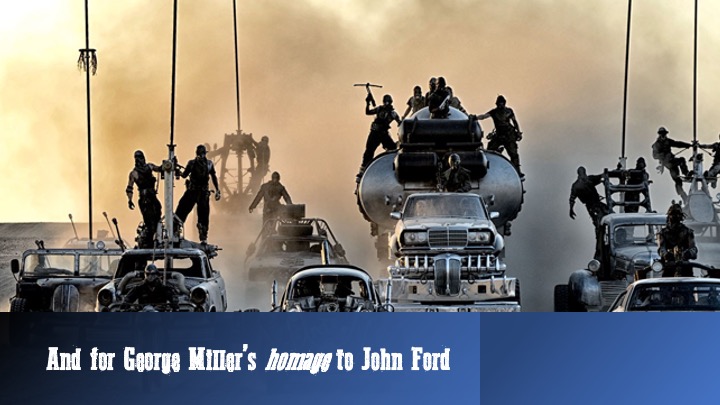
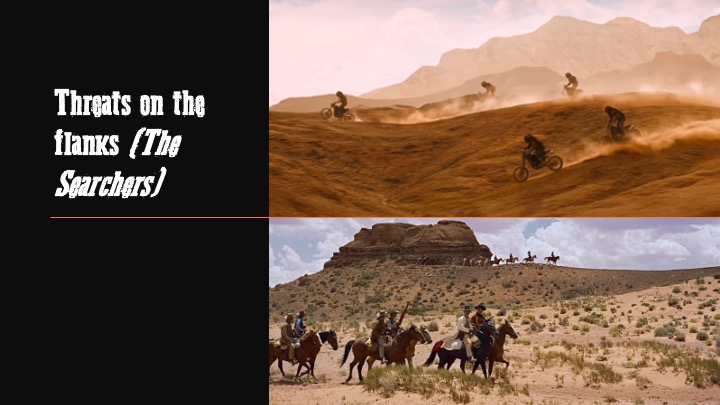
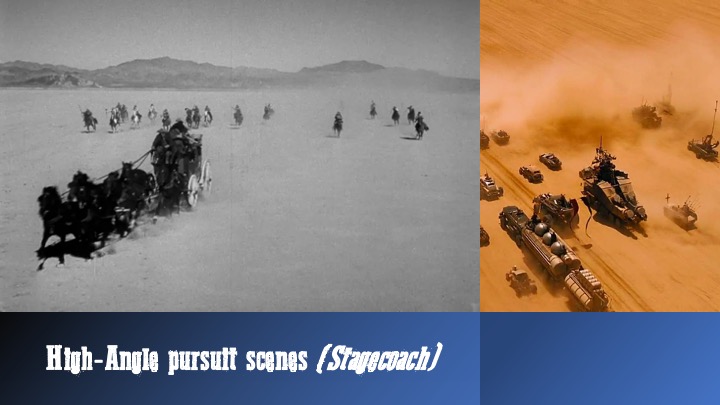
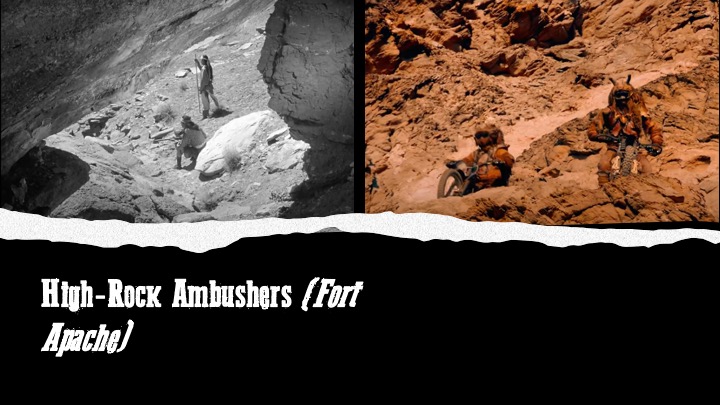
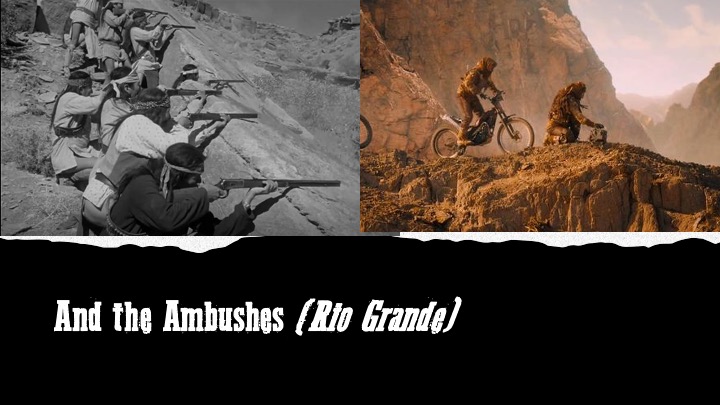
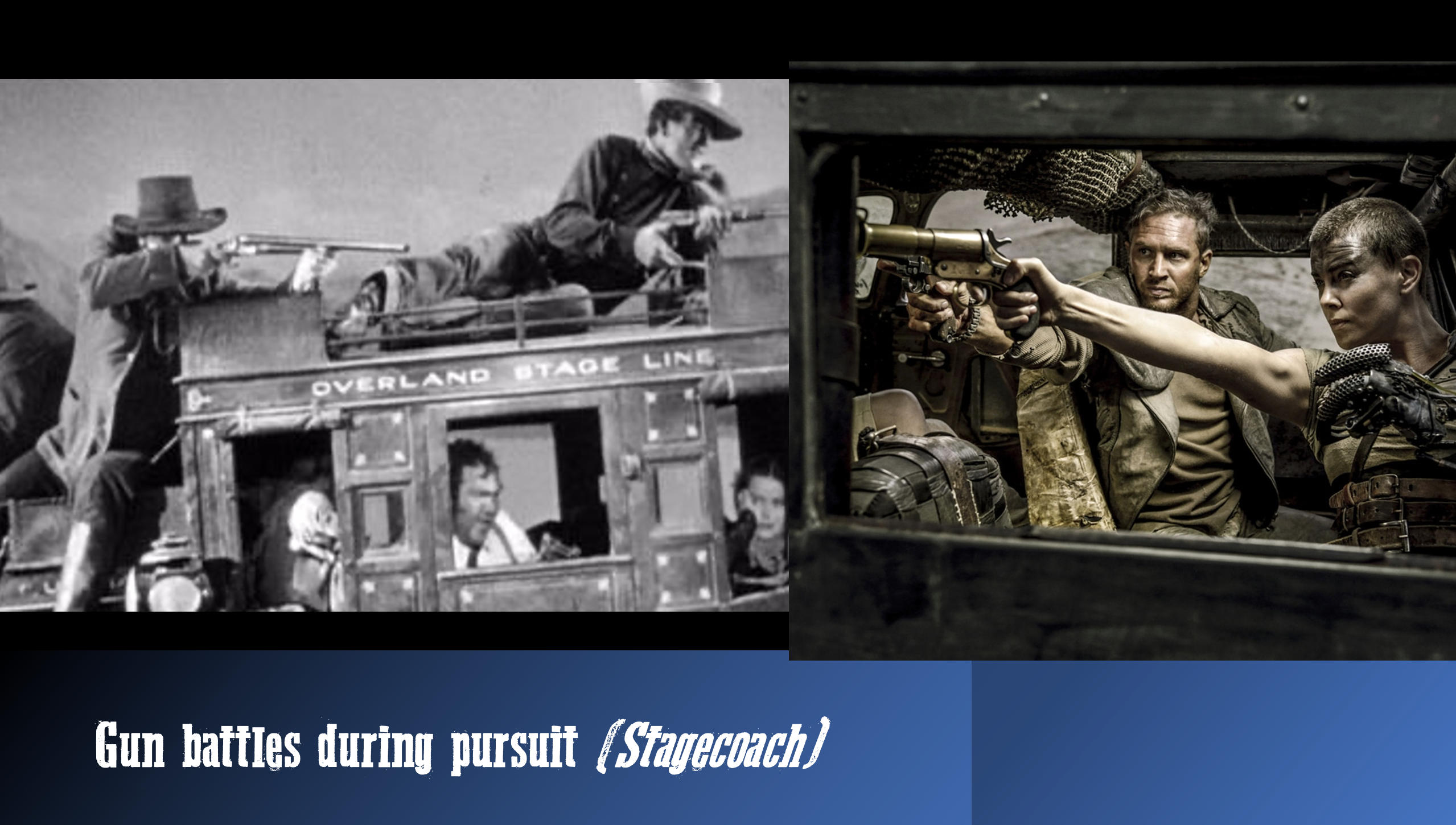
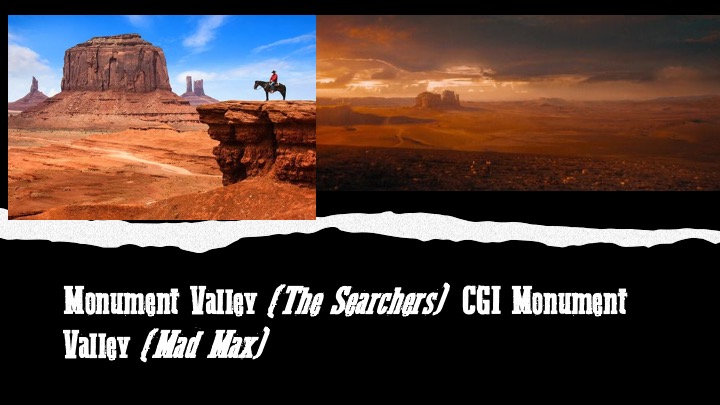
So I changed channels. I love Tom Hardy anyway, and Charlize Theron plays Strong Women in several films, so the last half of Mad Max: Fury Road was just what I needed. George MIller’s movie is one of the most stunning and inventive films I’ve ever seen. I don’t think I can watch it more than once a year or so, because it’s so over the top, and rightfully so, that it leaves me frazzled at the end.
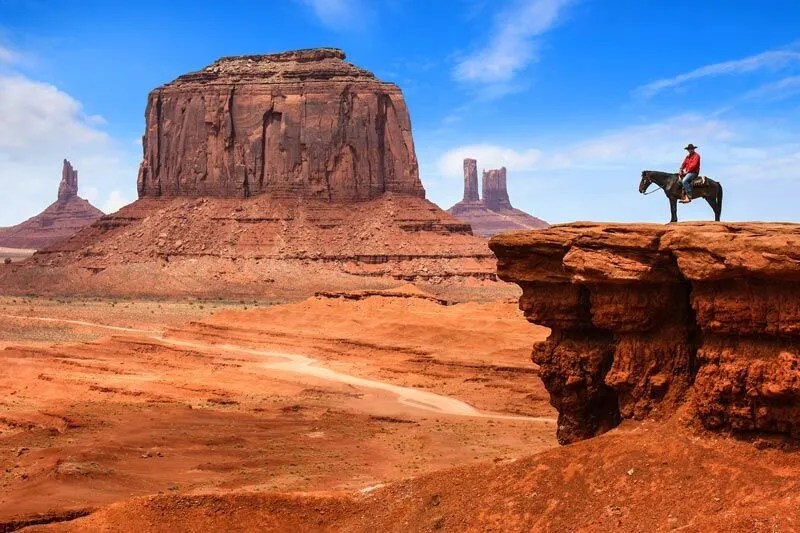
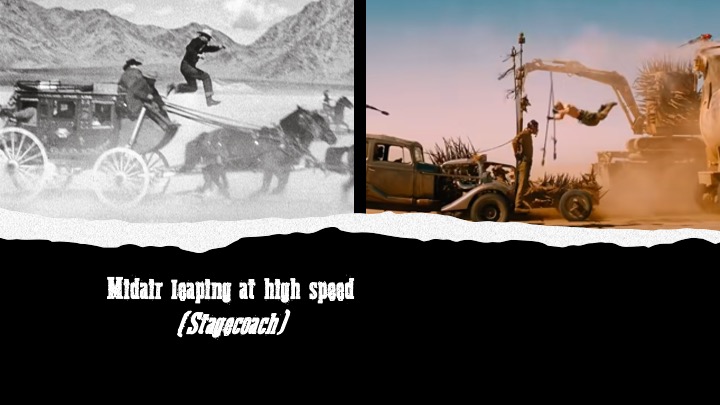
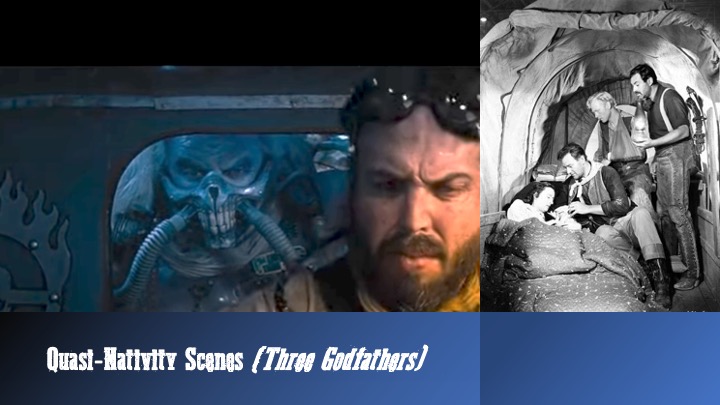
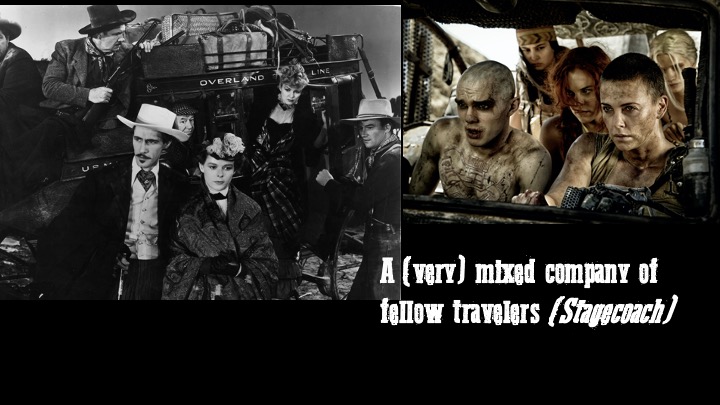
But last night I realized that I’d seen scenes in Max before. That’s when I realized that Miller loves movies as much or more than I do, because he paid tribute to another favorite director—at least visually, because the man himself was what George W. Bush referred to as a “turd blossom”—John Ford. And I must add “John Ford without the Sons of the Pioneers” for further clarification.
Let me explain. It was a good night for fashion statements…
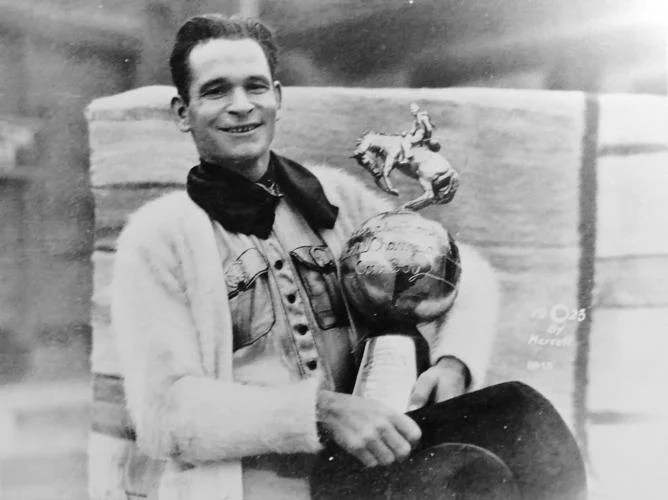
Postscript: Ford’s known for his stable of actors—Wayne, Ward Bond, Victor McLaglen, Ken Curtis, Ben Johnson, and so on—also had a stable of stuntmen. Among them were two believed to be Native Americans: Yakima Canutt and Iron Eyes Cody.
They weren’t. Canutt’s ancestors were from the British Isles and Germany. Cody was Sicilian.
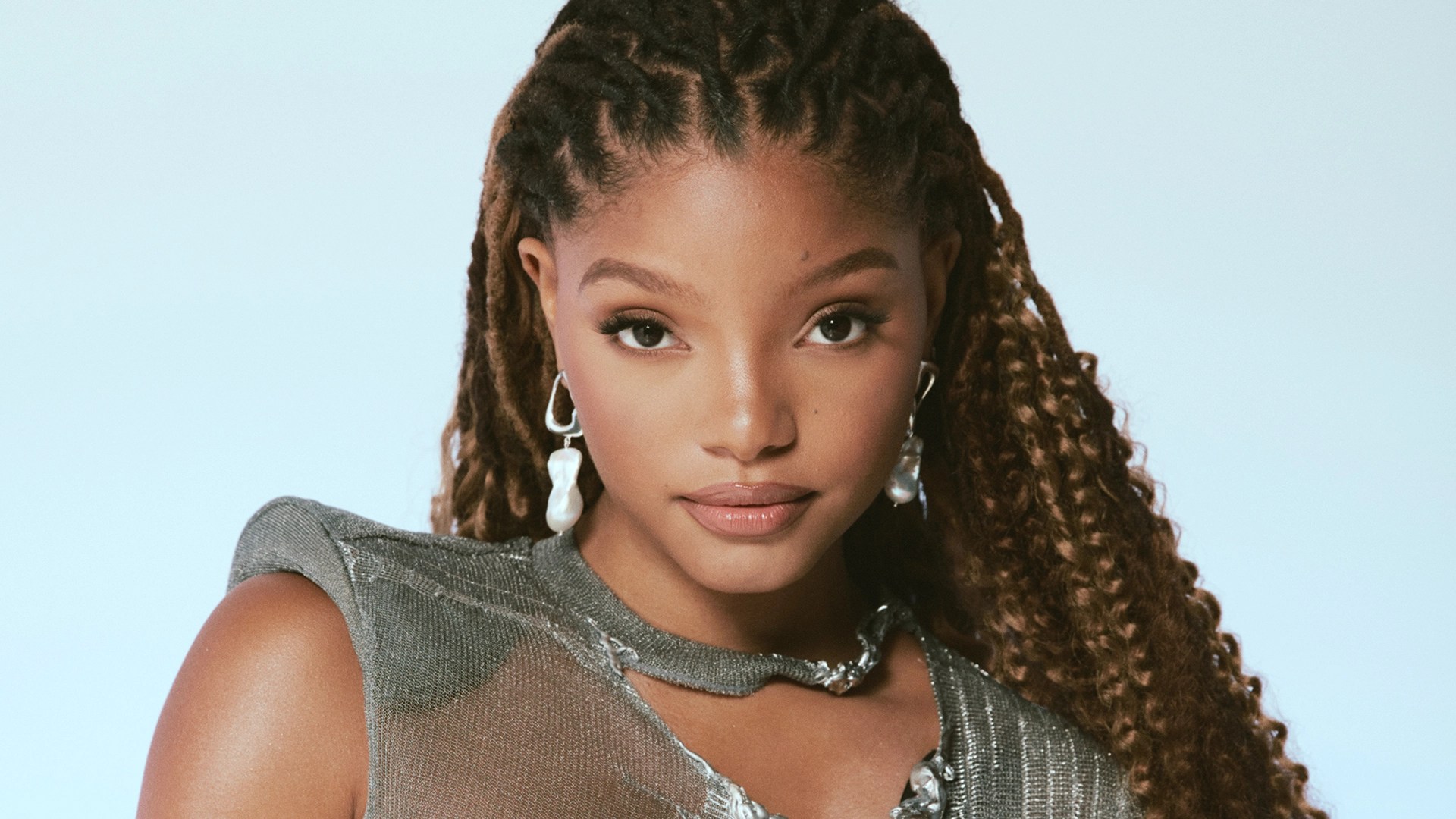
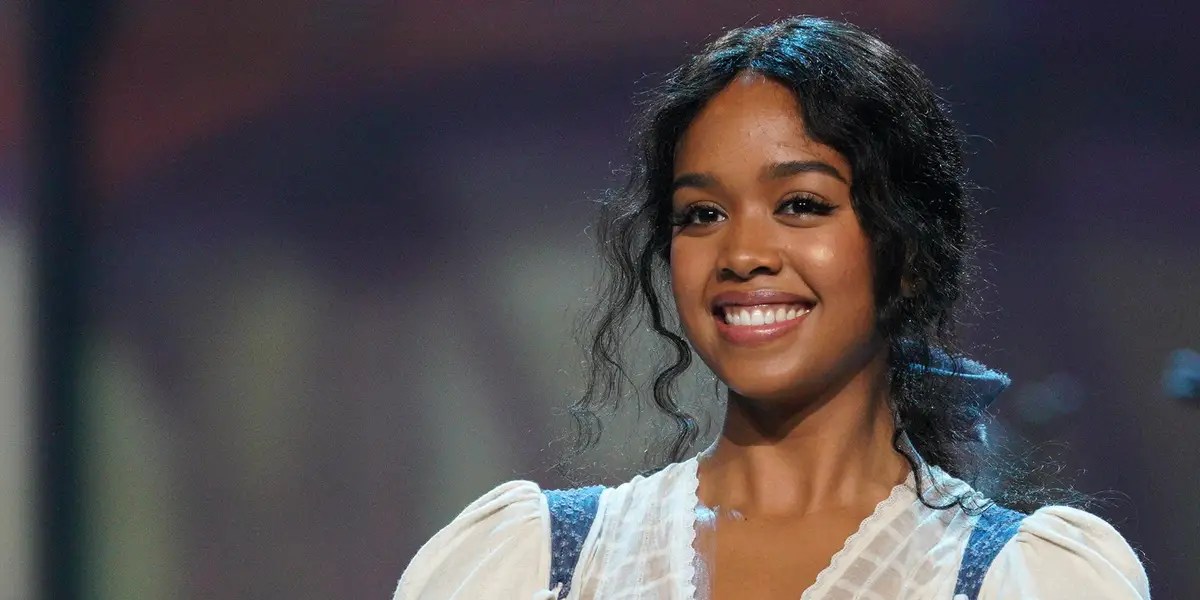
…I can be as shallow as any other male-type human being. While looking for something else (as usual) I ran across the trailer for the new Color Purple, based on the Broadway play that’s based on the 1985 film that’s based on Alice Walker’s 1982 novel. Dancing and singing? YES. How’d it do on the Tomatometer? 88%. Outstanding. Who’s in the cast? This is where I was halted in my tracks. The cast includes Hallee Bailey (left), whom I don’t know, and H.E.R., whom I do (here, she’s Belle in Beauty and the Beast) because I have a crush on her. So I am going to see this movie.
Then, thank goodness, I got my juvenile male plunge arrested by another video, not the trailer for the film, but highlights from the performance on Broadway. Dear Lord (thank you!), what voices! I’ll see the film now as much for the music as for the beautiful young women above, but nothing will ever forgive me for missing Jennifer Hudson on Broadway in The Color Purple.
I guess I need to get back to work on the time machine I’m building in the garage.
…cry. Our friend Sandy got misty at the end of Field of Dreams, and we concur, especially the catch between father and son. My Dad and I used to have catches, too, in the front yard that faced Huasna Road, so that scene set off my personal sprinkler system
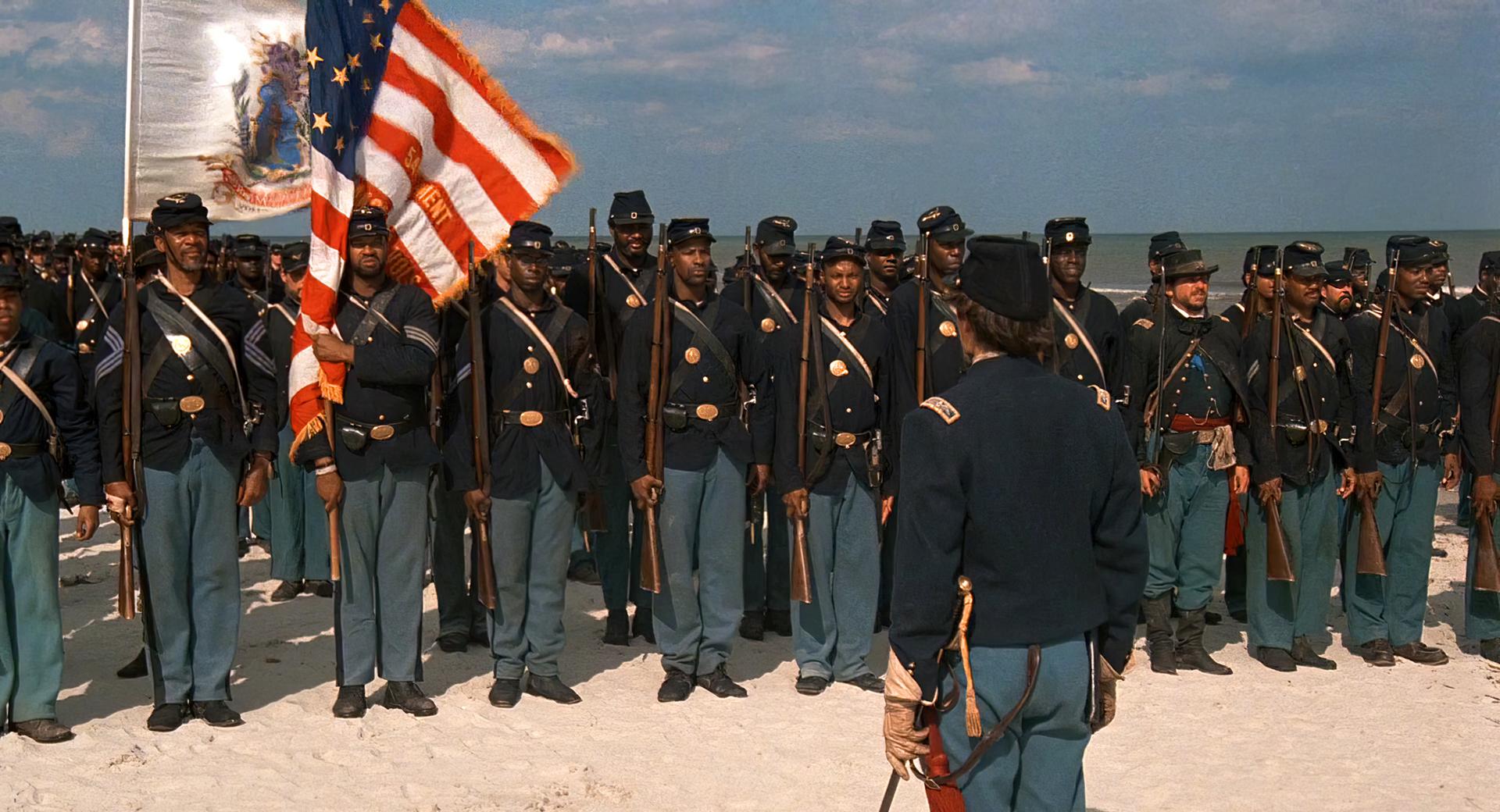
For me Glory also came immediately to mind. Here’s the closing scene, after the failed attack on Fort Wagner:
In Finding Forrester, Sean Connery is a reclusive writer—a J.D. Salinger archetype—who grudgingly takes on a student, Jamal Wallace (Rob Brown). Their relationship becomes a friendship when Forrester appears, to the total shock of all, at Jamal’s university to read a manuscript aloud. Jamal has been ejected from a professor’s class (F. Murray Abraham) for insubordination, a charge that’s been leveled against me more than once. He is awaiting an expulsion hearing.
The scene picks up after Forrester has finished his reading.
Yep. I wept buckets at the closing credits, just after Jamal reads a letter from Forrester, who has died in Scotland.
Yes, I was blind-sided—AND misty-eyed—at The Sixth Sense’s reveal, when Bruce Willis’ character realizes that he’s dead. The way that Shyamalan reveals it stunning. You first clue comes from hearing, not seeing.
One more comes to mind. I lose it when Maximus starts to glide in Gladiator.
I have no idea why all these films just happened to appear in 1999-2000. Was I extra susceptible because of the Millennium’s end? I don’t know.
But here’s one that bucked the trend. Places in the Heart (1984) ends with a communion scene in which characters, both living and dead, have a moment of reconciliation. The film’s so evocative of my father’s childhood in the Depression-era Ozarks, but, like The Sixth Sense, the reappearance of the dead was unexpected. It was also comforting. The reading from Corinthians and the hymn “In the Garden,” which is beautiful, comfort you just as much.
I’d have to say that if a film made you cry or get misty-eyed, Mission Accomplished.









 A Work in Progress