• About
  • The Germans

A Work in Progress

A Work in Progress

Category Archives: American History

The World War I field gun at Camp San Luis

19 Saturday Aug 2023

Posted by ag1970 in American History, Uncategorized

≈ Leave a comment

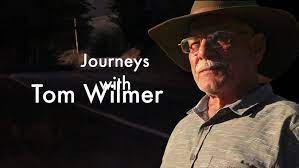
One of my favorite human beings is KCBX’s Tom Wilmer, the host of “Journeys of Discovery.” I did not know he belonged to the California National Guard like my friends Dan Sebby and Erik Brun. I knew Tom was working on restoring a World War I-era French 75mm cannon, but I did NOT know he’d finished it. It is amazing.

The 75 was also the field piece for the AEF, the American army fighting in France. We had no light artillery of our own. We also had no fighter planes, no tanks, no light machine gun, no heavy machine gun and, until we began mass-producing British knockoffs, no helmets.

We just had us, our Smokey Bear campaign hats and the Model 1903 Springfield. That was about it.

My friend Tom has always been an adventurer, an explorer. I am not. I prefer chairs and sofas and recliners. So that’s one reason he’s my hero. I hope it’s okay that I tell this story:

Tom was hiking along Highway 1 as a teen and became desperately sick with the flu. He trudged up a hill–a 1300-foot hill–to the Camaldolese Benedictine hermitage near Big Sur (great fruitcake, and I don’t even LIKE fruitcake) and they took him in, I think for a week, and took care of him until he was better. Good people taking care of a good person.

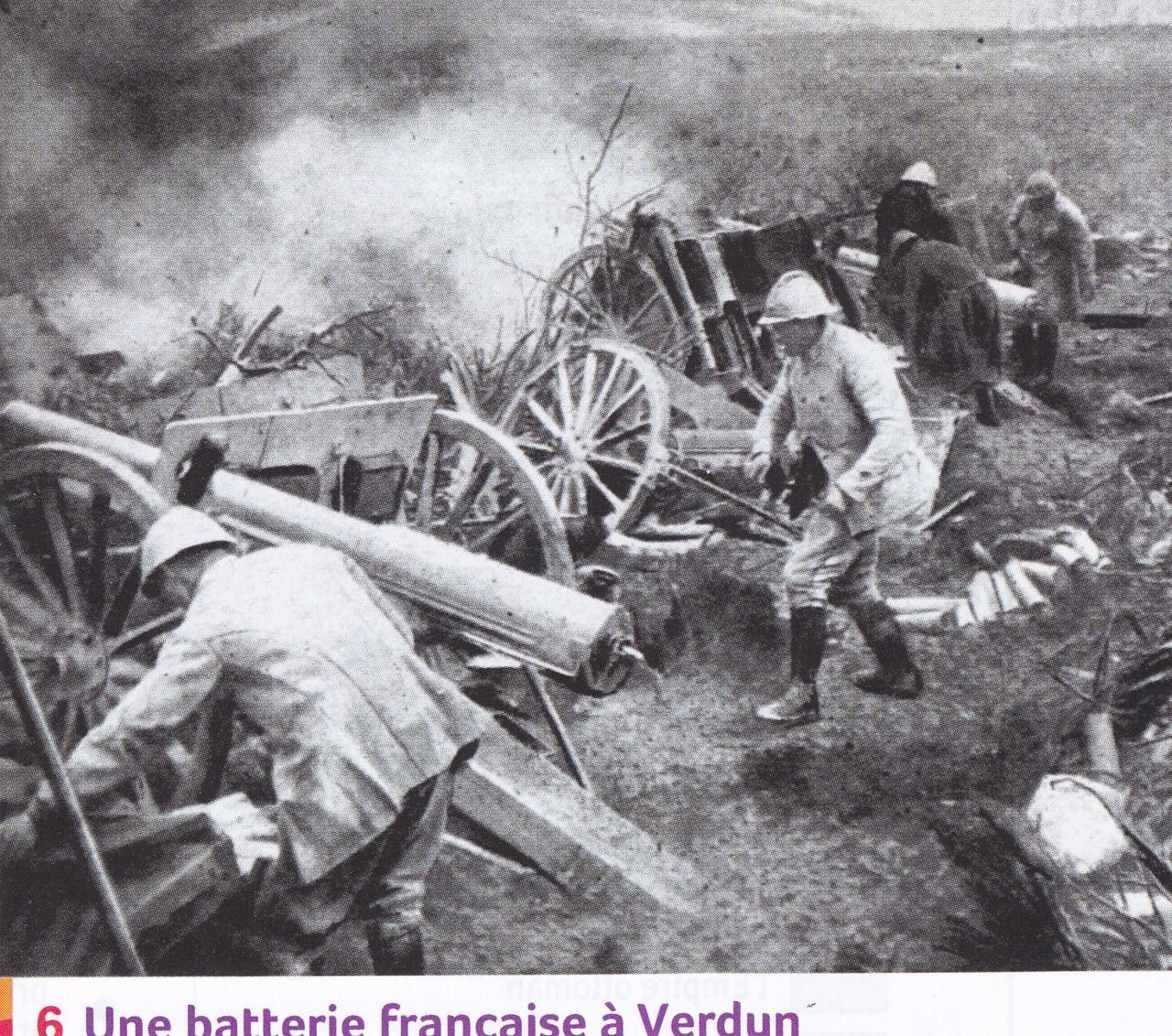
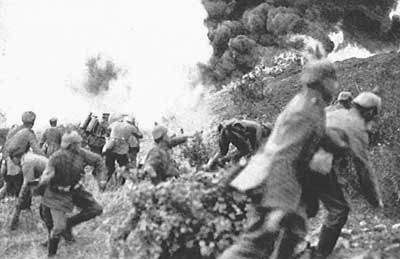
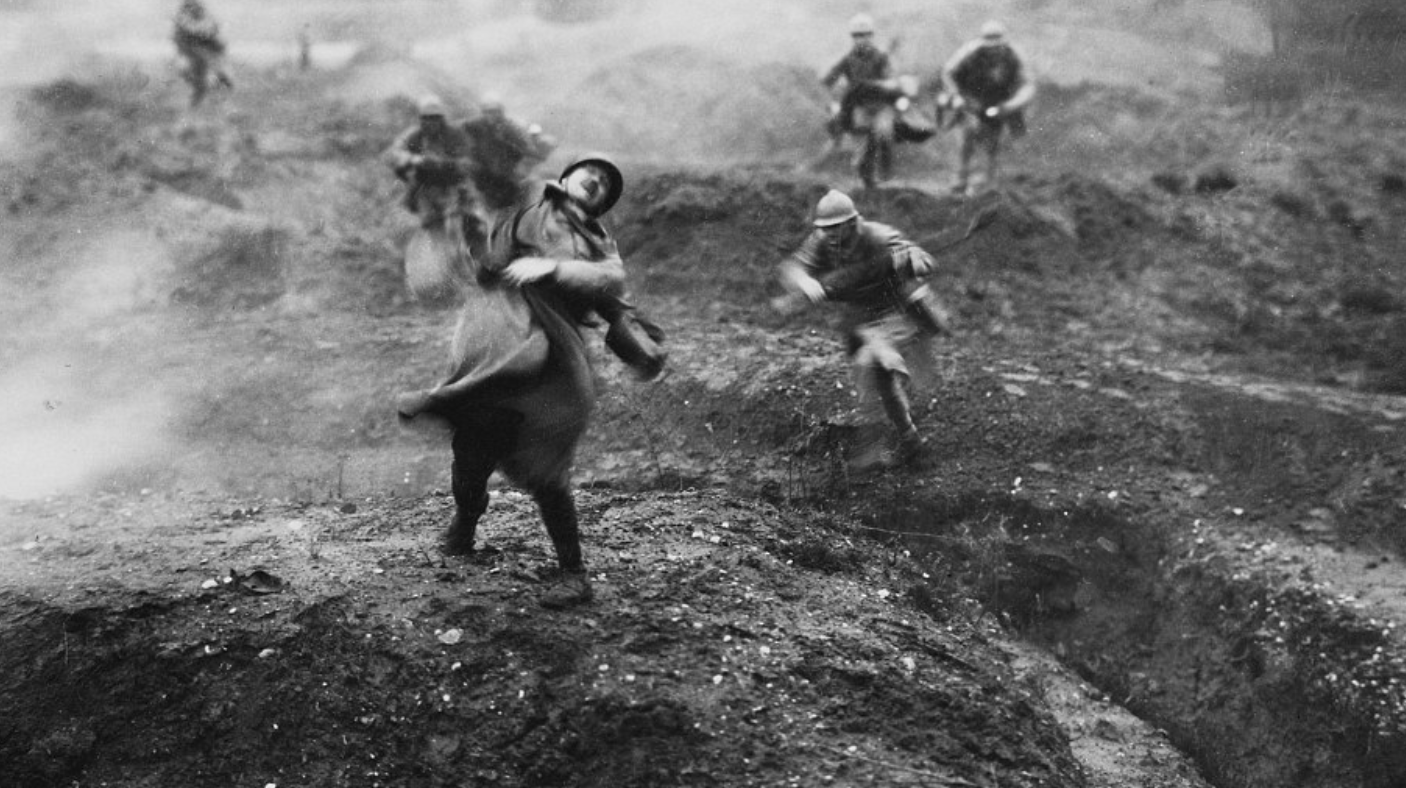
Those are French-manned 75’s, like the one Tom rebuilt, in action at the horrific 1916 Battle of Verdun, which claimed over 305,000 German and French lives (I despise jokes about French “cowardice.” Go to Verdun.) and wounded another 400,000.

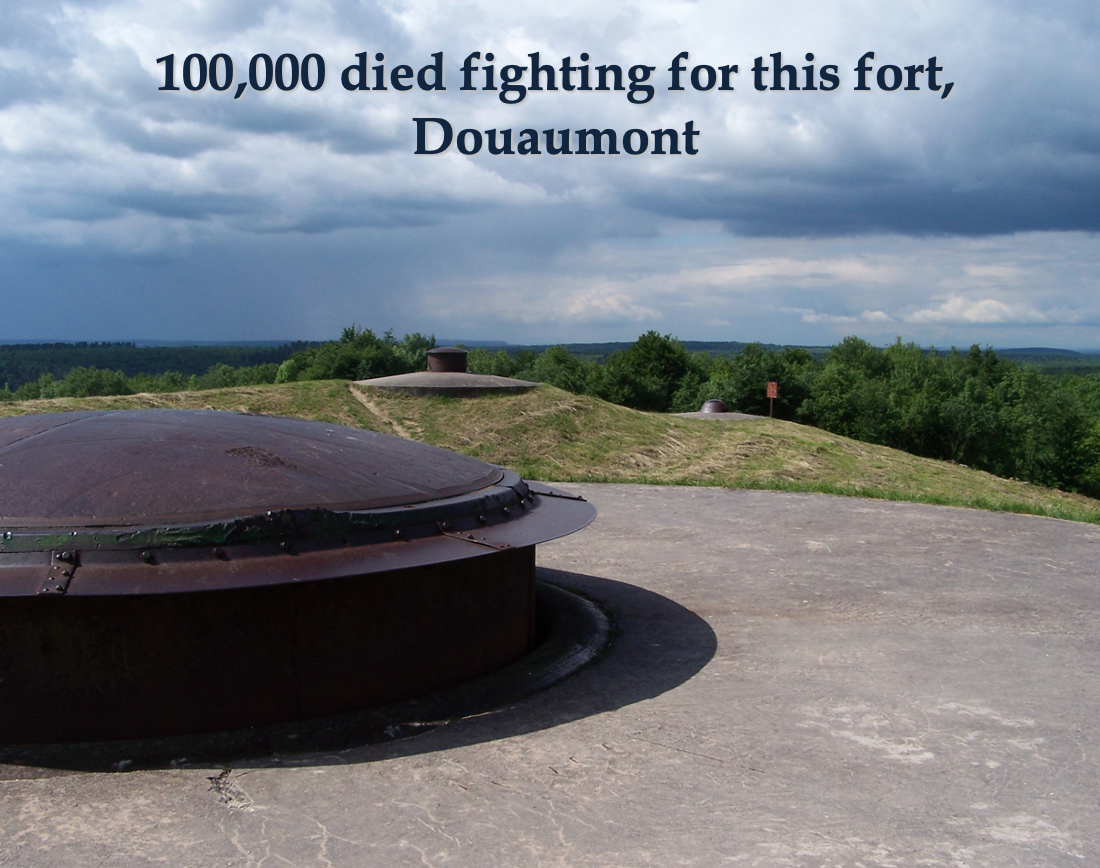
“100,000 died” struggling for Fort Douaumont; those are our kids. When it was the Germans’ turn to occupy the fort, the Bavarians, because they are civilized, decided to brew coffee inside. There was no fuel to start a fire to brew the coffee. One of the Bavarians, suddenly inspired, emptied out a hand grenade’s charge and make a little mountain of the contents to start the fire.

When the explosion came, the Bavarians were blinded and burned black. Their comrades shot them down, thinking they were French colonials, Senegalese, who terrified the Germans.
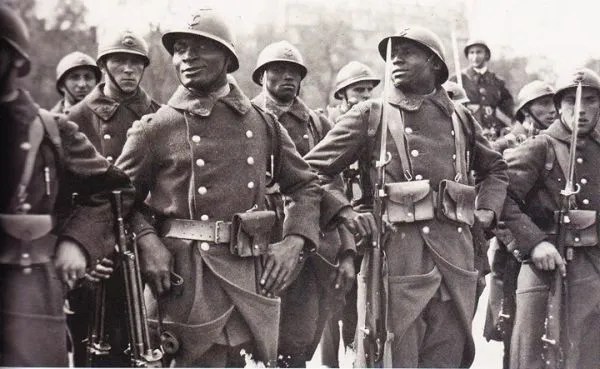
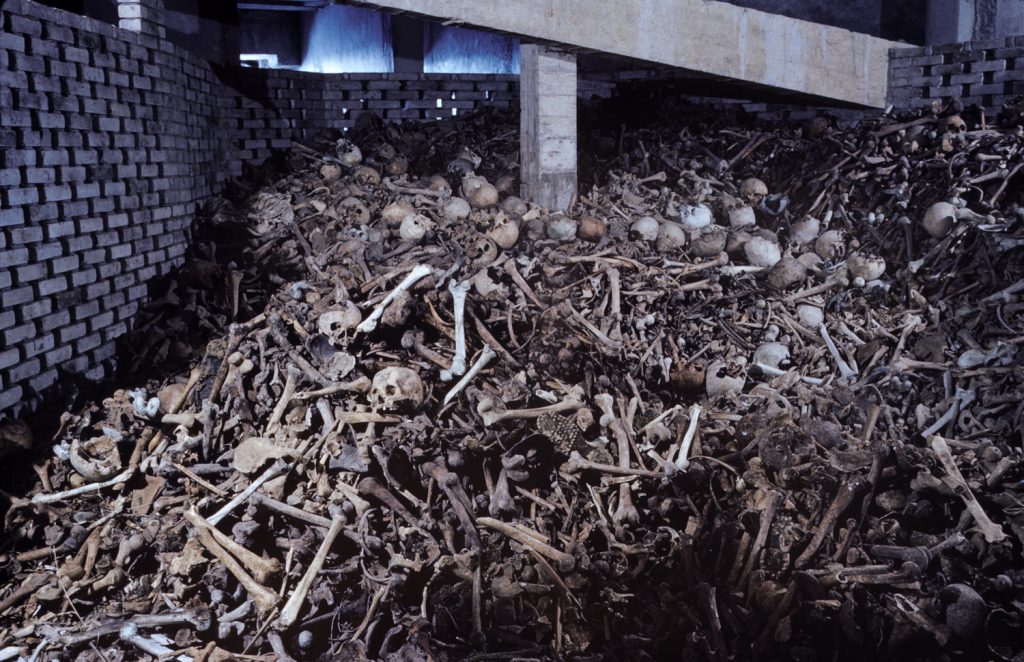
There’s a French 75 just outside the main museum. The nearby ossuary contains the bones of thousands of soldiers from both sides who will never be known. You can see them in their stacks just beneath plexiglas panels in the floor.

All of them, of course, had been little boys once whose mothers applauded their first steps, whose fathers rousted them early for morning milking or who went to sleep at night with the dogs they loved tucked tight next to them.

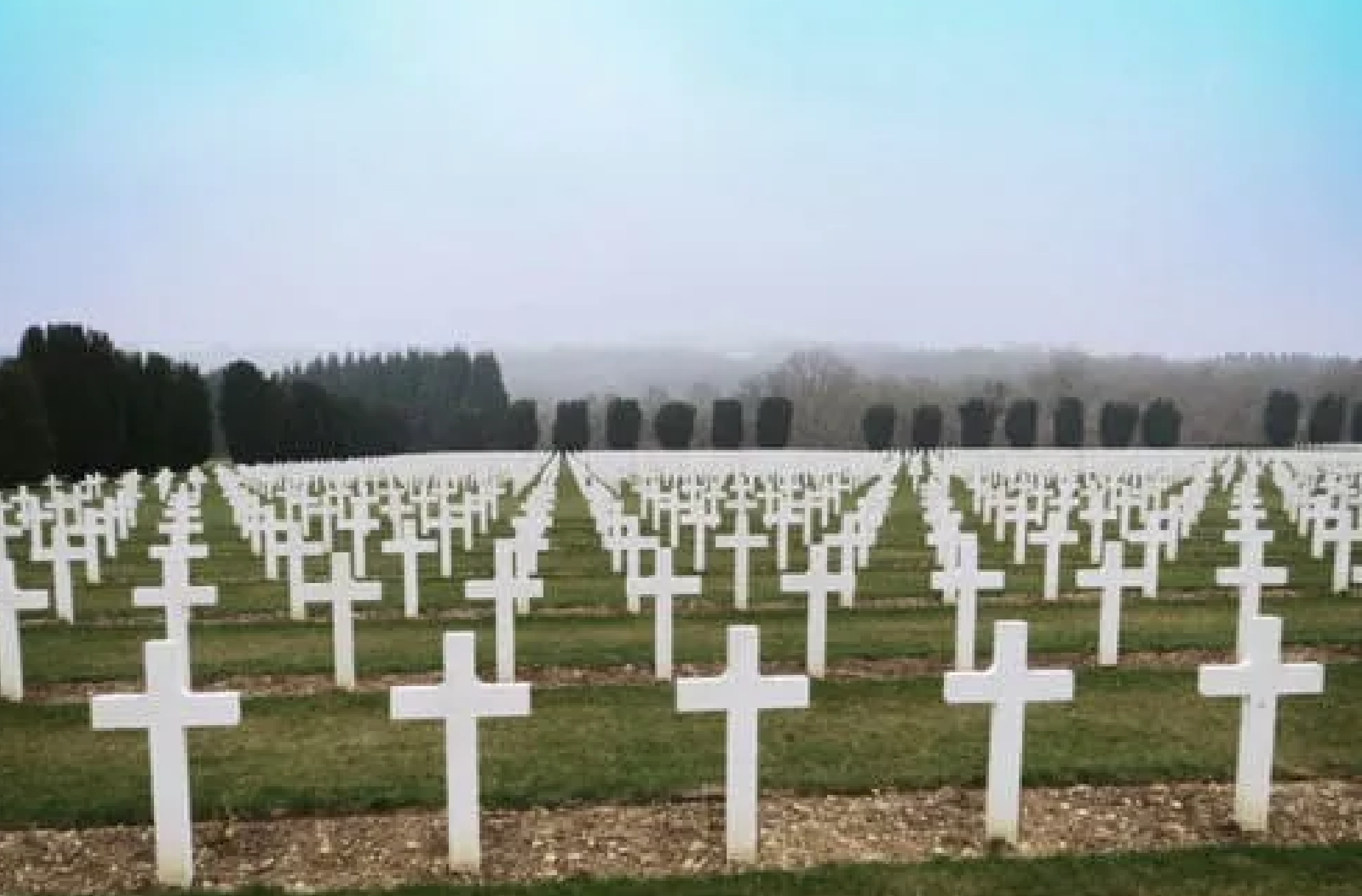
The French cemetery, which of course is vast, features both Christian and Muslim gravestones, many for the Senegalese, the latter facing Mecca. All of them died for France.

I was touring the museum with my teaching partner Amber and our kids when a guide grabbed me gently by the elbow.

“Are these your students?”

My heart sank. We’d been yelled at in Paris by a policewoman who had a shot at becoming an NFL offensive guard.

I nodded.

“They are so RESPECTFUL!”

Might just be the greatest compliment of my life.

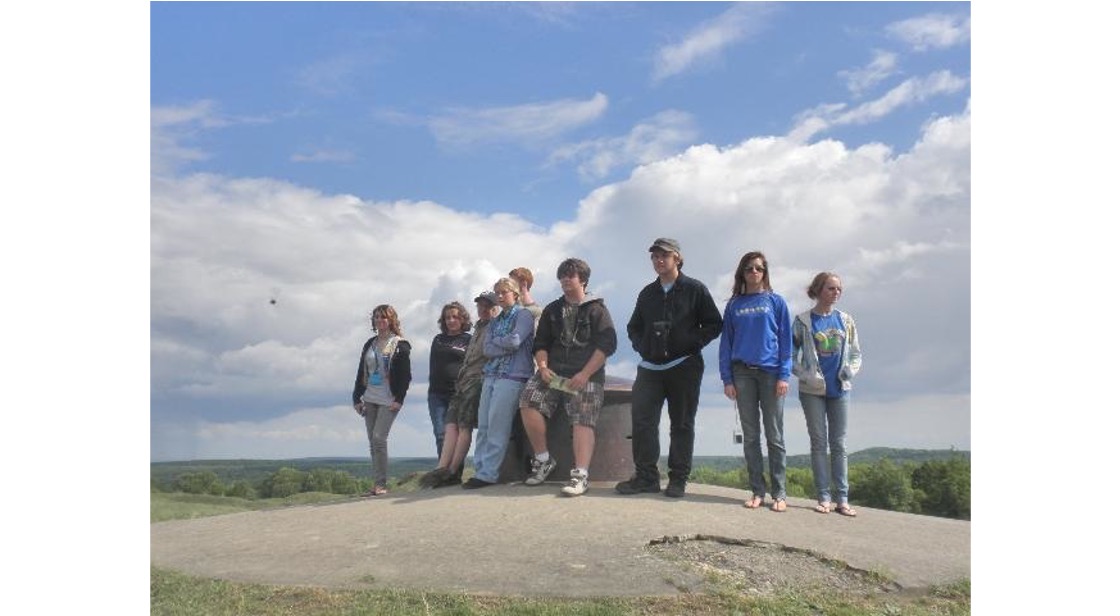
Those are some of our students atop Fort Douaumont at Verdun.

Thank you, Tom and Erik, my artillery guys.
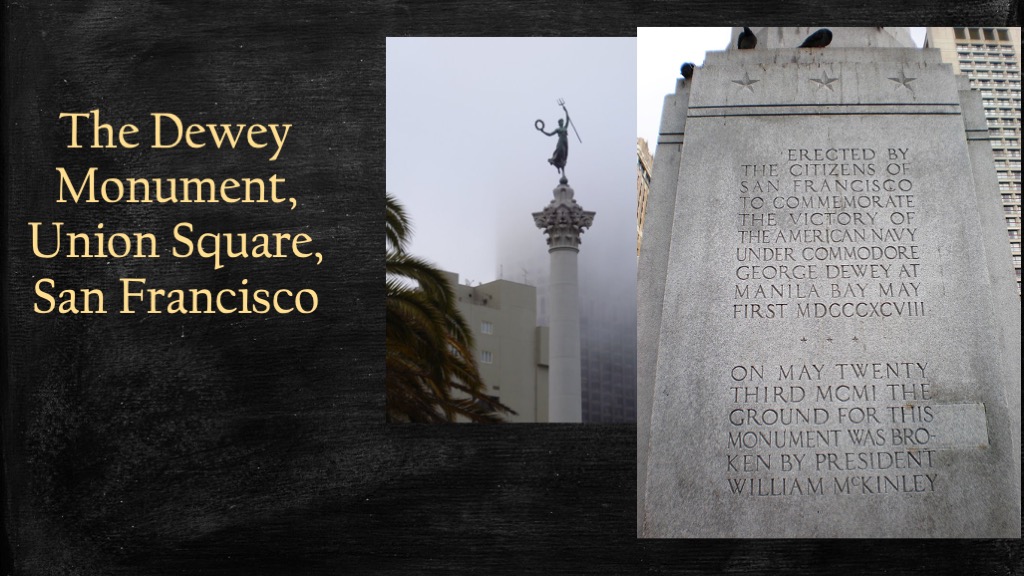
August 6: Reflections on the monument in Union Square

06 Sunday Aug 2023

Posted by ag1970 in American History, Uncategorized

≈ Leave a comment

I did not expect to find a George Dewey monument in Union Square in San Francisco on our recent visit. But it was there. And it was big. The Goddess of Victory, atop her column, appeared to be hailing a cab across the street at the St. Francis Hotel.

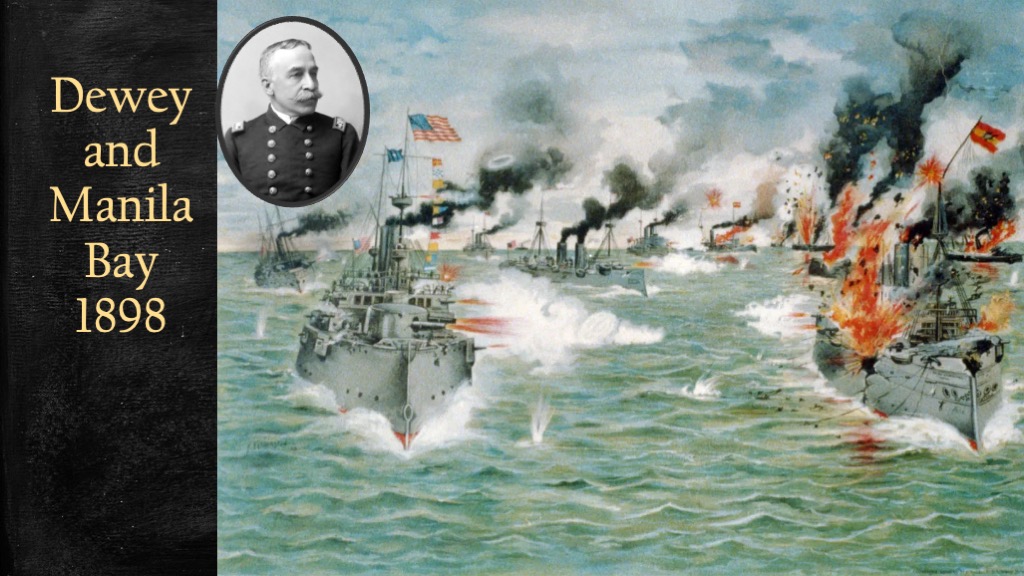
This is why it’s there: In 1898, in the Spanish-American War, Commodore George Dewey led an American fleet into Manila Bay and annihilated the Spanish Asiatic Fleet there. We lost one sailor, felled by sunstroke.

The vicious three-year war that followed, the Philippine Insurrection, tore Americans apart. It claimed 200,000 lives among the people who’d made the mistake of assuming that Dewey and the Americans were their liberators. They would have to liberate themselves, not from the Spanish, but from the Americans.

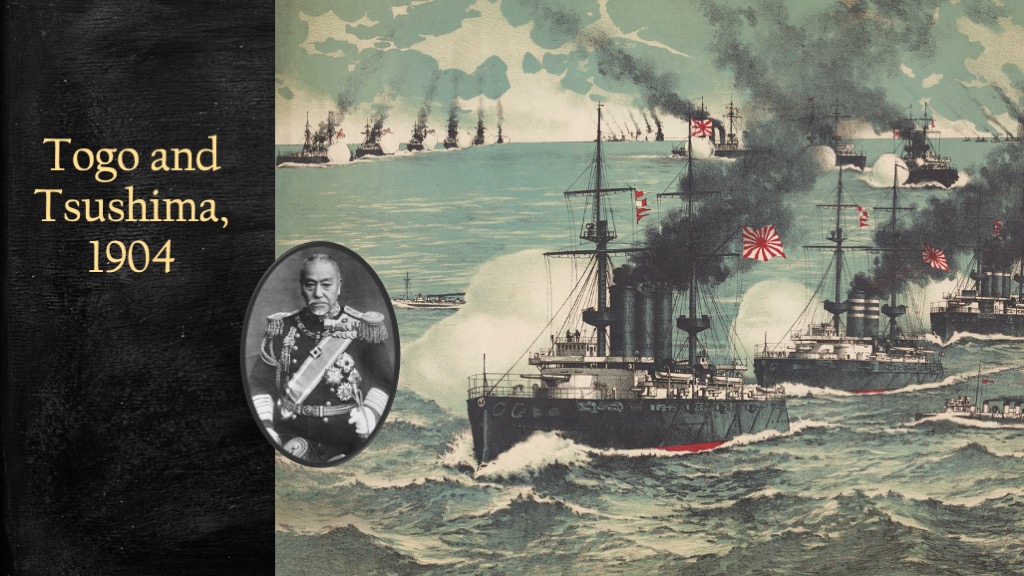
In 1904, Admiral Tōgō Heihachirō took on a Russian fleet in the Tsushima Straits. The Japanese sank 21 Russian ships, including seven battleships, and captured seven more. Togo lost three torpedo boats. Over 5,000 Russian sailors were killed; Togo lost 117.

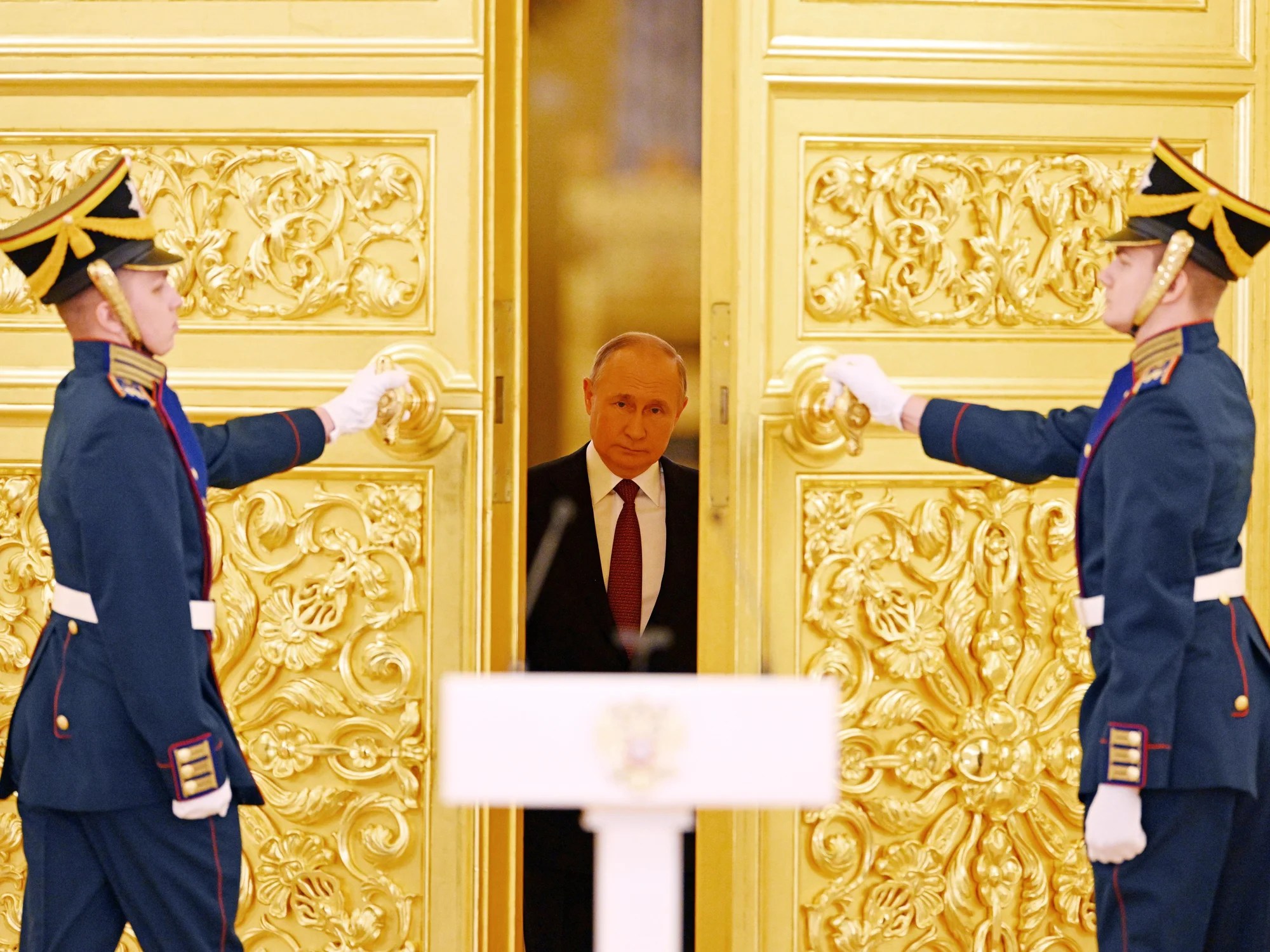
Revolution tore Russia part the next year, 1905. It turned out to be the dress rehearsal for 1917. The little fellow today may be borrowing from the Totalitarian Guidebook to Europe between 1936 and 1939, but’s reaching farther back in history. He wants Tsar Nicholas’s empire back again, so he started with what he thought would be a cheap victory.

Pride is cheap when it comes from cheap victories. Battles like these, when confined safely to history texts, can seem comic, but more than a century ago, two new world powers, competing for power in the Western Pacific, would inevitably meet each other in unimaginable tragedy.

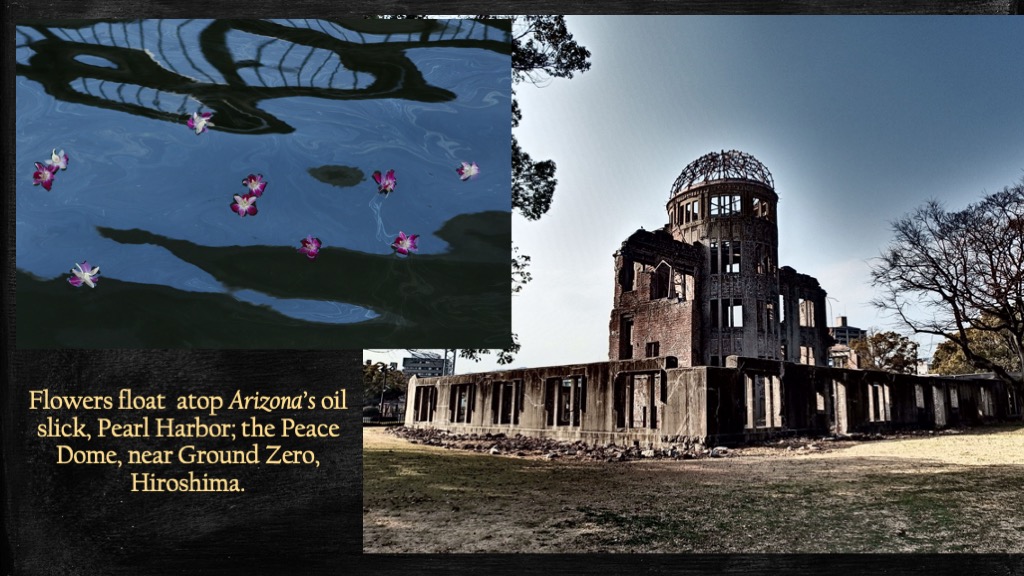
So, in a way, the roots for the war that ended in Hiroshima were planted with the Dewey Monument’s cornerstone in San Francisco. The keel for Sōryū, one of the fleet carriers that launched its planes at Pearl Harbor, was laid down in November 1934. In Hiroshima. I am not suggesting an equivalency here.

This is what I am suggesting:

The worth of nineteen-year-old battleship sailors from Oklahoma on December 7 or Hiroshima schoolchildren in their uniforms on August 6 is incalculable. They are precious beyond our understanding.

Ladies and Gentlemen, the Rollin’ Stones

12 Wednesday Jul 2023

Posted by ag1970 in American History, Film and Popular Culture, Uncategorized

≈ Leave a comment

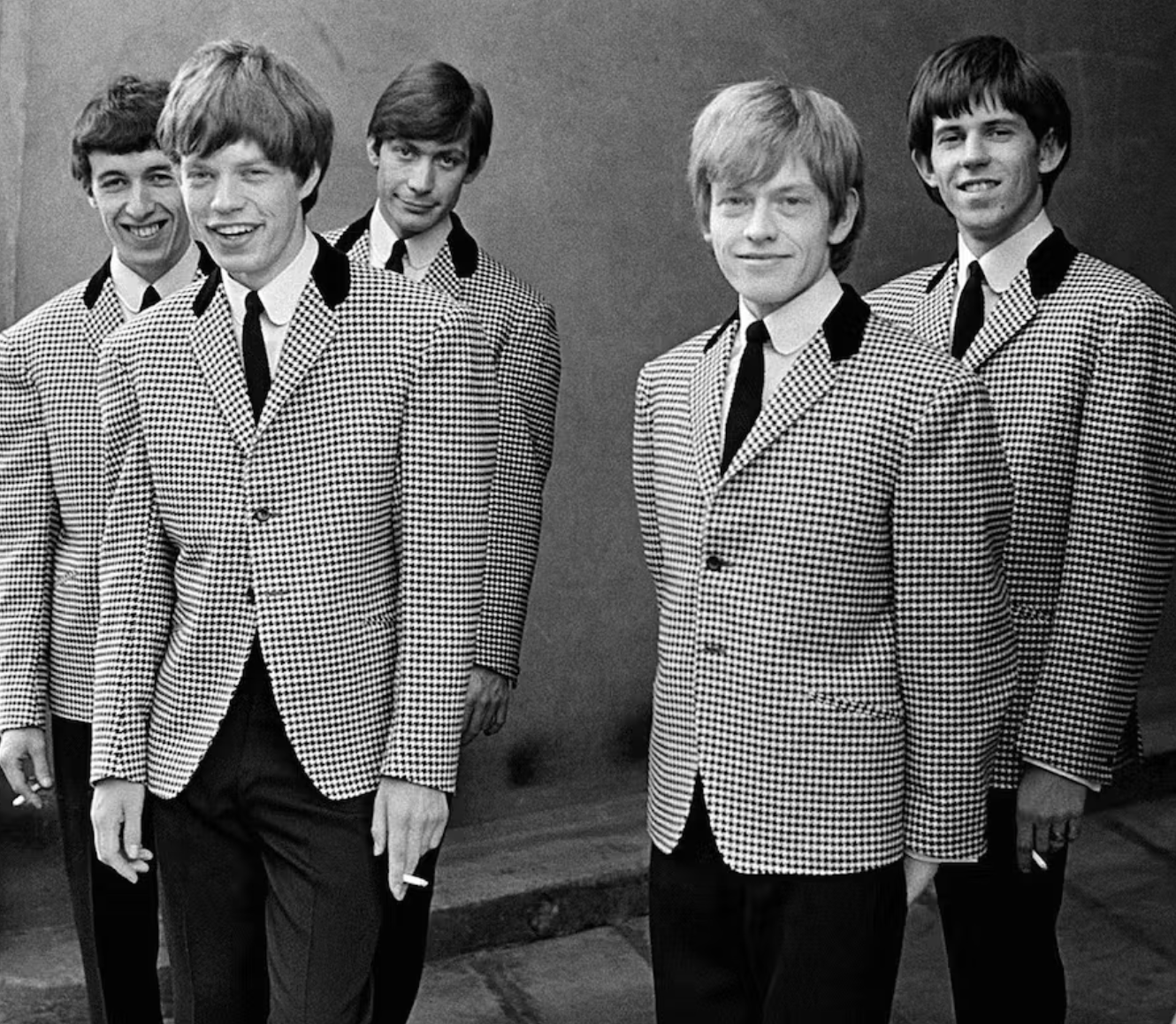
Going for the Beatles look, about 1964. Note the ciggies. The Beatles smoked ’em, too.


On July 12, 1962, the band that then called themselves the Rollin’ Stones made their debut at the Marquee Club in London. The lead singer, of course was a former student at the London School of Economics, so Jagger had it goin’ on.

It would take nearly three years for their first big American hit and, no, it wasn’t “Satisfaction,” not really one of my favorite Stones songs. It was this one, as performed in Dublin:

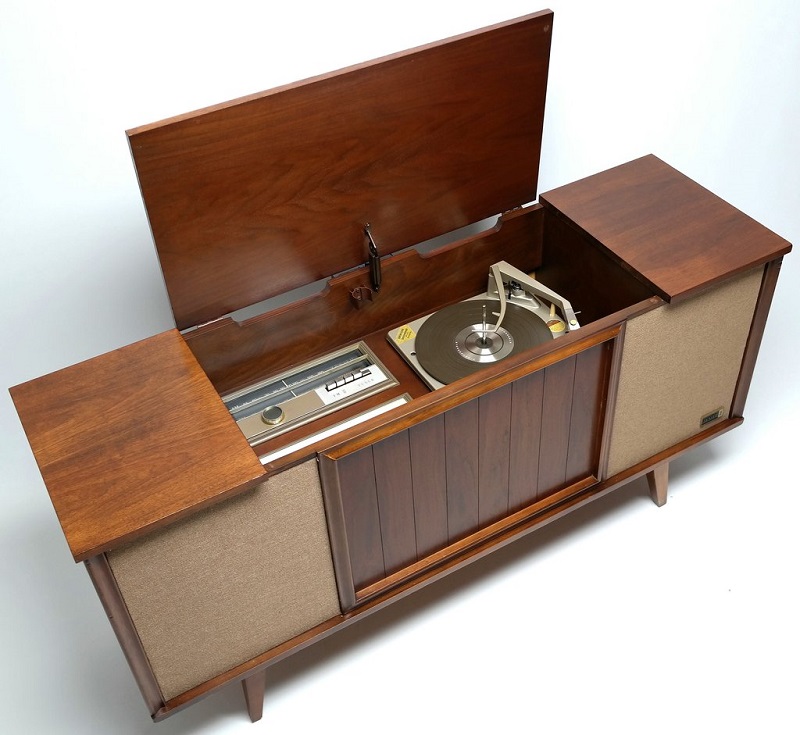
In 1965, we had a Zenith Stereo that looked like this. It had played cutting-edge albums by Frank Sinatra and Herb Alpert and the Tijuana Brass, but then it met the Stones and, I think, it began to sway a little bit.


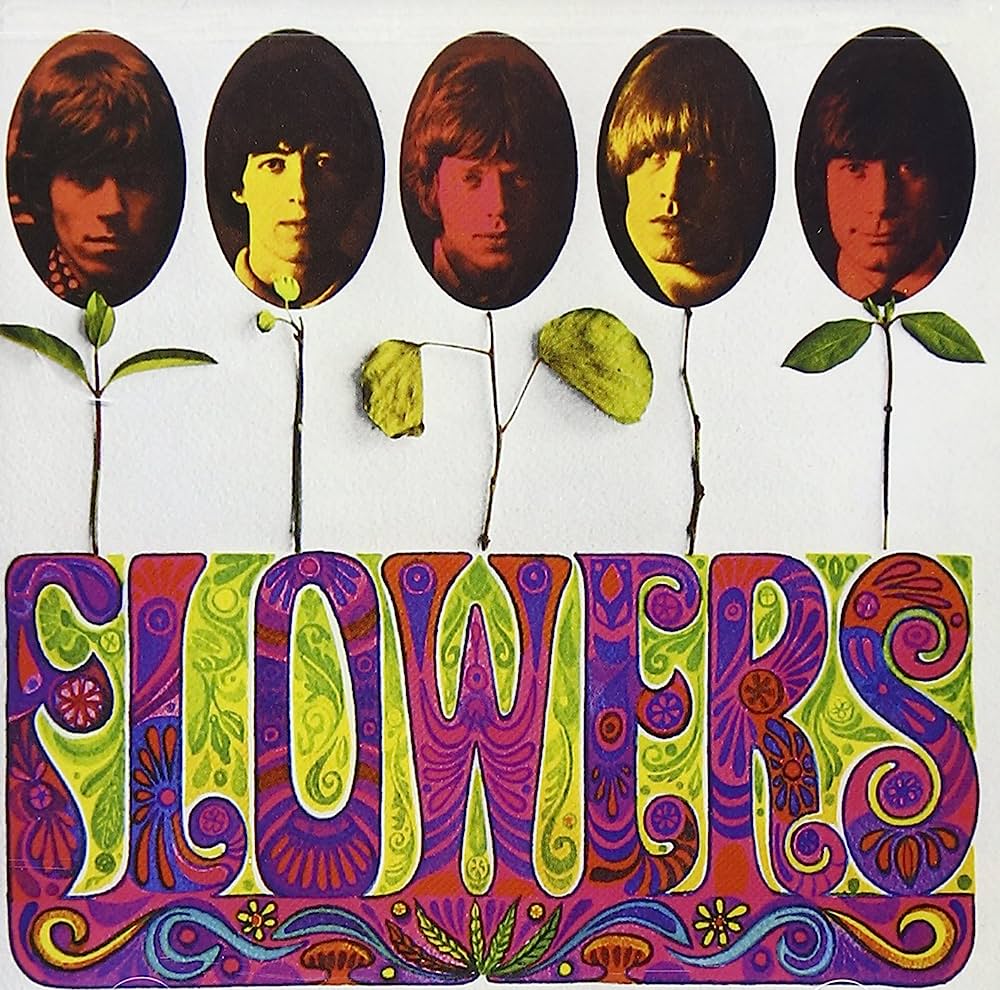
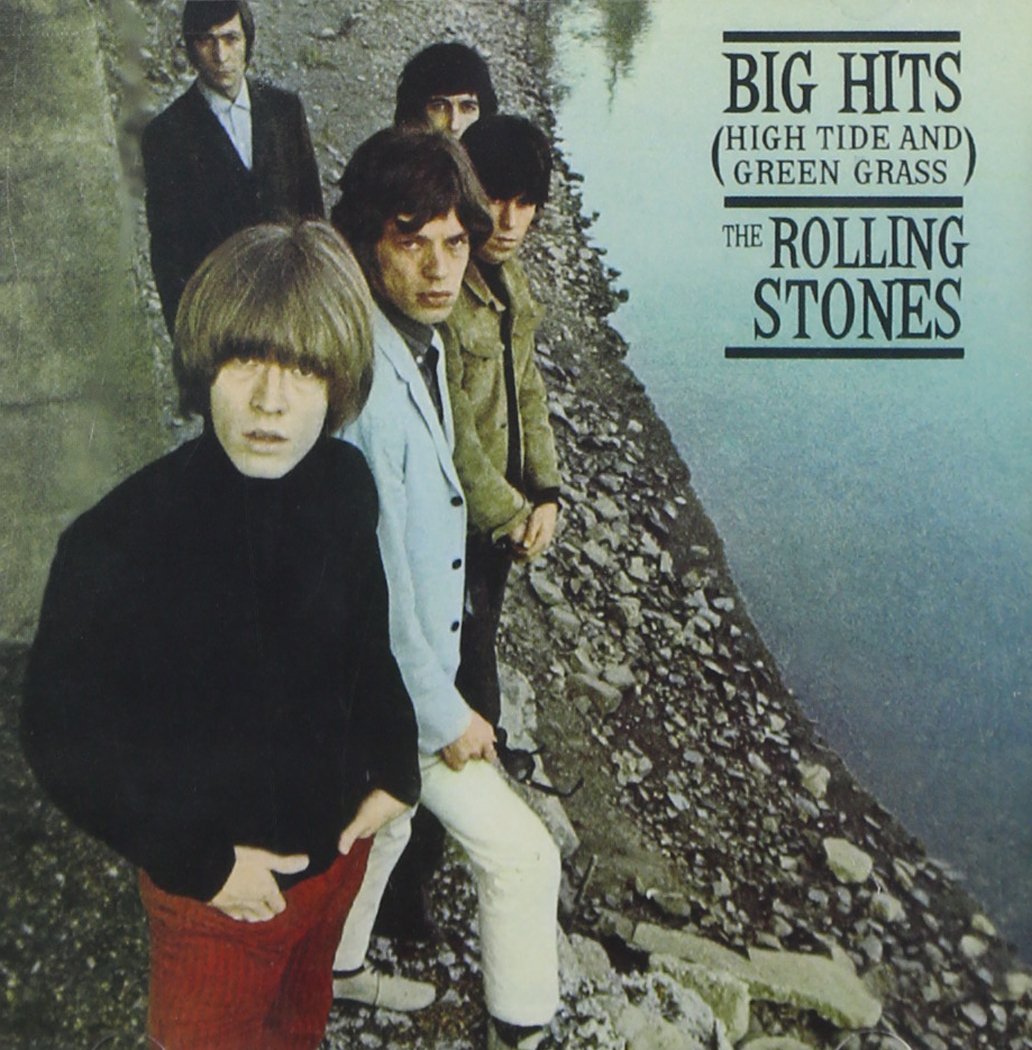
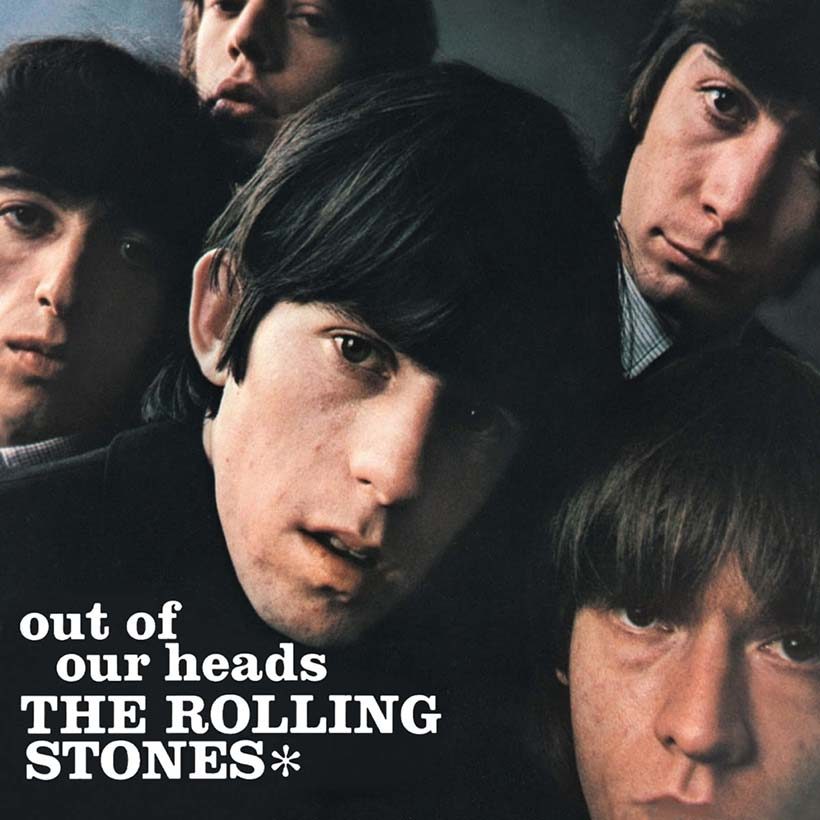
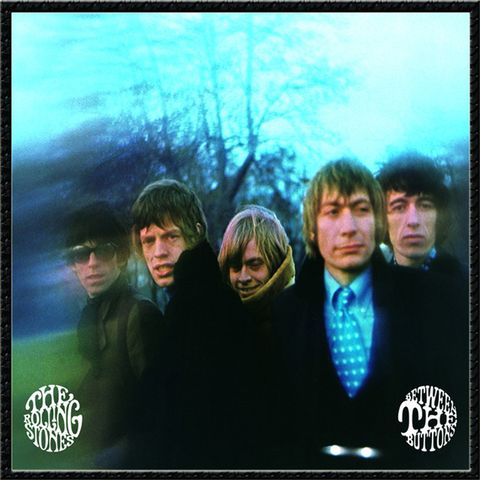
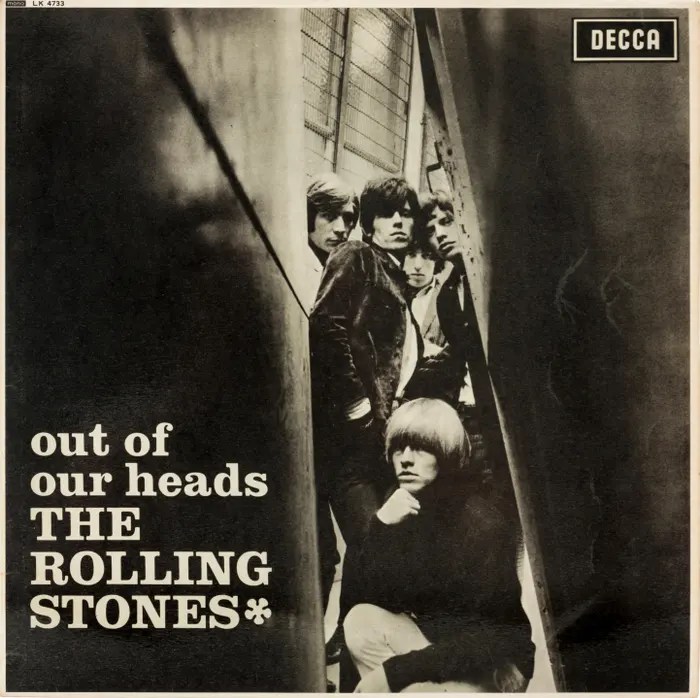
That’s because I would sneak into my big brother Bruce’s bedroom and borrow one of his Stones albums. Everybody loved the Beatles, of course, but to love the Stones, you had to be a kind of breed apart, open to darkness, I guess. Bruce was, which is one of the many reasons why he is cool. Here are some of the albums I remember, in no particular order:


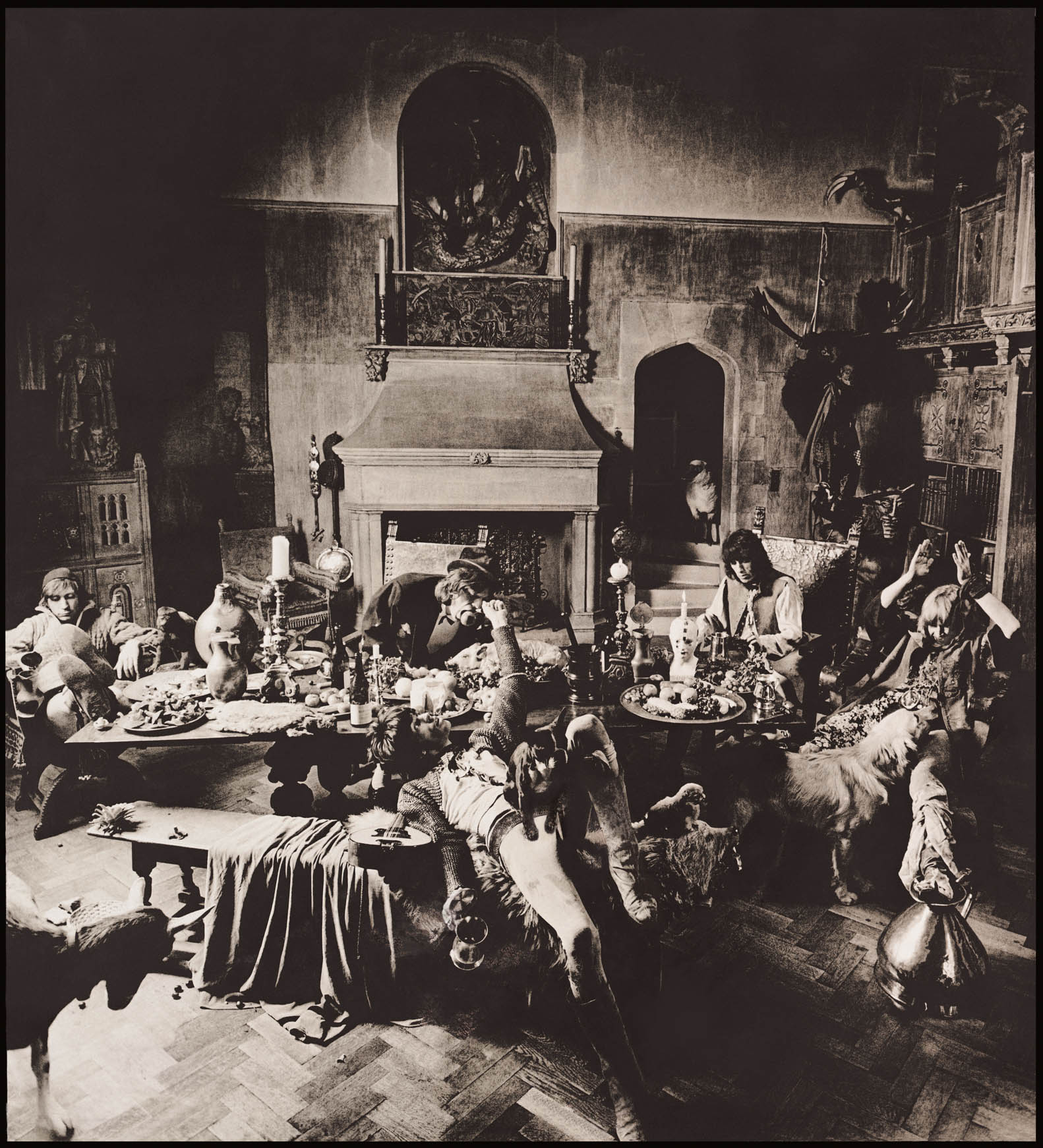
Beggars’ Banquet was my unequivocal favorite. I would, of course, add Stones albums to my own collection later (Sticky Fingers, Let It Bleed, Exile on Main Street, Goat’s Head Soup) The by-now-Rolling Stones got goofy, put on Thomas Hardy (Far from the Madding Crowd, Tess) farm laborer hats, and performed. You can see Billy Preston, Marianne Faithfull and the Who’s Keith Moon in the crowd, too, doubtless jolly for many reasons. And Keith Richards leads the song; he had a lovely voice in those days before he became a pirate.


Exile on Main Street is another album I love, and please forgive me for choosing the Tedeschi-Trucks band, performing at Red Rocks with the Wood Brothers, for this cover of my second-favorite Stones song, “Sweet Virginia.” All of it this version is grand, but most of all I love the trombonist.


And what, might you ask, is my favorite Stones song. No contest. The problem is finding the favorite woman counterpart to Jagger. All of them are Xerox copies compared to the original, Merry Clayton, yet I love so many of them—Lady Gaga, Fergie, most of all, Lisa Fischer (incredible), but they won’t let me play her YouTube video because of copyright. So, damn, we’ll just have to settle on Florence Welch. Here is “Gimme Shelter:”

I can’t leave, of course, without including “Satisfaction,” performed here on the Ed Sullivan Show in 1965. The lyrics, of course, are a peevish echo of Allen Ginsberg’s Howl and maybe Anthony Burgesses’s Droogs—his dystopian novel A Clockwork Orange had been published three years before. But I think the opening chords of the song are what make it kind of immortal. They came to Keith Richards—this is a true story—in a dream. He clambered out of bed, turned on his tape recorder, and played them.

Then he went back to sleep. The song, of course, didn’t.


The interior photo from the Beggars Banquet album, by Michael Joseph.
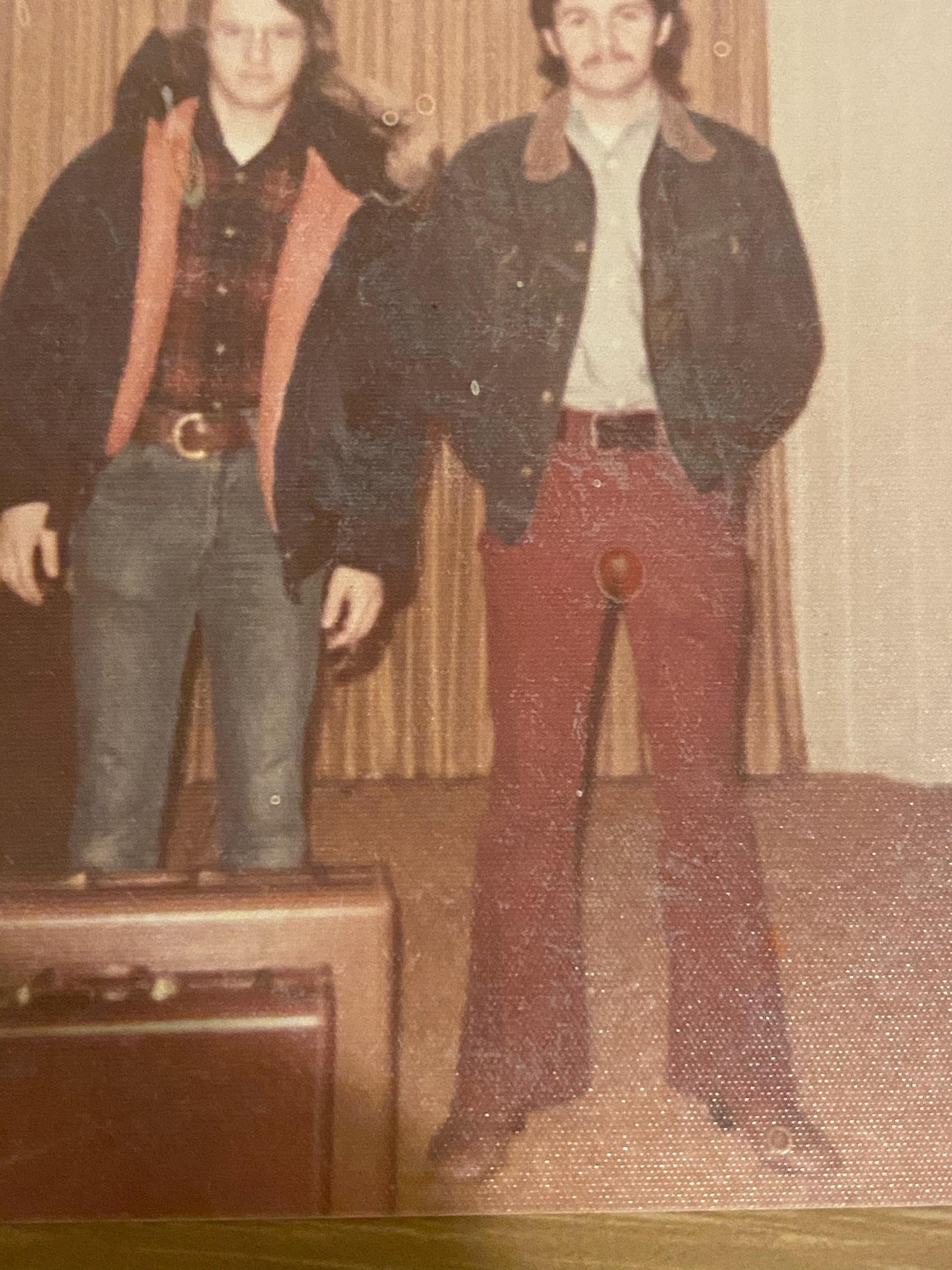
Two potential Stones roadies looking for work, 1972—me and my brother Bruce. Actually, this was taken in Bakersfield.

Barlow’s Knoll, the Upper Arroyo Grande Valley, California

30 Friday Jun 2023

Posted by ag1970 in American History, Arroyo Grande, Uncategorized

≈ Leave a comment


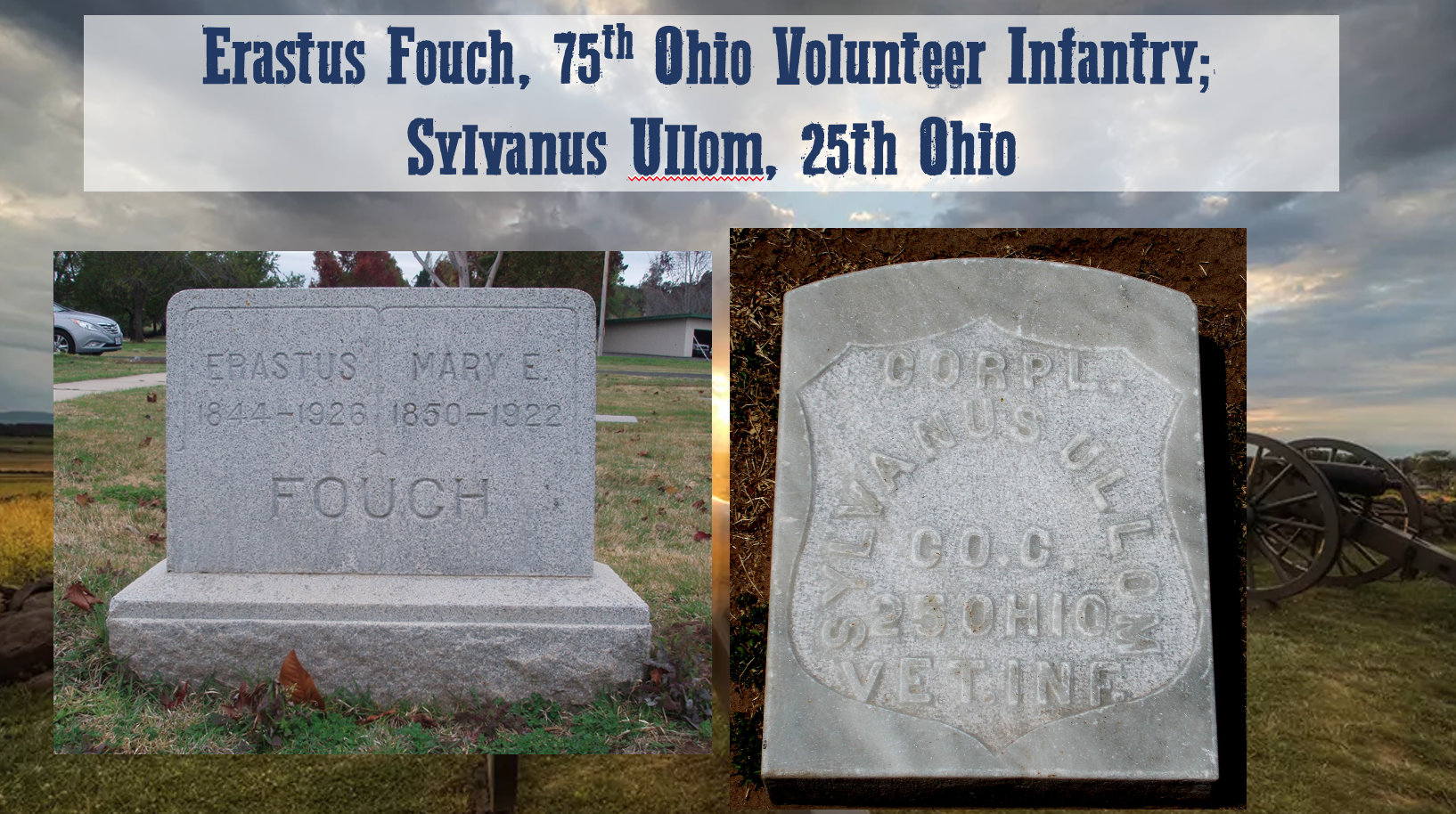
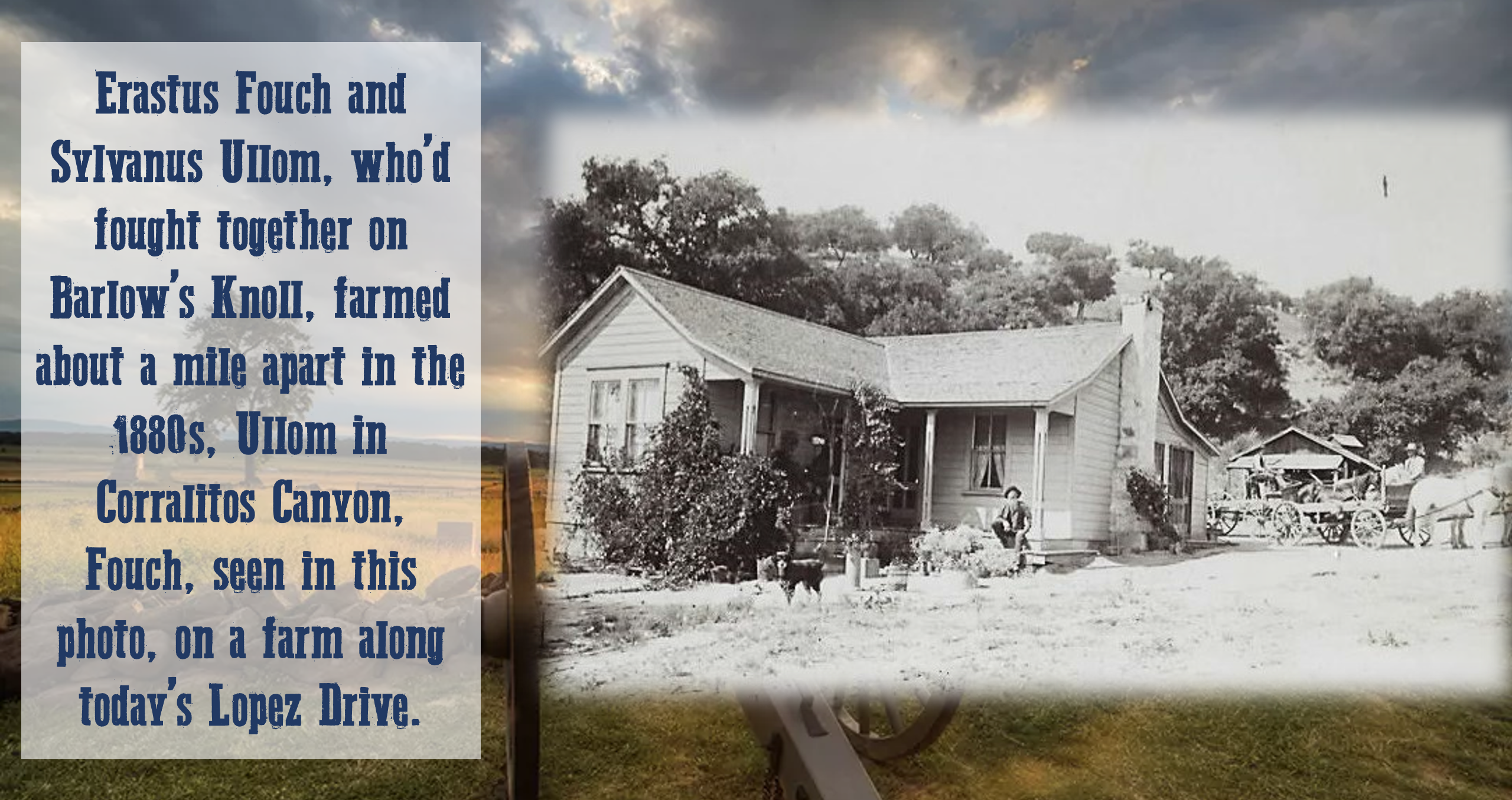
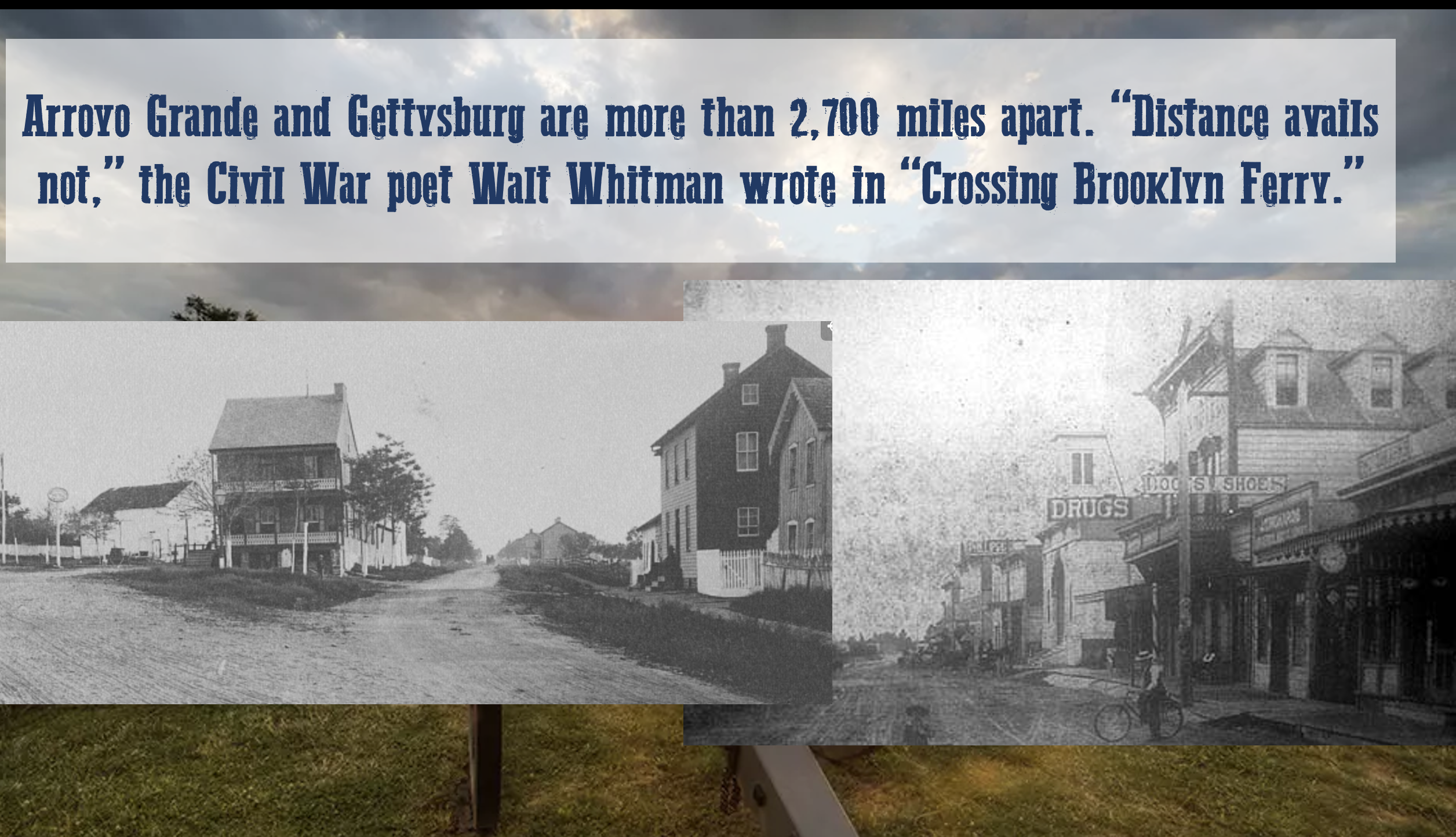
This is the Arroyo Grande Creek alongside the house where I grew up. The creek makes for rich alluvial soil, so many years before my family moved here, two Civil War veterans farmed within a mile of this spot. Both were Ohioans and both had been neighbors twenty years before they came to California in the 1880s.

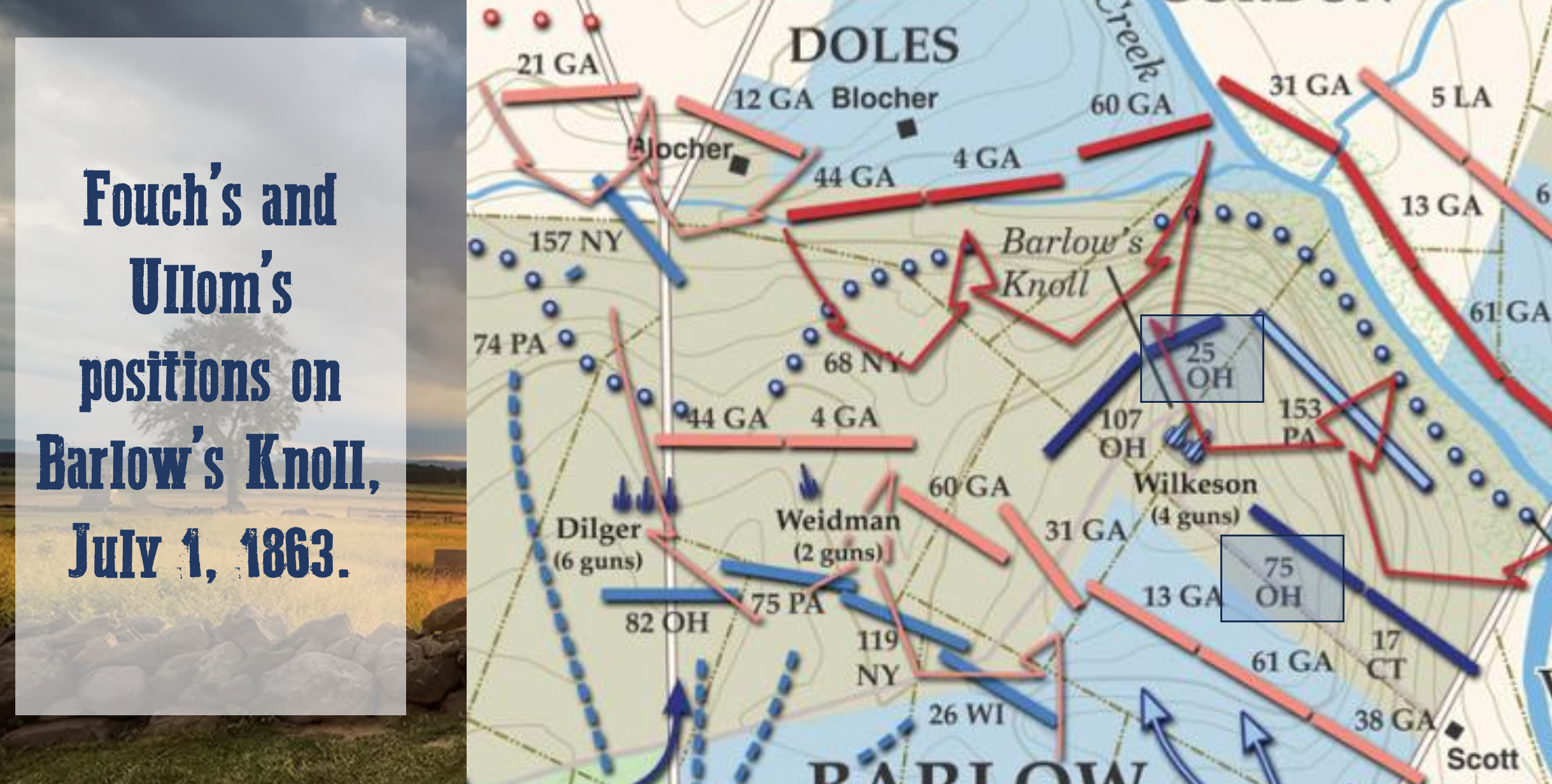
But that day was July 1, 1863, when their regiments took up their positions on Barlow’s Knoll.

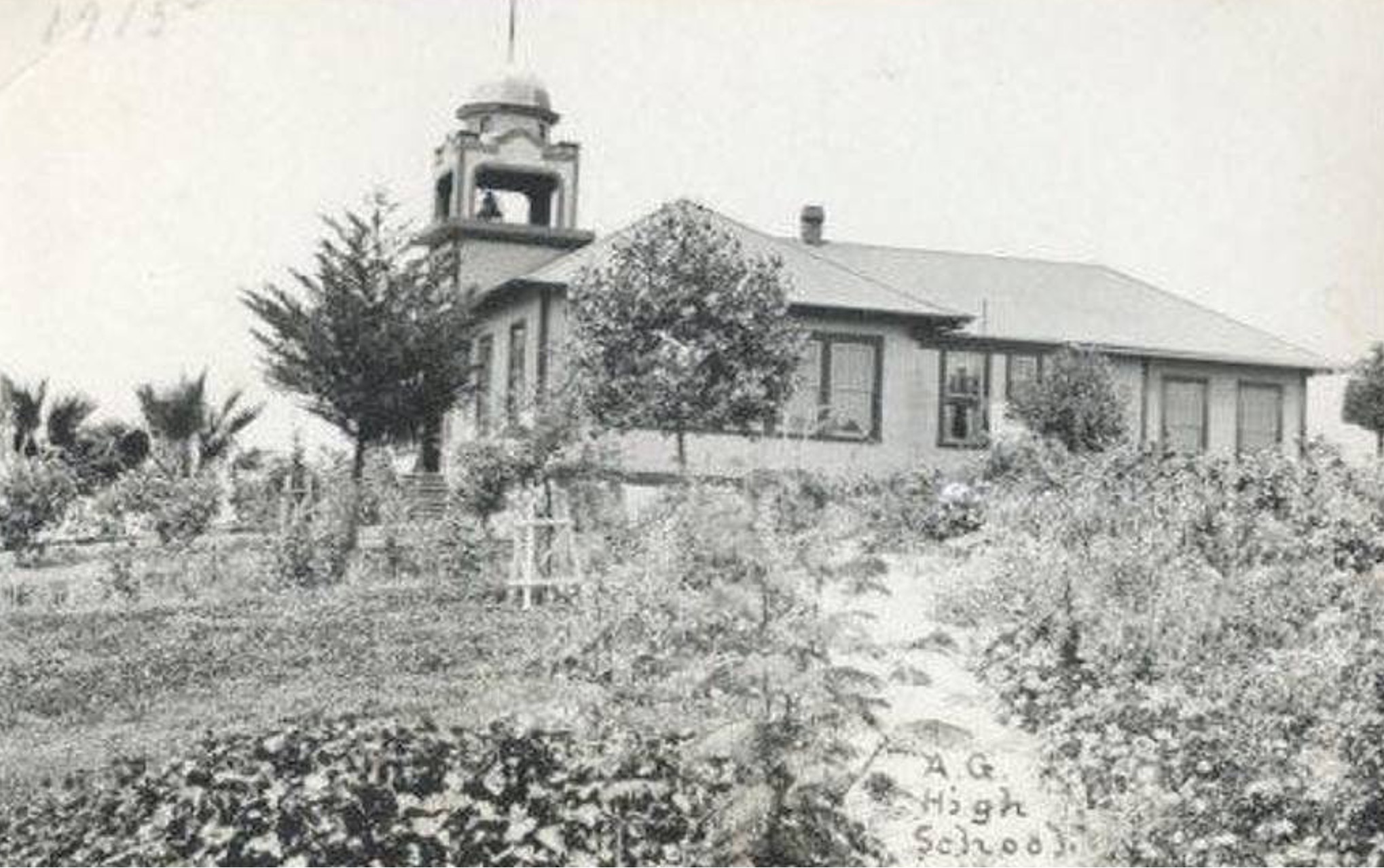
Fouch became a fierce defender of the high school where I would someday be a student and teach history. It was not at first popular with Arroyo Grande taxpayers, but Fouch, a formidable man, saw to it that the high school would not only survive but get its first schoolhouse in 1906.

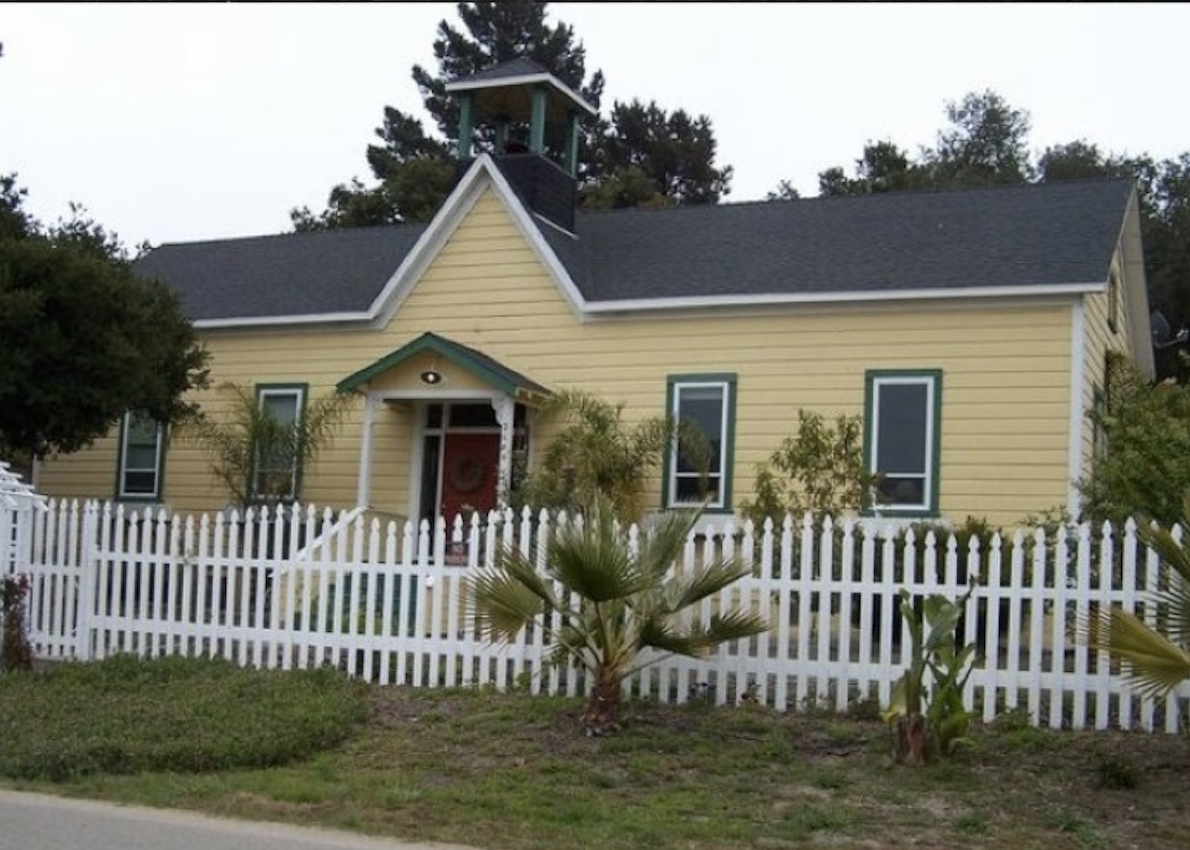
Sylvanus Ullom’s son—later high school graduating classes are populated by plenty of Ulloms–became a house painter who, in 1918, won the contract to paint the 1888 two-room schoolhouse, yellow in this photograph, where my education began.

Their descendants still live in Arroyo Grande today.

For Juneteenth

19 Monday Jun 2023

Posted by ag1970 in American History, Uncategorized

≈ Leave a comment

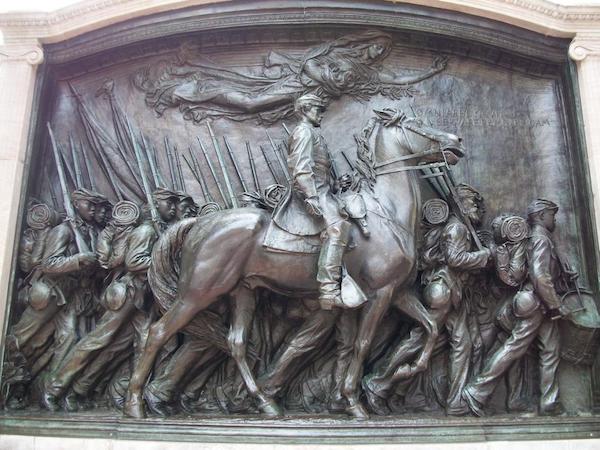
St. Gauden’s releief, Boston, 1897

An excerpt from Robert Lowell’s 1960 poem about his artwork, “For the Union Dead:”

…Parking lots luxuriate like civic
sand piles in the heart of Boston.
A girdle of orange, Puritan-pumpkin-colored girders
braces the tingling Statehouse, shakingBottom of Form

over the excavations, as it faces Colonel Shaw
and his bell-cheeked Negro infantry
on St. Gaudens’ shaking Civil War relief,
propped by a plank splint against the garage’s earthquake.

Two months after marching through Boston,
half the regiment was dead;
at the dedication,
William James could almost hear the bronze Negroes breathe.

The monument sticks like a fishbone
in the city’s throat.
Its colonel is as lean
as a compass needle.

He has an angry wrenlike vigilance,
a greyhound’s gentle tautness;
he seems to wince at pleasure
and suffocate for privacy.

He is out of bounds. He rejoices in man’s lovely,
peculiar power to choose life and die—
when he leads his black soldiers to death,
he cannot bend his back.


The 54th leaves Boston in this scene from the film Glory, which remains, in my mind, the finest Civil War film yet made. Frederick Douglass watches from the reviewing stand and, as fine as the soldiers are, it’s the reaction of the Black Americans in the crowd, and Col. Shaw’s reaction at seeing his family, that move me most:


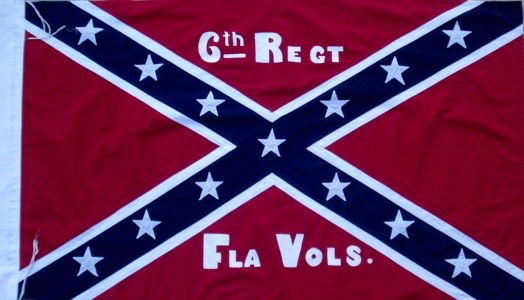
Black troops played roles in the combat careers of two Arroyo Grande settlers. At the December 1864 Battle of Nashville, this old man, Otis Smith, a Huasna Valley farmer, earned the Medal of Honor for seizing the battle flag of the 6th Florida Volunteer Infantry in the Union assault on the Confederate flank atop Shy’s Hill, the high point that guarded the city.

Otis Smith, about 1920, at the Sawtelle Veterans’s Home near the UCLA campus.

Once Smith had carried the Florida regiment’s position, the rest of the Confederate line crumbled. Their commander, John Bell Hood, ruefully said that he’d never seen an army flee in such disorder. This is a replica of the flag that Smith captured—which would have meant fighting or killing five or six men to get to it. The original, with some corners missing—souvenirs for the men of Smith’s 95th Ohio Volunteer Infantry—is on display in the Florida Museum of History today.


This is in no way intended to denigrate Smith’s bravery. He deserves his Medal of Honor. But the story isn’t complete until you know the whole of it, and that involves Black soldiers. Smith’s regiment was able to stampeded the Floridan’s, on John Bell Hood’s extreme left, in part because of what happened earlier in the day. Three regiments of what were then called U.S. colored troops attacked Hood’s center. They were repulsed with heavy casualties; afterward, the Confederate officer in charge of the position praised them for their bravery.

Hood noted that. As a result, he shifted troops away from his flank to his center. That left the depleted 6th Florida, already miserable from soaking overnight rain, unprepared for the ferocity of Otis Smith and his comrades. Black men had made his moment of glory; they may in fact have saved the life that still marks lives in Arroyo Grande today. The Mankins brothers, managers of Brisco Lumber and members of a family long noted for cattle ranching and community service, are descendants of Otis Smith.

The second incident, involving another Huasna Valley farmer, Adam Bair, remains one of the saddest moments of the Civil War. It bears reminding that recent scholarship has revised the casualty count from the traditional statistic of 620,000 dead to 750,000 or more. That is the modern equivalent of eight million Americans lost.

Among them were the soldiers who fought in the Crater in 1864, the victims of racism on the part of their own leader, a hero of Gettysburg, George Gordon Meade.

From an earlier blog post about the Battle of the Crater, witnessed by Adam Bair:


https://jimgregory52.wordpress.com/2021/06/19/they-would-charge-into-the-city-if-the-order-were-given/

June 17, 1933–ninety years ago–The Kansas City Massacre

16 Friday Jun 2023

Posted by ag1970 in American History, Uncategorized

≈ Leave a comment

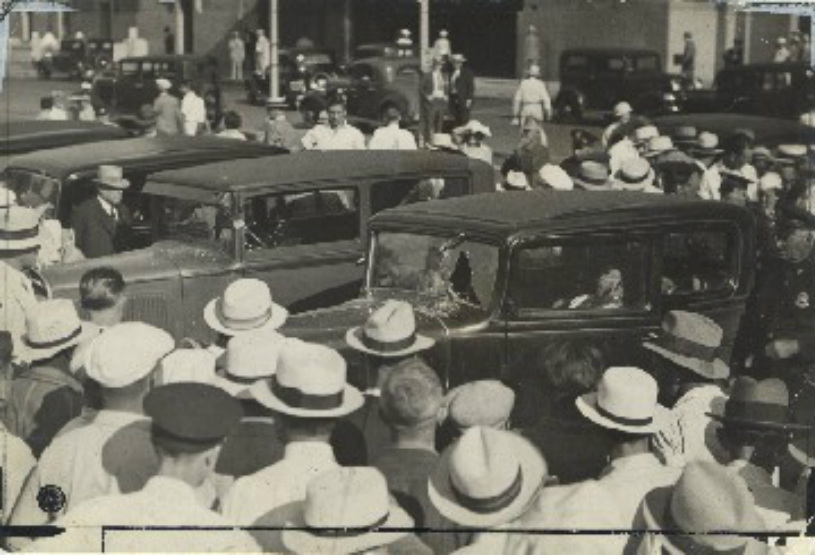
Aftermath.

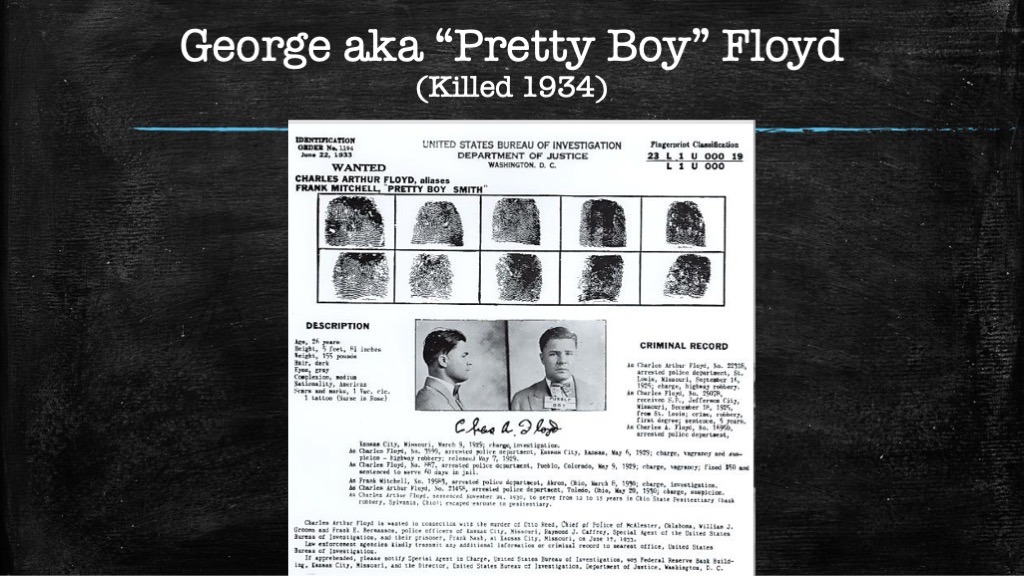
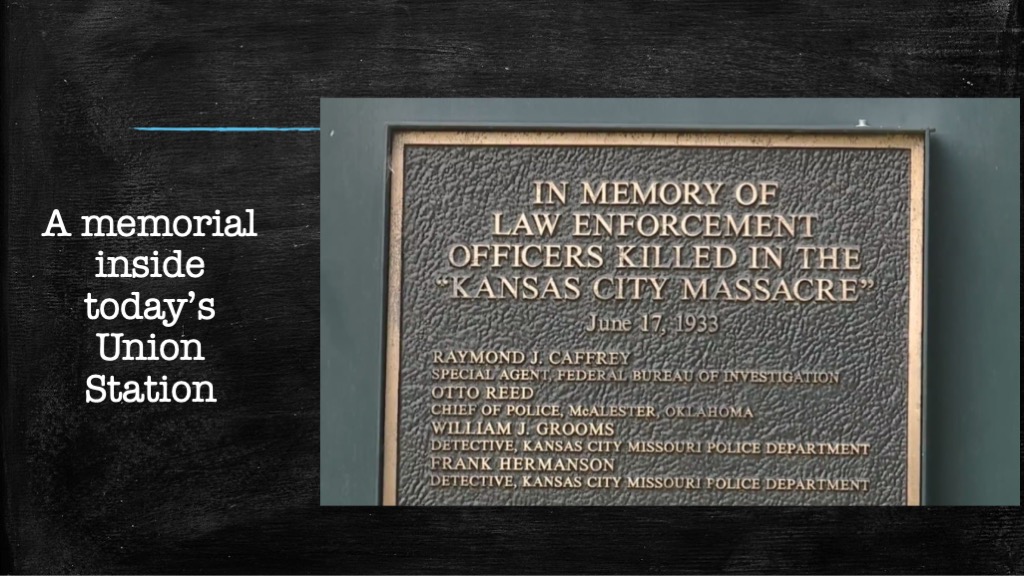
Tomorrow is the 90th Anniversary of the Kansas City Massacre. Police were escorting an associate of Pretty Boy Floyd’s to Leavenworth when they were jumped by gangsters with Thompson submachine guns.

Two police officers, a police chief and an FBI agent were killed. The attempt to free the prisoner, Frank Nash, failed, because the gunmen killed him,t oo.

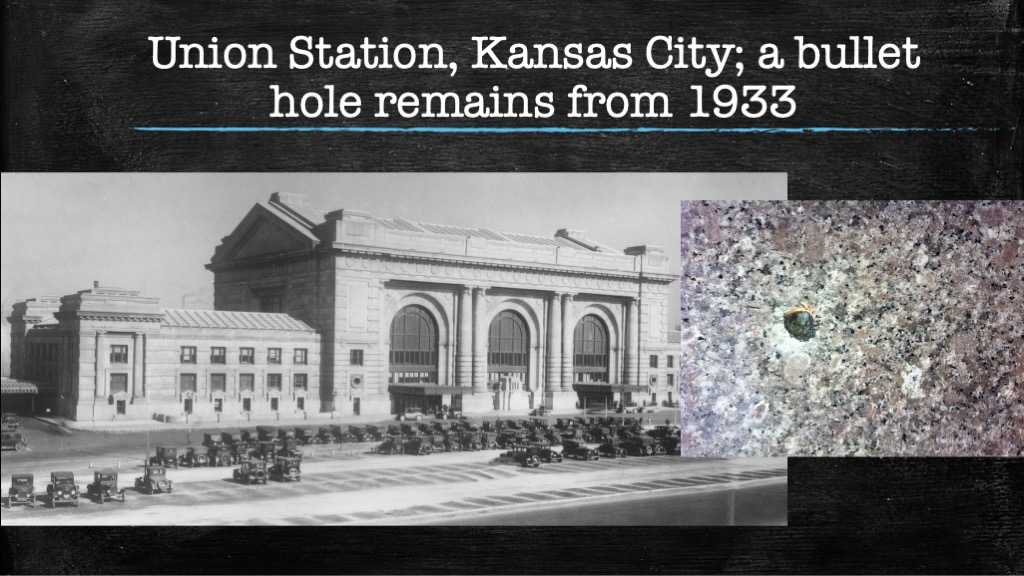
There are still bullet holes from 1933 in the walls of Union Station.

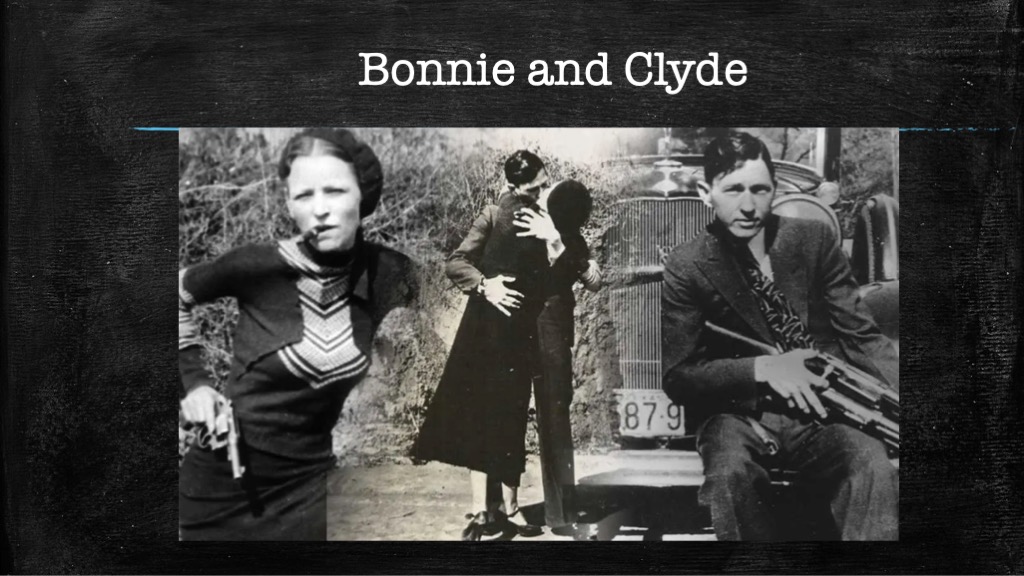
That was a hard year for Missouri. A highway patrolman and the Boone County Sheriff were assassinated, a police chief was kidnaped, an eighteen-year-old Black man was lynched in St. Joseph, and Bonnie and Clyde took up housekeeping in Platte City, about 30 minutes north of Kansas City.

Kansas City is a beautiful town–unexpectedly hilly–but it was wide-open in the 1920s and 1930s, both in good ways (Louis Armstrong played in speakeasies there) and in bad–violence and political corruption.

That’s where my Grandmother Gregory comes in. She was a powerful woman, the Democratic Chair of Texas County, Missouri, and one of the first women delegates to an national political convention, in 1924, for the Democrats in sweltering heat inside Madison Square Garden. It took them 109 ballots to nominate a nonentity, John W. Davis, trounced by Calvin Coolidge that November.

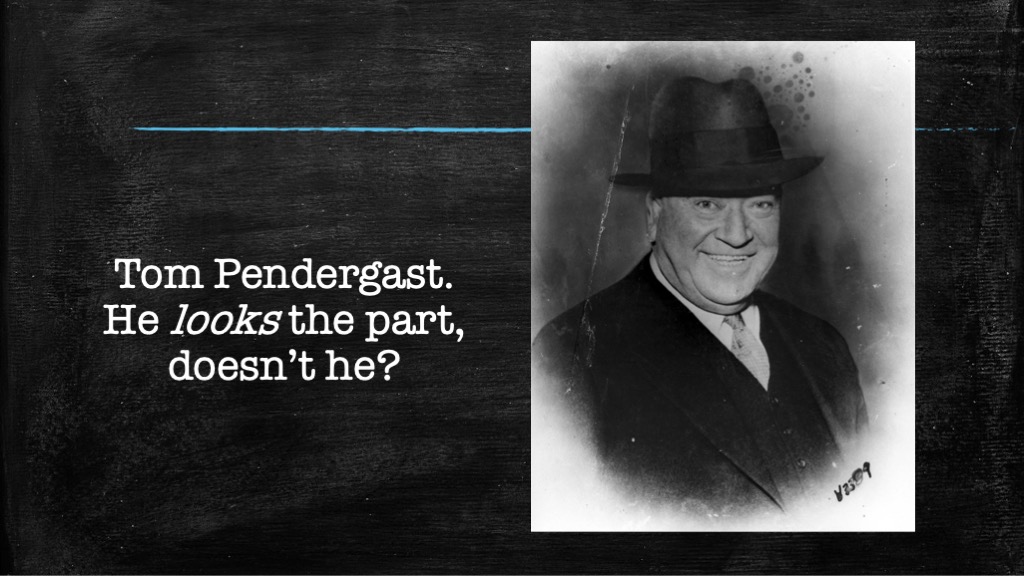
In the 1930s, the political “boss” of Kansas City was a Democrat, Tom Pendergast, whose machine was legendary and who influence extended far beyond the city limits. Nine years ago, I wrote down what my father told me about those times:

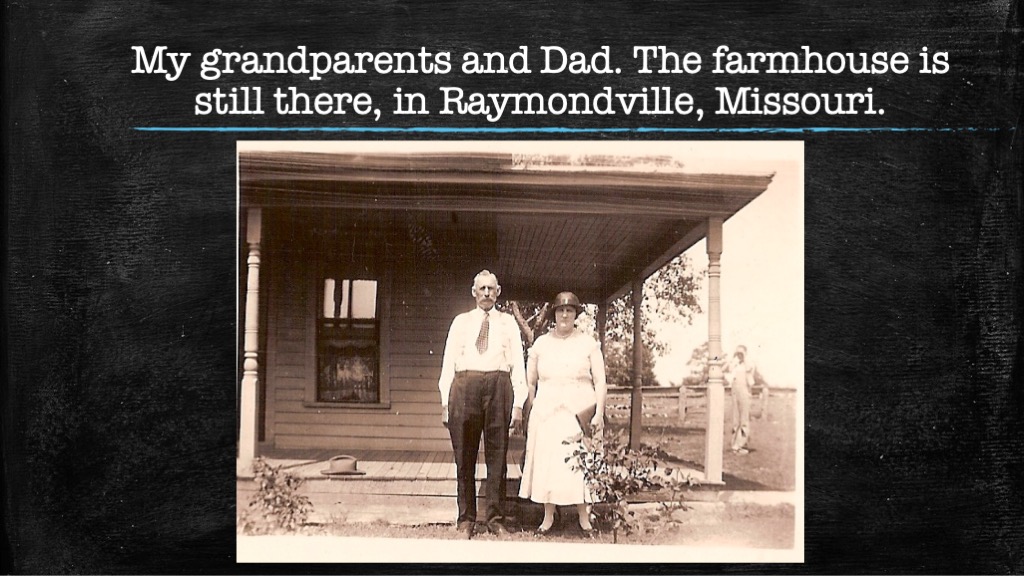
In Depression-era Missouri, before every election, my Dad remembered, a new car would pull up outside my Grandfather’s farmhouse and two men in three-piece suits (usually reserved for funerals, and even then for the Deceased) would deposit a bank-bag full of cash on Dora Gregory’s kitchen table. For them, it was but one more stop on a kind of purgatory circuit. That part of the state was thinly populated, so you had have a real passion for soybeans to make the drive enjoyable.

They were bagmen for the Kansas City Pendergast Machine, one of those old-timey operations that brought dead voters back to life, among other shenanigans.

Tom Pendergast had Texas County in the bag, because, come Election Day, my pre-teen Dad handed out fives to waiting voters, murmuring, “The Democratic Party thanks you,” over and over, like a priest at Eucharist, so the Democrats never lost Texas County. The bank bag on Grandma’s kitchen table assured that.

To be fair to the Machine, it distributed food, not just bribes, and people in the hills were hungry in the depths of the Depression. A young Dad also helped distribute food to the needy. Grapefruit stymied them. “We boiled it, Bob,” they told him apologetically, “an’ then we fried it, but it still tasted putrid.” (Dad, a supply officer in 1944 London, also gifted an English family he knew with a bag of oranges. They virtually adopted him: the British had not seen oranges since the fall of France in 1940. Citrus fruit seems to follow the course of my father’s life.)

Boss Pendergast also made the career of Harry Truman possible, which, in turn made me possible: Truman favored my grandfather’s blackberry wine on campaign swings downstate–he’d stop for a sip or seven– and that little talent of Grandpa Gregory’s paid off in World War II: Truman got Dad appointed to Officers’ Candidate School as a Quartermaster, and so he served much of the war defending London’s pubs from the Nazi Hordes, which saved me the inconvenience of having him get killed before I had the chance to be born.

And thank goodness, too, Dad survived the war to tell me the stories that would make me decide to become a history teacher.

USS Nevada’s SLO County Connection

29 Saturday Apr 2023

Posted by ag1970 in American History, Arroyo Grande, Uncategorized, World War II

≈ Leave a comment

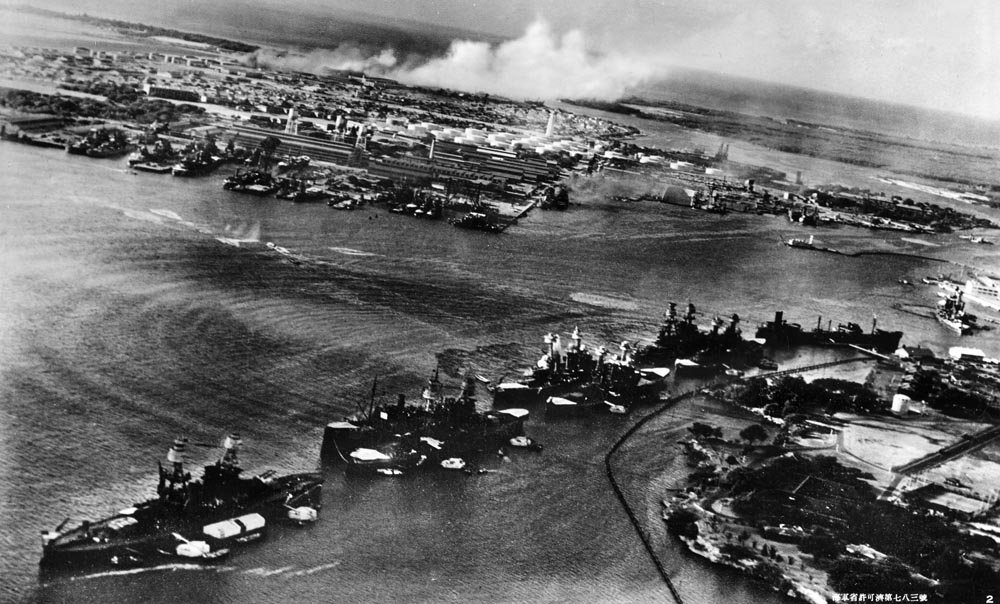
It’s one of the great stories of American naval history. At Pearl Harbor, here is the aging USS Nevada at the end of Battleship Row, at bottom left, just astern of Arizona, which is anchored inboard of the repair ship Vestal. You can see the concussions from torpedo hits on the outboard battleships ahead of Arizona. That ship has about twelve minutes to live.

The attack came during the morning Colors Ceremony, when bands played the National Anthem as each battleship hoisted its colors. The trombonist on Arizona’s band, Jack Scruggs, killed just after this photograph was taken, grew up in Arroyo Grande.

The Officer of the Watch on Nevada was Ens. Joseph Taussig, about Scruggs’s age, twenty-one or twenty-two. He was standing his very first watch while most of the ship’s senior officers were ashore. He was so green that he had to send a sailor over to Arizona to ask what size flag was appropriate to hoist for the morning formalities. Then the bombs began to fall.

Nevada’s band had begun to play the Anthem. They continued to play the Anthem. When machine-gun bullets began to splinter the teak deck, they paused for a moment, somehow resumed the song in unison, finished it, and then ran like hell for their action stations. (Arizona’s band ran for their stations in the No. 2 gun turret, near the bow and near where the fatal bomb hit. None survived.)

Lieutenant Lawrence Ruff was attending Mass on the hospital ship Solace at this moment. He immediately caught a launch back to Nevada, assumed command topside with Taussig as his anti-aircraft officer. The ensign had done something right, he would find out later: he’d left two of the battleship’s four boilers lit. It normally took a ship the size of Nevada two hours to come to full power, but two boilers were sufficient to get her underway. Ruff gave the command to make a run for the channel exit. The oldest ship on Battleship Row was the only one to steam away from the flames and smoke that blanketed the anchorage off Ford Island.

Sailors cheered as she passed.

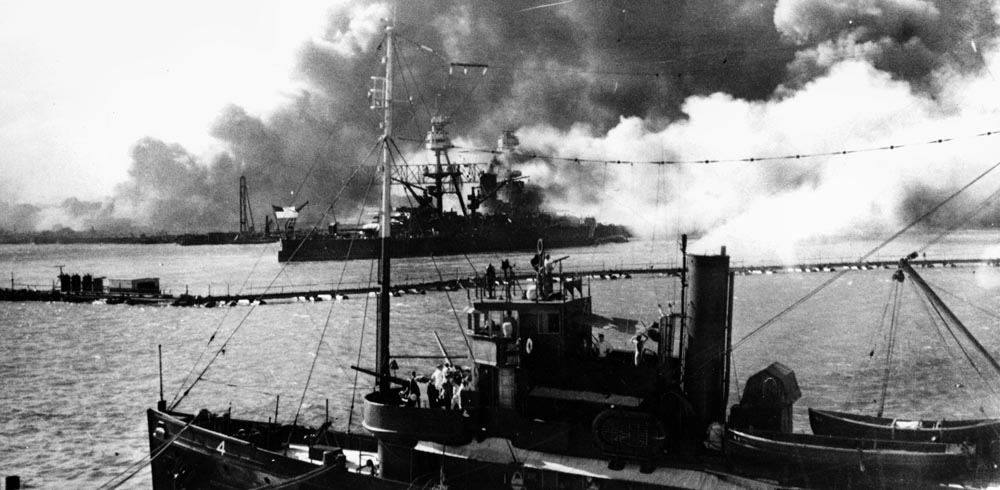
Nevada during her run for the channel.
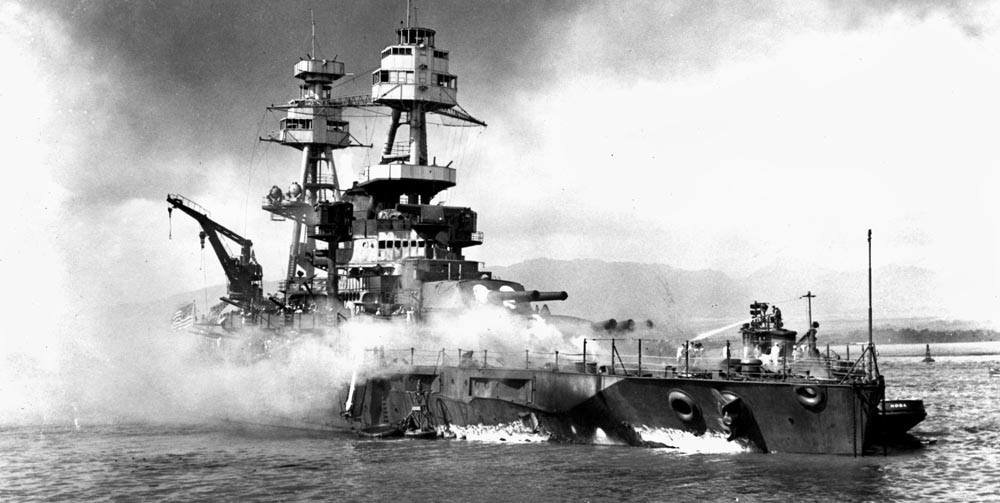
Nevada aground on Waipo Point.


Nevada didn’t make it to the open sea. Crippled by at least one torpedo and six bomb hits, she lost headway. Her run ended when Lieutenant Ruff ordered her beached on Waipo Point, leaving the narrow channel open.

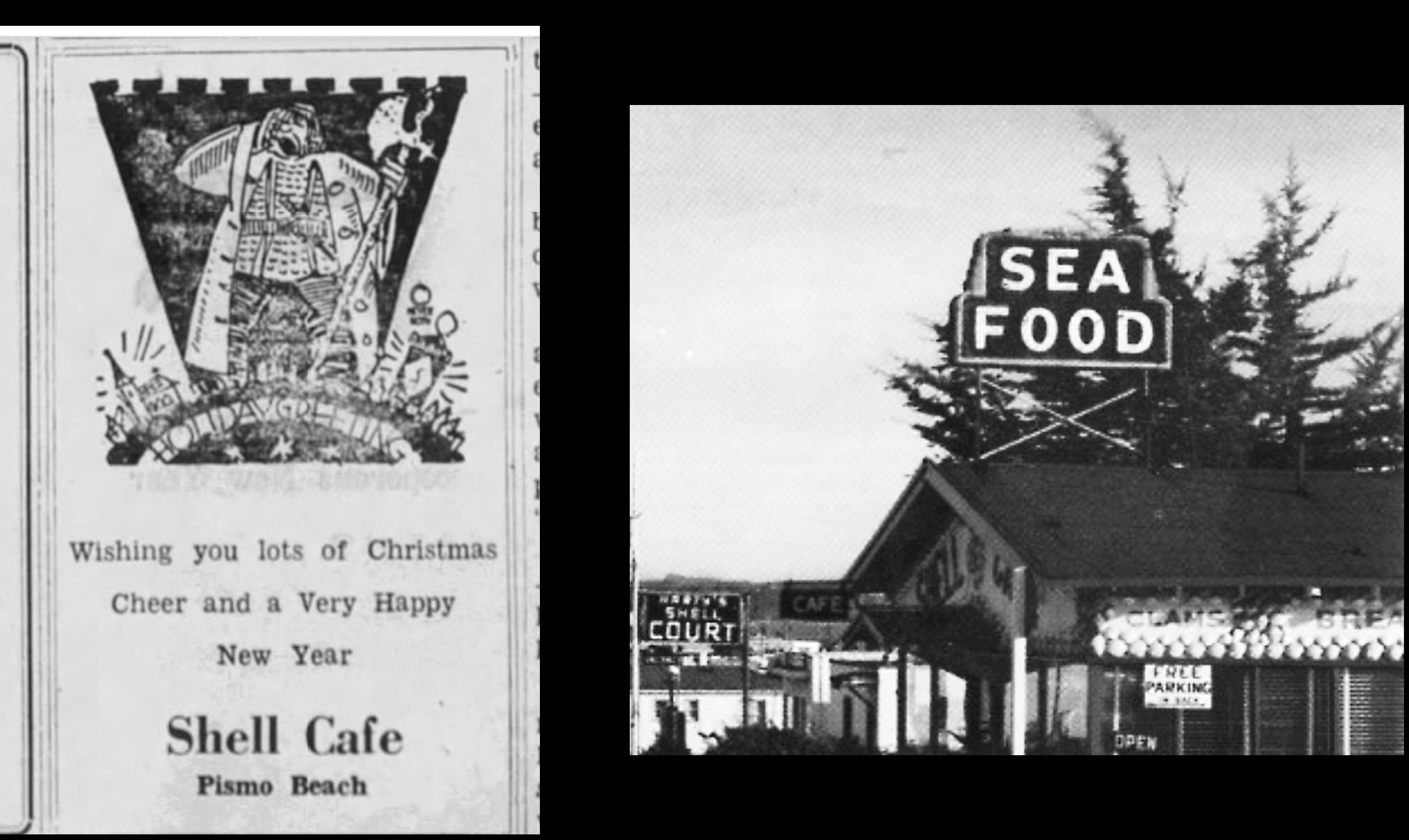
And that brings us to the Shell Cafe in Pismo Beach, at the north end of Price Street in those years. The Christmas ad is from a 1939 Arroyo Grande Herald-Recorder. (The Shell’s still around today, but in Grover Beach.)

The image of the Shell Cafe is from the Boeker Street Trading Company. Today it’s the Oasis Cafe.


It’s natural to focus on the horrific losses at Pearl Harbor, but the attackers took losses, too. Twenty-nine planes were shot down and five midget submarines sunk. Only one ship in the Pearl Harbor Striking Force, the destroyer Ushio, survived the war.

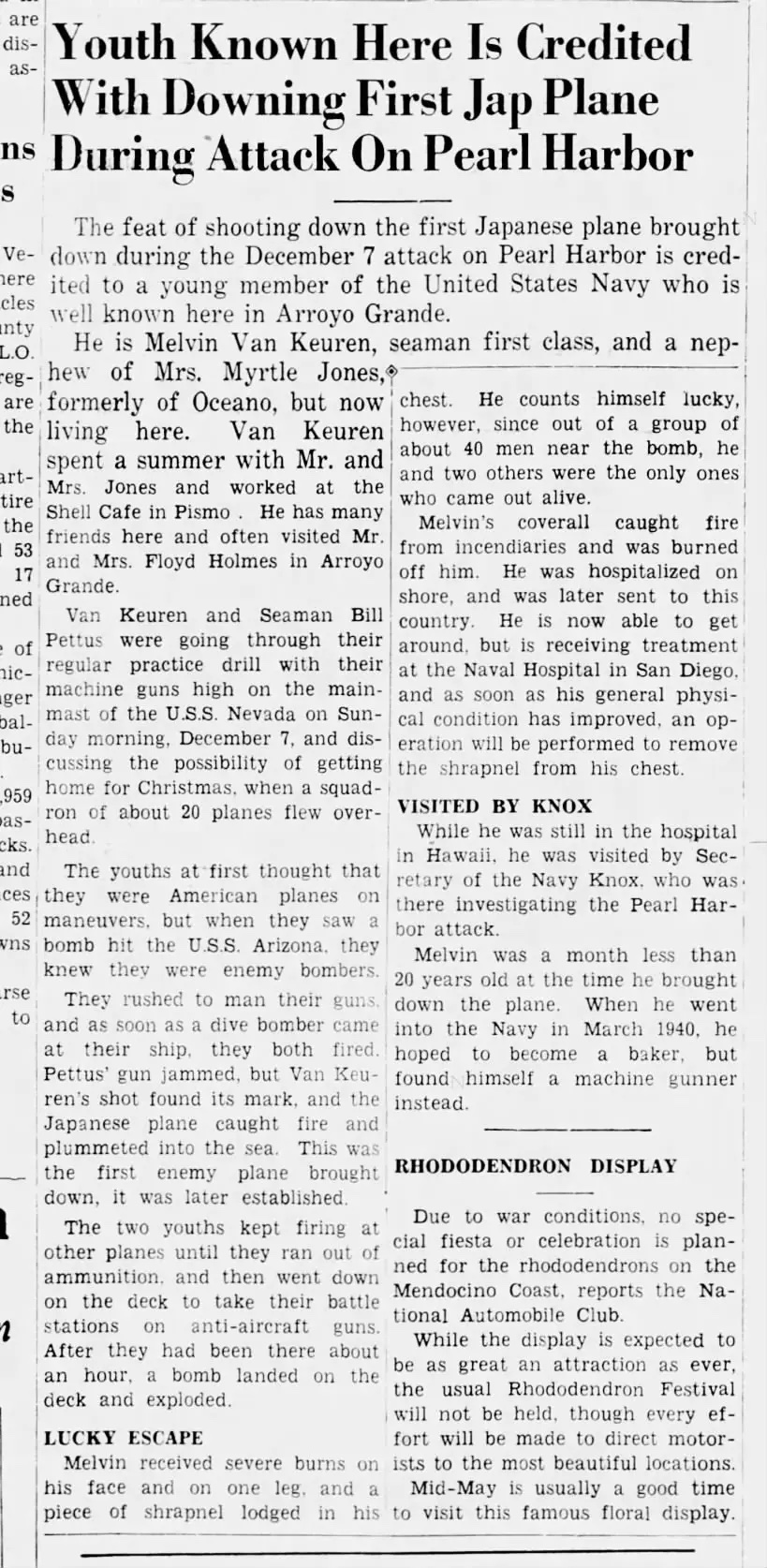
The first of the attacking planes shot down was claimed by USS Nevada. It’s better for me to let the newspaper article tell the story. From the May 8, 1942, Arroyo Grande Herald-Recorder:


“…he hoped to become a baker, but found himself a machine gunner instead.” That is a fine piece of writing.

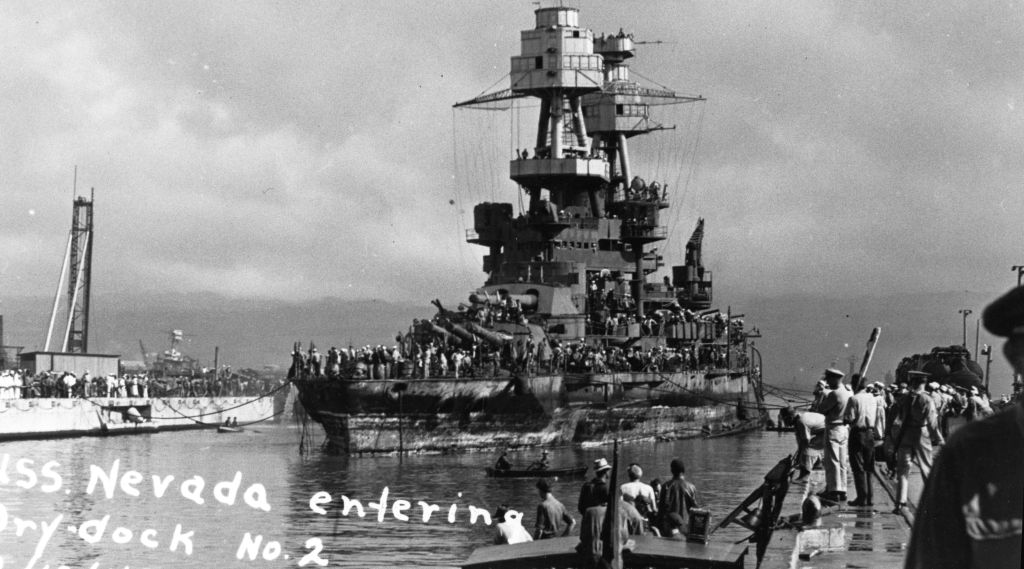
Both Melvin and his ship survived that terrible day. Here is Nevada approaching drydock after being refloated:


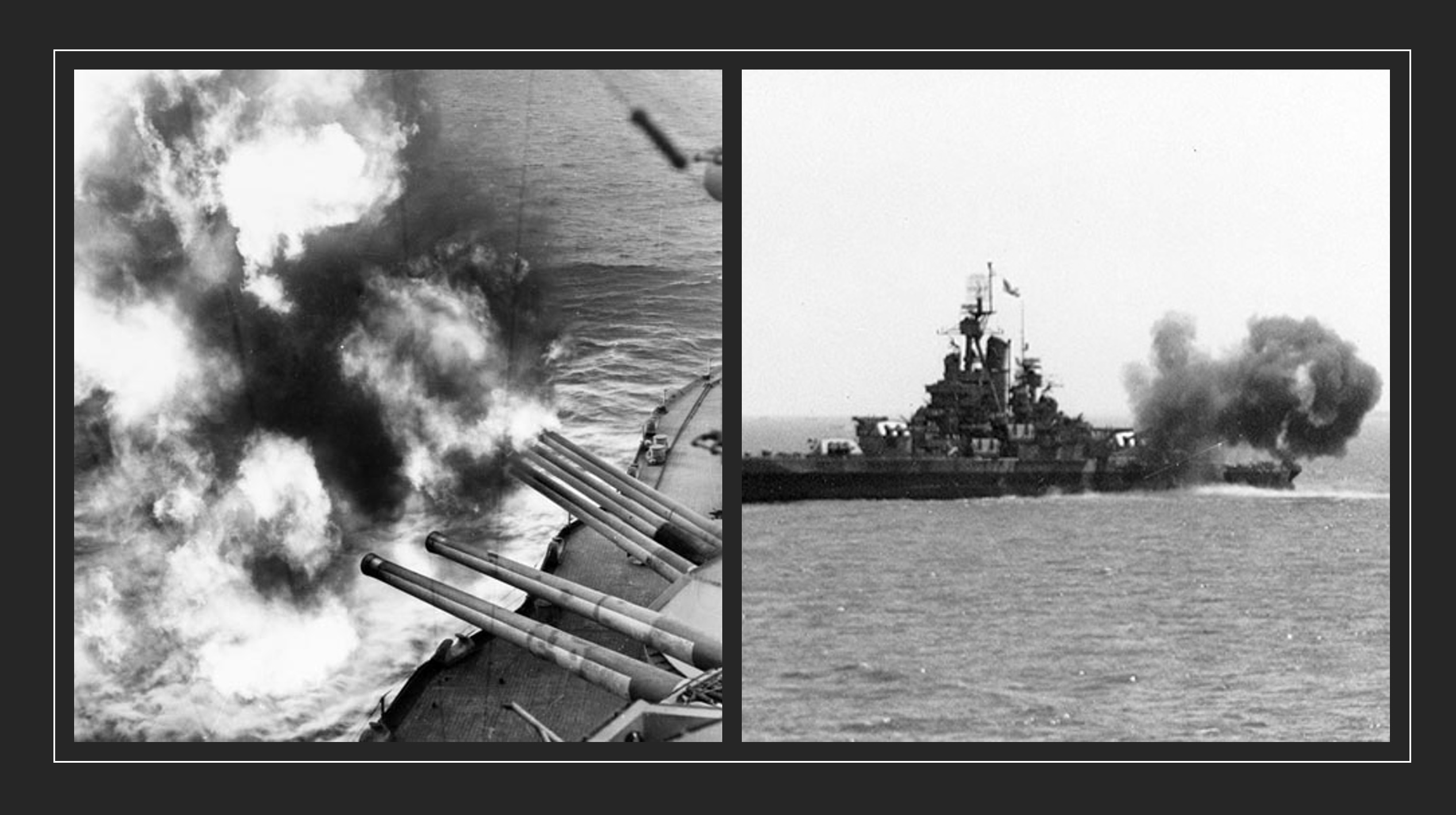
And these are her main batteries opening fire at German positions along Utah Beach on D-Day. Nevada was repaired at Pearl Harbor, overhauled and modernized at Puget Sound, and continued her war over 7,300 miles away and two and a half years removed from the place where the ship had revealed her heart in her run for the sea.

On June 6, 1944, Nevada was granted the honor of being the first ship to open fire on the invasion beaches.


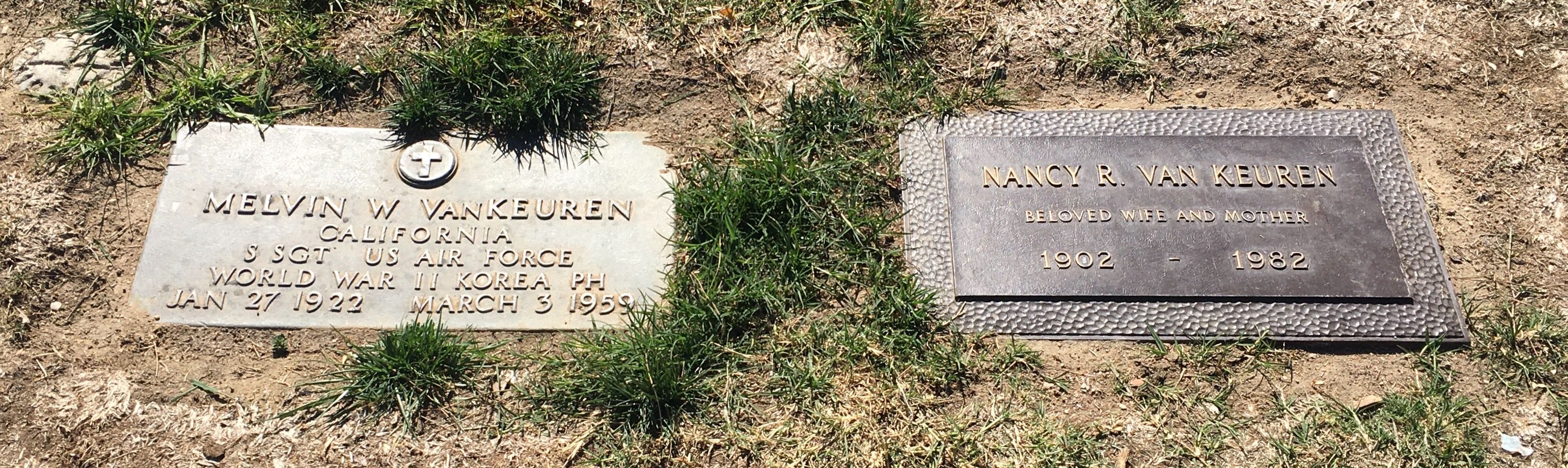
Melvin the hopeful baker survived his war, too, but his wounds sound severe. Maybe they were a factor in his premature death in 1959. He re-enlisted three times and, after the war, retired as an enlisted man in the United States Air Force. He’s buried at Forest Lawn, next to his mother.

This is his tombstone. Sadly, there’s not enough room on it to record the way he revealed his heart, too, on December 7, 1941.

Oh, Captain! My Captain.

14 Friday Apr 2023

Posted by ag1970 in American History, Uncategorized

≈ Leave a comment


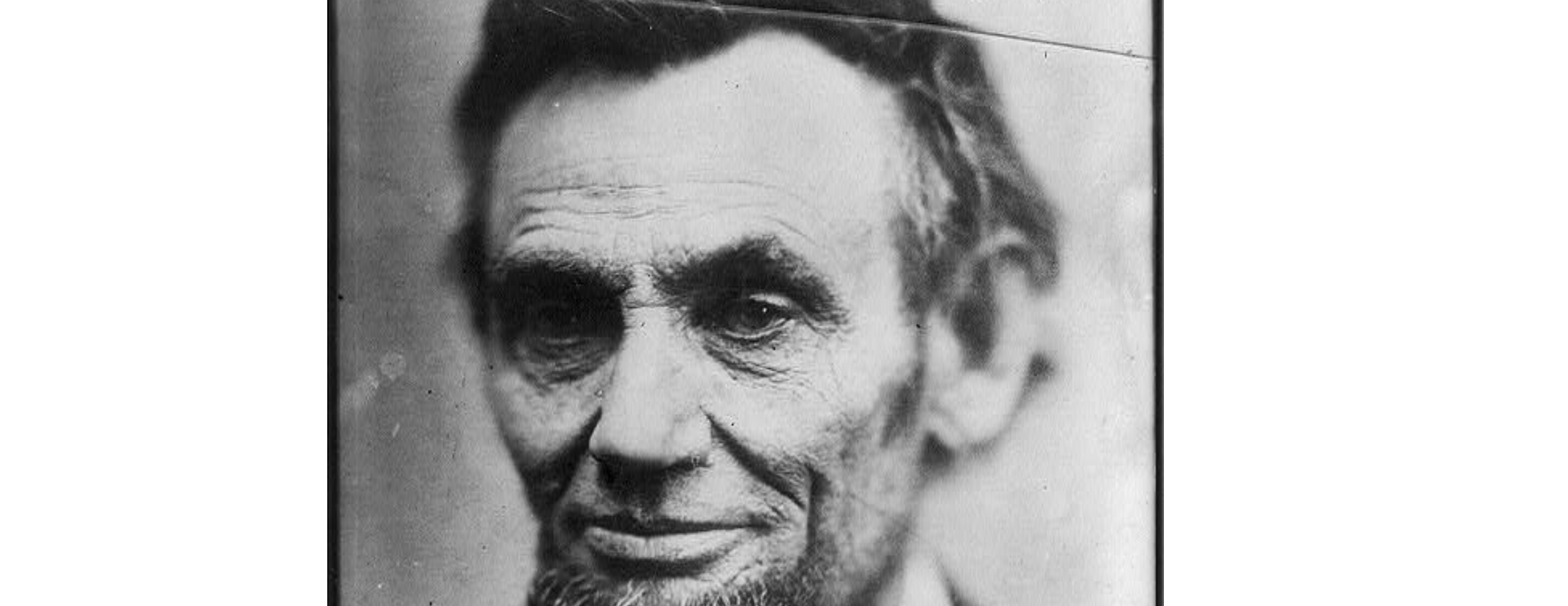
Tonight marks the anniversary of Lincoln’s shooting.

I’ve always found this photo of him, taken in February by Alex Gardner, incredibly moving because his face shows so clearly the war’s impact.

But he was not fragile.

I’m sorry to get clinical, but Booth’s bullet entered the back of Lincoln’s head behind his left ear and came to rest behind his right eye.

He should have died on the floor of the Presidential Booth at Ford’s.

A few months earlier, aboard the presidential yacht on a visit to Grant’s headquarters, the president, smiling, picked up an axe–a tool he was very familiar with–and, grasping it at the end of the handle, held it straight out at arm’s length.

I can do that! some of the young sailors thought. When they tried, they found out that they couldn’t.

When they carried him across the street from Ford’s to a boarding house and laid him across a bed–diagonally, because he was so tall–the attending physicians began to strip the clothes from his body.

Onlookers, including Secretary of War Stanton, who’d once argued a court case with Lincoln and dismissed him then as a nonentity, were stunned. The president had the musculature of a Classic statue.

The Lincoln in popular myth hated physical labor and we might remember, from our childhoods, images of him taking long breaks under a shade tree to read Pilgrim’s Progress or Shakespeare or Blackstone’s Commentaries.

That’s not quite true. Only a man who’d devoted so much time to working so hard could have fought as hard as Lincoln did that night.

He died at 7:22 a.m. on April 15, 1865. It was the day after Good Friday.

San Luis Obispo County Tourists: The James Brothers and the Dalton Brothers

06 Thursday Apr 2023

Posted by ag1970 in American History, California history, Uncategorized

≈ 2 Comments

Tags

dailyprompt, dailyprompt-1898

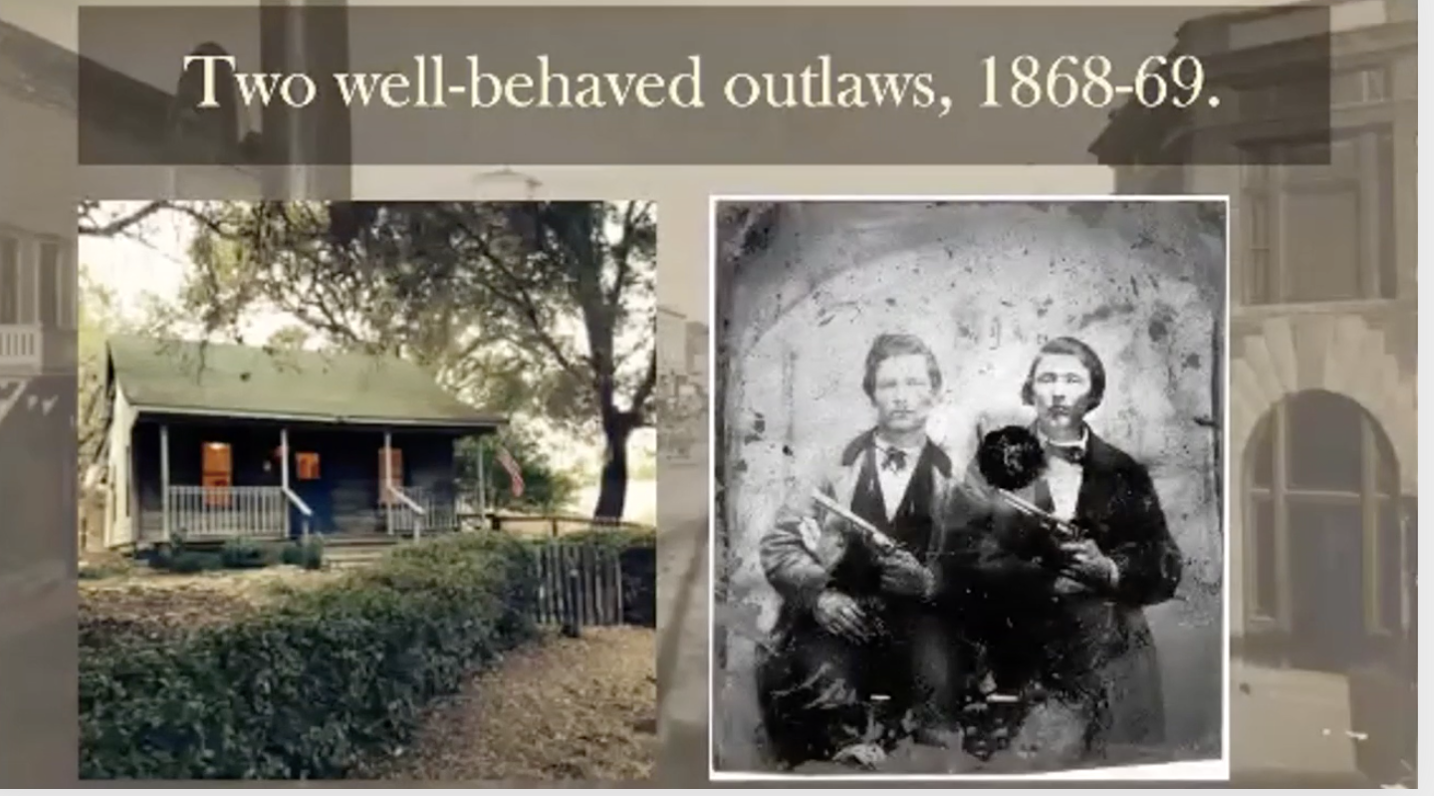
Frank and Jesse and the cabin where they allegedly lived near Paso Robles.

Not that San Luis Obispo County needs outside consultants, thank you very much, when it comes to crime. The first recorded mass murder in California history, in December 1848, happened in the North County, at Mission San Miguel.

It was the mountain man James Beckwourth who found the bodies of ten victims—the Reed family and their servants— in the mission carpenter shop. He’d also found, on previous occasions, the bodies of mountain men Hugh Glass (The Revenant), killed by the Arikara, and Jedediah Smith, killed by the Comanche. I have a theory that it’s not going to be a good day if you see Jim Beckwourth riding up your driveway.

Later, the good citizens of my South County hometown, Arroyo Grande, lynched a father and his fifteen-year-old son, suspected killers, from a railroad trestle during the night of March 31, 1886, and in 1904, an inebriated cowboy shot Constable Henry Lewellyn dead in the doorway of the Capitol Saloon on Branch Street.

In between, a resident from Lopez Canyon, east of Arroyo Grande, was found in a vacant lot by a prostitute from a San Luis Obispo bordello, extravagantly named The Palace, sleeping off a drunk. He wasn’t going to be sober again, because he was dead. A suspect was arrested—victim and suspect had been heard arguing loudly by more prostitutes (San Luis Obispo was a busy place in the 1890s)—outside a bar on Monterey Street, dubiously named The Olive Branch.

The suspect was eventually acquitted, in 1894, for lack of evidence. So was the cowboy who shot Constable Lewellyn; the jury bought the defense lawyer’s claim that it was self-defense.

And in between 1848 and 1904, there were enough robberies, murders, arson fires, vigilante visits and citizen posses firing their revolvers enthusiastically into the air to fill a dozen Louis L’Amour novels.

But we had visiting celebrities, too. When things got too hot in Missouri, the James Brothers, Confederate irregulars under the notorious William Quantrill during the Civil War, lived on their Uncle Drury’s ranch for awhile—Drury James was the co-founder of the Paso Robles Inn, still around today—and played at being cowboys. They weren’t. But Uncle Drury’s vaqueros learned to overlook Frank and Jesse’s cow-punching deficiencies because Jesse passed the time by idly picking off rattlesnakes and jackrabbits with his Colt revolver.

They returned to Missouri to pass into legend, etc.

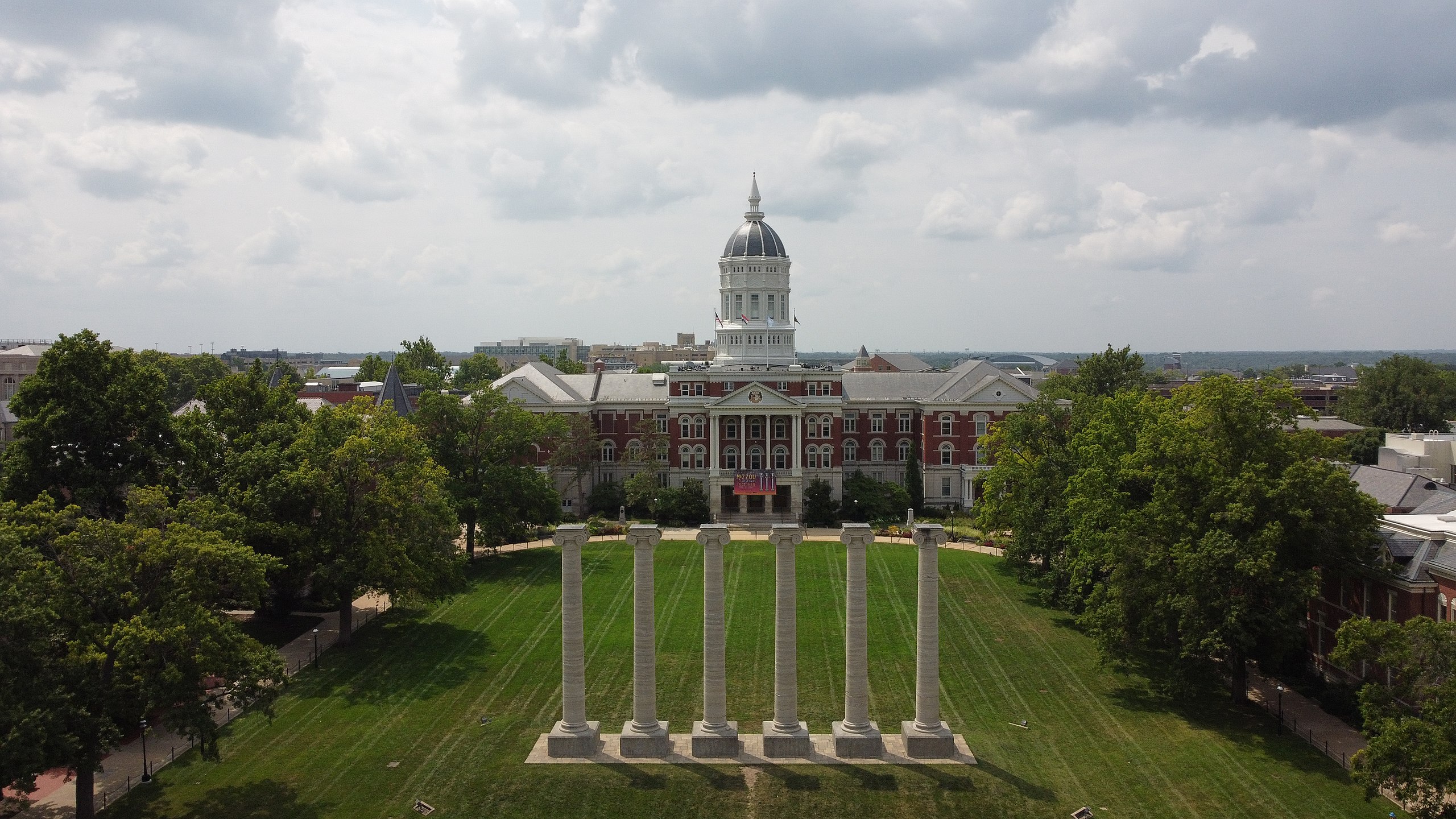
And darn if I didn’t run into them there. Last May, my wife Elizabeth and I went to Missouri to see our much-beloved niece, Becky, graduate from the school that’s also my Alma Mater, Mizzou, where I’d studied at the Journalism School before the History Department began to captivate me and I changed majors.
Francis Quadrangle, University of Missouri.
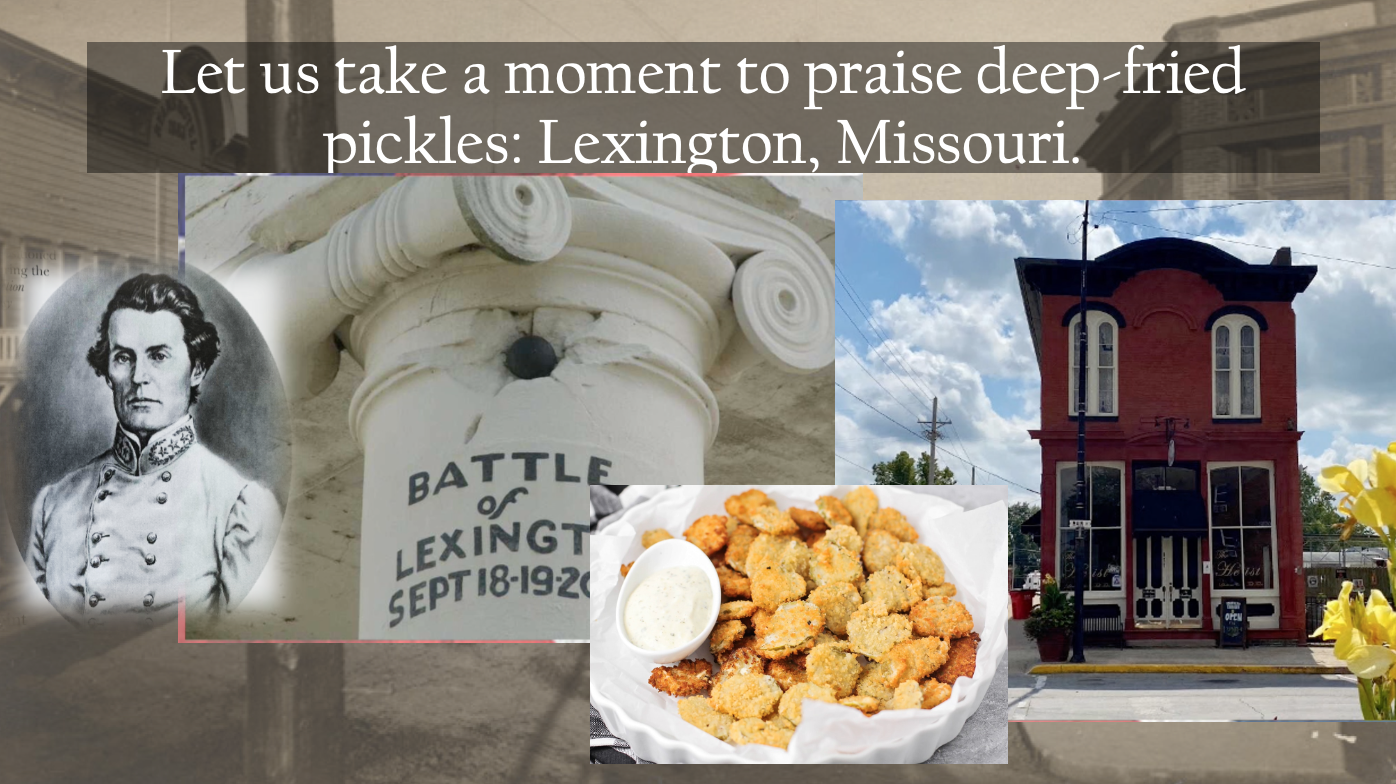
Elizabeth and I decided to drive to the western part of the state, to Lexington, Missouri, where my Confederate great-great grandfather, whose promotion to brigadier general evidently got lost in the mail—that’s States’ Rights for you—fought in 1861. The opposing forces left behind that souvenir in the column of the County Courthouse. I am named for that great-great grandfather, James H. McBride, who appears, from his portrait on the left, to have died from Terminal Constipation. My middle name, Douglass, comes from his son, a Confederate staff officer, who had an unfortunate encounter with a Yankee artillery shell in 1862 Arkansas.

So, as Kurt Vonnegut noted, it goes.


Not-quite Brigadier Grandfather James is less important than where we had lunch in Lexington, at that tall and narrow mid-Victorian restaurant, The Heist II. It was there where we discovered, along with a stunning Reuben Sandwich and a stellar BLT, the delight of fried pickles. They were incredible. My father was raised on the Ozark Plateau, and I once wrote an essay entitled “My Father and Fried Food,” and after The Heist, I understand him on a whole new level.

Anyway, it got its name from when it was a bank and was robbed by Frank and Jesse. Nellie-bar-the-door, that gave me, in between bites of fried pickles, to regale the waitress and most everyone within a four-table radius of Frank and Jesses James stories from San Luis Obispo County, California.

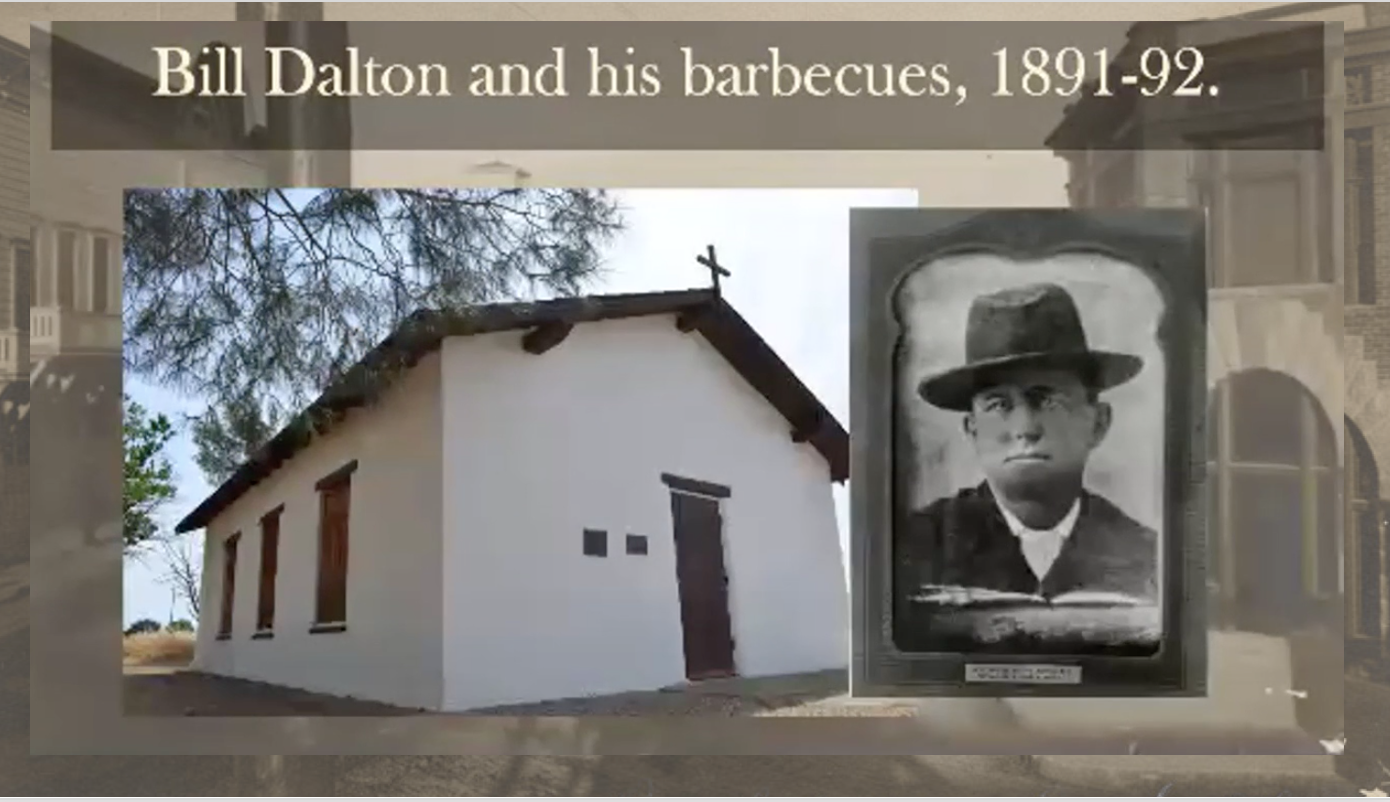
The Estrella Adobe Church and Bill Dalton, San Miguel, California.

The James Gang was known also as the James-Younger Gang, thanks to Frank and Jesse’s cousins, and it was a Younger who became the mother to a brace of outlaws from a later generation, the Daltons. Bill was not an outlaw. He was a well-respected cattleman in San Miguel—some accounts that I’ve never verified claimed that he was a State Assemblyman—and one summer his brothers came to visit California.

(Which, of course, reminds me: the other reason for the James Brothers’ visit was their search for the grave of their Baptist preacher father, come to California to evangelize the gold fields, which needed it badly. They never found their father. Similarly, the ship Arkansas, loaded from ballast to main deck with Methodist missionaries, came to Methodize the gold fields at about the same time as Rev. James. It ran aground on Alcatraz and was towed across the Bay and beached, where it became a brothel.)


What Bill’s brothers, excitable boys, liked to do—within earshot of the adobe church congregation—was to barbecue, drink whiskey and target practice with their Colt revolvers. I don’t advise against doing things like this, but maybe not all at the same time.

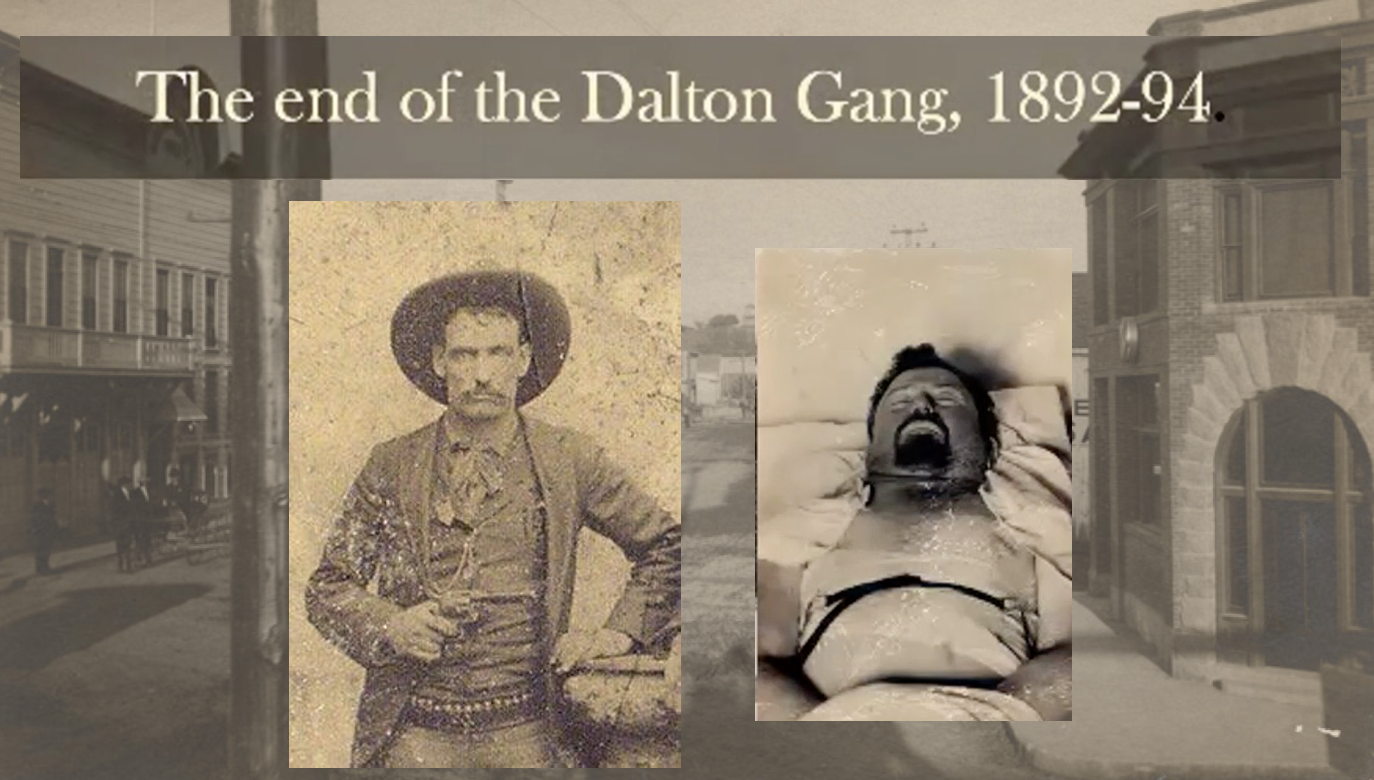
Bye and bye, Bill’s brothers returned to the Midwest, where they conceived of the idea of robbing two banks simultaneously in Coffeyville, Kansas. They had not thought this through completely, I think. Their timing was thrown off when the good citizens of Coffeyville realized what going on, denuded the hardware store of firearms, and air-conditioned the Dalton Gang, including brothers Grat and Bob.

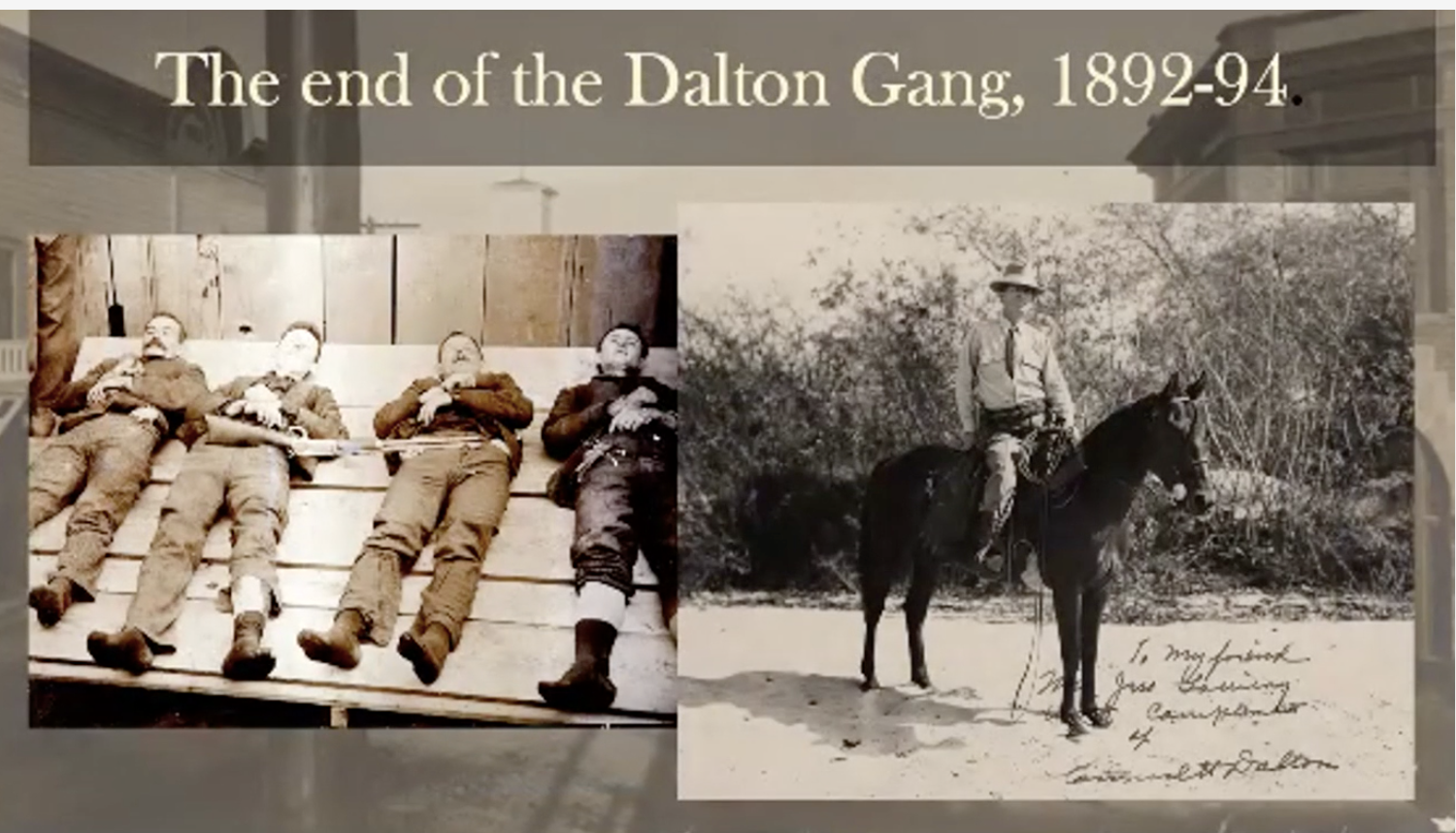
They also air-conditioned brother Emmett, shot twenty-three times. He survived to become a script consultant for Hollywood westerns and autographed this photo for San Luis Obispo County Sheriff Jess Lowery.

Lowery’s career highlight was pulling over a truck near Pismo Beach, prying apart the two-by-fours atop its bed, and finding, just beneath, 72 five-gallon jerricans of bootleg Canadian whiskey headed for Los Angeles and gangster Tony Cornero, famed later for the gambling ships he operated just beyond the three-mile limit. Cornero also opened one of the first casinos in Las Vegas, which burned, due to either faulty wiring or Lucky Luciano. His life ended due to either a heart attack or Lucky Luciano.

So it goes some more.

Dead Daltons and the not-quite-dead-yet Emmett.

Bill Dalton’s life ended with a day that started out to be pretty optimistic. For reasons I still don’t understand, he decided to follow, after Coffeyville, the Outlaw Trail. His career was brief. A posse, led by Marshal Selton T. Lindsey, took off after Bill in Indian Territory—Oklahoma—and were hot on the trail until they encountered a wagonload of contraband whiskey intended for the Indian Nations.

The posse confiscated the evidence and drank it.

The next morning, only Marshal Selton T. Lindsey and one deputy were sober enough to continue the pursuit of Bill Dalton. While crouching behind the weeds atop a rise, they found him.

Bill evidently loved children. He was playing in the front yard of a friend’s house with his friend’s children when one daughter, leading a milk-cow in from pasture and back to the barn, passed Marshal Lindsey and his deputy, who were not doing a very good job of being surreptitious. When she reached Bill, she whispered to him urgently.

He ran for it. Urgently.

Lindsey and his deputy lit out after Bill, paused to get their aim, and began to air-condition him with their Winchester rifles. He fell, dead.

Not quite. When the lawmen crept up to Bill, he was still alive. He smiled at them.

Then he was dead.

Marshal Selton T. Lindsey and the deceased Bill Dalton.

The Daltons weren’t quite done with San Luis Obispo County. In 1972, soon after the release of their concept album about the gang, Desperado, The Eagles played a concert at Cuesta Community College. A fairly prominent Canadian, Neil Young, opened for them. Tickets were $5. I did not buy one: I didn’t know much about The Eagles, and $5, in 1972, $36 today, was for a starving college student like me—-who subsisted largely on 19-cent tacos and burritos at the San Luis Obispo Taco Bell where Creedence Clearwater Revival once dined—Highway Robbery.

Damn. I wish I’d bought that ticket.

Lincoln arrives, February 27, 1860

27 Monday Feb 2023

Posted by ag1970 in American History, Uncategorized

≈ Leave a comment

In 2019, Robin, Elizabeth and I traveled to New York City to see our beloved niece Emily graduate from NYU. That was the biggest thrill of the trip. The second-biggest thrill?

1. Having my favorite skyscraper, the Art Deco Chrysler Building, Just outside our hotel room window?

Nope.

2. Going to a real-live actual Broadway show? (Come from Away, about all the airplanes that had to land in Newfoundland on 9/11 and how Canadians embraced their visitors. It was delightful.)

Nope.

3. Sitting inside Yankee Stadium?

Nope.

4. Riding up to the VERY SPOT at the top of the Empire State Building where Tom Hanks and Meg Ryan FINALLY met in Sleepless in Seattle?

Nope.

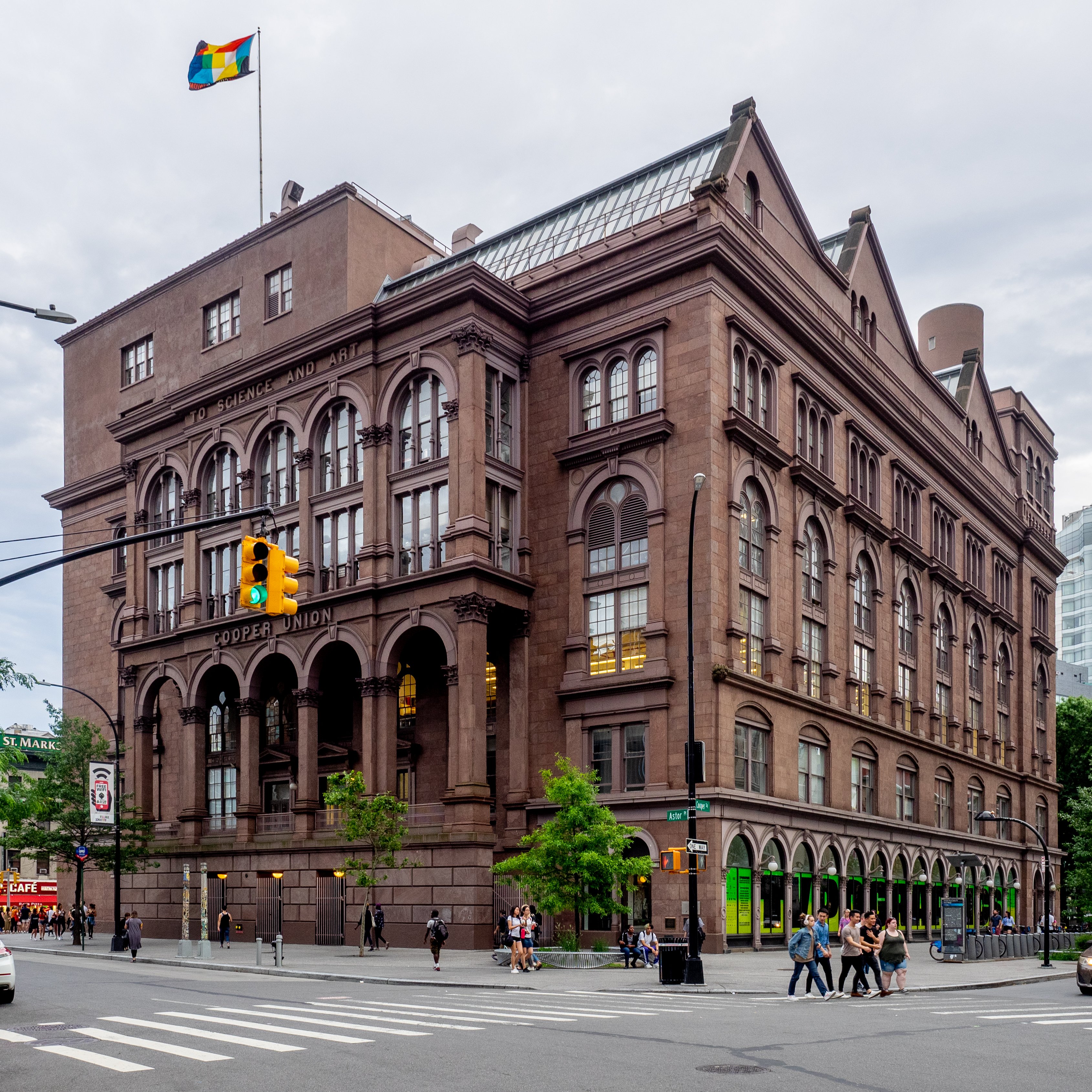
Okay, I give up. Here it is: We were all walking, Jackoways and Gregorys and Aunt Robin, in the East Village when we passed the Cooper Union.


East Village, NYC

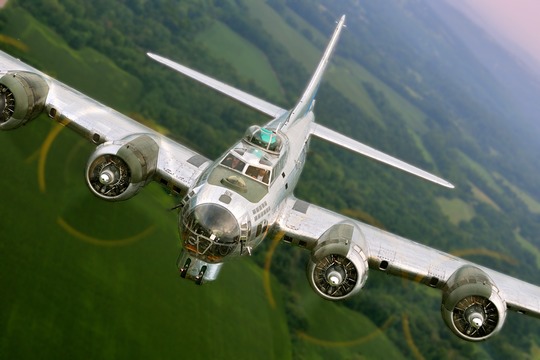
The COOPER UNION! I started hopping up and down on the sidewalk. I’d done this before, in the midst of what was, I am sure, a thrilling AGHS lecture on the Thirty Years’ War—“BDSF!” I reminded my students; the war’s four stages were Bohemian, Danish, Swedish and French—when I recognized, from a couple of miles away, the sound of a B-17’s engines. It was “Sentimental Journey,” on its way to McChesney Field in San Luis Obispo, just north of us.

I left the classroom and hopped up and down on the lawn between the 200 and 300 wings at Arroyo Grande High School as the plane flew overhead. The squirrels there, who liked to skitter into my classroom for weekend courtship dances while I was grading essays, were a little stunned. So were my students.

And now I was stunned because I was across the street from the Cooper Union. I, happily digesting some Greenwich Village squid-ink pasta–the best I’ve had since an AGHS student trip to Venice– did not know it was there.

On tomorrow’s date in history in 1860, Abraham Lincoln, largely unknown outside the Midwest, delivered the speech inside that building that would make him president.

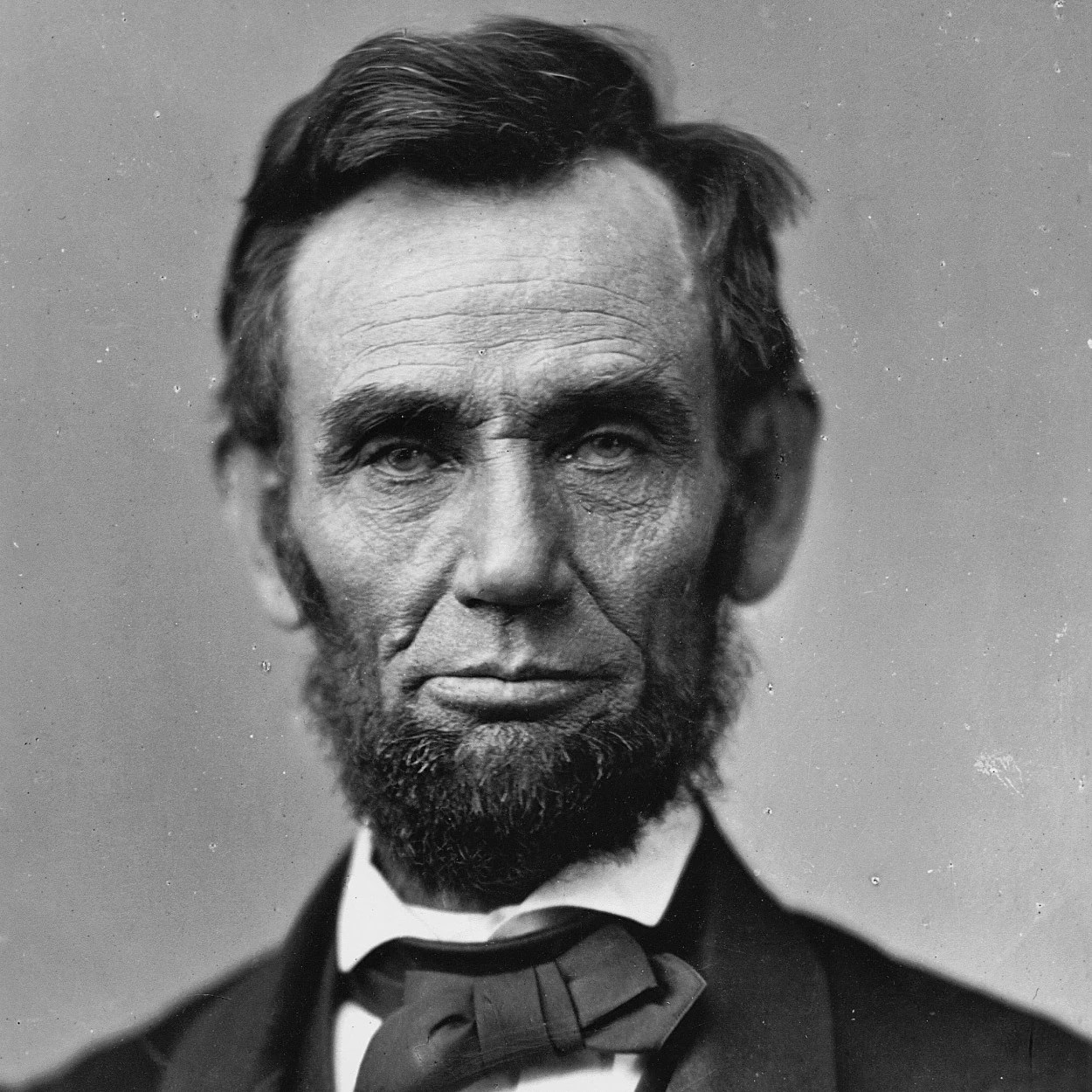
And now, in 2019, I was standing in front of the Cooper Union. And that is the 1860 photograph, taken in Matthew Brady’s New York studio, that captured Lincoln in the hours before his speech.

You’d look in vain for in the Cooper Union speech for the kind of eloquence that marked the Gettysburg Address or Lincoln’s Inaugurals, but what he said in the Cooper Union–densely reasoned, lawyerly, with every word carefully chosen–was so compelling that many of the jaded New York reporters (some of them, for their lack of homework on the man, might’ve been miffed a little because they’d been assigned to cover this Illinois rube, a little taller than the cornstalks from whence he came) put their pens down and forgot to take notes.

He was that good.

He had arrived, on February 27, 1860.

His death on April 15, 1865, only made it certain that he would never leave us.

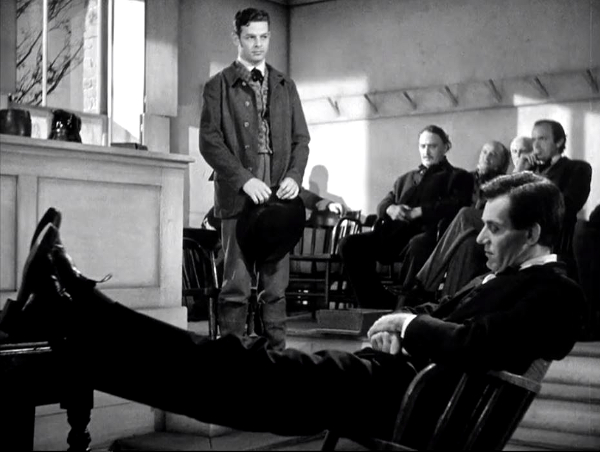
Ever since I was a little boy, Lincoln has been alive to me. I have read everything I can about him. I’ve watched every Hollywood depiction of him, most of them hokum. I watched perhaps the hokumiest, John Ford’s Young Mr. Lincoln, the other night for the sheer pleasure of being in the television presence of Henry Fonda’s Lincoln.

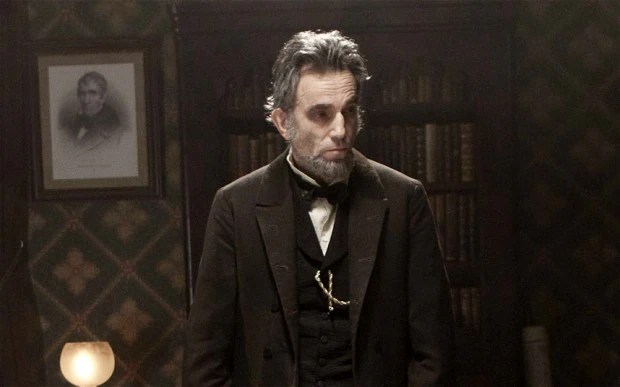
But it was, finally, the Irish actor Daniel Day-Lewis, his research meticulous, who made Lincoln come alive to me. Lewis lived inside the man, as he does all his characters, for months.

Lincoln– and Lewis understood this–would have pronounced the word “care” as “keer;” his voice was thin and reedy but he knew how to project it. Lewis knew how difficult Lincoln’s relationships were with Mary and with Robert, his eldest son. But he also knew how Lincoln could tell a story, sometimes to give himself time to think, or, conversely, how he could choose words that were like knives when he had to wound the obtuse, the wrong-headed or the faint of heart, if only to shock them at the sight of their own blood.

(At Gettysburg, the marathon orator Edward Everett had the decency to admit that Lincoln’s words, in his two-minute speech, had bested his, which lasted two hours. Everett was the main attraction that day in November 1863. Lincoln’s invitation to the battlefield, dusted with lime in the fall, a prophylactic measure that failed to erase the stench of horses unburied since July, was a mere politeness. Lincoln was not popular.)

Best of all, Lewis understood, while we appropriately remember the man’s kindness, that Lincoln had a temper. His will was spun steel and his ambition, as a law partner once remarked, “was a little engine that knew no rest.”

So the best part about the Cooper Union speech might be that Lincoln knew exactly what he wanted to say, knew how he wanted to say it, and all of it, every word, was a servant of his ambition. The nation, on February 27, 1860, was obviously and perhaps irrevocably coming apart.

Only Lincoln knew, from the intuition that he was singular–that insight was perhaps the greatest gift left him by his mother and stepmother–that he had inside reservoirs of such deep strength. They were deep enough to lift the nation to a better place.

That, of course, meant four years of heartbreak and the modern equivalent of 6.6 million deaths.

And I don’t know that we’ve reached that better place yet.

But who could ask for a better guide?

← Older posts
Newer posts →

Subscribe

  • Entries (RSS)
  • Comments (RSS)

Archives

  • January 2026
  • December 2025
  • November 2025
  • October 2025
  • September 2025
  • August 2025
  • July 2025
  • June 2025
  • May 2025
  • April 2025
  • March 2025
  • February 2025
  • January 2025
  • December 2024
  • November 2024
  • October 2024
  • September 2024
  • August 2024
  • July 2024
  • June 2024
  • May 2024
  • April 2024
  • March 2024
  • February 2024
  • January 2024
  • December 2023
  • November 2023
  • October 2023
  • September 2023
  • August 2023
  • July 2023
  • June 2023
  • May 2023
  • April 2023
  • March 2023
  • February 2023
  • January 2023
  • December 2022
  • November 2022
  • October 2022
  • September 2022
  • August 2022
  • May 2022
  • April 2022
  • March 2022
  • February 2022
  • January 2022
  • December 2021
  • November 2021
  • October 2021
  • September 2021
  • August 2021
  • July 2021
  • June 2021
  • April 2021
  • March 2021
  • February 2021
  • January 2021
  • December 2020
  • November 2020
  • August 2020
  • July 2020
  • June 2020
  • May 2020
  • April 2020
  • January 2020
  • December 2019
  • November 2019
  • October 2019
  • September 2019
  • August 2019
  • May 2019
  • April 2019
  • March 2019
  • February 2019
  • January 2019
  • December 2018
  • November 2018
  • October 2018
  • September 2018
  • July 2018
  • June 2018
  • May 2018
  • April 2018
  • March 2018
  • February 2018
  • January 2018
  • December 2017
  • November 2017
  • October 2017
  • April 2017
  • March 2017
  • December 2016
  • November 2016
  • October 2016
  • September 2016
  • August 2016
  • July 2016
  • June 2016
  • April 2016
  • March 2016
  • February 2016
  • January 2016
  • December 2015
  • November 2015
  • October 2015
  • September 2015
  • August 2015
  • July 2015
  • June 2015
  • May 2015
  • April 2015
  • March 2015
  • February 2015
  • January 2015
  • December 2014
  • November 2014
  • September 2014
  • August 2014
  • July 2014

Categories

  • American History
  • Arroyo Grande
  • California history
  • Family history
  • Film and Popular Culture
  • History
  • News
  • Personal memoirs
  • Teaching
  • The Great Depression
  • trump
  • Uncategorized
  • World War II
  • Writing

Meta

  • Create account
  • Log in

Blog at WordPress.com.

  • Subscribe Subscribed
    • A Work in Progress
    • Join 68 other subscribers
    • Already have a WordPress.com account? Log in now.
    • A Work in Progress
    • Subscribe Subscribed
    • Sign up
    • Log in
    • Report this content
    • View site in Reader
    • Manage subscriptions
    • Collapse this bar
 

Loading Comments...