I am supposed to give a speech tomorrow to the American Legion for Veterans Day. I enjoy public speaking every bit as much as a condemned man enjoys his firing squad. But I am stubborn Irish, and if I agreed to give a speech, I will do it.
I am speaking about Arroyo Grande’s participation in World War II. I am not sure the American Legion would want to hear everything I might want to say. I do love my country–by which I mean frontier women on laundry day, hauling bucket after bucket of water from the well to zinc washtubs, black men rousted on street corners because they have the audacity to be black men, alive and on street corners, children in Appalachia whose cupboards are bare except for ketchup and white bread, the firemen who sprinted up the steps of World Trade 1, the young women and men who dance the old dances at tribal meetings, the beautiful jingling of their beaded costumes, the beauty of a young woman track athlete as she makes her measured, powerful approach to the pole vault–but I am not a flag-waver. America is the sum of the richness of her land and her people, and so is too complex to be trapped by facile symbolism.
I most emphatically do not believe in “American Exceptionalism”–I think, in fact, that it’s a pernicious idea and smacks of the kind of superiority, bred by insecurity, that so poisoned Germany and Japan in the years between the wars. And I know that our military, in places like Wounded Knee, the Philippines, and My Lai 4, have done barbaric things that soldiers, including the Germans and the Japanese, sometimes do in warfare and for which there is no conscionable excuse.
Since I want to live long enough to have lunch with them, I probably won’t bring those up. I guess what I’ll say might be something like this. But I believe this as much as I believe anything else I’ve said.
* * *
I made a decision several months ago to write a book about Arroyo Grande’s participation in World War II.
I was supposed to have written several by now, according to my high school classmates, but I am easily distracted and have a short attention span. That intensified the shock I felt when my book proposal was accepted by an actual, real live publishing company.
But I am a history teacher because my father taught me how to be a storyteller. The stories he told of his time in World War II mesmerized me. So my Dad is one reason for this book. My love for my hometown, Arroyo Grande, is another.
What has struck me, over and over again, in researching this book, is how capricious and perverse war can be in taking the lives of young men whose first steps, or first words, first school play or first home run brought such joy to their parents.
Arroyo Grande in World War II provides many examples of this kind of cruelty.
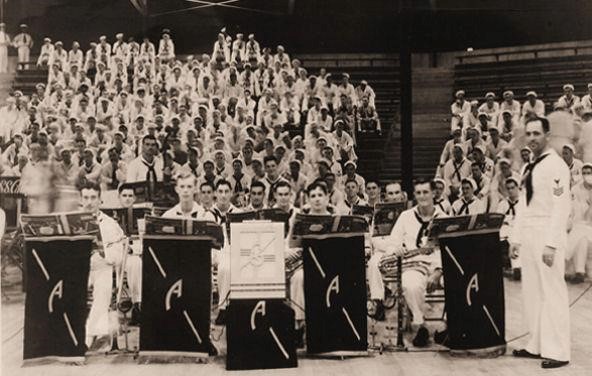
–There is the little boy who learned to play piano in Arroyo Grande; he would eventually pick up the trombone and the accordion and, when his family later moved to Long Beach, he would start his own dance band. He opted for the Navy specifically to stay out of the Army and he was about to join a detail from his ship’s band in the National Anthem when a bomb straddled “Arizona” and blew him, dead, into Pearl Harbor. His name is Jack Scruggs.
–The 1938 Arroyo Grande Union High School valedictorian was so brilliant that after his graduation from Cal, the Army Air Force selected him for a special program: He would be among the lead pilots, called “Pathfinders,” in over the target, equipped with the new radar, and his bomb group would drop their payload on his signal, when he let his bombs go. Three weeks before his first mission, he was hitching a ride on another B-17, whose inexperienced pilot flew the bomber into the side of a mountain in northern England. The wreckage is still there today. His name is Clarence Ballagh.
–The farmworker fought in Normandy with the 79th Division to secure Cherbourg. His regiment then fought through the hedgerow country, the death-traps of the bocage, and then helped to seize the heights above a key crossroads town, Le Haye de Puits. SS-Panzer units launched a counterattack on his regiment’s position and it failed. The Americans defeated some of the most hardened and motivated soldiers in the German Army, then, took the town the next day in house-to-house fighting. He died after this battle, when the 79th Division was pulled back off the front line for rest, in a chance encounter with German troops. His name is Domingo Martinez.
–The Filipino-American mess attendant, the only rating to which a man like him could aspire to in the racist wartime Navy, wrote the funniest, most endearing letter a serviceman could write home. It was published in the Arroyo Grande Herald Recorder, and it was the kind of letter that made you wish you had known him. Three weeks after he wrote it, near Guadalcanal, a Japanese Long Lance torpedo blew the bow off his destroyer, “Walke.” He died along with a third of the crew, including her captain, and many of them died in the water. They survived the torpedo hit but were killed by the concussion of “Walke’s” depth charges as they tumbled to the bottom of Ironbottom Sound. His name is Felix Estibal.
–Before the war, he worked at the E.C. Loomis feed store, one of the last of a string of children of parents who came from the Azores. He supported his wife and helped to support his mother, and since he worked for the Loomises, he would have known virtually everybody in Arroyo Grande–population 1,090–and they would have known him. He served in a tank destroyer company in France–big tanks with 90 mm cannon that equaled or even bettered the German 88mm gun and the superb armor of their tanks. On Nov. 27, 1944, his company fought off a furious German assault. The Germans brought superior numbers to the little town of Falck, but the Americans bloodied them and turned them back. On the next day, his company advanced to another objective when the lead tank ran into a ditch, a German round knocked the tread off a second, and the whole column, stalled, was destroyed. Everything that could go wrong did. His name is Frank Gularte.
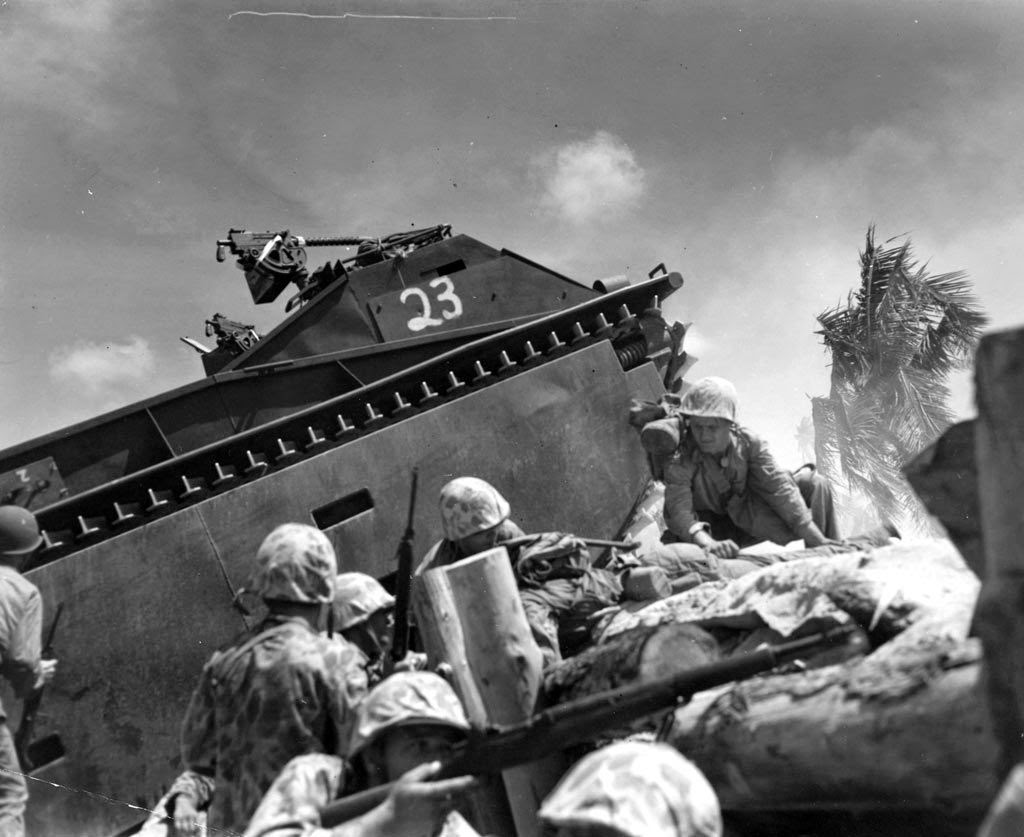
–And you will meet a 20-year-old Marine who died as a replacement on Iwo Jima among veterans who did not welcome him and did not want him. His total combat experience in the Second World War was, at most, 48 hours. He died 48 hours before he turned 21 years old. His name is Louis Brown.
It strikes me that what kills men most often in warfare is not glorious bayonet charges but mistakes, in inferior equipment, in misguided orders, in inexperience, and, most of all, because of mistakes on which nothing can be blamed. They are fate.
Maybe it’s a different kind of fate that led me to write this book.
When you research men like these something powerful happens. They are of my father’s generation, but the more I get to know them, the more they become my sons.
I miss men I have never met.
Their deaths may seem to have been impersonal and illogical, but they have great meaning. Here is why.
I am amazed at the way the young men and women who survived the war came home and put themselves back to work.
They built schools, started Babe Ruth leagues and Boy Scout troops, ran for office, started hardware stores, incorporated a hometown bank, and poured everything they had into my generation to make sure our lives were safe, to make sure our stomachs were full, to inculcate in us the need to get a good education and the desire to make something of our lives.
It is no coincidence that I grew up loving Arroyo Grande. When my family moved here in 1952, the veterans of World War II had already prepared a home for me.
They worked so hard, I think, because they knew that’s what Jack Scruggs, Clarence Ballagh, Domingo Martinez, Felix Estibal, Frank Gularte, and Louis Brown would have done, too.
The generation, raised in depression and in war, to whom we owe so much, would not allow themselves to rest until they had paid their debt to the men who would never see the Arroyo Grande Valley again.



 A Work in Progress