• About
  • The Germans

A Work in Progress

A Work in Progress

Category Archives: American History

For Tom and Barb

22 Saturday Aug 2015

Posted by ag1970 in American History, California history, World War II

≈ Leave a comment

It is difficult to imagine Normandy in 1944; it is a beautiful place today, as are its people: a bonjour from an American tourist has more traction here than it does in Paris, and the little villages are lovely, separated by pastures and farm fields, each village with its distinctive little parish church. During the Middle Ages, as the skilled writer and Francophile Graham Robb notes, few villagers ever went beyond the sound of their parish church’s bells. The world beyond was like the ends of the earth.

It is not the ends of the earth, but the D-Day beaches are 5,500 miles away from the Arroyo Grande Valley. Three local men, killed in the campaign to capture and then and break free from Normandy, are buried at the American Cemetery at Colleville-sur-Mer, an almost impossibly beautiful place above Omaha Beach.

Below the cemetery, just offshore, a visitor today can see young men as they should be—exuberant and free– as they race tiny sailboats, their sails bright oranges and reds, just beyond the surf line, where on June 6, 1944, young men floated like dead leaves on the water’s surface. The invasion of Hitler’s Europe nearly failed here. It didn’t, but only because of an American generation that includes those who still hold the high ground at Colleville-sur-Mer.

image

Up there, on the immaculate cemetery grounds, and not far from a famous American—the ebullient and popular Gen. Theodore Roosevelt Jr., felled by a massive heart attack soon after the invasion– lies a soldier as far removed from the Roosevelts’ patrician (if rambunctious) Oyster Bay home as a human being can be.

He was a farmworker, then an Army private, named Domingo Martinez. He is buried in Plot C, Row 13, Grave 38. Martinez is a soldier who more than likely knew the bean-stakes and the smell of sweet peas of prewar Arroyo Grande. The best that can be said is “more than likely:” the Arroyo Grande Valley is where a farm worker, as he’s listed in his 1943 Army enlistment records, would have found a job, or a series of jobs, following different harvests, and migrant farmworkers are elusive for both historians and for census-takers. My students, though, found his grave on a trip to Normandy in 2010, and spent some time with Domingo, who’d become “their” GI.

Two more soldiers, city boys compared to Martinez, are memorialized at the American Cemetery, both from the county seat, San Luis Obispo, just to the north. An artillery officer, 2nd Lt. Claude Newlin, is buried here. Ironically, Newlin’s battalion, attached to the 35th Infantry Division, had spent part of its training at Camp San Luis Obispo, just north of his home. Newlin survived some of the costliest fighting of the campaign, near St. Lo, only to die hours before the 35th broke out of Normandy to join George Patton’s breath-taking race across France to Metz and the German frontier.

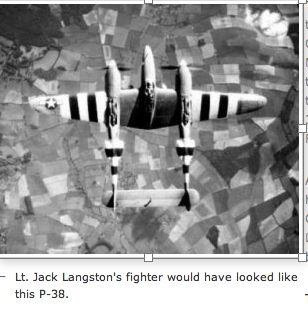
For another San Luis Obispo soldier, an airman, there is a memorial, but no grave. On June 22, 2nd Lt. Jack Langston was flying his P-38 in a low-level bombing and strafing attack on Cherbourg with his 367th Fighter Squadron when that city’s flak guns demonstrated the folly of ordering low-level attacks. Langston died that day with four other 367th pilots. His body was never recovered.

image

The farmworker, Pvt. Martinez, 26 years old, was in the southern suburbs of Cherbourg with the 313th Regiment of the 79th division and would have been grateful for the contributions of Langston and his fellow pilots: a furious eight-minute bombardment to soften the city Martinez and his comrades were ordered to take.

The 79th was sent into action soon after landing on Utah Beach. The division moved west and then turned north to push up the Cherbourg peninsula. The city, at the peninsula’s tip, needed to be taken because the Allies faced an enormous supply problem. They needed a port to help feed, arm, and fuel the growing numbers of Allied soldiers in France—the artificial “Mulberry” harbor that allowed the offloading of ships off Omaha Beach would be destroyed in a capricious Channel storm. For the Allied command, SHAEF, Cherbourg was critical.

It was also difficult to take. Its bristling anti-aircraft defenses would claim Jack Langston. Massive coastal batteries could keep naval support for the Americans at bay, and the city’s Wehrmacht defenders, though not elite troops (20% of them were non-German conscripts) were securely dug in and they had nowhere to go, for they were backed into a corner of France, and so isolated that the only alternative to fighting was to leap into the sea.

That would have been a blessing for Martinez and the 313th Infantry Regiment, because their march north, to the suburbs of Cherbourg, on the right flank of the 79th Division, taught them a bitter lesson in German military engineering.  A network of concrete pillboxes guarded the southern approaches to the city. They contained machine guns pre-sited for interlocking fields of fire, for maximum effect on the American dogfaces.

These pillboxes were impervious to frontal attack—57 mm artillery shells bounced of the steel-and-concrete walls—so two battalions of the 313th engaged the enemy while a third looped to the left and came in on the rear of the fortifications, where they were more vulnerable. The 313th leap-frogged closer to the city, only to discover that the Germans they thought they’d subdued had been hiding deep in underground galleries and had reoccupied some of their fortifications—for a short time, they would cut all of the regiment’s contact with divisional headquarters. So the 313th would have to do what field officers hated—fight over the same ground twice. It must have been a hard lesson for these soldiers, new to combat, to learn.

Once they’d gotten inside Cherbourg, 79th Division GIs learned to hate street fighting almost instantly. Death came instantly from illusory shadows that a fallen soldier’s comrades never saw, and from gunfire they sometimes never heard. In peacetime, a French city block can be cacophonous with the sounds of cafe music, or cheers inside during the World Cup, with the comic honking of little cars or the squeals of children at play. In combat, the same block, seemingly empty, can muffle the report of a sniper’s rifle or generate echoes that make soldiers look anxiously in all directions at once.

image

79th GIs, Cherbourg.

Continue reading →

What do you say to a bunch of Rotarians? Mr. Gregory Speechifies.

20 Thursday Aug 2015

Posted by ag1970 in American History, California history, Teaching, World War II

≈ Leave a comment

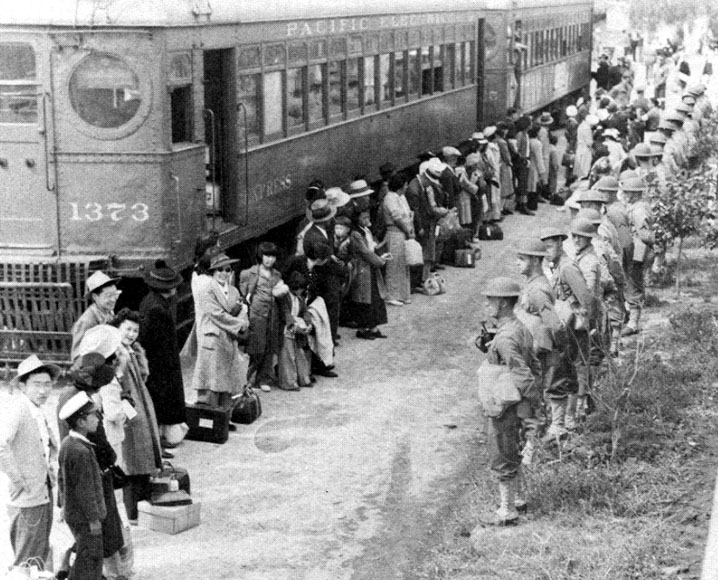
Santa Anita internees, bound for Gila River.

Santa Anita internees, bound for Gila River.

I would like to thank you because I have retired and I need you badly. Today is the first day of school, so this is the first day in thirty-one years that I have not been there.

I have not quite made it to the happy retiree place yet. I am suffering withdrawals: I get weepy when I go into Office Max because I am now irrelevant to back-to-school sales.

After thirty-one years, I can honestly say that I still loved teenagers and loved teaching them. Some people would suggest that I am mentally ill. That is a possibility.

Since that is a possibility, I am going to pretend that you are my designated sophomores. Welcome to Mr. Gregory’s history class!

As a student, my first class came just before Alaska became a state, and, although I cannot say the same about Alaska, I have never regretted that class. I went to the two-room Branch School. Actually, three rooms. One room held grades one through four. The second held grades five through eight. There was a hall in the middle where you hung your coat and where our two teachers motivated us with yardsticks.

I loved growing up here, despite the contusions, and so I had the idea to write a book about my hometown’s experience in World War II, and it found a publisher. It should go to press in November.

I had no idea how many stories a town of 1,090 in the 1940 census would yield. I don’t have time to tell them all, even though I am a history teacher and would certainly like to take that time.

I would like, with your permission, to briefly address three aspects of the war.

–First, I need to talk about what happened immediately after Pearl Harbor because those events impacted the lives of some of my best friends and some of your best Rotarians.

–Second, I’d like to give you a sense of what Camp San Luis Obispo was like during the war. At least eight different divisions—about 15,000 men each– trained here during the war, and they fought in the Aleutians, the Philippines, New Guinea, Normandy, Holland and Germany.

–Finally, I want to introduce you to a young Marine from Corbett Canyon who fought on a desolate place called Iwo Jima.

Before I tell my stories, one more point.

You are not required to like my presentation. The world is populated in part by sad people.

If by chance, you do, then the teaching I’m going to attempt today like is the teaching your children and grandchildren get every day in Lucia Mar schools.

There are Doctors of Education—a degree open to anyone who can write obscure English and collect sufficient Froot Loops boxtops—who are trying every day to confine teaching to a narrow belt on a silent assembly line. This is what we call standardized monotony.

Despite that, most Lucia Mar teachers are much like me. We are passionate about what we do. It’s not a job. It’s our calling. And our thirty-five seats are not filled by abstract manipulatives. Those are our kids. Even if we teach them for only a year, they are, and always will be, our kids, too.

* * *

On December 8, the students of Arroyo Grande Union High School gathered in their new gymnasium—a New Deal WPA work project that is today’s Paulding Middle School gym—to listen to Franklin Roosevelt’s brief but dramatic address asking Congress for a declaration of war.

Haruo Hayashi, a sopohomore, was recovering from an appendectomy when that message was broadcast. He dreaded his return to school a week later. He had no idea how he’d be received.

But nothing had changed his best friends: John Loomis, Gordon Bennett and Don Gullickson. Two of them would later fight the Japanese, but they also would write Haruo letters posted to his desert internment camp. The classmates who called Haruo a “Jap” are so unimportant now that he has forgotten their names.

But two weeks after Pearl Harbor, the war arrived offshore. Verna Nagy, a young Shell Beach resident, was looking out her picture window for a picture-postcard view of the Pacific, when the shaft of a submarine’s periscope appeared. She might have preferred the spout of a migrating gray whale instead.

 A local cattlewoman, on volunteer shore patrol between Port San Luis and Estero Bay, said she saw the sub surface. She let fly with her 30-30 carbine. The range was too great, she said later, but she had the satisfaction of seeing the crew scamper below and the captain dive the boat.

They’re plausible stories. On December 22, A Japanese submarine, I-21 had, fired a torpedo that missed its target, an oil tanker, off Lompoc. The sub headed north, along our county’s coast, in search of targets of opportunity.

I-21 found one in the little tanker Montebello off Cambria, but this time, the result was more satisfying: at 5:45 a.m. on December 23, the sub fired two torpedoes and this time one hit; I-21 surfaced and opened fire with her gun. Its report could be heard inland by residents of Atascadero, 26 miles away. The crew escaped, but Montebello went under 45 minutes after the attack began.

Within weeks, I-21 was patrolling the coast of Australia, would later shell Sydney Harbor, and would be lost with all hands near Tarawa in 1943.

So the surreal shock of Pearl Harbor, followed by the submarine attacks just off the coast, generated fear that outweighed reason. In 1942, Japanese I-boats sank four ships off the West Coast.

At the same time, German U-boats sank 70 ships off North Carolina’s Outer Banks alone. Americans from Coney Island to Miami Beach could watch as doomed American merchantmen and their crews burned offshore.

Nevertheless, it was time, some began to say, to get the Japanese out. The President of the United States, despite the strenuous objections of his own attorney general, agreed.

So, in April 1942, South County Japanese met waiting buses at the high school parking lot on Crown Hill. There was a poignant moment when the Women’s Club brought box lunches for their neighbors to take with them.

The loaded buses then would’ve crept down Crown Hill in low gear, on their way to the two-lane 101 on the western edge of town. Their passengers were crammed inside with their luggage crammed in the bellies of the buses and lashed to the roof racks.

They had to run a gauntlet, along Branch Street, of familiar places: E.C. Loomis and Sons, the Commercial Company market, F.E. Bennett’s grocery, Mr. Wilkinson’s butcher shop, Buzz’s Barber and Beauty, the Grande Theater, the Bank of America and finally, the twin churches, Methodist and Catholic.

The Nisei children and teenagers who grew up here, who had never known any other place, did not know whether they would ever see these places again. Many of them wouldn’t.

As to teenagers, there were 58 seniors in the high school Class of 1942. Twenty-five of them were of Japanese descent, so their carefully-posed senior photos bear no autographs. The yearbook came out in June. Those seniors were gone.

Just past the churches, the drivers, with their silent passengers, turned north to make the connection for the long, colorless journey into the San Joaquin Valley. They would sleep that night at the Tulare County Fairgrounds, in animal stalls that smelled of manure.

Tulare was temporary: an “assembly center.” Gila River, officially known as the Rivers Camp, would house most Arroyo Grande Japanese for the duration in the desert south of Phoenix.

Haruo Hayashi remembered the heat, which hit like a hammer-blow. Families would order swamp coolers from the Sears catalogue, which did little to help.

What Kaz Ikeda remembered was the dust. The desert winds generated terrific dust storms that hid the sun and the dust, sharp and gritty, permeated everything: bedding, nostrils and ears, the floors of the barracks, which required endless cycles of sweeping, and even the internees’ food. The dust would begin to kill older people, as well, who were susceptible to valley fever, whose spores came with the hot desert winds.

When Kaz tried to form a baseball team, it was the wind that destroyed his best efforts. Most of his players were Buddhist, and, as their parents began to die, many from lung disease, the sons observed the traditional 49 days of mourning and prayer. As a result, Kaz lost his first-string pitcher and then a catcher. Kaz’s father, Juzo, paralyzed by a farm accident, told his son that when he died, Kaz could go ahead and play the following week.

When Juzo did die, in 1943, Kaz left to top sugar beets in Utah and began to put aside a little money. Ben Dohi went to college in Missouri. Haruo Hayashi joined the 442nd Regimental Combat Team and discovered, when he tried to use the colored men’s latrine at Camp Shelby, Mississippi, that he was a white man.

By the time the camp closed in fall of 1945, only old people and children remained.

The young people who had left may have saved themselves in ways they couldn’t have foreseen. Kaz would live to be 94. Haruo, who lost Rose, his remarkable, generous-hearted wife, this summer, still lives on the Hayashi farm. Ben Dohi lives on land now farmed by his two sons.

Getting out may have been key to their long lives, because many internees would lose their health as well as their freedom. A 1997 study revealed that internees had a rate of a cardiovascular disease twice that of the Japanese-Americans who lived in the interior and so escaped internment. Many of them experienced the symptoms of post-traumatic stress syndrome, including flashbacks.

The impact of the camps would extend into the third generation, or Sansei: whose parents commonly refused to discuss the camps with their children, and this contributed to a family dynamic fraught with tension and with shame. The Sansei felt intense pressure to assimilate, which in turn generated a sense of emptiness, a loss of cultural identity, and an even more intense pressure to succeed in school and beyond—which most of them did.

Juzo Ikeda’s life had been a successful one, too, marked by hard work. But his workplace had been beautiful—green hillsides, fields of black earth and, in the distance, above the ears of his team of horses, he could see shimmering white sand dunes. He could smell the sea. In coming to America, he had set himself and his sons free.

But when death came for him, Juzo was in a makeshift hospital in a barren desert camp. He died not long after asking his son to remain loyal to the nation that had made them prisoners.

Going into the Dark: Why I Teach (and Study) the History of War

22 Wednesday Jul 2015

Posted by ag1970 in American History, California history, Teaching, World War II

≈ Leave a comment

Tags

education, Verdun, Warfare

 Cover Art concept

I’ve just retired. I taught history for thirty years, and I never, never ceased to get angry when I taught Verdun, for example. The bones in the ossuary there belonged to boys like my two sons, whose parents applauded at their first steps or who cheered when they scored their first football goal. I made it my business to make my kids understand that, and so I needed to lead them into dark places, like Fort Douaumont at Verdun, a place so dark that it swallowed the light of five hundred years of Western culture.

To go inside Douaumont, to study war, does NOT mean we glorify it. Two years ago, a student told me the First World War was her favorite unit (Not mine. I much prefer La Belle Epoque.) I asked her why in the world it was her favorite, when I felt so much despair in teaching it. She replied: “Now I understand how precious human life is.”

She understood precisely why I became a history teacher.

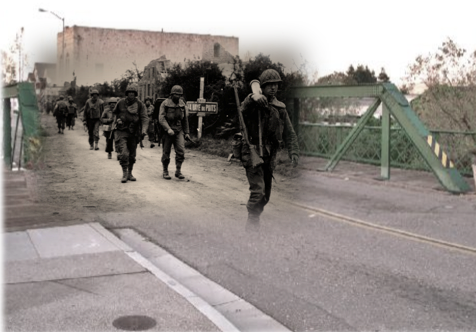
I am now under contract to write a book about my little California farm town’s participation in World War II. That is our bridge in the photograph’s background, and one of our young men died with the soldiers superimposed on the photo, from the 79th Infantry Division.

In the process of writing this book, something extraordinary has happened within me–within my heart: The more I research these young men of my father’s generation, the more they become my sons.

Through no one’s fault, they’ve been mostly forgotten. It’s my job, as a writer and teacher, to name them and to reclaim them for a new generation. When we come to know them, we are granted the chance to embrace them, and maybe that is the force that will carry us a small step further along in our evolution.

The great Jesuit theologian and anthropologist,Pierre Teilhard de Chardin,, believed that we have a divine gift: we can evolve spiritually as well as intellectually and physically. I believe he is exactly right.

But I believe also that we cannot advance if we leave behind the boys and men I’ve met, the casualties of war. Their lives were, and are, precious, and if they could somehow save other young lives, I think they’d do it in an instant.

A North Vietnamese soldier-poet wrote that “the bullet that kills a soldier passes first through his mother’s heart.” If the young men I now know could somehow spare other mothers the pain theirs went through, then I think they would do that in an instant, too.

It is our responsibility to confront and understand the horrific violence that took their lives. I now know a farmworker who died in a Norman village called Le Bot, a B-17 crew whose ship was blown apart over the Pas-de-Calais, a Filipino mess steward–the only rating allowed him in a segregated Navy–who was lost with his destroyer in the waters of Ironbotttom Sound, off Guadalcanal.

These young men lit a path, in dying, for the living to follow. If we ignore them, we will lose the path, and the dark will have won, after all.

Rose is a Rose

14 Tuesday Jul 2015

Posted by ag1970 in American History, California history, World War II

≈ Leave a comment

Tags

Japanese-Americans

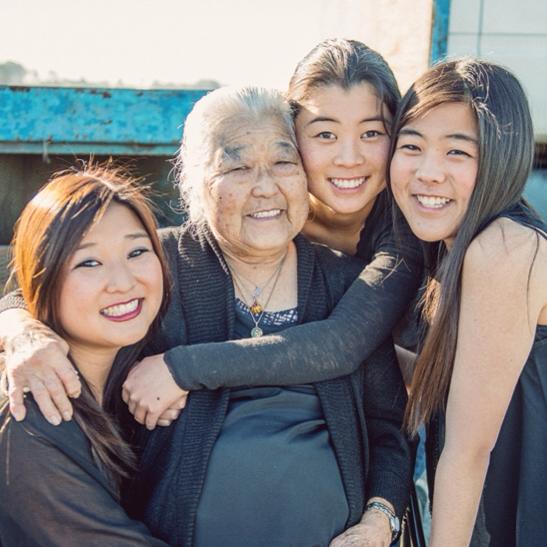
Rose and her granddaughters: Ally, Lauren, Jana.

Rose and her granddaughters: Ally, Lauren, Jana.

This is an exchange from what has to be one of the finest antiwar films ever made. A young Australian, Frank, is about to join the ANZAC assault on Gallipoli, in one of the great catastrophes of the First World War; his father, an Irish immigrant, can’t let go of the past, demonstrated by Frank finishing a story he’s heard a thousand times.

  • Dad: Fine. But what… do you want to join up for? The English killed your grandfather. Hung him with his own belt…
  • (Both): …five miles from Dublin.
  • Frank: I’m not going to fight for the British Empire. I’m gonna keep my head down. Learn a trick or two, and come back an officer. Maybe. I don’t want to be pushed around forever.

 From Peter Weir’s Gallipoli

In 1799, the English executed three dozen Wolfe Tone rebels, shooting them down in front of their keening families in the village where my great-great grandfather was baptized. I thought of that and thought of this scene, so, of course, I thought, too, of Rose Hayashi. We have just lost her.

I knew she wasn’t well—four weeks ago, I interviewed Haruo, her husband of 62 years, for the book I’m writing. Rose was in a walker and moved quietly around the room with her son, Alan, close by her side. Alan wasn’t hovering—he gave Rose her space and her dignity, but he was there just the same. His discretion was a sublime act of devotion..

Rose had taught Alan the uselessness of hatred. He’d grown up a little angry, with the potential to become as righteously bitter as Frank’s Dad. He could not abide the racism and the insult that had scarred his parents’ lives, that had sent them to—can we call them what they were?—concentration camps in the Arizona desert. At Gila River, for example, in July 1942—where Arroyo Grande’s Japanese lived with those from Los Angeles who’d been put up in the stables at Santa Anita–two-thirds of the month’s highs were above 109 degrees, and the hot desert dust would start to take a toll, especially among older people, because it carried the spores that brought on Valley Fever.

Alan had every right, in my mind, to be angry. Not in Rose’s mind. She finally took aside her young son one day and, in very direct yet loving terms, told him how bitterness can eat away at a person. She and Haruo had learned, somehow, not to compartmentalize their hurt, but how to transcend it, defeat it, reject it, destroy it. This is a testament to that generation’s immense emotional strength, and that was a gift Rose gave to her five sons.

When I saw the family on my visit, I was struck by Alan’s attentiveness to Rose and by the family’s devotion to each other. The television was on to ESPN, the men who’d given their lives to hard work were taking the time on recliners and a sofa to do nothing, and grandchildren moved quietly through the house to say hello to Grandmother and to raid the refrigerator. Kim made me a coffee and a snack. There was nothing demonstrative, nothing melodramatic, but you could sense that Rose was nearing the end of her journey, and the subtle strength of the family around her was carrying her gently toward her transition.

I have never seen family love made so manifest by the fact that it was also so unobtrusive and natural. It was humbling to see. This, too, was Rose’s gift to her family, to the future, and, on a day when we never spoke, it was a gift I’d never asked for from her, yet one that gave me great joy in the taking.

Several days later, I obeyed a powerful need to send Rose a bouquet of flowers. I knew my own mother would understand, because, in a way, I had met her again on the day of my visit.

Brother and Sister

08 Wednesday Jul 2015

Posted by ag1970 in American History, Arroyo Grande, California history, World War II

≈ Leave a comment

20150705_164657

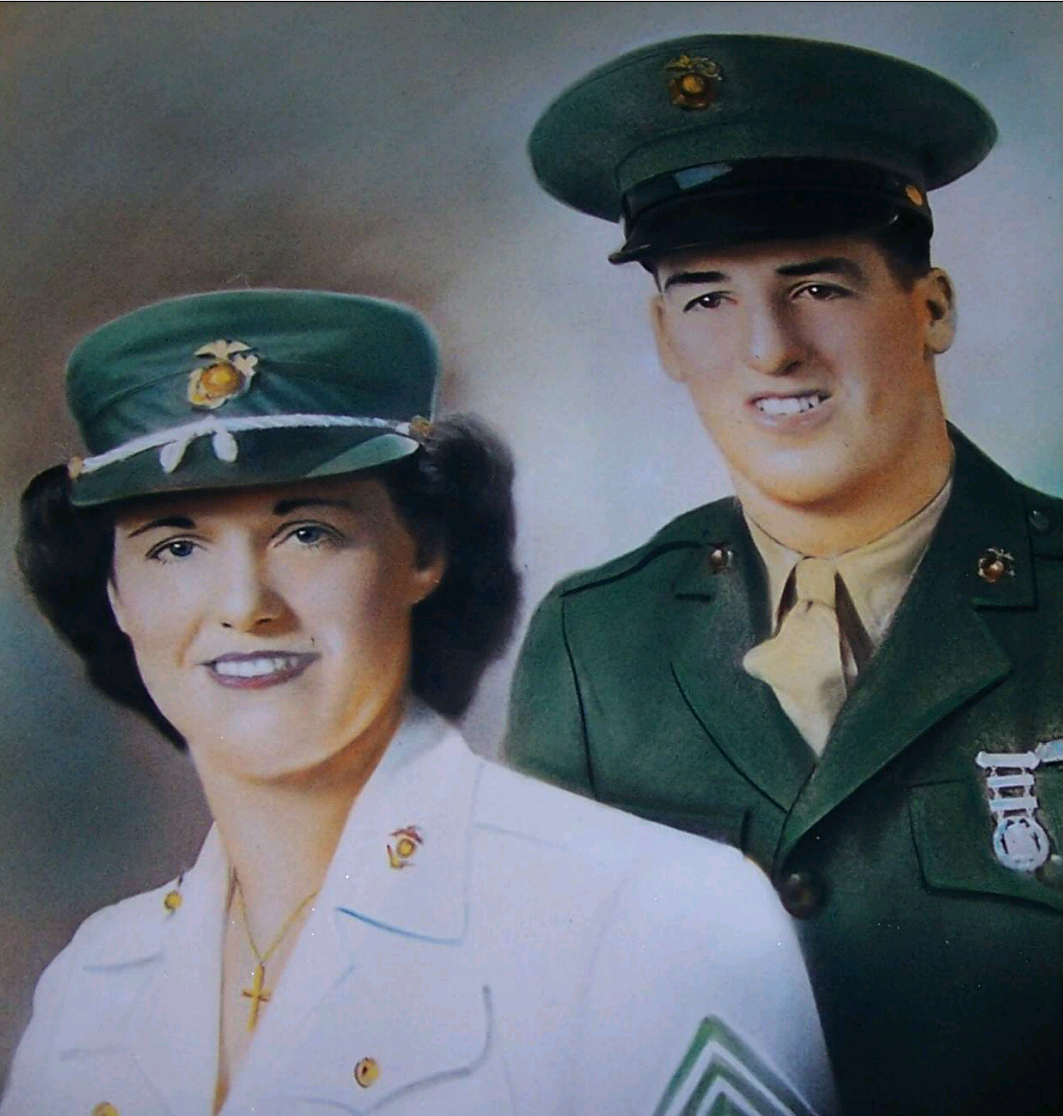
Thelma and George Murray, in a composite made for their mother.

If Guadalcanal was a turning point, Tarawa was one of the most terrible teaching moments of the American war, and it led to two close encounters with history for a brother and sister from the Lower Arroyo Grande Valley, from the little town of Oceano. This is where the farm fields end at steep seaside sand dunes, and here are the packing sheds and the loading docks alongside railroad tracks that carry Valley produce to distant markets.

The brother was a Marine private, George Murray, who was killed in action in the in the Battle of Tarawa in the Gilbert Islands in November 1943.  It was a horrific battle—one of the best accounts of it comes in an aptly-titled book, One Square Mile of Hell–in which many mistakes were made. Murray didn’t die in vain, for the mistakes made at Tarawa, the first objective in Adm. Chester Nimitz’s Central Pacific island-hopping campaign, would save the lives of later Marines and of the dogfaces who landed on the coast of Normandy seven months later.

One of the mistakes in this pioneering amphibious assault was in was in the miscalculation of the tides at Betio Island, the key objective in the Tarawa Atoll, which shifted capriciously and so left many of the Marines unable to land on D-Day, on November 20. Their landing craft, the Higgins boat, was unable to surmount the coral reef that guarded the approach to Betio’s landing beaches.

George Murray was among them. While earlier units took such intense fire that 2200 of the 5000 Marines in the initial wave were killed or wounded, his unit, the 1st Battalion, 2nd Marine Regiment, spent most of D-Day, November 20, circling, hour after hour, outside the reef, impotent. It must have been maddening for them, and they were hungry, wet, seasick, and terrified.

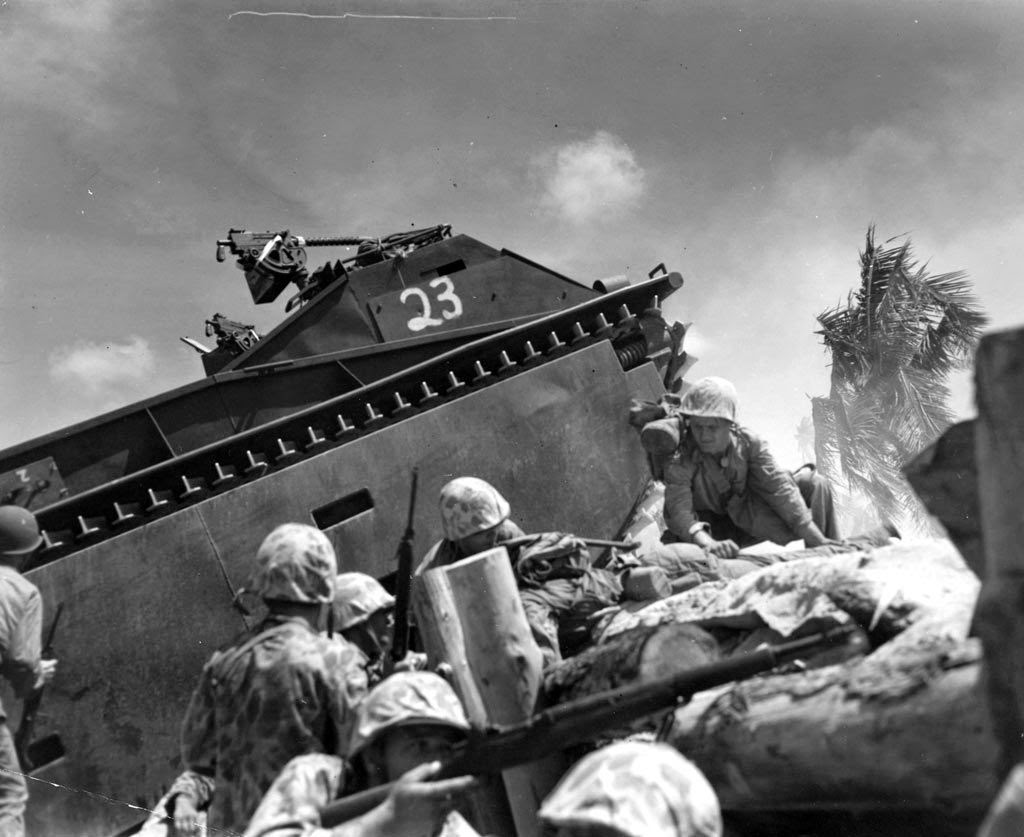
It was close to 10 p.m. when Murray’s company was finally ordered to land in support of the first waves, desperately clinging to a sliver of beach below a sea wall and flanking a pier on Betio. The Marines had to transfer from their landing craft—the Higgins boat was essential to the war effort but this day was impeded by the reef—to LVT’s, the smaller amphibious tractors that also were facing their first test under fire. Murray’s company would hit the beach at about 11:30.

Marines use an amphibious tractor for cover on the beach at Betio Island, Tarawa.

Marines use an amphibious tractor for cover on the beach at Betio Island, Tarawa.

A Department of Defense summary prepared for Murray’s descendants is both colorless and oddly moving in its description of what happened at that moment:

Three tractors of Company B landed on the left side of Red Beach Two. When the men tried to disembark from the first two tractors, only nine of the twenty-four men actually reached the beach…Private First Class Murray’s Casualty Card indicates that he died of gunshot wounds to the head and chest on 20 November 1943. Private First Class Murray was reported buried in East Division Cemetery…Row A, Grave 6. Based on PFC Murray’s recorded circumstances of death and the indication that he was initially buried at this location, it seems likely that PFC Murray did make it to the beach before being killed.

PFC Murray didn’t make it home. His remains have since been lost. Local historian and museum curator Linda Austin has joined Murray’s nephew and namesake, George Winslett, in a long and emotionally-charged search, lobbying the Defense Department and winning the support of JPAC—the Joint POW/MIA Accounting Command—in the search for Murray. In a tragedy of errors, Navy SEABEE teams reorganized and reconfigured East Division Cemetery after the battle; after the war, Army Graves Registration teams, guided by information from Marine Corps chaplains present for the original burials, could not find the cemetery. After digging several cross trenches, the team finally began to find graves—but only 129 of the more than 400 they’d expected. Several sets of remains were transferred to Hawaii for identification, but Murray was not found, either on Betio or in the forensic labs on Oahu.  For his mother, Edith, it was like losing her only son twice: she now had no formal way to honor him. She was heartbroken.

So was Murray’s sister, Thelma. She wasn’t willing to wait to honor her younger brother—they were two years apart–so she, too, joined the Marines. She became a driver–and a good one—stationed at Camp Lejeune, North Carolina. Thelma eventually would marry another good driver, a truck driver, Elmer Thomas Anderson, with whom she’d hitched a ride from home in Oceano to a new duty post in San Francisco; Anderson drove for what would become Certified Freight Lines, located where the Bank of America now stands on Branch Street. An honorably discharged Army Air Force staff sergeant, Elmer would sometimes debate good-naturedly with his bride of more than forty years on who, precisely, outranked whom.

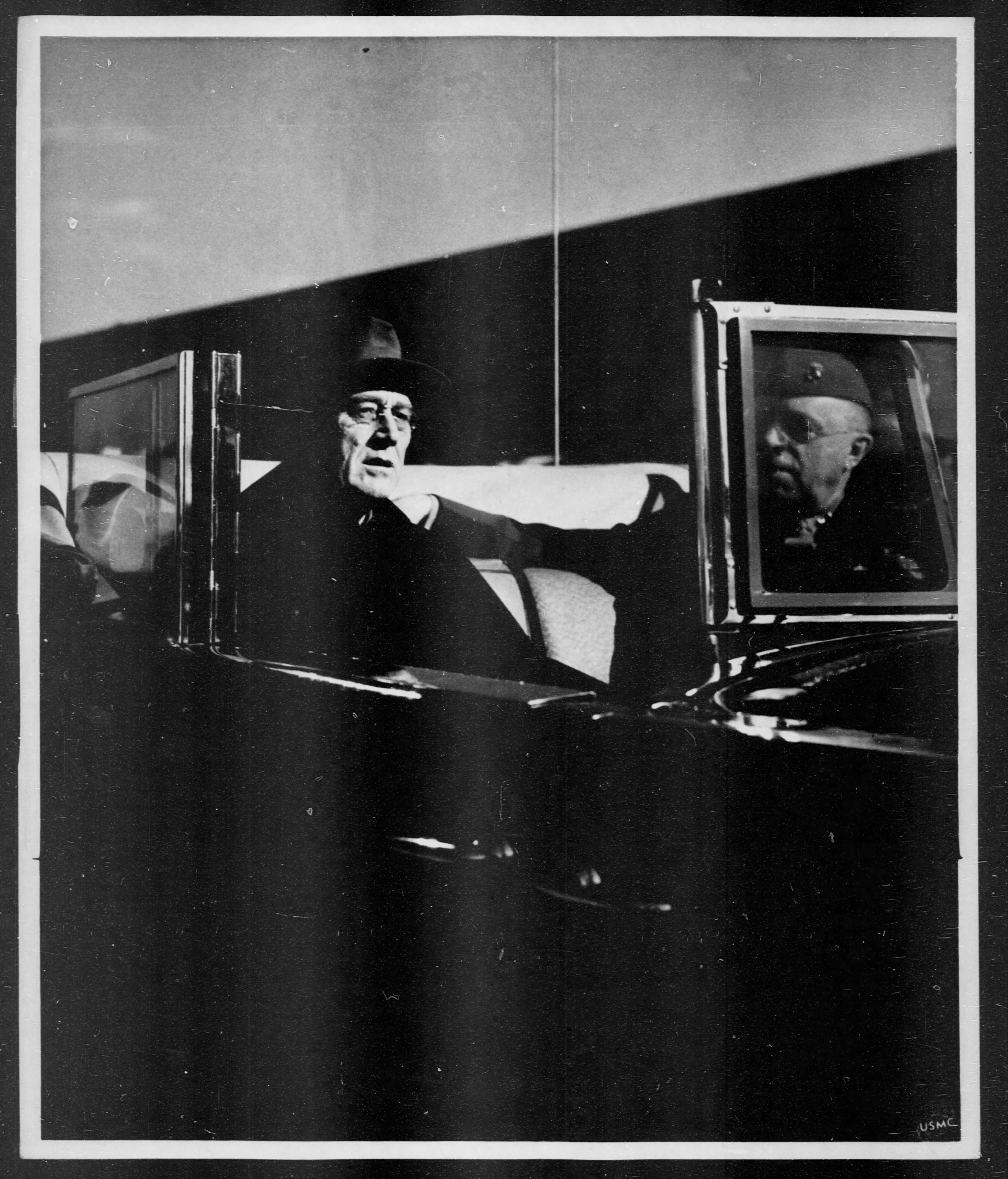
One of Thelma’s assignments as a driver at had come when a dignitary visited Camp Lejeune on December 18, 1944, and he had to have the best Marine possible to transport him. Marine Lt. Gen. Herbert Lloyd Wilkerson, a Guadalcanal veteran, was an officer trainee that day. He remembered, in a 1999 interview:

The black cabriolet, with its top down, pulled up close to our commanding officer, LTCOL Piper, who presented us to the Commander-In-Chief. I was in the front rank within 20 feet from the auto and could hear their voices. The auto was driven so close to the commanding officer that he hardly needed to move to reach the side of the vehicle.

The driver needed to be exact, because the dignitary couldn’t get out of the cabriolet and so reveal his paralysis to the fit young Marines.

Thelma’s passenger that day, of course, was President Roosevelt.

FDR at Camp Lejeune 18 Dec 1944

FDR with the Camp Lejeune commanding officer, December 18, 1944.

Deep waters

28 Sunday Jun 2015

Posted by ag1970 in American History, News

≈ Leave a comment

b17298183bd616eed9101deebf3312259dd3c7f9

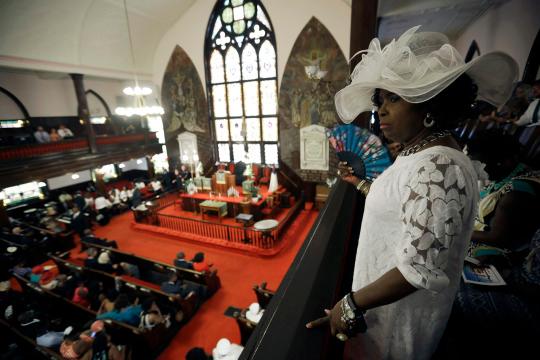
Mother Emanuel this week reminded me of this lesson, in the link, that I used to teach in European history.

Christianity, it seems to me, is sustained by humility and forgiveness, and those two are streams fed by deeper waters still. The AME congregants I saw this week, just like the Amish in the Reformation lesson, drink from those waters. By contrast, I see so much barrenness in so much of modern American Christianity.

What I see instead of humlity and forgiveness are arrogance and sanctimony. I see hypocrisy. I see the comfort the weak and ostensibly victimized find in divinely-justified hatred. I see a passion for retribution, a weakness for corruption, and a smug anti-intellectuallism. What a sad waste, since we already have a Congress for these kinds of things.

How life-affirming and how liberating real Christianity can be! Mother Emanuel reminded me of that–as does Pope Francis– and so this week a Charleston church in deepest grief gently humbled me down to Jesus’ level, down to where I would always aspire to live were my own life not so narrowed by pride.

 http://www.aghseagles.org/apps/video/watch.jsp?v=58842

Family Secrets

15 Wednesday Apr 2015

Posted by ag1970 in American History, California history, Family history, Personal memoirs

≈ Leave a comment

Emma Martha Kircher Keefe
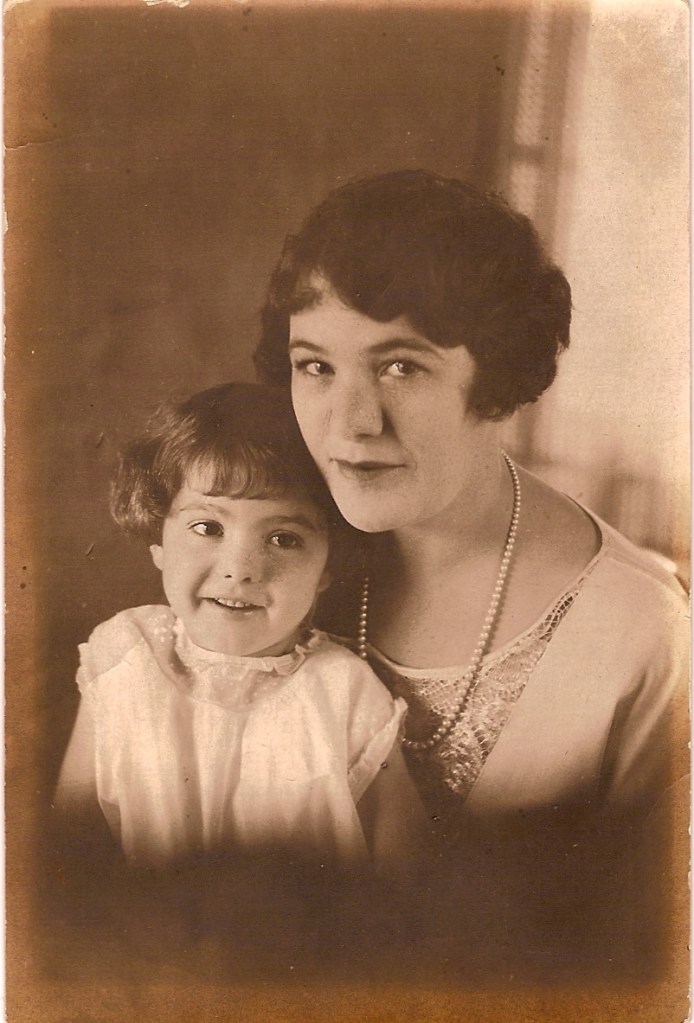
My grandmother and mother, about the time of the story in the Bakersfield Californian.

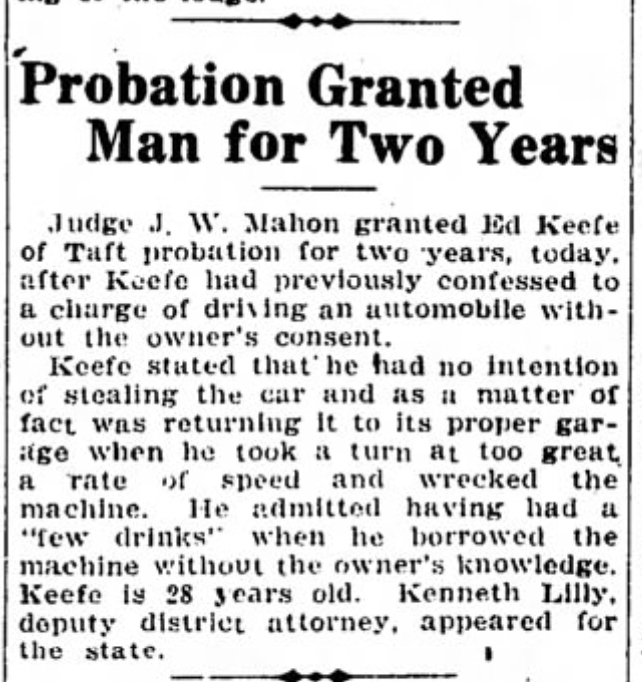
The Breed Act forbade borrowing another California’s driver’s vehicle without permission, but neglected to assess a penalty for its violation. This old article points out the folly of such a law by spinning this story:

The Bakersfield Californian

April 10, 1925  

Keefe Arrested Now comes Ed Keefe of Taft into the story. Not so long ago Keefe. a young man, became intoxicated In Taft, borrowed a car without leave of the owner and in a wild-eyed attempt to emulate the harrowing speed of the wilder-eyed Darlo Resta, wrecked the machine, authorities allege. With dispatch, officers of the Taft constabulary incarcerated the young man and the new charge made one of its maiden appearances opposite the name of Keefe, who Is no relation to the ball player.

The charge was “driving an automobile without the owner’s consent.” Keefe pleaded guilty to the felony and asked for probation. The court considered that It was his first offense; that he had a young wife and baby to support and granted the plea for leniency.  

Shortly after probation was allowed Keefe was arrested again by the Taft police who accused him of doing everything except making an attempt to roll the streets of the oil town. Again Ed Keefe appeared before Judge Mahon last week. Keefe denied before the court that he had attempted to apply the crimson brush to the portals of the West Side city, explaining that he had merely gone home to “sleep it off” in a genteel manner. After a severe reprimand and an order to behave, Keefe was given his freedom. He promised faithfully to accept the mandate of the court.  

Third Time

Today, Keefe appeared In court for the third time. Taft officers had pounced on the young hopeful again. They argued that he had attempted to mitigate the woes weighing upon his weary shoulders by a prolonged absorption of paint remover, often labelled synthetic gin or Scotch, according to the whims of the labeller.

The Taft officers informed the district attorney’s office that Keefe after “getting likkered up” had gone home where he endeavored to “beat up” his wife until the majesty of the law crimped his style. Judge Mahon made the young man the subject of a third excoriating reprimand, regretting that he was unable to imprison Keefe. The court reviewed his leniency granted In the hope that the defendant would “behave himself” and then predicted that Keefe would soon appear In court again with the label of some bona fide charge with a penalty attached.  

Given Freedom

To the neglect of the framers of the Breed Act, young Keefe owes his freedom. His wife wants to give him even more freedom for she has filed a complaint for divorce…

The writer is heavy-handed, too arch for his own ability, but young Keefe is too rich and too pathetic a target to pass up. He deserves every lash of this bush-league Mencken’s whip.

The problem is, Ed Keefe is my grandfather.

He was Irish–his father was born in the Famine years—and Ed would be the tenth of eleven children born on a Minnesota homestead, would become the love of my grandmother’s life, and, when he had disappeared by 1927, he left an emptiness in my mother’s heart that would never be filled.

She spent the rest of her life wondering about him.  My parents even hired a detective to try to find him, and I’ve spent years searching for him on the internet–uncovering instead a cache of respectable, middle class, well-educated and pious Keefes, including an unexpected nun. I found their ancestral village, Coolboy, in Wicklow, then traced where nearly every one of them, in a trail that leads from Ontario to Minnesota to Kern County, was married and buried, and Edmund is not even a whisper.  Not even a footnote.

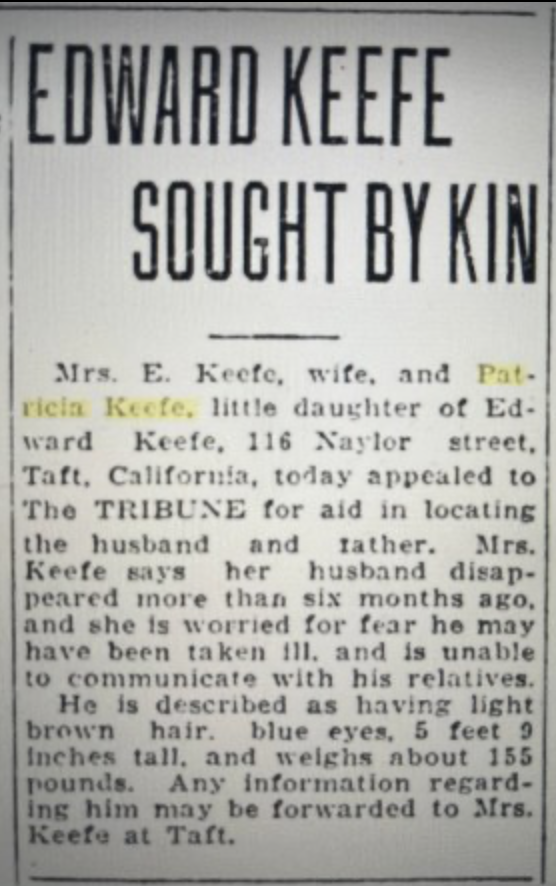
 Update, May 2025. That wasn’t that Ed “borrowed” a car. The first two articles are from July and August 1924; the third, when he’d gone missing, was from an October 1925 Oakland Tribune.

Last night I accidentally googled this story. I reflexively wanted to punch out the man who would strike my grandmother–my Grandma Kelly, when she married another, more reliable, Irishman, a Taft police constable–and who would have so terrified my mother, four years old at the time of this news story, with all the violence it implies, buried or lost in her memory, a good thing. She never found him, which she thought a bad thing.

Ed Keefe didn’t to deserve to play the ghost that haunted my mother’s memories– he hadn’t enough character or weight or importance. But he was her father. And he’s not important enough, either, for me to hate.  But he was my grandfather. Actions like these–impulsive, thoughtless, outrageous–suggest to me that he was already a lost cause at 28, and that his alcoholism almost certainly had deeper roots, possibly in bipolar disorder or in the depression that has stalked both lines of my family and has followed me in my own life from the day that it took my mother’s.

My step-grandfather, the police officer, George Kelly—my Gramps–was the grandfather any boy would want. Once, long before I was born, in a story that made me shiver when my Dad told it, three oilfield roughnecks jumped him in an alley while another officer, Pops Waggoner, was enjoying a Coke-and-something-else in the Prohibition-era Taft Elks Lodge. Pops heard the scuffle and stumped, with his wooden leg, down the stairs to the alley and was too late. He found three unconscious men and one intact and upright Irish cop, in need of a new uniform. That was the same Gramps who played catch with my two-year-old son two decades ago with a little rubber ball and played so gently and talked such soft and silly nonsense—the language of very small children– that my son, John, fell a little in love with him. As I had.

Gramps. I imagine that it was a beard-growing competition for some Taft civic celebration.

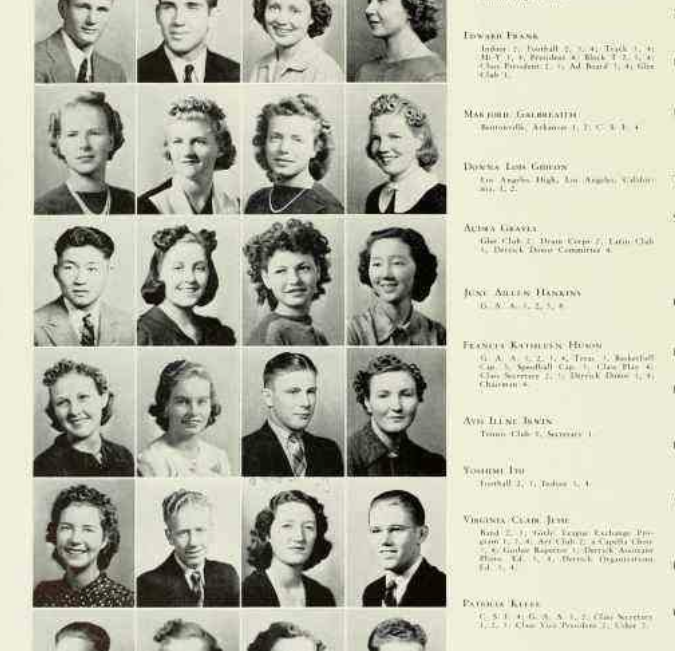
So I am no more comfortable about feeling sorry for myself over the accidents of biology and genetics that have flawed the lives of my mother and me than I am with punching a dead man. In fact, the story about Ed Keefe only made me love my mother more. She never had the inclination, or the self-regard, to understand that no victory she won in her life was too small. I am fascinated by this page from her senior yearbook, the 1939 Taft Union High School Derrick.

Screen Shot 2015-04-14 at 10.13.10 PM
My mother, in the third row from the top, third from the left.

Her natural curls are shaped in a way that’s suggestive of Shirley Temple’s moppet locks or Gone with the Wind’s Butterfly McQueen–1939 was the year that film premiered–and in her pose, she’s looking backward, over her shoulder. What’s pursuing her might have destroyed anyone else far earlier:  Her father was a drunk, a kind of charming and feckless village idiot, the butt of the Bakersfield Californian, with all the literary majesty that this newspaper possesses, and so she would have grown up with that inheritance and with all the cruelties children can inflict on each other, in bloodless wounds that never heal.

But.

She is in CSF, GAA, she is class secretary, class vice president, and there is nothing in that face that hints at defeat or humiliation or isolation. With a father as absurd as hers it is not absurd at all to draw an inference from a source as trite as a yearbook page and its little clutters of honoraria, from such a distant time and place.

So this is what I have learned in the last two days about my mother:

She would never stop glancing back over her shoulder. But, at 17, at Taft Union High School and Junior College, at the end of an era that had wounded and humiliated an entire nation and on the cusp of one that would make our power nearly unlimited, a lonely little girl had found her identity. She was a year away from marriage and four from motherhood, which would become her greatest and most enduring gift. She would strike sparks in my life:  a love for learning, a fierce sense of social justice and a hunger for God’s presence–the last, a lifelong irritant that I cannot get rid of, no matter how hard I try.

I cannot tell you how much I admire her.

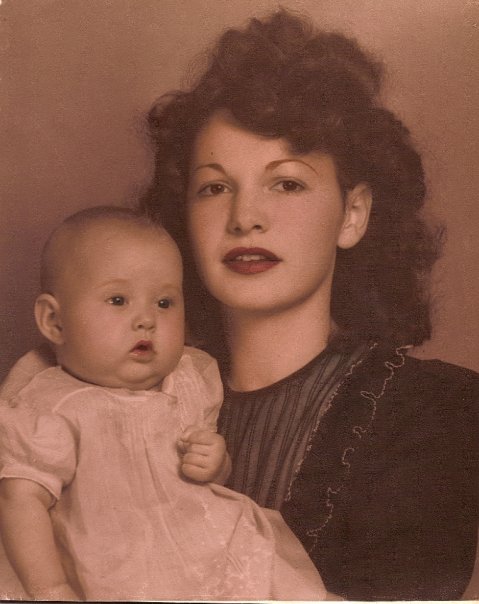
Patricia Margaret Keefe Gregory and her eldest child, Roberta, a wartime portrait.

For Jack

09 Tuesday Dec 2014

Posted by ag1970 in American History, California history, World War II

≈ Leave a comment

Picture1

A young man, and a talent, lost in the attack on Pearl Harbor in the destruction of the USS Arizona.

https://drive.google.com/file/d/0B_TbsWyRzbSbcDlLWUpXekJyNlk/view?usp=sharing

What I will say on Veterans Day.

11 Tuesday Nov 2014

Posted by ag1970 in American History, California history, World War II

≈ 1 Comment

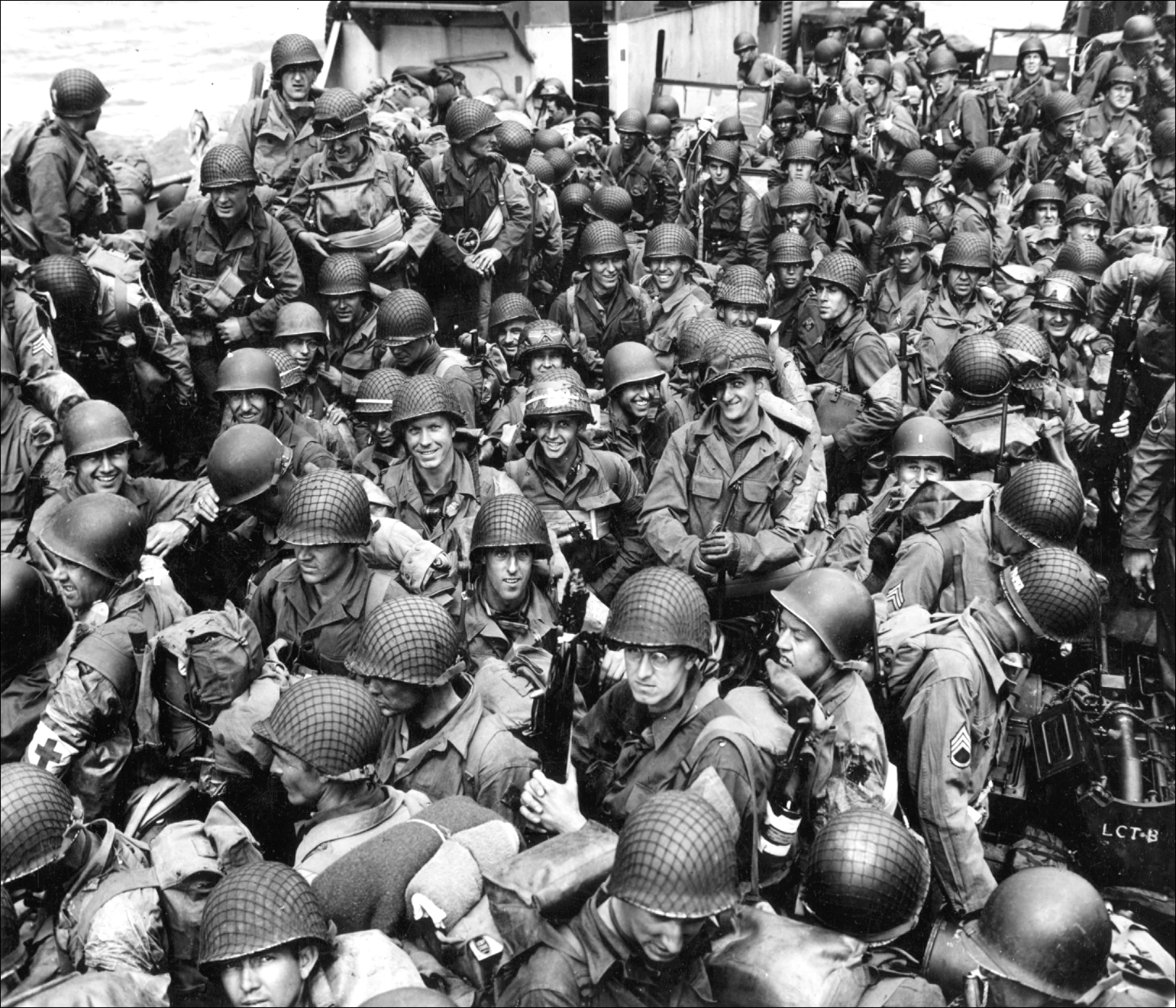
media-dday-anniversary-lg03

I am supposed to give a speech tomorrow to the American Legion for Veterans Day.  I enjoy public speaking every bit as much as a condemned man enjoys his firing squad. But I am stubborn Irish, and if I agreed to give a speech, I will do it.

I am speaking about Arroyo Grande’s participation in World War II.  I am not sure the American Legion would want to hear everything I might want to say. I do love my country–by which I mean frontier women on laundry day, hauling bucket after bucket of water from the well to zinc washtubs, black men rousted on street corners because they have the audacity to be black men, alive and on street corners, children in Appalachia whose cupboards are bare except for ketchup and white bread, the firemen who sprinted up the steps of World Trade 1, the young women and men who dance the old dances at tribal meetings, the beautiful jingling of their beaded costumes, the beauty of a young woman track athlete as she makes her measured, powerful approach to the pole vault–but I am not a flag-waver. America is the sum of the richness of her land and her people, and so is too complex to be trapped by facile symbolism.

I most emphatically do not believe in “American Exceptionalism”–I think, in fact, that it’s a pernicious idea and smacks of the kind of superiority, bred by insecurity, that so poisoned Germany and Japan in the years between the wars. And I know that our military, in places like Wounded Knee, the Philippines, and My Lai 4, have done barbaric things that soldiers, including the Germans and the Japanese, sometimes do in warfare and for which there is no conscionable excuse.

Since I want to live long enough to have lunch with them, I probably won’t bring those up.  I guess what I’ll say might be something like this.  But I believe this as much as I believe anything else I’ve said.

*  *  *

I made a decision several months ago to write a book about Arroyo Grande’s participation in World War II.

I was supposed to have written several by now, according to my high school classmates, but I am easily distracted and have a short attention span. That intensified the shock I felt when my book proposal was accepted by an actual, real live publishing company.

But I am a history teacher because my father taught me how to be a storyteller. The stories he told of his time in World War II mesmerized me. So my Dad is one reason for this book.  My love for my hometown, Arroyo Grande, is another.

What has struck me, over and over again, in researching this book, is how capricious and perverse war can be in taking the lives of young men whose first steps, or first words, first school play or first home run brought such joy to their parents.

Arroyo Grande in World War II provides many examples of this kind of cruelty.

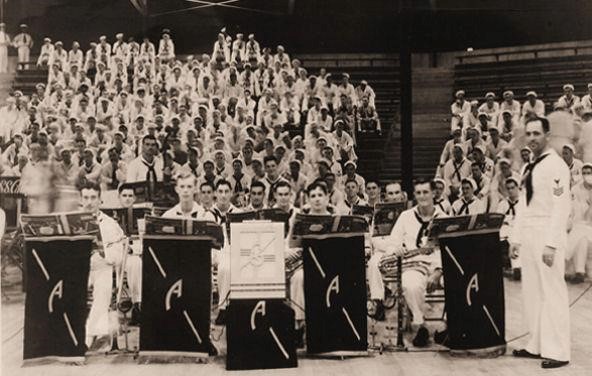
–There is the little boy who learned to play piano in Arroyo Grande; he would eventually pick up the trombone and the accordion and, when his family later moved to Long Beach, he would start his own dance band.  He opted for the Navy specifically to stay out of the Army and he was about to join a detail from his ship’s band in the National Anthem when a bomb straddled “Arizona” and blew him, dead, into Pearl Harbor.  His name is Jack Scruggs.

–The 1938 Arroyo Grande Union High School valedictorian was so brilliant that after his graduation from Cal, the Army Air Force selected him for a special program: He would be among the lead pilots, called “Pathfinders,” in over the target, equipped with the new radar, and his bomb group would drop their payload on his signal, when he let his bombs go.  Three weeks before his first mission, he was hitching a ride on another B-17, whose inexperienced pilot flew the bomber into the side of a mountain in northern England. The wreckage is still there today.  His name is Clarence Ballagh.

–The farmworker fought in Normandy with the 79th Division to secure Cherbourg. His regiment then fought through the hedgerow country, the death-traps of the bocage, and then helped to seize the heights above a key crossroads town, Le Haye de Puits. SS-Panzer units launched a counterattack on his regiment’s position and it failed. The Americans defeated some of the most hardened and motivated soldiers in the German Army, then, took the town the next day in house-to-house fighting. He died after this battle, when the 79th Division was pulled back off the front line for rest, in a chance encounter with German troops. His name is Domingo Martinez.

–The Filipino-American mess attendant, the only rating to which a man like him could aspire to in the racist wartime Navy, wrote the funniest, most endearing letter a serviceman could write home. It was published in the Arroyo Grande Herald Recorder, and it was the kind of letter that made you wish you had known him. Three weeks after he wrote it, near Guadalcanal, a Japanese Long Lance torpedo blew the bow off his destroyer, “Walke.”  He died along with a third of the crew, including her captain, and many of them died in the water. They survived the torpedo hit but were killed by the concussion of “Walke’s” depth charges as they tumbled to the bottom of Ironbottom Sound.  His name is Felix Estibal.

–Before the war, he worked at the E.C. Loomis feed store, one of the last of a string of children of parents who came from the Azores.  He supported his wife and helped to support his mother, and since he worked for the Loomises, he would have known virtually everybody in Arroyo Grande–population 1,090–and they would have known him. He served in a tank destroyer company in France–big tanks with 90 mm cannon that equaled or even bettered the German 88mm gun and the superb armor of their tanks.  On Nov. 27, 1944, his company fought off a furious German assault. The Germans brought superior numbers to the little town of Falck, but the Americans bloodied them and turned them back.  On the next day, his company advanced to another objective when the lead tank ran into a ditch, a German round knocked the tread off a second, and the whole column, stalled, was destroyed. Everything that could go wrong did. His name is Frank Gularte.

–And you will meet a 20-year-old Marine who died as a replacement on Iwo Jima among veterans who did not welcome him and did not want him.  His total combat experience in the Second World War was, at most, 48 hours. He died 48 hours before he turned 21 years old.  His name is Louis Brown.

It strikes me that what kills men most often in warfare is not glorious bayonet charges but mistakes, in inferior equipment, in misguided orders, in inexperience, and, most of all, because of mistakes on which nothing can be blamed.  They are fate.

Maybe it’s a different kind of fate that led me to write this book.

When you research men like these something powerful happens.  They are of my father’s generation, but the more I get to know them, the more they become my sons.

I miss men I have never met.

Their deaths may seem to have been impersonal and illogical, but they have great meaning. Here is why.

I am amazed at the way the young men and women who survived the war came home and put themselves back to work.

They built schools, started Babe Ruth leagues and Boy Scout troops, ran for office, started hardware stores, incorporated a hometown bank, and poured everything they had into my generation to make sure our lives were safe, to make sure our stomachs were full, to inculcate in us the need to get a good education and the desire to make something of our lives.

It is no coincidence that I grew up loving Arroyo Grande. When my family moved here in 1952, the veterans of World War II had already prepared a home for me.

They worked so hard, I think, because they knew that’s what Jack Scruggs, Clarence Ballagh, Domingo Martinez, Felix Estibal, Frank Gularte, and Louis Brown would have done, too.

The generation, raised in depression and in war, to whom we owe so much, would not allow themselves to rest until they had paid their debt to the men who would never see the Arroyo Grande Valley again.

Watergate As a Spectator Sport

23 Saturday Aug 2014

Posted by ag1970 in American History, Uncategorized

≈ Leave a comment

Slide1

← Older posts
Newer posts →

Subscribe

  • Entries (RSS)
  • Comments (RSS)

Archives

  • April 2026
  • March 2026
  • February 2026
  • January 2026
  • December 2025
  • November 2025
  • October 2025
  • September 2025
  • August 2025
  • July 2025
  • June 2025
  • May 2025
  • April 2025
  • March 2025
  • February 2025
  • January 2025
  • December 2024
  • November 2024
  • October 2024
  • September 2024
  • August 2024
  • July 2024
  • June 2024
  • May 2024
  • April 2024
  • March 2024
  • February 2024
  • January 2024
  • December 2023
  • November 2023
  • October 2023
  • September 2023
  • August 2023
  • July 2023
  • June 2023
  • May 2023
  • April 2023
  • March 2023
  • February 2023
  • January 2023
  • December 2022
  • November 2022
  • October 2022
  • September 2022
  • August 2022
  • May 2022
  • April 2022
  • March 2022
  • February 2022
  • January 2022
  • December 2021
  • November 2021
  • October 2021
  • September 2021
  • August 2021
  • July 2021
  • June 2021
  • April 2021
  • March 2021
  • February 2021
  • January 2021
  • December 2020
  • November 2020
  • August 2020
  • July 2020
  • June 2020
  • May 2020
  • April 2020
  • January 2020
  • December 2019
  • November 2019
  • October 2019
  • September 2019
  • August 2019
  • May 2019
  • April 2019
  • March 2019
  • February 2019
  • January 2019
  • December 2018
  • November 2018
  • October 2018
  • September 2018
  • July 2018
  • June 2018
  • May 2018
  • April 2018
  • March 2018
  • February 2018
  • January 2018
  • December 2017
  • November 2017
  • October 2017
  • April 2017
  • March 2017
  • December 2016
  • November 2016
  • October 2016
  • September 2016
  • August 2016
  • July 2016
  • June 2016
  • April 2016
  • March 2016
  • February 2016
  • January 2016
  • December 2015
  • November 2015
  • October 2015
  • September 2015
  • August 2015
  • July 2015
  • June 2015
  • May 2015
  • April 2015
  • March 2015
  • February 2015
  • January 2015
  • December 2014
  • November 2014
  • September 2014
  • August 2014
  • July 2014

Categories

  • American History
  • Arroyo Grande
  • California history
  • Family history
  • Film and Popular Culture
  • History
  • News
  • Personal memoirs
  • Teaching
  • The Great Depression
  • trump
  • Uncategorized
  • World War II
  • Writing

Meta

  • Create account
  • Log in

Blog at WordPress.com.

  • Subscribe Subscribed
    • A Work in Progress
    • Join 69 other subscribers
    • Already have a WordPress.com account? Log in now.
    • A Work in Progress
    • Subscribe Subscribed
    • Sign up
    • Log in
    • Report this content
    • View site in Reader
    • Manage subscriptions
    • Collapse this bar

Loading Comments...