• About
  • The Germans

A Work in Progress

A Work in Progress

Category Archives: Family history

Family Secrets

15 Wednesday Apr 2015

Posted by ag1970 in American History, California history, Family history, Personal memoirs

≈ Leave a comment

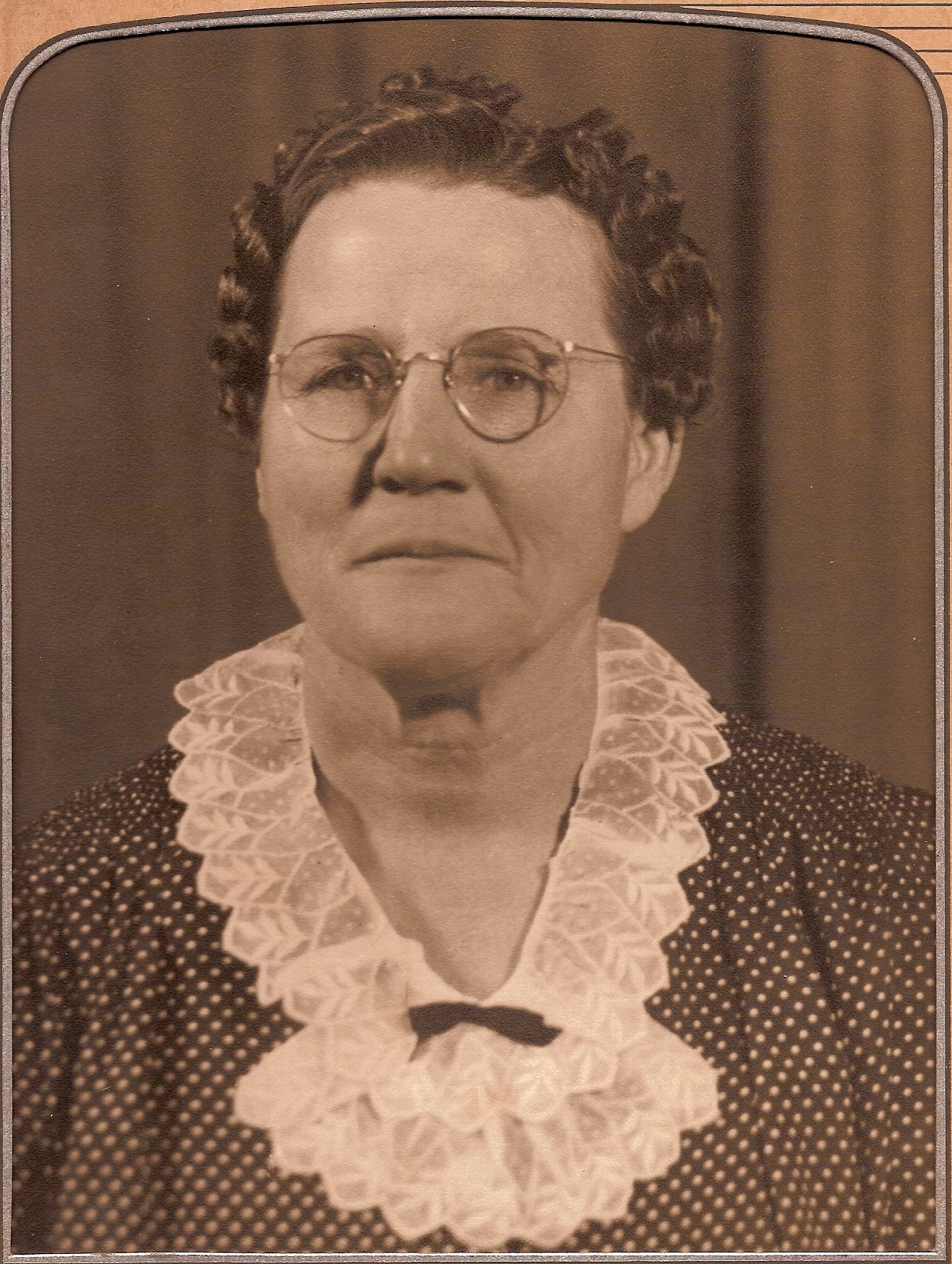
Emma Martha Kircher Keefe
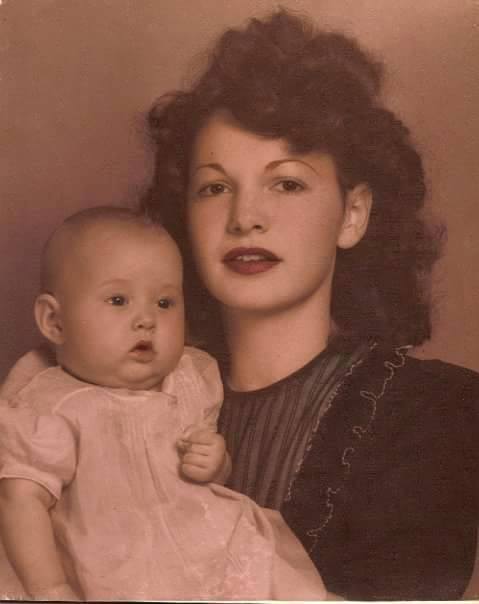
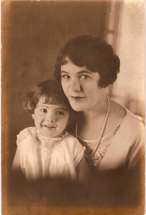
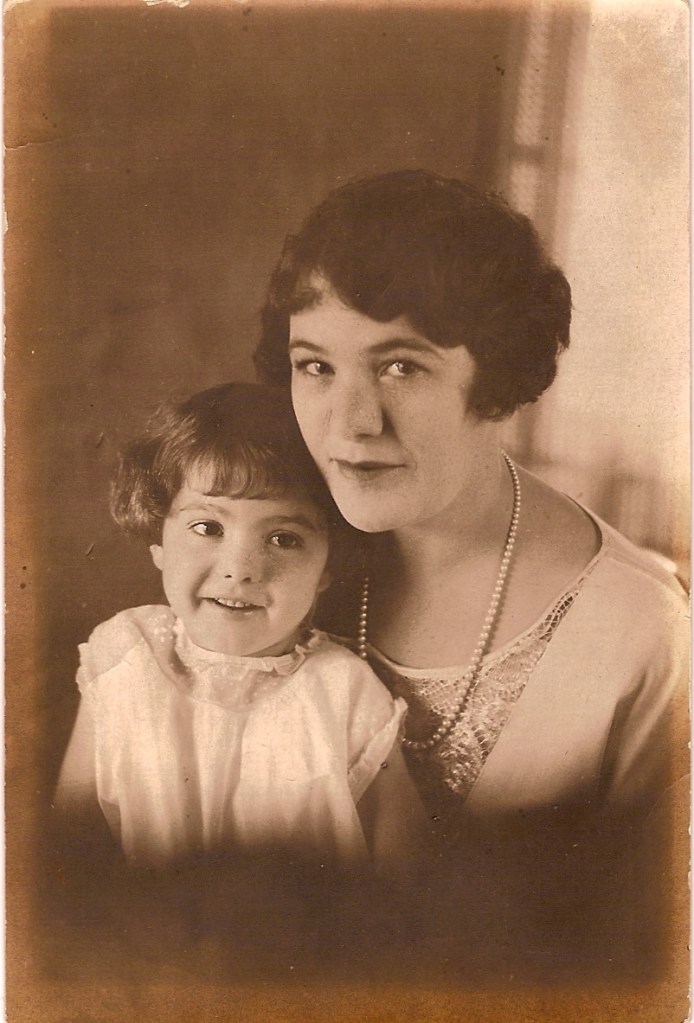
My grandmother and mother, about the time of the story in the Bakersfield Californian.

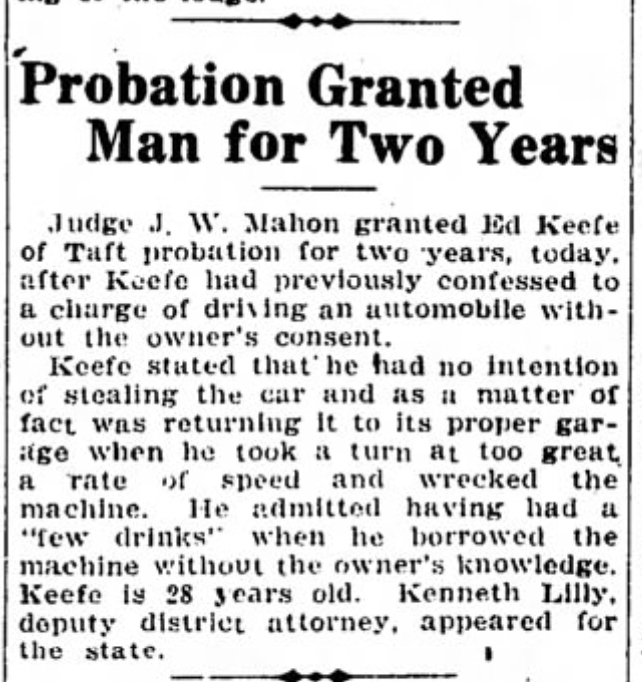
The Breed Act forbade borrowing another California’s driver’s vehicle without permission, but neglected to assess a penalty for its violation. This old article points out the folly of such a law by spinning this story:

The Bakersfield Californian

April 10, 1925  

Keefe Arrested Now comes Ed Keefe of Taft into the story. Not so long ago Keefe. a young man, became intoxicated In Taft, borrowed a car without leave of the owner and in a wild-eyed attempt to emulate the harrowing speed of the wilder-eyed Darlo Resta, wrecked the machine, authorities allege. With dispatch, officers of the Taft constabulary incarcerated the young man and the new charge made one of its maiden appearances opposite the name of Keefe, who Is no relation to the ball player.

The charge was “driving an automobile without the owner’s consent.” Keefe pleaded guilty to the felony and asked for probation. The court considered that It was his first offense; that he had a young wife and baby to support and granted the plea for leniency.  

Shortly after probation was allowed Keefe was arrested again by the Taft police who accused him of doing everything except making an attempt to roll the streets of the oil town. Again Ed Keefe appeared before Judge Mahon last week. Keefe denied before the court that he had attempted to apply the crimson brush to the portals of the West Side city, explaining that he had merely gone home to “sleep it off” in a genteel manner. After a severe reprimand and an order to behave, Keefe was given his freedom. He promised faithfully to accept the mandate of the court.  

Third Time

Today, Keefe appeared In court for the third time. Taft officers had pounced on the young hopeful again. They argued that he had attempted to mitigate the woes weighing upon his weary shoulders by a prolonged absorption of paint remover, often labelled synthetic gin or Scotch, according to the whims of the labeller.

The Taft officers informed the district attorney’s office that Keefe after “getting likkered up” had gone home where he endeavored to “beat up” his wife until the majesty of the law crimped his style. Judge Mahon made the young man the subject of a third excoriating reprimand, regretting that he was unable to imprison Keefe. The court reviewed his leniency granted In the hope that the defendant would “behave himself” and then predicted that Keefe would soon appear In court again with the label of some bona fide charge with a penalty attached.  

Given Freedom

To the neglect of the framers of the Breed Act, young Keefe owes his freedom. His wife wants to give him even more freedom for she has filed a complaint for divorce…

The writer is heavy-handed, too arch for his own ability, but young Keefe is too rich and too pathetic a target to pass up. He deserves every lash of this bush-league Mencken’s whip.

The problem is, Ed Keefe is my grandfather.

He was Irish–his father was born in the Famine years—and Ed would be the tenth of eleven children born on a Minnesota homestead, would become the love of my grandmother’s life, and, when he had disappeared by 1927, he left an emptiness in my mother’s heart that would never be filled.

She spent the rest of her life wondering about him.  My parents even hired a detective to try to find him, and I’ve spent years searching for him on the internet–uncovering instead a cache of respectable, middle class, well-educated and pious Keefes, including an unexpected nun. I found their ancestral village, Coolboy, in Wicklow, then traced where nearly every one of them, in a trail that leads from Ontario to Minnesota to Kern County, was married and buried, and Edmund is not even a whisper.  Not even a footnote.

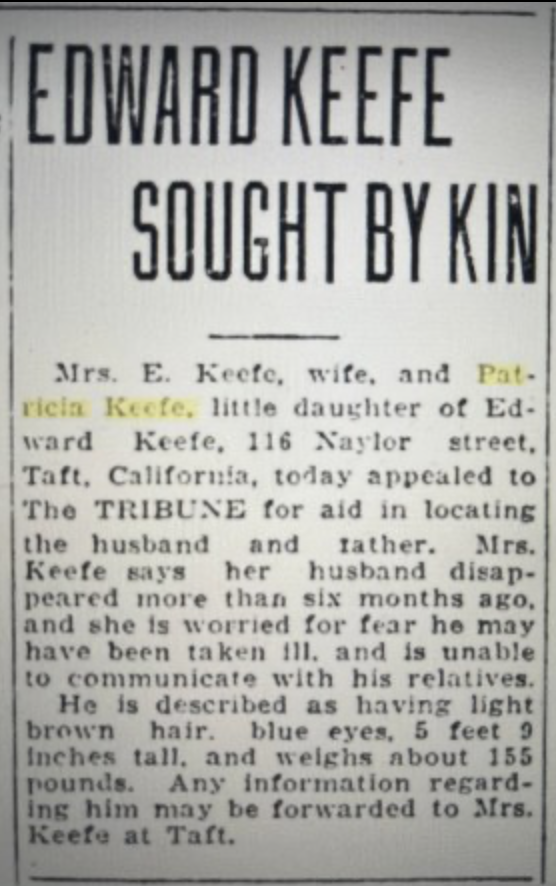
 Update, May 2025. That wasn’t that Ed “borrowed” a car. The first two articles are from July and August 1924; the third, when he’d gone missing, was from an October 1925 Oakland Tribune.

Last night I accidentally googled this story. I reflexively wanted to punch out the man who would strike my grandmother–my Grandma Kelly, when she married another, more reliable, Irishman, a Taft police constable–and who would have so terrified my mother, four years old at the time of this news story, with all the violence it implies, buried or lost in her memory, a good thing. She never found him, which she thought a bad thing.

Ed Keefe didn’t to deserve to play the ghost that haunted my mother’s memories– he hadn’t enough character or weight or importance. But he was her father. And he’s not important enough, either, for me to hate.  But he was my grandfather. Actions like these–impulsive, thoughtless, outrageous–suggest to me that he was already a lost cause at 28, and that his alcoholism almost certainly had deeper roots, possibly in bipolar disorder or in the depression that has stalked both lines of my family and has followed me in my own life from the day that it took my mother’s.

My step-grandfather, the police officer, George Kelly—my Gramps–was the grandfather any boy would want. Once, long before I was born, in a story that made me shiver when my Dad told it, three oilfield roughnecks jumped him in an alley while another officer, Pops Waggoner, was enjoying a Coke-and-something-else in the Prohibition-era Taft Elks Lodge. Pops heard the scuffle and stumped, with his wooden leg, down the stairs to the alley and was too late. He found three unconscious men and one intact and upright Irish cop, in need of a new uniform. That was the same Gramps who played catch with my two-year-old son two decades ago with a little rubber ball and played so gently and talked such soft and silly nonsense—the language of very small children– that my son, John, fell a little in love with him. As I had.
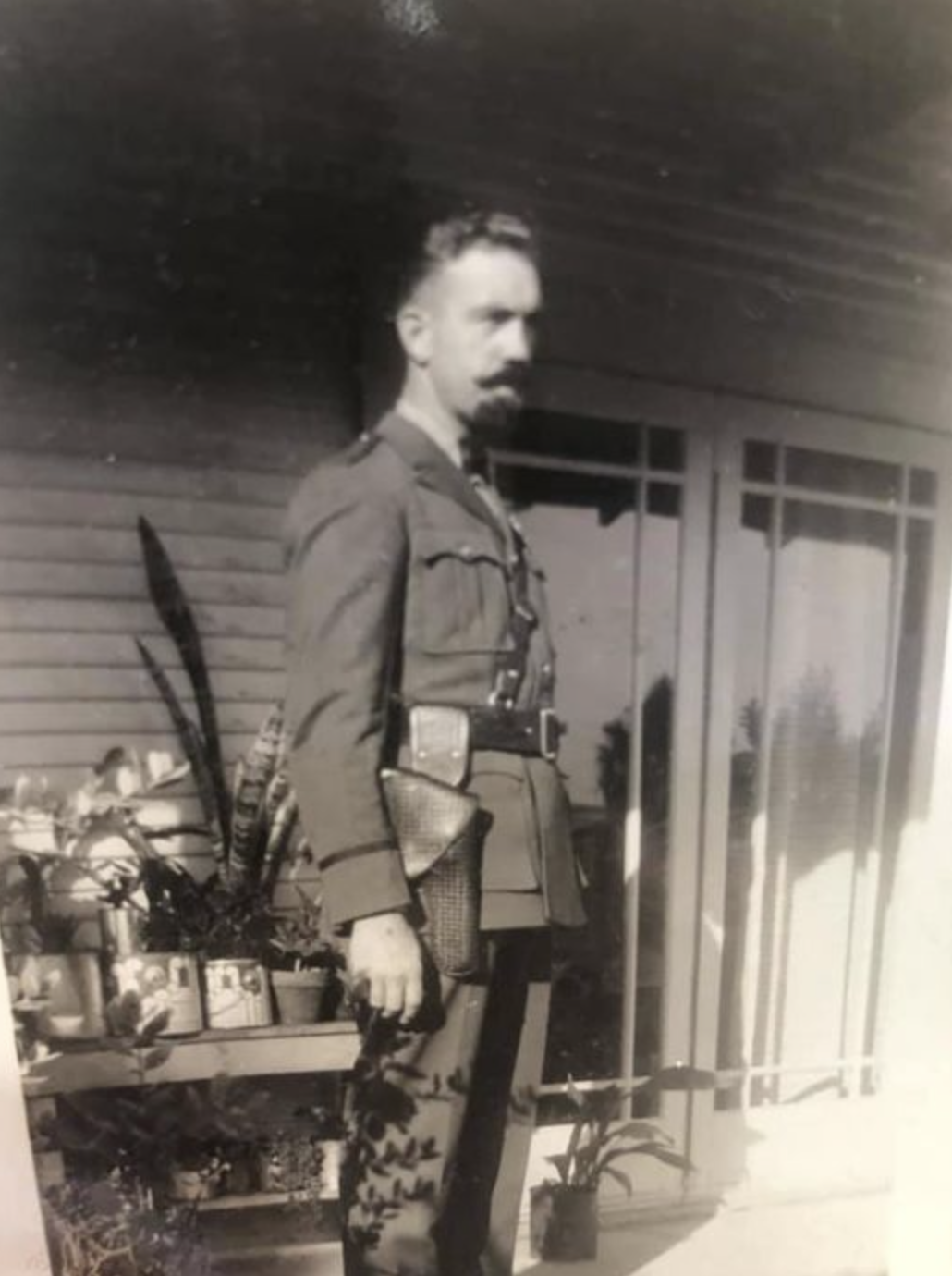
Gramps. I imagine that it was a beard-growing competition for some Taft civic celebration.

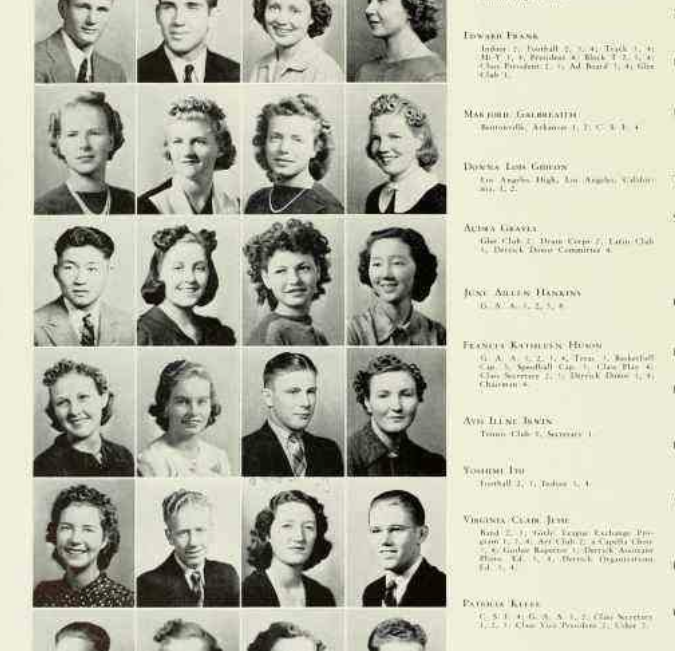
So I am no more comfortable about feeling sorry for myself over the accidents of biology and genetics that have flawed the lives of my mother and me than I am with punching a dead man. In fact, the story about Ed Keefe only made me love my mother more. She never had the inclination, or the self-regard, to understand that no victory she won in her life was too small. I am fascinated by this page from her senior yearbook, the 1939 Taft Union High School Derrick.
Screen Shot 2015-04-14 at 10.13.10 PM
My mother, in the third row from the top, third from the left.

Her natural curls are shaped in a way that’s suggestive of Shirley Temple’s moppet locks or Gone with the Wind’s Butterfly McQueen–1939 was the year that film premiered–and in her pose, she’s looking backward, over her shoulder. What’s pursuing her might have destroyed anyone else far earlier:  Her father was a drunk, a kind of charming and feckless village idiot, the butt of the Bakersfield Californian, with all the literary majesty that this newspaper possesses, and so she would have grown up with that inheritance and with all the cruelties children can inflict on each other, in bloodless wounds that never heal.

But.

She is in CSF, GAA, she is class secretary, class vice president, and there is nothing in that face that hints at defeat or humiliation or isolation. With a father as absurd as hers it is not absurd at all to draw an inference from a source as trite as a yearbook page and its little clutters of honoraria, from such a distant time and place.

So this is what I have learned in the last two days about my mother:

She would never stop glancing back over her shoulder. But, at 17, at Taft Union High School and Junior College, at the end of an era that had wounded and humiliated an entire nation and on the cusp of one that would make our power nearly unlimited, a lonely little girl had found her identity. She was a year away from marriage and four from motherhood, which would become her greatest and most enduring gift. She would strike sparks in my life:  a love for learning, a fierce sense of social justice and a hunger for God’s presence–the last, a lifelong irritant that I cannot get rid of, no matter how hard I try.

I cannot tell you how much I admire her.
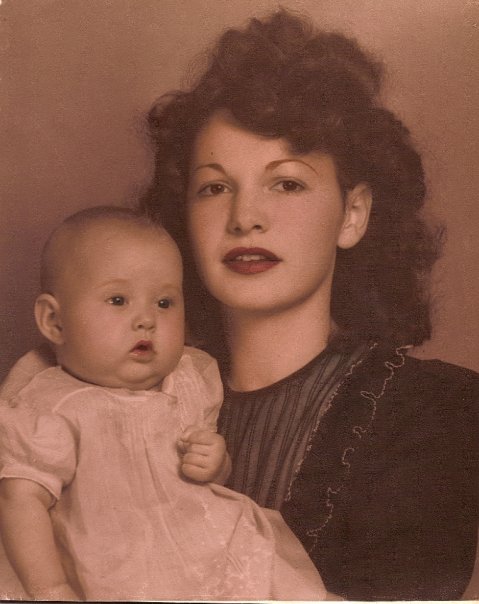
Patricia Margaret Keefe Gregory and her eldest child, Roberta, a wartime portrait.

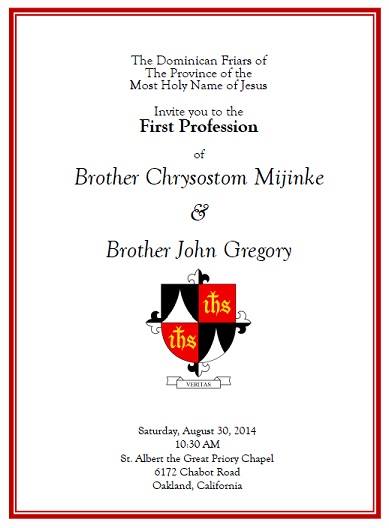
My Son, the Brother: Saturday, Aug. 30, 2014

01 Monday Sep 2014

Posted by ag1970 in Family history, Uncategorized

≈ Leave a comment

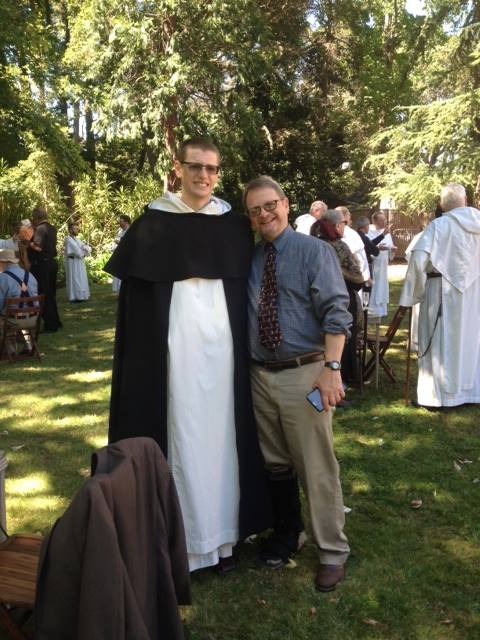
Brother John and Dad

Brother John and Dad

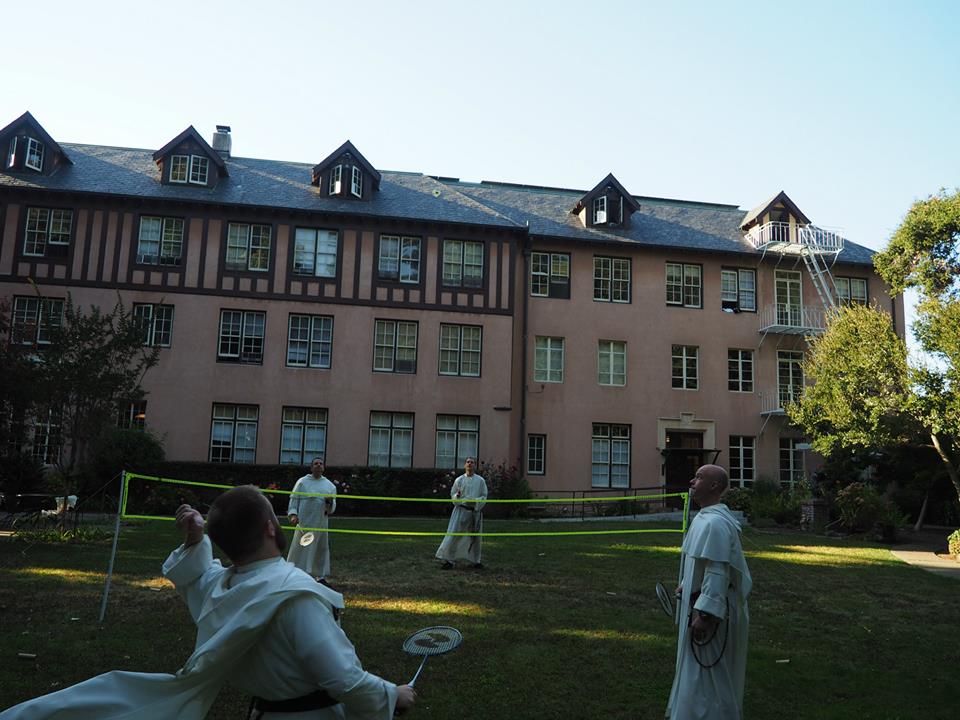
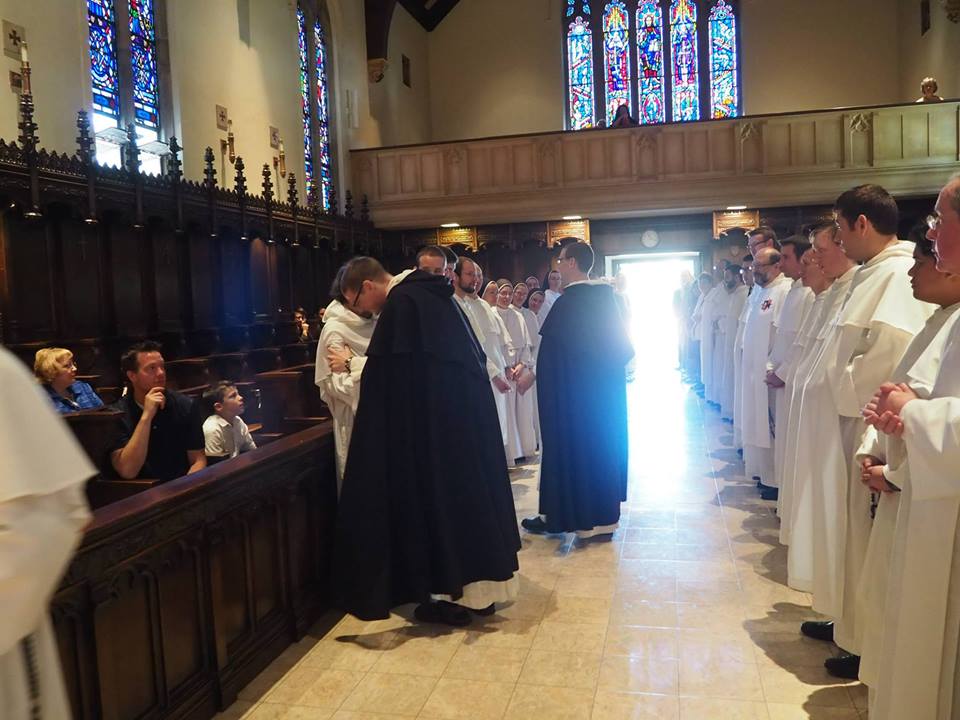
While the other brothers prepare for  a death match against the Franciscans...

While the other brothers prepare for a death match against the Franciscans…

10609431_10153152991058135_6947689602618837273_n

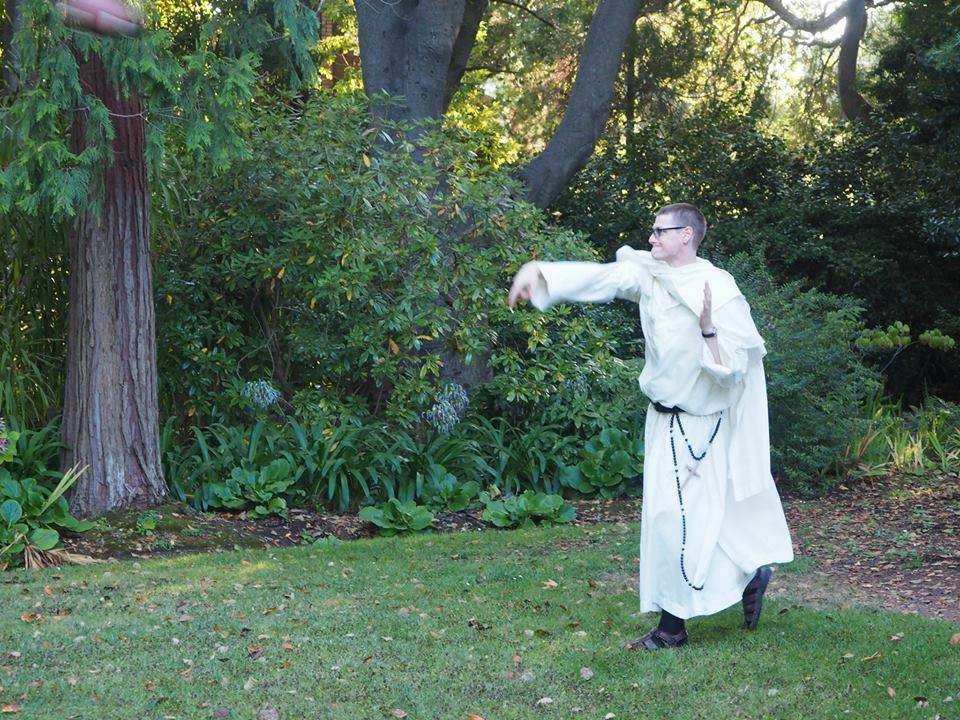
...John found a football

…John found a football

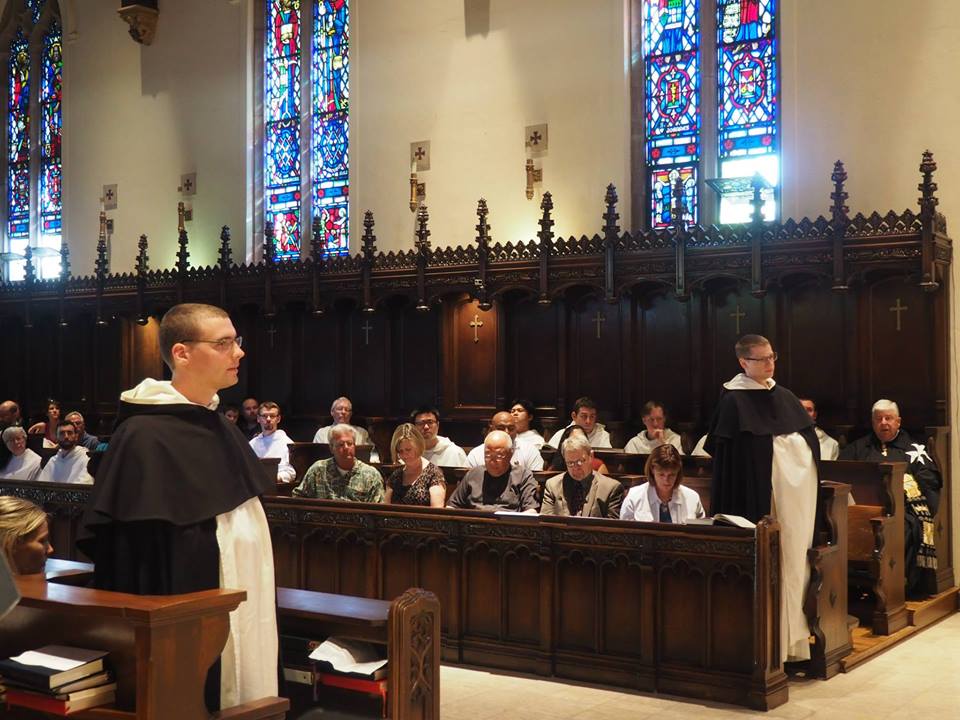
Brother Chyrsostom (foreground) and Brother John wait to be called forward,  Mom, me, Fr. Ken from St. Patrick's and Cristina from St. Patrick's in the front pew.

Brother Chyrsostom (foreground) and Brother John wait to be called forward, Mom, me, Fr. Ken from St. Patrick’s and Cristina from St. Patrick’s in the front pew.

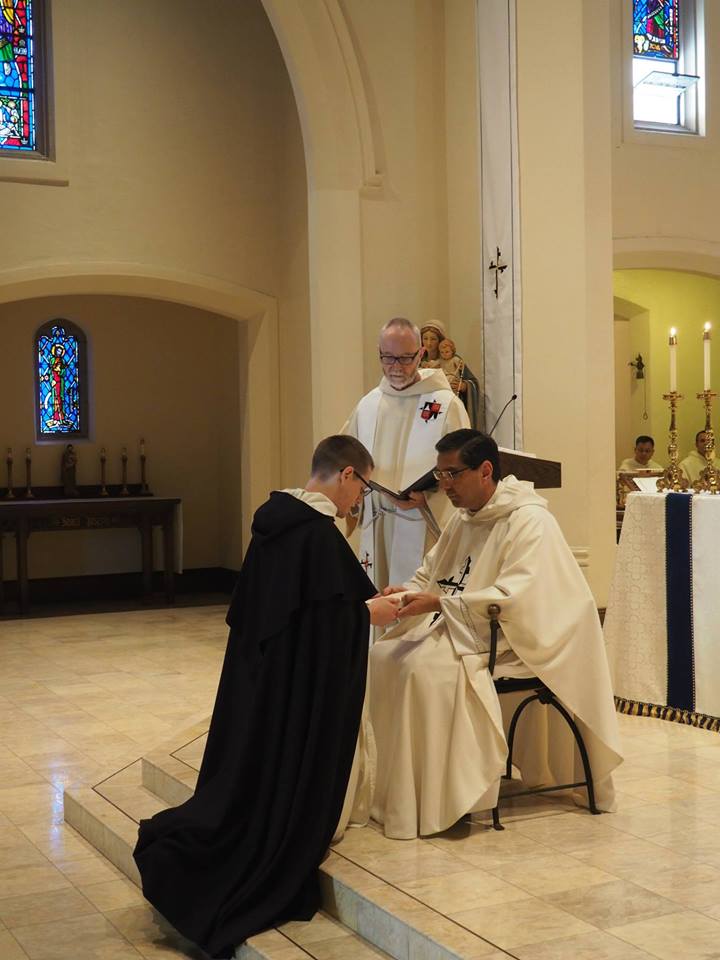
John takes vow of obedience from the Provincial. It expires in two years, thank goodness.

John takes vow of obedience from the Provincial. It expires in two years, thank goodness.

A Dominican hug-a-thon after their vows.

A Dominican hug-a-thon after their vows.

Yes, the Dominican nuns were adorable. They teach, I think, at Marin Central Catholic High School.

Yes, the Dominican nuns were adorable. They teach, I think, at Marin Central Catholic High School.

Modern Conveniences. Bosh.

23 Saturday Aug 2014

Posted by ag1970 in American History, California history, Family history

≈ Leave a comment

Slide1

The Bravest Soldier

14 Thursday Aug 2014

Posted by ag1970 in Family history, Film and Popular Culture, Personal memoirs

≈ Leave a comment

fd9a12bb7240bd0b539fb3fd3663c4c92be4e37c

Heartbreaking.

This is what happens: A voice is born inside you. It lies to you –and it is so persuasive–and it never, ever lets up: it tells you that you are no good, that you are weak, that you are a failure, and you go through life the way I have been the last few weeks after minor surgery, as if you’re on crutches, like I was, when sometimes anything you do demands the greatest effort to achieve the smallest of results.

It’s a drumbeat in the background every waking moment of your life, and you use alcohol or work, and I’ve used both, to mute the sound of that voice. It’s not a surprise to me that he is dead. What he lived with in the murmur of that insistent voice for 63 years was a burden that would crush anyone else in a matter of weeks.

The fact that he fought this for so long–and gave so much joy in the process–speaks to me of a man with courage beyond understanding.

That voice has spoken to me. It took my mother’s life. We are not weaklings, we are not failures, we are not cowards. (Those ads for suicide hotlines? The voice tells you that making that phone call is confirmation that you are a coward.)

Finally, we are not “selfish.”

We have a disease that turns every day into combat and the trick isn’t to win, because you never will. The trick is to fight that lying, seductive voice inside to a draw. The next day you begin again. Robin was simply exhausted from fighting not one, but two, diseases. Civil War soldiers remembered that the comrades who finally, finally broke and ran were the bravest soldiers they’d ever seen.

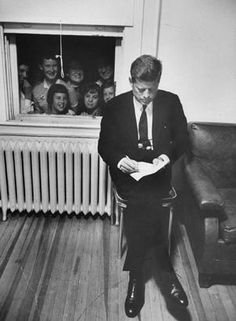
JFK

22 Tuesday Jul 2014

Posted by ag1970 in American History, Family history, Uncategorized

≈ Leave a comment

75362bcf56ecbcf18f8d12643a1ce139November 2013.  I’ve been thinking about the assassination of President Kennedy a lot the last two weeks. I will be the first to admit that I am an emotional person; paradoxically, I cry about twice a decade. I’ve cried twice the last week.

But I’m also an academic and I know every detail down to the commas of the seamy stuff, the predatory and amoral father who lobotomized one of his daughters and, when one of the others would have a 16-year-old classmate spend the night, he would lift the covers and climb into bed with her; the mother, so distant, whose response to the one fidelity of her husband—his devotion to his self-indulgence–was to use her faith to draw curtains around herself and live in a world made safe by priests and lit by stained glass. I know their anointed son, the first Irish Catholic American President, who blew himself up to steal the glory back from his younger brother, was an arrogant bully.  I know what a mean-spirited little bastard Bobby was, which is exactly why he became my favorite, because when Jack’s death burned his own arrogance away he discovered his bedrock, his greatest strength, was compassion. I have not allowed the decades to erase the name of the young woman—it was Mary Jo–who drowned in Teddy’s car.

I know all that. I know how doom stalked this family, and it did so largely because they deserved it. I know all of that.

But I know one more thing: I still miss President Kennedy.

I miss him because his short time with us was so transformative. One example: among young people, there was a Renaissance of our folk music that coincided with his presidency. It was as if we had rediscovered in music our national identity, and one that we’d somehow forgotten was so joyful yet also so impatient—patience has never suited Americans—with injustice. Our history was living again.

It wasn’t a coincidence that so may Americans not much older (and some, like President Carter’s mother, were much, much older) than I was had joined the Peace Corps or were volunteering–and giving their lives, like three young men buried in shallow graves in an earthen dam in Neshoba County, Mississippi–to register African-American voters.

It wasn’t a coincidence that the White House introduced every American then alive to cellist Pablo Casals. While pundits justifiably mocked the President’s enthusiasm for James Bond novels, Kennedy’s passion for Byron was far more enduring and it was Robert Frost who became the co-star at the Inaugural.

Had Kennedy not been reading Barbara Tuchman’s superb account of the summer Europe collapsed into the First World War—The Guns of August—there is a good chance none of us would be alive today. Kennedy had picked up the book in the fall of the Cuban Missile Crisis.

And it was fact that most Latin Americans and, even larger numbers of Europeans, liked us, that the President of France had a crush on Mrs. Kennedy, who spoke near-effortless French, as transparent as eighth-grade boy’s, and that the President’s triumphant visit to what was then still one of the poorest nations in Europe—Ireland—finally secured the bond made by the Irish Brigade, scythed in neat rows in the Wheatfield  at Gettysburg.

My job in Kennedy’s presidency was more prosaic: It was my obligation, I decided, to shuffle out to the living room at 4 a.m. in my pajamas, wrapped in a blanket, no matter how cold the night before had been, every time a Mercury astronaut was to begin his mission. (Half the time the launches would be scrubbed and so I would fall asleep in class that day.) When it appeared the heat shield on Friendship 7 had become dislodged and there was a real chance that John Glenn’s re-entry would incinerate him, I prayed as hard as a little boy can pray and I was deeply touched by God’s reply: The parachutes above the little capsule, swinging gently like a bell in its descent, on the flickery television screen.

Let me be clear about this: I am not coming anywhere close to claiming the Kennedy was popular with all Americans. Many hated him. Some of that came from the memory of his father’s bizarre stint as our ambassador to England, when Joe Sr. had unwisely pronounced England finished and urged détente with Nazi Germany.

But a more visceral and widespread hatred was directed toward Kennedy’s Catholicism, the same bigotry, so deeply rooted in the Old Confederacy and the Mountain West, that had poisoned Al Smith’s run for the presidency only a year after jubilant French Catholics had mobbed Lindbergh at Le Bourget to make him one of their own. That kind of hatred is not only poisonous, it’s indestructible, and so it survived Dallas and lives today.

I am not forgetting how palpable the fear of the time was, either, when, during the 1962 Cuban Missile Crisis, my father came home empty-handed from Williams Brothers’ Market on Grand Avenue because the shelves had been stripped bare by our terrified neighbors.

But there is another side of Kennedy’s time that scholars are wary of because there’s nothing that historians hate quite so much as sentimentality. Sentimentality kills the reputation of any historian as dead as an easy rifle shot.

The shot that killed Kennedy before his time, of course, was immortalized in a few grainy frames of the Zapruder film that have become the pornography of the assassination. I will try my best to never watch that film again.

But I saw some film images last week that reminded me of the wellsprings of strength in John Kennedy. He was, for most of his life, a semi-invalid, a resemblance that connects his life to Franklin Roosevelt’s. In both men, physical frailty was their greatest gift, because it spared them their assigned destinies as spoiled rich boys who would lead lives of little consequence.

FDR mastered his polio by imprisoning his withered legs in steel braces and building a massive upper body that he learned to throw forward in order to force his legs to follow. The moment when the president approached the podium to ask for a declaration of war was terrifying, for his balance was never secure, but he refused to fall, and that refusal might also have been the hallmark of both his presidency and the nation itself in the years of Depression and war

Kennedy fought illnesses in waves—Addison’s’ Disease,  or the back that radiated the kind of pain Inquisitors dream of. An accumulation of infirmities dogged him all his life. He was sometimes so sick that one brother mused that if a mosquito ever bit Jack, the mosquito would die.

Kennedy masked his vulnerability with lies and with a skillfully managed diet of images that projected vitality—touch football, golf (sparingly, because he didn’t want to Americans to connect him with Ike’s golf addiction), and the beauty of his wife and of his children.

Far more important, he also developed what FDR didn’t have:  a first-rate intellect and with it, a sense of intellectual detachment and the ability to compartmentalize his emotions. The last trait would poison his marriage, but, in 1962, together these became the very strengths that would save civilization from nuclear destruction.

Just a little over a year later, Texans came out in enormous numbers to see the President and Mrs. Kennedy on Thursday and Friday, and, until last week, when I saw the footage of his last 48 hours, assembled by National Geographic producers, I had never realized how enthusiastic those crowds were. There was a warmth and a kind of celebratory communion in them that stunned the Kennedy advance people and the Secret Service detail.

Friday had begun with rain in Forth Worth. By the time Air Force One touched down at Love Field in Dallas, it was Kennedy Weather: bright, crisp, autumnal sunshine. The beauty of that day was quickly obscured by blurred images, snatches of rumor, the eloquent pause that registered the grief not even newscaster Walter Cronkite could master. It seems, sometimes, like Dallas was the last bright day we have ever had, and our time and our nation have ever since been stalked by shadows.

I don’t remember those shadows before Dallas, but I was so very young. What I’m beginning to believe now is that most important and salient point of November 22, 1963, wasn’t that we loved the Kennedys, though, in my house, we truly did.

What was far more important was that we loved being Americans, and it was that self-regard and self-confidence that seemed to die, too, with such explosive violence, in Dealey Plaza.

I think it’s been that healthy self-regard that has made us such a positive force in the world. And I am not talking about a pernicious doctrine, American Exceptionalism, which emerged again in the last election as a kind of litmus test for holding office.

I don’t think John Kennedy’s generation, which included my Dad, born a year after the President, went to war to prove that our nation was better than everyone else’s.  National Socialism already held that copyright.

So what we lost, in Dallas wasn’t the kind of jingoism that comes so easily to 21st Century politicians; it wasn’t arrogance. It was our faith in ourselves—the faith that Lincoln had articulated so well with his “few brief remarks” at Gettysburg, almost exactly 100 years before Kennedy’s death. I think we lost it, but that doesn’t mean it’s gone. It’s ironic, but I’ve seen flickers of that faith most in my travels abroad.

I will never forget the sunburst over Derrynane Bay in a stop for lunch on the Ring of Kerry and inside the little restaurant was a little sign, carefully lettered, that read “Happy Fourth of July to our American friends.”

We were visiting Reims Cathedral with our students when a Frenchwoman insisted on giving us a personal tour because precisely because we were Americans, and it was American money, from the Rockefeller Foundation, that was painstakingly restoring shell damage to the Cathedral from 1916.

Once a Bavarian woman approached Mr. Kamin, our German teacher, and his students near Munich and thanked him, and them, for the kindness World War II GI’s had shown her when she was a little girl. There were tears in her eyes. Of course, many of those young soldiers had died long before Mr. Kamin’s students had been born.

Young Americans, including young men like those soldiers, may be the best evidence we have that the faith we have in ourselves has such enduring power. In my experience, there are few images more evocative of the faith we keep than those that confront you silently in the fields of the dead.

My trips to the American cemeteries in the Ardennes, at Colleville-sur-Mer above Omaha Beach and to the Punch Bowl on Oahu never, ever made me want to wave flags or blow trumpets.

I always think instead of men who were once wavering toddlers, who took their first steps to a little smattering of applause from their parents. They waited expectantly and sleeplessly on Christmas Eves stalked by the Great Depression. When they did sleep, they would sleep with their arms around the best friend they would ever have, and one as mongrelized as Hitler said all of us Americans truly were: a dog. I think of boys whose hands shook when they tried to pin that damned corsage on the dress of their Prom date. And then they aren’t boys anymore: they’re young men fresh out of Basic whose last moments here, maybe a few free moments in San Diego or Philly, were marked by ribald laughter and 3.2 beer or poker—any distraction that would somehow increase the distance between themselves and the troopships waiting to take them to their deaths.

So I never think of patriotism at places like Colleville-sur-Mer. I think of baby shoes, and I think of mothers.

Or I think of somehow pulling off a temporal fraud so preposterous that I hope it really happens to me someday.

My fantasy is that I would get a chance to teach those boys the history of their country in my classroom, a history that some of them would not survive, and somehow I could help them understand what they would never have the time to understand:  In their lives, no matter how short, there was a light so powerful that it would destroy the greatest darkness the world had ever known.

And maybe, somehow, I would get the chance, in my re-working of history, to put my arms around them at graduation, to hold them tight for just a moment until I would have release them to give them the chance they deserved to fulfill their destinies.

The young men I would like hold close to me have been dead a long, long time, and so has the president who emerged from that incredible generation. But I am so grateful that I am old enough to have recognized their light—our light–last week when I watched the news and saw an aircraft carrier group and a Navy hospital ship headed at flank speed for the Philippines, so devastated by a massive typhoon.

Kennedy understood that the most fundamental American value is generosity, and so the ships in that television image reminded me of the president whose life and whose call to service so illuminated my own. It reminded me that I live in a country I love so much that my love is greatest in the anger I feel when it is clearly in the wrong, warmest when my fingers touch cold marble in Normandy, brightest in the flame that marks the grave where my childhood, too, is buried.

To the girl on the lawn at Cal

22 Tuesday Jul 2014

Posted by ag1970 in California history, Family history, Personal memoirs, Uncategorized

≈ Leave a comment

Patricia Keefe, Taft (CA) High School, about 1938

This year AVID students–kids whose family backgrounds do not include a college experience– invited me to go on the northern college tour, and I was honored. I had never visited Cal until a few years ago, with another AVID group.  I did go to Stanford. For a week. I won a teaching fellowship in 2004 and got to study the Great Depression and New Deal with David Kennedy, whose book on the subject won the Pulitzer Prize for History.  I tried not to look too adoringly at him while he taught us.  It was difficult, because not only was he brilliant, but he was a real human being– engaging, witty, and you could tell he loved the history of the time and the Americans who had lived it.

I instantly loved Stanford’s rival, Cal, when we visited, even though I had to fight the impulse, so common to my generation, to run off and occupy the administration building, Sproul Hall, and demand that we leave Vietnam.  It is so beautiful and I am convinced just walking around campus with the kids boosted my I.Q. a full 20 points, up to 100.

The other thing I thought, with a little sadness, was that my Mom–Patricia Margaret Keefe–should’ve been here.   She was desperately poor, a child of the Great Depression.  She was a human footnote in the immense body of Kennedy’s scholarship.  Her father, my Irish-American grandfather, deserted the family in the mid-1920s, so my grandmother worked long hours as a waitress in a Taft, California, coffee shop, where “extra sugar” meant a healthy dollop of bootleg Canadian whiskey in your coffee.  It meant my mother, as a little girl, spent a lot of time alone. Those years left their mark on her. We had a can cupboard longer than the cupboards in the back of my classroom, full of food we’d never eat, because the thought of being hungry must have terrified her. And so going to college, for the daughter of a waitress from an isolated outpost on the oil frontier, had been out of the question.

Earl Denton, the first superintendent of the Lucia Mar Unified School District in southern San Luis Obispo County, and a family friend, said that my mother, whose education ended with her graduation from Taft High School, was the most brilliant woman he had ever met.  I remember her devouring the works of the Jesuit theologian and anthropologist Pierre Teilhard de Chardin, who argued that evolution was no contradiction of faith; in fact, it was a divinely-inspired process.  She–-as I would years later with Das Kapital–-wrote almost as much in the margins of Teilhard’s books as he had written in the text.

When I was very little, we played school.  She even rang a hand bell when “recess” was over. It had been my grandmother’s—Dora Gregory, her mother-in-law, had been a schoolmarm in a one-room school in the Ozark foothills.  My first day of formal education was in first grade in a two-room school, Branch Elementary, in the Upper Arroyo Grande Valley.  I remember realizing, with a little shock of pleasure, that I could read the names of my classmates as our teacher, Mrs. Brown, wrote them on the blackboard.

Me and my kids. My Mom was part of every lesson I ever taught.

My mother and I hadn’t been “playing” school at all.  She just made it seem that way. Losing her, when I was 17, remains the central tragedy of my life.

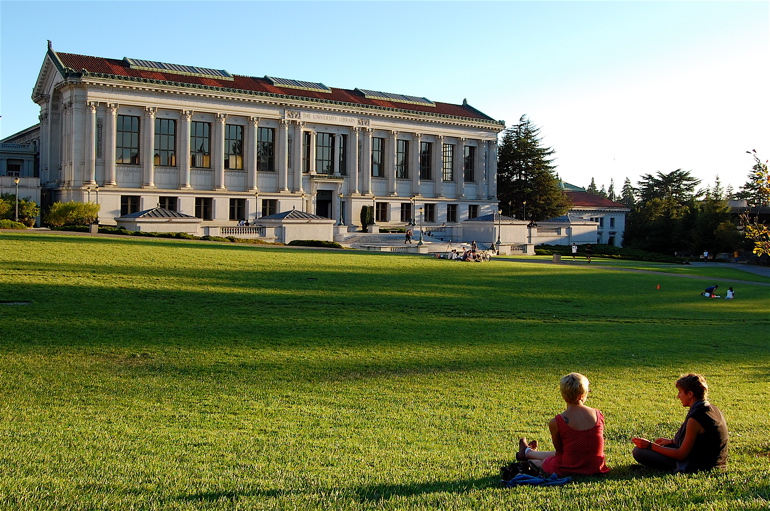
So, many, many  years later, on that visit to Cal, while the AVID kids explored, I had the briefest and loveliest mental image of her, about 1938 or 1939-–blouse, pleated skirt, saddle shoes, bobby socks, with her books and notebook spread out on one of those lush, verdant lawns, studying between classes. My mother was a beautiful woman, but the most beautiful thing about her may have been her mind.

memorialglade

And I think that’s why I enjoy these particular trips, with this particular group of kids. It’s my way of repaying Mom. One of them might take her place, studying in the sunlight on the lawn at a place like Memorial Glade.  She would love that idea.

And she would love these kids because she would understand them completely.  Despite my ne’er-do-well grandfather, I believe completely that my mother’s love for learning and for the the written word had deep genetic and psychological roots in County Wicklow.

So she would love without hesitation the AVIDS who show the incredible desire, the hunger, to improve themselves that she’d had, who refuse to complain when things get tough, who extend themselves to help their classmates, because she believed that all of us, and all of our lives, are intricately and intimately connected, and that this connection requires us to be responsible to and accountable for each other.

The young person who understands these things is close to my mother’s heart.

My mother and my big sister, Roberta, 1943. Mom was twenty-two.

Grandma Gregory and the Pendergast Machine

13 Sunday Jul 2014

Posted by ag1970 in American History, Family history, Personal memoirs

≈ Leave a comment

a54d7d8b-bb6f-46a6-a7ca-8c950bda6166
Grandma Gregory: Schoolmarm, political operative, unparalleled fried chicken chef. One of her few blind spots was her hostility toward the liberality of the Southern Baptist Convention.

Somewhere we have a penciled thank-you note from John W. Davis, who is about as famous as whichever team finished third in the NL pennant race in 1939. (It was the Dodgers, 12 1/2 games out.) Davis was the Democratic nominee for President in 1924, and he did far worse than the 1939 Dodgers.

He was trounced by the less-than-effervescent Calvin Coolidge. Coolidge’s workdays at the White House were at most seven hours, punctuated by summer naps on the portico. Sadly, these had to be suspended when Coolidge began collecting dense crowds, silent tourists, watching gravely and debating among themselves in urgent whispers over whether the president had passed. After all, Harding had pulled that trick.

To be fair, the White House staff frequently had the same problem when the president was conscious.

Meanwhile, John W. Davis would go on to a distinguished career, arguing 150 cases before the Supreme Court. Today, Davis is noted mostly for being on the wrong side of every one of them. If it was racist, reactionary, or repressive, he defended it passionately, with the conviction and confidence of one who knows that God Almighty is his co-counsel. The crowning of his legal career—thank the aforementioned Lord–came when he lost Brown v. Board before the Warren Court. (Earl Warren, who turned out to be the biggest booby prize Ike had gotten since Field Marshal Montgomery, was the former Republican Governor of California, which goes to show how much times have changed–and Davis demonstrates the same for Democrats.)

But the Democrats could’ve run Sacco and Vanzetti (has a nice ring, doesn’t it, for a law partnership?) in 1924, and I think Grandma Gregory–the woman, hard to knock down in a windstorm, next my Grandpa John in the photo below–would’ve worked her heart out for them as long as they were Democrats. She got to the convention as a delegate that year–103 ballots in a sweltering New York City summer, the delegates trapped in a battle to the death inside Madison Square Garden–and this was only four years after women had gotten the vote. She would later become the Texas County, Missouri, Party Chairwoman and a powerful figure in downstate Missouri politics.

She is undoubtedly why, when I actually watched a national political convention for the first time, when I was 12–-and when they actually meant something– I was entranced. Barry Goldwater would eventually beat my guy, William Scranton, for the 1964 Republican nomination. Probably our favorite film, in my high school years, was The Graduate. I enjoyed the following year’s Democratic convention just as much, for the Democrats in 1968 had the same intense focus and sense of direction that Dustin Hoffman’s Benjamin had shown in the movie. None.

My grandfather was a graceful dancer, and at barn dances, he enjoyed dancing with pretty teenaged girls. My grandmother was less enthusiastic about the the whole concept.
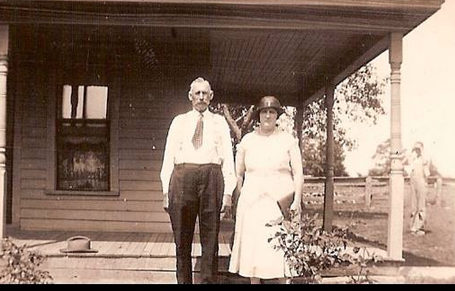
Dad’s parents, John and Dora Gregory. My grandfather was a graceful dancer, and at barn dances, he enjoyed dancing with pretty teenaged girls. My grandmother was less enthusiastic about the the whole concept. Dad, with a bandage on one to, stands at right. The farmhouse in Raymondville, Missouri, is still there today.

In Depression-era Missouri, before every election, my Dad remembered, a new car would pull up outside my Grandfather’s farmhouse and two men in three-piece suits (usually reserved for funerals, and even then for the Deceased) would deposit a bank-bag full of cash on Dora Gregory’s kitchen table. For them, it was but one more stop on a kind of purgatory circuit. That part of the state was thinly populated, so you had have a real passion for soybeans to make the drive enjoyable.

They were bagmen for the Kansas City Pendergast Machine, one of those old-timey operations that brought dead voters back to life, among other shenanigans.

Pendergast’s Kansas City was a kind of cultural hub for the Depression-era Midwest.  Louis Armstrong played here, for example, and a new variant of Barbecue found a home here, too.

Meanwhile, in Texas County in the 1930s,  the Civil War had not quite ended. When my father was 12 or 13, there was a Confederate veteran still alive in in Houston, the county seat. There also was one Union veteran in the same town. The two had not spoken since 1865.

FDR’s first term was past its midpoint when, on July 4, 1935, the county band was playing  the National Anthem. A frayed cartridge belt in the old Confederate’s mind finally snapped: he leaped on the old Yankee, and the two rolled around on the courthouse lawn, knocking over potato salads and tubs of sweet tea in their personal Antietam. When six young man finally pried the two apart, the old Confederate triumphantly held up the Yankee’s ear, which he’d removed with a Barlow knife.

Most of the people of Texas County were considerably calmer and much kinder, especially if you happened to be a horse, about which, like my Mom’s ancestors from County Wicklow, they were passionate.

Tom Pendergast had Texas County in the bag, because, come Election Day, my pre-teen Dad handed out fives to waiting voters, murmuring, “The Democratic Party thanks you,” over and over, like a priest at Eucharist, so the Democrats never lost Texas County. The bank bag on Grandma’s kitchen table assured that.

To be fair to the Machine, it distributed food, not just bribes, and people in the hills were hungry in the depths of the Depression. A young Dad also helped distribute food to the needy. Grapefruit stymied them. “We boiled it, Bob,” they told him apologetically, “an’ then we fried it, but it still tasted putrid.” (Dad, a supply officer in 1944 London, also gifted an English family he knew with a bag of oranges. They virtually adopted him: the British had not seen oranges since the fall of France in 1940. Citrus fruit seems to follow the course of my father’s life.)

Boss Pendergast also made the career of Harry Truman possible, which, in turn made me possible: Truman favored my grandfather’s blackberry wine on campaign swings downstate–he’d stop for a sip or seven– and that little talent of Grandpa Gregory’s paid off in World War II: Truman got Dad appointed to Officers’ Candidate School as a Quartermaster, and so he served much of the war defending London’s pubs from the Nazi Hordes, which saved me the inconvenience of having him get killed before I had the chance to be born.

After, the war, my Mom was an Eisenhower Republican, so my parents had lively political discussions. One of them doomed dessert, because the colander of fresh strawberries, washed for strawberry shortcake, wound up on my father’s head, upside-down. JFK’s nomination brought political harmony to the marriage: Dad voted for him because he was a Democrat; Mom because he was Irish Catholic.

I wish I could say I loved my Grandmother Gregory, but she was a steel-spined schoolmarm who didn’t tolerate foolishness, by which she meant Consciousness, and she used to whack us absently with her cane. We stole her eyeglasses in revenge. And, sadly, by the time I knew her, she was edging into dementia, and though she couldn’t locate her dentures, or her eyeglasses, she could remember, in vivid detail–you could almost smell charred flesh and sick-room alcohol–how every person in southern Missouri had died between the War Between the States and the 1939 Dodgers.

It didn’t take a lot to prompt a Grandma Gregory Death Story, and, looking back from the fullness of years, I now realize that some of them were humdingers.

My favorite was the neighbor who suddenly disappeared. The family and the authorities and happy coonhounds–they like to be kept busy, or they get saucy– looked for several days, to no avail. When one of the kids finally did find him, he was at the bottom of the family’s well, where he’d plummeted after a massive coronary, which makes you wonder if they ever thought of lemonade the same way again.

Grandma liked that one, too.

Oddly, these stories were poignant because they showed she was already living in the past; her connections to modernity would grow more and more fragile. But, as  a younger woman, she was shrewd, forceful, and I think had the same instinct, in a political sense, that leads orcas to crippled seals. I would not mess with that woman. And for that, and for her steel, I admire her and I am immensely proud to be her grandson. 

Dad kept the old ways alive, even in 1944 London.

Kentucky Gentle Man

13 Sunday Jul 2014

Posted by ag1970 in American History, Family history, Personal memoirs

≈ Leave a comment

Untitled2

    My grandfather, John Smith Gregory, was born in Shelby County, Kentucky, in 1862. He was a father of eight, a farmer in south-central Missouri, a lumber estimator, outdoorsman, and a sipper of life, in that life included lovingly fermented batches of blackberry wine. Harry Truman was a fan of that wine. On campaign swings downstate, he made it a point to pay court to my grandmother, a local Democratic powerbroker with money ties to Truman’s patrons, the Kansas City Pendergast Machine, but after those formalities, the heart of the Senator’s visit would be a sip or four of John’s blackberry wine.

That wine may have made me possible. When my father–who was a kind of miraculous afterthought, the last of eight children, born in the vigor of my grandfather’s fifty-sixth year–went into the Army in World War II, he stood as good a chance as any other country boy of being vaporized by a German 88 shell somewhere in the dark canopy of the Ardennes. Instead he spent the War, as a Quartermaster officer, in a series of frontal assaults on London’s pubs, or, as he did one evening, bellowing seditious rebel songs– after splitting a bottle of Johnnie Walker Scotch with an Irish elevator operator he’d befriended–and this was thanks to Sen. Truman’s endorsement of his candidacy to Officers’ Candidate School at Camp Lee, Virginia.

(By the way, London Bobbies tried to arrest Dad and the elevator operator, who knew ALL the verses to “Wearin’ of the Green,” but he was a good elevator operator. Up to the fifth floor. Down to the third. Up to the fourth floor. Up to the sixth. Down to the second. After sprinting up the hotel staircase and clumping down it, the exhausted Bobbies gave up.)

This is the song they were singing, as performed, logically, by the Orthodox Celts. They’re from Serbia.

Wearin’ of the Green

Since my family’s forebears were Virginians, teaching dance had been central to the way they socialized their children. My family must have raised their children that way from the days they’d emigrated, in the 1690s, from the dismal Midlands of England to the banks of the James River, so Grandfather’s most formidable talent may have been his dancing. (On the other hand, the Gregorys had no gift for real estate. They sold Mount Vernon to the Washingtons.)

So his Virginia roots meant that John Gregory had become, by reputation, a kind of Ozarkian Astaire and every girl who had the chance to be his Ginger Rogers would have a moment on the dance floor with him where she would realize, with a sudden pang of delight, that she was gliding, as if the sawdust-strewn floor had become polished glass.

My grandmother was not amused by the line of pretty teenagers who shyly sought a place on Mr. Gregory’s dance card. She suspected, too, and I’ll bet she was right, that those girls liked also his twinkly eyes and the soft smile beneath his silky white mustaches. My Grandmother was not given to smiling. She had a temper and, with it, a strong and wide body: she was a hard woman to knock down in a windstorm.

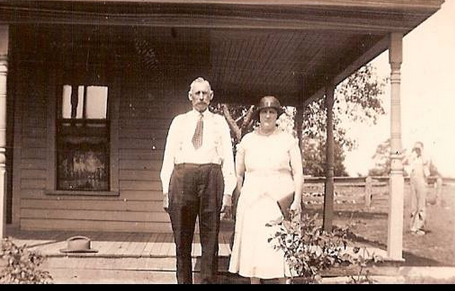
My grandfather and grandmother. And that’s my Dad. The house still stands outside Raymondville, Missouri.

Years later, on her visits to us in Arroyo Grande–visits we regarded with as much enthusiasm as an Irish monastery might muster for a Viking raid–she’d absently whack us with her cane, and she had a forehand that would’ve shamed Rafael Nadal. She had been a schoolmarm and we think it was PTSD, and where veterans might see phantom Vietcong, Grandma saw farm boys eighteen hands high spitting streams of tobacco juice at recess. Something snapped inside her then and set her to whacking the nearest target of opportunity.

We hid her glasses, or, if that particular whack had an extra sting, her dentures, in revenge, but gave them back because she otherwise tended to describe, in graphic clinical detail, how every person in Texas County, Missouri had died between the end of the War Between the States and the Eisenhower Administration. Her grandfather, by the way, had been a Confederate brigadier general of modest accomplishment and minimal talent–I was named for him, and for his son, a staff officer killed in action, thanks to a lucky but devastating Yankee artillery shot, in Arkansas–so that branch of the family saw themselves as gentry. They were insufferable. Despite that, John Gregory indulged my grandmother; he was a tolerant man.

He had a genius for math. My Dad inherited this gift; he became a gifted accountant and, for almost twenty years, the comptroller for Madonna Construction. I, as my geometry teacher at Arroyo Grande High School, Mrs. Otsuji, noted ruefully, had no talent in that direction, nor in any plane. But lumber companies sought out Grandfather because he could eye a stand of pine and calculate, with eerie precision, how many board-feet it would yield.

He was a competent but unorthodox farmer: in the Ozark foothills any money there was to be made–and there wasn’t much–was to be made in tobacco and corn and hogs. John accepted that reality but his real passion was an anomaly. Cultivating ginseng was to John Gregory was what stamp collecting was to Franklin Roosevelt; given my grandmother’s personality, it was his outlet—he was not a talkative man, but I can imagine him, almost poetic, winning over dubious neighbors at the local grocer’s about the miraculous attributes of ginseng. He won them, too. In a little shirtpocket notebook I still have he has meticulously recorded his sales figures: J.K. Davis, $250; John Helsey, $50; W.T. Eliot, $62.50.

But his hallmark, the essence of his character, was his kindness. My father remembered this most of all: during the Depression, there’d be an occasional knock on the farmhouse door. It’d be a jobless man on the move.

–May I sleep the night in your barn, sir?
–Young man, you may not. Grandfather would eye the stranger coldly, for dramatic effect.
–However, we DO have a spare bed. How about some bacon and eggs?

It was these visits that so impressed my own father with the cruelty of the Great Depression. These strangers, who wolfed down my grandmother’s meals (beneath her stony exterior there was a deep humanity she didn’t like to let out much), were not “bums:” they were college students, engineers, veterans of the Great War, and one, a violinist, paid for his supper and bed with a solo concert: Bach and Boccherini found a rapt audience in a little farmhouse on the Ozark Plateau, in a kitchen warmed by a wood stove and lit by kerosene lamps instead of footlights.

When they hung a ne’er-do-well –the local bully–at the Missouri State Penitentiary, the barbershop crowd bet that not even John Gregory, in town for his every-other-day shave, could find anything nice to say about him. There was a pause, but not a long one, underneath the hot towels: ”The man,” he said, “had a beautiful set of teeth.”

My grandfather was killed by a driver from Wichita Falls, Texas. He was deaf in the direction of the Texan’s Ford roadster, traveling fast; Grandma had called Dad back to the house because he was barefoot and no son of hers–what would the general think?– was going to make a social call to Mr. Dixon’s looking like a hillbilly. He never forgave her. Had my father been crossing the road with his father, he would’ve heard the Ford’s approach.

The impact broke both of John’s legs. But even at seventy, he had an athlete’s body and he fought hard to live in a Catholic hospital that must have caused my Church of Christ grandmother intense anxiety, looking out for Grandfather while listening intently for any Papist heresy, like the click of Rosary beads.

As a teenager, Grandfather had accepted a dare from two friends to swim across the Red River in flood, and John was the only survivor. Not this time: the river was too strong and there was nothing to do but to watch him, as graceful then as he’d ever been waltzing with a pretty girl, when he finally made the choice to let the current carry him away.

After they drove him back home from Springfield, there was a big funeral. I still have the yellowed obituary. Despite the fact that it was the darkest year of the Great Depression–1933–there would have been big honey-cured baked hams and fried chicken and candied yams and mashed potatoes smooth as clouds and a battery of salads, casseroles, and pies, dusted with sugar,  from every farmhouse in a twenty-mile radius.

Both my father and his sister, my Aunt Bill, talked about him always in Homeric terms. He was their father, and he was their hero. They found it hard to let him go, so they never did. That turned out to be a good thing, for me. It’s good to love a man you never met.

For Emmeline

07 Monday Jul 2014

Posted by ag1970 in American History, California history, Family history, Personal memoirs

≈ 2 Comments

Grandma

My mother and grandmother, about 1925.

What’s hard about doing your family tree is finding some branches you’d rather break off. The one that comes to mind is the ancestor with 19 slaves in the 1850 census, identified only by gender and age, as if they were machine parts rather than human beings. That’s not the case with my Grandma Kelly. When she died in Cambria in 1974, I think she’d finally found some happiness in that beautiful place. She deserved it. Her life, I now realize, represents a significant slice of California’s economic history, and the wealth the Golden State has generated came because of people like her, proud independents whose only wealth was their determination to keep going.

When I was little she took us out to lunch at a restaurant, now torn down, where the Carl’s Jr. is today on the northern edge of San Luis Obispo, off Santa Rosa. When the waitress handed out the menus, her eyes widened and locked on Grandma’s bracelet: It was made of gold nuggets.

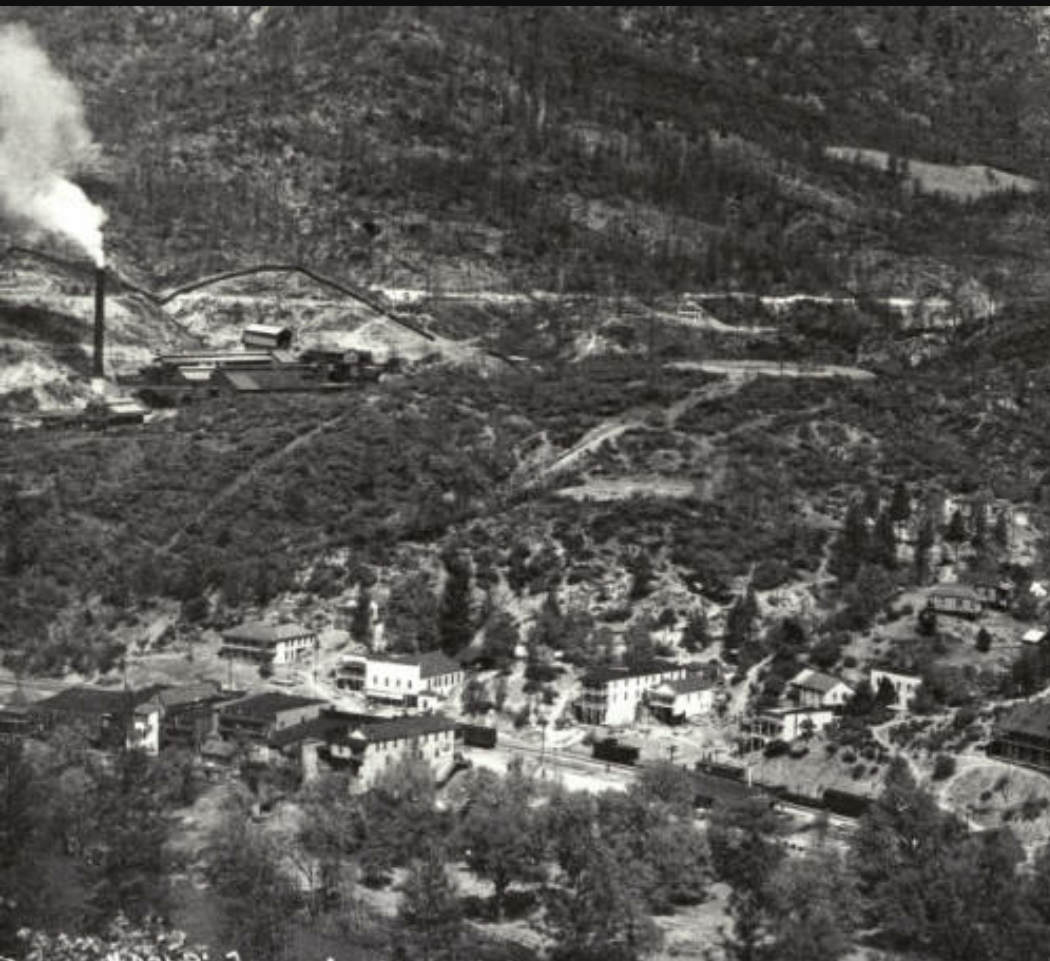
I found out a lot I didn’t know researching my Mom’s family tree over the summer. Emma Martha Kircher—my Grandma Kelly—was born in a mining town now underneath Lake Shasta–Kennett, California–and the nuggets on her bracelet were her father’s. Charlie Kircher, the son of German immigrants from Baden-Wurttemberg, refugees from the humiliating collapse of the German revolution of 1848, was a restless Kansas farmer who came west in a lesser-known California Gold Rush near the turn of the century.

Kennett was at its epicenter: From the photographs it’s a town that looks like a Universal Studio version of Dodge City; later photos, by the 1910s, show a huge and menacing copper smelter—the industry that sustained Kennett after the gold ran out—dominating the little town.

20150808_151531

Charlie Kircher, my great-grandfather, was not the romantic figure I thought him to be, not a hardy 49er with shovel, pan, and cradle. He was a company man. The mine where he worked—the Uncle Sam mine—eventually would yield over a million dollars in ore, and one of his jobs, as a chlorider, was to separate the gold ore from the rock in which it was embedded. It wasn’t romantic at all—it was tedious, smelly, but important to an industry that could be immensely destructive: the photographs of what hydraulic mining, for example, did to the land of Shasta County are as shocking in their way as the photographs of bombed-out German cities at the end of World War II.

But it’s here where Charlie seems to have found his vocation, and it’s in Kennett’s goldfields where he set down his roots. He married a 14-year-old native Californian, Nellie Wilson, in 1894, and the couple promptly produced three children: my grandmother, Emma Martha, born in 1895, Violet, in 1898, and Charlie Jr., in 1900.

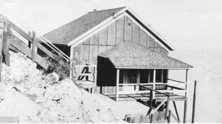
My grandmother’s earliest memory was of “a house on stilts.” I had visions of her living over the Sacramento River—I seem to stilt houseremember an urban legend that Country-Western star Merle Haggard owned a house like that over the Kern River with a trap door to facilitate fishing. That wasn’t Emma’s situation at all: her house was terrifying. It was a Company house for a Company man, built flush into the steep sides of Iron Mountain, and below the stilts is a sheer drop, seen in an old photograph, that makes it a miracle she survived her childhood.

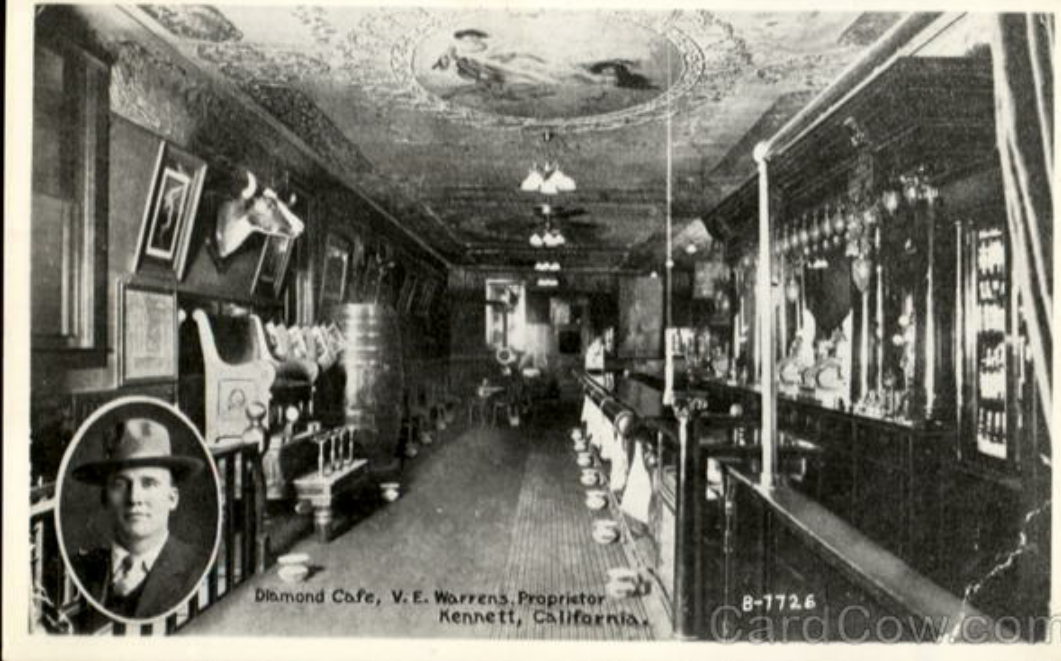
She attended a school, a little steepled building, in Kennett, which was also graced with a Methodist Church and the two-story Diamond Saloon and Hotel (V.C. Warrens, Prop.): an interior shot from a UC Davis collection shows a long bar with a militia-line of brass spittoons along the rail and an ornate ceiling with plump, gauzily and vaguely-dressed females and an attendant cherub or two for class.

20150808_150244

Kennett was a tough town. Charlie Kircher was a tough man. The records note a “crippled right hand,” but he may have used the good one liberally. Nellie would divorce him and had remarried by 1906; although the three children would follow Charlie to Burbank in 1910, later, the youngest, Charlie Jr., would lie about his age to join the World War I Navy, quite probably to put some ocean between himself and his father.

52ee1520-e932-4e52-8c89-af6fda2fcbda

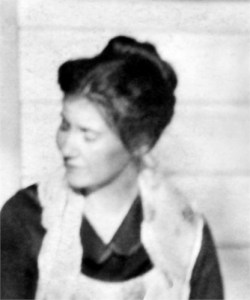
My great-grandmother, Nellie Wilson Kircher.

That’s when Charlie Kircher’s trail disappears. I can find no record of his death and my Grandmother never discussed him and very rarely discussed her early life. I never met her sister and brother.

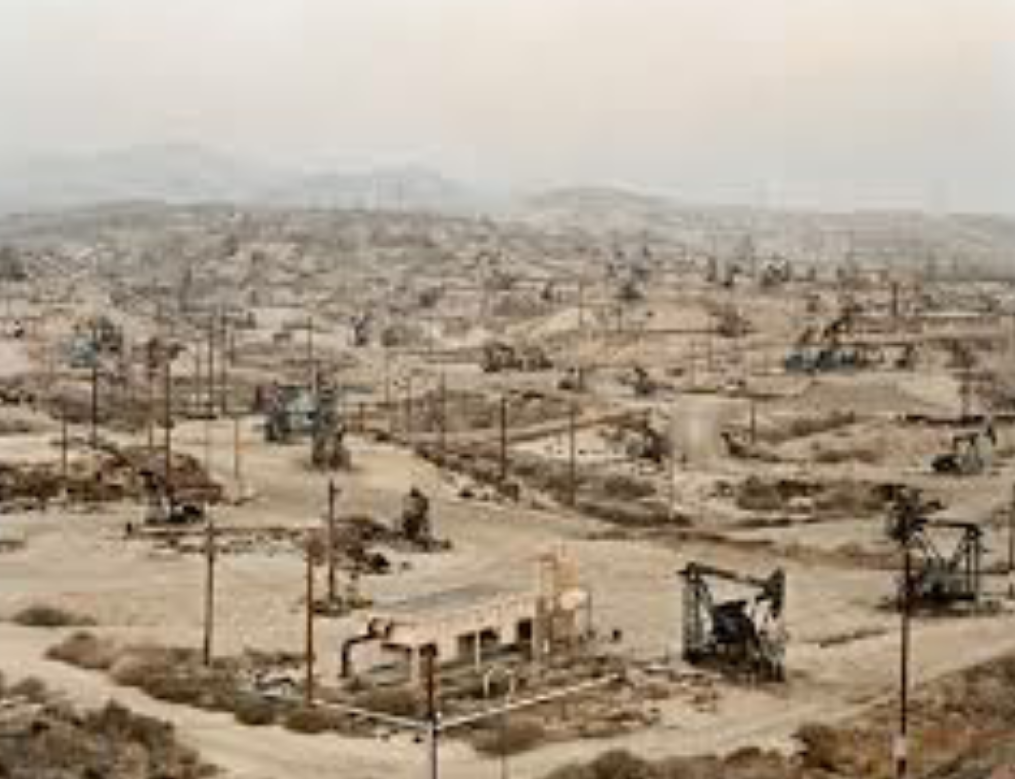
I can pick up the thread of her life again in Taft, California, a town just over the San Luis Obispo county line that resembled Kennett in every way except for one: the source of wealth was oil, not gold.

20150808_151337

Emma Martha Kircher met my Grandfather—they’d marry in July 1920 in Bakersfield—whose job descriptions over the years more or less connect with the oil industry and also with the fact that he couldn’t seem to hold a job for very long.

There’s only one photograph of him, now missing—a handsome Irishman, Edmund Keefe, in a grand three-piece suit and a Homburg hat, his  hands wrapped proudly around my toddler mother, Patricia Margaret Keefe. His eyes are fixed on her and the part of the face you can see below his hat brim is creased by a wide smile. Edmund’s father had come to North America as a Famine baby, but in a miraculous way: The Keefes’ English landlord, Lord Fitzwilliam, had paid the passage to Quebec for his starving County Wicklow tenants, an act of seeming generosity that would make my own life possible.

20150808_153036

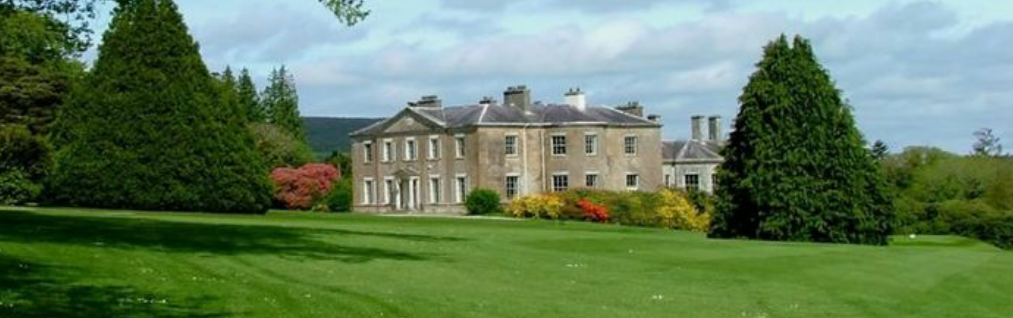
Fitzwilliam estate, Coolattin, County Wicklow

It also made it possible for Fitzwilliam to replace Irishmen with sheep–far more pliable and almost as cheap to feed.

The Keefes had farmed in Ontario and worked as migrant laborers in the Pennsylvania oilfields before the family settled and homesteaded for many years in Minnesota. Thomas Keefe married into another Wicklow family, the Foxes, so profoundly Catholic that they produced a somewhat frightening nun, Sister Loretto, who made it her life’s mission to minister to unwed mothers.

8f70db68-427f-4f48-83b3-18bca95b4785

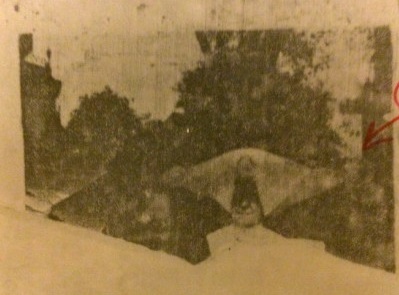
Sister Loretto, in an old newspaper photograph.

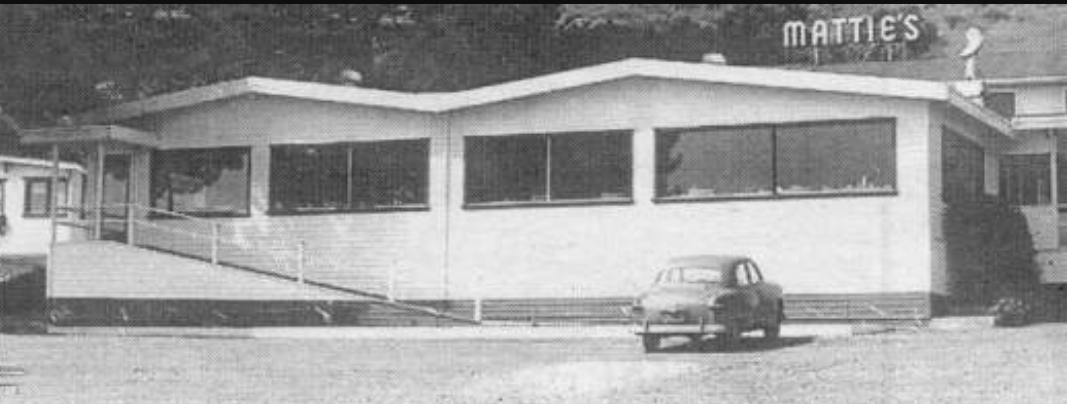
“He was a bad man,” my step-grandfather said of Edmund Keefe, and that’s about all I know of him. I know he liked to drink. I know he liked to borrow cars that didn’t belong to him, and I know that the Taft Police Department and the Kern County Sheriff knew him far better than I ever will. He disappeared in the 1920s—one version has him running off with Shell Beach restaurant owner and businesswoman Mattie Smyer.

Before she moved here, she was a whorehouse Madam in Taft. She became a restaurateur—today, Mattie’s old place is McLintock’s Restaurant. When the War came, Mattie’s contribution to defeating the Axis was a stable of girls behind the restaurant and in little multi-doored houses across Highway 101, near the sea.

20150808_151122

The Mattie connection was something we discovered years after, when my parents made the innocent mistake of taking Grandma to dinner to Mattie’s Restaurant for her birthday. Midway through the main course, after an epic personal struggle, her face began to twitch and she burst into tears. Much later, I found out why: Edmund Keefe may have been a bad man, but he was also, according to my uncle, the love of my grandmother’s life.

But none of us—not a private detective my parents hired, nor hours of research on my part—has ever uncovered what happened to him.

He wrote a one-act play about a young married couple, which he titled “Emmeline.” It, too, has disappeared.

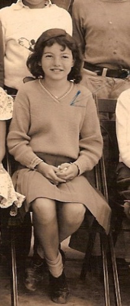
So Emma Martha Keefe was a single mother in an oil boomtown and she was heartbroken. She worked as a waitress in a Taft Mom littlecoffee shop where “extra sugar” meant a good stiff belt of Prohibiton-era Canadian whiskey—possibly landed at Spooner’s Cove at Montana de Oro–in your coffee. She and my mother lived close to the bone; their poverty is revealed in an old school picture of my Mom, a jaunty little beret on her head, sweater and pleated skirt–and that Irish smile I would grow to love so much–but her shoes are beaten and scuffed.

Emma resisted, but eventually accepted, the courting of another man, another Irishman, a Taft police constable, George Kelly, my step-grandfather, our Gramps. This man was my real grandfather. He was soft-spoken, gentle, tall and slender, a natural carpenter,  gifted with children–I am so happy my toddler older son, John, got to meet him twenty-five years ago.

Gramps was a tough, too, and strong as an ox. He and my Uncle George, a big man and bigger than his Dad, used to have little handshaking contests every time they saw each other after an absence. Gramps always won: he was a bone-crusher. There’s a story of him getting jumped by three oilfield roughnecks in an alley during the 1930s, and of an assisting officer arriving at the scene to discover that Gramps was the only combatant both conscious and vertical.

It was Gramps who, at lunch one day, casually mentioned that Mattie was leaving Taft for Shell Beach, and she was putting on a big yard sale. The furniture was elegant. Grandma wouldn’t hear of it. “Not,” she sniffed, “from THAT woman.”

Later, she surreptitiously drove by the yard sale. She made a few more passes. Very slowly.

Fifty years later, when I spent the night at my uncle’s house near Sacramento, I slept on a Mattie Smyer couch in a living room surrounded by Mattie Smyer end tables, lamps, china cabinets and easy chairs. It was beautiful stuff–if one can use the word “voluptuous” to describe an elegantly curved floor lamp, then this was libido-driven furniture.

The Kellys eventually would move to Williams, in Colusa County, raise almonds, where the earliest memory I have is of falling down Gramps’s ranch-house steps. I still have the scar on my knee. I still remember the look of concern on Gramps’ face as he scooped me up in his arms.

When the pair came to visit us in Arroyo Grande, there was inside me the kind of trembling excitement a little kid feels on Christmas Eve. Grandma talked about politics, but also about Hollywood scandals–Elizabeth Taylor and Richard Burton seemed to share equal time with the Berlin Wall and the Mercury astronauts–and teased Gramps, a quiet man but a remarkably funny one, without mercy. He had learned after years of marriage how to be her straight man, Burns to her Gracie Allen. He adored her, and sometimes, in mid-needle, Grandma would stop suddenly and regard him with a smile. You could see that she had learned, after years of marriage, to adore him, too.

The only part I hated about their visits was when it came time for them to leave, and I would watch their car until it was gone, and still watch awhile after. Maybe, I must have thought, they’ve forgotten something and will have to come back.

When they retired to Cambria in a house built in large part by Gramps, then in his sixties, on a lot she’d been wise enough to buy when it was cheap, they lived quietly and putting on the Ritz consisted of going to an all-you-can-eat family restaurant off Highway 1. It wasn’t fancy. Grandma Kelly had no need for fancy. The wealth she had was in living life, in enduring unimaginable heartbreak and in enduring bleak poverty, and through all of that, she was most truly herself in those moments I caught her smiling at Gramps.

In those moments of delight, it was as if she was were five years old again but, somehow this time, her father, Charlie Kircher, was carrying her down Iron Mountain, carrying her away forever that horrific house on stilts and lifting her gently onto the back of the pony every little girl dreams of.

Newer posts →

Subscribe

  • Entries (RSS)
  • Comments (RSS)

Archives

  • January 2026
  • December 2025
  • November 2025
  • October 2025
  • September 2025
  • August 2025
  • July 2025
  • June 2025
  • May 2025
  • April 2025
  • March 2025
  • February 2025
  • January 2025
  • December 2024
  • November 2024
  • October 2024
  • September 2024
  • August 2024
  • July 2024
  • June 2024
  • May 2024
  • April 2024
  • March 2024
  • February 2024
  • January 2024
  • December 2023
  • November 2023
  • October 2023
  • September 2023
  • August 2023
  • July 2023
  • June 2023
  • May 2023
  • April 2023
  • March 2023
  • February 2023
  • January 2023
  • December 2022
  • November 2022
  • October 2022
  • September 2022
  • August 2022
  • May 2022
  • April 2022
  • March 2022
  • February 2022
  • January 2022
  • December 2021
  • November 2021
  • October 2021
  • September 2021
  • August 2021
  • July 2021
  • June 2021
  • April 2021
  • March 2021
  • February 2021
  • January 2021
  • December 2020
  • November 2020
  • August 2020
  • July 2020
  • June 2020
  • May 2020
  • April 2020
  • January 2020
  • December 2019
  • November 2019
  • October 2019
  • September 2019
  • August 2019
  • May 2019
  • April 2019
  • March 2019
  • February 2019
  • January 2019
  • December 2018
  • November 2018
  • October 2018
  • September 2018
  • July 2018
  • June 2018
  • May 2018
  • April 2018
  • March 2018
  • February 2018
  • January 2018
  • December 2017
  • November 2017
  • October 2017
  • April 2017
  • March 2017
  • December 2016
  • November 2016
  • October 2016
  • September 2016
  • August 2016
  • July 2016
  • June 2016
  • April 2016
  • March 2016
  • February 2016
  • January 2016
  • December 2015
  • November 2015
  • October 2015
  • September 2015
  • August 2015
  • July 2015
  • June 2015
  • May 2015
  • April 2015
  • March 2015
  • February 2015
  • January 2015
  • December 2014
  • November 2014
  • September 2014
  • August 2014
  • July 2014

Categories

  • American History
  • Arroyo Grande
  • California history
  • Family history
  • Film and Popular Culture
  • History
  • News
  • Personal memoirs
  • Teaching
  • The Great Depression
  • trump
  • Uncategorized
  • World War II
  • Writing

Meta

  • Create account
  • Log in

Blog at WordPress.com.

  • Subscribe Subscribed
    • A Work in Progress
    • Join 68 other subscribers
    • Already have a WordPress.com account? Log in now.
    • A Work in Progress
    • Subscribe Subscribed
    • Sign up
    • Log in
    • Report this content
    • View site in Reader
    • Manage subscriptions
    • Collapse this bar
 

Loading Comments...