
• About
  • The Germans

A Work in Progress

A Work in Progress

Category Archives: Film and Popular Culture

Our Amadeus

07 Saturday Jun 2025

Posted by ag1970 in Film and Popular Culture

≈ 1 Comment

Today would’ve been Prince’s 67th birthday. Maybe Neil Young is right: It’s better to burn out than to fade away. That’s what happened to this performer, and I miss him.

This is why he never made 67, in a performance of what might be my favorite Prince song, maybe because of its Freudian undertow.


Outlandish, isn’t it? His dancing—great leaps and diving sprawls—was electrifying, but the result was chronic hip and ankle injuries, and surgeries, that left him in constant, isolated pain in his final years. Fentanyl finished him.

But not before he’d gifted us all with music. It’s said he played 27 instruments. He was largely self-taught, beginning on drums, then piano. Here, at Paisley Park, in contrast to the video above, he understates. Still, he plays with the audience, but he never really looks at them. He’s inside the song. He’s enjoying himself.


Back in the MTV days, this might’ve been when I first met him. I’d never heard anything like this song before. I found out later that he was tiny, and the heels he wore—you can see them here— contributed to his stage injuries. That was in the future. In this “Official Music Video,” I found so many things that were compelling, including the way he slings his guitar behind his back, like a samurai and his killing sword. It’s cool. And then there’s it’s the beat, established so vividly by synthesizers and a drum machine, the faintly disturbing fascist/lesbian backup singers, Prince’s spins, and his oddly appealing —yes, I chose this adjective— androgyny. All of this was new, back in the Eighties. It was revelatory.


Twenty-seven instruments. That includes the guitar. This 2004 solo, in a George Harrison tribute, literally stole the show. Prince riffs while Dhani Harrison and Tom Petty look on. At first, I thought Petty, whom I love(d) as well, was miffed. Then, near the midpoint of the solo, you seem him surrender: it’s brief, but it’s big: a smile lights up Petty’s face.

Me, too. Prince’s music—its audacity, its wickedness, its energy, its originality–these things make me smile.
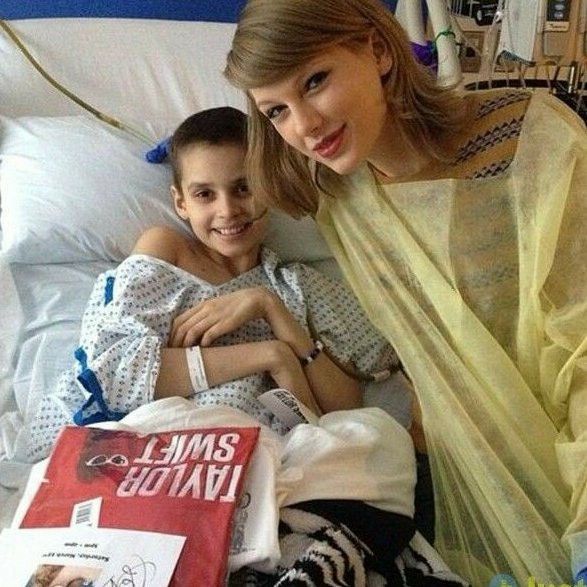


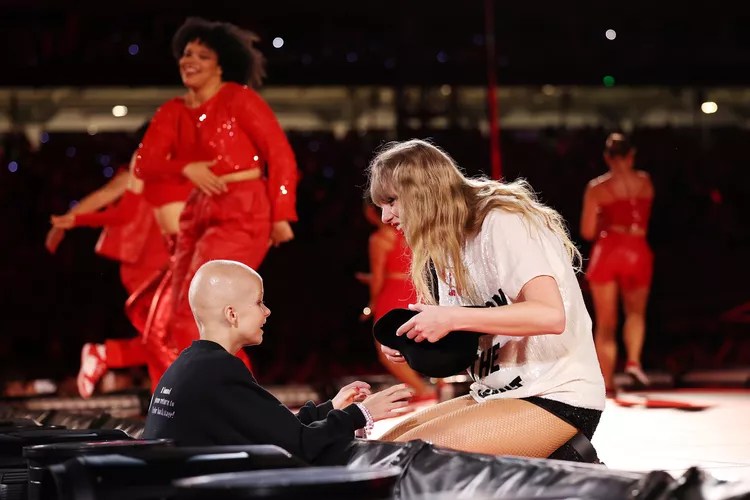
I am a 73-year-old Swiftie.

04 Wednesday Jun 2025

Posted by ag1970 in Film and Popular Culture

≈ Leave a comment

This is the first point that needs to be made. She is enjoying herself.


She still includes a banjo. I like that, it’s a wonderful throwback to her musical roots. And I like her lyrics here: Quirky, self-contradicting, clever. The backup singers are sublime,and this song demands them.


Now maybe we forget how young she was when she started. “Tim McGraw” was her first hit song. She was sixteen, and that’s why I still like this high-school song. (And, again great backup singers on the chorus.)


Yeah,, there’s those stupid umbrellas. But the neener-neener of the chorus and the interplay of her solo and the percussive instruments is, well, sparkling (?) So’s the whole lighty-uppy thing. COOL!

I love this song. It wails and does the be-bop thing in the chorus. I like her hat.


She’s not afraid to reach out to some people who are marginalized. Here she is at New York’s Stonewall Club, the scene of the 1969 that pitted the NYPD against the City’s gays. If you’re a fan of Modern Family, note who’s singing with her.


But that doesn’t mean that cops don’t love her, too.


Cynics would say her interaction with others is cultivated, but I think she really likes people. She’s working the audience in this performance of “Love Story,” on Letterman, but at about 2:45, look for her reaction to the little brunette girl. That’s genuine.


And, of course, there’s her cause: Childhood cancer. I think that’s genuine, too.


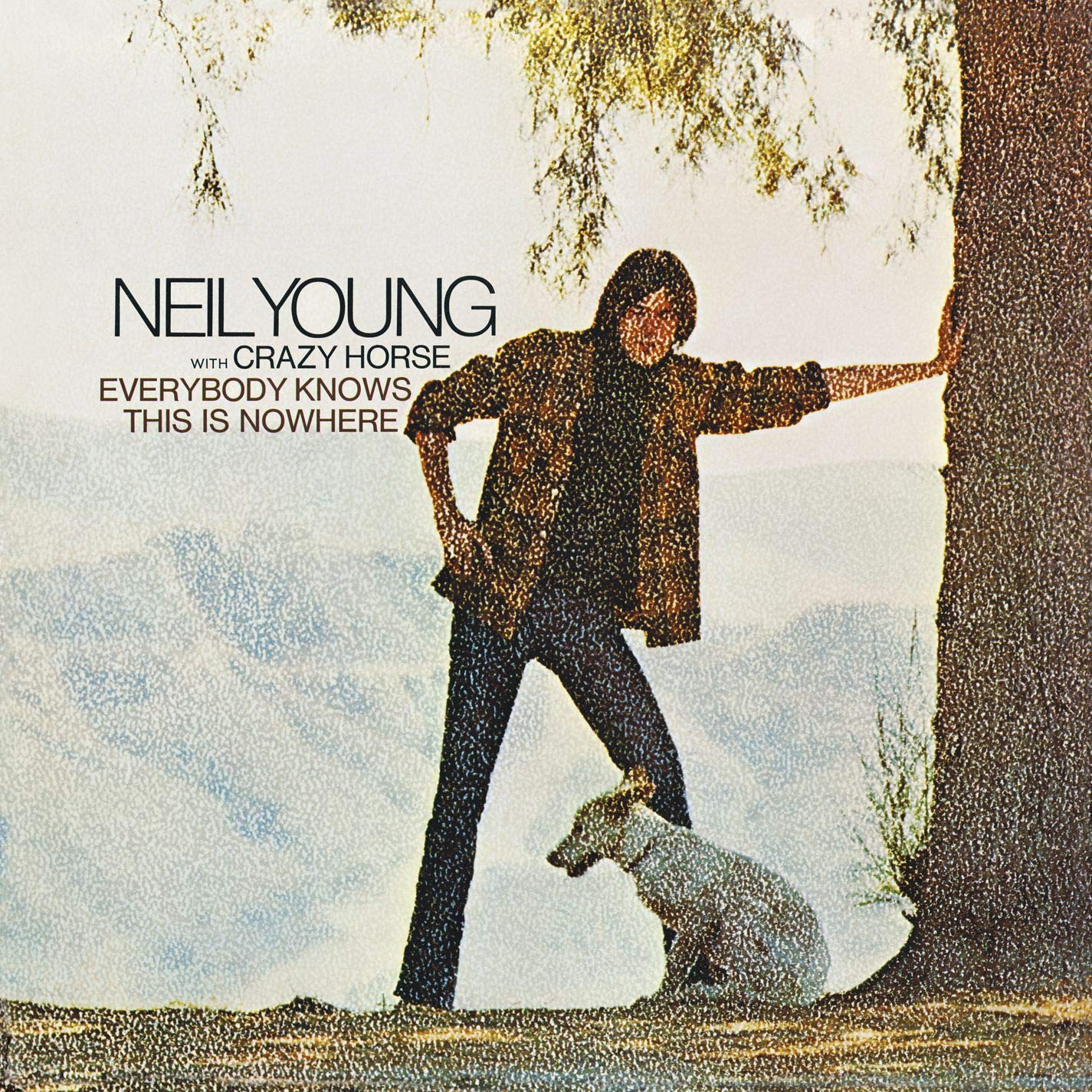
Neil Young on the brain…

03 Saturday May 2025

Posted by ag1970 in Film and Popular Culture

≈ Leave a comment

Tags

crazy-horse, music, music-covers, neil-young, rock-music

About 1972, in his apartment on Osos Street, my friend Joe Loomis played this for me. I was gobsmacked. Seven years later, my friend Greg Wilson took me to a midnight showing of the concert film Live Rust. Double gobsmacked. When Greg invited me and Elizabeth to see Coastal at the Fremont last week—Daryl Hannah’s documentary of her husband Neil’s tour—I was, well, you know.

The documentary’s music, most of it unfamiliar to me, means I have to go back and restock my Neil Young shelf. What I found out, too, is, as severe as he always looks, and always has, Neil Young is very funny, with a droll, dry sense of humor. He pokes fun at himself, which is a virtue. I found out, as well, how much he loves his family and how passionate he is about preserving the natural world.

He is an incredible man, and we even got to hear him speak, on the Fremont stage (the theater opened in 1942 with an appearance by Laurel and Hardy), and seeing him in person only affirmed the impact he’d had on me that day in Joe’s apartment.

That said, and meaning no disrespect, these are a few of my favorite Neil Young covers. I’m not the only one who’s been gobsmacked.

1. Cowboy Junkies, , “Powderfinger.” Their cover of Lou Reed’s “Sweet Jane” is epic, but here, the Junkies takes this song’s marvelous fuzzy electric guitar work, from Live Rust, back to its bluegrass roots. Since I think Young’s song references the Civil War, that makes this version—that violin!—wholly appropriate.


2. Molly Tuttle, “Helpless.” Another performer who links rock and bluegrasss, introduced to me by my friend Michael Shannon. She strikes me as immensely courageous—she also covers the Rolling Stones’ psychedelic “She’s A Rainbow,” which takes balls as big as church bells. The reference to Ontario resonates with me too, because that’s where my Irish Famine ancestors settled in the late 1840s.


3. Bryan Ferry, “Like A Hurricane.” Ferry will never sing a Mozart opera, but the beautiful young woman at the keyboard and later the sax floors me. So does the young guitarist in the yellow shirt. A little Europop vibe in this interpretations, and I dig it.


4. The Dave Matthews Band, “Cortez the Killer.” Despite its kinda sorta historical glossing-overs (the Mexica, or Aztec, ate their enemies after mock combat called “Flower Wars.” With chiles.), I do love this song, because they do get the Cortez part right. Another stellar guitar solo.


5. Bryan Machaca, “Bluebird.” In the film Coastal, this was the one throwback song that Young performed. It’s Steven Stills’s song, and Young played it on a guitar that Stills had given him. This young man gets it, and he’s a gifted guitarist.


Actress Jean Arthur (1900-1991): An Appreciation

26 Saturday Apr 2025

Posted by ag1970 in Film and Popular Culture

≈ Leave a comment

[Edit]

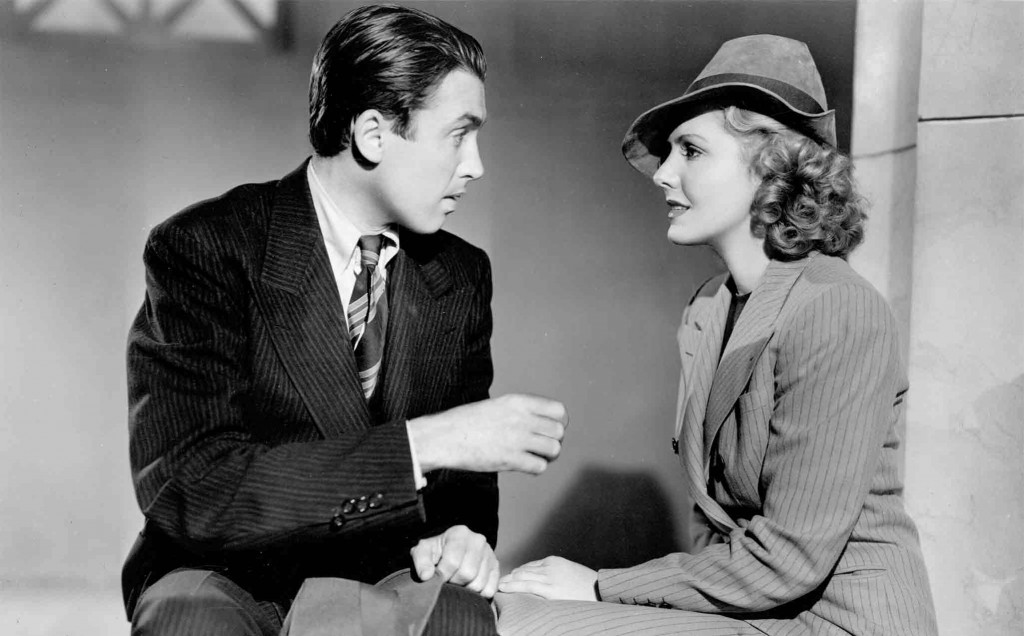
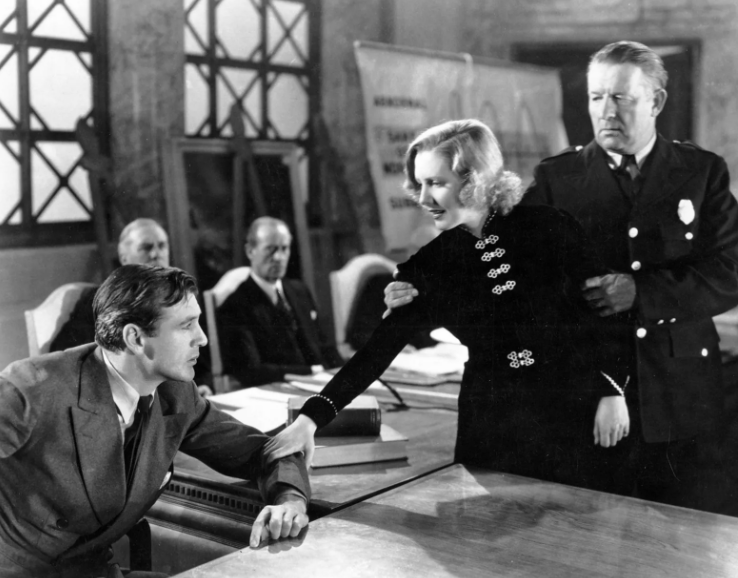
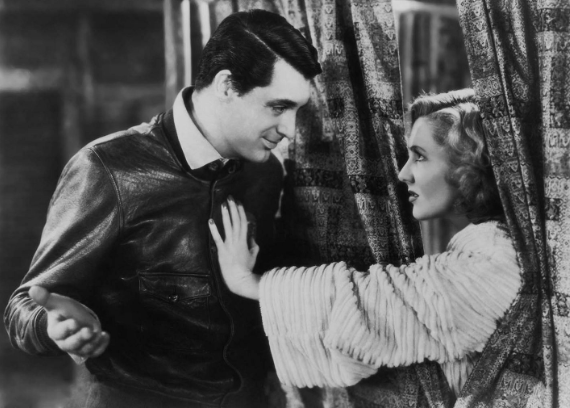
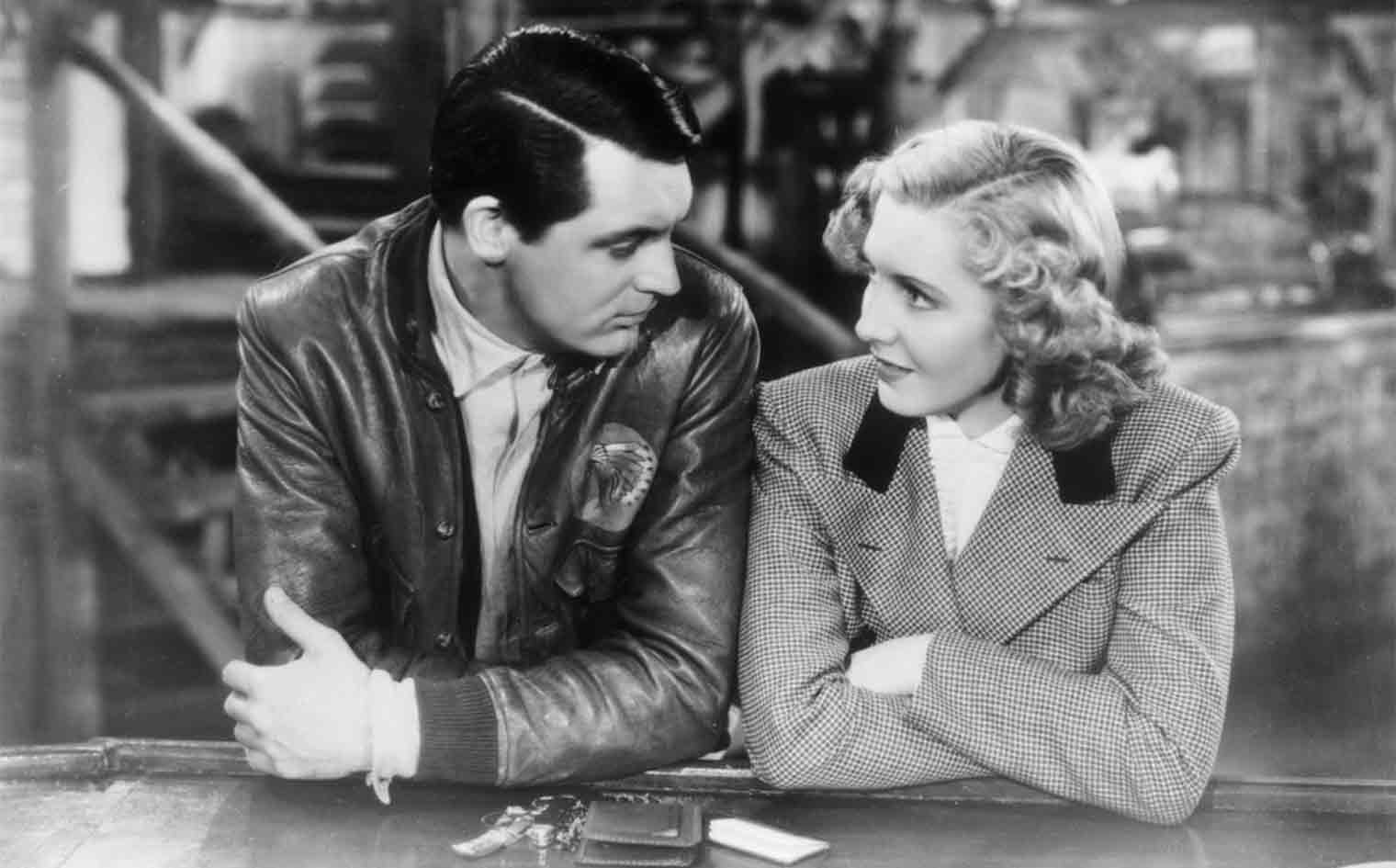
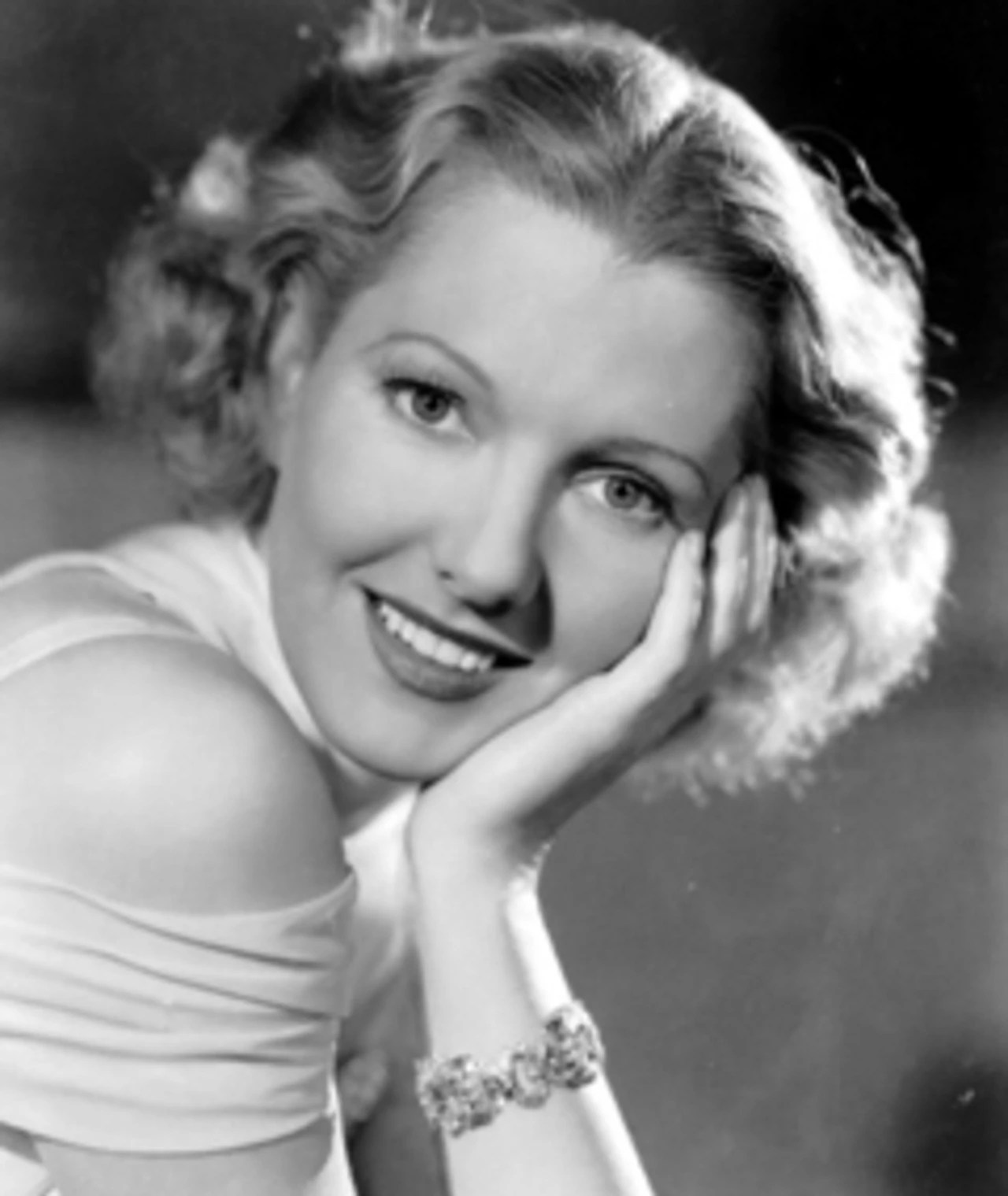
Look at her competition: Myrna Loy. Veronica Lake. Rita Hayworth. Claudette Colbert, Joan Crawford, Lauren Bacall. Even Hedy Lamarr. I never forgave them for the Mamie Eisenhower haircut they gave her for Shane. But of all the beautiful actresses from Hollywood’s Golden Age, Jean Arthur, along with Ginger Rogers, endures with me.

It’s because I am a man, and therefore vain. What Arthur did, in nearly all her films, was to make her leading man better.

She restored James Stewart’s courage in Mr. Smith Goes to Washington (1939). She convinced Stewart, in You Can’t Take It With You (1938), even after his wealthy, snobby and dyspeptic family had met her wildly eccentric family in You Can’t Take It with You, that he made exactly the right choice in falling in love with her. Director Frank Capra made the right choice in casting her.


She talked Gary Cooper out of committing suicide in Mr. Deeds Goes to Town (1936).

In Only Angels Have Wings (1939), she sticks by Gary Cooper’s reckless Andes mail pilot and tempers—at least at little—his Hemingwayish appetite for self-destruction.

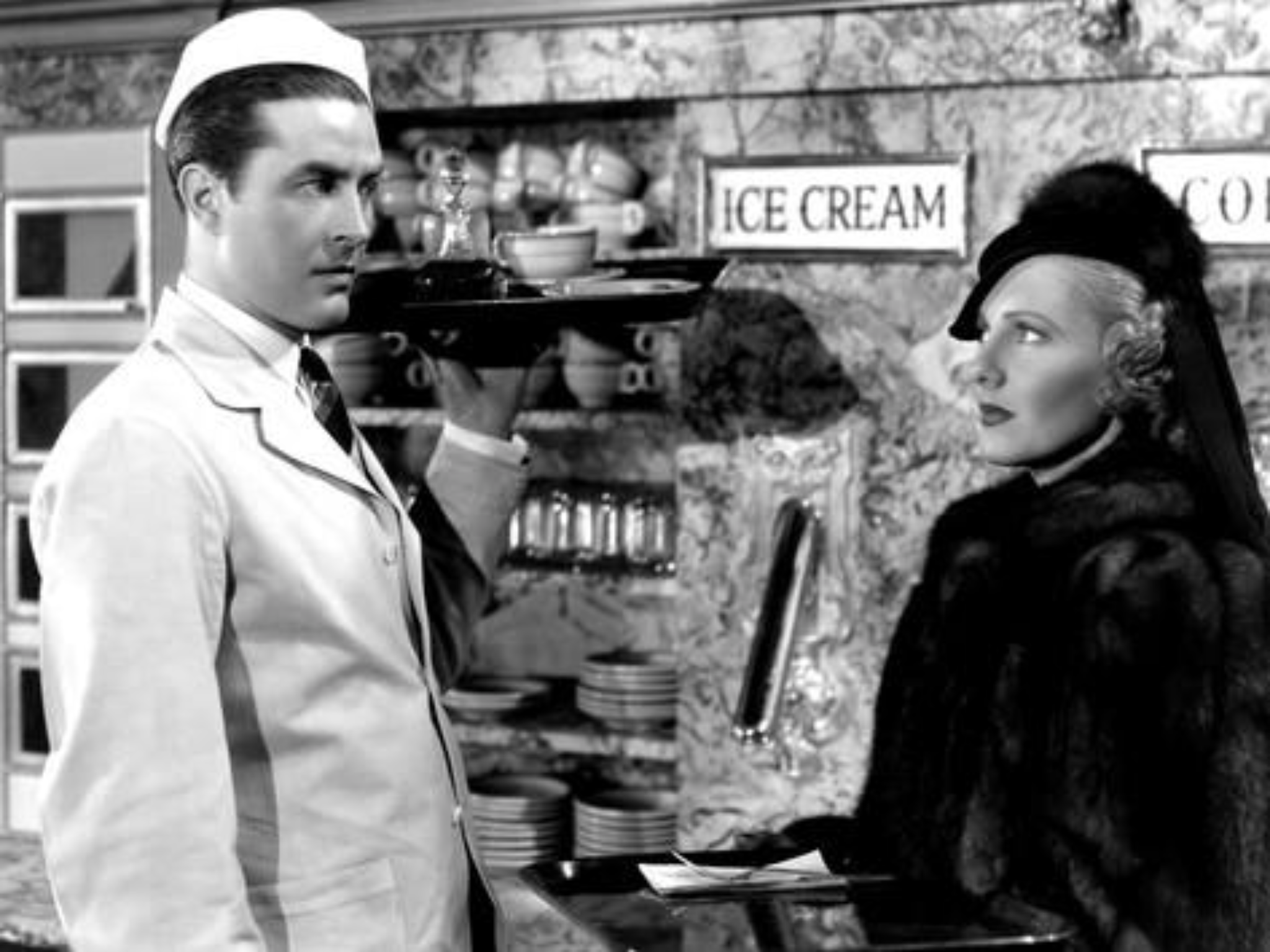
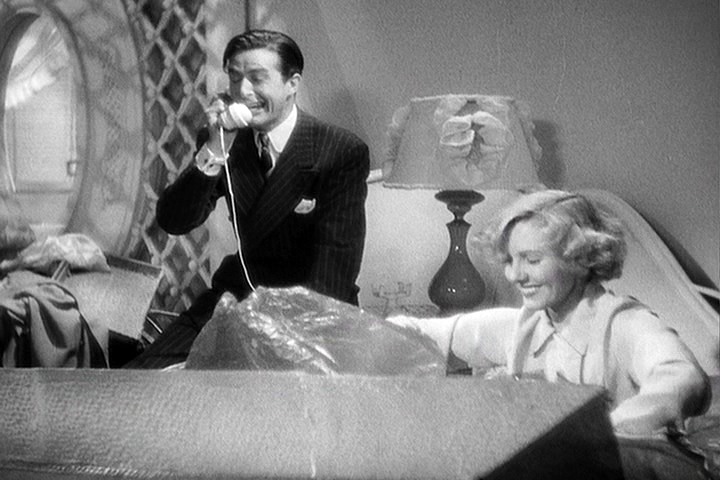
My favorite Jean Arthur film remains Easy Living (1937), with a screenplay by Preston Sturges. Arthur plays a young working-class New York City woman who runs out of money. She has to close her eyes to break her piggy bank. When a fur coat suddenly falls on her from a Manhattan high-rise, everybody assumes she’s rich and New York City lays out the proverbial red carpet. This film once again proves my thesis. Ray Milland is most recognizable to my generation as the cold-hearted father in Love Story (1970), and, a littler earlier, as the man who tried to have his wife, Grace Kelly, murdered in Hitchcock’s Dial M for Murder (1954). He is not funny.

But in Easy Living, ir’s Jean Arthur who reveals how funny Ray Milland could be, first in a wonderful automat scene, where you learn how fast food was served in the 1930s, and later as he, thoroughly confused, begins to fall in love with her. I think it was one of Milland’s best peformances, and I am convinced this because Jean Arthur evoked that performance from him.

If she brought out the best in her male leads, she was never subservient to them. If she fell in love with them, when the film ended, you were sometimes not sure that she’d stay with them.

You wanted to stay with her. She was the tomboy you’d grown up with, caught tadpoles with, watched, awestruck, as she hit the snot out of softball. And then, suddenly, when you were about thirteen, you realized that you were in love with her. (She went to the Prom with someone else.)

The real Jean Arthur was filled with near-constant anxiety, filled with self-doubt, and acting took, for her, immense reservoirs of courage that lay hidden deep inside. Only the singer Carly Simon, I think, has experienced stage fright as severe as Arthur’s was.

Jean retired because those reservoirs were never enough to drown that fear. What she’s left to us, in the fiction of film, is who she really was. Her personal character was marked by courage, by her willingness to confront, over and over, her deepest terrors. These were qualities that became transparent in the characters she played. I hope that somehow, long after her death in Carmel in 1991, that Jean Arthur realizes how admirable she was, both as an actor and as a human being.

Three Terrence Malick films on Earth Day

22 Tuesday Apr 2025

Posted by ag1970 in Film and Popular Culture

≈ Leave a comment


I remember learning that, in 1500, a squirrel—a determined squirrel, mind you—could leap from tree to tree from New York to North Carolina. The prairie grass that began at the border of what would become Kansas was so tall that a man on horseback would disappear once he rode into it, like the way the ballplayers disappeared in Field of Dreams. Thirty million buffalo filled the prairie.

I don’t know that any director, not since John Ford and Monument Valley, has had the visual instinct for what America was like seventy, 150 or 400 years ago, as Terrence Malick has shown in his films, which are lyrical and almost leisurely the latter being purposeful: the rhythm gives you time enough to enjoy the nation’s beauty and the shock of his action sequences hit you that much harder.

Here are three favorites: Badlands (1973), based on the true story of two teens, Charlie Starkweather and Carol Fugate who become killers in 1958.


For Days of Heaven (1978), Malick had to shoot in Alberta to give an authentic sense to what Texas wheatland was like in 1916.

Finally, Malick had the audacity to go back to the encounter between The First People and Europeans in 1607. This is his film The New World.


On Ballerinas

22 Tuesday Apr 2025

Posted by ag1970 in Film and Popular Culture

≈ Leave a comment

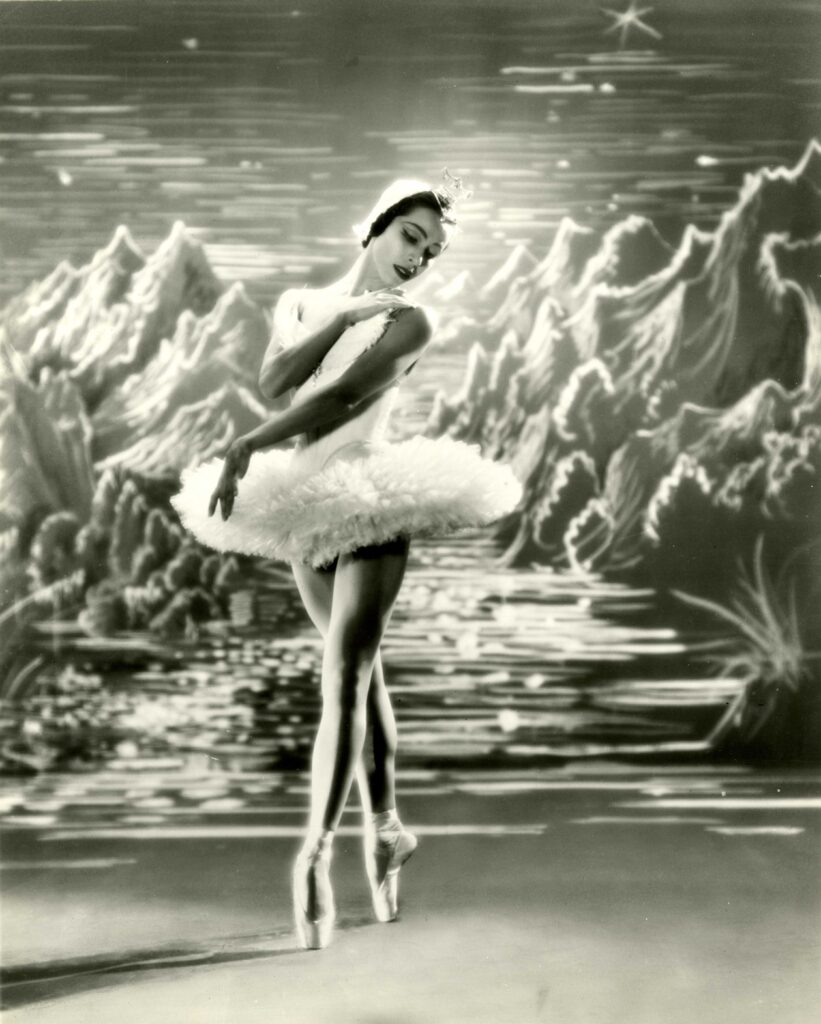
Maria Tallchief, Swan Lake

April 22 in History: In 1876, Tchaikovsky completes the composition of “Swan Lake.”

In its debut, the ballet was a flop. But, so it goes, was the film “It’s A Wonderful Life.”

Elizabeth studied ballet as a little girl and, when she was in college, met some members of the Bolshoi backstage in L.A. They all smoked Marlboros.

I cannot imagine, less the smokes, more incredible athletes than those dancers.

We once went to a 49ers game, Old-Timers’ Day, and the only veteran who wasn’t limping was Joe Montana.

The price that dancers pay, in blunted toes and bleeding toenails, torn ligaments, stress fractures in the lower vertebrae, something loud called snapping hip syndrome, in stress fractures, and in so many more injuries, rival those of NFL players.

Ballerinas are warriors.

My mother and my wife taught me this, taught me how to admire young women who dance.

My Mom had several Classical 45’s–records, yellow vinyl–and I had a big indestructible record player inside a kind of suitcase, so I’d take it out and play the yellow records when I was five or six, when we lived on Huasna Road.

I played this passage, and the Russian dance from “Nutcracker,” over and over.

And over.

Film Review: Returning the Buffalo

19 Saturday Apr 2025

Posted by ag1970 in Film and Popular Culture

≈ Leave a comment

SLOIFF Review: “Bring Them Home”

Try the veal. It’s the best in the city.

16 Sunday Feb 2025

Posted by ag1970 in Film and Popular Culture, Uncategorized

≈ Leave a comment

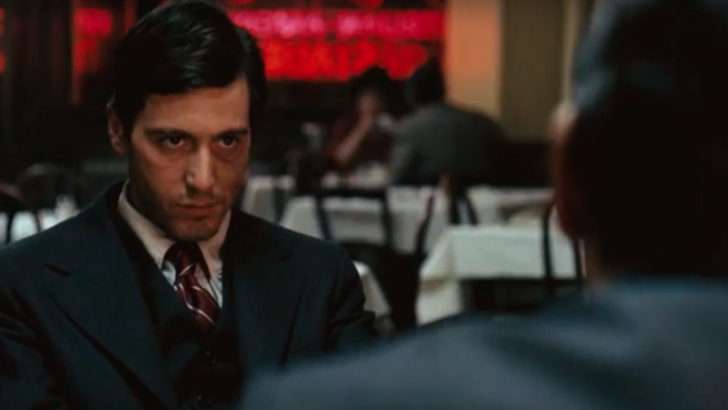
Watching movies again. They’re showing “The Godfather” and, I don’t care how many times I’ve seen it, I’m still picking out scenes here and there to watch again.

Today it was the restaurant scene, which is very long and very complex. This is the one where Michael whacks Sollozzo and Sterling Hayden’s police captain.

The best part, to me, is the sound. Coppola omits music. As Michael enters the restroom to find the revolver and then exits, I think what you hear on the soundtrack is the noise of the El, the elevated subway, and it’s perfect for what must’ve been the mounting fear in Michael’s mind.

He’s still struggling with it when he returns to the table, and then watching Pacino’s face, as he looks for his moment, is incredible.

It’s incredible movie-making, I think.

Other things I love:

–The deep mahogany that colors much of the film, especially when it’s contrasted with the bright sunlight of Michael’s exile to Italy. The quality of light in Italy is magical–everything’s in sharp and immediate focus–so it’s no wonder the Renaissance began here.

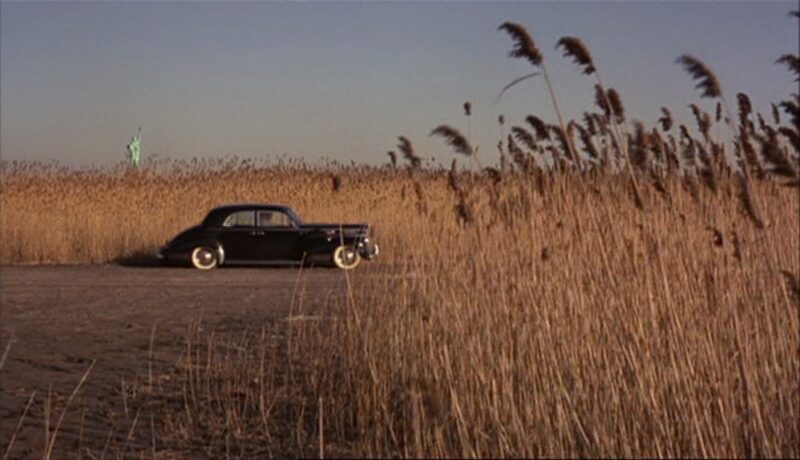
–The cars. They’re big, and cool.

–Michael recruits Enzo the baker to stand guard in front of the hospital where the Don lies, vulnerable to assassination.

–“Leave the gun. Take the canoli.”

–The scene when Sonny beats up Carlo; it’s so evocative of a New York neighborhood on a hot summer day, down to the open fire hydrant.

–Sonny’s tactical debates with Robert Duvall’s Tom Hagen.

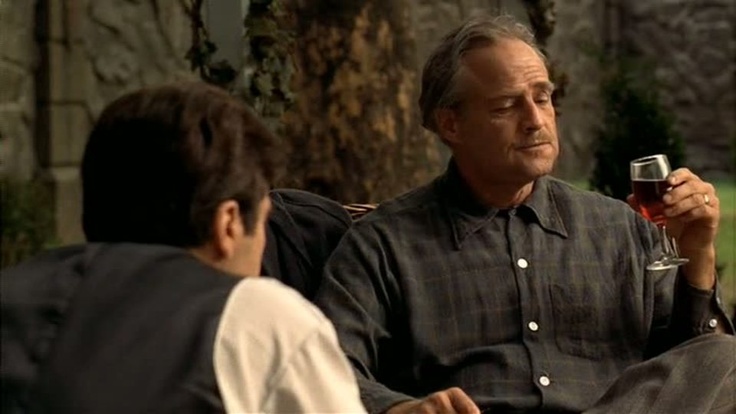
–Brando’s interview with Michael, when he admits that he likes wine more than he used to. Michael’s devotion to his father is palpable in this scene, as it is in others, especially the hospital scene where he moves his father to another room.


–Tessio teaches Michael how to make spaghetti sauce.

–Any scene with poor Fredo.

–The christening/assassination sequence. Do you renounce Satan?

I can, of course, do without the horse head, a shocker in Puzo’s novel, too, and with Diane Keaton’s dreadful hairdos/wigs, none of which bear the faintest resemblance to the 1940s. Other than those, I guess I’ll watch this film a few hundred more times.

Superman: Our immigrant hero.

19 Thursday Dec 2024

Posted by ag1970 in Film and Popular Culture, Uncategorized

≈ Leave a comment

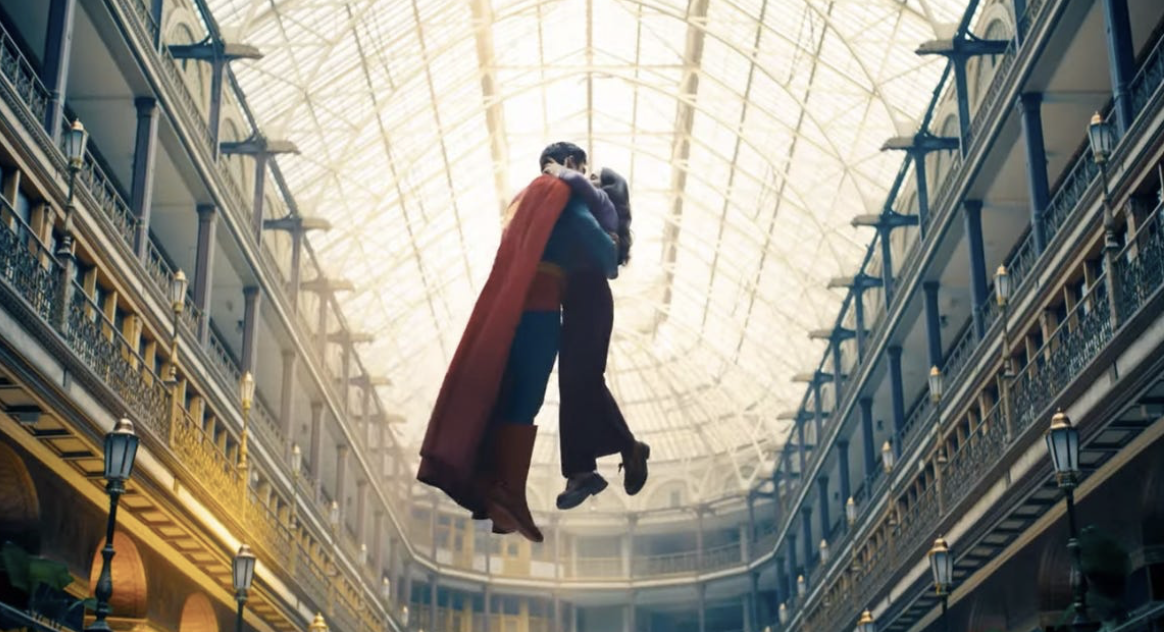
David Corenswet as Superman in James Gunn’s feature, to be released in July.

I was watching CNN’s morning news and they handed the feature on the upcoming Superman film to Richard Berman. I love Richard Berman because he is ebullient about popular culture, especially rock music and movies. He is, like me, a geek. His geekiness was overwhelming—and utterly charming—in presenting this story today. I’ve loved Kate Bolduan, the mother of two, since 2016, when she began to cry while presenting a story on Omran, a little boy, here in the back of an ambulance after surviving an airstrike in Syria. Sara Sidner, on the right, has shown immense dignity during her struggle with breast cancer; there are days when she’s not on and your suspicion is that she just isn’t feeling well.

“Take me home, Krypto.” Part of the enthusiasm Berman showed was because the upcoming film features Superman’s dog, Krypto, and the hero plummets to earth in bad shape. Krypto saves him. This drove folks on the internets nuts—remember, the trailer was released just this morning—and Berman is a dog lover, like so many of us.


Berman is talented, funny and he is Jewish. I knew that, knew that my ancestors were not terribly kind toward Jews (my Mom, when I was four, scolded me for wearing my underwear under my pajamas. “Only Sheenies do that!” “Sheenie” is an Irish pejorative for “Jew.”) I hope my Mom didn’t know that.

Once, when Roberta brought home a German boy from Poly, a date, Mom refused to come out of her room to meet him. The Irish hold grudges, and they hold them hard—it’s the flip side of their sense of humor. In the marvelous book Paddy’s Lament, about the Great Famine, the sure sign that an Irish victim (simple malnutrition or, more likely, typhus) was about to die was when he or she lost their sense of humor.

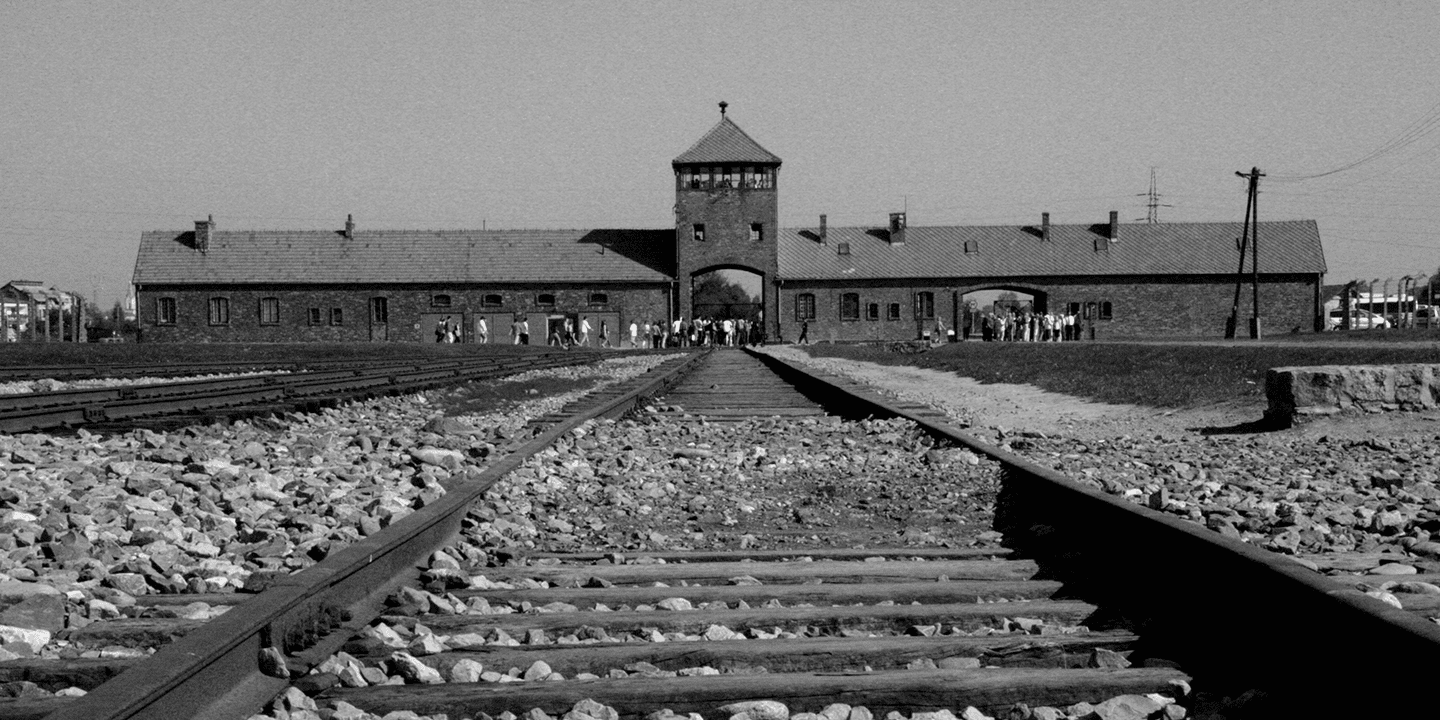
My mother’s grudge? It was called Auschwitz-Birkenau.


But was at least a small part of Berman’s reaction to the movie trailer rooted in his Jewish heritage? Superman’s own Jewishness is a point that will never, ever be resolved, but of course, I had to look it up. I found this article, in the link below, fascinating—and ambiguous, which is just as it should be. History is ambiguous. Individuals aren’t. If Superman’s creators, Jerry Siegel and Joe Schuster, thought of him a a fellow Jew, then surely he must be. His nationality, of course, is American, and he is an immigrant, along with the 3.5 million Jews from our past who preceded him. They are Americans, too.

https://bigthink.com/the-present/supermans-jewish-history


I need to make one more point about the trailer. The director, James Gunn, St. Louis-raised, did not slight the love story. The film is said to contain scenes that are tributes to Christopher Reeve, our late 20th-Century Superman, the actor known for his decency, kindness and immense reservoirs of courage. So it’s appropriate that in both versions of the story, Superman and Lois fall in love in the air.


I am the proud father of two fine sons, but my nieces, Emily and Rebecca, are my surrogate daughters, and they are from the same miracle that produced that immigrant who calls himself Clark Kent. On their mother’s side—my younger sister—they are County Wicklow Irish. On their Dad’s side, they are descended from Russian Jews who escaped the Romanov pogroms. The first of them who was an American was a junk dealer, not a Superman. That role fell in equal parts on his grandsons, three of them university professors.

As to their descendants, my nieces? Emmy (NYU) is the actor, in New York City. Becky (Honors, University of Missouri, my Alma Mater) is the poet who combines words, seemingly discordant, and makes them shimmer. Maybe that’s why I love Superman now even more than I did when I was twelve, inhaling the comic books while waiting my turn for a haircut in my hometown, a little farm town, Arroyo Grande, California.

Inglorious Basterds: The opening scene

22 Friday Nov 2024

Posted by ag1970 in Film and Popular Culture, Uncategorized

≈ Leave a comment

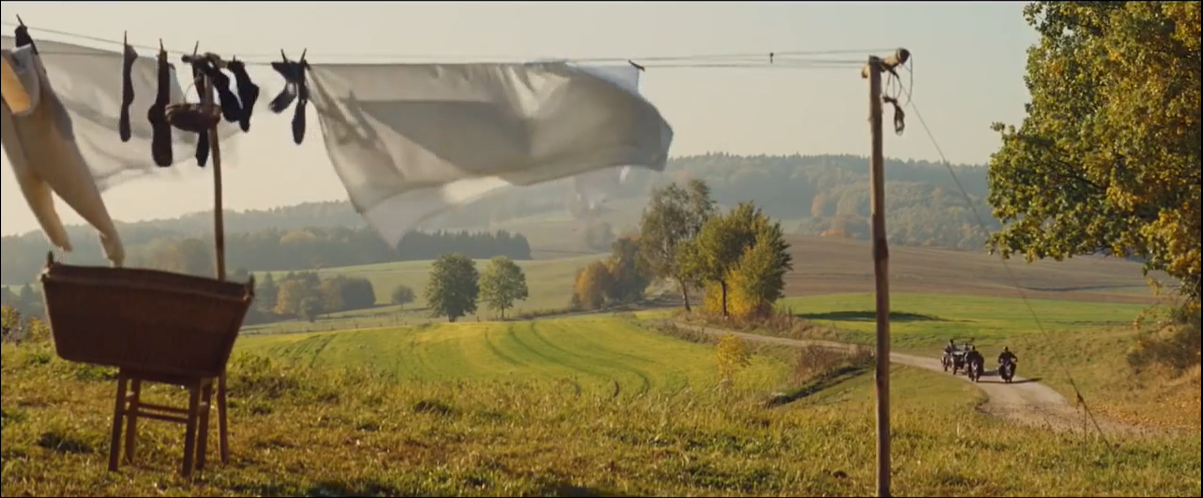
The SS detail approaches the French farmer’s home.
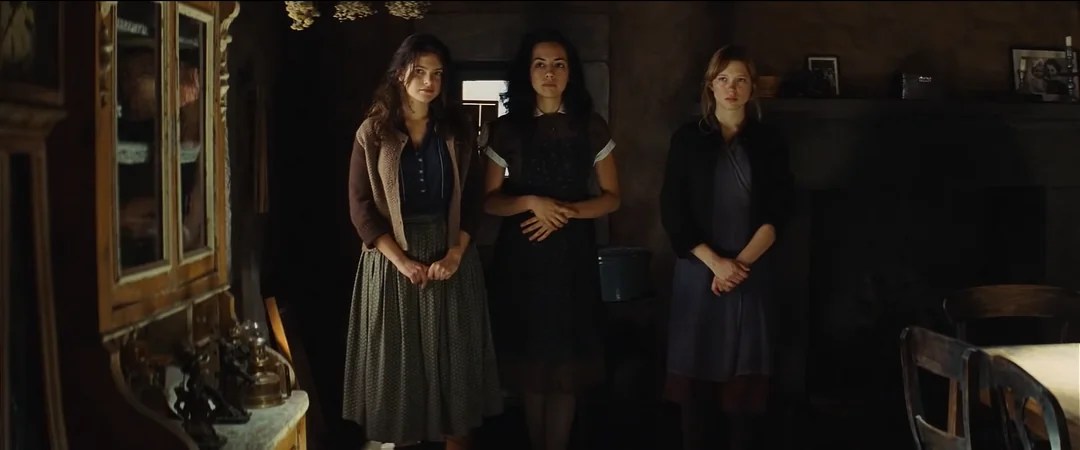
The farmer’s daughters. One, glancing downward, reveals to Landa, the SS “Jew-hunter” that the family he seeks is below the floorboards.
Pierre LaPadite, the farmer hiding his Jewish friends, just before the tear–he realizes he and his daughters are doomed unless he betrays the SS officer’s prey.

Mr. Amateur Movie Critic strikes again.

I started to watch the opening scene to Quentin Tarantino’s “Inglorious Basterds” last night and I was transfixed. Luckily (yeah, we’re still cable) I found it, I think on Showtime, and was able to start the film over again.

This has to be one of the most beautiiful–and most sinister–film scenes I have ever seen. This part shows of the arrival of the immensely charming SS officer and his interrogaton of a French farmer. (One of the lovely daughters, Lea Seydoux, became Owen Wilson’s love interest at the end of “Midnight in Paris.”)

I will not show the rest of the scene because it’s too cruel–as is the rest of the film, with its brain-bashings, forehead carvings, index finger wound-probings, scalping of Nazis, German MP-40 (submachine gun) massacres, mass incinerations, and so on.

The usual Tarantiono stuff. I could do without about 70% of it., stuff that might make even San Peckinpah blush. I guess I have a love/grossed out relationship with this Tarantino (“Pulp Fiction” is one of my favorite films).

But this scene, with the interplay between the SS hunter and the farmer hiding his prey–a family of Jews is just beneath the floorboards of the farmhouse, is one of the most brilliant film sequences I have eve seen. Ever. Both actors–Perrier LaPadite at the farmers and Christopher Walz at the SS officer, charming and ingratiating and clever, and increasingly murderous, deliver one of what I think is one of the finest film dialogues I have ever seen.

To me, what makes it brilliant comes near the end, when, in silence, a tear creeps down the farmer’s face.

Here is the scene, in its entietry. Warning: it is violent at its end. It needs to be stopped. So did the SS. As fraught as our relationship is today, that’s exactly what the Allied Powers did. It took too long.

← Older posts

Subscribe

  • Entries (RSS)
  • Comments (RSS)

Archives

  • January 2026
  • December 2025
  • November 2025
  • October 2025
  • September 2025
  • August 2025
  • July 2025
  • June 2025
  • May 2025
  • April 2025
  • March 2025
  • February 2025
  • January 2025
  • December 2024
  • November 2024
  • October 2024
  • September 2024
  • August 2024
  • July 2024
  • June 2024
  • May 2024
  • April 2024
  • March 2024
  • February 2024
  • January 2024
  • December 2023
  • November 2023
  • October 2023
  • September 2023
  • August 2023
  • July 2023
  • June 2023
  • May 2023
  • April 2023
  • March 2023
  • February 2023
  • January 2023
  • December 2022
  • November 2022
  • October 2022
  • September 2022
  • August 2022
  • May 2022
  • April 2022
  • March 2022
  • February 2022
  • January 2022
  • December 2021
  • November 2021
  • October 2021
  • September 2021
  • August 2021
  • July 2021
  • June 2021
  • April 2021
  • March 2021
  • February 2021
  • January 2021
  • December 2020
  • November 2020
  • August 2020
  • July 2020
  • June 2020
  • May 2020
  • April 2020
  • January 2020
  • December 2019
  • November 2019
  • October 2019
  • September 2019
  • August 2019
  • May 2019
  • April 2019
  • March 2019
  • February 2019
  • January 2019
  • December 2018
  • November 2018
  • October 2018
  • September 2018
  • July 2018
  • June 2018
  • May 2018
  • April 2018
  • March 2018
  • February 2018
  • January 2018
  • December 2017
  • November 2017
  • October 2017
  • April 2017
  • March 2017
  • December 2016
  • November 2016
  • October 2016
  • September 2016
  • August 2016
  • July 2016
  • June 2016
  • April 2016
  • March 2016
  • February 2016
  • January 2016
  • December 2015
  • November 2015
  • October 2015
  • September 2015
  • August 2015
  • July 2015
  • June 2015
  • May 2015
  • April 2015
  • March 2015
  • February 2015
  • January 2015
  • December 2014
  • November 2014
  • September 2014
  • August 2014
  • July 2014

Categories

  • American History
  • Arroyo Grande
  • California history
  • Family history
  • Film and Popular Culture
  • History
  • News
  • Personal memoirs
  • Teaching
  • The Great Depression
  • trump
  • Uncategorized
  • World War II
  • Writing

Meta

  • Create account
  • Log in

Blog at WordPress.com.

  • Subscribe Subscribed
    • A Work in Progress
    • Join 68 other subscribers
    • Already have a WordPress.com account? Log in now.
    • A Work in Progress
    • Subscribe Subscribed
    • Sign up
    • Log in
    • Report this content
    • View site in Reader
    • Manage subscriptions
    • Collapse this bar
 

Loading Comments...