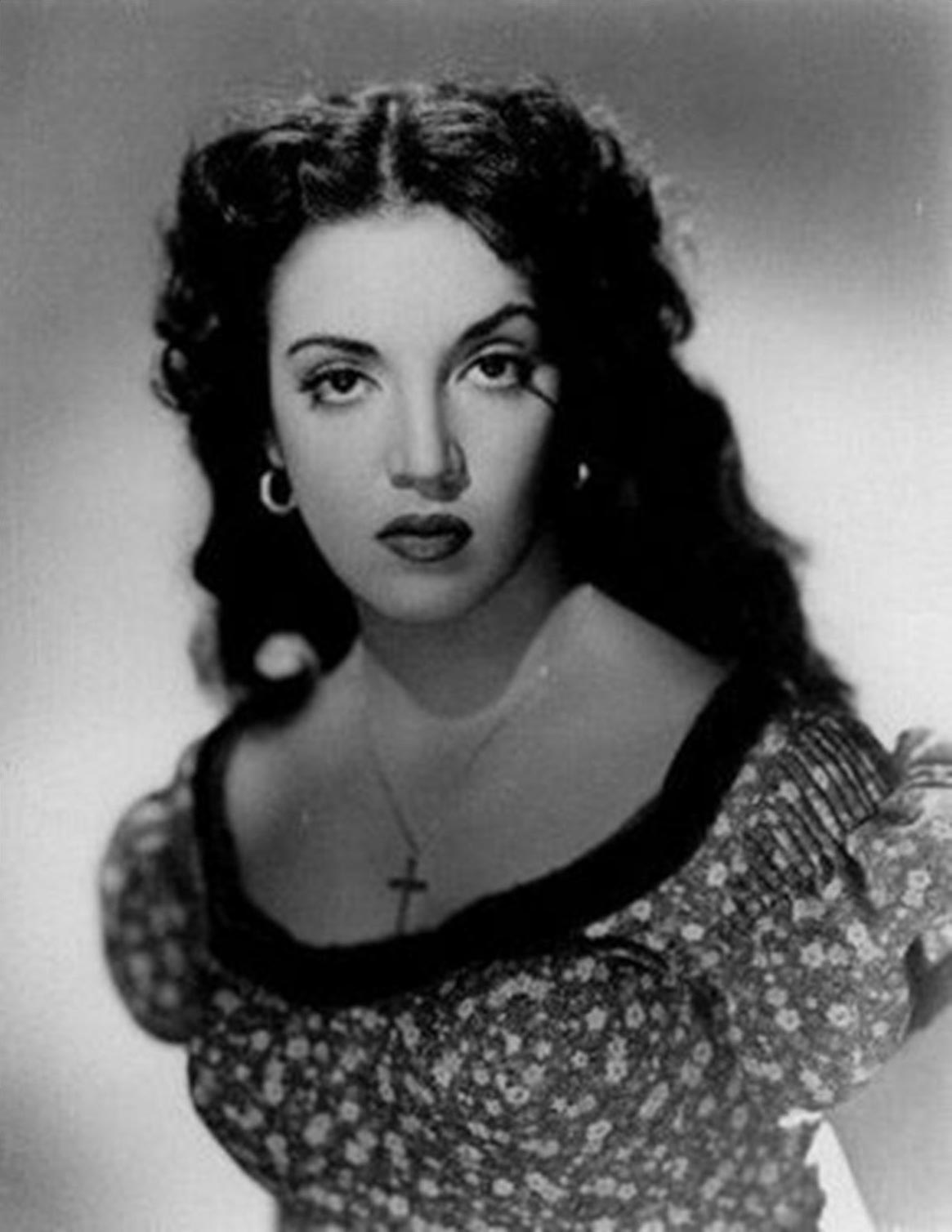
Katy Jurado had already made twenty Mexican films when Hollywood beckoned. She would make many more—both in Mexico and in the States, especially in Western roles—and I remember her best in this scene from Sam Peckinpah’s Pat Garrett and Billy the Kid.
Her other Westerns include High Noon, Arrowhead, Broken Lance and a personal favorite of mine, One-Eyed Jacks, a film made by Marlon Brando, who fell madly in love with her in the middle of torrid affairs with two other actresses. Who can blame him for falling in love with just one more?
Brando’s hijinks aside, there was, I think, a consistent feature in all the characters Jurado played, and it was in their dignity
She was born in Mexico City in 1924, when the nation was just emerging from the violence of a ten-year revolution that had claimed one million lives—one of every ten Mexican citizens. Sadly, violence marked her relatively short marriage to Ernest Borgnine. And violence is a hallmark of Sam Peckinpah films, and it’s a staple of his Pat Garrett and Billy the Kid.
This scene is no exception. Jurado plays the wife of lawman Slim Pickens, James Coburn is Pat Garrett, and they’re on Billy the Kid’s trail when they encounter outlaws holed up in a remote cabin. The gunplay follows. Jurado’s performance with a shotgun is impressive.
But the violence isn’t the memorable part. This scene moves me because of the final glances that Jurado and Pickens exchange as both of them realize that he is dying. This is marvelous, heart-breaking acting.
Bob Dylan had a minor role in this film. His song is all the dialogue this scene needed.
What a scene. What a song. What a woman.
And, of course, it’s such a fine song that I can’t leave the blog post hanging without the rest of. Dylan and Tom Petty perform “Knockin’ on Heaven’s Door” here. This is for Katy Jurado.
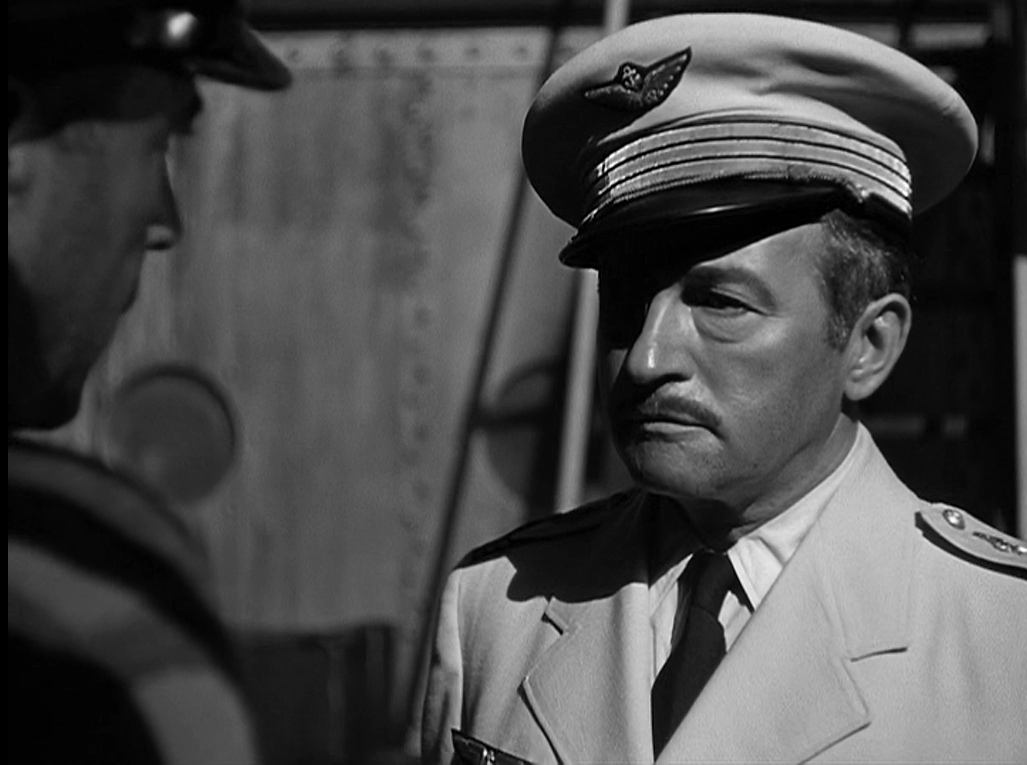
Bogart and Claude Rains in Passage to Marseilles. (The Bogie Film Blog.)
Since the weeds in the back are getting really tall, I watched the 1944 film Passage to Marseille, or at least the last half, the other day.
The concept is a grand one—making a movie with the cast of Casablanca (1942).
And they include:
Peter Lorre as Marius
Sidney Greenstreet as Major Duval
Claude Rains as Captain Freycinet
Humphrey Bogart as Jean Matrac
The premise is that a steamship picks up five men on a life raft in Mid-Atlantic. They are escapees from Devil’s Island who evidently want to repay the French government—for sending them to a place overrun with poisonous millipedes and tarantulas the size of catcher mitts and, just offshore, ravenous sharks who’ve acquired a French palate— by fighting for the Free French.
Bogart’s Jean Matrac has evidently left his French accent behind back at the prison compound. Maybe a tarantula ate it.
It gets more complicated. On the steamship, we find Greenstreet–Rick’s rival nightclub owner in Casablanca—who turns out to be a hidden Nazi, and Greenstreet, “The Fat Man” in The Maltese Falcon, is not easy to hide. His diction, as usual, is impeccable. Not French, mind you, but impeccable.
Lorre plays a kind of craven fellow, as he did in both Maltese Falcon and Casablanca, who turns out in this film to be heroic.
Bogart, one of my favorite actors, sneers a lot, even more than he did in The Petrified Forest. I’m not sure, but I think that his character, Matrac, was sent to Devil’s Island because his haircut was an affront to the French nation.
Claude Rains is Claude Rains. He was allegedly a pain to work with, but his character, M. Le Capitaine (Renault’s rank in Casablanca), is from the Prefecture of Suavité et Drolleries. The man is incessantly classy.
Corinne Mura, from Casablanca, is also in Passage to Marseille. She plays a guitar-strumming nightclub singer in both films. She is brief.
Jay Silverheels is in this movie. Although he wasn’t in Casablanca, he played Tonto in The Lone Ranger, evidently forbidden by his dialogue coach to use many parts of speech, including articles and prepositions, or to conjugate verbs.
The ship, meanwhile, is a wreck. It looks like one of those Canadian ice-fishing huts perched atop a box of Rice Krispies. I chose that metaphor because one of the Krispies—I can’t remember now if it’s Snap, Crackle or Pop—looks vaguely French.
And Marseille is evidently located on the far side of a big tub of water on the Warner Brothers back lot. An ocean it’s not. The camera fortunately just misses the fingertips of the technicians who are pushing the little boat around.
Anyway, a German bomber attacks the ship—for the sake of argument, let’s call it the Madeline, because I love those children’s books–strafing it with machine gun fire.
During the strafings, the special-effects technicians are worked to the point of exhaustion in making reasonable-looking waves in the Warner Brothers water tank. I bet their fingertips got all pruny.
(I hope they drained the tank between movies. If not, Burbank would’ve been plagued by mosquitoes the size of German bombers.)
Meanwhile, other techs “flew” the airplane, the little wire almost invisible, probably getting dizzy and falling down because the plane circles for many strafing runs.
Yes, I know I’m spoiled. I’ve grown accustomed to computer-generated special effects like those in The Lord of the Rings, where vast hordes of Orcs appear for the archer Legolas to shoot down so rapidly.
Lorre’s Marius dies shooting a clunky machine gun, a British Bren, at the airplane. Lorre was a marvelous actor—he might just be a match for Orlando Bloom—who was a sensation as a child-killer in Fritz Lang’s 1931 film, M.
Lorre fled the Nazis to come to Hollywood, as did several members of the Casablanca cast, including Conrad Veidt, another Fritz Lang veteran, who played Major Strasser. His life ended when a heart attack struck him down at the Riviera Country Club. Veidt loved golf. He died on the eighth, a difficult hole, uphill, masked by trees and guarded by sand traps. It’s a widow-maker.
Back on the Madeline:
Bogart was firing another Bren at the German bomber. After replacing the ammunition drum and banging it with his hand, a trick he learned from his then-wife, whom he fondly nicknamed “Sluggy,” he got the thing to work and brought down the airplane.
Once Madeline reaches France, many of the characters enlist in a Free French B-17 bomber unit. Jean Matrac becomes a gunner and he expires as his stricken airplane flies over the home of his wife and little boy.
That left Claude Rains intact. During Matrac’s military funeral, Rains reads the man’s last letter home. Matrac was terse in the rest of the film, but he had lot to say in that letter. “The Marseillaise” plays in the background. Three or four verses.
The Warner Brothers technicians, worn out, were all taking naps by then.
There is a marvelous moment in The Big Lebowski when The Dude just can’t take it anymore. When the cabdriver puts on The Eagles, Jeff Bridges is in obvious pain. “Not THE EAGLES, man!” The irate cabbie throws him out. In the early 1980s, when I was working at Laguna Liquors in San Luis Obispo, now a sports-bar/burger place, I met an old and dear Arroyo Grande High School friend, a bassist in a not-very-successful rock band, who assured me that they didn’t play Fleetwood Mac crap.
I didn’t tell him that I loved Mac. And I wouldn’t have been ejected from the cab, because I love the Eagles, too.
When I was an impoverished student at the University of Missouri, what sustained me were eggs, Velveeta and Wonder Bread, because they were cheap, and me chasing the radio dial until I could find “Rhiannon” once again. The song’s first national splash on the television show Midnight Special—“This is a song about a Welsh witch,” Nicks deadpanned—was so epic that my reading material of choice back then, Rolling Stone (along with, of course, National Lampoon) many years later published a very funny but spot-on essay on the band’s appearance, called, modestly:
17 Reasons This ‘Rhiannon’ Clip Is the Coolest Thing in the Universe
By Bob Sheffield
Sheffield even commented on Stevie Nicks’s hair. I found this line stunning: Stevie’s hair. Oh, the hair. Beyond feathered. The feathers have feathers.
That’s good writing.
Here’s the clip, from 1976, introduced by, of al people, Helen Reddy:
Of course, I fell immediately in love with Nicks, whom my mother-in-law, a devoted Reagan Republican, somehow met backstage because both women had connections to La Cañada Flintridge, a town that overlooks Pasadena’s Jet Propulsion Laboratory. My mother-in-law, whom I adored, was horrified. She seemed to think that Stevie was something that JPL had brought home from Deep Space.
I would find out only many years later that both my mother-in-law and my wife, Elizabeth, have Welsh roots. No wonder I loved “Rhiannon.”
And even thought it was “Rhiannon,” and Velveeta, that allowed me to survive an impoverished summer until my work-study job came through, that’s not my favorite Fleetwood Mac song.
Nope.
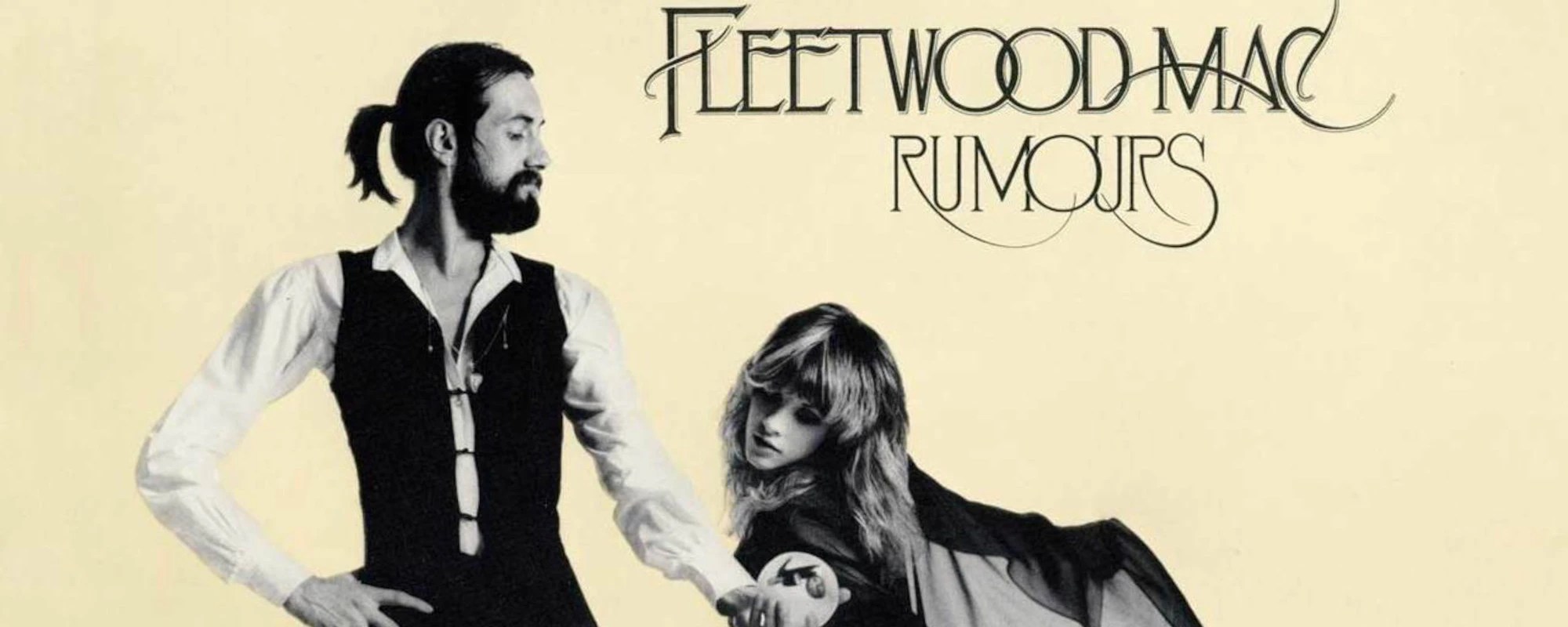
I have settled, after thoughtful consideration, on “The Chain” as my favorite, and for several reasons: it’s fraught with anger and recrimination, because the band members were uncoupling and so angry and recriminating during the production of Rumors. It’s raw stuff. I don’t know but there was blood on the recording studio floor. The Lindsey and Stevie who’ d been eyeing each other suggestively during the Midnight Special segment were not in love anymore. They were instead, metaphorically, at least, lacing each others’ Constant Comment Tea with rat poison.
That’s what makes the song so real. They were in a place where, tragically, nearly all of has been, the kind of place that, forty years later, might make you pull your car over on the 405, reach into the trunk for the tire iron, and begin hitting yourself repeatedly upside the head.
Why did I do that?
Why did I say that?
Why was I such an asshole?
Once the bleeding from the tire iron slows, though, you realize that the other element that makes this a great song is in the way it’s performed.
There’s the languid introduction, the rapidity and intensity of as its tempo once it passes the introduction—it’s the kind of musical acceleration that marks The 1812 Overture— the plaintive high notes, Fleetwood’s maniacal drumming and, for me, the best part: John McVie’s bass solo, maybe the best since Jack Bruce’s work with Cream, and the way it yields to Buckingham’s final solo. Yes, Buckingham is a ham, and his solos sometimes last longer than The 1812 Overture, but this one is sharp and wounding, which is exactly the way an angry song should end.
But you don’t have to accept my opinion on “The Chain.” It suddenly occurred to me that I’m not alone in my opinion about this song, because so many excellent musicians have covered it.
So I put together this video as my little tribute to Mac and the song. The original band appears at beginning and end, but in between are Florence and the Machine, then two country-inflected performances by The Highwomen, from Howard Stern’s show, and then by Keith Urban and Little Big Town with, of course, Nicole Kidman looking on fondly. Then, to avoid getting lost in Kidman’s charms, I ended the video with the McVie-to-Buckingham handoff.
I haven’t put “The Chain” up there yet with “Gimme Some Lovin’,” “A Whiter Shade of Pale,” “Gimme Shelter,” or Rubber Soul, but it’s kind of sliding unobtrusively, without being obnoxious about it, into my mind’s list of favorite songs.
I just have one more and extremely important point to make: Christine McVie, I miss you.
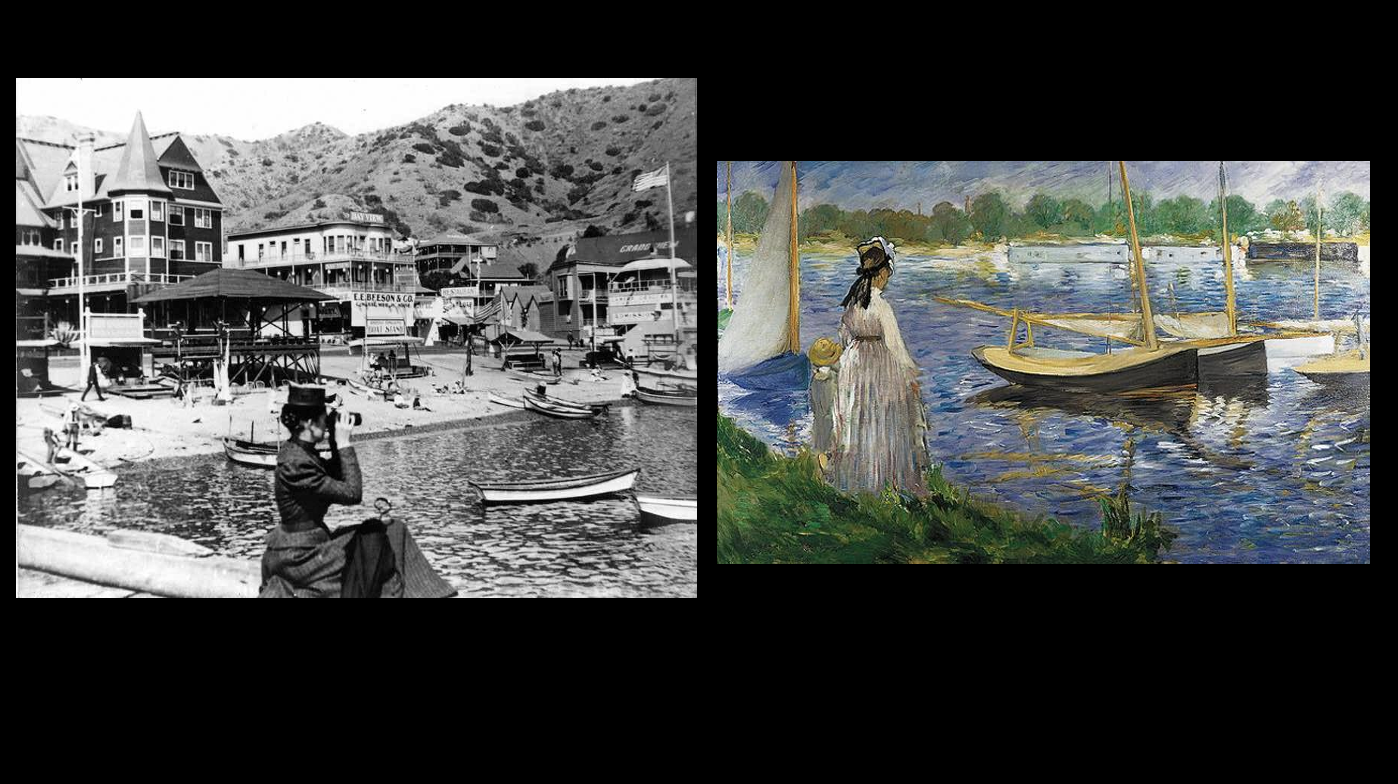
Jack Feldman this morning posted this 1902 photo, taken at Catalina Island, on the California History Facebook page.
The woman and the boats reminded me of Monet and the Impressionists who painted the Seine near Argenteuil, outside Paris.
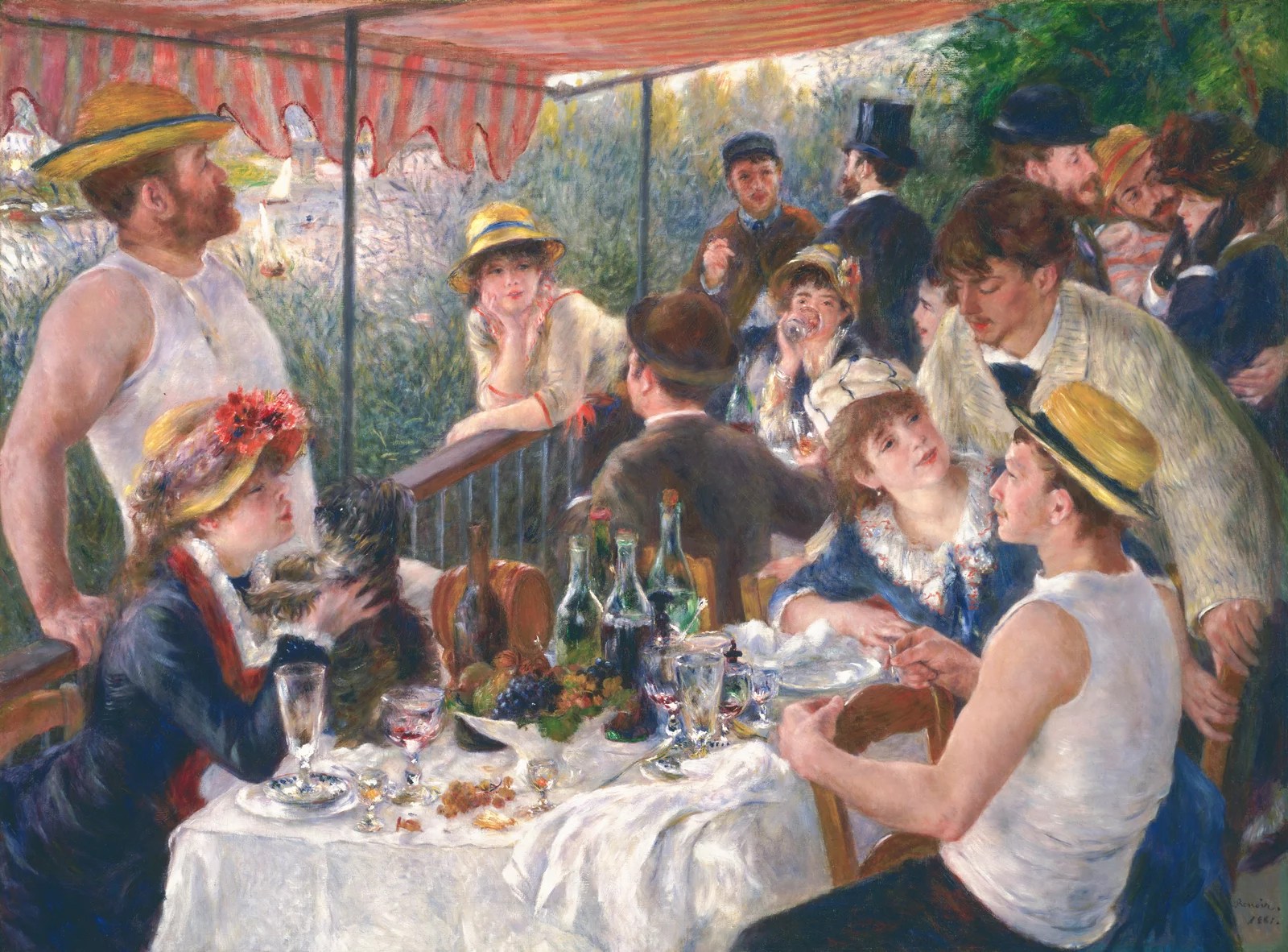
Monet was there, as were Eduoard Manet and Gustave Caillebotte and Pierre-Auguste Renoir, whose Luncheon of the Boating Party became Impressionism’s masterpiece (It was, all at once, riverscape, group portrait and on the table, still life). The people are artists, actresses, wealthy patrons, a hotel owner’s son.
I love Renoir’s female subjects, and Renoir loved redheads. But two of my favorite subjects had lives marked by tragedy. Eight-year-old Irene Cahen d’Anvers, on the left, was from a prominent Parisian Jewish family. The Holocaust destroyed nearly all of them, except for Irene. When she died, men were walking in space.
When one of my closest friends, Joe, a redhead, died unexpectedly, I turned to Irene’s image, wrote about redheads and about how much Joe had meant to me. It was a seeming contradiction, that piece of writing: a happy mourning.
The portrait of actress Jeanne Samary, on the right, is so stunningly fresh that she seems ready to resume her conversation with you. You have obviously just said something charming to her.
Jeanne died of typhoid at 33.
But it was a Monet that gave me an even more powerful sense of time-travel, of being in another century where I didn’t belong.
It was the riverscape below, The Seine at Argenteuil, that gave me a jolt. It’s a massive canvas and when it was on display many years ago in San Francisco’s Palace of the Legion of Honor, I stopped in front of it.
I had the eeriest feeling. I’d had one like it when I was seventeen and reading the closing pages of For Whom the Bell Tolls while sprawled atop my parents’ bed at the house on Huasna Road near Arroyo Grande. When Robert Jordan breaks his leg, mine began to hurt.
Now, in San Francisco, Monet gave me a similar moment.
It was almost as if I could walk into the painting using the path on the left and so be in that place on that day in the summer of 1875. I knew it was summer because I could almost see the waves of heat shimmering above the path ahead and it was cooler in the shade where the people have gathered.
(Now that I am in my seventies, I’ve added Jeanne walking beside me, twirling her parasol as we talk.)
I stood there in what the poet Whitman called “perfect silence,” not breathing very much for several moments, warmed by the summer day that Monet had captured eighty years before I was born.
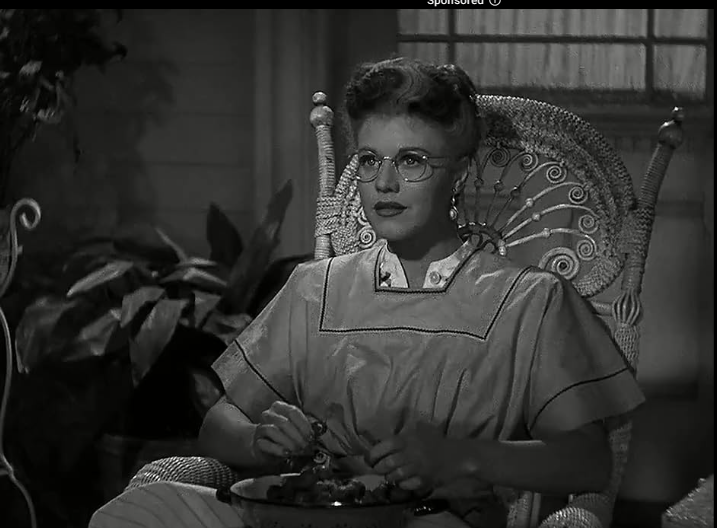
I have always admired Ginger Rogers, a gifted dancer who once pointed out that she did everything Fred Astaire did in their films together, but backwards and in heels.
But, I have to admit it: Last night, I kind of fell in love with her.
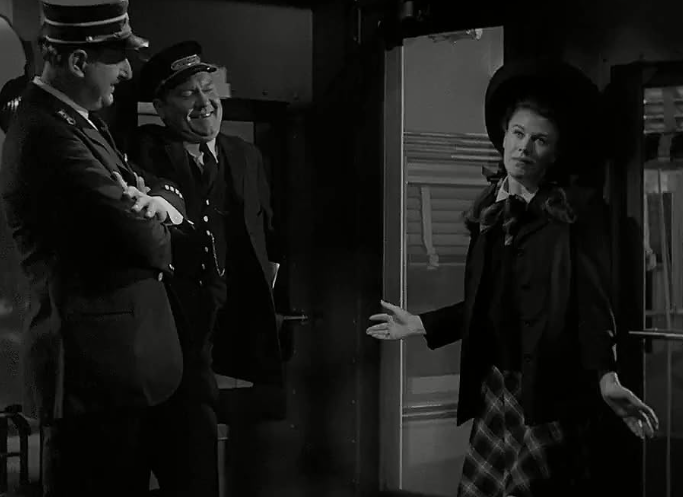
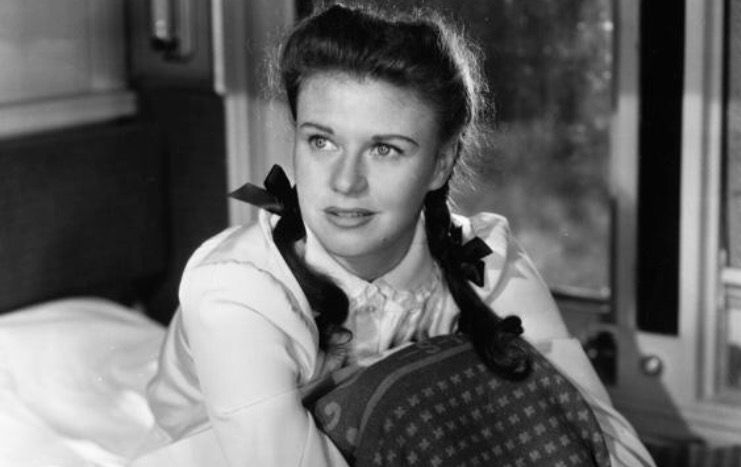
The film was 1942’s The Major and the Minor, the screenplay co-written by Billy Wilder. It sounds faintly perverse, but New York girl Rogers has had it with the big city and wants to take a train home to Iowa.
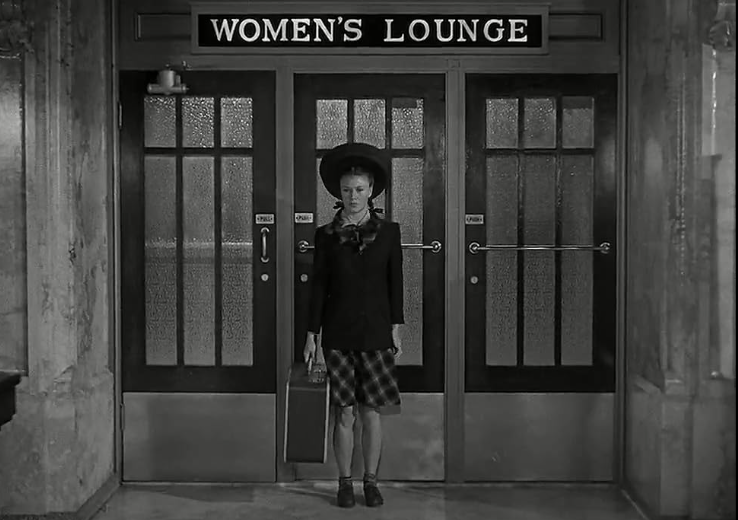
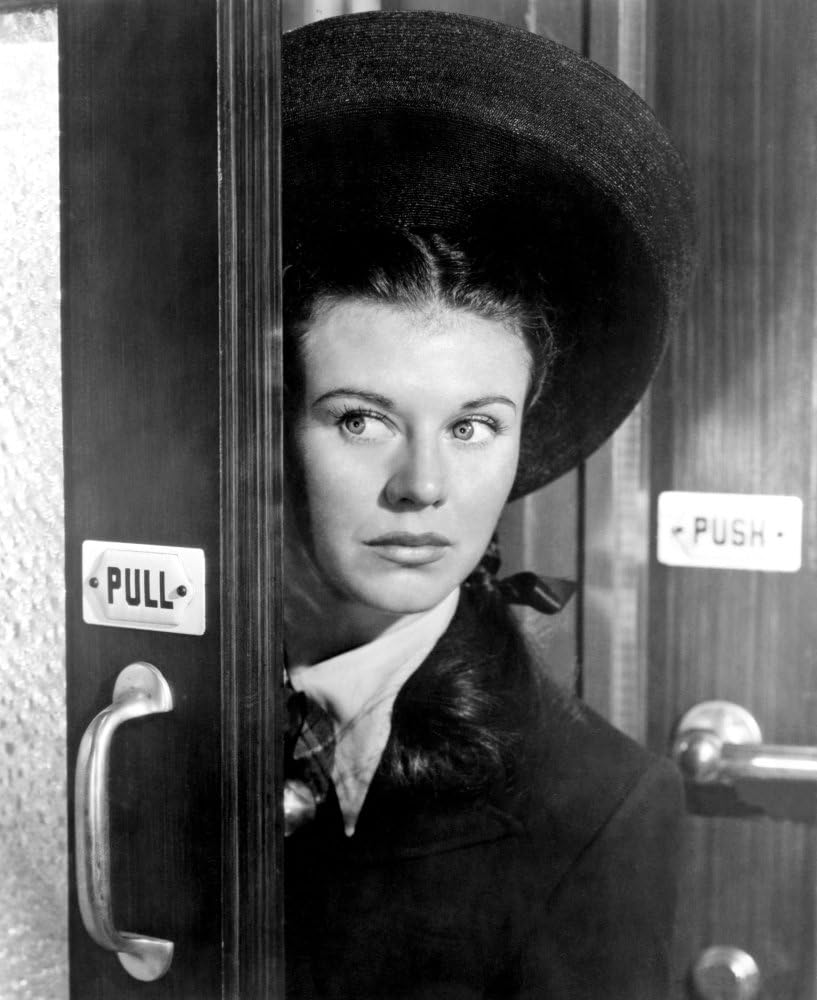
She can’t afford the fare ($32.50), so she poses as a twelve-year-old for the half-fare.
She’s Swedish, she explains to dubious conductors: We have big bones.
When the conductors catch her smoking at the end of her day-car, she swallows the lit cigarette. That scene is a gift.
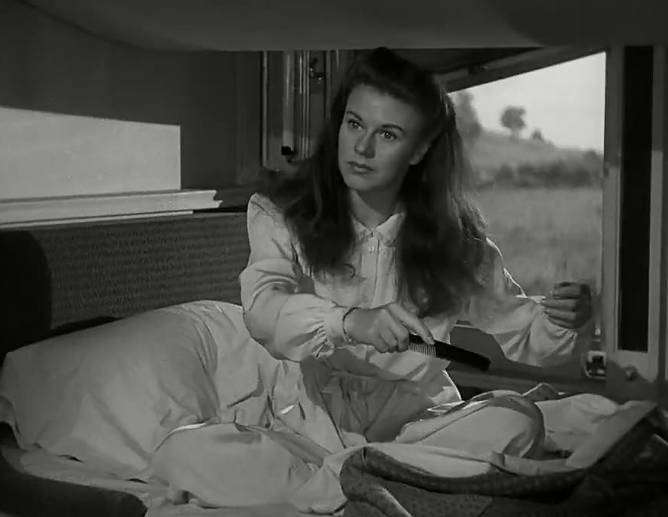
The train is stranded by floods, and Rogers is taken under the wing of a kindly Army Major, Ray Milland. Milland’s character, engaged, does not immediately all in love with Rogers (he’s honorable; she’s twelve), but when she loosens her hair the next morning, I did.
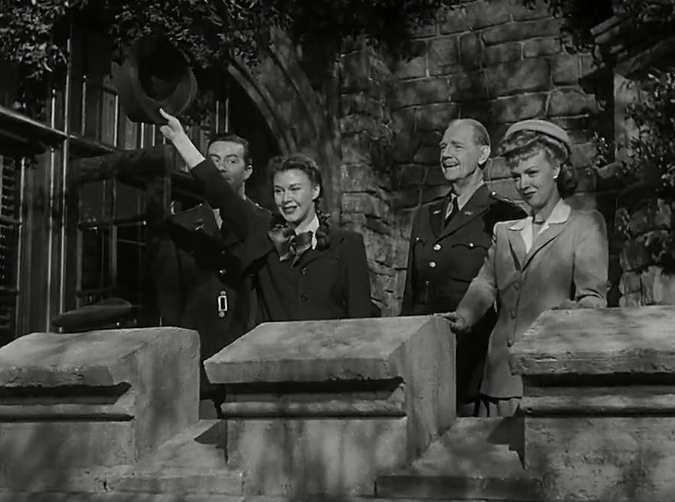
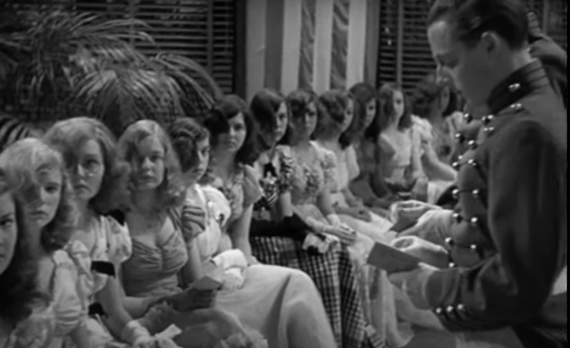
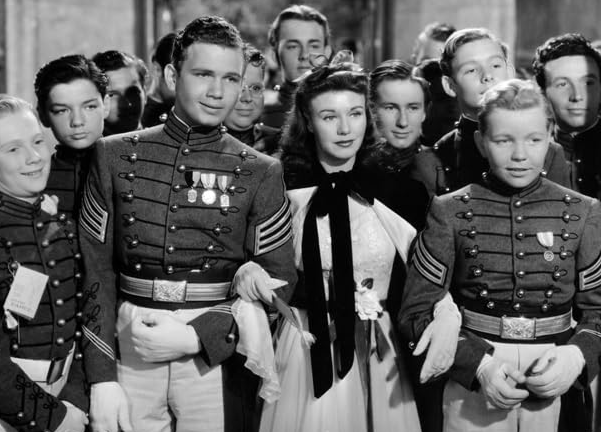
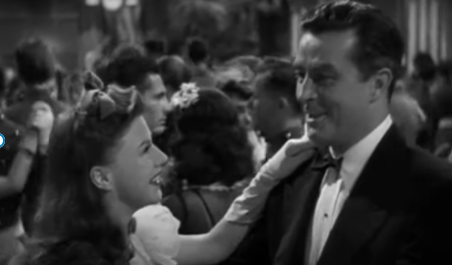
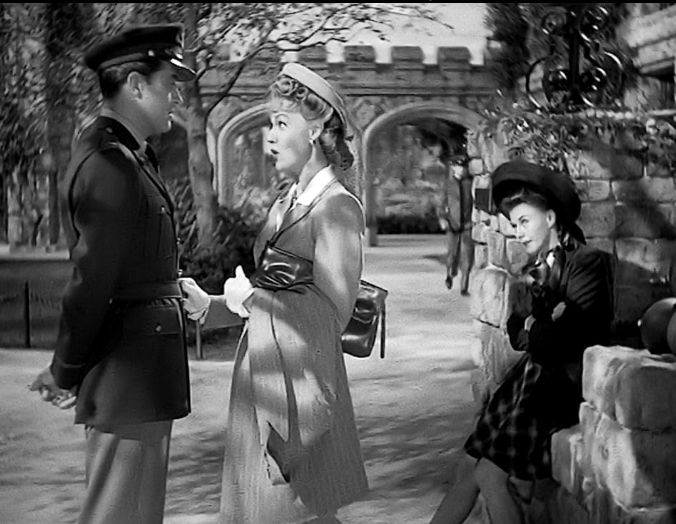
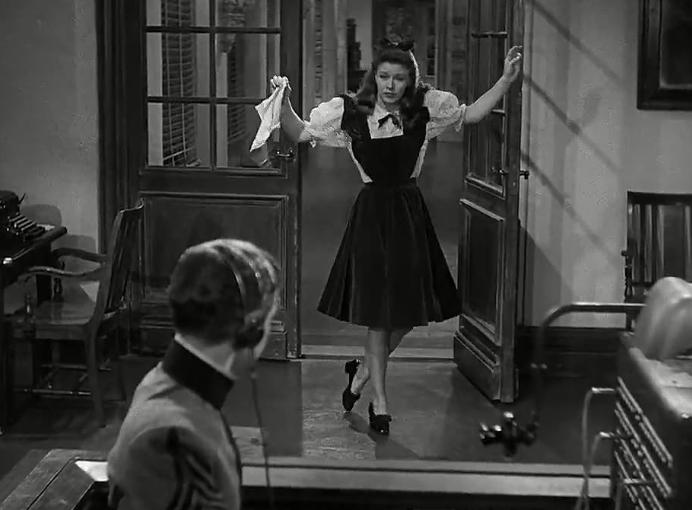
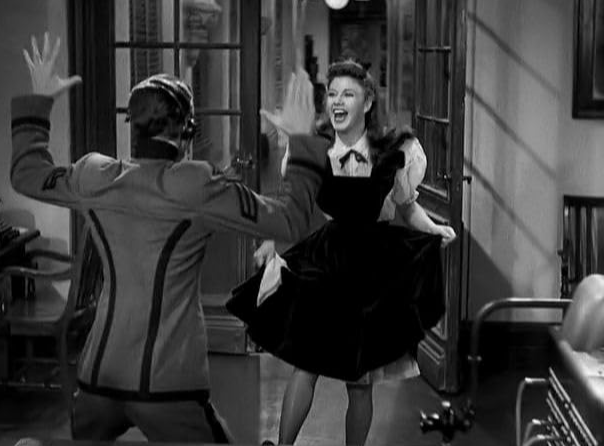
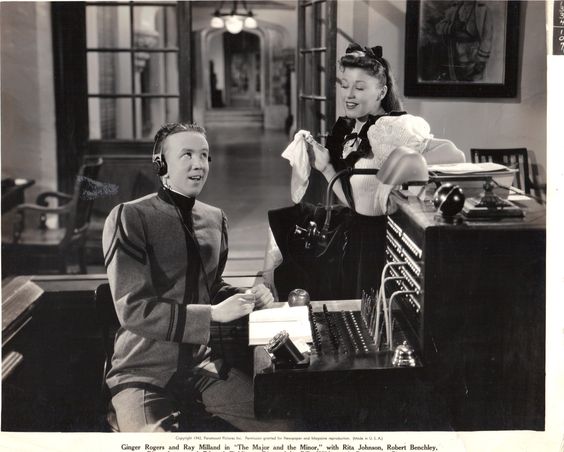
Of course, Rogers falls in love with Milland. All four companies of cadets at the military school where Milland teaches fall in love with Rogers. Here she is waving to the lads on parade below.
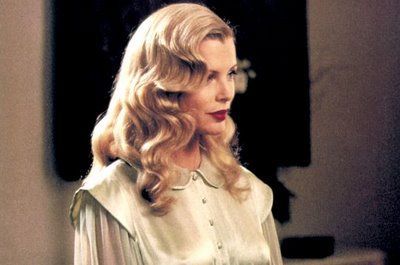
One of my favorite scenes is the school dance where Rogers is the only young woman without a Veronica Lake hairdo. (Kim Basinger, in another beloved film, L.A. Confidential, is a call girl whose plastic surgeries and haircut have made her a Veronica Lake lookalike.)
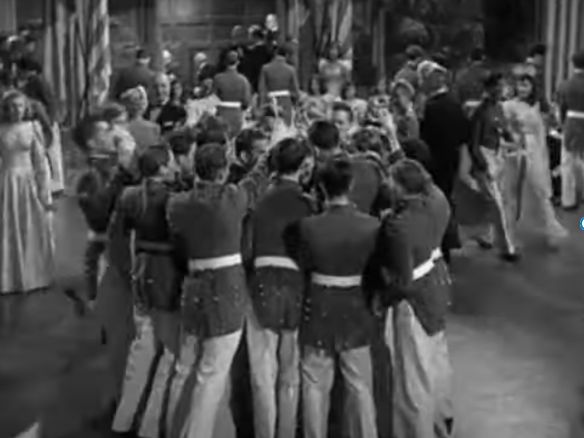
The photos below show the dance, as well— including cadets eager to sign Rogers’ dance card, and her character, Su-su’s, chance to dance with the gallant Milland.
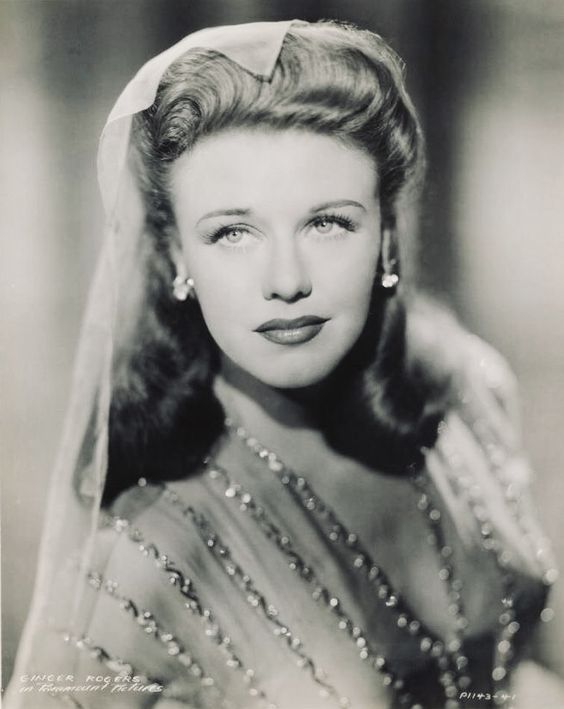
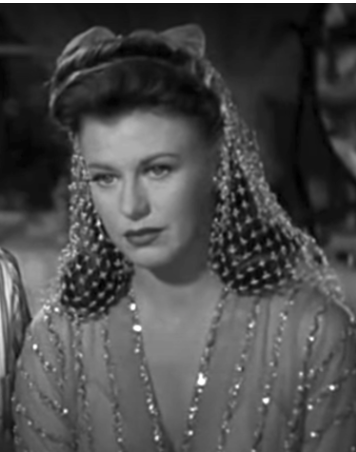
In the “reveal” scene, I had to catch my breath because Rogers is so beautiful.
Ray Milland, Rita Johnson, Ginger Rogers.
I love women’s fashions in that marvelous wartime interregnum between Flappers and cloche hats (okay, I like those, too) and the First Ladyship of Mamie Eisenhower. That bejeweled hairnet, for example, is stunning.
In the course of the film, she played a twelve-year-old, a twentysomething in love, and her own mother.
It was a marvelous performance.
The film itself, made on the eve of Pearl Harbor, had at its end Milland’s westbound train headed for San Diego and then active duty deployment.
That might’ve meant New Guinea or the Philippines or even the Aleutians. Neither Milland nor Ginger Rogers knew, of course.
That made this film, a late-era screwball comedy, even more poignant. I don’t know that any film–Bergman in Casablanca? Bacall in To Have and Have Not? Grace Kelly in Rear Window?–could show me a woman quite so beautiful as Ginger Rogers was in this film.
None of the other actresses I cited also had the gift of being so funny.
Yes, I went on another movie-watching binge. Big Fish was first. Ewan MacGregor has to have the most earnest smile in film history. Helena Bonham Carter, one of my favorite actresses (and the granddaughter of Winston Churchill’s one-time flame, Violet, and, later, his trusted political advisor) appeared as a blonde and carried it off, Southern accent included. Alas, she lost MacGregor to Alison Lohman/Jessica Lange, as MacGregor’s wife in younger and older versions. I guess that’s understandable.
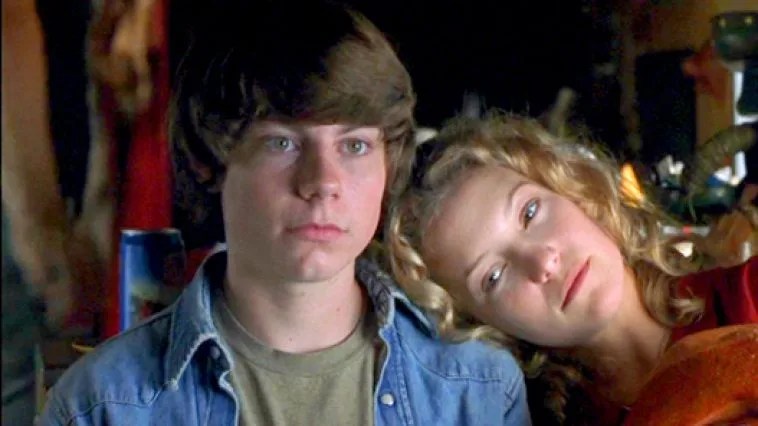
Then Elizabeth and I watched—believe it or not, for the first time— Almost Famous. We were enchanted. I guess that’s the right word. Kate Hudson’s eyes are amazing; they are small and slightly hooded, but the directness of their look is fierce. Her eyes, in that look, are brilliant green torpedoes. I’ve seen that look once before, in the eyes of a girl I dated more than fifty years ago. She had a pet raccoon who detested everyone except for her. She had long blonde hair, Rapunzelian, when girls ironed their hair to straighten it, and rode her Quarter horse in the Upper Valley bareback and barefoot. I was a bedazzled oaf, one on the small side. Maybe a bedazzled Hobbit.
The impossibly handsome Billy Crudup was in Almost Famous and in Big Fish, too. I had a hard time at the end of Big Fish, when Crudup’s estranged son reconciles with his father—Ewan MacGregor is by now Albert Finney—and, in the son’s mind, he carries his dying father, who is insufferably delighted to see all his old friends and lovers, down to the river to die. When Crudup lets his father slip beneath the surface, he suddenly becomes the legendary, immense catfish he’d always said he was.
When you’re seventy, a moment like that is vivid and real. My time, in a relative and so indeterminate sense, is running short.
So, thank goodness for youth and for Almost Famous, which included Jason Miller (My Name is Earl). And Jimmy Fallon. And Ryan Reynolds. And Anna Paquin. And Jann Wenner. And Zooey Deschanel (I still miss New Girl. I wrote an essay about that show, which New Times, perhaps when the staff was gloriously drunk, actually published.) And Rainn Wilson. And Philip Seymour Hoffman.
I missed somebody, I’m sure. Had he been alive, Abraham Lincoln might’ve been in it. (In the credits: “Tall and Immensely Strong Roadie/Philosopher.”)
I admit that the very idea of a fifteen-year-old getting the go-ahead from Ben Fong-Torres for a 5,000 word Rolling Stone piece made me insanely jealous. And then, when the fifteen-year-old, Cameron Crowe, grew up, he got to write and direct the film about Cameron Crowe. Then it became a Broadway musical.
Something not that deep inside me hopes that a seagull poops on Cameron Crowe’s head tomorrow.
I did get a letter into Rolling Stone once, about Michael Douglas and the film China Syndrome. I think it was maybe 125 words. After reading an excellent piece about Bonnie Raitt, my letter to her was unanswered. Alas.
If a Hunter Thompson piece was in Rolling Stone, there went, except for the record and film reviews and the advertising space, the whole issue. We had jalapeño poppers wrapped in bacon as part of dinner tonight. If a Hunter Thompson piece was in Rolling Stone, I pretty much devoured it the way I do jalapeño poppers wrapped in bacon.
The same went for other “New Journalists” like Gay Talese or Tom Wolfe or Joan Didion or Jimmy Breslin. Or even (The Executioner’s Song), Norman Mailer. Or, before they’d invented the term “New Journalism,” Truman Capote–In Cold Blood was, to me, a supreme accomplishment, given, and perhaps because of, the density of Capote’s emotional freight, as heavy as Marley’s chains. My tastes now run to popular historians who also happen to be women: Laura Hillenbrand, Elizabeth Letts, Lynne Olson.
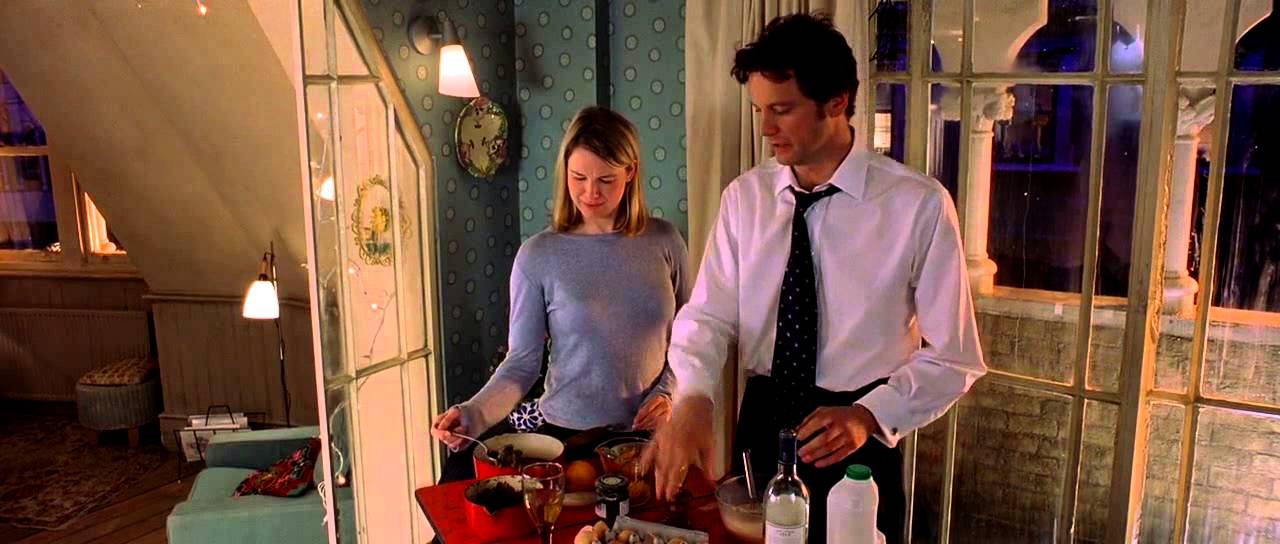
Then it was Bridget Jones’s Diary, because I could even watch Colin Firth do something as mundane as prepare a meal, which he did. It reminded me of another favorite actor, Michael Caine, breaking an egg with one hand in The Ipcress File, a marvelous 1965 spy film. (Alas, it turns out that the real cook was Len Deighton, the novelist who wrote the book on which the film was based. He had to break the egg for Caine on camera, so it’s Len Deighton’s hand you see in the film.)
And I enjoy the fight between Firth and Hugh Grant. And I like Bridget’s dad, too.
A sniper (and former lover) shot Colin Firth dead with a rifle bullet placed squarely in his forehead in a later spy film, Tinker Tailor Soldier Spy. There were a tragic few seconds, thanks to masterful direction, from the rifle shot being fired, with a silencer’s cough, the entrance wound appearing, a small and precisely round red dot, to Firth, his eyes widening slightly, realizing something was wrong in the last moment of realization granted him, to his collapse.
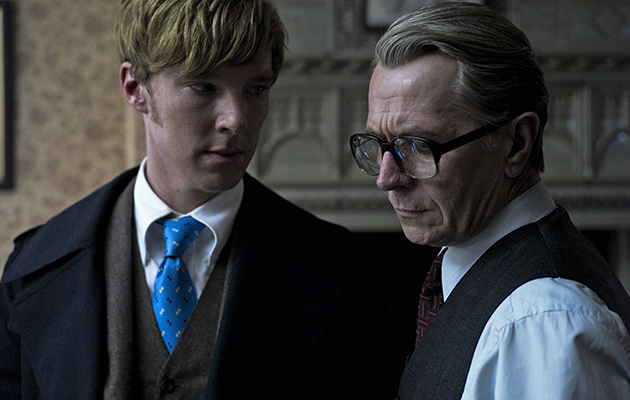
Even though Firth was a thorough bastard in the film, I was bummed for a day or two after. That film was based on the John LeCarre novels, and my friend John Porter and I are LeCarre devotees. They are so thickly plotted that I understand about 58% of them, but the protagonist, the British espionage bureaucrat, George Smiley, (below, played by Gary Oldman, with Benedict Cumberbatch as his neophyte) is brilliant and reserved. What he reserves is his venom, injected without passion, for those who deserve it. Like several modern American Congressmen. Or Colin Firth.
(Incidentally, Firth was Darcy in BOTH Pride and Prejudice and Bridget Jones. So there.)
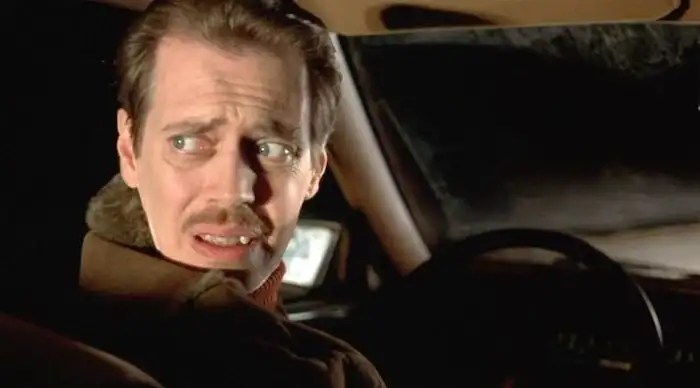
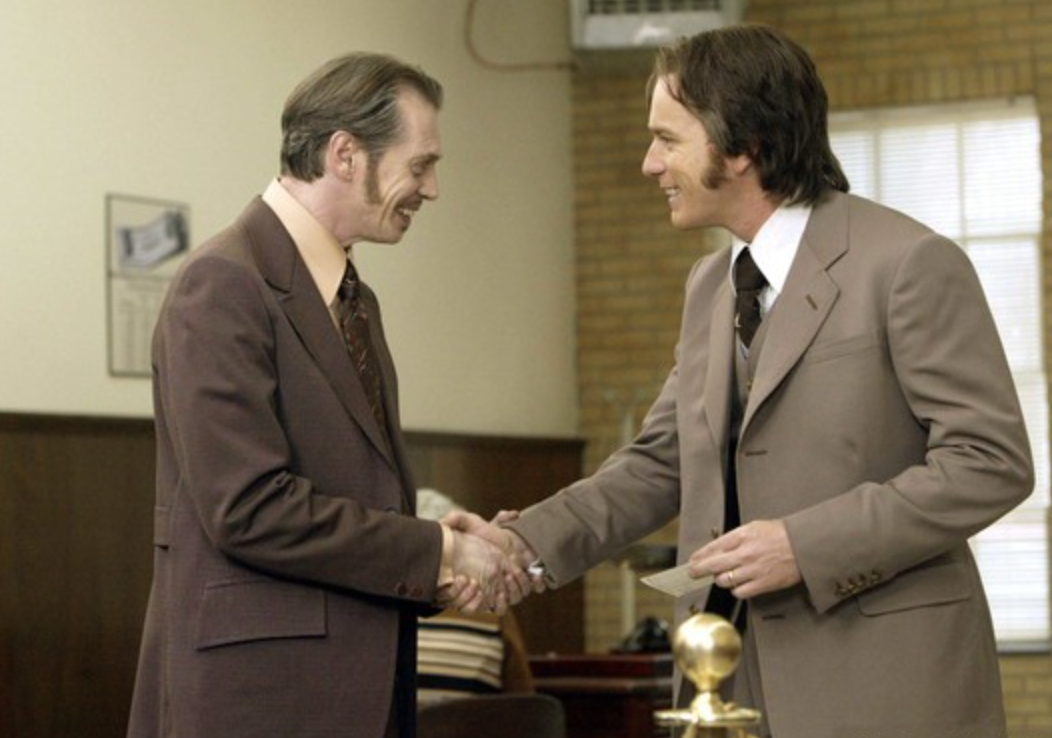
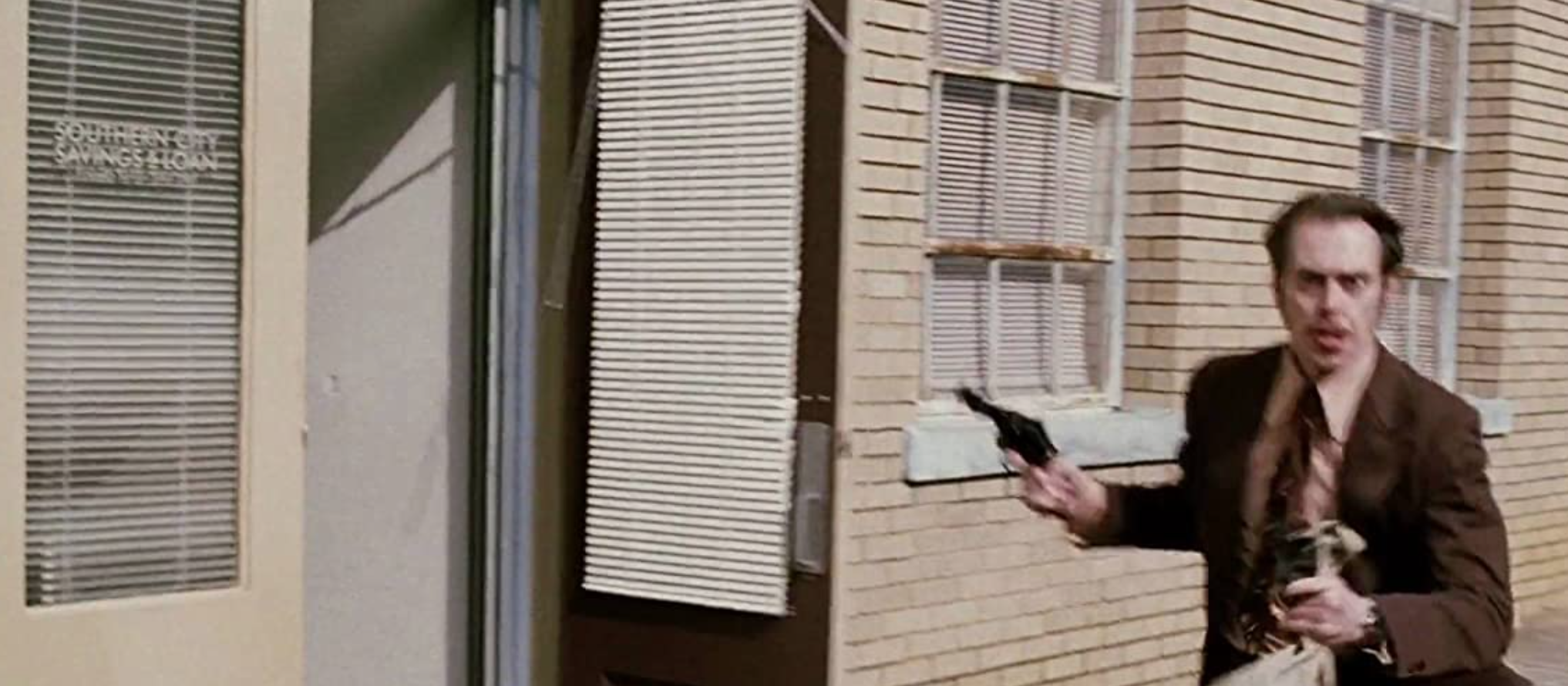
I am posting about none of them especially. What amazed me about Big Fish is that I’d forgotten that Steve Buscemi appears in it, when he recruits MacGregor as an unwilling accomplice in a bank robbery.
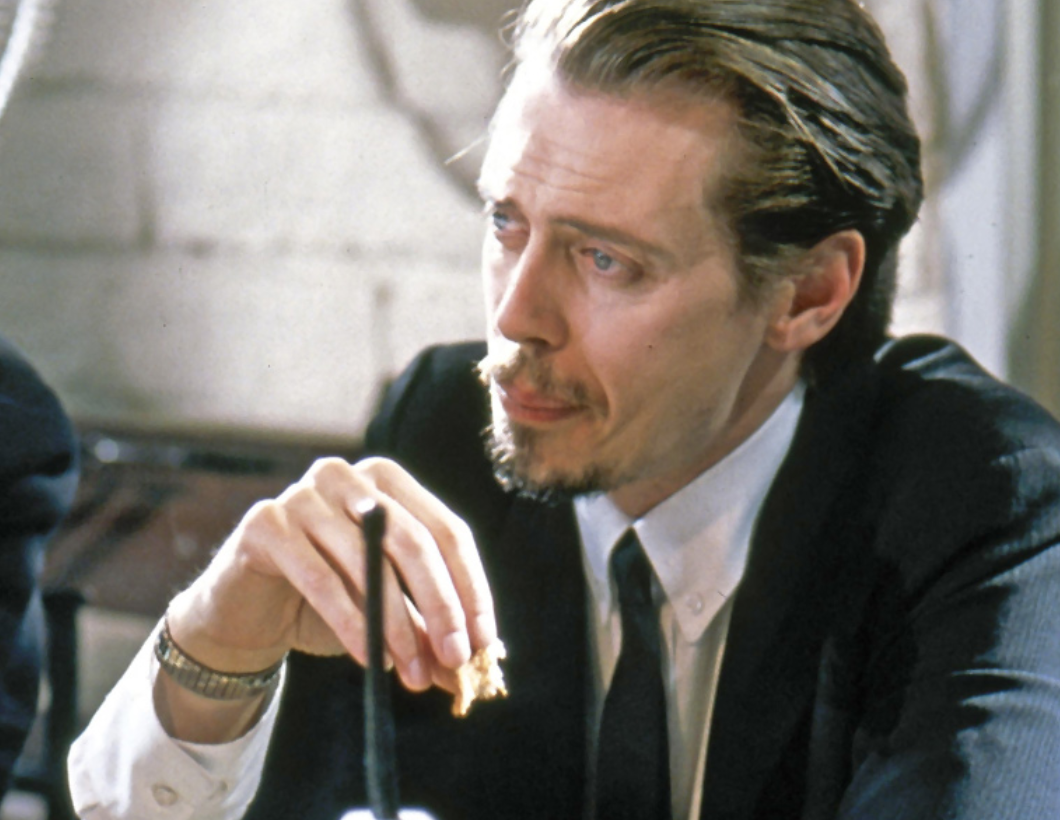
I would just like to state, for the record, how much I admire Steve Buscemi. I think almost any film he’s in exceeds its expectations.
Frances McDormand co-stars with Crudup in Almost Famous and with Buscemi in Fargo, one of my all-time favorite films. And her Marge Gunderson is one of my all-time favorite characters. Don’t EVEN get me started on her.
Anyway, I hope you get some time to watch movies over Christmas. The turkey’s starting to defrost, we’ve got wassail and egg nog, our little tree with white lights, four dogs (Cousin Rocky is visiting) and we have Rick, Sally and Rebecca over for Friday and Saturday. We might even watch a movie together. (Or a football game.)
Shoot howdy, I just might invite Steve Buscemi over, too. I have a hunch he’d like my mashed potatoes. Oh, and I’d be careful, given the opening scene in Reservoir Dogs, to turn down any tips.
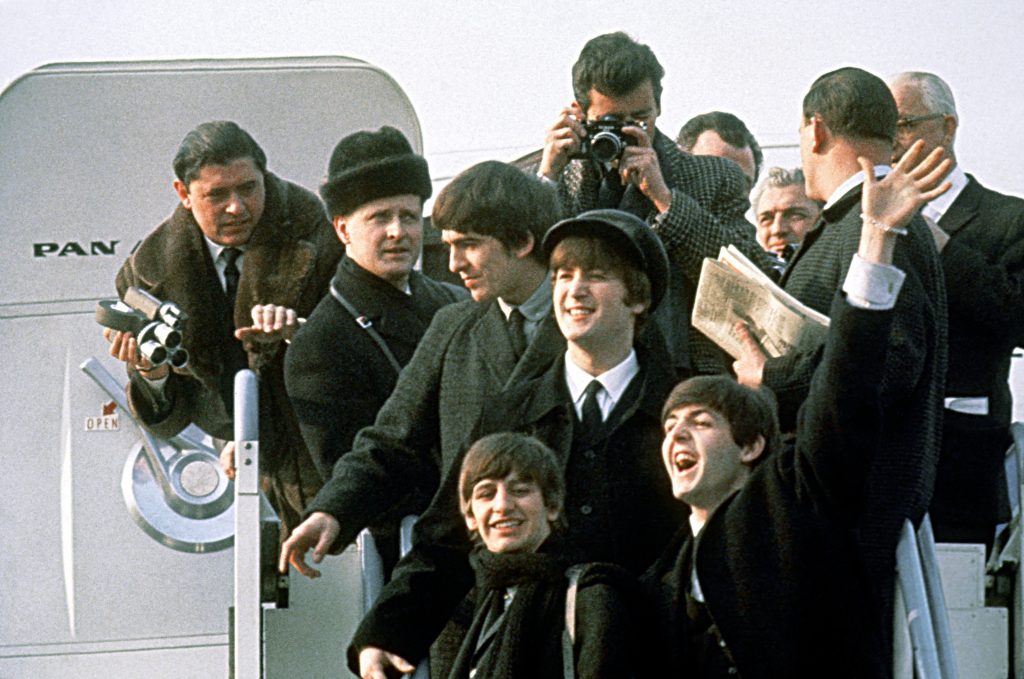
How do you teach the Beatles, to your AP European History students, in a unit about cultural and social history, when they were born nearly forty years after the four arrived in New York?
(Oh, and they didn’t horrify ALL parents. My Mom loved ’em. Especially Ringo, who reminded her of a Basset Hound, which explains my dear four-legged friends, Wilson and Walter.)
I tried to teach them this way.
The entire lesson was about 1968, which reminds me, with some hope, that we’ve survived tough, tough times before.
Today’s Date in History (January 16, 1942) is a sad one:
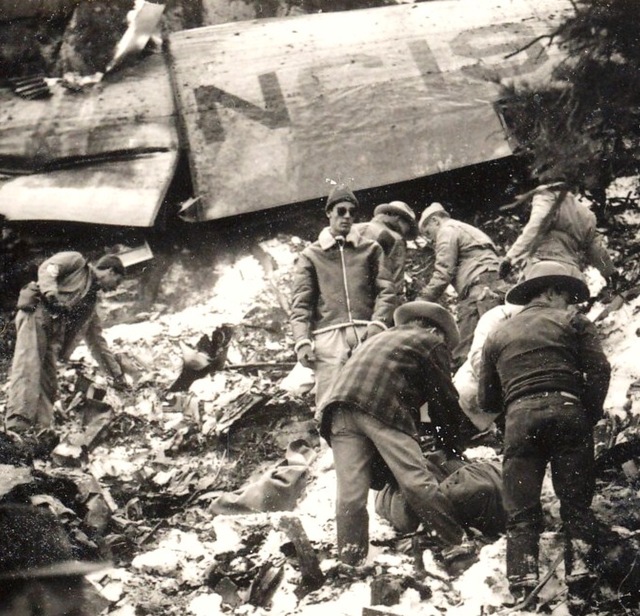
Only a little over five weeks after Pearl Harbor, actress Carole Lombard, returning from a War Bond drive, is killed when the DC-3 on which she is a passenger crashes into Mt. Potosi, near Las Vegas.
The crash site, 1942. Fragments from the doomed plane remain today.
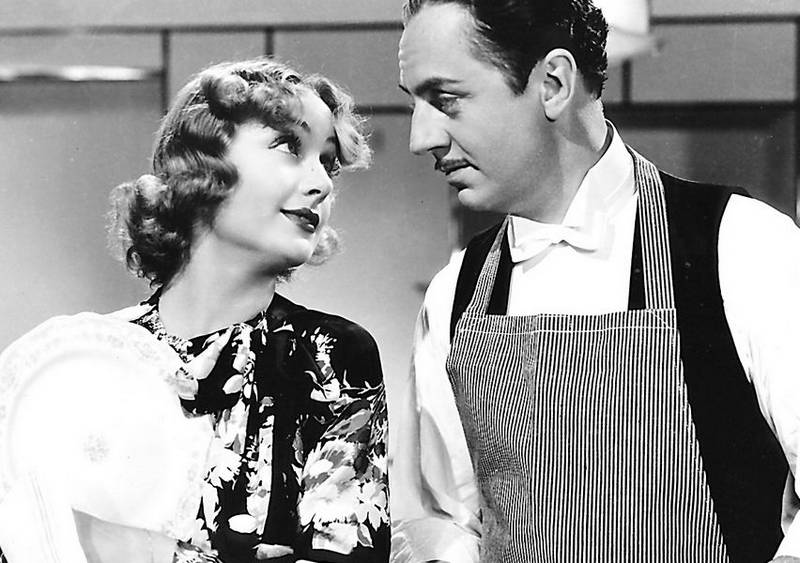
I used to show My Man Godfrey during the Great Depression unit in my U.S. History, and my students, I think, loved the film–they were enchanted by William Powell’s butler and a little exasperated with Lombard’s ditzy heiress, Irene, who had the advantage of playing against an evil older sister, Cornelia (played by Gail Patrick, in real life a very nice human being.) In fact, Powell and Lombard—the love of Jean Harlow’s life was William Powell–were briefly married.
Godrey washes, Irene dries.
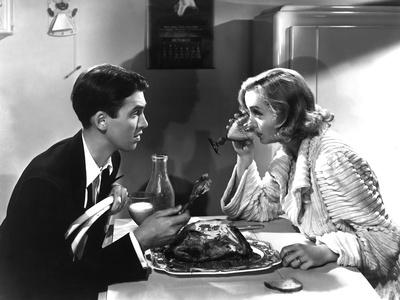
Irene dismayed me a little until I began watching more Lombard films–To Be or Not to Be, with Jack Benny and an impossibly young Robert Stack, Made for Each Other, with James Stewart, True Confession, with Fred MacMurray. It began to dawn on me that Lombard was one of the time’s most gifted comediennes and, of course, she was beautiful.
With James Stewart, Made for Each Other
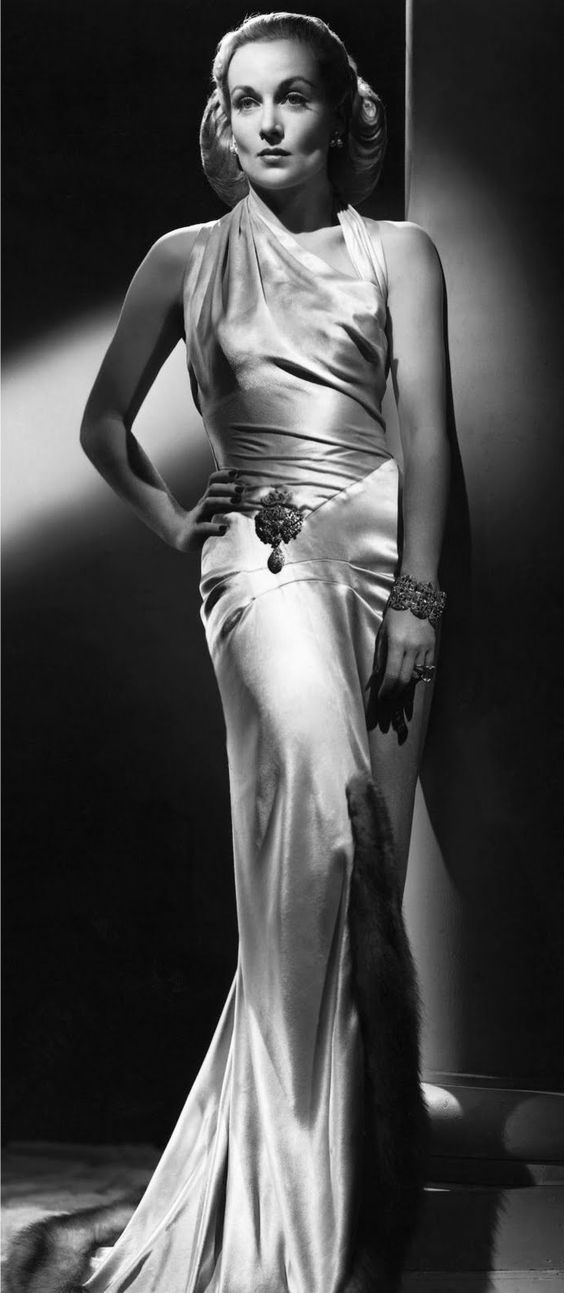
In To Be or Not to Be, her last film.“That dress!” was this dress, the one people referred to before Grace Kelly’s in Rear Window.
When she fell in love with Clark Gable–who, by the way, filmed 1940’s Strange Cargo with Joan Crawford, in Pismo Beach, stayed at today’s Pismo Hotel, and played a pickup softball game with some SLO High kids on the beach–he was inconveniently married.
Gable was a minor-key Hemingway–a “man’s man” who loved to hunt and fish. So Lombard began to learn how to do those things, too, in a strategic campaign that, in its duration and care, rivaled Eisenhower’s plans for D-Day. Gable loved dogs, too–including Irish Setters–but that was no stretch. If you google “Carole Lombard dogs,” you’ll see what I mean.
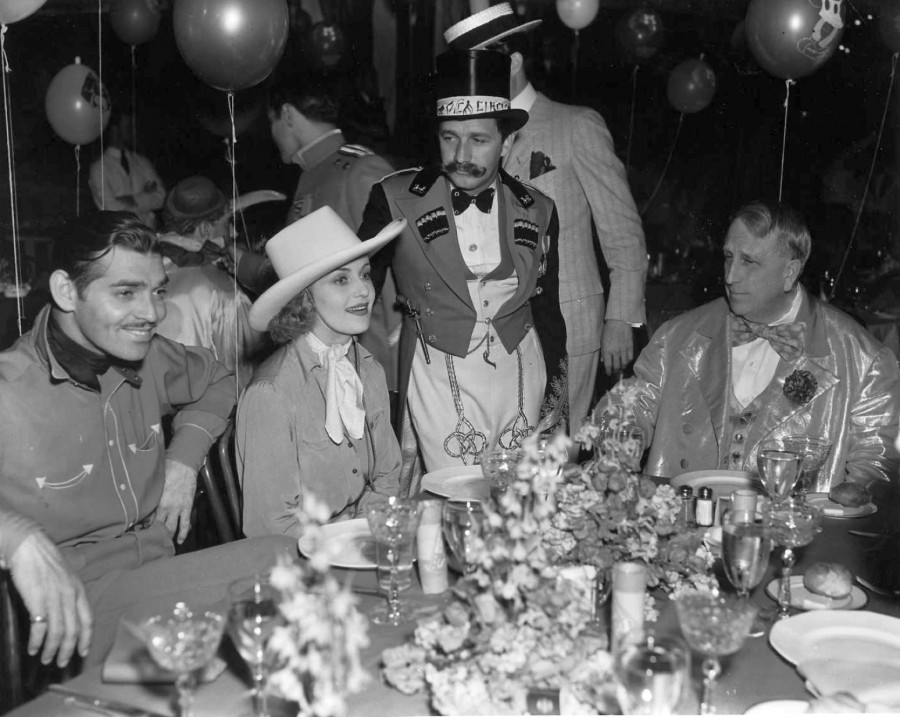
The couple at a Hearst Castle costume party with the seemingly less-than-amused W.R., “The Chief.”
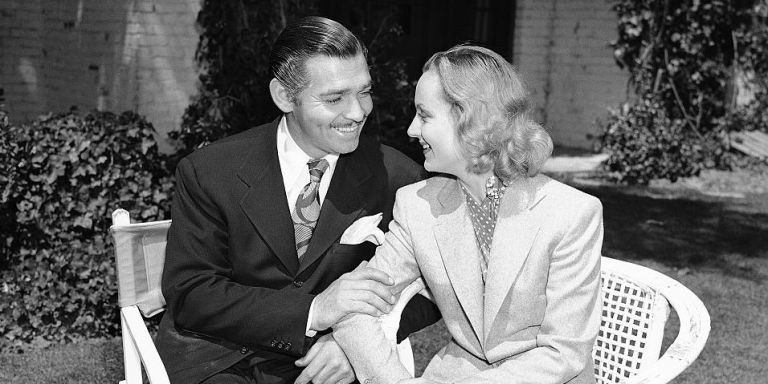
The invasion was successful. Gable and Lombard were married in 1939—seeking to avoid publicity, they got the necessary blood test and marriage license in what was described as “a sleepy little town,” San Luis Obispo.
The photographs from that time show two people obviously in love. But, three years later, her devotion to him was not always reciprocated. Gable thought himself a man’s man in other ways, and Lombard could’ve concluded her War Bond tour with a train trip home, but rumors that her husband was having an affair changed her plans.
A TWA DC-3. Getty Images
She boarded TWA Flight 3, bound for Burbank, in Indianapolis. The plane stopped in Albuquerque, where the civilian passengers were asked to surrender their seats for Army Air Forces personnel headed for Los Angeles. Lombard refused to give up hers. Fifteen minutes after a fuel stop in Las Vegas, the DC-3, seven miles off course, crashed, killing its twenty-two passengers and crew.
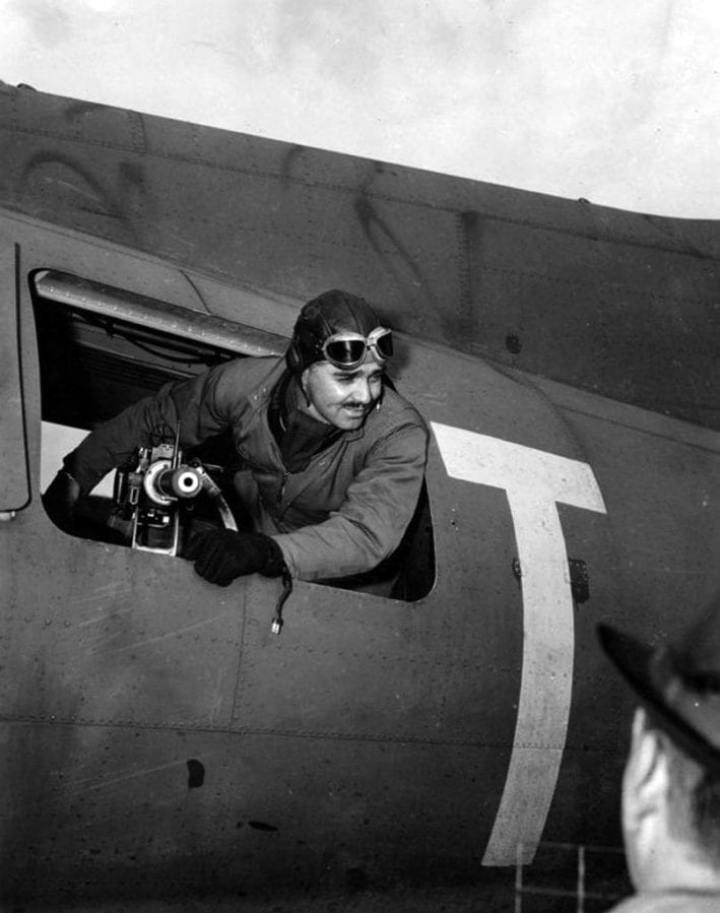
Gable became a B-17 gunner and photographer who flew at least five missions; the old story goes that he was so grief-stricken over Lombard that he was actively seeking a death in combat. That’s probably apocryphal.
Clark Gable, combat aviator
Nineteen years later, Gable would film John Huston’s melancholy neo-Western The Misfits, with Marilyn Monroe and Montgomery Clift. It was the last film the three movie stars made.
But, of course, thanks to what Hollywood likes to call the magic of film, all of them–luckily for us–all of them, including Carole, are still alive.
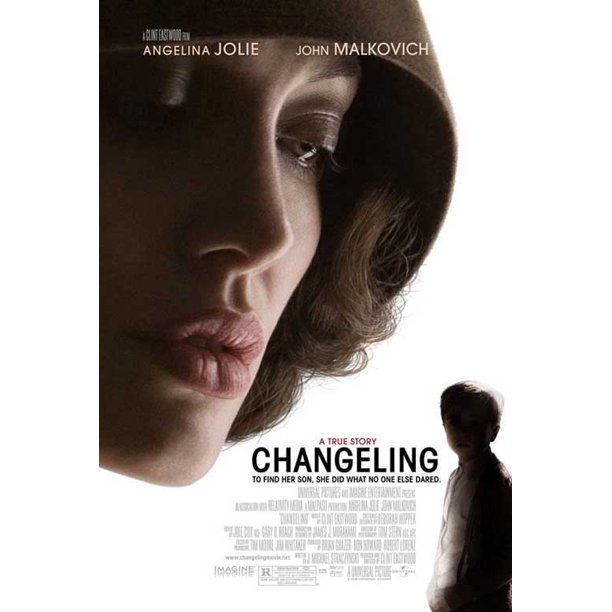
I tend to obsess over films. I watched this one, Changeling, again yesterday for probably the fourth time. It’s directed by Clint Eastwood—impressively, the music, including the closing title, is written by him, as well—and, while it’s not the best of his films, I find it absorbing. That’s because it’s set in 1920s L.A., and the first half of the twentieth century in Los Angeles is a time and a place that I find fascinating.
The story, based on real events, is horrific. A little boy named Walter Collins disappears and the LAPD, under Chief Jim Davis, makes a grand show of returning him to his mother, played in the film by Angelina Jolie, an actress whose fit is somehow perfect for the late 1920s.
The problem is that the little boy isn’t her son. The more she protests, the more she threatens the LAPD with the truth, the more mercilessly they behave toward her. She is eventually confined to an insane asylum because she is so vehement in her protests. She knows her little boy, and the one the cops brought home isn’t her son. (Among the “duh” clues the LAPD missed: Walter wasn’t circumcised. The little boy returned to Mrs. Collins was.)
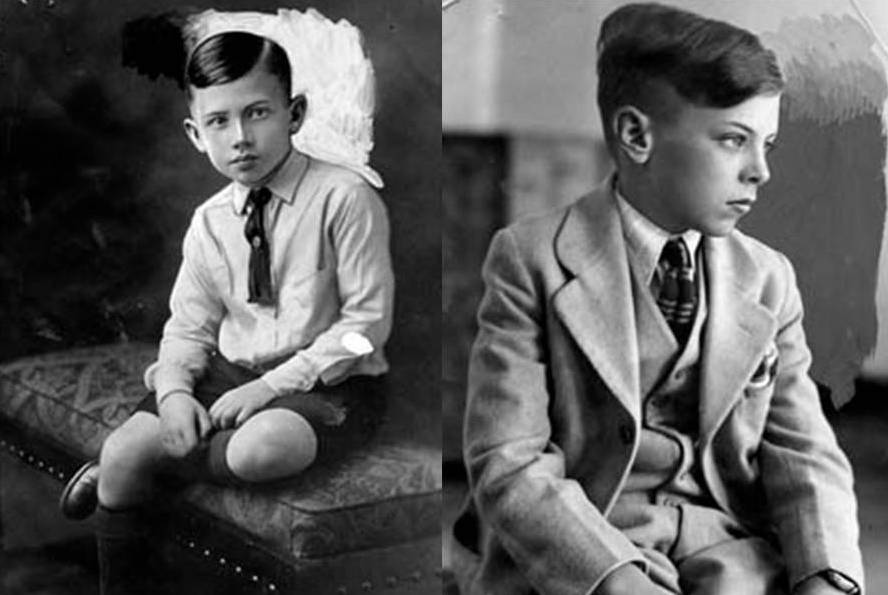
Walter Collins, left, and the “Changeling,” the impostor Arthur C.Hutchins. According to the film, Hutchins wanted to come to Los Angeles to get the chance to meet the cowboy actor Tom Mix and his horse, Tony.
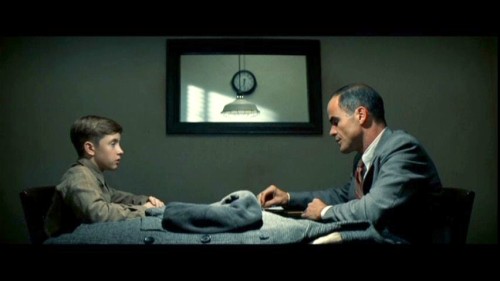
A chance lead forces a child welfare officer—superbly and compassionately played by Michael Kelly, interrogating a runaway in the scene below—to investigate a chicken ranch in Wineville, California. He concludes that Walter is more than likely among twenty boys who have gone missing only to wind up brutally murdered in remote Wineville–today’s Mira Loma. And his discovery eventually confirms Mrs. Collin’s protests. The little boy the LAPD brought home is an impostor.
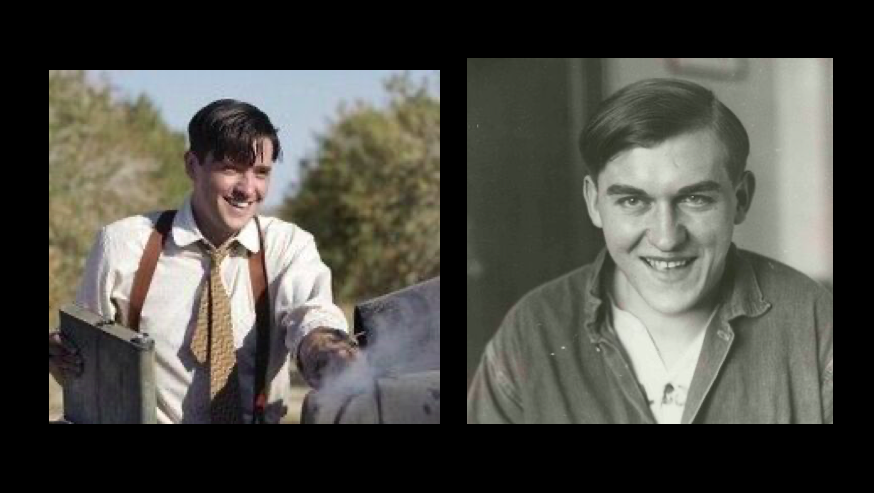
The suspected child killer, Gordon Northcott, a Canadian psychopath who’d relocated to the chicken ranch east of Los Angeles where he carried out the murders—the “chicken coop murders,” after the place where the little boys were confined— is eventually arrested. The actor who plays the 23-year-old Northcott, Jason Butler Harmer, is terrifying, given to leers and bursts of laughter, eager, after his arrest, to be the center of attention.
Northcott fired his attorneys and represented himself at his trial. A mistake, just as it was here, in San Luis Obispo County recently, where a serial child molester—sadly, a former student of ours—insisted on representing himself because he knew, as Northcott did, that he was smarter than everyone else. That person was sentenced to 280 years in prison. Northcott was hanged at San Quentin, where it took him eleven minutes to die.
Christine Collins spent the rest of her life looking for Walter. In the film’s closing scene, a little boy who had escaped from Northcott has been found and returned to his parents. Jolie, as Mrs. Collins, tearfully watches the reunion at a police precinct and afterward says goodbye to Kelly’s officer. Here, Eastwood’s score is melancholy and lovely, and the computer-generated background, down to the Red Car, is evocative.
This will never be among the greatest of films, but it’s extraordinary nonetheless because it transported me so convincingly to a Los Angeles I know and yet don’t know.
Another film, one of the finest of its generation, would likewise take me to the Los Angeles of another time—a decade after the events in Changeling—in Polanski’s Chinatown.
The two films, neo-noir summonings of an old Los Angeles—the Los Angeles of Double Indemnity and The Big Sleep— brought the city back to life, and have so arrested me that I can’t let them go.










 A Work in Progress