• About
  • The Germans

A Work in Progress

A Work in Progress

Category Archives: News

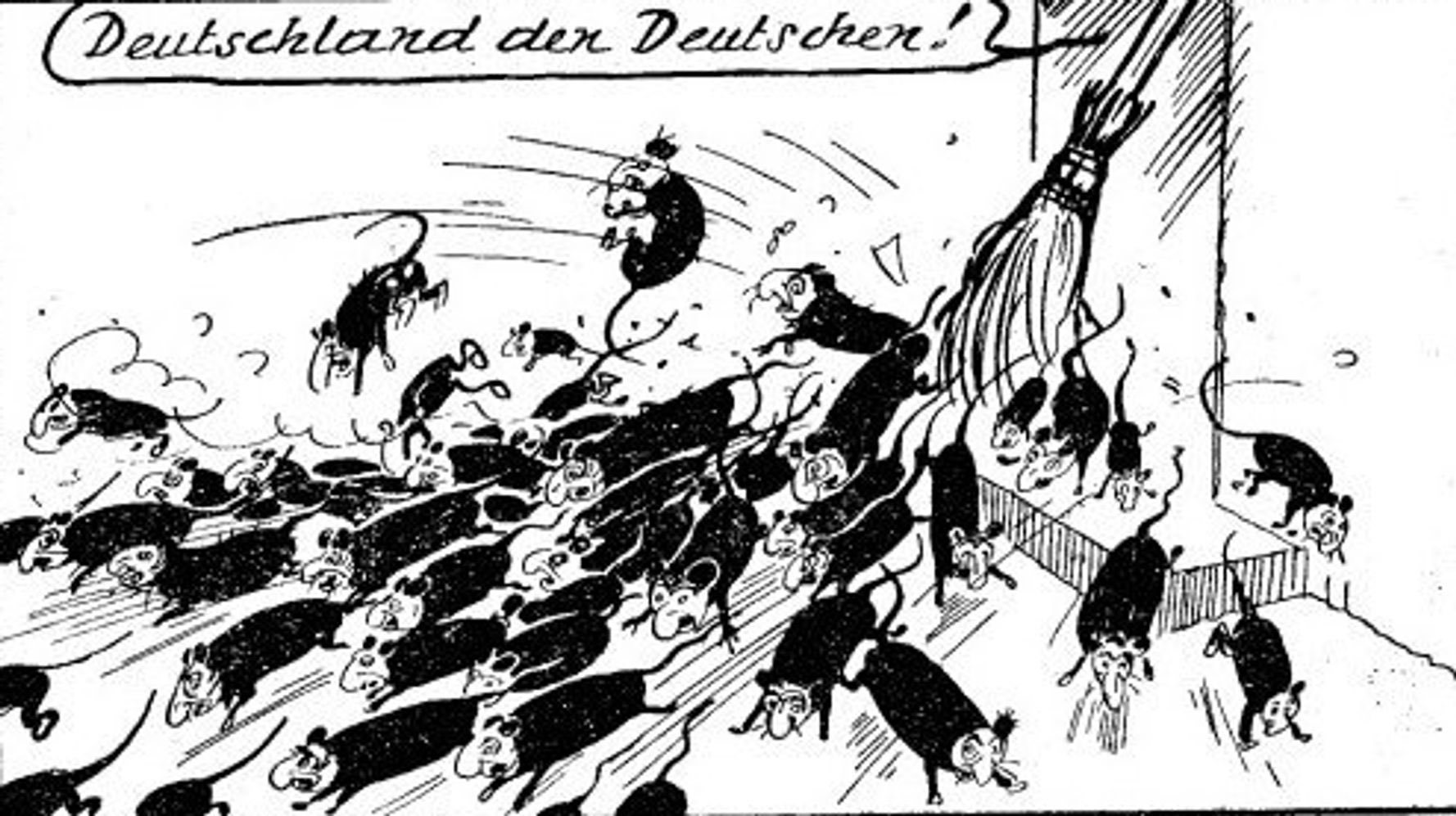
A short list of similarities: 1933, 2025

13 Wednesday Nov 2024

Posted by ag1970 in American History, History, News, Uncategorized

≈ Leave a comment


A citizenry that feels victimized.

The promise, for them, of vindication and retribution.

Propaganda that effectively generates alternative reality.

The promise of quick solutions to the nation’s problems.

An obedient and cowed legislature.

A legislature, thanks to minority dominance, that has proved unable to pass meaningful legislation.

Hypermasculine appeal to young men.

Executive power magnified by placing sycophants in high office.

The threat—or the actuality—of purging the military command and replacing its leaders with loyalists.

The threat of prosecution of political opponents, including imprisonment of the same—Dachau’s major purpose.

Allusions to mythical greatness in the nation’s past.

Pseudobiological assertions about threats to national /racial purity.

The denial that a dictatorship could ever happen in a nation like Germany (Goethe, Bach) or the United States (Lincoln).

The subordination of women.

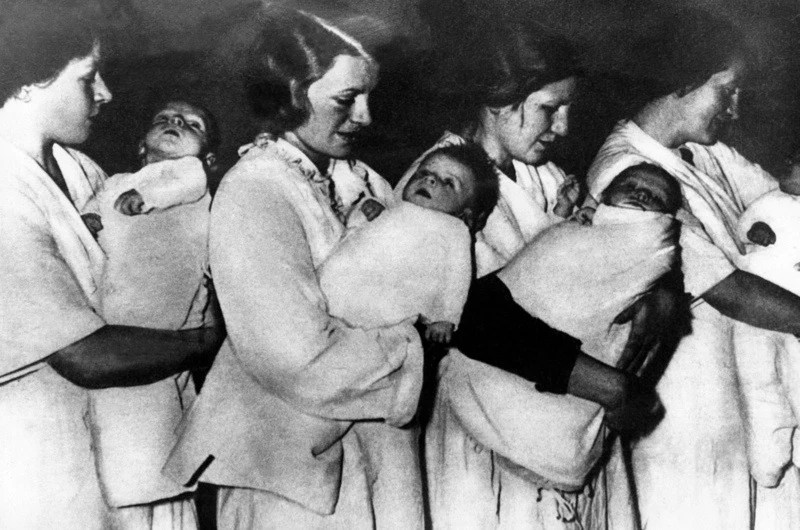
Mothers and babies, part of the SS “lebensborn” movement.


Two brides.

05 Tuesday Jan 2016

Posted by ag1970 in Family history, News, Teaching

≈ Leave a comment

2-brides-wedding-style-page

I’ve been seeing a lot of this in recent years on Facebook: a former female student gets married. To another female. So I guess I’ll keep this as a link on Facebook, rather than a direct entry, to avoid the stone-throwing.

But, again, you’re dealing with my Irish mother’s son, and she’s the Irish mother who loved God with her mind as much as her heart: she amazed priests, to the point of devastation, with her knowledge of theology. Her first prime directive, similar to Christ’s, was that love is a gift from God. From that flows a corollary: To love another human being is the most terrifying leap anybody can make, and to have the courage to commit yourself to the leap—both to the letting go, and to the hanging on on the other side—is the most perfect gift a person can give back to God.

So seeing those photos of young women who’ve made that commitment has a deep impact on me. The photos show two young women who are happy.  So they make me happy, too.

These young people, just starting new lives together, don’t need my blessing. I don’t have that kind of power, and that’s not the point I’m trying to make. I can only tell you–please forgive my forwardness–that I love you and I am very proud of you. You have reciprocated God’s greatest gift. And no stone can wound the strength in two people united together.

Before you throw yours, if you’re infuriated by my impious linkage of God with same-sex marriage, wait and listen quietly to discern whether condemnation—when you might be as confident in your faith as the Sanhedrin was in its faith when it arrested Jesus—is really what God desires. I believe from the bottom of my heart that She has a surprise for you.

Gisela’s murder

03 Sunday Jan 2016

Posted by ag1970 in American History, History, News

≈ Leave a comment


Gisela Mota


Gisela Mota became the mayor of Tenmixco, Mexico–in Morelos, the state of a hero of mine, Emiliano Zapata–on Friday. She’s seen here at her swearing in. Yesterday, Saturday, drug cartel gunmen shot her to death outside her home.

I hate drugs because they are so much more insidious than bullets. So it’s jarring when a little research reveals that recent marijuana legalization may have been the most effective tactic yet used against the Mexican cartels. They are losing a significant part of the immense flow of dollars that sustains them. They are hurting.

So was a recovering heroin addict I knew once. But he was having a far, far easier time than the guy trying to kick his—legal—prescription painkillers. That man was going to pieces. Both  were sick men; I’m not sure why they’re alive, but not this vital young woman. None of this makes sense to me.

Two more things, in our relationship with Mexico, don’t make sense to me, either:

  • In the wake of NAFTA, American corn producers dumped their product on the world market a decade ago. They generated a wave of foreclosures on small Mexican farms and the resultant migration, now subsiding, that Mr. Trump wants to end with a wall.
  • If you know our history of alcohol abuse, from the very beginning of the nation (it was, ironically, corn alcohol at the beginning), then you know that we are not noted for our impulse control. So it’s not supply, but instead American demand for drugs that helps to fuel the cartel crossfire that kills so many innocent Mexicans.

“Poor Mexico,” the poet Octavio Paz once wrote. “So far from God, so close to the United States!”  Few nations are so tightly linked yet so insistent on denying their kinship. The first victim of the Mexican Revolution was an El Paso housewife hanging out her laundry, killed by a bullet that crossed the border. More than a century later, the cartel murders represent the worst violence since the Revolution, which killed a million people, or one of every ten Mexicans.

Somehow, the drug violence must stop. I don’t know how to stop it. But I know that this not what Zapata died for when he, too, was assassinated in 1919. I know, looking at Gisela’s image, that the Mexican people have been cheated again, robbed of a young woman of promise in the young part of a year that now promises nothing at all.


Keeping Up Appearances

23 Wednesday Dec 2015

Posted by ag1970 in History, News, trump

≈ Leave a comment


In trying to come to grips with Donald Trump, I’ve been lost. I don’t have that many frames of reference–Huey Long certainly comes to mind; some say George Wallace, both men fire-throwing Populists who took on the political establishment. He has some of the tone-deafness, too, of Charles Lindbergh in his America First days. They’re all close, but I think now that Trump belongs to a different species, and its origins are European, not American.

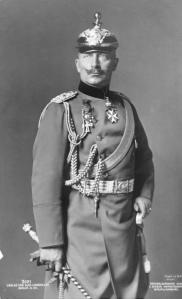
Trump’s political, if not biological, family has its origins in the House of Saxe-Coburg-Gotha. Victoria’s family. There you’ll find his twin brother from a different mother, Kaiser Wilhelm II of Germany. The two seem to share some significant personality traits.

Kaiser Wilhelm II.

Both men are marked by deep insecurity about their physical appearances. A doctor’s forceps mangled Wilhelm’s left arm as his mother, Crown Princess Victoria, gave birth to him in 1859. His arm remained withered despite various medical “treatments,” including the new wonder cure, electricity, which caused great pain in the little boy. The adult Wilhelm took great pains to conceal his arm’s deformity, resting his left hand, for example, on the pommel of his sword in formal photographs.

If Wilhelm suffered trauma at birth, Trump’s came in middle age. He lost his hair. Trump is absolutely truthful:  that is his own hair. What he’s concealing, as elaborately as Wilhelm hid his arm, is the amount of hairspray it takes to present that hair for public consumption. He relies on the skill of his stylist, who must have as much training in combing over as a sushi chef has in preparing fugu, that potentially lethal delicacy. [Kaiser Wilhelm kept a barber, meanwhile, whose sole function was to ensure that the Imperial mustache always had the correct amount of parade-ground precision and upturn at its tips.]

Trump’s vanity, in one way, makes him even more vulnerable than his counterpart: were the world to see him before his every-morning transformation, just before he hits the tanning booth, with an orange bald pate framed by oddly-spaced golden tresses that cover his face and fall to his shoulders, then the world, in its wisdom, would laugh him off the stage. The world has little patience for vanity as delusional as Trump’s, and that might be his undoing. Not even Americans would vote for Gollum to be our president. I think.

gollum

Both men learned to be bullies. Trump was as a child, while Wilhelm bullied as an adult and emperor, when Victoria said of him, when he was forty, that “what Willy needs is a good spanking.” Trump’s parents interceded when he was a boy and sent him to a military school to get straightened out. Wilhelm entered the German army when he was in his late teens. For both men, a military  environment was their deliverance. Trump loved military school, loved following orders, loved the comfort of authoritarian structure. [He came closest to breaking the rules with his hair, which was just long enough to be fashionable but short enough to forestall demerits.]

For Wilhelm, the army provided him with a family, and one he needed badly, since his own seems to have been ashamed of him and his deformity. As Emperor, his unbounded love for the military extended to the Kaiserian wardrobe, home to over 200 uniforms to suit Wilhelm’s every mood: he could be an Admiral of the Grand Fleet of a Tuesday, a Colonel of Hussars of a Friday.

Another similarity between the two would be their illusion of infallibility. Trump will never admit to making a mistake. Wilhelm insisted that his side always win in war games. Anything or anyone who threatened the Emperor’s carefully-constructed view of himself had to be eliminated: if Trump’s catch phrase, from his television show, was “You’re fired!” then that’s exactly what Wilhelm did with such alacrity when he cashiered the grand old man, Chancellor Otto von Bismarck, Germany’s unifier, early in his reign.

The problem with infallibility is that it tends to generate a Manichean world-view: the Kaiser’s Germany was outflanked by enemies, both by his English and his Russian cousins, who had to be destroyed, and Trump classifies anyone who doesn’t agree with him as a “loser,” an enemy who must be humiliated with every vulgar weapon in his arsenal. Americans seem to love it; you see the same joy in Trump’s followers that you do in bourgeois Germans celebrating in the streets when war comes in 1914. [In Munich, you can see the future fuhrer’s face–he’s as bourgeois as they come–in the crowd. He is jubilant.]

All bullies are at heart cowards–it’s ironic that Trump’s cowardice was revealed when he ridiculed another man’s physical handicap. When the Great War began in August 1914, Wilhelm timorously asked his general staff if the mobilization couldn’t be stopped. It was too late: the troop trains had left because the military machinery Wilhelm so admired had been so well-oiled by him. At war’s end, he would go into exile in Holland; in one newsreel, he’s still in uniform with ostrich plumes and epaulets and gold braid, and there’s still a sword buckled to his left side, but he’s accompanied by an adorable little dog whose presence renders him ridiculous: the Emperor of Germany had a fondness for dachshunds.

Wilhelm’s narcissism humiliated Germany in 1918 and contributed to its destruction in 1945. Hopefully, it will not take armed conflict to reveal what a buffoon Donald Trump truly is. Let him be caught, without his handlers and his hairspray, out in a good rain, followed by a better wind, and the hair which his stylist grooms with such single-minded dedication will finally betray him. Would this be shallow of us, to judge him by his hair? Of course it would be, and that is all this shallow man deserves.

The American Girl

20 Sunday Sep 2015

Posted by ag1970 in American History, History, News, Teaching

≈ Leave a comment

Tags

Muslim-Americans

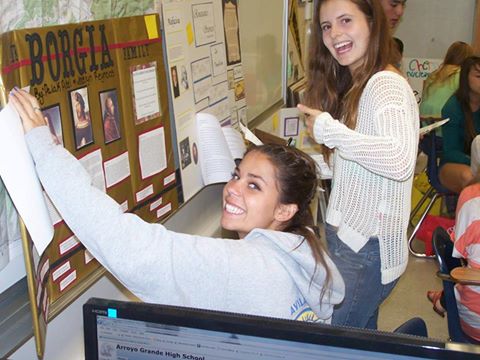
11890959_910767205680284_601602604436695615_nWhen I retired from teaching last year, it was time. I hadn’t lost my love for young people, or for teaching, but I couldn’t think of a better graduating class for my goodbyes than the Arroyo Grande High Class of 2015.

One of my very favorites—she’s just starting her freshman year at Poly—is named Leila. The smile you see on her face is a constant: she radiates the kind of warmth and openness that captures others, but there is nothing calculated in the capturing. Leila’s smile comes from Leila’s heart. At the end-of-the-year Senior Assembly, she gifted me with a farewell bouquet. She was fighting tears, and seeing her struggle to master her feelings was an even greater gift. It’s good to know the love you’ve spent means something to someone so important.

I have rarely read a college letter that brought me to tears, but Leila’s did. One part told of her family’s trip to Egypt, to visit her grandmother. I saw photos of the woman and she has a kind of Leila-ness about herself, as well.  You wonder if there are applications you can send for to become her adoptive grandson. Her health has not been good. She had to have surgery, and the passage I remember is when Leila volunteered to change the dressing on her wound. Her grandmother apologized for its appearance, but Leila did not hesitate and did not flinch, and I don’t think anything so clinical has been done with such gentleness and compassion.

The experience only reinforced Leila’s dream to become a doctor. We have common heroes–Doctors without Borders—and I could easily see Leila doing their work. I immediately thought of her while listening to an NPR story about a doctor who lost 19 of the first 20 patients he’d treated for Ebola in West Africa. It was heart-breaking, but this doctor was a man of spiritual depth. “Curing disease isn’t the most important thing a doctor does,” he said. “The most important thing a doctor can do is to enter into another’s pain.” Leila has that kind of empathy and she has the spiritual strength to sustain it.

I will come to the obvious part. Leila is an observant Muslim, and as captivating and welcoming as her smile is, there are those–some have been in the news lately–who are blind to kindness because it’s so threatening to the comfort they find in hating. Leila can take care of herself–she gets those reservoirs of strength from the deep wells her family has made for her–but she also is the kind of student who can provoke every paternal instinct a male teacher has.  You want to protect her from the blind and the bigoted who also have the unpleasant tendency to be loud.

The comfort is knowing that those people do not matter and have no enduring impact, unless you count, of course, the agonizing depth of the pain God feels when they broadcast their hatred.

I gained a lot of wisdom by talking to Haruo Hayashi in researching a book I’m writing about Arroyo Grande during World War II. In 1942, his family was among those interned Japanese-Americans who slept in stinking animal stalls at the Tulare County Fairgrounds; they were then sent to the remote Rivers Camp in the Arizona desert, where the hot winds, carrying the spores for Valley Fever, began to kill their grandparents.

When I visited the Hayashis, I saw three generations of a family whose bedrock is hard work relaxing on a Sunday, watching television, reading, raiding the refrigerator, and all of them were present, were living in the moment, and the devotion you sensed among them was unforced and unpretentious, which only made it more powerful. Haruo’s extraordinary wife, Rose, was dying. Her son, Alan, remained at her side, attentive but respectful and unobtrusive, his love for her a mirror-image of the love she’d always given so selflessly.

Haruo went through, after Pearl Harbor, the kind of bigotry that I fear so much. But, while the bigots were loud and threatening, they do not matter to him 75 years later. They were small people whose names he’s lost. He hasn’t lost the names of Don Gullickson or Gordon Bennett or John Loomis, constant friends whose constancy has lasted four lifetimes. He smiled when he remembered another name, of a tough classmate, Milton Guggia, who told Haruo he would personally beat the living crap out of any kid who called Haruo a “Jap.”

Milton Guggia. That’s a real American name.

As is Leila’s. She’s the girl who went to Proms, who served on the ASB, who played Powderpuff Football, who participated every year in Mock Trial, who played in the school band. Haruo played in the school band, too. And you can see him in a yearbook photo with the 1941 AGUHS Lettermen’s Club–his bad eyesight ruled out sports, but he managed for every team and earned his spot, with all the jocks, right next to Coach Max Belko, the kind of big, boisterous and indestructible coach whom every kid idolizes.

He was destructible, it turned out. Belko, a Marine lieutenant, died on Guam in 1944.

But there, and forever, in the old yearbook, are Max Belko and Haruo Hayashi, shoulder to shoulder: two real Americans. Leila—and Leila’s marvelous family, so much like Haruo’s—are no different. Their fidelity to each other, their quiet insistence on hard work and service to others, and the openness of their daughter’s heart–all of these have been blessings in my life. They are, I think, the kind of Americans we would all wish to be.

Deep waters

28 Sunday Jun 2015

Posted by ag1970 in American History, News

≈ Leave a comment

b17298183bd616eed9101deebf3312259dd3c7f9

Mother Emanuel this week reminded me of this lesson, in the link, that I used to teach in European history.

Christianity, it seems to me, is sustained by humility and forgiveness, and those two are streams fed by deeper waters still. The AME congregants I saw this week, just like the Amish in the Reformation lesson, drink from those waters. By contrast, I see so much barrenness in so much of modern American Christianity.

What I see instead of humlity and forgiveness are arrogance and sanctimony. I see hypocrisy. I see the comfort the weak and ostensibly victimized find in divinely-justified hatred. I see a passion for retribution, a weakness for corruption, and a smug anti-intellectuallism. What a sad waste, since we already have a Congress for these kinds of things.

How life-affirming and how liberating real Christianity can be! Mother Emanuel reminded me of that–as does Pope Francis– and so this week a Charleston church in deepest grief gently humbled me down to Jesus’ level, down to where I would always aspire to live were my own life not so narrowed by pride.

 http://www.aghseagles.org/apps/video/watch.jsp?v=58842

The Not-so-Long Goodbye

09 Tuesday Dec 2014

Posted by ag1970 in News, Teaching

≈ Leave a comment

10406775_10205398047814403_3499575547574663110_n

I had the first big wave of Reality hit me today while walking from the school library back to my classroom, during the passing period, walking through the kids with about five different “Hi, Mr. Gregorys” and one hug along the way.

It was Imminent Retirement Student Withdrawal Anxiety.

I don’t want to sound like Maria traipsing through an Alpine meadow–I rooted for the Wehrmacht in that movie–but thirty-two years ago I sat down in Cary Nerelli’s class at Morro Bay High–after years of aimlessness, numbed from some of life’s body blows– to observe for a Poly education class, and I instantly knew this was where I belonged. Now I’m 63, and this year, like every other, I have to fight the urge to blurt, “Do you have any idea how much I love you?”

We teachers deal with hope and potential, we heal heartbreak, and we take our students to places they’ve never seen–most of those lie inside themselves–and thirty years have failed to blunt the excitement I felt my first day of student teaching, when the kid with the curly hair asked me if I knew my hands were shaking, and the kid in the back complained that my handouts weren’t hole-punched.

“Punch your own damned holes!” I replied.

We got along fine after that. And we have ever since.

10838041_10205398048654424_7516305212924230169_o

The Return of the “St. Louis”

16 Wednesday Jul 2014

Posted by ag1970 in American History, News

≈ Leave a comment

St. Louis passengers waiting to disembark in Havana. They would be turned away.

St. Louis passengers waiting to disembark in Havana. They would be turned away.

In May, 1939, the German liner St. Louis left Hamburg, bound for Havana, with over 900 passengers—most of them European Jews.

They hoped their stay in Cuba would be a short one; they’d applied there for U.S. visas. But when the St. Louis reached Havana, only 28 of the passengers were admitted. The rest were turned away at the demand of Cuban President Frederico Laredo Bru. Cuba was still feeling the effects of the Depression, the immigrants were seen as a threat, and Cuba’s right-wing press was powerful.

St. Louis had not stayed in Havana long enough for the Europeans, now stateless refugees, to have their U.S. visas processed. But her German captain–a determined man, and one deeply sympathetic to the passengers in his care–set course for the American mainland.

Despite intense press coverage of the passengers’ plight—Kristallnacht and the “racial laws” had bluntly served notice of what Nazi Germany had in store for them—this, according to the Holocaust Encyclopedia, is what happened.

Sailing so close to Florida that they could see the lights of Miami, some passengers on the St. Louis cabled President Franklin D. Roosevelt asking for refuge. Roosevelt never responded.

U.S. Coast Guard cutters shadowed St. Louis to make sure she did not try to enter an American port. Despite pleas on the passengers’ behalf, Canadian Prime Minister Mackenzie King also denied them entry. Eventually the ship returned to Europe. The UK admitted 288 passengers; the remainder were dispersed throughout France, Belgium, and Holland, all overrun by the Wehrmacht in 1940.

At least 227 vanished in the Holocaust.

Today the United States deported a group of Hondurans: 17 women and 21 children, boys and girls between 15 and 18 months. Their charter flight landed in San Pedro Sula, Honduras, the city, according to U.N. data, with the highest murder rate in the world.

This is where the photograph of these deportees, a mother and daughter, was taken.

immig16n-7-web

Subscribe

  • Entries (RSS)
  • Comments (RSS)

Archives

  • January 2026
  • December 2025
  • November 2025
  • October 2025
  • September 2025
  • August 2025
  • July 2025
  • June 2025
  • May 2025
  • April 2025
  • March 2025
  • February 2025
  • January 2025
  • December 2024
  • November 2024
  • October 2024
  • September 2024
  • August 2024
  • July 2024
  • June 2024
  • May 2024
  • April 2024
  • March 2024
  • February 2024
  • January 2024
  • December 2023
  • November 2023
  • October 2023
  • September 2023
  • August 2023
  • July 2023
  • June 2023
  • May 2023
  • April 2023
  • March 2023
  • February 2023
  • January 2023
  • December 2022
  • November 2022
  • October 2022
  • September 2022
  • August 2022
  • May 2022
  • April 2022
  • March 2022
  • February 2022
  • January 2022
  • December 2021
  • November 2021
  • October 2021
  • September 2021
  • August 2021
  • July 2021
  • June 2021
  • April 2021
  • March 2021
  • February 2021
  • January 2021
  • December 2020
  • November 2020
  • August 2020
  • July 2020
  • June 2020
  • May 2020
  • April 2020
  • January 2020
  • December 2019
  • November 2019
  • October 2019
  • September 2019
  • August 2019
  • May 2019
  • April 2019
  • March 2019
  • February 2019
  • January 2019
  • December 2018
  • November 2018
  • October 2018
  • September 2018
  • July 2018
  • June 2018
  • May 2018
  • April 2018
  • March 2018
  • February 2018
  • January 2018
  • December 2017
  • November 2017
  • October 2017
  • April 2017
  • March 2017
  • December 2016
  • November 2016
  • October 2016
  • September 2016
  • August 2016
  • July 2016
  • June 2016
  • April 2016
  • March 2016
  • February 2016
  • January 2016
  • December 2015
  • November 2015
  • October 2015
  • September 2015
  • August 2015
  • July 2015
  • June 2015
  • May 2015
  • April 2015
  • March 2015
  • February 2015
  • January 2015
  • December 2014
  • November 2014
  • September 2014
  • August 2014
  • July 2014

Categories

  • American History
  • Arroyo Grande
  • California history
  • Family history
  • Film and Popular Culture
  • History
  • News
  • Personal memoirs
  • Teaching
  • The Great Depression
  • trump
  • Uncategorized
  • World War II
  • Writing

Meta

  • Create account
  • Log in

Blog at WordPress.com.

  • Subscribe Subscribed
    • A Work in Progress
    • Join 68 other subscribers
    • Already have a WordPress.com account? Log in now.
    • A Work in Progress
    • Subscribe Subscribed
    • Sign up
    • Log in
    • Report this content
    • View site in Reader
    • Manage subscriptions
    • Collapse this bar
 

Loading Comments...