• About
  • The Germans

A Work in Progress

A Work in Progress

Category Archives: Personal memoirs

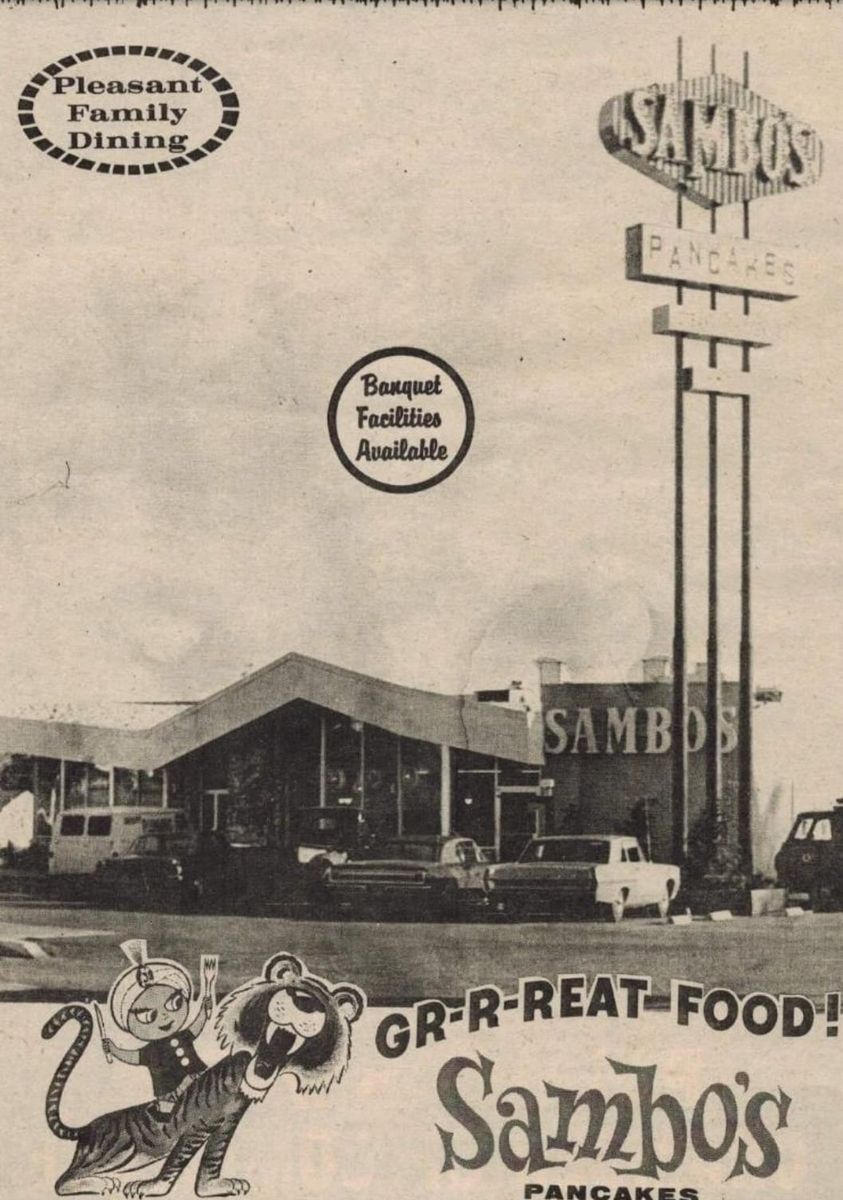
Sambo’s, Arroyo Grande, 1969

07 Sunday Mar 2021

Posted by ag1970 in American History, Arroyo Grande, Personal memoirs, Uncategorized

≈ Leave a comment

I have no idea how this is is going to end up, so I might as well begin.

This place became, much later, Francisco’s Country Kitchen, which I came to love both for its biscuits and gravy and for the density of the newspaper racks out front. They will demolish it soon, and that makes me fearful. No so much for losing the building, which is a minor example of a style that considered Moderne sometime between Sputnik and Apollo 13, but because even the most transitory spark lit by the wreckers might ignite fifty years of kitchen grease with the explosive force of a typical B-52 payload.

I’m just glad we live on the far side of Grand Avenue.

But before it was Francisco’s, it was Sambo’s, a story that had always charmed me—imagine tigers spinning themselves into butter, I thought, at four, and imagine how delicious they would be!—but became politically inconvenient many years later after the summit of my time there. That was about 1969.

Ten years after, it was still one of my favorite places. When I was a newspaper reporter for the Telegram-Tribune, I interviewed Leroy Saruwatari there for a feature on the demise of Arroyo Grande’s once-vast walnut orchards. Leroy told me about the perpetrator—husk fly larvae, which are so voracious and pitiless that you wonder why the orchards didn’t collapse, on their own, into sawdust–but he also told me a little about his family, perhaps the first Japanese immigrants to the Arroyo Grande Valley. They came here about 1903. Leroy didn’t know this, but that interview in a booth at Sambo’s so moved me that it would pay off thirty-seven years later when I wrote a little about his family in the book World War II Arroyo Grande.

Sometimes, years after the interview, I would stop in for a coffee or even a breakfast, take a booth to myself if it was during the slack in the morning shift, and furtively stare at the men sitting at the stools along the counter. They were farmers, come in for breakfast and coffee and gossip during a slack time for them, at a midpoint between sunrise and lunch.

Some of them wore green John Deere hats, many more wore the same felt hats typified by Bogart and made unfashionable by JFK, who hated hats. My father’s, with a broad brim and a silk ribbon and bow, lived out its life hidden— neglected except by me, who took it down and tried it on as a child—in the upper reaches of a narrow closet in our home on Huasna Road. Dad’s hat was pristine. The farmers’ hats were dented and stained by the traces of loam that is a compound of Upper Valley soil and irrigation water. Perhaps they’d blown off their heads while they towed a harrow into a field to break it up for a new crop of peppers or cabbage or pole beans.

I was far too shy to sit among them. So I just sat in my booth, waited for my order, and watched them quietly. Had I been a teenaged girl and had it been twenty years earlier, they would have been my Beatles and I would have been screeching. Thank the Good Lord for timing.

I am, after all, the grandson of a farmer from the Ozark Plateau who wore overalls all his adult life, who raised corn and milo and soybeans and—he was considered odd for this—ginseng, who slaughtered hogs in December and who, even into his sixties, was the most graceful waltzer in Texas County, Missouri. The line of teenaged girls waiting their turn to dance with Mr. Gregory did not amuse my grandmother.

And years before I sat quietly watching the farmers at the Sambo’s counter, this was me.
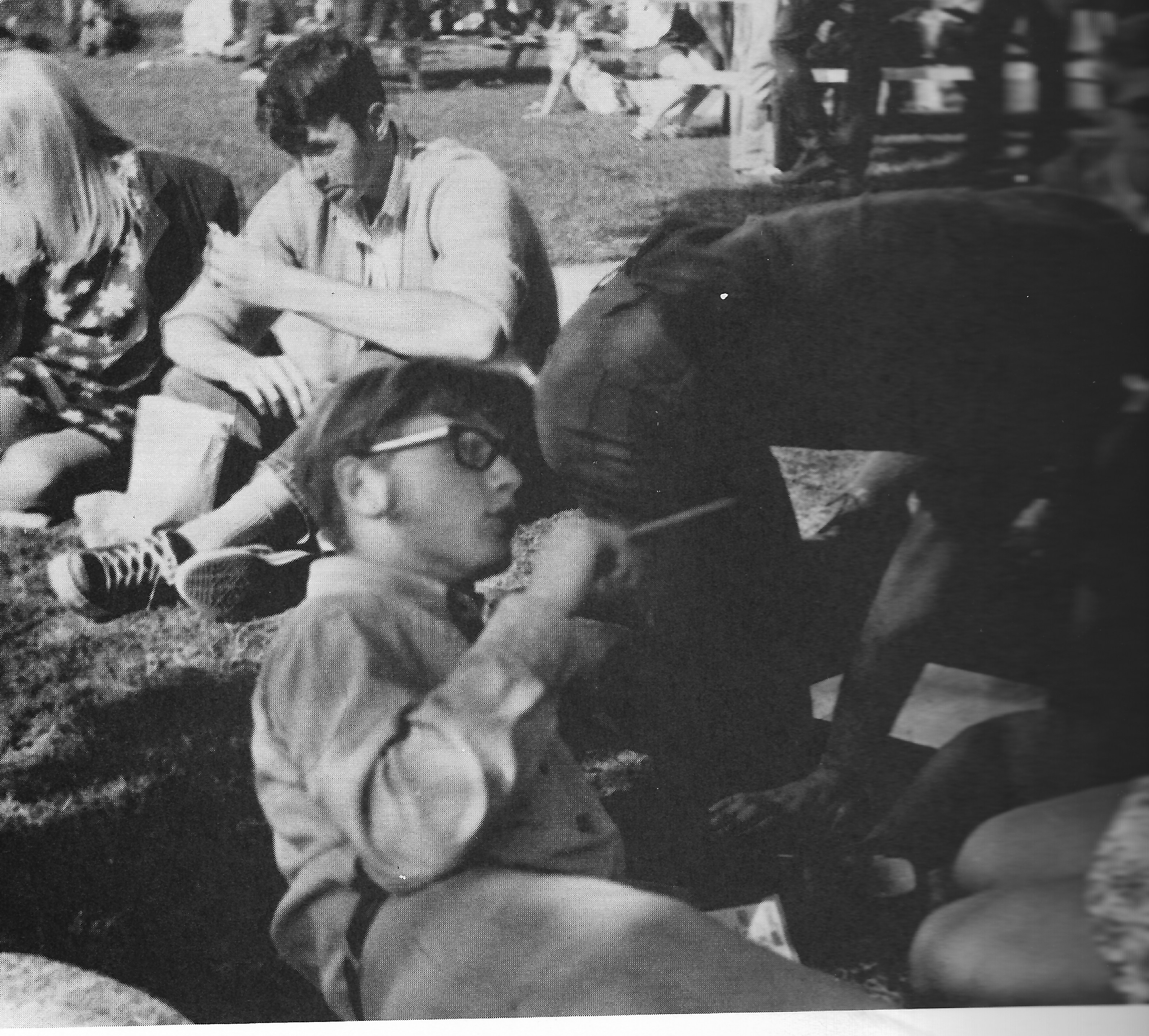

See? I’m being pedantic already. I’m a senior at Arroyo Grande High School, in the Quad, and quite full of myself. Probably I’m at the midpoint of a book–you can see one just beneath my legs—and probably it’s Herman Hesse or Kurt Vonnegut. My victim—you can just see her kneecaps—is my girlfriend, Susan. Susan was—is— extraordinary. She was bright and lovely and, by God, she had tamed a raccoon. She was a horsewoman and she loved my little sister, Sally, so sometimes she’d appear in our driveway and ask to take my seven-year-old sister for a ride. She’d keep one arm around Sally, the other controlled the reins, and they’d ride through Kaz Ikeda’s cabbage fields and talk. My little sister is bright and lovely, too, and I think that a small part of her was formed on those quiet horseback rides.

The rear end belongs to Jack. Just beyond him, with a sandwich, is Clayton, a Canadian transplant whose family settled near the mouth of Lopez Canyon where they raised horses, too. Next to Clayton, the young woman is Lois. Lois was stunning. She had beautiful wide eyes with impossibly long eyelashes and a breathy voice—a little Marilyn Monroe-ish—that devastated every seventeen-year-old male within fifty yards of that tree in the Quad of Arroyo Grande High School.

They chopped the tree down, many years later.

But Lois brings me back to Sambo’s, because her boyfriend was Paul. Paul was my classmate and intellectual soulmate. He may have turned me on to Hesse—“turned me on” was a stock phrase in 1969— and, for a brief time, to psychedelics. Paul was kind of shambly and self-effacing; he sometimes threatened to disappear inside the clothes that seemed just a little too big for him. But he was also brilliant—not just in English but also in mathematics and science and all the other subjects in which I was not at all brilliant.

Lois adored him. So did I.

Paul’s family lived in the blocks of houses bounded by Grand Avenue and the 101. (Another family I loved, the Hirases, lived there, too.) So it was natural, when I visited him, that the meeting adjourned to the nearby counter at Sambo’s, just a short walk away.

We were quiet during our visits there. In 1969, after an AGHS football game, Sambo’s was besieged and had to surrender to hordes of teenagers who ordered enough cheeseburgers and fries to ensure the eventual but inevitable cardiac occlusions, who shouted at each other from three booths away and experimented with how far they could shoot—at each other— a crinkled soda-straw wrapper from the end of its plastic muzzle.

[I didn’t order a cheeseburger. My favorite was a short stack of pancakes with scrambled eggs and blackberry syrup. This might still be one of my favorite meals.]

But we must have been exasperating. I am not sure this is so, but I expect it is: The waitresses’ hair was tied into tight ponytails behind or lacquered beehives above to keep their hairdos out of the food. You could almost see the ponytails come undone or stray strands of beehive, like little blond flags, wander away under the stress of serving teenagers with no more discipline than your typical Capitol Hill mob.

But that was after games.

Paul and I were quiet at our counter seats—the bank opposite from the one where I watched the farmers so many years later—and all we wanted was coffee. I could be wrong, but I believe Sambo’s had a policy then was can be briefly summarized: We are the Marianas Trench of Coffee. For ten cents.

So Paul and I, no matter how different we were—he was far brighter and more worldly; he smoked Winstons and I smoked Camel Filters–would sit there, exploring the depths of Sambo’s Coffee Policy, and we would talk about Hesse and Vonnegut and Steinbeck, about Squares, which included Richard Nixon, about film, about the White Album and about the one passion that we shared above all others: Eric Clapton, Jack Bruce and Ginger Baker, from the supergroup Cream.


“Ya need more cream for your coffee, Hon?” That was the waitress. I can’t remember her name. Since I was seventeen and she was in her mid-forties, she seemed to me a relic from Egypt’s Middle Kingdom. She moved noiselessly on white nurses’ shoes from one bank of the counter seats to the other; she pinned her orders to the cook’s wheel and spun it with great authority, she knew how much to talk and when to shut up.

And she called me “Hon.” [Yes, I know. ALL waitresses call you “Hon.”]

My mother had just died, in 1969, and this waitress was about Mom’s age. Gravity— and doubtless some heartbreak, which is none of my damned business –was beginning to pull the features of her face to the south but their counterpoint was the discipline of her beehive, Peroxide Harlow, which towered defiantly north.

And not only did she put up with us, the pretentious punks that we were, but she never failed to glide back to us for refills, which I always looked forward to. There I was, sitting next to a friend whom I loved and having my cup filled by a woman whom I loved, too. She didn’t know that.

But when she asked quietly “More coffee, Hon?”—I know now this was simply because she had no idea what my name was—for just a moment, Sambo’s restored my mother to me. I wasn’t the only one, either, looking for his Mum that year.
The College Job

29 Thursday Nov 2018

Posted by ag1970 in Arroyo Grande, Personal memoirs, Uncategorized

≈ Leave a comment

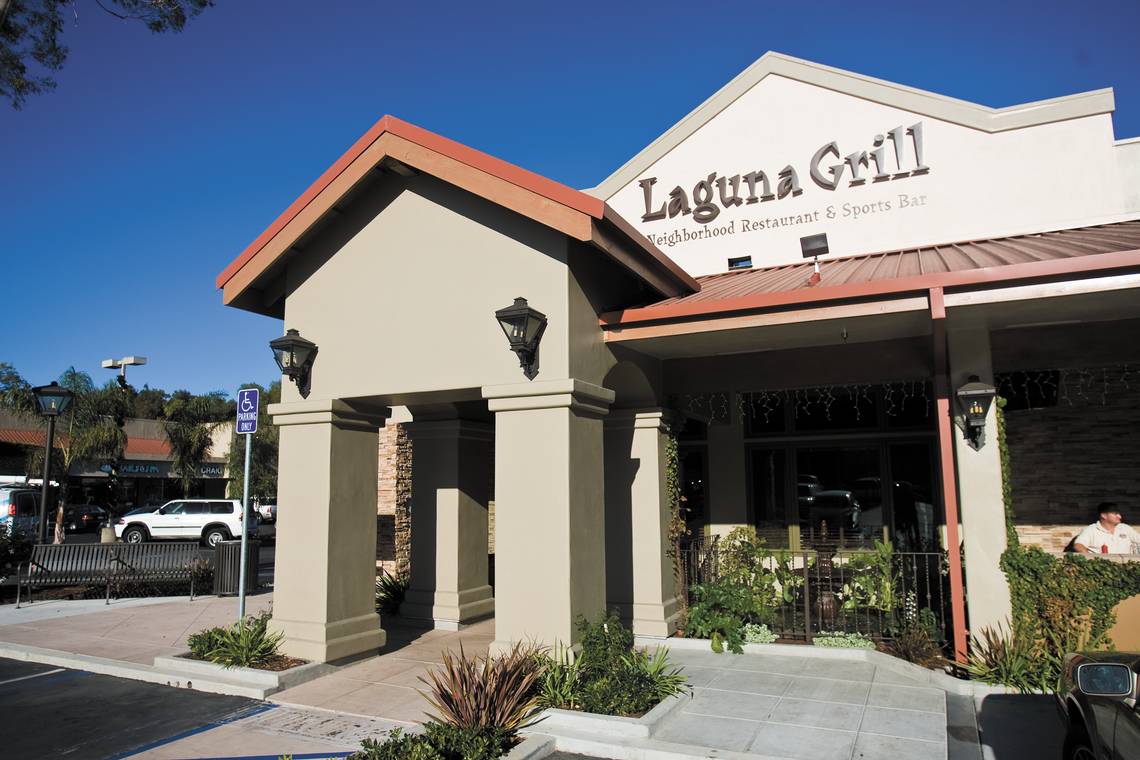
grill001.source.prod_affiliate.76

I worked, for many years, while going through Cuesta and then the teaching credential program at Poly, for Russ and Rich Bullock, who owned Laguna Liquors, on the site of today’s Laguna Grill. I liked most of my college jobs: working for the Missouri journalism school in a work-study job, stocking groceries at night (we were “Night Stockers”), except when a fellow worker jacked a load of maple syrup too high and thirty cases came crashing down, working on the “wham-bang machine” at the 3M plant. 3M makes Scotch Tape. We were making guided missile parts.

But I liked Laguna Liquors the best.

My bosses, Russ and Rich were both born in the little red house at the very end of French (now Madonna) Road, and they were two of the best bosses I’ve ever had.

I was reminded of all this because I saw another favorite boss of mine, Randy Bullock, and his wife Barb this weekend.

Back then, in the 1970s, the liquor store was pretty much the only market in the area. We were also the local bank, where folks came in to write twenty-dollar checks, which was an immense amount of money back then.

We were also part-time and totally unqualified psychiatrists: we got to know everyone for blocks around with a drinking problem, a marriage problem, a kid problem, a job problem.

We did a lot of listening, and we were, most of us, anyway, just liquor-store clerks in our twenties.

We also had a lot of fun, which frequently involved post-hours runs down to the Laguna Village Inn or the Oak Room.

We were engulfed by two waves of children in the afternoons: one from C.L. Smith and the second from Laguna Middle School, who swarmed around the candy rack like angry badgers. We even sold Pop Rocks and–I still can’t stand him–Reggie Bars.

This is where, actually, I found out that I liked kids, which is a good thing, because I spent thirty years teaching high school and liked them just as much at the end of my career as I had at the liquor store.

The wave Sunday mornings at 7 a.m. was almost as bad as the candy rush on weekday afternoons. There were always grouchy elderly men, some of them in their carpet slippers, lined up waiting for us to open so they could have their massive Sunday editions of the L.A. Times or the San Francisco Examiner/Chronicle.

But I didn’t like it when you realized an older customer wasn’t coming back. The philosophical Fuller Brush salesman took his own life. The sweetheart lady you were never supposed to sell to died of cirrhosis anyway.

The salesmen and route men were fascinating. Chet the Chip Man was an old Arroyo Grande High Classmate; Bob the Bread Man was the fastest stocker I’d ever seen; Tim from All-American beverage was the courteous, kind man who would someday become my brother-in-law. Brownie the Whiskey Guy once beckoned us into the back room, shushed us as if he were the Manhattan Project, and and poured each of us a blended whiskey that was going to be the next big thing.

It was so interesting, to me, as a young fellow, to be so integrated into the life of a neighborhood. I liked Mr. G.D. Spradlin, the general who orders Martin Sheen into the jungle in “Apocalypse Now.” He smoked Lark 100s.

I liked the elderly British couple who came down from See Canyon and loaded a shopping cart with Swanson’s Frozen Fish and Chips.

I liked the Poly professors mostly but not the arrogant ones. (Why aren’t you at Yale, you jerk?)

I learned that the favored breakfast of house painters is beer and Dolly Madison doughnuts.

I hated Hallowe’en. How do you card someone who looks like Wolfman?

I liked the hippies, gently edging into middle age, who once came to protest Diablo Canyon. One of them said Willie Nelson was coming, but he didn’t show up at the liquor store. We were sad.

I loved–absolutely loved–Willie the Golfer, an immensely charismatic black man who discovered the sport at the little nine-hole Laguna course. Willie had forearms the size of hams, and I wondered when he hit the ball if he didn’t turn it into powder.

I liked Forrest the Southern Pacific guy but never, ever figured out why he bought Burgie beer, which was incredibly cheap and tasted a little like what I thought embalming fluid might taste like (Budweiser was $1.69 a six-pack, by the way).

I used to hide from some customers, like Bob the Sherry Drinker, who did a dead-on imitation of Sgt. Schultz from “Hogan’s Heroes” but then liked to ramble, a lot and pretty loud.

I liked to listen to Russ talk about growing up in San Luis Obispo and delivering Golden State Creamery milk to the Red Light girls. I liked to listen when the old-timers came in to tell old, stories and complain about the guvmint and/or the mule deer who ate their garbanzo beans.

So I did a lot of listening, and I learned empathy, and I learned history, and I became a history teacher which is, after all, about telling the stories you’ve learned and telling them well. Working in that liquor store was one of the most important parts of my education.

The Work that Teachers Do

10 Sunday Jan 2016

Posted by ag1970 in History, Personal memoirs, Teaching

≈ Leave a comment

Tags

education


12466239_10208324640457390_4987351987083300621_o


12548856_10208324641497416_6532004896748370571_n


10314542_10208324641737422_1985620031252979684_n


I re-read the manuscript of my little book, World War II Arroyo Grande, this morning, found it brilliant, and then remembered, because of a degenerative neck disk, that I was loopy on Norco, and “The Berenstain Bears Dig a Septic Tank” on Norco would have exactly the same impact on me as the first time I read From Here to Eternity or Cold Mountain.

Here’s the Magic part.

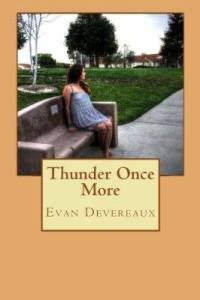
There are three books, out or about to be released, written by former students of mine. I take no credit for anything they write–except for their history essays–but I am every bit as happy for these books as I am for mine, and now that I know how hard the work in writing a book truly is I don’t even have the words for how proud I am of three young writers: Alex Bittner, Maeva Considine, and Evan Devereaux.

No work is more demanding and more lonely than the craft of writing. With one exception, and that is teaching.

What we do every day in the classroom isn’t work–for me, it was the greatest joy to teach young people like these in my years at Mission Prep and then in Lucia Mar. Nowhere was I more authentically myself than in a classroom, in the time I shared with teenagers.

For most of us, the “work” begins at three o’clock and ends in the dark. The weekends are just two more workdays: we write our weekly plans at our kids’ Babe Ruth games and we grade our essays at Cafe Andreini–seething a little at the guy at the next table burrowed deep inside the Sunday “Times” or the fiftysomethings in bicycle tights about to head up the Huasna. It’s galling to see leisure flaunted so shamelessly while we work in such anonymity.

It takes a toll. My serum cholesterol levels dropped 61 points in the five months after I retired.

We work hard, but the toll is exacted most in the extra work we are required by distant decision-makers to do–mandated in a fantasy world where we actually have the time to do it–and what we do for them is eventually written up in a barbaric language, Educationese. It’s work that almost always has no meaning and does almost nothing to make us better teachers, when wanting to be a better teacher is a constant hunger every good teacher feels. A good teacher would never force her students to do this kind of work because she respects children.

And the work we amass really is meaningless, because within three years it’s all thrown away. A new model rolls into Education–NCLB, OBE, Integrated Teams, The Common Core–so a new paradigm shift sweeps us away and we start a new round of what is most accurately called “busywork.” We feel a little like Rose Parade princesses, with fixed smiles that make even a princess’s jaw ache and endless Rose Princess waves that will eventually numb her arm. We’re like prisoners on a pedagogical Rose Float whose petals will turn brown as quickly as the last one’s did.

And we are told, every time, that we should not fear change. This is insanity, of course, not “change,” what we do to teachers. It’s the kind of busywork that crushes the second-greatest gift a classroom teacher has: her idealism.

Her greatest gift, of course, is the roomful of children entrusted to her, the complex and precious aggregate of human beings she has to face every Monday morning.

I hated Monday first period. I am an introvert and I was terrified every first period of every Monday for thirty years. My hands trembled every Monday for thirty years. But we force ourselves to begin because we worked so hard, when we were alone and anonymous, on our lesson plan. Plans. Mine usually went through two and sometimes three revisions.

Sometimes they don’t work at all and you have to learn to throw the plan out in the middle of a class and fly by wire.

A lot of good teaching is like that: it’s not meant to be weighed, measured and stored in the Skinner boxes the distant decision-makers build for teachers. A lot of good teaching is instinctual, improvisational, and attuned to what the students need in the moments where they depend on your leadership and on your humanity.

By the way, thank God, the anxiety of starting a class dissipates and in a few minutes: we are so absorbed in teaching the plan well and clearly that we really have just the faintest connection to it. Even in the lessons that go well, we teach instinctively, because now we are in a deep, living and constantly evolving relationship with our students.

We aren’t dispensing information. We’re inspiring, infuriating, affirming, correcting, evoking, and confronting.

There is nothing in my life–only the births of my sons come immediately to mind– that has made me happier than my time with children, and the captivity of all the unseen we work we do to prepare is transformed, as if it were alchemy, into the kind of freedom only a teacher understands.

What other career gives you something that approaches the sensation Orville Wright might have felt that day at Kitty Hawk?

And then young adults like these three remind us that what we do is important and powerful. It makes an old teacher like me very quiet inside. My little Wright flyer is safely on the beach again, and the miracle of what we’ve done together is overwhelming.

Huasna Road spirituality

09 Saturday Jan 2016

Posted by ag1970 in American History, California history, Family history, History, Personal memoirs, Teaching

≈ Leave a comment


1929425_1124481235982_1907209_n

Mom and Roberta, 1943


I think about my Mom a lot in January, the month when she was born, and in March, the month when she died. She never said any of the things below, but I decided to try to say them for her as authentically as I could. What lessons did I learn from her when I was a little boy?  I decided on ten. I’ll never get the wording exactly right, and I’ll never be able to articulate all the lessons, because so many of them were nonverbal and taught by example. Ours was not a peaceful home, nor was it always a happy one, but there were times when my mother’s parenting was, as I think about it more than fifty years later, actually quite inspired.


Ten Lessons

  1. Each of our lives is tuned differently, so each of us produces a different tone. It’s the melodies that please God most.
  2. Books, and music, and ideas, and politics, and God, and talk. That makes this place, five thousand miles away from Ireland, an Irish house.
  3. You young people might be all right after all. Ringo makes me think so. He looks just like a Basset hound!
  4. Faith is stronger when it’s tempered by doubt. The men they tried at Nuremberg were True Believers.
  5. Those people working the pepper field over our pasture fence don’t look like us, and they don’t speak our language. How lucky we are to have them so close.
  6. You’re the one that burns a little hotter than the others. I need to be patient because I love you.
  7. We owe the poor our love and respect; we owe the rich prayers for good eyesight. It’s so hard to see a carpenter’s son planing His father’s wood from the great heights that they inhabit.
  8. There is no forgiving intentional cruelty.
  9. I will raise singular daughters and honorable sons.
  10.  Life inflicts terrible wounds and unbearable pain. Just hang on. If the pain continues, just hang on. A time may come when you need to let go of it. Say goodbye with love.

The hunch

06 Wednesday Jan 2016

Posted by ag1970 in California history, Family history, Personal memoirs

≈ 1 Comment

1003595_10208291341784944_2527951556034985778_n

It took me almost 64 years, but I finally found this handsome young fella last night. This is Dykes Johnson, Taft Union High School ’27, Stanford University BS, University of Louisville M.D., Taft Union High School Hall of Fame.

He passed away in 1996. Damn it.

I was born on January 25, 1952, when I should’ve been arriving some time around Washington’s birthday. Dykes was our family doctor in Taft. He was a flying enthusiast–he’d also served in the Navy as a doctor during the War–and was gone to the other end of a Valley on some kind of fly-in.

When Dad took Mom to the hospital, things weren’t going so well. Dad was scared. I was about to make my appearance (or not) when Dykes burst through the door, which almost hit my Dad in the face.

Dykes, I guess, was a blunt man, and especially that night. “Get the hell out of here!” he told my father. “Something’s wrong.”

He’d flown back down to Taft. He’d had a hunch.

I was not only a preemie–four pounds–but the cord was wrapped around my neck and I was blue. I’d stopped breathing.

Meet the man who saved my life

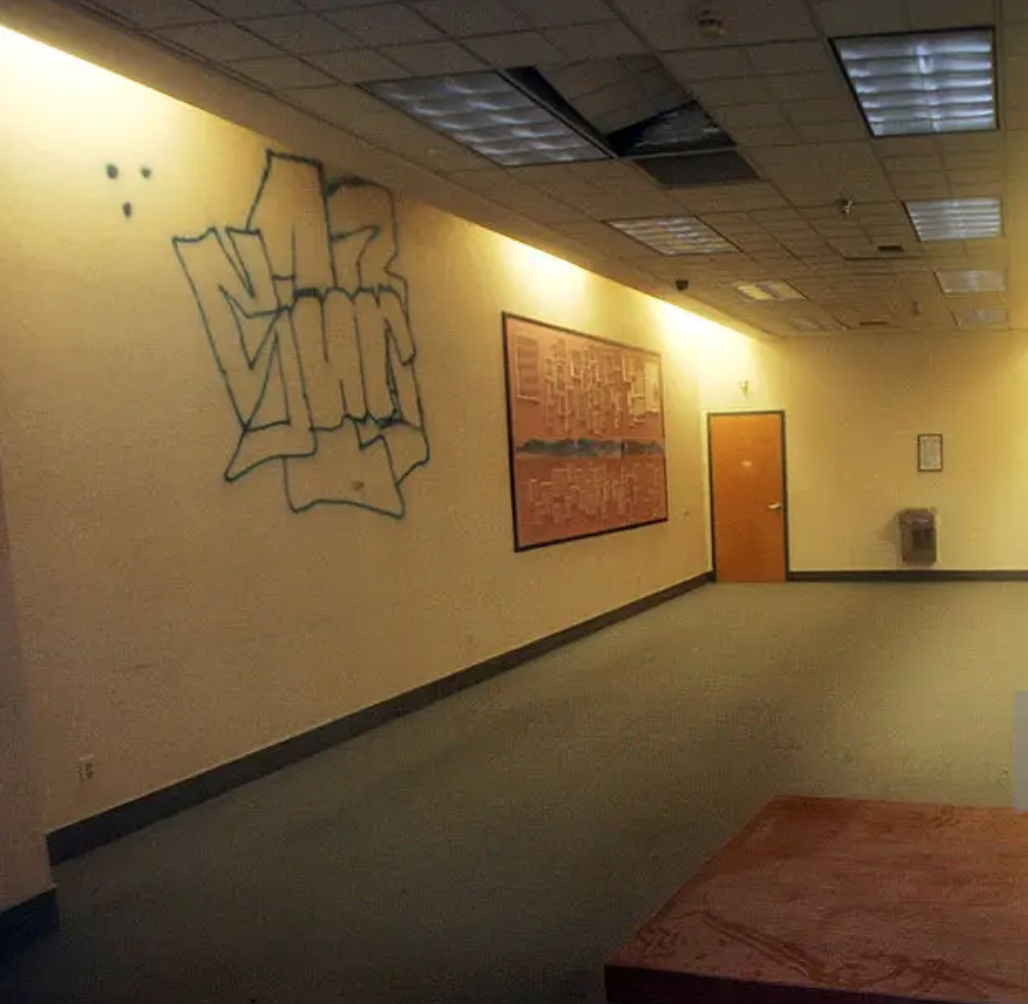
A spooky hallway in the abandoned West Side Hospital, built in 1949. This is where I was born; it was demolished a few years ago.
The Dykes Johnson Medical Center, torn down in late 2022.

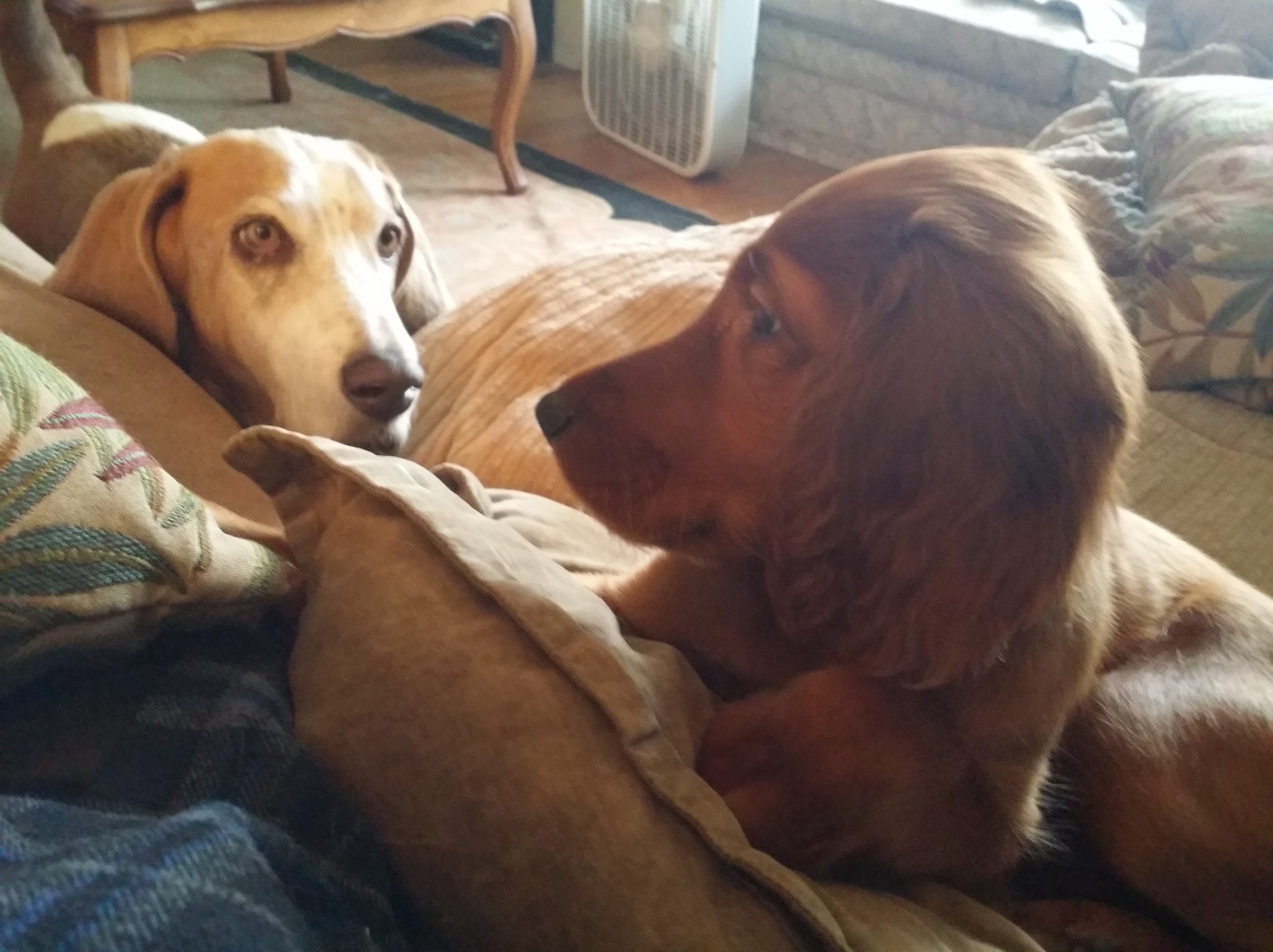
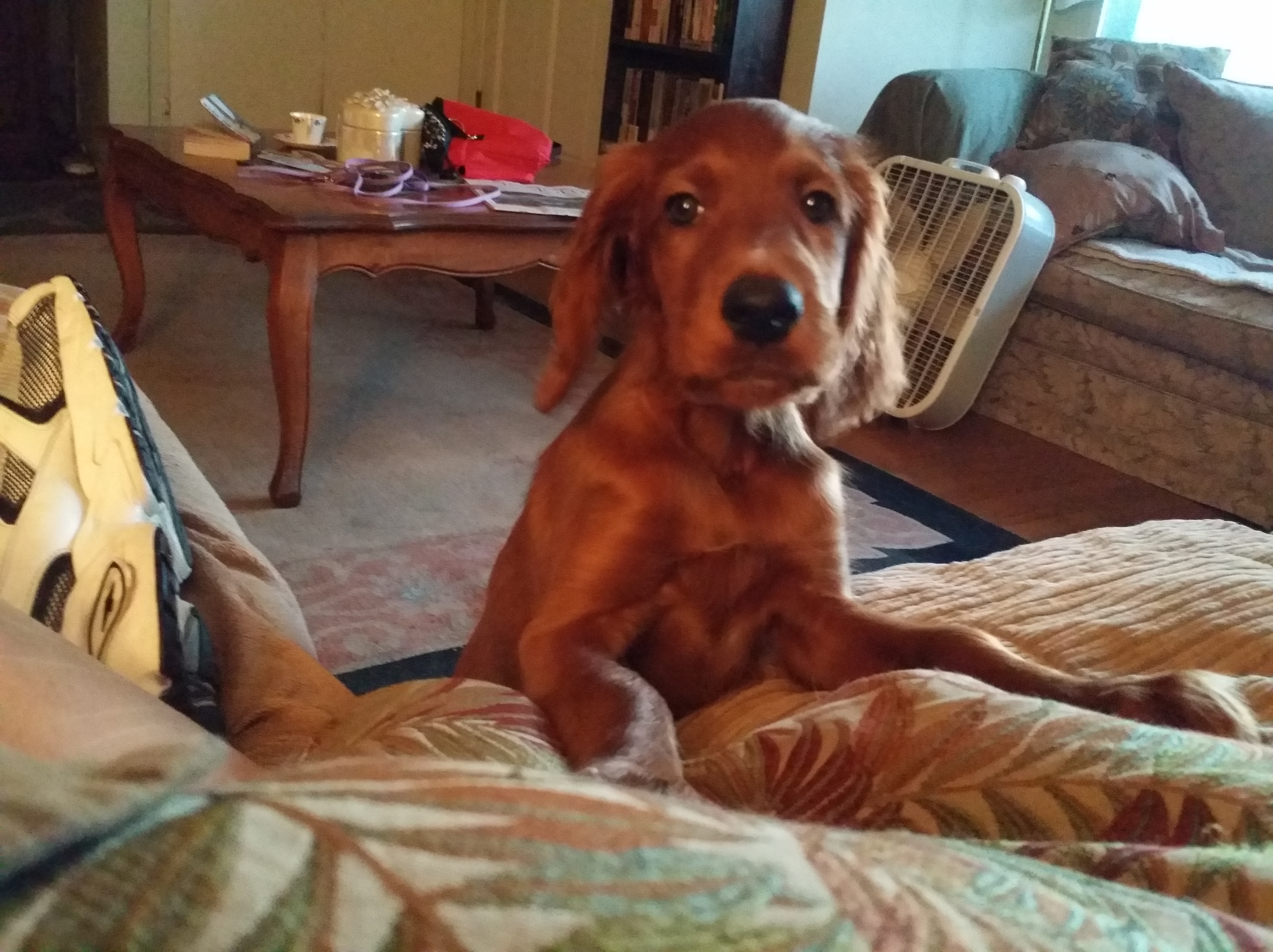
Okay, I am crazy about Brigid.

25 Thursday Jun 2015

Posted by ag1970 in Family history, Personal memoirs

≈ Leave a comment

Tags

Dogs, Irish Setters

20150623_07121920150623_14423520150624_09405920150624_10113020150623_06393920150625_06265020150625_06285120150625_06283220150625_062948

20150624_054914

Family Secrets

15 Wednesday Apr 2015

Posted by ag1970 in American History, California history, Family history, Personal memoirs

≈ Leave a comment

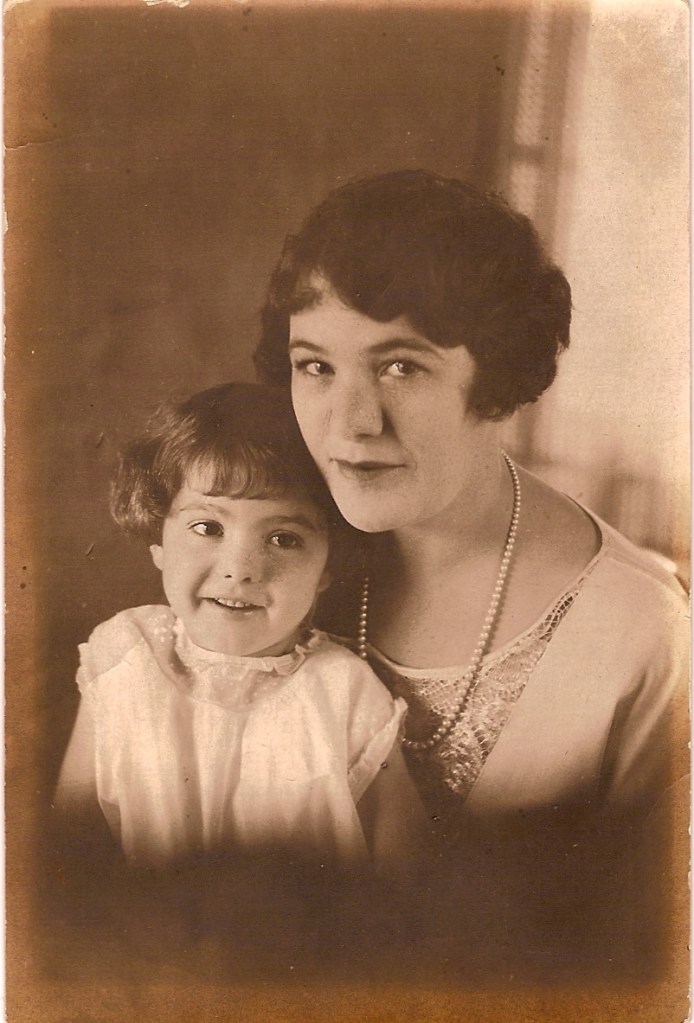
Emma Martha Kircher Keefe
My grandmother and mother, about the time of the story in the Bakersfield Californian.

The Breed Act forbade borrowing another California’s driver’s vehicle without permission, but neglected to assess a penalty for its violation. This old article points out the folly of such a law by spinning this story:

The Bakersfield Californian

April 10, 1925  

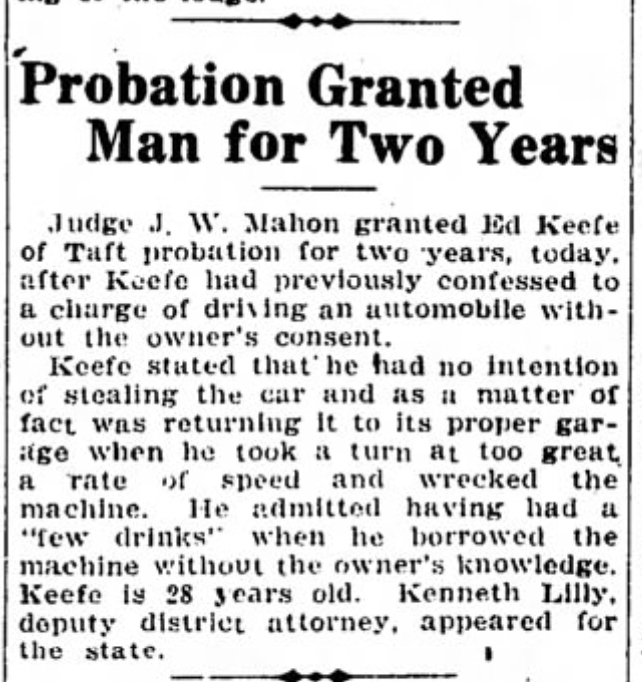
Keefe Arrested Now comes Ed Keefe of Taft into the story. Not so long ago Keefe. a young man, became intoxicated In Taft, borrowed a car without leave of the owner and in a wild-eyed attempt to emulate the harrowing speed of the wilder-eyed Darlo Resta, wrecked the machine, authorities allege. With dispatch, officers of the Taft constabulary incarcerated the young man and the new charge made one of its maiden appearances opposite the name of Keefe, who Is no relation to the ball player.

The charge was “driving an automobile without the owner’s consent.” Keefe pleaded guilty to the felony and asked for probation. The court considered that It was his first offense; that he had a young wife and baby to support and granted the plea for leniency.  

Shortly after probation was allowed Keefe was arrested again by the Taft police who accused him of doing everything except making an attempt to roll the streets of the oil town. Again Ed Keefe appeared before Judge Mahon last week. Keefe denied before the court that he had attempted to apply the crimson brush to the portals of the West Side city, explaining that he had merely gone home to “sleep it off” in a genteel manner. After a severe reprimand and an order to behave, Keefe was given his freedom. He promised faithfully to accept the mandate of the court.  

Third Time

Today, Keefe appeared In court for the third time. Taft officers had pounced on the young hopeful again. They argued that he had attempted to mitigate the woes weighing upon his weary shoulders by a prolonged absorption of paint remover, often labelled synthetic gin or Scotch, according to the whims of the labeller.

The Taft officers informed the district attorney’s office that Keefe after “getting likkered up” had gone home where he endeavored to “beat up” his wife until the majesty of the law crimped his style. Judge Mahon made the young man the subject of a third excoriating reprimand, regretting that he was unable to imprison Keefe. The court reviewed his leniency granted In the hope that the defendant would “behave himself” and then predicted that Keefe would soon appear In court again with the label of some bona fide charge with a penalty attached.  

Given Freedom

To the neglect of the framers of the Breed Act, young Keefe owes his freedom. His wife wants to give him even more freedom for she has filed a complaint for divorce…

The writer is heavy-handed, too arch for his own ability, but young Keefe is too rich and too pathetic a target to pass up. He deserves every lash of this bush-league Mencken’s whip.

The problem is, Ed Keefe is my grandfather.

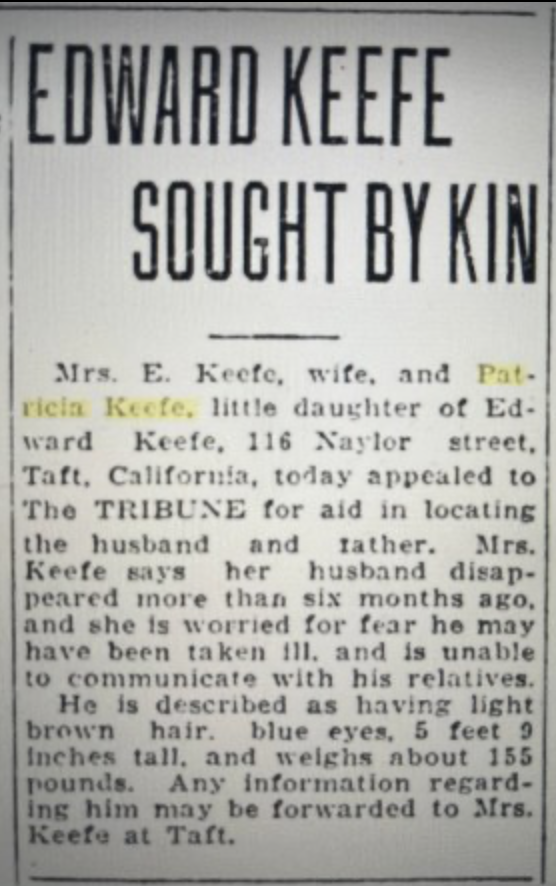
He was Irish–his father was born in the Famine years—and Ed would be the tenth of eleven children born on a Minnesota homestead, would become the love of my grandmother’s life, and, when he had disappeared by 1927, he left an emptiness in my mother’s heart that would never be filled.

She spent the rest of her life wondering about him.  My parents even hired a detective to try to find him, and I’ve spent years searching for him on the internet–uncovering instead a cache of respectable, middle class, well-educated and pious Keefes, including an unexpected nun. I found their ancestral village, Coolboy, in Wicklow, then traced where nearly every one of them, in a trail that leads from Ontario to Minnesota to Kern County, was married and buried, and Edmund is not even a whisper.  Not even a footnote.

 Update, May 2025. That wasn’t that Ed “borrowed” a car. The first two articles are from July and August 1924; the third, when he’d gone missing, was from an October 1925 Oakland Tribune.

Last night I accidentally googled this story. I reflexively wanted to punch out the man who would strike my grandmother–my Grandma Kelly, when she married another, more reliable, Irishman, a Taft police constable–and who would have so terrified my mother, four years old at the time of this news story, with all the violence it implies, buried or lost in her memory, a good thing. She never found him, which she thought a bad thing.

Ed Keefe didn’t to deserve to play the ghost that haunted my mother’s memories– he hadn’t enough character or weight or importance. But he was her father. And he’s not important enough, either, for me to hate.  But he was my grandfather. Actions like these–impulsive, thoughtless, outrageous–suggest to me that he was already a lost cause at 28, and that his alcoholism almost certainly had deeper roots, possibly in bipolar disorder or in the depression that has stalked both lines of my family and has followed me in my own life from the day that it took my mother’s.

My step-grandfather, the police officer, George Kelly—my Gramps–was the grandfather any boy would want. Once, long before I was born, in a story that made me shiver when my Dad told it, three oilfield roughnecks jumped him in an alley while another officer, Pops Waggoner, was enjoying a Coke-and-something-else in the Prohibition-era Taft Elks Lodge. Pops heard the scuffle and stumped, with his wooden leg, down the stairs to the alley and was too late. He found three unconscious men and one intact and upright Irish cop, in need of a new uniform. That was the same Gramps who played catch with my two-year-old son two decades ago with a little rubber ball and played so gently and talked such soft and silly nonsense—the language of very small children– that my son, John, fell a little in love with him. As I had.

Gramps. I imagine that it was a beard-growing competition for some Taft civic celebration.

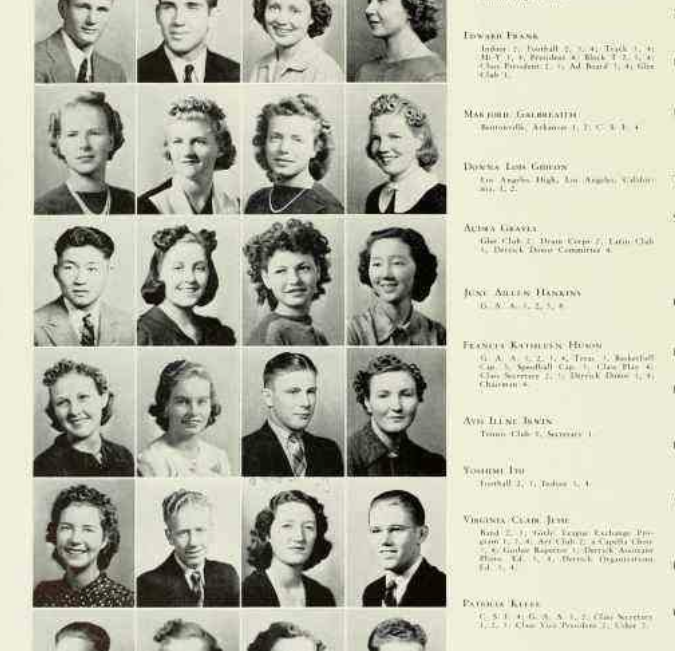
So I am no more comfortable about feeling sorry for myself over the accidents of biology and genetics that have flawed the lives of my mother and me than I am with punching a dead man. In fact, the story about Ed Keefe only made me love my mother more. She never had the inclination, or the self-regard, to understand that no victory she won in her life was too small. I am fascinated by this page from her senior yearbook, the 1939 Taft Union High School Derrick.

Screen Shot 2015-04-14 at 10.13.10 PM
My mother, in the third row from the top, third from the left.

Her natural curls are shaped in a way that’s suggestive of Shirley Temple’s moppet locks or Gone with the Wind’s Butterfly McQueen–1939 was the year that film premiered–and in her pose, she’s looking backward, over her shoulder. What’s pursuing her might have destroyed anyone else far earlier:  Her father was a drunk, a kind of charming and feckless village idiot, the butt of the Bakersfield Californian, with all the literary majesty that this newspaper possesses, and so she would have grown up with that inheritance and with all the cruelties children can inflict on each other, in bloodless wounds that never heal.

But.

She is in CSF, GAA, she is class secretary, class vice president, and there is nothing in that face that hints at defeat or humiliation or isolation. With a father as absurd as hers it is not absurd at all to draw an inference from a source as trite as a yearbook page and its little clutters of honoraria, from such a distant time and place.

So this is what I have learned in the last two days about my mother:

She would never stop glancing back over her shoulder. But, at 17, at Taft Union High School and Junior College, at the end of an era that had wounded and humiliated an entire nation and on the cusp of one that would make our power nearly unlimited, a lonely little girl had found her identity. She was a year away from marriage and four from motherhood, which would become her greatest and most enduring gift. She would strike sparks in my life:  a love for learning, a fierce sense of social justice and a hunger for God’s presence–the last, a lifelong irritant that I cannot get rid of, no matter how hard I try.

I cannot tell you how much I admire her.

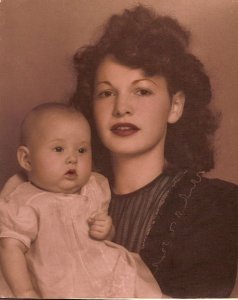
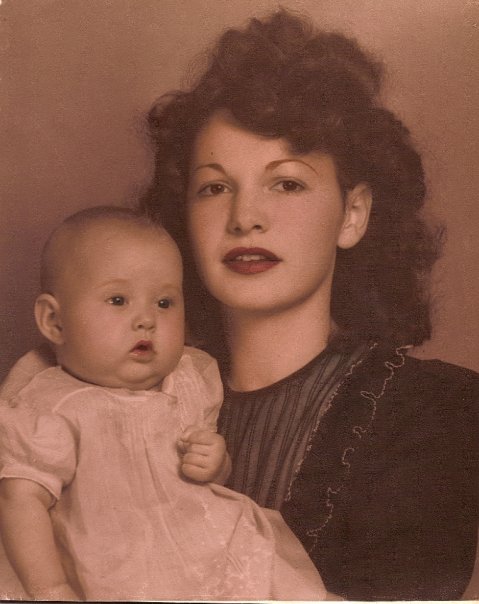
Patricia Margaret Keefe Gregory and her eldest child, Roberta, a wartime portrait.

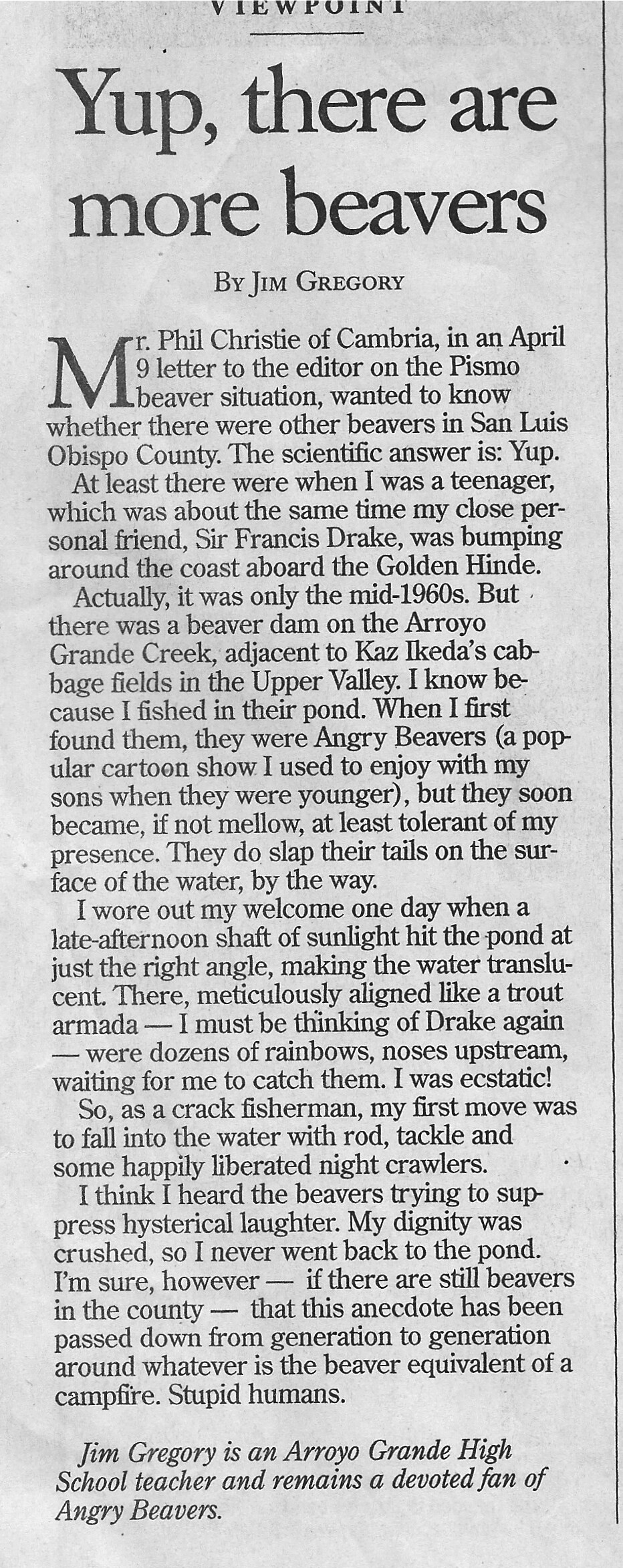
About Beavers

23 Saturday Aug 2014

Posted by ag1970 in California history, Personal memoirs

≈ Leave a comment

ww2 1

Image

Branch Elementary, from SLO Journal Plus magazine

23 Saturday Aug 2014

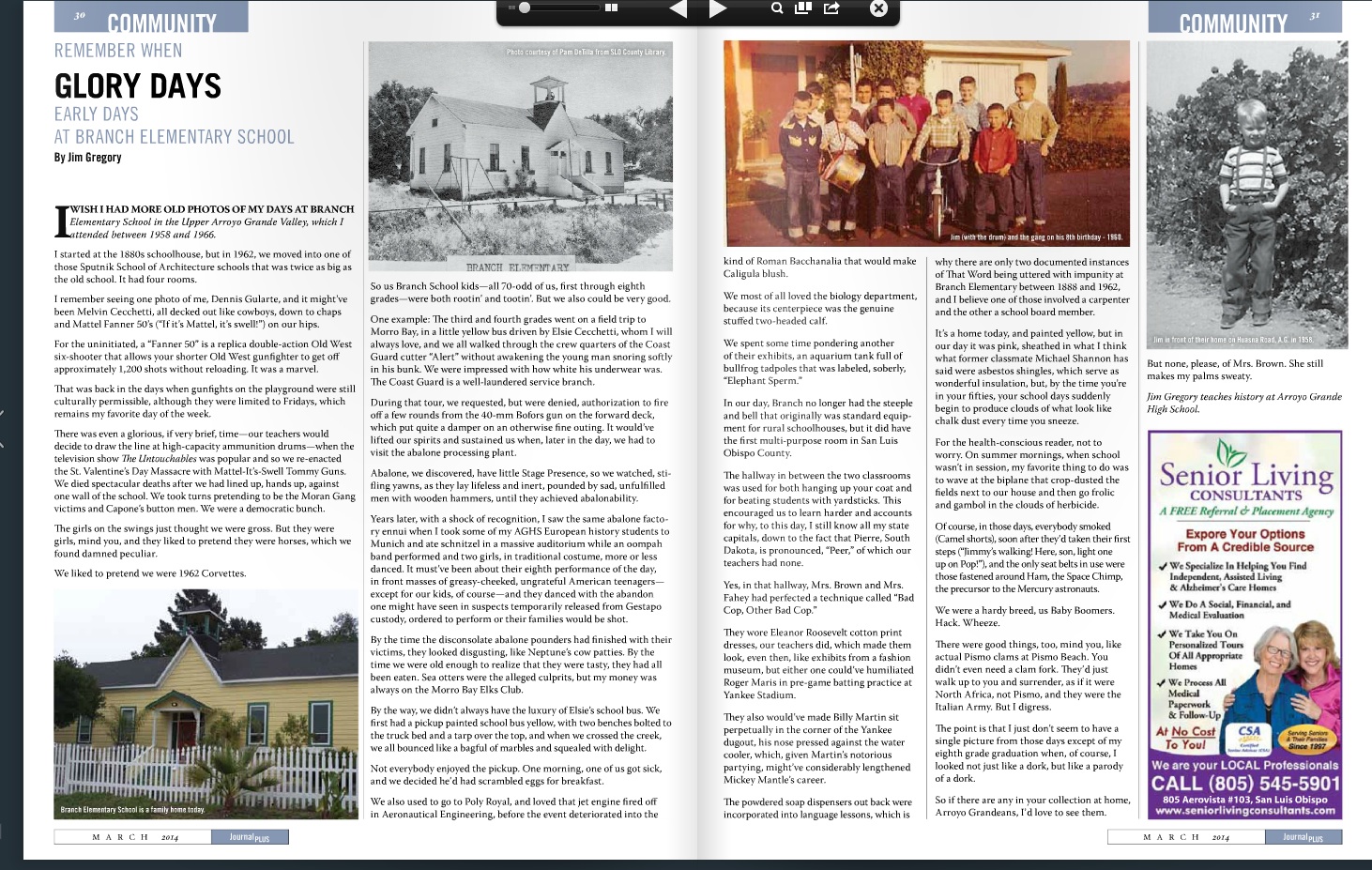
Glory Days at Branch Elementary

Posted by ag1970 | Filed under American History, California history, Personal memoirs, Teaching

≈ Leave a comment

Connections

14 Thursday Aug 2014

Posted by ag1970 in American History, Film and Popular Culture, Personal memoirs, Teaching

≈ Leave a comment

Robin Williams and his daughter, Zelda

Robin Williams and his daughter, Zelda

My eyes popped open at 3 a.m. A woman way over on that Other Coast read the thing I wrote about depression and I realized–you could fire a nail gun at this Irish skull and they’d bounce off, bent and useless–I needed to “friend” her, because no one in her family understands what it is she is suffering. I found her page and, of course, was not surprised at what I found: a vibrant, smiling woman with beautiful children–they look grown now–whose faith life is very important to her. I liked her immediately.

Of course this reminded me of Joe Loomis who, again, took care of me after my Mom died. This is that “paying it forward” business.

This is my space, so I get to ramble.

 All of this in turn reminds me of why I became a history teacher. We are not, in the end, fractured and alone–sorry, existentialists. We are all in some way connected to each other and we all have obligations that we may not even be consciously aware of to take care of each other: if you’re lucky, and had the kind of parents I had, then you commit your life to acting on those obligations no matter what you do “for a living.”

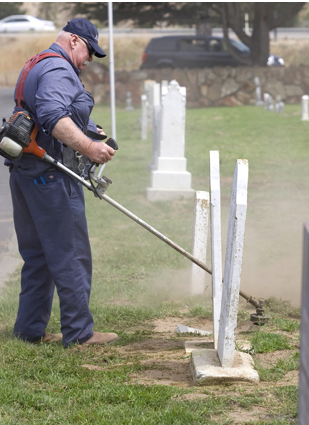
This is why so many locals love John Gearing, who works at the cemetery and had the article in yesterday’s Tribune. John has dedicated his life to caring for that cemetery and in the process has become, because of his compassion, a great comfort to those who have lost loved ones.

What John does is so important because my calling has led me to understand that we are connected even to the dead: I have never felt more heartbroken than I did in Anne Frank’s home in Amsterdam, nor more intimate with a family I had never met. I wanted to go backward in time and rescue her and the Franks from the evil that would sweep them up, but then I had to remind myself that Anne was fulfilling her obligation to all of us, at a terrible, terrible price. She reminds us, to this day, of what it is to be human, reminds us that we have a purpose, even in a life so brief, and she reminds us, too, that what we do matters.

The wonderful thing about history is realizing that the dead are not really dead. They stay with

John Gearing

John Gearing

us. They walk with us on our journeys, and, if we pay attention and are watchful, they light the path ahead for us.

← Older posts
Newer posts →

Subscribe

  • Entries (RSS)
  • Comments (RSS)

Archives

  • January 2026
  • December 2025
  • November 2025
  • October 2025
  • September 2025
  • August 2025
  • July 2025
  • June 2025
  • May 2025
  • April 2025
  • March 2025
  • February 2025
  • January 2025
  • December 2024
  • November 2024
  • October 2024
  • September 2024
  • August 2024
  • July 2024
  • June 2024
  • May 2024
  • April 2024
  • March 2024
  • February 2024
  • January 2024
  • December 2023
  • November 2023
  • October 2023
  • September 2023
  • August 2023
  • July 2023
  • June 2023
  • May 2023
  • April 2023
  • March 2023
  • February 2023
  • January 2023
  • December 2022
  • November 2022
  • October 2022
  • September 2022
  • August 2022
  • May 2022
  • April 2022
  • March 2022
  • February 2022
  • January 2022
  • December 2021
  • November 2021
  • October 2021
  • September 2021
  • August 2021
  • July 2021
  • June 2021
  • April 2021
  • March 2021
  • February 2021
  • January 2021
  • December 2020
  • November 2020
  • August 2020
  • July 2020
  • June 2020
  • May 2020
  • April 2020
  • January 2020
  • December 2019
  • November 2019
  • October 2019
  • September 2019
  • August 2019
  • May 2019
  • April 2019
  • March 2019
  • February 2019
  • January 2019
  • December 2018
  • November 2018
  • October 2018
  • September 2018
  • July 2018
  • June 2018
  • May 2018
  • April 2018
  • March 2018
  • February 2018
  • January 2018
  • December 2017
  • November 2017
  • October 2017
  • April 2017
  • March 2017
  • December 2016
  • November 2016
  • October 2016
  • September 2016
  • August 2016
  • July 2016
  • June 2016
  • April 2016
  • March 2016
  • February 2016
  • January 2016
  • December 2015
  • November 2015
  • October 2015
  • September 2015
  • August 2015
  • July 2015
  • June 2015
  • May 2015
  • April 2015
  • March 2015
  • February 2015
  • January 2015
  • December 2014
  • November 2014
  • September 2014
  • August 2014
  • July 2014

Categories

  • American History
  • Arroyo Grande
  • California history
  • Family history
  • Film and Popular Culture
  • History
  • News
  • Personal memoirs
  • Teaching
  • The Great Depression
  • trump
  • Uncategorized
  • World War II
  • Writing

Meta

  • Create account
  • Log in

Blog at WordPress.com.

  • Subscribe Subscribed
    • A Work in Progress
    • Join 68 other subscribers
    • Already have a WordPress.com account? Log in now.
    • A Work in Progress
    • Subscribe Subscribed
    • Sign up
    • Log in
    • Report this content
    • View site in Reader
    • Manage subscriptions
    • Collapse this bar
 

Loading Comments...