• About
  • The Germans

A Work in Progress

A Work in Progress

Category Archives: Personal memoirs

The Bravest Soldier

14 Thursday Aug 2014

Posted by ag1970 in Family history, Film and Popular Culture, Personal memoirs

≈ Leave a comment

fd9a12bb7240bd0b539fb3fd3663c4c92be4e37c

Heartbreaking.

This is what happens: A voice is born inside you. It lies to you –and it is so persuasive–and it never, ever lets up: it tells you that you are no good, that you are weak, that you are a failure, and you go through life the way I have been the last few weeks after minor surgery, as if you’re on crutches, like I was, when sometimes anything you do demands the greatest effort to achieve the smallest of results.

It’s a drumbeat in the background every waking moment of your life, and you use alcohol or work, and I’ve used both, to mute the sound of that voice. It’s not a surprise to me that he is dead. What he lived with in the murmur of that insistent voice for 63 years was a burden that would crush anyone else in a matter of weeks.

The fact that he fought this for so long–and gave so much joy in the process–speaks to me of a man with courage beyond understanding.

That voice has spoken to me. It took my mother’s life. We are not weaklings, we are not failures, we are not cowards. (Those ads for suicide hotlines? The voice tells you that making that phone call is confirmation that you are a coward.)

Finally, we are not “selfish.”

We have a disease that turns every day into combat and the trick isn’t to win, because you never will. The trick is to fight that lying, seductive voice inside to a draw. The next day you begin again. Robin was simply exhausted from fighting not one, but two, diseases. Civil War soldiers remembered that the comrades who finally, finally broke and ran were the bravest soldiers they’d ever seen.

Poetry in Motion

27 Sunday Jul 2014

Posted by ag1970 in Personal memoirs, Uncategorized

≈ Leave a comment

Screen shot 2014-07-27 at 3.57.04 PM

Sopa, Sushi and Lumpias: Oh my!

27 Sunday Jul 2014

Posted by ag1970 in California history, Personal memoirs, Uncategorized

≈ Leave a comment


tomato soup bowlThere was a time that is gone forever when mothers would look at me accusingly. I would think I had done something wrong. I hadn’t. “You’re too skinny.” I miss those words. Mary Gularte lived a .22 long rifle away from us. I know this because her boys were out back shooting one day and I was walking across the Harris Bridge over Arroyo Grande Creek, and heard what Churchill called the “charming” sound of bullets overhead. Mary gave them no quarter when she found out. She sat me down at her kitchen table once, on a cold morning, in a tiny house where she raised her brood of Gularte boys and girls, and made me eat a big bowl of sopa, or Portuguese stew, aromatic and dense, and I was never so happy to follow orders as I was that day with Mary. I didn’t have to eat the rest of the day.


tuna_roll1Another food stands out: the sushi I had, long before it was fashionable, at Ben Dohi’s house, across from the high school—tuna and sticky rice wrapped in nori, strips of seaweed, a huge task for his wife and her Yamaguchi sisters to prepare, so it was reserved for special Japanese holidays only, like the Fourth of July and Labor Day. It was sweet and savory, chewy and delicate, and sometimes while Ben and the men watched sports in the living room, I would stay with the Yamaguchi sisters in the kitchen, both because they were hilarious and because I was closer to the food.


lumpia2Lumpias were the final treat, and I am reasonably sure that I could eat them until it reached the point that I would need transport to the Emergency Room. These are Filipino egg rolls, crunchy and filled with vegetables and pork, and an association of Filipino women sold them during the annual Arroyo Grande Harvest Festival, the big community celebration, and it was a courtesy, after a bit of cooling when you bought them, to eat the first one in front of their booth. It gave them a chance to watch your face, to watch the way your eyes closed and then the smile began as you took that first bite of lumpia. It made them happy because they were mothers, too.

Arroyo Grande is a microcosm of the American melting pot, but three immigrant groups have played formative roles in the shaping of the twentieth century town—in the 21st, we are seeing increasing numbers of immigrants from Egypt and South Asia, and their children are a joy to teach—but the 20th century belongs to the waves of people who came from Portugal, especially the Azores, from Japan, and from the Philippines.

For a people who traveled so far, I remember our Portuguese neighbors best when they came to a complete stop. In a phenomenon I’ve seen in eastern Colorado, the Texas Panhandle, and southern Missouri, two farmers, like Manuel and Johnny Silva, who just had breakfast together two hours before, would stop in the middle of the road, pickup-cab to pickup-cab, to talk while sprinklers described vast arcs in their fields alongside the road. I did not know what they talked about—if you had come up behind one of the trucks, the men inside wearing straw cowboy hats, you would have gotten a big smile and a wave and the truck would instantly pull off to the side to let you by. Two hundred yards later, if you looked in your rear-view mirror, the trucks would be together again and the conversation would have resumed. Those moments demonstrated to me that the secret to the success of Portuguese immigrants to the Arroyo Grande Valley–many of them refugees from natural disaster in the Azores–was their devotion to each other.

Most Inspirational. Ever.

22 Tuesday Jul 2014

Posted by ag1970 in Personal memoirs, Teaching, Uncategorized

≈ Leave a comment

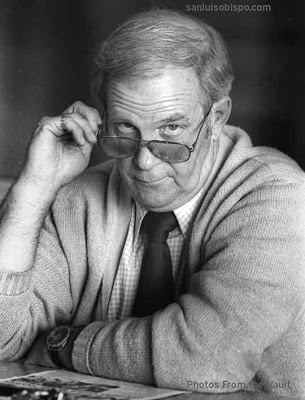
jim-hayes-fb2Jim Hayes taught me journalism at Cal Poly and was on the copy desk when I was a Tribune reporter.  He is now in hospice care with a brain tumor,and his Facebook page has exploded–page after page after page–with tributes from former students.  Here are some of mine.

*   *   *

This is Missie Pires, at the “Mustang Daily” in the early 1970s. I was 21, and Jim made me

her writing coach. She would go into broadcast journalism, anchor at KSBY, and NOT because of me, but because she was bright, hard-working, and so incredibly positive; she actually could light up a room—newsroom or otherwise. I was heartbroken when she died so young, but our time together so many years before was the first hint I’d ever had that I loved teaching and that I might have a gift for it.

Jim knew that before I did.

Years later, my first student teaching assignment was at Morro Bay High, and I met another student I grew to love as I’d loved Missie. It was Josh, Jim’s son.

There are Roman Catholics and then there is the denomination I belong to—Lousy Catholics—but I fundamentally believe that God lights our way with people like Jim and Missie, and, through them, She takes enormously good care of people like me, well-intentioned and good-hearted characters, but with a wee tendency to run off the tracks if we’re not watched carefully.

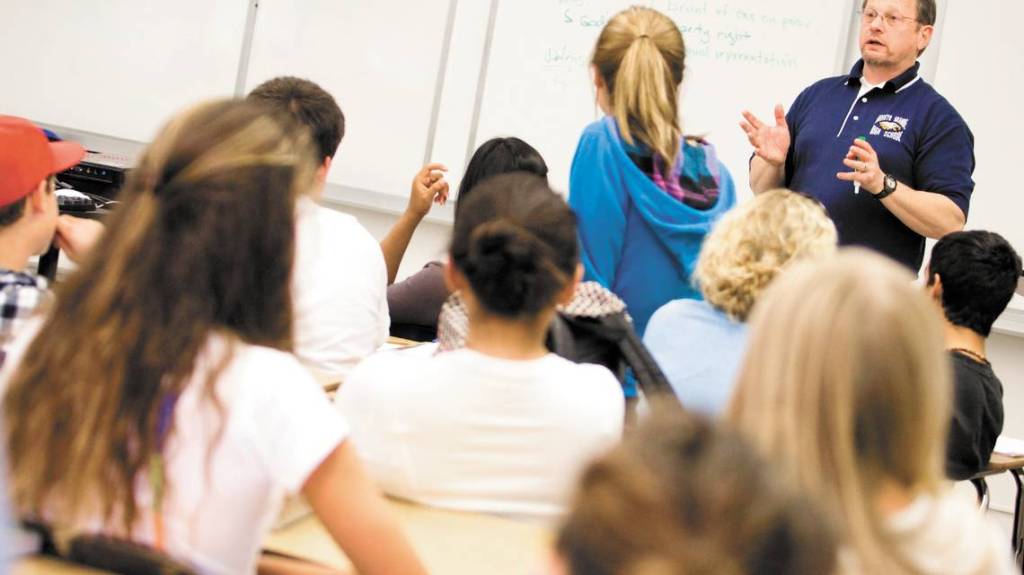
I’m on a fine road nowadays–after 29 years in the classroom, I still look up at them when they’re taking a test or writing an essay, and they are so beautiful, so full of promise, that my eyes fill with tears. Thanks, Jim.


January 2014.  Jim died in June.

* * *


Glory Days

22 Tuesday Jul 2014

Posted by ag1970 in California history, Film and Popular Culture, Personal memoirs

≈ Leave a comment

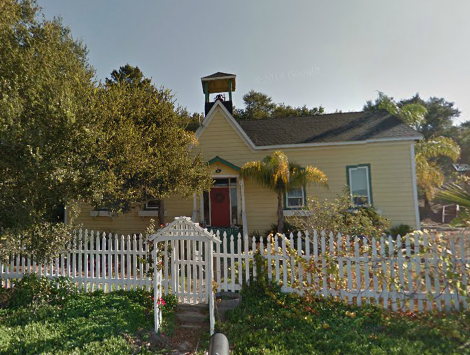
Screen shot 2014-07-22 at 4.18.51 PMI wish I had more old photos of my days at Branch Elementary School in the Upper Arroyo Grande Valley, which I attended between 1958 and 1966.

I started at the 1880s schoolhouse, but in 1962, we moved into one of those Sputnik School of Architecture schools that was twice as big as the old school.  It had four rooms.

I remember seeing one photo of me, Dennis Gularte, and it might’ve been Melvin Cecchetti, all decked out like cowboys, down to chaps and Mattel Fanner ’50s (“If it’s Mattel, it’s swell!”) on our hips.

For the uninitiated, a “Fanner ’50″ is a replica double-action Old West six-shooter that allows your shorter Old West gunfighter to get off approximately 1,200 shots without reloading. It was a marvel.

That was back in the days when gunfights on the playground were still culturally permissible, although they were limited to Fridays, which remains my favorite day of the week.

There was even a glorious, if very brief, time–our teachers would decide to draw the line at high-capacity ammunition drums–when the television show The Untouchables was popular and so we re-enacted the St. Valentine’s Day Massacre with Mattel-It’s-Swell Tommy Guns.  We died spectacular deaths after we had lined up, hands up, against one wall of the school. We took turns pretending to be the Moran Gang victims and Capone’s button men. We were a democratic bunch.

The girls on the swings just thought we were gross.   But they were girls, mind you, and they liked to pretend they were horses, which we found damned peculiar.

We liked to pretend we were ’62 Corvettes.

So us Branch School kids–all 70-odd of us, first through eighth grades– were both rootin’ and tootin’. But we also could be very good.

The entire third and fourth grades went on a field trip to Morro Bay, in a little yellow bus driven by Elsie Cecchetti, whom I will always love, and we all walked through the crew quarters of the Coast Guard cutter Alert without awakening the young man busy contradicting the cutter’s name, snoring softly in his bunk. We were impressed with how white his underwear was.  The Coast Guard is a well-laundered service branch.

During that tour, we requested, but were denied, authorization to fire off a few rounds from the 40-mm Bofors gun on the forward deck, which put quite a damper on an otherwise fine outing. It would’ve lifted or spirits and sustained us when, later in the day, we had to visit the abalone processing plant.

Abalone, we discovered, have little Stage Presence, so we watched, stifling yawns, as they lay lifeless and inert, pounded with wooden hammers, by sad, unfulfilled men, until they achieved abalonability.

Years later, with a shock of recognition, I saw the same abalone factory ennui when I took some of my AGHS European history students to Munich and ate schnitzel in a massive auditorium while an oompah band performed and two girls, in traditional costume, more or less danced.  It must’ve been about their eighth performance of the day, in front of masses of greasy-cheeked, ungrateful American teenagers–except for our kids, of course– and dancing with gleeful abandon was just not in their repertoire.

By the time the disconsolate abalone pounders had finished with their victims, they looked disgusting, like Neptune’s cow patties. By the time we were old enough to realize that they were tasty, they had all been eaten. Sea otters were the alleged culprits, but my money was always on the Morro Bay Elks Club.

[Clams are no more stimulating than abalone, by the way. The second-best show-and-tell ever, other than Tookie Cechetti’s fingertip in a vial of alcohol, lost in a saber-saw accident, was the Pismo clam Dennis Gularte and Melvin Cecchetti attempted to keep alive in the classroom sink in the new school. Clams have all the entitlement and ingratitude of the Kardashian sisters and are only marginally smarter. Our clam said little during the school day, showed little interest when we tried to push a length of kelp, which we know had to be yummy, through its shell’s opening, and then did nothing at all for about another day. Dennis ate it.]

By the way, we didn’t always have the luxury of Elsie’s school bus. We first had a pickup painted school bus yellow, with two benches bolted to the truck bed and a tarp over the top, and when we crossed the creek, we all bounced like a bagful of marbles and squealed with delight.

Not everybody enjoyed the pickup. One morning, one of us got sick, and we decided he’d had scrambled eggs for breakfast.

We also used to go to Poly Royal, the local college’s open house, and loved that jet engine fired off in Aeronautical Engineering, before the event deteriorated into the kind of Roman Bacchanalia that would make Caligula blush.

We most of all loved the biology department, because its centerpiece was the genuine stuffed two-headed calf.

We spent some time pondering another of their exhibits, an aquarium tank full of bullfrog tadpoles that was labeled, soberly, “Elephant Sperm.”

In our day, Branch no longer had the steeple and bell that originally was standard equipment for rural schoolhouses, but it did have the first multi-purpose room in San Luis Obispo County.

The hallway in between the two classrooms was used for both hanging up your coat and for beating students with yardsticks. This encouraged us to learn harder and accounts for why, to this day, I still know all my state capitals, down to the fact that Pierre, South Dakota, is pronounced, “Peer,” of which our teachers had none.

Yes, in that hallway, Mrs. Brown and Mrs. Fahey had perfected a technique called “Bad Cop, Other Bad Cop.”

They wore Eleanor Roosevelt cotton print dresses, our teachers did, which made them look, even then, like exhibits from a fashion museum, but either one could’ve humiliated Roger Maris in pre-game batting practice at Yankee Stadium.

They also would’ve made Billy Martin sit perpetually in the corner of the Yankee dugout, his nose pressed against the water cooler, which, given Martin’s notorious partying, might’ve considerably lengthened Mickey Mantle’s career.

The powdered soap dispensers out back were incorporated into language lessons, which is why there are only two documented instances of That Word being uttered with impunity at Branch Elementary between 1888 and 1962, and I believe one of those involved a carpenter and the other a school board member.

It’s a home today, and painted yellow, but in our day it was pink, sheathed in what I think what former classmate Michael Shannon has said were asbestos shingles, which serve as wonderful insulation, but, by the time you’re in your fifties, your school days suddenly begin to produce clouds of what look like chalk dust every time you sneeze.

For the health-conscious reader, not to worry. On summer mornings, when school wasn’t in session, my favorite thing to do was to wave at the biplane that crop-dusted the fields next to our house and then go frolic and gambol in the clouds of herbicide.

Of course, in those days, everybody smoked (Camel shorts), soon after they’d taken their first steps (“JIMMY’S WALKING! Here, son, light one up on Pop!”), and the only seat belts in use were those fastened around Ham, the Space Chimp, the precursor to the Mercury astronauts.

We were a hardy breed, us Baby Boomers. Hack. Wheeze.

There were good things, too, mind you, like actual Pismo clams–all from the extended family of our classroom clam–at Pismo Beach. You didn’t even need a clam fork. They’d just walk up to you and surrender, as if it were North Africa, not Pismo, and they were the Italian Army. But I digress.

The point is that I just don’t have to seem a single picture from those days except of my eighth grade graduation when, of course, I looked not just like a dork, but like a PARODY of a dork. So if there are any in your collection at home, Arroyo Grandeans, I’d love to see them.

But none, please, of Mrs. Brown.  She still makes my palms sweaty.

Redheads Again

22 Tuesday Jul 2014

Posted by ag1970 in Personal memoirs, Teaching

≈ Leave a comment


-portrait-of-mademoiselle-irene-cahen-danvers-pierre-auguste-renoirThis Renoir, the exquisite 1880 portrait of 8-year-old Irene Caher d’Anvers, was part of today’s lesson.   Irene would live to be 91.  Born in horse-and-buggy Paris, she would die with humans hurtling through space at unimaginable speeds.

Irene reminded me of a something I’d mentioned in class a few days before. In 29 years of teaching, I told them, I have never taught so many red-haired girls, in particular, and hair in so many shades of red–from strawberry blonde to deep copper. Having this many redheads is extraordinary.

This anomaly led to intense meditation and at least one extended monologue in front of 31 slightly befuddled sophomores, on redheads–all of this was me processing information–and it led to one logical, unavoidable conclusion about them:  They are beautiful.

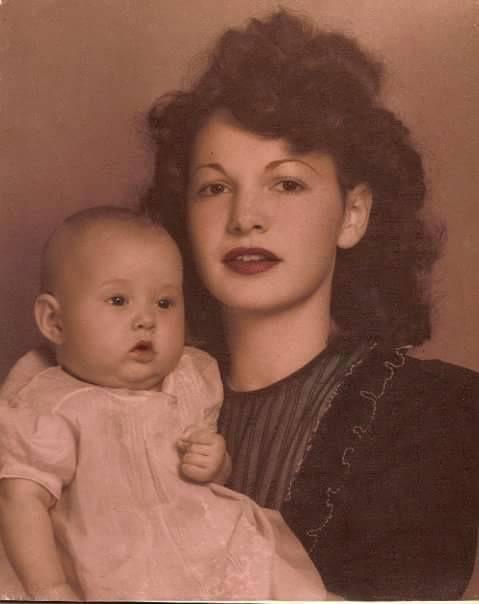
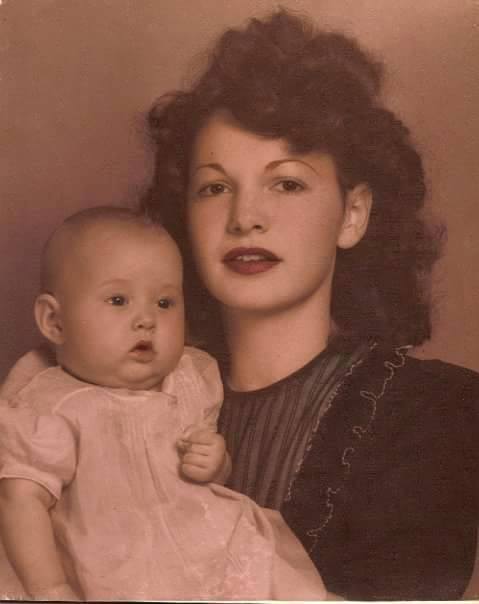
My mother, by the way, had deep auburn hair. That’s her, with my big sister, Roberta, in 1943. She was twenty-two, with ancestors from County Wicklow, on Ireland’s east coast.

One of the dearest friends of my life, Joe Loomis, died last fall. Joe was the kind of guy–you hear stories about this in him over and over again–who would drop anything and everything to help a friend.

Here’s an example. My Mom, the single most informative influence of my life, died when I was 17.  She took her own life, a pattern that runs in my family the way cancer does in others. Nobody knew how to handle my tragedy. Joe did. He simply drove up to our front door in a jeep, invited me to jump in, and drove me—rapidly–up the Huasna to his family’s Tar Springs Ranch.  The Loomises gave me a place, their home, where I could feel safe again.

Years later, Joe and I had lost touch, but it didn’t matter because I knew this great friend would be around nearby and we would have the luxury of time to renew our friendship.

And now he isn’t, and now we don’t.

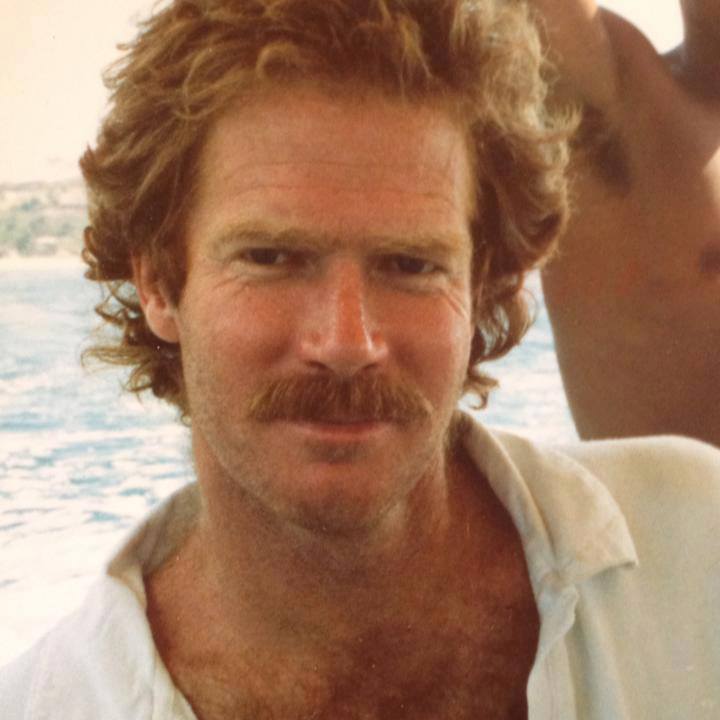
I made a color copy of a photograph of Joe– it radiates his kindness and good humor–and put it on the corner of my classroom desk.  This is his year. I will be the best teacher I can be, and it’s for him.

After school today, Kaylee and Maggie, two basketball players, were studying in my room–I work late, and I hate working alone, so having kids do their homework with me is a blessing.

We were talking, I think, about Irene again–-Irene with the red hair, because Maggie has red hair, too.  I was talking to Maggie and suddenly I thought of Joe.

“One of my best friends died this year,” I started.

The girls’ faces fell.  They started to stammer their “sorries.” These are good kids.

“No, you don’t understand.  Maggie, go look at the photo of my friend on the corner of my desk.”

She did.  The girls thought he looked nice.  I asked Maggie what color hair Joe had.  Red, she said.

I don’t think they completely got the point because I didn’t completely make it, and coherence is in short supply when you need it most.  They had to go to their game, and I think they believed they’d said or done something wrong, when in fact they’d given me a wonderful gift.  It took me a few hours to unwrap it.

The reason–and when you’re in your sixties, you begin to understand that life isn’t as accidental and random as you think it is–the reason I have more redheads this year than I’ve ever had in 29 years of teaching— is that Joe hasn’t left me at all.

My little brace of red-haired girls light me up inside every day they’re in my classroom, because they are themselves beautiful and, I now understand, because they connect me to the friend of a lifetime.  It’s no wonder I loved Joe—excuse me, love him–so very much.

February 2014


Joe Loomis.  1952-2013

Joe Loomis. 1952-2013

To the girl on the lawn at Cal

22 Tuesday Jul 2014

Posted by ag1970 in California history, Family history, Personal memoirs, Uncategorized

≈ Leave a comment

Patricia Keefe, Taft (CA) High School, about 1938

This year AVID students–kids whose family backgrounds do not include a college experience– invited me to go on the northern college tour, and I was honored. I had never visited Cal until a few years ago, with another AVID group.  I did go to Stanford. For a week. I won a teaching fellowship in 2004 and got to study the Great Depression and New Deal with David Kennedy, whose book on the subject won the Pulitzer Prize for History.  I tried not to look too adoringly at him while he taught us.  It was difficult, because not only was he brilliant, but he was a real human being– engaging, witty, and you could tell he loved the history of the time and the Americans who had lived it.

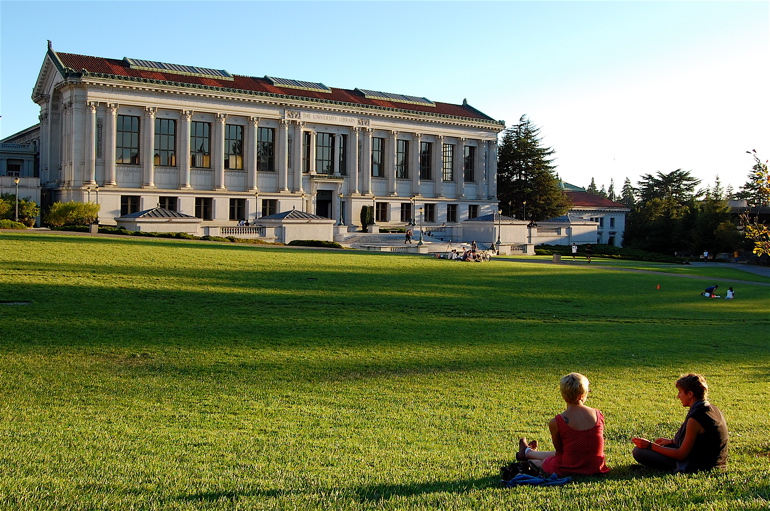
I instantly loved Stanford’s rival, Cal, when we visited, even though I had to fight the impulse, so common to my generation, to run off and occupy the administration building, Sproul Hall, and demand that we leave Vietnam.  It is so beautiful and I am convinced just walking around campus with the kids boosted my I.Q. a full 20 points, up to 100.

The other thing I thought, with a little sadness, was that my Mom–Patricia Margaret Keefe–should’ve been here.   She was desperately poor, a child of the Great Depression.  She was a human footnote in the immense body of Kennedy’s scholarship.  Her father, my Irish-American grandfather, deserted the family in the mid-1920s, so my grandmother worked long hours as a waitress in a Taft, California, coffee shop, where “extra sugar” meant a healthy dollop of bootleg Canadian whiskey in your coffee.  It meant my mother, as a little girl, spent a lot of time alone. Those years left their mark on her. We had a can cupboard longer than the cupboards in the back of my classroom, full of food we’d never eat, because the thought of being hungry must have terrified her. And so going to college, for the daughter of a waitress from an isolated outpost on the oil frontier, had been out of the question.

Earl Denton, the first superintendent of the Lucia Mar Unified School District in southern San Luis Obispo County, and a family friend, said that my mother, whose education ended with her graduation from Taft High School, was the most brilliant woman he had ever met.  I remember her devouring the works of the Jesuit theologian and anthropologist Pierre Teilhard de Chardin, who argued that evolution was no contradiction of faith; in fact, it was a divinely-inspired process.  She–-as I would years later with Das Kapital–-wrote almost as much in the margins of Teilhard’s books as he had written in the text.

When I was very little, we played school.  She even rang a hand bell when “recess” was over. It had been my grandmother’s—Dora Gregory, her mother-in-law, had been a schoolmarm in a one-room school in the Ozark foothills.  My first day of formal education was in first grade in a two-room school, Branch Elementary, in the Upper Arroyo Grande Valley.  I remember realizing, with a little shock of pleasure, that I could read the names of my classmates as our teacher, Mrs. Brown, wrote them on the blackboard.

Me and my kids. My Mom was part of every lesson I ever taught.

My mother and I hadn’t been “playing” school at all.  She just made it seem that way. Losing her, when I was 17, remains the central tragedy of my life.

So, many, many  years later, on that visit to Cal, while the AVID kids explored, I had the briefest and loveliest mental image of her, about 1938 or 1939-–blouse, pleated skirt, saddle shoes, bobby socks, with her books and notebook spread out on one of those lush, verdant lawns, studying between classes. My mother was a beautiful woman, but the most beautiful thing about her may have been her mind.

memorialglade

And I think that’s why I enjoy these particular trips, with this particular group of kids. It’s my way of repaying Mom. One of them might take her place, studying in the sunlight on the lawn at a place like Memorial Glade.  She would love that idea.

And she would love these kids because she would understand them completely.  Despite my ne’er-do-well grandfather, I believe completely that my mother’s love for learning and for the the written word had deep genetic and psychological roots in County Wicklow.

So she would love without hesitation the AVIDS who show the incredible desire, the hunger, to improve themselves that she’d had, who refuse to complain when things get tough, who extend themselves to help their classmates, because she believed that all of us, and all of our lives, are intricately and intimately connected, and that this connection requires us to be responsible to and accountable for each other.

The young person who understands these things is close to my mother’s heart.

My mother and my big sister, Roberta, 1943. Mom was twenty-two.

Grandma Gregory and the Pendergast Machine

13 Sunday Jul 2014

Posted by ag1970 in American History, Family history, Personal memoirs

≈ Leave a comment

a54d7d8b-bb6f-46a6-a7ca-8c950bda6166
Grandma Gregory: Schoolmarm, political operative, unparalleled fried chicken chef. One of her few blind spots was her hostility toward the liberality of the Southern Baptist Convention.

Somewhere we have a penciled thank-you note from John W. Davis, who is about as famous as whichever team finished third in the NL pennant race in 1939. (It was the Dodgers, 12 1/2 games out.) Davis was the Democratic nominee for President in 1924, and he did far worse than the 1939 Dodgers.

He was trounced by the less-than-effervescent Calvin Coolidge. Coolidge’s workdays at the White House were at most seven hours, punctuated by summer naps on the portico. Sadly, these had to be suspended when Coolidge began collecting dense crowds, silent tourists, watching gravely and debating among themselves in urgent whispers over whether the president had passed. After all, Harding had pulled that trick.

To be fair, the White House staff frequently had the same problem when the president was conscious.

Meanwhile, John W. Davis would go on to a distinguished career, arguing 150 cases before the Supreme Court. Today, Davis is noted mostly for being on the wrong side of every one of them. If it was racist, reactionary, or repressive, he defended it passionately, with the conviction and confidence of one who knows that God Almighty is his co-counsel. The crowning of his legal career—thank the aforementioned Lord–came when he lost Brown v. Board before the Warren Court. (Earl Warren, who turned out to be the biggest booby prize Ike had gotten since Field Marshal Montgomery, was the former Republican Governor of California, which goes to show how much times have changed–and Davis demonstrates the same for Democrats.)

But the Democrats could’ve run Sacco and Vanzetti (has a nice ring, doesn’t it, for a law partnership?) in 1924, and I think Grandma Gregory–the woman, hard to knock down in a windstorm, next my Grandpa John in the photo below–would’ve worked her heart out for them as long as they were Democrats. She got to the convention as a delegate that year–103 ballots in a sweltering New York City summer, the delegates trapped in a battle to the death inside Madison Square Garden–and this was only four years after women had gotten the vote. She would later become the Texas County, Missouri, Party Chairwoman and a powerful figure in downstate Missouri politics.

She is undoubtedly why, when I actually watched a national political convention for the first time, when I was 12–-and when they actually meant something– I was entranced. Barry Goldwater would eventually beat my guy, William Scranton, for the 1964 Republican nomination. Probably our favorite film, in my high school years, was The Graduate. I enjoyed the following year’s Democratic convention just as much, for the Democrats in 1968 had the same intense focus and sense of direction that Dustin Hoffman’s Benjamin had shown in the movie. None.

My grandfather was a graceful dancer, and at barn dances, he enjoyed dancing with pretty teenaged girls. My grandmother was less enthusiastic about the the whole concept.
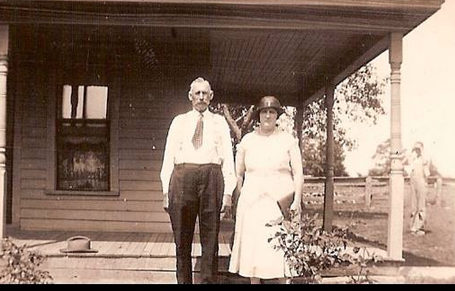
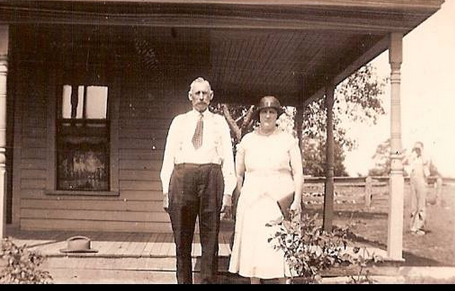
Dad’s parents, John and Dora Gregory. My grandfather was a graceful dancer, and at barn dances, he enjoyed dancing with pretty teenaged girls. My grandmother was less enthusiastic about the the whole concept. Dad, with a bandage on one to, stands at right. The farmhouse in Raymondville, Missouri, is still there today.

In Depression-era Missouri, before every election, my Dad remembered, a new car would pull up outside my Grandfather’s farmhouse and two men in three-piece suits (usually reserved for funerals, and even then for the Deceased) would deposit a bank-bag full of cash on Dora Gregory’s kitchen table. For them, it was but one more stop on a kind of purgatory circuit. That part of the state was thinly populated, so you had have a real passion for soybeans to make the drive enjoyable.

They were bagmen for the Kansas City Pendergast Machine, one of those old-timey operations that brought dead voters back to life, among other shenanigans.

Pendergast’s Kansas City was a kind of cultural hub for the Depression-era Midwest.  Louis Armstrong played here, for example, and a new variant of Barbecue found a home here, too.

Meanwhile, in Texas County in the 1930s,  the Civil War had not quite ended. When my father was 12 or 13, there was a Confederate veteran still alive in in Houston, the county seat. There also was one Union veteran in the same town. The two had not spoken since 1865.

FDR’s first term was past its midpoint when, on July 4, 1935, the county band was playing  the National Anthem. A frayed cartridge belt in the old Confederate’s mind finally snapped: he leaped on the old Yankee, and the two rolled around on the courthouse lawn, knocking over potato salads and tubs of sweet tea in their personal Antietam. When six young man finally pried the two apart, the old Confederate triumphantly held up the Yankee’s ear, which he’d removed with a Barlow knife.

Most of the people of Texas County were considerably calmer and much kinder, especially if you happened to be a horse, about which, like my Mom’s ancestors from County Wicklow, they were passionate.

Tom Pendergast had Texas County in the bag, because, come Election Day, my pre-teen Dad handed out fives to waiting voters, murmuring, “The Democratic Party thanks you,” over and over, like a priest at Eucharist, so the Democrats never lost Texas County. The bank bag on Grandma’s kitchen table assured that.

To be fair to the Machine, it distributed food, not just bribes, and people in the hills were hungry in the depths of the Depression. A young Dad also helped distribute food to the needy. Grapefruit stymied them. “We boiled it, Bob,” they told him apologetically, “an’ then we fried it, but it still tasted putrid.” (Dad, a supply officer in 1944 London, also gifted an English family he knew with a bag of oranges. They virtually adopted him: the British had not seen oranges since the fall of France in 1940. Citrus fruit seems to follow the course of my father’s life.)

Boss Pendergast also made the career of Harry Truman possible, which, in turn made me possible: Truman favored my grandfather’s blackberry wine on campaign swings downstate–he’d stop for a sip or seven– and that little talent of Grandpa Gregory’s paid off in World War II: Truman got Dad appointed to Officers’ Candidate School as a Quartermaster, and so he served much of the war defending London’s pubs from the Nazi Hordes, which saved me the inconvenience of having him get killed before I had the chance to be born.

After, the war, my Mom was an Eisenhower Republican, so my parents had lively political discussions. One of them doomed dessert, because the colander of fresh strawberries, washed for strawberry shortcake, wound up on my father’s head, upside-down. JFK’s nomination brought political harmony to the marriage: Dad voted for him because he was a Democrat; Mom because he was Irish Catholic.

I wish I could say I loved my Grandmother Gregory, but she was a steel-spined schoolmarm who didn’t tolerate foolishness, by which she meant Consciousness, and she used to whack us absently with her cane. We stole her eyeglasses in revenge. And, sadly, by the time I knew her, she was edging into dementia, and though she couldn’t locate her dentures, or her eyeglasses, she could remember, in vivid detail–you could almost smell charred flesh and sick-room alcohol–how every person in southern Missouri had died between the War Between the States and the 1939 Dodgers.

It didn’t take a lot to prompt a Grandma Gregory Death Story, and, looking back from the fullness of years, I now realize that some of them were humdingers.

My favorite was the neighbor who suddenly disappeared. The family and the authorities and happy coonhounds–they like to be kept busy, or they get saucy– looked for several days, to no avail. When one of the kids finally did find him, he was at the bottom of the family’s well, where he’d plummeted after a massive coronary, which makes you wonder if they ever thought of lemonade the same way again.

Grandma liked that one, too.

Oddly, these stories were poignant because they showed she was already living in the past; her connections to modernity would grow more and more fragile. But, as  a younger woman, she was shrewd, forceful, and I think had the same instinct, in a political sense, that leads orcas to crippled seals. I would not mess with that woman. And for that, and for her steel, I admire her and I am immensely proud to be her grandson. 

Dad kept the old ways alive, even in 1944 London.

Kentucky Gentle Man

13 Sunday Jul 2014

Posted by ag1970 in American History, Family history, Personal memoirs

≈ Leave a comment

Untitled2

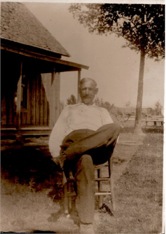
    My grandfather, John Smith Gregory, was born in Shelby County, Kentucky, in 1862. He was a father of eight, a farmer in south-central Missouri, a lumber estimator, outdoorsman, and a sipper of life, in that life included lovingly fermented batches of blackberry wine. Harry Truman was a fan of that wine. On campaign swings downstate, he made it a point to pay court to my grandmother, a local Democratic powerbroker with money ties to Truman’s patrons, the Kansas City Pendergast Machine, but after those formalities, the heart of the Senator’s visit would be a sip or four of John’s blackberry wine.

That wine may have made me possible. When my father–who was a kind of miraculous afterthought, the last of eight children, born in the vigor of my grandfather’s fifty-sixth year–went into the Army in World War II, he stood as good a chance as any other country boy of being vaporized by a German 88 shell somewhere in the dark canopy of the Ardennes. Instead he spent the War, as a Quartermaster officer, in a series of frontal assaults on London’s pubs, or, as he did one evening, bellowing seditious rebel songs– after splitting a bottle of Johnnie Walker Scotch with an Irish elevator operator he’d befriended–and this was thanks to Sen. Truman’s endorsement of his candidacy to Officers’ Candidate School at Camp Lee, Virginia.

(By the way, London Bobbies tried to arrest Dad and the elevator operator, who knew ALL the verses to “Wearin’ of the Green,” but he was a good elevator operator. Up to the fifth floor. Down to the third. Up to the fourth floor. Up to the sixth. Down to the second. After sprinting up the hotel staircase and clumping down it, the exhausted Bobbies gave up.)

This is the song they were singing, as performed, logically, by the Orthodox Celts. They’re from Serbia.

Wearin’ of the Green

Since my family’s forebears were Virginians, teaching dance had been central to the way they socialized their children. My family must have raised their children that way from the days they’d emigrated, in the 1690s, from the dismal Midlands of England to the banks of the James River, so Grandfather’s most formidable talent may have been his dancing. (On the other hand, the Gregorys had no gift for real estate. They sold Mount Vernon to the Washingtons.)

So his Virginia roots meant that John Gregory had become, by reputation, a kind of Ozarkian Astaire and every girl who had the chance to be his Ginger Rogers would have a moment on the dance floor with him where she would realize, with a sudden pang of delight, that she was gliding, as if the sawdust-strewn floor had become polished glass.

My grandmother was not amused by the line of pretty teenagers who shyly sought a place on Mr. Gregory’s dance card. She suspected, too, and I’ll bet she was right, that those girls liked also his twinkly eyes and the soft smile beneath his silky white mustaches. My Grandmother was not given to smiling. She had a temper and, with it, a strong and wide body: she was a hard woman to knock down in a windstorm.

My grandfather and grandmother. And that’s my Dad. The house still stands outside Raymondville, Missouri.

Years later, on her visits to us in Arroyo Grande–visits we regarded with as much enthusiasm as an Irish monastery might muster for a Viking raid–she’d absently whack us with her cane, and she had a forehand that would’ve shamed Rafael Nadal. She had been a schoolmarm and we think it was PTSD, and where veterans might see phantom Vietcong, Grandma saw farm boys eighteen hands high spitting streams of tobacco juice at recess. Something snapped inside her then and set her to whacking the nearest target of opportunity.

We hid her glasses, or, if that particular whack had an extra sting, her dentures, in revenge, but gave them back because she otherwise tended to describe, in graphic clinical detail, how every person in Texas County, Missouri had died between the end of the War Between the States and the Eisenhower Administration. Her grandfather, by the way, had been a Confederate brigadier general of modest accomplishment and minimal talent–I was named for him, and for his son, a staff officer killed in action, thanks to a lucky but devastating Yankee artillery shot, in Arkansas–so that branch of the family saw themselves as gentry. They were insufferable. Despite that, John Gregory indulged my grandmother; he was a tolerant man.

He had a genius for math. My Dad inherited this gift; he became a gifted accountant and, for almost twenty years, the comptroller for Madonna Construction. I, as my geometry teacher at Arroyo Grande High School, Mrs. Otsuji, noted ruefully, had no talent in that direction, nor in any plane. But lumber companies sought out Grandfather because he could eye a stand of pine and calculate, with eerie precision, how many board-feet it would yield.

He was a competent but unorthodox farmer: in the Ozark foothills any money there was to be made–and there wasn’t much–was to be made in tobacco and corn and hogs. John accepted that reality but his real passion was an anomaly. Cultivating ginseng was to John Gregory was what stamp collecting was to Franklin Roosevelt; given my grandmother’s personality, it was his outlet—he was not a talkative man, but I can imagine him, almost poetic, winning over dubious neighbors at the local grocer’s about the miraculous attributes of ginseng. He won them, too. In a little shirtpocket notebook I still have he has meticulously recorded his sales figures: J.K. Davis, $250; John Helsey, $50; W.T. Eliot, $62.50.

But his hallmark, the essence of his character, was his kindness. My father remembered this most of all: during the Depression, there’d be an occasional knock on the farmhouse door. It’d be a jobless man on the move.

–May I sleep the night in your barn, sir?
–Young man, you may not. Grandfather would eye the stranger coldly, for dramatic effect.
–However, we DO have a spare bed. How about some bacon and eggs?

It was these visits that so impressed my own father with the cruelty of the Great Depression. These strangers, who wolfed down my grandmother’s meals (beneath her stony exterior there was a deep humanity she didn’t like to let out much), were not “bums:” they were college students, engineers, veterans of the Great War, and one, a violinist, paid for his supper and bed with a solo concert: Bach and Boccherini found a rapt audience in a little farmhouse on the Ozark Plateau, in a kitchen warmed by a wood stove and lit by kerosene lamps instead of footlights.

When they hung a ne’er-do-well –the local bully–at the Missouri State Penitentiary, the barbershop crowd bet that not even John Gregory, in town for his every-other-day shave, could find anything nice to say about him. There was a pause, but not a long one, underneath the hot towels: ”The man,” he said, “had a beautiful set of teeth.”

My grandfather was killed by a driver from Wichita Falls, Texas. He was deaf in the direction of the Texan’s Ford roadster, traveling fast; Grandma had called Dad back to the house because he was barefoot and no son of hers–what would the general think?– was going to make a social call to Mr. Dixon’s looking like a hillbilly. He never forgave her. Had my father been crossing the road with his father, he would’ve heard the Ford’s approach.

The impact broke both of John’s legs. But even at seventy, he had an athlete’s body and he fought hard to live in a Catholic hospital that must have caused my Church of Christ grandmother intense anxiety, looking out for Grandfather while listening intently for any Papist heresy, like the click of Rosary beads.

As a teenager, Grandfather had accepted a dare from two friends to swim across the Red River in flood, and John was the only survivor. Not this time: the river was too strong and there was nothing to do but to watch him, as graceful then as he’d ever been waltzing with a pretty girl, when he finally made the choice to let the current carry him away.

After they drove him back home from Springfield, there was a big funeral. I still have the yellowed obituary. Despite the fact that it was the darkest year of the Great Depression–1933–there would have been big honey-cured baked hams and fried chicken and candied yams and mashed potatoes smooth as clouds and a battery of salads, casseroles, and pies, dusted with sugar,  from every farmhouse in a twenty-mile radius.

Both my father and his sister, my Aunt Bill, talked about him always in Homeric terms. He was their father, and he was their hero. They found it hard to let him go, so they never did. That turned out to be a good thing, for me. It’s good to love a man you never met.

My Boy Scout Inferiority Complex

10 Thursday Jul 2014

Posted by ag1970 in Personal memoirs, Uncategorized

≈ Leave a comment

I am having a lively online conversation with a man whom I really like and who continues to impress me, from an old-time A.G. family, Richard Waller. I also love his wife, Laurie, who gives Elizabeth and me massages so relaxing that they would melt Senate Minority Leader Mitch McConnell’s face.

Wait. Too late.

Anyway, we discovered we were in the Boy Scouts about the same time.

But Richard was in the Smart Guys’ Troop—filled to the brim with Dentons—Troop 29. They built linear accelerators and would occasionally launch hamsters into earth orbit and recover them off the Pismo pier.  The Rockwell painting above shows the Boys of 29 in the moments before they found Amelia Earhart’s Lockheed Electra. It was in Oceano, buried in the dunes.  The Rockwell painting, consistent with the modesty of the times, omits their faithful guide, Acorn, a Dunite and Orthodox Nudist.

Once, at a Camporal, Troop 29 brewed a new class of antibiotics over the campfire when the rest of us were singing “The Chicken Song” (“They’re layin’ eggs now/Just like they used ta/Ever since that roos-tah/Came into our yarrrrrd….”) and telling lame ghost stories about how the White Lady of the Mesa ate, say, Kevin McNamara’s uncle.

I may be mistaken, but I think I remember their Kodiak Patrol discovering the Northwest Passage during an orienteering competition.

I was in Troop 26, the troop that had profound difficulty with bodily functions. Hiking, fire-building, and tent-pitching were not problems for us. Finding the latrine was our Stalingrad: we took casualties. On one campout, one of us did #2 in a large and unusually virulent clump of poison oak, with grievous and medically spectacular results. In a separate incident, we became known as “Troop 26, The Troop Where the Guy Gets Lost in the Dark at 2 A.M. and Pees on the Side of Your Pup Tent Troop”

They did not then give merit badges for this achievement—or for pup tent irrigation, now that I think about it—but I smoked my first Marlboro with fellow Troop 26 member Julian Brownlee in the men’s room of the St. Patrick’s Parish Hall, when it was on Branch St. Today, that building is the St. Patrick’s Parish Hall on Fair Oaks Avenue.

The infamous Parish Hall.

The infamous Parish Hall.

There should be a little bronze plaque in that men’s room: TENDERFOOT SCOUT JIM GREGORY SMOKED HIS FIRST CIGARETTE HERE AND TURNED EVERY SHADE OF GREEN EVER INVENTED BY THE FRENCH IMPRESSIONIST MOVEMENT.

I was a fine scout until we got into knots. Knots undid my Boy Scout career. I just could not figure them out, which means I would have been frequently flogged, for knot indolence, in Lord Nelson’s navy, but was merely embarrassed back then, in the pre-Haight 1960s. I was not embarrassed for long, for I discovered girls soon thereafter and my Boy Scout days were gone forever. I had sideburns to grow.

Not even close, Monet.

Not even close, Monet.

← Older posts
Newer posts →

Subscribe

  • Entries (RSS)
  • Comments (RSS)

Archives

  • January 2026
  • December 2025
  • November 2025
  • October 2025
  • September 2025
  • August 2025
  • July 2025
  • June 2025
  • May 2025
  • April 2025
  • March 2025
  • February 2025
  • January 2025
  • December 2024
  • November 2024
  • October 2024
  • September 2024
  • August 2024
  • July 2024
  • June 2024
  • May 2024
  • April 2024
  • March 2024
  • February 2024
  • January 2024
  • December 2023
  • November 2023
  • October 2023
  • September 2023
  • August 2023
  • July 2023
  • June 2023
  • May 2023
  • April 2023
  • March 2023
  • February 2023
  • January 2023
  • December 2022
  • November 2022
  • October 2022
  • September 2022
  • August 2022
  • May 2022
  • April 2022
  • March 2022
  • February 2022
  • January 2022
  • December 2021
  • November 2021
  • October 2021
  • September 2021
  • August 2021
  • July 2021
  • June 2021
  • April 2021
  • March 2021
  • February 2021
  • January 2021
  • December 2020
  • November 2020
  • August 2020
  • July 2020
  • June 2020
  • May 2020
  • April 2020
  • January 2020
  • December 2019
  • November 2019
  • October 2019
  • September 2019
  • August 2019
  • May 2019
  • April 2019
  • March 2019
  • February 2019
  • January 2019
  • December 2018
  • November 2018
  • October 2018
  • September 2018
  • July 2018
  • June 2018
  • May 2018
  • April 2018
  • March 2018
  • February 2018
  • January 2018
  • December 2017
  • November 2017
  • October 2017
  • April 2017
  • March 2017
  • December 2016
  • November 2016
  • October 2016
  • September 2016
  • August 2016
  • July 2016
  • June 2016
  • April 2016
  • March 2016
  • February 2016
  • January 2016
  • December 2015
  • November 2015
  • October 2015
  • September 2015
  • August 2015
  • July 2015
  • June 2015
  • May 2015
  • April 2015
  • March 2015
  • February 2015
  • January 2015
  • December 2014
  • November 2014
  • September 2014
  • August 2014
  • July 2014

Categories

  • American History
  • Arroyo Grande
  • California history
  • Family history
  • Film and Popular Culture
  • History
  • News
  • Personal memoirs
  • Teaching
  • The Great Depression
  • trump
  • Uncategorized
  • World War II
  • Writing

Meta

  • Create account
  • Log in

Blog at WordPress.com.

  • Subscribe Subscribed
    • A Work in Progress
    • Join 68 other subscribers
    • Already have a WordPress.com account? Log in now.
    • A Work in Progress
    • Subscribe Subscribed
    • Sign up
    • Log in
    • Report this content
    • View site in Reader
    • Manage subscriptions
    • Collapse this bar
 

Loading Comments...