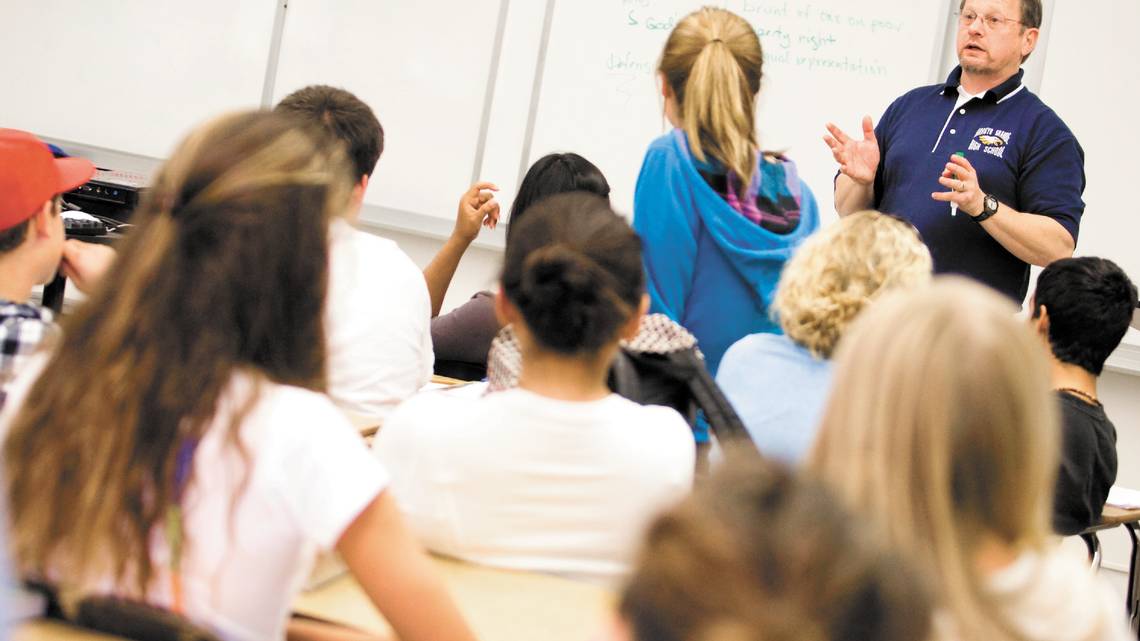
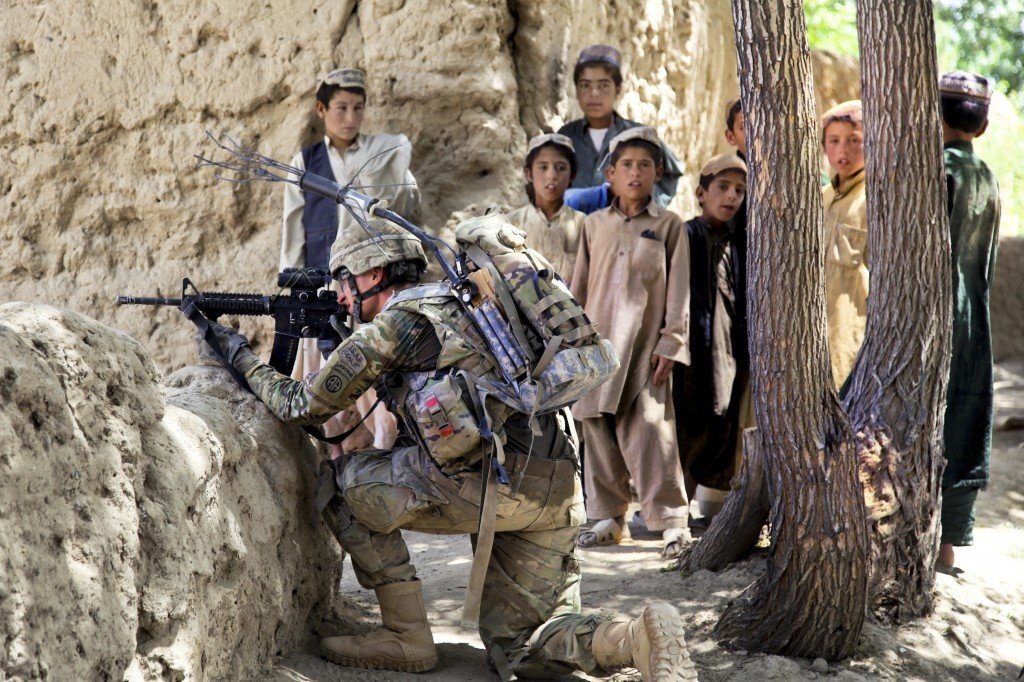
Above: French Senegalese soldiers, World War I; me teaching my “troops” ninety years later.
Forgive me for going all History Teacher on you.
May 22, tomorrow’s date, in History:
German forces launch a counterattack during the months-long Battle of Verdun, aimed at recapturing Fort Douamont, a strongpoint in the French defenses.
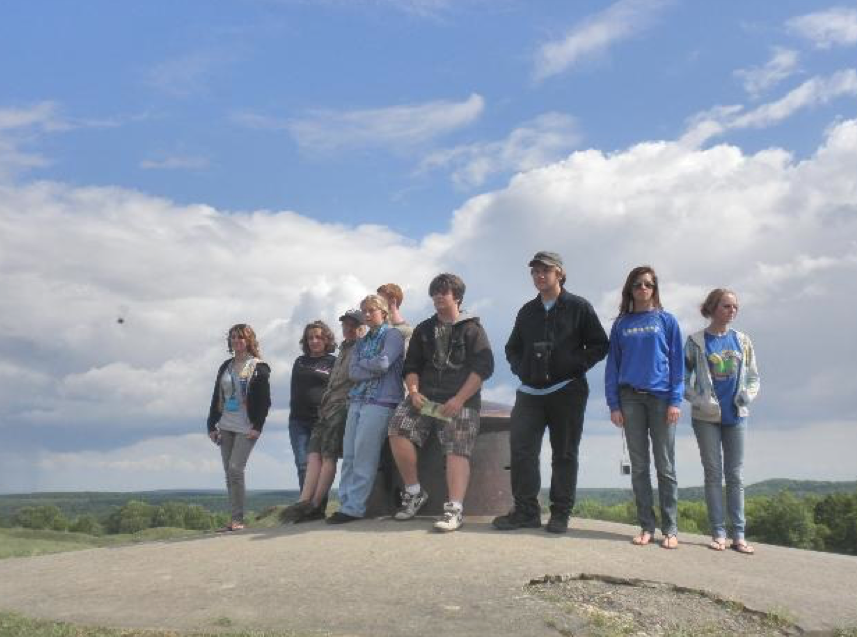
In 2010, my teaching partner, Amber Derbidge, and I took a group of AGHS students to Northern France and the trip included a visit to the Verdun battlefield, including Fort Douaumont.
Over 300,000 French and German soldiers were killed in this battle. 100,000 were killed or wounded in the struggle for this fort.
We were touring the battlefield museum when a French docent took me aside.
“Are these YOUR students?” she hissed. My crests fell.
“Yes,” I admitted.
“They are so RESPECTFUL!”
I once said that the year I quit getting angry over teaching the First World War was the year I should quit teaching.
One year, I asked one of my students what her favorite unit was in AP European History.
Her answer was almost immediate.
“The First World War,” she said.
I was flabbergasted. WHY?
“Because now I understand the value of human life.”
This is why, as quaint and impractical as the courses may seem, we still teach history and literature to high school students.
Britt did Vargas Girl poses–her way of mocking cancer— during her stays at Children’s Hospital in Duarte. This one was taken just before her seventh round of chemotherapy.
There is so much to say about Britt, whose life was so vast.
But there’s one thing that I need to say:
Britt and I are total nerds, and it is Star Trek that has makes this so.
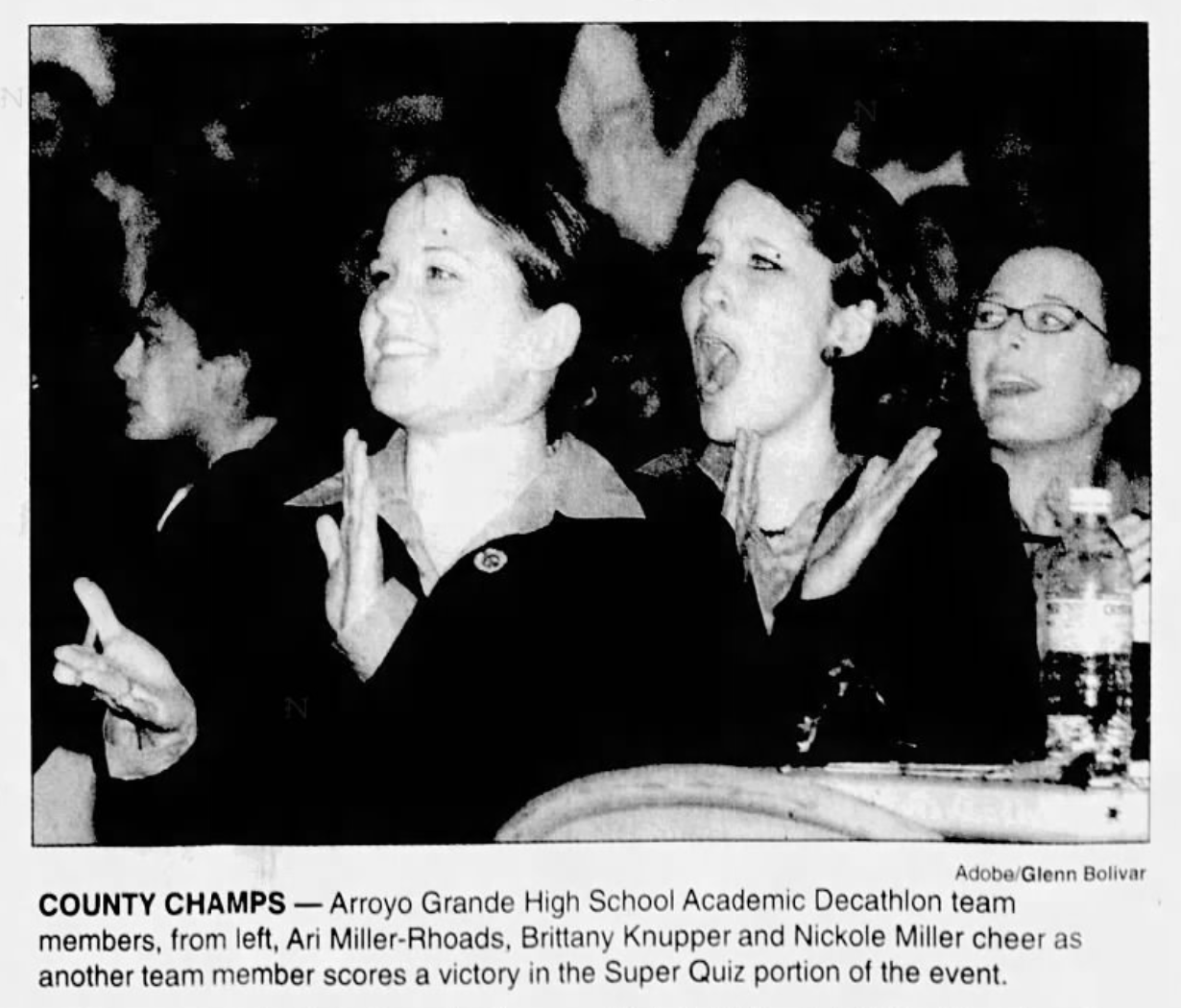
Before we knew that, she was my student in AP European History at Arroyo Grande High School. That’s when I realized, in reading her essays, that she was gifted beyond measure.
I was adamant about writing clear essays. It brought out my Napoleonic Complex, and maybe Mussolini, too.
When you have seventy history essays to grade, you play a trick on yourself. You grade in a nice coffeehouse with a latte nearby. And you bunch essays in groups of five so you can take a moment for a break at the end of each group.
On your break, you take a sip of your latte and glare poisonously at the other people in the coffeehouse because they are having fun.
And at the bottom of each group of five essays you insert one that you know will be good. They are the correctives to the bloopers you can find in student essays, like the classic Abraham Lincoln was born in a log cabin he built with his own hands.
Britt’s essays were always at the bottom.
She sat in the first desk in the third row from the bank of windows in Room 306 at AGHS. She was quiet. When she asked a question, it would be a zinger, albeit one marked by guileless curiosity. The question revealed, too, that her mind traveled at warp speed in galaxies far beyond ours.
But a Britt question could take me in a different direction, far beyond my lecture notes. Suddenly, she reminded me, it was story time. This was why I became a history teacher.
So we might leave London in 1666 to visit London in the summer of 1944. There, on a barstool in his favorite pub, was Lt. Dad, enjoying a pint of Watney’s Red Barrel.
There was an air raid going on.
In between the wails of the sirens, you might hear the ugly growling cough of a V-1 flying bomb high above Regent’s Park. But my father refused to take shelter. It was a matter of principle. He refused to abandon his pint to Nazi Terror.
And so he won an honorary commendation for Meritorious Drinking Under Fire.
I think Britt liked that story.
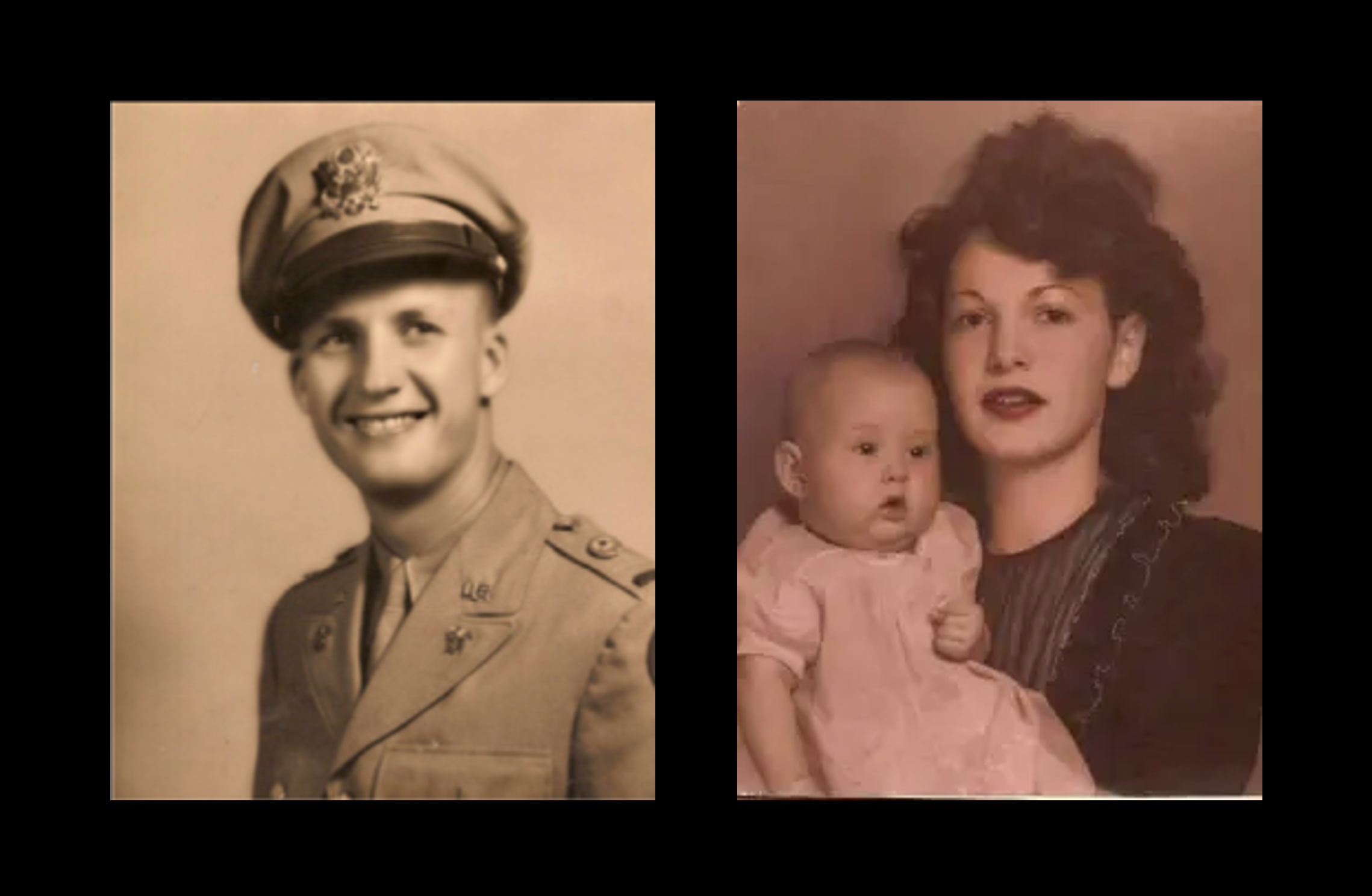
Here are Lt. Dad, 1944 and Mom with my big sister, Roberta, 1943.
Her fifth-grade teacher, Mary Hayes, told my wife Elizabeth that she’d had the identical experience. Britt was quiet in class and then she’d ask a question that left Mrs. Hayes, just like me, gobsmacked. Both of us adored her.
Years after high school, Britt and I found each other on Facebook, my preferred method for procrastinating. That’s when I began to follow her writing career. I found out, too, that we were brother and sister Trekkies.
The breadth of Britt’s writing, from political commentary to gender issues to the arts, was vast. She was insightful, funny, and, when it was deserved, she could use ink to draw blood.
She had discovered her voice. Rather, she had revealed the voice that had been there all along.
And she was wicked funny.
–She described the barren planet where Luke Skywalker grew up as “the Modesto of the Star Wars Universe.”
–Excited by the prospect of a film that would reunite the original cast of Star Trek: The Next Generation, she wrote “That’s right, everyone. Set your phasers to ‘cry’.”
–She wrote about Kyrsten Sinema, “our manic-pixie senator from Arizona,” and archly compared her to Veruca Salt, the brat who disappears down a garbage chute in Willy Wonka.
She interviewed actors and writers and producers in the Star Trek franchise we both loved. So we remember together Tribbles, Romulan Ale, Jefferies Tubes, McCoy snapping “I’m a doctor, dammit, not a coal miner!” and Picard snapping “Shut up, Wesley!”
We were both big fans of Captain Janeway from the series Voyager.
Janeway adored Irish Setters. Elizabeth and I have had three Setters grace our lives.
We admired her love of coffee. When Voyager’s food replicator broke down, Janeway, in her withdrawals, wanted to strangle the ship’s cook, who’d offered a kind of interstellar Sanka. The cook was irritating, so we empathized with Janeway.
Britt did a piece on the Star Trek Series and ranked them from worst to best. “Best” Honors, according to Britt, went to Deep Space Nine, about a space station that was kind of a 24th Century Dodge City,with Avery Brooks’s Benjamin Sisko and Terry Farrell’s Jadzia Dax.
Dax and Sisco.
What stunned me is that this was my favorite, too, but I never had the courage to come out and say it. Britt did.
But it was Gates McFadden, Dr. Beverly Crusher in The Next Generation, who sent Britt a video message of comfort that comforted me, too.
Gates McFadden, as Dr. Beverly Crusher, in the Captain’s Chair, where she had every right to be.
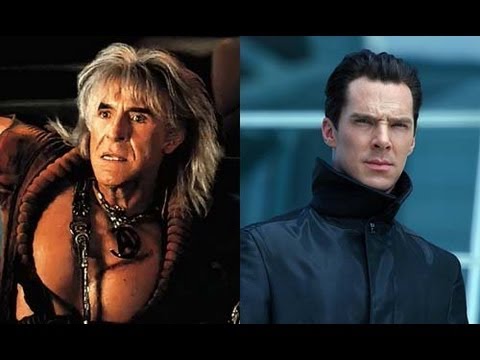
I’ve taken comfort, too, in two Star Trek films. In The Wrath of Khan, memorable for Ricardo Montalban’s impressive pectoral muscles, Spock saves the Enterprise.
He does so by jump-starting the warp drive, which involves inserting himself into the matter-anti-matter chamber. And so he dies.
They shoot Spock out into space in what looks like a jumbo Prozac capsule.
And, of course, in the next film, The Search for Spock, he comes back, all of him, including the arched eyebrow.
Elizabeth and I were watching 2013’s Star Trek: Descent into Darkness, in which Khan is played by Benedict Cumberbatch, who looks and sounds nothing like Ricardo Montalban.
However, since Cumberbatch was once spotted country-western line-dancing at the Madonna Inn, near where both Britt and I grew up, I will let this go.
Two Khans
This time, to save Enterprise, it’s Chris Pine’s Kirk who likewise enters the matter-anti-matter chamber, which in my mind resembles an immense and lethal lava lamp. And so he dies.
It’s Bones, of course, who saves him. It’s complicated, but essentially he revives Kirk with the help of—wait for it— a tribble.
Shatner’s Captain Kirk awash in tribbles, who are both charming–they purr–and reproductively alarming.
Coming back to life after death isn’t confined to altar boxes or the toolboxes of science fiction writers.
Five years ago, I lost another student, Dawn, to cancer. In my heart, she is Britt’s twin. They share the same audacity.
Both grew up in small towns, but both made careers in L.A., Dawn in film casting and Britt in writing about film.
Dawn Marie Deibert, 1969-2020
I heard this at Dawn’s memorial. This is a true story.
Just before she died, a visitor wheeled Dawn into the garden. It was a sunny day and there were two dragonflies flitting among the flowers. Her friend pointed them out, but Dawn had seen them first.
They were her father and grandmother, she explained, come to be with her.
A few days later, when it was over, the visitor left Dawn’s darkened sickroom and walked into the sunlit garden.
Just above her shoulder, there was a dragonfly.
“Hello, Dawn,” the visitor whispered.
Hello, Britt. Your life was vast. So is our love for you.
Britt and her beloved husband Devin, as imagined by artist Jessie Ledina
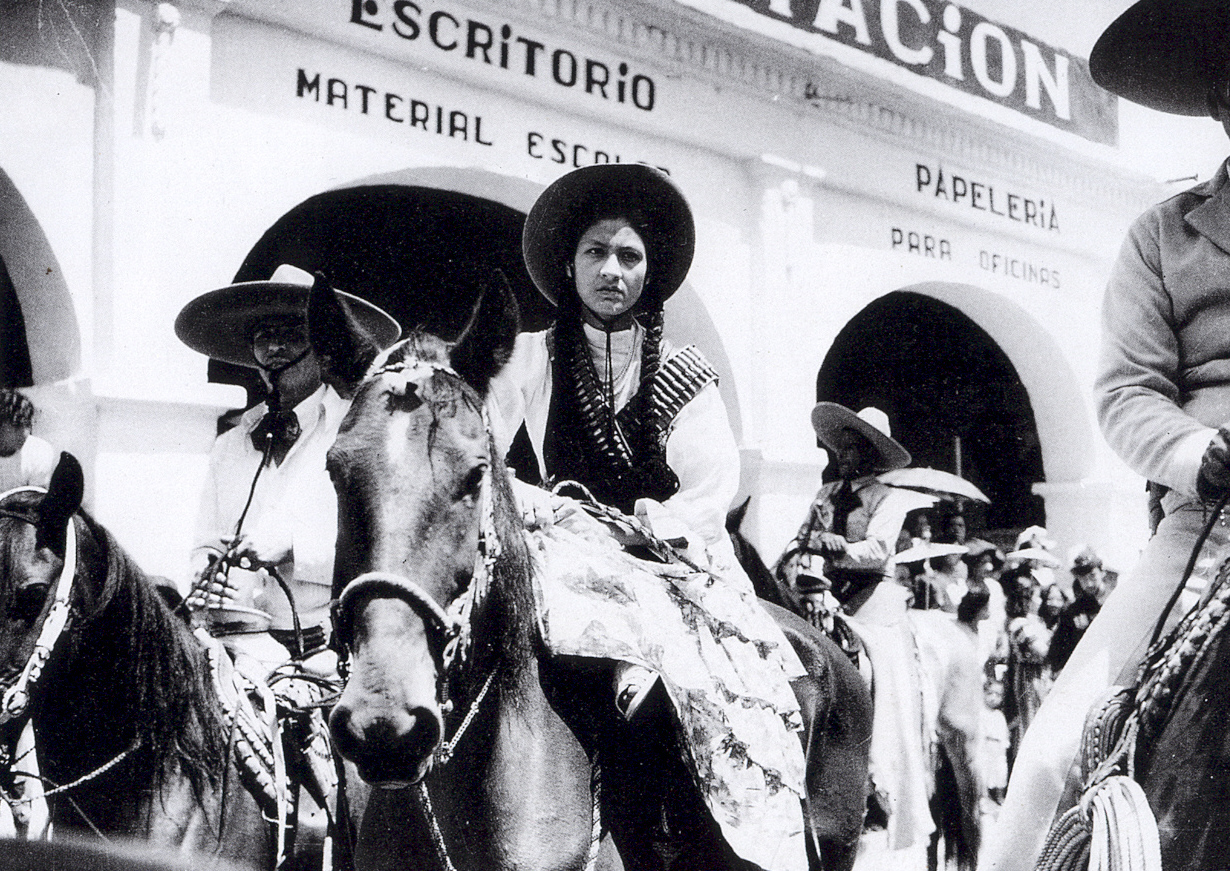
La Soldadera: A remarkable photograph from the Mexican Revolution (1910-1920)
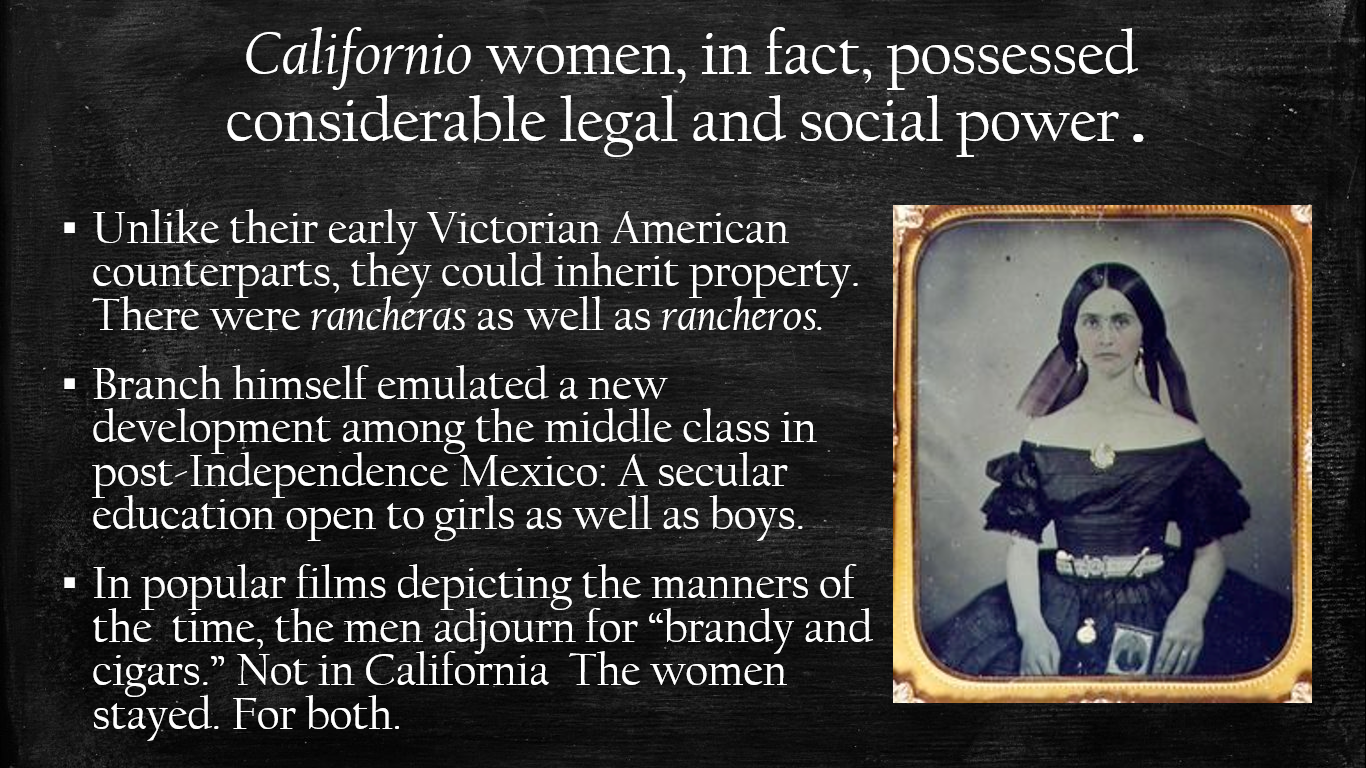
In researching the Arroyo Grande history class I’m to teach for Cuesta, I was pleasantly surprised to learn that Californio (i.e., Mexican) women enjoyed rights their Anglo-American counterparts didn’t.
Especially property rights. At least one of the women hanged in 1692 Salem was an unmarried property owner. She was a threat.
It reminded me, too, of how passionate I could get about teaching women’s history in my AP Euro classes. It was a topic I taught with sharp edges. Sometimes, anger can motivate a teacher. It did me.
Victorian and Edwardian English and American women enjoyed the same rights as “children, the feeble-minded and the legally insane.”
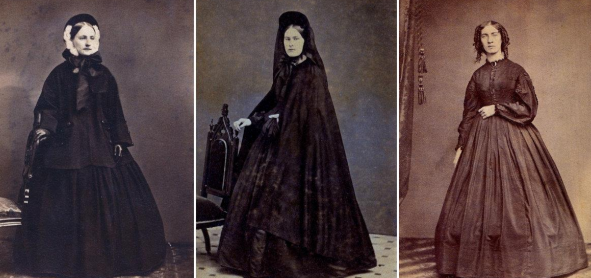
Victorian mourning dress
Stages of mourning for Victorian women
In nineteenth-century England, a widow was expected to remain in mourning for over two years. The rules were slightly less rigid for American women. These stages of mourning were observed by women.
Full mourning, a period of a year and one day, was represented with dull black clothing without ornament. The most recognizable portion of this stage was the weeping veil of black crepe.* If a women had no means of income and small children to support, marriage was allowed after this period. There are cases of women returning to black clothing on the day after marrying again.
Second mourning, a period of nine months, allowed for minor ornamentation by implementing fabric trim and mourning jewelry. The main dress was still made from a lusterless cloth. The veil was lifted and worn back over the head. Elderly widows frequently remained in mourning for the rest of their lives.
*Tragically, crepe is highly flammable. Middle-class Victorian homes were lit by gas jets.
Half mourning lasted from three to six months and was represented by more elaborate fabrics used as trim. Gradually easing back into color was expected coming out of half mourning,
And, if they were widows, they had a distressing tendency to catch on fire.
Meanwhile, women in Mexican California lit up cigars.
That did not last. The Americans came.
Thank goodness, a few generations later, the safety bicycle–equipped with drive chains and coaster brakes– came, too. Women began to wheel toward equity.
But women’s bicycle clubs, on their Saturday jaunts in the country, normally were accompanied by male outriders. Their job was to take the hits from the rocks being thrown at the women. Ministers thundered against the Satanic influence of bicycles from the pulpit. No wonder. Bicycles made the whalebone corset obsolete. Bicycles meant freedom–whalebone corsets and misogynistic ministers meant something else altogether.
A little while later, a powerful suffragist movement, one, in America, that had earlier coexisted with (but was subordinated to) abolitionism began to emerge.
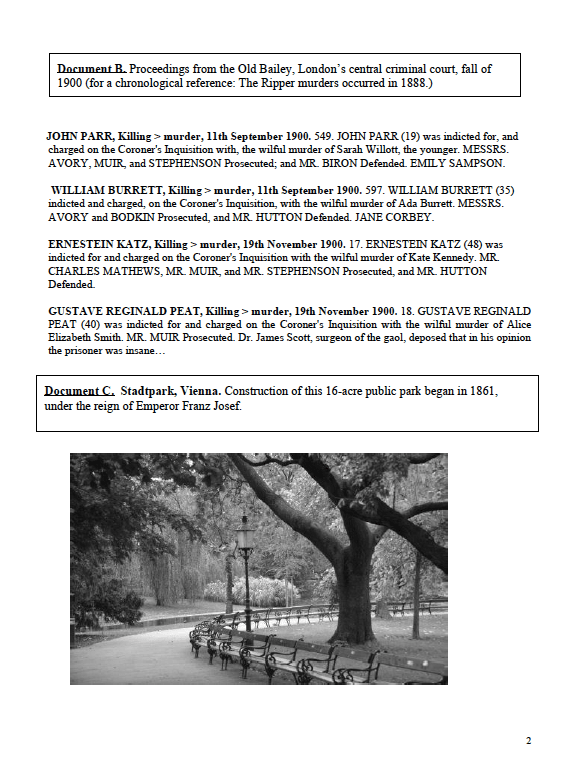
So did the temperance movement. We’ve reduced temperance to cartoon Carrie Nations busting barroom mirrors, but the movement was a second forum for feminism. This was because alcohol was a major factor in domestic homicides, like that of Nancy Sykes in Oliver Twist. The dockets of London’s Old Bailey are dense with the murders of hundreds of women like Nancy.
Those records almost reduce the 1888 Ripper murders to a footnote.
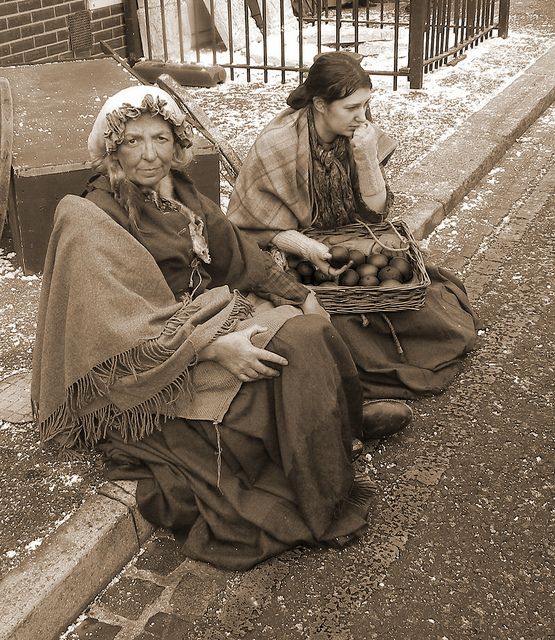
Street vendors, Victorian London. By now women had been pushed out of the factory work that typified their place in the early Industrial Revolution.
It was suffragism that gave fin de siècle feminism its focus. Women fought with mass demonstrations and speeches and petitions and parades.
They also bombed buildings, threw bricks through windows and set fires.
When they were jailed, they went on hunger strikes. Matrons held their mouths open with metal hinges while doctors threaded a hose filled with something like cream of wheat down their throats.
This was, of course, rape.
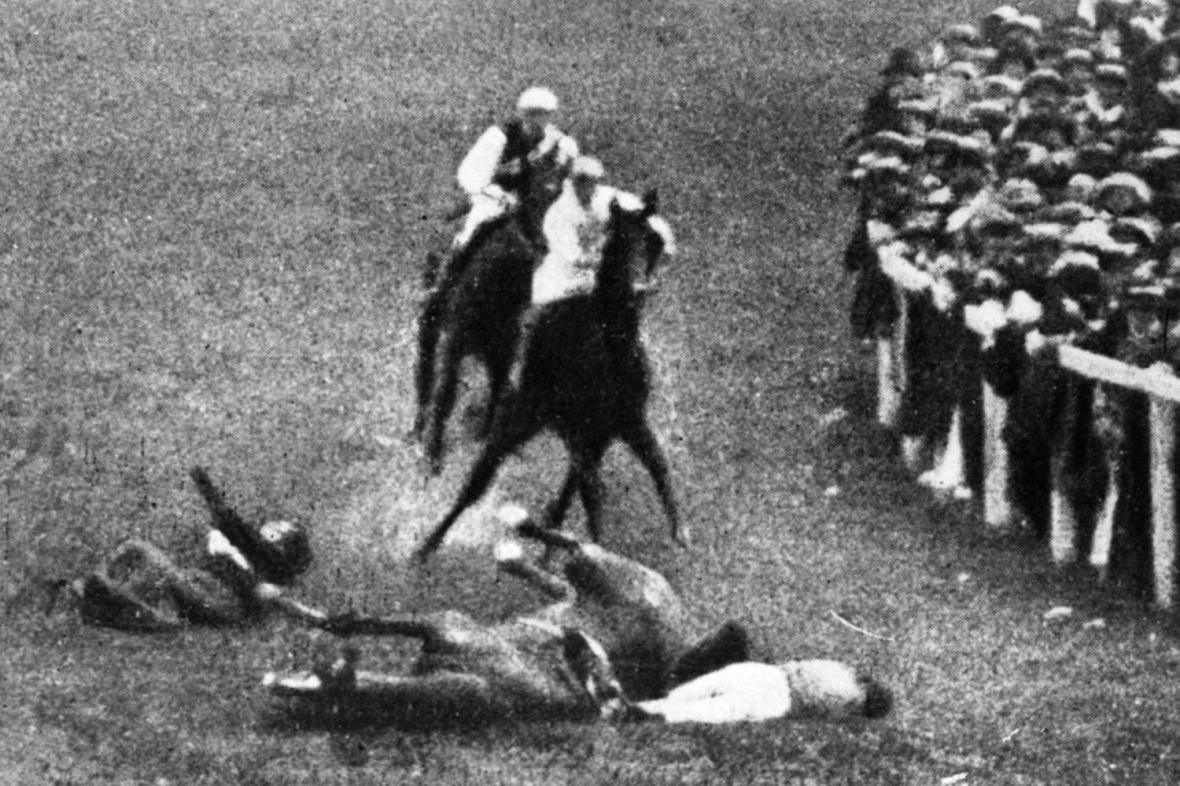
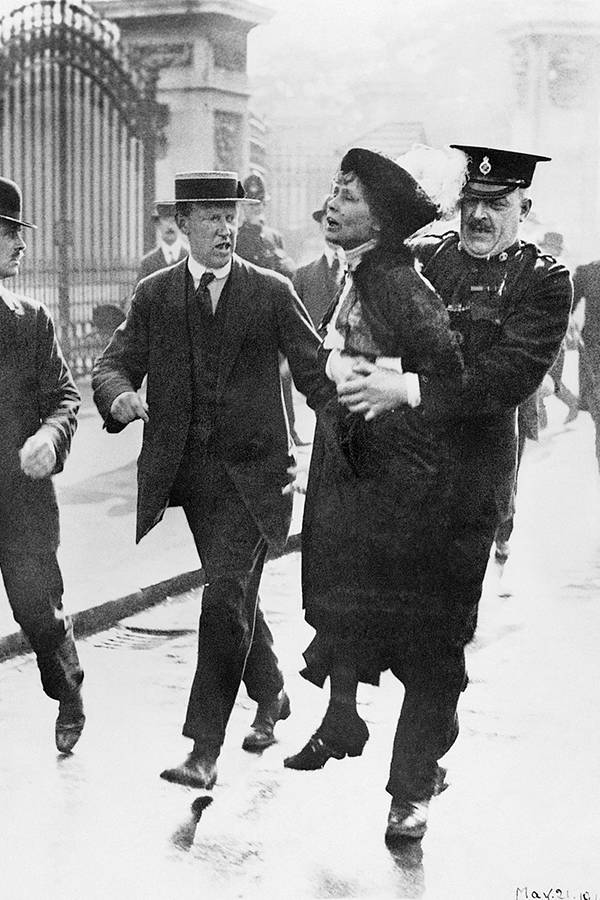
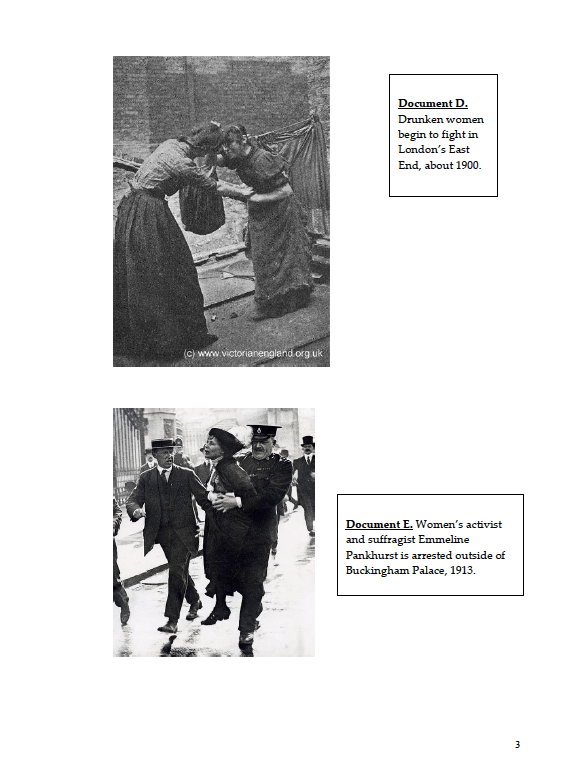
The death of Emily Davison (at left), 1913. Emmeline Pankhurst arrested (below).
English suffragist Emily Davison threw herself under King George V’s horse at the 1913 Derby to demonstrate how serious women were about the right to vote. The herky-jerky film that survives is still horrific.
A few more deaths nudged women’s rights a few more steps. Women–las soldaderas–fought alongside men in the Mexican Revolution. Ninety women fought in Dublin during the Easter Rising of 1916.
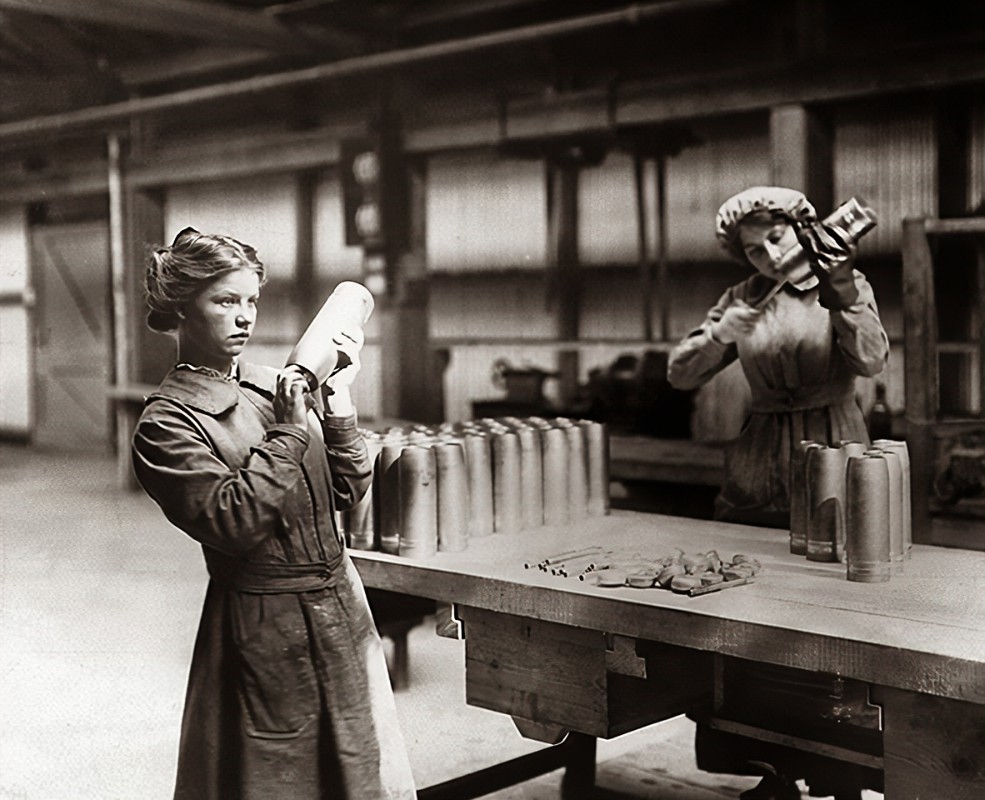
But the great turning point came with the Great War, when young women were called on to supply labor for the vast armaments industry that trench warfare required.
Some were blown to shreds in munitions factories. Others died far more slowly, from TNT poisoning, which turned their hair bright red and their skin yellow.
They were called “canaries.”
And then they got the right to vote.
Older historians, forty years ago, in a discipline still dominated by men, dismissed the very notion of women’s history.
Thankfully, nearly all of them are dead, too.
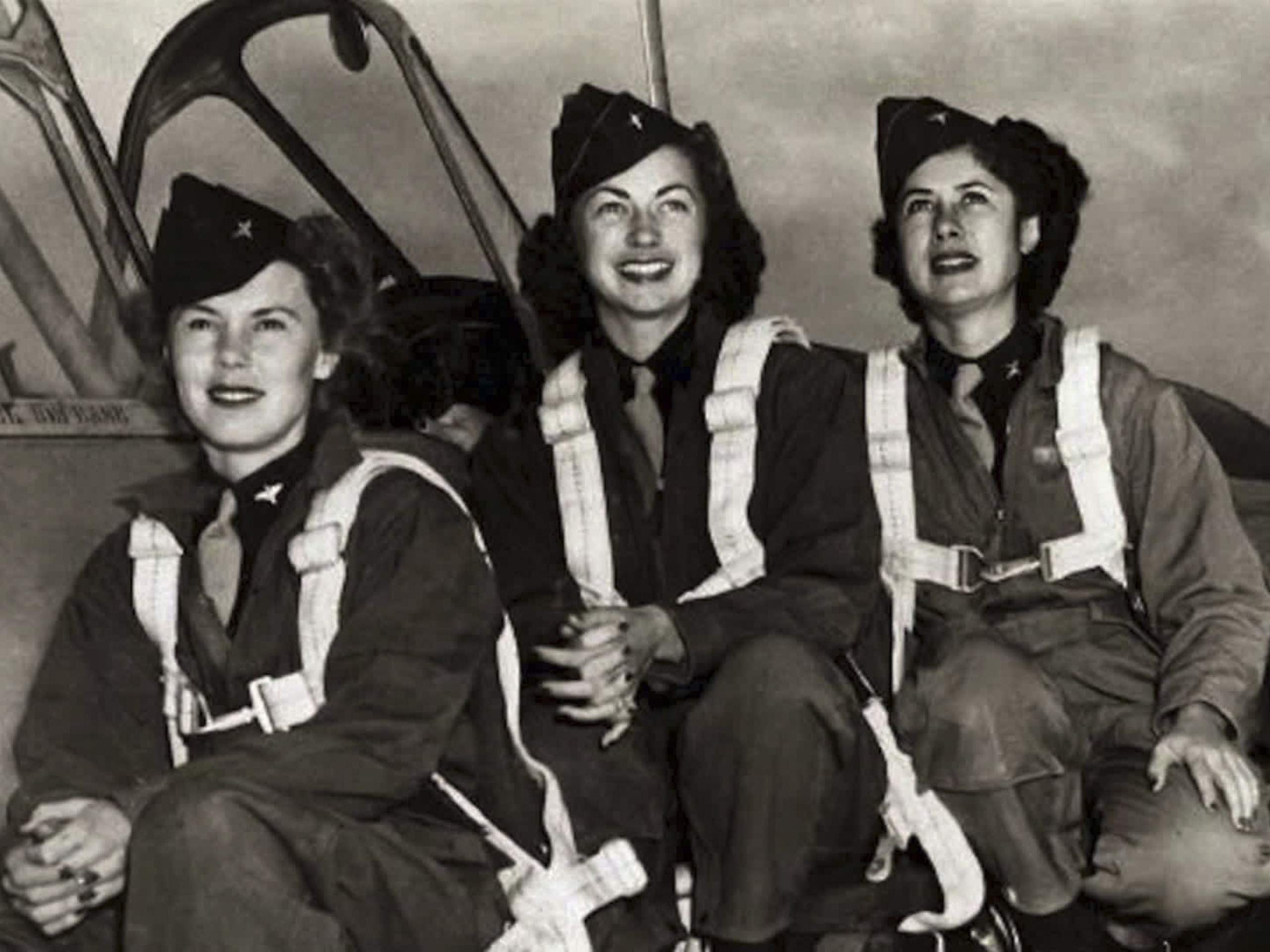
In 1944, Women’s Airforce Service (WASP) pilot Gertrude “Tommy” Tompkins (right) gave her life for her country. The P-51 Mustang fighter she was ferrying to its base disappeared into ocean fog over Santa Monica. Neither plane nor pilot was ever found.
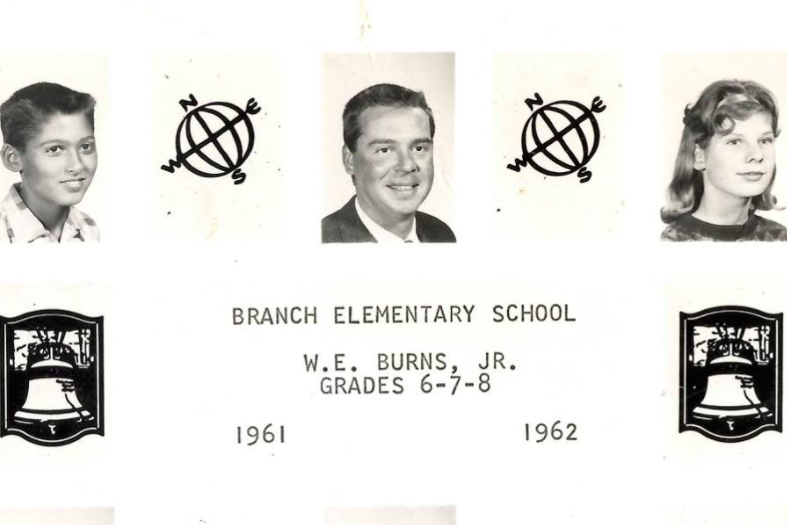
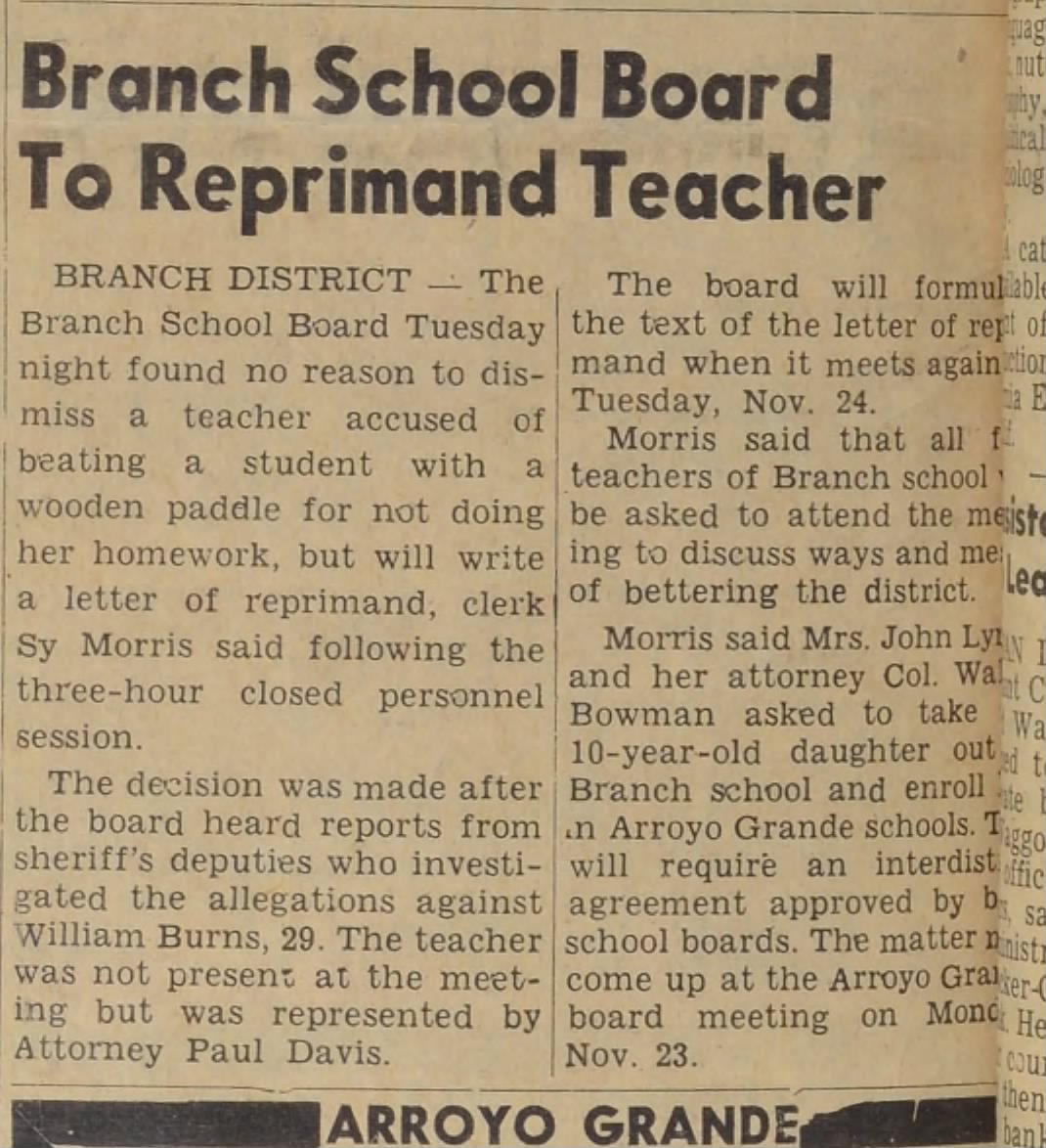
This photo comes from the year Dad was the clerk of the Branch School Board, and bids were being submitted for the new school. Mr. Burns drove a white-over-gold Dodge Polara with a big V-8. I have never forgotten seeing him speed down Huasna Road toward the four corners–he had to be doing 70 mph–because his passenger, picked up at the County Airport on Edna Road, was a construction company comptroller trying to get his boss’s bid in on time.
I don’t know whether the guy made it.
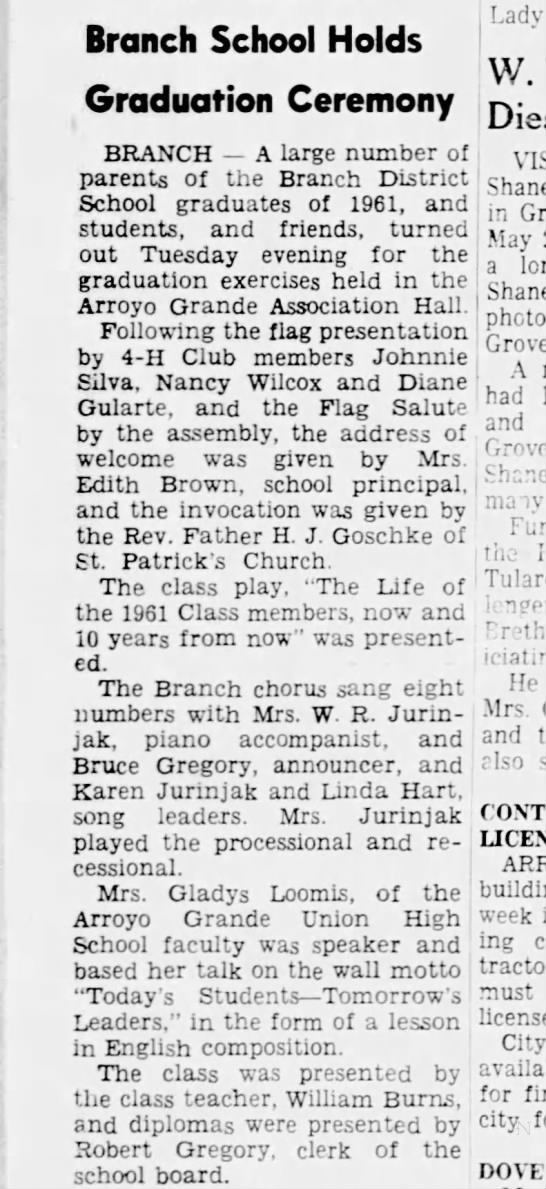
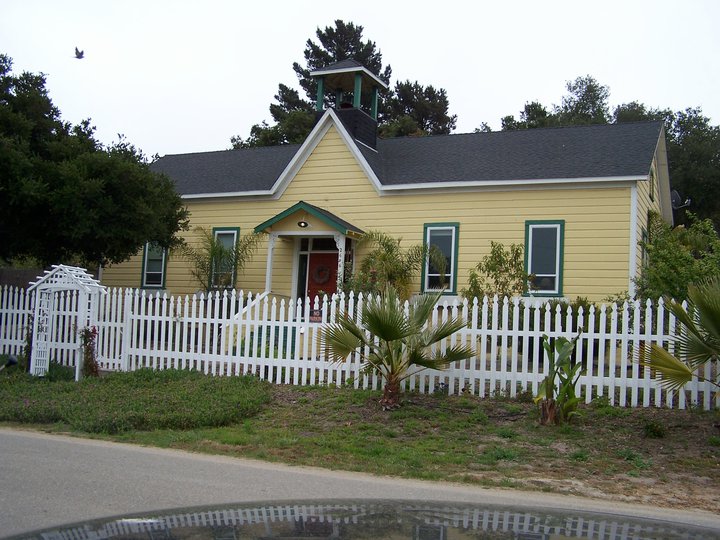
This article, from June 1961, cites Mr. Burns, my big brother and my Dad—and Mrs. Vard (Gladys) Loomis, who would’ve been a dignitary to us. She was a woman of great dignity, so the term “dignitary” fits exactly. The ceremonies were at the IDES Hall because the old 1880s two-room schoolhouse couldn’t hold any more kids–we were Boomers, after all, and there were immense and inconvenient numbers of us—so the big kids, 7th and 8th graders, had their classes at the Hall until the new school could be built.
I wish this story had a happy ending. It doesn’t. Midway through one school year, Mr. Burns was fired. I’m still not sure of the cause, and I don’t want to know. No one talked about it then, and I don’t want to talk about it now. It may have involved his corporal punishment of a student who refused to do her homework. I don’t think that was the case because, just a few years before, I’d seen two Branch teachers, Mrs. Brown and Mrs. Fahey, work over Danny Hunt in the hallway of the old school. They used those hardwood rulers with the sharp copper inserts along the edges and Danny was crouched in the fetal position–and whimpering–while two teachers I loved worked him over like Bad Cop-Bad Cop. To say that I was shaken is an understatement. That was sixty years ago.
Nothing happened to them. Those were less litigious days, and country schools were their teachers’ fiefdoms.
The Old School. It was pink in our day.
So maybe Mr. Burns did something even worse than what the article below suggests.
From 1965.
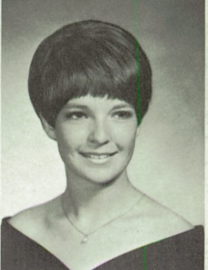
It’s absurd, of course, but I’ve been trying to look for him for years. I think I have an obituary, in Los Angeles, but I’m not sure of it. I think I have a wedding, in Monterey, in 1976, and she is lovely in her high school yearbook photo. It might just be the same William Edward Burns–the age, 36, fits. She is Marcia Katherine Ross, 25, and the two were married the day after Christmas.
And, of course, this couldn’t be Mrs. Burns, not at all. I don’t have any conclusive proof of what happened to him–or even any conclusive proof that he was heterosexual, which is irrelevant– not even after years when I periodically take time to look for him on genealogical and newspaper websites.
The point remains: He screwed up. He did something I never would’ve done as a teacher.
Mr. Koehn replaced him–he would be my algebra teacher later, in ninth grade, on Crown Hill, which remains the only year in my formal education that I enjoyed math. He decided, in P.E. to introduce us to golf and brought thirty aged short irons, some with wooden shafts, and a hundred whiffle golf balls to school and we fifth and sixth graders had the time of our lives, swinging without mercy. Our beloved bus driver and custodian, Elsie Cecchetti, was less than thrilled with the divots that swinging without mercy leaves behind. Many years later, when I took my students to Normandy and we saw the enormous craters left by the D-Day gunfire of Allied naval ships, I was suddenly reminded of what we kids had done to Branch School’s front lawn.
We missed Mr. Burns, though. He was charming and unforgiving, inspirational and demanding, sometimes generous and sometimes mean.
But my family, including my big sister, who taught with him at Branch, loved him. My big brother and I loved him because of his intelligence, his wit and his passion–and, frankly, because he was the first male teacher we’d ever had.
And what this flawed man wrote in that old Thesaurus remains one of the greatest gifts of my life:
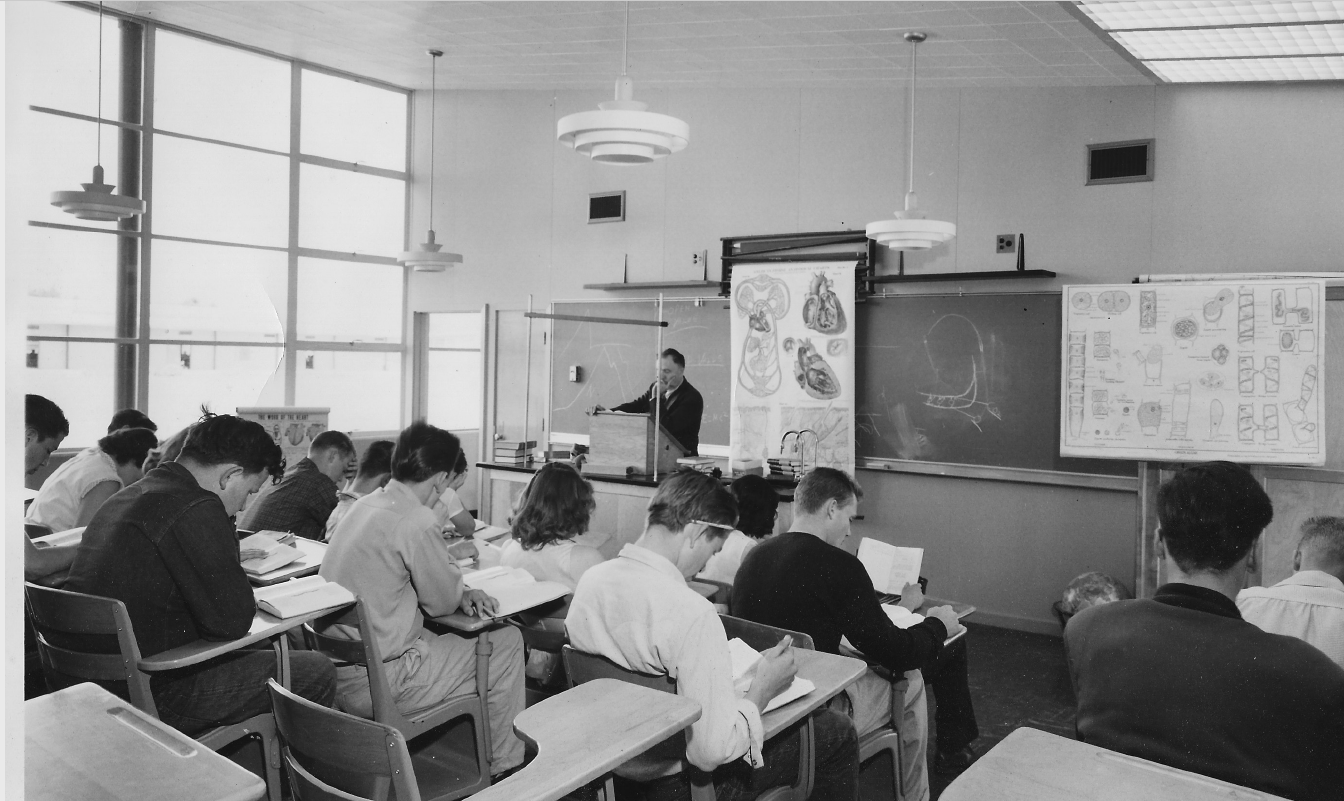
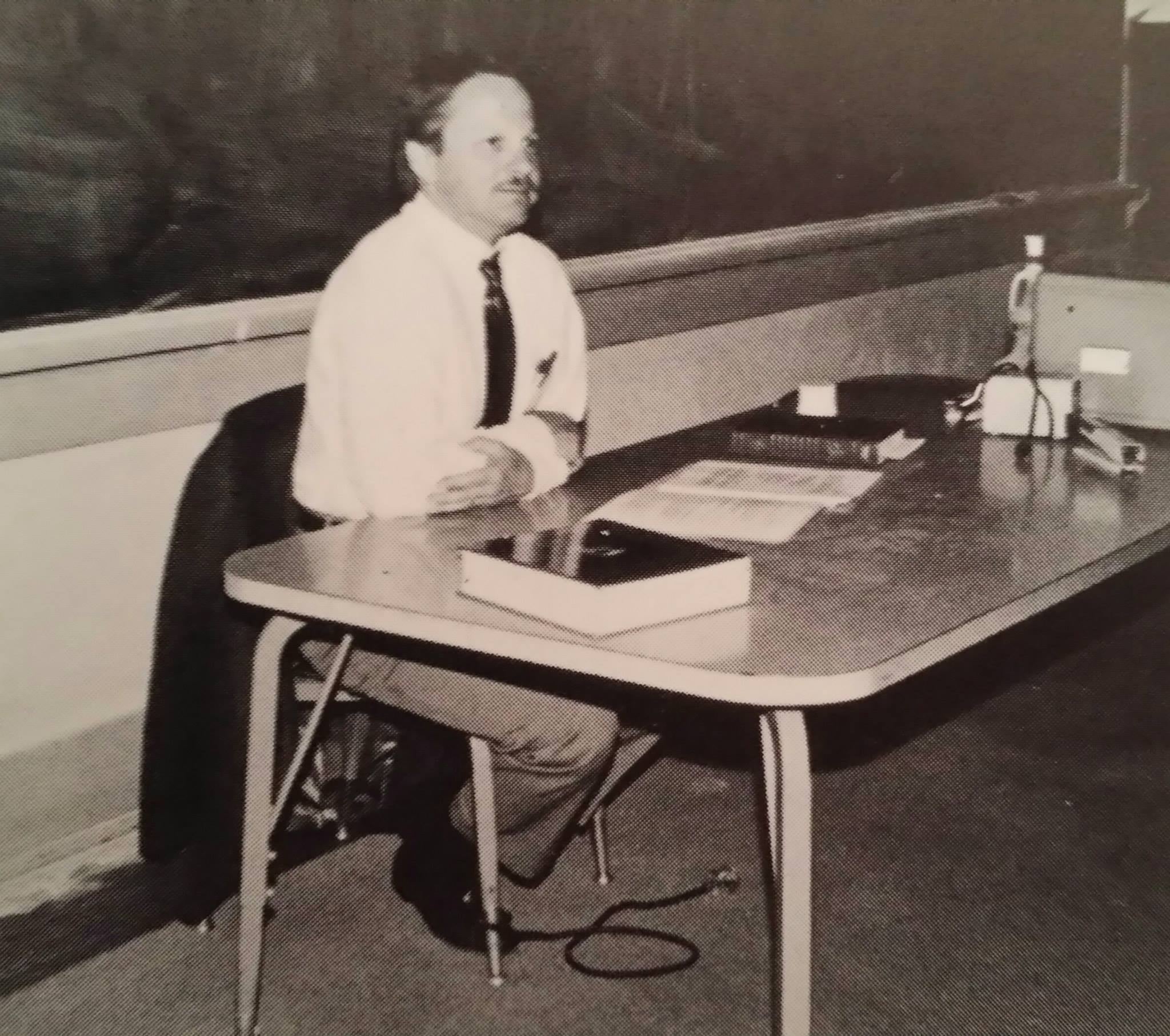
This is a science classroom at AGHS, about 1956, courtesy of Mr. Spin, who donated some vintage photos to me.
No STEM yet. Notice the overwhelming number of males. My sister, Roberta, a proud graduate of Arroyo Grande (Union) High School, was a math major at Poly, and sometimes she was the only female in her class section. Maybe two more, but not more than that. And Poly hadn’t caught up with coeducation, even in 1960. It was about a three-day horseback ride to the nearest women’s restroom.
And in 1960, math was a serious business. All those fellows with the flattops and Madras shirts were someday going to be rapidly but noiselessly sliding their slide rules, calculating exactly how long it would take an Atlas missile with a 1.44 megaton nuclear warhead to land in the swimming pool of Nikita Khrushchev’s dacha on the Black Sea.
(Khrushchev was the Russian leader who said ”We will bury you!” Vice President Nixon countered by informing Khrushchev that we made better color TVs than the Soviets did. Touché!)
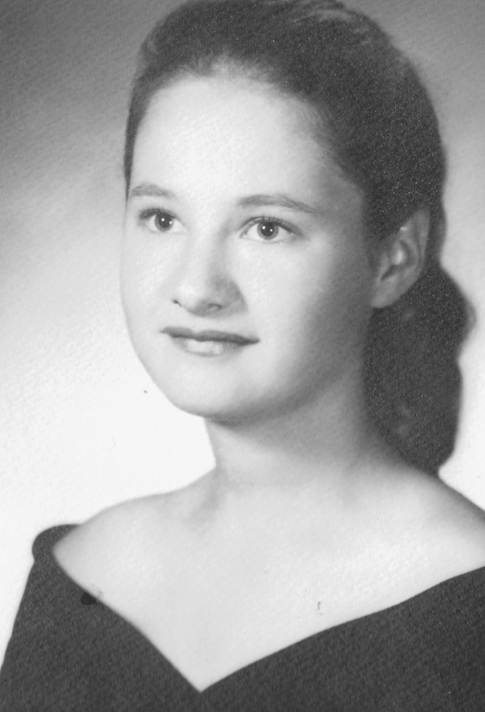
So I don’t think women were particularly welcome in Cal Poly math classes in 1960. Especially really bright ones. Roberta’s the fat puppy in the litter when it comes to smarts, and maybe that was resented by her classmates.
Roberta as a senior at AG(U)HS. Yeah, she’s kinda stunning.
Roberta decided that she wanted to be a teacher anyway. So she became an education major, then a third-grade teacher, and a no-nonsense one. You can ask Miss Sandy. Her classes at Poly made for over thirty years of very lucky third-graders, busy little sailors on the ship my sister sailed.
I love my big sister.
The other, less serious observation: See those lights? Those light bulbs are BIG, somewhere between a grapefruit and a basketball. I had lights just like those in my Mission Prep classroom–the one with only one electrical outlet, because the Immaculate Heart Sisters thought electricity was a modern convenience, a crutch for softies, like socialists or Presbyterians.
And of course, at least one of the deceased Sisters is supposed to un-decease herself upstairs, where my classroom was, and where my former and much-admired and beloved student Julie Newton now teaches English (that makes me feel real happy, that she’s in that classroom). The late sister is, of course, a ghost. Or one of them.
I told the Mission kids that an I-beam fell on her while they were building their school and flattened her like a tortilla. That was both irreverent and made up.
(I’ll bet she’s looking for knuckles to rap with her steel protractor ruler. The sister, not Julie. English teachers don’t have much use for protractor rulers.)
But Elizabeth, my wife, did hear loud construction noises as she came back from coaching a basketball game late one night. Bang bang. Drill drill. As soon as she opened the double doors that lead to the school’s main hallway, there was complete silence. Complete and dark dark silence, all the lights being turned off. She did a u-turn and went home.
The next day, She asked Mike, the maintenance man, if he’d been working that night. Nope.
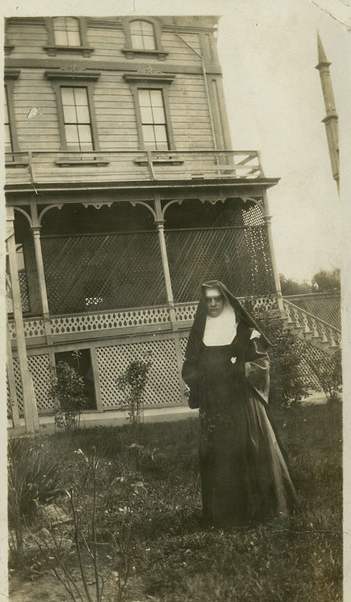
An Immaculate Heart Sister on the hunt for knuckles, early 1900s. SLO County Photograph Collection.
Anyway, there have been repeated Sister Sightings–some of ’em in flocks, if not quite whole convents–up there on the second floor over the years. A SLOHS girl, a guest at a school dance in the 1950s, took a look around between songs up on the second floor and came back to her friend, downstairs in the gym. She was thrilled, charmed by the cozy gathering around a warm stove that she’d seen upstairs.
“I didn’t know that the nuns lived here!” she told her friend.
They didn’t.
At another dance in the 1980s a teacher saw a shadowy figure dart around a corner, headed toward my classroom. He thought it might be a student up there messing around. When the teacher turned the corner, there was nothing but empty hallway..
In the 1990s, a French couple, tourists, were traveling through San Luis Obispo and they did what the French will do. They spread their sleeping bags on the Mission Prep front lawn, broke out a bottle of Bordeaux and some Camembert, and began talking about Proust. They were sleeping when the temperature suddenly dropped about thirty degrees. They woke up and it was pitch-black. Black black, and whatever the black was, it was hovering just above them. Then the black lifted, and then the black drifted, into the gym behind the lawn.
They found another place to sleep.
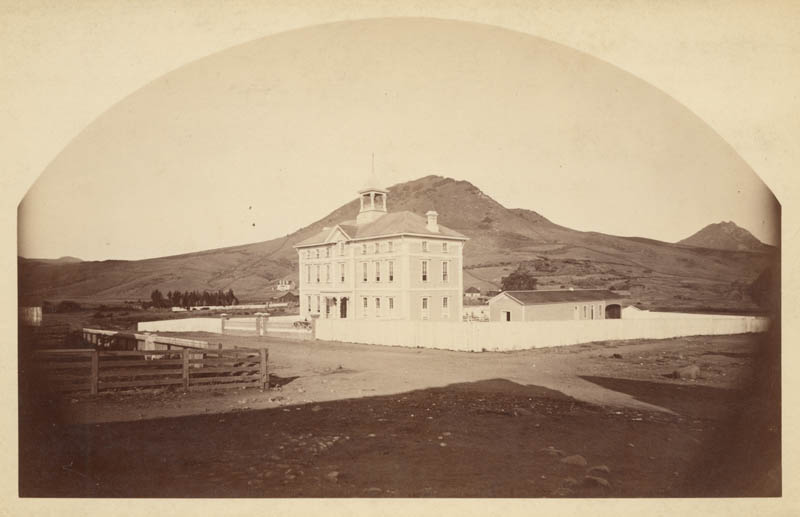
The school was built in 1926–it was sixty years old when I started, just as AGHS was sixty years old when I retired– over the site of the of Immaculate Heart of Mary Academy.
That earlier school was built in 1876. The sisters lived in a convent house behind the present Mission Prep, in what is now a parking lot.
There was a fire at Mission in the 1980s and it burned through the gym floor. There, underneath, was the foundation for the Academy. And a dead cat.
The Immaculate Heart Academy, Palm Street, San Luis Obispo, soon after it was built.
That was downstairs. I was upstairs.
So I was up there painting my room. At night. The biology teacher was around the corner and down the hall just a little ways, happy amid his labware and a year’s supply of dissectable frogs.
I finished up and decided my room looked pretty good. As I prepared to lock up, I called down to the biology teacher: “Barry, I don’t think this place is haunted at all.”
When I closed the door, one of those light bulbs exploded.
*BOOM!*
It was a good one. It was a detonation. It was a good emphatic detonation. My heart wasn’t the only thing that jumped.
I peeked back inside and decided it would wiser to sweep up all that broken glass the next day, in broad daylight. I bid the biology teacher farewell. It was a quick one.
I taught at Mission for eleven years. I never went upstairs at night by myself again.
Me, looking confident in that classroom. That’s because it was daytime.
This is a story I heard today. I won’t get the details exactly right, but even so, this is a true story.
A young woman went to visit her friend, afflicted with cancer. When she entered the sickroom, she knew immediately that the end was pretty close.
–Would you like to go outside for a bit?
–Yes. I’d like that.
So the visitor wheeled her friend out to the garden where there would be sunlight and warmth and a little breeze.
There would be flowers.
There were two dragonflies flitting about the flowers. The visitor pointed them out, but her friend, Dawn, had seen them first.
She knew who they were. Her father and grandmother had come to be with her, she announced with confidence from her wheelchair.
I think that death confers on people who’ve lived good and unselfish and courageous lives—all of these describe the Dawn’s life, the young woman in the wheelchair— a wisdom near the end that we cannot understand. It gives them a clarity of vision that allows them to see what we cannot see.
It wasn’t long until death came. The visitor—a real friend, the friend of this person, now dying—Dawn had always drawn people to her the way flowers draw dragonflies—-came to visit on the last day. It would be presumptuous to call it the “final” day, because I believe that all of us will embrace each other again someday, and it will be a long time before we let go and step back, smiling, to regard each other in perfect wonder.
But when that day was over, when Dawn summoned the courage to give up her struggle, the visitor left the sickroom and walked into the sunlit garden.
Just above her shoulder, there was a dragonfly.
“Hello, sister,” the visitor whispered.
This is Hozier, and he’s singing an old Irish song of farewell, “The Parting Glass.”
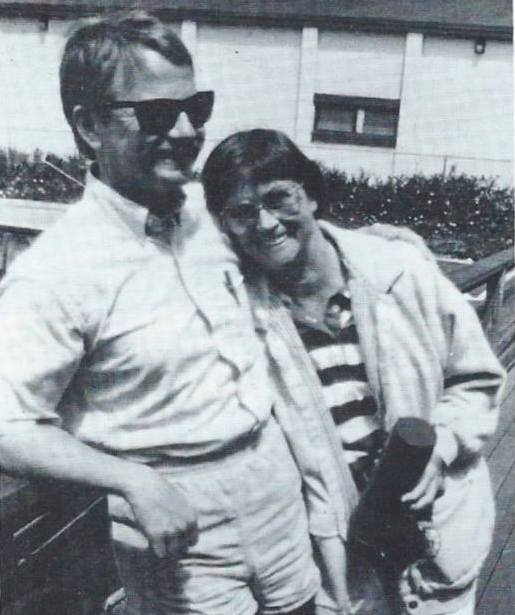
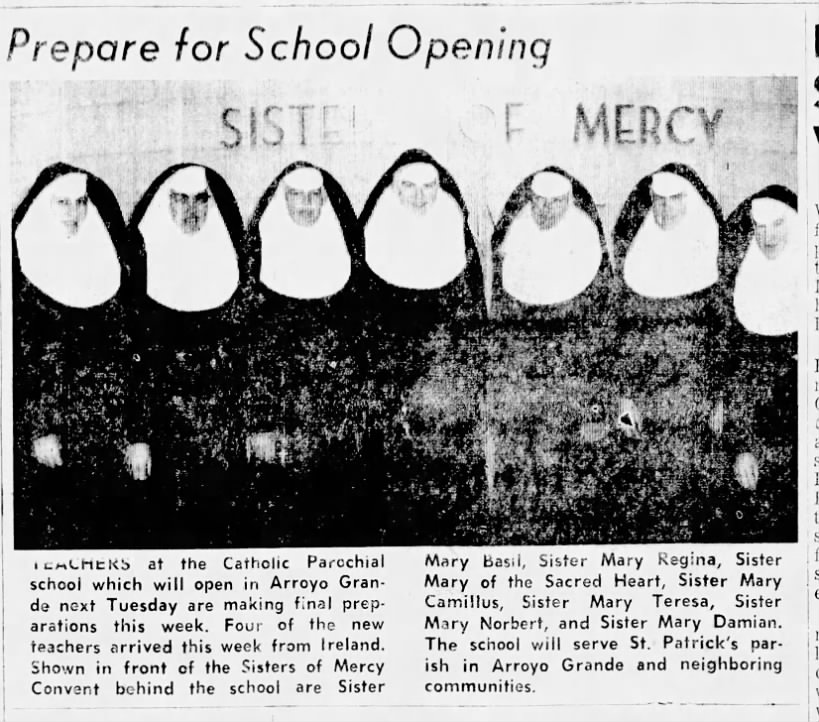
Our dear friend Sister Teresa O’Connell died in May at 90. She taught at St. Patrick’s in Arroyo Grande and Elizabeth and I taught with her at Mission in the 1980s and 1990s. Here’s the two of us back then:
As a member of the Sisters of Mercy, Teresa spent most of her life teaching young people. But when she returned to Ireland, she found a new calling in ministry to the elderly. Hers was such a rich life.
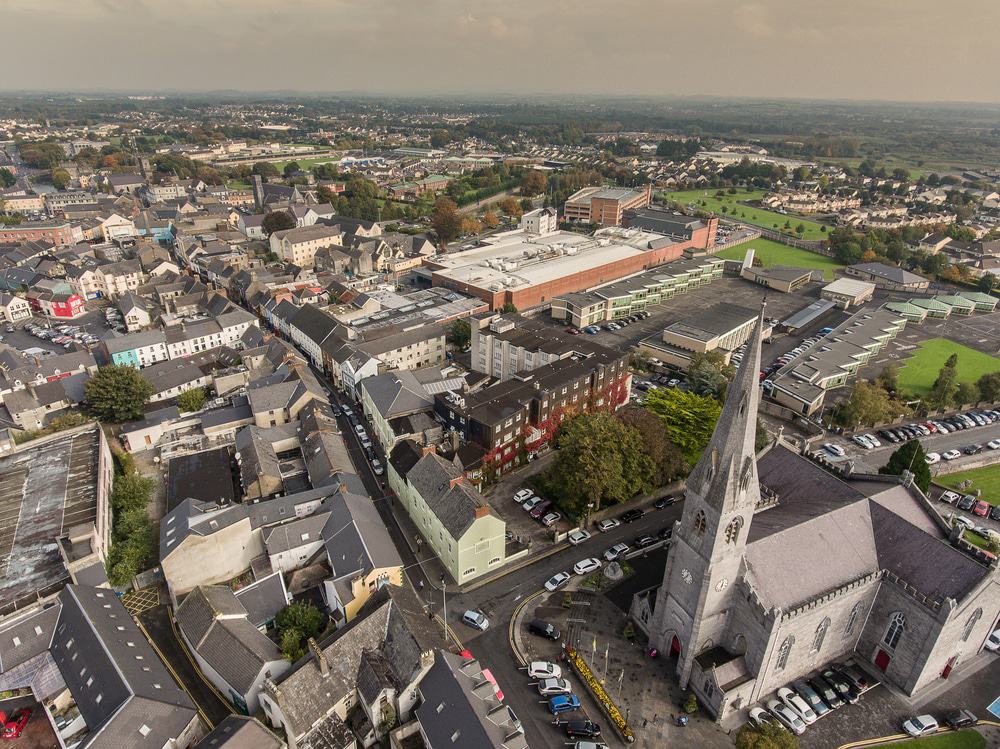
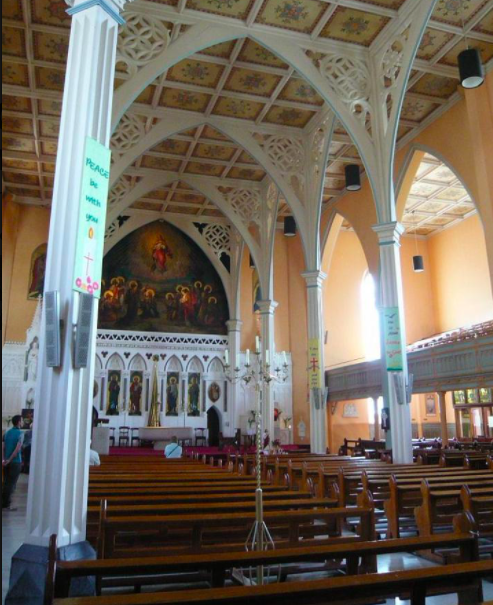
Elizabeth and I “attended” her funeral at the Ennis Cathedral–it was four a.m. our time–thanks to the internet. It was a six-priest funeral Mass with a couple of Monsignors included. Behind the altar, It was like the Irish Catholic equivalent of the 1927 New York Yankees.
It was the least they could do for her.
Here are two views of the church.
I made the mistake of starting to do some research on Ennis, because in thinking of Irish history as a road, every few miles you are confronted with a sad detour. The cathedral was built in 1828, which in itself is significant, because the Penal Laws enacted at the end of the 17th Century–that would’ve been when Great Britain, after the insolent Popery of King James II, was once again securely and relentlessly Protestant under William and Mary–forbade the building of new Catholic churches in Irish cities. The ban, then, lasted until the English were long past the Stuarts and running toward the end of their Hanoverians.
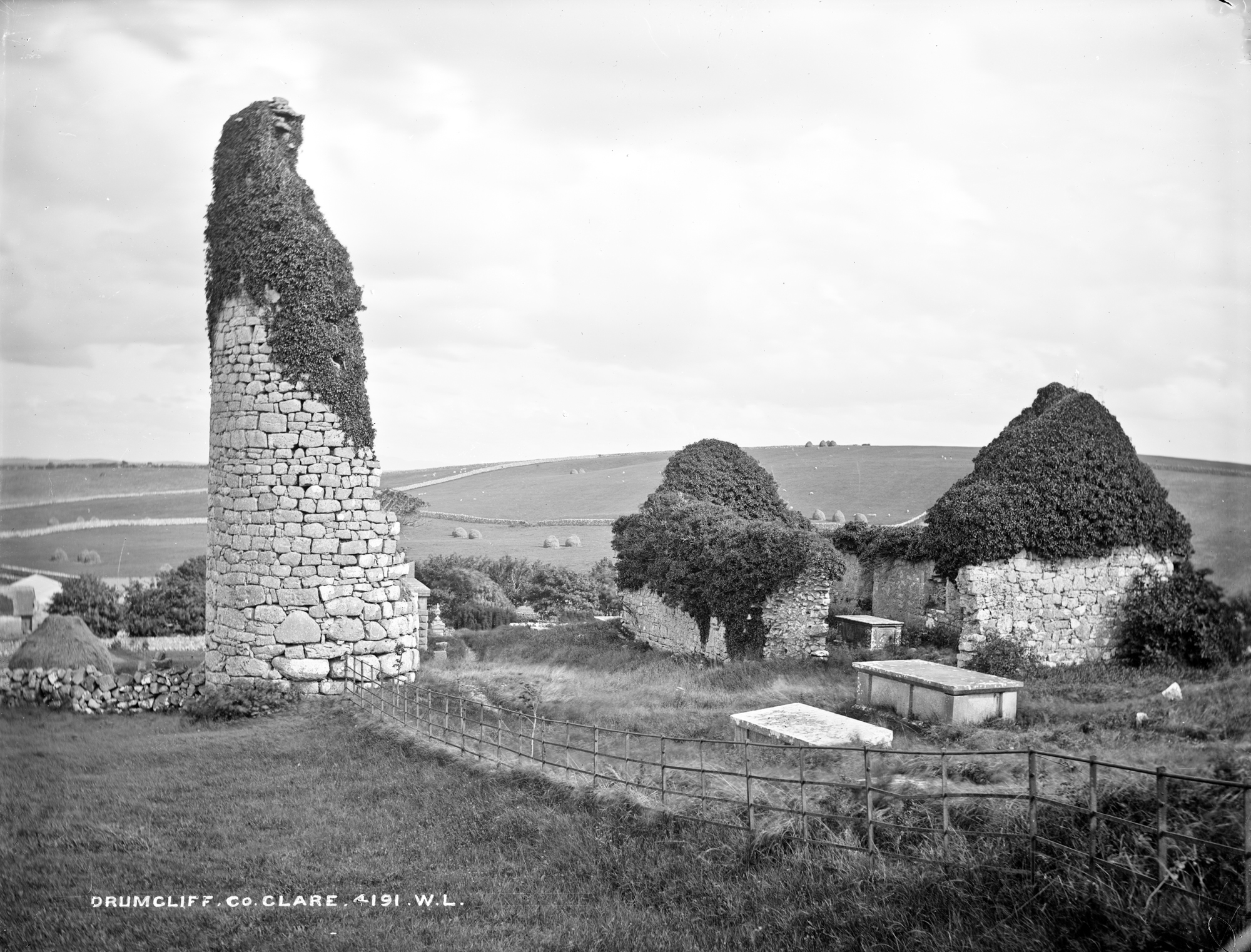
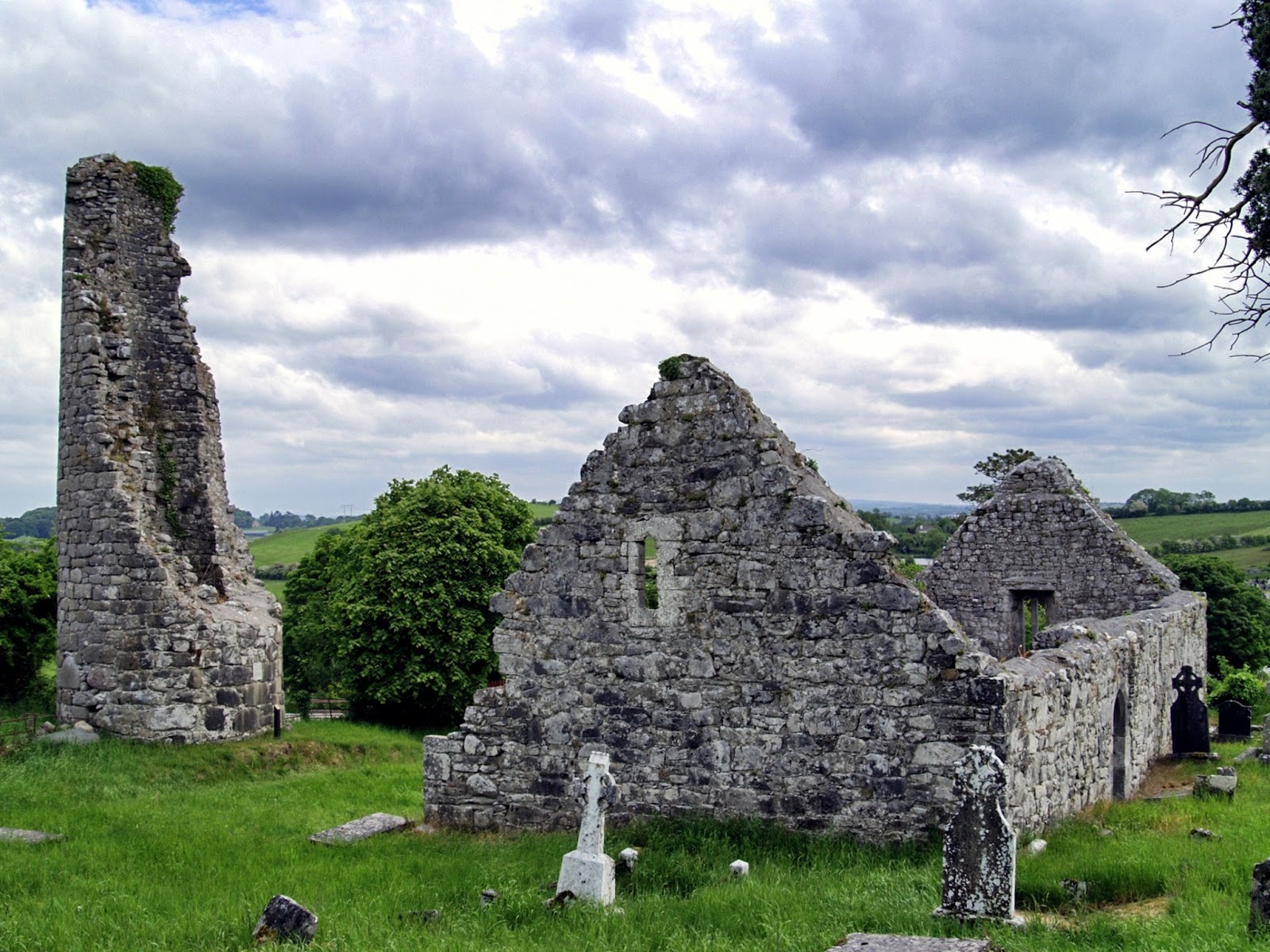
I looked up the cemetery where Sister is buried. It’s Drumcliff, Ennis, County Clare. It’s rich in Irish history, too.
This photo shows the tower and ruined abbey church at Drumcliff. The cemetery adjoins the ruins, on a steep hill that one guide says is windy but strangely serene. Another guide says this: “The existing church ruins are from the 15th century with bits of 10th and 12th century architecture incorporated into it, suggesting it was built on the site of at least one earlier church.”
The earlier church may have been founded by St. Conall. He lived in the 7th century.
When you grow up in a place whose oldest landmark dates to 1772, your history is an eyeblink next to Ireland’s.
The cemetery itself represents one of those sad detours in that history. From a County Clare genealogical website:
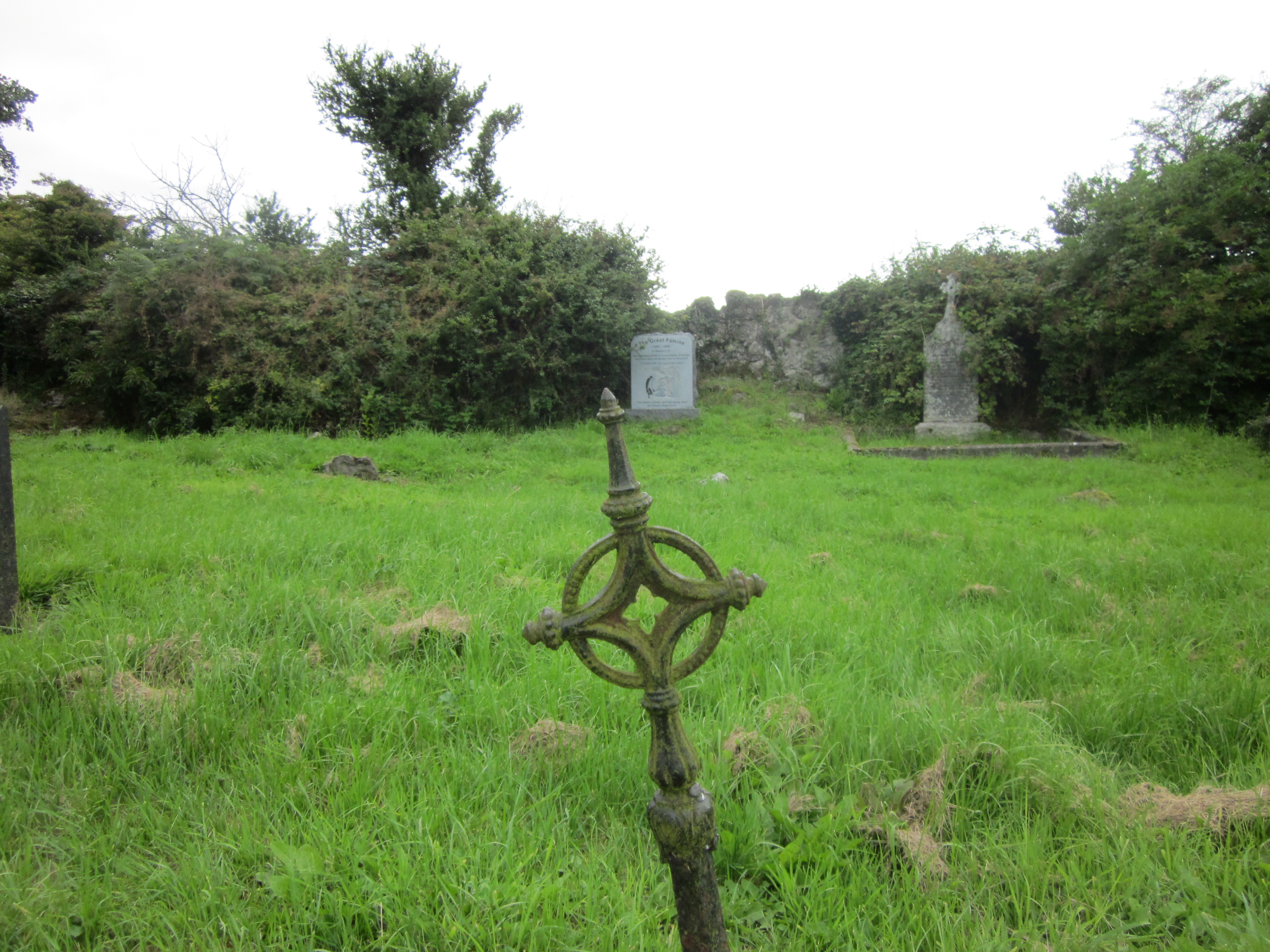
Itis impossible even to guess how many persons are buried at Drumcliffe [sic]: so many graves were never marked at all, countless others have no inscriptions, and the multitudes who lie in the cholera grave, the Famine grave pit beside it and the pauper plot closer to the road, will never be identified by the names they bore in life.
Cholera was a terrible killer in the first half of the nineteenth century; it killed Londoners in their thousands, as well as the Irish, until Joseph Bazalgette designed and built a network of intercepting sewers that carried the Thames River’s sewage out to sea.
Ireland, of course, was far behind in engineering projects as grand as this one.
“The Famine grave pit” is mentioned in passing. Perhaps many of those people were on their way out of Ireland. We once saw a massive green in Galway, one of the Famine ports of exit, also in the west, beneath which thousands of destitute Famine victims are buried. They’d almost made it. It’s probable that the people buried in Drumcliff, like those in Galway, died, enfeebled by starvation, of opportunistic diseases like typhus.
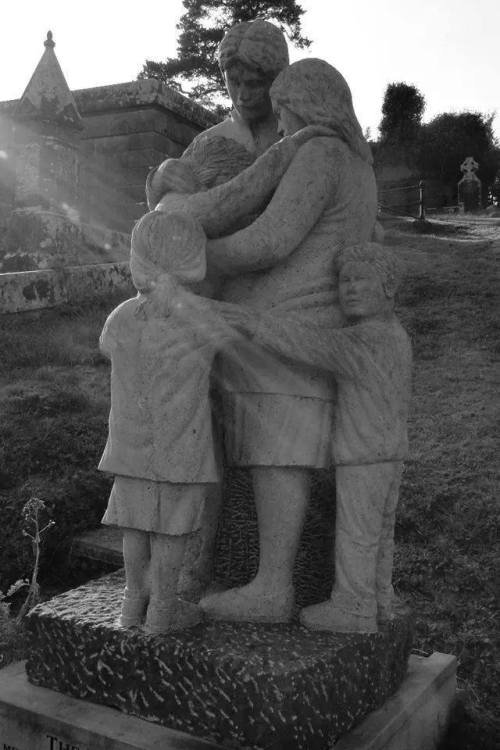
At least the paupers are symbolically remembered. Many of them ended their lives in a nearby workhouse. Here is their monument:
Pauper’s Memorial, Drumcliff
The Famine Grave
It’s a windy but strangely serene place.
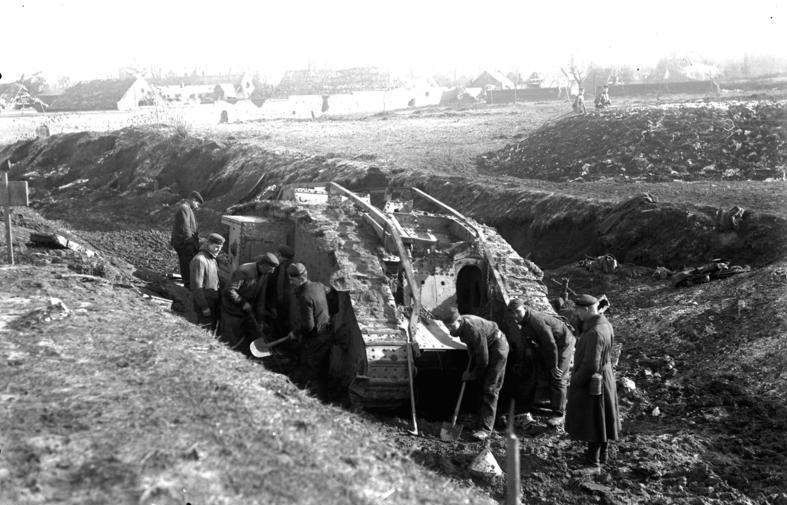
And then you reach the 20th century. There are Great War soldiers buried here: over 200,000 Irishmen fought for the British between 1914 and 1918. Drummer John McMahon served in the King’s Own’s Scottish Borderers, in a battalion that had survived Gallipoli; it’s possible that his death, in July 1917, came in Palestine. Thomas Moody served in the Irish Guards; his death, in November 1917, must’ve been at the Battle of Cambrai, which, like Bazalgette’s intercepting sewers, began as a landmark for modern technology. The British launched a massive attack spearheaded by Mark IV tanks, an innovation in warfare. By the second day of the attack, half the tanks had broken down, and that’s when the Germans responded. Moody probably died in their counterattack, the biggest assault on the British Expeditionary Forces since 1914. It was in that ealier assault–the the First Marne, in September 1914, the battle that stopped the Germans short of Paris, when Parisian taxicabs carried poilus to the front in relays–that claimed artilleryman Michael O’Brien, another soldier buried in Drumcliff.
German soldiers inspect a British tank wrecked at Cambrai.
Of course, the Great War was punctuated by the Easter Rising in Dublin. You can still the gouges British bullets left in the columns of the Neoclassic General Post Office, where the rebels held out for six days during Easter Week 1916. The Dubliners jeered the Irish Republican Army rebels as they were led away, after their surrender, by British forces.
The General Post Office, O’Connell Street, Dublin, after the Easter Rising. Nelson’s Column, to the right, was later blown up by the IRA.
Then the British began executing them, granting one, terribly wounded, the privilege of being shot while seated in a chair. That was a mistake. Now they were martyrs.
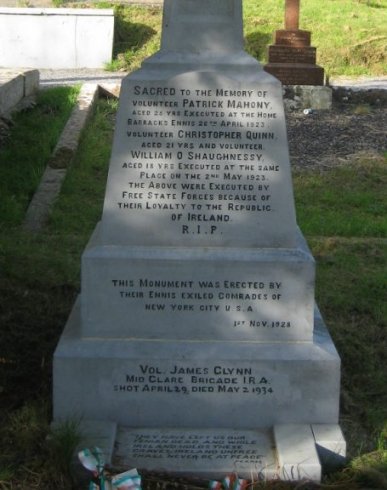
And that leads to one more place in the Drumcliff Cemetery: An IRA Memorial.
Irish rebels memorial
Maybe it’s typical that this memorial was made possible by expatriates, Irish living comfortably and happily distant in New York. What it commemorates might be too painful to remember for the people who live in Ennis today. The four Irish Republican Army men cited on this monument were killed in The Troubles, but not by the English. Three of the four were shot by firing squads made up of fellow Irishmen during the Civil War of 1922. Two were eighteen years old. They were Republicans executed by soldiers of the Irish Free State, the government that shot three times as many Irish revolutionaries in 1922 as the English had during the rising of 1919-1921.
One of the eighteen-year-olds wrote this on the eve of his execution:
Home Barracks, Ennis
Dearest Father,
My last letter to you; I know it is hard, but welcome be the will of God. I am to be executed in the morning, but I hope you will try and bear it. Tell Katie not to be fretting for me as it was all for Ireland; it is rough on my brothers and sisters–poor Jim, John, Joe, Paddy, Michael, Cissie, Mary Margaret–hope you will mind them and try to put them in good positions. Tell them to pray for me. Well father, I am taking it great, as better men than ever I was fell. You have a son that you can be proud of, as I think I have done my part for the land I love. Tell all the neighbours in the Turnpike to pray for me. Tell Nanna, Mary and Jimmy to pray for me, Joe, Sean, Mago, Julia, Mrs. Considine and family, also Joe McCormack, the Browne family, my uncle Jim and the Tipperary people which I knew. I hope you will mind yourself, and do not fret for me. With the help of God I will be happy with my mother in Heaven, and away from all the trouble of this world, so I think I will be happy...
…Dear father, I will now say goodbye – goodbye ‘till we meet in heaven.
I remain, Your loving son, Christie
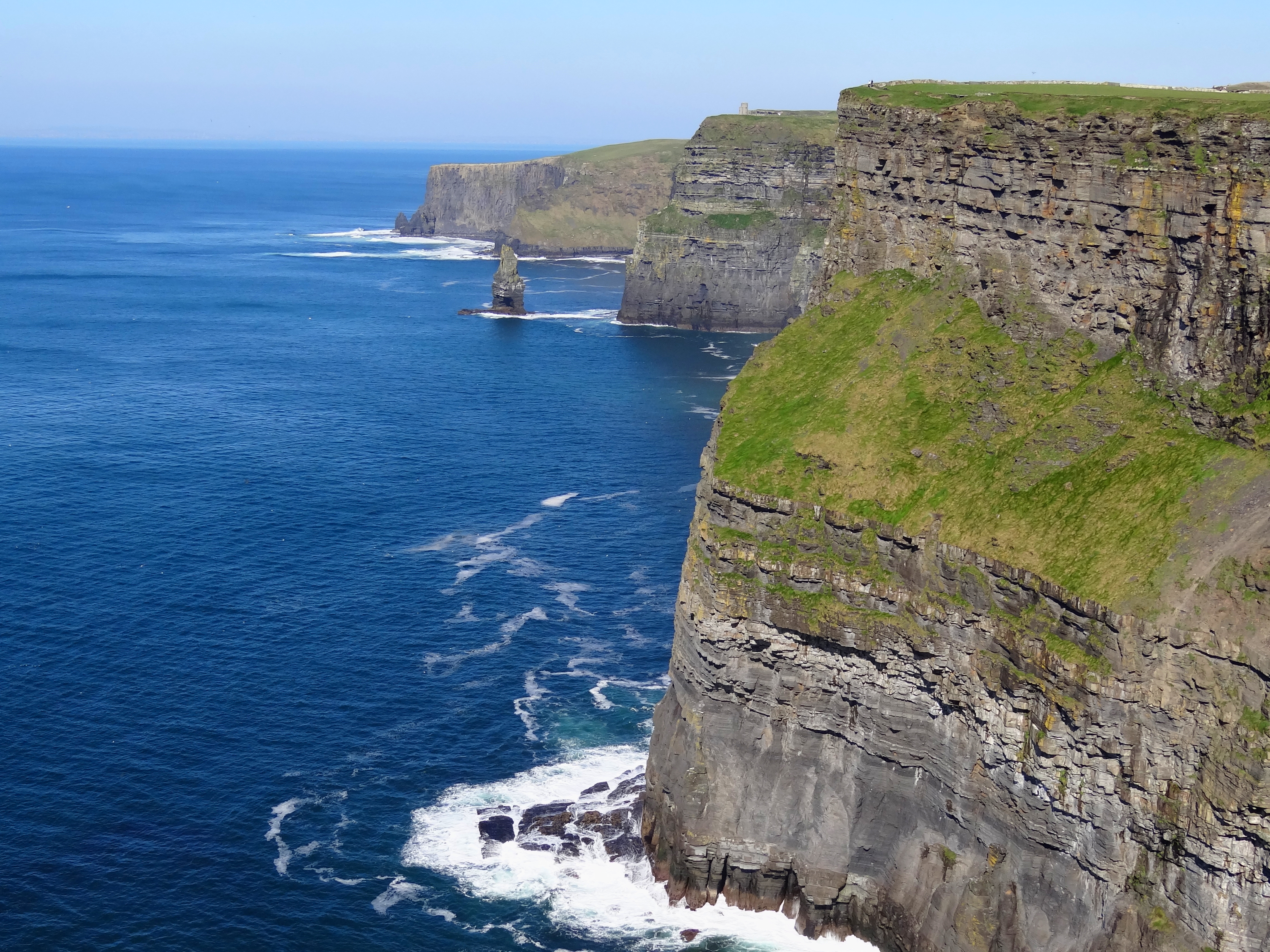
County Clare is famous for goodbyes. The Cliffs of Moher (above) might have been the last many Famine emigrants to America saw of Ireland. A windy and wild place, they are remindful of the title Leon Uris chose for a book he and his wife Jill wrote about Ireland: “A Terrible Beauty.”
Sister Teresa, even in her rest, cannot escape the long road of Irish history that has carried so many travelers—including my own family—on the journeys of their lives. Hers ended in Clare, a place, like the rest of Ireland, so marked by sadness. But sadness is not a dominant Irish trait—the last thing the Irish lost during the Famine, one chronicler noted, was their sense of humor—and it was service to others, not sadness, that dominated Teresa’s life.
I’ve been to Ireland and don’t know that I’ll ever get the chance to go again. If I do, God willing, there’s a place in the Drumcliff Cemetery that needs beautiful flowers and a pinch of California topsoil, perhaps from a field that adjoins St. Patrick’s Church, a parish five thousand miles away from County Clare.
September 1963: Off the airplane and into the classroom. Teresa is third from right.
Sam Mendes, a director whose credits include spectacular Bond films, is about to release something different: 1917.
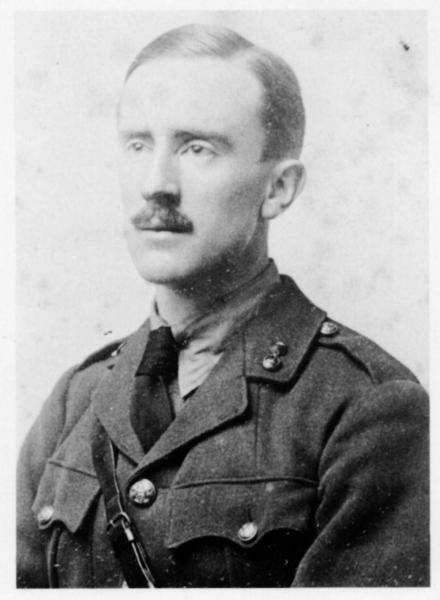
It was a JRR Tolkein’s (right) experiences in the trenchland of northern France that would lead to The Lord of the Rings in the attempt, I think, to confront the demonic forces that surrounded him when he was twenty-four years old.
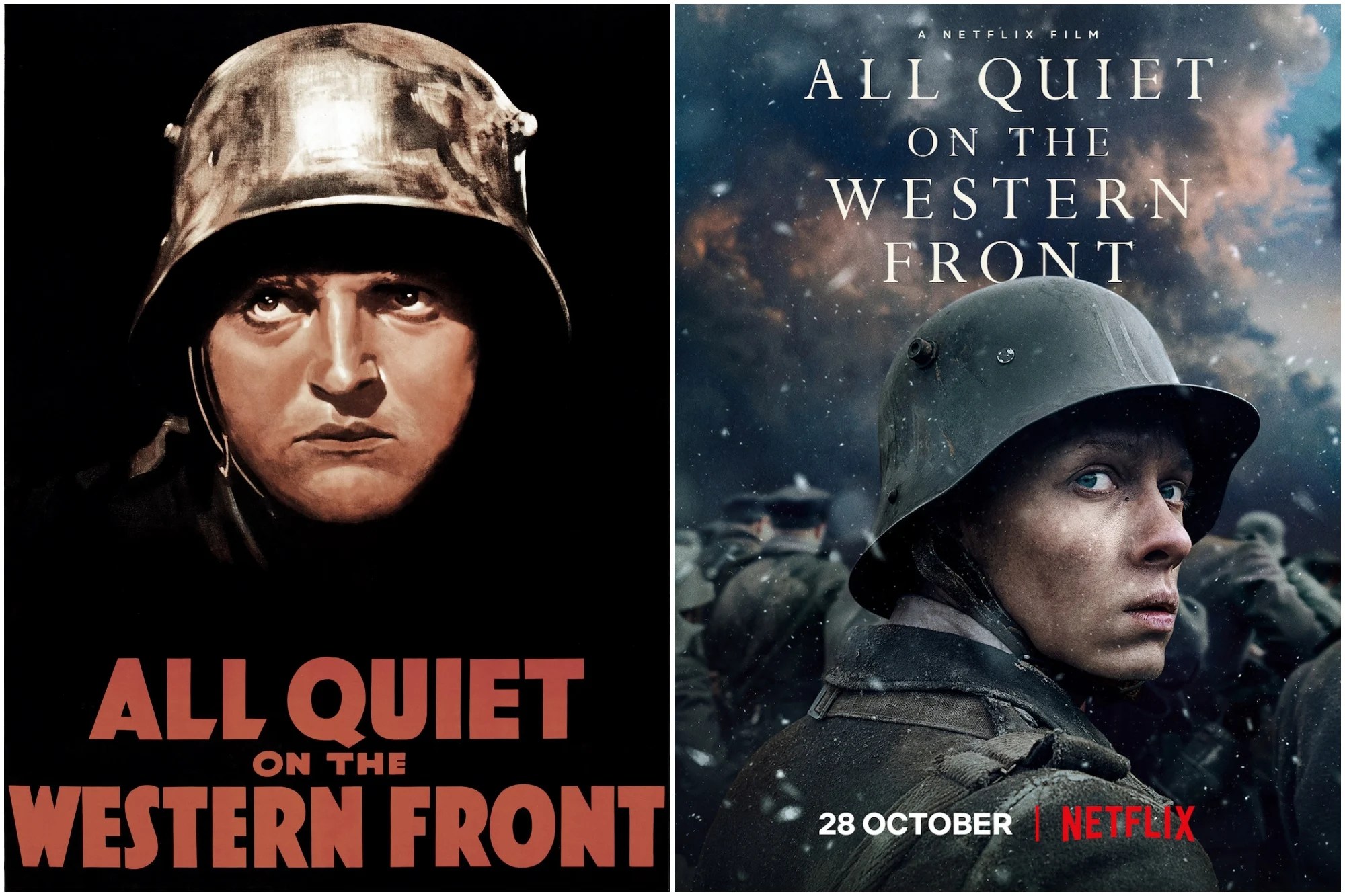
Erich Maria Remarque’s All Quiet on the Western Front was the same kind of response. Writers like these two—and like Siegfried Sassoon, Robert Graves and Wilfred Owen—showed us how quickly and completely centuries of civilization could unravel.
The advance word is positive and I hope the critics are right. Gettysburg, based on a far worthier novel, The Killer Angels, lasted longer than the battle itself and I was rooting against both sides by the end; Midway made me care not a damn about human beings. Private Ryan, on the other hand, did.
So I am hopeful for this film.
1917: Benedict Cumberbatch as Colonel Mackenzie
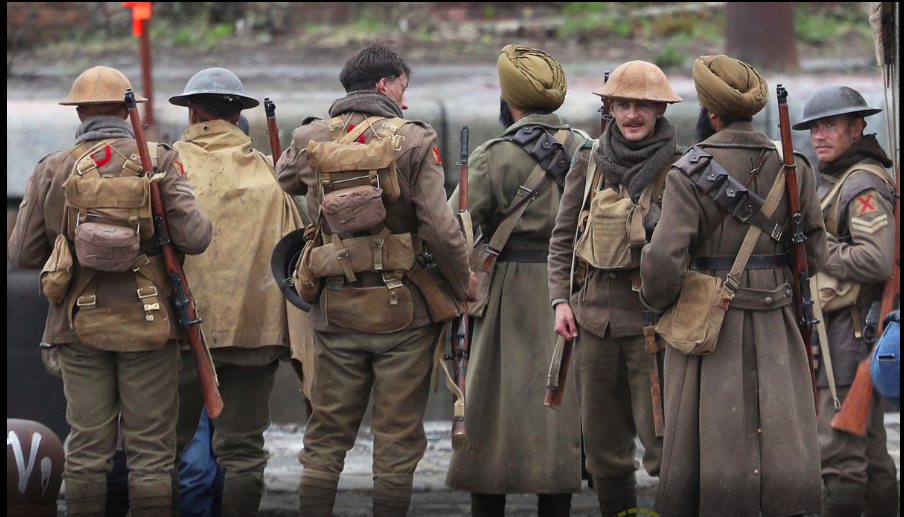
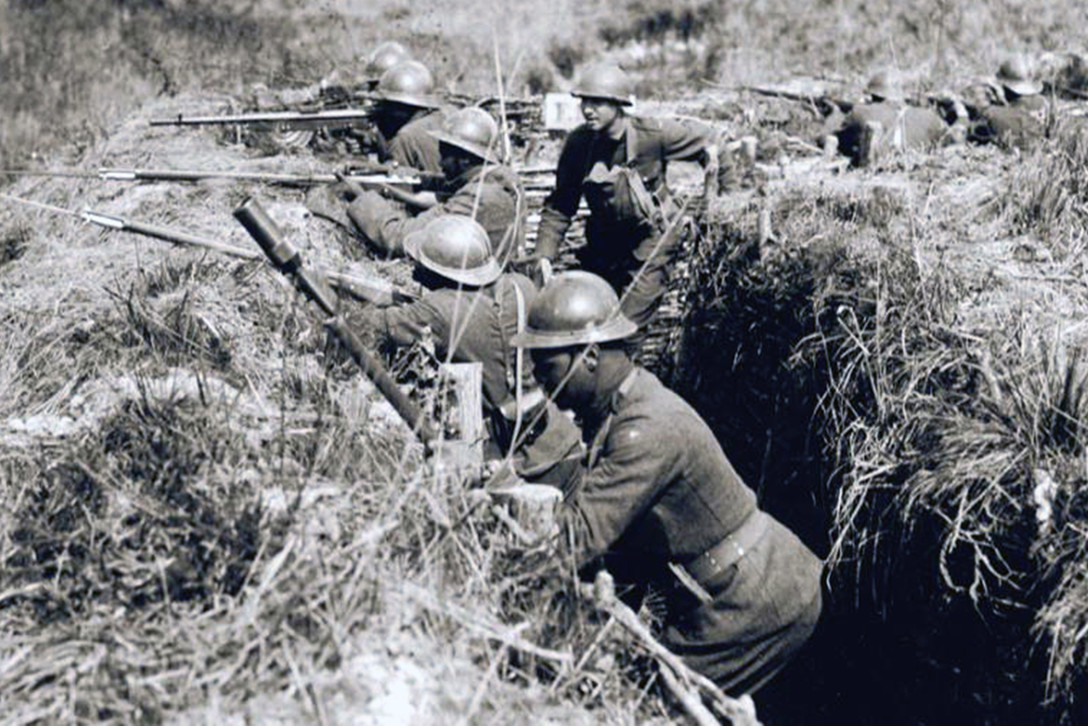
I wrote a a book about World War II which would have been impossible to write unless I’d had twenty years’ experience teaching World War I to European history students. It truly was a world war: The film still below shows actors portraying both Tommies and Sikhs fighting as comrades. Those are African-American troops from the 369th Infantry Regiment, but they’re wearing French helmets because the French begged for fighting men–we used African-Americans as manual laborers– and they responded by fighting like tigers. 170 members of this regiment received the Croix de Guerre.
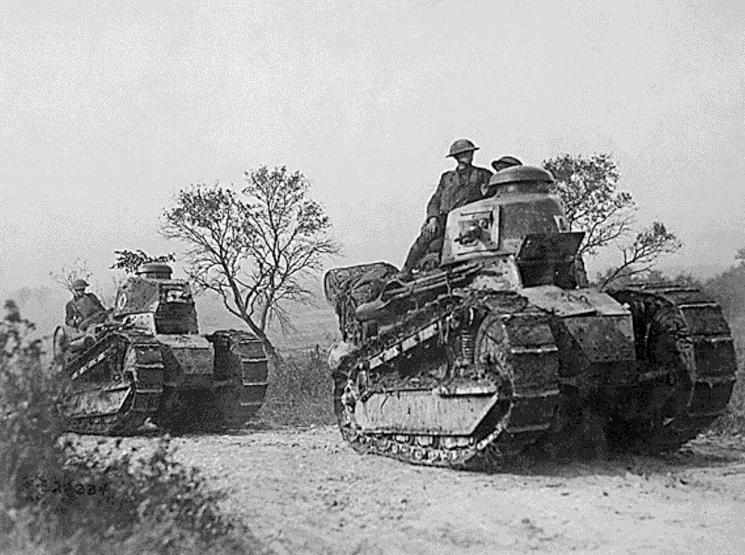
And these are American doughboys riding atop French Renault tanks; our Marines advanced on the machine gun nests in Belleau Wood carrying French Chaucat light machine guns. They fired from the hip, the Germans remembered, while smoking cigarettes. Our troops went into action in the Meuse-Argonne Offensive convoyed in French trucks driven by French colonials from a country that would someday be called Vietnam.
At the end of the year, my students and I decided that there had been no turning points in Western history quite like these three: Luther’s posting of the Ninety-Five Theses; the storming of the Bastille in 1789; the assassination of Franz Ferdinand and Sophie in 1914. The last event, which tumbled us into World War I within a month, hasn’t played itself out yet.
The Americans serving in Syria and Iraq are a product of this war and the ineptitude of the peace treaty never really ended it.
I tried to explain, in this passage from the World War II book, why we need to confront World War I. I have the feeling that this film will take us there.
* * *
I taught history for thirty years, and I never, never ceased to get angry every spring when I taught the First World War. It was this war and its peace treaty that did so much to make World War II possible. In 2010, I took some of my students to Western Europe’s World War II battlefields but also to Verdun, site of a horrific 1916 battle that lasted over ten months. The stacked bones in the ossuary there once belonged to boys like my two sons, whose parents had applauded at their first steps or cheered when they scored their first football goal.
I made it my business to help all of my students understand that idea— that war cheats us all so cruelly—and so I led them, every year in my classroom, into dark places, like Fort Douaumont at Verdun, so dark that it swallowed the light of five hundred years of Western culture. To go inside Douaumont, where 100,000 young men were killed or wounded, to study war doesn’t mean we glorify it. A few years ago, a student told me the First World War was her favorite unit. (Not mine—I much prefer La Belle Èpoque) I asked her why, and she replied, “Now I understand how precious human life is.”
She understood precisely why I became a history teacher.
She would have understood, as well, how in the process of writing this book, something extraordinary has happened within my heart: the more I research these young men of my father’s generation, the inheritors of the legacy of places like Douaumont, the more they become my sons.
Through no one’s fault, they’ve been mostly forgotten. This book seeks to name them and so reclaim them for a new generation. When we come to know these young men, we come to love them, and maybe that is the force that will carry us a small step farther along a path that will lead us to a world of peace. The great Jesuit theologian and anthropologist Pierre Teilhard de Chardin believed that we have a divine gift. We evolve physically and intellectually, but, he argued, we can evolve spiritually, as well. I believe Teilhard is exactly right. But I believe also that we cannot advance if we leave behind the boys and men I’ve met, the casualties of war. Their lives were, and are, precious, and if they could somehow save other young lives, I think they’d do it in an instant.
A North Vietnamese soldier-poet wrote many years ago that “the bullet that kills a soldier passes first through his mother’s heart.” If the young men I now know could somehow spare other mothers the pain theirs went through, then I think they would do that in an instant, too.
It is our responsibility to confront and understand the horrific violence that took their lives. The young men I now know who died in a Norman village like Le Bot or in the sky over the English Channel or deep in the waters of Ironbotttom Sound off Guadalcanal lit a path, in dying, for the living to follow. If we ignore them, we will lose the path, and the dark will have won after all.
Arroyo Grande High School students at Fort Douaumont, 2010.
I taught AP European History for nineteen years, and I quickly discovered a passion for social history, including women’s history. We learned about skimmingtons, Tudor marriage patterns, women’s work on farms and in factories. Then we got to La Belle Epoque–-Victorian Europe—which should have been my favorite chapter. It was Marion Cotillard’s favorite era, too, in Midnight in Paris, and I would’ve been hard-pressed to choose between Cotillard’s Paris and Owen Wilson’s Lost Generation version of the great city.
I have my romantic reveries about the film interrupted by the reality of its director, whose victim—much later, his wife— was his stepchild, and that unpleasant juxtaposition reminds me of the way I taught this chapter.
Cotillard and Wilson, Midnight in Paris
I didn’t lead with Julie Andrews’ Mary Poppins or Nicole Kidman’s Satine from Moulin Rouge–although I did touch on Montmartre and on Hausmann’s re-imagining of Paris.
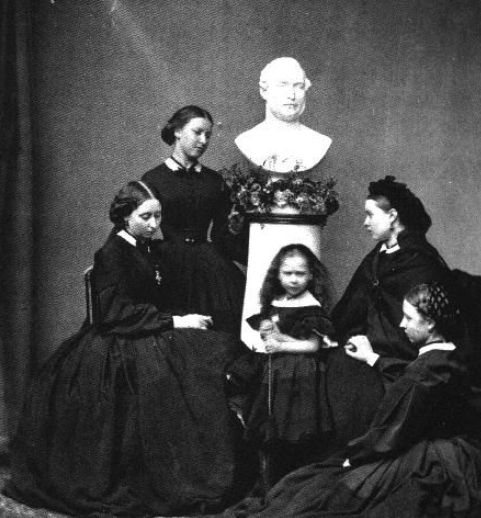
No. I started the chapter with Jack the Ripper. The Ripper murders, in 1888, were so revelatory of the larger society’s misogyny. The students were reminded of Nancy in Oliver Twist and they learned about Victorian widow’s reeds—for which Her Majesty, in her pining for Albert, deserves so much blame–when it was discovered that black taffeta, required for a year, when combined with gaslights, led to British and American middle-class sati, the tradition where, once upon a time, Hindu women threw themselves onto their husbands’ funeral pyres.
Victoria’s daughters mourn dutifully for their father.
The Rippers’ victims funerals were attended only by detectives. These women, some but not all of them prostitutes, were desperately poor, frequently drunk and utterly alone. (This was when the Industrial Revolution had advanced to the point where women, thanks to cooperation between male workers and male capitalists, had been forced out of factory work, where they’d always been integral. World War I would call them back, when munitions work would kill women workers in bushel-loads; shell-filling turned their skin bright yellow. So most of them died slow deaths, from chemical poisoning, rather than the instant deliverance conferred on other women by accidental explosions.)
The Ripper’s escapes were made possible by the rabbit-warren of alleyways and the density of London fog–T.S. Elliot described its greenish cast—that were so evocative of the density and the filth of the East End. Sunlight rarely penetrated the lives of these women; their deaths were captured in photographers’ flashes—theirs were among the first autopsy photos ever taken for police work. I could not show some of them to sixteen-year-olds.
So we began a chapter that was ostensibly my favorite (they learned how to speak Cockney, learned rhyming slang, learned about department stores and the demarcation lines between social classes within Parisian apartment buildings and in the process of lifeboat-filling on Titanic, learned, most of all, about Paris) with some of the most brutal material I’ve ever taught.
I wanted it that way. I taught, whenever I could, to my students’ emotions, because that’s the way I experience history—these people are very much alive and so very human to me—and I wanted them, as we began this chapter, to be outraged.
Most of all, I wanted my male students to understand the Ripper’s brutality, so reflective of the society’s brutality, to understand what it might have been like to be a woman then—and now, because we would visit this topic again before the year had ended–and if outrage wouldn’t take with them, with my young men, then discomfort would do.
I hope their discomfort hasn’t ended. The misogyny, revealed in so many presidential tweets, certainly hasn’t.
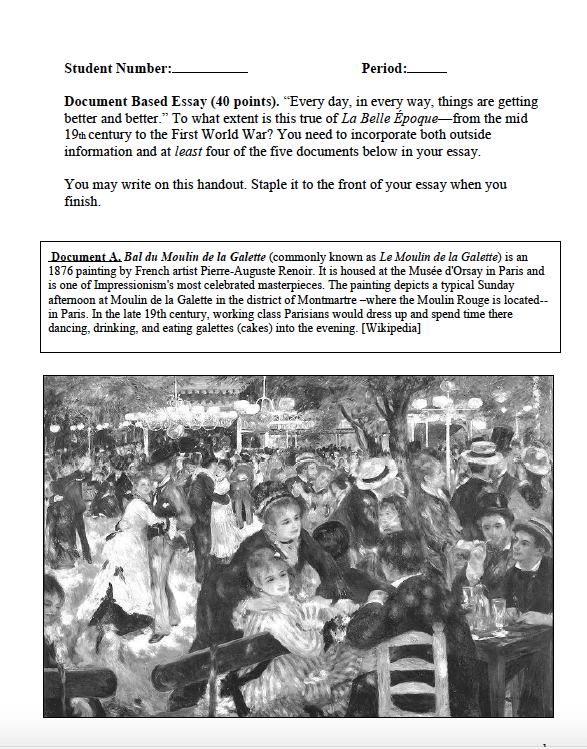
This was the Document-Based Essay that ended the chapter–a truncated version of the much more lengthy essays they’d encounter on the AP exam. I was a little proud of this one.
I always reasoned that I needed to retire once my own anger over World War I had passed. I think that sentiment extends logically to the status of Victorian/Edwardian women, as well.
I re-read the manuscript of my little book, World War II Arroyo Grande, this morning, found it brilliant, and then remembered, because of a degenerative neck disk, that I was loopy on Norco, and “The Berenstain Bears Dig a Septic Tank” on Norco would have exactly the same impact on me as the first time I read From Here to Eternity or Cold Mountain.
Here’s the Magic part.
There are three books, out or about to be released, written by former students of mine. I take no credit for anything they write–except for their history essays–but I am every bit as happy for these books as I am for mine, and now that I know how hard the work in writing a book truly is I don’t even have the words for how proud I am of three young writers: Alex Bittner, Maeva Considine, and Evan Devereaux.
No work is more demanding and more lonely than the craft of writing. With one exception, and that is teaching.
What we do every day in the classroom isn’t work–for me, it was the greatest joy to teach young people like these in my years at Mission Prep and then in Lucia Mar. Nowhere was I more authentically myself than in a classroom, in the time I shared with teenagers.
For most of us, the “work” begins at three o’clock and ends in the dark. The weekends are just two more workdays: we write our weekly plans at our kids’ Babe Ruth games and we grade our essays at Cafe Andreini–seething a little at the guy at the next table burrowed deep inside the Sunday “Times” or the fiftysomethings in bicycle tights about to head up the Huasna. It’s galling to see leisure flaunted so shamelessly while we work in such anonymity.
It takes a toll. My serum cholesterol levels dropped 61 points in the five months after I retired.
We work hard, but the toll is exacted most in the extra work we are required by distant decision-makers to do–mandated in a fantasy world where we actually have the time to do it–and what we do for them is eventually written up in a barbaric language, Educationese. It’s work that almost always has no meaning and does almost nothing to make us better teachers, when wanting to be a better teacher is a constant hunger every good teacher feels. A good teacher would never force her students to do this kind of work because she respects children.
And the work we amass really is meaningless, because within three years it’s all thrown away. A new model rolls into Education–NCLB, OBE, Integrated Teams, The Common Core–so a new paradigm shift sweeps us away and we start a new round of what is most accurately called “busywork.” We feel a little like Rose Parade princesses, with fixed smiles that make even a princess’s jaw ache and endless Rose Princess waves that will eventually numb her arm. We’re like prisoners on a pedagogical Rose Float whose petals will turn brown as quickly as the last one’s did.
And we are told, every time, that we should not fear change. This is insanity, of course, not “change,” what we do to teachers. It’s the kind of busywork that crushes the second-greatest gift a classroom teacher has: her idealism.
Her greatest gift, of course, is the roomful of children entrusted to her, the complex and precious aggregate of human beings she has to face every Monday morning.
I hated Monday first period. I am an introvert and I was terrified every first period of every Monday for thirty years. My hands trembled every Monday for thirty years. But we force ourselves to begin because we worked so hard, when we were alone and anonymous, on our lesson plan. Plans. Mine usually went through two and sometimes three revisions.
Sometimes they don’t work at all and you have to learn to throw the plan out in the middle of a class and fly by wire.
A lot of good teaching is like that: it’s not meant to be weighed, measured and stored in the Skinner boxes the distant decision-makers build for teachers. A lot of good teaching is instinctual, improvisational, and attuned to what the students need in the moments where they depend on your leadership and on your humanity.
By the way, thank God, the anxiety of starting a class dissipates and in a few minutes: we are so absorbed in teaching the plan well and clearly that we really have just the faintest connection to it. Even in the lessons that go well, we teach instinctively, because now we are in a deep, living and constantly evolving relationship with our students.
We aren’t dispensing information. We’re inspiring, infuriating, affirming, correcting, evoking, and confronting.
There is nothing in my life–only the births of my sons come immediately to mind– that has made me happier than my time with children, and the captivity of all the unseen we work we do to prepare is transformed, as if it were alchemy, into the kind of freedom only a teacher understands.
What other career gives you something that approaches the sensation Orville Wright might have felt that day at Kitty Hawk?
And then young adults like these three remind us that what we do is important and powerful. It makes an old teacher like me very quiet inside. My little Wright flyer is safely on the beach again, and the miracle of what we’ve done together is overwhelming.













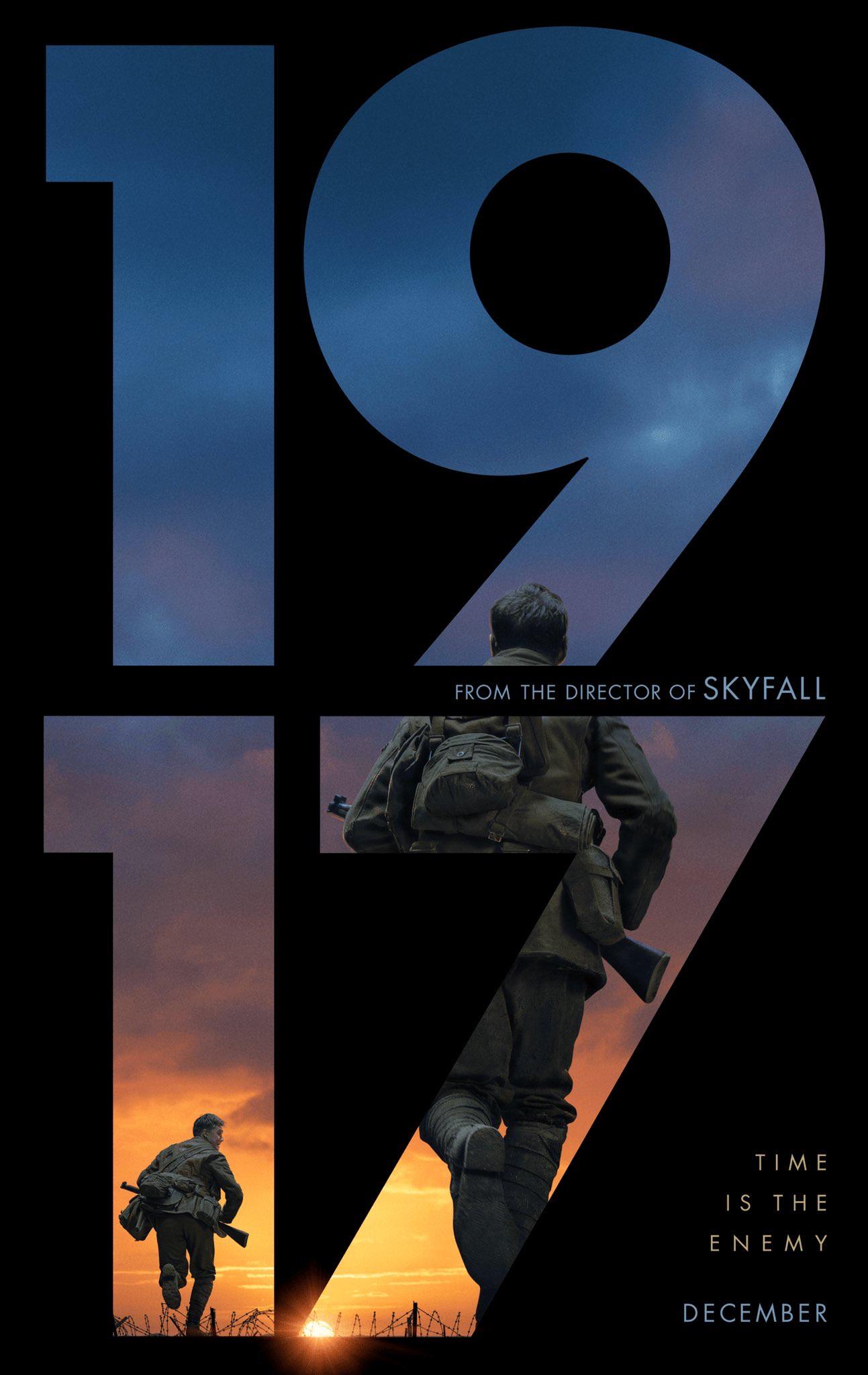
 something different: 1917.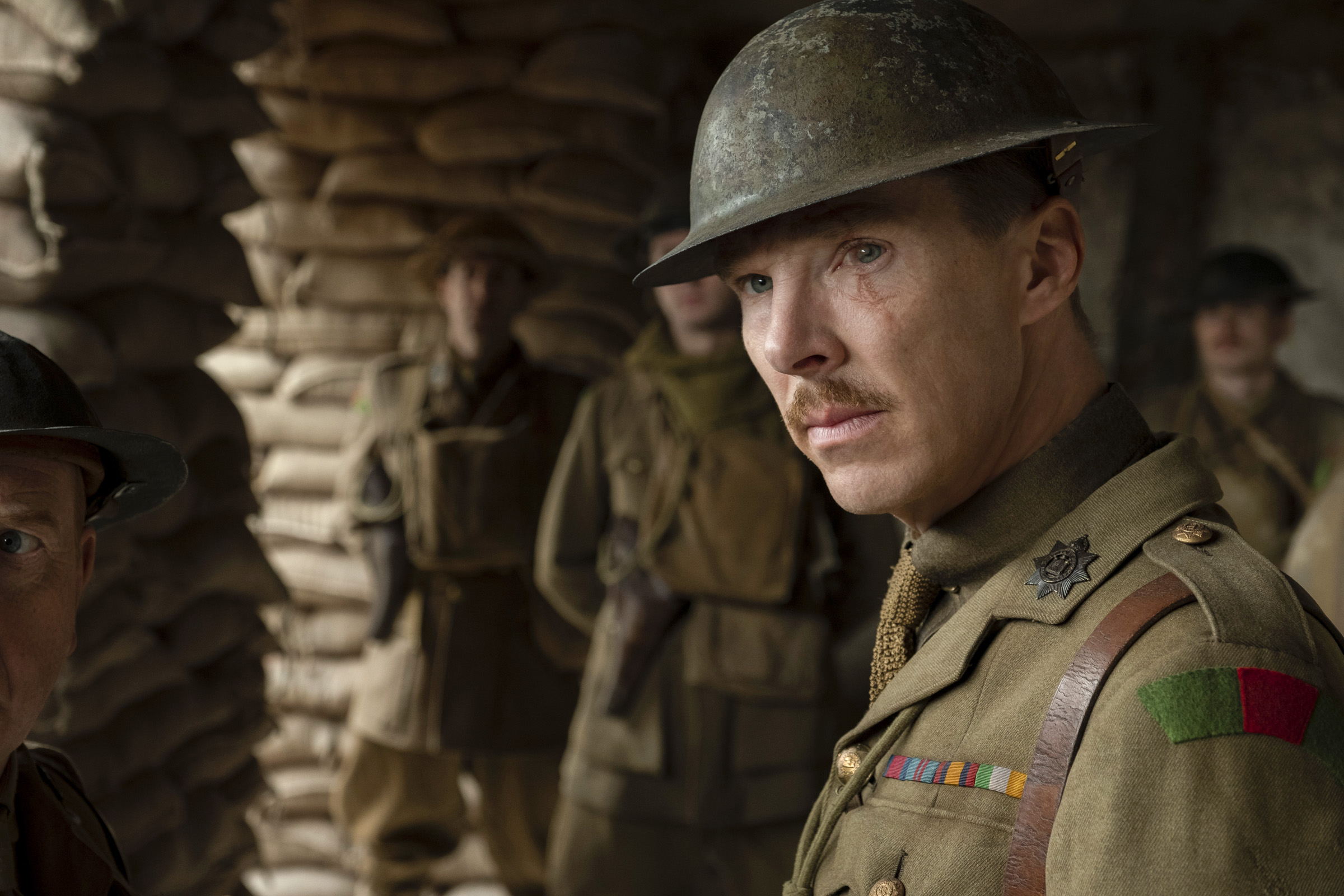


 A Work in Progress