• About
  • The Germans

A Work in Progress

A Work in Progress

Category Archives: Teaching

Connections

14 Thursday Aug 2014

Posted by ag1970 in American History, Film and Popular Culture, Personal memoirs, Teaching

≈ Leave a comment

Robin Williams and his daughter, Zelda

Robin Williams and his daughter, Zelda

My eyes popped open at 3 a.m. A woman way over on that Other Coast read the thing I wrote about depression and I realized–you could fire a nail gun at this Irish skull and they’d bounce off, bent and useless–I needed to “friend” her, because no one in her family understands what it is she is suffering. I found her page and, of course, was not surprised at what I found: a vibrant, smiling woman with beautiful children–they look grown now–whose faith life is very important to her. I liked her immediately.

Of course this reminded me of Joe Loomis who, again, took care of me after my Mom died. This is that “paying it forward” business.

This is my space, so I get to ramble.

 All of this in turn reminds me of why I became a history teacher. We are not, in the end, fractured and alone–sorry, existentialists. We are all in some way connected to each other and we all have obligations that we may not even be consciously aware of to take care of each other: if you’re lucky, and had the kind of parents I had, then you commit your life to acting on those obligations no matter what you do “for a living.”

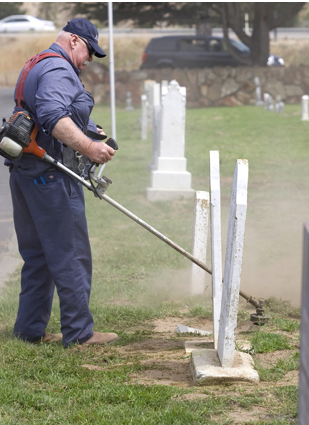
This is why so many locals love John Gearing, who works at the cemetery and had the article in yesterday’s Tribune. John has dedicated his life to caring for that cemetery and in the process has become, because of his compassion, a great comfort to those who have lost loved ones.

What John does is so important because my calling has led me to understand that we are connected even to the dead: I have never felt more heartbroken than I did in Anne Frank’s home in Amsterdam, nor more intimate with a family I had never met. I wanted to go backward in time and rescue her and the Franks from the evil that would sweep them up, but then I had to remind myself that Anne was fulfilling her obligation to all of us, at a terrible, terrible price. She reminds us, to this day, of what it is to be human, reminds us that we have a purpose, even in a life so brief, and she reminds us, too, that what we do matters.

The wonderful thing about history is realizing that the dead are not really dead. They stay with

John Gearing

John Gearing

us. They walk with us on our journeys, and, if we pay attention and are watchful, they light the path ahead for us.

Mrs. Paulding’s Bike Ride

26 Saturday Jul 2014

Posted by ag1970 in California history, Teaching

≈ 4 Comments

The Hemmi lynching was an anomaly in the history of Arroyo Grande. The time between the drought years and the First World War would be marked by progress and by a happy confluence of remarkable families who replaced the ranchero generation of Branch, Price and Dana. Agriculture would provide them with a living and they would build a town of brickwork and ornate wooden facades two miles west of Branch’s ranch house.

He had donated the land along the Arroyo Grande Creek for the town, his gift to posterity; but he was a realist, as well. As drought decimated his cattle, Branch began to sell small pieces of the Santa Manuela to hopeful farmers.

So a new generation settled Arroyo Grande:  Easterners like Branch, some from England–which accounts for the road cheerily named “Tally Ho” by the immigrant Vachells, sometime polo players–or Moravia or, like Joseph Jatta, from Canada. For those who acquired a piece of Branch’s Santa Manuela, the bargain was simple: So long as they occupied the land, cleared the monte and planted both crops and family roots, Branch offered them easy mortgages.

The townsite he donated, the one whose main street bears his name, began to emerge in the 1880s and would incorporate just before the Great War. A smithy, little shops, and soon the PCRR and its attendant warehouses and platforms were built; the little track ran along the foot of Crown Hill, which dominated the eastern end of the town of Arroyo Grande, on its way north to San Luis Obispo.

Two inevitable and competing institutions would also be built—churches and saloons. Civilization was still incomplete: A town constable was shot to death when he tried to disarm a man at a local saloon early in the new century. Local historian Jean Hubbard has written a superb history of the Arroyo Grande Methodist Church: in 1892, when Pastor Ogborn’s sermon was interrupted by a befuddled drunk who wandered into the church; the pastor stopped, grabbed the trespasser by the collar, dragged him outside, and after the noise of “a brief scuffle,” nonchalantly re-entered and finished that Sunday’s lesson.
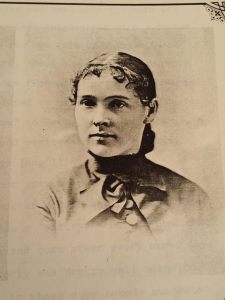
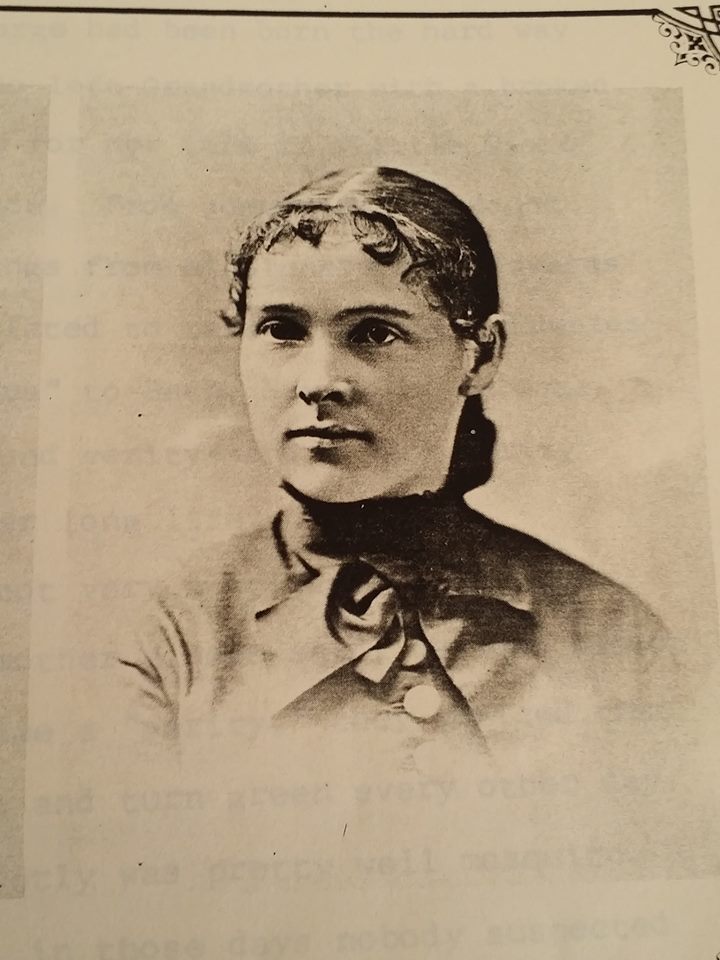
Clara Edwards Paulding two years before her marriage, 1881.

Clara Edwards Paulding two years before her marriage, to the man who would become the town doctor, in 1881. Clara is about to begin a teaching stint in Hawaii.

My childhood church was St. Barnabas Episcopal, where the Sunday nine o’clock featured a regular whose attendance was interrupted only by her death in 1983. She was Miss Ruth Paulding, a longtime teacher at the high school and a link to the earliest days of the town—she was born in 1892 in a large home partly hidden by an oak that pre-dates the Declaration of Independence, by vegetable gardens, and sometimes by sunflowers, on Crown Hill, and she only had to walk across the street to her work.

When I knew her, her wheelchair was always parked alongside the front pew. I can’t remember whether she was first or last, but the priest would leave the sanctuary to administer communion to her; it was a small but meaningful homage. I do remember the pleasure of getting a little smile from her if our eyes met while I returned to my pew from the altar rail. She was so fragile, so elegant, and so admired that a smile from Miss Ruth was as good as, or even better than, a blessing from a priest. She was ‘a gallant lady,’ the title of the little biography she wrote about her mother, Clara.

I did not know my own ties to Clara until later, but from what I knew about Ruth’s mother, I was an admirer.  She returned to college with Ruth, who’d been promised an extra $100 a year, if she took additional coursework, when the Second World War began to revive the economy. The pair decided to take summer courses at Clara’s alma mater, Mills College. Ruth took classes for the extra money; Clara, over eighty years old, took hers for pleasure, a course in “History of the United States to 1865” because, she said, she remembered the rest.

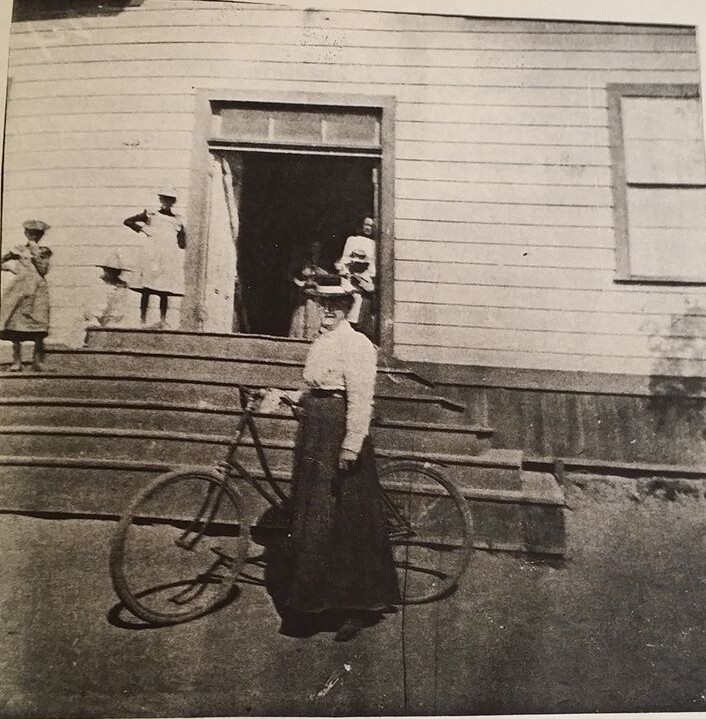
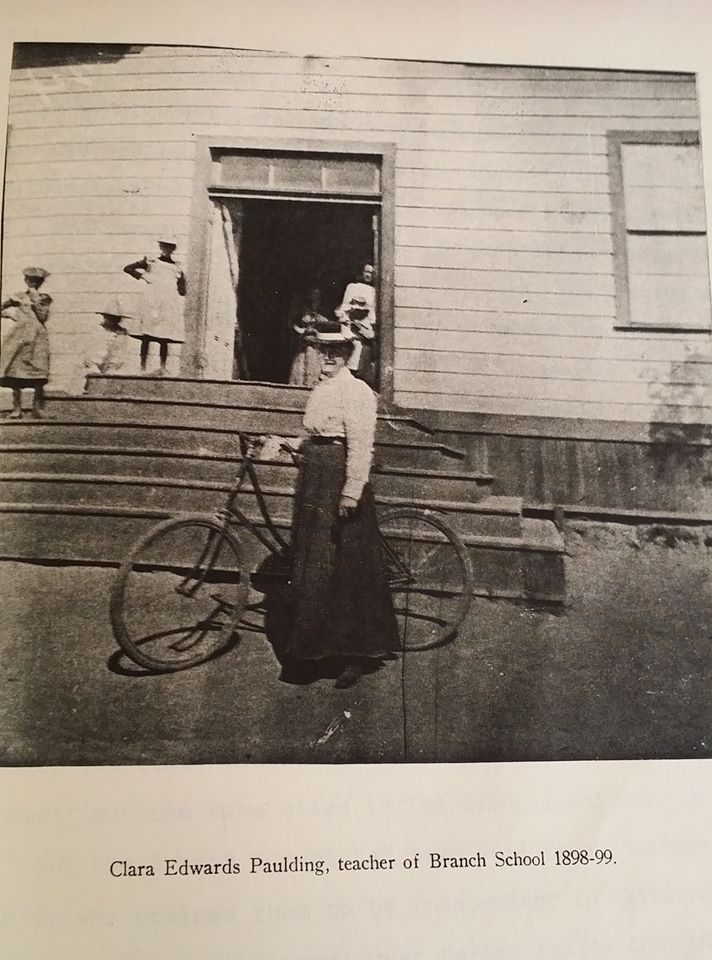
One of Clara’s assignments during more than thirty years in the classroom was at the school I attended, Branch Elementary. There is a photo of her in front of the school. Behind Clara and her bicycle in 1898 are the same steps I would climb on my first day of formal education sixty years later.

Arroyo Grande’s population, at the time of the photograph, was approaching 1,000. Beyond the town, to the east in the Upper Valley, and to the west, bounded by the sand dunes at the edge of the Pacific, in the Lower Valley, there were patchworks of farms worked by ambitious pragmatists:  Arroyo Grande men and their teams of heavily-muscled draft horses, their necks arched in effort, turned some of the richest soil in the world to prepare it for planting. They might have been plowing for sowing pumpkins or carrots, onions or beans, or one of the most important products in the many cycles of agriculture the Valley has seen: flowers, cultivated for their seeds.

What must have delighted Clara Paulding on her two-mile bicycle commute to her sixty students every morning would have been the sight of brilliant fields of flowers and, planted in others, she would have smelled the delicate fragrance of sweet peas.

It’s not hard to imagine her, given her personality, waving cheerily to the men working those fields, their faces hidden by broad-brimmed straw hats, or to imagine them waving back, wide smiles creasing their upturned faces. ecause even as field workers they had never had this much hope, and even in the Upper Valley, hemmed in closely by the oak-studded Santa Lucia foothills, they had never had this much room.

Clara’s spirit was expansive. She may look severe in her photograph, but she adored, without disguising it, young people, and the youngest the most, a feeling they reciprocated.  Her wave on school mornings would have touched these men, younger sons from a very crowded place, and not particularly welcome in this new place.

The men in the fields whom she greeted were from Japan, and some of them from a prefecture known as Hiroshima-ken.
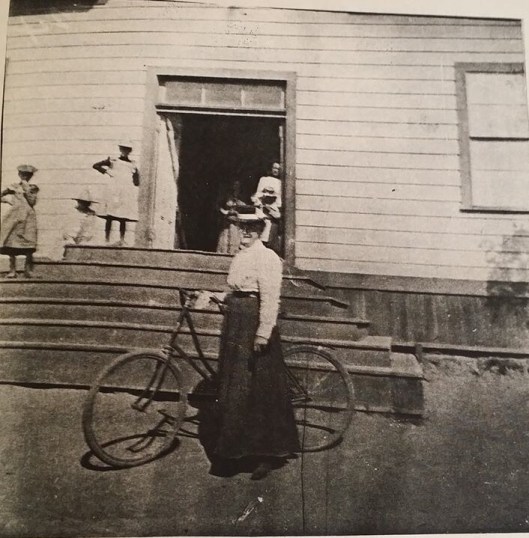
Clara Edwards Paulding, 1898, Branch School.  She would later be a founder of Arroyo Grande Union High School and, beginning in 1920, would serve on its Board of Trustees.

Clara Edwards Paulding, 1898, Branch School. She would later be a founder of Arroyo Grande Union High School and, beginning in 1920, would serve on its Board of Trustees.
 

Most Inspirational. Ever.

22 Tuesday Jul 2014

Posted by ag1970 in Personal memoirs, Teaching, Uncategorized

≈ Leave a comment

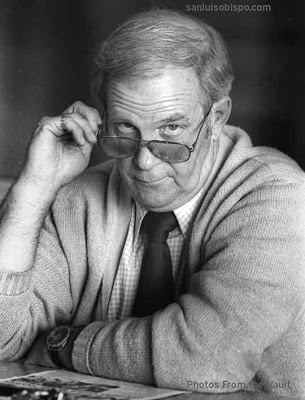
jim-hayes-fb2Jim Hayes taught me journalism at Cal Poly and was on the copy desk when I was a Tribune reporter.  He is now in hospice care with a brain tumor,and his Facebook page has exploded–page after page after page–with tributes from former students.  Here are some of mine.

*   *   *

This is Missie Pires, at the “Mustang Daily” in the early 1970s. I was 21, and Jim made me

her writing coach. She would go into broadcast journalism, anchor at KSBY, and NOT because of me, but because she was bright, hard-working, and so incredibly positive; she actually could light up a room—newsroom or otherwise. I was heartbroken when she died so young, but our time together so many years before was the first hint I’d ever had that I loved teaching and that I might have a gift for it.

Jim knew that before I did.

Years later, my first student teaching assignment was at Morro Bay High, and I met another student I grew to love as I’d loved Missie. It was Josh, Jim’s son.

There are Roman Catholics and then there is the denomination I belong to—Lousy Catholics—but I fundamentally believe that God lights our way with people like Jim and Missie, and, through them, She takes enormously good care of people like me, well-intentioned and good-hearted characters, but with a wee tendency to run off the tracks if we’re not watched carefully.

I’m on a fine road nowadays–after 29 years in the classroom, I still look up at them when they’re taking a test or writing an essay, and they are so beautiful, so full of promise, that my eyes fill with tears. Thanks, Jim.


January 2014.  Jim died in June.

* * *


Redheads Again

22 Tuesday Jul 2014

Posted by ag1970 in Personal memoirs, Teaching

≈ Leave a comment


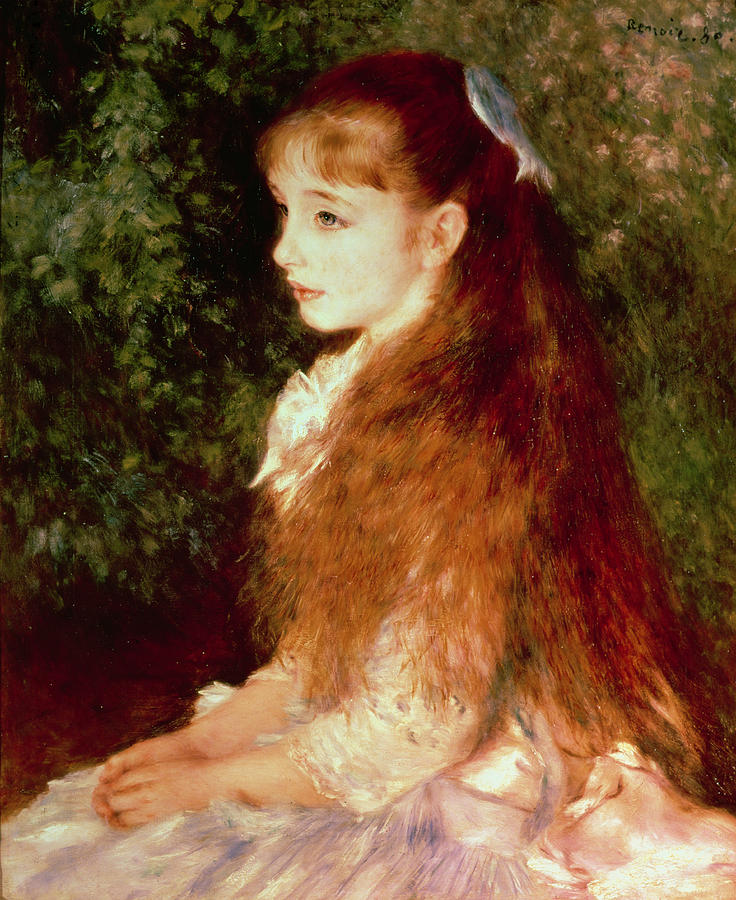
-portrait-of-mademoiselle-irene-cahen-danvers-pierre-auguste-renoirThis Renoir, the exquisite 1880 portrait of 8-year-old Irene Caher d’Anvers, was part of today’s lesson.   Irene would live to be 91.  Born in horse-and-buggy Paris, she would die with humans hurtling through space at unimaginable speeds.

Irene reminded me of a something I’d mentioned in class a few days before. In 29 years of teaching, I told them, I have never taught so many red-haired girls, in particular, and hair in so many shades of red–from strawberry blonde to deep copper. Having this many redheads is extraordinary.

This anomaly led to intense meditation and at least one extended monologue in front of 31 slightly befuddled sophomores, on redheads–all of this was me processing information–and it led to one logical, unavoidable conclusion about them:  They are beautiful.

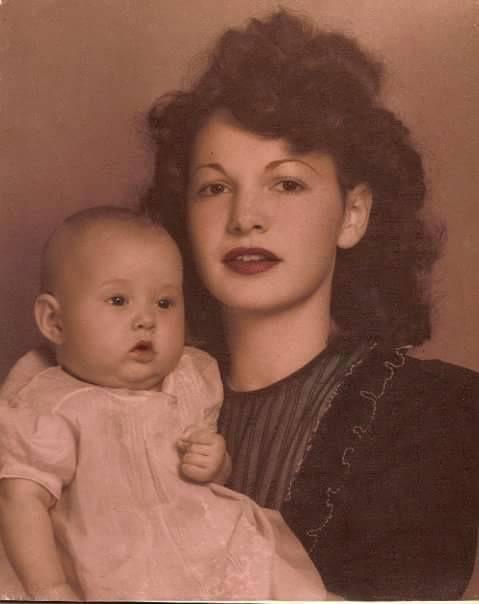
My mother, by the way, had deep auburn hair. That’s her, with my big sister, Roberta, in 1943. She was twenty-two, with ancestors from County Wicklow, on Ireland’s east coast.

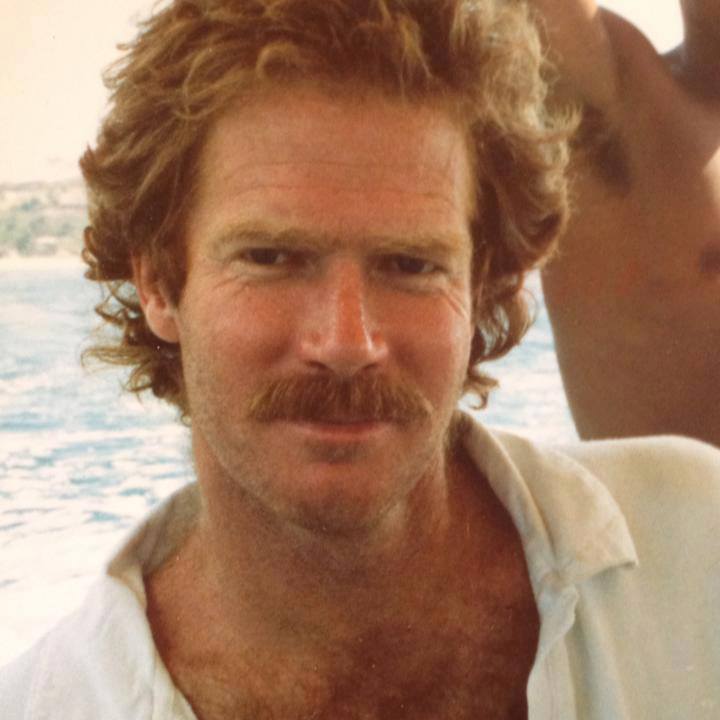
One of the dearest friends of my life, Joe Loomis, died last fall. Joe was the kind of guy–you hear stories about this in him over and over again–who would drop anything and everything to help a friend.

Here’s an example. My Mom, the single most informative influence of my life, died when I was 17.  She took her own life, a pattern that runs in my family the way cancer does in others. Nobody knew how to handle my tragedy. Joe did. He simply drove up to our front door in a jeep, invited me to jump in, and drove me—rapidly–up the Huasna to his family’s Tar Springs Ranch.  The Loomises gave me a place, their home, where I could feel safe again.

Years later, Joe and I had lost touch, but it didn’t matter because I knew this great friend would be around nearby and we would have the luxury of time to renew our friendship.

And now he isn’t, and now we don’t.

I made a color copy of a photograph of Joe– it radiates his kindness and good humor–and put it on the corner of my classroom desk.  This is his year. I will be the best teacher I can be, and it’s for him.

After school today, Kaylee and Maggie, two basketball players, were studying in my room–I work late, and I hate working alone, so having kids do their homework with me is a blessing.

We were talking, I think, about Irene again–-Irene with the red hair, because Maggie has red hair, too.  I was talking to Maggie and suddenly I thought of Joe.

“One of my best friends died this year,” I started.

The girls’ faces fell.  They started to stammer their “sorries.” These are good kids.

“No, you don’t understand.  Maggie, go look at the photo of my friend on the corner of my desk.”

She did.  The girls thought he looked nice.  I asked Maggie what color hair Joe had.  Red, she said.

I don’t think they completely got the point because I didn’t completely make it, and coherence is in short supply when you need it most.  They had to go to their game, and I think they believed they’d said or done something wrong, when in fact they’d given me a wonderful gift.  It took me a few hours to unwrap it.

The reason–and when you’re in your sixties, you begin to understand that life isn’t as accidental and random as you think it is–the reason I have more redheads this year than I’ve ever had in 29 years of teaching— is that Joe hasn’t left me at all.

My little brace of red-haired girls light me up inside every day they’re in my classroom, because they are themselves beautiful and, I now understand, because they connect me to the friend of a lifetime.  It’s no wonder I loved Joe—excuse me, love him–so very much.

February 2014


Joe Loomis.  1952-2013

Joe Loomis. 1952-2013

Newer posts →

Subscribe

  • Entries (RSS)
  • Comments (RSS)

Archives

  • January 2026
  • December 2025
  • November 2025
  • October 2025
  • September 2025
  • August 2025
  • July 2025
  • June 2025
  • May 2025
  • April 2025
  • March 2025
  • February 2025
  • January 2025
  • December 2024
  • November 2024
  • October 2024
  • September 2024
  • August 2024
  • July 2024
  • June 2024
  • May 2024
  • April 2024
  • March 2024
  • February 2024
  • January 2024
  • December 2023
  • November 2023
  • October 2023
  • September 2023
  • August 2023
  • July 2023
  • June 2023
  • May 2023
  • April 2023
  • March 2023
  • February 2023
  • January 2023
  • December 2022
  • November 2022
  • October 2022
  • September 2022
  • August 2022
  • May 2022
  • April 2022
  • March 2022
  • February 2022
  • January 2022
  • December 2021
  • November 2021
  • October 2021
  • September 2021
  • August 2021
  • July 2021
  • June 2021
  • April 2021
  • March 2021
  • February 2021
  • January 2021
  • December 2020
  • November 2020
  • August 2020
  • July 2020
  • June 2020
  • May 2020
  • April 2020
  • January 2020
  • December 2019
  • November 2019
  • October 2019
  • September 2019
  • August 2019
  • May 2019
  • April 2019
  • March 2019
  • February 2019
  • January 2019
  • December 2018
  • November 2018
  • October 2018
  • September 2018
  • July 2018
  • June 2018
  • May 2018
  • April 2018
  • March 2018
  • February 2018
  • January 2018
  • December 2017
  • November 2017
  • October 2017
  • April 2017
  • March 2017
  • December 2016
  • November 2016
  • October 2016
  • September 2016
  • August 2016
  • July 2016
  • June 2016
  • April 2016
  • March 2016
  • February 2016
  • January 2016
  • December 2015
  • November 2015
  • October 2015
  • September 2015
  • August 2015
  • July 2015
  • June 2015
  • May 2015
  • April 2015
  • March 2015
  • February 2015
  • January 2015
  • December 2014
  • November 2014
  • September 2014
  • August 2014
  • July 2014

Categories

  • American History
  • Arroyo Grande
  • California history
  • Family history
  • Film and Popular Culture
  • History
  • News
  • Personal memoirs
  • Teaching
  • The Great Depression
  • trump
  • Uncategorized
  • World War II
  • Writing

Meta

  • Create account
  • Log in

Blog at WordPress.com.

  • Subscribe Subscribed
    • A Work in Progress
    • Join 68 other subscribers
    • Already have a WordPress.com account? Log in now.
    • A Work in Progress
    • Subscribe Subscribed
    • Sign up
    • Log in
    • Report this content
    • View site in Reader
    • Manage subscriptions
    • Collapse this bar
 

Loading Comments...