Yes, I have a playlist called “Disco” on my MP4 player. So sue me. It got me through a pretty good session on the rowing machine this morning, though, and I just wanted to share three songs, whether you want me to or not. So there.
Gloria Gaynor evokes Gloria Swanson in Sunset Boulevard in the way she vamps it up—even the piano rolls help— in this version of her wonderful song, “I Will Survive.” But she makes it the vamping work. And she’s not scary, like Gloria Swanson.
And this song is infectious. Even the orchestra gets happy. Me, too.
And, finally—hence the name of this blog post—we used to watch Soul Train open-mouthed on Saturday mornings (was it on after American Bandstand?) The dancers were amazing. And, as for Diana Ross, my Mom adored her when the Supremes appeared on The Ed Sullivan Show in the 1960s, so she became a part of family tradition. The dancers she invites onstage, in this video from an old Midnight Special, aren’t necessarily Soul Train caliber, but look how happy the young woman is. This moment will live with her forever. That’s a sweetness only music can provide.
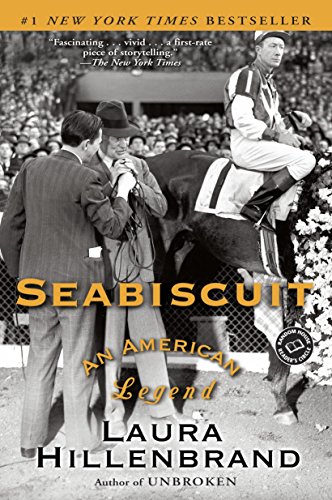
I don’t think it’s possible to tell you how much I love this book. It was so inspirational and so instructive—about horses and horse-racing, about which I know little–but being immersed inside stables and jockey’s locker rooms and the Santa Anita grandstands, with smells ranging from liniment to buttered popcorn, was one of the most vivid reading experiences of my life.
What’s just as impressive as the racehorse is the book’s author.
Laura Hillenbrand was essentially paralyzed by Chronic Fatigue Syndrome (her New Yorker account of her disease is haunting) and she persisted in researching and writing a book interrupted by days when all she could bring herself to do was crawl out of bed to fix a bowl of corn flakes.
Although I come from a family familiar with horses—my father and my sisters—I am not. (I raised chickens.) But the writing of Hillenbrand and of Elizabeth Letts (The Perfect Horse) was so powerful that it led me to write perhaps the best essay I’ve ever written, “Sheila Varian’s Perfect Horse,” about a “blocky little mare,” an Arab, who became the national champion cow horse in 1961.
Central to the Hillenbrand book and to its film adaptation is the great match race between Seabiscuit and War Admiral in 1938. It figures, oddly, in a recent event in our lives: my much-loved brother-in-law, a Naval Academy grad and retired Navy Captain, died recently. When my wife, her sister Robin, her brother Dana and my son John went to Virginia for the funeral, they encountered something I’ve heard of before. They were Californians and once that was discovered, some of the East Coasties snubbed them. Not all of them, to be sure, but there was a discernible distaste in the air, as if those who had known and loved Captain Steve the longest were pretty much Neanderthals.
The film Seabiscuit was on the television yesterday and, of course, I misted up during the final sequence when the ‘Biscuit, recovered from the injury that had nearly led to him being put down, wins the 1940 Santa Anita Derby. It’s glorious filmmaking.
But it’s not the centerpiece. For me, that would be the 1938 match race between the little California horse and the Kentucky-bred and East Coast darling, War Admiral, a magnificent athlete.
The way that race was run made me feel better about being a Californian; the way the film portrayed it—down to the elegant pre-race narration by historian David McCullough—reminded me of the mare Ronteza, Sheila Varian’s Arabian, Sheila took on twenty male competitors and Ronteza took on twenty Quarter horses in 1961 and they beat them all. There is nothing I love more than a good underdog—in this case, underhorse—story.
Forty million Americans listened to the great match race call that day in 1938. That’s because of the point Hillenbrand’s book makes: Seabiscuit was their horse, the underdog champion of an underdog people—Hitler dismissed Americans as “a mongrel race”— in the transition years between Depression and War, when they would prove that they were champions, too.
Somehow the 1942 photo below is consistent with Seabiscuit’s legacy. The statue dedicated to him was installed at Santa Anita in 1941. The following year, the racetrack became an assembly center for Japanese Americans, headed for desert camps, who slept in the track’s stables. Here, internee Lily Okuru, Japanese American— poses alongside the Biscuit. The horse and the young woman, and her people, shared remarkable similariies: They were unappreciated, sometimes reviled, banished, loyal without reservation to those who loved them, courageous in combat—whether on Caliornia racetracks or Italian battlefields—and Seabiscuit, like 120,000 of Lily Okuru’s people, were Californians.
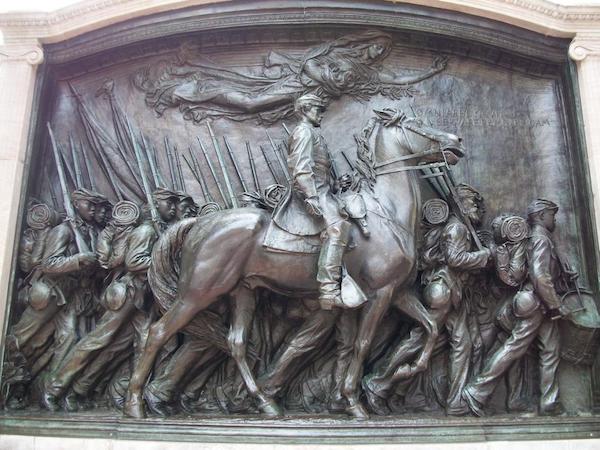
An excerpt from Robert Lowell’s 1960 poem about his artwork, “For the Union Dead:”
…Parking lots luxuriate like civic sand piles in the heart of Boston. A girdle of orange, Puritan-pumpkin-colored girders braces the tingling Statehouse, shakingBottom of Form
over the excavations, as it faces Colonel Shaw and his bell-cheeked Negro infantry on St. Gaudens’ shaking Civil War relief, propped by a plank splint against the garage’s earthquake.
Two months after marching through Boston, half the regiment was dead; at the dedication, William James could almost hear the bronze Negroes breathe.
The monument sticks like a fishbone in the city’s throat. Its colonel is as lean as a compass needle.
He has an angry wrenlike vigilance, a greyhound’s gentle tautness; he seems to wince at pleasure and suffocate for privacy.
He is out of bounds. He rejoices in man’s lovely, peculiar power to choose life and die— when he leads his black soldiers to death, he cannot bend his back.
The 54th leaves Boston in this scene from the film Glory, which remains, in my mind, the finest Civil War film yet made. Frederick Douglass watches from the reviewing stand and, as fine as the soldiers are, it’s the reaction of the Black Americans in the crowd, and Col. Shaw’s reaction at seeing his family, that move me most:
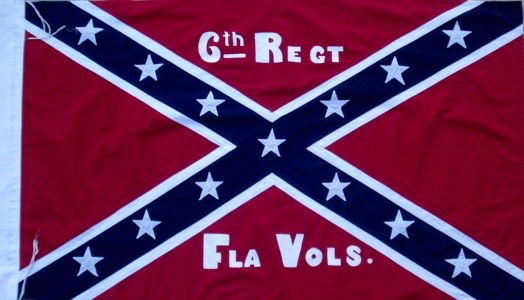
Black troops played roles in the combat careers of two Arroyo Grande settlers. At the December 1864 Battle of Nashville, this old man, Otis Smith, a Huasna Valley farmer, earned the Medal of Honor for seizing the battle flag of the 6th Florida Volunteer Infantry in the Union assault on the Confederate flank atop Shy’s Hill, the high point that guarded the city.
Otis Smith, about 1920, at the Sawtelle Veterans’s Home near the UCLA campus.
Once Smith had carried the Florida regiment’s position, the rest of the Confederate line crumbled. Their commander, John Bell Hood, ruefully said that he’d never seen an army flee in such disorder. This is a replica of the flag that Smith captured—which would have meant fighting or killing five or six men to get to it. The original, with some corners missing—souvenirs for the men of Smith’s 95th Ohio Volunteer Infantry—is on display in the Florida Museum of History today.
This is in no way intended to denigrate Smith’s bravery. He deserves his Medal of Honor. But the story isn’t complete until you know the whole of it, and that involves Black soldiers. Smith’s regiment was able to stampeded the Floridan’s, on John Bell Hood’s extreme left, in part because of what happened earlier in the day. Three regiments of what were then called U.S. colored troops attacked Hood’s center. They were repulsed with heavy casualties; afterward, the Confederate officer in charge of the position praised them for their bravery.
Hood noted that. As a result, he shifted troops away from his flank to his center. That left the depleted 6th Florida, already miserable from soaking overnight rain, unprepared for the ferocity of Otis Smith and his comrades. Black men had made his moment of glory; they may in fact have saved the life that still marks lives in Arroyo Grande today. The Mankins brothers, managers of Brisco Lumber and members of a family long noted for cattle ranching and community service, are descendants of Otis Smith.
The second incident, involving another Huasna Valley farmer, Adam Bair, remains one of the saddest moments of the Civil War. It bears reminding that recent scholarship has revised the casualty count from the traditional statistic of 620,000 dead to 750,000 or more. That is the modern equivalent of eight million Americans lost.
Among them were the soldiers who fought in the Crater in 1864, the victims of racism on the part of their own leader, a hero of Gettysburg, George Gordon Meade.
From an earlier blog post about the Battle of the Crater, witnessed by Adam Bair:
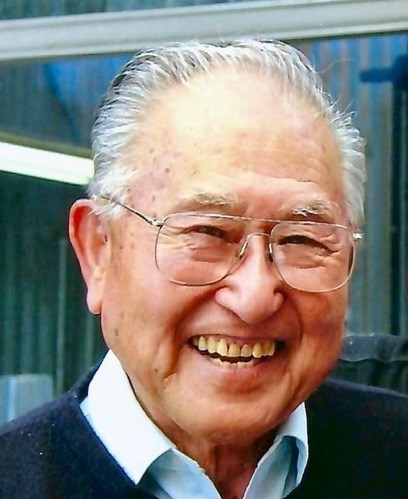
Arroyo Grande’s Ben Dohi died last month, and his obituary was so beautifully written that I wanted to include it below:
Benjamin Hideo Dohi November 8, 1927 – May 26, 2023
Arroyo Grande, California – A little piece of our community’s history was lost last week with the passing of Benjamin Hideo Dohi at age 95. Ben passed peacefully at home on May 26 after a long life filled with hard work and the love of family.
Benjamin Hideo Dohi was born on November 8, 1927 into a farming family to parents Hugh Setsugo Dohi and Hide Kobayashi Dohi in Santa Maria, California. Ben contracted pneumonia as an infant and after the doctors had given up hope on his recovery, it was the love of his mother that nurtured him through his illness and his early months of life.
That same tenacity and determination would be what saw him through his early adult years as an internee in the Japanese internment camp at Poston, Arizona from 1942-1945. Benjamin was 14 when he, along with his parents and two brothers and two sisters, were evacuated from Arroyo Grande to a waiting facility in Clovis, California before being transported to Poston, where he resided until the end of World War II. Although Ben would end up starting high school at Arroyo Grande High School as a freshman, he moved to Clovis High School then on to Poston High School where he earned his high school diploma. “The only thing I lost was my youth,” said Ben when interviewed by Mathew Donovan for Cal Poly in 2006. He credits his teachers at the internment camp, who were mostly Quaker volunteers, for the valuable lessons learned while there. When the Japanese were released from the camp in 1945, Ben successfully transferred to college in Kansas City, Missouri where he said he knew as much as the other students but was mostly treated like a “novelty.”
But Ben’s education was once again interrupted in 1946 when he enlisted into the US Army and began training in Military Intelligence. He served two years in Japan as an interpreter after completing a language program at the Language School in Monterey, California. After being discharged from the army, Ben completed one year of law school at the University of California, Berkeley, but the draw of farming and the love of the Arroyo Grande community brought him home.
In 1955 Ben became a grower for POVE, Pismo Oceano Vegetable Exchange, the largest Japanese cooperative of farmers in California. He joined the Hayashi, Ikeda, Kobara, Saruwatari, Fuchiwaki, Kawaoka, and Fukuhara families. It was in the office of POVE that Benjamin Dohi met the woman who would change his life. Ty Yamaguchi, who had also been a young woman in the same internment camp, won Ben’s heart and they married soon after Ben joined the family of growers who would go on to become one of the most successful farming operations in the state.
The young Dohi family experienced heartbreak when their first child, Leslie Naomi Dohi, died at childbirth in 1958; Ben and Ty were later blessed with the birth of their sons, Hugh Jonathan in 1959 and Peter Benjamin 1961. Ben, along with his wife, Ty, dedicated their lives to growing their business, Dohi Farms, and although there were struggles in the beginning, once he began growing bell peppers they found their stride. Ben took great pride in growing bell peppers which was his most important crop in the early years of farming. As Ben’s sons got older he was able to build a home for his young family on the same property where he was raised as a child.
Ben split his time between farming and watching his boys play sports, as well as coaching some of their baseball teams, a skill he learned in the internment camp. Ben loved to take his family on vacations and loved to teach his boys how to fish in Arroyo Grande and Lopez Creek. He instilled in his boys a love of farming, family, and community. He showed his sons how to be honest, generous, and humble in life, and these values became theirs in their own lives.
Ben never wanted to dwell on the past; instead, he focused on his work, his family, and his business. Nothing made him happier than driving in his pickup truck alongside sons Hugh and Peter overseeing each farm which he referred to as “making my rounds.” He always gave credit to “the Man upstairs” for any success he had.
His was a life well-lived.
Ben is preceded in death by his wife, Ty, and his baby daughter, Leslie, brother, Abe, and sister, Ruth. He is survived by his son, Hugh Dohi (Shawnah Dohi), son, Peter Dohi, brother, Paul Dohi, sister, Grace Dohi, nephews Gregory Dohi and Anthony Dohi, and niece Sylvia Roldan-Dohi.
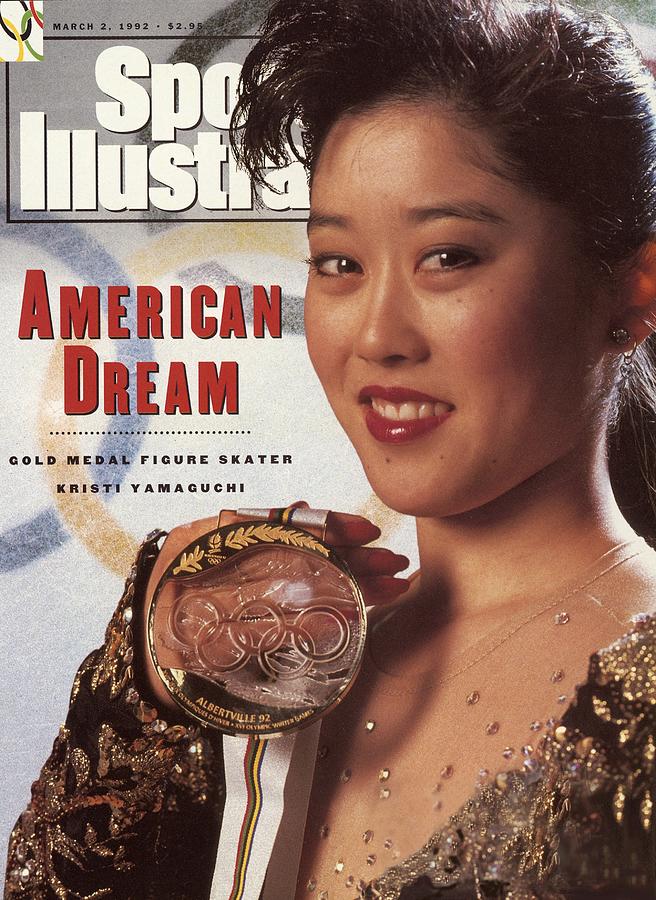
The family expresses its deep appreciation and gratitude to the community of Arroyo Grande, the farm families of POVE, and the doctors and nurses of Arroyo Grande Hospital and San Luis Post Acute. In lieu of flowers, donations can be made to Arroyo Grande Community Hospital Foundation 345 S. Halcyon Road Arroyo Grande, CA 93420 or to Kristie Yamaguchi Always Dream at 125 Railroad Ave, Suite 203 Danville, CA 94526. No services are planned.
Ben
So Ben’s sons still farm land, near the high school, that his family has been farming for nearly a hundred years. I knew Ben and his wife, Ty Yamaguchi Dohi, in high school, where I was a sometimes visitor to the Dohi home. This is where I first discovered sushi, a treat reserved for special Japanese holidays like the Fourth of July and Labor Day. The three Yamaguchi sisters prepared it in the kitchen, frequently giggling—they must have been a handful as teenagers—and I’d break away frequently from the men and the TV sports we were watching to hang with the sisters, who sometimes fed me samples.
On one such occasion, I got to hold the beautiful baby girl who would grow up to be Kristi Yamaguchi.
Ben’s death led to updating a video—I’m a historian—that I’ve shared with schools and community groups about the experience of people like Ben during World War II. Executive Order 9066, as you’ll see, was perhaps the single most tragic event in my hometown’s history. But the way that both Japanese Americans and their friends responded brings to mind the word that so marks Ben Dohi’s life: Honor.
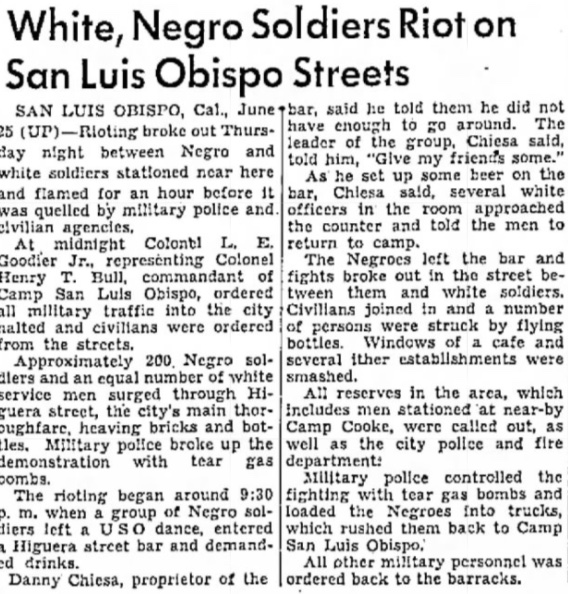
The wire press story recalls a painful part of our past, eighty years ago next week. There were Black Quartermaster units at Camp San Luis Obispo, support troops at the Santa Maria Army Air Force Base, and the 54th Coast Artillery—-a unit designation remindful of a proud part of our nation’s past, the Civil War’s 54th Massachusetts—manned gun positions overlooking Port San Luis and Estero Bay. The fighting the story describes took place on the night of Thursday, June 24, 1943.
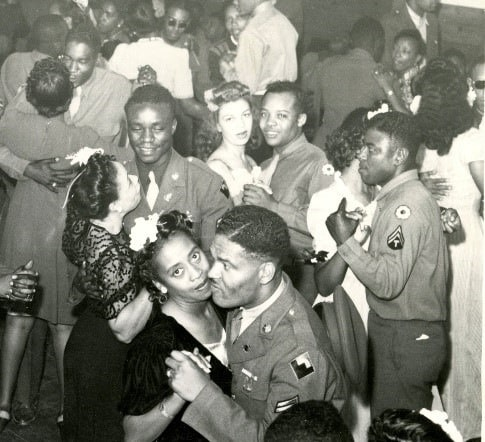
San Luis Obispo, as the nation did, followed the color line. There were, according to extensive research done by military historian Erik Burn, separate USOs. White GI’s frequented what is today’s Ludwick Community Center; the extant USO for Black GI’s is today’s City Utilities Department at 873 Morro, near the Palm Street parking structure.
Black GI’s and their dates at their San Luis Obispo USO. Photo courtesy Lt. Col. Erik Brun
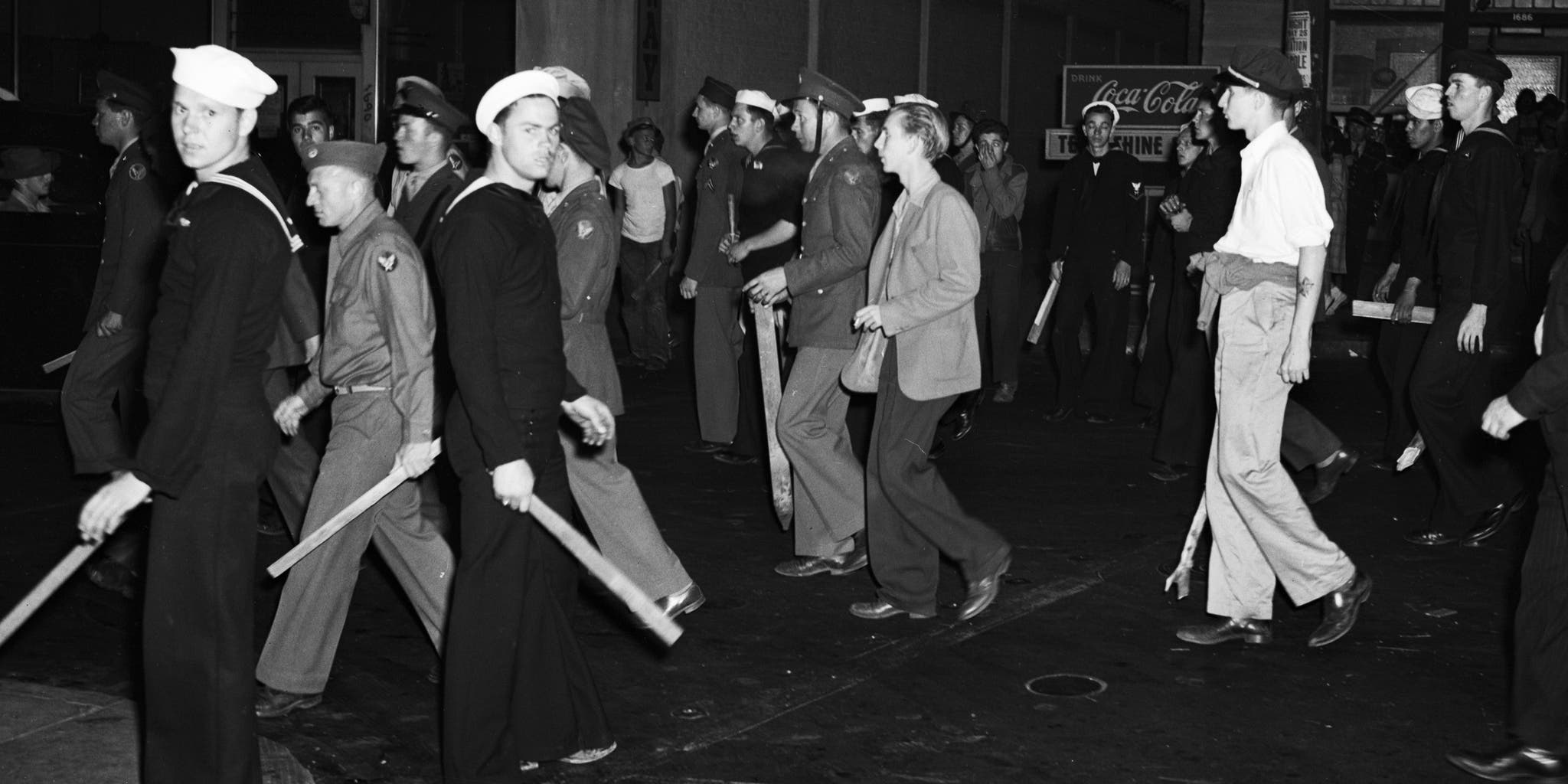
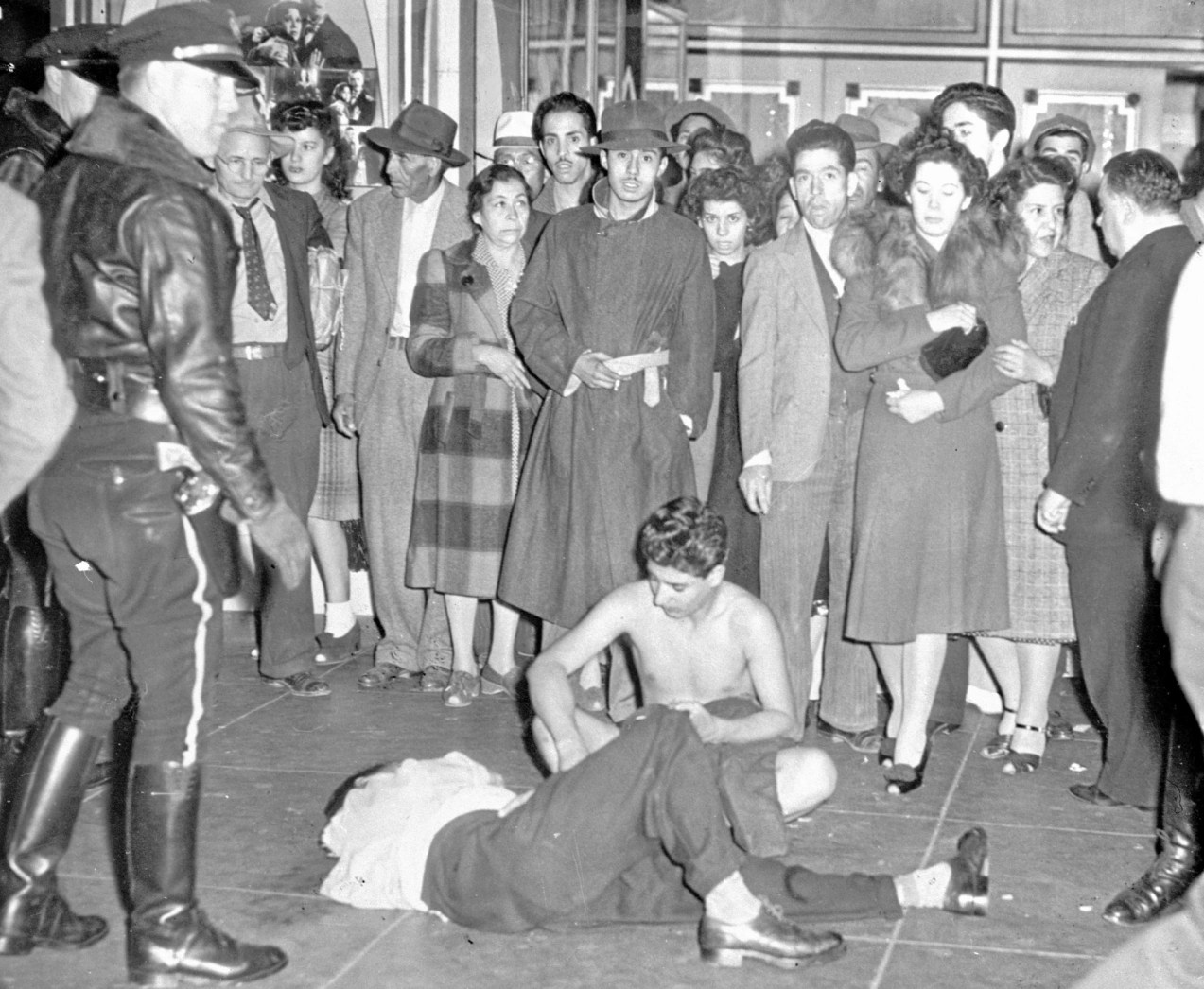
The most famous 1943 incident, of course, belongs to L.A., where Army and Navy enlisted men, many Midwestern or Southern, armed with axe handles, beat and then stripped young Latino “Zoot-Suiters” in fighting that had begun near the Naval Armory in Chavez Ravine and then rolled south to Chinatown and east to Boyle Heights, finally ending at a boundary that is today’s Santa Monica Freeway.
The Latino kids’ sense of style was made manifest in their Zoot Suits. The fashion—considered seditious, I guess, in a time when cloth was rationed, was popular with young Black kids, too. Cab Calloway is blatantly Zootish in the excerpt from 1943’s Stormy Weather, a film, I need to point out, that made the sixteen million men who served in World War II fall in love with Lena Horne. (The song spilled over into literature, too: a passage from Steinbeck’s Sweet Thursday has trumpeter Cacahuete, Joseph and Mary’s nephew, playing “Stormy Weather” into a Cannery Row storm drain for the reverb while the sea-lions accompany him from their rocks on China Point.)
The LAPD had no fondness for minority youth culture in 1943. As was its wont in those days, the Department arrested the Chicano kids, the Zoots, but only after they’d been stripped and beaten. They were easier collars then, when they were bleeding on the sidewalk. And, since they were overwhelmingly the victims of violence, the three days of mayhem were immortalized as the “Zoot Suit Riots.”
The Zoot Suit riots were a vivid but not exclusive reminder of American racism in 1943. Some of the other incidents:
May 25, 1943: On the same date that George Floyd was murdered in 2020, the promotion of twelve Black workers at a Mobile, Alabama, shipyard that built and maintained U.S. Navy warships led to attacks, by 4,000 Whites, on Black defense workers. Some of those workers jumped into the Mobile River to escape the mob. After at least fifty were injured, National Guard troops put the rioting down.
June 3-8: The Zoot Suit Riots.
June 15-17: Beaumont, Texas, where an influx of both Black and White shipyard workers and crowded housing were factors in three days of rioting that left three dead, two of them Black, one White. A White woman had accused a Black man of rape; when a White crowd gathered around the jail where suspects were held and were denied access, they invaded Beaumont’s Black neighborhoods, torching over 100 homes.
June 20: The Belle Isle Riots in Detroit. 6,000 troops were called out by the president to end violence that resulted in 34 deaths—twenty-five of the victims were Black– fueled by rumors that a White woman had been raped and that a White mob had thrown a Black mother and her child off a Belle Isle bridge. Background tensions included densely packed ghettos and, as was the case in Beaumont, the promotion of Black defense workers. Police stood by as a Black man was beaten to death; a White doctor was murdered as he was making a house call.
June 24: Fighting between White and Black GI’s in downtown San Luis Obispo. As the article notes, MP’s took the Black GI’s into custody and drove them to Camp San Luis Obispo.
August 1 and 2: As a Black soldier attempted to intervene in the arrest of a young Black woman, an NYPD officer shot him. Rumors that the soldier had been killed led to two days of violence that killed six and caused millions in property damage. Ralph Ellison, in The Invisible Man, and James Baldwin, in Notes of a Native Son, incorporated the riot into American literature.
Racial violence didn’t end at our shores. On April 3’s “Battle of Manners Street” in Wellington, New Zealand, the fighting resulted from American Marines blocking the entrance of Maori soldiers to an all-services social club. In June, one American soldier was killed during interracial violence in Northern England in what became known as the “Battle of Bamber Bridge,” after the town where fighting, including exchanges of gunfire, broke out between Black troops and White MPs. Five American servicemen were shot. In the aftermath, thirty-two, all of them Black, were court-martialed.
The people of Bamber Bridge were sympathetic to the Black soldiers they had begun to befriend. Anthony Burgess, the author of A Clockwork Orange, taught in the little town then, and remembered that when one local innkeeper was ordered to institute a color bar, he put out the following sign:
OUT OF BOUNDS TO WHITE SOLDIERS
* * *
When I taught U.S. History at Arroyo Grande High School, we learned about the L.A. riots every year, using animated maps to follow their progress, reading contemporary news reports and hearing, thanks to PBS, from people who’d lived through the time and scholars who’d studied it. I assume teachers aren’t supposed to teach anything anymore that puts America in a negative light or that might make European-American kids feel guilty.
It’s funny, but my kinds, mostly Anglo, never seemed to feel guilty. They loved the way these teenagers from East L.A. dressed and danced. What they hated was the cruelty visited on them. They would learn about other soldiers and sailors, heroes, as we studied the war itself. But, to use an analogy I’m fond of: I’ve been married for thirty-seven years, and my wife doesn’t love me because I’m perfect. What she feels for me is mature love.
I love my country in the same way, in spite of and in part because of its imperfections.
There was blood on the sidewalks sidewalks along Higuera in 1943. To look away does America and Americans a disservice. In confronting demons from our past, we give our young people the tools they’ll need to form a more perfect union.
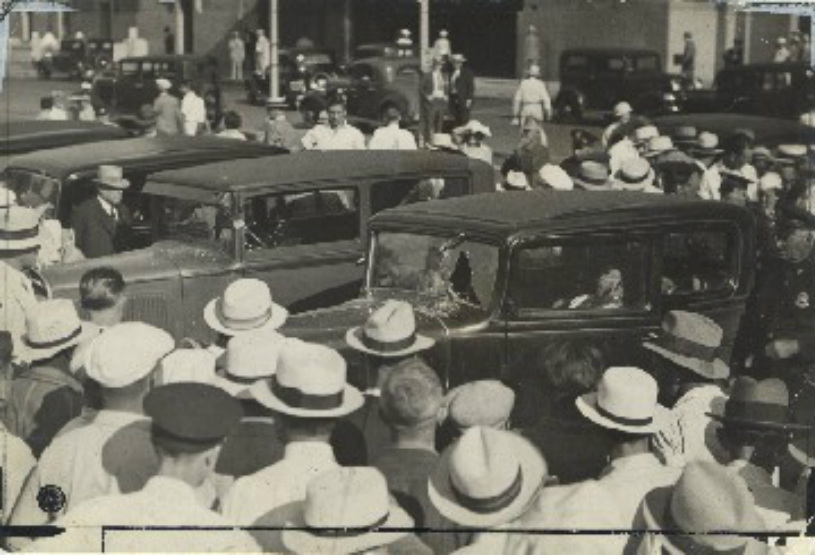
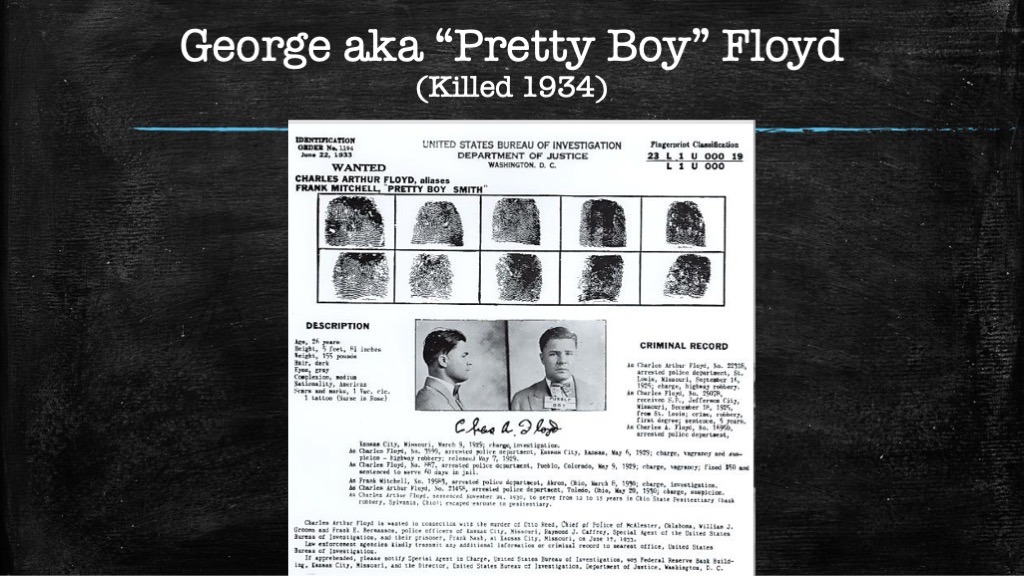
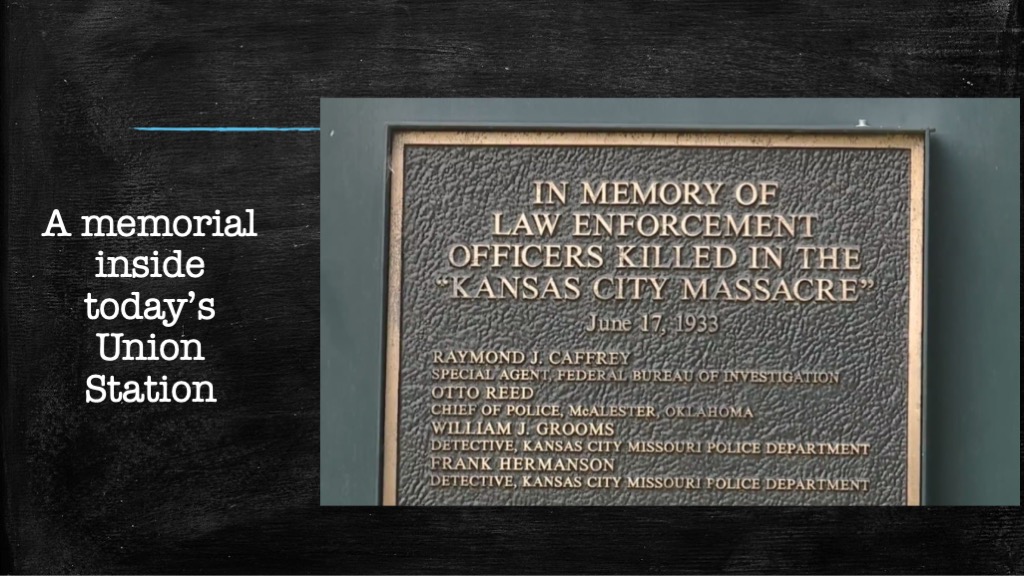
Tomorrow is the 90th Anniversary of the Kansas City Massacre. Police were escorting an associate of Pretty Boy Floyd’s to Leavenworth when they were jumped by gangsters with Thompson submachine guns.
Two police officers, a police chief and an FBI agent were killed. The attempt to free the prisoner, Frank Nash, failed, because the gunmen killed him,t oo.
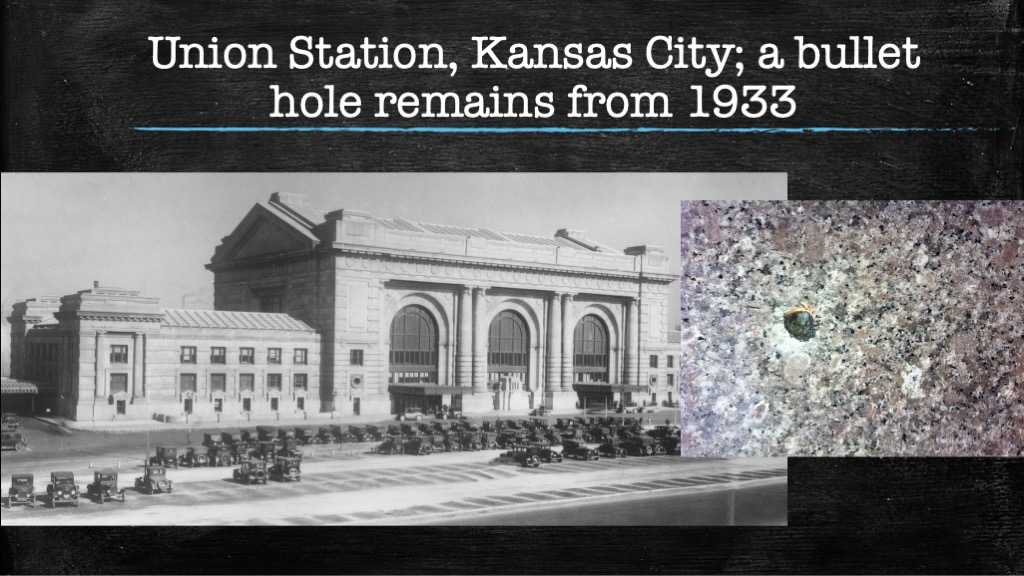
There are still bullet holes from 1933 in the walls of Union Station.
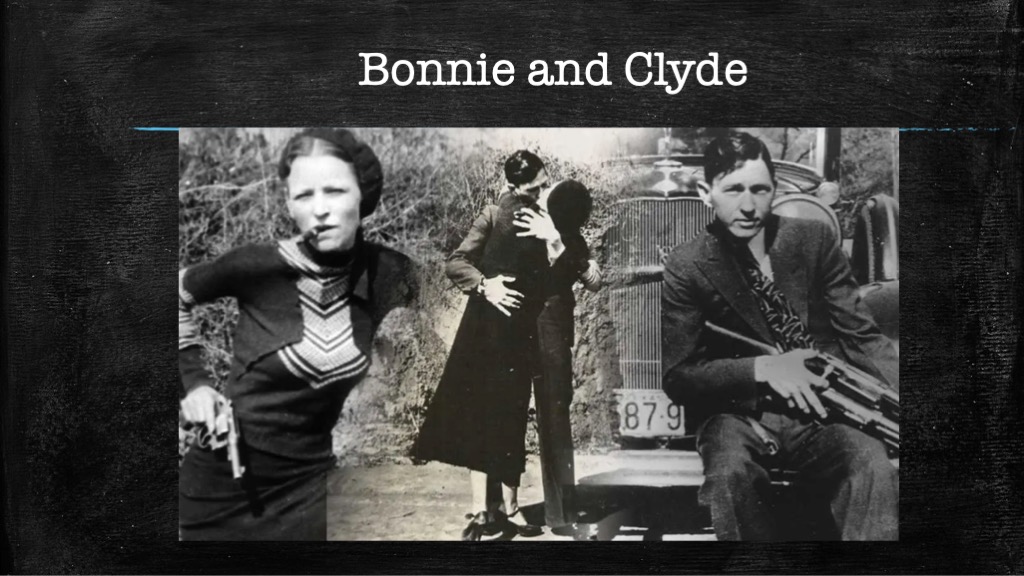
That was a hard year for Missouri. A highway patrolman and the Boone County Sheriff were assassinated, a police chief was kidnaped, an eighteen-year-old Black man was lynched in St. Joseph, and Bonnie and Clyde took up housekeeping in Platte City, about 30 minutes north of Kansas City.
Kansas City is a beautiful town–unexpectedly hilly–but it was wide-open in the 1920s and 1930s, both in good ways (Louis Armstrong played in speakeasies there) and in bad–violence and political corruption.
That’s where my Grandmother Gregory comes in. She was a powerful woman, the Democratic Chair of Texas County, Missouri, and one of the first women delegates to an national political convention, in 1924, for the Democrats in sweltering heat inside Madison Square Garden. It took them 109 ballots to nominate a nonentity, John W. Davis, trounced by Calvin Coolidge that November.
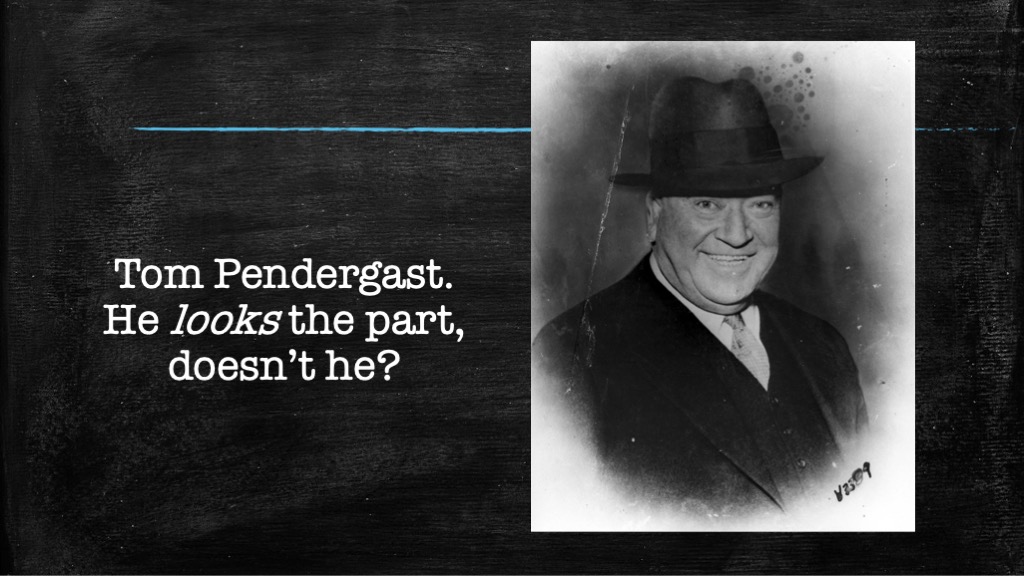
In the 1930s, the political “boss” of Kansas City was a Democrat, Tom Pendergast, whose machine was legendary and who influence extended far beyond the city limits. Nine years ago, I wrote down what my father told me about those times:
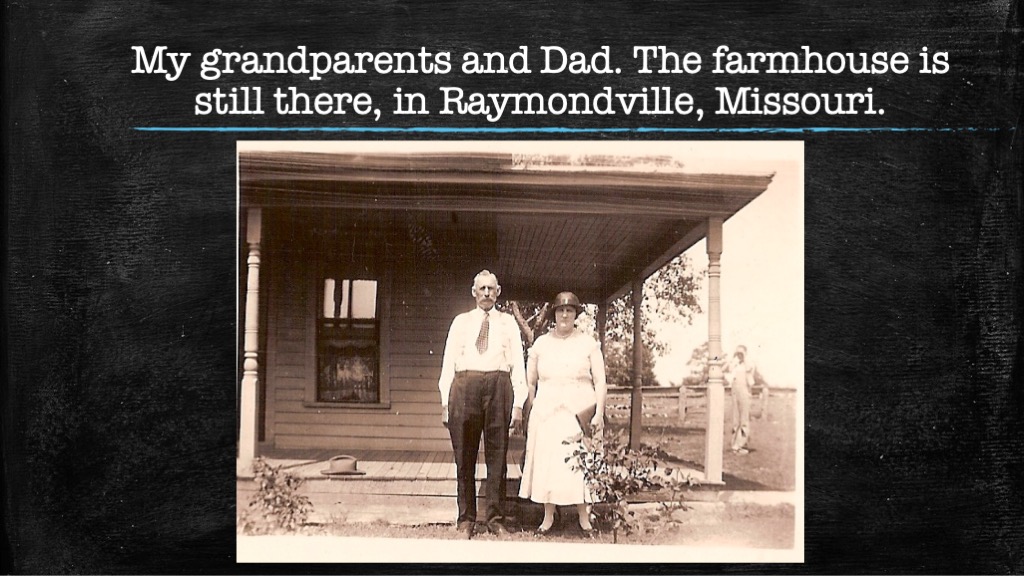
In Depression-era Missouri, before every election, my Dad remembered, a new car would pull up outside my Grandfather’s farmhouse and two men in three-piece suits (usually reserved for funerals, and even then for the Deceased) would deposit a bank-bag full of cash on Dora Gregory’s kitchen table. For them, it was but one more stop on a kind of purgatory circuit. That part of the state was thinly populated, so you had have a real passion for soybeans to make the drive enjoyable.
They were bagmen for the Kansas City Pendergast Machine, one of those old-timey operations that brought dead voters back to life, among other shenanigans.
Tom Pendergast had Texas County in the bag, because, come Election Day, my pre-teen Dad handed out fives to waiting voters, murmuring, “The Democratic Party thanks you,” over and over, like a priest at Eucharist, so the Democrats never lost Texas County. The bank bag on Grandma’s kitchen table assured that.
To be fair to the Machine, it distributed food, not just bribes, and people in the hills were hungry in the depths of the Depression. A young Dad also helped distribute food to the needy. Grapefruit stymied them. “We boiled it, Bob,” they told him apologetically, “an’ then we fried it, but it still tasted putrid.” (Dad, a supply officer in 1944 London, also gifted an English family he knew with a bag of oranges. They virtually adopted him: the British had not seen oranges since the fall of France in 1940. Citrus fruit seems to follow the course of my father’s life.)
Boss Pendergast also made the career of Harry Truman possible, which, in turn made me possible: Truman favored my grandfather’s blackberry wine on campaign swings downstate–he’d stop for a sip or seven– and that little talent of Grandpa Gregory’s paid off in World War II: Truman got Dad appointed to Officers’ Candidate School as a Quartermaster, and so he served much of the war defending London’s pubs from the Nazi Hordes, which saved me the inconvenience of having him get killed before I had the chance to be born.
And thank goodness, too, Dad survived the war to tell me the stories that would make me decide to become a history teacher.
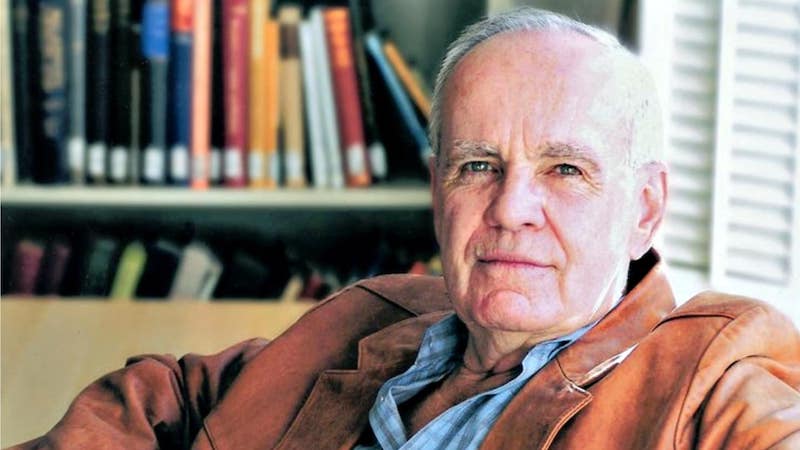
The great American fiction writer Cormac McCarthy died today. I know him best from his Western novels and even more from the two films made from them that stand out to me: All the Pretty Horses and No Country for Old Men.
My favorite Western writer is Larry McMurtry, whose ear for the American language is so clear in both his books and the films/television series adapted from them, including The Last Picture Show and Lonesome Dove. You can curl up inside a McMurtry dialogue and rest there awhile, in admiring silence, until someone like Gus McCall finishes what he has to say, just as you can in True Grit, by Charles Nelson Portis, Little Big Man, by Thomas Berger, or a novel long forgotten, The Travels of Jamie McPheeters, by Robert Lewis Taylor, which won the Pulitzer Prize after its 1959 publication. All of them are Westerns, all of them fall, in unexpected ways, sweetly on the ear.
McCarthy wrote westerns, but they weren’t meant for the ear. A McCarthy paragraph is an adventure—I’m reminded of Faulkner or Kerouac—because you don’t know, when you go in, how the paragraph will end once you see daylight again. His writing reminds me, in fact—which is why I used that word—of Vin Scully’s comment on the brilliant but erratic Dodger centerfielder, Willie Davis: “Every fly ball is an adventure.”
McCarthy’s novels are stunningly visual—they are movies that run inside your head— and so they must have been simple to adapt to film, because, in a way, he’d already framed and shot the scenes in his mind in the same way one of our finest directors, John Ford, did in films like My Darling Clementine and The Searchers.
All the Pretty Horses, with Matt Damon and Henry Thomas (the little boy in E.T., and he is excellent in this film), two Texas cowboys and close friends who make the mistake of heading south to Mexico for new jobs, is a vivid example of McCarthy’s vision. It’s also one of the most heart-breaking love stories I’ve ever seen. Here’s the trailer:
All the Pretty Horses is at least redeemed a little by the survival of its protagonist, but his own personal life is about all he has left. Despite what he’s gotten himself into, you can’t help but root for Josh Brolin in No Country for Old Men. Mexico, and jealous fathers, are the forces that doom Matt Damon. In No Country, it’s an even more elemental force: Javier Bardem. It’s no coincidence, I guess, that my favorite filmmakers (The Big Lebowski, Fargo, O Brother Where Art Thou?, Raising Arizona) the Coen Brothers, were the best choice to bring this McCarthy novel to the screen. Again, the trailer:
Since Tommy Lee Jones figures in No Country for Old Men, he stars, as well, in a third film that is not based on a Cormac McCarthy novel—it was in part inspired by Faulkner’s As I Lay Dying—called The Three Burials of Melquiades Estrada. Jones, one of our finest actors and one of our finest movie horsemen (see the street scene in Lonesome Dove when the cavalry scout is quirting Newt)—is a cowboy who takes the body of an undocumented worker, his friend, back to his village in Mexico. Along the way, he confronts the Border Patrol agent, played by Barry Pepper (the American sniper in Saving Private Ryan) who took his friend’s life. It’s a small film, with a punch, and as gorgeously filmed, for the barrenness of much of the landscape, as is All the Pretty Horses. Northern Mexico is a kind of costar.
Here is the scene from Lonesome Dove:
And here is the trailer for Three Burials:
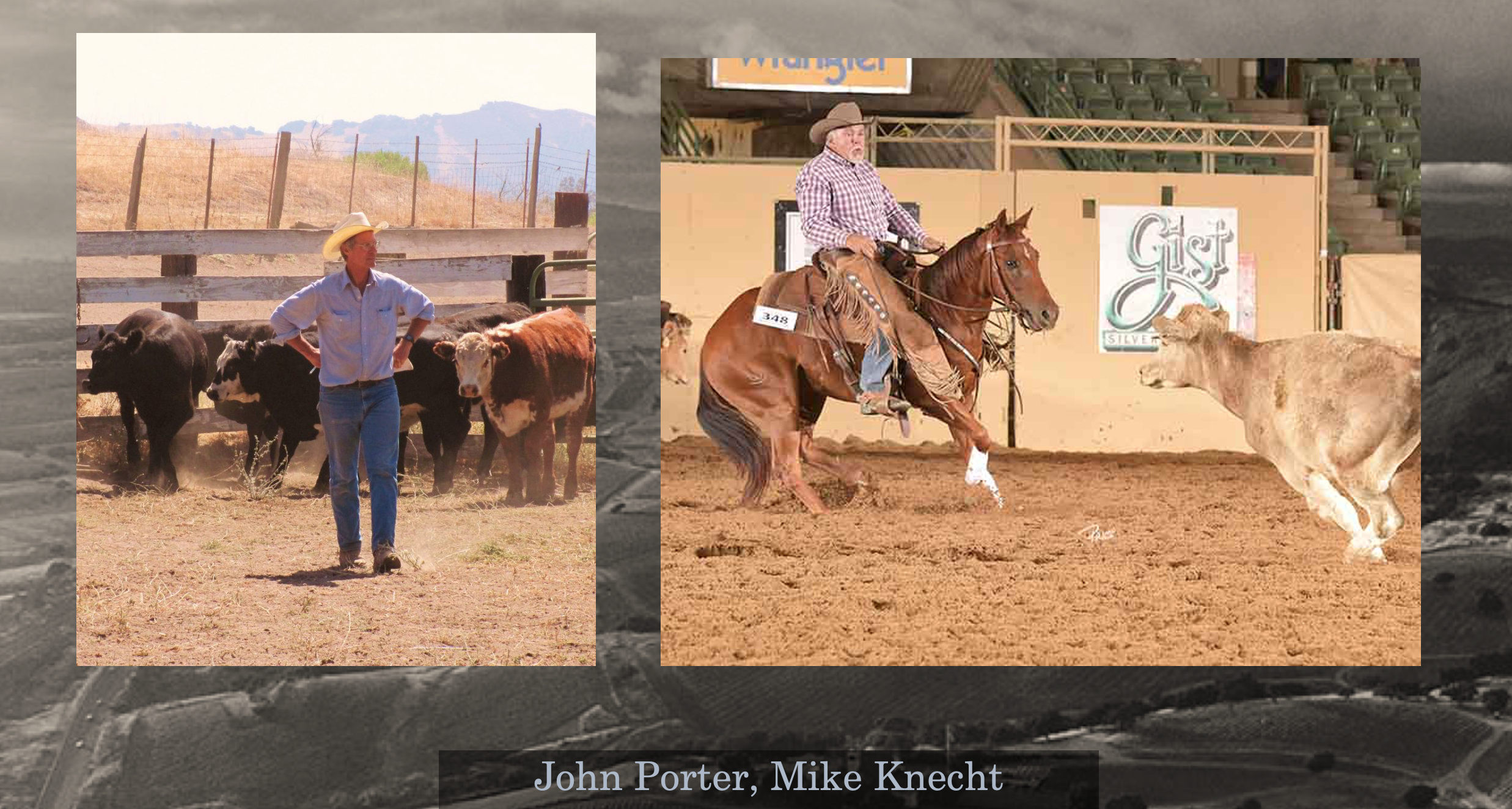
I flatter myself in suggesting that this blog post is like a Cormac McCarthy paragraph, but the final point is the most important: I have two friends from my graduating class at AGHS (1970) who write Western fiction, John Porter and Mike Knecht, and they are good.
I cannot write fiction. I would lose the thread of my characters’ backstories by Chapter Three when, I like to joke, I’d put all of them on an airplane and fly it into the side of a mountain.
But John, whose characters are resolute and often doomed—he makes you want to follow them anyway—and Mike, whose characters grab you in the opening sentences, where at least one was staked to an anthill, don’t need my airplane. These two know how to write and they know how to finish the thread of the stories they begin. That takes time, more time, and rewriting, and then more rewriting.
Writing is easy, as the famous saying goes: You just open a vein and let it bleed onto the page.
The best part is that both write Westerns because they know what they’re talking about. John, who’s written film scripts, as well, is the manager of a Huasna Valley ranch that’s been in his family since the 1840s. Mike knows cowhorses—the best thing I ever wrote was about a cowhorse, a mare named Ronteza—but Mike writes of them with precision and simple, powerful elegance. His love for horses is deeply moving.
So these are the men who immediately came to mind when my son Thomas told me that Cormac McCarthy had died today, at 89. At 71, I can think of few friends who amaze me as much as these two.
Thank you, John and Mike, for the gift of your friendships.





 A Work in Progress