• About
  • The Germans

A Work in Progress

A Work in Progress

Category Archives: Uncategorized

The South County’s Civil War Veterans: Why Did They Move Here?

02 Wednesday Jun 2021

Posted by ag1970 in Arroyo Grande, Uncategorized

≈ Leave a comment

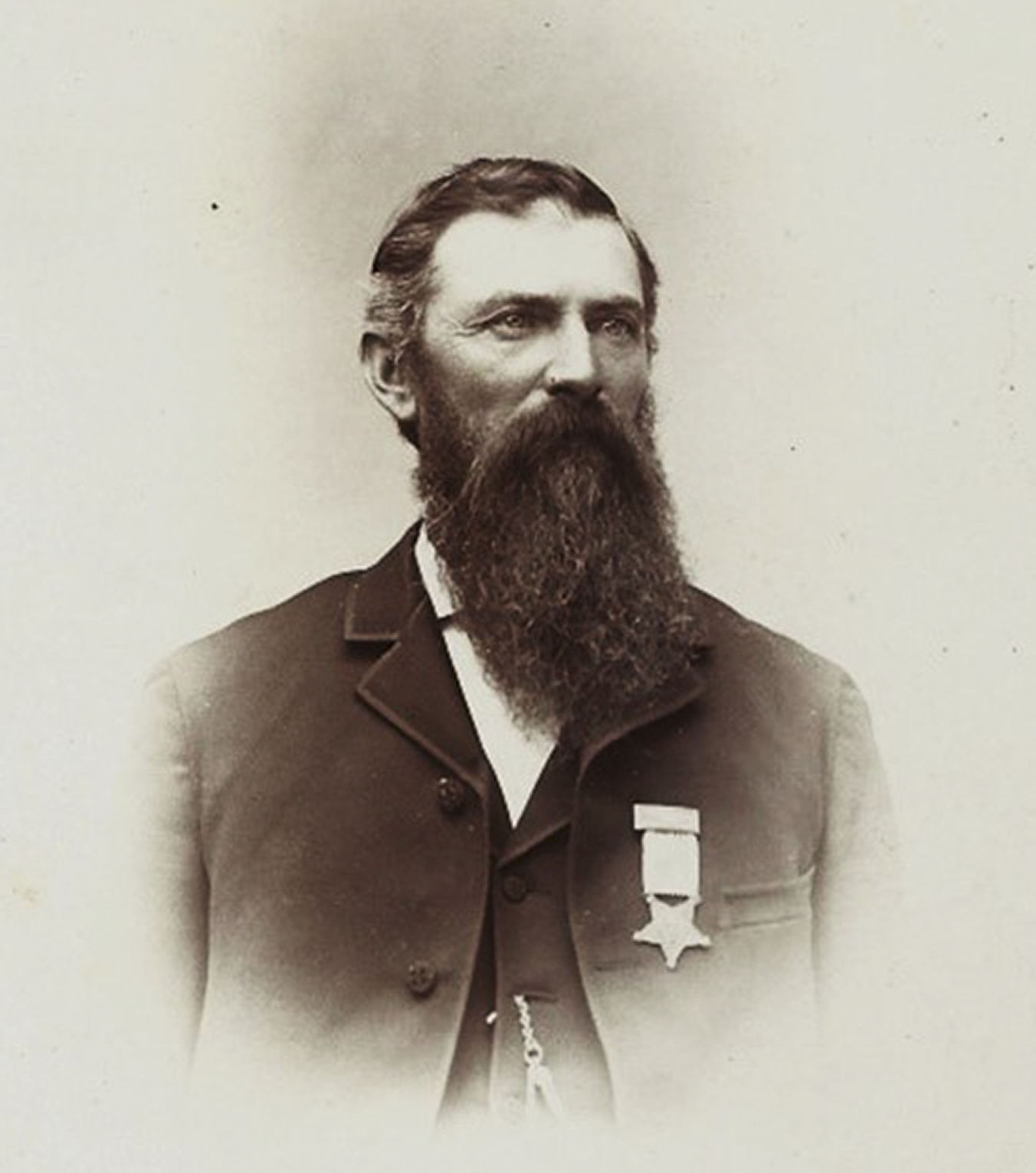
In the 1880s, Erastus Fouch farmed along was is today Lopez Drive. As a sixteen-year-old he’d fought in the Shenandoah Valley where he saw his brother killed in action. He later fought at Chancellorsville and Gettysburg. Here he wears his Grand Army of the Republic badge. Jack English photo.

Nearly sixty Civil War veterans are buried in the Arroyo Grande District Cemetery. This excerpt from the book Patriot Graves describes the forces that drove them here.


…A soldier who had endured the third day of Gettysburg and emerged unhurt, and who had then seen his own boys in their counterattack destroy Pickett’s Charge…had already passed the zenith of his life. Nothing like this would ever happen to him again, and what had happened to them brought them, ironically, great joy.

So, for a generation enmeshed in the ethical web spun tightly by mid-Victorian Protestantism—these were Christian soldiers who fought in armies, on both sides, marked by intense waves of wartime revivalism within their camps—the excitement of battle generated a profound moral contradiction. In This Republic of Suffering, a superb account of coming to terms with the scale of death the Civil War generated, Harvard president and historian Drew Gilpin Faust describes the experience of a stunned Confederate who, during a firefight, came to the aid of a shrieking comrade, only to find out that he was “executing a species of war dance,” exulting over the body of the Union soldier he’d just killed. In another battle in 1862, Union soldiers on the firing line called their shots, as if combat were billiards: “Watch me drop that fellow,” one said to his comrades; battle was, indeed, like a game.[1]

The killing didn’t end when the war did. Violent crime rose at three times the rate of population growth in the decades following the war, and perhaps as many as two-thirds of the nation’s convicted felons were veterans.[2] Soldiers understood, on some level, that combat had changed them irrevocably and some worried about it. Society, one Vermont soldier wrote his sister, “will not own the rude soldier when he comes back, but turn a cold shoulder to him, because he has become hardened by scenes of bloodshed and carnage.”[3] He was, in many respects, right: some of the soldiers who came home to Vermont, New Jersey or Iowa brought with them a measure of fear—they had become, in the Civil War novelist Michael Shaara’s term, “Killer Angels.”

Many Union soldiers had demonized themselves and by extension all of their comrades by celebrating their mustering out with epic alcohol binges and episodic violence throughout the demobilization summer of 1865.[4] A Chicago civilian’s insulting comment about William Sherman set off a saloon brawl that cascaded into a riot that police were helpless to put down. Only the fortuitous appearance of the legendarily hard-drinking Gen. Joseph Hooker, who had the credibility to intervene with combat veterans, brought the violence to an end.
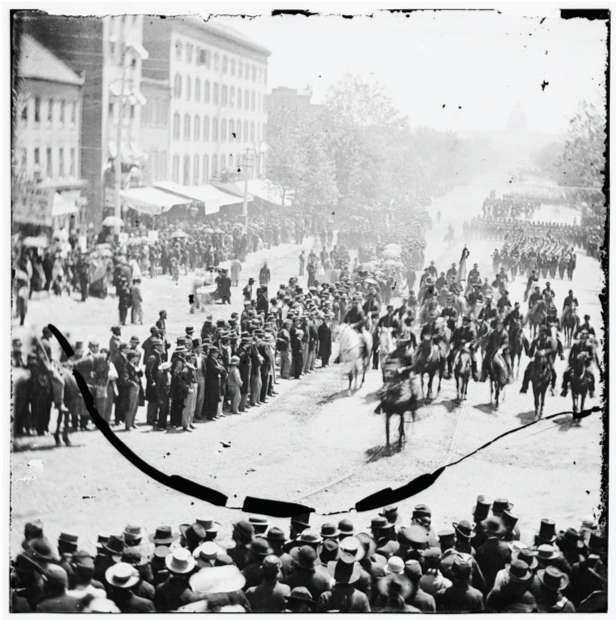
The Grand Review of the Armies at war’s end, Washington D.C., May 1865. Arroyo Grande settler Morris Denham marched with this unit, Francis Blair’s XVII Corps, Sherman’s army.

But for even the most sober of veterans that was precisely the problem with homecoming: it brought them little peace. Professor Jordan describes a sense of what, at its mildest, could be called disorientation. Home wasn’t home anymore. Even little farm towns had changed so much in four years that, for some veterans, they didn’t feel like home at all. Soldiers from the hard-fighting regiments of the Old Northwest, states like Iowa and Minnesota, couldn’t reconcile themselves to the cold winters they’d forgotten while fighting in Mississippi or Georgia. There was a more sinister change to which they couldn’t adjust: Union veterans resembled the little boys who’d survived the 1918 influenza epidemic and were finally let out to play, only to find there was no playmate on their city block left alive. The survivors of “Pals” Battalions who’d joined the Great War’s British Army together went home to neighborhoods empty of the young men with whom they’d grown up. Their pals were gone, swallowed up by the Western Front.

Gone too, in 1865, were whole towns of young men in New York or Vermont or Indiana, dead and buried on Southern farmland that had been poisoned by violence, land still studded with spent bullets. Other young men had vanished without a trace in dark, dense woodlots or fetid swamps.  Soldiers came home, then, ostensibly alive and whole and strong but with unseen dead spaces inside where their comrades had once lived. Missing them, or the trauma of seeing them killed, figured in the chronic depression with which so many veterans struggled. Now that the war was done, they still were caught in its aftermath like swimmers in an undertow, struggling to break surface, to find light and cool air, to breathe again.

They recognized, too, that what they had fought for—for the rededication of the democracy Lincoln had described at Gettysburg in November 1863—was fast slipping away. Union veterans remained intensely suspicious of and hostile toward the defeated South; Lincoln’s assassination had been one impetus for their rancor but their anger only intensified when they read the newspaper accounts of the postwar emergence of the old Slave Codes, now called Black Codes.  They read, too, of the defiance and the terrorism of the Ku Klux Klan, co-founded by a cavalryman, Nathan Bedford Forrest, who had bedeviled some of them in the Deep South. When Reconstruction ended in 1877, Jim Crow laws revived white supremacy in a way that rivaled the days of slavery. The Union veterans’ hostility was exacerbated because the other side refused to admit—significantly, on a moral level—that they’d lost the war. Typical, in 1894, were the dedicatory remarks that accompanied the unveiling of a Confederate memorial in Richmond, when newspapers noted that the clouds parted and the sun emerged when the speaker, the Rev. R.C. Cave, began an oration that included passages like this:

But brute force cannot settle questions of right and wrong. Thinking men do not judge the merits of a cause by the measure of its success; and I believe

The world shall yet decide

In truth’s clear, far-off light,

that the South was in the right; that her cause was just; that the men who took up arms in her defence were patriots who had even better reason for what they did than had the men who fought at Concord, Lexington, and Bunker Hill; and that her coercion, whatever good may have resulted or may hereafter result from it, was an outrage on liberty.[5]
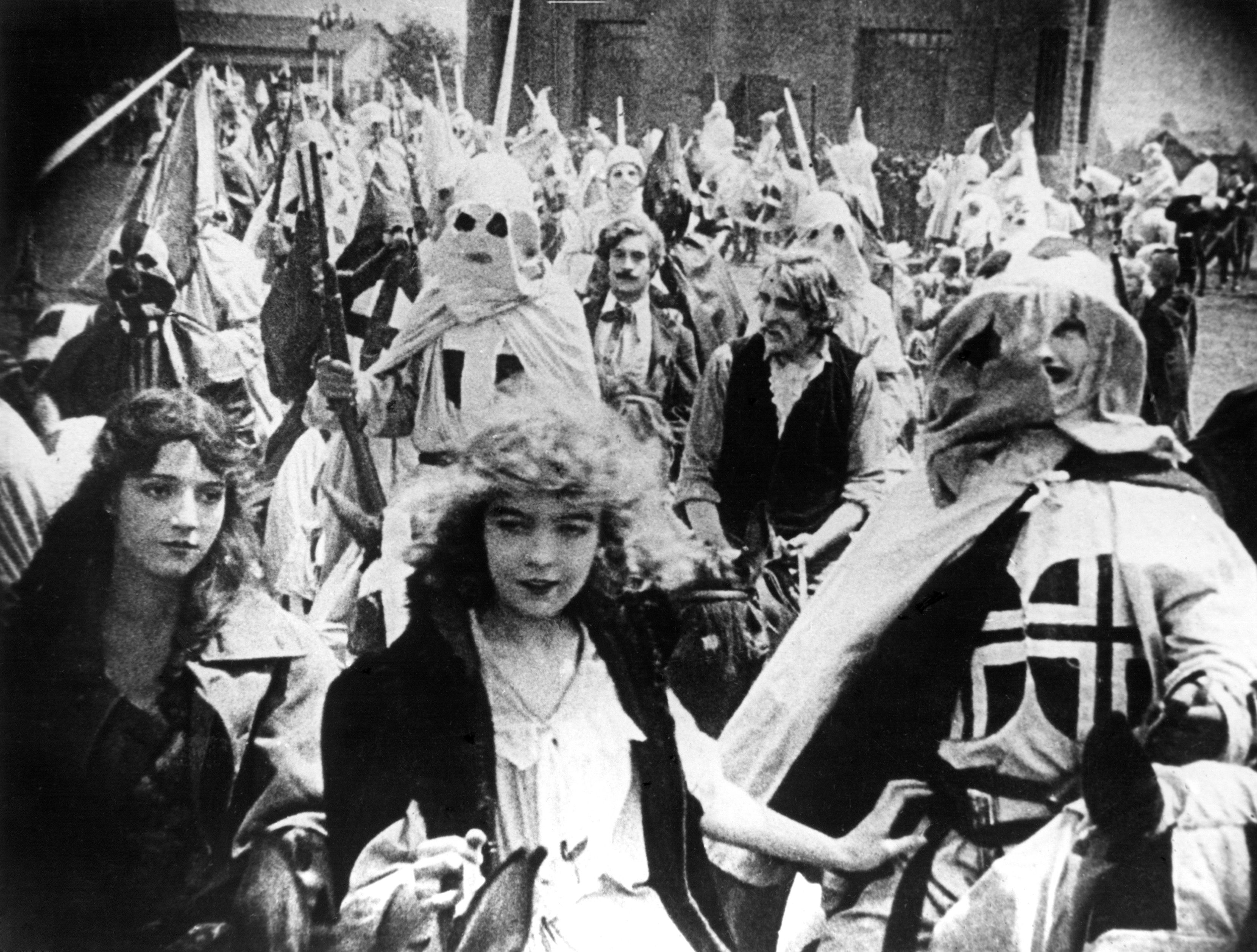
White supremacy triumphant, Birth of a Nation.

Similar remarks by Southern speakers invited to a Gettysburg reunion in 1913, Professor Jordan notes, rankled the same Union veterans who had protested another unveiling, in 1909, in the Capitol’s Statuary Hall: a sculpture of Robert E. Lee. No matter how chivalrous Lee had been (He never, for example, uttered the word “Yankees,” using instead, in his verbal orders to his subordinates, the term “those people.”), he was a killer, and he had harvested thousands of solders’ lives. The survivors of what they saw as Lee’s war would protest again at the rapturous reception, one that included the Southern-bred President Woodrow Wilson, awarded the 1915 D.W. Griffith film Birth of a Nation, which depicts Klansmen, too, as chivalric heroes who reassert Southern white supremacy over rapacious carpetbaggers and predatory African Americans. “It is like writing history with lightning,” the president said, “and my only regret is that it is all so terribly true.”[6] The most enduring image of the 1913 Gettysburg reunion is that of Confederate survivors of Pickett’s Charge reaching across the stone wall–fifty years before, it had been their objective–to shake the hands of Pennsylvania veterans. What goes unmentioned is the fistfight at the same event that sent seven aged Yankees and Confederates to the hospital.[7]
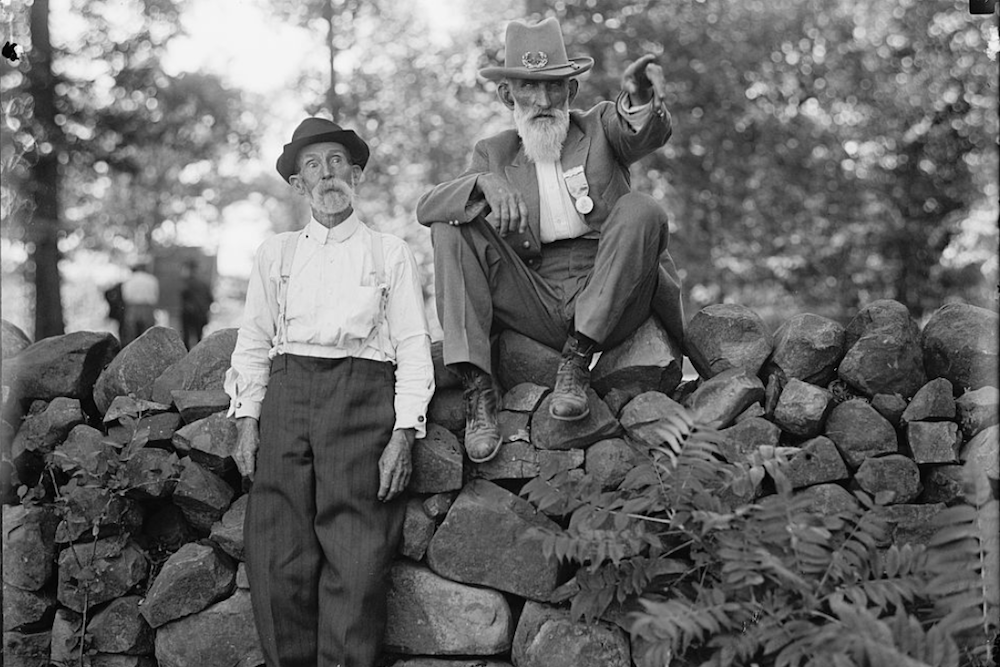
How the 1913 Gettysburg Reunion Came to Be ‘the Greatest Gathering of Conqueror and Conquered’ in History | Zocalo Public Square • Arizona State University • Smithsonian
Two Gettysburg veterans, seemingly reconciled at the 1913 Reunion.

Even as Southern whites reasserted their social and political primacy, American democracy in the North was no tribute to the sacrifice of Civil War veterans, either. The Radical Republican Congress and Andrew Johnson finished what should have been Lincoln’s second term in what resembled the political equivalent of a Western range war. Johnson escaped conviction on impeachment charges by one Senate vote. Grant’s relentlessness and drive had served him well in the struggle against Lee, but another aspect of his personal character—an almost childlike credulity—ate his presidency alive in a series of scandals perpetrated by subordinates who betrayed Grant as surely as Warren G. Harding would be betrayed by his “Ohio Gang” in the 1920s. 

The corruption penetrated to state houses, where the lobbyist for the Santa Fe Railroad kept a slush fund in his office safe for the frequent lubrication of Kansas legislators about to vote on regulatory bills; the monopoly that railroads enjoyed in their American fiefdoms and the freight rates they demanded were so egregious that it cost a farmer more to ship a bushel of wheat from Topeka to Chicago, by rail, than it did to ship that bushel from Chicago to Liverpool, mostly by water. Machine politics dominated cities from New York to San Francisco, where Irish-American voters really did vote early and often, and deceased. In New York, the most famous political machine was Tammany Hall, and it was Tammany Hall’s Boss Tweed who disbursed the equivalent of $4 million to a Tammany-contracted plasterer for two days’ work on City Hall.
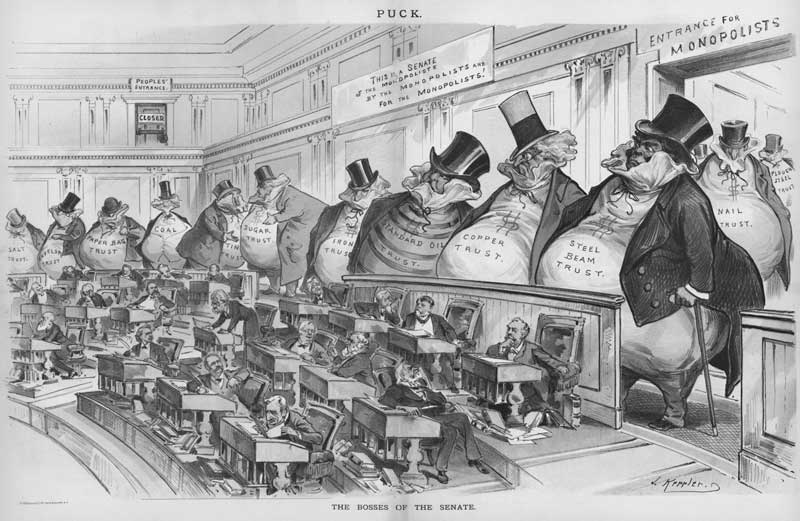
The 1889 cartoon “Bosses of the Senate” exemplifies the corruption of Gilded Age America.

In both their disillusionment and in their restlessness, the Civil War generation seems to resemble the generation that came of age during the First World War. After that war, they would become expatriates–Ernest Hemingway, F. Scott Fitzgerald, John Dos Passos among them—young men, many of them veterans, and young women, who no longer recognized or understood the America they’d known as children. They were among the members of Gertrude Stein’s “Lost Generation.”

…[Like}the young people of the 1920s, Civil War veterans were members of a generation on the move.  In postwar America, veterans, according to a 2010 study by Seoul University economist Chulhee Lee, were 54% more likely to move to a different state and 36% more likely to move to a different region than non-veterans.[8] Lee posits several reasons for this phenomenon: a central one is the idea that veterans had been exposed to the concept of a wider nation, one beyond their rural farms or row tenements, by campaigns in the South. Westerners, too, fought along the Atlantic seaboard, and some Easterners saw combat or garrison duty during the 1860s Indian Wars on the frontier.

Lee’s point is a key one: Americans had been so isolated and disparate before the war that an outbreak of measles that would make a New York regiment sick would kill soldiers in the Iowa regiment bivouacked alongside, soldiers that, before the war, were so geographically isolated that they lacked the immunity to that particular strain of measles–measles, in fact, killed 11,000 soldiers during the war.[9] The war had begun to break that isolation down, and the troop movements necessary to fighting it had opened young soldiers’ minds to the vastness of their nation and to the possibility of starting over somewhere else.
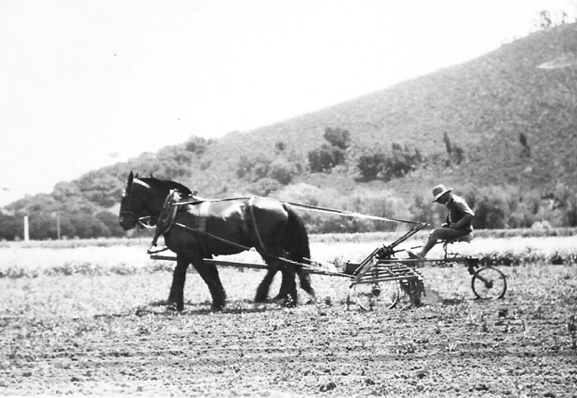
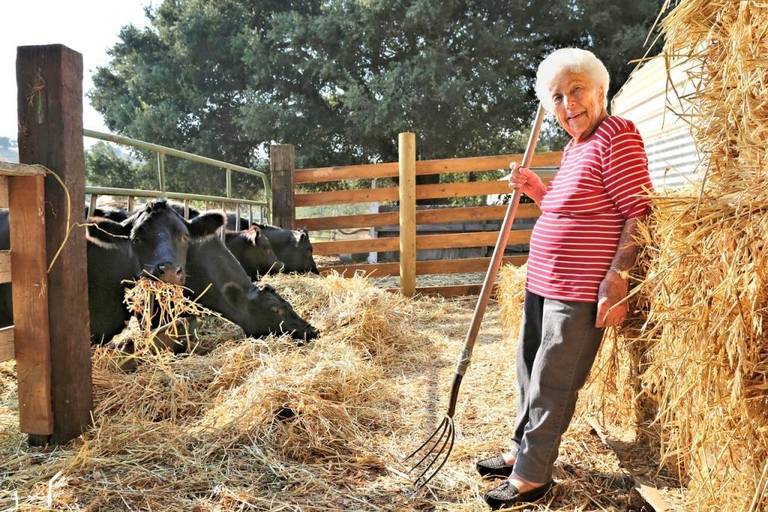
Among the area’s crops were flowers grown for seed. Here, a Waller Farms worker and his team are sowing a field. Photo courtesy Richard Waller

This pattern of increased mobility was a key factor in the lives of Arroyo Grande’s Union veterans. Over fifty would settle the Arroyo Grande Valley and nearby Nipomo. Enough census data exists to follow twenty-three of them, in the course of their lives. After the war, seven of them moved once from the state they’d served as soldiers; seven moved twice. Nine moved three times or more before they came to the Arroyo Grande area. So the men who came here had come as far as they could—like Jody’s grandfather in the Steinbeck novella The Red Pony, they had to stop because they’d arrived at the Pacific: their days of “Westering” were over.
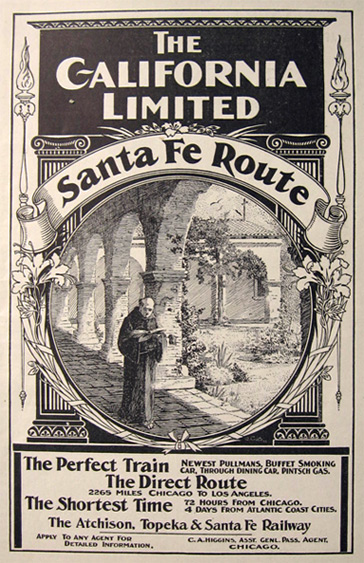
Santa Fe Ad, 1898. The fare from Chicago to Los Angeles was only $25 during the 1880s competition between the Santa Fe and Southern Pacific for California-bound passengers.


[1] Drew Gilpin Faust, This Republic of Suffering: Death and the American Civil War. Vintage Books: New York, 2008, pp. 37-38.

[2] Michael C.C. Adams, Living Hell: The Dark Side of the Civil War, Johns Hopkins University Press, Baltimore: 2014, p. 198.

[3] Edward Alexander, “Life of the Civil War Soldier in Battle: And Then We Kill,” Hallowed Ground Magazine, Winter 2013, http://www.civilwar.org/hallowed-ground-magazine/winter-2013/life-of-the-civil-war-soldier-battle.html?referrer=https://www.google.com/

[4] Jordan, pp. 46-47.

[5] R.C. Cave, “Dedicatory Remarks, Soldiers’ and Sailors’ Monument, May 30, 1894,” Southern Historical Society Papers, Volume 22. Reverend J. William Jones, Ed. http://www.perseus.tufts.edu/hopper/text?doc=Perseus%3Atext%3A2001.05.0280%3Achapter%3D1.27%3Asection%3Dc.1.27.198

[6] “D.W. Griffith’s Birth of a Nation,” The Rise and Fall of Jim Crow, PBS., http://www.pbs.org/wnet/jimcrow/stories_events_birth.html

[7] Jordan, p. 197.

[8] Chulhee Lee, “Military Service and Economic Mobility: Evidence from the American Civil War,” February 2010. http://www.sciencedirect.com/science/article/pii/S0014498312000046

[9] “Civil War Diseases,” http://www.civilwaracademy.com/civil-war-diseases.html

Comedy, tragedy and a moment of beauty at the 2021 Masters

12 Monday Apr 2021

Posted by ag1970 in Uncategorized

≈ 2 Comments


The photo shows Hideki Matsuyama and Xander Schauffele, playing together today at Augusta in the final round of The Masters, in a happy moment about an hour before the golf course mugged them.


I was watching the TV and just about to make a knowing comment about Hideki’s seeming nerves of steel because he was leading the tournament by four or five strokes and hitting approach shots closer than the gravy bowl at Thanksgiving.

But he promptly hit an enthusiastic shot on the 15th hole that made the following noises: whoosh!! emphatic bounce! lesser bounce. SPLASH!!!

Bogey.

Meanwhile, Schauffele, his playing partner, was busy studying his manicure in between making four birdies in a row. He was stalking Matsuyama and now he was getting close.

But then. on the sixteenth, Schauffele hit a tee shot that went whoosh!! *whisper whisper.* dribble… splash. It made lovely ringlets in the water, like little fishes coming up to feed.

The penalty shot described a high arc and then went emphatic bounce! …skid…. LOOK OUT, MARTHA!!! It landed among four male spectators with an aggregate age of about 308. At least two of them must have seen Gene Sarazen’s double eagle at the 1935 Masters.

Triple bogey.


Schauffele was in pain, and it was painful to watch the young man’s face.

Matsuyama finished the tournament by hitting his approach into the bunker on the 18th hole in front of God and everybody. He won by one stroke.

He not only won the Masters. He survived it.

Hideki walked off the 18th green with tears in his eyes, gently touching outstretched hands. At the end of the congratulatory gauntlet, Jordan Spieth was waiting for him with a big grin on his face.

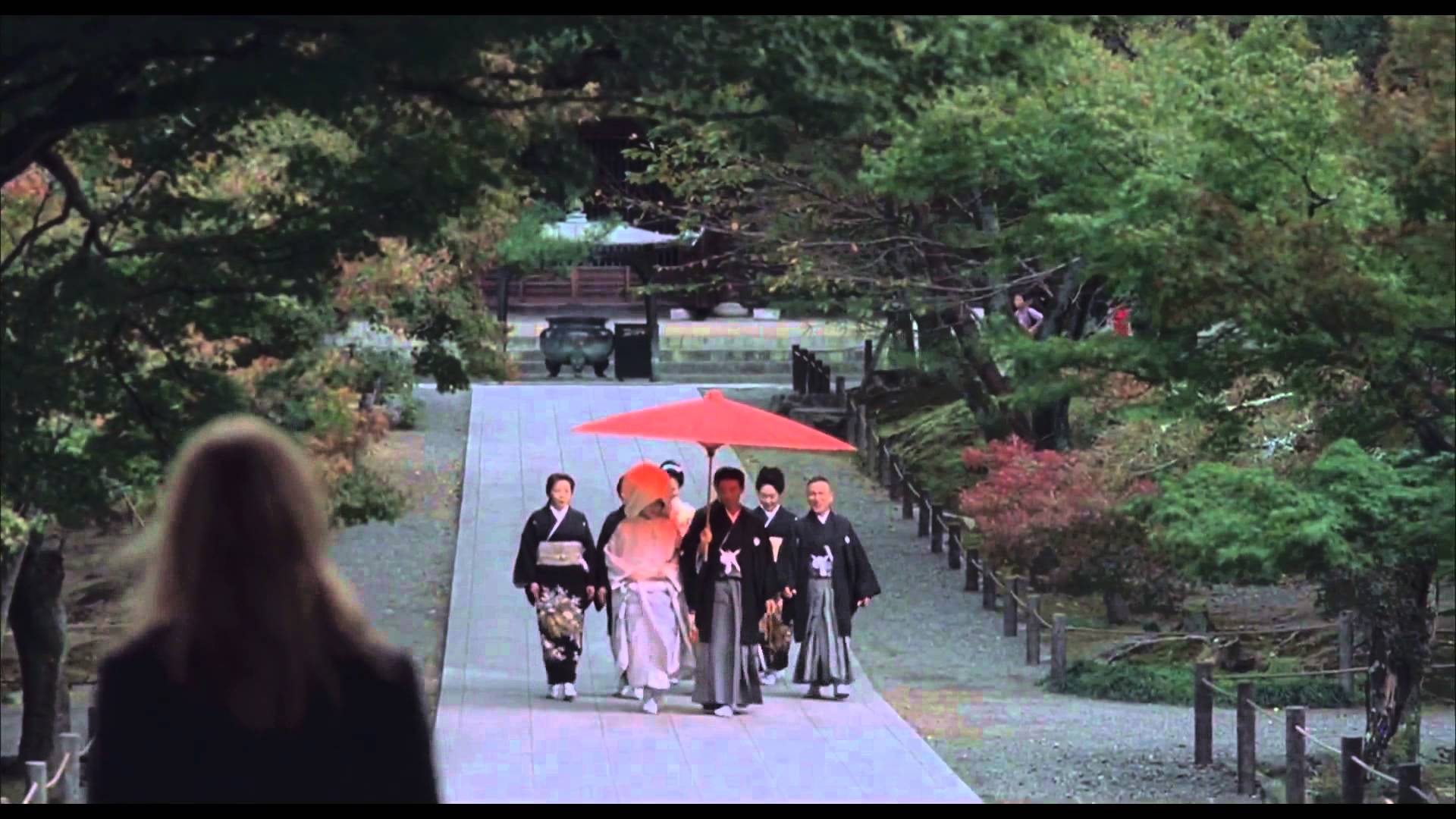
Because I tend to think cinematically, what happened next reminded me of Sofia Coppola’s Lost in Translation. I think there are two supremely beautiful scenes in this film. In one of them, Scarlett Johansson’s character, alone in a Kyoto park, watches transfixed as a wedding party approaches.


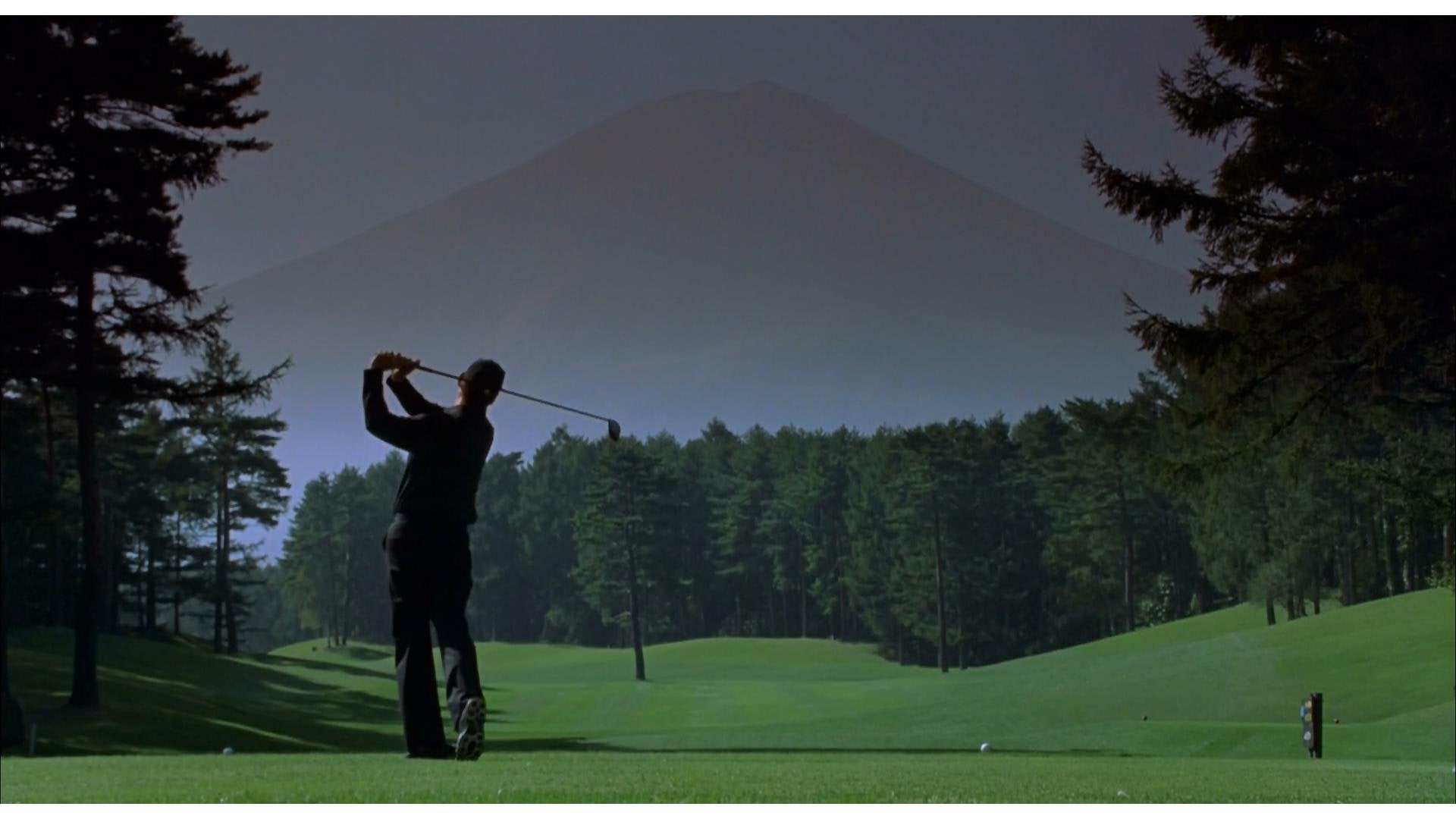
In the other, Bill Murray hits a lovely tee shot down an impossibly verdant fairway far below Mt. Fuji. You know the scene meant much to Coppola because she composed it so carefully.

It’s as if a golf course can be as evocative of life and grace as the garden that frames the wedding party. Maybe, in the way that the Japanese understand landscape architecture, that is exactly so. I think they understand golf, too, with an aesthetic that eludes the American golfers who attempt to overwhelm a golf course with their brawn.

The Par 3 16th Hole at Augusta

That kind of golfer doesn’t do well at The Masters. No one overwhelmed Augusta this year. Matsuyama won because he learned to play within the will of one of the most beautiful golf courses in the world.  

He understands that this course has a life of its own. I know this is true because of what happened at the end of the tournament.

The champion was gone, but the network camera captured his caddy, alone on the 18th green.

Hideki’s caddy replaced the flag. Then he turned toward the fairway and bowed.

The wreck at 20,000 feet

11 Sunday Apr 2021

Posted by ag1970 in Uncategorized, World War II

≈ Leave a comment


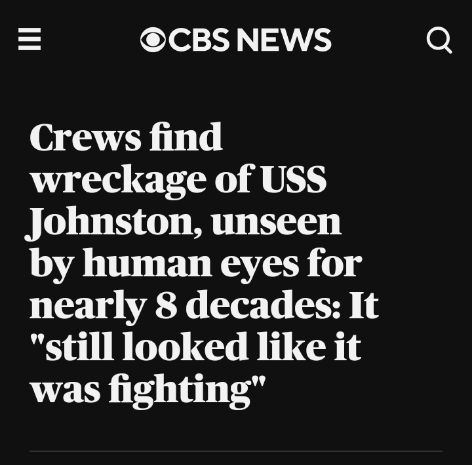
A news item, April 10:

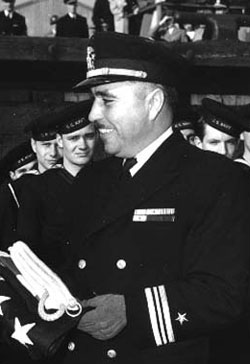
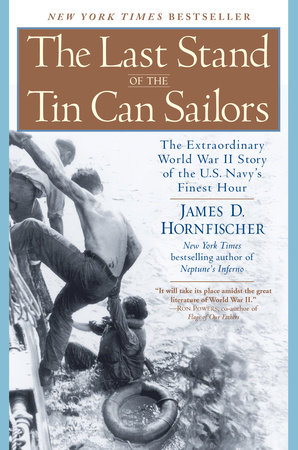
Lt. Cdr. Ernest Evans—vividly portrayed in the book “Last Stand of the Tin Can Sailors”— was commanding USS Johnston in October 1944.

His nickname, “Chief,” typical of the old Navy’s casual racism, alluded to his Cherokee/Creek ancestry. Annapolis must have been an ordeal for him.

Now, his destroyer was among those protecting landings in the Philippines when a massive Japanese task force—four battleships included—appeared from the northwest.

The main American force that was supposed to be guarding the invasion beaches—capital ships and big fleet carriers— was commanded by Adm. William Halsey.

It was gone. Halsey had been made the fool, lured away from the invasion by a Japanese decoy force that was essentially harmless.

The main battle force now appeared, intending to destroy the Americans as they landed.

Facing them were ships no bigger than USS Johnston and a complement of small aircraft carriers, “baby flattops.”

Evans was like Jesus’ Good Shepherd. The ships that were landing the GIs and their supplies were his flock; he was accountable for them and to them.

So he turned Johnston directly toward the enemy fleet. His destroyer, at 5500 tons, was armed with five 5-inch guns.

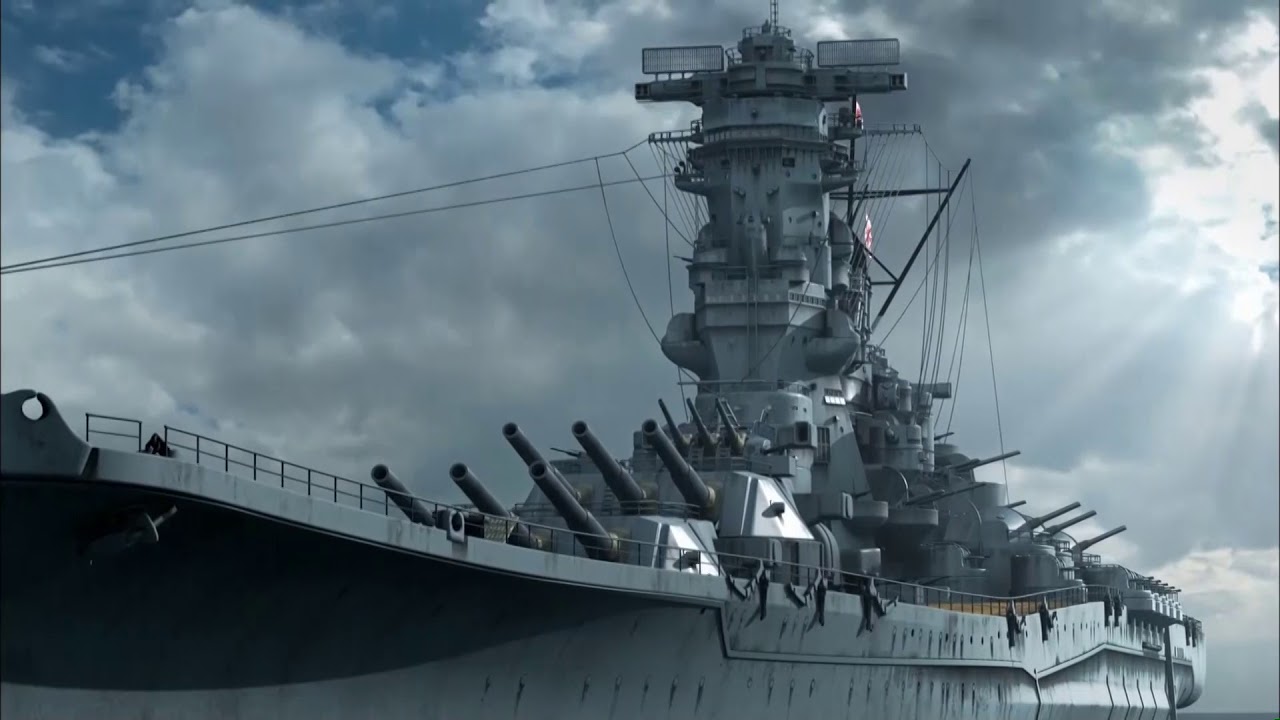
He was up against the battleship Yamato, 70,000 tons with nine 18-inch guns, twelve 6-inch guns and twelve 5-inch guns.

On her first run, Johnston fired two hundred shells and her entire complement of ten torpedoes: one of them blew the bow off a Japanese cruiser.

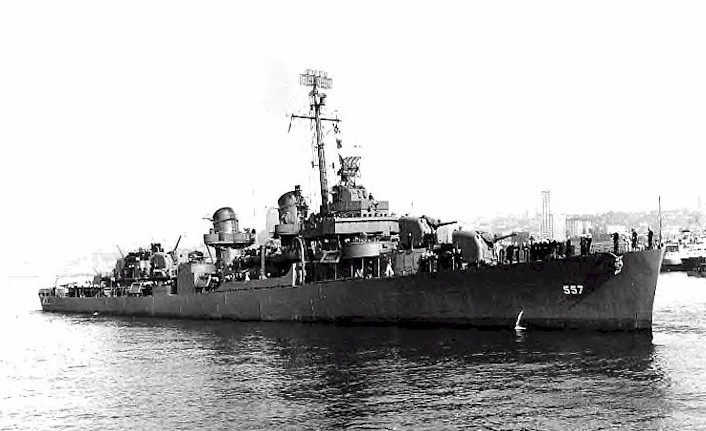
Johnston

Ships even smaller than Johnston—destroyer escorts—followed her lead and went in to attack. Yamato’s armor-piercing shells, intended to cripple battleships, went completely through the fragile destroyer escorts.

Yamato

Although eighteen-inch shells from Yamato struck Johnston’s engine room and so nearly halved her speed, Evans kept his ship fighting, dodging in and out of rain squalls or the smokescreen the destroyer escorts had laid down.

He fought two ship-to-ship battles, one against a heavy cruiser, another against a battleship seven times the size of his ship, at one point crossing an enemy ship’s “T” in a maneuver that would have made Lord Nelson proud.

The blue ships are crossing the T, bringing all their guns to bear.


Johnston scored at least sixty hits on the two enemy ships, but a six-inch shell from Yamato struck Johnston’s bridge, inflicting terrible casualties and mangling Evans’s left hand.

Evans kept his ship fighting.

The shellburst had nearly wiped out the bridge crew. It destroyed the wheel. Witnesses on a destroyer speeding past Johnston saw the badly hurt Evans–he’d suffered burn wounds and two fingers from his hand were gone—standing on the stern, bellowing orders down a hatch to where his ship was now being steered.

He waved at the passing ship.

Evans had taken Johnston into the fight at 7 a.m. By 9:45, the destroyer was dead in the water.

A swarm of Japanese destroyers then concentrated their fire on the ship that had bedeviled the entire fleet, and Evans finally ordered his men to abandon the sinking ship. He went into the water with them.

That was the last time Johnston’s crew saw their captain.

Evans

Ernest Evans was the first Native American naval officer to be awarded the Medal of Honor. 190 of his 327-man crew died with him.

But the Americans —little ships like Johnston and combat airplanes launched from the baby flattops—fought so fearlessly and so recklessly that after six hours of combat the Japanese, finally concluding that a fleet much bigger than theirs was about to prevail, abandoned their attack and withdrew.


Earlier this month, when the submersible found the wreck of the Johnston at 20,000 feet, her five-inch guns were still elevated, still pointed toward the enemy.

In June 2022, the same expedition discovered Johnston’s comrade, USS Samuel B. Roberts (below), at 22,000 feet. In the same battle, Roberts, 1370 tons, took on the heavy cruiser Chokai, blowing off her stern with a torpedo hit; the ship later had to be scuttled. Roberts’s commander, Lt. Cdr. Robert Copeland, then turned his attention to the heavy cruiser Chikuma, setting that ship’s bridge afire and destroying her No. 3 guns before three fourteen-inch shells from the battleship Kongo sent Roberts to the bottom. Ninety of her 210-man complement died, among them Gunner’s Mate 3c Paul Carr. His aft 5-inch gun turret is at far right in the photo sequence below. Carr died only after firing 325 shells at the enemy in a little over 35 minutes. A guided missile frigate is named for him today.

Hornfischer’s account of this battle is superb.


The Project

05 Monday Apr 2021

Posted by ag1970 in Uncategorized

≈ Leave a comment

In “The Clock,” (1945) Robert Walker is a GI about to ship out overseas from New York City when he meets Judy Garland, courts her and marries her–all within 24 hours. It’s a charming and poignant film. Garland is radiant.

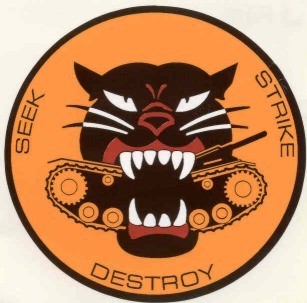
In the film still, Walker wears the shoulder patch of a solider in a Tank Destroyer Battalion.

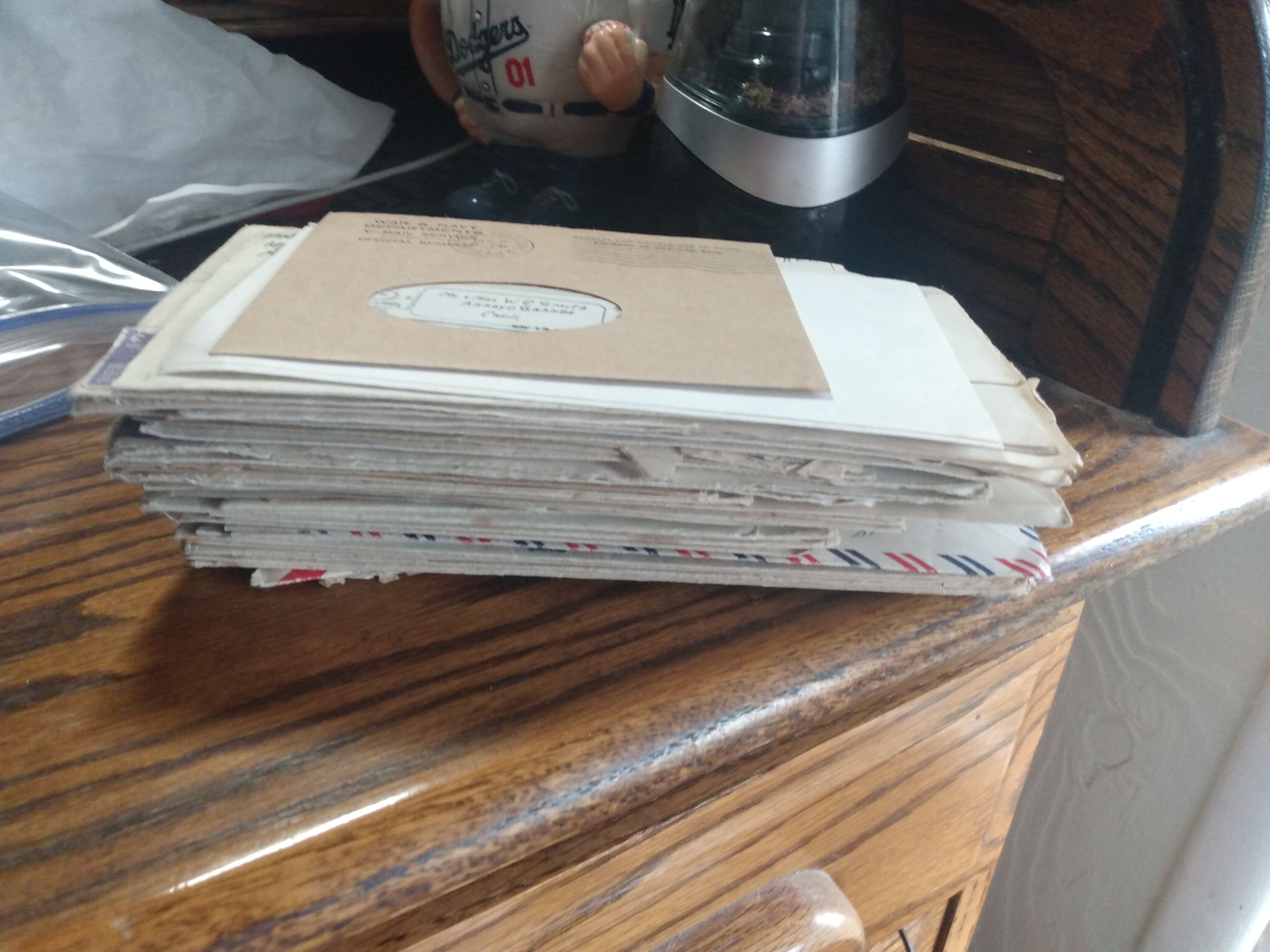
This bundle of letters belongs to a soldier who served in the 703rd Tank Destroyer Battalion. They begin in the fall of 1941 and end in the winter of 1945.

The battalion fought in Normandy, across France, into the Rhineland, in the Battle of the Bulge and finally in Bavaria, where they helped to liberate the Dachau concentration camp, which my students and I have visited.

This soldier, who was awarded a Silver Star, was from Arroyo Grande.

A Tank Destroyer from the 703rd TD Battalion in the Battle of the Bulge.

Somehow I’ve got to get up the nerve to start organizing them, reading them and writing about them while following the unit through Europe so I know where he is in his war.

I am suitably intimidated.


Elsie

24 Wednesday Mar 2021

Posted by ag1970 in Arroyo Grande, Personal memoirs, Uncategorized

≈ 1 Comment

Elsie Cecchetti. San Luis Obispo Tribune; photo by Vivian Krug

Elsie Cecchetti was our bus driver. In the same way that Louis Tedone was SLO’s baby doctor. Elsie was everybody’s bus driver.

Yes, I go back to the days of Branch School’s yellow pickup with bench seats and the tarp overhead, when we bounced happily over creek crossings.

We waited for her at the Harris Bridge.

I think she had mechanical problems one morning–and it was a cold one–when Mary Gularte took me inside from the bus stop for some sopa. That was a good morning.

Both Mary and Elsie called me “Jimmy.”

We tormented Elsie with “99 Bottles of Beer on the Wall” and then, in 1964, with “She Loves You,” ” I Want to Hold Your Hand” and she always headed us off in “The Name Game” song, before we got to “Chuck.”

And I always looked over the edge of the bus window as she drove confidently up Corralitos Canyon. There were some good drops there, but Elsie knew what she was doing. At the Canyon’s end, past the Dentons, she made a three-point turn that the California Department of Motor Vehicles should have filmed for posterity.

If there was a girl on whom I had a crush–and this was frequent–I looked a long time out the bus window after we’d dropped her off.

I once saw Elsie’s wedding photo, the day she married George, on the steps of Old St. Patrick’s on Branch Street. She was so beautiful that she took my breath away.

But she cleaned up after us at school.

She chewed us out when when we were jerks.

She laughed when we tried to be funny.

She cocked an eyebrow dubiously when we had excuses for being late.

But my most vivid memory is the day she cried. We were on our usual route with most of the stops ahead of us, near what is today Lopez Drive and Cecchetti Road, when she stopped the bus.

The old farmhouse, where she’d made a home and a family, was on fire. And it wasn’t just smoke. It was violent–big, ugly orange flames and billowing, acrid black smoke. Elsie threw the lever that opened the bus doors and stood at the bottom of the steps and she began to sob.

I don’t know–I was only about eight–that any of us, fifteen or so of us, had ever seen an adult in such pain.

And it wasn’t just an “adult.” It was Elsie.

I guess then we heard sirens from the CDF and they knocked the fire down, but it was too late. I don’t remember that part.

What I do remember is walking the rest of the way home in complete silence. We were shocked because we realized, just then, how much we loved Elsie and just how cruel life could be even toward the people we loved the most.

What we began to learn from her, in that terrible moment, was empathy.

Even a school-bus driver can guide you toward wisdom. I finally understand, now that she’s gone, that it was Elsie who always got me home again.

Hardhat, Tutu and Hope

20 Saturday Mar 2021

Posted by ag1970 in Arroyo Grande, Uncategorized

≈ Leave a comment

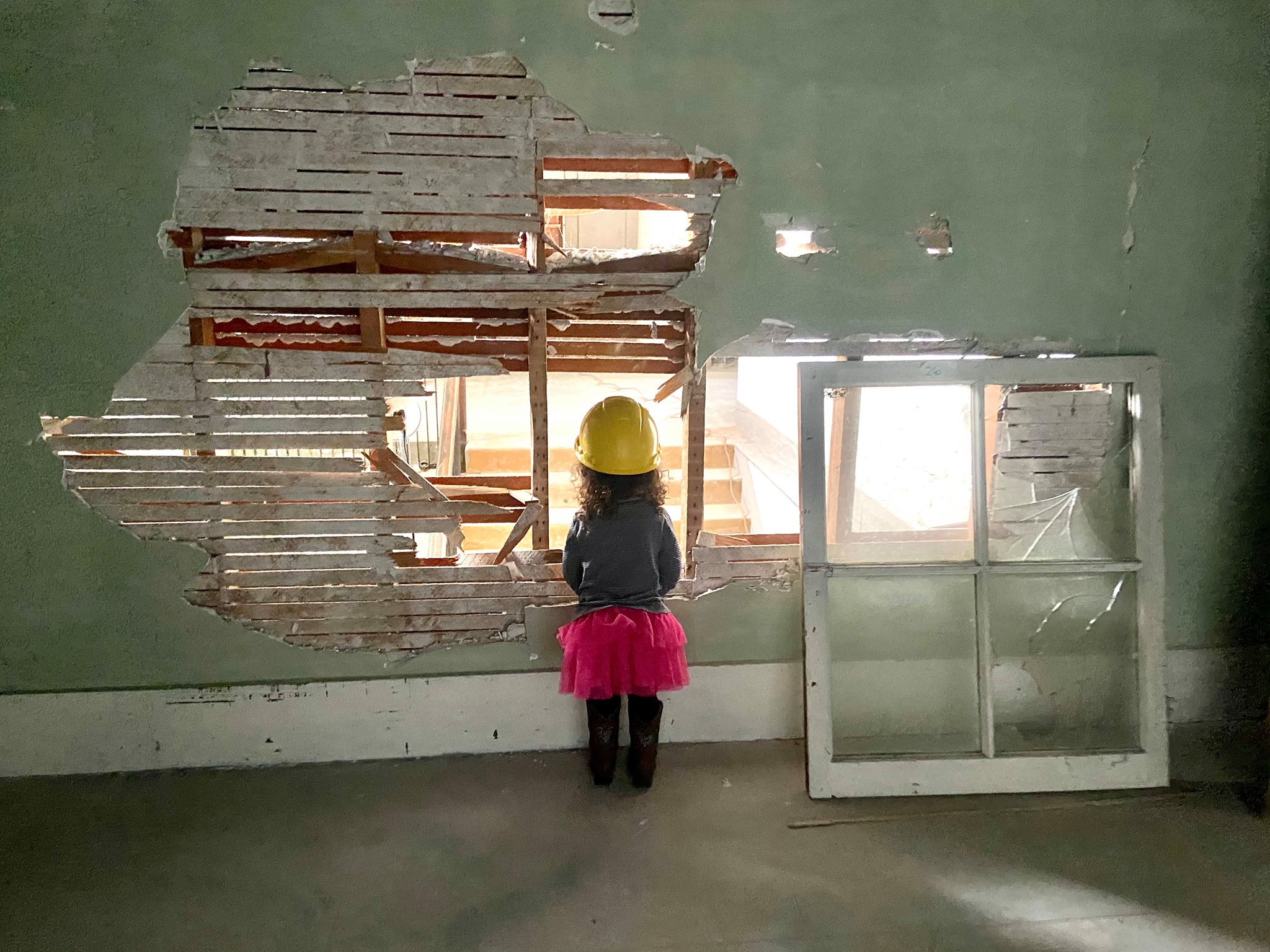
Former and much-beloved Arroyo Grande High School student Victoria, whom I teased for being distantly related, from my college studies, to a moderately reformist Mexican president, listened so intently in my classes and was so unafraid to ask hard questions that she became one of those students you never forget.

When you wanted to see whether your thirty-two kids had “got it,” your eyes always traveled back to Victoria’s because she was so transparently honest. She was your reality check.

She knew as well and all along that teaching history was just my cover story.

When I was teaching material as arcane and fun as social history (using parish registers to discover that many, many Tudor brides were heavily pregnant) or the more conventional stuff, like the stages of the French Revolution— or when we went on our little classroom trips to Paris in the Second Empire or to interwar Berlin–what I was really teaching, I hoped, transcended mere information. I wanted the thirty-three to learn humanity and empathy and hope. In teaching art, I had the chance to inspire them. In teaching war, I had the chance to make them angry.

History’s inert unless it inspires feelings we didn’t know we had that we discover in people we’ll never know.

Victoria got all that. And then she used it.

So now she is a mother and is a mover and shaker for environmental and cultural causes. I am so immensely proud of her.

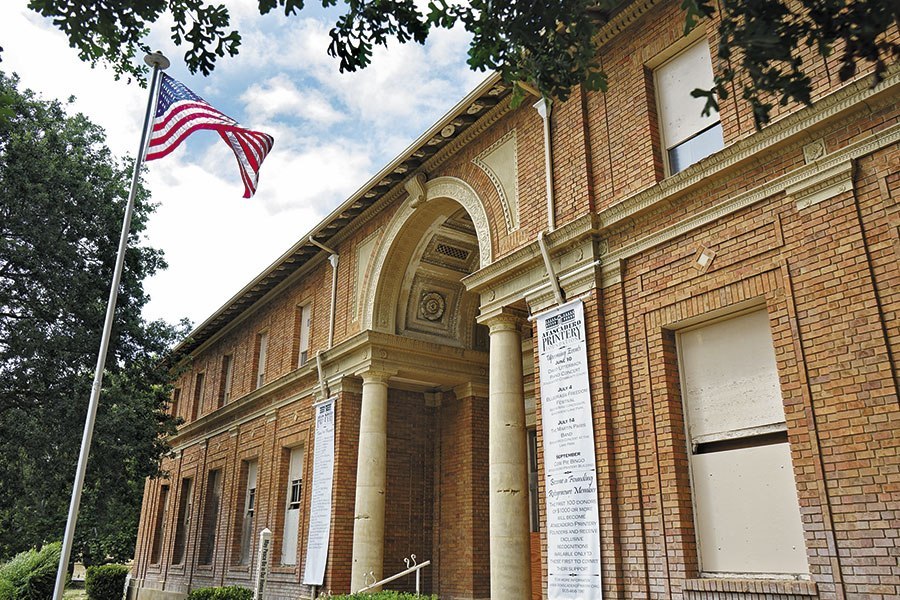
She’s part of Atascadero Printery Foundation–you can find it online, along with some photos of this beautiful building–and so is working toward the restoration of the old Printery to make it a community center for the arts.

This is how Victoria makes history live again.

And the photo above shows her daughter on a tour of the Printery. I haven’t seen an image like this one—not in a long, long time, and not until now, when I need it most—that made me so hopeful for the future.

The Printery.

Lessons from my mother

16 Tuesday Mar 2021

Posted by ag1970 in Uncategorized

≈ Leave a comment

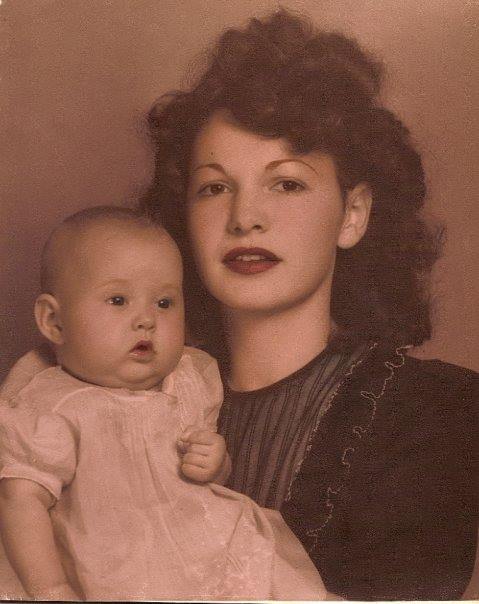
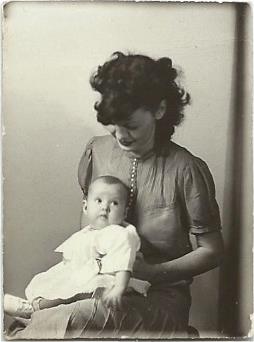
My mother at twenty-three, with my big sister, Roberta.

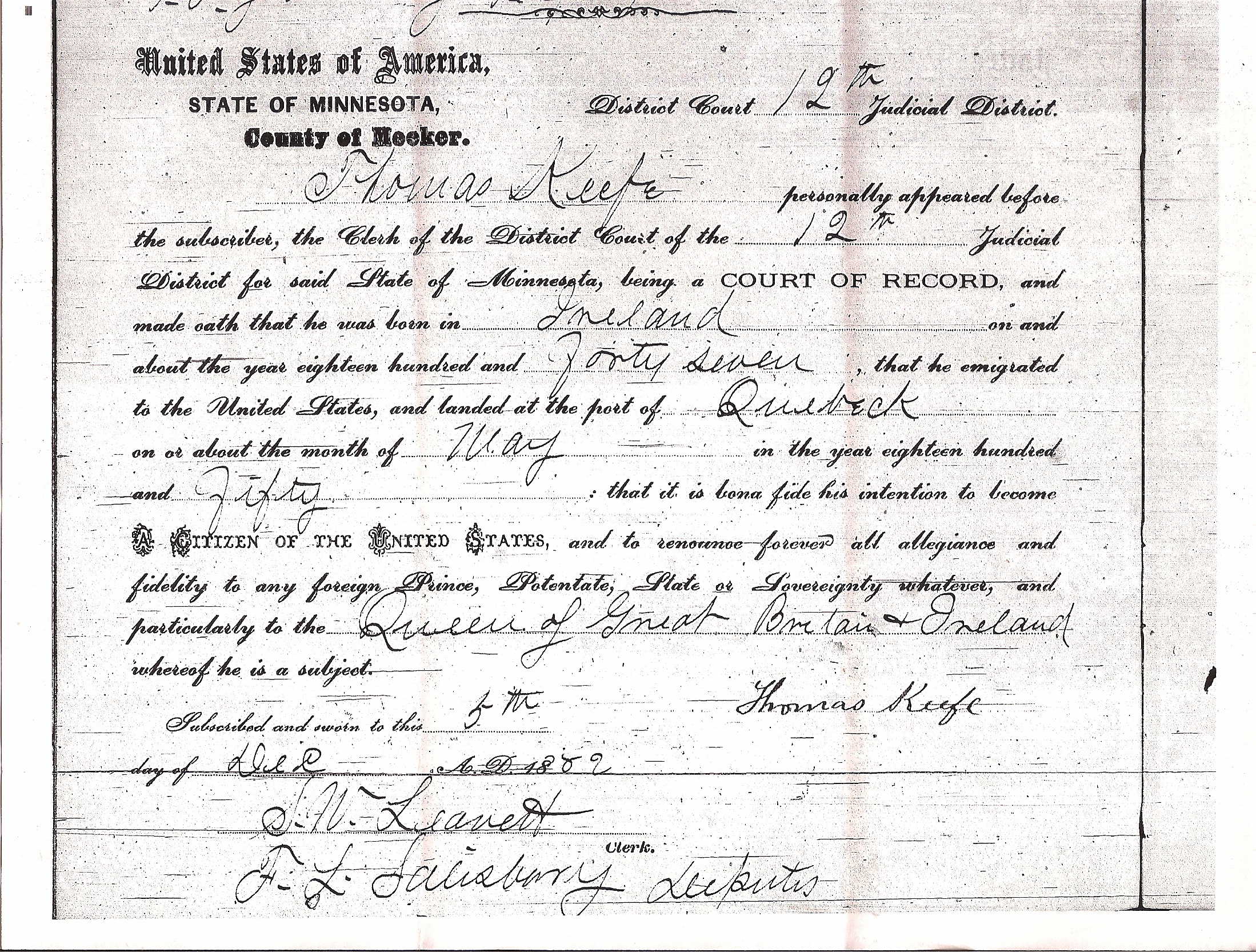
This is my Irish-American Mom. Her grandfather, Thomas, was born there and now I have a son named Thomas. Both her great-grandfathers were Patricks, both from County Wicklow, south of Dublin, and her grandmother was a Margaret, so she was Patricia Margaret Keefe.

The family went from Famine Ireland to Ontario; a brace of them, brothers and cousins from the same Irish village, worked in the Pennsylvania oilfields in the 1870s and then my great-grandfather headed west. He farmed a Minnesota homestead in the 1880s in the same county that had been marked, twenty years earlier, by the Sioux Uprising of 1862.

My great-grandfather’s declaration of American citizenship.


I would write about that tragic event 120 years after my great-grandfather’s time in Meeker County. It kind of followed me. My home town is Arroyo Grande, and one of our pioneers was a Minnesota soldier—he would’ve been among those on horseback in the contemporary illustration below—who witnessed the execution of 38 Sioux from a massive gallows in Mankato on the day after Christmas. A farmer whose family had been murdered was given the honor of springing the trap.

One of the thirty-eight hanged that day was because of mistaken identity; one of the Sioux had saved a white woman and her family–she spoke forcefully for him at his perfunctory trial–but he had a name nearly identical to that of a condemned man. And so he was hanged shortly after his exoneration.


The whole affair started because the Sioux were starving. Their reservation land had been halved and so had the beef and flour distributed by their reservation agent. His response to the reports that the people in his charge were hungry? He channeled Marie Antoinette. “Let them eat grass,” he said.

So the war began when some young men were caught stealing warm eggs from beneath a Meeker County homesteader’s irate hen. Soon after, the reservation agent was found dead with his mouth full of grass.

The uprising ran its course and ended with the mass exeuction. It must have been cold on the day after Christmas in 1862.

My wife and I once met a charming couple in Iowa, Minnesotans (they’d heard of Solvang, where Elizabeth and I were married) come down to Iowa City on vacation to escape the cold.

And so, tired of Minnesota cold, Mom’s people, the Keefes, moved from Meeker County to Orange County (for the oranges) and their son, my grandfather, to Kern County (for the oil).

But I think I wrote about the Minnesota Sioux because of Mom. The woman had no patience for injustice or for cruelty of any kind.

With my big brother, Bruce, 1948.

The British shot thirty-seven Irish rebels from the Wolfe Tone Rising dead — in front of their families–in 1798 on the village green in Dunlavin. Only twelve years later, my mother’s great-great-great grandfather was baptized in St. Nicholas, the church that faced the green. Maybe my mother’s impatience was in her DNA.

St. Nicholas’ Church, Dunlavin, County Wicklow


The obverse side of her “impatience”—a gentle word—was a trait that not all the Irish come to America, I’m afraid to say, necessarily shared, and that was a respect for others who are strangers here. Here’s a story, set in the Upper Arroyo Grande Valley, that I’ve told many times, but here it is again. Since it really happened, it serves to make my point.

* * *

One lesson [I learned from her] appeared to my mother in the form of a Mexican fieldworker, a bracero, who one day walked into our front yard and up to her. She kept her garden shears at port arms and shoved me behind her skirts. The man signaled that he wanted to fill an empty wine gallon jug with water for himself and his friends, who were working the pepper field adjacent to our pasture. His face, with a tiny Cantínflas mustache, radiated good humor. My mother relaxed and filled the jug from her garden hose. The water was cold.

I knew that because of what she said next.

“Now, help him carry it back.”

So I did. And I stayed awhile…I learned a little Spanish from them in a barracks that smelled of damp earth and Aqua Velva. They spread snapshots across their bunks of wives and girlfriends and children, and they laughed when I tried out my new words in their language. That encounter would lead to my college studies’ focus, the history of Mexico and Latin America.

I attended a state college in the Midwest two decades later, where my Spanish teacher informed me one day that  I had a pronounced Mexican accent.

It was such a fine compliment.

* * *

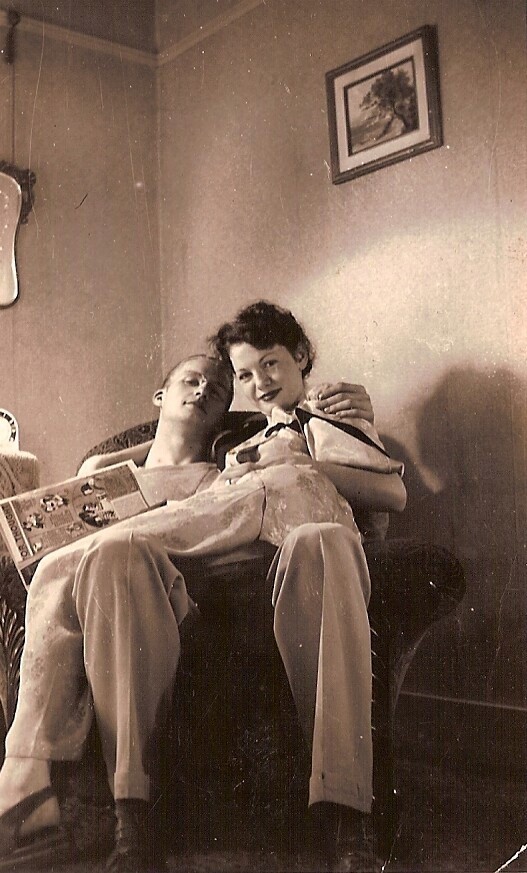
Dad and Mom, about 1941.

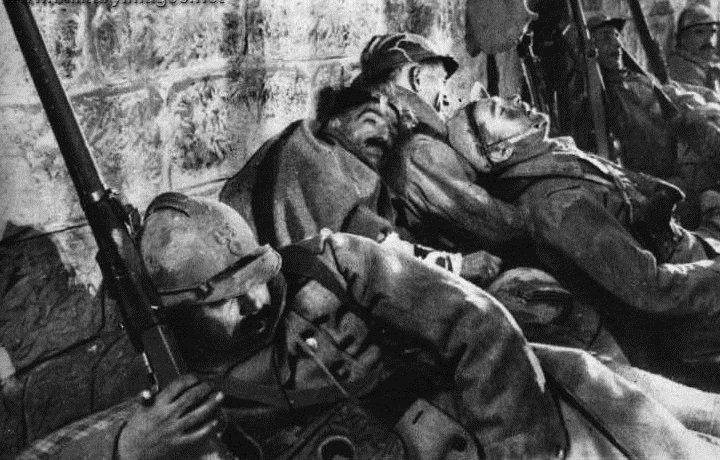
So I became a history teacher because my father, the most marvelous storyteller I’ve ever heard, taught me how to tell stories. It was my mother who put the edge to them. I guess that I was pretty passionate about teaching history. I never got over, for example, the anger I felt every year in teaching my young people about the First World War.

Exhausted poilus, Verdun.

At the end of the year, I once asked a student what unit she’d liked the most in the AP European History class I was teaching.

She didn’t hesitate. “The First World War,” she said.

I was a little flummoxed. I would’ve picked the Renaissance or La Belle Époque.

Why? How can you “like” the First World War?

“Because,” she replied, “now I understand the value of human life.”

It was such a fine compliment, because this marvelous young woman understood the lessons my mother had taught me. My mother was still teaching them.

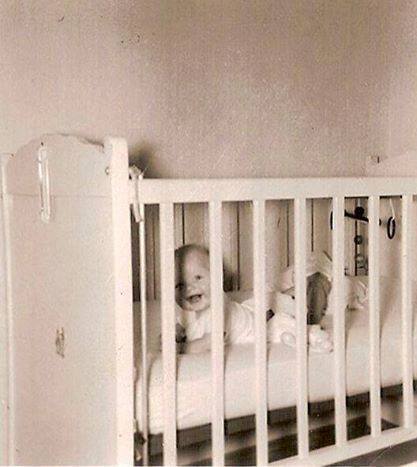
And that’s me in the crib. From the look on my face, it’s Mom’s face that I see.


Thank you. No thank you.

08 Monday Mar 2021

Posted by ag1970 in Uncategorized

≈ Leave a comment

One of my AP European History classes at Arroyo Grande High School. Photo by Joe Johnston, San Luis Obispo County Tribune.


“…You’re one of the big reasons I went into teaching.” Message from a much-beloved former student. To paraphrase Mark Twain and, given my affection and respect for that student, that’s a compliment on which I could dine for a week.

At last count, I was up to about sixteen former students who are now history teachers. Two of them have doctorates; a third is working toward his at Yale.

Somewhere, there’s an Italian-American approaching forty who’s named Gregory James and one more middle-aged person with the middle name Gregory.

Calm down, people, Those who know me best know I’m really kind of clueless. In truth, I’m as brittle as an autumn leaf. Hopeful, yes; intense, yes; passionate, yes, yes, yes.

But, at heart, I’m just like you. I’m just another rudderless ship.

The best I have to offer is that I can imagine and describe what it was like atop Cemetery Ridge at Gettysburg on July 3, as the North Carolinians emerged from the tree-line and shook out their lines, perfectly dressed, because even the most misguided and gullible men can die heroically; how hot it was inside an artist’s garret atop a Parisian townhouse in the of summer of 1882–the farther up, the poorer the tenant; how beautiful Simonetta Cattaneo was, claimed by the Plague at twenty-three but immortalized in Botticelli’s Birth of Venus; or how silent it must’ve been inside a bus ferrying the parents of my friends to internment camps in April 1942.

Simonetta Cattaneo


The best I have to offer is that I love telling stories.

But what made me a teacher are teachers none of my students ever knew–including my fearsome first-grade teacher at Branch School, Edith Brown, Sara Steigerwalt and Carol Hirons at AGHS, Jim Hayes and Dan Krieger at Poly, Winfield J. Burggraaff, David Thelen and Richard Bienvenu at the University of Missouri.

Jim Hayes, my Cal Poly journalism professor. I know that look well. Photo by Wayne Nicholls.


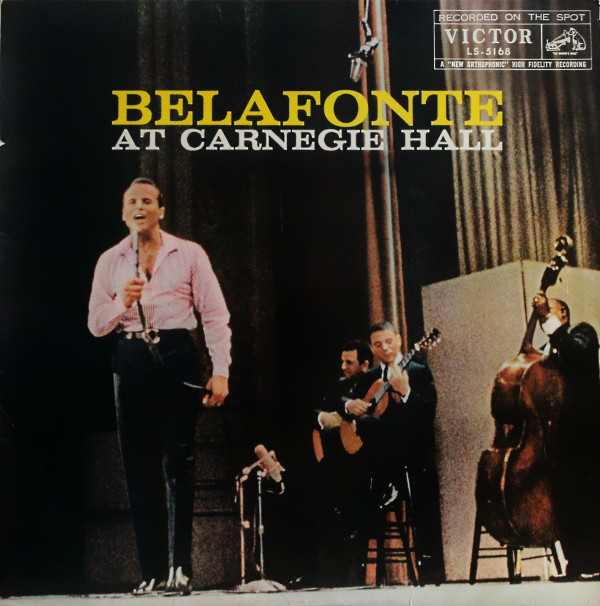
And there are the best teachers I ever had— my Mom and Dad. Dad taught me how to tell stories; his were about the Great Depression or about what Ireland looked like from the rail of his troopship in 1944. When I realized, at six and weeping dramatically, that I would be dead someday, Mom used tulip bulbs from the garden alongside our home on Huasna Road, ostensibly lifeless but with the promise of Resurrection, as visual aids to talk me down out of my tree. She’s the one who brought home the Harry Belafonte Carnegie Hall albums, where “Hava Nagela,” “Merci Bon Dieu” or “John Henry” would be interspersed with Miriam Makeba singing the Xosha Click song, a wedding song, or the sound of Belafonte’s heels flying as he danced to “La Bamba.”

I later taught World Geography. Harry Belafonte was my first World Geography teacher.


So thank you. But don’t thank me. All that we teachers do is to give new life to old lives, to the lives of those who taught us. We are links in a chain—my family’s chain goes to a Tudor burying ground, now vanished, alongside St. Giles-Without-Cripplegate in London, to timber-and-mortar homes out of the Brothers Grimm reflected precisely, but upside-down, on a the surface of beautiful river in Baden-Wurttemberg, to a village green that fronts St. Nicholas’ Church in County Wicklow, where thirty-seven Irish rebels were executed in front of their families in 1797.

There are thousands of intervening links, pink and howling and indignant—newborns—that bridge the space between.

As a teacher—and especially as a history teacher—I am happy to be just a link. There’s a kind of immortality there.

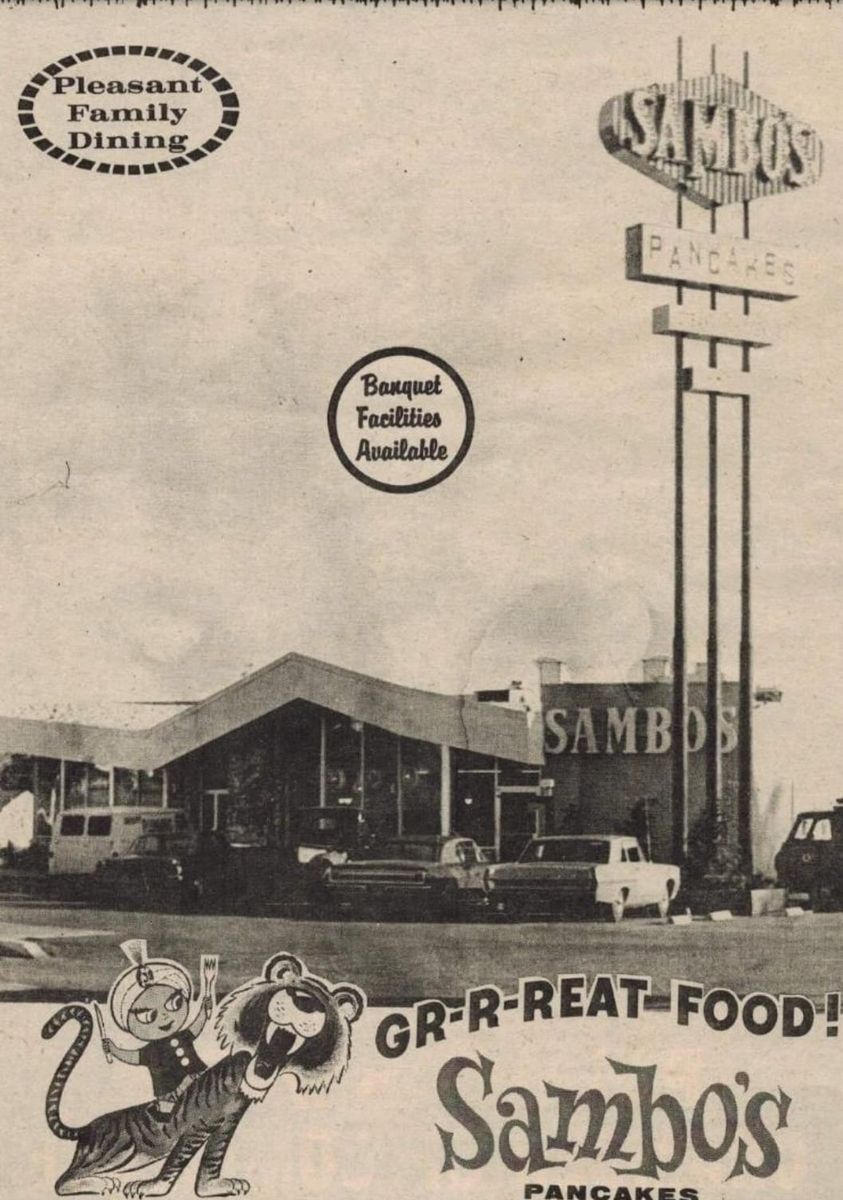
Sambo’s, Arroyo Grande, 1969

07 Sunday Mar 2021

Posted by ag1970 in American History, Arroyo Grande, Personal memoirs, Uncategorized

≈ Leave a comment

I have no idea how this is is going to end up, so I might as well begin.

This place became, much later, Francisco’s Country Kitchen, which I came to love both for its biscuits and gravy and for the density of the newspaper racks out front. They will demolish it soon, and that makes me fearful. No so much for losing the building, which is a minor example of a style that considered Moderne sometime between Sputnik and Apollo 13, but because even the most transitory spark lit by the wreckers might ignite fifty years of kitchen grease with the explosive force of a typical B-52 payload.

I’m just glad we live on the far side of Grand Avenue.

But before it was Francisco’s, it was Sambo’s, a story that had always charmed me—imagine tigers spinning themselves into butter, I thought, at four, and imagine how delicious they would be!—but became politically inconvenient many years later after the summit of my time there. That was about 1969.

Ten years after, it was still one of my favorite places. When I was a newspaper reporter for the Telegram-Tribune, I interviewed Leroy Saruwatari there for a feature on the demise of Arroyo Grande’s once-vast walnut orchards. Leroy told me about the perpetrator—husk fly larvae, which are so voracious and pitiless that you wonder why the orchards didn’t collapse, on their own, into sawdust–but he also told me a little about his family, perhaps the first Japanese immigrants to the Arroyo Grande Valley. They came here about 1903. Leroy didn’t know this, but that interview in a booth at Sambo’s so moved me that it would pay off thirty-seven years later when I wrote a little about his family in the book World War II Arroyo Grande.

Sometimes, years after the interview, I would stop in for a coffee or even a breakfast, take a booth to myself if it was during the slack in the morning shift, and furtively stare at the men sitting at the stools along the counter. They were farmers, come in for breakfast and coffee and gossip during a slack time for them, at a midpoint between sunrise and lunch.

Some of them wore green John Deere hats, many more wore the same felt hats typified by Bogart and made unfashionable by JFK, who hated hats. My father’s, with a broad brim and a silk ribbon and bow, lived out its life hidden— neglected except by me, who took it down and tried it on as a child—in the upper reaches of a narrow closet in our home on Huasna Road. Dad’s hat was pristine. The farmers’ hats were dented and stained by the traces of loam that is a compound of Upper Valley soil and irrigation water. Perhaps they’d blown off their heads while they towed a harrow into a field to break it up for a new crop of peppers or cabbage or pole beans.

I was far too shy to sit among them. So I just sat in my booth, waited for my order, and watched them quietly. Had I been a teenaged girl and had it been twenty years earlier, they would have been my Beatles and I would have been screeching. Thank the Good Lord for timing.

I am, after all, the grandson of a farmer from the Ozark Plateau who wore overalls all his adult life, who raised corn and milo and soybeans and—he was considered odd for this—ginseng, who slaughtered hogs in December and who, even into his sixties, was the most graceful waltzer in Texas County, Missouri. The line of teenaged girls waiting their turn to dance with Mr. Gregory did not amuse my grandmother.

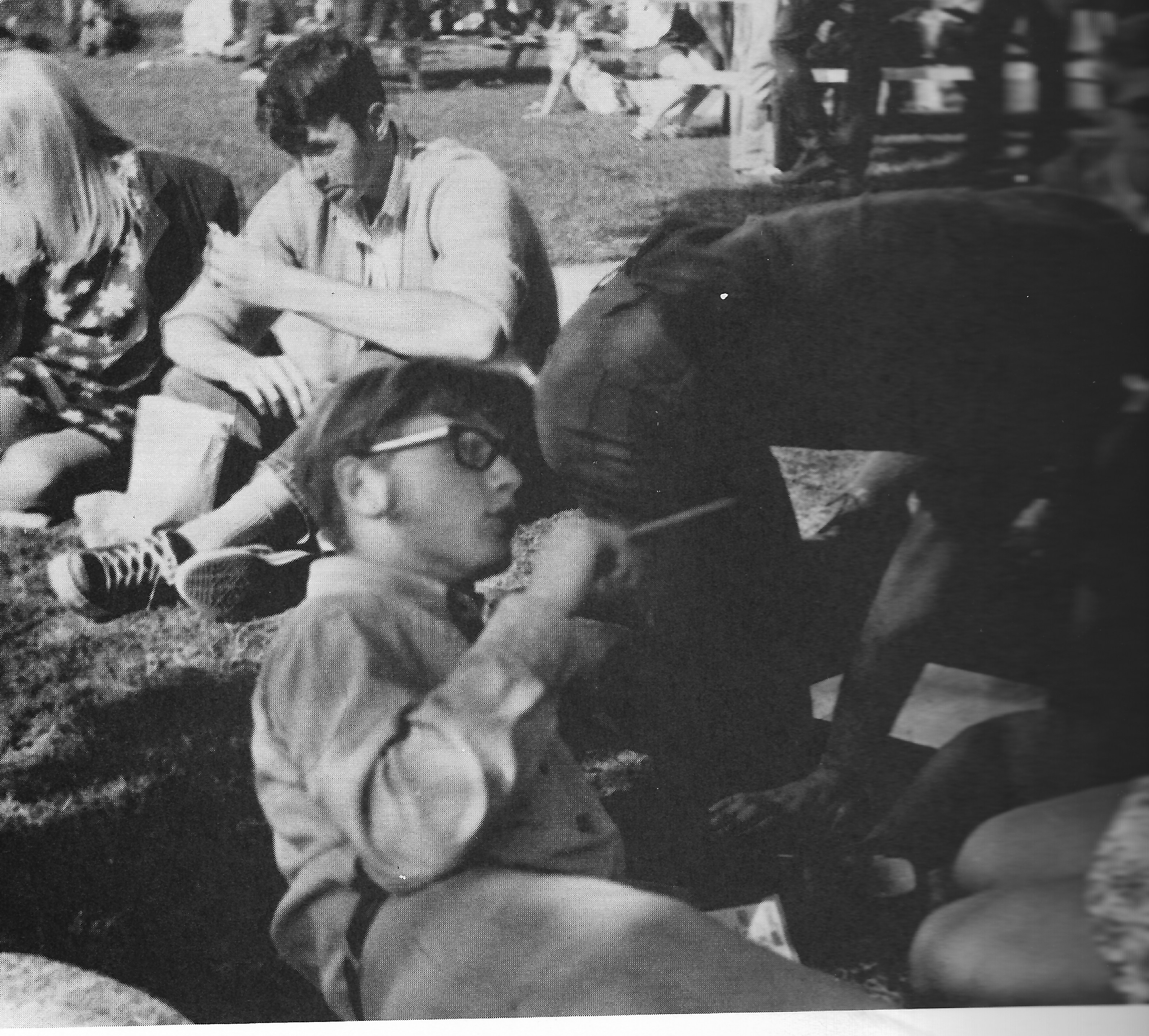
And years before I sat quietly watching the farmers at the Sambo’s counter, this was me.


See? I’m being pedantic already. I’m a senior at Arroyo Grande High School, in the Quad, and quite full of myself. Probably I’m at the midpoint of a book–you can see one just beneath my legs—and probably it’s Herman Hesse or Kurt Vonnegut. My victim—you can just see her kneecaps—is my girlfriend, Susan. Susan was—is— extraordinary. She was bright and lovely and, by God, she had tamed a raccoon. She was a horsewoman and she loved my little sister, Sally, so sometimes she’d appear in our driveway and ask to take my seven-year-old sister for a ride. She’d keep one arm around Sally, the other controlled the reins, and they’d ride through Kaz Ikeda’s cabbage fields and talk. My little sister is bright and lovely, too, and I think that a small part of her was formed on those quiet horseback rides.

The rear end belongs to Jack. Just beyond him, with a sandwich, is Clayton, a Canadian transplant whose family settled near the mouth of Lopez Canyon where they raised horses, too. Next to Clayton, the young woman is Lois. Lois was stunning. She had beautiful wide eyes with impossibly long eyelashes and a breathy voice—a little Marilyn Monroe-ish—that devastated every seventeen-year-old male within fifty yards of that tree in the Quad of Arroyo Grande High School.

They chopped the tree down, many years later.

But Lois brings me back to Sambo’s, because her boyfriend was Paul. Paul was my classmate and intellectual soulmate. He may have turned me on to Hesse—“turned me on” was a stock phrase in 1969— and, for a brief time, to psychedelics. Paul was kind of shambly and self-effacing; he sometimes threatened to disappear inside the clothes that seemed just a little too big for him. But he was also brilliant—not just in English but also in mathematics and science and all the other subjects in which I was not at all brilliant.

Lois adored him. So did I.

Paul’s family lived in the blocks of houses bounded by Grand Avenue and the 101. (Another family I loved, the Hirases, lived there, too.) So it was natural, when I visited him, that the meeting adjourned to the nearby counter at Sambo’s, just a short walk away.

We were quiet during our visits there. In 1969, after an AGHS football game, Sambo’s was besieged and had to surrender to hordes of teenagers who ordered enough cheeseburgers and fries to ensure the eventual but inevitable cardiac occlusions, who shouted at each other from three booths away and experimented with how far they could shoot—at each other— a crinkled soda-straw wrapper from the end of its plastic muzzle.

[I didn’t order a cheeseburger. My favorite was a short stack of pancakes with scrambled eggs and blackberry syrup. This might still be one of my favorite meals.]

But we must have been exasperating. I am not sure this is so, but I expect it is: The waitresses’ hair was tied into tight ponytails behind or lacquered beehives above to keep their hairdos out of the food. You could almost see the ponytails come undone or stray strands of beehive, like little blond flags, wander away under the stress of serving teenagers with no more discipline than your typical Capitol Hill mob.

But that was after games.

Paul and I were quiet at our counter seats—the bank opposite from the one where I watched the farmers so many years later—and all we wanted was coffee. I could be wrong, but I believe Sambo’s had a policy then was can be briefly summarized: We are the Marianas Trench of Coffee. For ten cents.

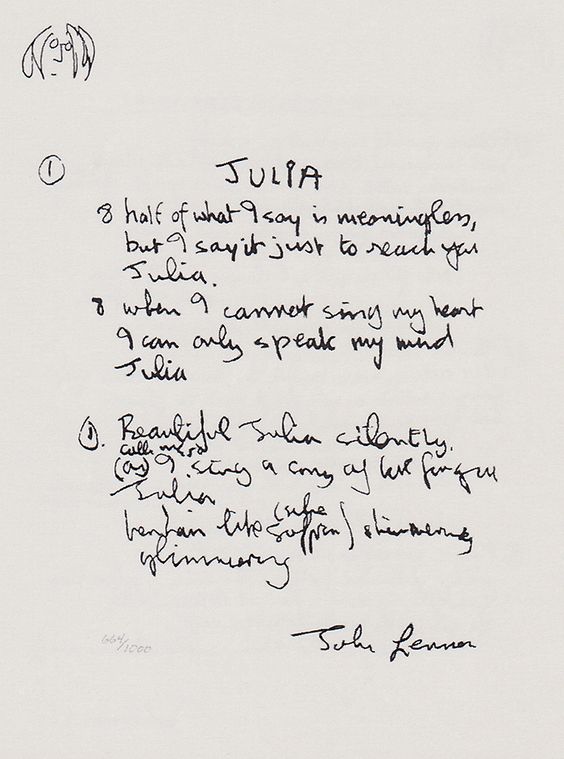
So Paul and I, no matter how different we were—he was far brighter and more worldly; he smoked Winstons and I smoked Camel Filters–would sit there, exploring the depths of Sambo’s Coffee Policy, and we would talk about Hesse and Vonnegut and Steinbeck, about Squares, which included Richard Nixon, about film, about the White Album and about the one passion that we shared above all others: Eric Clapton, Jack Bruce and Ginger Baker, from the supergroup Cream.


“Ya need more cream for your coffee, Hon?” That was the waitress. I can’t remember her name. Since I was seventeen and she was in her mid-forties, she seemed to me a relic from Egypt’s Middle Kingdom. She moved noiselessly on white nurses’ shoes from one bank of the counter seats to the other; she pinned her orders to the cook’s wheel and spun it with great authority, she knew how much to talk and when to shut up.

And she called me “Hon.” [Yes, I know. ALL waitresses call you “Hon.”]

My mother had just died, in 1969, and this waitress was about Mom’s age. Gravity— and doubtless some heartbreak, which is none of my damned business –was beginning to pull the features of her face to the south but their counterpoint was the discipline of her beehive, Peroxide Harlow, which towered defiantly north.

And not only did she put up with us, the pretentious punks that we were, but she never failed to glide back to us for refills, which I always looked forward to. There I was, sitting next to a friend whom I loved and having my cup filled by a woman whom I loved, too. She didn’t know that.

But when she asked quietly “More coffee, Hon?”—I know now this was simply because she had no idea what my name was—for just a moment, Sambo’s restored my mother to me. I wasn’t the only one, either, looking for his Mum that year.

The best public speaker I’ve ever heard

06 Saturday Mar 2021

Posted by ag1970 in Uncategorized

≈ Leave a comment

I had the great gift of getting a chance to record a sixty-second public service announcement for the Diversity Coalition of San Luis Obispo County.

It was agony.

This morning, it took me twenty takes, six edits of the manuscript and three hours to finish.

The whole time, I’m sure, my Arroyo Grande High School speech teacher, Miss Sara Steigerwalt, was looking at me narrowly.

Sara was a tiny woman confined to a wheelchair, yet she had the kind of command I never pretended to have once I became a teacher. She terrified me. But I adored her. (She wasn’t feeling well one day and made the mistake of calling me “Jim” instead of her normally imperious “Mr. Gregory.” For that slip, I adore her still.)

Despite the vast differences in our teaching styles, she made me want to be a teacher, too.

But this morning’s experience reminded that she was right. Public speaking is truly difficult, and it demands a mental and emotional toughness that I can find only in fits and starts.  

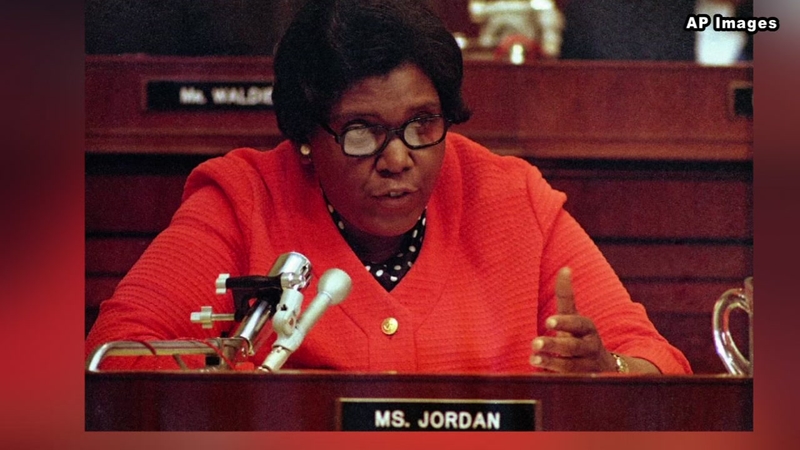
My immense pain in trying to sound coherent in a modest sixty-second burst reminded me, too, of my favorite public speaker: the late Texas Congresswoman Barbara Jordan, now lost to two generations of Americans, who, through no fault of their own, have no idea who she was.

She first caught America’s attention as a member of the House Judiciary Committee in 1974, charged with preparing Articles of Impeachment against Richard Nixon. Her summation, on national television, was electric: My faith in the Constitution, she said, is whole. It is complete. It is total.

She was channeling Moses, so fundamental to Black Christianity. If you listen to her for just a few moments of in the link below, you can hear Moses, too.

Jordan’s politics are irrelevant here. What’s noticeable is the precision of her enunciation, the measured cadence that was characteristic of her speaking, the specificity of her word choice and—most of all—the power of her intellect.

Even my teacher Sara—a Robert Taft Republican—would have admired Barbara Jordan. Her eyes narrowed in Room 403 at Arroyo Grande High School in 1968 when I spoke, but I was, after all, a wastrel, the product of a family of New Deal Democrats and Eisenhower Republicans.

But six years later, had she the chance to hear this, I can almost see Sara’s eyes widening and her carefully landscaped eyebrows, modeled on Joan Crawford’s, rising at the sound of Barbara Jordan’s voice.

Sara would have listened, too, with pleasure, to the silence in the audience.

They’d waited in line for hours in Washington’s suffocating summer heat for the chance at a ticket that would win them a seat in the hearing room. They didn’t know that they would hear Jordan speak, and many of them might not have known who she was. What they heard would stay with them the rest of their lives.


← Older posts
Newer posts →

Subscribe

  • Entries (RSS)
  • Comments (RSS)

Archives

  • March 2026
  • February 2026
  • January 2026
  • December 2025
  • November 2025
  • October 2025
  • September 2025
  • August 2025
  • July 2025
  • June 2025
  • May 2025
  • April 2025
  • March 2025
  • February 2025
  • January 2025
  • December 2024
  • November 2024
  • October 2024
  • September 2024
  • August 2024
  • July 2024
  • June 2024
  • May 2024
  • April 2024
  • March 2024
  • February 2024
  • January 2024
  • December 2023
  • November 2023
  • October 2023
  • September 2023
  • August 2023
  • July 2023
  • June 2023
  • May 2023
  • April 2023
  • March 2023
  • February 2023
  • January 2023
  • December 2022
  • November 2022
  • October 2022
  • September 2022
  • August 2022
  • May 2022
  • April 2022
  • March 2022
  • February 2022
  • January 2022
  • December 2021
  • November 2021
  • October 2021
  • September 2021
  • August 2021
  • July 2021
  • June 2021
  • April 2021
  • March 2021
  • February 2021
  • January 2021
  • December 2020
  • November 2020
  • August 2020
  • July 2020
  • June 2020
  • May 2020
  • April 2020
  • January 2020
  • December 2019
  • November 2019
  • October 2019
  • September 2019
  • August 2019
  • May 2019
  • April 2019
  • March 2019
  • February 2019
  • January 2019
  • December 2018
  • November 2018
  • October 2018
  • September 2018
  • July 2018
  • June 2018
  • May 2018
  • April 2018
  • March 2018
  • February 2018
  • January 2018
  • December 2017
  • November 2017
  • October 2017
  • April 2017
  • March 2017
  • December 2016
  • November 2016
  • October 2016
  • September 2016
  • August 2016
  • July 2016
  • June 2016
  • April 2016
  • March 2016
  • February 2016
  • January 2016
  • December 2015
  • November 2015
  • October 2015
  • September 2015
  • August 2015
  • July 2015
  • June 2015
  • May 2015
  • April 2015
  • March 2015
  • February 2015
  • January 2015
  • December 2014
  • November 2014
  • September 2014
  • August 2014
  • July 2014

Categories

  • American History
  • Arroyo Grande
  • California history
  • Family history
  • Film and Popular Culture
  • History
  • News
  • Personal memoirs
  • Teaching
  • The Great Depression
  • trump
  • Uncategorized
  • World War II
  • Writing

Meta

  • Create account
  • Log in

Blog at WordPress.com.

  • Subscribe Subscribed
    • A Work in Progress
    • Join 69 other subscribers
    • Already have a WordPress.com account? Log in now.
    • A Work in Progress
    • Subscribe Subscribed
    • Sign up
    • Log in
    • Report this content
    • View site in Reader
    • Manage subscriptions
    • Collapse this bar
 

Loading Comments...